It’s safe to say the CD is experiencing something of a second wind, buoyed by many things – amongst which, the vinyl revival and a growing dissatisfaction with the impersonal, algorithmic and unguided experience of using a streaming service for music. Between these, and as AI continues to devalue the merits of digital media, a newfound appreciation for physical media formats continues to bloom. It helps that second-hand Metallica CDs are cheap as f**k now, too.
If you were there for the ‘first wind’ of the CD format, there’s every chance you’ve already got some experience with the good Marantz name. Marantz has been a cornerstone of the consumer AV landscape for decades, with a wide array of consistently high-quality hi-fi separates and integrated systems – amongst which, some high-performing CD players that, hardware-wise, came to define the CD generation.
Marantz never lost sight of its cornerstone-y-ness, having carried on with its development of top-quality amps and receivers for home cinema systems and hi-fi stacks in the intervening years; as the CD finds itself on a renascent rise, so too does Marantz’ CD-player smarts gain a new relevance. And the Marantz MCR-60n DAB could well be the best conglomeration of the brand’s multifarious hi-fi excellences yet.
Marantz MCR-60n DAB CD player review: Features
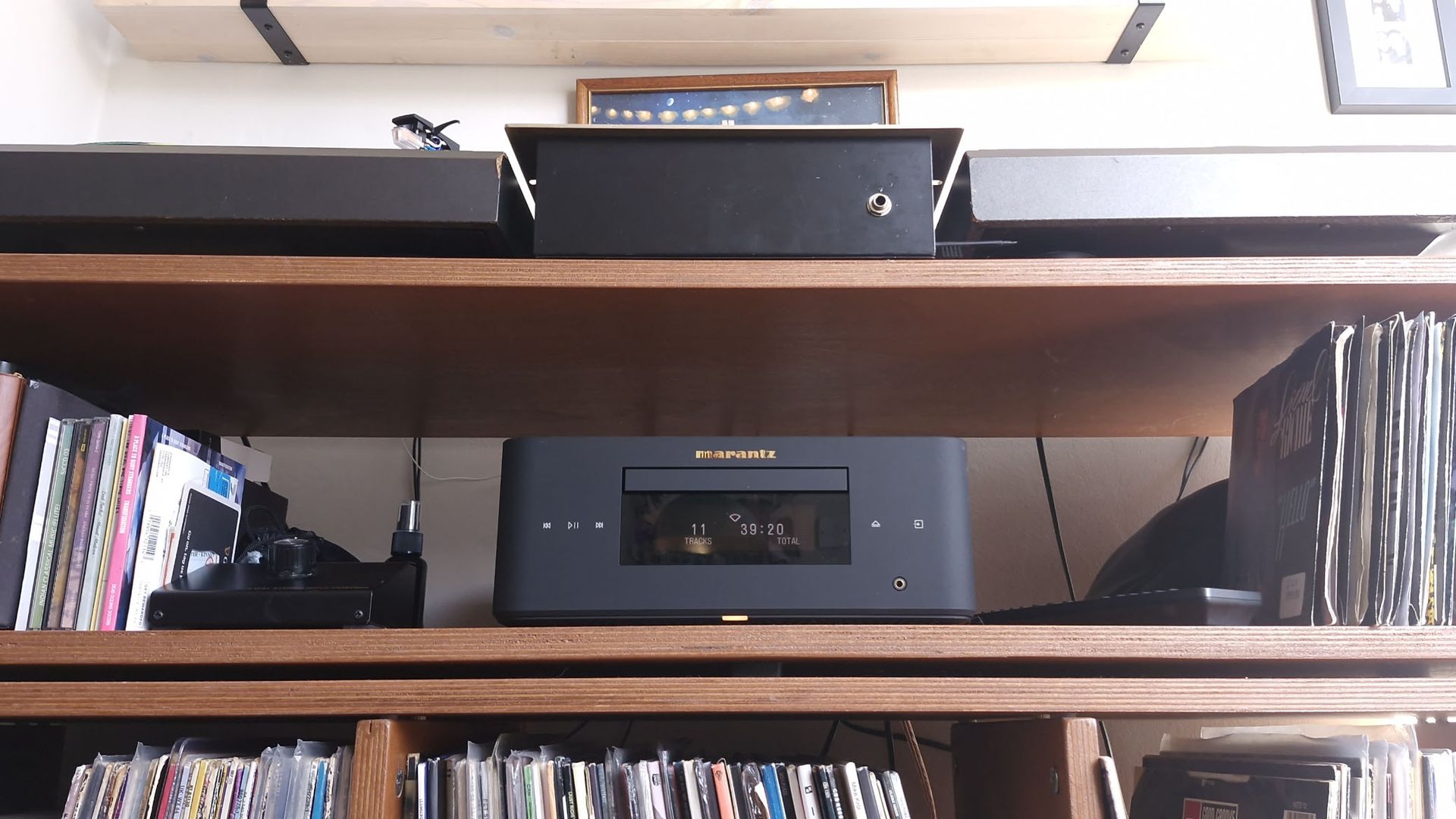
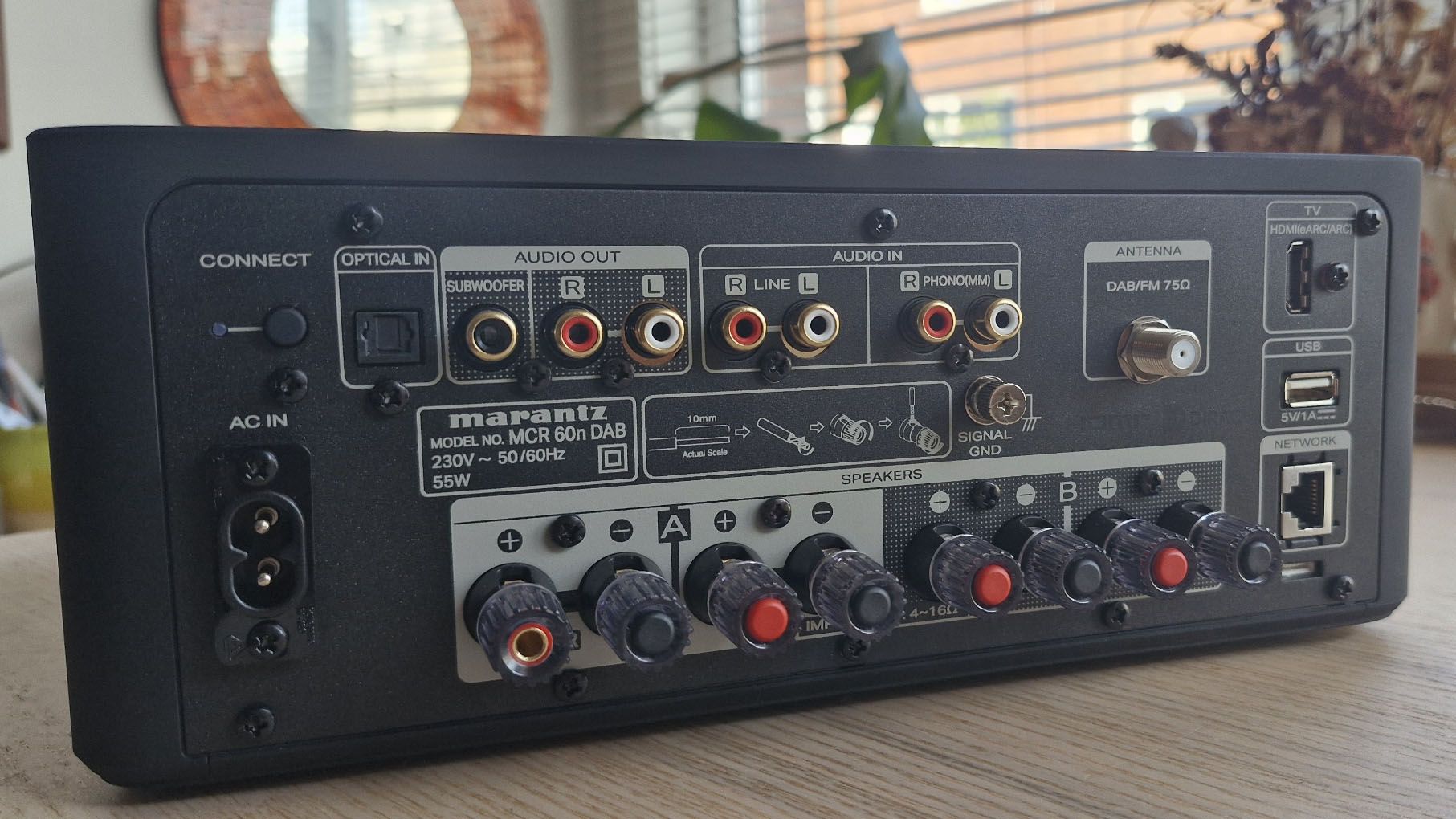
The Marantz MCR-60n DAB is a deceptively small, deceptively full-featured box of integrated hi-fi functionality. It’s a CD player, a radio, an AV receiver, a Bluetooth transmitter/receiver and a network audio player all at once, with a 2 x 65W/4 x 33W amplifier thrown in for good measure. A cursory glance to the rear, and you’ll find a menagerie of ins and outs that make the MCR-60n DAB a hugely versatile piece of living-room kit.
As well as a stereo RCA line input, there’s a stereo RCA phono in for a record player; next to them, a stereo RCA output for connection to another amplifier, and a 3.5mm subwoofer out for adding that optional juice with a third-party sub. Elsewhere, there’s AV-friendly inputs in the form of optical TOSLINK and HDMI eARC, a USB-A input for digital audio streaming, and an ethernet port for network audio streaming.
One of the big selling points for Marantz is the network streaming potential of the MCR60n DAB, which couples internet radio and music server capabilities with the option to connect to a network of WiFi speakers throughout your home. All of this is handled by HEOS, a half-proprietary streaming app that can access internet radio, streaming subscriptions and even control your unit. Handy stuff, and easy enough to set up too!
Meanwhile, the amplifier portion of the MCR-60n feeds two sets of speaker cable terminals, allowing you A/B switching between two pairs of speakers, A+B quad-speaker playback or bi-wired speaker setups. This is a lot of potential – and a lot more than many other equivalent all-in-one systems offer. My only gripe thus far is the relatively underpowered nature of the Bluetooth connectivity here; there’s no aptX or LDAC codec support, though LE support is forthcoming via a future firmware update.
Control over all these AV offerings is handled largely by a well-appointed (if somewhat lightweight) remote control, though there are some sparse on-unit controls – namely, top-loaded buttons for accessing power, four Smart Select presets and volume controls, and a handful of front-facing touch controls for input selection and CD player functions. Visual feedback is delivered by a bright three-line OLED screen and a tastefully glowy orange status LED.
Marantz MCR-60n DAB CD player review: Design
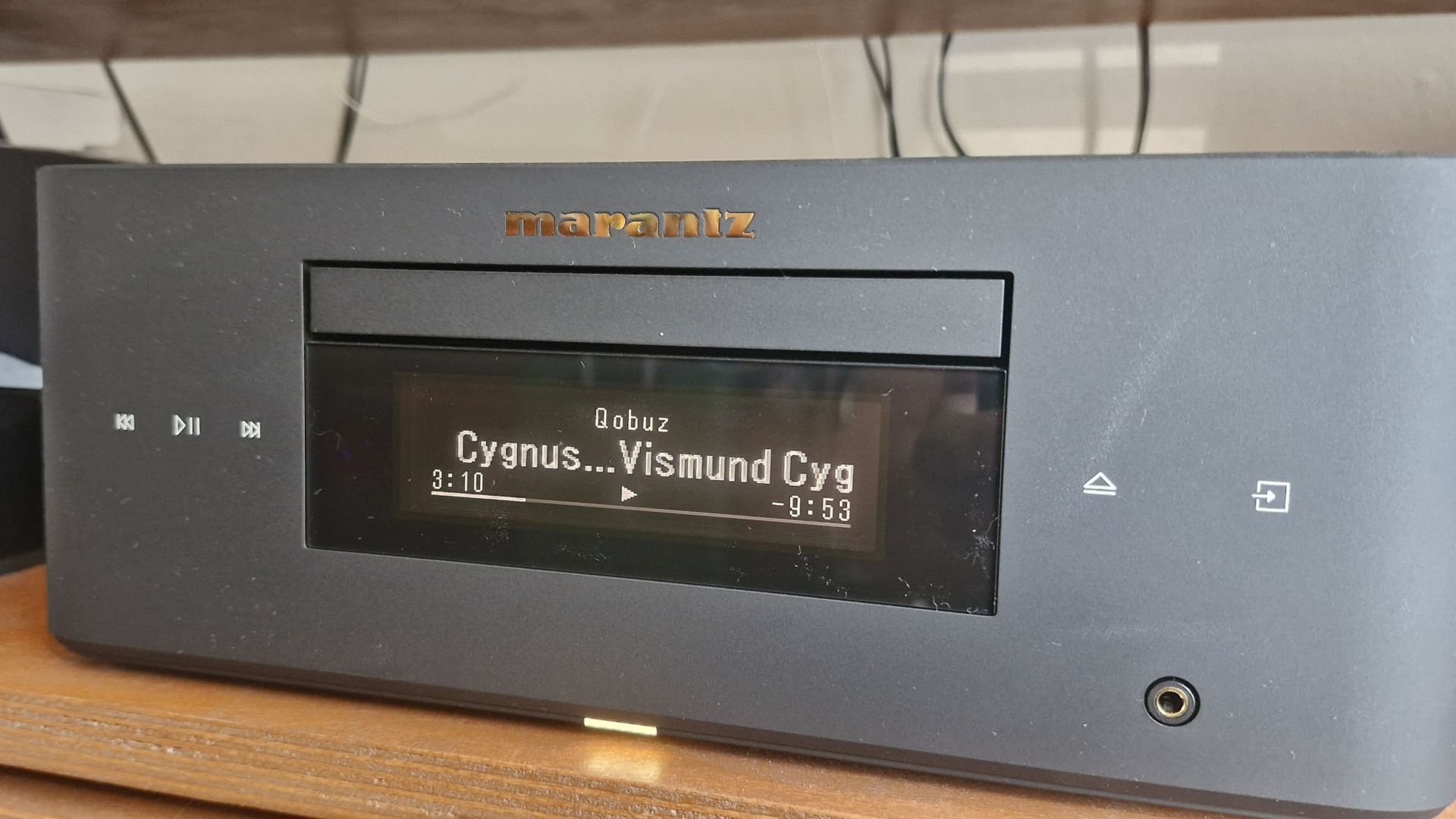
The Marantz MCR-60n DAB is surprisingly compact for the features it boasts, and for the relative strength of its amplifier circuitry. At just 28cm wide, a shade over 30cm deep and about 11cm tall, we’re not much larger than a lunchbox – and to say this carries everything you want from a modern hi-fi system, with the volume to match… impressive.
The MCR-60n DAB can be acquired in one of two colourways: Black, or Champagne Gold. My review unit was the far more understated Black model, which slotted sleekly into my record shelving with a sense of purposeful belonging. That sleekness projects a sense of reserved elegance; it’s not in a hurry to shout about what it’s capable of doing.
Marantz MCR-60n DAB CD player review: Sound
The MCR-60n DAB is no slouch when it comes to sound. Across the board, I was mightily impressed with the resolution on display here; instruments and elements enjoy some excellent separation, and the tonal balance is broadly on point. For the most part, I tested the MCR-60n DAB with a pair of DALI Sonik 1 bookshelf speakers; I also tried out some headphone listening using a pair of HEDD HEDDphone D1 open-backs.
My first test was, of course, the on-board CD player. A Place To Bury Strangers’ Transfixiation is bizarrely scrutable through this thing, with bright, clear guitars and a vocal that leaps out into the room. That separation is powerful; this album is propulsive in a whole new way.
I also took the opportunity to try something distinctly un-riffy: my CD copy of Angelo Badalamenti’s Twin Peaks soundtrack. It’s alternately deeply unnerving and deeply kitsch, a delight from the start, and similarly clear to boot; Laura’s Theme was particularly great and unyieldingly affecting, for the clarity of resolution the MCR60n DAB possesses.
I did find that, out of the box, there was a little low end missing. This was easy enough to adjust in Options, but even with a little bassy uplift, the MCR60n DAB demonstrates a general preference for bright, clinical representation over the gutsier, broad-strokes heft that some may be reaching for. That said, there is a Dynamic Bass Boost that brings the sub in spades, though, gutsy as my tastes are, I found it a little placeless and heavy-handed. Maybe save it for when you’re hoovering.
Vinyl, though, was a bit of a different story. With my vinyl system – a pair of Vestax direct-drive turntables, outfitted with AT-VM95NE carts, routed through a Vestax mixer – plugged into the MCR60n DAB’s line input, I got a great deal of mileage from my vinyl copy of Queens Of The Stone Age’s Songs For The Deaf. The clarity’s still there, and heft in spades, as demonstrated by a room-rattling rendition of …Millionaire. I also plugged one of my turntables straight into the Phono input, and was mightily impressed by the weight it possessed – easily a cut above most built-in phono stages.
Switching to wireless, I used the HEOS app to listen to The Mars Volta’s Frances The Mute, via my Qobuz subscription. Again, clarity, space, depth and joy. Also, despite what I see as a bit of a missed goal Bluetooth-wise, I found streaming Qobuz straight from my phone seamless and high-resolution enough to pass the passive-listening sniff test.
Ultimately, I found the Marantz MCR60n DAB to be a delight of an integrated hi-fi system. It was easy to control, easy on the eyes and easier on the ears (even if it took a tiny bit of dialling in). As far as all-in-one hi-fi systems go, this is a powerful prospect: saturated with features, and with a low profile that will fit practically any living space.
Alternatives
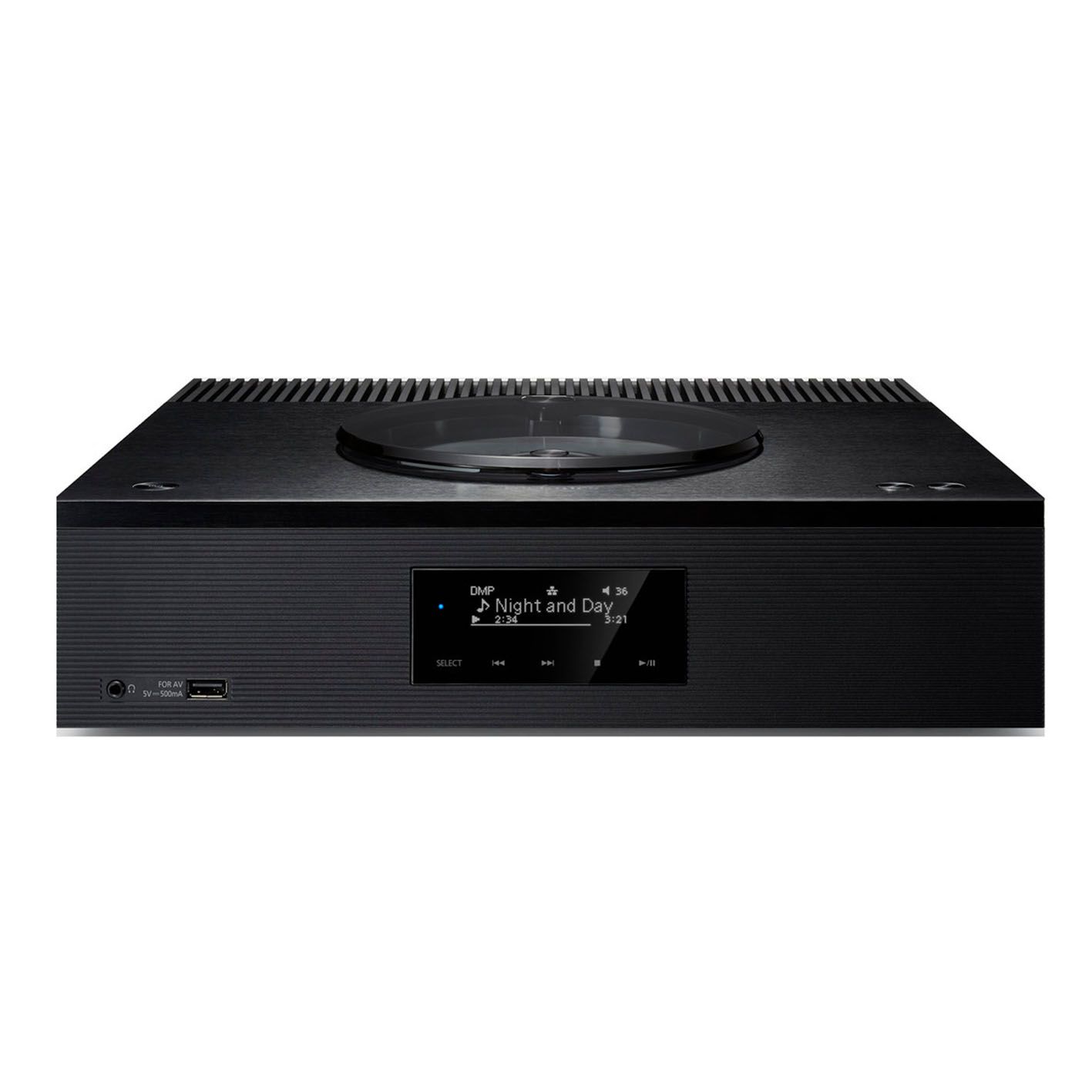
Technics SA-C600EB
Another network audio-enabled, CD-playing integrated amplifier with associated quality-of-life gubbins, and another sleek-looking box to slot into your hi-fi or AV corner. The Bluetooth connectivity’s similarly a little underpowered, but it otherwise meets the Marantz in most other positive specs.
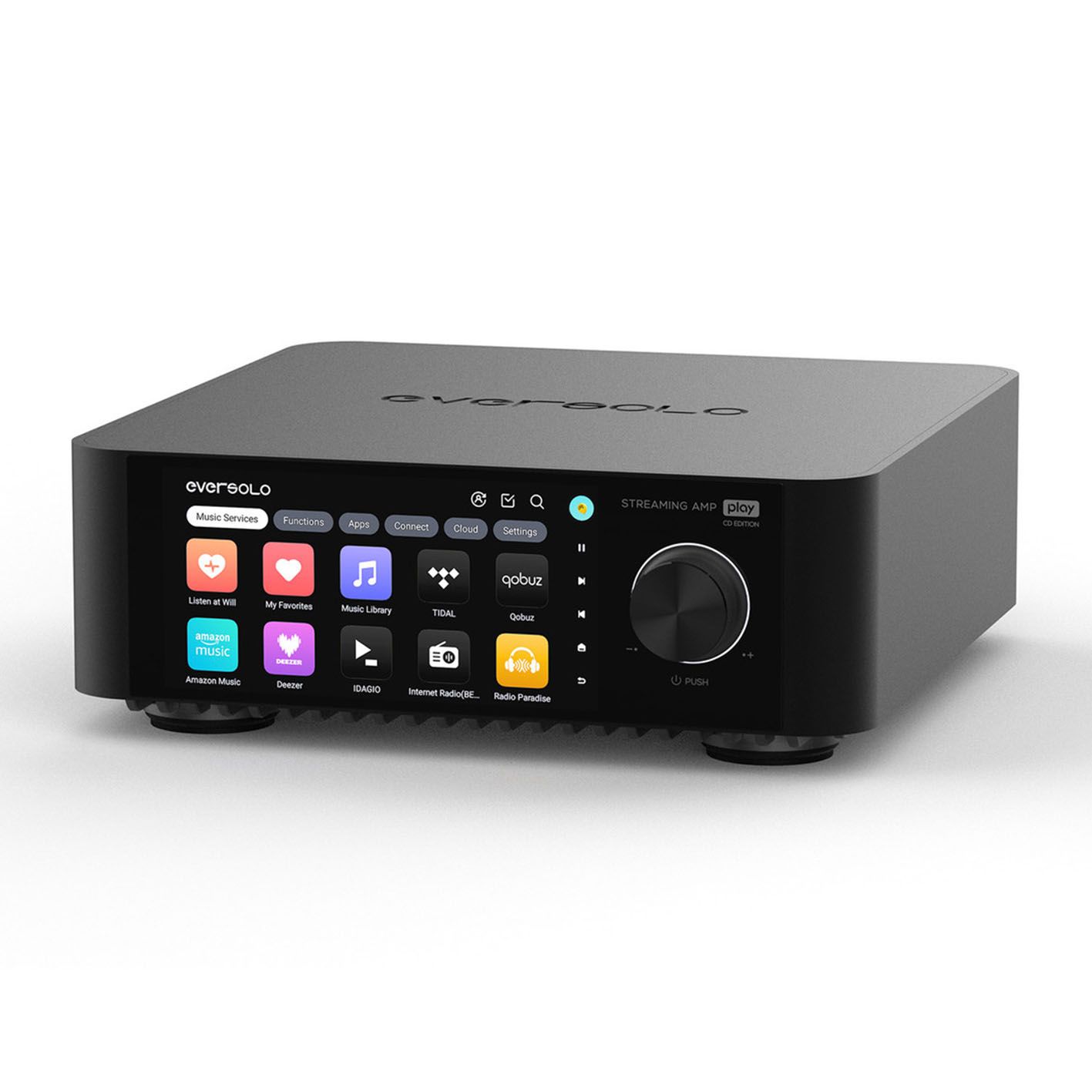
Eversolo Play CD Edition
Eversolo’s all-in-one system is an intriguing prospect, not in the least for the on-board app capabilities, controlled remotely or via touchscreen. The side-loading CD player is a little ungainly for some hi-fi setups, but this device’s overall tinyness can’t be overlooked – nor can its connectivity.