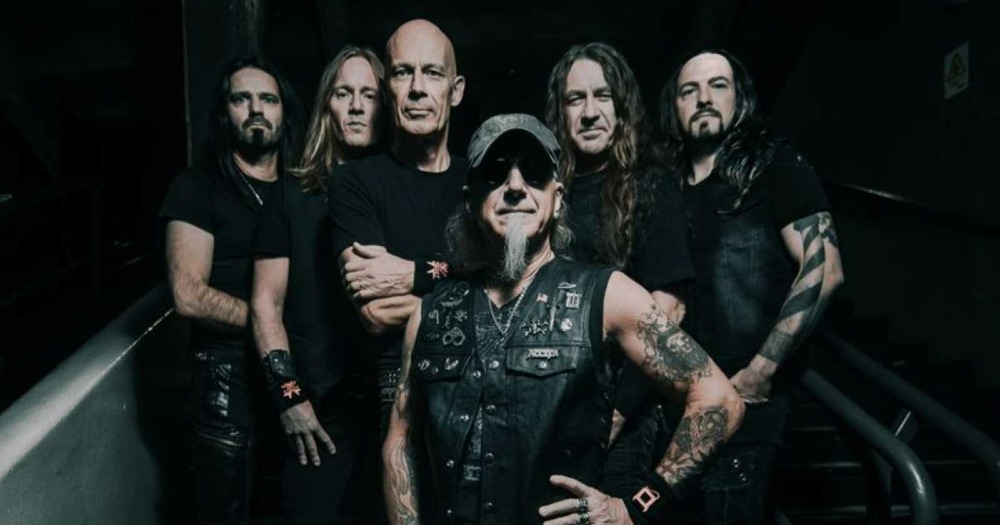
Last Friday, Krallice released Scour Order, their 16th album in 18 years. It’s as dense and cathartic as anything the band has ever put to tape; a reminder of where they came from but also how far they’ve come. It captures the paradox at the heart of Krallice’s sound: music that is both extremely technical yet undeniably organic, precise not in a purely mathematical or perfectionist sense, but in a way that feels intensely studied and practiced.
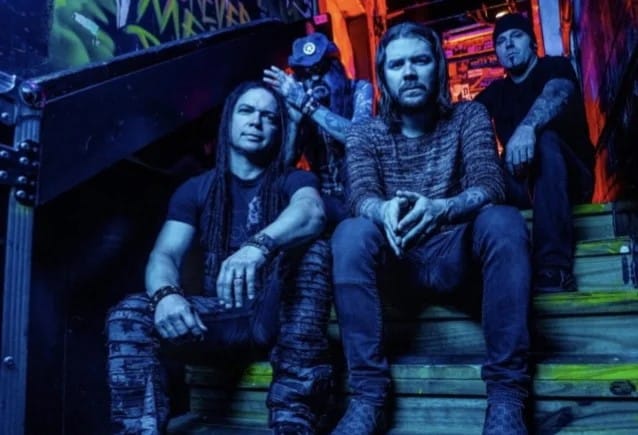
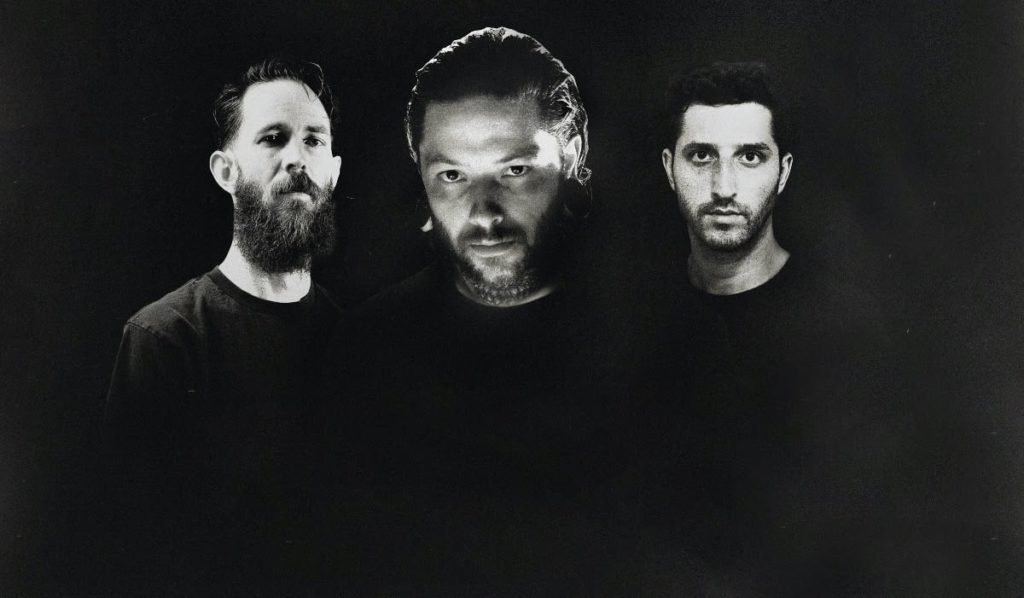
From the thunderous percussion-forward opening of “Agonal Shining,” Scour Order immediately announces itself. This is the start of a new chapter for Krallice, and though its members have returned to its original formation–Mick Barr on guitar (right), Colin Marston on guitar (left), Nick McMaster on bass, and Lev Weinstein on drums–this is not quite the same Krallice that released Dimensional Bleedthrough or Mass Cathexis. Rather, Scour Order falls somewhere between their first two phases, blending the ascendant tremolo harmonies of the first four albums with the knotty counterpoint of their mid 2010s releases. As with any Krallice album, the band continues to push itself to its limits, not content to merely settle for the familiar.
Langdon Hickman and I chatted with Colin Marston about the genesis of the new album, the creative and practical choices behind Krallice’s numerous permutations, and the core principles that have kept the band fiercely inventive nearly two decades after its inception.
This interview has been edited for clarity and continuity.
…
…
Alex: Scour Order is unique for a number of reasons, the first being that it was a commission from the folks at Roadburn Festival. How did you get in touch with one another? How did that collaboration come about?
We’d technically been in touch with them for a really long time, maybe over 10 years. I can’t remember all the details because I’m typically not the one who does social media and all that stuff–that’s all done by a different band member.
Anyway, they had asked us to play a long time ago, but we just really didn’t focus on touring and playing shows for most of the time we’ve been a band. We did a little bit of touring in the really early days, and in the middle years we did a couple of tours. But our focus has been more on the writing and recording, so it never made sense to us for whatever reason to play Roadburn. I had also had some mixed experiences playing festivals with Gorguts over the years, and was just like “You know what? I don’t know if Krallice is a festival band”. It really didn’t make that much sense to me to present the music in that way. I also didn’t fully understand what the vibe of Roadburn was, and that it was kind of the anti-fest fest! It’s not like your German metal fest that I was playing a lot of with Gorguts, so when the idea of doing it this year came up, we talked about taking a slightly non-standard approach.
The idea that they presented to us was for us to do three separate sets at the fest and have one set be a set of brand new music, which was really exciting to us, but then also a set of our old material, and then also a set of our synth material from our last few albums. That seemed cool to us because we really like having a challenge, and having a deadline to write new music seemed fun. We’d also been talking about the idea of actually playing more shows and touring more, so we made the decision to go back to our old instrumentation, where Mick and I play guitar and [Nick] McMaster plays bass, because that’s a more practical touring lineup. The synth setup that I’ve been using for the last bunch of records just kept growing and growing, and it was very impractical by the end of it. We did a couple of tours with it anyway, and those were really, really fun, but it just doesn’t make sense to fly to Europe with like six analog synths and spend two hours setting up and tearing down every night.
Alex: That’s a very practical explanation for the switch in instruments!
Yeah! It really was just for practicality–it was not a creative decision. But the thing is, we’re kind of cool with the practical decision becoming a creative decision, and just being like “OK, yeah, we can do that. We’ll do something different.” Even though it’s kind of a return to the old thing, we know that it wouldn’t sound exactly like our old music because we’re just different people now.
Langdon: About that relationship between the creative and the practical decisions…is that consistent across records, or does it change from album to album?
We typically do make music intuitively. The only times that we’ve done something that was very much a concrete decision usually just have to do with the instrumentation, not necessarily a musical direction. We sort of let the instrumentation inform the musical direction.
We did a weird album in 2020–it came out in 2021–called Demonic Wealth, which was your typical “pandemic album” where we couldn’t get together, so we’re like “OK, what can we do where we all do something remote?” That album that we made–the process was basically like Lev, our drummer, just improvised drums, recording on his cell phone using the voice memo, so it sounds like a total mess. Then he sent these recordings to me, and I kind of stitched together bits of what he did and wrote songs over it. On that record, I was like, “Oh, maybe it would be cool if I played guitar on half the songs but played synth only on half the songs.” And then as we worked on it more, Mick was like, “You know what? I don’t really want to play guitar on this record–I just want to do the vocals,” so we ended up with a record that was four songs of me playing all the guitar and all the synths, and then four songs where I only played synth and there’s no guitar.
Then, once we started being able to get together after that record, I was like “When we come back to making normal Krallice records where we get together and practice and write together, maybe I’ll just stay on keyboards, and that could be interesting. I don’t remember exactly how it went down, but I think I said something like that, and Mick and McMaster were like “Well, maybe we’ll switch instruments and have Mick be the bass player and Nick be the guitar player, and now we’re a one-guitar band, now we have a different bass player, and there’s this whole different vibe to our writing style.”
So we didn’t decide to get “more atmospheric” or “more traditionally black metal” or any of those things, but maybe those were kind of a byproduct of us just playing different instruments. And I certainly write differently on keyboards than I write on guitar, and Mick, you know, I think writes differently on bass than he does on guitar and so on.
Langdon: It’s hard for me to shake from my mind how I first encountered you guys, which was the Behold…the Arctopus/Orthrelm split. What stuck with me even since I was a teen–when I was first getting into your music–is that from the outside, it’s difficult to tell what is composed in a Robert Fripp-ian kind of way and what is pure intuitive usages of technicality and more evocative textures. I’m curious about the relationship between those two.
I would say that even when our music seems very deliberate or technical, it’s not like we go into writing songs with some kind of overarching plan. Typically, one of us just presents our part with a structure, so if I’m on guitar, I’ll write a song, but it’s just my part. Then we’ll hand it off to all the other band members, and they write their parts over top. And usually, we’re not playing the same thing in Krallice. There’s times when we are, and we go back and forth with that, but often, it’s like we each have our own voice happening on top of each other. So in that sense, it’s very much felt out because there’s not this sense of one person calling all the shots.
That’s very different than Behold [the Arctopus] on that Orthrelm split you were talking about. That was a piece where I wrote literally every note that every musician in the band played. So it was a very different approach from Krallice, and I won’t necessarily say that’s why it sounds different because with Behold, I’m just drawing from slightly different influences than with Krallice and had a different idea about what the band was supposed to be. I’m playing the Warr guitar, which just kind of lends itself to different kinds of writing. That’s mostly a tapping instrument. So the fact that Krallice is picked guitar means I’m using tremolo picking much more, and that became a very defining part of Krallice’s sound.
Also, with Krallice, we did originally set out to make a black metal record, so there’s definitely a black metal influence even though we never really made a “proper” black metal album, and we’re not strictly a black metal band. It just started with the idea of trying to make a black metal record, but pretty quickly, we realized it was just its own thing, especially after the first four albums we made.
Between Years Past Matter and Ygg Huur, we made a concerted effort to drop the black metal thing almost entirely, and we really didn’t talk about what we were going to do stylistically. At that point, because there was no subgenre in mind, it was just a band that the four of us had together, and this was the music we wrote.
There was even less of a plan with our middle-era stuff, which I guess ended up being a little more similar to Orthrelm or Behold the Arctopus–maybe a little busier musically, the song lengths became a little shorter, by and large, the music became denser and more technical.
Then, once we switched instruments and did the synthy stuff, it became about more long songs and more atmosphere again. At this point, we’ve gone back and forth a bunch.
…
…
Alex: On Bandcamp and social media, your band’s bio–which is amazing, by the way–is “black metal or not”, which is a great descriptor of Krallice’s sound. But that makes me wonder, there have been these big shifts, the changes in instrumentation that you discussed, but also deliberate genre shifts away from what was done prior. Throughout all of the different phases or periods that the band has gone through over the last 18 years, what have been some of the guiding principles, or the ethos–things that have remained distinctly Krallice across all of it? You mentioned that extremely collaborative approach to songwriting as one. Is there anything else that you would say is–if not part of the Krallice sound, is part of the Krallice experience of writing and composing?
This seems like a cop-out answer, but it’s almost like not having a plan is the vibe. We just like playing together, and we like making music, and we make too much of it–that much is clear–but you know, it’s kind of rare, I think, that you have a band where it’s all the original members, and we actually like being around each other and making music together. So at this point, it almost has more to do with just the four of us than any kind of a plan for a certain style of music.
Now, as we’re all in very firm middle age, the talk is now, “How do we make this band like…less physically exhausting? How do we make it less loud?” [Laughs] You know, all the stuff that just becomes less fun as you get older. We still really love playing together, but it’s like…a fucking four-hour band practice where you’re blasting yourself with distortion does not quite have the same charm it used to have.
What else? I guess we’re all pretty open to changing things up…or not. There’s not this rule that we have to have every album be a whole new sound, maybe like a King Crimson vibe, where it’s like the band goes away and it comes back, and it’s a new lineup and new sound and a new album. We’ve never really had that, but we also don’t make the same record over and over and over again forever. So somewhere in between, maybe a little more like a Neurosis or something where it evolves over time, and there’s a very big difference between where it started and where it ended, but you can trace the evolution across the records. Because we make albums pretty regularly, maybe it’s harder for certain ones to stick out, but there’s still a lot of variety if you trace the line through all of them.
Langdon: From your perspective, what do each of the four members bring to the band? From my end, it feels like maybe Nick and Lev, especially Lev, bring more of the black metal, and that you and Mick bring the more avant-garde and progressive wing, but I’m curious what it feels like from inside the band.
In terms of writing, one other unique thing about Krallice is that both myself, Mick, and McMaster all write songs for the band, so we have three people always writing music, which is another reason we make so much music: it’s not just one person doing all of the composition. In terms of styles, we’re all metalheads, and we’re all into proggy stuff, so it’s not like there’s one member who’s into black metal or whatever. We all have pretty diverse interests, maybe Mick and McMaster even more than anybody else in terms of different styles of music from all over the place. We all bring a weird aspect in our own way.
There’s often a moment when Mick and I will be having a conversation, being like “Yeah, McMaster’s song is so weird!” and then I’ll be talking with McMaster, like “Yeah, Mick’s song is so weird!” I’m sure they’ve talked about how my music is very counterintuitive in certain ways, so we all just have very idiosyncratic ways of writing and our own logic with putting music together. It’s been really cool over the years to explore each other’s logic in writing music, and I’m sure we all influence each other. Mick was always a big influence on me; going back to Cromtech and Orthrelm, I was a big fan before we started making music together.
Alex: Occasionally you’ve revisited older music like on Go Be Forgotten–there was a track that I didn’t realize was an old Beastlor song. That was such a cool way to take something that was from the late 90’s or early 2000’s and bring it into this project.
To be clear–if it wasn’t clear–Beastlor is Mick’s solo project, so it wasn’t necessarily a cover, and we did a pretty different arrangement compared to the early one. But yeah, Go Be Forgotten is a good example of an anomaly because the album we were working on at the time was the Loüm album, the one with Dave [Edwardson] from Neurosis singing. That was the one that we were working on and practising and focusing on, and the Go Be Forgotten stuff was Mick saying “Well, I’ve got these other songs—let’s make this other album real quick”. Some of the songs we didn’t even play together. It was much more of an experiment. That has a song where I just play synth–the title track–and I do Warr guitar solos.
So we’ve tried a lot of different approaches over the years, and I think it’s just an openness to just doing whatever. It’s still going to sound like us no matter what we do, but there’s not this pressure that we put on ourselves to make the best album ever, or something that’s super distinctive. It’s both an advantage and a disadvantage because it’s more striking when a band doesn’t make music as often and they put something out and it’s very different from the last album. That’s really cool. I like it when bands do that, but at the same time, from being in the band, the process of just constantly working on stuff and never having much of a dead period creatively has been really great, and it’s really made the last 18 years fly by.
Langon: You in particular have quite a number of projects. I’ve talked with Lev about this a bit, and he was like “I genuinely don’t know how he does it!” How do you balance making that much music on your own, let alone the production and engineering end? Because one of the most recent Indricothere records was 14 hours long (by the way, I crave that).
Well, in terms of having the studio and having a lot of bands, those help each other, so the fact that I’m just here in the studio all the time means that we never have to worry about where we’re going to record! We practice where we record. That makes it very comfortable to make a lot of music. All I do is work on music. I don’t really have any other interests, I don’t have a family other than parents and a brother, I don’t have kids—there’s not a lot of other stuff going on in my life. Music-making is just my entire life, so it’s both what I do for work and what I do for fun. I think it’s because I’m such an unbalanced person in that sense that it’s just conducive to doing a lot of work [laughs]. And I find too that the more work that I make, the more work I make.
I had a really really active period between 2020 and…let’s say 2022 where I started all these new recording projects and collaborations and solo projects and stuff, and somehow I was making and releasing one to three albums every month. And that period is done [laughs]. Like, ever since I moved out of my studio and spent all this year property searching and then moving into my new place and trying to get it set up and, you know, managing a building that I own and so on, I’m definitely not making that much music anymore just because there’s other things going on in my life. But I think when I have the time and space in my life to make music, that’s what I’m going to do. For me, it’s really exciting to play new instruments, and for me, working on a new project is really inspiring. It doesn’t feel like “Oh man, now it’s this other burden that I have.” That’s what makes me stoked.
Getting into the world of hardware over the last six years has been really inspiring as well, and it’s caused me to just want to make more music and more projects to have excuses to use these instruments that are really exciting to me. At this point, guitar feels a little boring! Like yeah, I played the guitar for 33 or 34 years, but having a new sound palette to work with makes me want to do nothing but that.
I’m just a slave to creativity, I guess [laughs].
Alex: Speaking of the new studio, is it officially Menegroth? Menegroth II?
I decided to keep the same name, but I’ve been calling it Menegroth II or New Menegroth. I was planning on changing the name, and then I realized after no good ideas came to me after a year, I was like “Wait—why do I have to change the name? Wait—maybe it’s a better idea to not change the name because people already know the old name, so why would I change it?”
Alex: It’s become an institution! And to preface the next question, one of my current internet white whales is this 15 year old video of you doing a tour of the original Menegroth.
That’s still on Youtube, I think.
Alex: It was on Scion A/V’s channel, but that whole thing folded a while back.
Oh, so that channel’s just gone.
Alex: Yeah, I found the Youtube metadata on some scraping website, but the video itself is gone! I remember watching that years ago and being fascinated by your recording process. With Menegroth Mk.II, is there anything about the space that has changed the way that you record either other bands or Krallice?
In some ways, it’s very much the same, and in some ways, it’s very different. The space I’m in now, was not built to be a studio. This was like an antique store that I took over, and the live room I have now is really crazy. It’s way bigger than my last one, and it’s super reverberant. It has this stone flooring, so it just has this really crazy natural reverb. I’ve always wanted a room like this to work in. So now here I am, and I don’t have isolated booths or anything yet. I’ve kind of gone back to a little bit of the older way I used to record in my basement studio before Menegroth, where a lot of the times, if I was recording the whole band together, I’ll just run the guitars direct, and then after we’re done recording, I run them back out into the amps rather than setting up all the amps at once in different isolation booths. So there are some technical differences.
The vibe out here is totally different because I’m not in New York City anymore. I’m up in the Poconos, so it’s rural, but it’s dense rural, and it’s a lot of city transplants. It’s like a particular kind of non-urban environment. It’s really beautiful here. It’s the exact opposite of downtown New York City: there are trees, and I have a creek running right by my place, and it’s nice to not be in an urban environment. I’ve never not lived in a super urban environment. This is my first time in any situation like this, and I feel like it’s really what I’ve wanted for a really long time: to get out of the city. It’s nice.
Now, when we have band practice and recordings, people come out for the weekend. They stay here. It’s not like everybody’s watching the clock, like “I gotta get out of here in an hour”, so there’s a more laid-back feeling, which is cool. But it’s also a trek for Nick and Lev to come out from New York to do Krallice practice and so on—that’s not lost on me. Lev, our drummer, used to live literally upstairs from my old studio, and then he got evicted, and we moved him like right next door when the building got sold. Then I had a few years left on my lease, which is why I was able to stay until 2024. So there are advantages and disadvantages, but overall, it’s a better, bigger studio, even though it’s not as “pro”. It actually sounds better, and I’m really happy with the results I’ve been getting out here so far.
…
Scour Order is out now on Profound Lore Records.