Built with Ferentinos, Thorne, Elias + an unrevealed guest guitarist
First solo album since 2018’s View To A Thrill
Continues his independent creative direction outside RATT
“I Need U” Opens This Era Without Looking Back
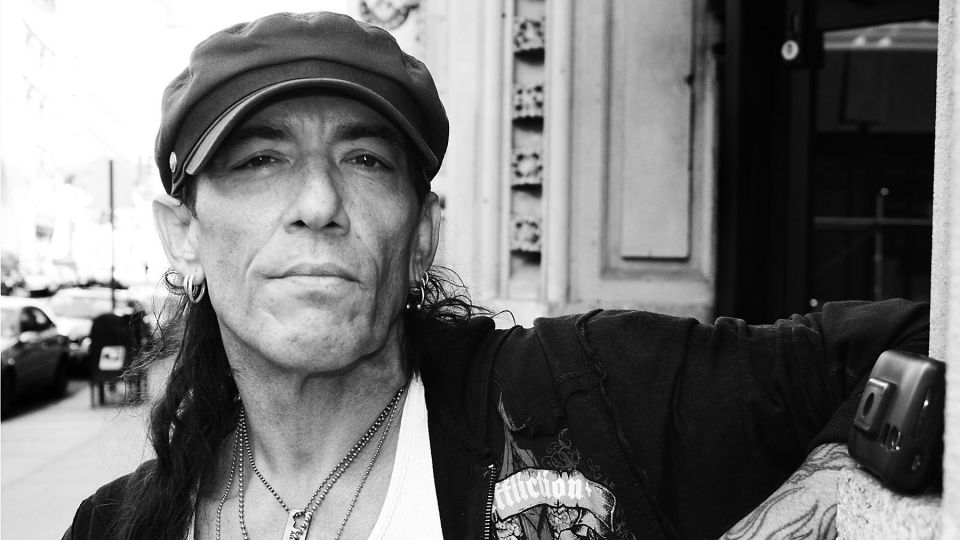
Stephen Pearcy just kicked off his next album cycle — and he didn’t ease into it.
“I Need U” lands direct and stripped of anything unnecessary. The core lineup tells you exactly where this is coming from right now: Erik Ferentinos on guitar, Matt Thorne on bass, Blas Elias on drums — the same circle that’s been shaping his sound behind the scenes for years.
And then there’s the piece he didn’t explain.
An unnamed guest guitarist is on the track. No name, no hint, no timeline on when that reveal is coming.
Pearcy introduced the song with a line that says everything about how this rollout is being handled:
“This song’s on me — download it before they charge ya.”
No buildup. No overproduced campaign. Just release the track and move.
This Record Has Been Taking Shape Longer Than It Looks
This didn’t come together quickly.
Pearcy and Ferentinos have been writing across the last few years, with Thorne shaping the sound at MT Studios. When material sits that long before release, it usually means the direction is locked in — not figured out on the fly.
Back in February, Pearcy teased “Drive All Night Long,” another track tied to this album — also featuring a guest guitarist whose identity hasn’t been revealed yet.
That’s not coincidence. That’s a pattern.
And it’s the one detail that keeps this rollout from being predictable.
This Is The Space Where Pearcy Doesn’t Have To Answer To RATT
There’s a clear separation now between Pearcy’s solo work and anything tied to RATT.
RATT hasn’t released new music since Infestation in 2010. That gap carries expectations — and limitations.
This doesn’t.
Pearcy’s solo material operates differently:
No obligation to recreate a legacy sound
No fixed structure or formula
No timeline dictated by anyone else
He’s been open about it — this is where he writes whatever he wants, however he wants, and releases it when it’s ready.
If you’ve followed Loaded Radio’s coverage of RATT’s history and lineup shifts, you already know how rigid that world can be. The Dogg Mob exists outside of that completely.
The DeMartini Shows Add Another Layer To This
At the same time, Pearcy hasn’t walked away from that legacy either.
Over the past year, he’s been performing live with Warren DeMartini under the PEARCY/DEMARTINI banner — and those shows haven’t gone unnoticed by fans.
That creates a split that actually works in his favor:
Live: reconnecting with that original chemistry
Studio: pushing forward without constraints
It raises the question without forcing the answer — and that tension carries into how this album is being received before it even drops.
The One Detail Still Being Held Back
Here’s where the curiosity actually lives.
Multiple guest guitarists are confirmed across this album — and at least one is still completely unnamed.
Not teased. Not hinted at. Just withheld.
That’s intentional.
When an artist keeps names hidden this close to release, it usually means the reveal carries weight — not because they’re unsure, but because they know exactly what it will do when it lands.
It’s about continuing something Pearcy’s been building for years — now with more clarity and zero compromise.
No expectations to meet. No sound to recreate. No reason to hold anything back.
And if this is how The Dogg Mob starts, it’s not going to play it safe from here.
When tracks like this start surfacing, that’s exactly the lane that ends up fitting naturally into the Loaded Radio stream — not because of legacy, but because it still moves forward.
That mix of stripped-down grit and controlled chaos is exactly the kind of track that slides straight into rotation on the Loaded Radio stream — it doesn’t rely on nostalgia, it earns its spot.
FAQ
When Is Stephen Pearcy’s New Album Coming Out? The Dogg Mob is expected in summer 2026.
What Is The First Single? “I Need U” is the lead single.
Who Plays On The Track? Stephen Pearcy (vocals, rhythm guitar), Erik Ferentinos (guitar), Matt Thorne (bass), Blas Elias (drums), plus an unrevealed guest guitarist.
Is RATT Releasing New Music? No — their last album was Infestation (2010).
Is Warren DeMartini On The Album? Not confirmed, but Pearcy and DeMartini have been performing together live.
Stephen Pearcy Bio
Stephen Pearcy is the founder and frontman of RATT, one of the defining hard rock bands of the 1980s. Known for tracks like “Round And Round,” Pearcy helped define the Sunset Strip era. His solo career has allowed him to move beyond that framework, releasing music independently and exploring different styles without limitation.
Elder’s upcoming record, Through Zero, is the veteran heavy psychedelic/progressive rock group’s seventh full-length and first since 2022’s Innate Passages. Since starting in Massachusetts in 2006, they have evolved steadily under the stewardship of vocalist and guitarist Nick DiSalvo. From their early days as acolytes of Sleep and Electric Wizard, DiSalvo, the band’s primary songwriter, has grown exponentially as a writer, pushing the band to expand beyond their doomy roots into the cosmic realms of prog and krautrock, incorporating those and other influences into their own burgeoning sound.
…
…
Both Elder and many of their fans view 2015’s Lore as the moment where they found their voice. The record was a breakthrough, featuring long, omnidirectional songs full of shifting dynamics. No matter how many twists and turns might occur in a given track, they always seem to retain a fluidity and a sense of forward motion akin to taking a voyage down a winding river. Elder has expounded on this formula with every subsequent release, taking massive leaps forward but always retaining that organic, everything-in-its-right-place fluidity.
In the past, DiSalvo has said that Elder’s music is “strongly connected to a conceptual framework” and that there was typically a “certain theme” that ran through an entire record. With Through Zero, he’s spoken about what that framework might be, saying “Through Zero is a term borrowed from engineering and the world of music. It describes the property of a frequency being able to pass through the zero point and continue into the negative plane.” He also notes that while this concept isn’t rooted in philosophy, it inspired him to think that “perhaps reality is less linear than we tend to assume.” Through Zero then became a lens through which to explore whether perhaps “life and death, frustration and fear, helplessness and hope” all exist “along the same ‘signal path.’” After spending some time with the album, it’s certainly a unique summation of everything the band has done since Lore, while also taking another step forward. Prog, kosmische, metal, heavy rock…it’s all represented seamlessly as ever for Elder.
DiSalvo is also right to say that Through Zero cycles through helplessness, fear, frustration, and hope. All of which can be glimpsed within the record’s six sprawling tracks. Maybe it’s just what I needed, but I kept hearing traces of hope throughout this clean, yet densely produced record, not that that’s the dominant or most pervasive mood/mode. It strikes that emotional chord and many others, including the omnipresent fear and uncertainty pervading these times. With this in mind, I was excited to speak with Nick to learn more about the creation of Through Zero, which releases May 29 through Blues Funeral. The following conversation has been edited for brevity and clarity.
–Dennis J. Seese
…
For Through Zero, you’ve talked a little bit about what the title means. Could you further outline what that concept meant to you and how it guided your writing, or if it indeed guided your writing at all?
I spend a lot of time thinking and writing about these kinds of big picture topics. I always try to, when I’m writing music, do something that’s important to me and not just touch on some banal themes. And what I always come back to are life and death and mortality, amongst other things. I think we’ve all kind of come up with this idea at some point or another that maybe death and birth aren’t the end or the beginning. Maybe they’re just something along this unseeable path, what comes before, what comes after. Considering these are themes which always come back in every Elder album, including this one, that’s one of the reasons that Through Zero jumped out as the title to me, because it almost described this idea that, like, zero, if you’re looking at a signal path, it doesn’t necessarily have any connotation of finality. It’s just somewhere along the path. So I think that was initially the reason why this title jumped out to me. But I also feel like it’s a phrase which has a lot of potential for interpretation. It could also be about the hidden possibilities of the world, which you can’t see because nothing is as linear as we expect, or about finding a balance moving between negative and positive emotions, or even where we’re at in the world.
I don’t know how you see the world, but I feel like I’m more of a pessimistic worldview. And I feel like things have only gotten worse in my lifetime in many ways. And the idea–that every day I wake up and think, “Oh, it can’t get any lower than this,” and it continues to–as stupid as that sounds, thinking this has to be the bottom, but it can always go further. But just like that, it can go back up. So there’s a touch of optimism to this whole thing, too. But it’s intentionally just an open phrase. I like language. I like messing with words. I like this kind of stuff. And I like leaving things a little bit open-ended as well.
Does the entire band live in Berlin now? Can you describe the writing process on this record? I know in the past you weren’t always all living in the same place, so I’m curious as to how you navigated that and how that geographic distance impacted your writing?
Well, to answer one of your questions, three out of four of the band members live in Berlin these days. Our bassist still lives in Massachusetts, where the band originally started, and where we were for the first 10 years or so. Maybe a little less. And yeah, there were times when we all wrote music together in the same practice space. There was even a time when we all lived together in the same house. Some of us even worked together. Everything was very much like an immediate collaborative process. I was the first of the band to relocate abroad and that broke up how we could work. And since that point, it became much more like me writing everything. I’ve always been the main songwriter of the band, but it’s me writing alone, recording things, doing pre-production, and then having that be the framework for the songs, which then I bring to the guys. Then we talk about it or sometimes it’s just, like “Hey, this is the song, it’s done.” I think it’s a testament to the fact that we’ve gotten pretty good with this kind of workflow and good with the complications of our situation, that things do generally feel quite cohesive, I guess. I think a lot of people don’t expect that the band works this way, because hopefully the songs don’t come across that way.
Anyhow, we do have three of the four of us now in the same city. So when things are coming along, we three can at least meet and start working on things. I guess we’re somewhere between where we were when I first moved 10 years ago. And today, this is a middle ground, some of us can meet up and work on stuff. But yeah, I think we ‘ve gotten pretty confident in this style of working. Everyone is pretty happy with me being the primary songwriter of the band. So I just do my thing. And for this record, it was no different than the last one. We had a long-ish break for our standards. We all took time to go off and do our own thing for a while, because maybe we were a little burnt out on Elder. I definitely was feeling that way a little bit, and I think coming back after having explored some other music and taking the focus off of this band made me feel much more energetic when coming back into the songwriting process. It kick-started things and we gave ourselves a pretty quick deadline to finish the record when we finally decided that we wanted to do it. Sometimes, setting deadlines backfires. And this time, I think it actually helped focus all the energy that was floating around by sitting down and making something happen.
Blues Funeral’s press material for Through Zeronotes that the record was produced by the band and that you also co-mixed it. How important was that for you?
Yeah, well, I’m partially guilty for that being put out there because I write the promo text and I’m working on a lot of this stuff myself. I think one of the one of the things about the way we’ve started to work over these past years, by the time we go into the studio, I or we have already fully recorded the music that we’re going to record. We cobbled it together at home. I don’t want to say I’ve got a home studio. I’ve got some equipment here and I make music on it. But, by the time we go into the studio, everything’s already extremely fleshed out. I’ve already made a version of pretty much exactly how I want it to sound. Then we just have to actually record the damn thing. All of us together, real drums, real amps, real everything, you know.
And so often in that, I don’t know if you’re a musician yourself, or I guess depending on how many people you’ve spoken to…maybe just a lot of us suffer from like demo-itis. If you’ve worked on something for so long…the song’s got to be this way because that’s how it’s always been up until now. And it’s really freeing sometimes to go into a studio and rerecord a song that you’ve worked on for so long and have it come out differently. But oftentimes I’m a little frustrated because we work so meticulously on the record to get it to sound exactly the way we want and then due to time, money, whatever limitations, you don’t quite get there. So long story short, this time we said from the beginning, “Hey, we want to mix the record,” because mixing is always where the engineer is doing their thing, and you’re not at the controls. And part of that is because we haven’t set it up from the beginning to be that way. So our friend that we recorded with, we let him know to use the same software as us this time, and that we’re going to be using our hard drive.
It was recorded over the span of several months. We didn’t have enough time to do it in one solid chunk like we normally would on a record due to touring and other life commitments. So it was really cool to be able to go in and record a bunch of ground tracks, then take that session with me on tour. Usually, I’m in the van on tour working on the mixes, tweaking stuff, and just having that extra bit of control. I think we really got the sounds on this record to a place where we have never gotten them before. I think, without being overproduced, I just feel very confident that we explored everything we wanted to, to the point where I think it says exactly what we want to say, which you can’t always get. In my experience, it’s very hard to get to that point where I feel completely satisfied with a record.
Were there any new influences that came to the fore when you were writing this record?
Yeah, well, I think there are some new influences on this for sure. There always are. But I feel like that plays less of a role like in this record’s sound than just the fact that I kind of took my foot off the brakes in terms of like what all we let go into the songs, which I try to continually do. More and more of the songs we write and the more records we do I try not to stop letting things in because we all have a pretty broad palette in this band, but we know exactly what Elder is, what kind of band Elder really is at its core. It’s a heavy rock group. So we try to write with that in mind, but not having that be the sole requirement. Some of the more electronic passages and some of the softer moments in the record, I think those are the kind of newer things for me that shine through after having taken this break and played in some other groups and explored some other softer sides of my personal musical taste and also come to be comfortable with letting those shine through in the band a little bit more.
At the same time, I feel that this album references the past Elder sound quite a bit. It’s got a little bit more of the immediate riffiness than some of the other recent stuff. Maybe that’s just my own feeling. Maybe it has more to do with the production. But, I was less worried about making things complicated just to be complicated or proggy. Sometimes it’s okay to have a nice, simple riff, as long as it’s effective.
…
…
I have a question for you, personally, being the main writer and driving force behind Elder–how do you feel? And the answer might be not much or not at all. But how has living in Berlin for this long shaped your artistic development? Do you think it has made an impact?
No, actually, it’s funny you asked that because I had an interview some weeks ago and someone asked a similar question. And I said, well, undoubtedly, it has affected me. But it’s really hard for me to say how far that’s the case. Since then, I actually spent the last couple of weeks in the States. I was traveling, visiting some family, and then I was in Austin for South by Southwest, not playing personally, but just there. And when I got back to Berlin a couple of days ago, I was walking around, and it struck how different it is. And, of course, living here has affected me. Being here, it’s become home since I’ve been here for a while now. But definitely, you know, the urban nature of the place, it’s kind of industrial. It’s got a lot of history. It’s got a lot of beauty and a lot of horrible history as well. It’s a very forward-thinking place with a great arts and culture scene. You can experience a lot, whether you’re just on the street looking around or you’re at a show or a gallery or whatever.
It’s also listening to the record we just made as well and and if I listen to the last couple of records we made since I moved over here, I definitely think that being here has influenced me probably more than I consciously take stock of as well. If the band was still back in Boston, we would be playing with a different drummer. Our drummer is a German friend who joined once we moved over here. I don’t know if we…if our second guitar player.. like who knows? It would probably be a completely different band. But I definitely know that living over here has probably also given me a lot of the electronic stuff that’s come into the band. I’m not out here going to the club, but just the electronic thing is present here. And there are a lot of great electronic music stores here that specifically specialize in electronic instruments. Just even that having that in the air might have subconsciously fed into the new interest in that kind of stuff.
Do you feel like you’re out from underneath the stoner rock label, which you should be, at least in my view. Do you even think about that stuff anymore, labels and categories? I guess this is a two-part question, since I saw you went out on tour with Tool and I was wondering what that exposure and experience was like, because I don’t think people seeing Elder would automatically be like: “Oh, yeah, this is that stoner rock band.”
We came up in the scene when we were playing, you know, kind of stoner rock, heavy psychedelic rock. We still do that to a certain extent. Some elements of our band probably come from that world or could be described as that. Certainly, we have a back catalog that’s definitely got some stoner rock shit in it. I love a lot of the old stoner rock that I listened to back when we started the band. These old school dudes who maybe weren’t reinventing the wheel, but they were still at least kind of taking influence from classic rock and Black Sabbath and these kinds of 70s heavy bands. I find stoner rock nowadays to be the most derivative genre ever because now it’s just bands referencing third-generation stoner rock bands and nothing else. It just feels extremely pointless, the whole thing. I agree. But so that’s where I get bummed out being called like a stoner rock band, because we’re doing so much more than that. And just because you use a fuzz pedal doesn’t mean you’re still in that same world.
At the same time, I’ve got nothing but love for the scene that brought us up. And, you know, the fans from that world, a lot of them have become friends over the years. These are people who buy, you know, they buy records, they buy merch, they go to concerts, they fucking have a blast. And that’s why half of them end up being kind of like friends sometimes, because it is just a cool scene. People are extremely down-to-earth. And I don’t wish that we were like part of the fucking prog metal scene or something like that. So I put it in context. I think we’re kind of a band without a proper home. And so that’s why it’s hard to describe the music we play. And it’s hard for us to figure out exactly where we fit. But luckily, I guess that doesn’t matter so much.
I find this every time I’m writing the label, you know, fucking psychedelic, this psychedelic that, you know, like, what the hell is psychedelic rock? What does that even mean? All of these labels are kind of meaningless, to a certain extent, unless you really tick the boxes for like, I don’t know, the most common traits of the bands. But at a certain point, you have to give a title to something. Otherwise, there’s not going to be any marketing texts about this. I only keep bringing this perspective up because I do work for our record label. And I’m the one helping kind of put the marketing shine on the records, too. So I’m often always confronted with these questions, too.
To your question about Tool, though, I think if a Tool fan saw Elder for the first time, never having heard the band before, I don’t think they’d say they saw a stoner rock band the other night. They could be like, “I saw this band…maybe they were kind of like Mastodon or something like that,” more towards the progressive metal side of things.
On the subject of touring, I saw that you’re playing some shows with Blood Incantation in the UK this summer and then you’re doing a decent-sized European tour afterwards. Are you going to tour the States? I, and many others, would love to see you guys here. Are there currently any plans in the wings for that later this year?
Yes. The first tour we’re doing off the new record is the European run, which is mostly festivals and a few club shows. That’s how we ended up getting together with Blood Incantation, because we’re playing the same festival in the UK and had a similar route back to Europe. And there will most definitely be at least one U.S. or North American tour off this record. And that is going to happen in fall. I don’t know where you’re based, but there’s a good chance we’ll be coming nearby.
Red Giant have released new single ‘It’s All Gone Wrong‘, and it’s available on all streaming platforms – here. ‘It’s All Gone Wrong‘ is the second single from Red Giant’s highly anticipated E.P. ‘Red Giant – Vol. 1‘ released Wednesday April 29th. The E.P. is available to pre-order – here. Dave Simpson is the lead guitarist […]
Fresh off their massive run with Epica and Amaranthe, Charlotte Wessels has announced the next major milestone in her solo career. In February 2027, the Dutch vocalist, songwriter, and producer will take her band, The Obsession, on their very first headline tour across the UK and Europe. Joining them as special guest for the entire … Continue reading Charlotte Wessels and The Obsession announce first headline tour for 2027
Jayler, the electrifying UK rock band blending the spirit of rock’s golden age with a bold, raw modern edge, have released the video for their second single, ‘Need Your Love’. The track is a timeless groove-laden rock anthem and is taken from their debut album ‘Voices Unheard‘, which is set for release on May 29th […]
Kilter operates in a space where ‘genre’ is no longer useful. On “Weather Cycle,” the Franco-American trio bend jazz elasticity and metal force into something far stranger — a piece that feels less like a song than a system in motion.
Taken from the upcoming Ten Billion Years, “Weather Cycle” forms a crucial moment in the album’s sweeping conceptual arc, which traces the birth and death of our solar system through the journey of a single water droplet. It’s an ambitious premise, but Kilter approaches it with precision rather than spectacle, building tension through repetition, instability, and gradual transformation.
Musically, the track surges between lurching low-end grooves and explosive, blast-driven peaks, never fully settling into either. Laurent David’s electric bass anchors the composition while Ed Rosenberg III’s bass saxophone and Kenny Grohowski’s drumming pull it in opposing directions — stretching, compressing, and reshaping time as it unfolds. Grohowski, known for his work with Imperial Triumphant, brings a level of controlled volatility that helps bridge the band’s jazz and metal extremes, while the trio as a whole channels something that sits somewhere between the spiritual intensity of John Coltrane, the tectonic weight of Sunn O))) and the precision violence of Meshuggah.
That sense of instability is central to the track’s role within the album’s narrative. As David explains:
“ ‘Weather Cycle’ is where the droplet loses individuality. Up to that point, it still exists as something you can follow—a trajectory, a presence. In this track, it gets absorbed into a system that’s bigger than it… It’s no longer ‘a drop,’ it’s part of a continuous transformation.”
“Musically, it’s about instability that never collapses. Patterns repeat but never land the same way twice. There’s a sense of circulation without resolution—like something constantly reorganizing itself… You’re not following an event, you’re inside a mechanism.”
That push and pull — between control and dissolution, structure and chaos — defines Ten Billion Years as a whole. Developed over two years, the album expands on Kilter’s already singular approach, translating cosmic-scale ideas into something tactile and immediate. In David’s words, it’s an attempt to imagine “what ten billion years might sound like if recorded in 40 minutes.”
If “Weather Cycle” is any indication, the answer is something vast, disorienting and strangely physical — music that doesn’t just describe transformation, but enacts it in real time.
We’re officially one month out from the release of beloved Canadian punks The Flatliners new record, Cold World. Due out May 8th on new label home Equal Vision Records, the album is not only their first full-length since 2022’s New Ruin (Fat Wreck Chords) but their seventh studio full-length in twenty-four years as a band. And while there’s certainly more to come about the latter fact a year from now for what should be obvious reasons, suffice it to say that the hours spent writing music and toiling in tour vans and the years and years of playing shows of all shapes and sizes have produced a band that is firing on all cylinders musically and creatively. Cold World is yet another raw and powerful record that comes out of the proverbial gate swinging right from the first notes that form the opening salvo of “Stolen Valour.” A spiritual follow-up to its predecessor, New Ruin, Cold World is a dozen tracks that deal with grief and loss and the raw nerves exposed to a world that has crumbled around us.
From a songwriting perspective on Cold World, the band stuck to the formula that’s been working well for them for the last decade, particularly since Covid. Cresswell writes the lion’s share of the music and melodies, trying to present as close to a fully fleshed-out idea to his longtime bandmates before it’s time to hit the studio. “I don’t like wasting people’s time,” he explains. “I don’t want to waste my friends’, my bandmates’ time. I don’t want to waste my own time. I don’t want to waste our lovely engineer friend Matt Snell’s time.” While the ideas may largely take root from Cresswell’s mind, he’s well aware that the fleshed-out reference tracks he sends to the rest of his crew won’t sound the same once put through the full Flatliner filter. “It does get to the point where I’m sending them ideas to listen to. There’s MIDI drums in there that Paul will severely improve upon. There’s a very simple bass line in the song that Jon will like make a meal out of and make so great. There is a lot of guitar ideas that Scott and I will go through together and he’ll come up with something better. You know, he’ll come up with a way that he plays it that makes it sound like he’s playing it because he is on the record. Things like that. Everyone touches it before we get into the studio to record it.”
The one outlier in the band’s recent song writing and recording pattern was, interestingly, 2013’s Dead Language. A bit of a transitional record, the album you know and love as Dead Language was finalized almost by accident. “Back in 2011, we went in to make demos of what would become Dead Language,” Cresswell explains. “We took those live, off the floor demos…and showed our buddy George, who used to be our tour manager and sound tech in Europe. He said ‘I think you’ve already made your record!” There was a moment on this record that almost mirrored that Dead Language process, albeit late in the game and only for one song. It’s a track that was “a bit of a question mark coming into the studio, but we thought ‘you know what? Let’s throw it on the pile of songs,” he continues. “The last day we had some extra time, so we’re like ‘okay, let’s get in the room together and really tinker with this song. We hadn’t done it that way in like ten years.”
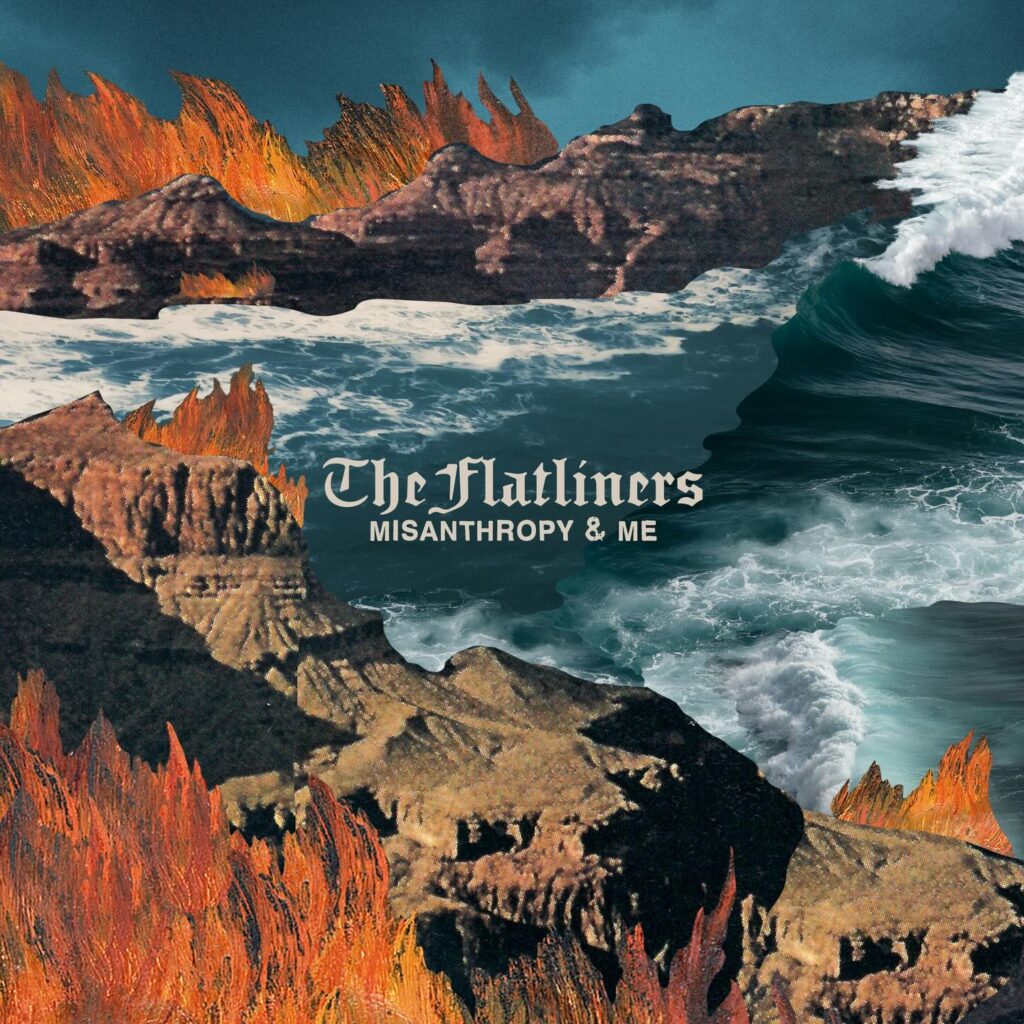
The result of that throwback-style session was “Misanthropy & Me.” Released as a standalone single back in December 2025, “Misanthropy & Me” serves as a link between New Ruin and Cold World, as the latter is the musical and thematic follow-up to the former. “There’s a theme with record, and it goes kind of deep,” Cresswell explains. New Ruin was an angry and thematically dark record, albeit in a different way than, say, Dead Language. Its arrows were pointed toward the past generations that sold ours a bill of goods, dismantling the systems that helped propped them up and leaving the younger generations to deal with the mess. “Cold World is a spiritual sequel to New Ruin,” explains Cresswell, adding “that’s something we’ve never done before. He continues: “with New Ruin, there was a lot to be angry about in the world, and a lot of that was written in the years leading up to and then including the beginning of COVID and everything. So there was a lot to be angry about in the world. And it just so happens that it’s gotten worse.”
Grief and loss and the sad reality of the world we live in are recurring themes on Cold World. Look no further than lead singles “Good, You?” and “Inner Peace” for clear examples. A particular high note on the record is the powerful “Whyte Light.” The riff-heavy uptempo rocker is an old to a fallen friend, Ben Sir. (Astute listeners will note that the Cresswell-penned “Side Of The Road” from Hot Water Musics latest full-length, Vows, is about the same friend.) Sir played in the Edmonton band Worst Days Down, and was also part of a bar there called The Buckingham. He was a long-time friend and spiritual light for Cresswell and crew. “He was a great friend of the band, one of my best friends on the planet,” he explains. “He was just kind of gone out of nowhere, so it’s just brutal; absolutely brutal.” Repeated several times late in “Whyte Light” is the line “I am me because I knew you,” which is about the most pure and genuinely positive thing you can say about another person. “I really do mean I am me because I knew him,” states Cresswell. “I think that’s the case with the people we carry with us, whether they’re still with us or not. They do make us a bit of who we are. We learned so much from him over the years, and the fact that he’s gone doesn’t make sense. It doesn’t feel real. I feel like he’s just been on the road for a while and I just haven’t seen him.”
Sonically, Cold World is very much a spiritual follow-up to New Ruin as well. It’s very much still a Flatliners record, but it’s also got enough twists and turns to keep things fun and exciting. Maybe not twists as far outside the norm as a song like Inviting Light’s “Chameleon Skin,” perhaps, but still some ideas that were wide-ranging enough that even Cresswell was surprised they made the cut list. Take a song like “Pulpit,” which features double-tracked vocals – one spoken, one shouted – over a musical bed largely focused on the Jon Darbey/Paul Ramirez bass and drums tag-team. “I sent it to the guys to see what they thought. I thought it was cool, but I was like, that song’s never fucking coming out. No one’s going to like that one. I loved it, but no one else is going to like it. It’s too weird. And then all the guys were like, ‘that one’s fucking cool!.”
Because the band have worked together for so long and operate on an almost telepathic level lately, there’s inherently a sense of trust in working through songs that might be outside the traditional norm, which, in turn, resets what the traditional norm is. “We’re aware of the moves we’ve made before,” says Cresswell. “Because we wrote a song like “Chameleon Skin” and put a record like Inviting Light out, we are now free to do whatever the fuck we want. And that’s beautiful, because we walked through the fire together.” Cresswell is frequently quick to gush about his bandmates; to bestow the virtues of their lifelong bond and connections, both musical and otherwise. There are “childhood, deep roots baked in the genetic makeup of this band,” Cresswell explains. The story has been told in other places (like previous DS interviews) but he and guitarist Scott Brigham met in kindergarten; he and five-string bass virtuoso Darbey met a couple years later, and they collectively met Ramirez around 11 or 12 at summer camp.
As such, they were friends well before ever becoming a band; even before learning to play instruments. “Scott and I started taking guitar lessons at the same time back in ‘98 because we wanted to play guitar, and we wanted to play in a band together. Same with Jon, but he got to calling playing guitar too late. Scott and I had already called it, so he got to play bass.” It’s a lifelong connection that exists and, after almost a quarter century together, seems to be as strong now as ever. “We love each other. We’re like brothers. These are my oldest, greatest friends,” Cresswell states emphatically. “Everyone has a bit of a life outside of the band now too, so this band is something that is our lifeblood, and something that always moves us forward together as friends, but it’s also there for us to return to. And each of us are there for each of us to return to as friends as well. It’s exciting when we get to do it.”
Cold World is out May 8th on Equal Vision Records in the States and Dine Alone in Canada. Pre-orders are still available; you should get it. There are also a bunch of tour dates that find the Flats appearing alongside the likes of Samiam and A Wilhelm Scream and Dave Hause and more. Full details here. Check out our full chat below.
*The interview below has been edited and condensed for content and clarity. Yes, really. *
Dying Scene (Jay Stone): So I don’t know what to talk about first, whether it’s the new record or 24 years with the same group of four guys. I know that this is a frequent topic of conversation and I know that what that actually means is that next year is 25 years and that you all turn 40. But do you talk internally about how special that is, even a little bit? I tried to run through the list of bands that have been together 24 years with the same four guys and I didn’t get anywhere. I mean, I guess theoretically Hot Water, right?
Chris Cresswell: Yeah, totally. I mean, it was the same around the 20th anniversary a few years ago and it is now with the 25th anniversary coming up next year. Just the nature of being in a band, you’re always planning stuff far in advance, you know what I mean? You kind of start as a band in our position to celebrate that 25th anniversary or at least to talk about it in these terms way before it arrives. You start to have those sentimental conversations before it’s even at your doorstep. We don’t talk about it a lot because I think it’s funny…because this has always been our experience with this band, you know what I mean? It is cool, but for us, we think like, “yeah, it’s our band. It’s cool.It’s always been the four of us because we’ve never had another version of it. This is the only version of it we’ve ever known.” So when those milestones are approaching and have arrived at the doorstep, we do talk a lot about it. I mean, we love each other. We’re like brothers. These are my oldest, greatest friends. I met Scott the first day of kindergarten. I met Jon in grade two and we ended up finding out that we live on the same street, so then we walked to school every single day together for the rest of our time in school until I moved away. And then we met Paul. Scott and I met Paul at a summer camp when we were 11 or 12 years old. So this is childhood, deep roots, baked in the genetic makeup of this band. And it does come up, but when it does, we’re in just as much awe as fans of the band may be about it, but then there’s always something else to do, so we’ve got to move on. This life doesn’t leave you a lot of time to process.
That’s certainly true. And I wonder if it would have ended up the same if you weren’t friends before the band started. You all knew each other ahead of time and then started a band; you didn’t meet each other through the process of trying to start a band. So I wonder if that is a different dynamic.
Yeah, I think so. You know, we all have friends from school days that you miss getting to hang out with all the time. You maybe get to see them at a wedding or whatever, or you bump into them somewhere if you still all live in the same town or something like that. There are these people from our past that each of us would love to spend more time with. And the way you do that is you start a band with some of those people! (*both laugh*) And then you are unified for life. I do think about that sometimes. I wonder where we’d all be as people, as friends, if the band wasn’t there for us and if we weren’t there for each other in the band. But it is true what you said, that going back, we did start the band because we were already friends. Scott and I started taking guitar lessons at the same time back in ‘98 because we wanted to play guitar, obviously, but we wanted to play in a band together. That’s why we started taking lessons. Same with Jon. Jon just got to calling playing guitar, as kids do, too late. And I had already called it and Scott had already called it. (*both laugh*)
Yeah, I know how that goes.
It was literally how he became the bass player for this band. But now…
What a phenomenal bass player.
Yeah man! Much to his chagrin, he became the bass player, but years after that, he’s one of the best.
That’s the reason I bought my first bass in ninth grade. Because there was another kid who had a guitar and another kid who had a guitar, and you can’t have three guitar players. We weren’t going to be Skynyrd. We were going to be a punk rock band.
Now there are bands, so many bands with three guitar players. It’s cool. I like it. Fuck it. Just go for it.
Absolutely now, but when was I in ninth grade? 32 years ago? You were Skynyrd or The Band, or I guess Pearl Jam, because Eddie played guitar, too.
That’s right. Yeah, yeah, yeah. For us, it would be this brief era in the Tragically Hip’s existence, where Gord Downie, the singer of the Tragically Hip, who typically just sang, but there was a brief era where he also played guitar on stage and sang. That would be one of the first bands, like homegrown Canadian bands, who are like a big deal to us, who we’d see like, fuck it, three guitar players.
Massive deal in Canada. I remember when I was in college, when moved to Boston, we had Much Music, and they always had specials on like Tragically Hip and Our Lady Peace and bands like that. And I learned that Our Lady Peace, I dig. I don’t get The Hip. You could tell that they were massive. And I feel bad even saying that I didn’t get them because…
There’s such lore around that band. They’re one of my favorites, truly. But I got to admit that when I was a teenager in school, in high school, especially like when I was “really punk,” you know what I mean?
Oh, totally.
The punkest version of myself was when I was 14 and I just discovered it. I didn’t really care for them mostly because they were all over Much Music. They’re all over the radio. They’re ubiquitous. So it was just this thing like…it was one song I just didn’t really actually give a chance to at first. And it was everywhere, so I didn’t like it. You know what I mean? That wasn’t for me, but…
That’s why I didn’t like Nirvana. I was “too punk” to like Nirvana. Like an asshole. (*both laugh*)
Well, we’re all assholes when we’re young. (*both laugh*) But then the band gets our start and we get our first van and we get the Tragically Hip’s greatest hits double-disc CD, Yer Favourites. Y-E-R. F-A-V-O-U-R-I-T-E-S. (*both laugh*) And it was a double-disc CD. It was fucking long, but every drive we had was long then, so we would just throw it on and so quickly all of us were just kind of like getting a full-blown education on how many different things a band could do while still sounding like themselves.
That is a really good segue into this record. Because this is such a Flatliners record but it’s not like the last couple records, and obviously it’s certainly not like the early Flats records. You continue to add different wrinkles to it. And so I wonder in that process of writing songs for this band in particular, do you guys talk about where you can push those boundaries? Like what you can do and still make it a Flatliners song? I don’t think there’s anything on this record that doesn’t sound like a Flats song. I mean, “Chameleon Skin,” I think from a previous record, is like the outlier there, but still, that’s you guys. Do you talk about like where can we go stylistically? Or is it just kind of like all what you’re feeling at the time when you’re writing?
Yeah, there’s no conversation about where we could go with it. It just ends up being where we go. Truly, it’s really fun. We trust each other completely and we trust ourselves at this point completely, you know? I think that comes from kind of walking through a bit of the fire we lit for ourselves with some twists and turns over the years. Inviting Light is a particular one, where when that came out, it confused a lot of people. It honestly kind of crept up on us in certain elements, how different it became, you know? But when you’re so close to making something, you don’t truly see it for how different it is when you stack it up against the record that came before and the record that came before that one. You just know what you’ve been working on for a year or six months or a month or whatever it is. When that record came out, it definitely turned some heads, but the funniest thing is now we will meet Inviting Light haters at shows. And they are self-professed former Inviting Light haters. Former…that have now gone on to understand that record more or just enjoy it a lot more. Some people tell us it’s their favorite one, which is cool. I don’t know, we just took some chances we didn’t really realize we were taking, to be honest, because…
So it wasn’t necessarily a conscious decision to like turn left there.
No. No, man, it was just us writing songs that we wanted to write and what was coming out of us at that time. And same with the next record, with New Ruin, there was a lot to be angry about in the world, and a lot of that was written in the years leading up to and then including the beginning of COVID and everything. So there was a lot to be angry about in the world. And it just so happens that it’s gotten worse. So that is how we get into…
Just amazing, isn’t it?
Yeah, yeah, Jesus Christ. Didn’t know there were enough coals to fucking, you know, throw on the burning pile of shit that we call the planet. (*both laugh*) So musically, the conversation almost never happens. Sometimes when we’re jamming stuff and we can run the gamut. Say we’re writing a setlist. We can run the gamut of our whole catalog and we can play some old stuff from Destroy To Create. We can still fucking nail those songs. It’s fun, you know what I mean? We don’t do a lot of them live anymore, but we did just do this big anniversary for the 20th a couple of years ago for that record, which was super fun. And we don’t look back too often, but when we do, we’re reminded that we have a few tricks up our sleeve in terms of all the genre tourism, I guess, under the punk umbrella we’ve done. Under the rock umbrella, maybe too. But we’re aware, I think, of what we are capable of. That sounds so cocky and I don’t mean it to be. We’re just aware of the moves we’ve made before, you know? Because we’ve made those moves, because we wrote a song like “Chameleon Skin” and put a record like Inviting Light out, we are now free to do whatever the fuck we want. And it is beautiful, dude. It’s beautiful now because we walked through that fire, like I was saying before. In the moment back then, it was a little tricky to navigate, you know what I mean? I mean, we didn’t want to put a record out that confused half of our fans.
But that is a conscious decision that some bands make, obviously.
That’s true, that’s true. We kind of stumbled into it, but that is something some bands do plan.
Face To Face, when they recorded Ignorance is Bliss, which is a record that I loved from day one, and they don’t believe me when I say that, because so many people didn’t like it. Like with Inviting Light, they have since grown to love and appreciate it, but that wasn’t the case when that record came out. They wanted to make a grown-up, “we all grow beards and wear flannel, and there’s a piano and strings” record.
Well, because they’re incredible songwriters, and they’re a great band. And at the end of the day, every band that gets pushed into a genre, like a specific genre’s corner, they probably have more in them than just that one genre that fans of the band just use to describe what the band sounds like. You know what I mean? A lot of it is just this nomenclature of how to bring people together. That’s great, music is a great unifier. At the same time, putting people into corners like that when maybe they just want to be a band can be a bit divisive sometimes. You know what I mean? It shouldn’t be, because it’s just fucking music. But every once in a while, it can feel like that. And I think also, people are different every day, especially in certain eras of their life. There’s these big transformations that happen in the way we think, and in what we do, and how we feel. And those feelings are pretty much what all these bands and songwriters are expressing in musical form. So it’s pretty complicated. It gets pretty tangled, you know what I mean? So we’ve found, by stumbling into all these scenarios over the years, and just kind of doing whatever we’d like to do, is that let’s just kind of be ourselves. It’s going to be a little different every time, because we’re a little different every time. But I’m glad to hear that this one sounds like us to you, because I think it does too.
Yeah. Yeah. It’s so good. I made a mistake. Usually in the lead-up to an interview like this, I try to listen to an album two or three times, maybe. And then that’s it. Because I want to get it but then just kind of leave it alone, and see what resonated with me. And then listen to it again, like the day before, just to make sure what had previously resonated, if I have the time to do that. I’ve probably listened to Cold World 40, 45, 50 times.
Yeah, really? You’re going to hate it by the time it comes out. (*both laugh*)
I was out for a run the other day, and I had it on. And I realized what a goof I was, because I was somehow like as I was running, I was kind of like playing half air drums, half air guitar at one point. Because there’s so many big, heavy riffs that complement each other. It’s like, oh, Paul is fucking crushing here. But also the guitars are really fucking cool. I’m not going to play air bass when I run…
Yeah, and with the fifth string, you’re going to go a little higher. (*both laugh*) Yeah, that’s wonderful to hear, man. I got to say, everyone killed it on this record. It was beautiful to see it all come together. And it’s interesting to hear you say that it all sounds like us, because there’s one song in particular on this record that I remember kind of finishing a demo of, to share with the guys. And I was like, “wow, that song is never coming out, ever. Because I think it’s the weirdest flat song that’s ever been written, in a cool way.” And that song…
Are you going to make me guess?
Well, I’ll tell you. Actually, I am curious what you think. I did the demo. I sent it to the guys to see what they thought. And then from that point in the process, however many weeks, months later, we all get in a room and kind of jam it through and everyone touches it and makes sure it sounds like us, you know? So I sent the guys a demo, and I was like, “that song’s never fucking coming out. No one’s going to like that one. I love it, but no one else is going to like it. It’s too weird.” And then all the guys were like, “that one’s fucking cool!” Like, interesting. Okay, great. And then, you know, we always end up with a couple extra ideas for the record, then you whittle it down to the songs you’re going to record. So I’m like, that song’s not going to make that part of the cut. And then we whittle it down to what songs we recorded are going to go on the record…
So is it “Pulpit” or is it “Gush”?
It is “Pulpit,” yeah!
Well, so “Gush” in my notes, I was like, this could maybe be a Hot Water song. But “Pulpit”… “Pulpit’s” such a cool song. I love the double-tracked vocals, like the spoken word and the scream. That’s really cool. It’s a really cool effect.
Thanks, man. That was the one that blew my mind completely. And then all the guys were very behind it, which then made me feel a lot better about it. It comes from our love of Rocket from the Crypt, you know what I mean? I love Idles. Even like The Streets and stuff like that. Just having a bit of a different approach vocally, and having all that happen just over bass and drums for a lot of the song. I just was fucking around, man. I think that’s how – not just me, but us as a band – I think that’s how we have gotten to the point of truly feeling liberated and just free in our own musical skin. The way we put these ideas together is like in solitude, you know what I mean? Whether it’s one of us on our own – myself – making a demo and sending to the rest of the guys or just in our jam space, together. It’s not a huge deep dark secret, but we’re not sharing the process with our fans along the way, so we’re free to do what we want to do and want to try.
Yeah, it does seem like when the new Flats record comes out, it’s not like we saw those little videos along the way that you were recording. It’s like, “oh, here’s the pre-order!”
Yeah, yeah. It’s ready for you. I don’t want to waste your time, you know what I mean? I don’t want to waste anybody’s time. I also know that sometimes you’re in the studio a year before that record comes out. To me, that’s such a waste of people’s energy and excitement on something. You’re going to have to then remind them, you know, nine months later, 10 months later, like, “hey, by the way, remember that thing we posted last year when we were in the studio? It’s finally coming out. Cool, right?” Fuck that. Just hit them when it’s time.
How much time was this record written over? Like, how cohesive was the writing process? I know in the past, like Inviting Light was sort of two chunks, maybe a year apart. Was that the case here too? Or were they closer together?
With New Ruin and Cold World both, we’ve gotten out of the habit of recording in two big sessions about a year apart. We did that for Cavalcade. We did that for Dead Language. We did that for Inviting Light, all for different reasons, the biggest of which is our touring schedule. The last couple of years have been quieter for us. We toured wherever we could go on New Ruin. It was like right out of COVID and stuff. So there was a whole new playbook on what we could do and where we could go and stuff like that. And then around the time we were winding down from touring that, you know, there’s already some songs for Cold World being worked on for sure. So like there is always overlap between like the record we’re out touring and then the record we’re like actively working on behind the scenes. I would say that for Cold World, two years writing maybe? And that’s like sometimes a song is written and then four months later, a few more are written. There’s never any true method to the madness. Then we just banged it all out in one go in 36 days in the studio.
Oh, wow! Like bass and drums first as usual. You didn’t all record live, did you?
No, no, we haven’t done that since Dead Language. And we did the totally live recordings on Dead Language kind of accidentally. Back in 2011, I guess this was, we went in to make demos of what would become Dead Language. And it quite literally became Dead Language because we took those demos live off the floor demos, no click, nothing. I did the vocals later and we did a couple guitar dubs later. But we took those demos on the road and showed our buddy George, who used to be our tour manager and sound tech in Europe for years and years. Great, great dude. Great friend of the band. Have you seen Some Kind of Monster?
Oh, yeah, yeah, yeah.
So remember that scene of Lars’s dad and he’s like, basically like, like ruining his day just being like, “I’d say delete it.” Like a very wise European man.We had that with George, but like the flip in the sense of like, he was very positive about it, but it was this very, very powerful moment when we’re showing him our demos, he said, “I think you’ve already made your record.” (*both laugh*) A lot of what you hear in Dead Language was intended to be demos, so that was all live. But since then, we’ve tracked everything from the ground up, but we always do Paul and Jon together. Always.
I feel like you can tell.
They link up so well together.
Yeah. Yeah. Did you have all the big guitar riffs and whatever fleshed out ahead of time? Or was that stuff worked out in the studio too? How close to what you went into the studio with is the finished product, I guess?
Ninety percent. Ninety percent. That’s usually the MO in my mind, at least is 90 percent prepared, 10 percent magic. Like, again, I don’t like wasting people’s time in the studio. I don’t want to waste my friends’, my bandmates’ time. I don’t want to waste my own time. I don’t want to waste our lovely engineer friend, Matt Snell’s time, who we work on everything with now. He’s so great. There’s more people involved than just that. I think us as a band, we want to know going in what we’re doing. There are a few guitar riffs that we kind of put together in the moment in the studio, which was cool because you gotta leave the door a little open for that stuff. It’s not a lot of fun if you’re just going in with a checklist, you know? A lot of people want to romanticize making a record and think that it’s like this crazy party, where there’s people everywhere and friends hanging out. And our buddies come in and can visit and stuff like that from time to time, which is always lovely. But they’re usually there for like an hour or two and they’re like, “I’m getting out of here. It’s kind of boring. “
Yeah, right, right. How many times do I have to hear you play that one particular riff?
Truly what it is, is you’re sitting in a chair or you’re standing in a room doing the same thing a handful of times until you get it right. You know, cool. We got it. Then we move on. So there was one song that came to the table very late and that was what became “Misanthropy & Me,” the single we put out before we announced Cold World. That song came together very last-minute writing-wise. It was still a bit of a question mark, but we thought, you know what, let’s throw it on the pile of songs we’re going to record. If we have time at the end of the bass and drum session, let’s lay down bass and drums for it, which we did. The last day we had some extra time. So we’re like, “OK, let’s get in the room together and let’s really tinker with this song.” We hadn’t done it that way in like 10 years, just because of all the traveling, all the touring, the fact that all of us have a life outside of this band now. Band practice or getting together to jam is pretty tough, so we do it when we’re writing a set for a tour and want to get it tight or when we’re doing pre-production for a record. So this was fun. We got in the studio and on the last day, bass and drums, all four of us in a room fleshed out the final arrangement for this song. I already had all the other lyrics, and we had all the other music for the record done already. So then I knew what the record was about. There’s a theme with this record and it goes kind of deep. So I then knew like, “OK, I can write about this whole theme of the record and kind of make this song like a bit of like a thesis statement song”, which each of our records kind of have; the last few records, at least. And then, (“Misanthropy & Me”) didn’t make the record. So we’re like, “shit, we still really like this song.” And it became this perfect bridging point between New Ruin and Cold World because these two records are connected. Cold World is like a spiritual sequel to New Ruin, something we’ve never done before. I think each of our records and all of our fans would agree that everything has been different each time, almost to the point of alienating people. (*both laugh*) It feels like we’ve hit a stride now with what we do and who we are and what we want to share of ourselves and what we can find musically in ourselves. It’ll always evolve a little bit. But yeah, this record, Cold World, is like the continuation of the whole New Ruin “world” that we built. “Misanthropy And Me,” is the perfect bridging point between New Ruin and Cold World. So we’re like,” well, fuck, it’s kind of perfect that it didn’t make the record because it can live on its own as a little moment in between.” So now people hopefully will go through the lyrics and try to dig through what all that means. But it’s all there.
I did spend a lot of time trying to dig through the lyrics. My growing up period was opening a record, opening a CD, unfolding a tape and using a magnifying glass because the tapes were too small. And sitting down and listening to it in full as a whole product and trying to read the liner notes. I still try to do that. Granted they’re PDFs that I have to print out…
I know, now it’s not as fun. Now you’ve got to go to Staples and buy ink first.
Right! (*both laugh*) Why won’t it print? Why won’t it print? What the F…
You’ve got to get a second job to afford the ink.
Yeah, misanthropy and my printer… (*both laugh*) You come out swinging again on this record. “Stolen Valour” is such a cool song; the way it builds at the beginning, that sort of big frantic guitar and then the gang chorus and then the drums kind of build up. But then I also realized that’s kind of a thing. That’s been a thing for a while. Each record starts off with kind of a big moment. I feel like since Cavalcade, at least anyway. Is that a goal when you’re sequencing a record or even when you’re writing a song? That you need a song to kick the record off and it has to punch you in the face to set the tone?
It’s definitely a goal when sequencing the record. And I think “Stolen Valour” could only have opened the record. There were brief talks about it maybe appearing elsewhere. We do that whole process as a band. We’re a very democratic outfit. We truly are. That’s probably one of the reasons that it’s still the four of us. I would hear the arguments being made for that song to go elsewhere and I just think never made sense to me. Luckily, being a democratic outfit, the majority of the band felt the same way. We’re like, “it’s got to start with that song.” It just fits. When writing music, the opener kind of reveals itself, to me at least, over the course of the whole writing of the record. The final song of a record typically is something that I think about. This record’s a little different because there were a couple ideas for which one was written as the closer. And that feeling just didn’t translate in how the song ended up, which is okay. But typically on New Ruin, “Under A Dying Sun” was written as the album closer. Way back on The Great Awake – “KHTDR” – you can’t put a seven-minute song halfway through the record; that’s the closer. There’ve been certain instances over the years where we’re like, “that’s the closer.” And then once we know that in the writing process, then we can maybe expand and be like, “well, if it’s the closer, let’s have a big fucking jam at the end of it or something, a little punctuation on the album itself.” With this album, some of those moves, we were just kind of feeling what was presented to us in the end by our own doing. And the sequencing for this one, I think it’s a fun. It’s a pretty wild ride, I want to say. I have a biased opinion, of course. But yeah, anyways, a song like “Stolen Valour” could have only gone first, I think.
Yeah, but I also feel like “Mammals “could have only gone first. I feel like “Performative Hours” could have only gone first, the way that song starts out. So that has also become a thing, which has become a thing that I look forward to. Like right when I hit the little triangle button, where does this one start? I enjoy that.
We do put a lot of thought in a lot of stuff, man. I mean, I think it’s partially probably because we don’t put records out every two years, you know? Respect to bands that are doing that. It’s a true feat to do that. I hope fans of those bands realize that band is working their ass off to get you not only a new record every two years, but to tour it as well. Takes a lot of energy. With us, we kind of let it come to us a little more. And in recent years, just like I said earlier, everyone has a bit of a life outside of the band too. So this band is something that is our lifeblood and something that always moves us forward together as friends. But also it’s there for us to return to. And each of us are there for each of us to return to as well as friends. So it’s exciting when we get to do it. And because sometimes that means that there are four years between records, a lot of that has been very well thought out and toiled over. We fucking love this shit, man. I mean, it’s fun.
You can’t not do it, right? Do most things still sort of start with you writing or does everybody bring things or do you like flesh out an idea and then send it to the guys for feedback? And how has that changed over 24 years of doing this?
I mean, I got to say the last couple – Cold World and New Ruin in particular – have been the records where we’ve found the newest version of our process. I’m sure and I hope that it will continue to evolve. You know, I mean, way back in the day, we were always together, right? If we were on tour, we were always together and we were working on stuff all the time. We’re talking about songs in the van. I’m showing everyone lyrics that I’m writing down on actual physical paper. Or we’d be at soundcheck and we’d work on a riff. We were just always together. And when we weren’t on the road, we were always together. We were jamming every week. We lived and breathed this thing 24/7. As life changes and we all grow older, the process evolves. And this last little bit, I’m afforded a really special opportunity by three very supportive and understanding friends to kind of go full rabbit hole on a vision I may have for a song, meaning I’ll put a demo together if I have an idea that’s got everything in there that I can think of. It’s got the vocal. I usually wait till the lyrics are done to to record it. I want to give the guys the best first impression I can with this idea that has been bouncing around in my brain for the last however long, you know what I mean?
How precious are you about those things? Because of your long-term friendship and how democratic it is, how open to them being like, “no, let’s change this in a song,” are you?
I think I’m probably not as open to it as the other guys would like (*both laugh*). But truly,that does happen all the time. You know what I mean? This is a new kind of process, mostly born out of the simple fact that we can’t always get together to like jam a song for four hours and then like next week, do it again and again. They know that my mind is always occupied with music. All of theirs are as well. I have the means, I suppose, to stay up till four in the morning and put an idea together. (*both laugh*) I mean, I can’t rest until it’s done. They also know that about me. I think they’re just like “let the dog off the leash and watch him run!” But it does get to the point where I’m sending them ideas to listen to. There’s MIDI drums in there that Paul will severely improve upon. There’s a very simple bass line in the song that Jon will like make a meal out of and make it so great. There is a lot of guitar ideas that Scott and I will go through together and he’ll come up with something better; he’ll come up with a way that he plays it that makes it sound like he’s playing it because he is on the record. Things like that. There’s a lot of that. Everyone touches it before we get into the studio to record it. And all the guys come with great recommendations in this new part of the process, all the time of like, “hey, man, we’ve been all just listening to this demo for months. That part’s too long. Or this part over here. That’s like two seconds. That’s really catchy to us.” So we do always kind of stamp it as a band, you know what I mean? I gotta say, it’s been a very great use of our time. We’ve been able to write two records that way. And then to do the pre-production before we get in the studio and make sure everyone touches it and then make these records together. I mean, we’re stoked. I would love though, if the process evolved again, or maybe devolved into us going back in the room and jamming. I would love that. You know what I mean? I hope we can get back to that one day. But in the meantime, this has been working. They’re very supportive friends and bandmates, and they know that there’s a vision there that might be starting with one person, but it’s only completed when the four of us do it. That’s when it becomes ours.
On this record, the songs are very much Flatliners songs. With people who are in multiple projects, and where you might have three, technically, if you’re doing your own thing too, I try to think, “okay, would this song have worked as Cresswell solo? Would this song have passed muster with Hot Water,” etc, etc. And in these all, by and large feel like Flatliners songs. Will you borrow an idea from yourself for a project like this, if that makes sense? Like, if you know, you’ve been twiddling around on something that theoretically could be on a solo record, but will you say “it’s actually going to work better if Paul and Jon and Scott play on it, or if I throw it to the Hot Water gauntlet and see what they do with it.” Do you borrow from yourself much?
Yeah, I do. I do. Any writer doing it for so long, you kind of come up with, not signature moves, but you kind of come up with some special feelings that you want to maybe revisit. There are certain musical moves that I think are better suited for Flats. And then I have a very intimate knowledge of like, “yeah, we could fucking nail that one together.” Whereas there are different moves I could make now with my involvement with Hot Water. That band operates in so many ways similarly and so many ways much differently when putting like songs together that it’s such a hard question to answer. But I really think that now I just have such a more intimate understanding of how Hot Water operates with writing songs and my involvement in that. And Ihave 24 years of experience now with Flats, so it’s almost telekinetic. You know what I mean? There’s so much like that is spoken and there’s so much more that is not; it’s just understood, which is pretty cool. Now I just go with my gut, man. Truly. Like it kind of just hits me now in the moment, like “that’s a Flat song,” or “oh, I’ll save that for a Hot Water thing.”
Like while you’re just sitting on the couch behind you with a guitar or whatever and playing a riff, and then you start to chase the riff, you can kind of tell quickly which hole that’s going to go in?
Totally. It’s similar as to why this demo process has become such an integral part of the band’s writing process with Flats lately. Once I have that initial idea of the chord structure or riff or something, or a vocal thing, my mind instantly kind of like pictures what else could be there. So that’s either a groove that Paul would play or it’s a groove that George would play, and those are much different grooves. Paul is a massive follower of George; he’s been a fan of his drumming forever, you know what I mean? There are these similarities, but there are such unique, different players as well that now, lucky for me, I get intimate knowledge of what it feels like to play with both of those fucking great drummers. So I trust my gut in that moment because my gut feeling is me kind of like racing a bit into the future, looking as much down the road as I can being like, “how would this song go with like George playing drums or Paul playing drums or Jason playing bass, Jon playing bass, Chuck or Wollard playing the other guitar, Scott playing the guitar.” It’s it’s hard.
Or just you, right? Or just you on an acoustic or on the Strat or whatever.
Yeah, there’s no good fucking nice way to answer this question because it’s just instinctual at this point, I feel like, which I’m happy about.
I don’t always like to go too in-depth on songs because I am one of those people that thinks listeners should sort of create their own vision of what was going on in a song and make a song their own, right? But “Whyte Light.” Holy crap. That song hit me right in the stomach. What a great song and what a beautiful song. And there’s a line in there…“I am me because I knew you.” That is such a beautiful line. That’s such a beautiful and I think powerful sentiment to have for somebody; that you are who you are because of the connection that you had with this other person. That actually like stopped me from what I was doing to focus and listen to that song and got in my own head.
That’s very nice of you to say. Yeah, that song is very special. That song is written for a friend, Ben Sir, who passed a few years ago. He’s a great friend of the band, one of my best friends on the planet. And he was just kind of gone out of nowhere, you know? It’s just brutal. Absolutely brutal. There’s a lot of grief on this record, and a lot of that has to do with us losing friends. Ben was such a special guy. For people who may not know, he has a band, Worst Days Down from Edmonton, who are fantastic and friends of ours. He’s just a special guy. I just learned so much about…the world around me, how to treat each other, how to give back to this community, this musical community that has given us so much. (I learned so much) about myself, you know? I really do mean I am me because I knew him, you know? I think that’s the case with the people we carry with us, whether they’re still with us or not, like the people we choose to spend our time with, you know what I mean? Like they do make us a bit of who we are. We all as people affect each other in very profound ways. And it’s good and bad, I suppose.
Totally. Yeah.
And for Ben, it was just…man that guy is just fucking one of a kind. And it’s kind of hard talking about it still.
I can tell. That’s who “Side Of The Road” was written about, too?
Yeah. Yeah. Yeah. Same friend. Same guy. He just had such an impact on me in my life and the rest of the guys, too. I mean, fuck, like I said, we’ve learned so much from him over the years. And the fact that he’s gone doesn’t make sense. It still doesn’t feel real. I feel like he’s just been on the road for a while and I haven’t seen him. That’s kind of how I want to think of him for now.
But I think that sentiment is about the most genuine and beautiful thing you can say about somebody’s memory. If you’re assuming you’re talking about it in a positive way, that I am the way that I am in all the good ways just because I was in your orbit. It’s such a genuinely beautiful and pure thing to have, to hold about somebody else.
Yeah, man. So Whyte Ave in Edmonton is this strip of restaurants and bars and stuff. And he was a part of a bar in Edmonton that’s still there called The Buckingham. It’s on Whyte Ave. So that’s why it’s W-H-Y-T-E.
Figured it was a Canadian thing.
Right. Fucking guys always putting different vowels in there. Got a fucking fetish for vowels. (*both laugh*) I mean, he’s an absolute beauty, man. I spent so many amazing hours of my life in vans with him and having some of the greatest conversations I’ve ever had with him. And we spent a lot of time on his balcony in Edmonton. We’d be like coming home from a show. We’d always stay with him. He had this tiny apartment. The whole band would stay over, sleep on the floor, snoring each other’s faces up close and personal, just like just the good old days kind of shit. And it could be middle of summer or fucking middle of winter and 30 below, and the night would usually end with Ben and I, at least Ben and I, maybe a couple of the other guys too, just ripping darts the whole time. And we’d just be talking. I just miss having him around, man. I miss those conversations. That song was one of many he touched on this record for sure. And yeah, on Vows too. I think he’ll be in everything we do, man. I think he’ll be with us forever in that way. You know what I mean? You can’t do better than him.
Is it harder to write songs that are that personal about loss than it is to write sort of bigger picture macro, “the world is a steaming pile of shit” songs?
(*laughs*) A little bit. Yeah. I think it’s just because you want it to be the perfect memoriam for your friend. You know what I mean? Every word to me lyrically in every song matters. Nothing drives me crazier than hearing a new song from a band I like, or just any band, and you can tell the lyrics are so lazy. I fucking hate it so much. I’m not out here stating that I’m the fucking GOAT in this shit at all. Not by far. But I like to put the effort in and when I feel like I’m witnessing someone not putting the effort in, it really bothers me, because like, why are you doing this?
Or just flipping through the rhyming dictionary.
Yeah. But with this kind of song, it’s so special and so delicate and so so raw. Every word really fucking matters, you know what I mean? They’re hard to write for that reason and also because there’s this almost finality, or this kind of solidification of what you’ve been processing once you finish that song, which I know isn’t true, but just in the way you navigate your feelings around a huge subject like this massive loss in your life, there’s a bit of a punctuation mark to it, to the thought. I don’t want it to be that way, but iit just feels like that sometimes in the moment. So those are the songs that I’ll kind of toil over a little more because I want it to be absolutely perfect for him to hear wherever he’s at, you know?
Yeah, and I guess that that does sort of put a pin on that person and make it real that they’re not just on tour again, or it’s just that you’ve been two ships passing in the night and having kind of like now it’s like real and there’s a different feeling behind that.
Yeah. 100%.
Are you nervous to play that in songs like that live because of the feeling that it evokes?
Yeah, always. I mean, it was the same with “Eulogy,” honestly, when we wrote that years ago. The unfortunate thing is we’re not really new to this, right? I mean, no one is.
The longer you live, the more you have to get used to this shit.
It’s just like these kind of topics… it’s not often with our band that I’m writing lyrics about the things that rock, you know what I mean? (*both laugh*) Things that make me stoked. That’s not interesting to me at all to write about. So, yeah, I am. I always do get a little nervous about playing those songs because you’re just going to stew in your own misery, and kind of dig up old bones and all these things. But that version of it, to me, is only in the beginning. Then what I think has happened in the past with songs like this is this really does help process these feelings to a healthy place, because you’re sharing these feelings with other people. It’s very important. It’s a very important thing to do. Share your feelings!
Listen up, fellas! (*both laugh*)
This is true because there’s no way you’re the only one who’s ever felt this way. There are eight billion people on the planet and more people were here before and there’ll be more people later. I think sorrow and misery can be these really isolating feelings for everyone, myself included. And it’s hard. It’s hard to talk about them. But in the end, you know that someone else has gone through something similar to what you’re going through. Maybe not the exact same thing, you know, but there’s going to be someone out there who can at least lighten the load a little bit, you know? So playing these kind of songs live…excavating the soul of the song, which I think is the version that exists on the album, then giving that song life on the road is, I think, where it happens because you just play it so many times and you add little bits and pieces here and there to the performance live every night. That’s where the life of the song happens. And I think through the life of a song like this is where processing some feelings can really happen. It can be very therapeutic, man. But none of that is easy. You’ve definitely got to kind of crawl through the Shawshank shit tunnel first to get to the euphoric moment in the rain.
Right! And I feel like it’s going to set you up for conversations…and I’m sure you’ve had them already, about people explaining to you who their person is, right? Like because obviously I didn’t know him. I assumed that I knew who the song was about when I heard it because of what I know of your history. But even just a line like that makes me go, “OK, I know who that’s about for me. I know five, 10, 15, whatever people have sort of molded me in that way.” So that’s good. That opens you up to be like a merch table therapist with people.
It’s a bit of a raw nerve scenario sometimes. It’s nothing new because it’s like the blessing and not the curse, but the other side of a song like “Eulogy” having been such a huge song for our band for all these years now is that exact scenario where we meet lovely people after the show who have wonderful things to say about how that song got them through the fucking worst time of their life. That sentiment is beautiful, and that’s something that should be shared. It’s just heavy sometimes. So don’t stop. I don’t want people to stop sharing those, you know what I mean? Like that’s like that’s what that song is there for. The music is there to help. It helped us. And it will continue to. But it can be heavy. But what isn’t these days?
It’s a cold world. (*both laugh*)
It is, dude. It is!.
I’m really excited for people to hear this record. I think that people that have been with you along the way are going to dig it. I know you have mentioned before with Inviting Light that people kind of scratch their heads a little bit about it. This record is a Flats record. It’s different enough, but I don’t think people are going to scratch their heads about it.
Even if they do, man, I appreciate that. I think even if people scratch their heads, like I said, I think we’ve made enough twists and turns over the years that I think people would maybe scratch their head more if it sounded exactly like the record before it at this point. I hope that people riding with us long enough know that we’re just always finding new parts of ourselves to kind of express. It’s a bit of a guessing game sometimes, but it just feels great to have another one ready for everyone to hear, man. It’s always a bit of a funny period of time these couple of months, when you first start sharing songs because the majority of the record is like your little secret that no one else knows yet. They know it’s coming, but they don’t know what it’s like. And the day it comes out, it’s everyone’s. And it’s a pretty profound feeling as a musician, maybe more so because we don’t really share a lot of the process along the way. So it’s just kind of an all at once, it was ours and now it’s everyone’s. It’s there to be shared, man. It’s just such a fucking funny way to live, dude; to make all these songs in solitude and in secret and then out of nowhere that all changes.
Well, and the record also comes out at the end of that East Coast run. So I would imagine that most people that will be at those shows haven’t heard any of these songs. And that’s not very common, I feel like nowadays. You’re going to be working, I would assume, maybe half the record or whatever into the set that people are kind of not really know what they’re in for. I know that’s got to be cool in this day.
It’s kind of cool. About a year ago, we had some shows in Canada and we were just about to record the record, so we had done a bunch of jamming and kind of tightened up a bunch of songs. We played “Inner Peace,” the song that came out last week, a bunch of times last year. We played it almost every show we played last year. But it was fun because aside from the video they filmed at the show, there’s nothing else for them to go back and listen to. That might be the only time anyone’s ever gone back to actually watch the video that they took the night before, aside from putting it on Instagram was like, “oh, this is the only version of the song that exists right now. That’s cool.” I know it’s not something bands do too often anymore, but I also know we’re not the only ones doing it. And it’s just kind of just letting the overthinking roll off your back at a time like, “let’s just play it. We like it. It rocks. Let’s do it.” And it’s exciting to see people in the crowd when we would introduce the song, but kind of barely introduce it because we weren’t making a huge spectacle. \We would just kind of say “check this one out” and then like bust into the new song. And we’d see these fans that know every word of every other song look around like “what is this?” That’s a cool feeling, man.
It’s been about 15 years since Denzel Curry first came to prominence as an extremely young rap monster in SpaceGhostPurrp’s Raider Klan crew. Curry was only about 16 when that happened, which means he has now been rap-famous for nearly half his life. In that time, Curry has done a great many amazing things, and now he has a new accomplishment to trumpet. As Curry himself puts it, he’s the “First Rapper Played in SPACE N***A!” That claim isn’t 100% scientific, as we’ll get into below, but it’s still pretty legit.