
Blog

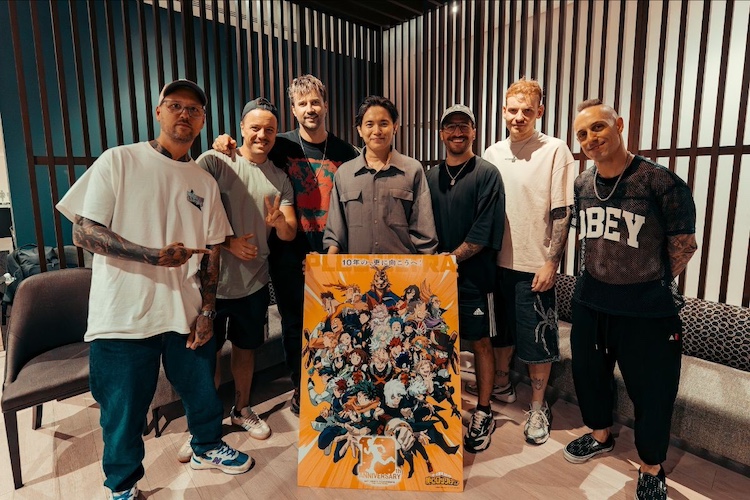
  • We Came As Romans Debut New Version Of “Red Smoke” Featuring HEAVENSGATE

    Part of the forthcoming “ALL IS BEAUTIFUL… BECAUSE WE’RE DOOMED: CIRCULARITY”.

    The post We Came As Romans Debut New Version Of “Red Smoke” Featuring HEAVENSGATE appeared first on Theprp.com.

  • Solstice – New Life 2026 Remaster (Album Review)

    by Prog Nick

    Solstice is a band that to my ears sounds almost magical, and this magic (or should that read ‘magick’?) is created by a unique melding of styles and approaches that, while eclectic, sounds like only Solstice can. At times the band sounds like an electric guitar-driven Prog Rock extravaganza, and at other times like a group of musical faeries bounding through the forest casting wistful charms and spells. But it always sounds like Solstice. The band is nothing if not consistent in its wonderful sound, but one wonders – how far back in its catalogue does that consistency go?

    Very English but also very cosmopolitan, Solstice, led by stalwart and highly respected guitarist Andy Glass, were one of the ‘big six’ neo-Prog bands that revived the genre in the 1980’s. But there is so much more to them than just that. Their sound is certainly neo-progressive and highly expressive of Glass’ 1970’s Symphonic Rock influences, but there are also strong elements of Folk (and I mean that term to include Folkloric music), Funk, Classical, Jazz, Melodic Rock, New Age and much more. But although similarities have been drawn to bands like Yes, Camel, Mostly Autumn and Magenta, there is no denying that Solstice have their own particular sound. This is due not only to the melding of styles mentioned above, but also to an indefinable quality of free-spiritedness that is quite mythical and almost Bohemian (meant in the best possible way.) It is structured, diverse and disciplined, but it also somehow sounds as magical as a druid and as free as an English summer breeze.

    With the search under way for a vocalist to replace the excellent Jess Holland, who will be exiting the band this year, it makes sense that the band’s 2026 release should be a remaster of older catalogue material. And Glass’ selection is an enticing one: he has decided to remaster the band’s seminal second studio album, 1993’s ‘New Life’. This album has been described as an ‘undiscovered gem that, without the backing of a major label, largely eluded those outside the devoted Solstice faithful.’ It has certainly eluded me until now (even though I have counted myself among the Solstice faithful for several years) and I am very grateful that this release has rectified that omission. ‘New Life’ was an important and pivotal release from the early 1990’s and, on listening to it now, it absolutely deserves this brand-new exposure.

    Solstice have had a very dynamic history as far as personnel is concerned, but in fairness, this might have been one of the reasons for the band’s consistent re-invigoration, with Glass being the constant. The band was already on to its third lead vocalist by 1993, in the form of the talented Heidi Kemp, who was joined in studio by Glass, violinist/keyboardist Marc Elton, bassist Craig Sutherland and drummer Pete Hemsley. This was Kemp’s only album with the band, and Elton’s second of only three, but both their performances were highly memorable, as were those of Helmsley and Glass.

    ‘New Life’ was a strong early example of the uplifting new-age spirit that still, to this day, makes Solstice one of the most distinctive bands in Prog. The album positively radiates with hope, warmth and optimism, and it has wonderful musicianship.

    ‘Morning Light’ is a grandiose opener of some four minutes that sets the vocal and instrumental tone of the album. The mystical female vocals are omniscient and the guitar solo is gigantic. Of course, the eleven minute epic track ‘Guardian’ (also the name given to the band’s super-fans) is by now one of the touchstones of British Prog, and the modern audio treatment given to it in the remaster will further entrench that position. It has a fast and funky mid-section with one of the best violin solos you have ever heard – now very clearly audible. This epic track flawlessly illustrates the history of Solstice’s signature sound, presenting a combination of ascendant vocal harmonies, perfect violin passages, stirring guitar work and varied arrangement.

    ‘The Sea’ is a beautifully serene and atmospheric instrumental that will bring you to peace, while the title track and ‘Pathways’ both show that Solstice are not afraid to rock out with the best of them. These tracks are upbeat and forceful, with very strong hooks and funky grooves. ‘Pathways’ includes some of the Proggiest moments on the album, with complex time signatures and distinctly Yes-like vocals. It is brilliant. The closing studio track, ‘Journey’, retains the Proggy feel, this time with a more mythical and introspective touch, and it ends the album perfectly with strong performances by the whole band, who are in their comfort zones. New Age musical wizardry never sounded so good.

    The 2026 package includes not only the above remastered versions of the original album tracks, but also live renditions of ‘New Life’, ‘Guardian’ and ‘Morning Light’. These tracks were recorded in 2023 and 2026 by the band’s current line-up (including Jess Holland) and they prove without doubt that the underlying compositions created thirty years ago are timeless. These are worthy additions to the collection indeed.

    I never heard the original album thirty years ago, but I can affirm that this remaster sounds very accomplished, fresh and vibrant. It has a luxurious and spacious production while, it seems to me, retaining its historical whimsical appeal – because the compositions and performances are that strong, and they now receive a new dynamic range that is seemingly unrestricted. The instruments are beefy and well-separated and the vocals always sound sweet, soaring and wistful. Glass is quite obviously as accomplished a producer as he is a guitarist.

    All the necessary Solstice elements are there – endearing female vocals, searing guitar solos that will reach into your soul, beaming violin parts, sweet Folk-rock hooks, fat grooves and adventurous and suspenseful arrangements. The album has magic and mystery, allure and appeal imagery and emotion – all presented with mythical New Age trends, folky feels and Proggy touches. This makes the ‘New Life’ remaster not just an obviously indispensable release for die-hard Solstice fans, but also an essential introduction for newcomers to the band’s early ground-breaking years. ‘New Life’ Remastered is absolutely magical.

    1. Morning Light (3:46)
    2. Guardian (10:41)
    3. The Sea (6:52)
    4. New Life (4:54)
    5. Pathways (5:04)
    6. Journey (10:03)
    7. Morning Light: Live – The Stables 2023 (3:25)
    8. Guardian: Live – Cropredy Festival 2023 (10:46)
    9. New Life: Live – Band on the Wall 2026 (5:12)

    Order here: https://solsticeprog.uk/solstore

    The post Solstice – New Life 2026 Remaster (Album Review) appeared first on The Prog Report.

  • From rags to riches: How Dolly Parton’s story embodied the American Dream. “If you really want to know who I am, my life is in my songs”

    Dolly Parton didn’t talk to just anyone, and her schedule was famously and rigorously observed. But in 2014, as she geared up to release her Blue Smoke album and embark on a world tour, she spoke with Classic Rock‘s Nashville correspondent Bill DeMain and gave us one of the funniest and most poignant interviews you’ll ever read. This feature has not previously appeared online.

    One day in 1975, Dolly Parton got the phone call that all songwriters back then dreamed about. Elvis Presley was making a new album and he wanted to record her song I Will Always Love You. A No.1 country smash for Dolly the year before, it was written about what she calls “the painfully heartwrenching time” spent with her singing partner Porter Wagoner.

    Significantly, it was also the first song Dolly penned for her own publishing company. So the prospect of The King unleashing his gusty vibrato on that towering “I-eee-I…” chorus was doubly thrilling – it was sure to be a crossover hit that would put the royal in royalties.

    The cover of Classic Rock Presents County 2, featuring Dolly Parton

    This feature originally appeared in Classic Rock Presents Country #2, published in January 2014 (Image credit: Future)

    But there was a catch.

    “Elvis loved the song,” Dolly says. “So [RCA producer] Felton Jarvis notified me and I was so excited. Though I’d had a few chances to meet Elvis, I never had. I think I just wanted him to always be the way he was in my mind. He was so spiritual and out there anyway, I didn’t want nothing to blow the image. But they were inviting me to the studio to hear him doing my song.

    “Then Felton said: ‘But Elvis has to have half the publishing on the song. Everything he records, unless it’s already a standard, he gets half the publishing.’ I said: ‘I’m sorry, but I don’t give my publishing to nobody. Not half, not 10 per cent, not any of it. If he loves the song and the song is that good, then he’ll record it anyway. And if he don’t, well, just say that I’m flattered with the thought.’”

    This song credit-sharing gambit had been going on since 1956, when Presley’s manager, Colonel Tom Parker, realised that the serious dough was in music publishing. Sadly, some writers sold out. Dolly didn’t.

    She recalls: “Everybody told me I was crazy. ‘You’re saying no to Elvis Presley?!’ To be honest, it wasn’t Elvis. It was the Colonel. And thank God I said no, because that song made me more money than all of the others I’d written put together. If I’d given up half the publishing, then I would’ve made half the money, but much more than that, I would’ve lost half the pride in it. The fact that I wrote and published the song by myself just made the whole thing more special.”

    Dolly Parton looking pensive backstage

    Dolly Parton in 1975, before a concert at the Minnesota State Fair grandstand in Falcon Heights, MN (Image credit: Pete Hohn/Star Tribune via Getty Images)

    It wasn’t the first time and it wouldn’t be the last that someone tried to take advantage of Dolly Parton. Maybe they were misled by the blonde wigs, the impossible curves, the girlish giggle. She may refer to herself as a “Backwoods Barbie,” but as she made clear in one of her early hits, “this dumb blonde ain’t nobody’s fool.”

    Her remarkable 50-plus year ride through the music business is like a slalom through an obstacle course that she’s navigated with integrity, keen intelligence and a drive to constantly expand her creative horizons and reinvent herself. While most of her contemporaries are either retired or recycling hit medleys for tourists, Dolly is still moving forward, revealing new aspects of herself, from writing a Broadway musical to founding a childhood literacy programme in Tennessee to keeping in constant touch with three million followers on Twitter.

    Her new album, Blue Smoke, mixes the stripped-down immediacy of the acclaimed bluegrass records she’s made over the past decade with what Dolly calls “some more modern, rockin’ things.” And whether she’s pouring her still-supple mountain tremolo voice over her own new songs, or covers of Bob Dylan’s Don’t Think Twice, It’s All Right and Bon Jovi’s Lay Your Hands On Me, she still sounds like she means every word.

    “I don’t want to rest on my laurels,” Dolly says. “I don’t want to sit around and count my money. I’d rather count my blessings, and count the songs I can write every day, and all the good things I could do for somebody else. I have no desire to retire. Even working at Dollywood [her theme park] at one of the theatres would be like semi-retirement, like something I settled for.

    “I like getting out there with the big dogs. I like to run. I don’t feel my age. And I’m going to always look the same. I’m a cartoon. They never age anyway. It’s like, ‘She could be 12 or she could be 112.’ But I have a youthful energy, and I think that comes from staying in the mainstream and loving what I do. I feel as young as I did when I first left the Smokies in 1964 to live in Nashville.”

    That move to Nashville is even more remarkable when you consider Parton’s hardscrabble beginnings. Dolly Rebecca Parton entered this world on January 19, 1946, in a one-room cabin in the mountains of East Tennessee, the fourth of 12 children born to poor sharecropper parents. While Dolly grew up without electricity, a telephone or indoor plumbing, she was surrounded by a loving family who instilled in her common sense and a passion for music.

    Dolly Parton circa 1955

    The young Dolly Parton (Image credit: Michael Ochs Archives/Getty Images)

    After singing for “my brothers and sisters and chickens and dogs with a tin can as a make-believe microphone,” Dolly got her first break at 10 years old when she landed a job singing on a programme called Farm And Home Hour, broadcast from Knoxville. “I was on TV before we owned one,” she says.

    This led to her first recording at 14, a rockabilly number called Puppy Love, an appearance on the Grand Ole Opry, where she brought the house down, and a brief songwriting deal with Tree Publishing. In between, she found time to attend high school classes. Some weekends, she snuck away to Nashville with her Uncle Bill, also a tunesmith. The two of them lived in “an old junked-up car,” writing songs, washing in gas station restrooms and being what Dolly laughingly calls “show business squirrels.”

    On the day after she graduated high school in 1964, Dolly grabbed a suitcase full of clothes, boarded a bus and headed for Nashville. In short order, she was signed to a publishing deal at Combine Music and a record deal with Monument. While Kitty, Minnie and Loretta were already raising the flag for country girl power, young Dolly was aware she was wading right into a chauvinistic, male-dominated business.

    “But I didn’t think about it in those terms,” she says. “I knew I was a woman. I always say I patterned my look from the local town tramp, which is the honest truth. But that was a country girl’s idea of glamour, with the peroxide, the big hair, the tight clothes. I did look a certain way, so a lot of men thought I might be easy. I was easy to be around, easy to like.

    “But I was also very serious about my work, my business, and if I needed to use my femininity and my look for a weapon and a tool, I did that. But I didn’t do it intentionally. I was just secure in who I was. I made the deals just like if I’d been a man. I always say: ‘I’ll always look like a woman, but I’ve always been able to think like a man.’ Meaning I can think in a man’s world, because I had all those brothers, my dad, my uncles. It served me well being a woman at that time.”

    It also served her well in her songwriting. Dolly is a singer who has always refused to play the victim, and her strength and twinkling intellect shine through in songs like the early feminist anthem Just Because I’m A Woman.

    It was after my husband and I had been married for a year, he asked me if I’d ever been with anybody else – I didn’t feel like lying, and I had been,” she says, explaining the roots of the song. “But he’d never asked me before, so I certainly wasn’t gonna volunteer any information [laughs]. So I said yes, and he was really hurt, he was crushed, and he was in a terrible mood for two or three months over that. And I just felt terrible, so I wrote that song from a very personal place. Not just about women in general or how they’re treated.

    “It was just about that relationship, that moment in time – like, ‘My mistakes are no worse than yours just because I’m a woman.’ That all cleared up later, and that was all fine after I’d said enough times: ‘You can kiss my ass. I did it, and I can’t say I’m sorry I did it because that was part of my growing up and part of my life. I’m just sorry that you’re acting like this about it, because I could’ve lied to you and then done it too.’ If I had to do it over, I would, so I just said: ‘My mistakes are no worse than yours.’”

    While she was comfortable with her gender, it took Dolly a year of experimentation to find her direction as an artist. Early Monument recordings like Busy Signal and Don’t Drop Out, cut with producer Fred Foster, are more Dusty Springfield than down-home country.

    “Fred didn’t quite know how to market me,” Dolly says. “I was a very country girl. Just really raw, and not refined at all. We felt around and Fred saw that I could do that big dramatic pop style, but that I was best to do more country-flavoured music, until I grew into my own self.”

    One of Dolly’s early songs that she demoed with producer Ray Stevens (later known for novelty tunes like The Streak) was titled Everything Is Beautiful In Its Own Way. So it was more than a little suspicious when Stevens had a Grammy-winning hit of the same name a few years later.

    “That gives some idea of what a young girl trying to break into the music business at that time could expect,” Dolly wrote in 1994 in her autobiography. Today, she takes the high road. “I don’t believe that Ray Stevens, who was successful and is so talented in his own right, would have the need to steal somebody’s song. It’s a good title, so what happens, happens.

    “I have no resentment about it. I wouldn’t let my publisher sue him, though I could have got half of his song because we were both working at Monument and he was producing me, and the songs had a few similar lines, ‘the snow covered mountains’ and different little things. But still, I’d like to think it was the kind of accident that happens with songwriters.”

    Dolly Parton headshot

    Dolly Parton in Nashville, 1965 (Image credit: Michael Ochs Archives/Getty Images)

    What ultimately helped Dolly dial in her signature mountain girl style was what came most naturally – songwriting as storytelling.

    “That’s my favourite style of writing,” she says. “That’s more natural for me than trying to just do a few words in a simple song. Honestly, I can sit down and write a big long story song much easier than I can the more commercial, typical songs.” And some of those story songs, such as Down From Dover and Jeannie’s Afraid Of The Dark, tackled heavy subjects like teen pregnancy, suicide and madness, striking a pitch black tone that might surprise her more casual fans today.

    “It’s taken people all these years to realise that I am all of that he says. “I am a girl of many colours. I am dark and I am light and I am grey and I am in between. I’m very yellow, I’m very blue, I’m very red. I’m all those colours. You have to be all that to be a real person, and you certainly have to feel all that to be a good songwriter. But everything I ever wrote, I’m proud of. I was that girl in Down From Dover. I didn’t get pregnant. It wasn’t a true story about me, as many of my songs are.

    “But I had numerous nieces and relatives that had gotten pregnant and their daddies wanted to kill the boy that done it. I was just trying to find a way to make it as sad and pitiful as I could. People may see me as this ray of sunshine, but it’s not against my nature at all to go to these dark places. When I hurt, I hurt all over and I’ve been through some major sad things in my life.”

    While Dolly sometimes embraced the dark side in her songs, she avoided its allure in the hard-drinking, pilled-up world of 1960s Nashville.

    “I never wanted to do anything that was gonna mess with my mind,” she says. “I knew that taking drugs would do that. And I’ve never been a big drinker. There’s always been a lot of problems in my family on both sides with drinking, so I was always leery about it. Plus, I didn’t have time for that kind of recreation. Not to say that I’m a prude, or I don’t know everything that’s going on. I’ve been around it.

    “But I had enough problems just trying to make it in the business and doing the things you’ve got to do without creating problems for myself. I’ve never been a smoker either. All of that stuff affects your voice. Now that I’m older, I think that all of those decisions helped keep my singing voice in good shape.”

    In 1967, Dolly’s career kicked into high gear when was hired by Opry star Porter Wagoner to replace Norma Jean as the new girl singer on his popular syndicated television show. It was the beginning of a successful but stormy seven-year run that mixed highs such as CMA awards for Vocal Duets and Top 40 classics like Just Someone I Used To Know, Yours Love and Please Don’t Stop Loving Me with the lows of knock-down, drag-out backstage fights.

    To watch early archival clips of them together is to see the seeds of what Dolly calls their “duelling dreams.” There’s Porter, the Nudie-suited good ol’ boy introducing his “purty little lady,” a hint of chauvinism and condescension in his voice. And here’s Dolly, flashing 1000-watt charisma, giving it her all, whether singing a novelty tune like Something Fishy or a commercial jingle for Black Draught laxative (“Smile from the inside out”).

    As the years pass, Dolly grows more confident, her songwriting talent blossoming with fantastic new tunes like Coat of Many Colours and Just Because I’m A Woman. Porter’s perpetual grin can’t hide his jealousy as his ingenue starts to steal the show.

    By 1974, Parton was ready to fly solo.

    “I had a vision of where I wanted to go and what I wanted to do all along,” Dolly recalls. “I had agreed that I would stay with Porter for five years, and wound up staying for seven. I’ll always appreciate all he did for me. But I helped him some too. In fact, Porter never wrote a song in his life until I helped him try to become a songwriter. And he was writing some good and serious songs while I was still with him.

    “I would try to tell Porter what my vision was. I would’ve stayed with the show if he would’ve allowed me to bring in some producers, to have management of my own, to build my career the way I wanted to. But his ego and pride couldn’t handle that. He was not willing to change. So I wasn’t going to stay there and grow old. I had to do what I felt God was leading me to do. I didn’t want to just be a girl singer in somebody else’s group. I wanted to be an independent star.”

    Dolly Parton with Porter Wagoner

    Dolly Parton and Porter Wagoner circa 1968 in Nashville, Tennessee (Image credit: Michael Ochs Archives/Getty Images)

    Wagoner didn’t let go easily, even resorting to scare tactics. Dolly recalls: “Porter told me that RCA was not interested in me, that they were going to drop me from the label when I left his show. I thought, ‘I just don’t know if that’s true or not.’ The only way to know is to get on a plane, go to New York City and ask them. So I went up there on my own to meet the heads of RCA, and found out that they never said they were going to drop me.

    “I said: ‘Are you interested in going with me where I plan to go? I’m going to find new management, new producers, and I’m going to try to build a new career of my own.’ And they said: ‘We’re with you!’ Then I got on another plane and flew to LA to meet with Sandy Gallin, and said the same things. Sandy was managing my friend Mac Davis at the time. As soon as I met Sandy, he got who I was and what I wanted to do, and we worked together for 20-some years.”

    The two decades that transformed Dolly into one of the most recognised pop culture icons of our time began with a controversial hit single. Penned by former Brill Building tunesmiths Mann & Weil, Here You Come Again threw down a shiny pop gauntlet that confused and angered Nashville.

    Dolly reflects: “The break with Porter was so public [in 1979, he filed a $3 million breach of contract suit], and everybody was thinking I was going to fail. Some people were hoping I would. When I didn’t, everybody said: ‘She’s leaving country music.’ My answer was: ‘I’m not leaving country, I’m taking it with me.’ How could anybody think I wouldn’t be country no matter where I am? Look at me. Even after all these years, I’m so country it’s sickening.

    “But I knew I would always be the goodwill ambassador for country music and the Grand Ole Opry. I love the Opry. I’ve been a member since 1969. I don’t get to play there very often, but it’s sacred to me. I love country music, and I like to think that I’ve contributed a lot to it, and still do. Wherever I go, I’m promoting Nashville and the Opry and country music. But I also like knowing I can do movies, other styles of music.”

    And in the 1980s, Dolly’s southern charm lit up Hollywood. Her debut, 9 To 5, was a huge hit, as was the No.1 title song (written on set to the accompaniment of Dolly rhythmically clicking her long red nails). More movies followed, along with a TV variety show series and countless guest spots on everything from The Tonight Show to the Bob Hope Christmas specials.

    And, of course, more hits climbed the charts, including Islands In The Stream (the first of many duets with Kenny Rogers), Heartbreak Express, Tennessee Homesick Blues and Think About Love. But as the decade wore on, Dolly’s blonde ambition began to catch up to her.

    “I’d been going so fast that I met myself coming back,” she says with a smile. “I was having trouble with my weight and having some personal emotional things, and eating like a pig and getting fat. If you don’t feel like you look good, you don’t feel good. You’re depressed. I guess God just had to smack me down back then to really get my attention. I went through a couple of years of depression. I’d never slowed down enough to reflect before.

    “It was a time for me to say: ‘Okay, get off your fat ass and do something about it. Get your thing going, or blow your head off and get out of other people’s misery.’ We all come to those places. I’m not ashamed of it. I think it’s helpful for people to know that everybody goes through that. I’ve had a lot of hard times. I feel everything to the nth degree. You can’t be a loving, caring, sensitive person otherwise. I can’t harden my heart or become cynical. I have to keep myself open to be a songwriter and the kind of artist I want to be. Some things you’ve just got to suffer for. That’s how I feel. I’ll suffer. I’ll pay my dues. It’s been a good, rich life. Painful at times. But it’s been worth it.”

    As the 90s dawned, Dolly wasn’t the only country star of a certain vintage to be feeling the pain of finding themselves stranded in Nashville’s version of Logan’s Run. It’s a harsh reality that persists today. Once you hit 30, you’re pretty much banished from the airwaves, farmed out to casino and state fair gigs and expected to disappear quietly.

    Always open to change, Dolly tried to stay current. On albums like White Limozeen and Slow Dancing With The Moon, she gamely flirted with the boot-scootin’ achey-breaky pop sounds of the moment, but with diminishing returns. Then at the turn of the new century, she found a smarter solution. On a trio of albums, The Grass Is Blue, Little Sparrow and Halos & Horns, she reinvented herself – or more accurately, rediscovered herself – in all her mountain girl glory.

    Dolly says: “It was unexpected, that people would really take to my music again, that I would luck upon a good time for bluegrass and American folk music again, which is what I do best and love doing. The new album Blue Smoke has a lot of that same mountain spirit. As a singer and performer, it’s been a wonderful feeling to see that the fans really still want to see me. It just does my heart good. I get real emotional sometimes. I get back on the bus and nearly cry. It’s like, ‘Wow, they still love me, they still want to see me.’”

    And the world does still love her. Not only for her music, but because she’s a born show-woman whose openness and warmth make her seem like part of everyone’s family.

    “I feel a responsibility to live up to the image that I’ve created, for the sake of the fans,” she says of the Dolly Parton character we’ve got to know so well. “Although that’s who I am, it’s just that people don’t want to hear all the sad, sappy shit. They do love to hear the gossip and the scandal and all the bizarre, sensational stories of how ‘she was scarred for life in laser surgery’. Or how ‘her husband’s leaving her because she has all these lovers’. I wish I had as much fun as they said I did [laughs]! I try to be strong enough to tolerate all the different versions that people have of me. I think you have to have a great inner strength. I think you have to know who you are.

    “Being Dolly Parton, I have to be strong to live up to that image that I have created and that other people have created of me, whatever their interpretation or their image of me is, and what I’ve allowed them to believe. It brings me up to certain standards, too. I need to live up to that. If that’s who I say I am, then that’s who I am, because I’m not going to lie about it.

    “But by the same token, I’ll sit right here and tell you how vulnerable I am and how tender-hearted, and how this and that. But just being true to myself, being true to Dolly Parton, and she is all those things. I’ve been guilty of most of the stuff that’s been said about me to some degree. And if I ain’t done it, I probably will [laughs]. Or I’m sorry I missed the chance.”

    As Dolly reflects further on her longevity in the business, does she have any survival tactics for country’s younger performers?

    “A lot of it has to do with personality, with character, your background, timing. There are so many elements. But I would say that, certainly in my case, I’ve been around a long time because I’ve never let my business slip. I’ve never lost motivation. Even at times when they weren’t playing me on the radio because I was an older country artist, I thought, ‘Well, I’ve won every award anybody could hope to win, I’ve had all these songs, I’ve had this wonderful career, so I’m grateful for that. But I’m not done!’

    “I never stopped writing songs, even when nobody was listening. I knew that I was going to sing, even if I just recorded stuff and sold it out of the trunk of my car. I’ve often joked about that, but it’s basically what I’ve been doing with my last few albums. I paid for them myself then leased them to labels. I own the masters. I’m responsible for everything. I thought, ‘You can’t give up, you can’t lose momentum.’ Even though somebody stops on you, you can’t stop yourself. You’ve got to do quality work and you can’t get down on yourself.

    “If you’ve got a gift, you’re gonna always have that gift. So just find new ways to place it, new ways to market it. You have to always be dreaming and thinking and working.”

    This feature originally appeared in Classic Rock Presents Country #2, published in January 2014.

  • Comeback Kid Premiere New Single & Music Video “Chosen Hell” From Upcoming New Album

    Canadian melodic hardcore veterans Comeback Kid are set to release their eighth studio album this autumn. Titled Chosen Hell, the new outing will arrive on November 6th via SharpTone Records. The album’s lead single and title track is now streaming below via its official music video. Chosen Hell was produced, mixed and mastered by Will Putne… Read More/Discuss on Metal Underground.com
  • Comeback Kid – Announce Eighth Studio Album

    Canadian melodic hardcore outfit Comeback Kid will release their eighth studio album, Chosen Hell, on November 6th via SharpTone Records. An official music video for the album’s title track and lead single is available to watch below.
    Read more…
  • Kamelot – Reveal ‘Sanctuary’ Track & Music Video

    Prior tomorrow’s official release of their new studio record Dark Asylum, Kamelot now share a music video for the last new single “Sanctuary” featuring Clémentine Delauney and Ignacia Fernández on guest vocals.
    Read more…
  • Two Minutes To Late Night Premiere Morbid Angel Cover Featuring Members Of Twitching Tongues, Pig Destroyer & More

    Two Minutes to Late Night, the project helmed by Jordan Olds’ (Blood Vulture) alter ego Gwarsenio Hall, have unveiled their cover of Morbid Angel’s “Dawn of the Angry,” originally featured on the band’s 1995 album Domination. The cover features Taylor Young (Twitching Tongues/God’s Hate) on vocals/guitar, Dave Bland (Full of Hell/Jarhead Fer… Read More/Discuss on Metal Underground.com
  • Talia Hoit, Dragonborn, Gods & Punks, Symphony of Destiny, PainDemic, Nothing Sacred, Greg C. Brown, and Archfiend – Featured in Rock Hard! – @thebeast

    METAL DEVASTATION PR CLIENTS TAKE OVER NEW ISSUE OF ROCK HARD MAGAZINE

    EIGHT MDPR CLIENTS FEATURED IN THE LATEST ISSUE OF THE LEGENDARY METAL PUBLICATION, INCLUDING ALBUM REVIEWS, INTERVIEWS AND STRONG RATINGS

    METAL DEVASTATION PR is proud to announce that eight of its clients are featured throughout the latest issue of ROCK HARD MAGAZINE , one of the most respected publications in the international rock and metal world.
    The new issue features FIVE FINGER DEATH PUNCH on the cover , while inside, readers will find a powerful collection of underground and independent metal talent represented through album reviews and in-depth interviews.
    For Metal Devastation PR, having eight clients represented in a single issue is another major milestone and a testament to the continued momentum being generated for the artists working with the agency.
    The featured MDPR clients include Talia Hoit, Dragonborn, Gods & Punks, Symphony of Destiny, PainDemic, Nothing Sacred, Greg C. Brown, and Archfiend .
    TALIA HOIT – WHEN THE SKIES FALL

    Rating: 8/10

    (Iberis)
    When The Skies Fall is the second solo album by American artist Talia Hoit , following Oceans (2024). It represents an even more powerful and evocative evolution. Composed of ten intensely emotional tracks, the album explores themes such as existential crisis, desire, transformation, and the lasting weight of human relationships.
    Each song gathers fragments of Talia’s past, born in different phases of her life, now awakening in a new sonic dimension. The album begins with the simplicity of piano and voice and expands into a richly articulated symphonic metal, distinct from the usual formulas.
    Though the songs may seem similar at first, they are deeply infused with a personal melancholy, like a heartfelt confession rather than a mere lament. Even her voice avoids elaborate virtuosity, instead seeking emotional and less trivial solutions, not always immediate, but requiring repeated listening and patience.
    This is art born from urgent necessity, not commercial calculation. A work as powerful as it is fragile, revealing a vulnerability that becomes music and will captivate those who truly listen without prejudice.
    Antonino Blesi
    DRAGONBORN – THE DAWN OF A NEW WORLD

    Interview with Michele Martini

    Turkish power metal band Dragonborn , founded in 2024 in Ankara , are featured in an interview discussing their debut album No Mercy , their artistic philosophy, and their approach to combining power metal with fantasy-inspired storytelling.
    Led by Ekrem Kani , Dragonborn describe their music as a meeting point between emotional authenticity, cinematic atmosphere, and mythological imagery. The band originally began as a project designed to merge power metal with fantasy themes while creating a unified and evocative sound.
    The interview explores the concept behind No Mercy , which uses dragons, fallen kingdoms, battles, and other fantasy elements as metaphors for human conflict, resilience, rebirth, and transformation.
    Dragonborn also discuss their collaborative creative process, including working with international musicians and artists for orchestration and production. Their goal is not simply technical showmanship, but music that feels sincere, urgent, emotional, and immersive.
    The band also discusses their theatrical live performances and ambitions to expand internationally while maintaining their Turkish identity.
    For Dragonborn, No Mercy represents only the beginning of what they hope will become a much larger musical and international journey.
    GODS & PUNKS – A SHRINE BY THE SEA

    Rating: 6.5/10

    (Electric Valley)
    A Shrine By The Sea , the new album by Brazilian band Gods & Punks , presents itself in an unusual way, being made up of just two long tracks that together create a majestic ode to the sea.
    Each track runs for over twenty minutes, during which the band pours all its love for psychedelic rock, stoner rock, and neo-prog . The result is a solid and well-executed work, though not without moments of great value. However, the listening experience can sometimes feel heavy due to the excessive length of the two pieces.
    Andrea Raffaldini
    SYMPHONY OF DESTINY – HEROES OF EGYPT

    Rating: 7.5/10

    (Symphony of Destiny)
    Characterized by a distinctly technical component, with all members of the group boasting skills developed in prestigious music institutes, the debut of Symphony Of Destiny reveals considerable potential.
    The Virginia band fully embraces the cause of symphonic metal with female vocals , enriching their music with themes inspired by ancient Egyptian mythology. The compositions are elaborate, while the arrangements are elegant and well-structured.
    Each track on Heroes of Egypt combines undeniable power, with a rhythm section that clearly benefits from careful production, alongside intricate and engaging musical solutions.
    Guitarist Wesley Eldridge , the main driving force behind the project, shines throughout, with her compositional quality and musicianship weaving a sonic tapestry of impressive impact and color.
    Special mention also goes to vocalist Anne Dueweke , whose classical training fits perfectly within the metallic architecture of the band’s sound.
    SYMPHONYOFDESTINY.COM
    PAINDEMIC – FWF

    Rating: 7/10

    (PainDemic)
    The American band PainDemic presents itself with solid credentials. Although the project was formed quite recently, its roots trace back to the 1990s U.S. metal scene , with bassist Gary Monardo and drummer Johnnie Tabares , both former members of legendary thrash band Hirax , among its founders.
    Vocalist Rob Perkins also brings extensive experience, having worked alongside musicians such as Gene Hoglan and the late Michelle Meldrum .
    This combination of experience naturally led to a sincere and intense tribute to thrash metal in its purest form, delivered with passion and determination.
    The single FWF stands out for its raw and direct energy , featuring aggressive vocals, earth-shaking rhythms, and razor-sharp guitars.
    There is no room for compromise or contamination. PainDemic’s sound remains firmly rooted in classic thrash traditions.
    Their debut album, expected in early 2027 , promises to build on these solid foundations with confidence and conviction.
    FACEBOOK.COM/PAINDEMIC
    NOTHING SACRED – YOUR TIME WILL COME

    Rating: 7.5/10

    (Nothing Sacred)
    The origins of Nothing Sacred date back to the early 1980s , making the band a true piece of Australian heavy metal history .
    Despite the ups and downs of a career spanning more than four decades, the band continues to champion its cause with passion and determination.
    Renewed interest in their sound has helped further establish them as a reference point, prompting the quintet to release new material.
    Their latest studio effort, the single Your Time Will Come , is a concentrated burst of power that draws directly from the best of NWOBHM , showing clear inspiration from that movement while also embracing the speed metal evolution that followed.
    Their connection to tradition is further demonstrated by their choice to revisit Black Sabbath’s “Am I Going Insane (Radio)” , included on a charity compilation.
    With decades of experience and mastery of the genre’s secrets, Nothing Sacred remains a true guarantee of quality in heavy metal.
    GREG C. BROWN – JOURNEY AMONG THE STARS

    Interview with Michele Martini

    Virtuoso guitarist Greg C. Brown is featured in an interview surrounding his latest release, Solar Winds .
    Brown discusses how the new album represents another step forward in both his playing and composition, while exploring a broader range of sounds and brighter tones. He also describes Phobos and Deimos as the heaviest pieces he has ever written, while highlighting the challenging composition “Shadows in the Dark” , written for electric guitar and string quartet.
    A major theme of the discussion is Brown’s fascination with astronomy , which provides the conceptual foundation for much of Solar Winds . The moons of Mars, the asteroid Theia, solar winds, and other cosmic subjects all become part of the album’s musical world.
    Brown also discusses the relationship between technical ability and emotional expression, explaining that technique is ultimately a tool for communicating what he feels through music.
    The interview looks back at his beginnings as a guitarist, including learning Def Leppard’s “Foolin'” and AC/DC’s “Whole Lotta Rosie” , and how those songs opened the door to a lifelong journey with the instrument.
    Brown also confirms that he remains open to collaborations, following the music wherever it leads.
    ARCHFIEND – THE STORY OF JENNA LEE

    Interview with Michele Martini

    Archfiend , the project created by singer and multi-instrumentalist Brian LaFave , is featured in an interview centered around the concept behind the album Lost Forever .
    Inspired by the tradition of classic heavy metal operas, Lost Forever is structured as one long composition divided into ten chapters.
    The album tells the fictional story of Jenna Lee , a fourteen-year-old girl who experiences devastating circumstances involving domestic abuse, the death of her mother, exploitation, kidnapping, and ultimately suicide.
    LaFave explains that while the story is fictional, its purpose is to raise awareness of horrific situations that can occur through exploitation, violence, and the pursuit of money.
    Musically, the album was written to follow the emotional arc of the story. Moments of fear become slower and more restrained, while scenes of anger and intensity push the music in a heavier direction.
    LaFave also discusses the influence of W.A.S.P.’s The Crimson Idol , another classic metal concept album centered around abuse, isolation, fame, and tragedy.
    Looking toward the future, LaFave says he would love to bring Lost Forever to the stage as a full metal opera. Archfiend is currently seeking promotional opportunities, potential label support, and the financial backing necessary to bring the ambitious project to audiences.
    EIGHT CLIENTS. ONE ISSUE. MAJOR METAL MEDIA EXPOSURE.

    For Metal Devastation PR, this issue of Rock Hard Magazine represents another powerful example of what can happen when independent artists receive consistent professional promotion and are given opportunities to reach established metal media.
    From symphonic metal and power metal to thrash, traditional heavy metal, psychedelic rock, progressive music, and guitar-driven instrumental metal , the eight featured MDPR clients represent a wide range of sounds and styles.
    And with eight separate MDPR clients appearing throughout the same issue , this is more than a single placement. It is a snapshot of the growing presence of the artists we work with across the international metal media landscape.
    Congratulations to Talia Hoit, Dragonborn, Gods & Punks, Symphony of Destiny, PainDemic, Nothing Sacred, Greg C. Brown, and Archfiend on their features in this month’s issue of Rock Hard Magazine .
    The cover may belong to Five Finger Death Punch, but inside these pages, there’s a whole lot of METAL DEVASTATION.
    METAL DEVASTATION PR

    Don’t just release music. Build momentum.
  • We Came As Romans Premiere “Red Smoke” – Heavensgate Guest

    We Came As Romans have unveiled the first track, “red smoke,” featuring Heavensgate, from their newly announced special release, All Is Beautiful…Because We're Doomed: Circularity, via SharpTone Records. The release will feature four new songs and six reimagined tracks, with guest appearances from members of Heavensgate, Headwreck, After The … Read More/Discuss on Metal Underground.com
