The song begins with a guitar riff that evokes medieval sounds reminiscent of a troubadour. However, this initial impression is quickly replaced as the track dives into an intense, powerful rhythm that creates an epic atmosphere infused with elements of fantasy and hard rock. Once the vocals enter, the influence of Serj Tankian becomes apparent. The combination may draw comparisons to System of a Down, likely due to the ethnic undertones present in the music, which contribute to its uniqueness.
The beat is pulsating and drives the song forward, while the melodic line remains somewhat repetitive and hypnotic. This repetition, coupled with background vocals, adds a layer of intrigue, making the song feel almost ritualistic. The entire composition revolves around a central theme, evoking images of Odysseus during his journey, particularly when he resisted the call of the sirens. These mythological figures have inspired many artists throughout history, and their influence is palpable in the lyrics of this piece.
“Lyrics” paint vivid visuals and immerse the listener in a world of adventure and struggle. As the song progresses, one feels as though they are embarking on a quest through treacherous seas, battling external threats and internal demons. The ethereal quality of the music mirrors the enchanting yet menacing nature of sirens from ancient myth. This duality creates a sense of tension, elevating the listening experience.
Siren Shoreline – Sound and Atmosphere
The instrumental arrangement deserves special mention as well. Each instrument is meticulously placed, contributing to the overall effect without overshadowing the vocals. The drums provide a solid backbone, while the electric guitar adds rich textures that enhance the hard rock elements. The striking contrasts in dynamics between softer verses and heavy choruses serve to heighten the emotional weight of the song.
Delphi Lights has crafted a piece that resonates with both fantasy enthusiasts and rock fans. The quality of musicianship is evident throughout, particularly in the seamless transitions between various sections of the song.
The representation of sirens in literature symbolizes temptation and danger, themes that are continuously relevant and explore the complexity of human choice. It invites listeners to ponder their own struggles with distractions and tempting desires in their lives.
Siren Shoreline – Performance and Production
As the song reaches its peak, emotions run high with synchronized instrumentation and passionate vocals. This climactic moment is designed to leave an impact, reminiscent of a cinematic score building up to a dramatic revelation. The strong imagery and historical references lend the track an intellectual quality, engaging listeners on multiple levels. Those who delve into the narrative will find much to contemplate, making it a multi-layered experience.
“Siren Shoreline” by Delphi lIghts is a striking composition that blends mythical elements with hard rock energy. With influences that harken back to legends and contemporary artistry, it stands as a remarkable entry in their discography. This song not only entertains but also encourages deep thought and reflection on timeless themes. A commendable discovery that delights and stimulates the imagination.
Two years since we last checked in with them, Denver deathcore outfit Mind Incision are back with a new single, “Y.W.A. War.” It’s a real bruiser of a track, representing the heavier and nastier side of modern deathcore and metalcore. There are even hints of nü metal in the rhythm section and vocal delivery.
The new song, which is accompanied by a half-performance, half-story video takes on a subject that everyone has an opinion on these days.
“’Y.W.A.War’ started as a personal power struggle—between myself and someone I used to be close with,” explains vocalist Jason Neil. “But as we built out the concept for this series of videos, it evolved into something bigger: a fight for leadership in a world at war with A.I.
“The video explores what happens after the machines take out most of the population—with our own nuclear weapons. It becomes about survival, and more importantly, who people choose to follow when everything collapses.
“What makes it hit harder is how close it feels to reality. We’re already seeing A.I. systems behaving in ways that raise questions—so we pushed that idea further. In our story, we’re maybe 8–10 years away from that tipping point. If history has shown us anything, it’s that fiction has a way of becoming reality.
“This is the first chapter in a three-part series of short films. Y.W.A.War sets the tone—Silence is next, featuring Zoë Marie Federoff of Catalyst Crime, dropping October 1st, 2026.
“Enjoy the chaos. We’ll see you in the pit.”
The new single is currently a standalone offering, but you can expect two more singles from Mind Incision later this year that will further expand on the concept. Check it out at the link below. Follow Mind Incision’s website to catch the next singles.
Just yesterday, JPEGMAFIA announced his new album Experimental Rap. Already, his rollout campaign has become contentious, seemingly by design. Peggy recently did a Pigeons & Planes interview, and the whole thing isn’t up online yet. But in an advance clip, Peggy explains why he chose the Experimental Rap title.
It’s felt longer than five years since Stormkeep released their debut record, Tales of Othertime, because nothing has satisfied the craving for bombastic, fantastical, symphonic black metal in the same way. The two singles from their upcoming sophomore album, The Nocturnes Of Iswylm, revealed that Stormkeep aren’t serving seconds. They’ve developed a taste for blood and sacrificed their prancing, dungeon synthing, and dragon-summoning. It’s a harsh mutation for the Denver group, one that permits them to explore the psychology of their protagonist, The Seer, and their goth influences.
Guitarist, vocalist, and principal composer Grandmaster Otheyn Vermithrax Poisontongue spoke with me at length about The Nocturnes of Iswylm, covering everything from how its lore connects to Tales of Othertime, their expanded riff repertoire, the deliberate absence of dungeon synth interludes, and more. As the record isn’t set to release until late June, the Grandmaster provided a set of study materials to prepare you for it.
“Nevermore’s Dreaming Neon Black,Vampire Hunter D: Bloodlust, and Nightbreed by Clive Barker, the film. Then, go play some Magic: The Gathering or D&D and listen to the Heroes of Might and Magic 3 soundtrack. And then you’ll get it.”
…
…
There’s a clear connective tissue from Galdrum to Tales of Othertime,but this new album is totally different.
There’s definitely the core of Stormkeep in there, but it felt important for us to do something in a somewhat new direction, just to keep us interested. Also, it’s been five years, so to me, it would be a disservice to try to just do that again because with Tales of Otherertime, I felt very good about how it turned out. I feel like we succeeded in what we were trying to do. Pushing ourselves out of our comfort zone was a big thing too. And, you’ll notice on the new record that there’s not much of the dungeon synth going on anymore. That was a very purposeful decision. I love that stuff and it’s a huge part of what the band is about. We put out a dungeon synth EP even, but I think with how the scene is, it’s very oversaturated at this point. It felt like we had nothing else to say on that style. So, we felt really good about where we left everything from Tales from Othertime and wanted to push ourselves into something a little bit more symphonic and orchestral, influenced by orchestral scores of video games, specifically the Heroes of Might and Magic 3 soundtrack.
Wanting to try new stuff is an interesting problem for Stormkeep, because your music tells a concrete story. Everything is set in Elda. So, how did you shift the tone and make changes while keeping everything narratively consistent?
So the last record was more or less music first, and the concept came out of the music, and I designed the storyline after that. But on the new record, it was very clear to me that it had to follow this particular storyline involving The Seer right after. It’s a direct sequel to Tales of Othertime, narratively, but the reason the tone is so different is because the aftermath of the last record is that The Seer created a problem, which is awakening the Dragon Queen. She rules the Dragon Kings as the head of The Dragon Order, and she uses her magic to bring out these Nathaarians, which are these reptilian creatures from another time, essentially, and they take over Elda. When the Seer uses the Serpent Stone to bring her to defeat The Conjurer and end the problems that he saw in the first record, he ends up being cursed by the Serpent Stone with this sort of vampirism.
The Nathaarians, Dragon Kings, and the Dragon Queen all have to live off of human essence to survive. They’re not specifically vampires; they’re reptilian beings that require human essence. By using the Serpent Stone, The Seer’s connected himself to this bloodline and is now required to absorb human life through blood. We find The Seer right after realizing that he has been cursed with this and that he is the cause of the enslavement of the world because he has awakened the Dragon Queen.
That’s the whole concept of the album. With it, it felt very necessary to go in a darker direction with the music. Tales of Othertime has this very high fantasy, fanciful vibe but it’s also playful, so this album felt like it needed to be a bit more introspective and a bit darker and melancholic. Also, we asked how we could use that idea of being cursed with this hunger, with this affliction, to get into other themes that were not explored on the last record? Desire, greed, the deadly sins of Christianity, but also the idea that human nature is essentially vampiric. We live off of the Earth in a way that we use and abuse nature and each other.
The album uses that as a metaphor for waking up to your own place as a human being, but using this vampiric idea to explore that. The Seer’s journey of self-discovery and introspection, and then what does he do to try to rectify that? And that is, fighting the Dragon Queen at the end.
Because of that, did you feel you were able to put more of yourself or your own doubts or struggles into the music?
Yeah, generally speaking. Even on the last record, oftentimes The Seer speaks in first person in certain parts of the album. I dove into that even more on this record. Using my own experience in this weird world that we’re in, and flipping religious ideas and thinking about how we each experience the world that way and how we’re told certain things about what the world is. Anyone who is interested in furthering their own mental acuity or intelligence will rebel at some point against whatever they were taught because they come to the idea of “maybe some of the stuff that I was told is not true.”
The idea of the hero’s journey is also a huge part of it. Joseph Campbell is a huge inspiration for a lot of the storytelling and was on the last record as well. Campbell’s hero’s journey like a circle. When you get to the bottom, that’s called the cave. And metaphorically, that’s the darkest place to be. That’s usually when the main character has to face themselves. They have to face their darkest fears and all those things. In a way, I see this whole album as being in the cave, in that dark place of self-reflection and having to fight oneself, in a way.
…
…
You said in an interview beforethat you intendto preserve the essence and elements of a faraway land before time. Which, Tales of Othertime did that to a tee. This album somewhat does it, but with a negative tilt and tint. What were the important things when you were trying to make sure this wasn’t just giving that same feeling that Tales of Othertime did?
I would say that there are specific things that are what I call Stormkeep-isms that we include on pretty much every song. And it’s more or less a riff style. It’s a language that we’ve built over the course of the lifetime of the band. On the last record, there are really only two modes, like keys, that the songs are written in. It’s basically just G minor and D minor. We used G minor as the lighter side of the album and D minor was the darker side because it was lower. When it goes into D minor, for example, the song “Serpent Stone” is mostly in D minor, that’s when the dark stuff happens on Tales of Othertime.
When we were working on this new record, instead of just doing those two keys, we went all over the place. There are all these other spots on the fretboard that we would not have used on the last record that ended up being used. Some of the songs were actually written with the keyboards and symphonics in mind first. Using that as a jumping-off point was really useful for breaking the mold. Using minor seconds and tritones immediately evoke those darker, more evil, and sinister sounds and pushed us out of our comfort zones.
That basically expanded the musical aspect. And then there are many other things. Like, for example, the clean vocals. I’m doing all of them this time. Last time it was Shield Anvil from Caladan Brood. It was an intentional thing for me because the lyrics are a little bit more personal. It was an important aspect for me to expand myself into that role as well.
But for this record, we took more from goth music instead of power metal. It has some of that, obviously, but it was a mixture of Brendan Perry from Dead Can Dance, Fields of the Nephilim, and Type O Negative, with Nevermore and Blind Guardian. That was brought in to make the clean vocals a bit sadder. Bringing in actual live strings was a huge part as well, because on the last record, it was all keyboards and a harp on one song. But on this one, we were very intentional to make it more symphonic and boisterous in that cinematic way. We enlisted Andrea Morgan, who’s done a bunch of stuff with a lot of bands, for all of the strings, violin, viola, and cello as well. That brought the album into a new direction.
What I immediately noticed was how much more condensed it was. It seems like you guys got really bold with your guitar playing. Tales of Othertime ismore about scene-setting, whereas this one is tighter and more insular.
I’ve always said, from the beginning of the band to now, that the riff is the most important part of the song. That being said, on the last record, we had four very long songs that were for more scene setting, they had more room to breathe these epic passages. But on this record, we intentionally wanted to make it tighter, to work on the songwriting aspect, I guess you could say, of the band. Key changes were a huge part of what that meant. Taking a riff and actually modulating it four steps up, or something like that.
Another rule we put on the new record was actually no interludes at all. And that was to put the listener in this specific world more consistently instead of breaking it up so much. On Tales of Othertime, I think that works so well because it takes you to this other place and you get to exist in it. Whereas the new record is an experience from front to back. It feels like a much more dramatic, dire situation.
I know you say they’re technically Nathaarians, but why did you shift your focus to vampires?
It was always in the back of our minds. I’m obviously a huge fan of all the media around vampires, specifically pre-2000. Everything from Anne Rice, Interview with the Vampire, Subspecies, the OG Dracula movies, like the Hammer films, Nosferatu, the original and the Klaus Kinski and Werner Herzog one from the 70s. That aesthetic, to me, is very black metal. We’re not the first band to figure that out, but there was something about the style of metal that felt like it was an easy jump. It was in the back of our minds from probably the beginning of the band. We have this fantasy world and something that not a lot of vampire black metal bands do is fantasy vampires. Usually, it’s a gothic vampire, a modern take on it. Like, V Empire, or Dark Faerytales in Phallustein by Cradle of Filth, Spiritual Black Dimensions by Dimmu Borgir, that era, which is definitely an influence on what we’re doing.
But I also thought that the nexus point of those styles is Stormkeep, which is blending Swedish melodic black metal with the Norwegian style of black metal and fantasy elements. I saw this little gap of space that had not been filled yet by any band, whether it be Cradle of Filth or otherwise, where we had something to say, because we wouldn’t make something if it’s already been done entirely or if we’ve already done it.
Were there any sources or inspirations that you pulled from for the new album that you didn’t on Tales of Othertimes?
The last record was much more in the Ursula K. Le Guin, Tales of Earthsea, The Elder Scrolls, Skyrim vibe or just high fantasy, Lord of the Rings, archetypal stuff. We’ve all been very interested in pushing it into this other direction and are inspired film, video games, and comics. Another example is Todd McFarlane’s Spawn, the HBO series. Specifically because it deals with this one character who is cursed. It was very inspirational to the storyline and got me back into Spawn in general and the darker side of comics. Phantom Emperor Nebula Husk and I are both huge fans of stuff like Alan Moore and, unfortunately, he is cancelled now, but Neil Gaiman and Dave McKean’s art. He did a bunch of art for metal bands back in the day, but he was a huge inspiration aesthetically on the new record.
Actually, Nevermore is a huge influence, because that was a band that pulled goth and darker themes, but into power metal, or whatever you want to call what they’re doing. On a lot of those records in the 90s, they were just doing something different. That was the benchmark, to me, of what you could do with metal that has those theatrical qualities but deals with darker subjects.
Also, listening to soundtracks like Subspecies, Re-Animator, and any of Richard Band’s was huge. But also Heroes of Might and Magic 3, playing Elden Ring, which is dark and has this foreboding atmosphere, watching Vampire Hunter D, reading Berserk, stuff like that. The darker side of fantasy, I guess you could say.
…
Credit: Frank Guerrera
…
Since Tales of Othertime came out, it’s been regarded almost as a high watermark of 2020s black metal. How does that feel for you since Stormkeep is only one of your many projects?
Stormkeep is my project. You could say I am a huge creative force in Blood Incantation. In Wayfarer, I take more of a backseat, but I write a lot of the music for Blood Incantation with Paul Paul Riedl, so I do feel like I get to be creative in that band. But, at the end of the day, the concepts and the direction comes from Paul or the band as a whole. We’re a very democratic band. Not that Stormkeep is not democratic. It actually is. But Stormkeep is very much my brainchild, and that’s where all the stuff comes from. The kernels of what’s going to be always start with what I’m doing and what I’m thinking of, then we all write the songs together. That puts a lot of pressure on me.
With Tales of Othertime, again, I feel like we succeeded very much in what we were trying to do. Not only did we feel very good about that record, and felt like we did something very much true to ourselves and it was the record we wanted to make, but it resonated with people quite a lot all over the world. That being said, there was a looming fear of sophomore album syndrome if we did that album again. That might be very exciting for people, but they’d probably say that Tales of Othertime is just better. So it was more exciting and more interesting to do something that tips Stormkeep on its head a little bit. Because, in a way, maybe that gets me away from trying to having to top Tales of Othertime, because if it’s a totally new thing, then it exists on its own. Maybe people won’t like that, but that’s where my mind was coming from.
Tell me more about The Seer. What’s his story?
On the first album, The Seer is the ultimate good guy. He doesn’t understand why he’s doing the things, but he’s ultimately fighting evil. To me, it was important for him to basically become the evil that he thought he was fighting. And that’s what The Nocturnes of Iswyln is about. You are now the evil that you thought you were against. How do you deal with that? And how do you come to terms with that experience of seeing yourself as the villain in a way?
Spawn has a similar trajectory. In the beginning, he’s just working for the military. He’s just this guy. He’s like, “I’m a badass. I’m fighting for the government. The government’s great. I believe in the government.” Then he gets killed by his own guys and makes a deal with Hell and becomes this demon. In his mind, he believes he’s still that guy that he was. Over the course of time, he realizes that he is not and that he has given up that life. That character arc really interests me because that’s the experience of being human. You grow up, you are taught that we’re the best, especially in America, we’re the saviors of the world. Not every person, obviously, there are exceptions, but most people are taught that their family or whoever they are is good. And we know that that’s not always true. There are plenty of examples in religion of “You should just follow this, and this is gonna make you a good person,” then some people follow that line, and then they end up killing other people or doing things in the name of God that they’ve now convinced themselves is the right thing. Thankfully, some percentage of people actually wake up to that and recognize this is all actually very bad and we shouldn’t do that.
A metaphor exists in there as well, of being passed down an evil, the sin of inheritance. The sins of the father beget the sins of the son. If a family has a bad seed that can predispose others to it. Many people accept that as, “My family does it, so why wouldn’t I do that?” And there’s actually not even a barrier to questioning those thoughts and actions.
And with vampyrism and inheriting evil from someone else, there are so many ways to use that metaphor. I’ve said this already in another interview, but the vampire myth gets a very sexy, very cool version of that. It’s always “How sick is it to be a vampire?” Tom Cruise hanging out in a nice giant villa, drinking the blood of maidens. All very cool. But when I was thinking of what it would be like to actually be a vampire, I saw that it would be horrible. That’s the other side of it, which is not explored as much, especially in fiction. Nosferatu explores it, though. He’s a decrepit creature that is barely alive. He’s so hamstrung by his condition. It’s controlling him to the point that he can’t even function as a normal being. And that interested me as well as it’s like an addiction. It could be anything, sex, drugs. It’s that crippling desire that basically breaks people into being horrifying creatures on the street. It’s a similar character as Gollum from TheLord of the Rings. His whole being becomes bent on this desire for this one thing.
The story with The Seer is his experience of that, but knowing that that’s not how it should be, and wondering why he’s being pulled into it if he’s a powerful wizard. He should be able to pull himself out, yet he can’t. It’s a juxtaposition, which I’m sure many people experience with addiction and being like, “I know that I shouldn’t do this intellectually, but now I’m ruining my life.”
And I think deeper into this album is actually what was shown on the last record, which is the Dragon Queen is not actually evil. The whole idea of the story is that what the protagonist sees as his antagonist is not actually evil. It’s just what is seen as evil to human beings. Human beings see things that interrupt our hegemony on the world as bad. Think of natural disasters and disease. The Dragon Queen represents nature in its deepest sense, in that she’s a thousands and thousands of years old being that is without time, without space, and she doesn’t care about humans. She’s just doing what she would do. It’s like seeing a mountain lion in the wilderness. It isn’t evil. Even if it’s trying to kill you. It’s just existing.
…
The Nocturnes of Iswylm releases June 12 via Vesperian.
Seattle is often associated with the grunge scene, a high consumption of coffee, and copious amounts of interpersonal apathy manifesting in a “Seattle Freeze,” that I attribute to the fact that the region has heavy Nordic vibes. What is lesser known is that the greater Pacific Northwest region has one of the best metal scenes in the US, and a marquee showcase for it is Northwest Terror Fest, now entering its sixth year. The lineage of NWTF directly stems from the team at sister outlet No Clean Singing, renowned for their good taste and knack for finding underground gems. These days, Joseph Schafer and Leah Solomon handle the actual curation and operation of NWTF, and between the two of them and myself, there’s representation from Seattle, Olympia, and Portland, for which I am now creating the term “Cascadian Corridor.”
As for the festival itself, much has been written about the headliner acts, which includes the heralded reforming of Black Breath, perennial east coast grindcore band Pig Destroyer, and Finnish psychedelic black metallers Oranssi Pazuzu, so I sat down with Joseph and Leah to get their thoughts on the PNW metal scene as a whole, the venues they’ve loved, and a sampling of some of the lesser-known bands that have caught my ear. Unlike other festivals where you can expect a heavy representation of a particular genre, NWTF has something for everyone. Yet, at the same time, it’s not for everyone as it showcases mostly underground acts.
Both single-day and festival passes for Northwest Terror Fest are available here. Read on to learn more about some of the emergent artists I’m excited about, mostly playing on the literally underground stage of Barboza, and the venues throughout the coolest corner of the United States you should catch a show at!
…
The Underground Gems of Northwest Terror Fest 2026
Hedonist
In 2013, Bolt Thrower performed one of the most memorable and packed-to-the-rafters shows I saw at Neumos, where NWTF is being held. 13 years later, Victoria, B.C.-based Hedonist is primed to carry the battle flag forward from that show, providing a barrage of war-themed death metal riffs. I’m embellishing a bit on the comparison, but make no mistake, their recent Scapulimancy album is a spiritual successor to Those Once Loyal, and they provide an excellent wake up assault somewhat early on day three of the festival. A new realm opens.
…
Drouth
My favorite part of attending any given music festival is getting exposed to bands you might not have otherwise heard of. In that regard, Portland-based Drouth has made me feel very stupid, as they’ve been around since 2015 and is only now my personal sleeper discovery of the festival. They cleverly encapsulate many of the metal subgenres that NWTF is showcasing, mixing death metal, black metal, and melody in their three albums throughout the years. At the risk of alliteration, much of their back catalogue reminds me of if you combined Woe with Wode.
…
Føsphene
Corvallis-based Føsphene proclaims to be a nihilistic brand of black metal, but I actually find their recent self-titled debut to contain plenty of beauty. It’s a textured and atmospheric take on traditional USBM with elements of shoegaze and literal recordings of what I assume are the frequent rainstorms that occur in the Willamette Valley area. Much of the pacing, guitar tuning and even album art (attributed to American classical realist Winslow Homer) remind me of a slightly more melancholic version of Drudkh, and it was surprising to hear such cohesion from a debut release. Føsphene will exhibit their bleak outlook on existence early on day three of the festival, on the Barboza stage.
…
Netherrealms
Many people I’ve met in the PNW metal scene attribute their roots to punk and hardcore, which I must admit isn’t a lineage I’ve ever ascribed to, preferring black metal back in the day as I got deeper into the broader genre. It’s because of this that Portland-based Netherrealms caught my ear, combining dbeat rhythms, wailing tremolo picking, and black metal-tinged hardcore vocals. I expect an active pit for this one as they open as the very first band on day one of the festival!
…
Wretched Blessing
I’m always impressed when I see bands that are duos or trios and can create an immense sound, such as Crossspitter at last year’s NWTF. Chicago-based Wretched Blessing is a relatively new band with a small following, but has put out a solid back catalogue of EPs, particularly 2025’s Psychic Barriers to Entry, which you can think of as a high-production, faster approach to the Dismember style of death metal. I make it a point to check out drummers who pull double duty on vocals as well, an admirable undertaking.
…
Primeval Well
I’m not sure if this was the intention, but between Wayfarer, Pan-Amerikan Native Front, and Nashville-based Primeval Well, there is an unofficial Western-folk vein running through the NWTF roster this year. Their unique blend of black metal, folk, and a touch of bluegrass seems to be inspired by the relative warmth of the Appalachians compared to the grim frostbitten tropes that you’ll often see from mountainous-inspired black metal you see these days. 2021’s Talkin’ in Tongues with Mountain Spirits is filled with switchbacks that remind me of if Sigh’s Imaginary Sonicscape was made with moonshine, so make sure to ballhoot your britches down to their set on day two of the festival.
…
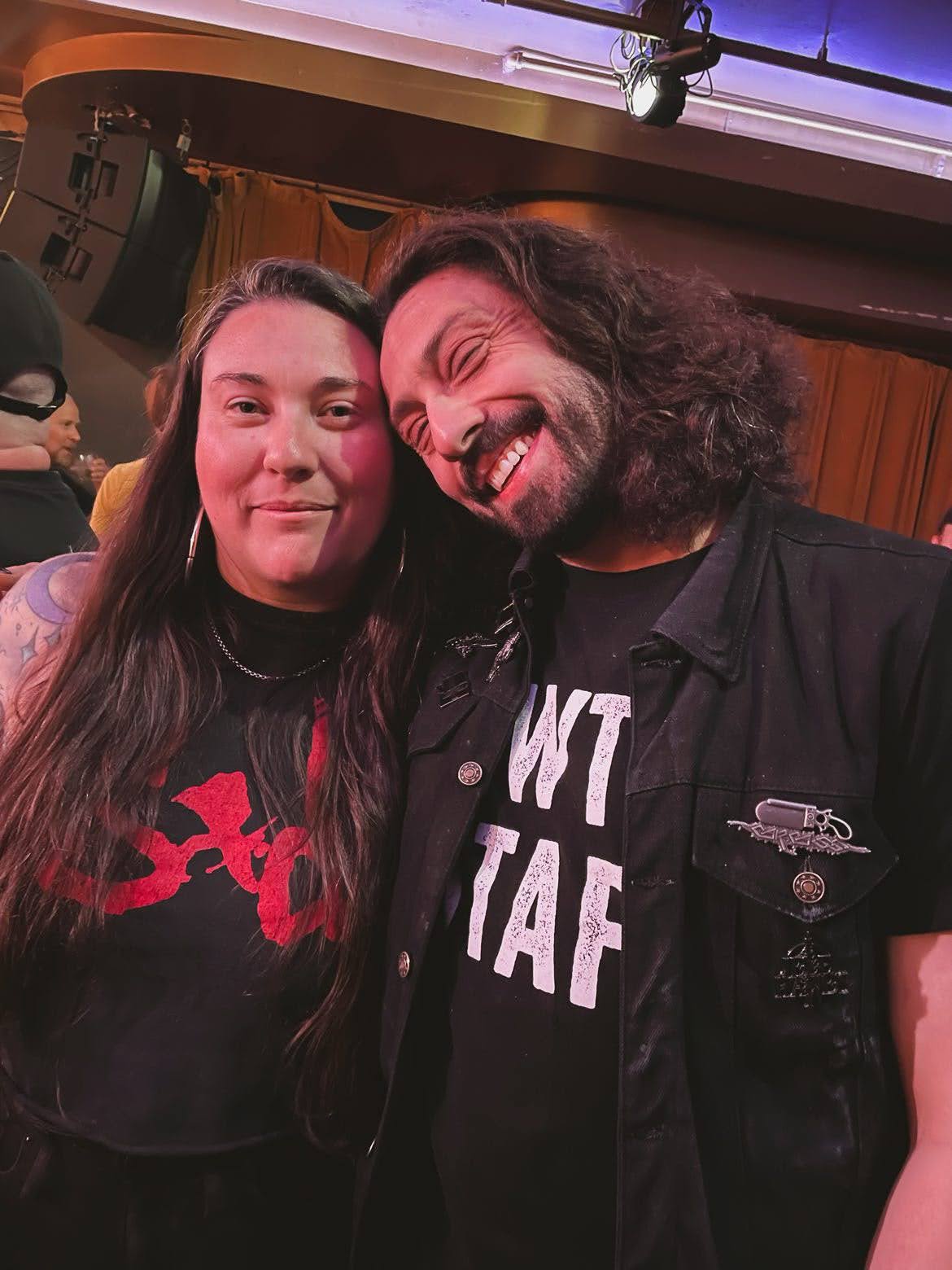
Leah Soloman and Joseph Schafer
…
The Notable Venues of the Pacific Northwest
I initially caught wind of NWTF in its first year as someone who lived right down the block from the now sadly defunct Highline bar, which for non-locals had ownership ties to Bell Witch. NWTF is now all centralized at Neumo’s, which is located in the nexus of one of Seattle’s most notorious neighborhoods, Capitol Hill. The neighborhood has changed a lot over the years. How would you say that NWTF has changed with it?
Joseph Schafer: That’s a pretty good question! I lived within a 15-minute walk of Neumos – and the Highline! – for years. It’s interesting to walk through the neighborhood now, because it’s like a liminal space. The neighborhood I fell in love with is both dead and alive, and the two versions are superimposed on one another. The buildings remain the same, but the businesses inside them change. If you walk down Pike Street on a Friday night, you’re still going to see 20-somethings smoking cigarettes in black leather jackets the way you would have a decade ago, but now they’re wearing clubbing jackets instead of biker jackets. However, the phenomenon is also somewhat spiritual.
Not to sound overly dramatic, but I feel as though there’s been a long battle raging over the soul of this city. In that battle, the opposing team has been winning for the past 30 years. The opposition team is the adversaries of art and creativity, comprised of the forces of gentrification and large-scale capitalism, and they have way more economic and political power than my team does. NWTF serves many functions, but one of them is my and my friends’ private rebellion against the opposing team, and I think our local metal-punk-goth-etc community sees us the same way. They can price some of us out, but not all of us. So, in that sense, NWTF hasn’t changed in response to the passage of time. We’ve had to raise the ticket prices occasionally thanks to inflation, but other than that, NWTF is still the same annual reminder that we outsiders are still here, and we’re not leaving.
…
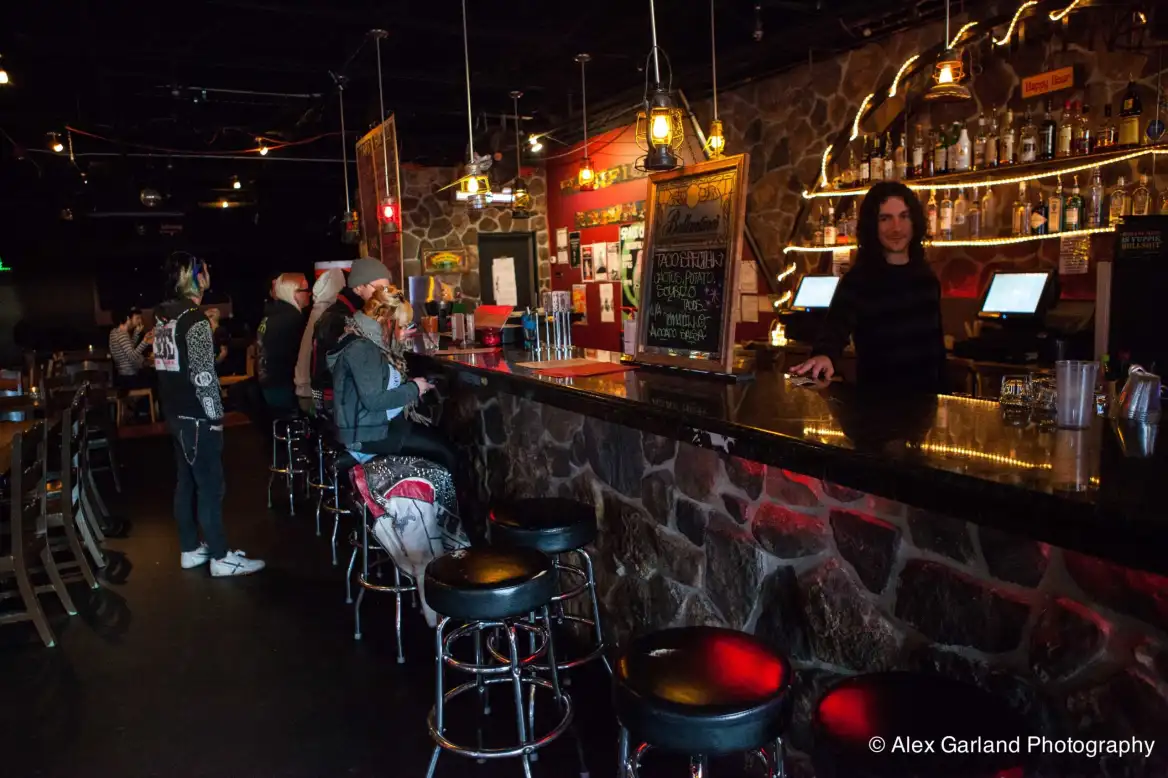
Credit: Alex Garland Photography & CHS Blog
…
Leah Solomon: I guess I wouldn’t personally characterize the hill as notorious, rather a historic nightlife center. Because of that, it’s a great place for us to throw our event, there’s one of everything (if not two or three) within walking distance. It has something for everyone and plenty of infrastructure to support a multi-day party. I think it’s no secret that Seattle has changed a LOT over the last decade, and even more so in the decades preceding it. For whatever reason, NWTF is lucky to continue to be a pillar of the old way- a great weekend for experiencing Seattle as it has been and should be. I would say overall, the neighborhood and venue have seen a classic gentrification/yuppification. From what bars continue to exist, to who patronizes them, things have really become boring and normal. But not on NWTF weekend, thank goodness.
Living up to the name, many of the team members for NWTF are scattered throughout the Pacific Northwest. I’ve lived throughout the region and have fond memories of shows at the Obsidian and Manium in Olympia, or Mississippi Studios in Portland, which doesn’t necessarily focus on metal but is a great place to catch a show. What are some venues that people should be on people’s radars that are critical to the metal scene in Cascadia?
Joseph: Man. I miss Obsidian. They served this amazing basil martini there called The Basilisk. I need to ask the Wolves in the Throne Room boys if any of them still have the recipe. Unfortunately, Obsidian, like The Highline, is done. I don’t know for a fact, but I suppose they’re both casualties in that war against commerce that I mentioned earlier, and they’re just the tip of the iceberg. But we have a few left standing. Neumos is obviously one of the survivors; however, outside of NWTF, they don’t book much metal. Recently, I’ve seen many shows at the Central Saloon, which has been around since at least Seattle’s late-80s alternative hard rock boom (I refuse to use the term “grunge” when two of the four big Seattle bands, Alice in Chains and Soundgarden, are metal bands). There’s also a local metal bar called The Kraken, which has changed locations multiple times, but like a cockroach that refuses to die. It’s one of the first places I visited in Seattle, and still feels dirty and fun in the way I most enjoy.
…
Credit: Kelli Samson & Thurston Talk
…
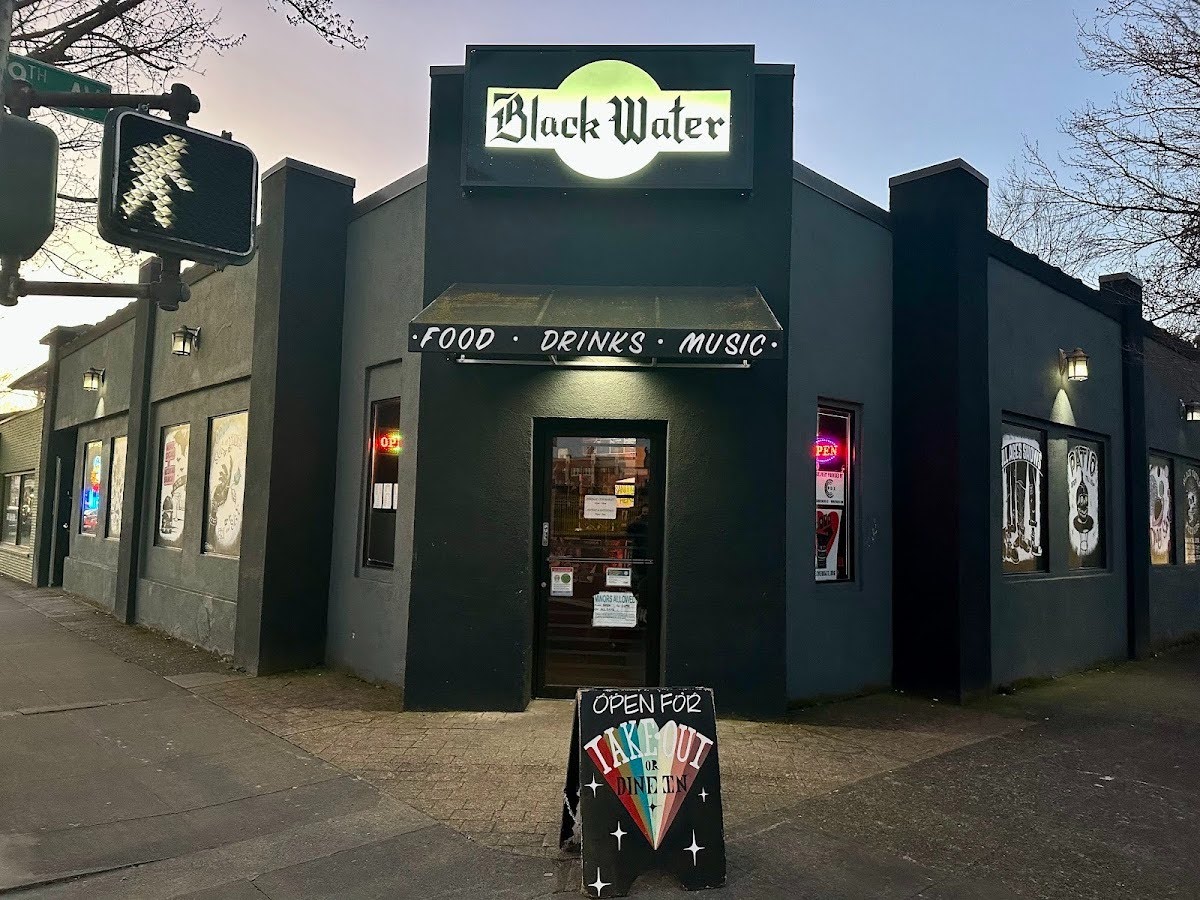
Leah: I grew up in the suburbs of Seattle, but lived in-town from 2007 to 2021. I live in Portland now, thank god, but I still produce the fest and also book year-round with Hierophant Booking and I think that there are a lot of rooms in both towns that deserve the scene’s love and affection for keeping the light on. In Portland, High Water Mark is the living room of the heavy music scene, and Black Water provides an outlet for heavy music, and stimulating the local economy through record purchasing. In Seattle, the legendary Central Saloon continues on, alongside Clock Out Lounge and The Kraken.
…
Credit: Black Water Bar
…
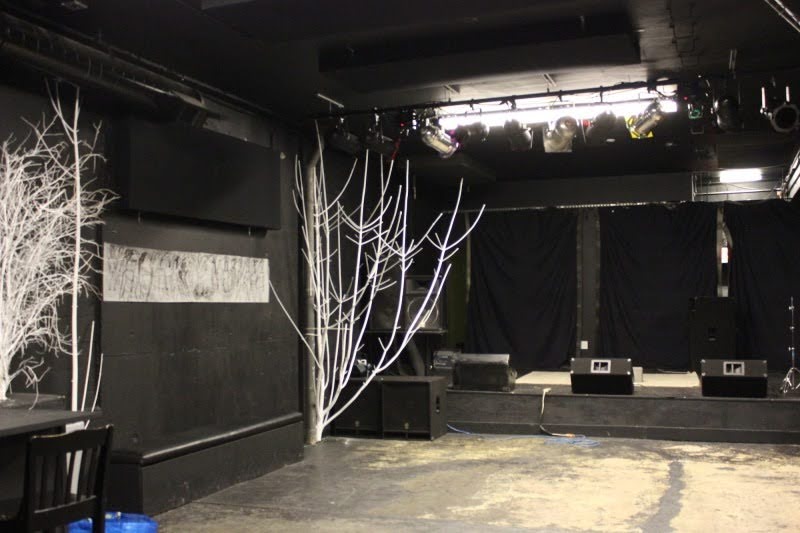
It’s always fun to hear the origin stories when it comes to venues. In addition to the places that Leah and Joseph mentioned, I have found the Pioneer Square neighborhood of Seattle to be going through a bit of a resurgence, and have been enjoying shows coming through to Baba Yaga, located a couple blocks away from Central Saloon and suited for smaller shows. In Olympia, Manium became Cryptatropa, then The Crypt, and continues to maintain its witchy vibes, being impossible to miss as an expansive blacked out venue/bar downtown. Finally in Portland, in addition to Black Water, DEVOUT Records is one of the most unique black metal-focused record stores in the country, offering a great selection and aesthetically amazing interior that clearly had a lot of thought going into it.
An interesting trend that I’m seeing in the region are camping-only outdoor festivals, such as Concatenate Festand Cascadian Midsummer. NWTF this year also shares some roster bands with Fire in the Mountains, another great fest that requires one to pitch a tent. Conversely, NWTF is in the thick of one of the busiest neighborhoods of Seattle. How’s the reception been for the community there, as well as visiting bands? Any fun stories?
Joseph: I definitely see NWTF as an urban event. It’s more like a block party than the fests that you describe. Ever seen Dave Chappelle’s Block Party? It kills. One day I’d love an NWTF that feels that way, except with Trikptykon instead of The Fugees. I don’t think NWTF will ever go into the woods, in part because while I love being outdoors–I hike every morning–I loathe camping. The FitM guys have tried multiple times to coax me out there, but sorry, fellas, it ain’t happening. As for the resident population in Cap Hill itself, I think most of the normies forget NWTF exists until it’s happening! For what it’s worth, I think we’re in good company: they also forget Pride until it happens, and Cap Hill is a historically gay neighborhood as well as a historically artsy neighborhood. That’s because it’s an incredibly busy neighborhood, and also because the population there is so transient. It’s a place to live while you’re a party animal, but not when you’re trying to live somewhere bigger than a shoebox.
When NWTF is going on, though, they can’t ignore that it’s happening. There’s always a crowd of dumbstruck yuppies crowded outside the doors trying to get a glimpse of what’s making all that noise. Sometimes they do buy a ticket to come in and get wrecked in what I can only assume is their first and probably last mosh pit. As for the metal community itself? I’ve never gotten anything less than positive feedback. I believe that folks look forward to it all year.
Someone told me this year that they thought NWTF is a nonprofit organization, not a fest. In some ways, that’s true, NWTF doesn’t pay the rent, and that’s not why we do it. Seattle has a reputation as a city where metal fans don’t get excited at shows; Seattle-ites like to lurk in the shadows and nod along. But that’s not true at NWTF. Our community likes to pack that room before 5pm, even on a weeknight. When the music is appropriate, we get serious circle pits and stage dives. I like to think of it as the community pulling out all the stops for our out-of-town guests, as well as the bands. I’ve heard a few headliners tell me they played their best show at NWTF. It’s my ‘job’ to say those sorts of things, but if anyone reading this interview would like proof, please buy a ticket and see for yourself. We throw a hell of a party. A lot of that is Leah’s doing. She’s brilliant at running large, complex events. I wouldn’t do this with anyone else.
Leah: I have been lucky enough to attend Fire in the Mountains (the 2025 iteration) as Blood Incantation’s tour manager (enjoying the safety and luxury of our bus in the campground), and can say it is incredible! I think it’s a safe bet that people who like heavy music will be camping/outdoor enthusiasts! Notably, Joseph hates to camp and can’t be convinced, I think I’m more-so in the middle, but it’s obvious there are a lot of our brethren that love an opportunity to be in nature and experience extreme music, that environment lends itself to all kinds of special stuff- starting a rare Timewave Zero performance in a flash rain storm will be remembered forever!
It seems that on the other side of the coin, like Joseph, there are plenty of folks who are very much more interested in stationary bathrooms, showers, and beds. Also likewise, introducing hundreds of extreme music enthusiasts to an increasingly normal-ified neighborhood has its perks! I know that the venue staff and nearby food and beverage staff LOVE to see NWTF coming. The nearby hotel, where we host staff and bands, also lends itself to fun. You never know who is going to be in the elevator when the door slides open, or who might be out front with a beer and a cigarette when you get back from the venue at 2 am. I think no matter where you do it, any convening of the heavy music brain trust is a recipe for fun and excitement. We’re all so used to feeling different, when we’re surrounded with our peers magic will surely ensue.
…
Northwest Terrorfest takes place May 7 – 9 in Seattle, WA. Tickets are available here.
On Wednesday, April 29, post-hardcore legends Hail the Sun made their return to Omaha to play the Waiting Room Louge in downtown Benson of Omaha, Nebraska. The heavy music fans packed the club and made it a fun night for heavy music.
Resilia from Orlando kicked the night off. They are signed to Donovan Melero’s, lead vocalist of Hail the Sun, record label, Kill Iconic Records, so it makes sense why they are a part of this touring bill. Led by lead vocalist, Daisy Chamberlin. This five piece wasn’t your typical post-hardcore band. At times, they sound a little jazzy at times, which I really appreciated. At they end, they threw an inflatable alligator inner tube that crowd surfed over the audience. I mean, how more Florida can you get? They have a new album coming out by the end of this week by the time this gets published titled, By A Thread.
Lady Radiator from New Jersey was up next. They were active around the late aughts, but then disbanded, until last year when lead vocalist Kenny Collette and guitarist Adam Kobylarz resurrected the band. It was getting a lot of At the Drive-In and Deftones vibes from these guys. For a band that had been gone for so long, they brought it live and sounded fresh. I appreciate them only knowing Omaha from Omaha Steaks, but they mentioned going cow tipping after the show and lost me since Omaha is definitely, especially Benson, is not in rural Nebraska. But hopefully with some more touring behind them, they will understand Omaha has so much to offer. They ended their set with “Box Turtle, Magnificent Isn’t She”, which had gone viral on TikTok last year. They’ve put out a couple singles since reuniting, but I hope they put out a full album of new material.
Foxy Shazam from Cincinnati was the direct support. I’ve had this band on my radar since I heard them on the radio in the early 2010s. I’m so glad they are still around because their live show is incredible. Led by lead singer Eric Nally, it felt like watching a circus sideshow of Bohemian gypsies. I was so happy to see them use their song, “Oh Lord”, as the theme for the DC Comics show, Peacemaker, last year and have the band perform the song on the show, even though they didn’t play it for this performance. But, regardless, they put on one hell of a show. I was really impressed with keyboardist Sky White, who would play the keyboard while the crowd held it up, as well as hold it himself. It was incredible to watch. Which is to say, musicians, master your instrument first and then going wild while on stage to deliver a memorable performance. They latest album that came out out in October of 2025 is called, Box of Magic.
The packed crowd was then ready for Hail the Sun. I wasn’t too familiar with them, I was impressed. From Chico, California in the northern part of the state, this five- that had been around since 2009 can still put on a great live show. Led by the aforementioned Donovan Melero, he has incredible stage presence. I love it when lead vocalists use a microphone stand and swing it around. It really gets the audience’s attention. He’s been doing this for nearly twenty years and he’s such a pro. And shout out to him calling out our government and the issues surrounding our country. I wasn’t expecting it, but glad that it happened. They did this thing before they performed where you can scan a QR code and vote on a song you want to play, which I thought was unique. I also love when you have two guitar players and they both are lead players, playing harmonies, so shout out to Shane Gann and Aric Garcia for their incredible playing. What I was not expecting was him going from just singing on stage to going behind the drum kit to play there, as well as sing. Melero, not just an incredible singer but also a really good drummer. And having to do that must have been years of practice. They have quite a devoted fan base that knows the songs and I understood why the Waiting Room was packed on a Wednesday night. Check out their new album, cut. turn. fade. back.

 If you love this music: Discover More