Blog

  • How Lizzo Helped Make Classical Training Feel Cool Again

    Lizzo has emerged as a global pop star, rapper, and classically trained flutist who reshaped expectations in modern music.

    Classical training, especially in school band and orchestra settings, has long carried a reputation for rigidity and a lack of cultural relevance.

    Students often associated it with strict rules, formal environments, and limited creative expression.

    A noticeable cultural shift has begun to take place, often referred to as the “Lizzo Effect.”

    Evidence shows that public perception of classical instruments, especially the flute, has changed in measurable ways.

    Lizzo transformed classical training into something visible, expressive, and culturally relevant by placing it at the center of mainstream entertainment.

    Bringing the Flute Into Mainstream Pop Culture
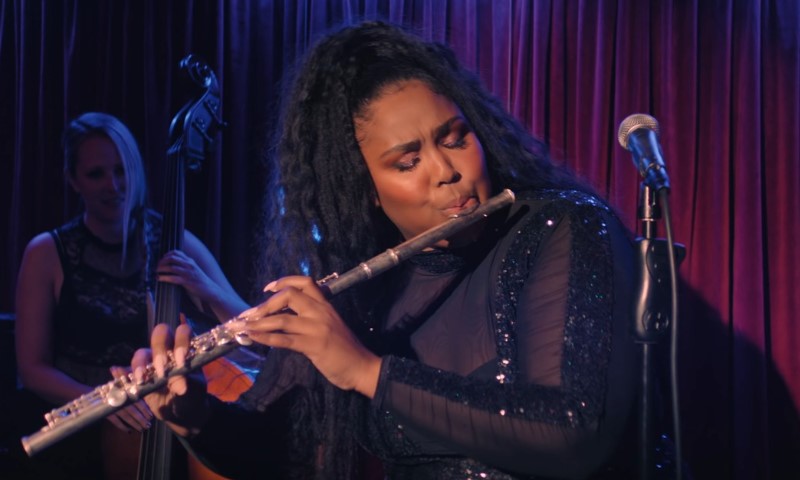
    Lizzo passionately playing the flute on stage in a sparkling outfit
    Source: YouTube/Screenshot, Lizzo makes the flute a lead instrument on major stages, from Glastonbury to BET

    Lizzo consistently places the flute, often referred to as “Sasha Flute,” at the center of major performances, shifting its role in popular music.

    Instead of functioning as background accompaniment, the instrument takes on a lead position that commands attention.

    High-profile appearances at events such as the BET Awards and Glastonbury reinforce that visibility.

    Her performance choices demonstrate how classical instruments can exist in spaces traditionally dominated by vocals and electronic production.

    A defining moment occurred during her Glastonbury set, where she performed Mozart live on stage in a high-energy pop environment.

    That moment brought together contrasting elements:

    • Classical repertoire associated with formal concert settings
    • A large-scale festival audience expecting contemporary pop
    • A performance style that combines precision with theatrical energy

    Viral clips and social media posts have extended the reach of these performances far beyond live audiences.

    Short-form videos allow viewers to engage with the flute in a context that feels accessible and current. Many people who might not attend a classical concert encounter the instrument through these clips.

    Her work shows that classical instruments can thrive in hip-hop and pop spaces without losing meaning.

     Visibility increases not through traditional concert halls but through widely shared performances that reshape expectations about instrumentation in mainstream music.

    The “Lizzo Effect” on Music Education

    Research conducted by the British Flute Society provides measurable insight into Lizzo’s cultural impact.

    One in five flute players reported that she influenced their playing or their attitude toward the instrument. That statistic reflects a clear shift in how students connect with classical training.

    Educators have also observed changes in student behavior and awareness. Half of the surveyed teachers reported that their students recognize Lizzo and her role as a flutist.

    That level of awareness contributes to shifts in classroom dynamics and lesson planning.

    Market trends further support this change. Beginner flute sales increased by approximately 30 percent in some regions, indicating renewed interest in starting the instrument.

    Growth in sales aligns with increased visibility and cultural relevance.

    Lesson structures have begun to adapt in response to student demand.

    Many students now request material that connects with current music rather than focusing exclusively on traditional repertoire.

     Common requests include:

    • Pop songs arranged for flute
    • Music that allows improvisation or stylistic variation
    • Pieces that connect classical technique with contemporary sound

    Such changes encourage a more flexible approach to music education.

    Traditional technical training remains important, yet it now coexists with material that reflects current listening habits and cultural influences.

    Lizzo’s Classical Roots
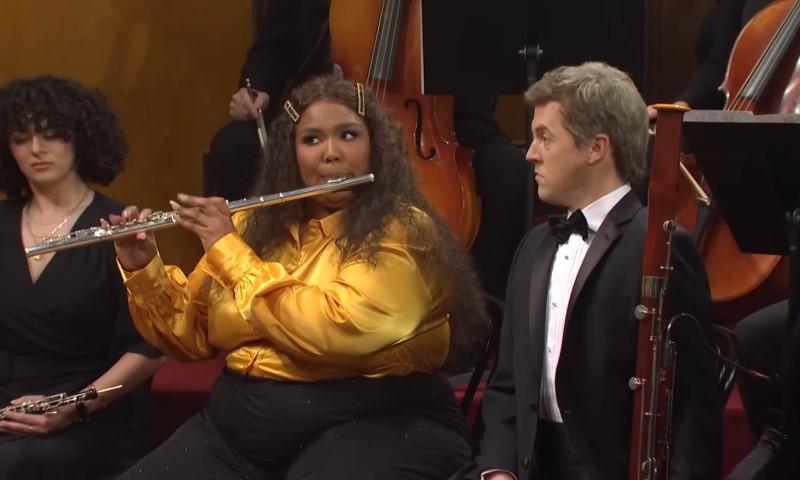
    Lizzo in a bright yellow blouse plays the flute energetically in an orchestra
    Source: YouTube/Screenshot, Lizzo started flute at 10 through band programs

    Lizzo began playing the flute at around age 10 and developed her skills through structured school band programs that emphasized discipline, repetition, and technical accuracy.

    Early exposure to formal instruction shaped not only her musical ability but also her mindset toward practice and performance.

    School band environments often require consistency and patience, qualities that later became central to her professional identity.

    She openly identifies as a “band geek,” a label that carried social stigma for many students in academic settings. Instead of distancing herself from that identity, she embraced it and reframed it as something empowering.

    Many students in similar programs chose to leave due to peer pressure or a lack of cultural relevance, yet Lizzo continued and deepened her commitment.

    Skills gained through formal instruction allow her to move across genres with ease and confidence, connecting technical mastery with creative expression.

    Redefining What “Cool” Looks Like in Music

    Long-standing stereotypes often present classical musicians as formal, restrained, and distant.

    Lizzo challenges those assumptions by presenting a version of musicianship that feels expressive and accessible.

    Her image combines multiple elements that reshape expectations. High-level musicianship exists alongside humor, bold fashion, and confident self-expression.

    That combination alters how audiences perceive classical training and the people associated with it.

    Perceptions of the “band geek” identity have shifted as a result of her influence. Traits that were once viewed negatively now carry a different meaning.

    Changes in perception can be seen through several contrasts:

    • Awkwardness replaced by confidence
    • Social isolation replaced by visibility and recognition
    • Niche interest replaced by cultural relevance

    Her performances show that mastery and enjoyment can exist at the same time.

    Technical precision does not require a loss of personality or creativity.

    Classical training becomes a tool that supports artistic flexibility across genres, allowing musicians to shape their identity without restriction.

    The Role of Social Media and Virality

    Social media plays a central role in expanding Lizzo’s influence and visibility.

    Clips of her flute performances circulate widely through:

    • concert recordings
    • fan uploads
    • official posts

    Digital platforms allow these moments to reach audiences at a scale that traditional performances cannot match.

    “Sasha Flute” maintains its own online presence, adding personality and narrative to the instrument itself. That approach turns an object into a recognizable symbol within her brand, making it easier for audiences to connect with it.

    Viral circulation transforms a specialized performance skill into mainstream entertainment.

    Fans and aspiring musicians often respond by creating their own interpretations.

    Many post covers experiment with stylistic changes or adapt pop songs for classical instruments.

    That activity contributes to a broader trend in which learning an instrument feels interactive and socially connected.

    Online visibility helps build excitement around music education.

    Exposure to engaging performances encourages participation and reinforces the idea that classical training can connect with current culture in meaningful ways.

    Summary

    Lizzo has elevated the visibility of the flute and challenged long-standing stereotypes tied to classical training.

    Measurable increases in student engagement and participation reflect her cultural impact.

    Her most significant contribution lies in presenting classical training as flexible, expressive, and relevant to modern audiences.

    A new generation now views classical skills not as restrictive, but as a powerful tool for shaping personal and artistic identity.
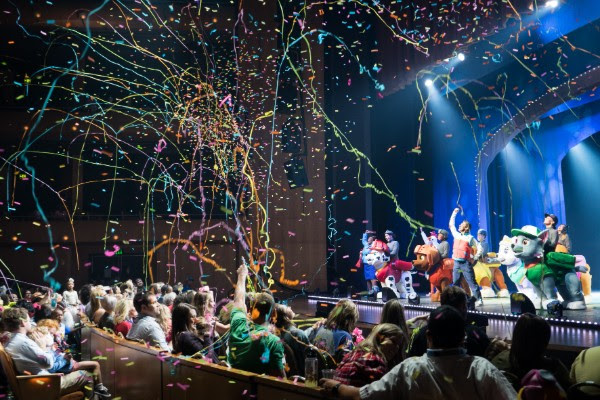
  • PAW PATROL LIVE! RACE TO THE RESCUE Celebrates 10th Anniversary With Australian Shows

    Nickelodeon, VStar Entertainment Group, and TEG Life Like Touring are thrilled to announce the return of PAW Patrol™ Live! Race to the Rescue, celebrating 10 years of the iconic Broadway-style production. The PAW Patrol® are on a roll and LIVE on stage! The heroic characters from the top-rated animated preschool series PAW Patrol, produced by […]
  • Pro-Pain – Release Second New Single

    Pro-Pain have unveiled “March Of The Giants” as the latest preview of their forthcoming studio album, Stone Cold Anger, scheduled for release on May 15th via Napalm Records, marking their 16th full-length release and the first in 11 years.
    Read more…
  • HANDS LIKE HOUSES Team Up With DREAM ON DREAMER For New Song ‘Warning Signs’

    Canberra rock heavyweights Hands Like Houses have teamed up with post-hardcore icons Dream on Dreamer on new single Warning Signs, out now via Civilians. The new track arrives as both bands get ready to hit the road together on The Lótus Tour this April – tickets on sale now. Warning Signs is about recognising emotional […]
  • Mystfall – Embers of a Dying World Review

    Once again, I return to my roots. That opulent, gem-encrusted egg from which my metalhead nascency spawned, symphonic power metal. Cloaked in velvet drapery as I return to these cobbled alleys I used to haunt, those early years steeping in Nightwish, Leaves’ Eyes, Epica, and Xandria wash over me, evoking a nostalgic bliss. Enter Greece’s Mystfall and their sophomore effort Embers of a Dying World. Relatively fresh on the scene, and competing with newer champions like Elvellon or Dialith, do Mystfall have what it takes to make waves?

    If nothing else, Mystfall have two big things going for them: a (relatively) meaty guitar tone and the most convincing death growls and blackened rasps in the genre right now. Thanks to a moderately-better-than-industry-standard mix and master, you can clearly hear the bass guitar thundering underneath lush strings and prominent choirs as well. These are items that countless acts in this space neglect or shortchange, but not Mystfall. Thankfully, those items don’t detract from the usual suspects. Operatic mezzo-soprano lead vocals, heavily accented; hooky verse work and soaring choruses; galloping drums and brisk pacing; rich orchestrations; the gang’s all here, and in fine form for the most part. And, in another unexpected breath of fresh air, Embers of a Dying World clocks in at a tidy 38 minutes, with the longest song just barely brushing past five minutes. It seems that on paper, Mystfall fully understood their assignment and gave me everything the world needs in a modern symphocheese record.

    In practice, Embers of a Dying World acquits itself quite nicely as well. Enlisting the help of studio bassist and harsh vocalist Stelios Varotsakis was an inspired choice, as his counterpoint on both instruments elevates everything it touches (“Embers of a Dying World,” “Fading Memories”). It is my assertion that Mystfall make him a full-fledged member of the band immediately. However, his contributions aren’t so astounding as to distract from Marialena Trikoglou’s siren song, Aris Baris’ chuggy riffs, or Dimitris Miglis’ expressive percussion (songs). Hints of old school Epica melodies (“Crimson Dawn,” “Echoes of Arcadia”), Leaves’ Eyes/Xandria adventurism (“Whispers of the Tempest,” “Guardians of the Earth,” “Cosmic Legends”) and Nightwish double bass bounce (“Sleeper in the Abyss”) coalesce into a fun variety of moods and motifs, all smartly woven together to allow each performer their spotlight. With such a bizarrely tight runtime, Embers of a Dying World is also ridiculously easy to spin multiple times in one session, assisting greatly with long-term memorability.

    Unfortunately, Mystfall still struggles to find a distinct identity in the homologous plague the symphonic power metal scene perpetuates. While crafting an enjoyable album that is undoubtedly fun and wholly engaging, its similarity to those bands that originally forged the style is undeniable and obvious. Partly due to the strict and restrictive nature of operatic singing techniques—and the physiological difficulties that committing to that style poses to the exploration of any other kind of singing—Marialena’s technically competent performance here lacks impact and power when pinned against singers who can and do work in multiple disciplines (Simone Simons, Floor Jansen, Veronica Bordacchini). On the instrumental front, Aris Baris’ riffs rarely venture outside of the conventions long upheld in this field, often allowing the orchestrations to take point when leading melodies or initiating motifs. Even the dramatic orchestrations lack the showstopping quality they could have if they were either recorded with a full orchestra or more unique in composition or arrangement.

    As a result, Embers of a Dying World feels misplaced in time. Were it released in 1996 or thereabouts, it would’ve constituted an instant hit, a direct competitor to the pack leaders at the time. In 2026, it’s one in a million, albeit better made and brilliantly edited. As maligned by songwriting issues and stylistic banality as symphonic power metal often is, competing for acclaim and attention in that crowded place requires a fierce, striking showing. Mystfall have everything they need to make that showing, but Embers of a Dying World falls just short of that elusive threshold. That said, I’m impressed with it enough to wait avidly for what Mystfall might come up with next!


    Rating: Good
    DR: 7 | Format Reviewed: 320 kb/s mp3
    Label: Scarlet Records
    Websites: mystfallofficial.com | facebook.com/mystfallofficial
    Releases Worldwide: March 20th, 2026

    The post Mystfall – Embers of a Dying World Review appeared first on Angry Metal Guy.

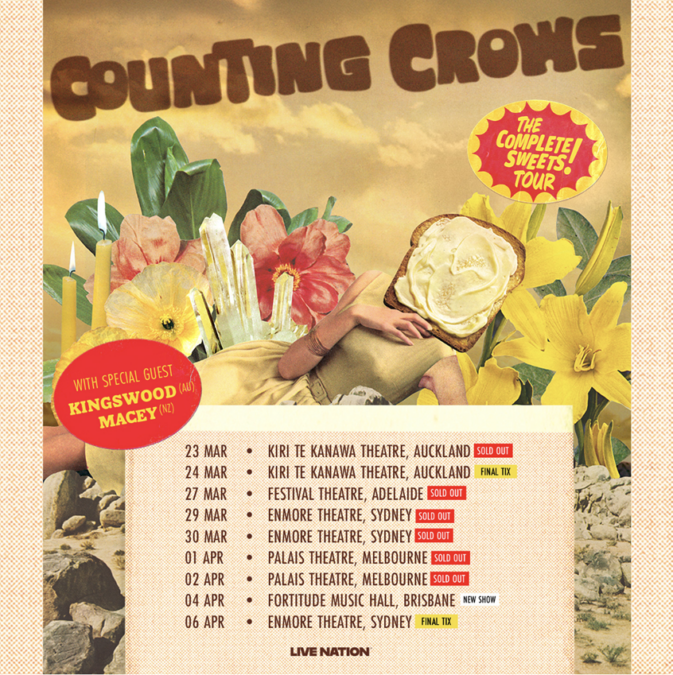
  • COUNTING CROWS Add One More Brisbane Date

    For more than three decades, Grammy and Academy Award-nominated rock band Counting Crows have enchanted listeners worldwide with their intensely soulful and intricate take on timeless rock and roll. In 2026 they return to Australia and New Zealand with The Complete Sweets! Tour – bringing decades of sing‑along moments, deep cuts, and fresh energy to […]
  • “I wound up in a place that I needed to stop and sit with myself”: Foo Fighters’ Dave Grohl addresses infidelity and social media fallout in new interview

    The singer/multi-instrumentalist says he’s had 430 therapy sessions in the past 70 weeks and suggests that fathering a child with a woman outside of his marriage in 2024 is part of the reason why
  • Acacia Avenue Release New Album ‘Chapter V’ On May 29th

    The idea for Acacia Avenue began back in 2008. Founding member, Torben Enevoldsen (Fate, Fatal Force, Section A), spent most of that year writing new material. Some of this new material came to be very melodic hard rock/AOR, and the idea of doing a full album in this style quickly emerged. In order to spice […]

    The post Acacia Avenue Release New Album ‘Chapter V’ On May 29th appeared first on ROCKPOSER DOT COM!.

  • Extinction A.D. – Release New Track

    Extinction A.D. have released a new single, called “Thaw”. The track marks the band’s second release since signing with M-Theory Audio earlier this year. Check out the music video below.
    Read more…
  • Don Broco announce Nightmare Tripping UK headline tour

    Don Broco have announced their Nightmare Tripping UK headline tour.

    The nine-date run will hit Lincoln, Sheffield, Edinburgh, Manchester, Liverpool, Newcastle, Birmingham, Norwich and Bristol in the autumn, following a busy summer that’ll take in festivals and a massive date with Biffy Clyro at London’s Finsbury Park.

    Broco’s new album Nightmare Tripping arrives on March 27 via Fearless – the same date their tour tickets go on sale. 

    Recently speaking to Kerrang! about the darker subject matter of the LP, frontman Rob Damiani explained, ​“For me, even from writing the last record [2021’s Amazing Things] to this one, there’s so much stuff going on in the news that you can’t ignore it. That’s something that’s consumed my brain for many, many months in a way that never has before.

    “It feels like one thing after another. It feels like there’s no escape. Sometimes it can feel quite oppressive. It’s become a lot harder to be able to balance it out, and go, ​‘That’s a bit of a worry, but I can focus on my own life.’ The stakes feel so much higher these days. As a title, Nightmare Tripping kind of encompasses all of that in a quite neat way.”

    Catch them live at the following:

    Don Broco Nightmare Tripping UK tour

    September

    28 Lincoln Engine Shed
    29 Sheffield Octagon Centre

    October

    1 Edinburgh O2 Academy
    2 Manchester Academy
    3 Liverpool Guild Of Students
    4 Newcastle O2 City Hall
    7 Birmingham O2 Academy
    10 Norwich University Of East Anglia
    14 Bristol The Prospect Building

    Posted on March 20th 2026, 11:20a.m.