Blog
-
19 Pinball Machines Rock + Metal Fans Wish They Owned
Metallica, Foo Fighters and Iron Maiden are among the bands who have already lent their names to stunning pinball machines. Continue reading… -
“Oh, The Years Burn” — Italian Gothic Rockers Corvin Share Video for Cover of The Smashing Pumpkins’ “Disarm”
Oh, the years burnI used to be a little boyThere’s a peculiar weight to songs from 1993—the kind that settles in the bones differently now than it did then. Back when The Smashing Pumpkins first released Disarm, its listeners were children, teenagers, half-formed people trying to make sense of feelings they didn’t yet have the language to name. Three decades on, those same listeners have grown, carrying the sediment of those years with them. Memory has done its usual work: sanding edges, tinting everything in a wistful sepia, even the parts that hurt. Especially the parts that hurt.
Disarm was never a comfortable song. It arrived like a confession disguised as a lullaby, its sweetness masking something far sharper beneath. Billy Corgan later framed the song as a response to the damage inflicted by his parents, not with raw fury but with beauty—choosing tenderness as a weapon and letting the song carry the hurt he could not express more directly. The mordant irony, he noted, was that it went on to become his mother’s favorite track on Siamese Dream.
That tension between tenderness and accusation is what has kept Disarm lodged so deeply in people’s lives. Decades later, it still feels like a song that knows how memory softens nothing, only stains it with a warmer light. Corvin understands that instinct. Rather than flatten the song into a straightforward remake, they preserve its ache and deepen its atmosphere, drawing out the warmth in the melody and wrapping it in resonant guitar tones, deep bass, and a stately sense of drama.
Their take does not try to overpower the song so much as inhabit it from another angle. The arrangement gives the sorrow more body, the longing more room, and the nostalgia a darker glow. It feels less like an act of reinvention than one of recognition, as though Corvin have found the gothic heart that was always beating inside the song and brought it further into the open.
On the approach they took with the cover, Corvin explains:
“We chose Disarm as our second single because of its unique melancholy. The original song is stark and fragile—it almost feels unfinished, the perfect canvas for a gothic rock reinterpretation. With distorted guitars and drums, we tried to push its emotional core into darker territory and make it our own. The violins you hear were performed by Norwegian musician Sareeta… we couldn’t be happier with how the final result turned out.”
Directed by Underroom Studio, Corvin’s video for Disarm unfolds like a private rite conducted in the half-light of recollection.
An older man sits alone in a candlelit room, surrounded by objects that feel less like décor than evidence of life once lived. A thick, timeworn book rests in his hands—its pages heavy, reluctant, as though each one carries a history that resists being revisited. He turns them slowly, deliberately, the gesture somewhere between study and self-punishment.
There’s a domestic stillness to the space—fireplace, wooden floors, soft amber light—but it never settles into comfort. The camera lingers on small, telling details: the tremor of a hand against paper, the glint of glass as liquor is poured, the quiet ritual of drinking alone. It’s a language of gestures, each one suggesting a life lived in uneasy dialogue with its own past.
Intercut with this solitary figure are the band themselves, emerging from darkness under stark, suspended lights. Their presence feels almost accusatory, as if they are manifestations of memory rather than performers—voices given form, standing just outside the man’s reach.
The video’s most striking turn comes as the act of remembrance becomes destruction. Pages are torn free, fed to flame. Fire consumes what was once carefully preserved, the past reduced to ash in an attempt—futile or necessary—to finally let it go. The imagery doesn’t offer resolution, only transformation: memory burning, but never entirely disappearing.
It’s a simple premise, but executed with a painter’s attention to tone and texture, where everything glows with the same warmth the song evokes.
Watch the video for ‘Disarm” below:
Rising from the overlapping worlds of Me and That Man, Shores of Null, and beyond, Corvin are a newly formed entity rooted firmly in gothic rock’s lineage, yet unafraid to thicken its shadows. Their sound thrives on contrast—force and fragility, weight and restraint—turning emotional tension into something tactile.
This cover of Disarm doesn’t attempt to replace the original. Instead, it stands beside it like a later chapter, written by those who have lived long enough to understand what the song was really about in the first place.
Because if Disarm once belonged to youth—to confusion, to unformed pain—then Corvin’s version belongs to what comes after: the long reckoning, the slow burn, the quiet realization that the years don’t just pass.
They stay with you.
Corvin’s cover of The Smashing Pumpkins’ “Disarm” will be released as a physical single CD on March 20th, 2026, and it will include the band’s debut single, Dead End Pyre.
You can order the CD here.
Follow Corvin: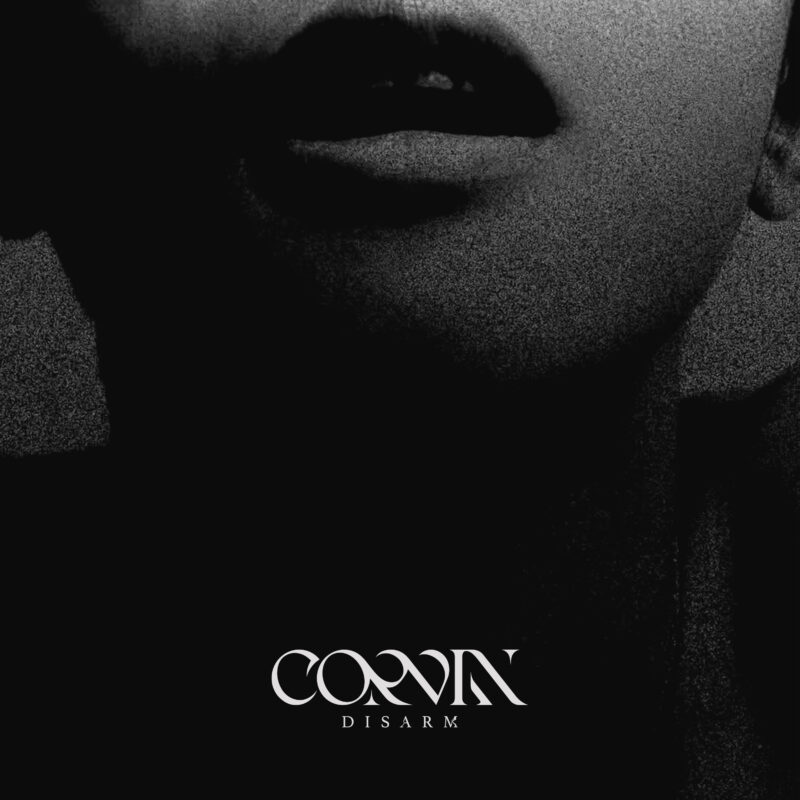
The post “Oh, The Years Burn” — Italian Gothic Rockers Corvin Share Video for Cover of The Smashing Pumpkins’ “Disarm” appeared first on Post-Punk.com.
-
Electric Guitars Release New Single ‘The Messenger’
If you had to pick two guitarists to shake a nation with guitar rock, it would be Soren Andersen (Glenn Hughes/Jesper Binzer) and Mika Vandborg (Loveshop/Gnags). They have done so for decades under the Electric Guitars banner – and they still do. Forever searching. And better than ever. Now with a new single: ‘The Messenger‘. It […]
The post Electric Guitars Release New Single ‘The Messenger’ appeared first on ROCKPOSER DOT COM!.
-
“There’ve been times where I’ve come back from a tour and my kids don’t know who I am”: Opeth’s Mikael Åkerfeldt on 25 years of Blackwater Park, another Steven Wilson team-up, hating the road and why he might stop growling again
We caught up with the progressive metal mastermind and made him begrudgingly talk about his band’s magnum opus -
The Pop Insider Announces Debut “Collector’s Choice Awards” Winners
The Press Release: More than 25,000 fans made their voices heard about their favorite merch of 2025 in The Pop Insider’s first-ever Collectors’ Choice Awards. Now, the winners have finally … Continue reading The Pop Insider Announces Debut “Collector’s Choice Awards” Winners -
LIVE: Hot Mulligan, Delta Sleep @ Roundhouse
Something has quietly shifted for Hot Mulligan. The Michigan five-piece have spent the better part of a decade building one of the most devoted fanbases in modern emo, song by song and tour by tour; the kind of slow-burn ascent that tends to produce rooms that feel less like gigs and more like reunions. ‘The Sound a Body Makes When It’s Still’ feels like the moment the rest of the world caught up, a record that arrived fully formed and immediately indispensable and, tonight, the Roundhouse is sold out on a Thursday in March, which is its own kind of statement. There’s a particular breed of Hot Mulligan fans in this building, the kind who can recite the lyrics to songs with titles that read like deleted tweets and feel every word of them as gospel, and there are 3,000 of them here tonight.
Delta Sleep arrive first and waste no time making a case for themselves. The Brighton math-rockers bring a kind of unhurried technical confidence that makes every track feel crowded and cascading in the best possible sense, jazz and alt influence bleeding into one another with an ease that makes the whole thing feel inevitable rather than effortful. The energy is quieter than Oversize’s; more focused, the kind of performance where the music does all the talking and the talking is very good. The crowd eat up every minute of it and by the time they’re done, a room that arrived strangers to them has been thoroughly won over.
And now, Hot Mulligan. ‘Moving to Bed Bug Island’ opens with deceptive calm, the kind of measured intro that lulls you into thinking you might get a minute to breathe before the whole thing detonates. You don’t. ‘And a Big Load’ follows and the Roundhouse barely knows what to do with itself, and from there the room is in freefall in the best possible way. Tades Sanville occupies a very specific Venn diagram overlap between genuinely funny and genuinely devastating, working the crowd between songs with the ease of someone who has been doing this in rooms this size long enough to know exactly when to land a punchline and when to let a song do the heavy lifting. The banter never outstays its welcome because the songs never let it.
A Weezer cover in ‘Island in the Sun’ arrives early and lands with a warmth that briefly turns the Roundhouse into a living room. Then ‘Monica Lewinskibidi’ and ‘How Do You Know It’s Not Armadillo Shells?’ (fan favourite and highlight of the set) instantly make the queuing all worth it. It’s a far cry from playing support slots to a couple of hundred people only a handful of years ago. ‘I Don’t Think It’s the Right Time for Emojis’ is barely three weeks old, a B-side broadside against religious hypocrisy that Tades has described with characteristic bluntness, and yet a startling number of this crowd already know every word. It’s just that kind of fanbase. ‘Featuring Mark Hoppus’ and ‘John “The Rock” Cena, Can You Smell What the Undertaker’ bulldozes through the mid-set with Hot Mulligan’s signature trick of disguising genuinely devastating emotional content inside song titles that sound like they were named by a sleep-deprived teenager on a group chat. ‘Drink Milk and Run’ and ‘Feal Like Crab’ keep the room in a state of near-constant motion, and ‘Gans Media Retro Games’ and ‘Stickers of Brian’ carry the main set toward its close with taut, hard-won momentum.
We’re transported back to the fever dream that was March 2020 with two tracks from ‘You’ll Be Fine’ for the encore. ’BCKYRD’ and ‘*Equip Sunglasses*’ close it out with the kind of volume that makes the Roundhouse’s famous circular walls feel like they’re leaning in.
Hot Mulligan are, and have been for a while, one of the best live bands doing it, and it feels like they are now, at last, getting their flowers.
KATHRYN EDWARDS
-
How to watch “raucous, moving, and surprisingly tender” film The Rise Of The Red Hot Chili Peppers: Our Brother, Hillel
The Ben Feldman-directed documentary on the band and late guitarist Hillel Slovak will hit Netflix this week. Here’s everything you need to know -
Rich Robinson: ‘F—ing Toxic’ Dynamic Nearly Doomed Black Crowes
The guitarist blames his former bandmates' "petty power agendas" for the group's past turmoil. Continue reading… -
Gutvoid – Liminal Shrines Review
 Canadian death metal remains one of the country’s most dependable exports. Our neighbors to the North must put something in the water because high-caliber extremity seems to ooze from the trees like maple syrup. The next such group vying for international market share is Toronto-based quintet Gutvoid. Their debut, Durance of Lightless Horizons, contained flashes of brilliance, but occasionally lost focus due to its length. Yet, Steel still found it signaled a group with all the marks of greatness. Three years and an EP later, their sophomore release, Liminal Shrines, now finds the Canadians launching the first of a two-part concept that tells dark, supernatural stories of protagonists who pass through liminal gateways and emerge transfigured. Prepare yourselves—it’s time for Portal Kombat.
Musically, Liminal Shrines fits its theme perfectly. Whether it’s a scholar reciting a spell that causes his soul to leave his body (“Spell Reliquary”), a person dying in their sleep and becoming a ghost (“Lead Me Beyond the Sleeping I”), or workers on a job in deep space accidentally releasing angry spirits that possess them (“Chasm of Displaced Souls”), Gutvoid blends classic death metal—à la Bolt Thrower—and doom-crusted horror. The resulting barrage of reality-twisting shifts feels like one is being dragged through a vortex of riffs and rhythms. Balancing Morbid Angel’s brute-force with thoughtful composition, tracks like “Smothering Sea” and “Spell Reliquary” sport pummeling riffs that often transition into dissonant alarms and spiraling arpeggiated guitar work, while the record’s bulkiest tracks (“Chasm of Displaced Souls,” “Lead Me Beyond the Sleeping I”) play things safer, prioritizing melody and weight over the adventurous aggression of the album’s earlier tracks.
Across Liminal Shrines’ front end, Gutvoid shows the range of their talent and songwriting chops. Intro tracks are typically very hit or miss, but curtain-raiser “Ruinous Gateways” sets the tone well, with a thick, audible bass presence and its sashaying, tremolodic guitar lines that feel purposeful rather than ornamental. From there, Gutvoid shows notable command of dynamics and structure. “Spell Reliquary” constantly morphs through melodic arpeggios, walking guitar bridges, and spiraling leads, creating a midpoint packed with engaging twists and turns. Although it ends up toiling for over eight minutes, it never loses its way. “Smothering Sea” raises the bar even higher, folding Meshuggah-style dissonance into rustic, psychedelic grooves and expressive, cosmic–toned leads. The approach is adventurous yet grounded, smartly snapping back to straightforward death when needed. By Liminal Shrines’ halfway mark, Gutvoid’s confidence is brimming, as they continuously attack the nether regions with crushing blast-driven heaviness, unexpected prog flair—like Neil Peart’s (Rush) trademark ride pattern (“Umbriel’s Door”)—and devastating breakdowns.

But strangely, Gutvoid’s ambition tails off around “Umbriel’s Door,” and Liminal Shrines finds the quartet slipping back into some familiar habits—most notably, an overreliance on length that drowns the impact of otherwise great ideas. “Lead Me Beyond the Sleeping I,” in particular, feels like a classic case of bloat, taking far too long to evolve out of its mid-tempo Bolt Thrower-esque plods and spacious leads. It’s a shame because there are some genuinely great moments here—the arpeggiated guitar section halfway through, the surprise clean vocal harmonies, and the acoustic ending with tasteful off‑beat drum accents—but each arrives too late and lingers too long, making the twelve-minute runtime feel unjustified for what is ultimately a restrained song compared to Gutvoid’s earlier aspirations. “Chasm of Displaced Souls” fares better thanks to more immediate momentum, inventive drumming, and a compelling atmospheric interlude that recalls “Ruinous Gateways,” yet even here a sense of repetition creeps in. While these tracks aren’t bad by any stretch, they reinforce the group’s tendency to trust duration over concision to create gravity, consequently stretching songs beyond their natural lifespan.
There’s no question Gutvoid has the chops, but Liminal Shrines hovers somewhere between good and very good. I can’t help but feel let down by a final block that doesn’t match the ambition of the first half, especially when their strongest material proves they don’t need to rely on excess to hit hard and clearly know how to write great songs that stick. I’ll be watching for the second half of this series, hoping the closer shows up partially reborn. The good news, though, is that Gutvoid has still given us enough to chew on while we wait for them to unlock their full potential.
Rating: Good
DR: 7 | Format Reviewed: 320 kb/s mp3
Label: Profound Lore
Websites: gutvoid.bandcamp.com | facebook.com/gutvoidofficial
Releases Worldwide: March 20th, 2026The post Gutvoid – Liminal Shrines Review appeared first on Angry Metal Guy.
-
“A triumph in prog, and a masterclass in storytelling”: Members of Dream Theater, Nightwish, Gentle Giant and others on the power of Jethro Tull’s Aqualung
The 1971 masterpiece is hailed by Jordan Rudess, Troy Donockley, Derek Shulman, Arthur Brown, Roine Stolt, Sonja Kristina and more