Blog

  • How Venom made their unholy masterpiece Black Metal and changed the course of metal

    Venom’s 1982 album Black Metal is one of the most influential records in history, detonating a chain reaction that would result in thrash, death metal and, of course, black metal itself – even if it was roundly mocked at the time. In 2011, Venom singer and bass-bludgeoner Cronos looked back on the making of a twisted masterpiece.

    It may feel like the genesis of heavy metal should have been sparked when a lightning bolt hit a mountain, but in reality, the birth of the song Black Sabbath would not have made for a great fly-on-the-wall documentary. As momentous as this event was, something that happened over a period of several weeks punctuated by many arguments over who was making the next round of brews and interminable conversations over exactly which take of the line ‘Oh, no, no! Please God help me!’ was the most convincingly terrifying and how loud the bell should be in the final mix, would not have made for great cinema.

    This is one of the reasons why full credit should be given to Conrad ‘Cronos’ Lant, the mainstay of extreme metal pioneers Venom for refusing to mystify the making of their iconic second album, Black Metal, in 1982, no matter how influential and important it went on to become. He’s quite candid about what is arguably the most important album in the birth of extreme metal ever recorded.

    “We had no idea what we were doing was going to become such a big thing. So many bands were in the studio at the same time as us. How the hell could I have presumed that it would be my band who would be the lasting name? We weren’t trying to be the next Iron Maiden or the next this or that. We just wanted to do what we enjoyed. You had a band like [fellow Geordie NWOBHM outfit] Tygers Of Pan Tang always dropping Purple references; you know, ‘We want to be the next Deep Purple.’ Well, Venom never did that. We never said that. We said, ‘We are now, we are new, we are Venom.’
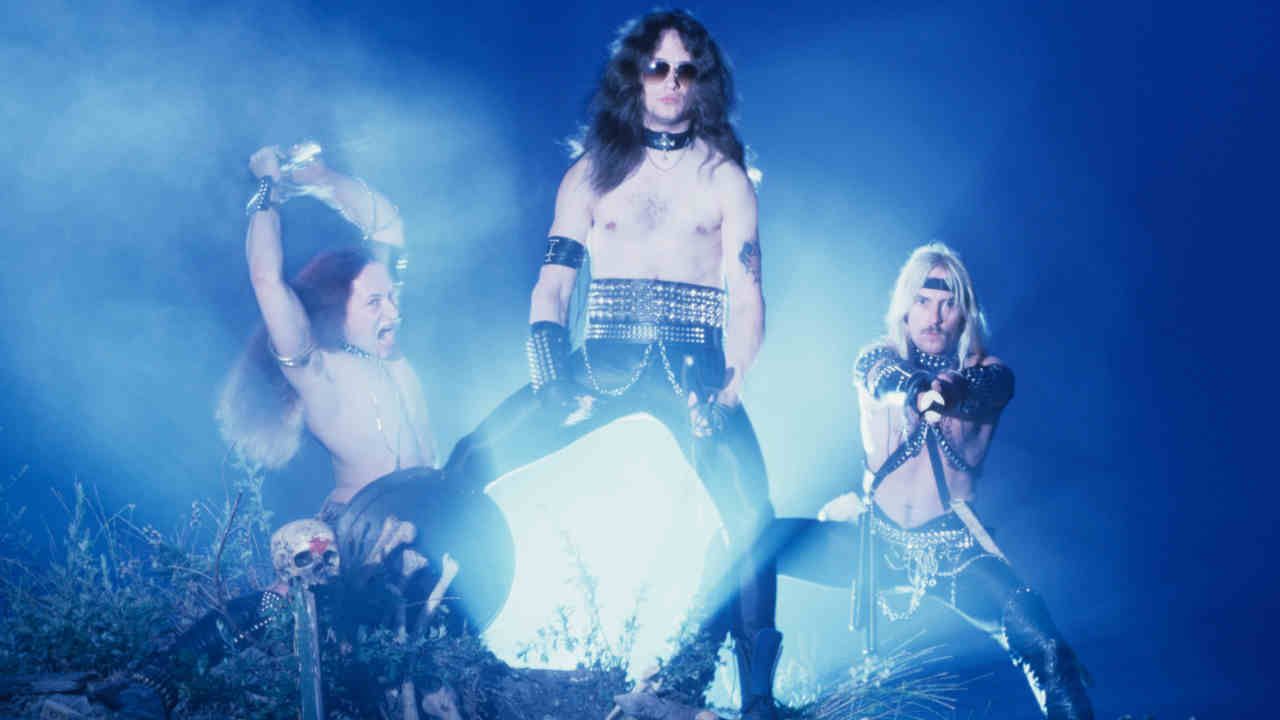
    Venom posing for a photogrrph in 1983

    Venom’s classic line-up: (from left) Cronos, Abaddon, Mantas (Image credit: Fin Costello/Redferns)

    Venom formed in Newcastle in 1979 and coalesced into their early classic lineup of Cronos on bass and vocals, Tony ‘Abaddon’ Bray on drums and Jeff ‘Mantas’ Dunn on guitar the following year. There were several key environmental factors at work during this unholy conception. Newcastle in the late 1970s was a hard bitten, industrial city, destabilised and depressed by high unemployment and a profound lack of meaningful choice available to the majority, working-class inhabitants who lived there. It was a city where you “put on your father’s clothes when you were old enough and then went and did his job”.
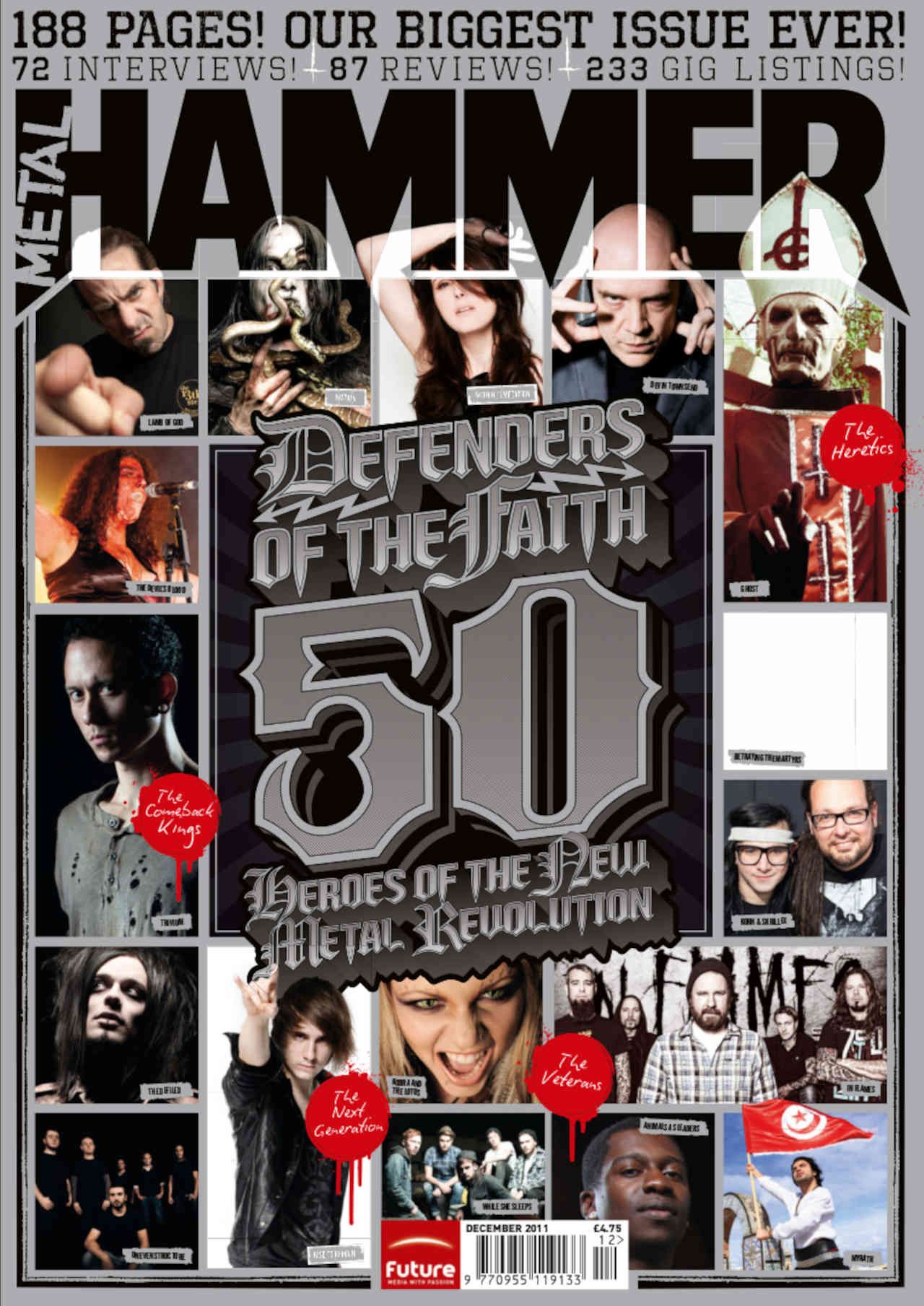
    The cover of Metal Hammer issue 225

    This feature was originally published in Metal Hammer magazine issue 225, November 2011 (Image credit: Future)

    Except, according to Cronos, “That wasn’t an option in 1979 – there were no jobs left.” Everything from the dark Satanic Mills of the English industrial revolution to the once-mighty ship yards had been forced to shut up shop, leaving most of the erstwhile sons of toil signing on and pissed off. The city was, in many respects, similar to Birmingham, the home of Black Sabbath, Judas Priest and half of Led Zeppelin, all favourite groups of the bassist. Except a decade later, many young Geordies had fallen under another spell as well as metal:

    “Growing up in the 70s in the north of England, punk meant everything to me. The whole industry was dying, the ship- yards, everything. There was no future. There was no hope. Punk music was a way for the real people in this country to get a voice. It was the great unwashed getting a say for once, shouting, ‘Fucking hell, we’re not happy about this.’”

    Seeing his desire to be in a metal band as a mission, he was drawn to work with Abaddon and Mantas simply because they struck him as the only people he had met who were as driven as him. Their chops were the last thing on his mind. And in return, the other two were keen to work with Cronos because he had access to a studio. Ironically, the only place they had played with any great regularity before they recorded their debut album, Welcome To Hell, was a church.

    “Our practise room was a church, our first ever gig was in a church and our first demo was recorded in a church – I’ve still got the tapes; we sounded fucking terrible,” he says with a laugh. “There was this Methodist vicar who liked the idea of putting a few bob in his pocket, so we would set up on the altar just in front of the pulpit and away we went. The Vicar used to let us in and then fuck off. So we ransacked the place basically… ha ha ha! I’ve still got some of the big old candles and crucifixes that we nicked off him.”

    Another influence on Black Metal was a feeling that they’d been misled by their record label, Neat, during the recording of their debut; an experience they were keen not to repeat. The frontman had worked overtime at the studios where he worked for months until he could afford to pay for a heavily discounted three-day period when it wasn’t in use. After blagging help and tape they were ready to roll. There was just one problem.

    “We recorded Welcome To Hell in three days and they were just demos,” says Cronos. “We thought that if the label liked them we’d be given a green light and we’d have the chance to record them properly as a great new album over a week or so. But then when the record company heard the tapes they said, ‘No, we like it the way it is, we’ll put it out like that.’ We must have looked horrified… there were timing issues, there were tuning issues but they just said, ‘No, it goes out like that or not at all.’ They had our arms forced up behind our backs because there was no way in hell we were going to turn down an album. No fucking way at all. There was that kind of feeling, ‘Fucking hell. We’re going to blow this before we’ve even started.’”

    The following year Venom still had everything to prove and the little that they had achieved to lose. The fact that their biggest supporter in the press, the legendary Geoff Barton, described Welcome To Hell as having “the hi-fi dynamics of a 50-year-old pizza”, really showed that they had their work cut out for them… and this is where Cronos’s tenacity revealed itself fully for the first time.

    “We knew we had to record this one properly,” he says. “We knew what kind of tricks might be played on us, so we made sure all those songs were nailed before we went into the studio. And for me, Black Metal is our first proper album, because Welcome To Hell is just demos.”

    He laughs as he describes the sheer luxury that was offered them during the week-long extravaganza. “We got the chance to overdub some solos. We got the chance to redo some vocals. Welcome To Hell took three days to record and mix and Black Metal took seven days. But we had our shit down so tight we knew all we had to do was to get a sound on the kit and a sound on the back line and BANG!, just nail the fucker.”
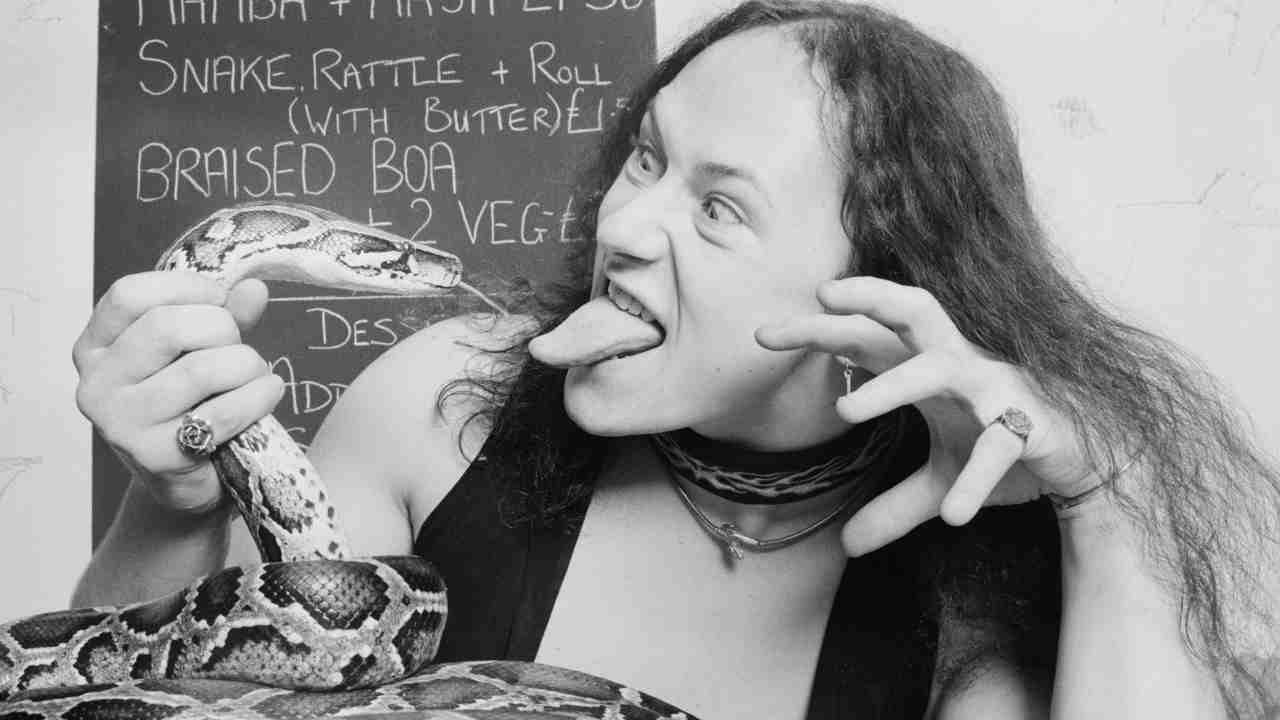
    Venom singer Cronos pretending to eat a live snake in 1983

    Cronos and scaly friend (Image credit: Fin Costello/Redferns)

    Black Metal opens with a literal assault on the listener. There isn’t even a run-in groove on the original vinyl album – the first sound you hear is a horrible noise the second the needle hits the groove (if you’re listening to the original vinyl it does this anyhow). It seemed that punk nihilism, the heavy industry of the area, a real desire to shock the listener out of complacency and a vicious sense of mischief were coming together in a screeching sonic scree.

    “That is literally a chainsaw cutting into metal,” says Cronos. “Abaddon used to work in a steel factory. I was saying to him, ‘We really need to find this annoying sound to go at the start of the album.’ And he said, ‘Fucking hell, if you’ve ever heard metal grinding on metal, it’s a sound that will go right through you.’ We took huge chunks of steel into the studio, put them into a vice and away we went. It was a fucking incredible sound, menacing.”

    This was simply one of many strategies that he was using to make the record lively, unexpected and unique. Cronos took a more literal approach to spooking out the listener on the track Buried Alive.

    “I came to the studio with all these buckets of mud, sand and flour and we put some microphones inside some cardboard boxes in a stairwell. Then we got all these spades and slowly started filling in the boxes with the mud and soil. There were a load of guys into the studio when we did the whole, ‘We came into this world with nothing and with nothing we shall depart’ bit. They were doing the crying and whimpering as if they were at a real funeral, and the funny thing was we had to do this a lot of times because no one was whimpering or crying, people were actually trying to hold back laughter. And when we came back to listen to the tape the weird thing was that the actual laughter actually sounded like crying, and that’s what you can hear.”

    Black metal as a genre would go on to mean many different things to many different people over the next three decades, but to Cronos it means exactly the same thing today as it did then.

    “It was our way of distinguishing our music from the run-of-the-mill heavy metal that was coming out back then. When people were telling me that rock was dead at the end of the 1970s, I couldn’t help but wish that most of it was because it was that fucking lame. ‘Black metal’ was coined because I wanted to describe how different we were to other bands of the time, even how different we were to most ‘heavy metal’ bands of the time.”

    The influence of Black Metal is so vast it can barely be measured. As well as providing the name and many of the conventions for one of the healthiest sub- genres of metal still thriving today, it also set the foundations for much of what we now call extreme metal, in particular thrash, death, speed metal.

    If many in the UK sneered at a perceived lack of technical prowess in Venom, this was easily offset by their growing legion of fans in the US. And it really didn’t hurt that some of them were in bands such as Metallica, Slayer and Exodus.

    But of course, if we had to boil down the significance of this album to one time and place it would probably be to Oslo in the late 1980s/early 1990s. Everything about Venom was sacrosanct to the second wave of BM, or the practitioners of True Norwegian Black Metal, from the lo-fi aesthetic, the Satanic imagery, the desire to alienate the listener and even the style of dress.

    “I was sent early demo tapes by acts like Burzum and Mayhem,” says Cronos. “They reminded me of early Venom in that it was guys who cared more about the passion of the music than the accuracy of it. It reminded me of our first two albums and how I was 10 years earlier, that enthusiasm and hunger. Of all the bands who came up after Venom – not Metallica and not Exodus – they were the only ones who had that ‘looseness’, that punk rawness, the piss, the shit, the snot, the vomit that we had. I could hear it in those young Norwegian bands who were going Hell for leather. Those guys still cite Venom as a big influence but they need to take more credit for what they did. They evolved the sound. I just think it was a shame that it was overshadowed by that church-burning bullshit.”
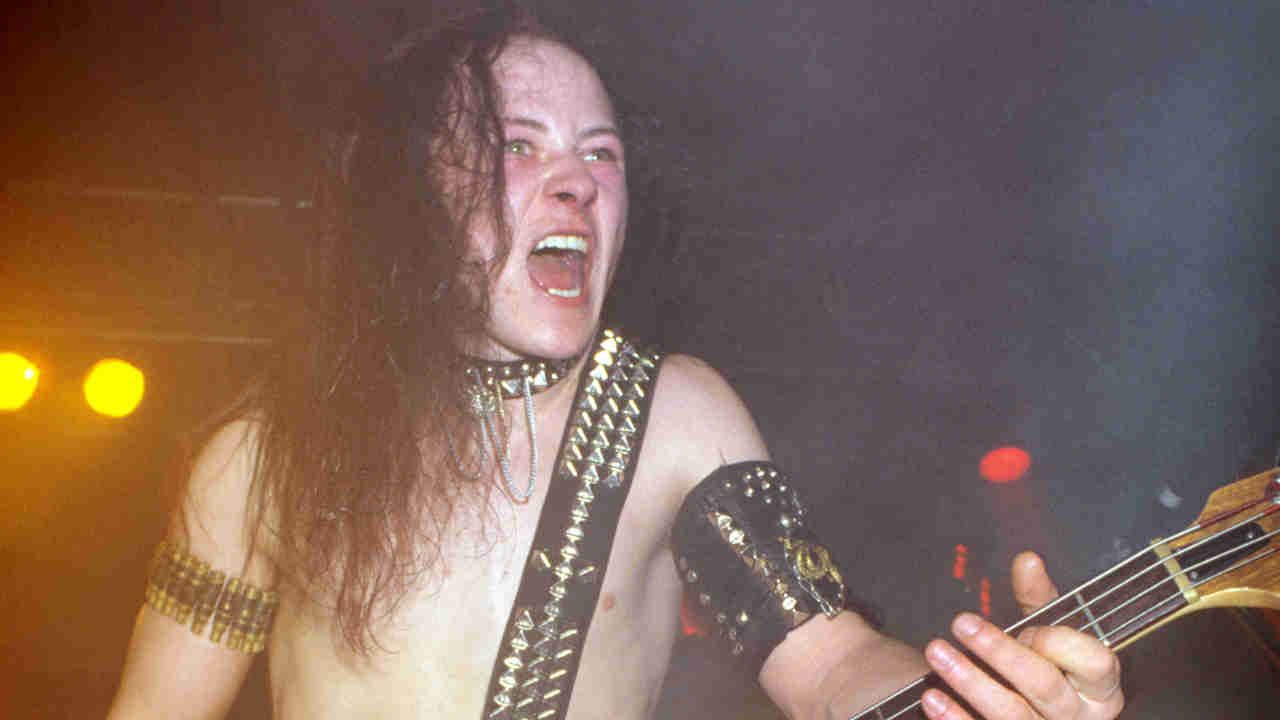
    Venom frontman Cronos playing live onstage in 1983

    (Image credit: dpa picture alliance / Alamy Stock Photo)

    He’s keen to point out that the influence can often be felt in unexpected places: “I think the lasting impact of Black Metal for me is that it has earned us respect in areas that you wouldn’t expect. When you hear someone like Dave Grohl say how important it was to him when he was in school then that’s a big deal. Also it’s further-reaching than you think. It’s like when you meet a lawyer in a suit and he’s asking you for a Black Metal shirt. The secret Venom fans. Those are the kinds of things that last because you realise how important it was for a lot of other people as well.”

    But ultimately, the strength of Black Metal is its raw, ugly sound – the noise you make when you genuinely don’t give a fuck and have nothing to lose.

    “Absolutely. I think it’s about the intensity and conviction that you put into the recording. If you play with fire and vengeance you can get away with dodgy production because people pick up on the actual vibe of the performance in the studio and that’s how I think the first Venom records did OK. Because people weren’t going, ‘Oh I think there’s something wrong with the production,’ they were saying, ‘Fuck me!’ They got where we were coming from. They got the fact that we were young and full of ‘ARRRGHHHH!’”

    Originally published in Metal Hammer magazine issue 225, November 2011
  • Iconic ’80s Heavy Metal Band Announces Major News 11 Studio Albums In

    This band has no desire to take a backseat. They continue to rock and not only create new music but perform live.

    The post Iconic ’80s Heavy Metal Band Announces Major News 11 Studio Albums In appeared first on Audio Ink Radio.

  • Montreal Dreampop Artist Love Altar Examines the Wounds We Bring to Love in Video for “Without Harm”

    With my reflection by the pool
    I learned to be a little cruel
    With words I painted the world I live within

    Old pain has an appalling sense of timing. A lover reaches for us, and an earlier betrayal answers first, turning tenderness into an interrogation and an ordinary silence into evidence. We become fluent in self-protection, then discover that the same habits can make affection almost impossible to receive. The difficult part comes when we recognize our own hand in the damage, and have to decide which old defenses we can finally afford to dismantle.

    Montreal producer, singer, songwriter, and multi-instrumentalist Love Altar approaches that reckoning on Without Harm, her first-ever release and the opening track from her forthcoming album, Empress. Released on October 26th, 2026, the single follows the uncomfortable recognition that the mechanisms once necessary for survival have begun to injure her relationships. Unresolved hurt gets projected onto a lover; affection suffers for offenses committed elsewhere.

    Synthesizer sighs swell around warm, gentle guitars, creating a space as sheltered as a womb, with the upward reach of a cathedral. Love’s voice carries a tender quiver through the opening, close enough to catch the uncertainty in each phrase. Around the minute mark, the arrangement expands and her singing gains strength. Layered voices tremble against one another at the end of the refrain, giving Without Harm the feeling of a promise being tested aloud.

    Sustained guitar melodies spread through the gathering synthesizers while the bass carries the song forward with a soft, steady pull. The warmth recalls the early-’90s Cocteau Twins, particularly the way a small vocal inflection can seem to alter the proportions of an entire room. For all that spaciousness, the performance keeps its intimacy; the voice that first confided in us remains audible inside the swell.

    The lyrics make self-recognition a bruising business. A reflection by the pool prompts an admission of cruelty, and words become the means of painting a world that may offer a distorted view of the person standing opposite. Later, love cuts like paper, lovers send blades through the dark, and dead stars suggest light still traveling from something already lost. The repeated title becomes a wish to give and receive affection without turning an old hurt into a fresh one.

    Empress was co-produced with Ben H Allen III, whose credits include Soccer Mommy, Animal Collective, and Deerhunter. Parts were recorded in Love’s home studio, with all songs finished at Maze Studios in Atlanta, Georgia. Of the collaboration, she says:

    “The process of co-producing this record with Ben has taught me so much and brought to life my intentions beyond what I could’ve imagined. Sonically developing these songs to their full potential together was the equivalent of learning to see colours I didn’t know existed. Special thanks to Ben Etter (sound engineer) at Maze Studios and Harold Brown who did such a fantastic job on the drums. Special thanks to Dominique Messier also who performed drums in Montreal on “Without Harm” specifically and Ryan Morey for mastering”

    Co-directed by Cassandra Bastien-Rivest, aka Del Alma, and Love Altar, the video surrounds the singer with glossy, translucent fabric and scattered flowers. Pink and violet light catches the glitter on her face as close-ups dissolve into overlapping images. Hands move across her chest and throat; elsewhere, cool blue footage contracts into a small rectangle within the frame, pale fabric lifting around her. In the later sequences, a bright light splits into rainbow rays around her veiled figure. The images seem to offer shelter while exposing how readily a view of oneself can multiply and distort.

    Watch the video for Without Harm below:

    Listen to Without Harm below and order the single here.

    Empress is due out November 13th, 2026. Love Altar has also released a second single, Dead Leaves, which came out on October 30th and explores grief, letting go, and the painful work of saying goodbye. Listen below and order it here.

    Follow Love Altar:

    Love Altar — Without Harm cover artwork

    The post Montreal Dreampop Artist Love Altar Examines the Wounds We Bring to Love in Video for “Without Harm” appeared first on Post-Punk.com.

  • Chameleon Complex I Like Weirdos Review

    Chameleon Complex I Like Weirdos Review

    Chameleon Complex introduces “I Like Weirdos” with an energy that recalls early 2000s punk. Hints of Weezer emerge in the melodic approach, while a scruffy garage sound gives the track its character. The music feels direct and alive, with the kind of chemistry that suggests plenty of hours spent rehearsing together.

    Chameleon Complex I Like Weirdos

    The musicians move with a shared instinct. Guitar, bass, and drums give each other space while keeping the performance tight. Their rough edges suit the song, bringing a rehearsal-room immediacy to an arrangement with plenty of personality. You can hear the pleasure of a band locking into its groove.

    A measured, swaggering rhythm gives the track a sly attitude. The beat has a satisfying weight, allowing the punk energy to build without rushing every moment. That pacing makes the changes in intensity more effective and gives the song an appealing sense of mischief.

    I Like Weirdos – Sound and Atmosphere

    The dynamics keep the listening experience engaging. Fuller passages bring an extra push, and the quieter sections create room for the next lift. These rises and falls give the arrangement movement, holding your attention from the opening seconds through the finish.

    One of the most memorable moments arrives around the 55-second mark. The instrumentation drops away, leaving a whistle in the spotlight. It is a playful detail that catches the ear and gives the track a recognizable signature. The sudden space makes you lean in, curious about where the band will go next.

    That whistle also captures the spirit of the song. Chameleon Complex enjoy playing with expectations, using an unusual touch to interrupt the momentum. Their willingness to experiment fits naturally within the garage atmosphere and adds character to the performance.

    I Like Weirdos – An Anthem for Eccentric Souls

    “I Like Weirdos” celebrates the eccentric people who make the world more interesting. The music reflects that affection through its own quirks, pairing familiar punk influences with a cheeky delivery. There is warmth beneath the roughness, making the invitation feel open and easy to embrace.

    Chameleon Complex turn that idea into an entertaining single with strong chemistry, engaging dynamics, and a mischievous streak. The early 2000s references provide a familiar entry point, while the whistle and swaggering groove give the song its own identity. A spirited listen for anyone who appreciates a little oddness in their rock music.


    Eccentric

    🔥 If you love this music: Discover More


    Find Chameleon Complex here:
    Spotify | Instagram

    The post Chameleon Complex I Like Weirdos Review appeared first on Edgar Allan Poets – Noir Rock Band.

  • Los Angeles Post-Punk Duo DECEITS Return for a Second Bite with “Mi Amor, Mi Vampira Pt. II”

    I couldn’t breathe, I had to die
    And now in death, I feel alive

    Horror sequels and vampire romances share a lovely contempt for endings. The monster rises again; the lover keeps vigil; even the grave is only a brief inconvenience. Eternal love leaves ample time for unfinished business—especially once a kiss has turned into a blood oath. Promises must be kept, bodies reclaimed, and, beneath yet another moon, the same terrible choices made all over again.

    Los Angeles post-punk duo DECEITS return to that dangerous bargain on Mi Amor, Mi Vampira Pt. II, out today, October 31, via Get Better Records. The Halloween single finds Kevin “Puppy” Moreno and Francisco Saenz pursuing an affection that has already crossed the threshold between life and death.

    Their original Mi Amor, Mi Vampira, released in 2023, followed a lover through nights of waiting and longing toward a bite that left them transformed. Part II carries that romance into its ecstatic aftermath, as the newly changed lover reckons with a devotion that has cost them their life. A sequel suits a couple whose idea of commitment extends well beyond the funeral.

    A driving bassline works in close formation with Saenz’s drums while flanged guitar hangs above it, icy and gauzy as a spider’s web. Each curling phrase stretches another thread of melody across the rhythm, and the synths deepen the chill around its edges. Early Bauhaus comes to mind in the rhythmic tension, The Cure in the guitar’s liquid reach, while the duo’s Los Angeles punk sensibility keeps the performance hurtling forward.

    Moreno’s vocals drip with dark romance, suggesting Robert Smith as a vampire, his yearning sharpened by an appetite with fatal consequences. He sings the surrender with a lover’s urgency, drawing out the ache in each phrase while the bass keeps pressing ahead. His voice gives the refrain the scale of a pledge meant to outlast the body, allowing the song’s tenderness and violence to occupy the same breath.

    The lyrics follow a lover who welcomes the bite as a blessing, even as their body gives out. Blood becomes wine, surrender brings ecstasy, and death produces the bewildering sensation of being alive at long last. The repeated image of two fates sealed in blood turns infection into a permanent bond, with Moreno treating each terrible consequence as further proof of devotion.

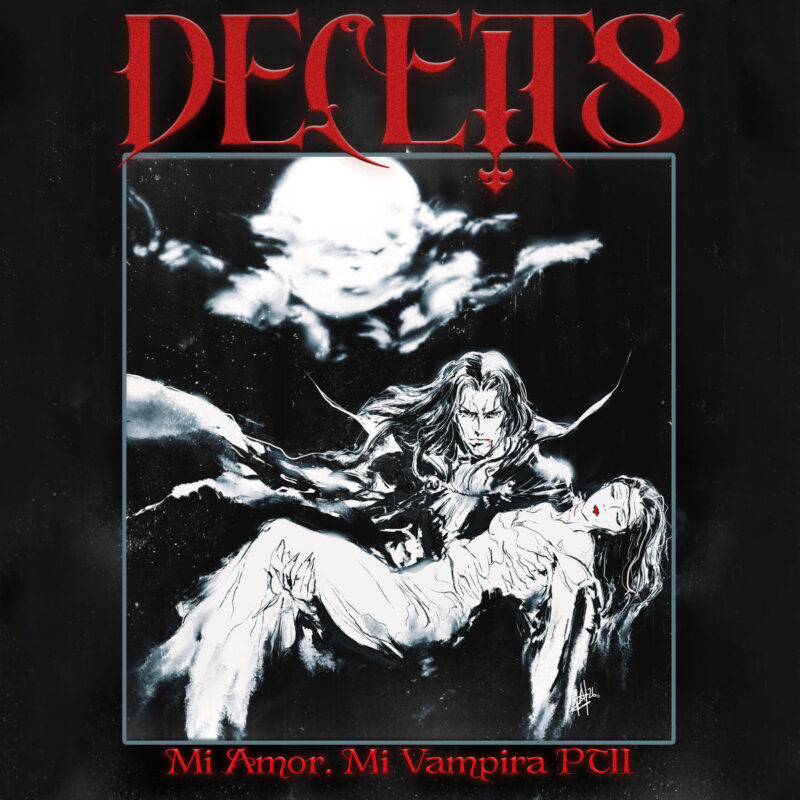
    The cover artwork by @alzandah seems to pay homage to Yoshitaka Amano’s Vampire Hunter D, particularly the pose: a cloaked figure cradles a pale companion, the sweep of the cape enclosing them both. The long-haired vampire also recalls Alucard as envisioned by Ayami Kojima for Castlevania: Symphony of the Night. A family resemblance seems appropriate: Alucard is Dracula’s son, while D’s descent from the Count is strongly implied. Beneath DECEITS’ red lettering and a full moon caught between clouds, the embrace could be a rescue or a final farewell. Either reading suits a song in which love and death have become so intimately acquainted.

    Watch the animated lyric video for Mi Amor, Mi Vampira Pt. II below:

    Longtime best friends Moreno and Saenz co-founded DECEITS in late 2021, bringing the Spanish-language music they grew up with into conversation with their love of The Cure, New Order, Motorama, The Chameleons, and Caifanes. With Moreno on vocals and instruments and Saenz on percussion and drums, their Chicano take on post-punk embraces expressive singing, rhythmic variety, and the physical energy of their live shows.

    Mi Amor, Mi Vampira Pt. II is out now via Get Better Records. Listen and order the single here.

    DECEITS have two United States appearances remaining on their Hurt As Much As Me Tour, followed by BLOODFLOWERS — Japan Goth & Post Punk Festival in Tokyo and dates across New Zealand and Australia. Get tickets here.

    US dates — 2026:

    • November 12 — San Diego, CA — The Holding Company
    • November 14 — Huntington Beach, CA — Darker Waves

    Japan — 2026:

    New Zealand dates — 2026:

    • November 27 — Auckland, New Zealand — Whammy Bar
    • November 28 — Christchurch, New Zealand — Space Academy
    • November 29 — Wellington, New Zealand — Valhalla

    Australia dates — 2026:

    • December 4 — Newtown, NSW, Australia — The Vanguard
    • December 5 — Collingwood, VIC, Australia — The Tote

    Follow DECEITS:

    DECEITS — Mi Amor, Mi Vampira Pt. II artwork: a cloaked vampire cradles a pale figure beneath a full moon

    The post Los Angeles Post-Punk Duo DECEITS Return for a Second Bite with “Mi Amor, Mi Vampira Pt. II” appeared first on Post-Punk.com.

  • 14 Famous Metal Bands That Are Way More Overrated Than You Think

    Overrated doesn’t mean bad. Every band on this list has sold millions of records, packed arenas and built a fan base most musicians would kill for. That’s exactly the point: when a band gets this big, the hype tends to outgrow the music.

    So we picked fourteen famous metal and hard rock acts whose reputations are bigger than their catalogs, at least in our opinion, and made the case against each one. To be fair, we made the case for them too. Some of these will start arguments, and a couple might start fights.

    Here are fourteen famous metal bands that are way more overrated than you think.

    1. Metallica

    Metallica in the mid-1990s: James Hetfield, Kirk Hammett, Lars Ulrich and Jason Newsted
    Metallica in the Load era.

    Let’s get the most dangerous one out of the way first. Metallica’s first four albums, from Kill ‘Em All (1983) to …And Justice for All (1988), are thrash metal scripture, and the 1991 “Black Album” made them the biggest metal band on the planet.

    The case against: Almost everything since. Load and Reload traded thrash for bluesy hard rock, St. Anger (2003) is remembered mostly for its clanging snare drum, and Lulu (2011), their album with Lou Reed, is one of the most mocked records in rock history. For a band treated as untouchable, Metallica has spent 35 years chasing its own ’80s peak.

    In their defense: Death Magnetic (2008) and 72 Seasons (2023) brought back the speed, and they’re still filling stadiums and the Sphere in Las Vegas. Overrated or not, nobody else in metal can do that.

    2. KISS

    The four original members of KISS in full makeup
    KISS’s original lineup in full makeup.

    No band has ever sold itself better than KISS. The makeup, the platform boots, the fire-breathing and the blood-spitting turned four New Yorkers into comic-book superheroes in the ’70s, and Gene Simmons turned the band into a brand, with thousands of licensed products, from lunchboxes to an actual KISS Kasket.

    The case against: The music was always the least interesting part. KISS wrote some great party anthems, like “Rock and Roll All Nite” and “Detroit Rock City,” but much of their catalog is simple, formulaic hard rock that would never have filled arenas without the costumes. It says a lot that their farewell concert, in 2023, ended by unveiling digital avatars to replace them.

    In their defense: Nobody put on a better show, and they inspired a generation of musicians to pick up instruments. In December 2025, KISS received Kennedy Center Honors, two months after original guitarist Ace Frehley died at 74.

    3. Nirvana

    Nirvana's Dave Grohl, Kurt Cobain and Krist Novoselic in suits
    Nirvana: Dave Grohl, Kurt Cobain and Krist Novoselic.

    Nirvana weren’t even really a metal band, and that’s part of the problem. Nevermind (1991) knocked Michael Jackson off No. 1, killed hair metal almost overnight and turned Kurt Cobain into the voice of a generation, so metal fans have spent 35 years being told it’s the greatest rock album of the decade.

    The case against: Nirvana released only three studio albums, and their legend grew enormously after Cobain’s death in 1994. Plenty of musicians would argue that their Seattle peers did more: Alice in Chains were darker and heavier, Soundgarden were the better players, and Pearl Jam built a far longer career. Nirvana’s place in history owes as much to timing as to the songs.

    In their defense: “Smells Like Teen Spirit” still sounds like a revolution, MTV Unplugged in New York is a stunning record, and Nevermind has sold more than 30 million copies. Some bands change music by being the best players. Nirvana changed it by being the right band at the right time.

    4. Mötley Crüe

    Mötley Crüe's Nikki Sixx, Vince Neil, Mick Mars and Tommy Lee backstage in the 1980s
    Mötley Crüe at the height of the glam era.

    Mötley Crüe were the most notorious band of the ’80s. Too Fast for Love and Shout at the Devil made them glam metal’s biggest stars, and The Dirt, their famously wild band memoir, became a Netflix film in 2019.

    The case against: They’re far more famous for what they did offstage than for anything they recorded. Beyond a handful of hits like “Kickstart My Heart” and “Home Sweet Home,” the catalog is thin, and Vince Neil’s live vocals have been a running joke among rock fans for years. Their recent history has been more courtroom than studio: guitarist Mick Mars retired from touring in 2022 and sued the band, and in January 2026, an arbitrator ruled in the band’s favor.

    In their defense: The fans still show up. The Crüe are booked for a Carnival of Sins residency at Caesars Palace in Las Vegas in spring 2027, with John 5 on guitar.

    5. Ghost

    Papa Emeritus of Ghost surrounded by the masked Nameless Ghouls in a cathedral
    Ghost’s papal frontman and his Nameless Ghouls.

    Ghost are the most successful new metal band of the last 15 years. Since their 2010 debut, Tobias Forge’s rotating cast of satanic popes and masked Ghouls has turned theatrical rock into an arena-sized spectacle, and Skeletá debuted at No. 1 on the Billboard 200 in 2025.

    The case against: Strip away the costumes, and Ghost’s music is mostly catchy, polished ’70s and ’80s rock with a spooky coat of paint, closer to Blue Öyster Cult and ABBA than to anything genuinely heavy. Compared with King Diamond, who built a whole career on theatrical horror, the songwriting rarely goes as deep. The concept is brilliant; the riffs are often just pleasant.

    In their defense: They won a Grammy in 2016, and they made a whole arena tour phone-free in 2025 and 2026, with fans’ phones locked in pouches. Few bands today can make a concert feel like an event again.

    6. Slipknot

    Members of Slipknot in their masks
    Slipknot’s masks, as famous as their music.

    Slipknot exploded out of Des Moines, Iowa, in 1999 with nine members, horror masks and a self-titled debut that terrified parents across America. Iowa (2001) is still one of the most violent-sounding albums ever to crack the Top 10, and their early live shows were genuinely dangerous.

    The case against: The masks and the chaos were always as important as the songs, and later albums sanded off much of what made them special. The lineup turmoil hasn’t helped: drummer Joey Jordison was fired in 2013 and died in 2021, and DJ Sid Wilson, one of the last early members, parted ways with the band in August 2026. Calling them one of the greatest metal bands ever is a stretch.

    In their defense: Their fans, the Maggots, are among the most devoted in music. With drummer Eloy Casagrande behind the kit and their first new single in three years, the next album could prove us wrong.

    7. Five Finger Death Punch

    Five Finger Death Punch posing in a dark industrial basement
    Five Finger Death Punch.

    Five Finger Death Punch might be the most commercially successful metal band of the streaming era. Since forming in Los Angeles in 2005, they’ve scored 18 No. 1 hits on Billboard’s Mainstream Rock Airplay chart, including the longest streak of consecutive chart-toppers in its history, and in 2026, they released their 10th album, Legacy, and played a 48-city North American leg of their 20th-anniversary tour.

    The case against: Critics and a lot of metal fans see FFDP as metal for people who don’t really like metal: chugging riffs, tough-guy lyrics and big, safe choruses built for rock radio. Some of their biggest hits are covers, like “Bad Company” and “House of the Rising Sun,” and the formula rarely changes from album to album.

    In their defense: They know exactly what their audience wants and deliver it every time, and they’ve done real work for military veterans, a cause at the heart of songs like “Wrong Side of Heaven.” Millions of fans can’t all be wrong. Can they?

    8. Marilyn Manson

    Marilyn Manson singing on stage under blue lights
    Marilyn Manson on stage.

    In the late ’90s, Marilyn Manson was the most controversial musician in America. Antichrist Superstar (1996) and Mechanical Animals (1998) made him a shock-rock superstar, and politicians treated him as public enemy No. 1, especially after he was wrongly blamed for the Columbine shooting.

    The case against: The image and the outrage were always bigger than the songs. Beyond a few hits, including his cover of “Sweet Dreams,” his albums have offered diminishing returns for two decades. Since 2021, abuse allegations have overshadowed the music; Los Angeles prosecutors declined to file charges in January 2025, and Manson has denied all wrongdoing, but for many listeners the music now comes a distant second.

    In their defense: He’s still making records and touring the world, with One Assassination Under God – Chapter 2 released in August 2026. Alice Cooper did shock rock first; Manson just did it louder.

    9. Rage Against the Machine

    Tom Morello of Rage Against the Machine playing guitar on stage in a cap and red bandana
    Rage Against the Machine guitarist Tom Morello.

    Rage Against the Machine’s 1992 debut is one of the most explosive albums of the ’90s. Zack de la Rocha’s furious rapping, Tom Morello’s sci-fi guitar noises and riffs like “Killing in the Name” created a sound that a thousand nu-metal bands would copy.

    The case against: Rage released only three albums of original songs, plus a covers record, before splitting in 2000, and their reputation rests on a remarkably small catalog. The politics often overshadowed the music, and their reunions kept ending early: their 2022 tour was cut short after de la Rocha injured his leg, and in 2024, drummer Brad Wilk said the band would not play live again.

    In their defense: In 2009, a fan campaign made “Killing in the Name” the UK’s Christmas No. 1, and they entered the Rock and Roll Hall of Fame in 2023. Few bands did more with less.

    10. Bring Me the Horizon

    The members of Bring Me the Horizon posing against a blue background
    Bring Me the Horizon.

    Bring Me the Horizon started in Sheffield, England, as one of the most brutal deathcore bands of the 2000s. Their 2006 debut, Count Your Blessings, was all breakdowns and screams. Twenty years later, they headline festivals around the world.

    The case against: Somewhere along the way, they stopped being a metal band. Each album pushed further toward pop, electronic music and stadium rock, and by amo (2019), many longtime fans felt the band had left them behind. They’re often hailed as metal’s saviors, yet their biggest songs have very little metal left in them.

    In their defense: Reinvention takes guts, and it worked. Post Human: Nex Gen (2024) kept them on top, and in 2026, they re-recorded Count Your Blessings for its 20th anniversary, proof they haven’t forgotten where they came from.

    11. Killswitch Engage

    Killswitch Engage's members performing live, shown side by side
    Killswitch Engage on stage.

    Killswitch Engage helped define metalcore in the early 2000s. Alive or Just Breathing (2002) and The End of Heartache (2004), with their mix of crushing riffs and huge clean choruses, became templates for an entire generation of bands, and the latter’s title track earned a Grammy nomination.

    The case against: That template is the problem. Killswitch’s sound has barely changed in 20 years, while plenty of the bands they inspired have pushed metalcore further. Swapping singers twice, from Jesse Leach to Howard Jones and back to Leach in 2012, didn’t change the formula much either. They’re a very good band, but their reputation still rests on records from two decades ago.

    In their defense: Few bands in the genre are as consistent, and guitarist Adam Dutkiewicz is one of metal’s most respected producers. This Consequence (2025) showed they can still deliver.

    12. Twisted Sister

    Dee Snider of Twisted Sister in full makeup and teased hair
    Dee Snider, Twisted Sister’s frontman.

    Twisted Sister spent a decade grinding through the New York and New Jersey club circuit before hitting it big with Stay Hungry (1984). “We’re Not Gonna Take It” and “I Wanna Rock” became anthems, and Dee Snider became one of the most recognizable faces of the decade.

    The case against: Those two songs are most of the story. The band released only five albums of original material in its prime, never came close to matching Stay Hungry and has spent decades as a nostalgia act. A planned 2026 reunion was called off in February when Snider stepped away, and the band went ahead with Sebastian Bach singing a handful of fall dates.

    In their defense: Snider’s 1985 testimony before the U.S. Senate, defending heavy metal against the PMRC, was one of metal’s finest moments, and “We’re Not Gonna Take It” has turned up at protests ever since. Tell Dee he’s overrated, and we know exactly what he’s not gonna take.

    13. Guns N’ Roses

    Guns N' Roses' five original members in leather jackets posing against a red backdrop in 1987
    Guns N’ Roses in a 1987 publicity photo for Appetite for Destruction. Photo: Robert John/Geffen Records, public domain, via Wikimedia Commons (cropped)

    Guns N’ Roses were the most dangerous band in rock when Appetite for Destruction arrived in 1987. Powered by “Welcome to the Jungle,” “Sweet Child o’ Mine” and “Paradise City,” it became one of the best-selling debut albums ever, with more than 30 million copies sold worldwide.

    The case against: Nearly 40 years later, they’re still living off that one album. After the sprawling twin Use Your Illusion albums (1991) and a covers record, fans waited 15 years for Chinese Democracy (2008), which reportedly cost $13 million and left Axl Rose as the only classic member. Since then: six new songs, mostly reworked leftovers from that era. And Rose’s late starts and walk-offs were so notorious that shows near St. Louis in 1991 and in Montreal in 1992 ended in riots.

    In their defense: The 2016 reunion with Slash and Duff McKagan, the Not in This Lifetime… Tour, grossed $584.2 million, then the third-highest total in Billboard Boxscore history, and they’re still playing stadiums on a world tour that runs into December 2026. After waiting 15 years for Chinese Democracy, what’s another hour waiting for Axl?

    14. Limp Bizkit

    Fred Durst in a white shirt and cap singing beside masked guitarist Wes Borland on a blue-lit stage
    Fred Durst and Wes Borland of Limp Bizkit on stage in July 2021. Photo: ECarterSterling, CC BY-SA 2.0, via Wikimedia Commons (cropped)

    Limp Bizkit were arguably the biggest band in the world around 2000. The Jacksonville, Florida, rap-rockers hit No. 1 with Significant Other in 1999, and the follow-up sold more than a million copies in its first week, a record for a rock album in the SoundScan era.

    The case against: For many rock fans, Limp Bizkit are shorthand for everything wrong with nu-metal, from the backward red cap to the tantrum lyrics. Rolling Stone readers voted them the third-worst band of the ’90s in 2013, and Fred Durst still takes heat for Woodstock ’99, the festival that ended in fires and rioting, though he blamed the organizers. Even guitarist Wes Borland has said it took people time “to get over how annoyingly in everyone’s face we were for that period.”

    In their defense: Borland’s body paint, costumes and experimental riffs made him one of the most inventive guitarists of his era. And the revival is real: since Durst showed off a gray moptop and handlebar mustache at Lollapalooza 2021, they’ve become festival headliners again, including at Louder Than Life in 2026. Turns out people just needed a 20-year break.

    The post 14 Famous Metal Bands That Are Way More Overrated Than You Think appeared first on Metal Shout.

  • Steve Hackett recalls messing with Genesis at their Rock Hall induction

    Steve Hackett recalls the moment he upset his former bandmates by recommending Yes for induction into the Rock And Roll Hall Of Fame during Genesis’ own ceremony. It was the guitarist’s way of involving old friend Chris Squire, who’d wanted to attend but couldn’t be accommodated.

    Genesis received the honour in 2010 and Yes were inducted seven years later – but Squire had died in 2015.

    “He wanted to come along to the night that we were inducted,” Hackett tells UCR, “and I literally said, ‘Look, I can’t get you in.’ He thought I was trying to keep him out – and I said no, I wanted him there. That would have been great.”

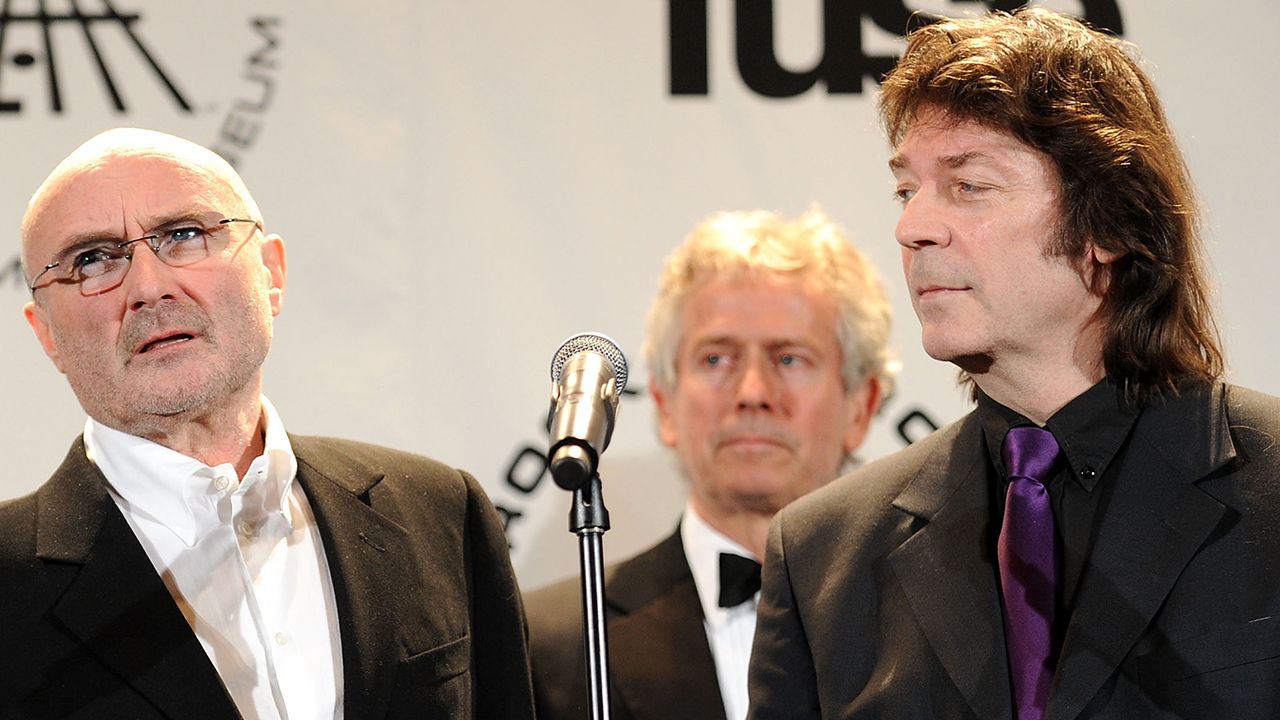
    Phil Collins, Tony Banks and Steve Hackett of Genesis attend the 25th Annual Rock And Roll Hall of Fame Induction Ceremony in 2010.  (Photo by Stephen Lovekin/Getty Images)

    (Image credit: Getty Images)

    “When I got to meet the press I said, ‘You know, I think Yes should be inducted too.’ That caused a bit of a stir with Genesis! They were standing four feet away from me, saying, ‘Is he with you?’”

    Hackett believes Yes’ Rock Hall entry was important. “You could say Genesis were the first progressive band – or a band that had at one time been progressive – to be inducted. But shortly to be followed by the guys who had preceded us.”

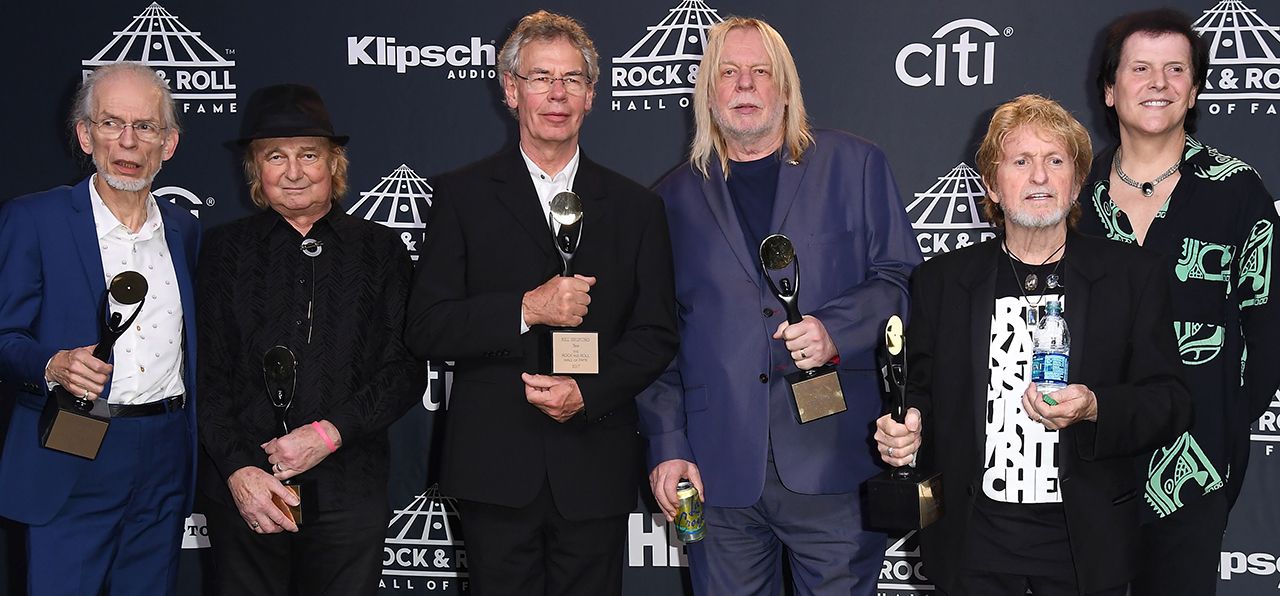
    Members of Yes at the Rock And Roll Hall of Fame Induction Ceremony in 2017 in New York City. / AFP PHOTO / ANGELA WEISS        (Photo credit should read ANGELA WEISS/AFP via Getty Images)

    (Image credit: Getty Images)

    Hackett, along with Phil Collins, Mike Rutherford and Tony Banks, didn’t play during their ceremony. “I know they wanted the band to perform, and at that point, you know, Phil was very unwell,” the guitarist says, adding: “That particular lineup of the band had not worked together for very many years.”

    Phish performed a tribute set in the their place, and Hackett can’t forget singer-guitarist Trey Anastasio’s induction speech. “He got up and started saying nice things about not just Genesis, but also some of the techniques I’d come up with. I thought, ‘The guys are sitting here having to listen to this; they’re probably getting really peeved!’”

    He reflects: “I think the Rock and Roll Hall of Fame is a great American institution. We haven’t got anything like that in the UK. The wonderful thing is that people are not just celebrated while they’re living, but also when they pass. Some people get inducted too late to attend the ceremony – literally.”

  • Seattle’s Black Ferns Surveys The Wreckage of a Doomed Relationship on “Failed Plans”

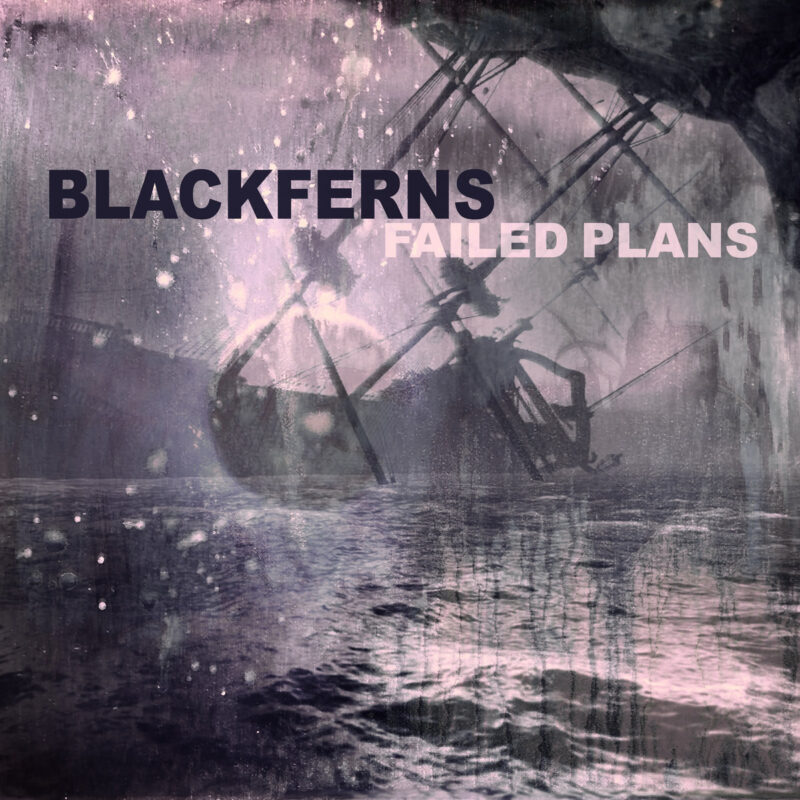
    Love has a remarkable talent for turning perfectly functional adults into shipwrecks. One minute you’re making plans for a shared future, and the next you’re staring across the dinner table at someone who might as well be broadcasting from the far side of Neptune. The temperature drops, conversations become archaeological exercises, and whatever affection once kept the machinery running has frozen solid beneath several thousand feet of accumulated disappointment. Somewhere in the Arctic, an abandoned vessel sits trapped beneath the ice, providing Seattle’s Black Ferns with a splendid metaphor for romantic catastrophe.

    Failed Plans, the latest single from Black Ferns‘ forthcoming third album, Di Lodus, takes this miserable little expedition into the frigid waters of post-punk, where guitars stretch toward the horizon and synthesizers hum with the indifferent patience of a malfunctioning Soviet submarine.

    Zoran Macesic has an ear for the sort of guitar melody that once made Echo & the Bunnymen sound as though they were holding séances inside abandoned cathedrals. Those ringing, heavily treated chords move through the arrangement with considerable force, while the bass and drums maintain a steady, almost mechanical momentum. The synthesizers add an uncomfortable chill, filling the spaces between the instruments with an electronic unease that brings to mind the more psychologically troubled corners of Love and Rockets.

    There’s a delicious contradiction in the arrangement: the music keeps moving forward while the lyrics contemplate permanent immobility. A ship imprisoned beneath Arctic ice becomes a lover stranded inside a relationship whose emotional resources have been exhausted. Macesic approaches the subject through abstract imagery, allowing the listener to assemble the wreckage without receiving a tedious inventory of every broken promise.

    His vocals inhabit the recording with a distant, almost disembodied quality, occasionally sinking into the instrumental layers as the guitars climb overhead. Producer Lincoln Traveller gives the instruments enough room to breathe while maintaining an oppressive sense of enclosure, as though the entire performance were taking place inside the metal hull of that unfortunate vessel.

    By the conclusion, the ship remains stranded, the relationship appears terminal, and nobody has thought to send a rescue party. Meanwhile, those guitars keep turning in magnificent, miserable circles, providing a fitting soundtrack for anyone who’s ever watched a promising future disappear beneath the ice.

    Listen to Failed Plans below and order the single here.

    Black Ferns have spent more than a decade exploring the intersection of gothic rock, post-punk, and electronic music, and Failed Plans suggests that Di Lodus, an eleven-track collection, will continue that fascination with emotional disintegration.

    Follow Black Ferns:

    The post Seattle’s Black Ferns Surveys The Wreckage of a Doomed Relationship on “Failed Plans” appeared first on Post-Punk.com.

  • Test your knowledge with this Slayer trivia quiz

    Slayer played their first show on October 31, 1981 at a Battle of the Bands night in South Gate, California. Their flyer invited rock fans to experience their “assault on heavy metal” and they weren’t messing about.

    The term thrash was still a few years away, but ever since their first ever show, Slayer have remained dedicated to the cause (apart from taking a few years off after a 37-year run) and have enjoyed a career shot through with chaos and controversy.

    While nobody can be into Slayer as much as Daniel Schler (the super-fan who shouted the band’s name until he turned tomato red on the band’s War at the Warfield DVD), this 20-question quiz will determine your dedication to their decibel devilry.

    Test your knowledge by taking the quiz below.