Back in 2007, a young band from Swabia decided that simply listening to rock and metal wasn’t quite enough. Five guys got together, plugged in, and Kissin’ Dynamite was born. At the time, nobody could have predicted just how far that decision would take them. What was already clear, though, was that these youngsters had… Continue Reading →
Every week there is a tidal wave of new music released unto the world. Each Friday we’ll round up some of the best new music available, some we’ve reviewed, some we haven’t, but all worth checking out!
Theres a lot of new heavy music hitting the airwaves this week, everything from black metal, death metal, gothic metal, Stoner rock, doom, thrash metal and even some of your traditional heavy metal!
Here’s what we think you should check out today!
ALBUM OF THE WEEK
Thrash metal heavyweights Anthrax release latest album ‘Cursum Perficio’ via Nuclear Blast. “ranks among the band’s most accomplished works.” Read our full review here.
Nytt Land follow their living, breathing connection with ancient traditions and beliefs on ‘Ritual of Stone Sun (Live 2026)’ released via Season of Mist. “Ritual of Stone Sun succeeds because Nytt Land understand that power doesn’t always have to come from volume or aggression.” Read our full review here.
Game Over take no prisoners on new thrasher ‘When Darkness Falls’, released via Scarlet Records. “Best served with a couple of cold beers, a pizza and an old pair of Reebok hi-tops.” Read our full review here.
Heavier than Meshuggah? Emma Ruth Rundle releases ‘These Killing Times’ via Errant Child. “judging solely on sentimental power and pure textural depth, “These Killing Times” is one of the most impactful and emotionally heaviest” Read our full review here.
Tokyo industrial metal project GodFrost release EP ‘Hanging Doll’ via Brutal Records. “impactful and innovative, mixing doom and gothic noises, and a proper 90’s industrial base” Read our full review here.
UK death metal force The Bleeding return with ‘Godless Communion’ via Redefining Darkness. “easily The Bleeding’s most searing release to date” Read our full review here.
The Cartographer release their debut album ‘The Collapse of a Bitter End’ “hard-hitting machine-gun riffs before brutal beatdowns” Read our full review here.
Long-running black metal juggernaut Krallice release ‘Scour Order’ via Profound Lore Records. “This one flows like lava, consuming everyone and everything in its path!” Read our full review here.
Parisian underground punk/hardcore outfit LUGOSi release ‘The Scars’. “a hard-edged punk attitude and a mathcore level of utter madness.” Read our full review here.
Cambridge heavies Uncle Acid & The Deadbeats return with their seventh full-length ‘Shapes Of Midnight’. “this is right up there with some of the best.” Read our full review here.
Blending Death/Doom Metal with ritualistic atmospheres, Runemagick releases ‘After Chaos: Nocturnal Vigil’ via Hammerheart Records. “There were moments I loved on this album and moments I struggled with but you cannot deny the mood throughout.” Read our full review here.
Led by one of the founding members of Big Country, Big Country Redux release ‘Eastworld’. “this project feels like the final embers of a dying fire, likely to appeal only to die-hard fans and completists” Read our full review here.
Rock
Black Blood Sthlm – Black Blood Sthlm (Independent) Riff Wood – Butterfly In Black and White (Giant Music) Big Country Redux – Eastworld Gary John Barden – Empowered Emotions (Frontiers Music SRL) Saturna – Lifght and Shadow (Spinda Records/Ripple Music) Chris Horses & The Slow Smoke – Nowhere Bound (Devil’s Fork Records) Kärbholz – Sturm Zieh Auf (Metalville) Hardbone – TBC (Massacre Records) Velveteen Queen – The Greater Good (Silver Lining Music) Steelmade – Toxic (Independent) Colin Moulding – Want It Bad (the pep talks and playing fields of old England) (Burning Shed) Slothrust – What They Grow In The Garden (Rude Records / Equal Vision Records)
Heavy Metal
Kai Hansen – Born With A Hammer (earMUSIC) Wasted Maniacs – Night of the Maniacs (Independent) Trenchwar – Overlords of Cold (Time To Kill Records) Mourning Wood – Rise & Shine (Independent) Grinn – Silence [EP] (Independent) Violation – The Anthology (Ripple Music) Dekadenza – Wasteland (Independent)
Black Metal
Funeral Witchery – Beyond The Light (Invima Records) Hexbane – From Hell [EP] (The Circle Music) Mittags-Abgrund – Mittags-Abgrund (Darkness Shall Rise) Blodtår – Monark (Nordvis Produktion) The Noctambulant – Revival (Terminus Hate City) Profeci – Troska (Godz ov War productions)
Death Metal / Death-Doom / Grindcore
Asenblut – A New Era (Independent) Ch’Ahom – Anthropic Rites of Sublimation (20 Buck Spin) Sea Sleeper – Burden of Anthlers (Independent) Besomora – Devolution to the Fear [EP] (Independent) Hanging Garden – Dream Death (Transcending Obscurity Records) Revel In Flesh – Flesh For The Kult of Death (War Anthem Records) Embers of Dawn – Infernal Culture (Independent) Memories of a Lost Soul – Lost Memories (My Kingdom Music) Necrocene – Scumocracy (Personal Records)
Doom / Stoner Rock / Sludge / Psych
Stinking Lizaveta – Cassandra, Prophet of Doom (SRA Records) Phlefonyaar – Encyclopaedia Sociopathica (Independent) Allume – Ex Luto (Octopus Rising) LáGoon – Forget What You Heard (Independent) Bees Made Honey In The Vein Tree – In Between Strides (Magnetic Eye Records) Terra Black – Mirage (Bonebag Records) Paranoid Reverb – Red River Black Roots (Octopus Rising) Remote Viewing – State Violence (Human Worth)
Post-Hardcore
Holding Absence – Modern Life Is Lonely (Sumerian) Cor de Lux – Year of the Horse (Ipecac Recordings)
Post-Punk
Hijss – Hijss (Heavy Psych Sounds) Duncan Evans And The Weeping Starlight – The World is a War Zone (Independent)
Power Metal
Aletheya – Chance To Reborn (Independent) Valkyrie’s Fire – Out of Darkness (Eclipse Records) James Legendforge – The Witchfinder’s Flame (Independent)
Progressive Rock / Metal
Playground – A Flower To Water (Pelagic Records) Abstracted Mind – Break Down Your Fears (Independent) The Eternal – Obscured Horizons (Reigning Phoenix Music) Submasq – Spirit Animal (Willowtip Records) Villagers of Ionnina City – Venceremos (Napalm Records)
Punk
Yellowcard – Better Days [Deluxe] (Better Noise Music) Summer Wars – Closer Than It Seems (Adventure Cat Records) The Dogs – Trauma Junkie (Indie Recordings)
Thrash Metal
Ombra – Night Terror (Independent) Garota – Strąceni w Ciemność (Godz ov War Productions)
… and the rest!
Cenobia – Lethal Devotion [EP] (Fearless Records) Metalcore 30,000 Monkies – Super Rebound (Fvn Kult Rekords) Noise Rock
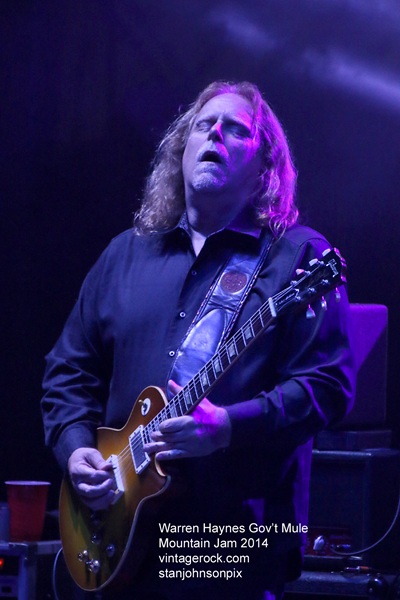
Warren Haynes is doing alright living out his dreams. Working his way around with various outfits in the late 70s and 80s, the singer, songwriter, and guitarist’s life changed when his role with the Dickey Betts Band led to him becoming a member of the Allman Brothers Band in 1989, when they reformed — for the second time. Being part of the iconic southern rock band afforded Haynes numerous opportunities. You could say he seized the day, and then some.
Haynes established Gov’t Mule in 1994 with Allmans bassist bandmate Allen Woody and Dickey Betts drummer bandmate Matt Abts. The power trio introduced a hard-rock sensibility to the jam-band community that put a scare into contemporaries like Phish and Widespread Panic (not really, but it sounds good on paper). Haynes and Woody left the Allman Brothers Band in 1977. Three years later, when the bassist passed away tragically, Haynes came back to the Allman Brothers Band, teaming with wunderkind Derek Trucks, and staying on until the band dissolved in 2015.
Derek Trucks & Warren Haynes, 2013 at the Beacon Theatre with the Allman Brothers Band
More dreams came true along the way.
He released solo records, starting with 1993’s Tales Of Ordinary Madness, which was remixed and reissued at the top of 2026. The Mule, with new personnel, continue to dominate the jam-band circuit. Haynes stepped up alliances with prominent musicians, most notably surviving members of the Grateful Dead for shows with Phil & Friends and The Dead. He also played on and contributed songs to records by Peter Frampton, Garth Brooks, Joe Bonamassa, John Mayall, Blues Traveler, Corrosion of Conformity, and dozens of others. Demand for Warren Haynes and his extraordinary talents remains unabated. Even Dolly Parton included him on her last album.
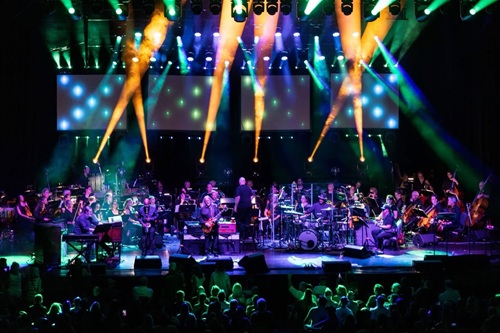
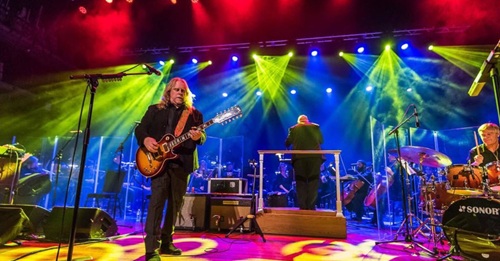
To help sum up his career, Haynes staged a show in 2019 at the Thomas Wolfe Auditorium in his hometown of Asheville, North Carolina. It was on this night that musician presented his Dreams & Songs Symphonic show alongside the 64-piece Asheville Symphony Orchestra, plus a lineup of players that included ABB bassist Oteil Burbridge, John Medeski on organ and keys, Jeff Sipe on drums, Greg Osby on saxophone, with Edwin McCain and Jasmine Muhammad on background vocals.
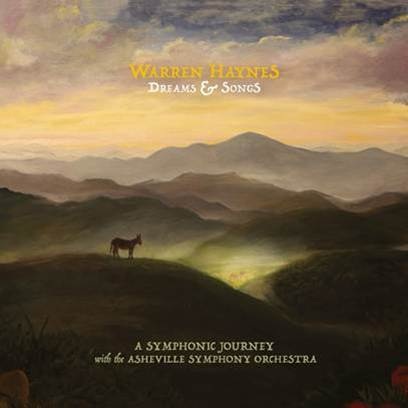
Seven years later, a recording of the show called Dreams & Songs: A Symphonic Journey is now available for public consumption. Co-produced by Don Was and Haynes, this an exploration of the highlights and influences around Haynes’ 30+ year career with music from Gov’t Mule, Allman Brothers Band, The Grateful Dead, solo albums, and more — enhanced with new orchestral arrangements.
I had a chance to speak with Haynes about the show, the songs, the arrangements, and how it all came together. At the time of this exchange, he was on a short break before Gov’t Mule embarks on a 16-date co-headlining fall tour with Ziggy Marley. Terrence Higgins will continue filling in on drums for Matt Abts, who’s been sidelined with medical issues for nearly two years. “We’re hoping he’s back very soon,” Haynes told me.
One other thing. While grateful for being able to live out so many of his dreams, Warren Haynes assured me he still has a few more he’d like to cross off his list…
~
Dreams & Songs: A Symphonic Journey was recorded in 2019 in Asheville, North Carolina, your hometown. And you played alongside the 64-piece Asheville Symphony Orchestra and a band of handpicked players. What do you recall about getting this show off the ground?
It was a lot of work putting it all together — picking the songs, picking the arrangers to arrange the music for the symphony, getting all the musicians together and rehearsing. But (it was) a labor of love and definitely something that I really enjoyed.
How did you determine which songs would work with an orchestra?
Well, I think more often than not, rock songs or pop songs or even jazz don’t cry out for that sort of treatment. It’s kind of the exception rather than the rule. I’ve never been a big fan of marrying orchestral music with pop music or rock or jazz just for the sake of doing it. I think it’s a song-by-song decision. So luckily, I was able to have a lot of material to choose from, so we only chose stuff that we thought worked really well — that would enhance it and take it to another place.
Let’s talk about the title track “Dreams & Songs,” which opens and closes the show. This is a song that touches on the passage of time, memories of your past, yet life has its challenges and you need dreams and songs to get you through it. Would you say it is autobiographical in that sense?
Yeah, I think that’s a fair thing to say. It was Don Was’ idea to make that the title. I don’t know if I had decided to open and close with it before or after he brought that up. I thought it worked perfectly.
Watching the video of “Thorazine Shuffle” really shines a light on the breadth of the show and how you, the band and the orchestra interacted. I read John Medeski had a big hand in the arrangement. Can you talk about putting it together?
Yeah, Medeski did “Thorazine Shuffle” and “Instrumental Illness,” two of the more complex pieces on the record. He has a background in orchestral arranging and we’ve played together and worked together so many times. I was intrigued to see where he would go with both of those tunes. And in both cases, he really did a marvelous job of keeping some sort of orchestral tradition, but also making it pretty avant-garde.
You’re no stranger to playing Grateful Dead music because you did with it The Dead, Phil & Friends and with an orchestra during the Jerry Garcia Symphonic Celebration tour in 2016. In Ashville, you played “Shakedown Street,” “Black Peter” and one my favorites of theirs “Terrapin Station,” which was originally recorded with an orchestra. Were there others up for consideration?
I had picked all the material from that catalog to do for the Jerry Garcia symphonic celebration and presented my arrangements to the orchestral arrangers that were chosen to do all those symphony arrangements. Those were three of my favorites from that experience. The “Terrapin Station” arrangement obviously makes sense because the original had an orchestra and they weren’t able to replicate that, for the most part. So being able to do that was really fun, but then going into “Slipknot” in the middle and back into “Terrapin Station” was really cool, unique and fun. Steven Bernstein did the arrangement for “Black Peter” and it’s very New Orleans-esque. I’m really happy with the way that turned out. Sean O’Loughlin (Josh Groban, Sara McLachlan) did the one for “Shakedown,” and it’s really cool and interesting.
You recently played Jerry Garcia’s Wolf guitar. How did that feel?
I love the fact that it just transports the songs to another place, you know? I actually have a Wolf replica now, and sometimes it gets confusing as to whether I’m playing that or the original one, because I played the original one on both of the Garcia Symphonic Celebration tours, so I’m no stranger to playing the Wolf, but now that I have an actual replica of that guitar, I’ve been pulling it out some as well. It’s a beautiful, beautiful instrument.
During your first years with the Allman Brothers Band, I’d think you would have had the opportunity to meet Garcia, but I read you didn’t. True?
Yeah, I never met him. I had the opportunity one night at Madison Square Garden. my wife and I were guests of Bruce Hornsby. Hornsby set us on stage right be- behind his piano, and we watched the whole show that way. It was a night that Jerry was struggling a, a little bit, so there was some tension on stage. Someone asked: “You want to go back and, and say hi to Jerry?” And my response was, “No, I’ll wait and do it another night.” Of course, a valuable lesson learned — there was no other night. So that was a mistake on my part.
I think The Dead was, after Garcia passed, the best band ever to play Grateful Dead music with the original guys. Dead & Company was cool in its own way, but there was something more authentic with you playing with those guys. How did you land on their radar?
My involvement with the Grateful Dead came through working with Phil, which was an amazing experience. When I started playing with Phil, he had this idea of reinterpreting that music, and he didn’t want anybody to play or sing like Jerry. He just wanted everybody to bring fresh ideas and demonstrate how elastic those songs were and how interpretable that catalog was — and how great music can be interpreted in endless different ways. I thought that was a beautiful challenge, and that led to a decades-long friendship and working relationship. A few years later, I played with Bob for the first time, and we hit it off from the beginning. Playing with all those guys together was such an honor and such an experience. I had a wonderful time.
U2’s “One” is an interesting choice and a song with its bare, hymn-like arrangement that addresses difference and obligation — “We’re one, but we’re not the same / We get to carry each other” — you know the rest. Where does it fit into your musical story?
I performed that by myself a few times when I first started doing solo shows. There was a version on my live at Bonnaroo record, and a lot of people gravitated toward that version. So, I would include it from time to time. It was a beautiful song. Back then, I was just kind of demonstrating what a wonderful song it is when you strip it down to just voice and guitar. But in this case, going the opposite and adding the full orchestra, it has a whole other interpretation.
That brings me to the Allman Brothers Band and the two songs you feature on Dreams & Songs. “Dreams” seems like a given but how did you go about adding strings to “Whipping Post”?
Medeski and I were talking about it one night. He didn’t do the arrangement; David Campbell did the arrangement of “Whipping Post” and did a fantastic job. But Medeski and I were talking about “Whipping Post” one night and he mentioned the original version was kind of like an orchestration in its own right with that ascending line at the end and all the counter melodies. It was kind of rock orchestration from the very beginning. I have such a deep relationship with that song, playing it so many times with the Allman Brothers. It’s the ultimate show closer.
We actually opened with “Whipping Post” one time during my tenure with the Allman Brothers. That’s the only time it was not a closer. I think it was even my idea to open with it. We opened with it in Boston and it was fantastic. But then, where do you go from there? (laughs) Including “Dreams” and “Whipping Post” for this project made sense to me. They’re both pieces that I think are signature songs, two of my favorite Allman Brothers songs, but also ones that we can utilize improvisation to a great extent.
I saw you and Derek Trucks play together last year when Gov’t Mule toured with Tedeschi Trucks Band. When you two were with the Allmans, I truly believe you took up the reins from where Duane Allman and Dickey Betts left off. When you two play together, are you mindful of that?
I’m not consciously thinking about it, but it’s always in the back of our minds, the reverence that we have for what they bestowed on the world. He (Derek) and I are such enormous fans of what they did that we want to always honor that. And sometimes the best way you can honor it is by bringing your own personality into it.
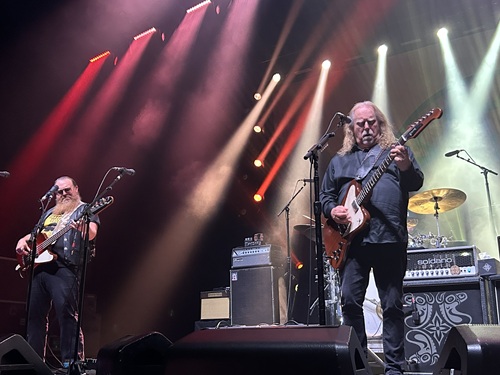
Gov’t Mule, 2026
Govt. Mule just completed a summer run with Joe Bonamassa and head out with Ziggy Marley for the Dreaming The Same Dream fall tour. You’re definitely one of the hardest working bands in rock and roll. I’ve seen the Mule several times, and marvel at how every player can read and bounce off each other so effortlessly. How do you consistently keep it at such a high level?
The chemistry that the four of us have is pretty uncanny. We’ve been really having a great time the last three years or so since Kevin Scott joined the band on bass. It’s just one of those things where the improv that we’re capable of is due to this uncanny chemistry that happens that is hard to describe. You can’t force it, you can’t dictate it, it just kind of happens on its own. We love playing together. We love the fact that 30 something years later, we’re still expanding on that philosophy and that there’s an audience that not only encourages, but really loves that approach to music.
Any plans for a follow up to Peace…Like a River (Gov’t Mule’s most recent studio release from 2023)? Or are you working on something else?
I’ve been thinking about the possibility of some instrumental jazz-influenced record. I don’t know if that would be a Gov’t Mule record or a solo record or a collaborative project, but that’s something I’ve been wanting to do for a long time. I would really love to get Gov’t Mule with Kevin Scott in the studio. All those things are front and center.
As far as other projects, I heard something about releasing something from the show you did at the Caverns here in Tennessee.
Yeah, it’s going to be a PBS special (The Caverns Sessions with Warren Haynes airs November 4th). I’ve been writing a lot of music that’s somewhere in between my Ashes & Dust record (released in 2015) and my newest studio record, Million Voices Whisper (released in 2024). That’s something that I feel like I’m getting closer to as well.
You’ve written and played on quite a few songs about dreams. Looking over your career, would it be fair to say that many of your dreams have come true?
Absolutely. I wonder sometimes if my life is a dream, you know?
Are you still dreaming?
I’ve never played Royal Albert Hall. Up until a few years ago, when I played with Willie Nelson for his 90th birthday, I had never played the Hollywood Bowl. There’s some people still that I’ve never played with like Paul McCartney. I would obviously love any sort of collaborative opportunity, even if it was just like jamming or whatever. But, you know, those kind of things usually come about organically.
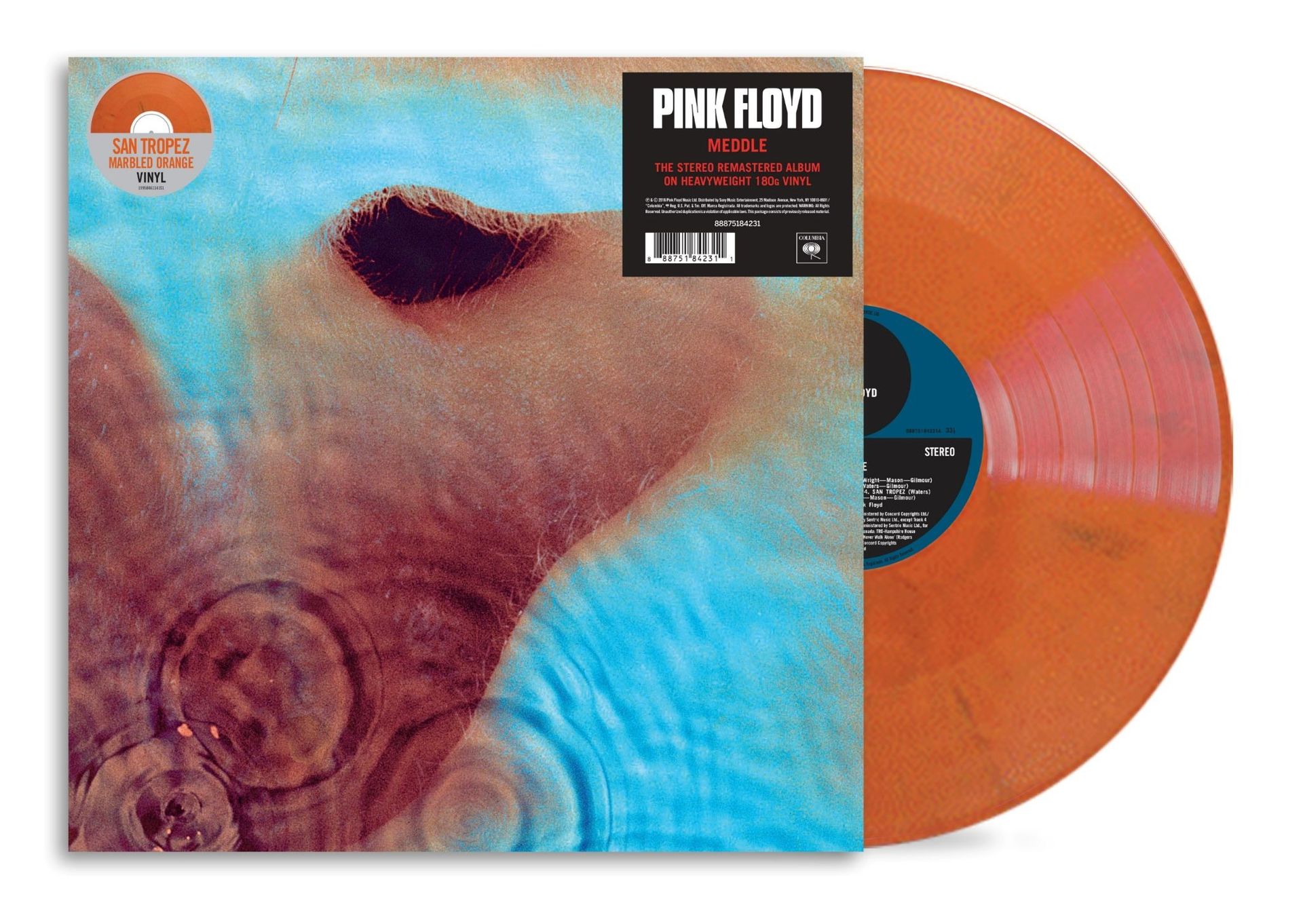
Pink Floyd have announced they will release a new San Tropez Orange Marble vinyl edition of their landmark 1971 album Meddle, for this year’s National Album Day, through Sony Music on October 17.
At the same time, a newly restored high-resolution version of the iconic Echoes sequence, the final chapter from cult-classic 1973 Australian surf film Crystal Voyager, will be available via Pink Floyd’s YouTube channel on 17th October.
Crystal Voyager was a 1973 documentary directed by David Elfick was written and narrated by surfer, photographer and filmmaker George Greenough. The sequence in question, the film’s closing scene, was shot by Greenough with his innovative new technique for filming in the water, which involved a self-developed and built seventeen-pound camera rig, which allowed the audience to see footage from inside a wave for the first time ever.
In searching for an appropriate soundtrack for this groundbreaking footage, Greenough stumbled across a record his mother had bought for him. Upon hearing the closing track, Echoes, he noted its perfectly matched 23-minute running time.
Greenough sought the band’s permission, despite not having enough money to pay them for use of the song. An agreement was proposed, whereby Elfick and Greenough could use the song if Floyd could use the footage as background visuals for their live shows. With both parties happy, the deal was made, and Echoes became an iconic accompaniment to a legendary film.
“I’d never heard Echoes before until my mother got it for me,” Greenhough says. “When I heard it, I went, ‘my god, that’s gotta be the soundtrack!’ We asked about using it, and we made a deal with Pink Floyd, and everybody had smiles on their faces. That was over 50 years ago, and the footage and the audio still looks and sounds groundbreaking today. I’m just so stoked that this whole thing is coming about; it’s amazing to work with Pink Floyd again. The big sound and the big picture; you can’t beat it!”
After three albums, and since Annacrusa was born in 2018, do you feel that with Perder la fe you have finally found your identity as a band?
Anna Dobon
It’s difficult to say that we have already found it, but what we are clear about is that we are a band that grows from album to album, gradually shaping our way of making music in relation to how we shape our learning as musicians. Annacrusa is not looking for a label that confines us to a niche. This is rock, and rock is very broad.
Lizzie
Although the album is called Perder la fe (Losing Faith), the message seems to be precisely the opposite: to keep going and not lose faith. Where did that contradiction come from?
Anna Dobon
If you look closely, we live surrounded by a population where most people are discouraged, disenchanted and afraid of what the future holds. The truth is that it’s sad to hear people every day saying that “this is shit” without being able to see the beautiful things that surround us in a simple way. We have taken this idea from ordinary people to ourselves as artists. We keep hearing many artists say that everything is dead. We want to bring light, offer a new perspective and make people feel that it is possible to keep going by holding on to what truly matters. Because that is one of the big problems. We give a lot of importance to things that don’t deserve it. Anyway, we must not lose faith.
Lizzie
The sea is very present as a symbol throughout the album. When did you realise that it could bring all these songs together and become part of their universe?
Anna Dobon
As we were composing, metaphors and feelings emerged that could refer to a difficult journey across a vast ocean full of emotions. It is the common thread that keeps the listener sitting at the helm of their own ship, taking in the time that has passed and preparing for what is yet to come.
Lizzie
You talk about a society saturated with information, radicalised and emotionally vulnerable. When you write songs about all this, are you trying to send a message, provoke reflection, or simply express what you yourselves are feeling?
Anna Dobon
Everything, and everything is super important. Writing about what we feel or suffer in a way that makes the listener identify with it, that they can make those lyrics their own and discover that they are not alone, is something we love. Who hasn’t identified with the message of “The Show Must Go On”? Lyrics are important in songs, as well as dangerous…
Lizzie
“A tus pies” talks about continuing to make music even when there is no material benefit. What is it about music that makes you keep believing in it even when the road isn’t easy?
Anna Dobon
Music gives you so many things, so many that you are able to overlook how hard it is to keep going. We have built a great team and that helps us stick together, understand why we do it and who we do it for. Maybe without it we would be dead, hehe! But you can’t deny that it is medicine for the soul.
Lizzie
Is there any song on Perder la fe that, after recording it and starting to play it live, has acquired a different meaning for you?
Anna Dobon
Well, not for the moment. They have remained faithful to the feeling they had when we left the studio. They are songs designed for live performances, and that may have closed the circle nicely. Some of them can come across as more emphatic live than they did on the recording, such as “Nunca jamás”, for example, but that is a source of emotion.
Lizzie
Annacrusa mixes very different influences, from your more metal-oriented foundation to pop elements, piano and synthesizers. How do you find the balance so that all of that sounds like Annacrusa?
Anna Dobon
It may come naturally. Each of the musicians here has a different way of approaching the part that corresponds to them. That makes it rich in nuances and varied. We are very clear that we all work for and towards the song, which means we don’t overdo solo sections and we leave space for instruments that can give it a different colour.
Lizzie
After Duelo, La Espina and now Perder la fe, what do you think you have learned as a band, and what mistakes would you not make again?
Anna Dobon
Good question. The truth is that we wouldn’t really call them mistakes, since each thing belongs to a particular moment and has its own reason. But if we want to get into the process of opening our range to a wider audience, we have learned to cut things down and convey the message more directly. That’s when it comes to composition. Then, in terms of sound, it was positive to make the first two albums in completely different ways, so we could see what we wanted to keep from each one and refine it. Making music is a constant process of learning, and it’s a beautiful thing.
Lizzie
You also take great care with the visual and audiovisual side of the project. Does the image come after the songs, or is it part of Annacrusa from the very moment you start creating the music?
Anna Dobon
The image and the artwork surrounding the album emerge in parallel with the composition and recording process. Ideas flow, and the closer we get to the end of the process, the clearer the concept of the song or the album itself becomes. We really like having everything nicely wrapped up. Photos, videos, etc… We are lucky to have Anna, who is an illustrator, and Sevi, who is a designer; that speeds up the process. But well, we all have cool ideas that eventually come together.
Lizzie
And finally: if someone discovers Perder la fe ten years from now, what would you like them to understand about Annacrusa and about the moment in which you made this album?
Anna Dobon
Wow! Well, that would be great. We imagine they would quickly realise that it was made at a delicate moment for society and at a time of transition for musicians. That it wasn’t something taken lightly and that the message is more serious than it might seem. Interesting question.
Thank you very much for the interview. It’s a pleasure to answer questions that make you think. A hug from the whole band.
Versión en Español
Lizzie
Después de tres discos y desde que nació Annacrusa en 2018, ¿sentís que con Perder la fe habéis encontrado definitivamente vuestra identidad como banda?
Anna Dobon
Es difícil decir que ya la hemos encontrado, pero si tenemos claro que somos una banda que crece de disco en disco, vamos perfilando nuestra forma de hacer música en relación a cómo vamos perfilando nuestro aprendizaje como músicos. Annacrusa no busca una etiqueta que le encasille en un nicho. Esto es rock, y el rock y es muy amplio.
Lizzie
Aunque el disco se llama Perder la fe, el mensaje parece ser precisamente el contrario: seguir adelante y no perderla. ¿De dónde nació esa contradicción?
Anna Dobon
Si te fijas bien vivimos rodeados de una población donde la mayoría está desanimada, desencantada y asustada por su porvenir. La verdad es que es triste escuchar diariamente a la gente decir que “esto es una mierda” sin la capacidad de ver las cosas bonitas que nos rodean de manera simple. Esto lo hemos llevado desde el ciudadano de a pie hasta nosotros mismos como artistas. No paramos de escuchar a muchos artistas decir que todo está muerto. Nosotros queremos dar luz, un nuevo enfoque y hacer sentir a la gente que se puede continuar agarrando a lo que verdaderamente importa. Porque ese es uno de los grande problemas. Le damos mucha importancia a cosas que no la tienen. En fin, no hay que perder la fe.
Lizzie
El mar está muy presente como símbolo a lo largo del disco. ¿En qué momento descubristeis que podía unir todas estas canciones y convertirse en parte de su universo?
Anna Dobon
A medida que íbamos componiendo surgían metáforas y sentimientos que podían referenciar a un duro viaje en un gran océano lleno de emociones. Es el hilo conductor que mantiene al oyente sentando frente al timón de su propio barco, asimilando el tiempo pasado y preparándose por el que está por venir.
Lizzie
Habláis de una sociedad saturada de información, radicalizada y emocionalmente precaria. Cuando escribís canciones sobre todo esto, ¿buscáis lanzar un mensaje, provocar una reflexión o simplemente expresar lo que vosotros mismos sentís?
Anna Dobon
Todo, y todo es súper importante. Escribir lo que sentimos o sufrimos de manera que el oyente se sienta identificado, que pueda hacer esa letra suya y que descubra que no está solo no encanta. Quien no se ha sentido identificado con el mensaje de “The Show Must Go On”. La letras son importantes en las canciones, además de peligrosas…
Lizzie
“A tus pies” habla de seguir haciendo música aunque no exista un beneficio material. ¿Qué tiene la música para que sigáis apostando por ella incluso cuando el camino no es fácil?
Anna Dobon
La música te da muchísimas cosas, tantas que eres capaz de pasar por alto lo duro que es continuar. Hemos formado un gran equipo y eso ayuda a hacer piña, a entender porque lo hacemos y para quien. Igual sin ella estaríamos muertos, jejej! Pero no negarás que es la medicina del alma.
Lizzie
¿Hay alguna canción de Perder la fe que, después de grabarla y empezar a tocarla en directo, haya adquirido para vosotros un significado diferente?
Anna Dobon
Pues de momento no, siguen fiel a su sensación desde que salimos del estudio. Son canciones pensadas para el directo y eso puede que haya cerrado bien el círculo. Alguna puede transmitirse algo más efusiva en directo que como quedó en la grabación, como por ejemplo “Nunca jamás” pero es motivo de emoción.
Lizzie
Annacrusa mezcla influencias muy distintas, desde vuestra base más metalera hasta elementos pop, piano y sintetizadores. ¿Cómo encontráis el equilibrio para que todo eso suene a Annacrusa?
Anna Dobon
Puede que salga de manera natural, cada músico de los que estamos aquí tenemos una manera diferente de enfocar la parte que le corresponde. Eso hace que sea rico en matices y variado. Tenemos muy claro que todos trabajamos por y para la canción, eso hace que no abusemos de momentos de solos y tengamos huecos para instrumentos que den un tinte diferente.
Lizzie
Después de Duelo, La Espina y ahora Perder la fe, ¿qué creéis que habéis aprendido como banda y qué errores no volveríais a cometer?
Anna Dobon
Buena pregunta. La verdad es que errores como tal no los llamaríamos ya que cada cosa corresponde a un momento y a un porque. Pero si queremos entrar en la rueda de abrir nuestro abanico a más público sí que hemos aprendido a recortar y a transmitir de manera más directa el mensaje. Eso en cuestión de composición, luego a la hora de sonido ha sido positivo hacer los dos primeros discos de manera totalmente diferente para saber con qué cosa de cada uno nos quedamos y lo pulimos. Esto de hacer música es un no para de aprender, es muy bonito.
Lizzie
Cuidáis mucho también la parte visual y audiovisual del proyecto. ¿La imagen nace después de las canciones o forma parte de Annacrusa desde el mismo momento en que empezáis a crear la música?
Anna Dobon
La imagen y el arte que rodea al disco va surgiendo paralelamente al trabajo de composición y grabación. Las ideas van fluyendo y a medida que más nos acercamos al final del proceso más claro tenemos el concepto de la canción o del disco en sí. Nos gusta mucho que todo que bien envuelto. Fotos, videos, etc… Tenemos la suerte de contar con Anna que es ilustradora y Sevi que es diseñador, eso acelera el proceso. Pero bueno todos tenemos ideas chulas que al final se ponen de acuerdo.
Lizzie
Y para terminar: si dentro de diez años alguien descubre Perder la fe, ¿qué os gustaría que entendiera sobre Annacrusa y sobre el momento en el que hicisteis este disco?
Anna Dobon
Buah! Pues eso es genial. Imaginamos que detectará rápidamente que se realizó en un momento delicado para la sociedad y en un momento de transición para los músicos. Que no es algo tomado a broma y que el mensaje es más serio de lo que parece. Interesante pregunta.
Muchas gracias por la entrevista, es un placer contestar cosas que te hacen pensar. Un abrazo de toda la banda.