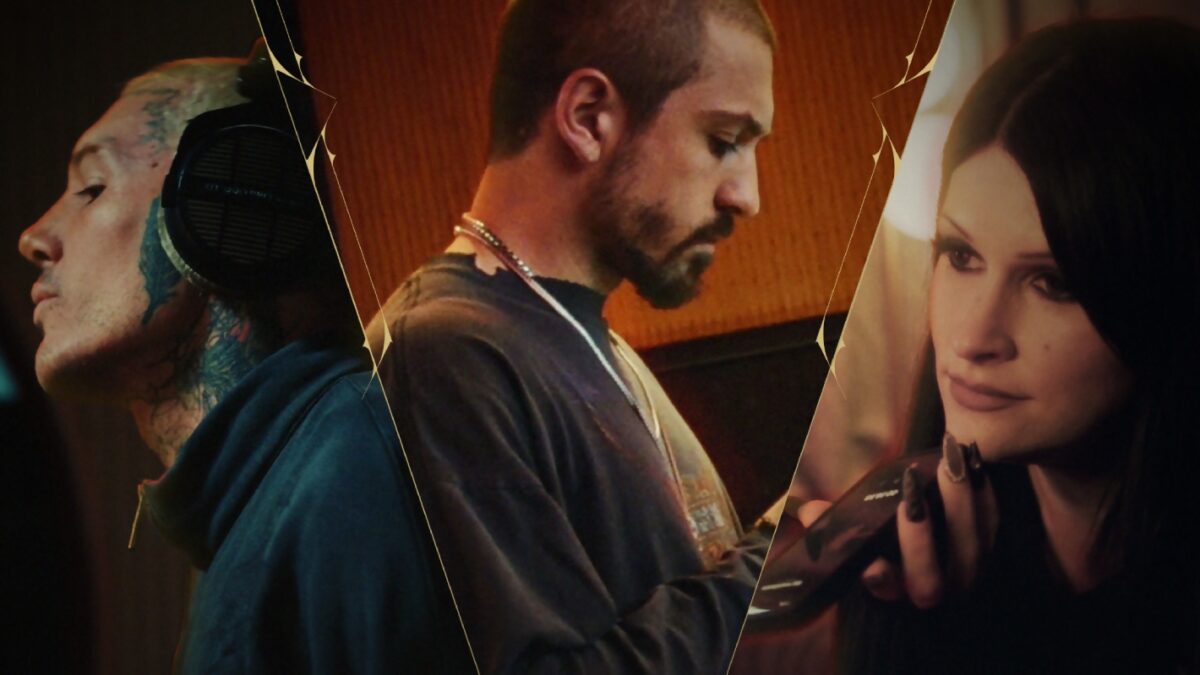
They have been quiet for a while, but South Wales Four-piece King Kraken are roaring back with their anthemic new single Call To War. Influenced by War Of The Worlds, it is typically bombastic, as we have come to expect from the band since their 2025 sophomore album, March Of The Gods.
“Call To War is the first single King Kraken have released since our second album last April,” the band said. “We’ve picked up where we left off with March Of The Gods, the same Kraken sound but with more focus, grit and determination.
Driven by a powerhouse riff and a huge production which enhances the drum sound in particular, Call To War is defined by the band as the soundtrack to their Spring UK tour. “This is your call to make it the sound of your spring as well,” they said.
As always, there is plenty of bluesy lead work whilst singer Mark Donaghue is in fine form. Punchy, aggressive but with ample melody to smooth out the edges, my only complaint is the rather weak ending, which sees the song drift to a close rather than finish with a boom.
Regardless, Call To War sees King Kraken segueing into 2026 with the same dynamism as they had in 2025.
They may have been a bit sluggish out of the traps, but now they are up and running. This is merely the first of three singles that will be flowing from the camp in the next few months.
King Kraken release new single Call To War on 17 April 2026. Pre-orders are available from here. The band embark on a short tour with Fury in a couple of weeks time. Tickets are available from kingkraken.co.uk.
April
KK’s Steel MillStarworks Warehouse, Frederick St, Wolverhampton WV2 4DU
They have been quiet for a while, but South Wales Four-piece King Kraken are roaring back with their anthemic new single Call To War. Influenced by War Of The Worlds,
Event Details
They have been quiet for a while, but South Wales Four-piece King Kraken are roaring back with their anthemic new single Call To War. Influenced by War Of The Worlds, it is typically bombastic, as we have come to expect from the band since their 2025 sophomore album, March Of The Gods.
They have been quiet for a while, but South Wales Four-piece King Kraken are roaring back with their anthemic new single Call To War. Influenced by War Of The Worlds,
Event Details
They have been quiet for a while, but South Wales Four-piece King Kraken are roaring back with their anthemic new single Call To War. Influenced by War Of The Worlds, it is typically bombastic, as we have come to expect from the band since their 2025 sophomore album, March Of The Gods.
They have been quiet for a while, but South Wales Four-piece King Kraken are roaring back with their anthemic new single Call To War. Influenced by War Of The Worlds,
Event Details
They have been quiet for a while, but South Wales Four-piece King Kraken are roaring back with their anthemic new single Call To War. Influenced by War Of The Worlds, it is typically bombastic, as we have come to expect from the band since their 2025 sophomore album, March Of The Gods.
They have been quiet for a while, but South Wales Four-piece King Kraken are roaring back with their anthemic new single Call To War. Influenced by War Of The Worlds,
Event Details
They have been quiet for a while, but South Wales Four-piece King Kraken are roaring back with their anthemic new single Call To War. Influenced by War Of The Worlds, it is typically bombastic, as we have come to expect from the band since their 2025 sophomore album, March Of The Gods.
They have been quiet for a while, but South Wales Four-piece King Kraken are roaring back with their anthemic new single Call To War. Influenced by War Of The Worlds,
Event Details
They have been quiet for a while, but South Wales Four-piece King Kraken are roaring back with their anthemic new single Call To War. Influenced by War Of The Worlds, it is typically bombastic, as we have come to expect from the band since their 2025 sophomore album, March Of The Gods.
They have been quiet for a while, but South Wales Four-piece King Kraken are roaring back with their anthemic new single Call To War. Influenced by War Of The Worlds,
Event Details
They have been quiet for a while, but South Wales Four-piece King Kraken are roaring back with their anthemic new single Call To War. Influenced by War Of The Worlds, it is typically bombastic, as we have come to expect from the band since their 2025 sophomore album, March Of The Gods.
They have been quiet for a while, but South Wales Four-piece King Kraken are roaring back with their anthemic new single Call To War. Influenced by War Of The Worlds,
Event Details
They have been quiet for a while, but South Wales Four-piece King Kraken are roaring back with their anthemic new single Call To War. Influenced by War Of The Worlds, it is typically bombastic, as we have come to expect from the band since their 2025 sophomore album, March Of The Gods.
Imagine an artist. A painter. Their work, their art, isn’t just about ideas. It’s about expression, the form, the way they paint the picture. Maybe they choose water colours, they might choose to work with oils or acrylic. They might use a brush to apply paint to a canvas or a different implement entirely. How you work a canvas is as important as what you are working on. This is interesting when a band calls themselves Palette Knife, an implement used to mix and apply paint. They are best described as ‘emo’ but on ‘Keyframe’ they spread and smear that sound, making for a record that is as distinctive as it is striking.
The album is a follow up to 2023’s ‘New Game +’ and you can immediately hear a change. Where that album had a soft, electronic opening this one opens with the distorted roar of a dropped guitar. It’s a sound that neatly illustrates the difference. This is a more straightforward record, the sound is dirtier, more direct but that doesn’t mean it’s simple. For the unfamiliar Palette Knife’s work is a mixed medium, a combination of technical wizardry and an emo vocal style. If you imagine an instrumental band like TTNG or Delta Sleep who make good use of melodic note runs and then add Pup style vocals over the top you won’t be too far away. It’s an interesting combination, presented in an unusual way and the reason is this; they’re careful not to over-stuff the sound. They’re either singing or playing fiddly guitar parts. The most obvious example is ‘Phoenix Down’ which begins with those melodic scales, but takes a full two minutes before the vocals enter. However, despite using this idea throughout the album they’re keen to play with it in interesting ways, making the record quite a tricky beast.
A keyframe is a drawing that defines the start or end of a transition. That’s a great way to think about the record as it feels like a clear division, a beginning or an end of the music they’ve been making for the last seven or so years. You could call it a reimagining or a peak, and the reason is they make strong choices. Indeed, one of the strongest is the very bright, twangy guitar sound that gives the album a light airiness. Even the palm muted sections of songs like ‘Leviathan’ have a single-coil, Telecaster-esque brightness which makes the guitars stand out but also makes them quite harsh, like audio cheesewire. Once you get past this though, and it might take a few listens, the record’s strengths become more apparent. Beneath the jagged jangling, the band are engaged in a tug-of-war. This gives the songs an unusual energy; the winner of course, is the listener.
The album’s standouts include last year’s single ‘Prototype V.2’, which uses a massive drum sound to give it a stompy persistence while the other instruments fight to make their mark, while ‘Ratking Regicide’ feels like the ultimate expression of the band’s sound. Between bouts of chaos and noisy breakdown its makes great use of every noodling lick. It’s a stunning song but that doesn’t take away from the other, more restrained, cuts.
The album is at its most interesting when it makes strong choices. This includes the slower tempo of ‘Limit Break’, which is more of singer-led song or ‘Faultsiphon’ which cleverly folds the vocal around the guitar riffs. Similarly, the delicate singing at the opening of ‘Honors English’ is really effective at changing up the style.
Returning to the idea of an artist, the way to test an impressionist is to get them to paint something you recognise. Thus you can hear the change from the band’s biggest single 2023’s ‘Jelly Boi’ with its straightforward, insular lyrics. It’s not that they have abandoned this approach, more that it has been squeezed in a different direction. You can hear it on songs like ‘Limit Break’ but there’s a sense of growth and maturity or at least, they’re expressing it differently.
On this album the band draws from numerous sources but their main feature is what you could call ‘passive modernity’. This comes from the idea that geeks have inherited the earth, which is an allusion to traditionally geeky pastimes entering the mainstream. Video game references and niche allusions are more widely applicable than they first appear, for example. Combining this with sweeping statements like “Giving up feels way too good” means there is a fair chance the band might be on your wavelength.
The major drawback here is that although the songs are doing different things the guitar parts unintentionally makes them feel a little samey. This is not because they are identical but because they all use same style of lick. To work around this the band structure each song differently , at times making them sound like a less wild Fall Of Troy, but it can be a little wearing and you find yourself anticipating the fiddly guitar parts. This isn’t a bad thing, it’s more a feature of their sound, but it is slightly unforgiving.
Despite this, each song has its own defining feature. ‘Mimic’ has a great opening riff and a real swagger to the way it moves while ‘Leviathan’ plays out over a buzzing, burning amp sound which gives it a strange atmosphere. The upbeat ‘Sleep Paralysis’ leans more into a punky vibe, making it the ideal choice for a single and one for the curious to check out.
Palette Knife’s new record avoids broad strokes. ‘Keyframe’ is a piece of technical emo expressionism.
Denver’s colossal heavy metal band, Khemmis, is back with their massively anticipated fifth album, due out June 12th via Nuclear Blast Records. The self-titled record — the follow-up to 2021’s heralded Deceiver — represents Khemmis in their truest form: disciples of the riff. Adorned with artwork from Christopher Remmers and featuring eight tracks of unadulterated, monolithic metal, Khemmis is a celebration of heavy music, bound by the camaraderie and shared passion that was reignited during its recording.
Commenting on the impending album, guitarist/vocalist Ben Hutcherson states: “We decided early in the songwriting process that we wanted to write a tight, high-energy album that retained the essential ‘Khemmis sound’ while also embodying the joy of creating, experiencing, and loving heavy metal. Ours have always been deeply personal songs born from tragedy and sorrow; while the songs on Khemmis are still undeniably dark—I don’t think we’re capable of writing ‘happy’ music nor can we disentangle our music from our own personal experiences—they are not mined from our suffering. Instead, this record is a celebration of the music world that has sustained us, both individually and collectively, and has also gifted us with community and a sense of meaning. In many ways, we have reconnected with the energy and excitement from our earliest days as a band, an unabashed desire to play loud, heavy music. That exuberance is infused with a profound sense of gratitude to be able to create art with each other and to share it with the world.”
To celebrate the album, Khemmis has revealed the album’s lead track and first single, “Invocation of the Dreamer,” which is accompanied by a music video directed by Frank Guerra.
Adding about the new song, Hutcherson says: “We knew that this song had to be the first single in much the same way we knew it had to be the album opener—it is an undeniable ripper. “Invocation of the Dreamer” kicks the front door in, flips over your coffee table, and sets your living room on fire. It has everything you’d expect from a Khemmis song—big riffs, harmonized guitars, infectious vocal melodies—along with a slew of surprises, including blastbeats and a scorching bass break.”
Khemmis is available for pre-order now, including a ‘Deluxe Edition’ of the record offered by the band, which features exclusive extras—a behind-the-scenes photobook, an autographed promo photo, and more—directly from their website.
Khemmis will perform a special one-off show with Acid Bath in May before embarking on a headlining tour in early summer with support from Necrofier and Wretched, followed by an excursion with Monolord soon after. Tickets are available here.
After eleven years of albums and global touring, Colorado’s Khemmis have cemented themselves as pillars of modern heavy metal. Yet as they approach their fifth full-length, the band found something newly vital: the simple joy of creating heavy music together. Formed with no expectations, the group’s longevity has become its foundation, with guitarist/vocalist BenHutcherson describing the band as a rare source of stability and camaraderie. Since their 2015 debut Absolution, followed by the acclaimed Hunted, Desolation, Doomed Heavy Metal MLP, and Deceiver, Khemmis have built a legacy of towering, spiritual doom that continues to resonate with fans worldwide.
Despite changes—including members relocating and bassist David Small joining in 2022—the band emerged more focused than ever. Recording again at Flatline Audio in Colorado, the lineup of Hutcherson, Phil Pendergast, Zach Coleman, and Small leaned into renewed trust and chemistry, with distance paradoxically strengthening their bond. The addition of Small invigorated the rhythm section and encouraged experimentation, while the band rediscovered the excitement that defined their early days. That renewed energy fueled a collaborative atmosphere rooted in confidence, inspiration, and the shared thrill of simply playing heavy metal.
The melodic hard rock band Hardline have released the video for the title track “Shout” from their new album out April 17.
Singer Johnny Gioeli says: “‘Shout” as the title of this album is EXACTLY what it is…. The idea that created the title comes from the millions of ideas in my head that simply don’t stop. At times, I want to release them all in one massive scream. Here comes…. ‘SHOUT!’”
Shout will be released on April 17 through Steamhammer worldwide in the following configurations:
CD DigiPak
LP, 140 g, black vinyl, padded inner sleeve, coloured insert
Exclusive CD/LP Bundles with a shirt only at the Steamhammer shop
Havok are excited to announce that they will make their return to the European stages in autumn for a month-long headlining tour, featuring special guests Blood Red Throne, Xonor and Eradikated. Read more…
At a glance, Nixil’s “I Am Not Here” resembles a ballad. The first minute is dreary, the vocals are more lamenting than singing, and the title is a tad dramatic. That only lasts so long, as “I Am Not Here” unwinds into a slurry of gothic rock and black metal. That balance eventually shifts entirely to the latter’s favor as pleasantries and basic communication decay. While each of Nixil’s tracks on Toward Dead Temples, the Baltimore black metal band’s upcoming split alongside Drouth, aim to purge oppression from all contexts, “I Am Not Here” does so on a personal level as praxis. The track meditates on anhedonia and what one gains after pleasure sources become dull and grey. The mounting tension pantomimes that, and the climax plays as a cathartic embrace of that loss of self, of the cocoon shedding, and a new self forming without an internalized oppressor. It makes sense why “I Am Not Here” is so mangled and gnarly–evolution is rarely pretty. You can stream the whole track below before Toward Dead Temples releases later this month.
…
…
Nixil comments:
This song describes the experience of feelings of loss of self and personal insight gained through a long period of anhedonia. There is clarity and direction to be found in the process of breaking attachments, including the understanding that the process itself is an attachment and will inevitably arise again. Living through the experience of deep disassociation helped to inspire the realization that we must become as spirits unburdened in order to be freed from this prison.
Spirit Adrift are ending. They are releasing their sixth and final record, Infinite Illumination, today, then folding. That’s not to say that Nate Garrett, the leader of the Austin-based heavy metal group, is quitting music or that there’s unrest in the camp between members or that Infinite Illumination limps to the finish line. He’s sticking around, the band are still close friends and supports the decision, and the record is Spirit Adrift’s heaviest in half a decade.
…
…
The marketing adage about a metal group’s latest record being their most aggressive is, fortunately, a case of there being fire where there’s smoke regarding Infinite Illumination. It fulfills the promise “Eternal Celestial Energy” made when it dropped a few weeks ago, even though the song is not on the album. The Lynyrd-Skynyrd-in-heavy-metal-cosplay of Ghost at the Gallows and the sword and sandals idolatry that Enlightened in Eternity thrived on are no more. Doom is back on the menu, boys. More specifically, Infinite Illumination champions when the lines between doom metal, thrash metal, speed metal, and heavy metal were blurry and opaque. The distinction mattered less than the absolute power of the music.
The other notable development on Infinite Illumination is that the only aspect heavier than its riffs is the Christian overtones. A cursory scan will find Seraphim on the cover and tracks with titles like “Buried in the Shadow of the Cross.” Peeling back Infinite Illumination’s flesh reveals a macabre inversion of both heavy metal doctrine and Biblical endtimes. Spirit Adrift flip the purging of Christian worship that metal regularly indulges, turning non-believers and anyone not adherent to the cross into targets. Garrett is himself a Christian, but Infinite Illumination comes off as cosmic horror through angelic flattening of the non-devout rather than a propaganda piece. He says, “I just wanted to make an album that was evil, but Satanism isn’t even scary anymore. Christianity is a lot scarier than Satanism today.” If he is going to lay anything on, he’s going to lay it thick.
Two heaping tablespoons of sugar and salt have long been Spirit Adrift’s calling card, a Drax the Destroyer-like inability to interact with sarcasm. Heavy metal, and especially the retro doom metal Infinite Illumination honors, has a symbiotic relationship with sincerity; the former requires a degree of honesty and a lack of filter to be real while the latter can shoot higher and bolder because of the pompous choruses and overindulgence. Each commits to one another. For the past decade, Spirit Adrift have embodied that. It’s likely they’ve never heard of a half-step.
Almost as central to Spirit Adrift as that is Garrett’s openness about his mental health struggles. Infinite Illumination’s pillars and columns were carved by those struggles, where even if the subject matter isn’t as prevalent as, say, Gabriel razing an entire village of non-Christians, it’s in the etchings. Acceptance, suffering, and the urge to get busy living or get busy dying hang around the album. While Garrett isn’t necessarily poetic, there’s some grace in his transparency in the same way that Stone Cold elegantly bashed beer cans together. It may not be scientific, but it’s effective.
Such sincerity is the lynchpin of Infinite Illumination. It disrobes the veneers of being cool or punching up its struggles with ill-fitting metaphors. Garrett knows better than to overencumber himself, and his open heart beats louder and more resonantly when not veiled by armor or facades. As such, the bond between doom metal, Christian apocalypticism, and the bittersweet end of one of America’s brightest metal acts of the last ten years is obvious and natural, as if it couldn’t have happened any other way.
Continue reading for my conversation with Garrett.
…
…
A few years ago, you said, “Everything is supposed to be ironic, everyone is supposed to be at least a little bit self-loathing and ‘roast’ their friends and everything else nonstop. But I don’t give a fuck about that. I’m over it.” That’s something Spirit Adrift’s done really well, being sincere and open. Is it easier for you to compose with that sincerity when you’re making music that’s more optimistic (for example, Enlightened in Eternity), versus music that’s doomier and more melancholic, like the new album?
I did Neon Nightmare a couple years back and I was in pro wrestling character mode for that to make it as spiritually respectful to Type O Negative as possible. I wondered what those guys would be doing in the age of Instagram. They’d be talking the same, sarcasm and taking the piss out of everything, and that gave me relief on that end. You mentioned that quote from an interview I said about everything being ironic. I almost leaned into that with Neon Nightmare because I was getting tired of how everything’s so dramatic. You can take it too far the other way, too, or life can take you too far the other way, where it’s just constant big events and drama. I don’t know that it’s necessarily easier or harder for me to be sincere whether things are optimistic or pessimistic or good or bad or negative or whatever. I try to let whatever’s happening to me happen and put that in the music. That’s Spirit Adrift–whatever’s happening, try to accept it and allow myself to feel it and put it into the music.
I’m definitely an oversharer. Whether it’s interviews or music or whatever, I would classify myself as an oversharer. All my favorite people were. I think Jimi Hendrix was an oversharer. I think Muhammad Ali was an oversharer. I think Bukowski was an oversharer. I think about The Last Waltz, The Band documentary, and Levon Helm. Or maybe it was Levon Helm’s documentary. He’s talking about Richard (Manuel) from The Band, the piano player, and he goes, “Richard never had anything up his sleeve. He didn’t even have a sleeve.”
If you look at Infinite Illumination and then at your last album, Ghost at the Gallows, a song like ‘Barn Burner” wouldn’t fit in as well on the new one as it did on Ghost at the Gallows. So I’m curious, what were the differences in recording circumstances between the two?
So, Ghost at the Gallows, what was going on? My wife and I made a cross-country move. She was born and raised in Phoenix, and had only ever lived in Phoenix. She’s been all over the world. She lived in Ireland for a while, but as far as roots planted, she’s a Phoenix girl. And we were getting tired of it and looked at a couple options, like Pittsburgh and Austin, and this is before dipshit Rogan and Elon Musk came out here. So we came down here. I grew up in the South, man, and I love the American South. I think it’s got so much heart.
Obviously, however, there’s racism and shit like that. The history of slavery was centered around the region, but there’s racism everywhere. There’s racism in Oregon, for instance. That being said, I have a romantic love of the American South and I always will. Coming down here got me thinking about growing up in Oklahoma and discovering metal, but also discovering AOR bands and classic rock bands on the radio and stuff like that. And then people finally convinced me that country music’s good. So Ghost at the Gallows was all a blender of that and discovering extreme music. There are some Eyehategod riffs on that record, but there’s also Boston riffs on it. I would almost describe it as being Southern Gothic, a love letter to the South, in a way.
With Infinite Illumination, I had a distinct vision from the beginning to write the heaviest possible record that I could within the confines of Spirit Adrift. To get back to when I was discovering first-wave doom and Bay Area thrash. Those are the first two subgenres of metal I discovered. There was some High on Fire and New Orleans in there, but I fell in love with bands like Pentagram, Trouble, and Saint Vitus, and Sabbath, obviously, and then simultaneously with the first four or five Metallica records, the first five Slayer records, the first two Testament records, Bonded by Blood, stuff like that. I feel like our record, Curse of Conception, was inadvertently figuring out what they all have in common, whereas the new one was intentional from the jump. Like, what do all those bands share? What does the Venn diagram look like?
The big question, which is going to be on people’s minds come Friday, is what’s happening with Spirit Adrift? Why is this the record that’s ending it?
There are so many answers there. One is my relationship with the “music industry.” I want to put that in quotes. Especially post-COVID, it turned into something that I don’t love. I love music so much. It’s so sacred to me. There’s stuff I want to do with it, and it’s almost impossible post-COVID. I hate to talk about money but there’s less money in it than there’s ever been. And when that happens with anything, it becomes more cutthroat. It becomes less about art and expression and more about survival. And I don’t need that, man. So, that’s a big part of it.
The other part of it is, I truly believe, in my heart, that there’s a curse on Spirit Adrift. Every time I put out a record, people I love die like clockwork. I’ve talked to folks about this, and they’re like, “Yeah, whatever.” But, for instance, the record’s coming out on Friday, April 10, right? My grandfather just died yesterday. I don’t want it to be true. It happens every time; somebody overdoses and dies, or my dog dies, or my wife gets diagnosed with cancer. So, I’m shutting this down and we’ll see what happens.
I’m not quitting music. I love music, man. You can ask anybody who knows me, whether it’s musicians or people in my family or whatever. I might love music as much as anybody’s ever loved music. It’s sacred to me. It’s why I’m halfway or quarterways sane and relatively happy, you know? I love playing for people, but when you start having to shake people down just to fucking do the right thing, not even to get something extra, but just the right thing.
We played a show at Empire last year, right? There’s this guy–I don’t want to say his name because I don’t want to get sued, but everybody will know who I’m talking about–at Empire in Austin, Texas, the guy that’s running that place, and he doesn’t pay people. I had to do some gangster shit, which I don’t mind that much, but when that’s connected to music, it spoils the one release valve that I have emotionally. When I have to connect the gangster to the art, it’s not fun. And I had to do that with this guy because he wasn’t paying the three bands that played. Eventually, we got paid. We got paid more than what he even owed us because some things happened. Then, six months ago, The Austin Chronicle and everybody else exposed this guy as a lifelong con artist. He was doing the same on the East Coast, robbing people, postponing payments for bands, and he got ran out of there and came to Austin.
Post-COVID, it’s like every other show I’ve played is like that. It’s merch cuts where I have to scream at somebody or just flee the scene and not pay them, because I, philosophically, am opposed to merch cuts, period. It’s a Ponzi scheme. And music is my one emotional release valve. This is the thing I love the most in life, outside my wife and my family. I’m having to be like Johnny Goodfella tough guy every time we do anything, every time we play a show, every time we try to book a tour, whatever. I don’t need that.
Everybody’s going through it. Part of the reason I wanted to end things is so I can speak about it on behalf of my friends and on behalf of people. I’ve seen Randy from Lamb of God getting a lot more open about everything, whether it’s politics or the music industry, and it’s admirable. A lot of their fans might not agree with what he’s saying or understand it, but his shit’s getting desperate. I want to put myself in a position where I can tell the truth about all this and not endanger anybody else. I don’t want it to affect any of my bandmates or my friends while still speaking on behalf of people, because everyone I know in the music business feels exactly the same way. And the guys in the band are three of my best friends I’ve ever had. They’re just such good guys. They’re so supportive and selfless, and they understand.
This new record has a lot of Christian theming on it, which is not something that was on a lot of your other work. Where did it come from?
Part of it is a little bit of, like, how many satanic metal albums are there? A gazillion. And I love them. I started looking at all the doom bands, and I realized that most of them are Christian bands. Black Sabbath has “After Forever,” which is explicitly pro-Christian or pro-Jesus Christ, at least. Trouble, Saint Vitus, and Pentagram, ironically enough. Victor Griffin is an outspoken Christian. I think Bobby (Liebling) might be, too, despite his actions. Fuck that guy. But, I thought it would be different if you did Deicide, but backwards. Deicide’s thing is, if you’re Christian, we’re gonna kill you. What I did was, if you’re not Christian, we’re gonna kill you.
I’ve found myself intellectually, spiritually, and emotionally more attracted to Christianity than I ever have been. When I was younger, I hated it. I just saw all the bad, homophobic, self-contradictory nonsense. I just saw all the bad in it. And I don’t know if it’s because the world is so fucked up or if I’m so fucked up, but I’ve just been a little more drawn to Christianity lately.
And I’ve been drawn to a lot of other religions. I’ve been drawn to Buddhism. I remember writing a paper on Islam when I was in junior high and everybody was biting their fingernails and I was like, “No, this shit’s all right.” I want to love everybody. I don’t love everybody, but I want to. I have family members who are Jewish. I have African ancestry. The last thing I give a shit about is what race you are, what religion you are, whatever. But I thought it would be cool to make a metal album that’s like, if you’re not a Christian, we’re gonna kill you. Just from a totally theoretical standpoint.
I just thought, what can you do in metal that’s actually evil anymore? Some of the most evil that’s going on today is going on in the name of some fake Christianity. I just wanted to make an album that was evil, but Satanism isn’t even scary anymore. Christianity is a lot scarier than Satanism today.
When you were starting the album, did you know that it would be the one that Spirit Adrift ends on?
I thought Ghost was going to be the last one for a while. I was pretty convinced that would be the last one for all the same reasons that I cited earlier, but this one, I did know it was the last one.
People are going to associate the end of Spirit Adrift with what this album is and what it’s saying. If you had ended Spirit Adrift with Ghost at the Gallows, it might leave a different taste in people’s mouths. I’m not so much saying about the quality, but the theme, the tone, and all that. If you ended with Ghost at the Gallows, a triumphant album, you would’ve ended on a high note. Infinite Illuminationis morose. It leaves a bit more to think about and to feel. It’s not such a happy ending.
Ghost has a lot going on. It sounds like dad rock almost. I wanted to end on the heaviest album, honestly. I wanted everything about it to be heavy: the sound, the lyrics, the subject matter. I wanted it to be not offensive lyrically, but more so, “What does he mean by that?” Not offensive, but it gets you riled up. I wanted to put a stamp on it, dude. Just make it heavy, evil, and crazy. I wanted people to listen to it and ask, “Is this guy okay? Is he in his right mind?”
photos by Violeta Cruz III, the radical new EP from Spanish alternative/punk crew PALMAR DE TROYA, is out today through Reptilian Records. The follow-up to PALMAR DE TROYAâs II EP, released by Reptilian in 2024, […]
Hills of Rock 2026 will be welcoming Skindred to this year’s festival from 24 to 26 July at the Rowing Base (Grebna baza) in Plovdiv, Bulgaria, following the withdrawal of Nothing More, who have confirmed they will be stepping away from their summer tour to focus on new music and spend time with family. Bringing together 46 artists across three stages for three days of live music, Hills of Rock is the ultimate get away for true metalheads.
Taking over the slot, Skindred bring their unmistakable high-energy live show to Plovdiv and are another powerful name in an already stacked lineup. Known for their genre-defying sound and explosive performances, the Newport-formed band have built a global reputation as one of the most dynamic live acts in heavy music since forming in 1998.
Skindred fuse heavy metal with reggae, punk, hip hop and electronic influences, a style they have famously dubbed “ragga metal.” Fronted by the charismatic Benji Webbe, the band are renowned for their ability to command festival crowds, delivering performances that are as infectious as they are unpredictable. With new music on the horizon, including their forthcoming ninth album “You Got This “via Earache Records, the award winning Skindred continue to push their sound forward with heavyweight riffs, full-throttle rhythms and anthemic hooks.
The overall programme at Hills of Rock is designed as an immersive three-day experience, running from afternoon through to late evening across all stages in Plovdiv and the 2026 lineup includes Marilyn Manson,Godsmack, Electric Callboy, Sex Pistols featuring Frank Carter, Black Label Society, Lamb of God, P.O.D.,Nevermore, Paradise Lost, Of Mice & Men, House of Protection, Vended, Deafheaven, Karen Dió, The Toy Dolls, Last Train, Northlane, Orbit Culture, alongside a wide selection of Bulgarian and regional artists including Khanъ, Vrani Volosa, Tsar Plah, Hellion Stone, Black Tooth, Engineer of Death, Overhook, Django Ze, Neshto Tsvetno, Velian, H09909, P.I.F.,Innerglow, Almost Green, Rusita, Koza Mostra, Bazzookas, Lek City Case, Karma Scale, Da Seed, Kontrol, GOTRA feat. VEL, Gigashadow, Lavina, low-key and Sunblinds.
In addition, the festival will feature for the first time a special opening event, BE4 HILLS (Before Hills), taking place on 23rd July. This dedicated concert day will see performances from Sabaton, Savatage, Epica and Bulgaria’s Sevi, setting the stage for the days that follow.
Tickets for Hills of Rock 2026 are on sale now via Ticket Station. For the latest updates on the program, tickets and camping, visit hillsofrock.com, festteam.bg and ticketstation.bg, or follow the official festival social media channels.