“‘Big Em Up’ is a simple message for everyone to check on their friends and to pick ‘em up and to try and encourage some positivity back into the world.”
The post Skindred’s “Big Em Up” Music Video Debuts appeared first on Theprp.com.
“‘Big Em Up’ is a simple message for everyone to check on their friends and to pick ‘em up and to try and encourage some positivity back into the world.”
The post Skindred’s “Big Em Up” Music Video Debuts appeared first on Theprp.com.
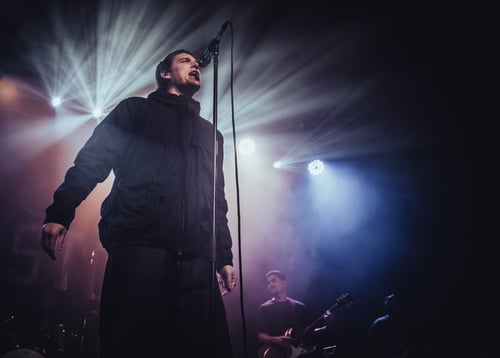
The Story So Far formed in Walnut Creek, California, in 2007 and became one of the defining pop-punk bands of their generation. The group’s early lineup featured vocalist Parker Cannon, guitarists Kevin Geyer and Kevin Ambrose, bassist Kelen Capener, and drummer Ryan Torf. Will Levy replaced Ambrose in 2010, and the band’s combination of melodic urgency, hardcore-influenced energy, and emotionally direct songwriting quickly built an audience well beyond the Bay Area. Before releasing a full-length album, The Story So Far built a substantial early catalog through the self-released 5 Songs EP, While You Were Sleeping, split releases with Maker and
The post Complete List Of The Story So Far Songs From A to Z appeared first on ClassicRockHistory.com.
In Endless Awe & Agony, the long-awaited debut album from the Australian hyperpop artist daine, is finally coming out next month, and we’ve already posted their singles “PQC,” “Love Love (Love Love),” and the aldn collab “I Used To Kill,” as well as their cover of Martin Solveig and Dragonette’s “Hello.” Their new single “Wishing Well” doesn’t sound much like the others. It’s a gentle ballad full of country-adjacent acoustic instrumentation, but it still has the sheen of intentional artificiality all over it. It’s pretty, and it’s also interesting. Listen below.
The post daine – “Wishing Well” appeared first on Stereogum.

The And Justice For All bass question has a new answer from the man who actually pushed the faders. Steve Thompson, who mixed Metallica’s 1988 album with Michael Barbiero, says he thought it was stupid to bury Jason Newsted’s bass, that he believed in bass and Lars Ulrich didn’t, and that he got nailed for a decision the band made. ‘This is what they wanted,’ he says. Thirty-eight years on, the most famous missing instrument in metal finally has its mixer on the record, unprompted and unimpressed.
 STREAM THE METAL BREAKDOWN DAILY NOW:
Scott Penfold breaks down the latest hard rock and metal news on today’s Metal Breakdown Daily. Download the free Loaded Radio App on Apple iOS and Google Play and stream the show now.
Thompson was the guest on the Appetite For Distortion podcast, which is where he’d normally be asked about the other album he mixed in those years: Guns N’ Roses’ Appetite For Destruction, the record that tops our list of the best metal debut albums and has plenty of bass on it. The conversation got to Metallica, and Thompson didn’t hedge.
He said he ‘thought it was stupid’ to bury the bass. He called Metallica ‘the best at what they did’, but said the two sides came into the mix with opposite philosophies: he ‘believed in bass’ and Lars Ulrich ‘didn’t’. He fought it, lost, and has carried the blame ever since. In his words, he ‘got nailed’ over the missing low end on a record where, he says, ‘this is what they wanted.’
On Newsted’s playing itself, Thompson is generous. The bass parts, he said, were ‘a great marriage’ with James Hetfield’s rhythm guitars, locked in rhythmically and doing exactly what a thrash bassist should. That’s the part that stings for fans: the parts were good. You just can’t hear them. ‘But you know,’ Thompson added, ‘it is what it is.’
 LIVE & LOUD: Stream the World’s Hardest Radio Station 24/7
Thompson has told pieces of this story since 2015, when he first described Ulrich asking him to take the bass down until it was barely there, then lower again, and recalled asking the drummer, when the mix came back thin, whether he’d been serious. He’s also said he asked to be taken off the project and was talked into staying. This is the first time he’s put a plain word on the decision: stupid.
It lands on a story that has been re-litigated by everyone involved. Lars Ulrich and Hetfield said in 2019 that their hearing was shot from touring and they ‘basically kept turning everything else up until the bass disappeared’. James Hetfield said in 2009 that Newsted’s lines doubled his rhythm parts and his scooped guitar tone ate the low end anyway, and in 2018 he declined to remix the album, saying it could use more low end but the flaws are part of its history.
Kirk Hammett told Decibel in 2008 that Newsted’s bass tone ‘interfered’ with Hetfield’s and that the band was chasing a dry, in-your-face sound. Four members, four explanations, and the man at the desk now saying the explanation is simpler than any of them: the band told him to.
Flemming Rasmussen produced Justice but wasn’t there for the mix. Speaking to Chile’s Futuro last year, he described Metallica flying in, listening to Thompson and Barbiero’s first pass and saying ‘No, no, no.’ Then, as he tells it: ‘Lars said, “Now take the bass down so you can just hear it.”‘ And once they’d done that, ‘Take it three dB more down.’ Rasmussen says it was Lars and James who decided, and that he’s ‘asked them a thousand times’ why and still doesn’t know.
Rasmussen has also said the mixers used only the close drum mics and none of the room mics, which is why the drums sound like they were recorded in a cupboard. That’s the other half of the Justice sound people argue about, and it’s the half Thompson has defended less.

The strangest part of the whole saga is that the man who was muted doesn’t want the fader moved. Speaking on Trunk Nation this past May, Jason Newsted said of an official remix: ‘I don’t think that you should go back and mess with things like that. I don’t agree with it.’ His line on the band’s right to choose was blunter: ‘If the garage duo chooses to put bass in their duo, then they do. If they don’t, they don’t.’
He’s been consistent. He received a fan remix with the bass restored back in 2013, appreciated the effort, and still said the released version was the right one. The 2018 deluxe box set remastered the album without remixing it. The bass is a little more discernible, and no more than that.
So the position, as of this week: the mixer thinks it was stupid, the producer thinks it was inexplicable, the drummer and singer think it was ear fatigue, the guitarist thinks it was tone, and the bassist thinks it’s nobody’s business but the band’s. The record went eight-times platinum anyway and gave Metallica their first Grammy for ‘One’. In the end, it’s a lesson about who runs the Metallica room: Cliff Burton got his bass heard in 1986 because he fought for it, and Newsted, eighteen months into the job and still the new guy, didn’t have that vote yet.
Justice is the record on which Metallica’s thrash peaked, and arguably the last one that belongs in a conversation about the greatest thrash bands as thrash. Thompson’s account doesn’t change what’s on the disc. It changes who gets the blame, and he’s clearly tired of it being him.
Other bands have gone the other way. Testament remixed Souls Of Black for its 35th anniversary because the original mix never sat right with them. Metallica have had every chance to do the same with Justice and have said no, repeatedly, with the bass player agreeing. Whatever Thompson thinks of the decision, it looks permanent.
According to mixer Steve Thompson, because the band wanted it that way: he says he believed in bass, Lars Ulrich didn’t, and the mix followed the band’s wishes. Producer Flemming Rasmussen says Ulrich asked for the bass lowered until it could just be heard, then lowered three dB more. Hetfield and Ulrich have blamed ear fatigue from touring; Kirk Hammett has said Newsted’s tone clashed with Hetfield’s.
Steve Thompson and Michael Barbiero mixed the album in 1988. Flemming Rasmussen produced it with the band but wasn’t present for the mix. Thompson and Barbiero had mixed Guns N’ Roses’ Appetite For Destruction the year before.
On the Appetite For Distortion podcast he said he ‘thought it was stupid’ to bury the bass, that he ‘got nailed’ for it, and that ‘this is what they wanted.’ He called Jason Newsted’s bass parts ‘a great marriage’ with James Hetfield’s rhythm guitars.
It looks unlikely. James Hetfield declined to remix it for the 2018 deluxe reissue, which was remastered only, and Jason Newsted said in May 2026 that he doesn’t think the album should be officially remixed.
Not officially. Fans have produced remixes with the bass restored, including the well-known ‘…And Justice For Jason’ project, and the 2018 remaster makes the bass slightly more audible. Newsted has heard a fan remix and still prefers the original.
Think the Justice mix should be left alone, or fixed? Argue it on the Loaded Radio app, and hear ‘One’ and ‘Blackened’ as they were mixed on the stream.
The post Metallica Mixer Finally Snaps Over ‘Stupid’ Missing Bass On ‘…And Justice For All’ appeared first on Loaded Radio.
Bogged down in the details.
The post Battlesnake Debut “Bog Bringer”, Detail New Album “Bogpocalypse And The Annihilation Of Lucifer” appeared first on Theprp.com.
PROGPOWER USA will return to Atlanta, Georgia, September 9–11, 2027, ushering in a new chapter for one of North America’s longest-running and most distinctive progressive and power metal festivals.
Following the retirement of founder and longtime promoter Glenn Harveston, co-promoter Milton Mendonça will take the helm of PROGPOWER USA, carrying forward the festival and the community that has grown around it for more than two decades.
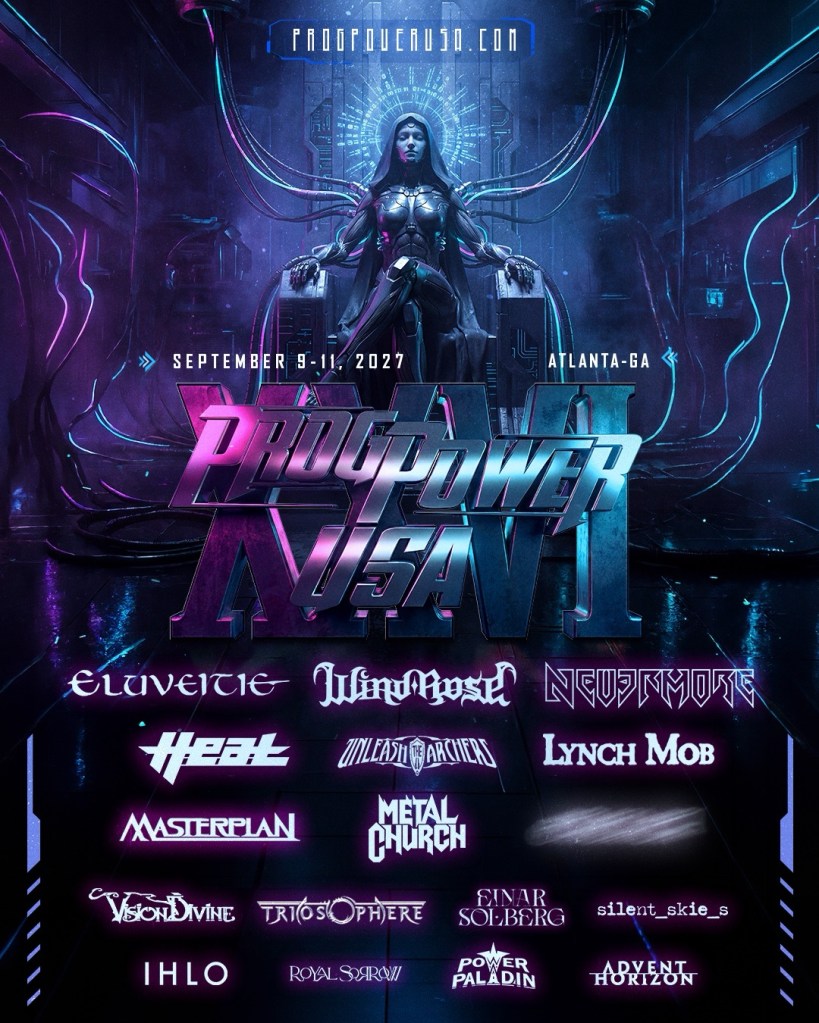
The 2027 edition will move to a three-day format while retaining the identity and approach that have defined PROGPOWER USA throughout its history. The newly announced lineup features ELUVEITIE, WIND ROSE, NEVERMORE, H.E.A.T, UNLEASH THE ARCHERS, LYNCH MOB, MASTERPLAN, METAL CHURCH, VISION DIVINE, TRIOSPHERE, EINAR SOLBERG, SILENT SKIES, IHLO, ROYAL SORROW, POWER PALADIN and ADVENT HORIZON, with one additional band remaining to be announced.
For Mendonça, taking over the festival is deeply personal. He first attended PROGPOWER USA 24 years ago before eventually becoming part of the team himself.
“Twenty-four years ago, I attended ProgPower USA for the first time, and I remember what it felt like the moment I walked into the venue. It was a feeling of belonging. I decided then that this was the place I needed to be every year, and I would do whatever I could to attend. Years later, as a co-promoter, I started having first-time attendees come up to me and share that same feeling. To me, that says everything about the atmosphere of this festival and why it has endured for so long,” says Mendonça.
“ProgPower has been part of most of my life. I met some of my best friends there, and I know people who met their best friends, their spouse and people who first came as teenagers and now bring their kids. It’s the one weekend our community looks forward to every year. It means that much to a lot of people, and there was no way I could let that end.”
As PROGPOWER USA enters this next era, Mendonça says preserving what Harveston built remains his priority.
“The most important thing to me is honoring Glenn’s legacy. Other than scaling the festival down to three days, my goal is to keep everything the same. The blueprint stays. Regardless of who is at the helm, ProgPower USA will always be ProgPower USA. There is nothing else like it anywhere.”
Since its inception, PROGPOWER USA has built its reputation by bringing together internationally established acts, sought-after North American appearances and emerging artists from across the progressive and power metal worlds. Just as importantly, the festival has developed a community that extends far beyond the stage, with generations of attendees returning to Atlanta year after year.
PROGPOWER USA 2027 takes place September 9–11, 2027 at Center Stage in Atlanta, Georgia continuing the almost 3-decade tradition of the festival being hosted at Center Stage.
For festival updates, ticket information and additional announcements, visit: https://progpowerusa.com/
Source: C Squared Music

You can tell from his stage name alone that Thundercat is exactly the type of artist to lend his music to some late 20th century pop cultural nostalgia. He’s done just that today, following up this year’s album Distracted with a new Sonic The Hedgehog tie-in.
The post Thundercat & Button Masher – “Moving At Light Speed” appeared first on Stereogum.

The best metal debut albums have one thing in common: the band didn’t know it was making one. A first record is years of garage rehearsals, borrowed gear and a singer who hasn’t learned to protect his voice yet, squeezed into a week of studio time somebody else paid for. Sometimes that pressure makes a diamond, and sometimes the band spends the next thirty years trying to make another one and never quite does. These are thirteen of those records, counted down from 13 to 1, and the number one is the best-selling debut album in American history.
The rule for this list is strict. The debut has to be the best album the band ever made, not just the most famous one. That rules out Metallica, Slayer, Iron Maiden, Judas Priest, Pantera (not a true debut anyway) and Slipknot, all of whom made their masterpiece second, third or fourth time out. What’s left is a strange, brilliant mix: the album that invented heavy metal, the album that invented death metal, the album that invented nu-metal, and a few that just caught a moment nobody could catch twice.

Asking Alexandria’s debut is the sound of 2009 in forty minutes: breakdowns, trance synths, Danny Worsnop screaming and crooning in the same bar, and a band from York, England that had no idea it was about to become the face of Myspace metalcore.
Stand Up And Scream was recorded for Sumerian with producer Joey Sturgis, and it took every trick the scene had (the electronic drops, the clean-sung choruses, the ‘blegh’) and did all of them louder. ‘The Final Episode (Let’s Change The Channel)’ and ‘A Prophecy’ were the songs every kid with a swoop fringe learned on a seven-string that year.
The band ran from it almost immediately. Reckless & Relentless was heavier, From Death To Destiny was a rock record, and by the 2017 self-titled album Asking Alexandria were a modern hard rock band with Worsnop back on vocals. All of those albums have their fans. None of them is the one that gets screamed back at them from the barrier, and the band knows it, because the 2009 songs still close the set.

Wayne Static called it ‘evil disco’, and nobody has improved on the description: Wisconsin Death Trip is industrial nu-metal built on a dance beat, with the staccato riff of ‘Push It’ as the hook that put a platinum plaque on the wall.
Released on Warner Bros. in March 1999, the album had everything the moment demanded (Ozzfest slots, a spot on the Family Values tour, the hair) and one thing the moment didn’t: discipline. Every song is a tight, mechanical groove with Static’s bark on top, and the record never wanders. ‘I’m With Stupid’, ‘Bled For Days’ and ‘Love Dump’ still work in a club at two in the morning.
Machine (2001) was good and Shadow Zone (2003) sold, but the band spent the following decade diluting the formula, and Static died in November 2014 before he could finish what became Project Regeneration. The current masked Static-X, with the anonymous Xer0 up front, plays Wisconsin Death Trip in full on tour for a reason: it is the only one everyone in the room knows top to bottom.

Fallen sold more than seventeen million copies, won Evanescence two Grammys including Best New Artist, and put ‘Bring Me To Life’ on every radio format at once. It’s the rare metal debut that’s a pop phenomenon, and Amy Lee has been climbing out from under it ever since.
The record is heavier than people remember. Behind the strings and the piano, the guitars on ‘Going Under’, ‘Haunted’ and ‘Whisper’ are drop-tuned and thick, and the production by Dave Fortman gave it a cinematic scale no other nu-metal-adjacent band was attempting in 2003. Lee’s voice carried it: operatic where the genre’s singers were nasal, and in complete control on a first album.
The Open Door, Evanescence (2011) and The Bitter Truth (2021) are all arguably better-written records, and Lee is a better singer now than she was at twenty-one. None of them touched the world the way Fallen did, and the twentieth-anniversary reissue in 2023 confirmed what the band already knew: the first one is the one people bought.

Permission To Land went to number one in the UK, sold a million and a half copies there, won three Brit Awards and made four men in catsuits the biggest rock band in Britain for about eighteen months. It’s a Thin Lizzy and Queen record made by people who meant every second of it.
Justin Hawkins’ falsetto is the thing everyone remembers, but the album works because the songs underneath are real. ‘I Believe In A Thing Called Love’ is a perfect single. ‘Growing On Me’, ‘Love Is Only A Feeling’ and ‘Get Your Hands Off My Woman’ are built the way AC/DC and Lizzy built songs, with twin-guitar hooks and a chorus you can shout drunk.
The follow-up, One Way Ticket To Hell… And Back, cost a fortune, sounded like it, and the band fell apart the year after. The Darkness reunited in 2011 and have made solid albums since, right up to Dreams On Toast in 2025, but they were a phenomenon once, and a phenomenon is the one thing you can’t reheat.

Before the clean vocals, before the groove, before the hit on rock radio, Whitechapel made the ugliest deathcore debut of its era: three guitars, Phil Bozeman’s bottomless gutturals, and a concept about a Jack the Ripper figure that the band from Knoxville played completely straight.
The Somatic Defilement came out on Candlelight in 2007 with a thin, suffocating production that the band disliked enough to re-record the whole thing in 2013. The original is still the one that matters. ‘Vicer Exciser’ and ‘Fairy Fay’ are the sound of a genre finding its own vocabulary, and if you’re putting together a guide to the deathcore bands that built the style, this is the record that proves Whitechapel were there first.
This Is Exile and the self-titled album are better played and better produced, and The Valley found something new in Bozeman’s clean voice. The counter-argument lives in 2025’s Hymns In Dissonance, which went back to the deathcore well with twenty years of skill behind it. Longtime fans will tell you it’s still not the first one. They’ll also tell you that’s the point.

One album, one chance, and the New Wave of British Heavy Metal got its darkest record. Angel Witch’s self-titled debut, released on Bronze in 1980, is where Sabbath’s doom, Priest’s speed and a very English occult streak met for the first time, and the band fell apart before it could be followed.
Kevin Heybourne wrote and sang all of it, and the title track is a bona fide NWOBHM anthem that half the Bay Area thrash scene learned from. ‘Atlantis’, ‘Sorcerers’ and ‘White Witch’ are the kind of songs Metallica and Slayer were studying from imported vinyl, and if you want to understand why the NWOBHM era produced so many bands that mattered, this is one of the four or five records you need.
The lineup splintered within a year, Heybourne spent the eighties rebuilding the band repeatedly, and the album stood alone for three decades. As Above, So Below (2012) and Angel Of Light (2019) were worthy, late-career returns. They were also the work of a man trying to live up to something he recorded at twenty-three.

Hybrid Theory is certified Diamond in the United States, was the best-selling album in America in 2001, and turned a band from Agoura Hills into the biggest rock act of its generation inside twelve months. No rock debut this century has come close.
The formula was rap-rock, but the execution wasn’t. Don Gilmore’s production was clean and enormous, Mike Shinoda’s verses set up Chester Bennington’s choruses like a relay, and ‘In The End’, ‘Crawling’, ‘One Step Closer’ and ‘Papercut’ were four singles that every one of their peers would have killed for one of. There’s not a weak track, and the running time is a merciful thirty-eight minutes.
Meteora was nearly as big. Minutes To Midnight and A Thousand Suns were braver. Chester’s death in 2017 ended one version of the band, and From Zero in 2024 began another with Emily Armstrong up front. Linkin Park’s catalogue runs deeper than people give it credit for, but the first one is the one that changed what a rock record could sell.

Ronnie James Dio had already fronted Rainbow and Black Sabbath. Then he hired a 20-year-old Vivian Campbell, took Vinny Appice and Jimmy Bain with him, and made Holy Diver, the record that defined the rest of his life.
It isn’t a debut in the usual sense, because the singer was already a legend. It counts here because Dio the band made it first time out and never got back there. ‘Stand Up And Shout’, ‘Holy Diver’, ‘Rainbow In The Dark’ and ‘Don’t Talk To Strangers’ are four of the most-played heavy metal songs ever written, and Campbell’s playing on them is the reason every guitarist of the mid-eighties learned the solos.
The Last In Line was close, and Dio kept making good records until Magica and Master Of The Moon. But the Campbell years ended badly, a feud Wendy Dio has talked about at length, and the band never had that lineup’s chemistry again. Ronnie died in May 2010, and the album that opens the set at every tribute show is still this one.

Korn’s self-titled debut is the most uncomfortable record on this list. Recorded with Ross Robinson at Indigo Ranch in Malibu in 1994, it’s a man sobbing through ‘Daddy’ on tape while his band plays a seven-string riff nobody had heard before, and it invented a genre.
Nu-metal starts here. The detuned Ibanez tone, Fieldy’s clicking bass, David Silveria’s hip-hop groove, and Jonathan Davis’s scat-singing breakdown on ‘Blind’ were a new language, and the production was raw enough that you could hear the room. ‘Clown’, ‘Faget’ and ‘Shoots And Ladders’ weren’t singles so much as confessions with a chorus.
Follow The Leader sold more and Issues was slicker, and both are important records. But everything after the first album was Korn refining the thing they’d discovered. Korn’s discography runs to fifteen studio albums, and when the band toured the debut in full for its thirtieth anniversary in 2024, the reason it still works is that nobody, including Korn, has ever sounded that exposed on record again.

Four teenagers from the Bay Area recorded Seven Churches in a week in 1985, and death metal has a birth certificate. Jeff Becerra’s rasp, the Slayer-on-fast-forward riffing and the song literally called ‘Death Metal’ did the naming for everyone who came after.
The album is thrash played too fast and too evil to still be thrash. Mike Torrao and Larry LaLonde’s riffs (yes, the LaLonde who went on to Primus) are a chaotic tangle, the drums are barely in control, and the whole thing was tracked by Randy Burns on a tiny Combat Records budget. That’s exactly why it works. If you want to trace the bands who defined death metal, every one of them owns a copy.
Beyond The Gates (1986) was cleaner and less terrifying, the band split in 1987, and Becerra was paralysed in a 1989 shooting. He rebuilt Possessed from a wheelchair and made Revelations Of Oblivion in 2019, thirty-three years after the last one, and it’s a good, furious record. It’s also a tribute to the first one, which is the fate of everything the band will ever release.

Heavy metal was invented in a single day. Black Sabbath recorded their self-titled debut at Regent Sound in London on 16 October 1969, more or less live, and it came out on Friday 13 February 1970. Everything on this list, and everything on this site, descends from it.
The title track is the whole genre in six minutes: the tritone, the rain, the church bell, Ozzy asking what this is that stands before him. ‘The Wizard’, ‘N.I.B.’ and ‘Behind The Wall Of Sleep’ are the blues played by four men from Birmingham who’d decided music should be as frightening as a horror film. Tony Iommi’s tone, built around the fingertips he’d lost in a sheet-metal factory, is already fully formed.
Paranoid is more famous and Master Of Reality is heavier, and you can make a case for either in a full Black Sabbath albums ranking. But the debut is the only one that invented something, and with the band’s final show at Villa Park in July 2025 and Ozzy’s death seventeen days later, it’s now the first and last word on the most important band in heavy music.

Bonded By Blood was recorded in the summer of 1984 and sat on a shelf for nearly a year while Metallica and Slayer got on with becoming famous. When it finally came out in April 1985, it was still the most violent thrash record anyone had made, and Exodus have been chasing it for forty years.
Gary Holt and Rick Hunolt’s riffs were faster and nastier than anything on Kill ‘Em All, Tom Hunting’s drumming was a controlled panic, and Paul Baloff, who could barely sing, was the most charismatic frontman the Bay Area ever produced. ‘A Lesson In Violence’, ‘Piranha’, ‘Strike Of The Beast’ and the title track are the reason Exodus sit near the top of any honest ranking of thrash metal’s greatest bands despite never having a hit.
Baloff was fired after the album, returned for a reunion, and died in 2002. Steve Souza has fronted most of the band’s life, and Fabulous Disaster, Tempo Of The Damned and Blood In Blood Out are all excellent. Holt knows the score. He re-recorded the whole debut in 2008 as Let There Be Blood, which is something you only do when you know you’ll never write a better one.

Appetite For Destruction is the best-selling debut album in American history, certified eighteen-times platinum, and it is the best hard rock album ever made by five people who hated each other within three years. It’s number one here because there is not one wasted second on it.
Twelve songs, fifty-three minutes, and every one of them could be a single. ‘Welcome To The Jungle’ opens with the riff that still gets a football stadium on its feet. ‘Sweet Child O’ Mine’ went to number one on the Hot 100 and is the only ballad on earth that starts with a guitar exercise. ‘Paradise City’, ‘Mr. Brownstone’, ‘Nightrain’, ‘Rocket Queen’: the back half is as strong as the front, which almost never happens.
The chemistry was the thing. Axl Rose, Slash, Izzy Stradlin, Duff McKagan and Steven Adler were a gang on the Sunset Strip with nothing to lose, and Mike Clink recorded them that way. Within four years Adler and Stradlin were gone, the Use Your Illusion albums were bloated masterpieces, and the band spent two decades as a brand. The 2016 reunion filled stadiums for a reason, and the reason is this record.
On this list it’s Guns N’ Roses’ Appetite For Destruction (1987), the best-selling debut album in American history and a record with no weak track. If you only count metal in the strict sense, Black Sabbath’s 1970 self-titled debut is the one that invented the genre.
Because Metallica topped it. Ride The Lightning, Master Of Puppets and the Black Album are all better and bigger records. The rule here is that the debut has to be the best thing the band ever made, which also keeps out Slayer, Iron Maiden, Judas Priest and Pantera.
Iowa. Most fans and most of the band consider the 2001 follow-up the heavier and better record, so the 1999 debut doesn’t qualify as never topped.
Black Sabbath’s self-titled debut was recorded in one day, 16 October 1969, at Regent Sound Studios in London, essentially live. It was released on 13 February 1970.
n the United States, Guns N’ Roses’ Appetite For Destruction, certified 18× platinum. Linkin Park’s Hybrid Theory is the biggest of the 21st century at Diamond status, and Evanescence’s Fallen has sold more than 17 million copies worldwide.
Think we got one wrong, or left one off? Tell us on the Loaded Radio app or in the comments, and listen to every one of these records on the stream.
The post Best Metal Debut Albums: 13 Records The Bands Never Topped appeared first on Loaded Radio.
Aerosmith will soon make their return to the stage. After days of teasing, the classic rockers have announced Dream On: Aerosmith & Friends, a pair of star-studded concerts Oct. 29 and Nov. 1 at the Hollywood Bowl.
The post Aerosmith Returning To The Stage For Two All-Star Hollywood Bowl Shows appeared first on Stereogum.
‘Back To The Root Of All Evil’ will now cap off their fall North American run.
The post Arch Enemy Announce Intimate ‘Back To The Root Of All Evil’ Old School Show In Los Angeles, CA appeared first on Theprp.com.