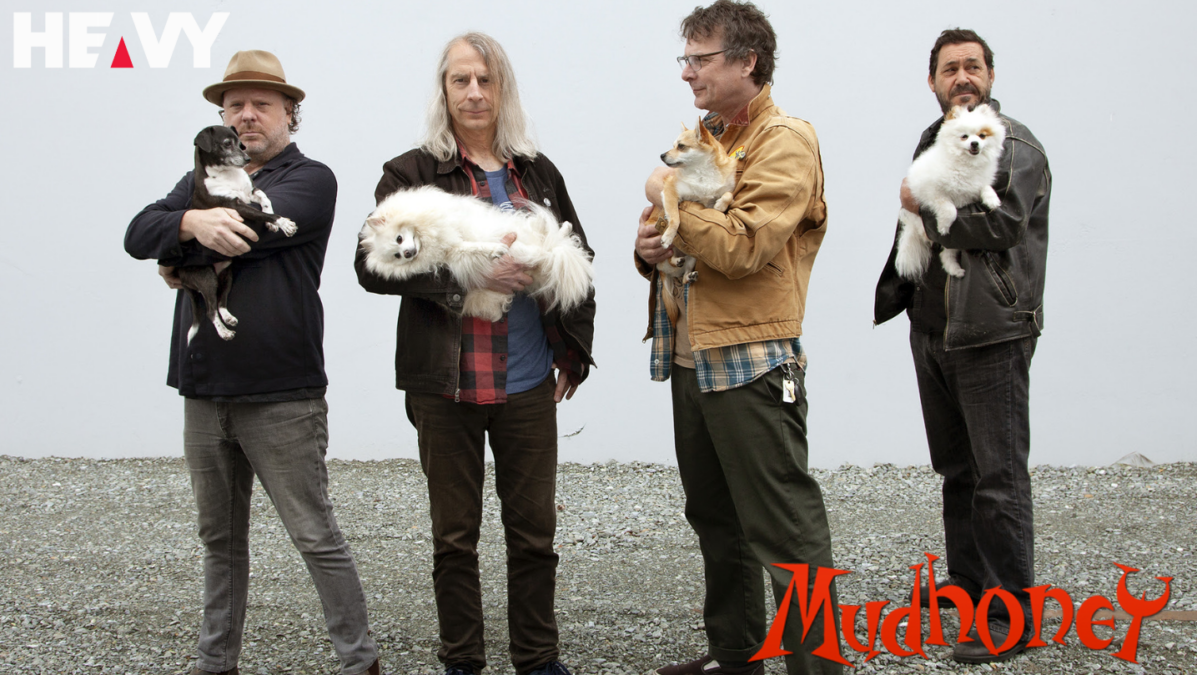
 Interview by Ali Williams Australia has been claiming a little piece of MUDHONEY for longer than most of the world had worked out exactly what to call them. The Seattle band first made it down here in 1990, possibly becoming the first of the emerging grunge contingent to do so. Speaking with HEAVY, guitarist Steve […]
Blog
-
MUDHONEY: STEVE TURNER On Surviving Seattle Without Losing The Plot
Interview by Ali Williams Australia has been claiming a little piece of MUDHONEY for longer than most of the world had worked out exactly what to call them. The Seattle band first made it down here in 1990, possibly becoming the first of the emerging grunge contingent to do so. Speaking with HEAVY, guitarist Steve […] -
Listening Now : The Bankes Brothers – Aaliyah


The Bankes Brothers bring a warm, guitar-led feel to Aaliyah, balancing folk-rock softness with the open-hearted pull of indie rock. Fingerpicked guitars set the tone, but the song gradually finds its lift in the band’s melodic instincts, with the vocals carrying a sense of genuine closeness rather than oversized drama. There’s a comforting, lived-in quality to the arrangement, especially in the slightly muted guitar tones, while the rhythm keeps everything moving at an easy pace. Aaliyah has that rare quality of feeling personal without becoming overly inward — a song about holding onto someone, distance and uncertainty, but ultimately choosing optimism. The Bankes Brothers keep things simple and let the melody breathe, resulting in a gentle, timeless piece of indie folk-rock that feels equally at home on a quiet evening or with the windows down on a long drive.
Connect:
-
Ed Sheeran Addresses Macklemore’s Removal From Tour: “I Am Not Complicit”
A day after dropping Macklemore from his US stadium tour, Ed Sheeran has spoken.
The post Ed Sheeran Addresses Macklemore’s Removal From Tour: “I Am Not Complicit” appeared first on Stereogum.
-
FROM ASHES TO NEW: Personal Warfare, Scrapped Demos, And The Aussie Invasion
 When it comes to genre-bending, heavy music demolition, few bands have lit up the global landscape quite like central Pennsylvania’s rap-rock juggernauts From Ashes To New. They didn’t just crack the door open for the modern nu-metal resurgence—they kicked it down, set it on fire, and built an empire from the remaining embers. Led by […]
 -
200 Stab Wounds Announce New Album “Lowest Form”, Premiere “Pangs Of Conscience”
A February release has been set.
The post 200 Stab Wounds Announce New Album “Lowest Form”, Premiere “Pangs Of Conscience” appeared first on Theprp.com.
-
Less Than Jake release an ode to the chaos of parenting, Another Hostage Situation
Posted on September 15th 2026, 5:19pm
-
Stuck in the Filter: June 2026’s Angry Misses

Thunder rattles the ducts as my minions trudge through heated aluminum and flimsy copper to clean out the detritus left by endless storms. Sometimes I wonder if I should invest in a “health plan” for them to offset the debilitating turnover resulting from various mortal injuries and gruesome deaths this work incurs. And then I think again, and realize that would be a waste of “profits.” There will always be more dummies willing to dive in with the promise of treasure sparkling in their eyes.
Aaaaannnnyyyyway, nobody lost limb or life in the Filter today, but we did manage a decent haul. BEHOLD!
Kenstrosity’s Burning Bastion
Forsmán // Brenndar rústir & fuðrandi fjörur [June 26th, 2026 – Vesperian]
 Iceland is where all the cool black metal kids sit. Smeary corpse paint, cloaks, throaty roars, somehow simultaneously wet and dry snare tones, and hooky riffs surrounded in lower-pitched tremolos make the Icelandic scene almost instantly recognizable. Forsmán are no exception, the young foursome abiding by the genre blueprint—in a similar way to bands like Svartidauði and Helfró—on remarkably professional debut Brenndar rústir & fuðrandi fjörur. A deathly kink lightly twists blasty riff freakouts (“Drottinn fyrirgefur allt,” “Valdníðsla”), but when they land their impact cracks the earth underfoot. A dissonant drama further characterizes Forsmán’s black metal core to scaffold riff-driven measures and off-kilter rhythms, and yet everything remains accessible and easily digestible (“Svartir svanir,” “Andvana,” “Barmafylltar fjöldagrafir”). While Forsmán aren’t attempting to redefine the style with this debut, they do earn a spot alongside the genre’s best with tight performances, fiery riff-forward writing, and a writhing personality that is vicious as much as it is beautifully expressed (“Kynjamyndir”). In short, Brenndar rústir & fuðrandi fjörur should not be missed, as it represents with great merit the high quality I’ve come to expect from the modern Icelandic black metal scene.
Owlswald’s Sunlit Secret
Entropist // The Vision [June 26, 2026 – Self Released]
 Denver progressive death metal quintet Entropist is the very definition of a Stuck in the Filter unearthing. Their debut album, The Vision, slipped through the cracks amid our June promo flood and resurfaced too late for a standard review. Time to make amends. Mixed and mastered by Jamie King (Between the Buried and Me, The Contortionist), The Vision showcases a group brimming with talent and ambition.1 Blending death with elements of progressive metal, psychedelic rock, metalcore, jazz, and classical, The Vision is a melting pot of influences that thrives on vivid atmospherics and an effective dual-vocal approach from Parker Kitching and guitarist Solomon Smith, creating a sound that is adventurous and rewarding. “Intense Warmth” opens with a bout of hypnotic throat singing that morphs into layered croons. “Desert of Limbo’s” crawling melodies evoke Haken. Elsewhere, “The Ritual’s” eerie atmosphere and its intense bridge throw serious Aeolian-era The Ocean vibes, while “Devour Us” delivers exotic acoustic guitar and violin passages before closing with a swaggering groove and a contorted solo. “Creation” proves what Entropist is capable of when all the pieces lock together. Packed with Exoplanet-like riffs, alternating growls and soaring vocals, and a heaving half-time groove, the track’s eclecticism and momentum never let up. Not every experiment lands—”Revelation” and the aptly named “Wandering” lose sight of their destination—but there’s too much talent and creativity here to ignore. The Vision may be far from flawless, but it’s without a doubt an impressive debut.
Spicie Forrest’s Mathy Morsel
eleventwelfth // 11 [June 26, 2026 – Angular//Momentum Records]
 Do you remember when Sithu Aye released that Senpai series?2 Airy, engaging, and wildly emotive, I’ve been chasing that sound ever since. eleventwelfth’s newest LP, 11, scratches that itch as it hasn’t been scratched in years. Part one in a concept duology3 that will serve as the Jakarta, Indonesia-based foursome’s sophomore offering, 11 follows its protagonist as they reckon with the necessary sacrifices one must make in pursuit of a dream. Largely rooted in indie and math rock, 11 unfolds in three acts filtered through aviation metaphors. Hopeful and tender melodies dance on strings like the wind through tall grass (“far away from here,” “collision”), while vocals effortlessly swoop and soar like an albatross on ocean air currents. 7-minute closer “communicate” swells inexorably, wind gathering under its wings until, at the midpoint, it takes off in a beautiful moment of catharsis. Synths and electronic elements evoke Porter Robinson’s Nurture in their gentle and ineffably nostalgic movements (“navigate,” “to fathom the throes”). When eleventwelfth leans into their Reliant K’d rock side, as on “ascending faster than before,” “fear of what’s beyond,” or “last here all alone,” 11 moves as if in a flow state—somehow simultaneously approaching lightspeed and locked in a timeless moment. This certainly isn’t the heaviest thing you’ll hear this year—it might be the lightest—but for those who know what it means to risk it all on hopes and dreams, 11 is not to be missed.
ClarkKent’s Energetic Inputs
Finsmoonth // Chrysalis of Astral Tears [June 13th, 2026 – Disaster Records]
 Indonesia’s Finsmoonth puts on a clinic of melancholic atmospheric black metal with some first-rate tremolos and affecting performances. They partake in an aggressive, melodic form of the genre that’s similar to Walg in its relentlessness. Icy cold blast beats pummel your ears while the melodic tremolos prove a soothing balm wrapped in melancholy. The two guitarists, Zulk Adhe and Irwin Ranto, are tremolo wizards, serving quality leads on each song. My favorite, “Embers at Ethereal Dawn,” displays Finsmoonth’s ability to build up to powerful emotional climaxes. Tino Guruh proves an effective and consistent vocalist. His blackened rasps form the emotional core, and on “Embers at Ethereal Dawn,” he breaks into agonized cries that are just heartbreaking. The passing of the band’s bassist, Maulana Fachrul, less than two months ahead of the release of Chrysalis of Astral Tears adds further to the poignancy. Fachrul puts on a first-rate performance, with some stellar lonesome instrumental stretches on “An Endless Depth,” as well as a bit of smooth jazz noodling towards the end of “Foliage of the Wings.” If Indonesian black metal reminds you of Pure Wrath, then it might not be a surprise to learn that Januaryo Hardy contributes the cleans/chants, and even his wife, Isa Bellum, has a couple of small parts. I don’t know what’s going on in Jakarta to make these artists so sad, but they’re writing some damn fine music.
Inherits the Void // The Silent Abscission [June 19th, 2026 – Avantgarde Music]
 France’s Antoine Scholtès has been quite busy since forming his solo black metal project, Inherits the Void, in 2020. Thus Spoke had kind words for the previous two, 2023’s The Impending Fall of Stars and 2024’s Scars of Yesteryear, comparing the former to the atmospheric meloblack of Mare Cognitum. This time around, Scholtès brings along some friends, including Romain Negro (Apolaustic, ex-Stortregn) to helm the mic. Romain brings a much more aggressive blackened edge to the vocals, cracking with a relentless energy. Scholtès still contributes backing vocals, and a mysterious Nicolas S. sings cleans on a couple of tracks, including a great soaring bit on the finale, “Inherits the Void.” The Silent Abscission feels a touch more aggressive than what Inherits the Void generally plays. Between the blast beats, furious tremolos, and Romain’s blackened assault, there’s a sense of constant kinetic motion. It’s true that some of this stuff can blend together, but there’s plenty of great melodies to keep it enjoyable from start to finish. While Scholtès continues to use synths and arpeggios as brief reprieves from the blast beat attack, he also invites Kevon S. to play some sax (“Wrath of the Endless Sea,” “Inherits the Void”), bringing to mind Burial in the Sky or White Ward. The Silent Abscission is yet another impressive outing in Inherits the Void’s discography, with Scholtès showing that he’s willing to take some risks in order to make things more interesting.
Grin Reaper’s Nocturnal Nuggets
Hecate // Comment Est la Nuit? [June 12th, 2026 – Self Released]
 Since forming in 2009, French ensemble Hecate has steadily released reliable and trve black metal. Fourth album Comment Est la Nuit?4 serves as my introduction to the act, and after visiting earlier albums I’m confident that their latest is their greatest (so far).5 Where debut Chronicles d’un Autre Temps sounds more modern (think 1349 or Watain), subsequent albums gravitate towards raw production that radiates early second-wave energy. Comment Est la Nuit? perpetuates this aesthetic, though Hecate adorns it with classical frills that I find irresistible, such as their seamless integration of piano, flute, and cello with gusts of piercing tremolos and grating rasps. Though Comment Est la Nuit? remains solidly rooted in black metal, the keys function as a core component like never before. Each time I listen, Hecate reveals new facets that only get better with familiarity. The intro to “Aubes aux pâles salives” begins with a beautiful piano refrain supported by clean guitars and a subtle bass thread before tumbling into distorted trems that bear the same melodic framework. Likewise, the range of “Hymne au clair de lune” batters listeners between scathing muscle and delicate respites. I don’t expect Comment Est la Nuit? to change opinions about black metal, but those who enjoy it will find Hecate has written an engrossing experience that wonderfully details the rhythms of the night.
Stormkeep // The Nocturnes of Iswylm [June 12th, 2026 – Vesperian]
 Like many, I eagerly awaited a full-length follow-up to Stormkeep’s magnificent debut Tales of Othertime, uncertain if or when it would arrive. Because the band’s other projects consistently enrapture me (Wayfarer and Blood Incantation, in particular), I never worried whether the Denver, Colorado collective’s sophomore platter would satisfy the promises made by Othertime. And while I’m not convinced that The Nocturnes of Iswylm reaches the heights the debut, Stormkeep still unleashes goodies aplenty that litter Nocturnes three-quarters of an hour. Gone are the instrumentals from Tales of Othertime—instead, Stormkeep dials down the cinema in favor of more straightforward meloblack, although drama still seethes beneath the surface. String embellishments dot the arrangements (“The Taste of Immortal Blood,” “Imperious Sanguine Eroticism,” “Carnal Tapestries of Nailtorn Flesh”), imparting dramatic flair and a welcome dimension to Stormkeep’s fantastical atmosphere. And like the cover art, The Nocturnes of Iswylm embraces darker textures that wrestle in doleful gloom, engendering a subtler experience that took time to sink in and appreciate. While this approach doesn’t ply the same epic theatricality as the debut, The Nocturnes of Iswylm nonetheless worms its way into ears and hearts with nefarious glamours that crackle with danger.
Belarus Beaver // Grind af den Brune Bäfver [June 17th, 2026 – Self Released]
 Sweden plays host to many metallic endeavors, and I often feel like I’m picking up secondhand geography lessons as a result of listening to its exports. Belarus Beaver, then, supplies a toofer, as they began their journey in melodeath mecca Gothenburg before settling down in Jönköping (also home to Hällas, Rexoria, and Narnia). Rather than progressive rock or power metal, though, Belarus Beaver obliterates listeners with a bucktoothed bombshell of devastating deathgrind that’s at once savagely br00tal and pure fun. Also, it’s all about beavers. On fourth album Grind af den Brune Bäfver, Belarus Beaver weaves together groove-laced blasts with industrial trimmings that recall a mixture of early Anaal Nathrakh (“I Want to Pet a Beaver”) and Exhumed (“Den Gnagande Plågan,” “Begravd i en Flod”). Occasionally, though, Grind af den Brune Bäfver reaches for a twist in their songwriting repertoire that uplifts the music, like the Eastern stringed instrument at the beginning of “Urbävern” or the unexpected melodic guitar support midway through “Mutated Beaver Moose.” These moments and others like them elevate Grind af den Brune Bäfver above sheer novelty, and if you’re not sold on Beaver fever, you’re missing out. So let your hair down and give yourself over to the Grind—it’s dam fun.
Creeping Ivy’s Classic Catch
Dead Kosmonaut // Retrospectre [June 26th, 2026 – Edged Circle Productions]
 Dead Kosmonaut conceived a perfect title for their third album. Since 2014, this Swedish quintet has been molding traditional heavy metal hearkening to the late 70s and early 80s. This style—the first wave of metal itself—haunts any and every musician in the genre with aspirations of crafting something trve. With the specter of retro metal hanging over the band’s collective head, Retrospectre delivers 38 minutes of classic goodness, imbued with a somber longing. Dead Kosmonaut is a well-credentialed crew, starting with guitarists Fredrik Folkare (ex-Necrophobic) and Peter Hallgren (Sorcerer), who dole out irresistible guitarmonies and audacious solos in the spirit of Iron Maiden (“Out of the Shadow Rising”). The rhythm section, comprised of bassist Mattias Reinholdsson and drummer Henrik Johansson (both ex-Book of Hours), punches through the mix with power and a bit of grit (“Wake of Aquarius”). And of course, vocalist Per ‘Hellbutcher’ Gustavsson shines, trading his black metal bona fides for commanding cleans that drive some damn fine choruses (“View from the Future”). Lyrically, the album especially develops its theme of retrospection in the latter half, with songs about aging (“Eyes Grow Old”), defeat (“The Battle is Over”), and the inexorable march of time (“The Retrospectre”). Retrospectre will certainly scratch any itches for timeless, classic metal, but Dead Kosmonaut have enough talent, character, and craftmanship to make their third offering more than mere nostalgia.
The post Stuck in the Filter: June 2026’s Angry Misses appeared first on Angry Metal Guy.
-
MATT ZANE PROVIDES UPDATE ON $1 MILLION+ STATIC-X LAWSUIT OVER WAYNE STATIC DOCUMENTARY – @thebeast
FOR IMMEDIATE RELEASE
MATT ZANE PROVIDES UPDATE ON $1 MILLION+ STATIC-X LAWSUIT OVER WAYNE STATIC DOCUMENTARY
Filmmaker says ongoing legal dispute centers on ownership of footage, an alleged two-film agreement, and his efforts to complete an unauthorized documentary about Wayne Static and Tera Wray
LOS ANGELES, CA — September 15, 2026 — Filmmaker Matt Zane has released a new video providing an update on the ongoing legal dispute between himself and Static-X concerning his planned documentary about the late Static-X frontman Wayne Static and his wife, Tera Wray.
According to Zane, the lawsuit seeks more than $1 million in damages and centers primarily on copyright claims involving footage he personally filmed during his work with Static-X.
Zane disputes the band’s claims regarding ownership of that footage. He says he never signed a work-for-hire agreement or another contract transferring ownership of his footage to Static-X.
“I never signed a work for hire agreement or any other contract to relinquish my ownership of the footage,” Zane says in his latest video update.
A central part of Zane’s position is his claim that his work with Static-X involved two separate documentary projects. According to Zane, one project was intended to be a film involving Static-X, while the second was his own documentary focusing on Wayne Static and Tera Wray.
Zane says he repeatedly attempted to formalize the arrangement through a written agreement but that those efforts were postponed. He also says communications with Static-X management support his account that the second documentary project was known to members of the band’s organization.
“The facts are the facts, and I can back them up,” Zane states.
Zane also addresses the scope of the copyright dispute. He says his documentary has not yet been released and that the current dispute involves less than 15 minutes of footage that he has publicly posted online.
According to Zane, the completed documentary has not been made available to the opposing side, and he believes the litigation is also an effort to prevent him from completing and releasing the film.
While confident in his position, Zane acknowledges that the outcome of the case remains uncertain.
“I don’t necessarily think that it’s an open and shut case,” he says. “But obviously I have to try because the facts are the facts and I can back them up.”
The case is expected to proceed to a jury trial. Zane says he intends to continue defending his position and moving forward with the documentary.
“Full steam ahead,” Zane says.
The lawsuit remains pending, and the allegations, defenses, and legal positions of the parties have not been finally determined by the court. The statements above regarding the dispute represent Zane’s account and position in the litigation.
Watch Matt Zane’s full video update:
https://www.instagram.com/reel/DdPN34VvOp2/
ABOUT MATT ZANE
Matt Zane is a filmmaker, musician, photographer, and longtime figure in the industrial metal and alternative music scene. His current documentary project examines the life and legacy of Wayne Static and his relationship with Tera Wray.
MEDIA CONTACT
Metal Devastation PR
Zach Moonshine
zach@metaldevastationradio.com
https://metaldevastationradio.com/ -
The Pointer Is Not the Goal in URARV’s “Dødheimsgard”
A sign can reveal the direction without becoming the destination itself. That distinction lies at the centre of “Dødheimsgard,” the first single from URARV’s forthcoming album, Nychta Psychis. The band explain the idea behind the song succinctly: “‘Dødheimsgard’ aims to point towards a specific goal whilst, at the same time, giving us the opportunity to […] -
DRAIN Announce Los Angeles Show With Joey Valance And Brae, Wavves, Rotting Out & More
DRAIN’s biggest headlining show yet.
The post DRAIN Announce Los Angeles Show With Joey Valance And Brae, Wavves, Rotting Out & More appeared first on Theprp.com.