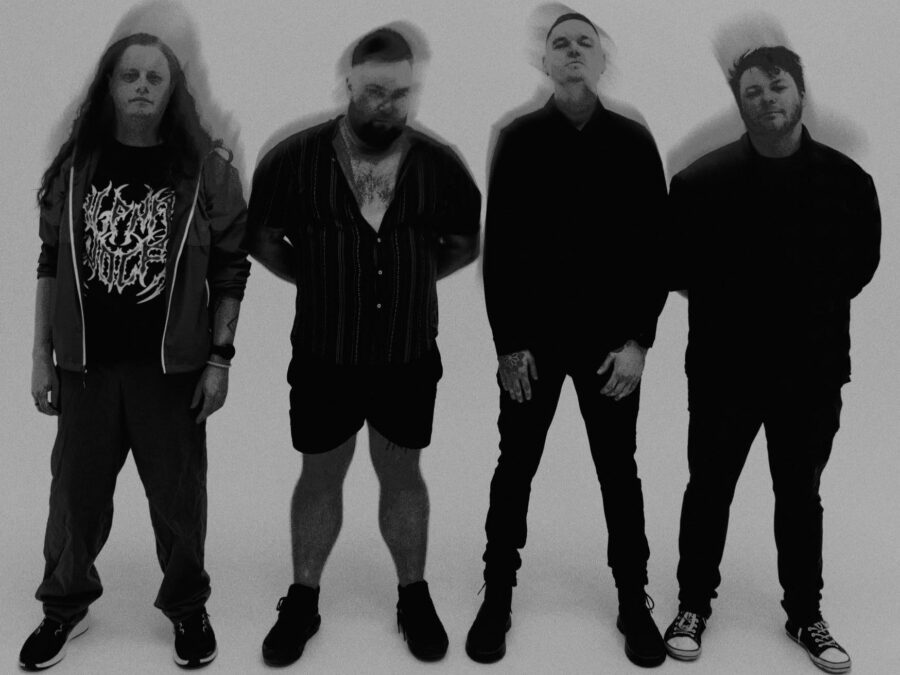
Shatner’s live metal debut will now take place in a club a day ahead of his ‘Riot Fest’ set.
The post William Shatner, Chat Pile, Thrice, Black Flag, Etc. Announce ‘Riot Fest’ Sideshows appeared first on Theprp.com.
Shatner’s live metal debut will now take place in a club a day ahead of his ‘Riot Fest’ set.
The post William Shatner, Chat Pile, Thrice, Black Flag, Etc. Announce ‘Riot Fest’ Sideshows appeared first on Theprp.com.
There’s this Oakland band called Unity, right? Not an easy name to search. When Scott assigned this post, I almost threw my laptop out the window. How am I supposed to know all this shit? I don’t. I never heard of Unity. Well, now I know about Unity, and I can tell you that they are good. I guess it was worth it.
The post Unity Announce New Album <em>Comes Back To You… / Was There Ever Unity?</em>: Hear “3 Weeks” appeared first on Stereogum.
We caught up with Denver four-piece Fainting Dreams to talk about thir latest record, You Can Be Anything, out now.
Beginning in early 2022 as the solo project of vocalist and guitarist Elle Reynolds, the group has grown to
include Francys Andros (bass, vocals), John Willis (drums), and Jared Barnes (guitar). Through this expansion, their sound has evolved into an immersive convergence of slowcore, doom, post-metal, and shoegaze.
How did you all get started as a band, and what inspired you to make music?
I (Elle) started this band back in 2022 as a solo project because I was craving something different to the bands I was in at the time where I had a bit more creative liberty and could primarily focus on vocal performance and atmospheric music as opposed to the more chaotic, technical music I’d been involved in. Very quickly I was reminded of how much fulfillment and connection it brings me to make music with others and that this was one of the main reasons I made music, so it didn’t take long for me to bring in other members. Our lineup changed quite a few times over the first few years of the project, and it was honestly really great to get to play with so many different musicians who brought their own unique feel to this project. Over time as we’ve come into our current lineup with some of the most talented musicians I know, the music’s gotten heavier and more collaborative but at its core the songs are still almost always born from a vocal idea I have and grown into something much larger.

As a queer band, why is visibility in the music scene important? Why is creating music important for you all as queer creatives?
Visibility as a queer band, and especially as a band with trans artists is incredibly important right now because we live in a world that’s actively trying to erase the trans community and make the general public feel like the safety of trans people is something that doesn’t affect them too. Queer people having a spotlight is essential for people to understand that the trans community exists all around them, and I couldn’t begin to count how often kids come up to me at shows to talk about how much it means to see a trans person like me up on stage being myself and taking up space unapologetically.
For myself personally, making music is truly my biggest form of catharsis. I exist in a weird juxtaposition where my life is largely going well and I feel very content with day to day living, while still existing with the constant knowledge that the US government would have me disappeared from the face of the earth if they had their way. I’m not an angry person generally, and music is this amazing opportunity for me to get to let out my angriest, most hopeless thoughts and scream them in front of a room full of people and still have a wonderful time doing it. I think this type of release is vital for queer people and marginalized people, however they achieve it for themselves.
What are you most excited about with this lineup?
This is a lineup full of bands we either love playing with or have talked about playing with for a long time and put on some of the best live shows in Denver. While we love a mixed bill, it’s truly a pleasure to get to celebrate our release by sharing the stage with such like minded bands who also consistently walk the line between beauty and heaviness. It’s our favorite lineup we’ve had in ages.
What message are you most trying to spread with your music? I’m honestly just trying to be as vulnerable as possible, both for myself and in hopes that someone watching can feel a bit less alone. Our music is largely very personal but with the state of the world these days, the personal and the political start to become entwined with almost everything you do and our music definitely isn’t an exception. “The Silence of Birds That Rarely Sing” is largely about the dangers of falling into a state of complacency when you see others suffering and how essential it is to bring compassion with you into every interaction.
The post Interview: Fainting Dreams on the Process Behind ‘You Can Be Anything’ appeared first on Decibel Magazine.
No flower is more closely associated with Gothic culture than the black rose.
The strange thing is that true black roses do not actually exist.
The flowers we call black roses are usually very dark shades of red, purple, or burgundy. Yet for centuries, the Gothic imagination has embraced them as symbols of mystery, mourning, forbidden love, and death.
This fascination reveals something important about Gothic culture itself.
The Gothic does not simply explore darkness. It transforms darkness into beauty.
A ruined castle becomes romantic. A ghost becomes tragic. A cemetery becomes peaceful. In the same way, the black rose turns mortality into something elegant and meaningful.
More than a flower, it has become a visual language. It appears in literature, fashion, music, and art as a symbol of beauty existing side by side with loss.
Its enduring appeal comes from a contradiction that lies at the heart of the Gothic imagination.
The things that frighten us often fascinate us as well.
Most flowers symbolize life.
They bloom, flourish, and eventually fade. Roses have traditionally represented love, beauty, and passion. Their appearance in art often celebrates youth and romance.
The black rose reverses those expectations.
Its dark appearance introduces a sense of mystery. Instead of suggesting beginnings, it evokes endings. Instead of celebrating innocence, it hints at experience, loss, and hidden emotions.
This tension explains why the flower became so important within Gothic culture.
The Gothic rarely presents death as something purely frightening. Instead, it explores the emotional space where beauty and mortality coexist.
A black rose embodies that idea perfectly.
Its petals remain beautiful, yet their color suggests something darker beneath the surface. The flower appears alive while simultaneously reminding us of decay.
Psychologists often note that people are drawn toward symbols that combine opposing ideas. The familiar becomes more intriguing when mixed with uncertainty.
The black rose achieves exactly that effect.
It feels recognizable and unsettling at the same time.
The black rose did not become a Gothic symbol by accident.
It reflects one of the genre’s oldest obsessions.
Gothic artists repeatedly search for beauty in places where most people expect only fear.
Ruined abbeys become romantic landscapes. Storms become sources of inspiration. Moonlit graveyards become places of reflection rather than horror.
The black rose belongs to this tradition.
It transforms mourning into elegance and loss into art.
This approach explains why Gothic culture continues attracting people who feel disconnected from modern ideas of perfection and happiness.
The Gothic acknowledges that sadness, grief, and mortality are unavoidable parts of life.
Instead of hiding those realities, it turns them into symbols.
Few symbols express that philosophy more effectively than a black rose.
The nineteenth century played a crucial role in shaping the symbolism of black roses.
Victorian society developed an elaborate culture of mourning that influenced fashion, literature, jewelry, and art.
Following the death of Prince Albert in 1861, Queen Victoria entered a prolonged period of mourning that helped popularize black clothing and memorial traditions throughout Britain.
Death became highly visible within everyday life.
Families preserved locks of hair in jewelry. Postmortem photographs captured the appearance of loved ones after death. Mourning attire communicated grief through carefully defined social rules.
To modern audiences, some of these customs appear unusual.
For Victorians, however, they represented acts of remembrance.
The black rose naturally found a place within this culture.
It symbolized sorrow, devotion, and the enduring connection between memory and loss. Over time, the flower became associated with a broader Gothic aesthetic that viewed mourning not merely as suffering but also as a form of beauty.
This transformation would influence generations of writers, artists, and designers.
Long before black roses became a recognizable Gothic symbol, writers were already fascinated by the relationship between flowers and mortality.
Flowers possess a unique symbolic power because they are beautiful and temporary. They bloom brilliantly, then fade. Their life cycle mirrors the fragility of human existence.
For Gothic writers, this symbolism was irresistible.
The black rose emerged as the darkest expression of that idea. It represented beauty touched by loss, love marked by tragedy, and desire shadowed by mortality.
Unlike traditional roses, which often symbolize romance and innocence, the black rose suggests that every beautiful thing eventually disappears.
That awareness gives the flower its emotional power.
The Gothic imagination has always been drawn toward things that are both beautiful and doomed.
The black rose embodies both qualities perfectly.
One of the most influential floral symbols in nineteenth-century literature appears in Oscar Wilde’s The Nightingale and the Rose.
Although the story does not feature a black rose, its symbolism helped shape the Gothic understanding of flowers as expressions of love, suffering, and sacrifice.
In the tale, a nightingale gives its life to create a perfect red rose for a young student who believes love can be won through a romantic gesture.
The result is tragic.
The sacrifice proves meaningless, and the flower becomes a symbol of beauty that cannot survive contact with reality.
This theme would later become central to Gothic interpretations of the black rose.
The flower represents emotions that are profound, beautiful, and often impossible to preserve.
Love fades.
Youth disappears.
Life ends.
The black rose reminds us of these truths while transforming them into something strangely beautiful.
No writer contributed more to the Gothic fascination with beauty and loss than Edgar Allan Poe.
Although black roses rarely appear directly in his work, the emotional atmosphere surrounding the symbol feels unmistakably Poe-like.
His poetry repeatedly explores themes of mourning, memory, and the persistence of love beyond death.
In poems such as Annabel Lee, Ulalume, and The Raven, beauty is inseparable from loss.
The beloved is often absent.
The past remains unreachable.
Memory becomes both comfort and torment.
These emotional contradictions mirror the symbolism of the black rose.
The flower is beautiful precisely because it reminds us that beauty does not last forever.
Poe understood this paradox better than almost any writer.
His work suggests that melancholy possesses its own aesthetic power. Grief is painful, yet it can deepen our appreciation for what has been lost.
This idea remains one of the foundations of Gothic culture.
“And neither the angels in Heaven above, nor the demons down under the sea, can ever dissever my soul from the soul of the beautiful Annabel Lee.”
Edgar Allan Poe, Annabel Lee
The passage captures the emotional world that the black rose symbolizes. Love survives, but it survives within the shadow of loss.
By the late nineteenth century, Symbolist writers expanded these themes even further.
Authors such as Charles Baudelaire sought symbols capable of expressing complex emotional states that ordinary language struggled to capture.
Flowers frequently appeared in their work because they could represent beauty, corruption, desire, innocence, and decay simultaneously.
Baudelaire’s Les Fleurs du mal, or The Flowers of Evil, became one of the defining texts of dark Romanticism and Symbolism.
The title itself reveals the fascination with finding beauty within darkness.
That concept lies at the heart of the black rose’s enduring appeal.
The flower represents an impossible union.
Beauty and decay.
Love and death.
Hope and despair.
The Gothic imagination has always been drawn to such contradictions because they reflect the complexity of human experience.
Few symbols express that complexity more effectively than a dark rose blooming against the shadows.
The power of the black rose extends beyond literature.
Its symbolism also reveals something important about human psychology.
People are naturally attracted to mysteries. We are fascinated by things that appear familiar yet contain something unexpected.
A black rose creates exactly that reaction.
We recognize it immediately as a rose, a flower traditionally associated with beauty and affection. Yet its dark color transforms that familiar symbol into something enigmatic.
The result is both attractive and unsettling.
Psychologists sometimes describe this response as a form of the uncanny. Something ordinary becomes strange enough to capture our attention.
The black rose occupies that space perfectly.
It appears to belong to the natural world while simultaneously feeling almost supernatural.
That tension continues to make it one of the most enduring symbols in Gothic culture.
Most symbols fade with time.
The black rose has done the opposite.
What began as a symbol associated with mourning, loss, and Gothic literature eventually found new life in fashion, music, and contemporary Gothic culture.
Its survival is not accidental.
The emotions represented by the black rose remain as relevant today as they were in the nineteenth century. People still experience grief. They still confront mortality. They still search for beauty in difficult experiences.
The symbol continues to evolve because the emotions behind it never disappear.
Modern Gothic culture adopted the black rose as a visual expression of this philosophy.
Rather than hiding darkness, Gothic aesthetics acknowledge it. Instead of pretending life is always beautiful, they recognize that beauty often exists alongside sadness.
The black rose became the perfect emblem for that worldview.
Fashion has always been one of the most visible expressions of Gothic identity.
Black roses frequently appear on clothing, jewelry, accessories, and textile designs because they communicate an entire philosophy through a single image.
The flower represents elegance without optimism, romance without innocence, and beauty without denial.
Designers such as Alexander McQueen frequently explored similar themes throughout their work. His collections often combined beauty with mortality, creating garments that felt both luxurious and haunted.
The black rose naturally fits within that aesthetic.
It is sophisticated.
It is melancholic.
It tells a story.
That storytelling quality helps explain why the symbol remains popular across multiple generations of Gothic fashion enthusiasts.
For many people, the black rose represents more than an artistic motif.
It becomes part of personal identity.
Within Gothic subcultures, symbols often function as a visual language. They allow individuals to communicate values, interests, and emotional experiences without speaking a single word.
A black rose tattoo, for example, rarely symbolizes death alone.
It may represent survival after loss.
A period of personal transformation.
A fascination with Gothic art.
Or simply an appreciation for beauty that exists outside conventional standards.
This flexibility is one reason the symbol remains so powerful.
Each person brings their own meaning to it.
Yet the underlying themes remain remarkably consistent: memory, resilience, mystery, and transformation.
The black rose has survived because it speaks to experiences that are universal.
Everyone eventually encounters loss.
Everyone experiences change.
Everyone learns that beauty is often temporary.
The flower transforms these realities into something tangible.
It reminds us that sadness and beauty are not opposites. In many cases, they strengthen one another.
A memory becomes precious because it cannot be repeated.
A moment becomes meaningful because it cannot last forever.
The black rose symbolizes this paradox more effectively than almost any other image in Gothic culture.
The enduring appeal of the black rose reveals something important about the Gothic imagination.
The Gothic does not celebrate death.
It explores humanity’s relationship with mortality.
It transforms grief into memory, loss into art, and darkness into beauty.
The black rose stands at the center of that transformation.
From Victorian mourning rituals to Gothic literature, from Poe’s melancholic poetry to contemporary fashion, the symbol has remained remarkably consistent.
It reminds us that beauty is often most powerful when it exists alongside impermanence.
Perhaps that is why the black rose continues to fascinate generation after generation.
It embodies a truth that Gothic culture has always understood.
The things we cherish most are often the things we cannot keep forever.
Like a rose in bloom, their beauty comes from the knowledge that they will eventually fade.
And yet, through memory, art, and symbolism, they never disappear completely.
If the symbolism of black roses, Gothic beauty, and Edgar Allan Poe’s world speaks to your imagination, explore the Edgar Allan Poets store. Discover apparel and artwork inspired by literature, mystery, and the timeless elegance of the macabre.
Continue your journey through Gothic symbolism and dark beauty with the official Edgar Allan Poets playlist.
Black roses symbolize the transformation of death, mourning, and loss into aesthetic beauty. They represent mystery, memory, melancholy, and romantic darkness.
True black roses do not naturally exist. Most black roses are actually very dark shades of red, burgundy, or purple.
The Gothic often explores beauty within darkness. Black roses perfectly express this theme by combining elegance with symbols of mortality and loss.
While Poe rarely used black roses directly, his themes of mourning, memory, lost love, and melancholy strongly influenced the symbolism associated with the flower.
Black rose tattoos often symbolize personal transformation, resilience after loss, remembrance, and a connection to Gothic aesthetics.
The post The Language of Black Roses in Gothic Culture appeared first on Edgar Allan Poets – Noir Rock Band.
In 2015 Prog asked Yes guitarist Steve Howe to name his five favourite songs from his band’s catalogue. As it turned out, all but one of them originated in the 70s. He explained why that was.
From Going For The One (1977)
We went through a real vortex to find a way of presenting that song the way it is now, and it’s so magical. It was really deep, the music had to work. It draws on the soft side of Yes, like And You And I and Wonderous Stories, and it was astounding.
Jon had written lyrics about a sculptor [Roan] and so there was a furthering of the connection in there. It was really interesting project, and that song really did feel like a project. Turn Of The Century is central to Going For The One.
From Close To The Edge (1972)
Well, I can’t choose the title track because that’s got so much in it! But …Khatru’s got a lot of elements that I think are really archetypal of the band at that time. Over the years when we were working on material we could have looked back and ask, “What would we have done with this in the days of Close To The Edge?” Maybe sometimes we didn’t ask that question enough.
From Drama (1980)
My mind flashes to that album. I remember us playing Tempus Fugit before we actually met Trevor Horn and Geoff Downes, but they added to that immensely. Trevor wrote all the words, as far as I remember, and Geoff helped orchestrate it, and Chris Squire, Alan White and I invented an awful lot of the structure of the song.
But the dynamic way we pulled it off, the speed was frightening. Songs often speed up on stage, but we always agree to play this one slower. There was a real drive to keep Yes going and Trevor and Geoff gave us a way to do it with relative ease. The direction was great on that album.
From Fragile (1971)
Ask me about Yes, and I’m only looking at the 70s. Not that I dislike the albums we made after that – some of them are very good. But there was a wonderful innocence about the 70s albums. South Side Of The Sky is like Starship Trooper in that it has three different sections, and three different senses of development.
It kind of rocks, and then it doesn’t. Then it’s light, partly down to the influences on the others – groups like the Fifth Dimension. It wasn’t what I brought to the party, but it’s a nice section.
For the guitar solo section at the end we weren’t content with a Leslie speaker so Mickey Tait – who went on to be a big sound and lighting guy – was spinning a microphone around his head to get that whooshing live sound. I can see him now with this microphone! There was a lot of fun experimentation.
From Tales From Topographic Oceans (1973)
Topographic Oceans was such a challenge – the construction, the rehearsal, then the studio. Jon and I were pushing this project along; the others were saying, ‘Are you sure? A double album and this is the first track?’ It needed Jon and me to say, ‘No no, it’s going to work!’ Side One and Four Ritual (Nous Sommes Du Soleil) would be so playable now, like an album in themselves.
Those two sum up the project – the beginning and the end – and I choose the beginning. The Revealing Science Of God is about where you put yourself: if you put yourself where people are saying, ‘Wait, I’m not sure about this,’ it might actually be a good thing. Then after the record came out the press slagged it, and Rick left. But then, everybody loved it…
Black Sabbath legend Tony Iommi is set to take the stage at the Royal Birmingham Conservatoire on Thursday, Sept. 17, for a rare evening dedicated entirely to his life story. The Birmingham date marks a one-night-only engagement built around Iommi‘s career and his lasting ties to the city that shaped him.
The timing lines up with a busy stretch for the guitarist. Iommi has more than 45 albums under his belt and is gearing up to release a new solo record, From The Dark, this October. That follows an MBE appointment he received back in June, adding to an already stacked list of honors and making this fall a fitting moment to hear the stories straight from the source.
Sports broadcaster and journalist Gary Newbon MBE, a fellow Midlands native, will lead the conversation on stage. Expect the night to move through tour tales, gig stories and a look at how Iommi built music that traveled far beyond Birmingham.
Few guitarists have shaped modern music the way Iommi has. As Black Sabbath‘s founding member and chief songwriter, he’s widely credited with laying the groundwork for heavy metal as a genre.
The recognition has piled up over the decades. Iommi holds multiple Grammy wins, a spot in the Rock And Roll Hall Of Fame, an honorary doctorate from Coventry University, a Lord Mayor’s Award and the Freedom Of The City Of Birmingham. The MBE, awarded this past June, ranks among the highest honors available in British public life.
Iommi‘s signature sound traces back to a workplace accident in his youth that cost him the tips of two fingers. Rather than end his playing career, it pushed him toward a new technique and a heavier, darker tone that would go on to define Black Sabbath‘s music. He formed the band alongside Ozzy Osbourne, Geezer Butler and Bill Ward, and their run of albums through the 1970s turned them into one of Britain’s most significant musical exports of that decade.
Iommi‘s output hasn’t slowed much across six decades. He collaborated extensively with the late Ronnie James Dio, built out a solo catalog and reunited with Black Sabbath‘s original lineup for 2013’s chart-topping 13. That reunion carried through to “The End,” the band’s 2016-2017 farewell run that drew 1.6 million fans worldwide.
His recent work has stretched well past the standard rock circuit. In 2023, he partnered with the Birmingham Royal Ballet on “Black Sabbath – The Ballet,” a production built from his earliest compositions. Then in 2025, Black Sabbath headlined “Back To The Beginning” in Birmingham, a massive show that revisited the band’s roots and doubled as an emotional send-off for fans, arriving just weeks before Osbourne‘s death.
The post BLACK SABBATH’s TONY IOMMI Announces One-Night-Only Career Retrospective At Royal Birmingham Conservatoire appeared first on Sonic Perspectives.
We’ve been waiting for this one for a while. Erykah Badu, one of our greatest living artists, hasn’t released a proper album since 2010’s New Amerykah Part Two (Return Of The Ankh), and she hasn’t put out a full-length since her 2015 mixtape But You Caint Use My Phone. Some time back, though, Badu revealed that she was working on a new collaborative album with the Alchemist, the great and prolific psychedelic rap producer. A few months later, Badu and Alchemist shared their single “Next To You.” That was more than a year ago. Now, the album is finally on the way.
The post Erykah Badu & The Alchemist’s Album Is Finally Coming Out appeared first on Stereogum.
The Stray Cats, all three original members Brian Setzer on guitar and vocals, Lee Rocker on upright bass and vocals, and Slim Jim Phantom on drums and vocals; will wrap the summer leg of their 2026 tour with an August 18 appearance on The Tonight Show Starring Jimmy Fallon, performing one of the legendary group’s iconic hits. This marks the group’s first live late-night television performance in more than 35 years. Their last performance was in 1990 on The Late Show with David Letterman.
Later this year the band will return to the road with a month of fall dates kicking off November 9 in Grand Prairie, TX with stops in Nashville, Charlotte, Orlando, Atlanta and more, before wrapping December 6 at Foxwoods in CT. The group’s setlists will be highlighted by some of the iconic multi-million selling band’s massive hits including “Stray Cat Strut,” “Rock This Town,” “Runaway Boys,” “(She’s) Sexy + 17,” and much more. The group’s ongoing 2026 tour dates and tickets are available here.
Last year, the iconic multi-million-selling band released two new tracks via Surfdog Records. The loud, upbeat “Stampede”, which is unmistakably The Stray Cats and their cover of Eddie Cochran’s “Teenage Heaven.” These songs mark the first new music in six years. Pre-order the 7-inch “old school” 45 RPM vinyl record here, available on July 24. Both “Stampede” and “Teenage Heaven” were produced by The Stray Cats, mixed by Chris Lord-Alge, and recorded at The Terrarium in Minneapolis, MN & Laguna Sound in Laguna Beach, CA. “Stampede” was written by Brian Setzer, Peter B. Antonio, Wally Zober, Bert Salmirs, and Mike Himelstein, while “Teenage Heaven” was penned by Jerry Capehart and Eddie Cochran.
The Stray Cats, the band that put Rockabilly music back on the record charts in the early ’80s, scored several big hits on both sides of the Atlantic thanks to a striking visual 1950’s style brought “up to date” with exaggerated pompadours and colorful tattoos and as well as genuine musical chops that evoked the best players of rockabilly’s original heyday. Formed by guitarist/vocalist Brian Setzer, upright bass player Lee Rocker and drummer Slim Jim Phantom in the Long Island town of Massapequa, NY, in 1979, the trio shared a love for Rockabilly music. After banging around New York for a few months, in the summer of 1980, and seeing a pompadoured kid on the cover of UK magazine NME, they hopped a plane to London where a rockabilly revival movement was just beginning to emerge. Their massive hits and videos include “Runaway Boys,” “Rock This Town,” “Stray Cat Strut” “(She’s) Sexy + 17,” and “I Won’t Stand in Your Way.”

The post THE STRAY CATS Return To “The Tonight Show Starring Jimmy Fallon” Marking The Group’s First Late-Night TV Performance In Over 35 Years appeared first on Sonic Perspectives.