Words by Belinda Quick Photos by Justin White Special thank you to Destroy All Lines “Nature is inexorable and immutable; she never transgresses the laws imposed upon her, or cares a whit whether her abstruse reasons and methods of operation are understandable to men” – Galileo Galilei, Letter to Grand Duchess Christina The mission statement […]
First of all, Bat Out Of Hell isn’t even the best song on the album. But it is the title track, and therefore the most representative of that mammoth, life-changing, world-eating magnum opus. Is there any other album ever produced that is viewed so favourably as one recognisable, self-standing entity? Did it even need singles? It was meant to be devoured in one ravenous sitting, and that’s exactly how we all did it.
If anything represents the concept of “album rock”, it’s Bat Out Of Hell. It is album rock. And it’s probably the greatest stand-alone rock album ever made. It’s also completely ridiculous, albeit in the best way possible. Consider the source: Meat Loaf, a sweaty, overweight leather-lunged theatre kid hungry for an arena, and Jim Steinman, the piano-plinking, black-gloved, Wagner-worshipping trickster who wanted to create immortal rock’n’roll death operas.
“Meat was the most mesmerising thing I’d ever seen,” Steinman told Classic Rock. “He was much bigger than he is now; he was fucking huge, and since I grew up with (German composer Richard) Wagner, all my heroes were larger than life. His eyes went into his head, like he was transfixed. [At the audition], he sang “You gotta give your heart to Jesus“… I can seem arrogant at times because I’m certain of things and I was certain of him.”
In any other era, they’d be sent to the loony bin or the unemployment line. Instead, they were locked in a room with Todd Rundgren, and gold was inexplicably spun in vast quantities.
Of course, no one knew it at first. Here’s the crazy part. Well, the crazier part. Bat-the-album was released in 1977. Bat-the-single wasn’t released until two years later. And let us not forget it’s 10 minutes long (sure, there’s a four-and-a-half minute radio edit, but everybody knows that one is bullshit). Bat is completely inexplicable in every way, and yet it was perfect for the time, place, emotions and parlances of the day. 1979 demanded Bat Out Of Hell, and when it finally got it, it steamed up countless cars blasting the song at make-out points all over the US and the UK.
The structure is your basic teenage death ballad, complete with leather-clad street gangs, gleaming motorcycles, a breathlessly beautiful teenage virgin, and ‘even young boys down in the gutter’ foaming from the heat. Who knew you could foam from heat?
It starts out as a theatrical piano ballad, but you just know from the first chord that it’s eventually going to explode into an orgy of over-amped hard rock madness, and that’s just what it does. It entangles you in its drama, shakes you back and forth like a wolf with a rabbit, and leaves you bloody, bruised, and thoroughly satisfied. Steinman originally wrote it for a Peter Pan musical. We should all be eminently thankful that Meat showed up in his life.
“I never really saw classical music and rock ‘n’ roll as different. I still don’t,” Steinman told Classic Rock. “I grew up liking extremes in music – big gothic textures. I never have much regard for more subtle stuff. Dire Straits may be good, but it just doesn’t do it for me. I was attracted to William Blake, Hieronymus Bosch, I couldn’t see the point in writing songs about ordinary, real-life stuff.”
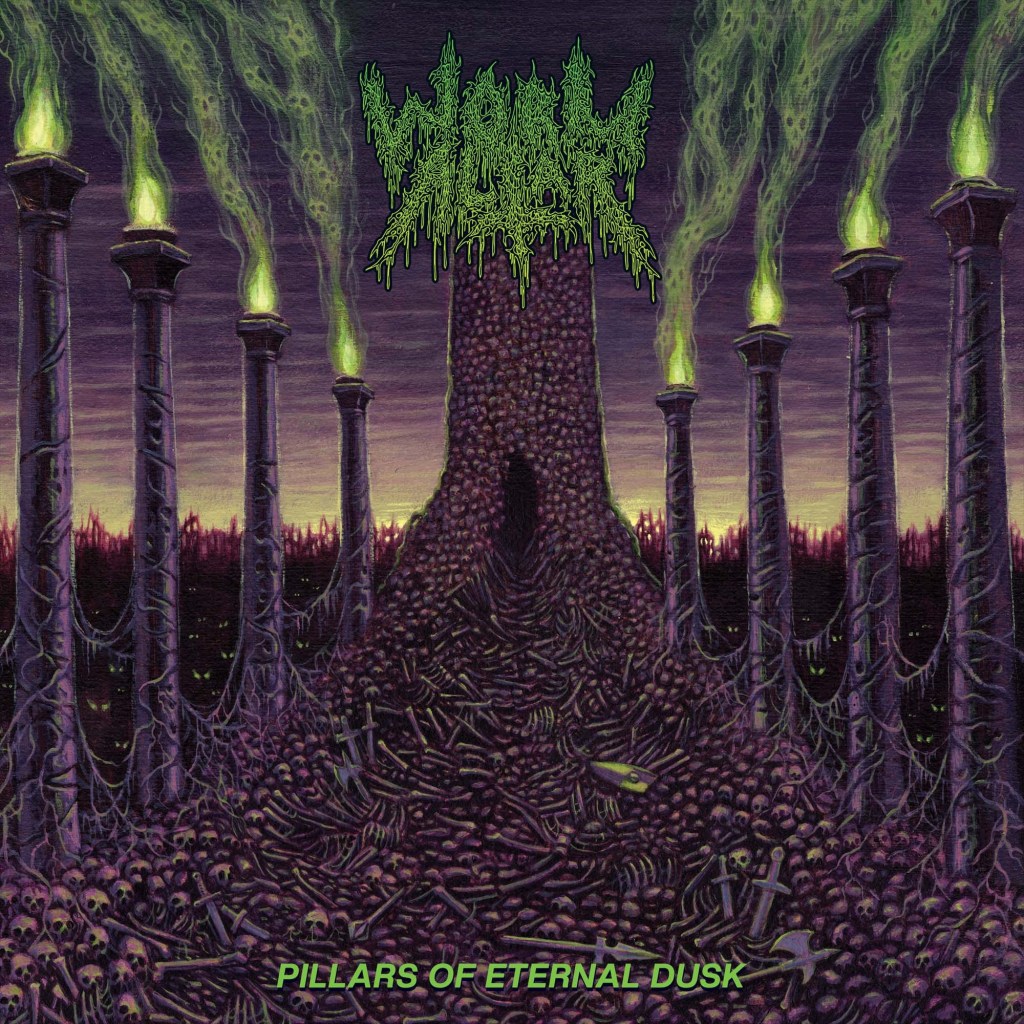
Portland, Maine death metal outfit WORM ALTAR will release their debut full-length album, Pillars of Eternal Dusk, on October 16th, 2026 via Dawnbreed Records and Gurgling Gore on LP and CD formats, limited to 300 and 400 copies, respectively. The cassette edition will be released as a co-release between Gurgling Gore and Contemn Light, featuring two limited label-exclusive shell color variants.
The first single “Watchers of the Gate” is streaming HERE.
There is something genuinely repulsive about the sound of WORM ALTAR. Crude, abrasive and seemingly dragged out of some damp, lightless corner of the underground, Pillars of Eternal Dusk refuses to polish away the rough edges that give its death metal such an unsettling presence. Yet beneath the layer of grime, the album reveals itself to be far more carefully constructed than its initial assault might suggest.
Great riffs emerge from the murk, memorable enough to stick in the head long after the noise has subsided. Subtle melodic details and understated atmospheric touches lurk beneath the surface, adding depth without ever compromising the album’s oppressive character. The rawness is therefore not an end in itself: it is the most appropriate vehicle for music that aims to feel uneasy, crawling and fundamentally diseased.
Drawing inspiration from Gorement, Phrenelith, Disembowelment, Coffins, Mortiferum, Grave Upheaval and Black Sabbath, WORM ALTAR operate in that particularly fertile territory where death metal becomes less a display of brute force than an exercise in atmosphere, physicality and dread.
Track-list:
Under the Shadow of Night…
Splaying the Offal
Watchers of the Gate
Virescent Fire
The Blind One
Dusk Eternal
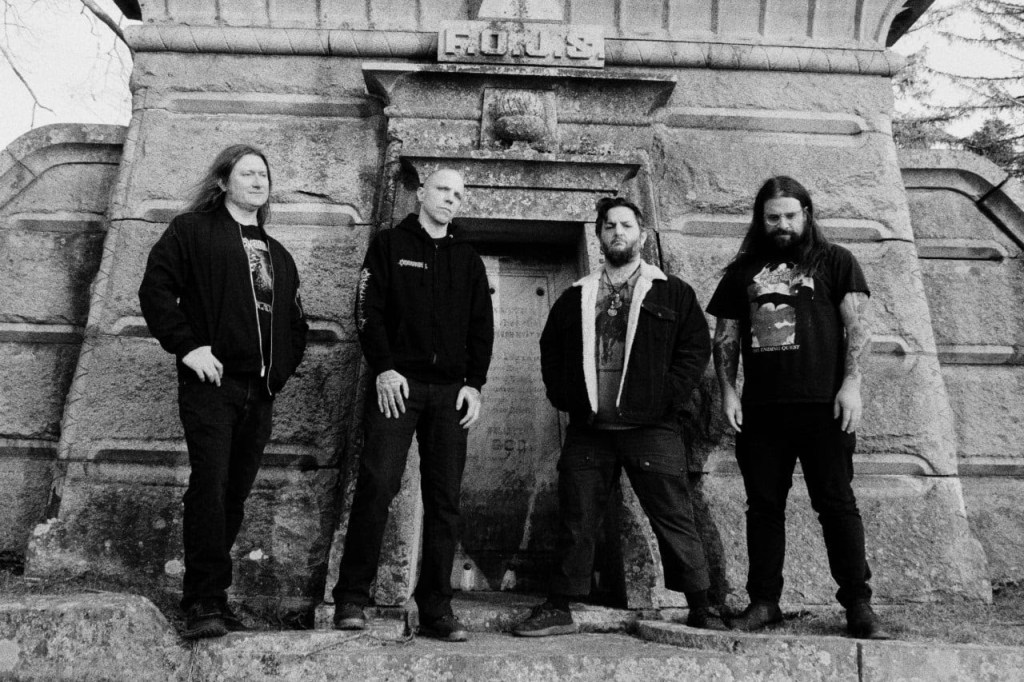
Founded in late 2021 as the solo project of Scott M. (guitars, vocals), WORM ALTAR initially released the Demo 2022 tape through Acid Redux Productions and the Astral Scourge EP in 2023 via Gurgling Gore and Total Death Over Mexico.
After expanding into a full band, the lineup was completed by John S. on drums, Jon M. on bass and Rob C. on guitar. Jon M. is also a member of sludge/doom legends Come To Grief, while Rob C. handles guitar and vocals in progressive death metal outfit Shabti.
Pillars of Eternal Dusk was recorded largely live in just ten hours by Todd Hutchisen at Acadia Recording Company in the band’s hometown of Portland. Mixing was handled by Ethan Camp, whose credits include the debut albums of Mortiferum and Mephitic Corpse, while mastering was completed by Dan Lowndes at Resonance Sound Studio, known for work with Ancient Death, Blood Incantation, Cerebral Rot, Imprecation, Infester and Spectral Voice.
Following the release, WORM ALTAR will perform throughout New England and Canada, bringing the filth of Pillars of Eternal Dusk to the stage.
Some artists move between genres as tourists, collecting a new set of surfaces with every release. Kontravoid moves differently. Across skeletal coldwave, heavy EBM, freestyle-informed electro, industrial club music, and dark pop, Cameron Findlay has maintained a character that can be recognized within seconds: disciplined drums, bass that seems to alter the air pressure, synthesizers suspended between metallic seduction and industrial alarm, and an abrasive baritone that sounds transmitted from a sealed room. That consistency amid constant movement has made Kontravoid one of the most important acts in the international darkwave and EBM scene.
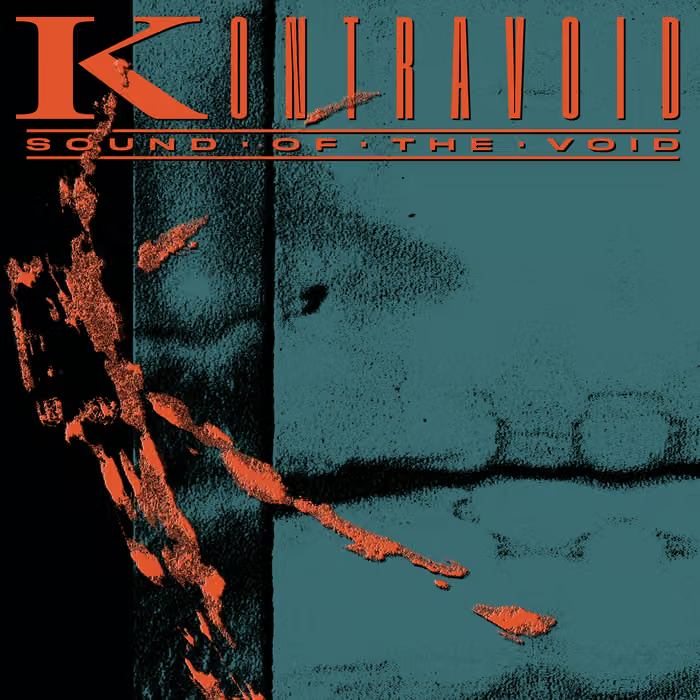
The Canadian-born, Los Angeles-based musician, drummer, and producer has announced a new full-length album, Sound of the Void, due October 2, 2026, through Toronto’s Artoffact Records. It will be his second album for Artoffact, coming more than two years after his previous release, Detachment, which came out on March 1, 2024. The announcement includes the new single “Without,” joining January’s “Mortal” as the second track available ahead of the album.
The space between albums has hardly been empty. Findlay carried Detachment through Europe and North America, appearing at Wave-Gotik-Treffen and playing dates alongside Buzz Kull and Cold Cave. In December 2024, Losing Game Remixes returned to his collaboration with Nuovo Testamento vocalist Chelsey Crowley, while Crowley’s band Nuovo Testamento, Normal Bias, Auragraph, and Tassel each pulled the song into a different corner of the club.
Findlay also continued his parallel life as a remixer, recasting Ekko the Strange’s “Reanimate,” Modern English’s “Not My Leader,” Mareux’s “The Perfect Girl,” Buzz Kull’s “In the Cut,” and Raudiver’s “No Sun Rising.” The list stretches from foundational British post-punk to contemporary dark pop, but each rework retains his familiar low-end physicality and severe rhythmic control.
That versatility reaches back beyond the mask. Before launching Kontravoid in 2012, Findlay co-founded the Toronto synthpop group Parallels and played drums with Crystal Castles and TR/ST. Kontravoid gave those experiences a single, durable identity, allowing him to change tempo, density, and genre without losing the tension at the center of his music.
Findlay’s forthcoming album, Sound of the Void, promises to seamlessly blend coldwave textures with thunderous EBM basslines and pulsating electro rhythms, elevating the body-focused electronic style that has characterized Kontravoid’s recent releases. Yet, “Without” hints that the album will transcend mere repetition of Detachment.
The new single “Without” opens on a throbbing bass synthesizer, an alarm-like synthwave figure, and drums pressing forward in precise, heavy strokes. Findlay delivers clipped poetic lines through a harsh vocal treatment as warped synthesizers bend around him. When the verse breaks apart, his voice gives way to a flood of effects surrounding a series of shouts. Dark pads, driving electro rhythms, and lush basslines gather into a cold, nearly solid wall of sound, pulling the track toward something disembodied and otherworldly.
The song sits outside any single darkwave, EBM, or coldwave designation, though every pressure point bears Kontravoid’s signature. It is a different kind of Kontravoid track, and a clear example of Findlay operating at the top of his game: widening the project’s vocabulary while keeping its identity intact.
Listen to “Without” below and pre-order Sound of the Voidhere.
Sound of the Void was produced by Findlay and mixed and mastered by Ewan A. Kay. Dylan Frankland contributed live drums to “Without” and closing track “Phantom,” with Daryl Dee handling the live-drum engineering. Jean Lorenzo designed the cover, while Los Angeles photographer Corinne Schiavone, also known as Perpetual Mobile, supplied the original insert photograph.
The ten-track album will be available digitally, on CD, and on clear vinyl. A limited black-vinyl test pressing with white labels is also available. The digital edition and CD arrive October 2, while the first vinyl pressing is expected to ship around November 20. Digital preorders include immediate downloads of “Without” and “Mortal.” The album received funding support from FACTOR, the Government of Canada, and Canadian private radio broadcasters.
Sound of the Void Tracklist
Sound of the Void
Without
Mortal
Subject
Chances
Dimension
Forever
Abandon
Returning
Phantom
The album announcement precedes Kontravoid’s 27-date North American co-headlining tour with Australian electronic artist Buzz Kull. The run begins September 10 at Elysium in Austin and concludes October 24 at the SUBSTANCE festival in Los Angeles. The October 2 album release falls on the tour’s Kansas City stop.
I never felt like this before
When you close your eyes, unlock the door
And I know you are right
When I look into your eyes
Oh, what happens next?
It never ends
Every new love asks for an act of faith: someone has to turn the key first. Opening the heart after loss means accepting that joy and grief remain neighboring possibilities, and that intimacy always carries risk. Even the sweetest declaration contains a tremor, because the person who makes the world feel newly possible may someday leave an absence behind.
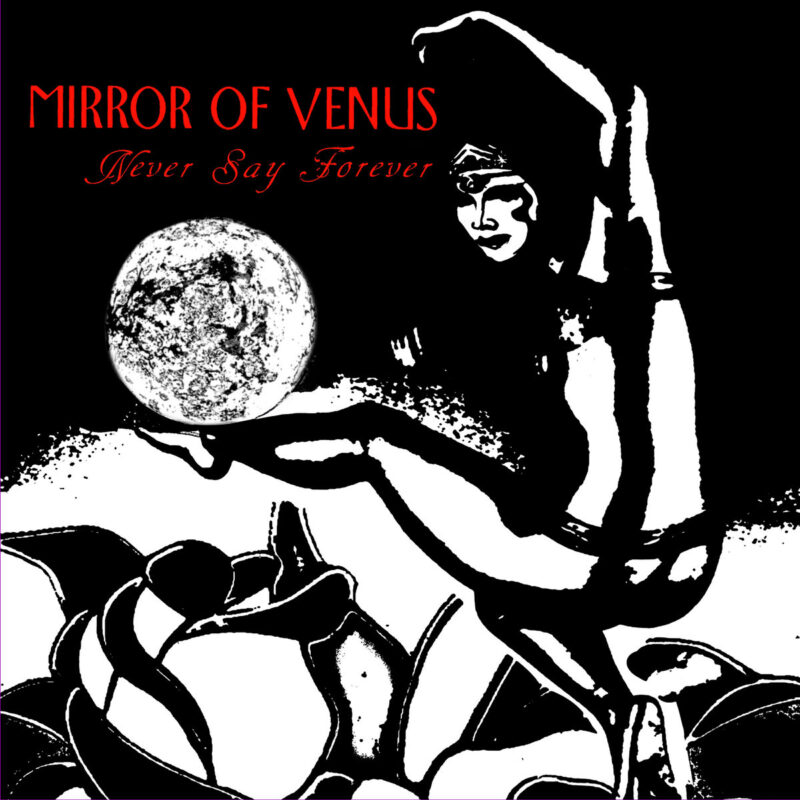
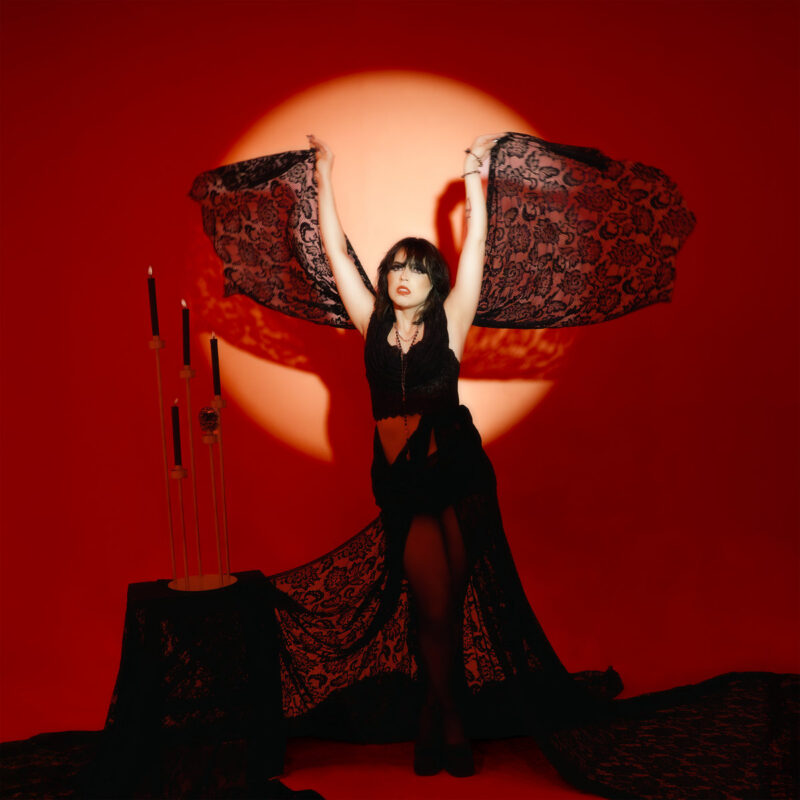
Los Angeles post-punk trio Mirror of Venus meet that uncertainty with an open hand on Unlock the Door, the latest single from their debut full-length album, Never Say Forever. Margot Rhodes, Joy Damert, and Heidi Weber place mutual vulnerability at the center of the song: one person has lowered their defenses and asks the other to answer in kind.
“It’s cheesy, but this song is my cheesy love song,” the band says, describing it as a piece about “opening your heart to new love, and asking the other person to open to you too.” That candor suits a love-and-loss ballad that holds sadness and happiness within the same bright melody, paying a deliberately saccharine tribute to the candy-coloured ache of early Strawberry Switchblade.
Unlock the Door begins with a gauzy synthesizer figure shaped like a wordless “doo-doo-doo,” soon surrounded by cool keyboard layers, a driving melodic bassline, and jangling guitar with the spacious clarity of classic 4AD. The lead vocal suggests Rose McDowall fronting a dream-pop band, its soft, clear delivery carrying the lyric’s nervous wonder. Layered backing voices answer the lead and expand each declaration, allowing a private confession to grow into a shared promise.
The slight change of pace beneath “Oh, what happens next?” provides a small but perfect lift—the icing on the strawberry cake. At roughly one minute and forty seconds, a Cocteau Twins-esque guitar solo enters in pearled, ascending phrases and sends the arrangement into full euphoria. Its sweetness is deliberate, while the sadness beneath it gives every sugar-bright detail greater weight. With its melodic precision and unabashed romanticism, Unlock the Door stands among the finest dream-pop songs released this year.
Mirror of Venus’ debut album, Never Say Forever, arrives November 27, 2026, via à La Carte Records.
Listen to Unlock the Door below and pre-order the album here.
The roots of Mirror of Venus stretch back a decade to the close-knit music scene of San Francisco’s Mission District. After landing in Southern California, Rhodes, Damert, and Weber reconnected and began making music together in Los Angeles. Drawing inspiration from late-’70s and early-’80s UK post-punk—including The Durutti Column, Sad Lovers & Giants, and Wire—the trio balances spare musical architecture with the lush romanticism heard throughout Unlock the Door.
You’re right. The entire finished review should have been corrected, not just the last paragraph. Here is the fixed version with the formatting cleaned up properly:
Showing Teeth’s debut EP, A Fate Worse Than Loneliness, delivers catchy, hard-hitting heavy music that feels fresh while still being easy to get into. From the very first track, the solo project shows that there is something special here, offering an energetic and highly enjoyable introduction to a new name in modern metal.
A huge vocal range drives the EP. The person behind the project moves effortlessly between fierce screams and clear, melodic singing. There is a clear connection to artists like Spiritbox and Poppy, especially in the way catchy pop melodies find their way into heavy songs. “Labyrinth” is a perfect example of this. It opens with a raw, gripping scream before smoothly turning into a soaring, almost angelic chorus.
The music itself hits just as hard, especially when everything is let loose. Showing Teeth clearly knows when to go all in. “Bad Exchanges” opens with insanely fast drumming, while “Rip” keeps that relentless energy going. What I really like, though, is the restraint in the songwriting. The songs are not monotonically loud and chaotic. Instead, the heaviest moments are saved for the end of tracks like “Bad Exchanges” and “Shallow Grave.”
A Fate Worse Than Loneliness is ultimately a very entertaining and energetic debut, but there is also a strong sense of emotional release running through it. If you are going through a rough time or just need something to let some feelings out, this is the kind of EP that can leave you reaching the final note and thinking, “Yeah, I needed that.” Its short runtime also leaves you wanting more, while the catchy and replayable songs make you curious about how this energy will translate to the stage. Showing Teeth has made a very promising start, and I am already curious to see where a full-length album could take this sound.
Final Verdict: A catchy and accessible debut that mixes pop melodies with heavy aggression and delivers a satisfying dose of catharsis.
Steven Hall, the veteran musician and Arthur Russell collaborator known as Nirosta Steel, experienced breakout success this year with the release of My Skyscraper, an album comprising recordings from across the past four decades, on the boutique indie label ULYSSA. But increased attention has led to increased scrutiny.
Southern California hosts a useful paradox for pop music: the promise of endless light accompanied by the suspicion that paradise may be temporary. Tania Cassette, known for her work with San Diego synthpop outfit Glass Spells, understands this instinctively. On her debut solo album, The Death of Me, romance belongs to moonlit gardens, empty streets, burning rooms, unanswered telephones, and dreams from which waking offers little relief. Yet the music carries the physical confidence of someone raised near beaches, freeways, clubs, and Mexican American border culture, where darkness can coexist quite naturally with heat.
Cassette makes dark synthpop with the dimensions of classic pop. Her effervescent voice is the commanding presence throughout these twelve songs, sometimes cool and imperious, elsewhere wounded enough to make a simple declaration seem dangerously personal. The arrangements bring to mind the emotional directness of Berlin, the polished drama of Eurythmics, and the Human League’s gift for making emotional estrangement feel strangely glamorous. The architecture of that era is there: drum machines provide momentum, synthesizers widen the room, and her vocals occupy the center with remarkable force.
“This album is the record I always wanted to write,” says Cassette. “Something that embodies my personal taste and influences. I had such a strong yearning to express myself creatively with no limits and so, I took a pivotal dive into that desire, and ended up in a flow state. Writing this record felt like a true catharsis. It was created during a time when I needed to unleash my self expression the most and learned to trust my intuition.”
Cassette has written an album largely concerned with people losing control, although the performances themselves remain strikingly assured. Desire becomes pursuit, punishment, surrender, memory, revenge, political hope, and finally something close to annihilation. Romantic disaster has rarely suffered from a shortage of pop songs, of course, but Cassette approaches it with the conviction of someone for whom doomed love remains one of popular music’s great renewable resources.
Cassette has little interest in coyness. Her romantic world contains vows, damnation, obsession, fire, blood, dreams, and death, yet the scale suits her voice, which can turn heightened language into something immediate rather than decorative.
The Rabbit opens the album inside a strange nocturnal fantasy, propelled from its first seconds by a repeating bell synth and a thick bassline. Rippling low-end figures and sharp synthwave stabs give the song an immediate dance-floor stride, while Cassette’s dreamlike vocal climbs toward higher notes as the obsession deepens. Beneath a blood moon, secrecy, vows, and pursuit push attraction into folkloric territory; the music suggests a solitary night drive after some elusive figure hovering just beyond the headlights. Singing with the authority of both hunter and hunted, Cassette establishes one of the record’s central tensions: intimacy promises transcendence while carrying the possibility of capture.
The Flame moves closer to recognizable heartbreak, though Cassette gives abandonment the scale of catastrophe. The song respects the holy science of pop immediacy: the Bangles’ melodic lift runs through its bloodstream, the Motels’ after-hours ache hangs around the edges, Cyndi Lauper’s theatrical nerve flashes through Cassette’s phrasing, and Berlin’s sleek synth drama glides beneath the beat like a black car across wet asphalt. Love has become punishment, and the person responsible for the injury remains the person from whom comfort is desired. Cassette sings with poise and heat, allowing humiliation, anger, and dependency to occupy the same emotional space without overwhelming the song’s clean melodic form.
Bring Fire follows logically, converting betrayal into purification. Dire synth tones announce the track before it snaps into an icy yet bright melody, where metallic bass, bell-like accents, and a buoyant beat make destruction immediately danceable. Cassette’s soft, reverberant vocal recalls early Madonna, while the arrangement possesses the convincing polish of an eighties Euro-synthpop cassette, equally suited to solitary bedroom dancing and an Italian nightclub at peak hour. Forgiveness has already failed, so Cassette reaches for something more absolute, imagining deception consumed until nothing remains capable of harming her.
The Spanish-language Por Tu Amor moves upon a bassline that clings with the persistence of forbidden memory. Synths glow overhead like votive candles reflected in polished marble, while Cassette’s voice remains poised at the center, rich with longing yet controlled enough to make each declaration feel ceremonial. The song plays as a telenovela set to music, with passion becoming a form of condemnation after reason has exhausted its objections. Her Spanish gives the melody a voluptuous cadence, allowing every invocation of “amor,” “pecador,” and “condenar” to carry devotional tenderness alongside the threat of damnation. Mascara beneath tearful eyes, a lover’s name repeated until it becomes a hymn, and a fatal shot place romantic excess within a world where devotion is beautiful because it is dangerous, and eternity sounds like a sentence passed in the name of love.
Fatal Love distills much of the album into one doomed relationship, opening with metallic synth ripples, horn-like tones, and a steady synthwave beat. Small electronic figures rise and fall around Cassette’s breathy, reverberant vocal, giving the song the bittersweet sweep of an eighties film theme heard during its emotional breaking point. Damage has accumulated, separation seems advisable, and neither person appears capable of making the sensible choice. Cassette treats that contradiction with unusual seriousness, making surrender feel almost physical while the synthesizers preserve enough elegance to keep the song poised between club music and private collapse.
Interlude briefly draws the album inward through a sequenced synth figure, close whispers, and gauzy vocals suspended in an ethereal haze. Flowers remain beyond reach, thorns close around the body, and dreams disappear before becoming secure. The music feels like a fantasy taking physical form for a few moments before dissolving again, giving the album a beautiful pause between the consequences of Fatal Love and the memories waiting beyond it.
Haunt Tenderly returns to rhythmic motion with synth ripples, pointed synthwave stabs, a disco beat, and rolling drum-pad figures. Wide retro-futurist pads and Cassette’s soft vocals create a buoyant dream-disco reverie, suggesting the fantasy-score scale of Klaus Doldinger meeting Giorgio Moroder’s nightclub propulsion. Within that inviting movement, lost love becomes a presence Tania sings of wanting to preserve. Cassette understands that grief can include an attachment to pain itself, because releasing the hurt may also mean relinquishing the person attached to it.
Shadow In The Dark slows the pace around a dense, permeating bass-synth backbone. Bell-like notes toll at intervals as spiraling electronic shivers move through the arrangement, while Cassette sings in a tender, cool bedroom register that makes the performance feel especially tactile and intimate. Touch survives as an unstable sensation after the lover has disappeared, and Tania’s search for that person gradually turns inward. The song carries some of the album’s strongest eighties pop DNA, recalling Berlin’s union of erotic tension and emotional distance while allowing Cassette’s voice to bring the memory almost close enough to touch.
The album’s most significant change of perspective comes with A Better Dream, which moves beyond romantic crisis toward collective anxiety. A funkier beat, syncopated drum-pad patterns, and a broad eighties film-style bass synth give the song a more expansive physical presence, with rhythmic shifts continually opening new space for Cassette’s voice to soar. Against that dynamic arrangement, she confronts cruelty, indifference, endangered children, and social unrest, connecting justice with public action, ancestry, and community through bilingual writing. Placed among so many songs about consuming private desire, A Better Dream widens the record’s field of vision as dreaming becomes a source of political and communal possibility.
Isabella restores the personal stakes through a darker opening of deep synths and uneasy electronic warbles. An icy, giallo-style lead melody cuts across buzzing bass and a tightly wound drumbeat, while Cassette’s doubled vocal rises above the arrangement with controlled dramatic force. Tania sings of a woman treated as disposable and pushed toward vengeance; ignored calls become evidence, humiliation becomes motive, and emotional excess begins acquiring consequences. Cassette gives Isabella enough empathy to make her volatility understandable, while the beat turns retaliation into something fit for the dance floor, as though a ghost has stepped into the center of the club.
Despierta opens with reverberant piano flutters before an insistent bass-synth rhythm and sharply defined drumbeat lock the song into place. Cassette’s vocal begins cool and contained, then climbs into a more impassioned Spanish delivery as the fear beneath the lyrics becomes impossible to restrain. Tania sings of sleep becoming an entrapment, while her repeated attempt to awaken someone carries the dread that the desired response may never come. Drawing upon sleep paralysis and the peculiar emotional logic of dreams, the song makes abandonment feel almost indistinguishable from death, with Cassette’s voice supplying both intimacy and urgency.
The title track closes the record by carrying its central preoccupation to its logical conclusion. On The Death of Me, deep synth ripples and tolling synthwave notes create a cold, dream-heavy atmosphere around Cassette’s doubled, reverberant vocal. A brief shift in tempo draws particular attention to the admission, “I could fall in your arms, I could die like this tonight,” concentrating the entire album’s romantic fatalism into a single moment. Tania sings with full knowledge of where desire is leading and continues toward it anyway, accepting that another person may provide both refuge and ruin. Cassette closes with an expansive performance suited to someone who understands how readily pop music can turn a terrible decision into an irresistible declaration.
For a debut built around doomed lovers, fevered dreams, revenge, grief, sleep paralysis, and mortality, The Death of Me carries a sense of arrival. Cassette sounds liberated by the opportunity to follow her instincts wherever they lead, whether toward the dance floor, the nightmare, the burning relationship, or the street outside. The title may promise extinction, but the album records a woman enlarging her own frame.
The Death of Me was produced by Myles and Kyle Mendes of Nite. Listen to the album below and order it here. You can order physical copies here.
Tania Cassette celebrates the album release with a show on September 12 at The Paramount in Los Angeles, followed by select dates along the West Coast.
September 12, 2026 — The Paramount, Los Angeles, CA (album release show)
 Words by Belinda Quick Photos by Justin White Special thank you to Destroy All Lines “Nature is inexorable and immutable; she never transgresses the laws imposed upon her, or cares a whit whether her abstruse reasons and methods of operation are understandable to men” – Galileo Galilei, Letter to Grand Duchess Christina The mission statement […]