Soon after he’d joined Yes, Rick Wakeman turned to the history books for his solo debut, The Six Wives Of Henry VIII. Inspired by the spouses of one of England’s most famous monarchs, the six complex instrumentals had record label execs chewing down their nails and tearing their hair out. In the wake of its 50th anniversary in 2003, Wakeman told Prog about the album that launched his solo career.
In 1973, at the age of 24, Rick Wakeman was among the biggest stars in the world of rock music. As a member of Yes – whose fifth album, Close To The Edge, had become a creative and commercial triumph – the classically-trained keyboard wizard had paid his dues as a session player, put in the hard miles on the road and stood on the precipice of superstardom.
Created against all the odds, his first solo record, The Six Wives Of Henry VIII, was the statement that made him a household name. (Let’s overlook Piano Vibrations, an eminently forgettable 10-song set made by Wakeman for Polydor in ’71 that didn’t even feature his name on the cover.)
By rights, The Six Wives Of Henry VIII shouldn’t have been such a huge success. Wakeman’s record company hated it and they had no problem telling him so. The album was certainly unique, and half a century later its six instrumental songs, each inspired by a celebrated spouse of one of England’s most fascinating monarchs, still stands the test of time. It was also the first extra-curricular statement from a member of Yes, with numerous successors of varying quality set to follow.
Having respectfully declined an offer from his friend David Bowie to become a Spider From Mars, at the time Wakeman was extremely content in what would be the first of five spells with Yes. Featuring a solo track from each band member, the group’s fourth album, Fragile, had been put together in a hurry, something that irked Wakeman – who once dismissed his submission, an instrumental reworking of the Brahms piece Symphony No.4 (newly titled as Cans And Brahms) as “dreadful” – but Close To The Edge provided the breakthrough that Rick and his bandmates both sought and deserved.
The opportunity to spread his wings further came in 1971 when Jerry Moss, then head of A&M Records, offered him a contract to make five solo albums. Wakeman relished the challenge, setting himself to work late that same year. As one of the most popular and identifiable musicians of the era, bagging the record deal would prove the easy part.
Deciding upon the subject matter would be a little more difficult. In the end, inspiration fell into Wakeman’s lap while perusing a book stand at an airport in Virginia during a tour with Yes. Written by Nancy Brysson Morrison, The Private Life Of Henry VIII had been published the better part of a decade earlier. It would prove the best few dollars ever spent by Wakeman.
“You can say that again,” he laughs. “Back then there were no Walkmans or iPods to fill the time on flights, so you’d buy a book. I like my history and that one leapt out at me. I know it sounds daft, but when I got the part where Anne Boleyn got stuck in the Tower, a melody came into my head. I always carry manuscript paper with me and I wrote it down. The deeper I got into the book, more things came to mind. I realised the story could make a great album.
“Then I started thinking: ‘Okay, this is the Tudor period, do I make it about the Tudors?’ That was too bloody obvious. I had to think a little more Dalí than that. I had to paint the surrealistic pictures that were appearing in my head. I didn’t simply want to depict those times; here was one of the greatest stories ever told.”
Wakeman promptly disappeared down the rabbit hole of Henry, the larger than life, serial-marrying adulterer who ruled England from 1509 until his death in 1547. In attempting to write about the differing characters of the King’s wives, he spent a lot of time with his head buried in books.
I know Henry was a very naughty boy, but some of the wives were, too. It was wonderfully rock’n’roll
“Despite the one thing they had in common, these ladies were all very different in their own way,” Wakeman explains. “One of the main difficulties I faced, for instance, is that nobody knows for sure how old Catherine Howard was. At the time, a lot of births went unrecorded. She could have been anything from 17 to 20 when Henry decided to chop her up a bit.
“There was some reading between the lines,” he admits. “I know Henry was a very naughty boy, but some of the wives were, too. It was wonderfully rock’n’roll.” He began preparing the album in December 1971, though it was laid down in fits and starts the following year. “We were solidly busy with Yes; there were either two or three tours of America, plus Europe and Heaven knows where else, so during gaps in the band’s schedule I shot into the studio. In a way that helped, because each time it felt unbelievably fresh.”
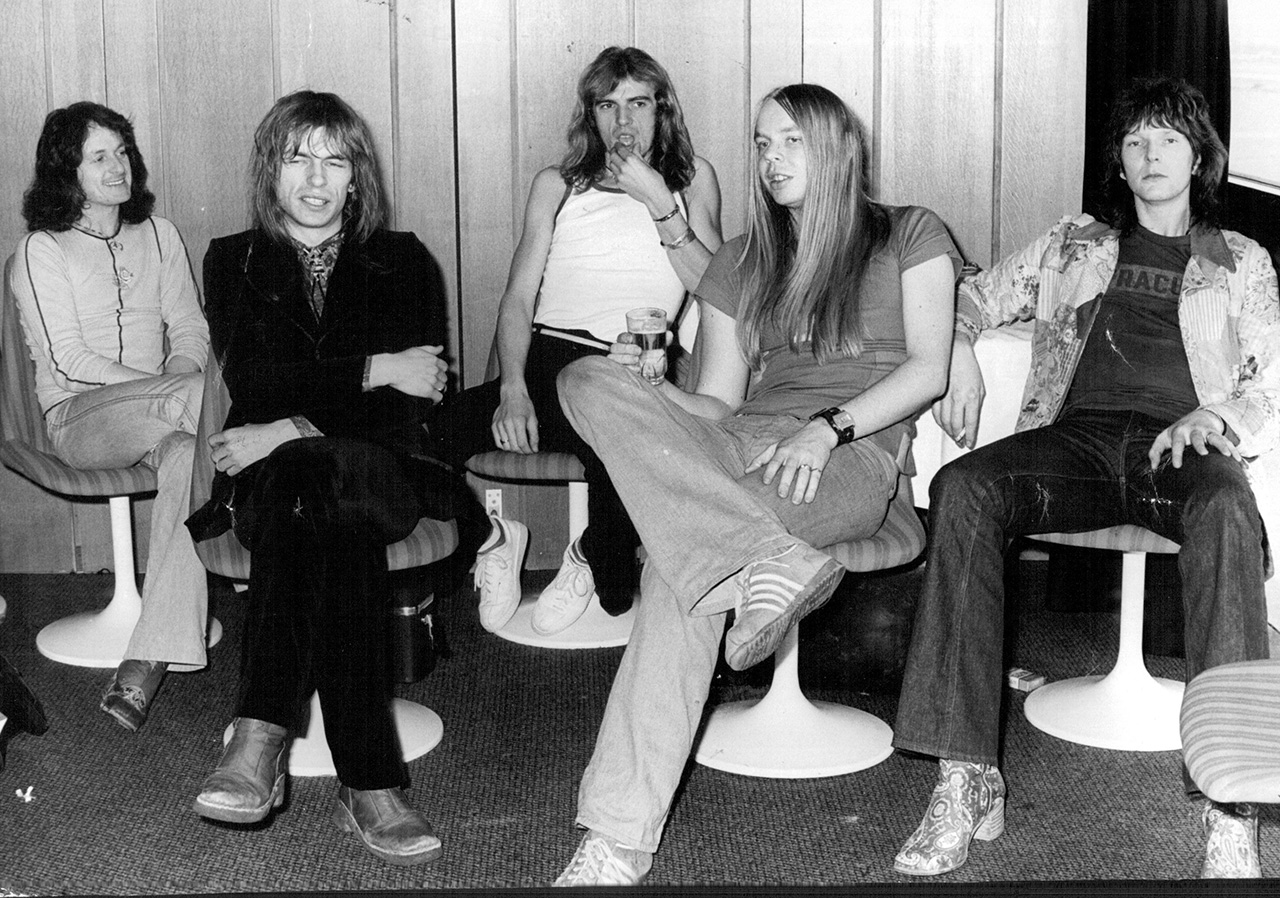
With Wakeman acting as producer, sessions took place at Trident Studios, where Bowie acolyte Ken Scott handled the engineering and mix of Catherine Of Aragon; and also across London at Morgan, a regular haunt of Yes. A wide variety of musicians dropped by to perform, including his bandmates Steve Howe on guitar, Chris Squire on bass and the drumming duo of Alan White and Bill Bruford.
“Using different players and engineers also contributed to the sense of originality,” Wakeman believes. “If somebody wasn’t around, I used an alternative and it all worked out incredibly well. I really like the electric sitar as an instrument. We were in the middle of Catherine Howard and there was a gap. I thought, ‘Who does that? Ah, Dave Cousins,’ so I called him up.”
Wakeman also remembers bringing in Barry de Souza, “a great drummer who is sadly no longer with us. I had worked with him in a band called Spinning Wheel. Barry was so technically gifted. I was also bringing in friends such as percussionist Frank Ricotti. The girl backing vocalists were organised for me by Joe Brown’s wife, Vicki. Sadly, we’ve lost her too.”
The sessions also reunited Rick with his former Strawbs colleague Chas Cronk, the bassist with whom Wakeman had performed on his very first paid session, with Ike and Tina Turner. Intriguingly, Dave Wintour, who played bass on Anne Of Cleves and Catherine Parr, went on to become a longtime member of The Wurzels.
“Having friends walk in and play with me was such tremendous fun,” recalls Wakeman. “Some of it was carefully planned but other parts were left to the imaginations of those in the room.”
One song that fell into the latter category was Anne Of Cleves (spelled Ann Of Cleaves on early editions). “For the solo section, I remember being at home on the morning of the recording and realising that the only way to do it was off the cuff,” he recounts. “That meant instead of me following the guys, they’d be following me. I told them, ‘Wait ’til the solo starts and then just fire away – imagine we’re onstage.’
“We did it in one take. It was absolutely amazing, but there was a problem – it didn’t have an ending. That’s why we used the trick of bringing in a church organ to bring us out the other side.”
This being Rick Wakeman, any old church organ would not suffice. Surprisingly, the powers-that-be at St Giles-without-Cripplegate, an ancient Anglican place of worship located in the City Of London, agreed to a brief loan of their prized instrument. “Getting to have that on the album was great,” Rick enthuses. “At the time there was a feeling of… I won’t say anti-rock’n’roll coming from the Church [as an institution], but they seemed to think it was the Devil’s music. It isn’t true – that’s country and western!
“But I called Guy Protheroe from the English Chamber Choir and asked if he knew of anybody who’d actually let me in. He reckoned St Giles was a very forward-thinking place and when I rang them to ask they said, ‘Yeah, great, come along.’ So we made a suitable donation and did that. It was the old days of recording: a couple of Revoxes, mics everywhere – job done. We also did Jane Seymour and some of the others as well.
The Church seemed to think it was the Devil’s music. It isn’t true – that’s country and western!
“Remember, there were no digital instruments or samples,” he continues. “The harpsichord I used on Jane Seymour was built by a wonderful guy called Thomas Goff, a friend from the Royal College Of Music. I considered it the finest harpsichord ever. It sounded fantastic on the track, but listening back, it needed something extra, which was the Minimoog part that we added. When Bill Bruford heard that song he assured me that percussion could be used on it, but not a traditional drum kit. So he added various bits to make it sound good.
“The joy of Six Wives was that everybody got to throw in their two-penn’orth [of creativity],” he smiles. “There was always a plan, but sometimes it was a loose one.”
An interesting story lurks behind the composition of Anne Boleyn. Wakeman had a recurring dream of being present at the execution in 1536. “It was such a strange experience,” he nods. “We had finished the song and Paul Tregurtha did a rough mix for me, which I played during the drive home to Gerrards Cross [in southeast England], where I was living. The car is a great place to listen to a song and I knew that something wasn’t right. It didn’t end properly.
“That night I couldn’t sleep,” he continues. “It was in the early hours that I finally dropped off, and the track was running through my head. And suddenly, there I was, at the Tower Of London. It was as vivid as a dream could be. The crowd was gathered by the gallows – I was right with them.
“I can’t say that I saw Anne’s head go into the basket, but after what had happened everyone started singing the hymn The Day Thou Gavest, Lord, Is Ended. I woke up with a start and said to my then-wife: ‘I’ve got the ending of the song.’ She replied [sounding bored], ‘Oh, good.’”
The last piece we recorded was Anne Of Cleves, then we realised that in the days of vinyl there would be no room for Defender of the Faith
Wakeman drove to Morgan Studios and played his own arrangement of the song [written by Reverend John Ellerton] on the piano. “We got Vicki and the girls in for some ‘oooohs’ in the background; they didn’t sing the actual words,” he says.
In fact, The Day Thou Gavest, Lord, Is Ended wasn’t actually sung at Anne Boleyn’s execution. “The hymn wasn’t even written until quite a few years later [in 1870],” says Rick, “but I felt it was important for it to be there.”
It’s been claimed that Wakeman had wanted Catherine Of Aragon, which featured Howe and Squire, to have found a home on Fragile. He’s happy to confirm that is a “fallacy,” insisting, “It was always intended for Six Wives.”
The album was originally titled Henry VIII And His Six Wives, and Wakeman had written a song about the regent called Defender Of The Faith. “The last piece we recorded was Anne Of Cleves, I think, and then we realised that in the days of vinyl there would be no room for Defender,” he explains. “That’s what prompted the change of title.”
One of the questions he is asked most often concerns the album’s running order. People want to know why the wives weren’t presented in chronological order. “Again, that’s due to the restrictions of vinyl, and of cassette,” he explains. “The two sides needed to be as even as possible.”
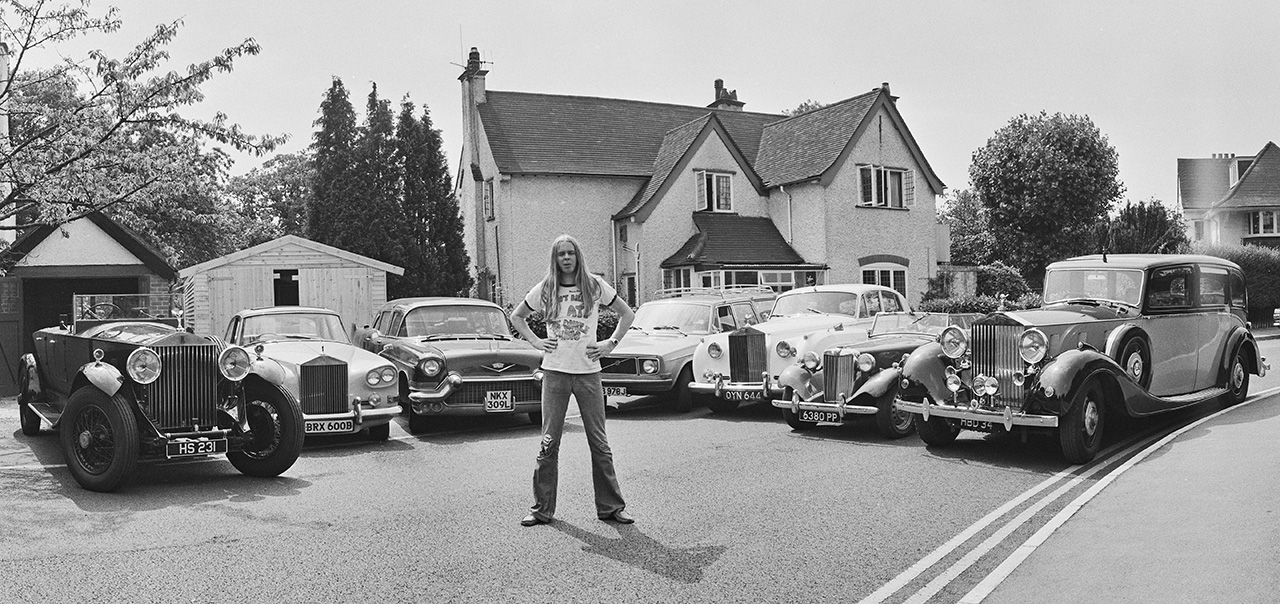
As part of his stand-up act and in interviews, the musician has told the tale many times of his presentation of the finished record to the suits at A&M. However, for the purposes of the story, let’s put him back in the room once more. “Okay…” he says cautiously. So who was present at this now fabled meeting?
“Let’s see,” he replies, “there was the head of A&M’s UK company, who’s no longer with us; the lawyer from America, and Tony Burdfield and Terry O’Neill, who both worked promotion in the UK. It was in the label’s office in George Street, London. I had a reel-to-reel and two tapes and I went in very excitedly. By the time I swapped over the tapes I knew that I was pretty much in the stinky brown stuff. In these situations it can be hard to tell whether or not the staff are excited, but this time it was very obvious that they were not. They didn’t get it at all.
They said, ‘Nobody makes instrumental keyboard albums,’ to which I replied, ‘I’ve just done it’
“There was a cocktail cabinet in the corner of the room – these were my drinking days – so I asked if I could get something. As the tracks went by, I think I pretty much cleaned the thing out. At the end, the lawyer from America asked, ‘Can I hear it with the vocals on it?’ I replied, ‘There are no vocals; it’s an instrumental keyboard album.’
“They said, ‘Nobody makes instrumental keyboard albums,’ to which I replied, ‘I’ve just done it.’ They couldn’t get their heads around it. ‘So we’ve just paid for an instrumental keyboard album?’ ‘Yep.’ And somebody said, ‘God help us.’
“Another person said, ‘We’ll be lucky to sell 20,000 copies.’ That really hurt me, because I was very proud of the album. Tony and Terry did tell me, ‘You’ve got something very different here. It’s going to be really hard to get you any press at all, but we’ll do the best we can.’”
Did anybody then suggest adding some vocals? “No. I don’t think they wanted to spend any more money. In fact, after they heard it the budget for the album cover was cut back.”
The artwork presented further problems. “Finding portraits of the wives was very difficult,” states Wakeman. “The ones you see on the cover are pretty much all there is.”
Featuring a photograph of Wakeman (wearing jeans and a pair of trainers) standing before waxworks of Henry VIII and company at Madame Tussauds, the front cover is certainly distinctive, but whoever failed to notice a wax effigy of then-US President Richard Nixon clearly visible behind a curtain in the background deserved an instant dismissal.
“The cover was originally to have been in black and white, but Mike [Doud], who did the artwork, made it a lot more sepia, which was a big improvement,” explains Wakeman.
Record companies never admit they were wrong. Are you mad?!
A&M had budgeted that 12,000 copies would need to be shifted in order to break even. Not that they thought it had a hope of doing so. It begs the question of whether anybody present in the boardroom that day ever apologised for their lack of faith? “Good grief, no,” Wakeman laughs, astounded by the question. “Record companies never admit they were wrong. Are you mad?!”
When released on January 23, 1973, the gentlemen of the press mostly shared the same opinion as A&M. In a previous interview Wakeman told this writer, “We had just one decent review, and that was from an angling magazine up in Grimsby. Even Melody Maker said that the album wasn’t fit to be played in a lift. I was devastated.”
“It’s true,” Rick says now. “The best reviews that it got said simply, ‘This is an interesting album,’ but nobody really got it. And the press absolutely hated it.”
Tony Burdfield did come up with a plan of buying advertorials in the leading magazines. “Johnnie Walker interviewed me for those, and they looked like real articles, so I got to say what I wanted to,” Wakeman remembers. “That really helped.”
Two pieces of luck were around the corner. The director of the Old Grey Whistle Test happened to be in the A&M office while somebody was playing the album, and Wakeman got a spot on the show, which at that point pulled half a million viewers.
However, its BBC 2 schedule clashed with David Bailey’s controversial Andy Warhol documentary that was to be shown on ITV. Moral crusader Mary Whitehouse and TV presenter-activist Ross McWhirter had condemned it for pornographic sequences and bad language, which of course only made it even more popular.
Leaving Yes wasn’t even in my mind because I had found an outlet for my own music that made me very happy
“The entire country dashed home from the pub in time for this Warhol film – including me,” Rick chuckles, “only to find Parliament had banned it at the last minute and replaced it with some programme on gardening in Afghanistan. Whatever was on BBC 1 had already begun, so nine million people switched over to BBC 2. A month later it went into the charts at No.13, before climbing to No.7.”
By the summer Six Wives had sold 30,000 copies and was still flying out the door. It’s now gone platinum many, many times over. Effectively speaking, the album that the critics and even Wakeman’s own record label dismissed as valueless became a period piece. As time passed, along with follow-ups Journey To The Centre Of The Earth (1974) and The Myths And Legends Of King Arthur And The Knights Of The Round Table (1975), it developed into a coffee-table essential.
Wakeman insists that thoughts of leaving Yes were still some way off – “It wasn’t even in my mind because I had found an outlet for my own music that made me very happy” – but his solo popularity did create ripples within the band. He’s too much of a gentleman to say that anybody became jealous – several Yes alumni had joined him in the experiment, after all.
But he admits: “It presented problems for the band’s management. The others had a go at Brian Lane, asking, ‘Why has Rick got a solo deal and we haven’t?’ He had to explain that ‘When Rick was with Strawbs they all signed solo contracts’ and the record company had exercised the option to take it up. So Brian went to see Ahmet Ertegun [boss of Yes’ home of Atlantic], who didn’t want to rock the boat and gave them all solo deals. Hence they did their own albums and it kept the peace.”
Let’s be clear, however: when Yes went back out on the road there were no ego problems of any kind. In fact, Jon Anderson insisted Wakeman should include some of the album in his solo spot. This explains the presence of a medley of highlights on the band’s triple-live set, Yessongs. “Jon loved Catherine Howard and wanted me to play that,” stresses Wakeman today. “There were no problems over it. These were long shows – sometimes they seemed to go on from dusk to daylight.”
I was playing a dangerous game of blackjack… it was always going to collapse, but that wasn’t the point – I wanted to do the best I could with everything
The sting in the tail is that despite the popularity of Wakeman’s first three solo records, he wasn’t destined to see much financial reward. “I used the money from Six Wives to make Journey,” relates Rick. “I was only getting £4,000 for each album, so the proceeds went into the next one. I used the money from Journey to do a tour in America with an orchestra and choir. The remainder of that money was used for King Arthur. I was playing a dangerous game of blackjack.
“It was always going to collapse, but that wasn’t the point,” he continues. “I wanted to do the best I could with everything. I was in control; nobody could tell me, ‘You can’t do that.’ I bloody well could, and I did. It was a wonderful era. Managers and labels don’t like it – they want to be in the driver’s seat and let you have a little bit of power. That’s where Bowie was brilliant; everything that happened came from him.”
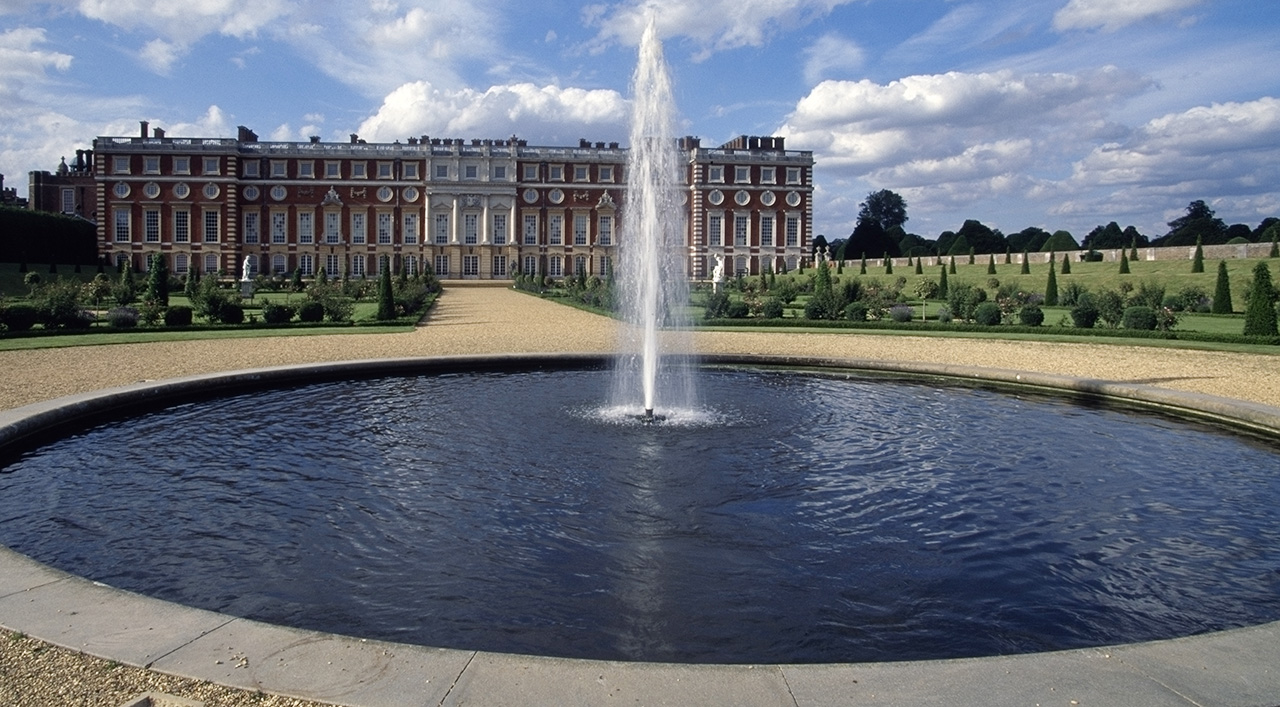
Circa the release of Six Wives, Wakeman tried hard to play a concert at Hampton Court. To say that he was rebuffed would be putting it mildly. “I think Cardinal Wolsey [whose relationship with the regent broke down after failing to get an annulment to Henry’s marriage to Catherine Of Aragon] would’ve been more welcome than me,” he jokes. “It wasn’t even a, ‘No, you can’t do that’ – the subject simply wasn’t open for discussion.”
Wakeman had to wait 36 years to perform the album in its logical home. “And then they asked me!” he grins, aware of the irony. “Things had changed. It was the 500th anniversary of Henry’s ascension to the throne. And of course the show allowed me to include the album’s missing song, Defender Of The Faith. I rescored it in places, too, making some of the pieces longer and of course we added an orchestra too. That gave another excuse to spend more money than I had.”
On the night concerned in 2009, Wakeman also brought in his friend Brian Blessed as narrator, who then proceeded to go… shall we just say ‘off-script’ with his duties? “Ha ha ha! Brian did go mildly off script, as is his wont,” Rick chuckles. “I don’t think I had heard Catherine Howard described as ‘a right old tart’ before, but it was very funny.”
Until now Wakeman has never really disclosed that Blessed had been at the bedside of a terminally ill relative during the build-up to the performance. “I know that had he not been, Brian would have thrown himself into the lines a little more. Being honest, we only found out two days before and we didn’t have a Plan B, so his being there at all was pretty incredible.”
The success of Wakeman’s solo career eventually allowed him to quit Yes in 1974 at the age of 25. “That’s true,” he nods, “but I will be honest, even without it I’d still have left after Tales From Topographic Oceans. I’ve always had an ethical belief that music should be both give and take. Tales wasn’t where I thought Yes should be. It wasn’t until I heard Going For The One [the 1977 album that saw him re-enter the group] that I thought: ‘Ah, they’re back on track.’
“Journey had gone to No.1 [in the UK – in the States it reached No.3], which gave me security, but regardless of that I’d still have jumped.” With a massive smile he concludes, “Even though I’d spent all of the money.”