Somewhere in a dusty garage, a cardboard box contains 40 old records, a suspicious smell and possibly a small fortune. At least, that is what every aspiring vinyl reseller hopes.
Reality is less generous. The box probably contains three copies of Fleetwood Mac’s Rumours, a scratched Christmas album and something your grandparents bought after watching a television commercial in 1978.
But yes, you can make money reselling vinyl records. Collectors pay serious money for certain pressings, rare singles and records in excellent condition. Even ordinary albums can generate a profit when purchased cheaply enough.
The challenge is knowing which records are worth buying, how much collectors will actually pay and how to avoid spending $30 shipping an album you sold for $12.
How Much Money Can You Really Make Reselling Vinyl?
A cheap purchase leaves more room for fees, postage and profit
Vinyl reselling can provide extra income, but profits vary enormously. Some sellers earn a few dollars per record. Others specialize in expensive collectibles and occasionally complete sales worth hundreds or thousands.
A reseller who buys 20 records for $40 and sells five of them for $20 each has already recovered the original purchase price before expenses. The remaining records could generate additional revenue, provided there are buyers.
However, buying something cheaply does not guarantee a profit. Marketplace fees, packaging, postage, returns and unsold inventory all matter.
The business works best when you can identify desirable records faster than the person selling them.
Knowing the difference between an ordinary pressing and a collectible edition is particularly valuable. Sometimes the only visible clue is a tiny marking scratched into the vinyl near the center label.
Which Vinyl Records Are Actually Worth Reselling?
Collectors do not necessarily pay the most for the biggest albums. Scarcity, pressing history, condition and demand can make an obscure record worth considerably more than a famous bestseller.
1. Early Pressings With Collectible Details
Small pressing details can make a big difference to collectors
Original pressings can attract serious interest, especially when a particular edition is known for its sound or unusual packaging.
Consider Pink Floyd’s The Dark Side of the Moon. Early British copies feature a solid blue triangle on the record label, unlike later editions with an outlined triangle.
The 1973 UK pressing is a genuine collector target. However, the catalog number SHVL 804 appeared on several editions, so checking the label alone is insufficient.
Our explanation of how to identify original vinyl pressings covers the runout markings, label variations and packaging details that help establish which version you own.
Led Zeppelin II provides another excellent example. Early copies mastered by Robert Ludwig can carry RL markings in the runout area.
The mastering is famous for its powerful sound, and collectors specifically seek those pressings. As WIRED documented, the Ludwig version became especially desirable among listeners interested in sound quality.
An old Led Zeppelin II is not automatically valuable. The exact pressing is what matters.
2. Withdrawn Releases and Rare Singles
Sometimes a record becomes valuable because the record company changed its mind about releasing it.
The Sex Pistols’ God Save the Queen is a perfect example.
In 1977, A&M Records prepared a version of the single before ending its relationship with the band. Most copies were destroyed, and surviving originals became highly collectible.
In July 2024, an original A&M copy sold for £24,320, including the buyer premium, according to Wessex Auction Rooms.
Unfortunately, discovering a copy of The White Album in your attic does not mean you can immediately retire.
The extraordinary price reflected its early serial number, condition and direct connection to Ringo Starr. An ordinary copy cannot be valued using that result.
The lesson is useful, though. A documented history can make a collectible far more desirable than a visually similar item.
Which Records Should You Avoid Buying?
Some records look promising until you discover that thousands of people are trying to sell the same edition.
Others are rare but so unpopular that finding a buyer becomes its own part-time job.
Record Type
Why It Can Be a Bad Purchase
Common bestselling albums
Many copies compete for the same buyers
Heavily scratched records
Playback problems reduce value and increase returns
Incomplete box sets
Missing records, booklets or inserts can reduce demand
Modern limited editions
Scarcity alone does not establish collector value
Unidentified pressings
You could pay a rare-edition price for a common reissue
Large collections of unwanted titles
Storage and handling can cost more than the inventory is worth
Fleetwood Mac’s Rumours, Frampton Comes Alive! and other enormously successful albums are not automatically bad purchases. Their ordinary editions simply need to be priced realistically.
A clean copy purchased for $2 might be worth reselling. Paying $25 for the same record because the sleeve looks old is considerably less promising.
Also avoid assuming that every record released in the 1960s or 1970s is valuable. Age and scarcity are different things.
Learn to Grade Vinyl Before You Start Selling
Sleeve wear matters, even when the record itself looks clean
Record condition can turn a promising purchase into a disappointment.
Discogs uses the Goldmine grading system, which provides common standards for describing vinyl and sleeves.
According to the official record grading guidelines, a Very Good Plus record generally carries about half the value of an equivalent Near Mint example. A Very Good copy may be worth around a quarter of the Near Mint value.
Those are general grading guidelines, not guaranteed selling prices.
For example, consider three copies of the same desirable album.
Near Mint. Very little evidence of handling or playback.
Very Good Plus. Light signs of use with minimal audible problems.
Very Good. More noticeable wear and some surface noise, especially during quieter passages.
A record that looks shiny under poor lighting may still have groove wear or pressing defects. Whenever possible, inspect it carefully and play-test valuable copies.
Grade the vinyl and sleeve separately. A beautiful record inside a water-damaged jacket is not a Near Mint package.
Honest grading also protects your seller reputation. Collectors generally prefer an accurate description of a flaw over discovering it halfway through their favorite song.
How to Find Out What a Record Is Actually Worth
One of the most entertaining parts of vinyl collecting is discovering an online listing asking $3,000 for a record you purchased for $5.
Unfortunately, an asking price proves only that somebody has access to the internet and considerable optimism.
Use completed transactions instead.
The Discogs sales history feature displays prices based on the most recent 30 transactions for a particular release.
Before comparing prices, establish the exact edition using the catalog number, record label, country and markings in the runout area.
Then review recent sales in similar condition.
For additional evidence, search eBay and filter the results to show sold items. Compare the actual pressing and grading details rather than simply searching the album title.
If a record sold three times recently for $35, $40 and $42, a seller asking $150 for another ordinary copy has not established a new market value.
Shipping charges also matter when comparing transactions. Buyers consider the total delivered price, especially for inexpensive records.
The Real Profit on a $35 Vinyl Record
A $35 sale sounds attractive when the record cost was $12. However, several expenses reduce the amount you keep.
Consider a hypothetical Discogs sale where the buyer pays $35 for the album and another $6 for shipping.
Item
Amount
Record sale price
$35.00
Shipping collected
$6.00
Total received
$41.00
Original purchase
-$12.00
Postage
-$5.00
Packaging materials
-$1.50
Discogs selling fee
-$3.69
Remaining Amount
$18.81
Discogs currently charges 9% on the item price and shipping charges. The example assumes that rate and excludes payment processing charges, applicable taxes, refunds, time spent working and other business expenses.
Make ten similar sales and the remaining amount reaches $188.10 before those additional costs.
The numbers explain why sourcing matters so much. Buying the same record for $28 instead of $12 would leave only $2.81 under the same assumptions.
Where Should You Buy and Sell Records?
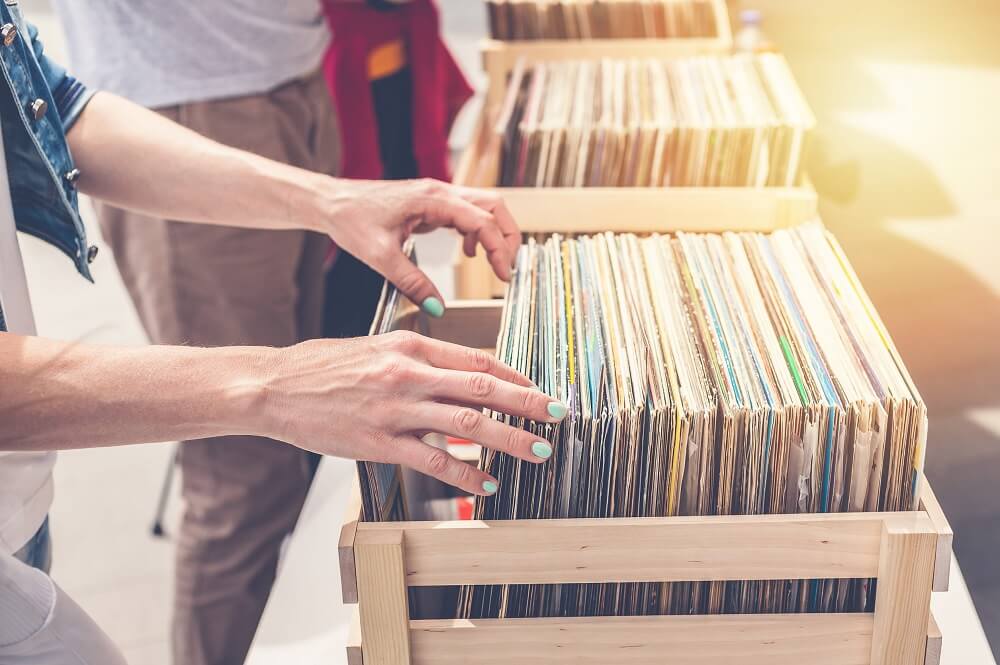
A mixed collection may contain only a handful of records worth listing individually
Garage sales, estate sales, flea markets, thrift stores and private collections can be useful sourcing locations.
The best opportunities often appear when someone wants to sell an entire collection rather than research every record individually.
However, buying a collection creates another problem. You may discover five desirable albums and 95 records nobody wants.
Before purchasing a large lot, estimate the value of the better titles and decide what you will do with the rest.
For selling, two platforms are particularly relevant.
Discogs
Discogs attracts people who search for specific releases. Its detailed database helps collectors compare pressing variations and condition grades.
The platform is especially useful when you can identify exactly what you are selling.
eBay
eBay is useful for selling rare pressings, collectible albums and record collections. Choose auctions for unusual finds and fixed prices for records with an established value.
Check completed sales before listing. Someone asking $500 for an album does not mean anyone will pay it.
Include clear photographs, the exact pressing and an honest condition grade. Check the eBay selling fees and shipping costs before setting your price. A $20 sale means little if postage and expenses swallow the profit.
For occasional sales, packing records yourself is straightforward. Sellers handling regular orders can use services such as eBay fullfillment through Dollan Prep Center for inventory storage, packing and shipping. Just make sure the additional costs leave enough profit.
Do Not Let Shipping Destroy Your Profits
Vinyl records are heavy, relatively fragile and especially vulnerable to bent corners and split sleeves.
Shipping a collectible LP inside an ordinary padded envelope is an excellent way to turn a happy customer into an angry one.
Use rigid mailers designed for records, with suitable cardboard reinforcement. For opened records, placing the protected disc outside the outer jacket can help prevent seam splits during transportation.
Keep sealed collectibles sealed unless the buyer has agreed otherwise.
In the United States, vinyl records generally qualify as sound recordings under the USPS Media Mail rules. However, packages must satisfy the service requirements, and delivery may take longer than faster shipping options.
Always calculate postage before setting the price. International shipping, insurance and packaging requirements can make a cheap record surprisingly expensive to deliver.
Can Vinyl Reselling Become a Real Business?
Knowing what buyers want helps keep stock moving
Yes, although collecting records and running a profitable resale business are two very different activities.
A collector can happily spend an afternoon inspecting obscure 1970s pressings. A reseller also needs to consider inventory, profit margins, packaging costs and how quickly each item sells.
Begin with a small budget and a limited number of records. Track what you paid, the exact pressing, condition, selling price, fees and remaining profit.
After 20 or 30 sales, useful patterns should begin to emerge. You might discover that obscure jazz records sell quickly, while common classic rock albums remain listed for months.
Specializing can also make buying easier. Someone who knows original punk singles or early progressive rock pressings can recognize useful details that another buyer might overlook.
Just remember that knowledge takes time to develop. Every record collection contains surprises, but plenty of those surprises are disappointments.
Before You Buy Another Box of Records
The appeal of vinyl reselling is easy to understand. There is genuine excitement in discovering an interesting pressing inside an unremarkable sleeve.
However, the most profitable purchase is rarely the record with the loudest claim about rarity. It is the one you can identify accurately, buy below its realistic resale value and sell without losing the margin to expenses.
Check the pressing. Inspect the condition. Compare completed sales. Calculate the costs before handing over your money.
And if somebody offers you 200 old records for $50, remember that owning 200 records is not the same as having 200 customers.
Netherlands-based Sinister was a big part of my early death metal education, delivering 3 organ-juicing albums in the early 90s that placed the band at the vanguard of the European scene. 1992s Cross the Styx is an absolute rampaging beast and one of the best pure death metal releases of the 90s.1 1993s Diabolical Summoning is nearly as massive, and 19956s Hate is another merciless sonic beatdown. After that lofty beginning, Sinister drifted for a long time, releasing a series of sub-par outings. They had a brief resurgence in 2006 with Afterburner, fell off again, then had a third wave of success with 2017s Syncretism and 2020s Deformation of the Holy Realm, both getting very favorable reviews here. Now comes the 15th full-length, Lucid Nightmares. With only drummer-turned-vocalist Aad Kloosterwaard left from the classic days, this isn’t the Sinister that helped establish the death metal genre. That doesn’t mean the modern version can’t crush your scrotage with lead pipe brutality, because they can and will.
Lucid Nightmares is a loud, unabashedly proud death metal album by a band that aspires to be nothing else. Some of the material here is savage enough to be confused with grindcore, and only rarely do Sinister offer you a melodic hug. Proper opener “Maligant Disasters” is a straight-up asswhipping with berserkly thrashing riffs pulverizing everything in sight as Aad Kloosterwaard bellows and roars like a wounded bull moose forced to watch a 3-hour Taylor Swift concert. It reminds me of Vader, Deicide, and Cannibal Corpse but faster. It’s heavy to the point of parody, but you won’t be laughing. The embedded soundbite of some poor soul screaming “We’re all gonna die!” fits the mood perfectly, as you may actually die listening to this explosive musical diarrhea. “Bathed in Acid” is only 1:45 in length, but it will cause more ear trauma than songs 3 times as long. The badass martial riffs that occur at 1:11 are a sick pleasure, and the whole thing is a nasty, brutish, and short roadkill taco. Sinister add another layer to the abuse on “Defenestration,” where traces of Behemoth’s over-the-top, grandiose style creep in, making things feel like the shit ov some elder god. The first-half highlight is “The Strangulation,” which sounds like classic Swedeath hot-wired to ugly old school death. It’s a sonic bulldozer that just keeps coming after you, powered by relentless riffage and Kloosterwaard’s ragged, rancid bellowing. The drums pound like some kind of ungodly machine, and everything feels like too much for muchness.
The album’s centerpiece is the 7-plus-minute “Cro Magnon Liberatus,” where Sinister pull out all the stops. It’s a shaggy, shambling but regal abomination, perpetually locked in a massive mid-tempo groove as delicate melodic harmonies dance around the edges. It’s so unlike the ceaseless hammering on offer on the rest of the album that it almost feels like an ear sanctuary. Guitarist Walter Tjwa really shines here with a stunning collection of moody solos that really resonate against the expanded sonic tapestry. I especially love the piece starting at 4:30. Is it too long? Probably, but it definitely paints a specific mood. Sadly, there are a few less impactful pieces that feel more generic and rote. “Remains of the Femur” is savage but safe, and “Deranged by Desecration” isn’t especially gripping. The songs across Lucid Nightmares also tend to bleed together given the propensity for blasty, thrashing speeds and Kloosterwaard one-dimensional roars. The album feels longer than its 43 minutes, with several tracks overstaying their welcome by a minute or longer. As much as I like the style, by the 3/4 mark I’m feeling pretty fatigued.
Aad Kloosterwaard has a remorseless, unforgiving vocal style based around a raw bellow that reminds me a lot of George “Corpsegrinder” Fisher mixed with Kataklysm’s Maurizio Iacono. It’s very effective, but it grinds on the listener after a while because there’s no effort made to shift the delivery. He’s essentially another form of percussion. Speaking of which, long-time drummer Toep Duin does his level best to beat you senseless for the album’s entire runtime. He’s a one-man noise factory, and he’s impressively insane. Walter Tjwa’s riffs are usually better than average, and some of his leads are heavy enough to curdle oat milk. It appears both Tjwa and Duin left the band after completing this recording, which sucks, but at least they left on a pretty high note.
I’ve enjoyed the past several releases from Sinister, and although this is a slight step down from Syncretism and Deformation of the Holy Realm, it still offers a savage seasonal beating for hardcore death aficionados. If you’re new to this crew, get your ass back to the classics and then jump forward to this modern era. Good, violent fun awaits the bold and brave.
Much like their namesake, Papa Roach are impossible to defeat. Just over a year since they sold out Wembley Arena, they’re back to fill the O2 on a Sunday night, adding on another leg to their Rise Of The Roach tour. Somehow, it’s been thirty three years since they burst onto the scene, and over that time, they’ve amassed an insatiable fanbase drawn by their relentless optimism and flammable riffs, and tonight feels like a party that we’re throwing for each other.
We’re talking almost feverish levels of being up for it from the crowd tonight, and realistically Landmvrks could have read their shopping list for half an hour and people still would have started a pit: that’s how much Papa Roach mean to the fans. Of course, the French hardcore stars would never give less than their absolute all, and as Flo Salfati’s choirboy vocals cut through the churning guitars on ‘Sulphur’, we’re struck by how well Landmvrks combine the highs and lows at the extreme ends of their sound. There are moments of architectural chiming beauty in their harmonies and within a second we’ve thrown back into the roughest of rock-tumbler sludge, each side of their combination highlighting the strengths of the others. ‘Self-Made Black Hole’ ends their set with a scream like a singularity, calling only a temporary halt to tonight’s constant pit.
From the second Jacoby Shaddix’s beaming grim greets us from their walk-in backstage cam, we know that tonight is about us: our triumphs; the low points where we clung to Papa Roach’s lyrics, and our determination to stick by our faves for decades. All the way through tonight is a thread of infinite understanding and compassion for the struggles that we all face down every day, and a well of strength that we tap into to dance it out. The frontman’s grip on us is magnetic, and somehow, after a lifetime of screaming, he still has one hell of an impressive voice. ‘See U In Hell’ provides a necessary and an almost otherworldly sincerity to their sound, his vocals almost like Vessel’s above a huge chugging martial beat. He weaves from foot to foot like a boxer, his diamanté “Roach” jacketsparkling, as he watches a full body slam ripple all the way to the back of the arena.
“This is a fucking banging-ass show!” Shaddix declares, and he’s absolutely right. Part of his mission is to start “honouring the greats of the era” via his “Nu Metal Time Machine” medleys, which pop up throughout the night and will undoubtedly start further debates about whether Deftones can fall under that umbrella. It’s a spot-on move to give us an outlet for our nostalgia while also placing Papa Roach’s hits in their proper place in the pantheon. ‘Scars’ (“it saved the life of this band”) beams with personal and shared triumph, and ‘Between Angels And Insects’ sends the crowd flying. The shoutout to Tony Hawk’s Pro Skater 2 gets a cheer before ‘Blood Brothers’ booms out across the arena, the fan service only overshadowed by how much of a groove they can conjure when they need to.
While no one would say no to hearing the hits played really loud, giving the rest of the back catalogue from after the MTV years an airing is a solid move. ‘Braindead’ adds a crunching edge to a message of resolution, and ‘Help’ offers an echoing message of despair and redemption through the force of personal resonance, turning the darkness into dance. When they add a little metaphorical grit to the gears in the form of the spiked riffs that smack ‘Getting Away With Murder’, Papa Roach feel like a different band, and suddenly we’re looking through a window to the time they were teenage menaces. We love the gloss and applaud their success, but these glimpses make the fight they lyrically portray seem all the more real.
It goes without saying that after the occasional intro teasers throughout the night, ‘Last Resort’ is a huge moment when it finally drops. It’s almost beyond real, a few minutes which seem more HD than the real world should be and suddenly we’re back in a place where that song was everywhere. But the whole show is peppered with these little sequins of magic moments: Shaddix reminding everyone to go outside and take a deep breath, when a well-intentioned fan was invited onstage during their cover of System Of A Down’s ‘Chop Suey’ and did not get the message about leaving, or ‘Tightrope’s position as ballad interlude in the evening. Even a cursory glance around the room reminds you that Papa Roach mean so much to so many people, and that we mean just as much to them. Tonight really is a celebration of everything good about persevering as a fan or as a musician, and we’re all incredibly lucky to be here – in every sense of the phrase.
Somebody who bought Tool’s Ænima on vinyl in 1996 could now be holding a record listed for more than €2,000. A modern copy of Nirvana’s Nevermind can cost less than €30, yet certain original pressings attract asking prices many times higher. There is an important catch. The valuable copies are specific editions, not every LP with the same album cover.
The 1990s left collectors with an unusual situation. Rock and hip-hop produced albums that people still love, but CDs dominated music sales for much of the decade. Some original vinyl editions are now much harder to find than their commercial success would suggest.
Here are 12 albums worth checking in an old record collection or watching at secondhand shops. Some already command hundreds or thousands. Others offer a more accessible starting point for collectors who want original 1990s records without spending four figures. Future prices remain uncertain, so the exact pressing, its condition and the price paid today are central to every choice.
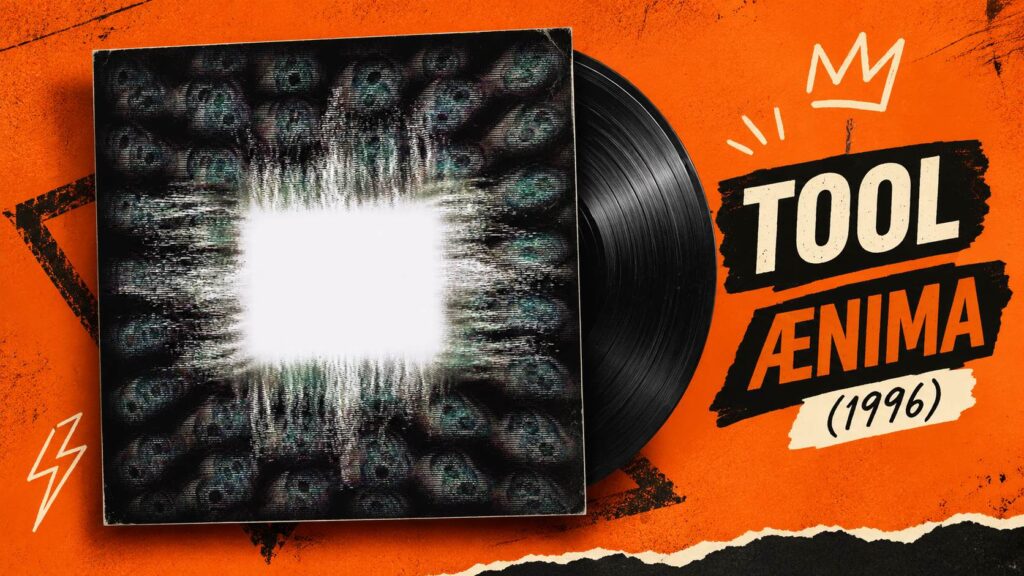
1. Tool, Ænima (1996)
The original CD packaging featured lenticular artwork that appeared to move when tilted, adding another layer to the album’s surreal imagery.
Few 1990s albums illustrate the strange world of collectible vinyl better than Ænima. Tool released its second studio album in 1996, combining progressive metal, unsettling artwork and songs that rewarded repeated listening. Decades later, its original vinyl editions have become particularly expensive.
The 1996 U.S. double LP on Zoo Entertainment, catalog number 72445-11087-1, is the version collectors should investigate. Vinyl market tracker WaxTracker currently places the median VG+ asking price for this pressing at €2,242.50, with nine copies listed and more than 9,000 collectors marking it as wanted.
That is an asking-price estimate rather than evidence that every copy sells for €2,242.50. Condition, the exact edition and the seller can change the final amount considerably.
Tool also attracts counterfeit pressings, making authentication especially important. An LP carrying the original artwork and a 1996 date is not enough. The label, catalog number and runout markings must identify the correct release.
For somebody who already owns a genuine original, this is one record we would preserve carefully rather than play on worn equipment. For a new buyer, spending thousands requires far more caution than picking up a reasonably priced reissue.
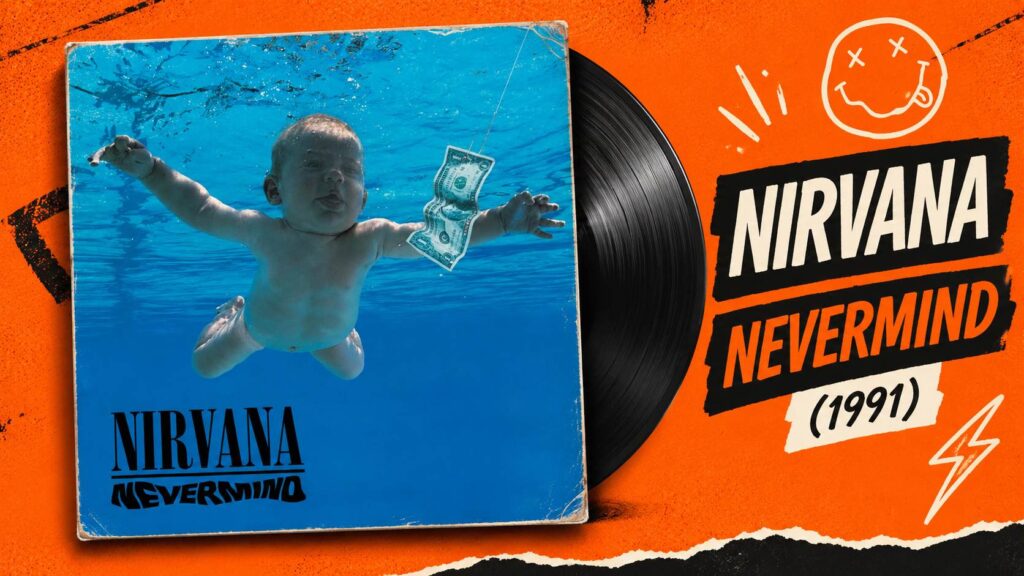
2. Nirvana, Nevermind (1991)
The dollar bill and fishhook on the Nevermind cover were added during post-production, rather than photographed underwater
Millions of people know the cover of Nevermind, and that familiarity can make the vinyl confusing. The album has appeared in numerous editions, including modern reissues that are easy to find.
Original U.S. copies from 1991 are another story. The first DGC pressing, catalog number DGC-24425, has become a desirable piece of grunge history.
The Nirvana pressing reference identifies the original black-vinyl U.S. edition and separates it from club copies, international pressings and later releases. A genuine first pressing needs to be checked against the relevant identifiers rather than judged by its age alone.
Part of the appeal is owning a physical copy manufactured when Nirvana was changing the direction of mainstream rock. For collectors, that connection to 1991 is worth paying for.
Yet purchasing a modern pressing solely because Nevermind is famous is unlikely to reproduce the collector value of an original. Plenty of newer copies exist, and a record that remains widely available has little scarcity working in its favor.
Our selection of the albums that defined the 1990s includes Nirvana for its musical influence. The collecting question is narrower. Which edition did someone actually buy when the record first appeared?
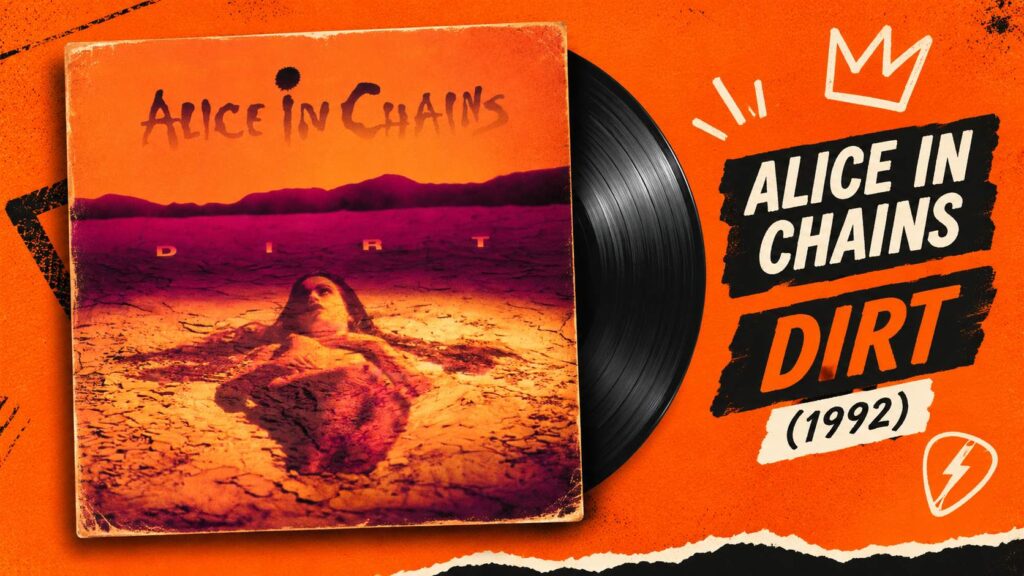
3. Alice in Chains, Dirt (1992)
The woman pictured on the Dirt album cover is model Mariah O’Brien, photographed by Rocky Schenck and covered in clay to create the haunting desert scene.
Dirt is one of the records we would inspect immediately if it appeared in an inherited collection of 1990s rock.
Its original European LP on Columbia, catalog number 472330 1, is attracting a median VG+ asking price near €440, according to a comparison of Dirt vinyl pressings. Modern 2022 editions are listed from €20 to €38 in the same comparison.
The album is the same, but the editions are not equally collectible.
Released in 1992, Dirt contains “Would?,” “Rooster” and “Them Bones.” The record became one of the defining albums associated with the heavier side of the Seattle music scene.
A collector buying an original is paying partly for its connection to that period. Someone who wants to listen to the songs can obtain a newer pressing for substantially less.
We would be interested in an original with a clean sleeve, readable labels and minimal groove wear. A badly worn copy offered at the price of an excellent one is an entirely different proposition.
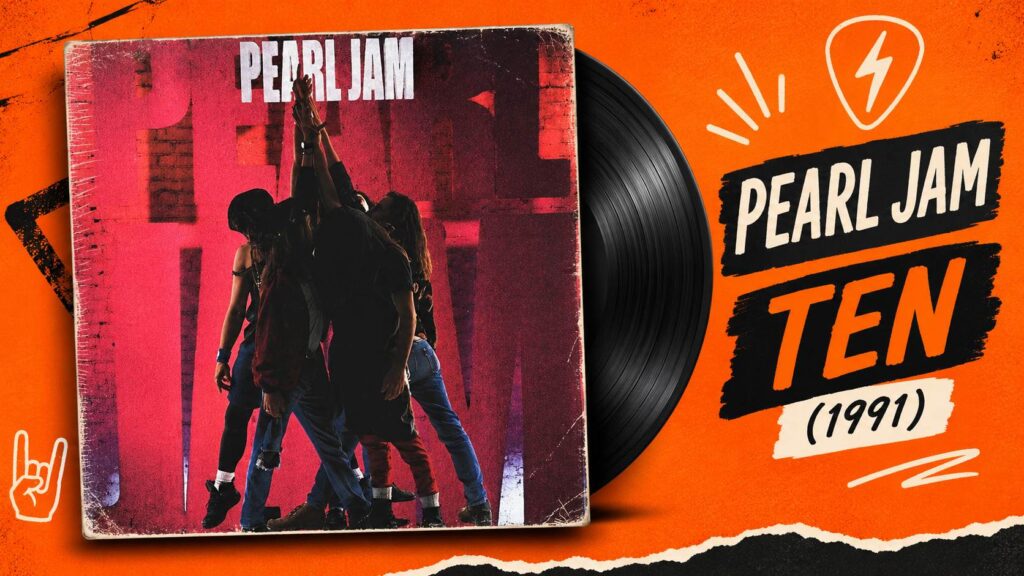
4. Pearl Jam, Ten (1991)
The album was named after the jersey number of NBA player Mookie Blaylock, whose name the band originally used before becoming Pearl Jam.
Pearl Jam released Ten in 1991, but original U.S. vinyl copies can be harder to identify than the album date suggests.
The pressing history of Ten includes a 1991 European Epic edition with catalog number 468884 1 and a 1994 U.S. pressing with catalog number Z 47857.
Those older editions carry considerably higher market asking prices than many 2009, 2017 and 2023 reissues. The 1991 European pressing is listed at €246 in the tracked comparison, compared with €20 to €29 for several later copies.
That creates an interesting opportunity for people who collected records before vinyl returned to mainstream popularity. An old copy of Ten might have spent years on the shelf without anyone realizing that its pressing details were valuable.
Do not assume a record was pressed in 1991 simply because the back cover gives that year. The copyright date can remain unchanged on later editions. Check the physical identifiers.
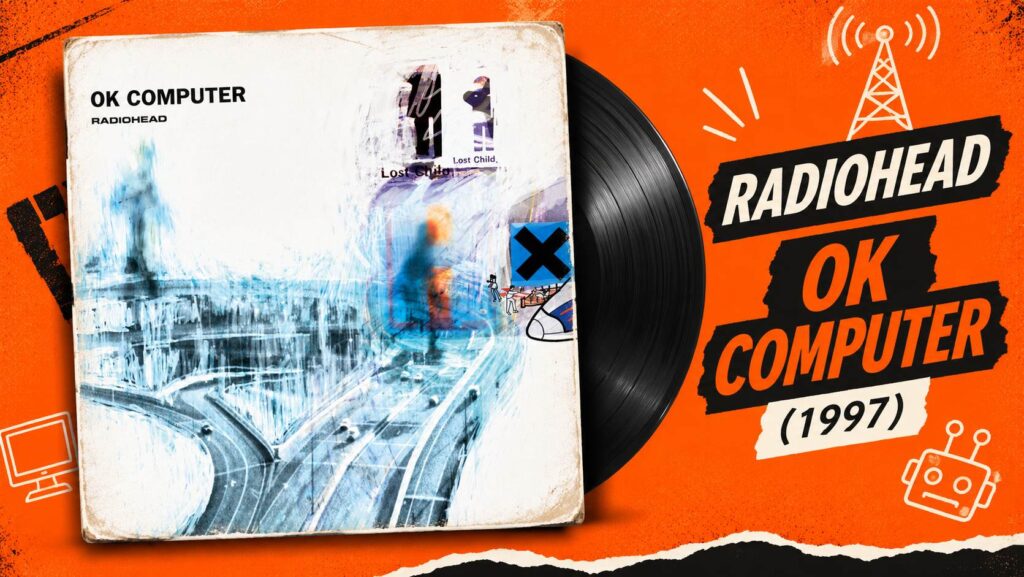
5. Radiohead, OK Computer (1997)
The highway interchange on the album cover is based on a photograph taken in Hartford, Connecticut, near the Hilton hotel where Radiohead stayed during their 1996 tour.
Some albums sound like a record of their time. OK Computer still attracts listeners because its anxieties about technology, work and modern life have aged in unexpected ways.
Original 1997 Parlophone vinyl is particularly appealing to collectors. The double LP carries catalog number 7243 8 55229 1 8, and market comparisons place original examples well above ordinary modern pressings.
In a comparison of OK Computer editions, the 1997 LP has a tracked asking-price estimate of €460.80. Several later XL Recordings editions appear closer to €30 to €40.
The album has also received anniversary editions, including OKNOTOK, which adds previously unreleased and archival material. Those releases give listeners more music, but they do not replace the appeal of owning a 1997 pressing.
Before paying a collector premium, compare the label and catalog information against a documented release. The cover alone offers little help because modern editions use similar artwork.
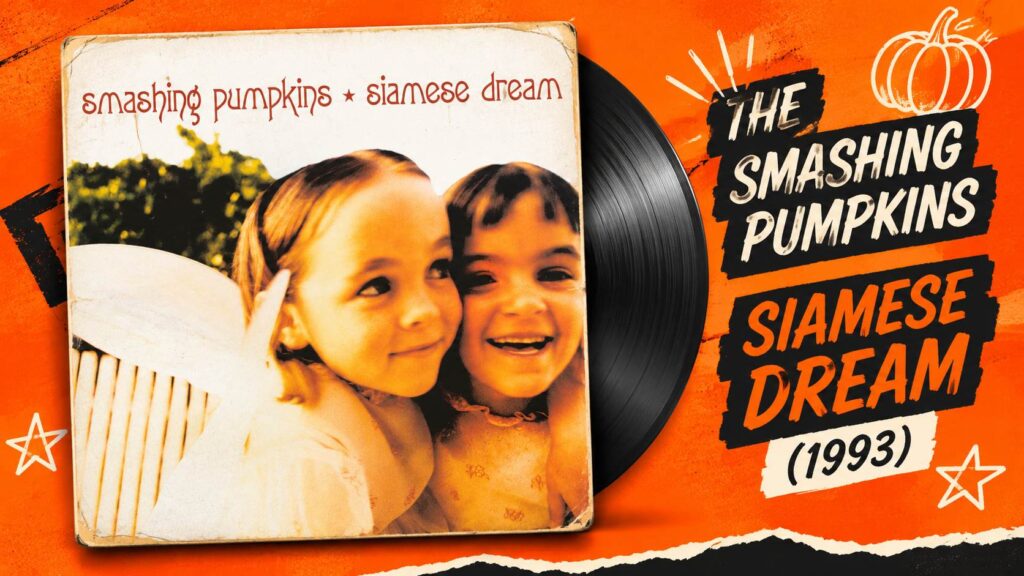
6. The Smashing Pumpkins, Siamese Dream (1993)
The two girls pictured on the Siamese Dream cover were reunited in 2018 for a promotional photo shoot with Billy Corgan, 25 years after the album’s release.
Collectors sometimes focus so heavily on Mellon Collie and the Infinite Sadness that Siamese Dream receives less attention. The 1993 album deserves its own place on the list.
Its original European vinyl appeared on Hut Recordings, including the HUTLP 11 edition. A tracked copy has a median VG+ asking price near €193, with collector demand exceeding the number of users recorded as owning it on that service.
“Cherub Rock,” “Today” and “Disarm” helped establish the enormous guitar sound associated with the group. Billy Corgan layered instruments into recordings that could sound delicate one moment and overwhelming the next.
Original vinyl has an appeal separate from the modern reissues. It belongs to the period when the band was becoming a major alternative rock act, and collectors continue searching for copies from that original release era.
For a new collector, we would compare several editions before buying. The pressing most worth owning for historical reasons may not be the least expensive way to hear the record.
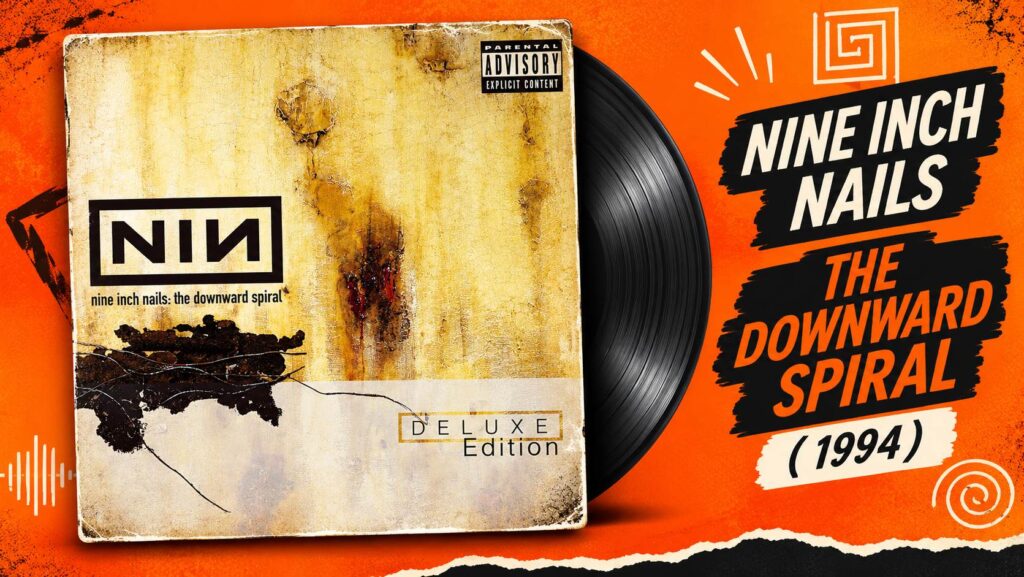
7. Nine Inch Nails, The Downward Spiral (1994)
The album was recorded partly at 10050 Cielo Drive in Los Angeles, a house Trent Reznor converted into a recording studio and named Le Pig.
Trent Reznor took industrial rock into darker territory with The Downward Spiral, an album that moves from distorted guitars and electronic percussion to moments of unexpected quiet.
The 1994 editions are particularly interesting. The original UK double LP on Island Records carries catalog number ILPSD 8012, and a U.S. Nothing Records promotional pressing uses STPR 5509.
A comparison of The Downward Spiral pressings places the UK original near €224 and the U.S. promotional edition near €532 in median VG+ asking prices. More recent editions are generally listed for much less.
The promotional copy is a useful reminder that an unusual pressing can command a premium even when the music is widely available. A promo has to be identified through its actual label and record markings, not merely a sticker added by a previous owner.
Reznor has also approved later vinyl editions, which offer another way to hear the album. Collectors paying for an original should be certain that is what they are receiving.
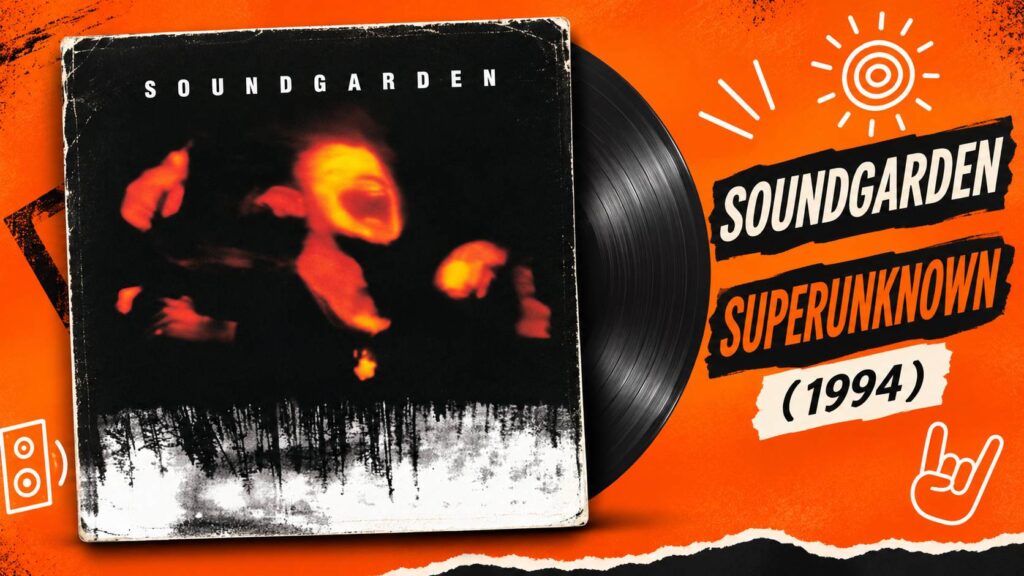
8. Soundgarden, Superunknown (1994)
The album’s distorted cover image was created by photographing the band members through a special panoramic camera lens, giving their faces a ghostly, stretched appearance
Soundgarden released Superunknown in 1994, and the album became one of the defining records of the Seattle rock era. “Black Hole Sun,” “Spoonman” and “Fell on Black Days” remain central to its reputation.
The original European A&M edition, catalog number 540 215-1, is attracting considerably more interest than the later reissues available today.
The 1994 Superunknown pressing comparison shows a median VG+ asking price near €160 for the European original. Some U.S. editions from the same year have higher estimates, while several newer pressings are available at much lower prices.
For collectors, the record has two appealing qualities. It belongs to a major period in rock history, and clean original LPs are less common than the familiar CD edition.
A future price increase is not certain, especially with newer pressings available. But an authentic 1994 copy in excellent condition is a record we would keep rather than replace casually.
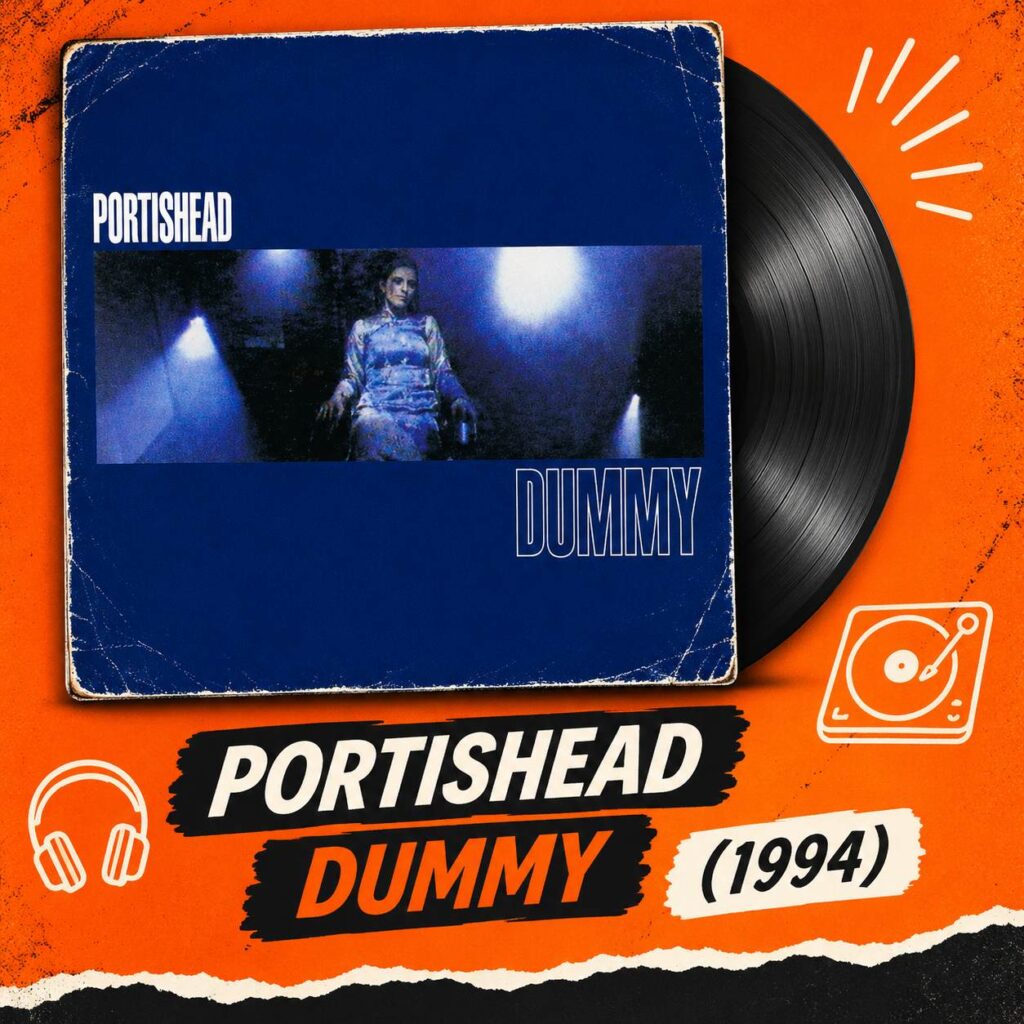
9. Portishead, Dummy (1994)
The image on the Dummy cover is a still of Beth Gibbons from To Kill a Dead Man, a short film created by Portishead in 1994.
Portishead made Dummy sound unlike almost anything else on mainstream radio in 1994. The album mixed sampled drums, sparse arrangements and the unmistakable voice of Beth Gibbons.
The original European Go! Beat LP bears catalog number 828 522-1. One of the tracked original Dummy editions carries a median VG+ asking price near €164, compared with much lower figures for several 2014 and 2017 pressings.
The original edition is particularly interesting because the album crossed genre boundaries. Rock listeners, electronic music fans and trip-hop collectors all have reasons to own it.
Yet the popularity of the album does not mean every copy is rare. Modern pressings remain widely available, and some use the same catalog number as older editions. Close attention to the release year, label printing and runout information is essential.
We would pay a premium only for a well-documented original in excellent condition. The music itself is easy to enjoy without spending collector money.
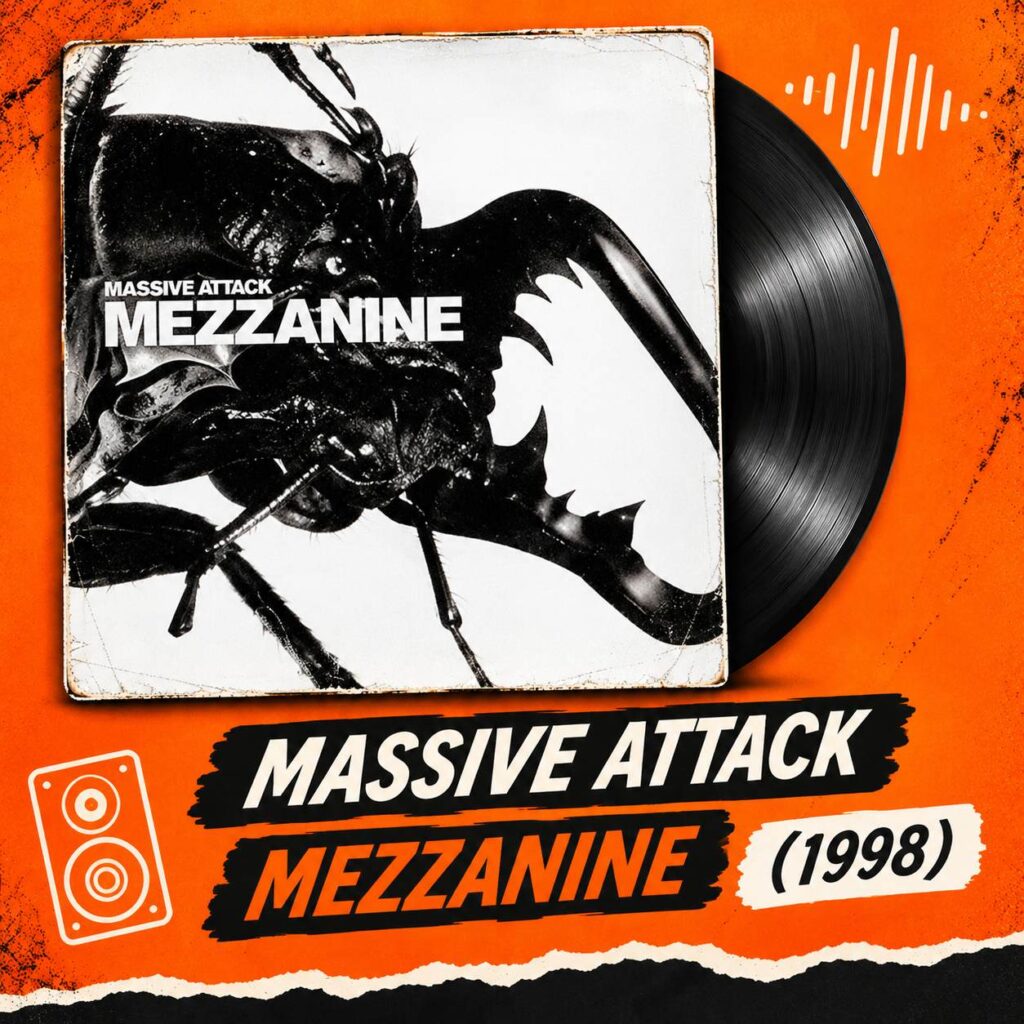
10. Massive Attack, Mezzanine (1998)
The insect pictured on the Mezzanine cover is a stag beetle, photographed by Nick Knight, whose striking black-and-white image became one of trip-hop’s most recognizable album artworks.
The opening bass and percussion of “Angel” remain an excellent introduction to Mezzanine. The album also contains “Teardrop,” one of the best-known recordings associated with Massive Attack.
Collectors searching for the original 1998 vinyl should investigate the Circa double LP with catalog number WBRLP4.
The original Mezzanine pressing currently has a median VG+ asking-price estimate near €239. Later editions from 2013 and 2023 are listed closer to €30.
The gap is substantial, particularly for an album that remains readily available in newer physical formats.
What interests us is the staying power of the music. Mezzanine attracts listeners from rock, electronic and alternative backgrounds, and demand for an original pressing is not limited to one small audience.
As with every record on this list, a fresh reissue could change the market for ordinary copies. The 1998 edition retains its historical identity, but collectors should not assume asking prices will keep rising.
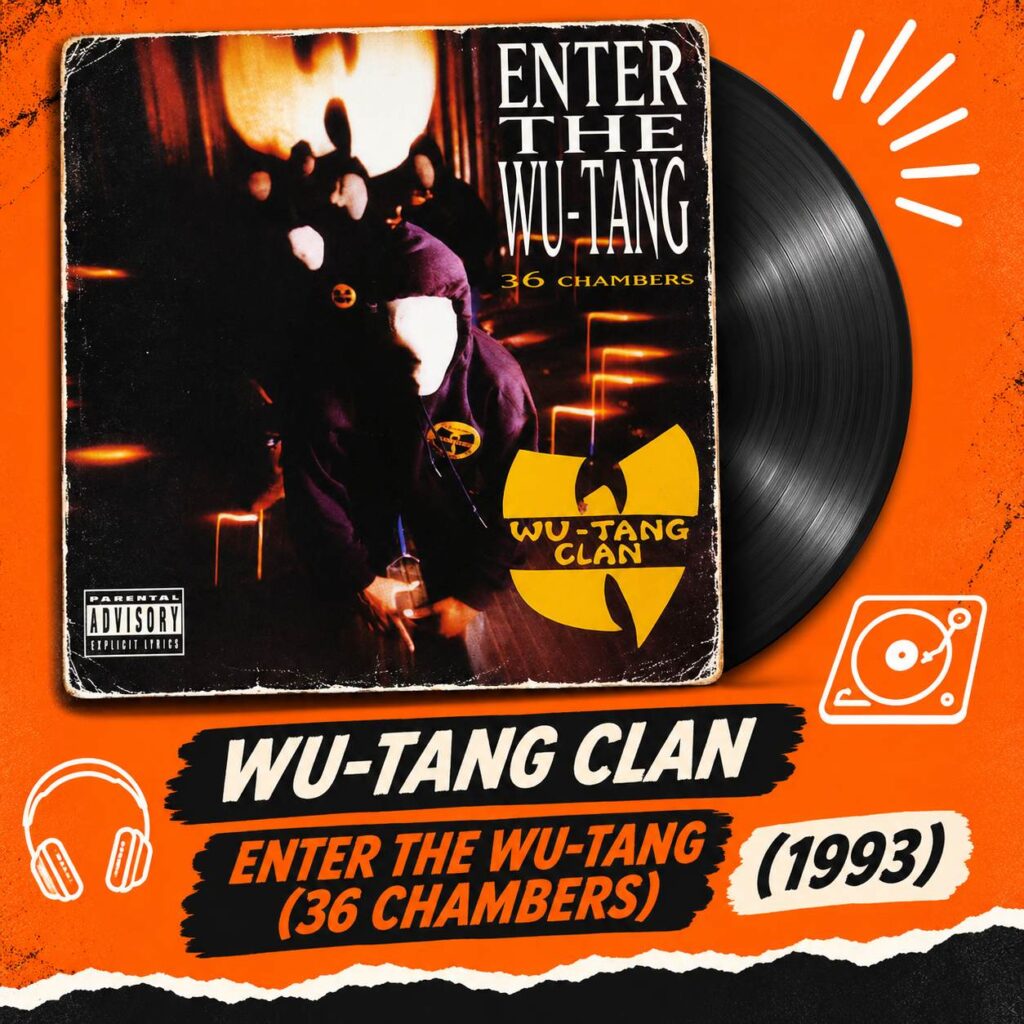
11. Wu-Tang Clan, Enter the Wu-Tang (36 Chambers) (1993)
The album’s title references the 1978 martial arts film The 36th Chamber of Shaolin, reflecting the group’s fascination with kung fu cinema.
Hip-hop deserves a prominent place in any discussion of valuable 1990s records. The decade produced albums that changed the genre, and original vinyl editions are now part of that history.
Enter the Wu-Tang (36 Chambers) arrived in 1993 and introduced listeners to the raw production of RZA and the individual personalities of the Wu-Tang Clan.
The original U.S. LP appeared through Loud and RCA with catalog number 07863 66336-1. According to the tracked 1993 pressing details, median VG+ asking prices are near €140, although individual listings vary considerably.
The condition of hip-hop vinyl deserves extra scrutiny. Copies used for DJ performances may have experienced repeated cueing, scratching or heavy handling. A clean-looking sleeve does not prove the grooves are equally clean.
Original copies remain appealing because of the importance of the album and its early place in the Wu-Tang story. For someone interested mainly in listening, a newer edition can deliver the music at a lower price.
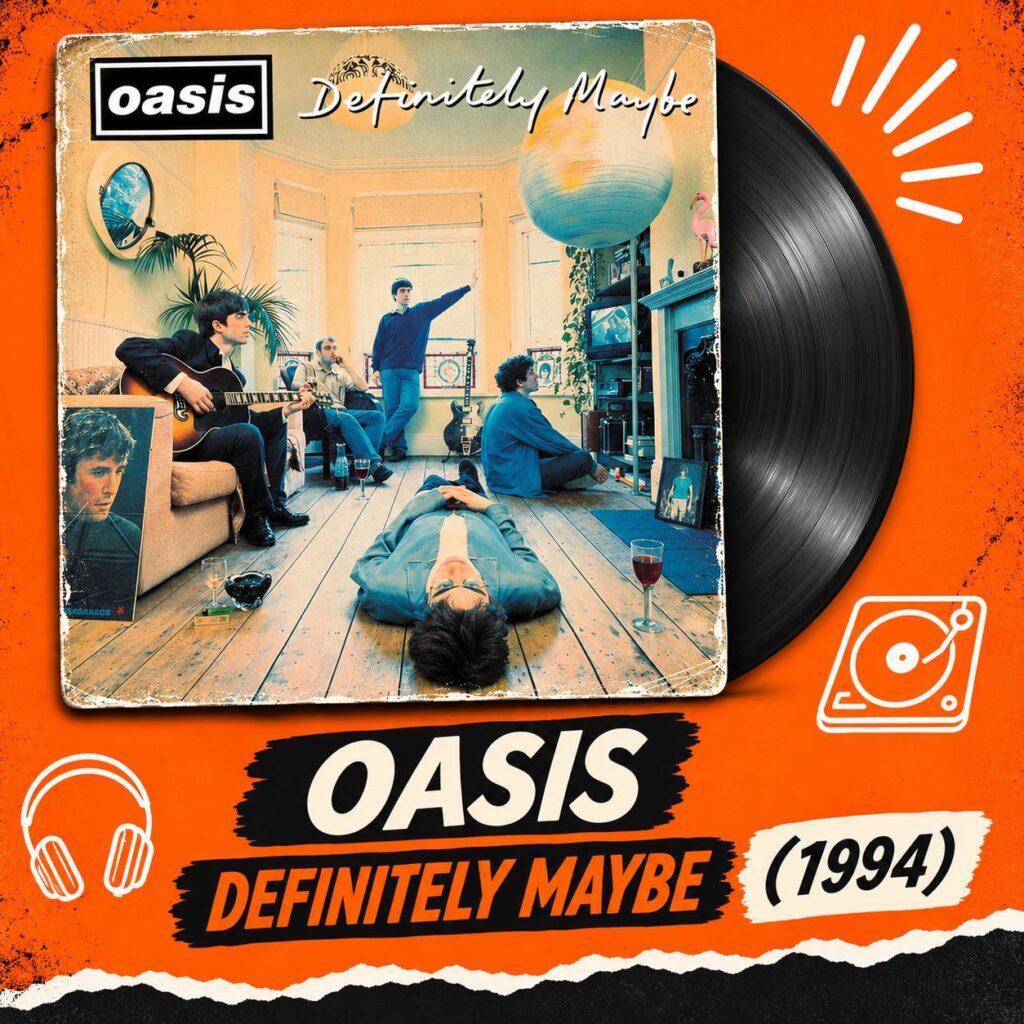
12. Oasis, Definitely Maybe (1994)
The album cover was photographed by Michael Spencer Jones at guitarist Bonehead’s house in Manchester, with the band carefully positioned around the room.
The debut Oasis album arrived in 1994 with “Supersonic,” “Live Forever” and “Cigarettes & Alcohol.” It became one of the defining British rock records of the decade.
Original UK vinyl copies on Creation Records carry catalog number CRE LP 169. However, different versions exist, and their values can vary dramatically.
A comparison of Definitely Maybe pressings includes a 1994 UK edition with a median VG+ asking-price estimate near €491. Other releases, including modern Big Brother editions, are listed for a fraction of that amount.
Demand for Oasis music has also been renewed by interest in the band and its live performances. Still, renewed popularity does not guarantee permanent collector-price increases.
We would focus on verifying the original UK pressing rather than paying extra for a newer colored-vinyl edition simply because its packaging suggests limited availability.
How to Tell If Your Vinyl Is Actually Valuable?
A collection containing the twelve albums above is not automatically worth thousands. An original edition can be valuable, but later pressings, worn records and unofficial releases may sell for far less.
The first thing to identify is the exact pressing. Look at the catalog number on the sleeve and label, then inspect the letters and numbers etched or stamped into the smooth area near the center label. Collectors call this area the dead wax or runout.
The runout details can identify a particular cutting, pressing plant or release variation. They are especially useful when multiple editions share the same cover artwork and catalog number.
Condition comes next. A clean record with minimal surface marks and an undamaged sleeve will generally attract more interest than a scratched copy with torn packaging. The Goldmine grading standard explains the established record and sleeve grades used by many collectors and dealers.
Finally, compare completed sales rather than relying entirely on advertised prices. A seller can ask €2,000 for a record that has not sold at that price. Discogs provides recent sales history for individual releases, allowing collectors to compare actual transactions for the pressing they own.
The distinction between a collectible first pressing and a listening copy is also separate from sound quality. A later record may offer a more enjoyable listening experience, particularly if it comes from a different master or the original has suffered groove wear. The technical issues are explained in our comparison of vinyl, CD and lossless streaming.
The Bottom Line
Tool’s Ænima has already reached prices that put it outside the budget of many collectors. A genuine copy can be a remarkable find, but a buyer spending more than €2,000 is also taking a substantial financial risk. The record would have to attract an even higher future price to provide a return after selling fees and other expenses.
Albums such as Dirt, Siamese Dream, Dummy and Mezzanine offer another possibility. Their original editions are collectible, but they generally occupy lower price levels than the most expensive Tool pressings. A buyer still needs to avoid overpaying.
Original hip-hop releases also deserve attention, particularly records that remain influential across generations. The condition of a genuine 1993 copy of Enter the Wu-Tang can be more important to its value than the simple fact that the album is old.
We would not buy any of these albums solely on the assumption that a future anniversary, artist reunion or sudden wave of interest will raise prices. Collecting records is far more enjoyable when the music is worth owning even if the market never rewards the purchase.
A clean original pressing of an album you love has something a new reissue cannot reproduce. It was manufactured when the music first reached listeners. If the record later becomes more valuable, that is an additional benefit. If it does not, you still own a small piece of the decade that changed rock and hip-hop.
Price note: Values mentioned in this article are market asking-price estimates for identified editions, primarily in VG+ condition, checked against publicly available collector data in October 2026. They are not guaranteed completed-sale prices or future valuations. Exact pressing details, condition, location and buyer demand can substantially affect the final sale price.
Slipknot co-founder Shawn ‘Clown ‘ Crahan has given a tantalising update on the metal legends’ upcoming new studio album. Expected some time next year, the album will certainly not be short of new material to pick from, as Crahan claims the band have enough new music to make it a double-dose.
“Now, here we are at album eight, and I can promise you, album eight’s coming out,” he tells Rock Sound. “What I can say officially is we’ve written so many songs as of right now. We have so many songs that Corey has sung on for rough demos. We had not foreseen what has happened, which is effortless recording and fun.
“So technically, I guess we could have a ninth too. We could have a double album,” he adds. “I’m not telling you we’re doing that. I’m just telling you, number eight’s coming out. We’re off all the bullshit. No one’s telling us what to do anymore. We do exactly what we want.”
He also hints that the record could be a challenging listen for fans, suggesting that the material could take people “a little time” to get used to and even going on to describe the record as a “musician’s album”.
Slipknot surprise-released new single Arsenal in September but were quick to state that it wasn’t “representative” of their next album, with guitarist Jim Root describing it as “a tune we could quickly get out there while we work on the rest of the record.”
Regardless, 2027 looks set to be a busy year for the band, with a new album and some huge shows announced – including a headline set at London’s Wembley Stadium in July. The concert has sparked some major controversy due to Marilyn Manson being booked as Slipknot’s main support, just months before he is due to stand trial in November 2027 in a civil lawsuit brought by his former personal assistant, Ashley Walters.
Walters’s lawsuit includes numerous accusations of physical and sexual assault, and is one of a number of lawsuits Manson has faced since a wave of sexual abuse allegations against him emerged in 2021. He has denied all allegations.
 Netherlands-based Sinister was a big part of my early death metal education, delivering 3 organ-juicing albums in the early 90s that placed the band at the vanguard of the European scene. 1992s Cross the Styx is an absolute rampaging beast and one of the best pure death metal releases of the 90s.