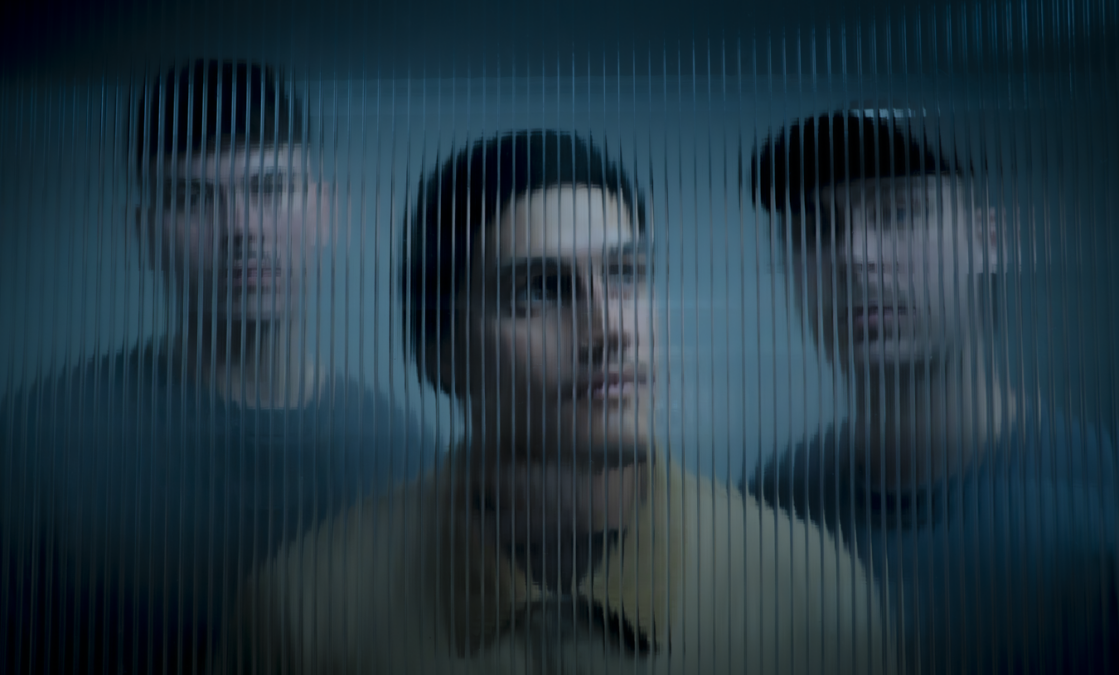
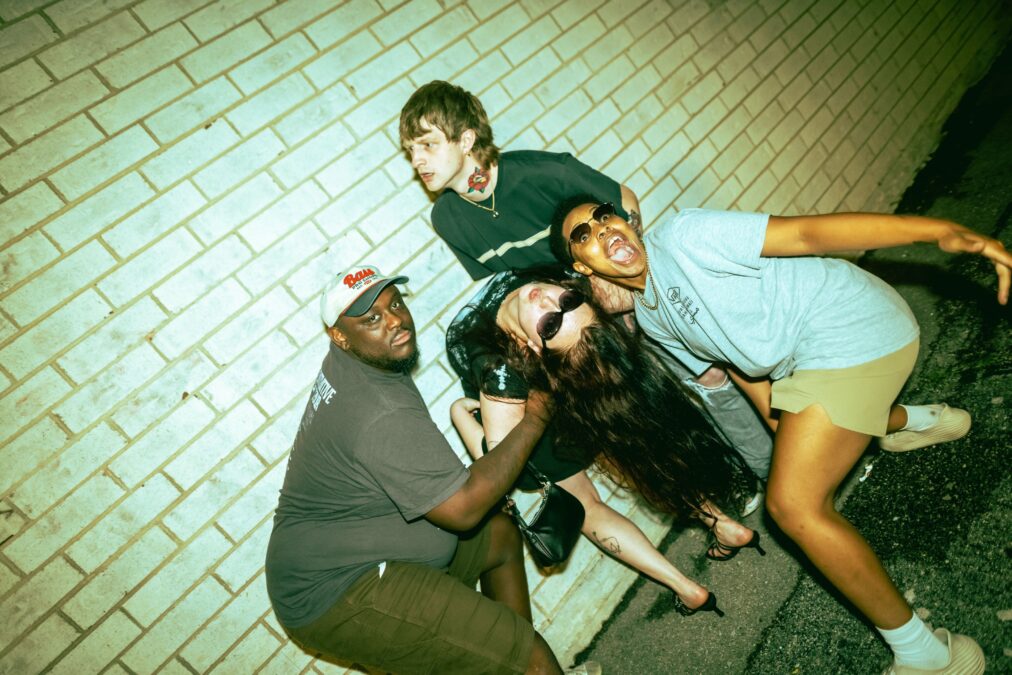
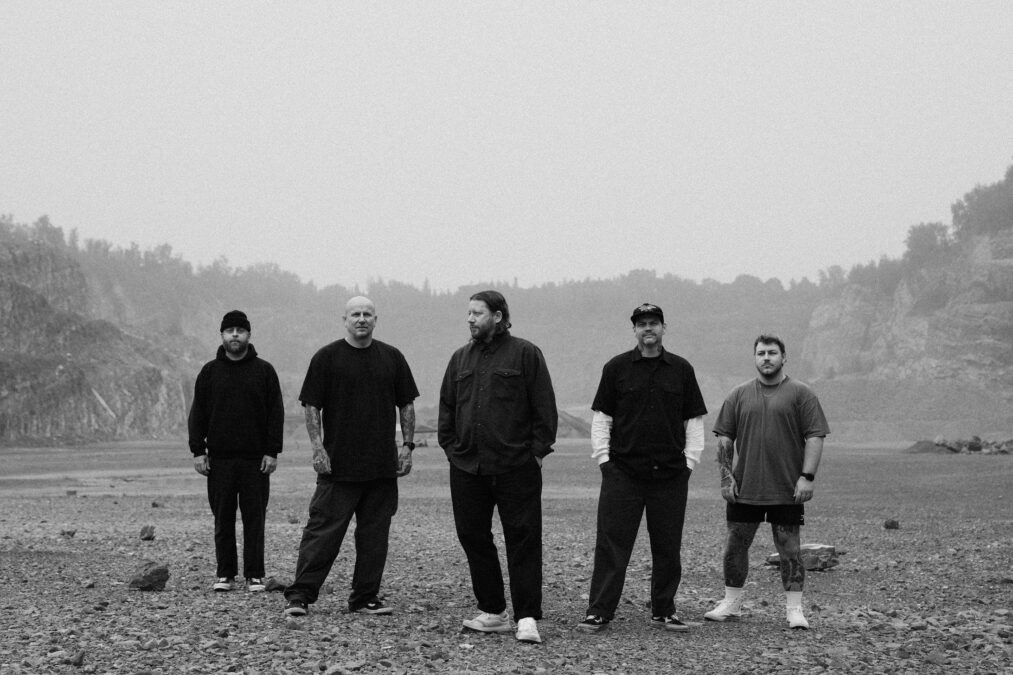
Duane Betts has released his new album, Isle of Hope, today via Sun Records, marking his first project with the label. Alongside the album release, Betts has also unveiled the official music video for the new track “Keep My Hands Clean.”
“Today is a big day,” Betts shares. “Isle of Hope is out into the world, and I couldn’t be more thrilled to share it with y’all. I hope these songs resonate and can pull you up and into the light. Music has always been a place where we meet through our experiences in this life. I’m happy to meet you right here in the songs. Thank you for being here. Thank you for listening. Thank you for believing in the music. Turn it up and enjoy the ride.”
Produced by Dave Cobb and recorded in just five days at Cobb’s studio in Savannah, Georgia, Isle of Hope arrives during a pivotal chapter in Betts’ life and career. While continuing to build momentum as a solo artist and as a founding member of The Allman Betts Band, Betts was forced to confront the loss of his father and longtime mentor, Dickey Betts. The album serves as a snapshot of that transformative period, exploring themes of time, mortality, resilience and personal growth.
In addition to Betts and Cobb, the album features Johnny Stachela (guitar), J.D. Simo (guitar), Brian Allen (bass), Philip Towns (keyboards) and Derrek Phillips (drums).
Isle of Hope follows Betts’ 2023 solo debut, Wild & Precious Life, which featured Derek Trucks, Marcus King and Nicki Bluhm.
Prior to launching his solo career, Betts co-founded The Allman Betts Band alongside Devon Allman. Since the band’s formation in 2018, they have released two studio albums, Down to the River and Bless Your Heart, while touring extensively and establishing the annual Allman Betts Family Revival. The event celebrates the music of The Allman Brothers Band and has featured guests including Jimmy Hall, Robert Randolph, Jason Isbell, Charlie Starr and Marcus King.
Betts and his band Palmetto Motel will support the album with an extensive North American tour running through January 2027. The trek includes numerous Duane Betts & Palmetto Motel headline dates, a performance by The Allman Betts Band, and select dates supporting Blackberry Smoke.
TOUR DATES
June 13 – Teton Village, WY – Mangy Moose Steakhouse and Saloon June 16 – Emigrant, MT – The Old Saloon# June 17 – Cheyenne, WY – The Lincoln# June 18 – Arvada, CO – Arvada Center for the Arts and Humanities# July 25 – Jay Peak, VT – Stateside Amphitheater* July 28 – Syracuse, NY – The Westcott Theater+ July 29 – Fall River, MA – Narrows Center for the Arts+ July 30 – North Truro, MA – Payomet Performing Arts Center+ July 31 – Springfield, MA – Hope Center for the Arts+ August 1 – Woodstock, NY – Levon Helm Studios August 2 – Woodstock, NY – Levon Helm Studios August 4 – Richmond, VA – Tin Pan+ August 5 – Raleigh, NC – Lincoln Theatre+ August 6 – Frederick, MD – RAK Brewing+ August 7 – New York, NY – Gramercy Theatre+ August 8 – Natick, MA – The Center for Arts in Natick+ August 9 – Jim Thorpe, PA – The Mauch Chunk Opera House+ August 10 – Ocean City, NJ – Ocean City Music Pier+ August 19 – San Diego, CA – Music Box+ August 20 – San Juan Capistrano, CA – The Coach House+ August 21 – West Hollywood, CA – Troubadour+ August 22 – Ventura, CA – Ventura Music Hall+ August 26 – Felton, CA – Felton Music Hall+ August 27 – Felton, CA – Felton Music Hall+ August 28 – Mill Valley, CA – Sweetwater Music Hall+ August 29 – Mill Valley, CA – Sweetwater Music Hall+ August 31 – Kirkland, WA – Kirkland Performance Center+ September 1 – Portland, OR – Alberta Rose Theatre+ September 2 – Port Angeles, WA – Field & Arts Festival Hall+ September 3 – Eugene, OR – Hult Center for the Performing Arts+ September 4 – Vashon, WA – Vashon Center for the Arts+ September 6 – Boise, ID – Treefort Music Hall+ September 15-19 – Nashville, TN – AmericanaFest October 10 – Kent, OH – The Kent Stage+ October 11 – Cincinnati, OH – The Ludlow Garage+ October 13 – Ann Arbor, MI – The Ark+ October 15 – Madison, WI – Majestic Theatre+ October 16 – Evanston, IL – Space+ October 17 – Evanston, IL – Space+ October 19 – Milwaukee, WI – Shank Hall+ October 22 – Green Lake, WI – Thrasher Opera House+ October 23 – Green Lake, WI – Thrasher Opera House+ October 24 – Minneapolis, MN – Fine Line+ January 13 – The Villages, FL – Sharon L. Morse Performing Arts Center+ January 16 – Fort Lauderdale, FL – The Big Easy Cruise+
+Duane Betts & Palmetto Motel show *The Allman Betts Band show #supporting Blackberry Smoke
Every week the Stereogum staff chooses the five best new songs of the week. The eligibility period begins and ends Thursdays right before midnight. You can hear this week’s picks below and on Stereogum’s Favorite New Music Spotify playlist, which is updated weekly. (An expanded playlist of our new music picks is available to subscribers on Spotify and Apple Music, updated throughout the week.)
For many years, Rush fans had come to terms with the idea that their favorite band was finished. The career-spanning R40 tour felt like the perfect conclusion to one of rock’s most celebrated careers. While occasional appearances such as the South Park anniversary concert and the Taylor Hawkins tribute shows provided brief reunions, the prospect of a full-scale tour seemed unlikely. After all, how could Rush continue without the legendary Neil Peart?
That changed last October when Geddy Lee and Alex Lifeson shocked the music world with an announcement at the Rock and Roll Hall of Fame. Missing the experience of performing together, the longtime bandmates revealed plans for a limited seven-city tour. For Rush fans, it was the realization of a dream many never expected to see fulfilled. The next question was obvious: who would take on one of the most intimidating jobs in rock history? It has been well documented that Geddy and Alex decided to go with relatively unknown Anika Nilles as the person given the impossible task of taking the seat behind them on stage. Most fans had agreed that if Geddy and Alex trusted her, they would too. The trio’s first performance at the Juno Awards a few weeks ago offered a glimpse of her abilities, though it hardly showcased the complexity of the band’s catalog. How would she perform in a full show playing the most challenging of songs?
What was initially intended as a short run, has since expanded into nearly 50 dates across North and South America and Europe. The tour launched this week with a four-night stand at Los Angeles’ Kia Forum, the same venue that hosted Rush’s final concert on August 1, 2015. By the third night, fans had already consumed countless clips from the opening shows and learned that the band had assembled an arsenal of nearly 40 songs. Unlike previous Rush tours, where only a handful of songs rotated in and out of the setlist, this tour has featured dramatic changes from night to night, with as many as 14 songs swapped between performances. The question entering night three was simple: how different would this show be?
Walking into the Forum and seeing the massive wraparound screen surrounding the stage immediately revealed the scale of the production. As with recent Rush appearances, the evening began with a humorous pre-recorded film featuring Geddy and Alex portraying a variety of comedic characters. The video concluded with silhouettes of the two musicians emerging through a cloud of fog, each holding their signature double-neck guitars.
As the screen faded and revealed its inner framework, Geddy and Alex launched into the unmistakable opening of “Xanadu,” marking the first time the fan favorite had ever opened a Rush concert. It was a fitting choice. For a few brief moments, the focus remained solely on the two surviving members before the giant screen lifted to reveal the full stage design, which resembled the rooftop of a downtown building—perhaps even a subtle nod to The Beatles’ ‘Get Back’ rooftop performance.
Both sets featured moving tributes to Neil Peart. The first incorporated archival audio of Neil reflecting on his life and musical journey before leading into “Bravado.” The second came later in the show during “Time Stand Still,” with Aimee Mann once again joining the band onstage, just as she had on the original 1987 recording. Both moments were deeply emotional and served as powerful reminders of Neil’s enduring presence. It was also a welcome touch to see original drummer John Rutsey recognized on the video screens later in the evening.
With two shows already completed, much of the band’s opening-night nervousness appeared to have subsided. While there were still a few minor musical hiccups and an early technical issue at the start of “2112,” the performance felt increasingly confident and relaxed.
Of the songs retained from the first two nights, staples such as “Subdivisons” “The Spirit of Radio,” and “Freewill” were expected inclusions. Night three’s unique highlight, however, came at the beginning of the second set, when the band performed Moving Pictures in its entirety and in sequence. For longtime fans, it was a special treat. The addition of “The Camera Eye,” a personal favorite, made the segment even more rewarding. The only other song unique to night three was “New World Man” from Signals. With one Forum show remaining, fans can only wonder what additional surprises might appear before the tour heads to other cities.
Throughout the evening, the most striking aspect of the performance was the visible joy shared by Geddy and Alex. Whether exchanging smiles during songs or simply looking across the stage at one another, it was clear why they chose to return: they genuinely missed playing together. Their frequent interactions with Anika Nilles further reinforced the sense of camaraderie developing onstage.
One of the biggest concerns heading into the tour was the condition of Geddy Lee’s voice. During previous tours, some of the higher notes had become increasingly difficult to reach. On this night, however, he exceeded expectations. Songs such as “Freewill” remain incredibly demanding vocally, yet Geddy delivered them with confidence and remarkable strength.
Anika Nilles answered every question emphatically. Nilles played with confidence, precision, and respect for Neil Peart’s original parts, retaining many of his signature fills while adding touches of her own personality. The audience responded enthusiastically to standout moments during “Subdivisions,” “Tom Sawyer,” and numerous other songs throughout the night. Earning the approval of such a devoted fanbase on a stage of this magnitude is no small accomplishment, and Nilles proved herself more than worthy of the challenge.
The fourth member of the touring lineup, keyboardist and vocalist Loren Gold, deserves recognition as well. While Geddy continued to handle many of the signature keyboard moments, including the “Tom Sawyer” Moog solo and the iconic synthesizer passages in “Subdivisions,” Gold assumed many supporting keyboard responsibilities that allowed Geddy greater freedom to move around the stage. His backing vocals also added depth to the band’s live sound. Seeing four musicians onstage under the Rush banner was initially unusual, but Gold fit seamlessly into the performance and contributed significantly to its success.
Rush has returned in a way few thought possible. More importantly, they have done so with respect for their past while embracing a new chapter. If the first week of the 50 Something Tour is any indication, the road ahead should be fascinating to watch. What comes after April 2027 remains unknown, but for now, Rush fans can simply enjoy the fact that this remarkable band is back onstage once again.
A.A. Williams’ music is a study in restraint, the conservation of energy that comes with a deeply inhaled breath. It’s a meditation on the malignancy of grief, of how to deal with pain in a way that doesn’t leave you breathless: you just learn how to stay under for just a few seconds more, before blasting to the surface. On her series of singles released during the pandemic, a sparse collection of covers that could barely cause a ripple through the stillness of water, she captured a moment of human history that was briefly frozen in time. There wasn’t a more apt artist to have their career launched through the fog of a global pandemic than Williams.
Her new album Solstice is a great inhale, a self-assured, majestic return to life, with all of its misery and afflictions. The restraint is still there, it’s just louder and more confident, still mired in the calamity of a life riddled with heartbreak, and, in some ways, more hopeful. Because, despite the innate melancholy of Williams’ music, she has maintained a view on life that revels in the gifts she’s received: growing up in the heart of a city that’s embraced the arts for millennia, a talent that’s seen her travel every inch of this forlorn globe, and a love for music that found its own way unhindered by expectations.
Over the course of an hour, during a stop on her recent tour in Warsaw, I had a chance to talk to Alex about the role music has played in her life, the influence of London on her creative outlook, and how she’ll never sing like Morrissey.
…
…
The first thing one walks away with after spending time with Solsticeis the restraint, and how this creates such tension. It seems to be a deliberate creative choice, and really leans into the inherent intensity of the compositions.
Especially in the softer sections, I don’t really plan the restraint too much. I just think in those softer sections, certainly, there is something nice about things being deliberate and clear and a little bit sparse sometimes, so that the lyrics and the text can just be the focus. And I think in the process of controlling that environment, you end up creating that slightly restrained situation. But I think it suits the vibe completely. I think it kind of works.
And I think people say that about the heavier sections too, and I just think, well, what more can I do? If I’m trying to let go here, what do people want me to do? Scream or something? I can’t really push my voice further than it goes. Some of it is just about the capability of a person. So in the heaviest sections, I kind of think, well, what more do you want from me?
Everyone makes a big deal about you growing up and being a classically trained musician. You said something in an Audiotree interview that resonated with me–“It’s like if you speak another language. You don’t really think or process about what you’re going to say. It just comes out.”I’m curious–not just what you listened to in terms of influences–but growing up as a musician, what moulded you in terms of the direction you went, from when you started playing as a child to where you are now?
Okay, so I learned when I was quite young. I began piano lessons when I was five and it was really just as a creative outlet for me. My parents just thought, well, it’s good to have something. So piano seemed like an easy option to start with. And I took to it, and found it very natural as a way of expressing myself. I was a really shy kid, as a lot of us are when we’re little. And especially when you start to grow up, you don’t always know how to express how you feel in words. Sometimes you don’t want to, either.
So it felt like a really safe environment to figure out my feelings, which was a really nice thing to have. It was kind of company, and a calm environment to figure that stuff out without having to say things out loud, and sometimes that’s quite hard, especially when you’re not really sure how you feel. So all the way through, I was learning just classical stuff, doing my grades, nothing out of the ordinary. Maybe I’d try and figure out some pop songs on the piano, but there was nothing too complex there, and I wasn’t performing anything that wasn’t classical, really.
So all of that background was classical, and I think I just absorbed all of the theoretical stuff pretty easily. I quite enjoyed knowing how it all glued together, and that became the language you speak of. You don’t think about why it goes together, it just does, because your body knows the rules.
And that is just an extension, I suppose, of the way I was trained. Having all of that background has inevitably had a huge impact on how I do what I do now. And as I slowly started listening to heavier music and getting into that world as a teenager, those two worlds were still very separate for me. For a long time, I didn’t really consider that they could become part of the same thing, or that one would usefully influence the other.
It was only in my late 20s that I even thought about the possibility of these two things coexisting. And it’s been a really interesting process to come to this quite late. A lot of people come to rock music by rehearsing with their friends in their parents’ garage as kids, going to shows. It’s this hobby, this extracurricular, a fun thing that expands and turns into your career. That’s a really cool way to do it.
But I missed that bit, and ended up coming at it from a completely different side. Which I guess, with all of these things, we all come to the same conclusion: we think this song is good, so we’re going to put it out there.
How much do you think your persona as A.A. Williams is a product of where you’re from?
I grew up in South London, and I’ve always lived in London. I don’t know if it’s a product of the place or a product of the upbringing, really. Neither of my parents were particularly creative in an artistic sense, but they were both very encouraging and accepting of it. No one ever pushed me to do something more conventional or to study in a certain direction.
I think perhaps it’s a London thing, because realistically, in a big capital city, there is a sense that you can just do what you want to do, within your own limitations and the opportunities presented to you. Living in a big city with a lot of concerts, performances, and music institutions made a big difference. If I’d been brought up in a small town without that access, it would have been completely different.
But I think it’s both. It’s the environment, and also having a family that was encouraging of exploring music as self-expression; but also as a job, to treat it seriously rather than just a hobby on the side of real life. It’s never been treated as lesser in any way. It’s always had the same seriousness attached to it that any other studies would have. I think that’s probably the biggest thing.
You were born and raised in London, but you’ve had the opportunity to tour and see the world through your music. Do you feel like that’s changed the way you are as an artist?
I would say two things. Coming back to that sense of London and the opportunities available, obviously they don’t just fall from the sky; you put in a lot of work to generate them. But being from a place that has that, and having the support to follow those career paths and that artistic expansion, it gives you a sense that it’s all possible.
I think that confidence to keep pushing has made a huge difference to the way I view what I do as a musician. It’s easy to feel very doubtful when you’re starting something new, like making that jump from classical musician to making my own music. And singing, just as a concept, wasn’t something I got anywhere near until I started learning guitar, so that in itself is a whole other thing. But at no point have I ever thought, I don’t know if I can do this.
Having that support has given me the confidence to push it properly. And then when it comes to touring around the world, it validates the art. It’s a bit like if you were a photographer and you got to exhibit your work somewhere, then in the town next door, then in another city. It grows gradually. It’s not like you go from nothing to everything overnight. It’s a gradual expansion, and with the expansion comes a growing confidence.
Had I had a different approach to my art or my creativity, I might not have been so brave. But having that foundation to jump off from, and that confidence in what I was doing, even when I was absolutely terrified: nervous, worried no one would turn up, worried about everything. There was an underlying belief that you’re doing the right thing.
And then as you tour, you get more confident. As you grow, you learn what goes down well in different cities, what kinds of sets work in different countries, and it all validates that what you’re doing is good, not good as in quality, necessarily, but good as in worth doing.
It is a valid endeavor. It is worth it. It’s worth the love and the tears and the sleepless nights and the stress and the financial everything. It’s all valid, because you’re going out and doing it, and people are coming to see you. I’m in a hotel in Poland today. I performed at the Mystic Festival yesterday. I’d never played a festival in Poland before, and I did a meet and greet for the first time. I’ve never done one before.
You said something interesting about sometimes thinking about what set list is going to go over well in a given venue. What drives that? Is it the space, the size of the crowd?
A little bit about the space, but also the circumstances. If I’m doing a support tour, the set I’m going to perform supporting the Sisters of Mercy is going to be different from the set supporting Cult of Luna, or Sleep Token. I really enjoy trying to facilitate the best possible show for the situation I’m in.
You’re honoring your crowd by trying to give them something tailored, not just whatever you feel like doing. What they might enjoy matters. That’s why we’re all here.
And yes, the physical space makes a difference too. What you want to perform in a beautiful church or concert hall is going to feel very different to what works in a little basement rock club. It’s nice to play around with it, partly for my enjoyment and my band’s, when you’re doing a lot of shows, variety helps. But it’s also nice for your crowd to experience something different each time they come and see you.
…
…
I think one thing that really resonates with your art is that you’ve managed to exist in that expansive, almost cinematic post-rock space and put vocals on it without losing the effect. So my question is: what is it about that teenager playing cello who, instead of getting into whatever pop music was fashionable at the time, starts listening to the Deftones, and then Mono and Explosions in the Sky?
I think it was just a natural progression. That exploration of popular music and the heavier side of things started when I was about fourteen or fifteen, the age when a lot of us start discovering music through films, TV, what our friends are into, gigs in our town. We’re getting a bit more independent, a bit more pocket money, we can go to the record store.
It took a long time for me to realize that post-rock and post-metal were even a thing. You don’t know about it all immediately, you figure it out gradually. My taste started fairly standard for the time, which was really nu-metal: Deftones, Limp Bizkit, old rock, indie rock back when indie was actually indie. And this was all pre-internet or at least before that kind of accessibility existed.
I just loved it, so I kept going. I think it was maybe fifteen years ago that I gradually became aware that instrumental rock and metal, that cinematic, guitar-based music, existed, because it’s not the stuff you’re going to hear on the radio, and it’s not always obviously connected to the vocal-based rock and metal world. They’re not necessarily under the same umbrella.
Actually, I think one of the first things I discovered was Cult of Luna, and then I kind of worked backwards from there. There’s that expansive post-metal vibe with vocals, and then extrapolating backwards from that, discovering that there were versions of this without vocals, and softer variations of it. So I didn’t start small and work upwards. It was the other way around, slowly discovering This Will Destroy You, Explosions in the Sky, all of that.
Coming from a classical background, music without words wasn’t an alien concept to me at all. It’s perfectly normal to have a piece of music with no one singing on it. But until I started exploring that post-rock and post-metal world, I hadn’t really realized people did that with electric guitars. And then you start seeing it used in films and TV a bit more as well, and gradually it all gets folded in.
When it comes to writing now, melodies have always been really important to me. In the choruses, in the big vocal moments, the melody is the whole point. I’m not going to do a Morrissey and stay on the same note for an entire chorus. That’s not why we have a voice, not for me. The vocal is just another melodic instrument that also happens to be delivering text. Radiohead are big on this. Those melodies could be a guitar, could be a piano, could be anything.
A lot of the time when I write, I have a melody and I don’t yet know what it’s going to be. I just hum it and figure it out afterwards. A lot of the time it ends up being a guitar part instead of a vocal, or sometimes vice versa. It’s just an expansion of language, without treating the voice as having a fixed, specific role. It’s delivering text, yes, but beyond that? Take it and do what you want with it.
Looking at those influences through the lens of Solstice, you have songs like “Wolves” and “Hold It Together” that feel like classic A.A. Williams songs: restrained, building, lots of crescendos, very powerful. And then there are songs like “Poison” and “Little by Little”that kind of flirt with popular music. It’s almost like it could exist in a different world entirely, like Lana Del Rey or Ethel Cain. Is that deliberate?
When I’m writing individual songs, for the first sixty or seventy percent of the process, I’m really only thinking about one thing: I want this melody to be as good as it possibly can be. Making sure the vocal has enough memorable hooks, and that the melodies are really doing what I want them to.
And yes, I have choruses in a pretty traditional song structure a lot of the time. I hear often in reviews from the heavy crowd that there’s a slightly strange expectation that I’d be approaching it in a less song-oriented way. And I think sometimes people are a little irked by the fact that it’s quite traditional in that sense. I’ve got choruses. I’m not just going to do ten minutes of atmosphere. I could, but it’s not really my vibe.
On Solstice, there are a few songs that don’t adhere to a standard structure, and I’ve really enjoyed mucking around with that. But it’s more just because I don’t want every song following the same pattern. I want variety. I don’t really worry about what world a song lives in, whether it edges more toward pop or toward something post-punky and gothic.
For “Poison,” for example, that chunky, repetitive guitar part in the verses had been in my head for ages. It’s simple as hell, but I just kept playing with it. It came together quite easily. That was the starting point, and the rest of the song fell into place without me thinking too hard about what world it lived in.
But when it comes to track listing, that is REALLY important to me. We live in an age where songs are treated like singles, everything’s on shuffle, or you’re only hearing twenty seconds of something on a reel. But for me, the journey from top to bottom really matters. Even where you flip the vinyl over isn’t arbitrary. It matters that the journey is doing the right thing, that you’re following one song with something that takes you somewhere new or emphasizes what just came before.
There were so many different versions of the track listing, but I think this one works. It feels like it’s flowing in a cool way. And I like having a stripped-down song in the middle; that softness is kind of fun.
So I imagine the vocal melodies come first, and then you find language that fits?
Half and half. The melody will come, and often with it will come certain filler words. Sometimes those words then form the basis for working on the whole chorus, which makes me think: okay, what am I actually saying here? What’s this song for? What is it about? It usually starts with melody and sounds, a bit like a Sigur Rós thing, with just vowels and concepts and gobbledy-gook for a while. And then certain lines start to click into place, and that’s my starting point.
I’ve always looked at the voice as essentially the fifth instrument. I don’t necessarily need to know exactly what’s being said. The voice is conveying a message through sound as much as through language.
That’s exactly it. And it astounds me when I perform in non-English-speaking countries. These songs are still received in the same emotional way by people who don’t fully understand the words. It’s doing that other job, being the instrument as well. The combination of the melody, the voice, that restraint we talked about, and the instrumentation, which is there to emphasize the mood or deliberately counter it, all of that conveys emotion independent of the text. And it’s really cool to go and perform in these places and have the music still land in the right way, even when the understanding is different.
Does that resonate with you from your touring experience? The way audiences in other countries just get completely wrapped up in it?
It’s that cliché of music being the international language, but it really is true. And the perfect example, coming back to post-rock, is that you can perform music with no vocal at all, nothing telling you what the song is about, maybe just a title that may or may not have an obvious relation to the music. That This Will Destroy You record (Vespertine) where each song is named after a room in a house? I listen to a track and it doesn’t say “kitchen” to me. But you stand in a room full of people watching it, and you can see that everyone is feeling the same thing. The music is speaking to them directly. And that is just magic. Absolute magic.
Sound waves in the air. It’s not even something you can hold, and it makes an entire room of people feel the same thing together. That’s extraordinary.
…
Solstice is available now via Reigning Phoenix Music.
We are asking the questions, we are lying to get by We are lying on our backs, wondering about the sky We are blind when it suits us, we still hear the noise Are these delusions of our making? Is this the illusion of choice?
Every generation gets the luxury problem it deserves. For Soft Vein, the problem is abundance without communion, pleasure without recognition, comfort with the emotional temperature of a waiting room. All We’ve Known of Heaven, the second single from their forthcoming album, takes aim at a world where every appetite has been serviced, every impulse has a machine waiting for it, every ache can be soothed by delivery, distraction, sex, shopping, screens, or a little curated self-erasure. Heaven, in this song, has been downsized into convenience. You can have anything at the touch of a button except the one mercy worth having: another person connecting with you honestly in the room.
The track moves with a sleek, wounded poise, opening in a near-liturgical hush before the bass synth starts its low prowl and the electronics gather around Justin Chamberlain’s tender voice like expensive furniture in a room no one lives in. His singing is close, breath-held, controlled, and uneasy, giving the song the feel of a private crisis staged inside a glass office tower after everyone else has gone home. The old Soft Vein gloom has been pressed into a cleaner, more refined synthpop shape here, but the polish carries unease rather than distance. This is dance music for people who have mistaken motion for progress, touch for intimacy, and access for love.
In this world, excess acts as a double agent. It seduces because comfort is real. Warm rooms, full glasses, obedient devices, endless options: none of these are imaginary pleasures. The trap begins when ease starts replacing understanding, when desire turns people into consumers of one another, when convenience trains the soul to expect no friction and then leaves it unable to endure closeness. Chamberlain writes from inside that contradiction, where modern life has made loneliness more efficient. The song’s ache comes from recognizing that people keep searching for warmth in the wrong rooms, asking systems built for extraction to provide tenderness, asking appetite to do the work of faith.
Sydney Mills’ video pushes that idea into the body. Drawing from Robert Longo’s Men in the Cities, Severance, Mad Men, LCD Soundsystem, and Talking Heads, the clip plants Chamberlain among corporate suits whose movements turn office drag into holy roller possession. He takes the David Byrne position without winking too hard at the reference: the frontman as anxious office oracle, surrounded by workers whose neat clothes barely contain the pressure underneath. These people are dressed for discipline and behaving like their nervous systems have filed a complaint.
Lark Detweiler’s choreography gives the video its charge. The dancers flail, snap, recoil, lean, and collapse as if St Vitus himself embodies them; their bodies seem yanked by invisible management, private want, algorithmic command, and buried panic all at once. The suits become masks, but not simple disguises; they are uniforms of permission, tools for passing through the day, costumes for people trained to look composed while being pulled apart. The corporate setting makes the frenzy funnier and crueler. Here is the modern professional subject: medicated by amenities, measured by output, trapped between the wish to perform properly and the need to tear open the seams.
The dancers (Lark Detweiler, Cat Bauermann, Aimee Smyke, and Kitrell Poe) are not merely “freeing themselves” through movement in some easy cathartic arc. Their motion is jagged because freedom itself has become confused. Even rebellion has been folded into style, even freakiness can be absorbed by the conference room if the lighting is right. The clip treats the body as the last honest witness in a culture fluent in euphemism. The mouth can lie, the job title can lie, the suit can lie, the calendar can lie. A body thrown sideways under invisible pressure tells the truth fast.
The result is a review of modern intimacy disguised as a sleek synthpop single and a choreographed corporate fever. All We’ve Known of Heaven asks what survives after every need has been converted into a market, after longing has been routed through devices, after pleasure has become both anesthesia and debt. Chamberlain’s answer is not grand redemption. It is smaller, stranger, and more painful: the body still craves warmth, the spirit still recognizes absence, and even inside the most efficient rooms, some buried part of us keeps reaching beyond acquisition toward meaning.
Watch the video below:
Mastered by Jason Corbett (ACTORS), All We’ve Known of Heaven finds Soft Vein widening his frame without sanding away the nocturnal pressure at the project’s core. The song leans into the clean lines and grand emotional surfaces of 80s pop, yet its darkwave blood still moves beneath the gloss. There is a useful parallel in producer Phil Thornalley’s own history, stretching from the stark gothic weight of The Cure’s Pornography era to the polished new wave ascent (and sultry sax solos) of ABC, Human League, Tears For Fears, and Wang Chung. For Justin Chamberlain, that breadth feels less like a stylistic swerve than a sharpening of purpose: severity giving way to elegance, dread opening into desire, the basement door swinging toward brighter rooms while the old hurt keeps its hand on the light switch. I’ll have what he’s having.
Listen to All We’ve Known Of Heaven below and order the track here.
Not a lot of kids are into ska punk, but some are: those kids are saving the future of ska.
Coming home from work, I stumbled upon a $1 house show that was preparing for their final band of the night. While the immense crowd of teens and young college kids had already listened to indie and pop punk collectives, it was time for ska punk to close out the show. The band to send people home happy: Skidwizard, an Inland Empire band that has gained much respect in a quick amount of time in the ska scene.
Almost immediately you could feel the energy as the horn line consisting of a trumpet and trombone player blasted their first note, followed immediately by groovy bass lines, clean guitar upstrokes, and hard-hitting rhythms from the drums. I was impressed not only by the band’s instrumental talents, but by the response of the crowd as well.
Palm trees were shaking and people were skanking as the band played through some of the most original ska punk sounds I’ve heard this year. They played songs off their recent debut EP “Lyin’ Hawaiian”, as well as covers from bands like Skankin’ Pickle and Reel Big Fish.
Rising from the ashes of former band The London System, Skidwizard amps up the punk in their already mastered ska sound. Heavily inspired by bands like Skankin Pickle, Rx Bandits, and The Hippos, the group shares that same moving horn lines and witty lyricism.
As the band turns 1 year old his month, they have managed to blow up at such a fast pace since their start. The younger generation is quick to understand how to market themselves on social media, as Skidwizard is already becoming well established not just in the Inland Empire, but in SoCal as a whole.
The reality is that there’s a ska punk drought. It may not look like it, but when you look at the age range of these bands, most people are in their 30s or older. Only a handful of bands like Chudson, Inpost, and 2-Step Chicks are still fueled by frenetic, youthful energy. Skidwizard joins the small collection of teens/college kids saving the ska punk scene and has the potential to become future underground legends.
Not only does Skidwizard have a new album in the works, but they will be going on their first summer tour as well. If you live in Arizona, New Mexico, Utah, or Colorado, get ready for some IE ska punk coming your way!
When post-punk iconoclast Mark E. Smith passed away from lung and kidney cancer in 2018, the Fall had been working on a new album. Now, that album is finally coming out. It’s called Post Script, and the lead single “30 Degrees” is here.