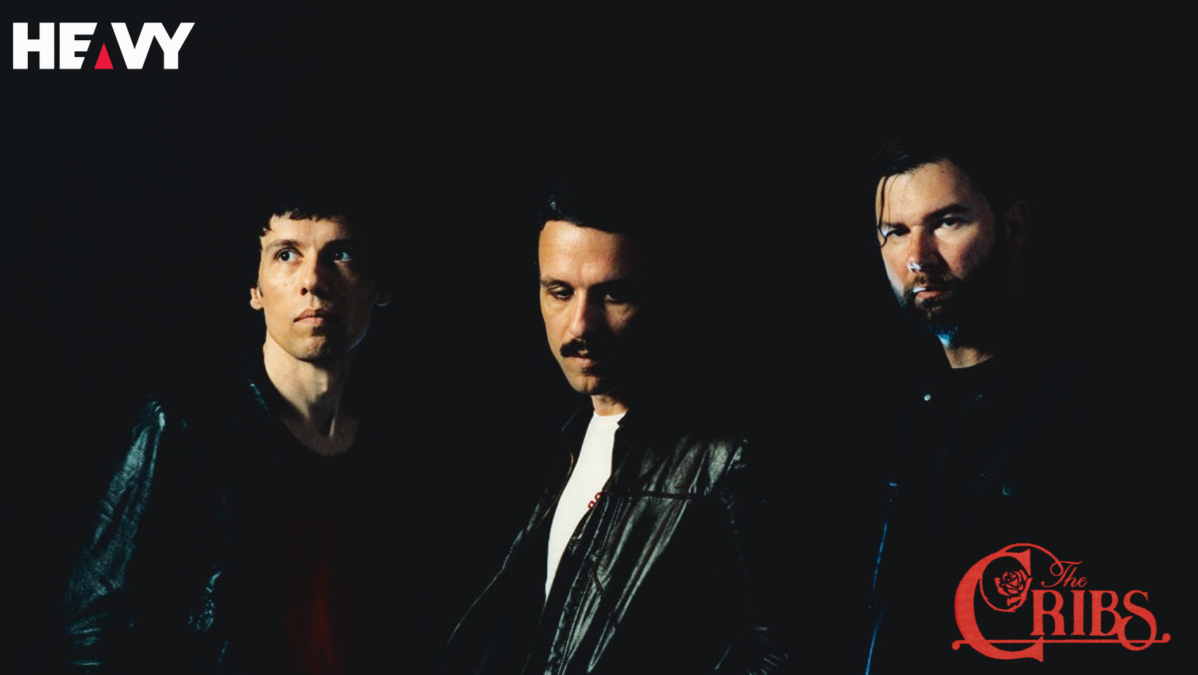
 Interview by Ali Williams THE CRIBS are bringing ninth album Selling A Vibe to Australia this October, and Ryan Jarman is considerably happier about the shows than the long-haul flight. It will be their first national tour since 2018; the pandemic prevented an Australian visit for 2020’s Night Network. Ahead of the return, the guitarist […]
Category: news
-
THE CRIBS: This Was Never Supposed To Be A Proper Job
Interview by Ali Williams THE CRIBS are bringing ninth album Selling A Vibe to Australia this October, and Ryan Jarman is considerably happier about the shows than the long-haul flight. It will be their first national tour since 2018; the pandemic prevented an Australian visit for 2020’s Night Network. Ahead of the return, the guitarist […] -
“Tiene Miedo al Silencio” — Casual Confrontation Takes Power Back From a Toxic Dynamic With “SCARED OF SILENCE”
I gave myself the power of keeping you away
Wrapped up in the sounds of the bastion’s coldest waves
I still see you watching me move towards the within
Frankie Diez seems to have reached the useful stage in an artist’s life where embarrassment stops being a factor. Casual Confrontation began on indie-pop ground, but after five albums since 2020, Diez has clearly decided there are worse things than making the music you actually wanted to hear when you were younger, hanging around punk and goth scenes, absorbing whatever seeped in through the walls.
“I’ve always been inspired and involved within the punk, goth, and alternative subcultures, and it’s about time my music began reflecting that,” says Diez.
You can hear that decision all over SCARED OF SILENCE, the second single from Casual Confrontation’s forthcoming album BASTION. Moving deeper into darkwave and coldwave, Diez has hit upon a combination that feels absurdly overdue: reggaeton and those colder electronic forms sound like tenants who have spent years banging on opposite sides of the same wall, only to discover they were keeping time together. The guitars come in with that severe Twin Tribes economy, the bass carries some of Boy Harsher’s nightclub menace, and beneath it sits a rhythm that keeps trying to pull the song somewhere warmer, dirtier, and more physical. Reggaeton reveals repetition as pressure; a dembow rhythm can keep working on you until thought becomes secondary. EBM has spent decades using similar repetition for control, tension, intimidation, and release. Put them together and suddenly the distance between Bad Bunny and Ultra Sunn starts looking much shorter than anyone bothered to admit.
By the second half, the resemblance to Karol G and Tokischa becomes harder to miss. The track loosens at the waist while retaining its colder frame, and that friction gives it personality. Ministry once made metallic percussion feel like a municipal requirement; Diez borrows some of that hard impact and drops it into a song that would rather dance than march.
He has a name for the approach, too: “Reggaeton Gótico,” which sounds at first like the sort of phrase somebody invents at closing time and then regrets by breakfast. Except the music holds up the joke.
Diez explains why with a much simpler answer: “I always listened to reggaeton growing up in both Puerto Rico and in Miami, and the genre fusion always felt natural, since much of reggaeton can easily have somewhat of a dark-clubbing atmosphere already.”
Lyrically, SCARED OF SILENCE continues the story begun in the previous single, ARREBATO, carrying the sense of an unsafe outside world into a more private confrontation. Here, safety means shutting out the person who made the world feel threatening and looking inward for somewhere to stand. Meditative yet fierce, the song casts silence as a way to reclaim power from a toxic dynamic, finding a strange pleasure in no longer owing someone access.
When an argument reaches a point where even explaining becomes exhausting, Silence becomes the final boundary, and the anger behind it settles into deliberate withdrawal. There is control in choosing when the conversation ends, especially when every earlier exchange has left someone else setting the terms. Diez gives that decision room to breathe, treating solitude as a place where the self can begin to take shape again.
One lyric extends that idea across BASTION as a whole: “When the outside space no longer feels safe, I’ll leave here to see what my heart creates.” The line supplies the forthcoming album BASTION’s central premise, with retreat becoming an opportunity to make something from whatever remains beyond another person’s reach.
By the end, the recurring question about silence has changed shape. It sounds almost taunting now, as if Diez already knows the answer and has finally stopped caring whether the other person admits it.
Listen to SCARED OF SILENCE below:
Listen to SCARED OF SILENCE via Spotify or Apple Music and order the single below.
Follow Casual Confrontation:

The post “Tiene Miedo al Silencio” — Casual Confrontation Takes Power Back From a Toxic Dynamic With “SCARED OF SILENCE” appeared first on Post-Punk.com.
-
On Tour With DANZIG – ANA Take Us Behind The Scenes Part 3
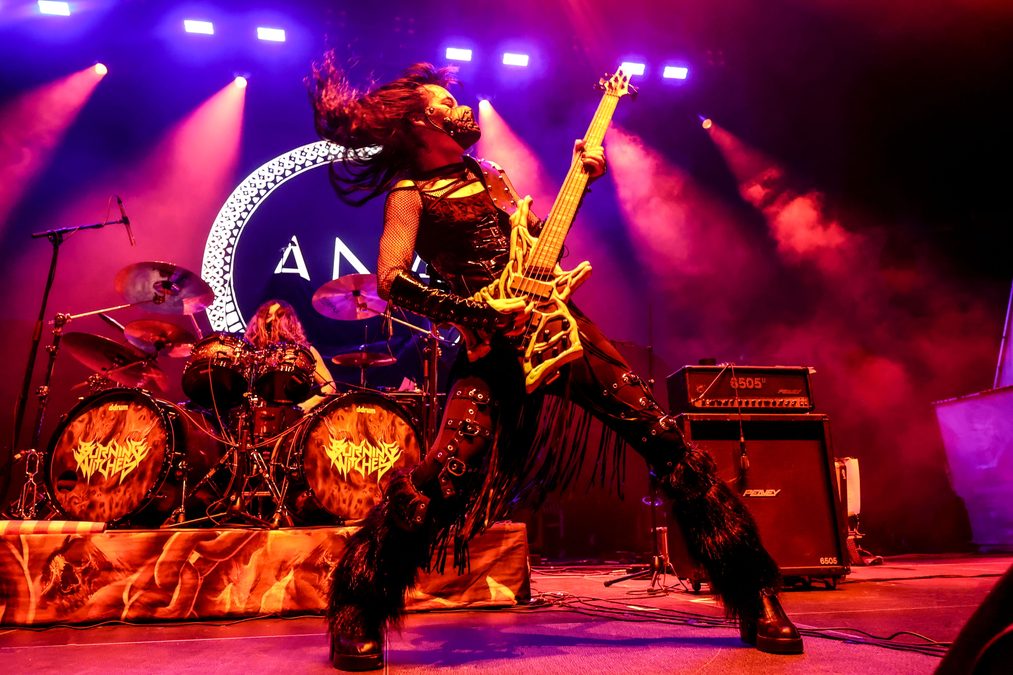 Photos by Paul Miles Melbourne’s premier symphonic metal powerhouse ANA have returned home from tearing the United States a brand-new one. In what can only be described as a monumental, career-defining milestone, our homegrown champions landed the coveted support slot for the legendary, unmistakable icon of the dark arts himself: Danzig for a run of […]
 -
Kid Rock Announces His New Christian Album “Halfway 2 Jesus”, Eminem Guests
A video for “James 1:17” has just debuted.
The post Kid Rock Announces His New Christian Album “Halfway 2 Jesus”, Eminem Guests appeared first on Theprp.com.
-
THE NEW ROSES Share New Track ‘Saints & Sinners’
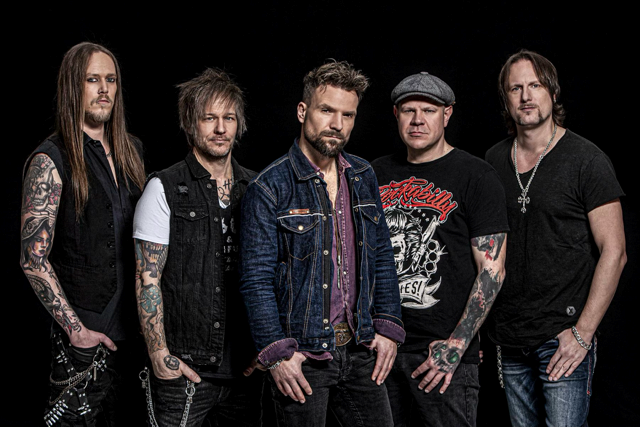 With their new single Saints & Sinners, THE NEW ROSES open a new chapter. The song is a powerful rock anthem about true connection, made for both major stages and rock radio. Combining their signature blend of huge hooks, distinctive guitars and high-energy rock, THE NEW ROSES prove that their musical journey continues to move […]
 -
THE HEBRIDEAN SHEEP Sign With VESPERIAN
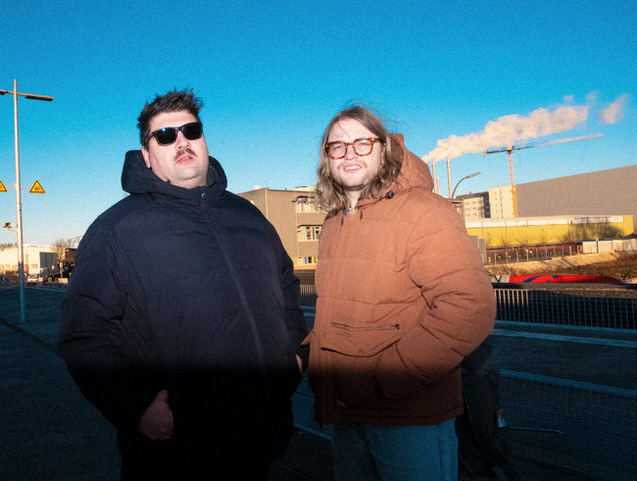 Vesperian is very happy to announce the signing of Hamburg-based power duo THE HEBRIDEAN SHEEP. The band first made a name for themselves with their wild clips on TikTok, Instagram and YouTube. They built a strong following without releasing a single full track, only song snippets, and that was enough to catch the attention of […]
 -
LORD OF THE LOST Frontman CHRIS HARMS Shares “Find What You Love and Let It Kill You” From Upcoming Album “Aporia”
Lord Of The Lost frontman Chris Harms is following up his solo debut with Aporia, due January 22, 2027, through Napalm Records. That date happens to be his birthday, which says plenty about how personal the record is.
His first solo outing, 1980, arrived in February 2025 and landed in the Top 10 of the official German album chart. The Hamburg-based musician, producer and songwriter used it to make good on a long-held ambition to record an album entirely with 1980s equipment. Aporia builds on that groundwork, shifting toward modern electronics, eclectic soundscapes and synth-driven territory that sits outside the sound of his main band.
Harms has also released “Find What You Love And Let It Kill You,” a moody, dark track about passion exacting a toll, a blaze that may end up swallowing you whole. It is available on all streaming services.
Aporia will come in several physical formats, including a limited box set that adds a special bonus CD in a digisleeve.
It is also the first album Harms produced at his new base, Boogie Park Studios in Hamburg, after leaving Chameleon Studios in spring 2026 following several years there. The title comes from an Ancient Greek word for facing a problem with no solution. In philosophy and rhetoric, it marks the point where reasoning smacks into a wall, a purposeful kind of uncertainty. The cover art by VDPictures shows a Penrose Triangle, an optical illusion that breaks the rules of geometry, which suits an album built around paradox and ambiguity.
On Aporia, Harms opens himself up more than ever, and that exposure is what turns the album into a sonic diary and one of the more important entries in his catalog.
For Harms, the record is a chance to look back, confront himself honestly and connect with the present. The material tackles questions that would be far more comfortable to dodge. He instead faces his past mistakes, their consequences and the people who may have been hurt along the way. The outcome is a sincere record that needs little explanation and speaks for itself when given room.
Musically, Aporia follows Harms‘ habit of doing whatever feels right instead of following anyone. The 1980s flavor of his debut gives way to something darker and more reserved, or perhaps something that digs deeper because of that. Opener “U† I†” (You Die, I Die) sets the mood with a pulsing industrial beat beneath grim lyrics. The direct “Skipped A Beat” features Erk Aicrag of Hocico and Rabia Sorda, the first of three guests. Ryan Shuck of U.S. synth-rock outfit Julien-K, the successor to the legendary Orgy, appears on “You Are Not What You See.” Fellow Hamburg artist Swiss of Swiss + Die Andern joins for “Hallo Depression,” the only song sung in German. “On A Dreamless Night” summons inner demons, and closer “Dear Time” plays like an honest letter, looking back on mistakes and begging for a chance to rewrite them.
Aporia is available to pre-order here.

The post LORD OF THE LOST Frontman CHRIS HARMS Shares “Find What You Love and Let It Kill You” From Upcoming Album “Aporia” appeared first on Sonic Perspectives.
-
Premiere: KARLY JEWELL ‘Check Out’
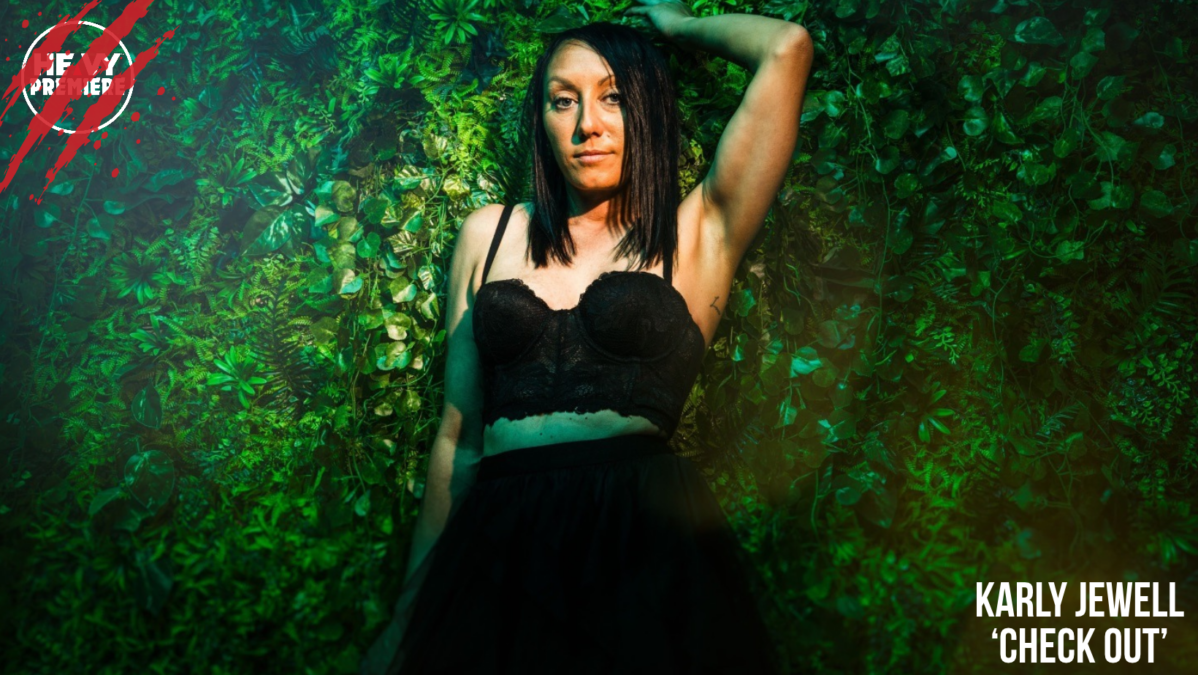 Melbourne vocalist Karly Jewell’s has released Check Out, the final single from her second full length album, There’s A Jewell In Town, which on release debuted on the ARIA Australian Artists Chart at Number 3! Born from the deepest corners of grief, Check Out is an anthem for anyone who has ever felt like giving […]
 -
Descape’s “True Colors” Music Video Debuts
The group’s album of the same name will be out tomorrow, October 02nd.
The post Descape’s “True Colors” Music Video Debuts appeared first on Theprp.com.
-
YNGWIE MALMSTEEN Shares Music Video For “Beyond Zeta Reticuli” From Upcoming Album “Hell Or High Water”
Swedish guitarist Yngwie Malmsteen has released the video for “Beyond Zeta Reticuli,” the second single off his new studio album, Hell Or High Water. The record is due Nov. 13 through Music Theories Recordings/Artone Label Group.
Malmsteen comments, “Inspired by my fascination with alien life, this instrumental combines big, heavy themes, strong melodies and intricate counterpoint — pure neoclassical fire.”
Press materials slot Malmsteen alongside Jimi Hendrix, Jimmy Page and Edward Van Halen as one of the players who built a new sound on the instrument from scratch.
The nine songs on Hell Or High Water were written with care and with the world kept at arm’s length. He first tried that approach on 2021’s Parabellum, partly because of how things were in the world at the time. The results were strong enough that he made it his standard method.
Malmsteen explains, “When I started making records, I would just take the songs I had lying around. Later on, I fell into a schedule — make a record, tour the record and then write the next record. Over the pandemic, I realised it was better to focus completely uninterrupted, so I stayed at home to write this album over the course of eight months. I had around 80 or 90 tracks finished, and then I had to decide which ones were the strongest.”
Writing, by his own account, is hardly a struggle. He leans on the building blocks of music and says he can build whatever a person asks for.
“Even without a guitar in my hands, the music just comes to me,” Malmsteen says. “It’s like that movie Amadeus. Mozart was getting music given to him in complete form. I understand the building blocks and can therefore build you anything you like. If you asked me to write you a death metal song, call me back in five minutes, and I’d have it ready for you. You want country and western or reggae? No problem. I can give you whatever you want. The language of music is simple. There are certain notes that belong together in whatever stylistic direction and sound pleasant to the ear. The ideas don’t come all the time, but when they do, it’s like an avalanche.”
“The pieces I choose for my records are like gifts that I capture because they amaze me. I’m very lucky in that sense.”
Lead single “Now Or Never” packs palm-muted riffing, baroque counterpoint melodies, soaring vocals and absurd dexterity into one track. It is Malmsteen in a nutshell, and the instrumental “Am Caprice/Hell Or High Water” in the second slot follows suit. “(On The) Battlefield” and “Eye For An Eye” carry some of his best vocal work to date. The instrumentals “Antikythera” and “Beyond Zeta Reticuli” take their names from scientific discoveries.
The closing track, “Father,” is the emotional high point. Malmsteen wrote it for his dad, who died last year.
“He was an amazing man,” Malmsteen remembers. “I was proud to have him as a father, and I loved him. I wanted to dedicate all of this to him, and that one particular track is for him. I wanted others to feel what I felt when they hear it. Niccolò Paganini once said, ‘One must feel strongly in order to make others feel strongly.’ It’s one thing to be a typewriter and another thing to be someone who writes stories that can touch people. That was always the point.”
After years of working with some of the top hard rock vocalists around, Malmsteen now handles most of the lead singing himself. His band includes keyboardist Nick Marino, bassist Emilio Martinez and drummer Kevin Klingenschmid.
Malmsteen put out the live album Tokyo Live in April 2025 through Music Theories Recordings. It was recorded at Zepp DiverCity in Tokyo on May 11, 2024, during his 40th-anniversary world tour.
The post YNGWIE MALMSTEEN Shares Music Video For “Beyond Zeta Reticuli” From Upcoming Album “Hell Or High Water” appeared first on Sonic Perspectives.