NILE SAPPHIRE Announce Debut Single “ECO,” Delivering A Powerful Progressive Metal Call For Environmental Awareness
Venezuelan-Spanish Duo Combines Crushing Progressive Riffs, Atmospheric Soundscapes, And Soaring Vocals On November 27 Debut
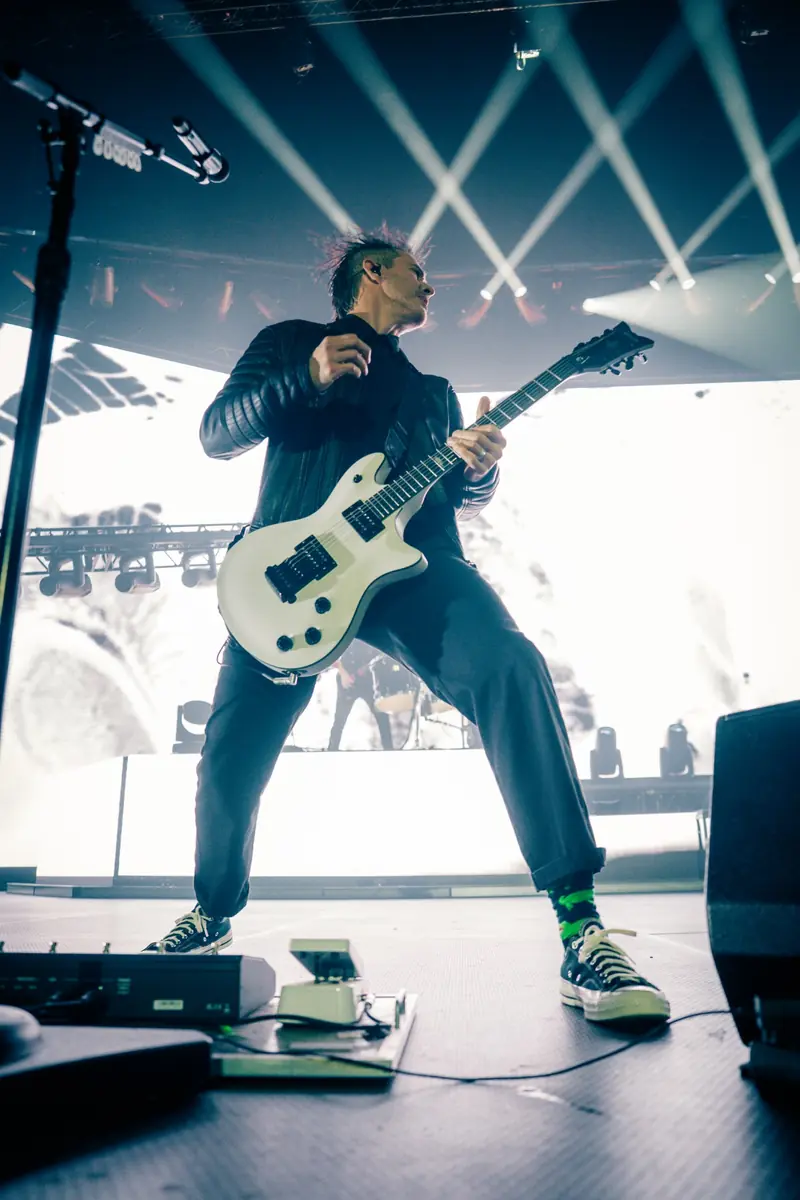
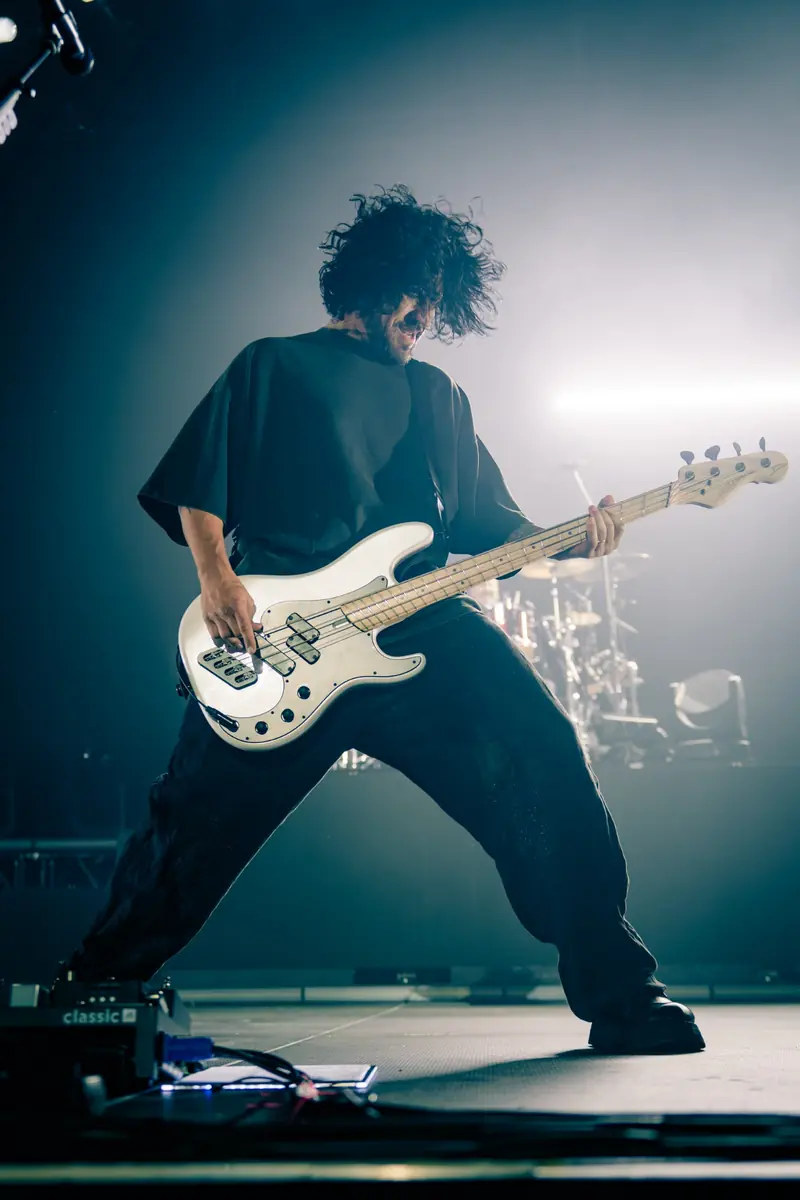
OCAÑA, TOLEDO, SPAIN – Emerging progressive metal duo NILE SAPPHIRE are preparing to make their official entrance onto the international metal scene with the release of their debut single, “ECO,” arriving November 27, 2026. Blending technically driven progressive metal, expansive atmospheric arrangements, and commanding vocal performances, the independent project delivers a powerful introduction backed by a message that reaches far beyond music.
Founded in 2024 in Ocaña, Toledo, Spain, NILE SAPPHIRE brings together Venezuelan musicians Félix Molina and Evely Artemisa, combining their individual musical journeys into a collaborative vision built on technical musicianship, creative exploration, and meaningful songwriting.
“ECO” serves as an urgent wake-up call addressing humanity’s destructive impact on the natural world. Confronting environmental indifference and the consequences of human activity, the song challenges listeners to recognize their responsibility toward the planet and become active participants in creating change. Rather than simply highlighting the problem, NILE SAPPHIRE uses the track as a call to awareness and action.
Musically, the project draws inspiration from the progressive heaviness of Gojira, the melodic sophistication of Evergrey, and the expansive power of Kamelot, while developing an identity of its own through intricate guitar work, atmospheric textures, and expressive lead vocals.
Behind the project are two musicians with deep roots in Venezuela’s metal scene. Guitarist, songwriter, and producer Félix Molina, originally from Caracas, previously developed his musical identity through bands including Silmarilion and Overground before expanding into music production and founding progressive metal project CIVILIS.
Vocalist Evely Rodríguez, performing as Evely Artemisa, originally from Valencia, Venezuela, brings an equally diverse musical background, having fronted projects including Mística, LunaSacra, Terra Nostra, and Aragonia. Her powerful and versatile vocal approach provides the defining melodic character of NILE SAPPHIRE.
The band’s formation represents more than a musical collaboration. Molina and Artemisa originally developed their first musical ideas in Venezuela before emigrating to Peru in 2018 and eventually settling in Spain, where they finally brought NILE SAPPHIRE to life. Their journey of displacement, perseverance, and artistic determination is reflected in the project’s identity.
Even the band’s name carries personal significance. “Nile” honors Evely’s family heritage and pays tribute to her father, while “Sapphire” references a star sapphire belonging to a relative of Félix, a gemstone known for intensifying its brilliance when exposed to light.
Working independently from their home studio in Toledo, the duo maintains complete creative control over the songwriting, recording, and production process. Félix Molina handles guitars, session instrumentation, drum programming, recording, editing, and production, while Bertrand Cape contributes mixing and mastering expertise.
With “ECO,” NILE SAPPHIRE introduce a project built on technical ambition, emotional expression, and a willingness to address issues that extend beyond the boundaries of the metal genre.
The journey officially begins November 27, 2026.
Watch the official video premiere: [jrEmbed module=”jrYouTube” youtube_id=”KJ3TvcG0WU0″]
“ECO” – OUT NOVEMBER 27, 2026
NILE SAPPHIRE IS:
FOR FANS OF: Gojira, Evergrey, Kamelot
ABOUT NILE SAPPHIRE:
NILE SAPPHIRE is an independent progressive metal duo founded in 2024 by Venezuelan musicians Félix Molina and Evely Artemisa in Ocaña, Toledo, Spain. Combining heavy progressive riffing, atmospheric arrangements, technical musicianship, and powerful vocal performances, the band creates music driven by personal experiences, conceptual depth, and meaningful themes. With a shared history spanning Venezuela, Peru, and Spain, NILE SAPPHIRE represents the creative resilience of two musicians bringing their vision to life on their own terms.
FOLLOW NILE SAPPHIRE:
https://www.instagram.com/nilesapphireofficial/ https://www.facebook.com/profile.php?id=61583152094393
Contact: nilesapphireofficial@gmail.com
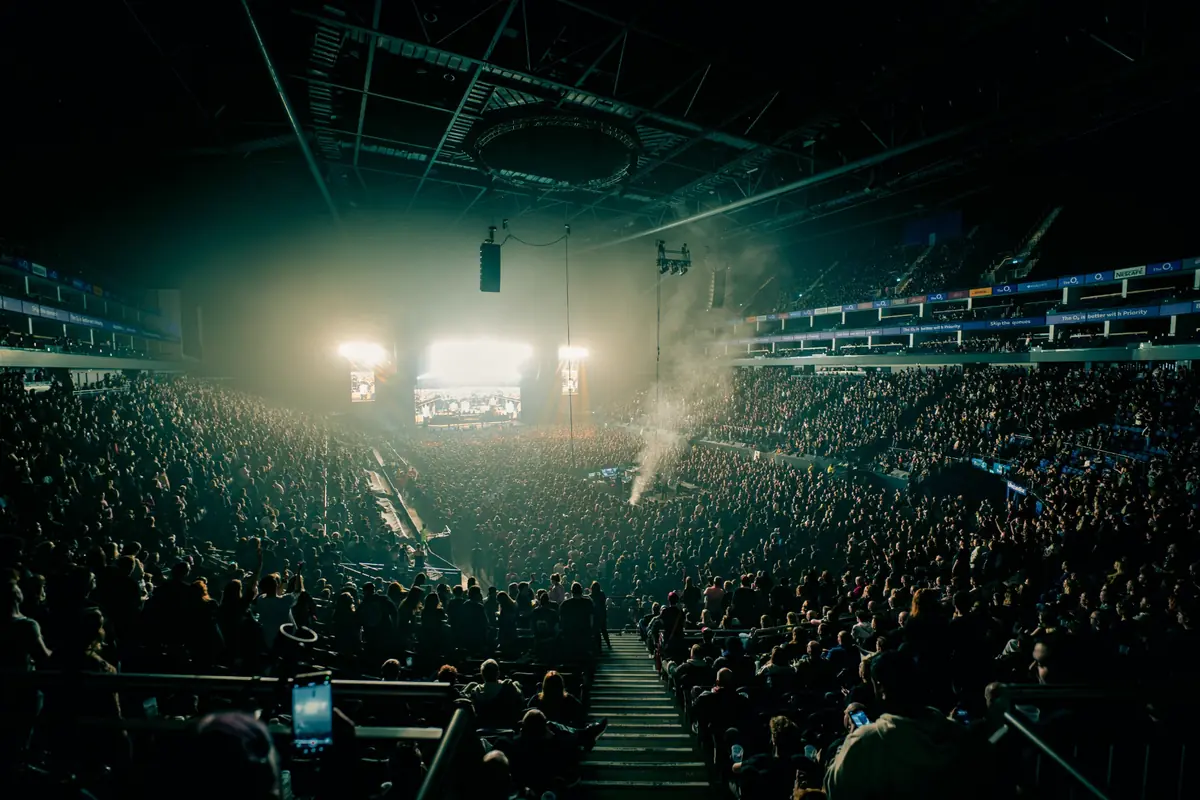
Bon Jovi’s Livin’ On A Prayer rang around The O2 while thousands sang every word back. Fans were already in full voice before Papa Roach appeared, turning the arena into one giant singalong. A backstage camera followed the band through the corridors towards the stage, with Jacoby Shaddix draped in a Union Jack, as the band made their way to the stage and the giant white curtain concealing it. By the time Between Angels And Insects burst into life, the atmosphere inside The O2 was boiling over.
Footage of a cockroach crept across the screen before gradually revealing the silhouettes of the band waiting behind it. White light flooded the arena as the barrier finally dropped, exposing Papa Roach in full and triggering the release of thousands of bodies swirling and crashing together. Very few opportunities to catch a breath after that.
To Be Loved, She Loves Me Not and Getting Away With Murder landed early, greeted by a wall of raised hands, singing voices and bodies bouncing or pogoing across the floor. Looking around the arena, there were moments that felt like people had turned up simply to sing their heart out. Jacoby barely needed to hold the microphone towards the crowd before another chorus came thundering back at him.
Papa Roach – The O2, London – 8 November 2026. Photo: Harris Tomlinson-Spence
The band looked completely locked into their performance, with no sign of anybody going through the motions thirty years after forming. While Jacoby naturally attracted much of the attention, the smiles exchanged across the stage suggested a band enjoying the occasion just as much as the audience.
Rarely staying in one place for long, Jacoby spent much of the evening racing from one side of the stage to the other, constantly pulling reactions from whichever section of The O2 he happened to be standing in front of. During Liar, he had the entire arena crouched down before unleashing the song’s payoff. Thousands obliged, launching to their feet with renewed energy.
By the second half of the set, the floor had become a sea of sweat and smiles. With constant movement, pits opened repeatedly before collapsing back into embraces and shared laughter. Even complete strangers sang arm in arm. Those emerging from the hot chaos looked just as happy as those watching it unfold around them. Far from running out of steam, the crowd seemed to find another gear every time the next chorus arrived.
Papa Roach – The O2, London – 8 November 2026. Photo: Harris Tomlinson-Spence
Help and Falling Apart shifted the mood, and Scars brought one of the evening’s defining moments. Before the song, Jacoby spoke openly about what it had meant to the band and the role it played during a pivotal point in their career.
Around the arena, the reactions followed suit. Some stood quietly with arms around friends and family. Others sang towards the stage with tears in their eyes. Not every song survives twenty years with that sort of connection intact. Scars clearly still does.
References to the band’s history were never far away. Jacoby spoke about forming Papa Roach in 1993 and thanked those gathered inside The O2 for helping turn that dream into reality. Korn received particular acknowledgement after being credited as the first band to take Papa Roach on an arena tour, prompting huge cheers before snippets of Blind and Deftones’ My Own Summer (Shove It) found their way into the set.
Florent Salfati received a hero’s welcome when he returned to the stage, further evidence of the impression LANDMVRKS had made earlier in the evening. Sleep Theory vocalist Cullen Moore also joined the celebrations, with both appearances fitting naturally into proceedings. This was clearly Papa Roach’s night, but there was plenty of appreciation for the wider Nu Metal scene surrounding it too.
Visually, the production rarely needed to overcomplicate things. Large blocks of colour and intense white lighting carried much of the show, creating striking visuals without distracting from the songs themselves. Combined with the heat building inside the arena and the relentless movement on the floor, the scale of the occasion only seemed to grow as the night went on.
Papa Roach – The O2, London – 8 November 2026. Photo: Harris Tomlinson-Spence
The closing stretch ensured nobody was leaving with much energy left in reserve. Limp Bizkit’s Break Stuff sent the arena into another frenzy, and somewhere between that and System Of A Down’s Chop Suey! a stray trainer found its way onto the stage.
Jacoby quickly turned the situation into an impromptu Cinderella moment, locating the owner and inviting them onstage. Before Jacoby could see if the shoe fit, the fan removed their remaining shoe and launched it back into the audience. Not about to let the joke end there, Jacoby grabbed the original shoe and hurled that back into the crowd as well.
Last Resort finally arrived, and the response was exactly what you would expect. Voices drowned out the band, the pit burst into life one final time, and sweat-soaked fans bounced alongside one another as if the night had only just started.
When the lights came up, finding anybody without a grin on their face felt almost impossible. Throughout the evening, Jacoby spoke repeatedly about gratitude, whether towards the fans, the bands that helped Papa Roach find their feet or the wider Nu Metal scene itself.
Papa Roach – The O2, London – 8 November 2026. Photo: Harris Tomlinson-Spence
Looking around The O2, with thousands filing out exhausted, drenched and smiling from ear to ear, his words carried plenty of weight. More than three decades on, Papa Roach still look like a band enjoying every minute of the ride.
Papa Roach – The O2, London – 8 November 2026. Photo: Harris Tomlinson-Spence
In London, Papa Roach continued their commitment to raising awareness and funds for Suicide Prevention, donating £40,000 to CALM (Campaign Against Living Miserably) Suicide Prevention Organization in the UK. This follows the £20,000 donation to CALM they made in 2025. Papa Roach has donated over $750,000 since 2023 in the name of the cause.
“This run of shows in the UK was our biggest yet,” Jacoby Shaddix said, “and the fans really showed up. We are so grateful to fans who showed up across the UK and helped us to give back in support of an important cause.”
“We can’t thank Papa Roach enough for their continued support,” Simon Gunning, CEO of Campaign Against Living Miserably (CALM), said. “By sharing CALM’s message on a huge scale, and raising funds for our life-saving services, they’re making a real difference and showing the incredible power music has when it comes to suicide prevention.”
Papa Roach – The O2, London – 8 November 2026. Photo: Harris Tomlinson-Spence
Original W.A.S.P. drummer Tony Richards has died at 69.
The glam metal hit-makers’ mainstay singer/guitarist Blackie Lawless broke the news via social media on Thursday, remembering Richards for his striking look and ability behind the kit. No cause of death has been given.
The drummer was only part of W.A.S.P. for two years, but played on the Los Angeles band’s 1984 self-titled debut album, which has since been certified Gold in the US, Canada and Japan. The album spawned the single I Wanna Be Somebody, which charted in Finland, New Zealand and the UK and is one of the band’s most-played songs live.
“The entire W.A.S.P. camp are deeply saddened to hear of the passing of our original drummer, Tony Richards,” Lawless writes on W.A.S.P.’s socials. “When the band was first started we were four extremely strong personalities. Tony was absolutely equal to any of the others that were in the band.
“His personality was infectious. He looked fantastic in photos. But his ability to play made him really who he was. To watch him play riveted you no matter where you were in the room. When he was gone from the band we were wounded in a way that we never really quite recovered from. He was equally a part of that first album and when that record is heard to this day his personal stamp will forever be a part of the totality of that recording.
“He will forever be missed. We in the W.A.S.P. camp would like to wish his family our deepest condolences.”
W.A.S.P co-founder and ex-guitarist Chris Holmes has also paid tribute, writing on Instagram: “Goodbye Tony. My friend and one of the nicest fella[s] you could know!!”
Born on June 19, 1957, Richards was already a sought-after drummer when he joined a fledgling W.A.S.P. in 1982, having previously been part of L.A. band Dante Fox (who later rebranded as multi-Platinum-selling rockers Great White). He parted ways with W.A.S.P. at the beginning of their 1984–85 tour cycle and was replaced by Steve Riley.
In 2022, Lawless spoke to Blabbermouth about his regret in losing Richards from W.A.S.P.’s lineup: “Tony was one of those five-point guys. He looked great, looked great in photos, and performed great. [He] could sing his ass off and perform his butt off. When we lost him, we were mortally wounded, and we knew it.”
Shawn 'Clown' Crahan told Rock Sound in an interview that Slipknot's next album will have longer songs and be more of a 'musician's album.' Continue reading…
There are many ways to play the guitar, and certainly many legendary guitarists, such as Chet Atkins, Joni Mitchell, and Stevie Ray Vaughan, among countless others. While these are all stylistically varied and irrefutably great guitarists, they are not metal guitarists.
The specific stylings of metal guitar are almost universal within the genre: big distortion, quick single-note line runs, detuning, sweep picking, and tremolo picking, to name a few.
Not all guitarists can do these acrobatic skills; Tony Iommi isn’t known for his shred as much as John Petrucci, but all of these on this list are legendary innovators and exceptional players.
1. Tony Iommi
Tony Iommi is an English guitarist best known as the co-founder and lead guitarist of Black Sabbath. He pioneered heavy metal guitar with his dark, heavy riffs and detuned sound. Iconic for the fact that he lost the tips of two fingers on his right (fretting) hand in a factory accident at 17, and has played ever since with homemade thimbles, the first of which he made from a melted plastic bottle.
Most Influential Work: His work on Black Sabbath’s self-titled debut album, especially the iconic riff of “Black Sabbath,” set the standard for heavy metal guitar.
2. Randy Rhoads
My favorite metal guitarist and lifelong inspiration was Randy Rhoads, an American guitarist known for his work with Ozzy Osbourne and Quiet Riot. He combined classical music influences with heavy metal to create a unique guitar style, one of the few metal guitarists who worked actively as a guitar teacher, at his mother’s music school, and studied classical guitar before becoming a legend.
Most Influential Work: His guitar work on Ozzy Osbourne’s “Crazy Train” from the album “Blizzard of Ozz” showcased his virtuosity and became an anthem of heavy metal.
3. John Petrucci
John Petrucci is an American guitarist and founding member of the progressive metal band Dream Theater. Renowned for his technical skill, precision, and mastery of the instrument, he’s a prominent figure in the progressive metal genre. It’s hard to argue with anything that John does because it is so exacting, you may not like brutalist architecture but it’s hard to disagree with how specific it is.
Most Influential Work: Dream Theater’s album “Images and Words” showcased Petrucci’s exceptional guitar playing and songwriting abilities, particularly in tracks like “Pull Me Under” and “Metropolis Part I: The Miracle and the Sleeper.”
4. Dave Mustaine
The story has changed many times over the years, but those who know, know that Dave was originally in the band Metallica. After Metallica fired him in April 1983, weeks before they recorded their debut album, he founded Megadeth and a very different style of metal music — featuring more thrash and less pop, and the use of more exotic-sounding scale patterns. He’s acclaimed for his aggressive riffing style and politically charged lyrics.
Most Influential Work: Megadeth’s album “Rust in Peace” is often regarded as their magnum opus, featuring Mustaine’s intricate guitar work and songwriting, notably in tracks like “Holy Wars… The Punishment Due.”
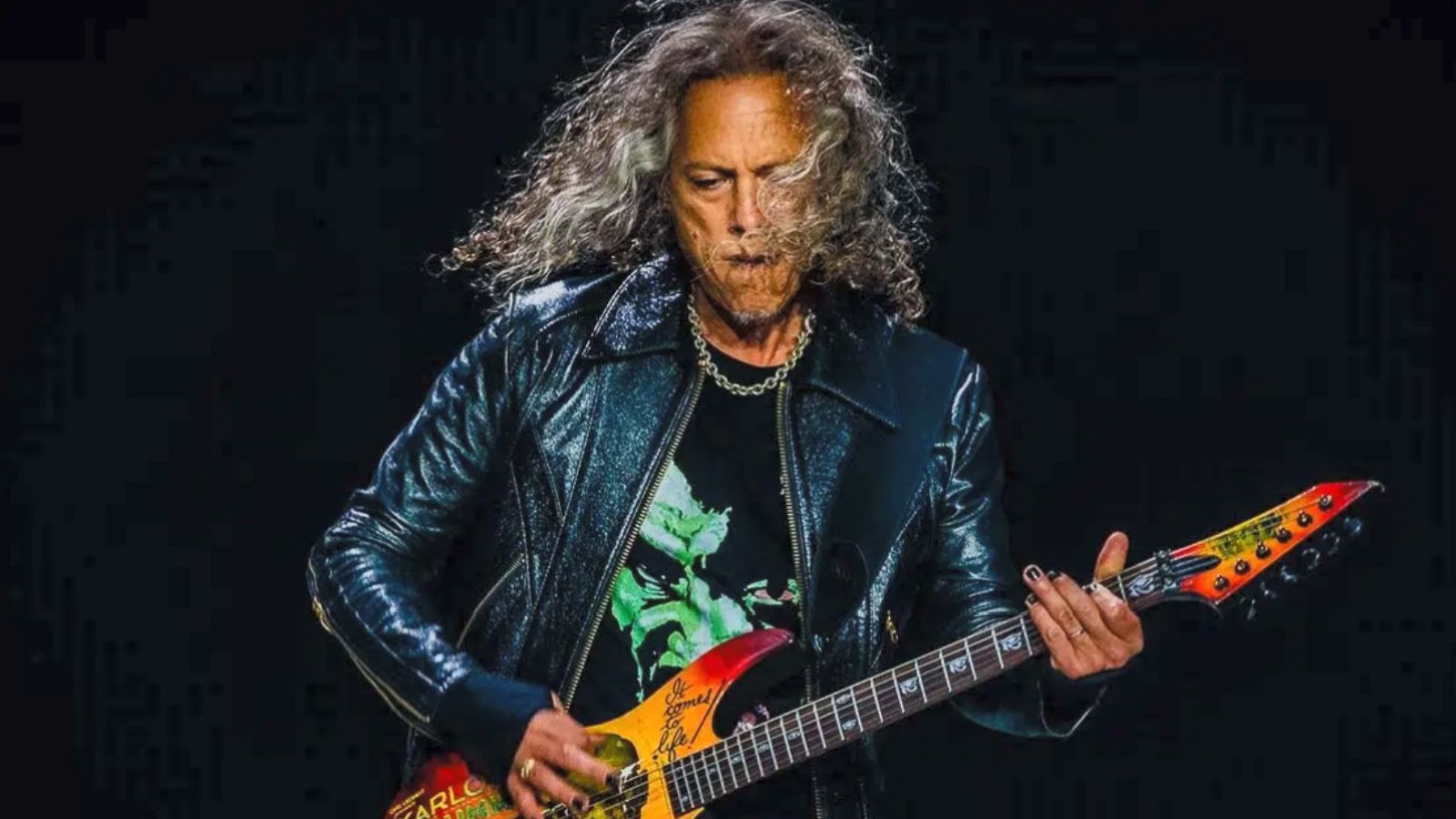
5. Kirk Hammett
The real juice in the band Metallica is perhaps not James Hetfield, even though he is the singer and frontman. Kirk Hammett is an American guitarist known for his role as the lead guitarist of Metallica. He’s recognized for his melodic solos and contributions to Metallica’s sound, especially the wah-drenched leads that became his trademark.
Most Influential Work: Metallica’s album “Master of Puppets” features some of Hammett’s most iconic guitar work, particularly in the title track and “Battery,” solidifying his place as a metal guitar virtuoso.
6. Dimebag Darrell
Dimebag Darrell with Pantera at Monsters of Rock, Castle Donington, 1994. Photo: Martyn Goodacre, CC BY 4.0, via Wikimedia Commons (cropped)
Dimebag Darrell was an American guitarist best known as the co-founder and lead guitarist of Pantera, who was killed on December 8, 2004, while performing on stage with Damageplan in Columbus, Ohio. Renowned for his aggressive yet melodic playing style, he influenced a generation of metal guitarists and was synonymous with pick squeals or pinch harmonics, a technique borrowed from blues rock that he turned into one of metal’s signature sounds.
Most Influential Work: Pantera’s album “Vulgar Display of Power” featured Dimebag’s powerful riffing and solos, notably in tracks like “Walk” and “Mouth for War.”
7. Zakk Wylde
Ozzy had a long line of EXCELLENT guitarists not featured here, Jake E. Lee (Bark at the Moon? COME ON), but Zakk Wylde is an American guitarist known for his work with Ozzy Osbourne and as the founder of Black Label Society. He’s recognized for his heavy riffs, blistering solos, and signature “bullseye” guitar design. He plays so hard that he has been caught on camera bleeding mid-solo.
If you’ve ever played guitar for a long period, you’ll know that this is not incredibly uncommon. Contrary to a common misconception, the blood does not typically come from the tips of your fingers, but from the cuticle of the picking hand, which can be ripped open by the strings if you pick aggressively. This part of the hand also doesn’t grow calluses, so it will often rupture when doing sustained tremolo picking.
Most Influential Work: His guitar work on Ozzy Osbourne’s album “No More Tears,” particularly the track “No More Tears,” showcased his technical skill and emotional depth as a guitarist.
8. James Hetfield
Like it or not, we are in the world of Metallica, and even though he is not a particularly pyrotechnic or acrobatic guitarist, he is responsible for and the frontman of perhaps the biggest metal band of all time. James Hetfield is an American guitarist and vocalist best known as the rhythm guitarist and co-founder of Metallica. He’s revered for his powerful rhythm guitar playing and distinctive down-picking style.
Most Influential Work: Metallica’s album “Master of Puppets” features Hetfield’s masterful rhythm guitar work, particularly in tracks like “Battery” and “Damage, Inc.”
9. Kerry King
This might be less familiar to young readers, but Kerry King is an American guitarist and co-founder of the thrash metal band Slayer. Slayer was the band to beat in the early 80s and pushed the entire genre into how we know it today. Many people will even say that thrash never accelerated past Slayer, and I am inclined to agree with them. Known for his fast, aggressive, and chaotic guitar playing, he helped shape the thrash metal genre.
Most Influential Work: Slayer’s album “Reign in Blood” is considered a seminal work in thrash metal, with King’s ferocious guitar riffs and solos evident in tracks like “Angel of Death” and “Raining Blood.”
10. Slash
The original Buckethead, Slash, is a British-American guitarist best known as the lead guitarist of Guns N’ Roses. A little perspective here: if you listen to November Rain and then immediately listen to Dream Theater, you will think that Guns N’ Roses was a pop band. But you have to put everything in context; for all intents and purposes, Guns N’ Roses was a metal band that breached the charts and had a few pop-accessible hits. Those highs propelled them into the stratosphere, and they altered their style to fit. Famous for his bluesy, expressive guitar solos, he’s regarded as one of the greatest guitarists of all time.
Most Influential Work: Guns N’ Roses’ album “Appetite for Destruction” features Slash’s iconic guitar work, particularly in the timeless solos of tracks like “Sweet Child O’ Mine” and “Paradise City,” while “November Rain” followed on 1991’s “Use Your Illusion I.”
11. Yngwie Malmsteen
As much as you might hate the term neoclassical, it’s hard to argue with what Yngwie has done for the genre and for the stylistic adaptations of guitar players. My first instrument had a scalloped fretboard, so I could shred just like him! Yngwie Malmsteen is a Swedish guitarist known for his virtuosic neoclassical metal guitar playing. He’s revered for his technical skill, speed, and intricate compositions.
Most Influential Work: Malmsteen’s album “Rising Force” showcased his virtuosity and introduced his signature style, with tracks like “Black Star” and “Far Beyond the Sun” becoming classics in the neoclassical metal genre.
12. Marty Friedman
The real secret behind Megadeth is not Dave Mustaine, but instead, it is Marty Friedman. His use of altered scales, exotic scales, modes of Phrygian, and tremendous sense of phrasing, was the reason why that band worked so well during his 1990-2000 run. Marty is the reason why they grew larger than just the thrash genre. Marty Friedman is an American guitarist known for his work with Megadeth and his solo career. He’s recognized for his fusion of Eastern musical influences with metal and his emotive guitar playing.
Most Influential Work: Megadeth’s album “Rust in Peace” features Friedman’s exceptional guitar work, particularly in the solos of tracks like “Tornado of Souls” and “Hangar 18.”
13. Ritchie Blackmore
Blackmore on stage with Rainbow in the late ’70s.
Before anyone called it neoclassical, Ritchie Blackmore was already bolting Bach onto hard rock. As the founding guitarist of Deep Purple, he wrote the riff to “Smoke on the Water,” the first thing half the guitarists on this list ever learned, and his solo on “Highway Star” is built like a baroque harpsichord piece played through a cranked Marshall.
Then he left to form Rainbow with a then little-known Ronnie James Dio and helped write the blueprint for epic, fantasy-drenched heavy metal. He was famously difficult, scalloped his fretboards, and at California Jam in 1974 attacked a TV camera with his Stratocaster before blowing up his amps. Yngwie Malmsteen learned Deep Purple records note for note as a kid, even if he now insists his style comes from Bach and Paganini rather than Blackmore.
Most Influential Work: Deep Purple’s Machine Head (1972), for “Highway Star” and “Smoke on the Water,” and Rainbow’s Rising (1976), whose eight-minute “Stargazer” is about as close to the birth of power metal as it gets.
14. Chuck Schuldiner
Chuck Schuldiner was an American guitarist and vocalist, known as the founder and frontman of the death metal band Death. He pioneered the death metal genre with his intricate guitar work and songwriting. Hard to argue with, even though Death never broke into the mainstream.
Most Influential Work: Death’s album “Symbolic” is regarded as one of the band’s masterpieces, featuring Schuldiner’s complex guitar compositions and progressive elements, especially evident in tracks like “Crystal Mountain” and “Empty Words.”
15. Mikael Åkerfeldt
While most of the guitarists I have focused on are Americans from the mid-’80s, we do not have time to investigate all of Scandinavia. The instrumentalists of all shapes and sizes coming out of Scandinavia deserve to have their articles and deserve to be in the pantheon of the greatest guitar players who ever lived, but because the critical music industry has been dominated by Americans for so long, music from non-English-speaking countries was always a second thought. Mikael Åkerfeldt is a Swedish guitarist and vocalist known for his work with Opeth. Notable for blending progressive rock with death metal, he’s revered for his versatile guitar playing and songwriting.
Most Influential Work: Opeth’s album “Blackwater Park” features Åkerfeldt’s progressive guitar work and songwriting prowess, particularly in tracks like “The Drapery Falls” and the title track “Blackwater Park.”
16. Adrian Smith
Adrian Smith on stage with Iron Maiden.
Adrian Smith is an English guitarist best known as a longtime guitarist of Iron Maiden, which he joined in 1980. Renowned for his precise, melodic leads and signature dual-guitar harmonies, he has been instrumental in defining the New Wave of British Heavy Metal. His style, characterized by fast, clean picking and intricate harmonized solos, has inspired countless metal guitarists around the world.
Most Influential Work: Iron Maiden’s album “The Number of the Beast” showcases Smith’s groundbreaking work, with its soaring guitar harmonies and innovative solos that helped cement the band’s legendary status in metal history.
17. Alexi Laiho
The late Finnish firebrand behind Children of Bodom attacked the fretboard like a Valkyrie dive-bombing Valhalla, fusing neoclassical flourishes with chainsaw-sharp riffing that dragged melodic death metal into the mainstream.
Armed with his signature ESP “Scythe” and a devil-may-care stage presence, Laiho’s icy harmonic-minor runs and whammy-bar screams proved you could blend virtuosity with genuine menace, and still leave room for a hook big enough to snare festival crowds across Europe.
Most Influential Work: 2000’s “Follow the Reaper” crystallized Laiho’s style; tracks like “Hate Me!” and “Everytime I Die” pair hyperspeed arpeggios with anthemic choruses, setting the gold standard for modern melodic death metal guitar.
18. Jeff Hanneman
Where many thrash players sprint, Hanneman stormed; his right-hand picking sounded like a machine-gun burst rattling a tin roof. As Slayer’s co-founder and main riff architect, he injected hardcore punk ferocity into metal, birthing riffs that felt less like music and more like incoming artillery. His solos, often chaotic and chromatic, were the sonic equivalent of blood-splattered shorthand: messy, visceral, unforgettable.
Most Influential Work: “Seasons in the Abyss” (1990) captures Hanneman at full intensity; the opening salvo “War Ensemble” and the ominous title track showcase his gift for marrying breakneck aggression with eerie melody, cementing his legacy as thrash’s dark mastermind.
19. Glenn Tipton
If Judas Priest are steel, Tipton is the sharpened edge. With K.K. Downing he codified the twin-guitar harmony blueprint; his precise alternate picking, classical fragments, and lyrical bends turned sheer speed into melody that actually sticks in your head.
Most Influential Work: Judas Priest’s “Painkiller” (1990): the title track and “A Touch of Evil” showcase Tipton’s searing precision and soaring, singable leads.
20. Fredrik Thordendal
Fredrik Thordendal on stage with Meshuggah.
Where most players count beats, Thordendal bends gravity. As Meshuggah’s riff architect, he dropped into abyssal tunings, stacked polymeters until they felt hypnotic, and soloed with angular, Holdsworth-tinged lines that made mechanical brutality feel strangely alive. He’s the tectonic fault line under modern djent and extreme prog metal.
Most Influential Work: Meshuggah’s “Destroy Erase Improve” (1995): “Future Breed Machine” crystallizes his polyrhythmic, low-tuned language and rewires how metal guitar thinks about rhythm.
21. Synyster Gates
When the early 2000s were largely dominated by Nu-Metal bands that treated guitar solos like a contagious disease, Synyster Gates kicked the door down and brought the “Guitar Hero” back to the mainstream.
As the lead guitarist for Avenged Sevenfold, he fused the dual-guitar harmonies of Iron Maiden with a gypsy-jazz flair and absolute technical wizardry. He is arguably responsible for inspiring an entire generation of millennials to pick up the instrument and learn what a sweep-pick actually is.
Most Influential Work: Avenged Sevenfold’s album “City of Evil” is a masterclass in modern metal guitar, with the track “Bat Country” serving as a high-speed, dual-guitar manifesto that proved shredding belonged on the radio.
22. Tosin Abasi
If heavy metal is about pushing boundaries, Tosin Abasi didn’t just push them; he broke them and built a new instrument in the wreckage. As the mastermind behind the instrumental band Animals As Leaders, Tosin is less of a guitar player and more of a musical scientist.
He helped popularize 8-string guitars and adapted the “thumping” technique from bass guitar to the electric guitar, creating a percussive, piano-like sound that is entirely his own. He represents the future of the instrument, where jazz harmony meets the heaviest, lowest notes imaginable.
Most Influential Work: The self-titled debut album “Animals As Leaders” is essential listening, specifically the track “CAFO,” which remains a terrifying display of technical prowess that leaves most other guitarists wondering if they are even playing the same instrument.
23. Adam Jones
Adam Jones on stage with Tool.
Most guitarists on this list earn their spot by playing fast. Adam Jones earns his by playing slow, and somehow making it heavier than all of them. As the guitarist of Tool, Jones proved that restraint is its own form of extremity. His riffs don’t sprint. They coil, tighten, and crush with a patience that most metal guitarists do not have the discipline to attempt.
What makes Jones essential to this list is his approach to tone and texture. While everyone else was racing to cram more notes into a bar, he was sculpting massive, angular riffs built on odd time signatures that somehow still felt visceral and primal. He treated the guitar less like a lead instrument and more like a weapon of atmosphere, layering it into Tool’s dense, almost architectural sound. The man thinks in structures, not solos, which makes sense given that he started his career as a special effects artist in Hollywood.
Most Influential Work: Tool’s Lateralus (2001), especially “Schism,” which won the Grammy for Best Metal Performance in 2002, and the title track.
24. Eddie Van Halen
Eddie Van Halen and the Frankenstrat.
Van Halen was never strictly a metal band, but try finding a metal guitarist who came up after 1978 without Eddie’s fingerprints all over them. One minute and forty-two seconds of “Eruption” on Van Halen’s debut album turned two-handed tapping from a party trick into a whole vocabulary, and suddenly every kid in the world was hammering on the fretboard with their right hand.
He built his own guitar, the striped “Frankenstrat,” out of spare parts because nothing in the shops did what he wanted, and he played the solo on Michael Jackson’s “Beat It” for free. Eddie died of cancer in October 2020 at 65, but the shred revolution that eventually gave us players like Petrucci, Dimebag and Friedman started with him.
Most Influential Work: The self-titled debut Van Halen (1978). Start with “Eruption,” then stay for “Ain’t Talkin’ ’bout Love,” which is one of the meanest riffs in rock.
25. Dave Murray
Dave Murray, then and now.
If Adrian Smith is the songwriter of Iron Maiden’s guitar team, Dave Murray is its heartbeat. He has been there since the mid-’70s and, alongside Steve Harris, he is one of only two members to play on every single Iron Maiden album. That consistency is easy to take for granted until you realize how many of the band’s most famous solos are his.
Murray’s style is all smooth, fluid legato, heavily inspired by Jimi Hendrix and miles away from the stiff, picked shredding of a lot of his peers. Put him next to Smith or Janick Gers and you get the twin-guitar harmonies that became the sound of the New Wave of British Heavy Metal, and that just about every metal band since has tried to copy.
Most Influential Work:The Number of the Beast (1982), especially “Hallowed Be Thy Name,” and “The Trooper” from Piece of Mind (1983), whose galloping harmony lead is pure Murray and Smith.
26. Jimmy Page
Jimmy Page and his Les Paul in Led Zeppelin’s heyday.
Like Eddie Van Halen, Jimmy Page never set out to play metal, but it’s hard to imagine heavy music without him. Before Led Zeppelin, he was one of London’s busiest session guitarists of the early ’60s, and then spent two years in the Yardbirds. When that band ended in 1968, he formed Led Zeppelin with Robert Plant, John Paul Jones and John Bonham, and as the band’s producer as well as its guitarist, he shaped the sound of every album they made.
“A riff ought to be quite hypnotic, because it will be played over and over again,” Page told Rolling Stone in 2012, and he wrote some of the most hypnotic ones in rock. He came up with the “Whole Lotta Love” riff in the summer of 1968, recorded the “Stairway to Heaven” solo on a Telecaster that Jeff Beck had given him, and took a double-neck Gibson on the road to play the song live. He even played “Dazed and Confused” with a violin bow. Brian May calls him simply “the master of the riff.”
Led Zeppelin IV is certified 24 times platinum in the U.S., Rolling Stone ranked Page No. 3 on its lists of the greatest guitarists in both 2011 and 2023, and he’s in the Rock and Roll Hall of Fame twice, with the Yardbirds and with Led Zeppelin. He hasn’t toured since 2000 and says touring no longer appeals to him, but at 82, he insists, “I am still playing – of course I am.”
Most Influential Work:Led Zeppelin IV (1971), for the “Stairway to Heaven” solo; “Whole Lotta Love” from Led Zeppelin II (1969), for the riff; and “Kashmir” from Physical Graffiti (1975) and “Achilles Last Stand” from Presence (1976), where he layers guitar on top of guitar like nobody before him.
27. Angus Young
Angus Young on stage with AC/DC.
No guitarist on this list has looked like he’s having more fun than Angus Young. Born in Glasgow in 1955 and raised in Sydney, he started AC/DC with his older brother Malcolm in 1973, and with a schoolboy uniform his sister Margaret came up with, a Gibson SG and his own take on Chuck Berry’s duckwalk, he turned every show into a sprint. “That’s all I ever do: follow the feet and the guitar. The duckwalk comes naturally,” he told Guitar World in 2020.
The Young brothers were a two-man riff factory. Malcolm sketched out the “Back in Black” riff, Angus came up with the opening chords of “Highway to Hell,” and the famous “Thunderstruck” intro started life as one of Angus’s acoustic warm-up licks. Back in Black (1980), released just months after the death of singer Bon Scott, is now certified 27 times platinum in the U.S. “Angus is really the frontman. He’s the guy,” Aerosmith’s Joe Perry has said.
AC/DC entered the Rock and Roll Hall of Fame in 2003, and Rolling Stone ranked Angus No. 24 on its 2011 guitarist list. Malcolm died in 2017, but Angus kept the band going: their 2020 album Power Up went to No. 1 in 21 countries, and at 71 he was still duckwalking when the Power Up tour wrapped at MetLife Stadium in October 2026, with no further dates announced.
Most Influential Work:Back in Black (1980), especially the title track, which pairs Malcolm’s riff with Angus’s lead; Highway to Hell (1979); “Thunderstruck” (1990), for that unmistakable intro; and “Let There Be Rock” (1977), his long solo showcase on stage.