Dutch psychedelic post-metal trio An Evening With Knives returns with a new two-track EP The Rabbit & The Mistake on September 2nd, following their 2025 album End Of Time. The release features “The Mistake”, accompanied by a brand-new video created by Paddy Murphy, plus “The Rabbit”, a previously unreleased track rescued from the End Of Time studio sessions.
Read more…

 Draconian //
 A Forest of Stars //
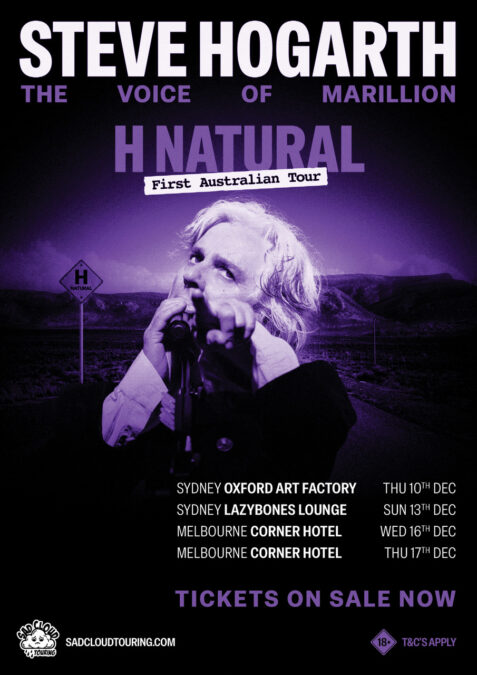 For the first time ever, Steve Hogarth, the unmistakable voice of Marillion and one of progressive rock’s most expressive vocalists, will perform in Australia, bringing his acclaimed solo show, H Natural, to audiences in Sydney and Melbourne this December. Known simply as “h”, Steve has fronted Marillion for more than 37 years, helping shape one […]


When vocalist Roye Albrighton died in 2016, Nektar’s future looked uncertain – then in 2020 a line-up featuring original members and aliumni released new album The Other Side. Co-founder Derek ‘Mo’ Moore told Prog about the record, and what really happened with the ‘other’ Nektar.
“We started putting it together about a year ago and the first rehearsal was fantastic,” says bass guitarist and vocalist Derek ‘Mo’ Moore of the new version of Nektar. “We just clicked again. It was like going back 40 years.”
The bass guitarist and vocalist’s enthusiasm for the reformed US-based band, who have just released a new album, The Other Side, is tangible. He was one of their founder members, playing with Nektar from 1969 in their progressive space rock heyday through to their dissolution in 1978. Since then, with shifting line-ups, Nektar have had various periods of activity and disbandment. Moore last played with them in 2002.
Things have recently become a bit more complicated following the death in 2016 of lead vocalist and guitarist Roye Albrighton, who had featured in the majority of the band’s line-ups from 1969 onwards. It seemed that they had reached the end of the line, but then in December 2018 a new version of Nektar announced the release Megalomania, with an online statement that read: “the baton has been passed [to keyboard player Klaus Henatsch] as musical lead, producer and head of the band.”
As there’s nothing about that album on the website now, we can all be forgiven for being a little confused. As it turned out, Megalomania was actually released under the name New Nektar. Moore’s Nektar, meanwhile, features drummer Ron Howden, the only constant in all line-ups since their inception. Moore explains the situation, and how the two variants came to be.
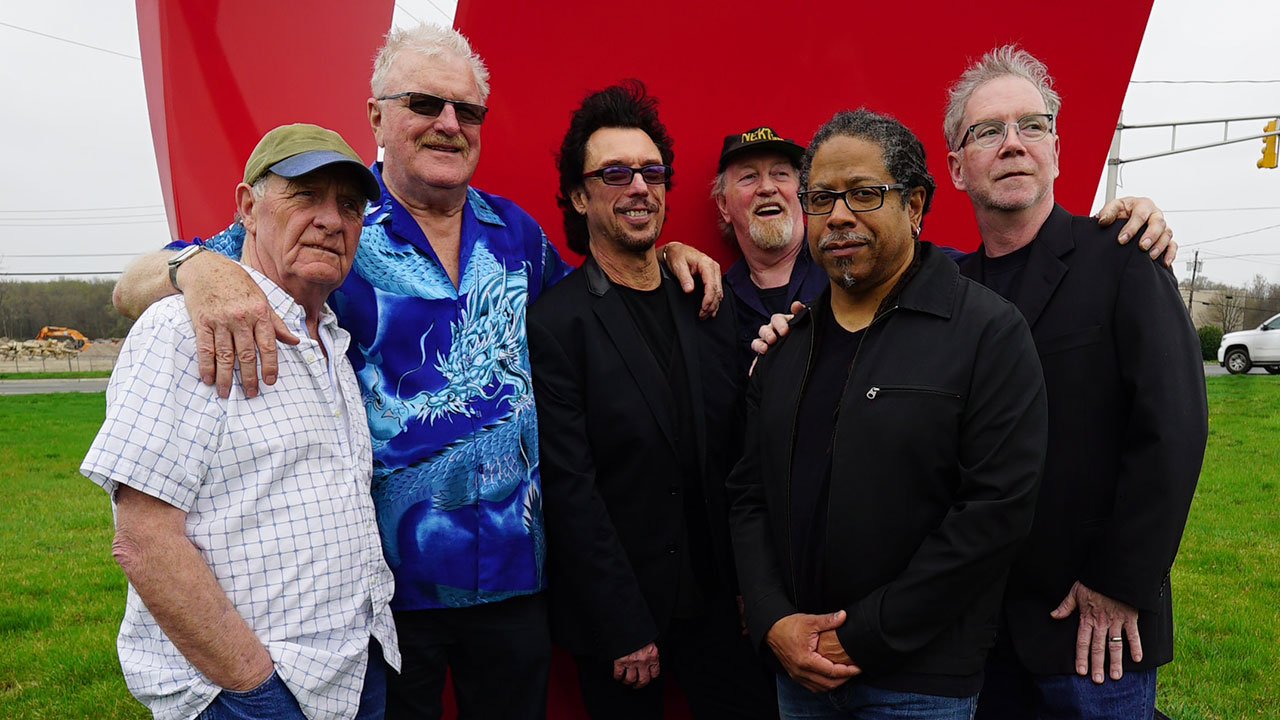
“When Roye died, Howden was left holding the bag. And Klaus Henatsch, who’s been a sideman for the band [since 2007], said to Ron, ‘Now I’m in charge and I’m going to call the shots on the production and what we do.’ And Ron said, ‘Well, I’m the original guy here and I’m not going to do that.’ So he left and when he came back to the States he said, ‘Will you help me get a band together?’ and I said, ‘Sure.’ We then reached out to [guitarist and vocalist] Ryche Chlanda, who played with us in 1978.”
The line-up also features Randy Dembo, who played bass with Nektar in the early 2000s – now also on bass pedals and 12-string – and keyboard player Kendall Scott from Chlanda’s band Flying Dreams. “We had him come down to the studio and I knew after a few notes that he was going to fit,” says Moore.

They also approached lyricist and lightshow man Mick Brockett, who first joined in January 1970. “Nektar was a music and light theatre. The music was enhanced by the lightshow – it told the story – so it was a concept rather than a band,” says Moore. “But that got lost over the last 30 years or so and I brought Mick back because I wanted to have that same feel that we had in the beginning.”
Much of The Other Side was recorded live in the studio and consequently it sounds fresh and full of energy. It feels like it’s informed by all stages of the band’s career, from acid prog to hard rock to more melodic near-pop, but it clearly nods back to their 70s sound. In fact, most of it dates back to unused material from 1978, but these works-in-progress have been extensively rewritten by the new line-up, including new musical sections, ideas from jams and new lyrics.
When asked if it was difficult working without Albrighton, Moore replies: “We feel that Roye was there with us.” Also, most of the music originated from a time when Albrighton had briefly left the group, but in an affectionate tribute, The Devil’s Door – which was played live but never recorded – begins with his guitar introduction from a reel-to-reel recording of a show from 1974.
Going back to their 1971 debut, Journey To The Centre Of The Eye – which follows the story of an astronaut abducted by aliens who then receives their knowledge – Nektar’s most defining work has had a conceptual basis. The Other Side was prompted by the death of Albrighton and their live soundman Vinny Schmid and deals with themes of loss, longing and the division between life and death. And typical of classic Nektar, the title track extends to 18 minutes.
“SkyWriter is a story about a guy whose significant other/wife/girlfriend, dies and he is up in the sky writing letters to her, hoping that she can read it, so every song has a connection to the other side,” says Moore.
“If you listen to the double album in the order that we have it you get a story. If you change the order around you get a different story. The idea is to use your imagination on the album. We’ve given you the themes. The other side is where Roye and Vinny now reside, and lots and lots of friends. It’s something that’s inevitable for all of us and we wanted to take you on that musical trip. To my mind this album would have been a great follow-up to Recycled [from 1975]. It’s got a great feel to it.”
Like many English musicians in the 60s, the group that were to become Nektar – then The Upsetters – had gone over to Germany to play the American military bases.
“Then the guitarist left and Roye had been jamming with Ron when they were in Hamburg, and we offered him to come with us and we clicked from day one,” Moore recalls. “The first gig we played, we’d never performed together before and we jammed the whole night. It was wonderful.”
Nektar made Germany their home and occupied a unique position as an English
band in the thick of the emergent krautrock scene. Their lengthier excursions were not dissimilar to those of German groups such as Amon Düül II. Does Moore think that those bands influenced Nektar?
“I wouldn’t say ‘influenced’ but we know them all,” he responds. “Amon Düül have
been friends of ours for years and a lot of other German bands, like Karthago and Guru Guru. We used to play festivals with them all of the time. Everybody had their own thing going. The beauty about Germany was they were just sucking up anything new, they weren’t interested in pop music, they were just interested in new music, so we were right in there.”
Although Nektar made quite a name for themselves in their adoptive country, from a UK perspective they were the odd band out. British hairies were aware of them, but it was difficult to get a handle on them as they didn’t play as extensively in the UK and didn’t get much coverage in the music press, which only added to the enigma.
“We headlined a festival in Düsseldorf in 1973 and everyone and their mother were on the bill -– Gentle Giant and all kinds of people – and they were all saying, ‘Who the hell is this band who are headlining?’” Moore recalls. “It was strange; we were an English band but we were living out in Germany.”
Given the era, the band’s spacey music, spectacular lightshow and the title of their 1972 album, A Tab In The Ocean – with its mind-bending cover art – were any psychedelic drugs involved in the writing of their music?
“I think all of them,” says Moore, laughing. “We were most definitely doing psychedelic stuff back then. It was an awesome scene, it really was, but we got through it okay!”
They’re playing in Germany, which is confusing the hell out of the fans. We’re spending money on lawyers right now. How the German patent office didn’t look into what they were registering I have no idea
But did all that actually help them creatively?
“It might have done, but if you don’t have the creativity to start with it’s not going to do anything,” Moore says. “You can enhance what you have and it might give you other ideas, but you can’t enhance what you don’t have. We would jam for 10 hours straight and then pick out pieces – that piece would go nicely over here. We wrote a lot of music. Now we’re just doing drugs for blood pressure and cholesterol.”
When Nektar moved from Germany it was over to the USA, where Moore still resides, and for a brief period they had significant success there, with their 1973 album Remember The Future hitting number 19 in the Billboard charts, Down To Earth (1974) reaching number 32 and Recycled (1975) reaching number 89.
Down To Earth was a concept album about the circus with the group augmented by a brass section, PP Arnold on backing vocals and Robert Calvert playing the role of the ringmaster. The songs were shorter now and more accessible, but it was still pretty weird and not what one might associate with the taste of your stereotypical American punter. Can Moore enlighten us as to why they achieved this success?
“Remember The Future was huge over here. I think a lot of it was that FM radio played the hell out of it,” he explains. “In St Louis they were playing it on rotation and when we went to play there the first time we sold out three shows at the Ambassador Theater – 3,000 people a night.”
While the venues aren’t as big this time around, Nektar are currently touring in the US and have sold out shows in St Louis again. But things are set to be less straightforward in Europe where New Nektar are now also calling themselves Nektar. The situation is a close reflection of the case of Bonzo Dog Doo-Dah Band, who made a successful complaint to the Intellectual Property Office after former promoter Bob Carruthers’ company had registered their name.
“We are going to come to Europe,” Moore asserts. “We’ve got a little problem with the other band who registered the damned name and are trying to stop us from going to Germany, which is not fun, but we’re trying to deal with that now.
“They’re playing in Germany, which is confusing the hell out of the fans. They were playing as New Nektar and put the album [Megalomania] out as New Nektar, then their manager went and registered the name. We’re spending money on lawyers right now. How the German patent office didn’t look into what they were registering I have no idea.”
But Moore is feeling positive about Nektar. The bass guitarist hadn’t played at all since Nektar reunited to play at the 2002 NEARfest and he’d been running a construction company, from which he has retired. And now he’s rejoined a career trajectory he couldn’t have imagined back at the group’s birth in 1969.
“It’s a trip,” he says. “I didn’t expect to be doing it again but when I did, I had a vision of the band and when we started playing it just grew. And the album turned out so well, we had to go on tour with it. We had no option.”