
Steve Earle has never been just a country singer. Throughout his life has read like a rock’n’roll parable: the bacchanalian rebel with a taste for booze, bad drugs and run-ins with the law.
From his rural Texas childhood through a career in Nashville (and now New York City), Earle has survived six tumultuous marriages, heroin and crack addiction, jail, rehab and near-death. He’s also produced a stream of genre-defying records – welding honky-tonk to rockabilly, bluegrass to punk and, as on 2007’s Washington Square Serenade, country to trip-hop.
He’s also a novelist, playwright, DJ, political activist and, with his role as recovering drug addict Waylon in HBO’s The Wire, a TV actor. “I didn’t have to act,” Earle quipped.
Earle began playing guitar at 11. By 14, he’d left home for Houston, where he met like-minded rebel Townes Van Zandt, another hard-living songwriter. Earle later called him “a real good teacher and a real bad role model.”
Earle landed in Nashville in the early 70s, taking blue-collar jobs in the day and playing bass with Guy Clark at night. After years of aborted record deals, MCA picked up the free-spirited 30-year-old in 1985.
His sensational debut Guitar Town marked him down as a workingman’s troubadour à la Bruce Springsteen / John Mellencamp. 1988’s anthemic Copperhead Road was an international success, yet Earle was already heavily into a self-destructive lifestyle.
By 1994, he was arrested for drug possession and landed a jail sentence. Post-rehab, he returned stronger than ever. Both the all-acoustic Train A Comin’ and I Feel Alright were raw, thrilling albums that sounded, literally, like a man reborn. Earle’s gift for rousing narratives and driving rock’n’roll, tempered by artful ballads, were fully to the fore on 1997’s El Corazon, a record that also captured his catch-all appeal.
Recent years have found him railing against the death penalty, attacking America’s “war on terror” and calling for a tolerant new kind of patriotism. The resulting albums, particularly Jerusalem and The Revolution Starts…Now, are as impassioned as anything he’s ever done.
He’s also paid tributes to fallen friends: 2009’s Townes celebrated his old buddy Townes Van Zandt, while 2019’s Guy did the same for former boss Guy Clark. In January 2021 he released J.T., a collection of songs written by his late son, Justin Townes Earle, and followed it a year later with Jerry Jeff, celebrating the music of folk singer-songwriter Jerry Jeff Walker.
His art, it seems, still lives in extremis. “I’m into pain and joy,” he once said, “and the in-between doesn’t interest me.”

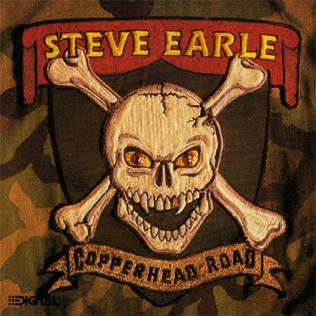
Earle’s post-Vietnam LP alienated Nashville but drew in a whole new rock audience. Copperhead Road was equal parts hillbilly-roots and bullish rock’n’roll, hitting hard with the title track and seething anti-gun song The Devil’s Right Hand.
The compelling drama of war veterans and illicit moonshine raids came heightened by stadium-sized guitars and booming drums, while Johnny Come Lately, recorded with The Pogues on St. Patrick’s Day, was a roar of invigorating folk-punk. Copperhead Road did brisk business in the US, suggesting Earle could do a Springsteen, but his life was beginning to slide.
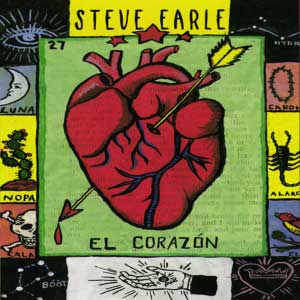
Post-smack and post-clink, Earle stormed back with this charged masterpiece that was both political and intensely personal. Nothing summed this up more than Christmas In Washington, a killer acoustic ballad that sniped at Capitol Hill policy-making while taking stock of his own life.
The blustery Taneytown was a harrowing anti-racism song from the standpoint of a 22-year-old retarded black man. Earle flitted across styles too, from bluegrass and country to the thumping biker-rock of Here I Am and NYC, the latter featuring Arizona miscreants The Supersuckers. The closing Ft. Worth Blues was a teary tribute to old mentor Townes Van Zandt.
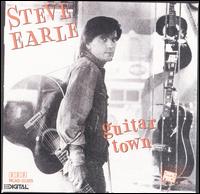
A thrilling debut that supposedly took Earle from boy-from-nowhere to hottest thing on Nashville’s block. In truth, it was a desperate last toss of the dice. Earle was already 30 with three marriages and 10 years of fruitless song-hustling behind him.
This was blue-collar country with a literate edge and a raised middle finger to the conservatism of Music Row. Bruce Springsteen’s Born In The USA tour had given Earle the impetus to kick things off with the barnstorming title track: “Well, I gotta keep rockin’ while I still can/Got a two-pack habit and motel tan”. Rolling Stone voted him Top Country Artist that year.
I Feel Alright (Warners, 1996)
Earle’s first album on release from prison was 1995’s acoustic Train A Comin’, but the follow-up feels like the real comeback. His demons were hung out to dry on CCKMP, confessing that “Heroin is the only thing/The only gift the darkness brings”, but I Feel Alright sounds more private new manifesto than meditation on a reckless past.
The production is spare, Earle’s voice is never less than impassioned and there’s everything from rollicking rock (The Unrepentant) to gorgeous 12-bar heartache (South Nashville Blues). There’s even ambient noise, courtesy of Earle’s giant buddy Dub, slapping his palm on the studio stairwell.
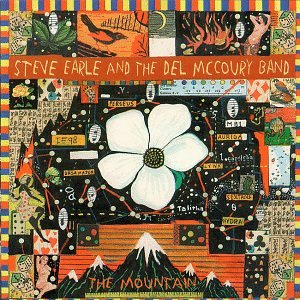
The Mountain (E-Squared, 1999)
This was Earle’s attempt at “high-tech, low-risk” bluegrass, recorded with country legend Del McCoury and his band. The instrumentation is bluegrass but the feel is rock as Earle unfurls his tribute to mountain music pioneer Bill Monroe, aided by a dizzying roll call of guests: Cowboy Jack Clement and Emmylou Harris among them.
Fans may have balked at Earle’s confession that bluegrass was his favourite music, but even diehards would surely approve of Carrie Brown, his “real-live-bad-tooth-hillbilly murder ballad”. Connemara Breakdown, meanwhile, was his bluegrass fantasy camp.
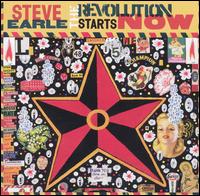
The Revolution Starts Now (E-Squared, 2004)
A scathing state-of-the-nation address that sealed Earle’s reputation as Nashville’s foremost radical. Home To Houston carried the lines: “Great God A’mighty what was wrong with me/I know the money’s good but buddy can’t you see/You can’t take it with you and that ain’t no lie/I don’t wanna let ’em get me I’m too young to die”.
Like all things Earle, it’s tempered by humour and warmth, at work here on the questionable lust for Condoleeza Rice (Condi, Condi). “For Johnny Cash and Warren Zevon,” wrote Earle in the album’s liner notes. “See you when I get there, brothers.”
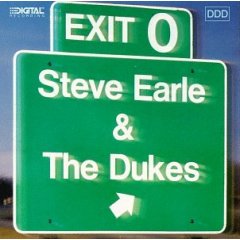
The follow-up to Guitar Town was a rougher, tougher affair, with Earle ditching Nashville session pros for his own band, The Dukes. Much of it – The Week of Living Dangerously, Sweet Little 66, Number 29 – had already been road-tested across the US for the best part of a year, aligning Exit O closer to the Rolling Stones in their strutting pomp than anything out of Tennessee.
Nowhere Road would prove to be a signpost for Earle’s own life a few years down the line, while I Ain’t Ever Satisfied wound up as the closest thing to his own calling card. Needless to say, it was all far too rowdy for the powers-that-be at conservative country radio.
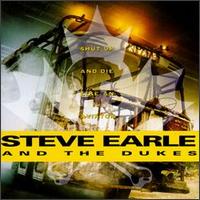
Shut Up And Die Like An Aviator (MCA, 1991)
By 1990, Earle’s refusal to comply with country norms, allied to a worsening drug habit, led MCA to free him from his contract with that old fallback: the live LP.
Recorded over two nights in Ontario, Shut Up and Die… finds Earle in gloriously ragged form. Guitarists Zip Gibson and Bucky Baxter drive things along, piling meat on the bone of Earle’s gruff, sometimes shot, vocals. The sizzling intro to Billy Austin is a real highlight, as is an unhinged Copperhead Road. And for proof of Earle’s unclassifiable nature, look no further than two covers: Jimmie Rodgers’ Blue Yodel No.9 and the Stones’ Dead Flowers.
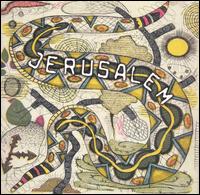
Earle’s sensitive study of Californian Taliban sympathiser John Walker Lindh gave the US press free rein to vent all manner of post-9/11 prejudice. John Walker’s Blues prompted the New York Post to run a story titled “Twisted Ballad Honours TaliRat”, while the rest of Jerusalem was nearly as provocative.
Sifting through the paranoia, Earle’s plea for a nation to pull back from the brink of moral chaos was driven by some mighty tunes. Ashes To Ashes and The Truth are as gloves-off as he’s ever been. Curiously though, the most powerful moment is the broken love song I Remember You, an immaculate duet with Emmylou Harris.
…and one to avoid
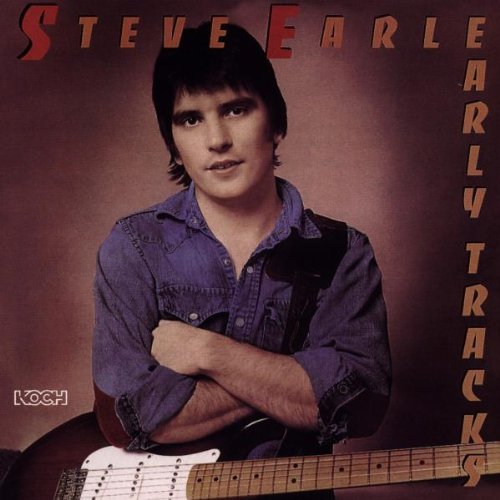
Steve Earle just doesn’t do duff. As fellow outlaw Waylon Jennings once observed of him: “He didn’t write no bad songs. And if he did, he hid ’em.” That said, some of Earle’s output is decidedly patchy. Recorded in the midst of his cocaine and smack addiction, 1990’s The Hard Way veers between smart and sluggish. “I defend The Hard Way to the death,” he said in 2000, “because I almost died in the process of making it.”
But most worthy of a wide berth is Early Tracks, a compilation of rockabilly sides cut between 1982-85, a clueless Epic selling their unruly new charge as the lost link between Ricky Skaggs and Gene Vincent.