Category: news
-
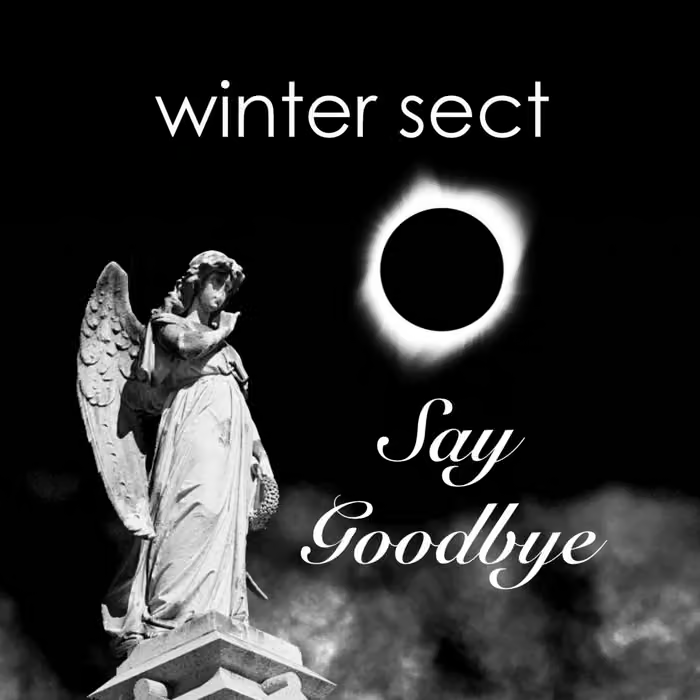
“I See You Fading With The Sun” — DC Goth Rockers Winter Sect Share Sepulchral Single “Say Goodbye”
Dream life slowly
slips awayDead lights on and
here to stayWashington, D.C., is a city of monuments and tombs, where power forever rehearses its own afterlife amid broad avenues, pale columns, sealed chambers, and names cut deep into stone. Winter Sect’s new single Say Goodbye sounds native to that landscape, carrying the capital’s old civic unease into a room lined with black velvet, cracked mirrors, and dying lamps. The band formed in late 2023 from members of Beltway post-punk mainstays Sister Ex, then expanded into a quartet with keyboardist and vocalist Heather Wayward of Cyanbaal joining Claudia Neuman on bass and vocals, guitarist Anthony Piazza, and drummer Darryl J. Dardenne.
The band’s sepulchral goth ballad Say Goodbye moves with cathedral patience and barroom blood. Piazza’s central figure circles like a thought you cannot sleep away, while Wayward’s keyboards spread a cold phosphorescence beneath the rhythm section. Dardenne keeps the procession heavy without turning it stiff, and Neuman sings as though the ceiling has opened onto some terminal blue void. Her voice carries force, ache, and grandeur in the same breath, placing Winter Sect near the severe romanticism of Nox Novacula, Strange Boutique, Octavian Winters, and Child of Night.
The song began during the pandemic, when Piazza found himself returning obsessively to three notes. “It was weird, I was all stressed out and these three notes became a kind of mantra for me, I kept seeing this desolate landscape in my mind, I played it every day.” That repetition remains embedded in the finished track as psychic pressure, a small musical cell worried raw until it opens into a broad field of dread.
Piazza describes the lyrics with equal candor: “Total stream of conscience as far as the lyrics go, just evocative of the feeling I had back then when things were bleak. I think it’s about death and rebirth in a way” That ambiguity gives the song its blood supply. A figure fades with the sun, dreams collapse, skies twist, eyes go vacant, and the repeated farewell becomes a grim spell spoken until language loses shape.
The chorus looks brutally simple on the page, yet Neuman loads each return with a different shade of exhaustion. By the third pass, those two words feel chipped from a gravestone somebody has dragged across town by hand.
Winter Sect understands that gothic rock lives or dies by conviction. Say Goodbye carries theatrical scale, while the emotion stays close enough to bruise. The arrangement rises carefully, each instrument adding weight without smothering the central wound. By the final refrain, resignation has become release, and the desolate landscape Piazza saw during lockdown feels populated by everyone who watched a former life dissolve and wondered what, if anything, might crawl from the wreckage with its teeth intact and eyes open.
Listen to Say Goodbye below and order the single here.
Follow Winter Sect:
The post “I See You Fading With The Sun” — DC Goth Rockers Winter Sect Share Sepulchral Single “Say Goodbye” appeared first on Post-Punk.com.
-
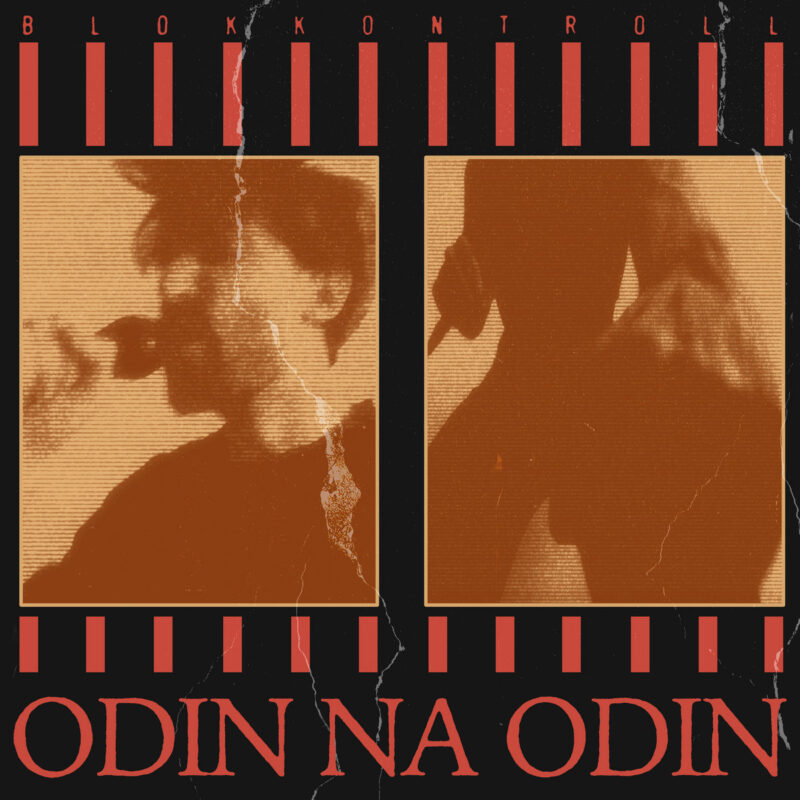
“The Horizon is Visible” — Kyiv’s Blokkontroll Unleashes the Industrial EBM Machinery of Debut LP “Odin Na Odin”
We’ll break the world
Then build it new
Remind them all
With words we knewBlokkontroll’s debut, Odin Na Odin, comes from Kyiv with the blunt geometry of a bunker map and the physical impatience of a body already in motion. The solo project’s idea of each release as another Blok could have become tidy mythology, yet on this album, the concept feels practical, almost architectural: pressure placed upon pressure until a wall takes shape, until rhythm becomes shelter, weapon, and route.
Its EBM is stripped to load-bearing parts. Drum machines advance with locomotive discipline, bass lines grind forward in locked angles, and synthesizers enter as machinery under strain, steel nerves pulled tight across empty rooms. The record has the air of a field recording taken during a blackout evacuation, where language has been bent by repetition and command, where the voice keeps returning because departure has become the only available grammar. Reverb and delay widen the room, then make that room feel less safe, turning every phrase into evidence from a system entering failure.
Kult sharpens the album’s central impulse: leave, begin again, move before doubt can grow roots. The lyrics’ collective charge avoids simple uplift; its promise of breaking and rebuilding carries the severity of people who have learned that renewal may require damage. Across Odin Na Odin, that tension gives the vocals a peculiar authority. They sound like something that issued from someone close enough to fear to recognize it, close enough to action to spend no energy decorating it.
Comparisons to Nitzer Ebb, Skinny Puppy, Front Line Assembly, and DAF make sense, though Blokkontroll’s language is narrower, drier, and more claustrophobic. The record gives repetition an abrasive force, using loops as walls against which the listener measures impact. Where many contemporary industrial records chase club release, Odin Na Odin keeps the floor under surveillance. Its movement is strict, the pleasure severe, the hooks buried in commands and metallic breath.
Blokkontroll demonstrates that minimalism in this form feels enforced, severe, and functional. The tracks compact, compress, and seal, pulling every element towards a hard center. By the end, Odin Na Odin has mapped escape as a condition rather than a destination, turning personal rupture into a cold communal engine. It has weight, direction, and a frightening sense of use.
For a debut, it feels alarmingly complete, a slab of industrial body music laid with care, anger, and exacting force in the dark.
Listen to Odin Na Odin below and order the album here.
Follow Blokkontroll:
The post “The Horizon is Visible” — Kyiv’s Blokkontroll Unleashes the Industrial EBM Machinery of Debut LP “Odin Na Odin” appeared first on Post-Punk.com.
-
Behemoth unleash new single “I, Scvlptor,” detail upcoming release
The upcoming eight-song release arrives September 4 via Massacre Records and Nuclear Blast -
IATT’s Etheric Realms of the Night Named One of Metal Injection’s “15 Best New Releases You Need To Hear This Year” – @thebeast
FOR IMMEDIATE RELEASE
IATT’s Etheric Realms of the Night Named One of Metal Injection’s “15 Best New Releases You Need To Hear This Year”
Philadelphia, PA – Progressive blackened death metal visionaries IATT continue to receive widespread acclaim for their latest full-length release, Etheric Realms of the Night , which has now been recognized by Metal Injection as one of the 15 Best New Releases You Need To Hear This Year .
The honor places IATT alongside some of metal’s most respected names, including Megadeth, Converge, Sylosis, Exodus, Neurosis, Corrosion of Conformity, Archspire, Immolation, At The Gates, Dimmu Borgir, Lex Legion , and more, further cementing the band’s reputation as one of the most innovative forces in today’s progressive extreme metal underground.
In its feature, Metal Injection praised the album’s ambitious songwriting and conceptual depth, highlighting the band’s ability to seamlessly blend progressive arrangements with crushing blackened death metal.
The publication described Etheric Realms of the Night as:
“Philadelphia’s IATT have been quietly building one of the more interesting bodies of work in progressive extreme metal, and Etheric Realms of the Night is the record where all those ambitions land cleanly.”
The review goes on to applaud the album’s immersive concept, which explores the fragile boundary between wakefulness and oblivion through constantly shifting moods and dynamic compositions.
Metal Injection also singled out the record’s impressive guest appearances, featuring legendary flutist Didier Malherbe alongside violin and saxophone contributions from Jørgen Munkeby (Shining). Rather than softening the band’s extreme sound, these elements deepen the album’s atmosphere while maintaining its relentless intensity.
The publication concluded by recommending the record to fans of adventurous progressive metal, citing artists such as Opeth, Enslaved, Thy Catafalque, and Ihsahn.
Since its release, Etheric Realms of the Night has continued to earn praise from critics and fans alike for its fearless musicianship, cinematic scope, and uncompromising vision. This latest recognition from Metal Injection marks another major milestone in the band’s growing career and underscores the impact the album has made within the extreme metal community.
Fans who have yet to experience Etheric Realms of the Night are encouraged to discover why it is quickly becoming one of the year’s most celebrated progressive extreme metal releases.
Congratulations to IATT on this outstanding and well-deserved achievement.
Check it out here: https://metalinjection.net/lists/15-of-the-best-metal-releases-of-2026-so-far
Follow the band at these links:
https://linktr.ee/IATT_Official
https://m.facebook.com/iamthetrireme/
https://www.instagram.com/iatt_official
https://x.com/iamthetrireme
https://youtube.com/@iatt_official
https://iamthetrireme.bandcamp.com
https://open.spotify.com/artist/6EeKkHWc1PQO7vGUnyWNdr
https://music.apple.com/us/artist/iatt/1780562884
Contact: (Jay Briscoe iattmanagement@gmail.com) -
MIR Releases Debut Singles “Unspoken” and “I Only Hope To See”
Spanish alternative rock artist MIR has released her debut singles, “Unspoken” and “I Only Hope To See,” featuring Sandra Cano on drums. The tracks, which arrived on June 12, capture a personal process of grief, reconstruction, and evolution following a period of deep transformation.
Operating out of Albacete, the multi-instrumentalist blends her classical piano foundation with the heavy, abrasive elements of grunge and alternative rock. The new material contrasts a driving wall of guitars with clean vocal melodies, reflecting her thematic focus on finding freedom after loss, returning to one’s roots, and reclaiming a sense of personal identity.
MIR has spent years building her musical catalog and live experience across the Spanish underground scene, performing with bands such as The Streakers, Zhass, Vulva-loo, and Pimpollo Reventón, while also working as a session musician for Vermú. With her solo project now established, her debut singles “Unspoken” and “I Only Hope To See” are currently available to stream across all major digital platforms.
The post MIR Releases Debut Singles “Unspoken” and “I Only Hope To See” first appeared on FemMetal – Goddesses of Metal.
-
Blues Rock Weekly – June 19, 2026
Blues Rock Weekly highlights new music from Joe Bonamassa, Beth Hart, Jovin Webb, When Rivers Meet, and Parker Barrow.
The post Blues Rock Weekly – June 19, 2026 appeared first on Blues Rock Review.
-
Budapest Dream Folk Act Musica Moralia Finds Autonomy Again In Video for “Let’s Take Our Bones Out”
The men who honed my eyes and ears
For the sight and for the sound
He is not a friend of mine
Budapest dream folk act Musica Moralia’s “Let’s Take Our Bones Out” is a haunting song that opens with a banjo carrying the dusty dignity of a treasured antique. Around it, Meggyesházi Éda sings with poised delicacy, turning each phrase as though testing the joints of language. Dream folk provides a broad shelter for a rigorous study of posture, vulnerability, and the strange politics of inhabiting a body.
Éda calls her work “quiet noise,” a useful contradiction for music that gathers force through patience. The trio lets the song unfold by degrees, leaving enough air around each gesture for uncertainty to enter the arrangement. Classical discipline brushes against Patrick Wolf’s theatricality, while Éda’s command of emotional scale carries traces of Anohni, Benjamin Clementine, and Mariam the Believer. Her voice follows an inward geometry, moving from fragile poise towards physical release as it draws on American folk traditions and Celtic song, recalling Mary O’Hara’s Óró Mó Bháidín, later sampled by Passion Pit on Sleepyhead.
“Let’s Take Our Bones Out portrays both emotional transformation and the relearning of anatomy,” Éda explains. The premise might sound forbiddingly cerebral, though the track remains sensuous throughout. Its concern with the Alexander Technique gives the song an unusual frame: posture becomes memory, tension becomes biography, and the skeleton turns into a structure open to revision. Éda’s voice bends around these ideas with calm intensity, while the banjo introduces a faintly uncanny domestic texture, homely and estranged at once.
Across its measured duration, small changes carry uncommon pressure: a tightened vowel, a pause held open, a banjo note left bare enough to expose its wooden grain and age.
Watch the video for Let’s Take Our Bones Out below:
Let’s Take Our Bones Out reverses the gaze established by their previous release, Flatland. Previously, a peculiar couple watched the group; now the trio occupies the centre, exposed to scrutiny while retaining an elusive composure. This change suits a song about learning the body again. Observation becomes participation, and anatomy appears as a set of habits waiting to be unlearned.
The title carries a childlike gruesomeness, imagining liberation through impossible surgery. Éda treats that image with tenderness, locating freedom in minute acts of awareness away from spectacle. Notes hang with deliberate weight; silences become small rooms where the listener can register breath, muscle and balance. Even the folk materials feel freshly handled, stripped of ornament and placed under curious light.
“This song is a moment of reflection: it shows how I began translating my emotions through the language of water,” the band says on their Bandcamp. “Flatland is also a revelation, as it is not our task to control the water, or the ’emotions of the great seas.’ The point isn’t to control any of it, but rather to learn to float within it, to trust it, and to create a sense of kinship with it. The song comes to life through telling stories that carry the elements most essential for me in forming connections or building relationships.”
Watch the video for Flatland below:
Only Salt, due in September 2026 through Klinik and Corner Art Management, is described as an album about Éda’s relationship with water. Let’s Take Our Bones Out suggests that this relationship will extend beyond symbolism into method: yielding, balancing, adjusting, finding motion through attention. The sacred quality associated with Musica Moralia comes through here without grand ceremony. A modest instrument, a searching voice and a patient structure are enough to make the body feel newly strange, then newly possible.
Find Let’s Take Our Bones via streaming here, and listen to Flatland below and order the single here.
Follow Musica Moralia:

The post Budapest Dream Folk Act Musica Moralia Finds Autonomy Again In Video for “Let’s Take Our Bones Out” appeared first on Post-Punk.com.
-
Getting To Know The Bands Of THRASHVILLE: IMMORTAL WITHIN
 Thrashville returns to the lush bushland of Dashville in Lower Belford, Hunter Valley, on Saturday, 27 June 2026. Celebrated as the region’s heaviest music gathering, this inclusive, single-day outdoor festival delivers a high-energy feast of punk, hard rock, and heavy metal across four vibrant stages. Following a medical cancellation by US punk band FEAR, homegrown legends Cosmic Psychos will […]
 -
SAMAEL Releases New Single “Hail To The Sun” — Second New Music Release Since 2017’s “Hegemony”
Swiss industrial/black metal band Samael have released a new single, “Hail to the Sun,” the second piece of new music from the band since their 2025 single “Black Matter Manifesto,” — itself the first new Samael material in eight years. The band describes the new track as “an equally heavy and grand” song dealing with adversity and the act of seizing life’s opportunities.
In a press statement, Samael said: “In troubled times, it is good to come together around something meaningful to us all… and what better thing than the sun, which is one but experienced differently by each of us? ‘Hail to the Sun’ is an anthem that will see you through the summer and keep you warm when winter comes. The song is about overcoming adversity and seizing life’s opportunities.”
A full-length follow-up to Hegemony (2017, Napalm Records) has been completed. In a March 2025 interview with Finland’s Chaoszine, frontman Michael “Vorph” Locher confirmed the album was “pretty much recorded” and spoke about its musical direction: “It will have a strong bond to Hegemony, but it’s not the same. There is no experimentation with things that we’ve never, ever done before, but the mix is different, and there is a lot more guitar. It’s a lot more guitar-oriented. So, yeah, that’s one of the differences.” Swedish producer Daniel Bergstrand traveled to Switzerland in late 2024 to record vocals for the album, with guitarist Thomas “Drop” Betrisey confirming the recording was complete in a December 2024 social media update and calling the tracks “outstanding.”
Samael was formed in 1987 in Sion, Switzerland. Their 1990 debut Worship Him and the landmark 1996 album Passage — which introduced electronic and industrial elements into their black metal foundation — remain among the most influential releases in extreme metal’s crossover era. The current lineup is Vorph (guitars/vocals), his brother Alexandre “Xytras” Locher (drum programming, keyboards, samples, and percussion), Betrisey (guitars), and Ales Campanelli (bass), who joined in 2020 as the replacement for Pierre “Zorrac” Carroz.
The post SAMAEL Releases New Single “Hail To The Sun” — Second New Music Release Since 2017’s “Hegemony” appeared first on Sonic Perspectives.