Good Day Noir Family,
Nighttime tension hangs in the air as Boneyard Rebels introduce “Raincoat,” a track that signals its personality through carefully chosen tones and a slightly cheeky, inventive approach to sound.
Raincoat is Boneyard Rebels’ Single Out Now
Rather than rushing forward, the band prefers to set a scene. The opening textures feel playful, hinting at a group that enjoys bending expectations while staying grounded in alternative rock roots.
As the verse settles in, the rhythm becomes steady and controlled. The pacing feels almost ritualistic, which helps build anticipation. Meanwhile, the bass line quietly asserts itself, locking tightly with the drums. Because of this precision, the groove feels reliable without ever sounding rigid. In fact, that interaction between bass and drums becomes one of the song’s strongest assets, since it gives the track a solid backbone that allows everything else to breathe.
Then the chorus arrives and changes the emotional temperature. Instead of exploding outward in a traditional way, the song opens through repetition and hypnotic motion. The psychedelic element here works subtly. It doesn’t overwhelm the listener. Instead, it invites them into a loop that feels meditative and slightly surreal. The chorus encourages imagination, pulling the listener into a drifting mental space rather than demanding attention through sheer volume.
Moreover, the guitar work feels well thought out, and the band clearly enjoys experimenting with texture. Each sound has a purpose, and each layer supports the mood rather than competing for dominance. “Raincoat” maintains clarity even when the arrangement becomes more immersive.
Lyrically and emotionally, the song leans into atmosphere rather than direct storytelling. That choice works well here. Instead of spelling everything out, Boneyard Rebels allow suggestion to do the heavy lifting. The track feels open to interpretation, which adds replay value. Each listen reveals a slightly different angle, depending on mood and focus.
What also stands out is the band’s confidence. They do not chase trends, nor do they over-polish the song. They trust their identity. That confidence shows in the restrained dynamics and in the willingness to let repetition become a feature rather than a flaw. Still, the song never drags. The arrangement evolves just enough to keep interest alive.
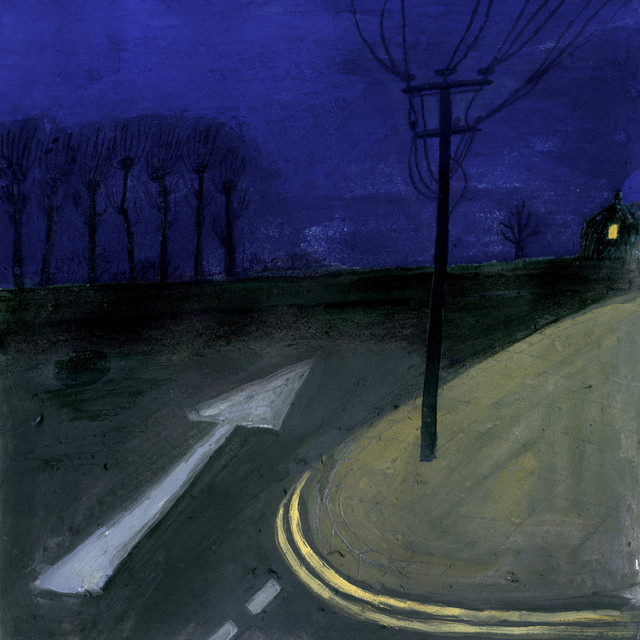
“Raincoat” feels like a late-night drive under streetlights, where thoughts wander and time stretches. It’s alternative rock with vision, rhythm, and personality. Boneyard Rebels prove they know how to build a track that stays with you, not through excess, but through intention.
Raincoat is Boneyard Rebels’ Single Out Now!
Hypnotic!
Raincoat is Boneyard Rebels’ Single Out Now
Boneyard Rebels, hailing from the eerie depths of Montreal, Canada, are a collective of gravediggers who unearth a unique sound every Thursday night after the cemetery gates close. Led by Eric Dumoulin on guitar, vocals, and composition, alongside Ezra Sheppard on guitar and backing vocals, Richard Germain on bass, Billy Tsekeris on synth, and Diego Antonio Lobatón on drums, the band’s music is a raw, instinctive creation that sets them apart in the music scene.
Good Day Noir Family,
A bright, unmistakably 1980s introduction sets the tone for “I See You,” and instantly the mind jumps to neon-lit dance floors and iconic movie scenes like Flashdance.
I see you is Lynney Williamson’s Single out Now
The synth line pulses with confidence, while the rhythm establishes a groove that feels playful and assertive at the same time.
Then a subtle funk edge enters the frame, and the track begins to move with purpose rather than nostalgia alone.
Then the vocal arrives, slightly robotic and drenched in reverb, yet warm and inviting. Because of this contrast, Lynney Williamson creates a voice that feels human and futuristic at once. Moreover, the vocal processing never hides the emotion. It amplifies the feeling of connection suggested by the title. The listener feels addressed directly, as if the song speaks to a shared memory rather than a general idea.
Structurally, the song is carefully built. The chord progression evolves smoothly, and each section adds something new without overcrowding the arrangement. Meanwhile, the beat keeps the energy consistent, which makes the track perfect for movement as well as reflection. This is not a track that relies only on rhythm. The melody stays memorable, and the chorus lands with clarity and confidence.
What stands out most is Lynney Williamson’s ability to balance eras. On one side, the track embraces classic 80s aesthetics. On the other hand, modern production choices keep everything crisp and current. Therefore, the song never feels like a tribute act. It feels like a conversation between past and present. Also, the funk elements add texture and lift, pushing the song beyond pure synth-pop territory.
Emotionally, “I See You” carries a subtle depth. While the music invites dancing, the mood hints at longing and recognition. Because of that duality, the track remains engaging beyond its surface appeal. The slightly mechanical vocal effect reinforces the idea of connection in a digital age, where emotions often travel through filters and screens.
Lynney Williamson proves she can craft music that entertains, resonates, and bridges generations. Overall, “I See You” is polished, energetic, and emotionally aware, marking her as an artist with vision and control.
I see you is Lynney Williamson’s Single out Now!
Radiant!
Lynney Williamson is a Glasgow-born singer-songwriter whose music channels the ethereal power of Stevie Nicks, the emotional mystique of Kate Bush, and the raw intensity of Heart. Her sound blends dream-pop, soft rock, and lyrical storytelling—crafted to resonate with anyone who’s ever stared out a window searching for clarity.
For rock producers working without a plugin budget, the direct answer is clear: you can build a fully professional rock mixing and guitar recording chain using free VST plugins without compromising sound quality, tone control, or reliability.
Over the last decade, several developers have released free tools that rival older paid plugins in accuracy, musical behavior, and CPU efficiency.
The limitation today is not availability, but knowing which free plugins actually work in real rock productions rather than in isolated demos.
Equalizers: Shaping Guitars, Drums, and Vocals Without Harshness
Rock mixes rely heavily on EQ. Dense guitar layers, aggressive drums, and mid-forward vocals require precision rather than surgical extremes.
Free EQ plugins have improved significantly, especially in phase accuracy and filter behavior.
TDR Nova
Source: Youtube/Screenshot, TDR Nova reduces harsh peaks only when they appear, keeping the mix tight
Developed by Tokyo Dawn Records, TDR Nova is a dynamic equalizer that functions as both a traditional parametric EQ and a frequency-dependent compressor.
For rock producers, this is extremely valuable on electric guitars, snare drums, and vocals, where certain frequencies spike only at specific moments.
Nova allows dynamic control of harsh upper mids around 3–5 kHz on guitars or boxy buildup around 400 Hz on drums, without permanently cutting those frequencies. This preserves aggression while keeping mixes controlled.
Voxengo Marvel GEQ
Marvel GEQ is a linear-phase graphic equalizer suited for tonal shaping rather than problem solving. It works well on guitar buses and drum submixes where broad strokes are needed.
Its phase stability makes it safe for parallel processing, which is common in rock drum mixing.
Best Free EQ Plugins for Rock
Plugin
EQ Type
Best Use in Rock
TDR Nova
Dynamic parametric EQ
Guitars, vocals, snare
Marvel GEQ
Linear-phase graphic EQ
Guitar buses, drum buses
Compression: Controlling Energy Without Killing Impact
Rock compression is about control, not flattening. Drums need punch, vocals need consistency, and guitars often need subtle glue rather than heavy reduction.
TDR Kotelnikov
Source: Youtube/Screenshot, Kotelnikov controls levels on drum and mix buses without pumping or changing tone
Also from Tokyo Dawn Records, Kotelnikov is a mastering-grade compressor offered free. While it may look clean and technical, it excels on drum buses and mix buses in rock music.
Its transparency allows level control without pumping, making it ideal when guitars and cymbals already occupy a lot of mid and high frequency energy.
DC1A by Klanghelm
DC1A is a simplified version of Klanghelm’s paid compressors. It has minimal controls but a strong musical character.
On rock vocals and bass guitar, DC1A adds density and forwardness without sounding processed. It is particularly effective for punk, garage rock, and alternative styles where perfection is not the goal.
Free Compression Tools for Rock
Plugin
Compression Style
Typical Rock Application
TDR Kotelnikov
Transparent VCA-style
Drum bus, mix bus
DC1A
Character compressor
Vocals, bass, rhythm guitars
Guitar Amp Sims: Recording Rock Guitars Without Hardware
Amp simulation is where free plugins often struggle, but a few standouts remain highly usable, especially when paired with good impulse responses.
Created by Ignite Amps, the Emissary is a modern high-gain amp sim designed for rock and metal, but it also works well for hard rock and alternative tones when gain is dialed back.
The distortion character is tight and controlled, avoiding the fizzy top end common in older free sims.
When paired with quality cabinet impulse responses, Emissary can produce album-ready rhythm and lead tones.
LePou Amp Sims
Source: Youtube/Screenshot, LePou amp sims deliver clear mids that help layered rhythm guitars cut through the mix
LePou plugins remain popular for classic rock and early metal tones. While visually outdated, their midrange response works well for layered guitar parts where clarity matters more than realism.
They are particularly useful for double-tracking rhythm guitars.
Rock reverb is usually subtle. The goal is depth, not atmosphere overload. Free reverbs have improved significantly, especially algorithmic designs.
OrilRiver
OrilRiver is a clean algorithmic reverb that excels at rooms and plates. For rock producers, this makes it ideal for snare drums, vocals, and guitar ambience.
The early reflection control allows placement without cluttering the mix.
Valhalla Supermassive
Developed by Valhalla DSP, Supermassive is often associated with ambient music, but its shorter presets can add size to lead guitars and backing vocals.
Used sparingly, it adds width without masking transients.
Free Reverb Plugins for Rock
Plugin
Reverb Type
Best Application
OrilRiver
Room and plate
Snare, vocals
Supermassive
Algorithmic space
Lead guitar, vocal depth
Building a Complete Free Rock Plugin Chain
A full rock guitar chain can run on free plugins if processing stays controlled
A realistic free rock production chain often looks like this: clean amp sim with quality IRs, subtle dynamic EQ on guitars, character compression on vocals, transparent bus compression, and controlled room reverb.
None of these stages requires paid plugins if choices are made carefully.
The key is restraint. Free plugins today are powerful enough that overprocessing is a bigger risk than technical limitations.
Example Free Plugin Chain for Rock Guitar
Stage
Plugin Example
Purpose
Amp sim
Emissary
Core guitar tone
EQ
TDR Nova
Harshness control
Compression
DC1A
Density
Reverb
OrilRiver
Spatial placement
Final Perspective
Free VST plugins are no longer placeholders or beginner tools. For rock producers, they are fully capable production instruments when chosen for musical behavior rather than feature count.
Even the ongoing Ableton Live 12 vs. FL Studio debate around stock plugins highlights how built-in tools now compete with many third-party options in real production work.
The strongest free plugins share one trait: they solve real mixing problems without forcing exaggerated processing.
Spotify operates on a recommendation system built around collaborative filtering, natural language processing, and audio analysis. For artists, the most relevant part is collaborative filtering.
This system observes how listeners behave when they encounter a track and compares that behavior to millions of other users with similar listening patterns.
The algorithm does not evaluate a song in isolation. It evaluates how different listener cohorts respond to it relative to their historical behavior.
Spotify publicly confirmed as early as 2018, during its engineering blog disclosures and creator briefings, that user actions like saves, full listens, playlist additions, and repeats feed directly into recommendation models.
Streams alone are insufficient because they can occur passively. The system places more weight on actions that require intent, such as saving a track to a library or replaying it after the first listen ends.
Another key detail is that Spotify’s algorithm is not global-first. It begins with individual listeners. A track proves itself one listener at a time. Only after strong signals accumulate across similar listeners does the system widen its distribution.
Release Radar: How New Music Is Tested on Your Audience
Release Radar is a personalized playlist updated weekly, typically every Friday, and delivered to users who have shown some form of prior interest in an artist. This interest can come from following the artist, listening repeatedly in the past, saving tracks, or engaging with related artists.
Release Radar is not a discovery playlist in the traditional sense. It is a testing ground. Spotify uses it to answer a narrow question: how do listeners who already have some connection to this artist react to this new track?
If listeners skip early, do not save the track, or abandon it before completion, the algorithm reads this as weak relevance. If listeners complete the track, save it, or replay it, the system interprets this as confirmation that the artist’s new material matches listener expectations.
Core Signals Tracked in Release Radar
Signal Type
What Spotify Measures
Why It Matters
Early skip rate
Skips in the first 30 seconds
Indicates a mismatch or low interest
Completion rate
% of listeners reaching the end
Signals satisfaction
Save rate
Saves per listener
Strong indicator of intent
Replays
Immediate repeat listens
Suggests high engagement
Post-listen actions
Profile visits, follows
Reinforces artist relevance
Release Radar exposure is finite. Tracks typically appear for one to two weeks. The outcome of that window heavily influences whether Spotify continues algorithmic support elsewhere.
Discover Weekly: Expansion Beyond Your Existing Audience
Source: Youtube/Screenshot, Discover Weekly shows songs to new listeners after strong early engagement signals
Discover Weekly is fundamentally different. It is not limited to people who already know the artist. It is designed to introduce users to music they have not actively searched for but are statistically likely to enjoy.
Spotify refreshes Discover Weekly every Monday, and placements are entirely algorithmic. For an artist to appear there, Spotify must have high confidence that the track will perform well with unfamiliar listeners.
That confidence comes from earlier data. Release Radar, listener radio, algorithmic playlists like Daily Mix, and even search-based streams all contribute signals. Discover Weekly is where Spotify applies pattern matching.
If your track performs well with listeners who resemble a broader group, Spotify begins testing it with adjacent listener clusters.
Key Differences Between Release Radar and Discover Weekly
Aspect
Release Radar
Discover Weekly
Audience
Existing or semi-familiar listeners
New listeners
Update frequency
Weekly (Friday)
Weekly (Monday)
Purpose
Validation
Discovery
Risk tolerance
Low
Moderate
Importance of save rate
High
Very high
A critical point often misunderstood by artists is that Discover Weekly placements do not happen immediately after release. They often occur several weeks later, once enough reliable behavioral data exists.
Save Rate: The Strongest Single Signal Spotify Uses
Save rate consistently emerges as one of the most important metrics in Spotify’s recommendation system. A save represents a deliberate action.
It requires a listener to care enough to store the track for future listening. Spotify engineers have repeatedly stated in creator Q&As that saves are weighted more heavily than likes on social platforms or raw stream counts.
Save rate is typically calculated as saves divided by unique listeners, not total streams. This distinction matters. A track with 1,000 listeners and 300 saves sends a stronger signal than a track with 10,000 listeners and 200 saves.
Typical Save Rate Benchmarks Observed by Independent Labels
Save Rate Range
Algorithmic Interpretation
Below 5%
Weak engagement
5–10%
Average engagement
10–20%
Strong engagement
Above 20%
Exceptional engagement
These ranges are not official Spotify thresholds, but they align with data shared by distributors, independent labels, and playlist analysts between 2019 and 2024.
The save rate also compounds. A high save rate early in the release cycle increases the probability of further algorithmic testing. As more listeners save the track, Spotify’s confidence score rises, unlocking additional distribution opportunities.
Completion Rate and Its Relationship to Save Rate
High completion rates raise save rates, but saves still matter more than full plays alone
Completion rate is closely tied to save rate. Spotify tracks how many listeners reach the end of a track, especially during first exposure. Tracks with high completion rates are more likely to be saved because listeners have enough time to evaluate the song fully.
Shorter tracks often benefit from this dynamic, which partly explains the industry-wide trend toward songs under three minutes since 2020.
However, completion alone is not sufficient. A track can be fully played but not saved. Spotify treats this as passive acceptance rather than active interest.
Listener Intent vs Passive Consumption
Spotify’s algorithm differentiates between passive listening and intentional behavior. Passive consumption occurs during background playlists, radio sessions, or autoplay sequences.
Intentional behavior includes searching for an artist, visiting profiles, saving tracks, or replaying songs manually.
Intentional actions carry more algorithmic weight. This is why tracks that perform well in personalized contexts often outperform tracks that accumulate streams through low-engagement environments.
Relative Weight of Listener Actions
Listener Action
Relative Algorithmic Weight
Save to library
Very high
Manual replay
High
Add to personal playlist
High
Full listen via radio
Medium
Passive autoplay stream
Low
Early skip
Negative
This weighting structure explains why sudden spikes in low-quality streams do not translate into long-term algorithmic growth.
Time Windows and Data Decay
Spotify gives the most weight to a track’s first days and weeks, and older data loses influence over time
Spotify evaluates performance in rolling windows. Early data matters disproportionately. The first 24 hours establish initial relevance.
The first 7 days determine short-term trajectory. The first 28 days shape long-term algorithmic classification.
After that, data decays in importance unless renewed by new activity. A track can re-enter algorithmic circulation months later if it begins generating fresh engagement signals, but this is less common without external catalysts such as viral content or playlist rediscovery.
Why Algorithmic Success Looks Uneven Across Artists
Two artists with similar stream counts can experience radically different algorithmic outcomes. The difference usually lies in engagement density rather than scale.
Spotify favors tracks that produce consistent, repeatable positive signals across listener groups.
Genre also matters. Spotify’s algorithm performs best in genres with large, active listener pools such as pop, hip hop, electronic, and indie.
Niche genres require stronger signals per listener to trigger the same level of expansion because the pool of comparable users is smaller.
Spotify’s algorithm is not opaque because it is random. It is opaque because it is probabilistic. It responds to measurable listener behavior rather than promotional narratives or external popularity signals.
Geographic listening patterns and regional market signals can also shape how far and where a track is surfaced, meaning exposure may expand unevenly across countries.
Release Radar functions as an initial validation layer. Discover Weekly acts as a scaled recommendation engine. Save rate, reinforced by completion and repeat listening, is the clearest indicator Spotify uses to decide whether a track deserves broader exposure.
Understanding these mechanics does not guarantee success, but it does explain why some tracks quietly grow over time while others plateau despite strong launch numbers. The system rewards sustained listener intent, not momentary attention.
Welcome to Four Records! Each episode, we feature one guest as they go over four records at four different times in their life. This week, Forrest speaks with Andy Wylie, bassist for The Drowns and a Dying Scene contributor. The Drowns released a live album last year and are currently working on new music. While you are waiting for that to be released, you can see them on tour:
3/7/26 – Seattle, WA Clock-Out Lounge w/ the Briefs
4/17/26 – Upstairs Cabaret Ltd. – Victoria, BC w/ the Casualties
4/18/26 – The Pearl – Vancouver, BC w/ the Casualties
4/19/26 – Jackknife Brewing – Kelowna, BC w/ the Casualties
4/21/26 – Dickens Pub – Calgary AB w/ the Casualties
4/24/26 – Black Cat Tavern – Saskatoon, SK w/ the Casualties
4/29/26 – The Garrison – Toronto, ON w/ the Casualties
4/30/26 – The 27 Club – Ottawa, ON w/ the Casualties
5/5/26 – Sonia Live Music Venue – Cambridge, MA w/ the Casualties
5/8/26 – First Unitarian Church – Philadelphia, PA w/ the Casualties
5/10/26 – Black Cat – Washington DC w/ the Casualties
5/12/26 – 1884 Lounge – Memphis, TN w/ the Casualties
5/14/26 – The Sanctuary Detroit, Hamtrack, MI w/ the Casualties
5/15/26 – Reggie’s Music Joint – Chicago, IL w/ the Casualties
5/16/26 – The Argo – Whitefish Bay, WI w/ the Casualties
Same old question: should we like bands like Unifaun that explicitly revive classic prog bands’ style? Well, the answer is simple to me: yes, if they know how to write good songs and to play them. This is the case with Swedish duo Unifaun, whose only album to date include some very good and very Genesis oriented songs. This Swedish duo includes singer and multi-instrumentalist Nad Sylvan of Steve Hackett live band fame and keyboardist Christian Thordin, AKA Bonamici.
Above: the dark original 2008 cover art. Below: the Genesis-oriented 2023 reissue painting.
Their self-titled album features many musical solutions related to the ex Charterhouse pupils, but with a distinctive nordic and slightly folk taste I appreciate. The track I choose here is a prog ballad full of dreamy passages and based on really good melodies. The overall effect is mostly similar to Genesis’ “Selling England by The Pound” era. Is this a good reason to despise such a song? I don’t think so, but let me know your opinions.
Same old question: should we like bands like Unifaun that explicitly revive classic prog bands’ style? Well, the answer is simple to me: yes, if they know how to write good songs and to play them. This is the case with Swedish duo Unifaun, whose only album to date include some very good and very Genesis oriented songs. This Swedish duo includes singer and multi-instrumentalist Nad Sylvan of Steve Hackett live band fame and keyboardist Christian Thordin, AKA Bonamici.
Above: the dark original 2008 cover art. Below: the Genesis-oriented 2023 reissue painting.
Their self-titled album features many musical solutions related to the ex Charterhouse pupils, but with a distinctive nordic and slightly folk taste I appreciate. The track I choose here is a prog ballad full of dreamy passages and based on really good melodies. The overall effect is mostly similar to Genesis’ “Selling England by The Pound” era. Is this a good reason to despise such a song? I don’t think so, but let me know your opinions.
Good Day Noir Family,
A slow, cinematic haze introduces “Elixir”, and the track settles into a space that feels mysterious, nostalgic, and slightly unsettling.
Elixir is Scirii’s Single Out Now
Instead of rushing toward a hook, Scirii allows the mood to unfold patiently. The listener is invited into an intimate yet distant world, like a memory recalled through fog.
There is something gently spooky in the melody, especially when her voice enters, floating with the calm confidence of a siren calling from the dark.
In the verses, Scirii’s vocal performance becomes the emotional anchor of the song. Not because of sheer power, but because of restraint and intention. Her phrasing and emotional delivery bring to mind Lana Del Rey, not in tone but in approach. However, Scirii moves in a darker and more gothic direction, shaping her own identity rather than echoing a reference point.
Layered backing vocals emerge and expand the atmosphere. These harmonies feel ancient and ritualistic, almost suspended outside of time. The track gains depth without losing its intimacy. The chorus does not explode in a traditional sense. It opens gently, pulling the listener deeper into the emotional core of the song.
Production-wise, “Elixir” shows a clear artistic vision. While the arrangement stays minimal, every element feels intentional. Additionally, subtle electronic textures and reverberant details support the vocal line rather than competing with it. The result is a song that breathes, allowing silence and space to carry as much weight as sound.
“Elixir” leaves a lingering sensation rather than a clear resolution. Still, that lingering quality feels intentional. In fact, it strengthens the song’s emotional impact. Scirii proves she understands how to guide emotion through subtle choices instead of obvious gestures. This single marks her as an artist with a strong sense of identity and a willingness to explore darker emotional territories with elegance and control.
Elixir is Scirii‘s Single Out Now!
Enchanting!
Elixir is Scirii’s Single Out Now
Scirii is a London-based alt-pop artist creating cinematic, psychologically charged music where obsession, vulnerability, and power coexist. Blending dark pop and dream-pop textures, her songs feel like intimate scenes rather than simple narratives, pulling listeners into heightened emotional states.
Influenced by haunting alternative pop and surreal lyricism, Scirii explores love as devotion, danger, and transformation. With a background in Psychology and Cognitive Neuroscience and Grade 8 vocal training, she writes, produces, and records her music independently from her bedroom studio, crafting immersive worlds for late-night listeners drawn to emotional intensity.
Good Day Noir Family,
Listening to Maybe I’m Wrong for the first time feels like entering a conversation that is already emotionally charged, yet still searching for answers.
Maybe I’m Wrong is Jeremy Engel’s Single Out Now
Jeremy Engel opens the track with a clean, expressive guitar pattern that sets a reflective tone.
However, the calm never feels static. Instead, the arrangement hints that something deeper is about to surface.
Soon after, the drums step in with purpose, adding momentum without overpowering the intimacy of the opening. At that point, Engel’s voice takes center stage, and it becomes clear that interpretation is his greatest strength. He doesn’t simply sing the lyrics; rather, he inhabits them. As a result, the listener is drawn directly into the emotional heart of the song. The vocal delivery is raw, yet controlled and deeply personal.
There are moments where his tone recalls Billy Corgan, especially in the way vulnerability and tension coexist. At the same time, the melodic sensitivity brings to mind the introspective elegance often associated with Ké, although Engel maintains a clear identity of his own. These echoes never feel derivative. Instead, they act as familiar signposts within a very personal landscape.
As the song develops, subtle string arrangements emerge, lifting the chorus and giving it a wider emotional frame. The track grows without losing its sense of restraint. The strings add weight, yet they never tip the balance toward excess. Meanwhile, the rhythm section continues to support the narrative rather than dominate it. Because of this careful balance, the song remains grounded even as it reaches for something bigger.
Moreover, the structure of Maybe I’m Wrong mirrors its lyrical uncertainty. The verses feel introspective and searching, while the chorus opens up with a sense of release that still carries doubt. Instead of offering resolution, the song embraces ambiguity. As a result, it feels honest and relatable rather than polished for easy answers.
This single stands out as an alternative rock ballad built on emotional clarity rather than volume. Jeremy Engel proves that intensity does not require noise, only conviction. For listeners drawn to reflective songwriting with a strong melodic backbone.
Maybe I’m Wrongis Jeremy Engel’s Single Out Now!
Introspective!
Maybe I’m Wrong is Jeremy Engel’s Single Out Now
Luxembourgish singer-songwriter Jeremy Engel weaves his journeys through Ireland, New York and beyond into cinematic folk-rock. Recognized by Rolling Stone Magazine, his songs merge authenticity and emotional power. He continues to grow his audience through live performances.
Today, following the success of their recent single “Dead,” Atreyu return with “Ego Death,” a bruising but cathartic new track that digs into the idea of shedding who you were to become who you’re meant to be. Built on crushing riffs, a surging groove, and a massive, melodic hook, the song balances the band’s heaviest instincts with […]