Less than a month prior the release of his new solo album From The Dark, Iommi now presents a video clip for the second advance single called “Stormwatcher”. Read more…
(written by Islander) We welcome the Kentucky extreme metal band Sinistrum to our menacing and morbid halls for the first time today, and it’s long past time that we did that. They have an experienced lineup that includes members of acts including Fornicus and Kentucky death metal veterans Abominant. They made their first mark in […]
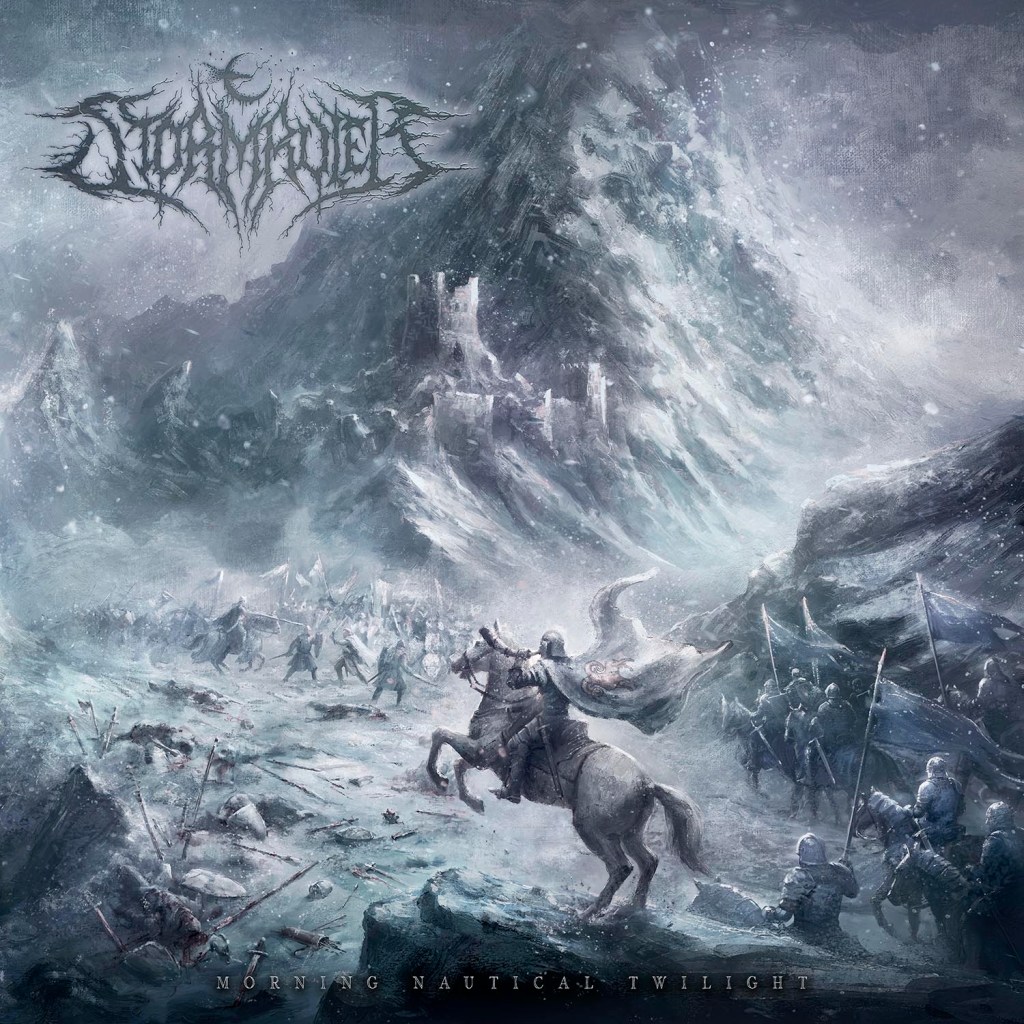
STORMRULER has announced the forthcoming full length offering, Morning Nautical Twilight, will be released on December 4, 2026, via Distortion Music Group (DMG) – Powered by Reigning Phoenix Music. The U.S. hailing black metal duo weave epic narrative storytelling through the track list of Morning Nautical Twilight. Alongside the album announcement, the band presents the first single, “Chapter II: In The Eye Of Umbria.”
Vocalist and guitarist Jason Asberry comments on the new single release: “We chose ‘In The Eye Of Umbria’ as the first single off of our new album Morning Nautical Twilight for a few reasons. It’s the second chapter in the Imperial Chronicles but the first that takes place in present day Aurelia, a realm spanning several thousand years with a vast history and many conflicts. It immediately introduces the listener to a few important characters within the world and sets the stage for the rest of the story.
Secondly, it’s a very standout track amongst the record. We explore a few new corners of our sound that we haven’t in the past but do so in true STORM fashion. It has the raw and driving rhythms of our heavy metal heroes, the mountainous and soaring leads that are heavily laden throughout this record while also keeping true to the many folk sounds that we hold dearly. We’re very proud of this record and can’t wait for you all to explore the pages of Morning Nautical Twilight.”
Morning Nautical Twilight Track List: 00 Prologue: The Weary Traveler 01 Chapter I: The Sword, The Scepter & The Seal 02 Chapter II: In The Eye Of Umbria 03 Chapter III: Council Of The Nations 04 Chapter IV: Subterranean Sorcery 05 Chapter V: Lanuthor’s Lamentations 06 Chapter VI: Open The Gates! 07 Chapter VII Morning Nautical Twilight 08 Chapter VIII: The Siege Of Belgorath 09 Chapter IX: Shadows Of The Starcrest 10 Chapter X: Winds Of War 11 Chapter XI: When The White Horn Sounds 12 Chapter XII: Engulfed In The Flames Of Oaken Pyre 13 Epilogue: The Imperial Chronicles
Emerging from the gloom in a high-paced fury, “Chapter II: In The Eye Of Umbria” traverses through shadowy progressions in an untamable arrangement. Jason Asberry‘s intricate guitar leads entwine through the driving momentum while ferocious shrieks unleash soar above, piercing through Jesse Schobel‘s explosive percussion. Musically, “Chapter II: In The Eye Of Umbria” incorporates a stylistic shift into groove-led rhythms and folk-inspired melodies, situating the track firmly in the immersive fantasy worldbuilding of Morning Nautical Twilight.
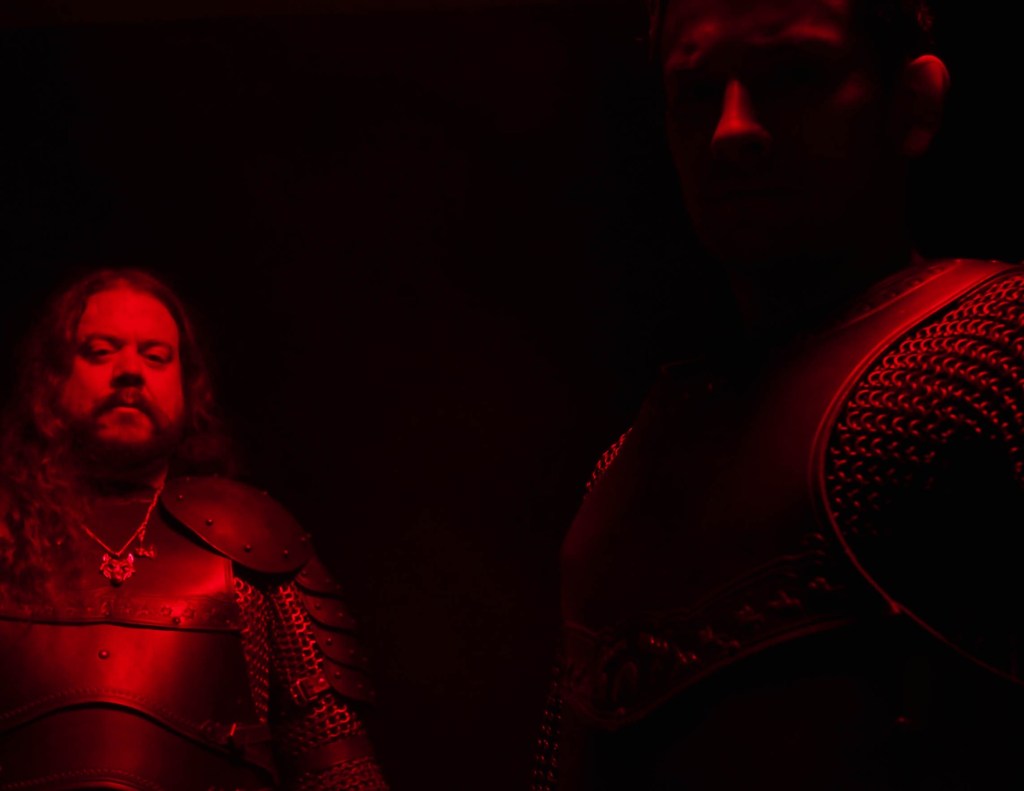
Born out of St. Louis, MO, the ferocious black metal duo STORMRULER is comprised of guitarist and vocalist Jason Asberry and drummer Jesse Schobel. Captivated by fantasy realms, the band’s imagery and sonic design draw from this theme entwined with historical elements.
The debut album Under The Burning Eclipse emerged in 2021, released via Napalm Records. This full-length was followed in quick succession by the sophomore offering, Sacred Rites & Black Magick, also via Napalm Records in 2022.
In 2026, STORMRULER signed to Distortion Music Group (DMG) – Powered by Reigning Phoenix Music, releasing the standalone single “Dark Age Of Deception.” Plunging into a dark and immersive shroud of atmospheric layers and commanding intensity, “Dark Age Of Deception” signified the beginning of the band’s next incarnation.
With the unveiling of “Chapter II: In The Eye Of Umbria,” STORMRULER‘s forthcoming full length Morning Nautical Twilight delves further into epic fantastical realms placing powerful storytelling at the core of their music.
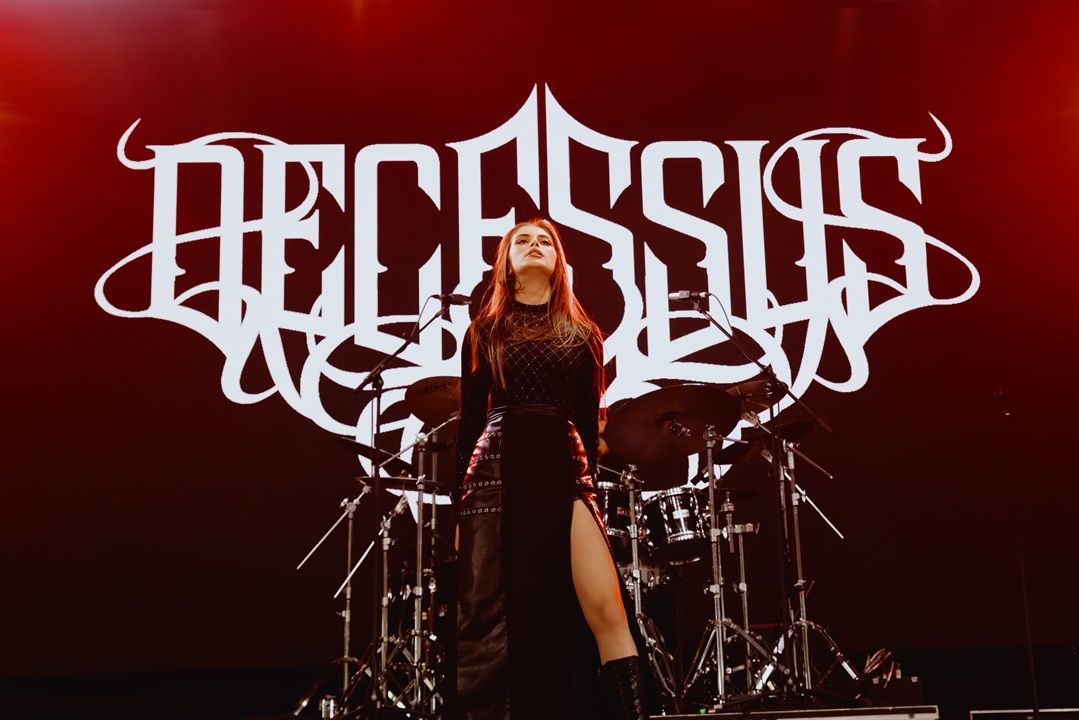
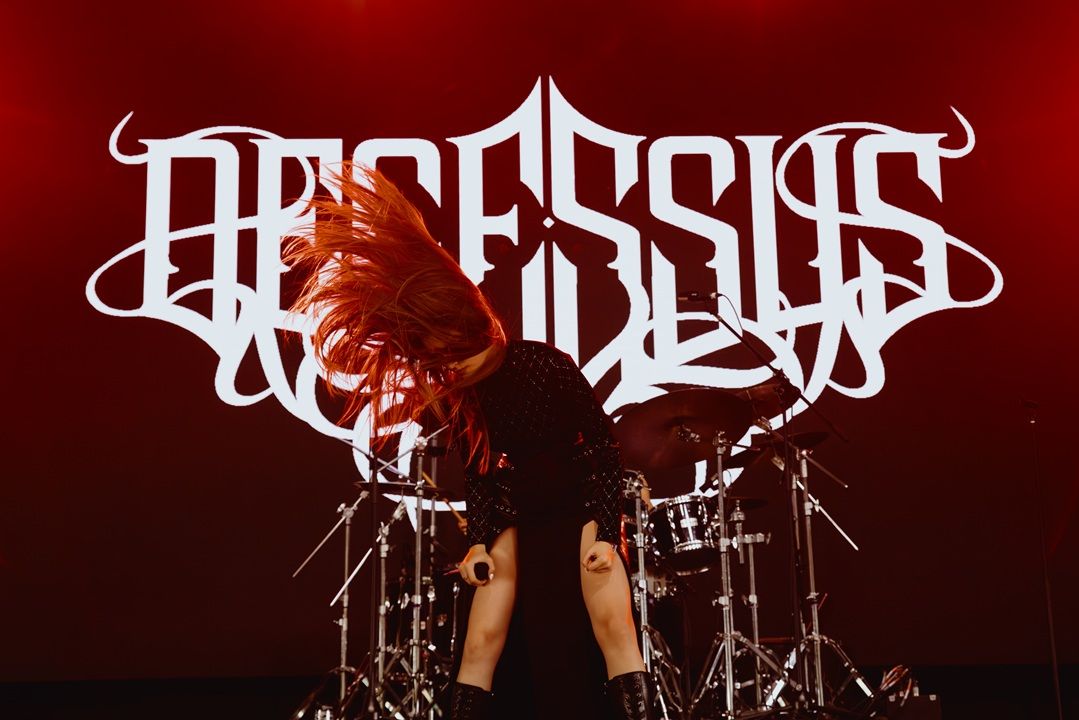
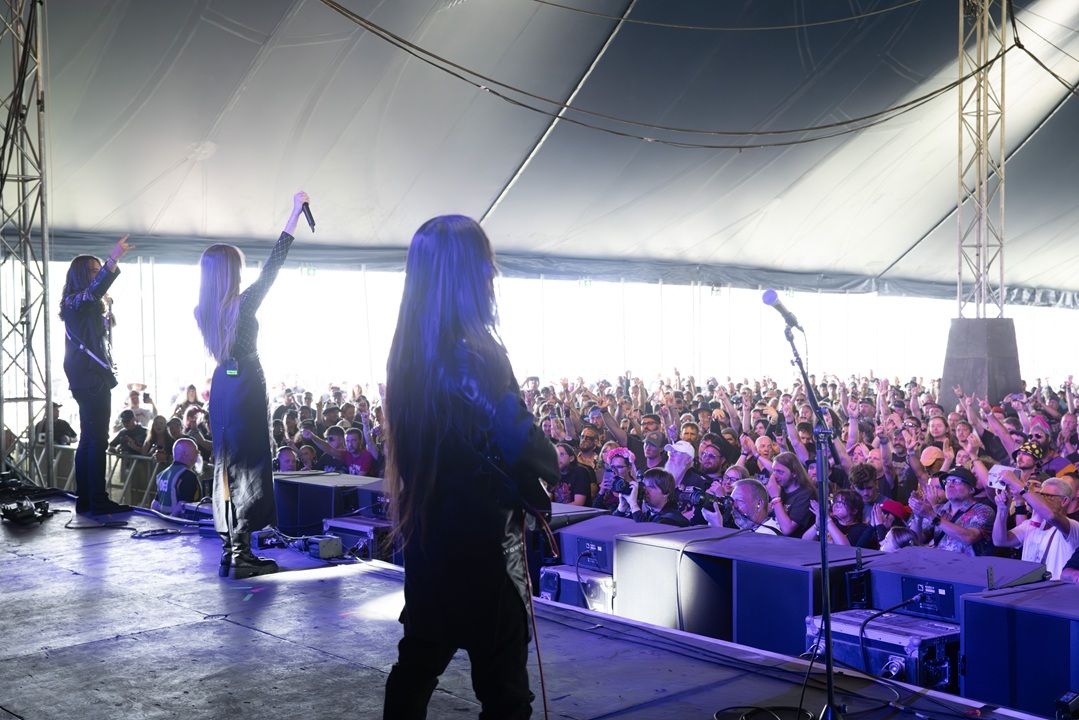
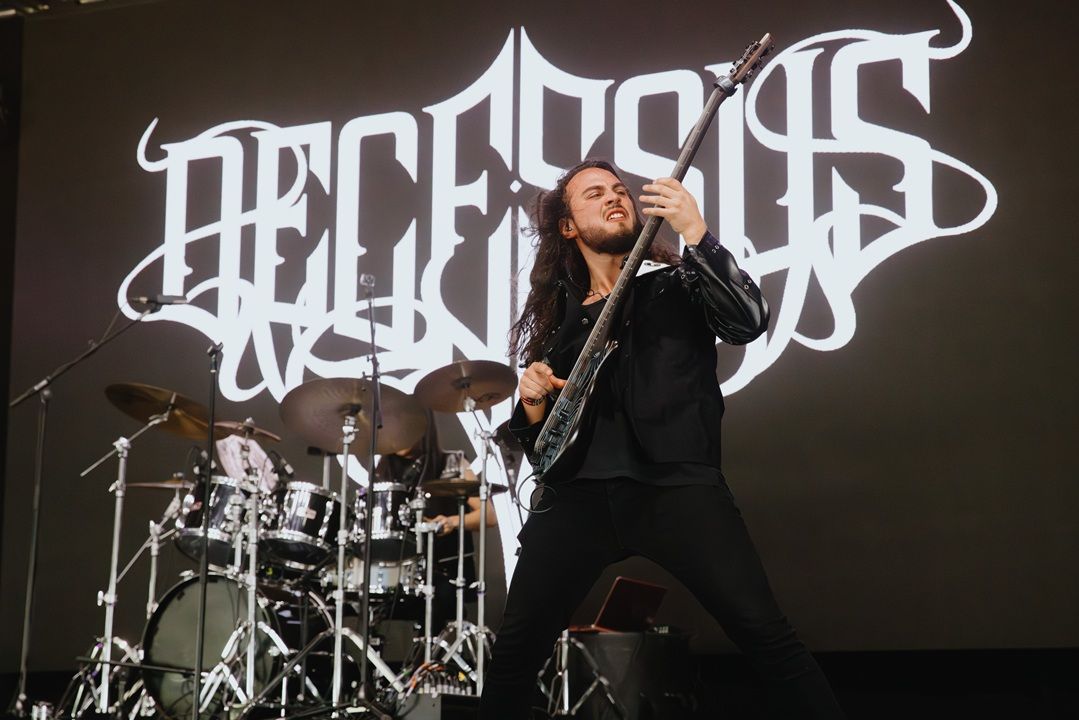
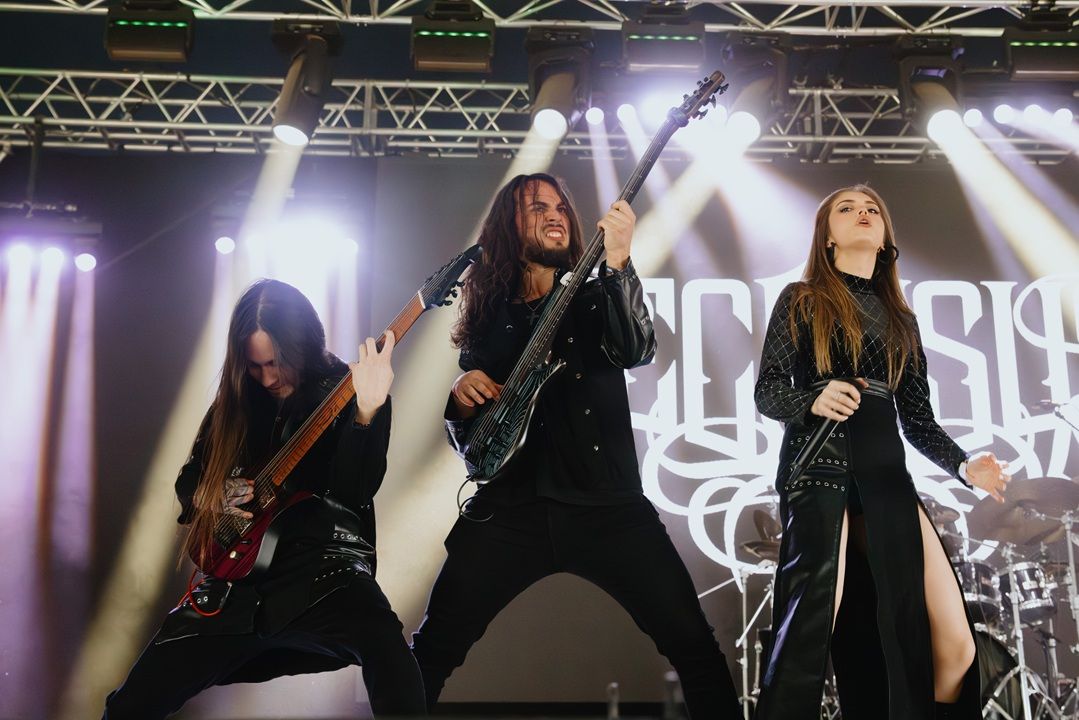
It’s Sunday afternoon at Download festival, and punters are about to receive a royal blessing. Decessus frontwoman Ignacia Fernández strides onto the Dogtooth stage amid djent-tinged, melodeath riffing, before unleashing a voice vile enough to turn milk sour. Then she begins the ceremonial act of headbanging, disappearing behind a waterfall of flawlessly conditioned hair. Last year, Ignacia became an overnight viral sensation when she performed a Decessus track on a rather different stage.
Stepping out in a floor-length ball gown and a sash, with a full face of glam make-up, she growled for the judges of the Miss World Chile semifinal, backed by her bandmate, guitarist Carlos Palma. While the star was aware her guttural performance clashed with the demure trappings of pageantry, she felt it was the only way she could express herself authentically. It paid off, with Ignacia later taking the crown.
Onstage, it’s clear she’s in her element – she spins her mic with the whimsical precision of a baton twirler, and often strikes a menacing, model-esque pose. Considering Ignacia was worried her pageantry involvement would ostracise her from the metal community, it’s been a huge relief to find herself welcomed with open arms.
“I was nervous that the metal fans would hate me,” she admits after her set. “I didn’t want people to think I was being disrespectful to the metal scene.”
She needn’t have worried. Soon after her performance for Miss World Chile, Ignacia was inundated with praise. She even got recognition from some of her favourite artists: System Of A Down and Black Sabbath’s Geezer Butler.
“When my dad saw that Geezer Butler had posted my performance, he sent a screenshot, like, ‘What the fuck?!’” Ignacia remembers with a laugh. “It was all so crazy and shocking… and it was amazing that it helped so many people find our band!”
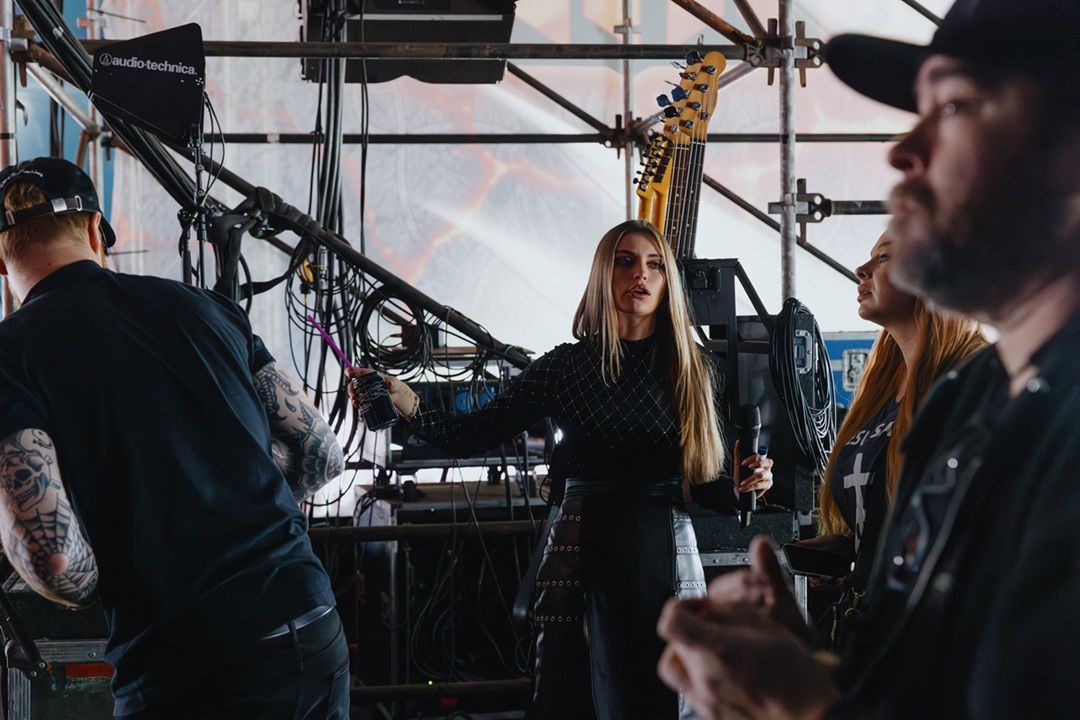
Sitting backstage at Download, the 28-year-old does stand out. From the sequins she’s placed under both eyes for added sparkle, to her glossy brown hair, it’s a look you wouldn’t necessarily associate with a grimy Donington field. However, Ignacia has proved her chops – and knowing how to do your make-up doesn’t render you incapable of appreciating metal.
“Whenever we get hate, it’s usually towards me and towards my looks, as if the way I look means I’m not a true metalhead,” she sighs. “I’m like every other metal lover – I grew up listening to my dad’s Black Sabbath cassettes, and I used to get lost for hours watching Guns N’ Roses live videos on YouTube.”
After a three-year depressive episode, Ignacia formed Decessus as a way of reconnecting with what she loved.
“I had a break from singing for years because I started getting really bad depression,” she admits. “I stopped doing everything that I loved – like, I used to love drawing and rollerskating, but then I just stopped everything. But I snapped out of it because I knew I really wanted to do music… I knew it would make me happy.”
After learning how to scream from a friend on Facebook (“he just sent a short list, like, ‘Do this, do this, don’t do this…’ and I just worked from that”), Ignacia practised from the comfort of her bedroom.
“I originally thought only men could scream, but I saw a video of Arch Enemy performing when I was 15, and, seeing Angela Gossow, I knew I wanted to scream too,” she says.
Ignacia used to wear a more conventional metalhead uniform, complete with a septum piercing (“I still put the ring in sometimes when I’m performing!”) and dyed hair. However, modelling came along and pressed pause on her dreams of being in a band.
“I used to dye my hair, but one day a modelling agency told me that they’d only work with me if I went back to a natural look,” she explains. “I’d gone to a shoot with my sister, who also models, and I had green hair and half of my head shaved. Eventually I agreed, and I had to shave it all to one length.”
While Ignacia winces at the memory, jokingly putting a hand to her temple like a maiden in distress as she brands it “The worst day of my life!”, her love for modelling is evident. Although she struggled at first (partially down to attending auditions alone at 14 to look “more professional”, which led to people being “mean”), it’s a career she thrives in.
“I’ve been working my ass off since I was a teenager, and I love it,” she grins.
Ignacia didn’t have any specific goals in mind when she decided to pursue pageantry, other than shaking up her life and making it more interesting. But it’s allowed her to explore her love of beauty and modelling on a global stage, as well as giving her a platform for her music and activism.
“I was originally involved with Miss Universe, but Miss World suits me much more,” she explains.
To the layman, the competitions might seem the same, but Miss World has a more humanitarian edge. With a focus on ‘beauty with a purpose’, it aims to seek out someone capable of being a global ambassador who cares for their community.
“It’s not just about being the most beautiful girls – each candidate has to have a social project,” the singer explains.
In Ignacia’s case, she’s been an animal rights activist from the age of five.
“I’ve been rescuing animals all my life,” she smiles. “Where I used to live in Chile, people would come and abandon their animals on our street. You’d go outside, and the streets were full of stray dogs and cats… so I started to bring them home, clean their wounds, and heal them.”
Soon, the Fernández household became an unofficial refuge for abandoned animals – much to her mum’s chagrin.
“My mum doesn’t really like cats, but at one point we had a few cats as well as eight dogs,” Ignacia smiles.
Her activism has grown into a project called The Sound Of Compassion, which helps support rescue and adoption centres while raising awareness for animal rights. She’s also spoken in the National Congress of Chile, standing against the Chilean president’s plans to detrimentally change laws protecting animal and environmental rights.
“I will always raise my voice for those who cannot,” she says. “People who don’t want animals to have rights have no brain… it’s evil and heartless.”
Even in her music, Ignacia advocates for animal rights. Latest single Dark Flames condemns those who commit arson in Chile, starting wildfires that kill people and animals in catastrophic numbers – sadly a common occurrence.
“When I write, I’m exploring everything I want to scream about – which is usually mental health, or animal rights,” she explains.
Decessus are yet to release a debut album, but Ignacia is keen to sort that out very soon.
“My biggest wish is for peace… and to finally get an album out,” she laughs. “I want the world to be a better place, and to help that with my music. If I can grow more as Ignacia along the way, that would also be great.”
Decessus have signed to Frontiers/BlkIIBlk and their debut album is expected soon.
Anytime the ascendant Irish star CMAT performs on TV, that’s appointment viewing. She’s a hugely engaging performer with a gigantic bazooka voice, and she makes the absolute most of every big performance. Fortunately, we’ve been getting a lot of those CMAT performances in the time since she released her album Euro-Country last year. Just a few weeks ago, CMAT was the musical guest on SNL UK, and she took part in a sketch. On Wednesday night, CMAT appeared on Comedy Central to give a completely non-comedic performance.
You may find this surprising, but Inferno‘s latest cosmic nightmare album is…inspiring? The long-running Czech band scramble brains and reorient thought patterns regarding the self and the universe through large-scale, enclosing compositions. Although technically a black metal outfit, they carry the flag that mind-bending and atmospheric (albeit not quite avant-garde) acts before them weaved. It’s inhuman, distant, and ponderous music, far flung from inciting any optimism. Yet, The Anthropic Sophisms (On the Heights of Despair) discovers a reason to treasure one’s humanity despite said humanity being an overblown accident.
On their ninth full-length album, Inferno drive as large of a wedge as possible between their music and the individual as a main player in the experiential process. The Anthropic Sophisms is a process in itself. They interrogate the conceit that there must be a purpose, an order, or an end goal. Those are human constructs; tautological ones, at that. What purpose do they serve? They answer questions only posed so that said answers are not vacuous statements. The Anthropic Sophisms takes aim at the idea that we can make sense of the world if we find a pattern connecting everything. In Inferno’s eyes, that’s only the case because humans deem it as such. There must be a logic, and only we can deduce it because we are the central characters.
With this frame, a few possibilities develop. The rebellious randomness of Thought Industry strikes as a counterpoint, representing an absurdist approach, and on the other end is Tool’s mathematically-inclined persuasion ala Lateralus. Both, seemingly, are ill-fitting for The Anthropic Sophisms because humans are the lynchpins. Instead, the record asks, “What is reality if we are but a blip in it?” To that end, Inferno fixate on scope and time, looking past the riffs and climaxes for a naturalist view of atmospheric black metal. In the same vein that one can try to find the state in which water becomes steam, Inferno locate the exact note and second where transitions occur and build off of it. The goal is that transient state; isolating it, putting it under a magnifying glass, and watching it devour the world around it.
How this process presents on The Anthropic Sophisms is readily apparent, fortunately, in that Inferno have no interest in intentionally obscuring their explorations. The exploits are easy to parse even if they’re not obvious in nature. They lead without the promise of a satisfying conclusion. That, in itself, would contradict The Anthropic Sophisms. The crunchy riffs on “Circulus Vitiosus Deus (The Infinity Ravages All)” and the lulling disharmony on “With Raving Mouths They Utter Things Mirthless, Unadorned and Unperfumed” are merely two basally satiating excerpts that arise passively. If Inferno pursued them, it’d imply that humans can bend any experience to their preferences. They come about here, as with many of the most gratifying moments on The Anthropic Sophisms, in the same way that a grain of sand moves from one beach to another, without delusions of its greater importance.
That sounds disheartening, yet Inferno see it as a removal of shackles. Vocalist Adramelech says, “Once we accept that we don’t have to be something predetermined, we can finally stop trying to live up to some idea of who we are supposed to be. And I think there can be a great deal of freedom in that.” Our infinitesimal minuscularity liberates us to pursue anything. The phrase is simple on its face, however, The Anthropic Sophisms demonstrates just how small we are and how human ego dissolves when placed in a larger context. It frees us by showing us how little we control. Why worry?
Adramelech explained the concept in great detail to us. Read our conversation below and catch Inferno headlining Heart of Winter Festival in Richmond, Virginia, this January.
…
You said here that, “We are trying to challenge the anthropocentric view of reality and look at humanity from a much broader perspective. Not as the ultimate meaning of existence, but rather as a temporary and accidental outcome of vast processes unfolding throughout the cosmos, without any inherent higher plan or purpose.” how did the musical approach you took on the album (atmospheric, intricate, and progressive) try to challenge that view?
I’d like to approach this from the musical side. I don’t think the music presents this concept as some kind of literal statement. Instead, it creates a space where these kinds of questions can naturally emerge. The expansive, atmospheric and progressive passages allowed us to work with a sense of scale, time, and a certain distance from the human being as the central point of the whole experience. We didn’t want to tell the listener what to think, but rather to pull them out of their usual perspective for a moment, in a way much like the universe itself does. I also think the character of the music fits into this very naturally. It’s quite dense, heavy and often dissonant. These elements carry a certain sense of unease, as well as the feeling that things don’t necessarily have to be arranged in a way that is comfortable or immediately understandable to us. We didn’t want to create music that would comfortably guide the listener through a clearly defined story. We wanted to create an environment where they could get lost for a while, where not everything has an obvious order or immediate explanation. I think that also connects with the way the album looks at humanity and our need to make sense of the world around us.
One of the important themes of the album is this human tendency to interpret reality in a way that gives our existence a special position within it. We naturally experience reality from our own perspective and then tend to project that perspective onto something much larger. But once we try to step outside of it, some things begin to look very different. Suddenly, we are no longer at the centre of the story, but simply one small part of a process that is incomparably larger than us.
In that sense, music allowed us to work more with a feeling than with a specific statement. The complexity, density, dissonance and gradual transformations of the different motifs can evoke something much larger than individual human experience. It isn’t about suggesting that human beings have no value. It’s more about recognizing that the value of our existence and some greater meaning behind it are not necessarily the same thing. Perhaps that sense of distance was the most important aspect of the album. It wasn’t about simple nihilism or denying the importance of humanity, but about trying to look at human existence from a perspective that doesn’t assume we are naturally at the centre of everything. But ultimately, what the listener takes away from it is entirely up to them, and that’s something we actually welcome. We don’t want to dictate a single interpretation or tell people what they should find in the music. If the album can provoke a feeling, a question or simply make someone look at things from a slightly different perspective, then that’s enough for us.
If we are temporary and accidental outcomes, does that instill misanthropic ideas in you (i.e., that nothing matters in our lives, and thus we shouldn’t attempt anything), or do you see it as liberating, that we’re free to make what we can of ourselves?
I tend to see it more as something liberating. I don’t think it automatically follows that nothing matters. Quite the opposite. If there is no predetermined meaning, or even some greater intention, that we are supposed to fulfill, then perhaps we are actually in a much freer position than we normally allow ourselves to believe.
I think misanthropy is still, in a way, a reaction from a human perspective. We are still concerned with humanity and its value; we’ve simply turned that perspective into a negative one. I find it much more interesting to accept the possibility that we may be neither the centre of the universe nor some kind of mistake within it. We are simply a part of it. Who knows… And I think that’s where a certain kind of freedom can emerge. We don’t have to justify our existence against some universal standard, or search for a reason why we are supposed to be here. The fact that we are temporary, and perhaps completely insignificant on a cosmic scale, doesn’t make our experiences meaningless. If anything, it means that their meaning isn’t something that was written for us in advance. In a sense, we create it ourselves.
So I would say the album isn’t a call for resignation, but rather for a certain kind of release. Once we accept that we don’t have to be something predetermined, we can finally stop trying to live up to some idea of who we are supposed to be. And I think there can be a great deal of freedom in that.
You also said that “our main focus was continuity. We wanted each composition to feel less like a sequence of separate ideas and more like a single, organic current in which motifs subtly transform and accumulate over time.” Were there any artists that influenced you in terms of what you wanted and didn’t want when you tried to achieve this goal?
Sure, there are definitely some influences that listeners might hear. But generally, if you look closely enough, you can find influences in almost everything. I just wouldn’t say that we ever approached it by thinking, “We want to sound like this band or that band.” What interests us much more is the way certain artists think about time, repetition, and sound itself. With Glenn Branca, for example, we found it inspiring to see how relatively simple musical material can take on a completely different character through layering and gradual shifts. With Swans, who work in a somewhat similar way, we are fascinated by how they use duration and intensity to the point where you gradually stop experiencing the music as a conventional song structure and start experiencing the process itself. That was much more inspiring for us on the new album than any particular sound or aesthetic associated with these artists. We don’t want to copy their methods. What interests us is what happens when you allow the music to develop at its own pace instead of forcing it to follow the traditional idea of a beginning, climax, and ending. We often tried to capture the moment when something in the music begins to shift almost imperceptibly, and then simply give it room to develop.
At the same time, these influences are useful to us as a kind of counterpoint. They show us how much music can carry without constantly having to introduce a new motif, melodic line, or dramatic change. Working with repetition, density, and gradual layering helps us find our own way of maintaining continuity without letting the music become static. So if I had to say what we took from these influences, it isn’t really a particular way of playing, but more of an approach: not being afraid of time, allowing a sound to exist for a while, and seeing where it naturally wants to go. Then trying to transform that principle into something that feels unmistakably ours.
Hopefully, we managed to do that. But, well… I’ll leave it to everyone else to decide how much they enjoyed exploring our soundscapes.
What were some unexpected findings you had while examining the theme of the album?
I think perhaps the biggest unexpected realization for us was how easily humans can create the feeling that we are at the center of everything based on our own limited experience. But the deeper we went into cosmology and ideas such as the multiverse, the more this perspective began to fall apart. Suddenly, humanity no longer appeared to be the culmination of some predetermined cosmic story, but rather a highly improbable and temporary product of an enormous number of processes that have nothing to do with us. And I think this is where the actual meaning of the title Anthropic Sophisms began to take shape. It is not an attack on humanity or on our existence, but rather a questioning of our need to place ourselves at the center of reality and to treat our own perspective as a universal truth.
…
…
From what I gathered, you created a fictional universe for your previous album, Paradeigma. How has the universe developed further on The Anthropic Sophisms?
I think Paradeigma and The Anthropic Sophisms still exist within the same broader universe, even though each album approaches it from a different perspective. Both are concerned with questions about whether there is some deeper order behind what appears to us as chaos, and what place humanity, consciousness, and our perception of reality actually occupy within it.
With Paradeigma, we approached these questions more from the perspective of the relationship between consciousness, humanity, and the structure of the cosmos itself. The Anthropic Sophisms turns that perspective around in a way. We became more interested in questioning the observer himself and our tendency to search for order, meaning, and some special place for ourselves within the universe. Interestingly, this also brings the album somewhat close to certain Jungian ideas about a deeper connection between the psyche and the cosmos. I wouldn’t say that we were directly guided by his theories, but the idea that our inner experience and our perception of reality might not be two completely separate things is certainly intriguing to us. In that sense, the new album continues some of the themes of Paradeigma, but tries to turn them inside out and examine them from the opposite direction.
Your “shadow member” Spící hrdlo Antikrista once brought up an interesting point, “What if universes evolve as well?” How did that idea develop on The Anthropic Sophisms?
Hmm, that’s an interesting observation. I think this idea developed on The Anthropic Sophisms mainly through the realization that we had stopped thinking of the universe as something static, something that simply exists for us and in which our own evolution takes place. If we allow for the possibility that universes themselves might somehow evolve, then humanity is once again pushed into a much less significant position within the whole picture. Life could simply be one of many processes that happen to emerge in a particular type of universe, while the universe itself could be part of a much larger process whose meaning or outcome we have no way of determining or even verifying. This also changes the way we might look at evolution. It doesn’t necessarily have to be a predetermined movement towards greater complexity or some kind of perfection. It could instead be an endless process of emergence, transformation, and extinction. But that’s just an idea…And that’s important to The Anthropic Sophisms. We’re not trying to offer yet another grand theory about how the universe actually works. We don’t know that, and we certainly don’t claim to. We’re more interested in playing with the possibility that our need to see some kind of order, direction, or ultimate purpose in its development is simply another human construct. Perhaps we are just a very brief episode in a process that began long before us and will continue long after humanity no longer exists.
“With Raving Mouths They Utter Things Mirthless, Unadorned and Unperfumed” gets into industrial ambient territories, which is seemingly a new avenue for you. How did you approach composing that part of the track (the opening three minutes)?
I wouldn’t really consider it a completely new direction for us. We often work with noise, even if it doesn’t always come across that clearly in the recordings. I’m also a member of the ambient/noise project Monuments of Absence, which is firmly in the hands of the guys from Blues for the RedSun. We work quite extensively with noise-based compositions and different sound textures there, so this kind of approach is already very familiar territory for us in general. Our debut CD will be released by the Czech label Epidemie Records in November, so keep an eye out for it, people. We’ve also been incorporating various subconscious or barely recognizable sounds into our compositions since the album Paradeigma. It has become a fairly natural part of the way we work with atmosphere and sound. Interestingly, a lot of people assume that some of the sounds on the last two albums come from keyboards or synthesizers. In most cases, that’s actually not the case. They are distorted guitar sounds that we run through various pedals and other effects and twist and manipulate until the original source becomes almost impossible to recognize. So the opening of “With Raving Mouths They Utter Things Mirthless, Unadorned and Unperfumed” wasn’t really about suddenly moving towards industrial ambient. It was more about giving these sound textures much more space this time and allowing them to come to the forefront for a while, rather than keeping them buried underneath the music.
Inferno albums feel like transformative experiences, wherein you learn something more about yourself after processing it. Do you often feel this way when composing? How did working on The Anthropic Sophisms enhance your understanding of metaphysics?
I don’t think we experienced any major personal transformations while writing the album. It’s more that working on these subjects made us think about certain things differently. When I think about it, we really did dive quite deeply into questions about reality, the universe, and human perception. And the more we explored them, the more we realized how limited our own perspective is and how many things we simply take for granted.
I wouldn’t say that we came to understand some kind of deeper truth because of it. If anything, we ended up with more questions and started looking at some things from a different perspective.
Yngwie Malmsteen reveals the stunning instrumental composition ‘Beyond Zeta Reticuli’, taken from his forthcoming album ‘Hell Or High Water‘, which is to be released November 13th via Music Theories Recordings / Artone Label Group. Watch Malmsteen in action in the live video. The breathtaking ‘Beyond Zeta Reticuli’ is uniquely Yngwie Malmsteen. Showcasing his exceptional virtuosic […]