Willi Carlisle’s Tyler Childers-produced double album The Universal Bubba is shaping up swimmingly. We’ve thus far heard the old-school folk reel “Mason Jar At The Center Of The World” and the barroom rocker “Marlboro Vinyassa.” This week Carlisle added another new single that comes with an extremely fun music video.
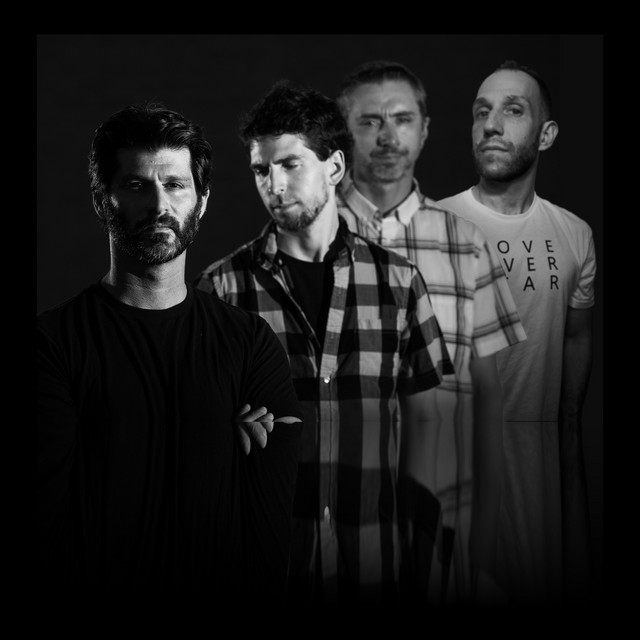
Against all odds, Fall into the sky makes a triumphant, against-the-grain return after weathering a chaotic history of breakups, relocations, and false starts. Reunited and stronger than ever, the band is dusting off the foundational tracks that started their journey while firing up a wave of ambitious new material. Fusing the atmospheric depth of A Perfect Circle and Radiohead with the explosive energy of Incubus and the groove-driven punch of Red Hot Chili Peppers, their sound is an ever-evolving melting pot. Blending hard rock grit, haunting acoustic melodies, ambient soundscapes, and subtle funk edges beneath deeply introspective lyrics, Fall into the sky channels survival and artistic rebirth into a raw, unpredictable sonic trip.
The band about their new song: “Find My Way” is a punchy, groove-driven alternative rock track that balances hard-hitting guitars and rhythms with a spacious, atmospheric edge. It’s melodic and hook-focused, building toward an extended guitar solo while maintaining a strong sense of groove throughout”. I love the clean part (fantastic arrangement), exploding in a catchy and punchy chorus.
I find the song’s dynamic very interesting and the song features a fantastic solo section too, very technical and kind of unusual for the genre, same as the low key ending. “Find My Way” is a very cool song, give it a go by clicking on the Spotify player below and follow Fall into the sky if you like what you hear.
Die Apokalyptischen Reiter are excited to announce the signing of a new contract with Napalm Records. The band is currently working on its 13th studio album. Read more…
Less than a month prior the release of his new solo album From The Dark, Iommi now presents a video clip for the second advance single called “Stormwatcher”. Read more…
(written by Islander) We welcome the Kentucky extreme metal band Sinistrum to our menacing and morbid halls for the first time today, and it’s long past time that we did that. They have an experienced lineup that includes members of acts including Fornicus and Kentucky death metal veterans Abominant. They made their first mark in […]
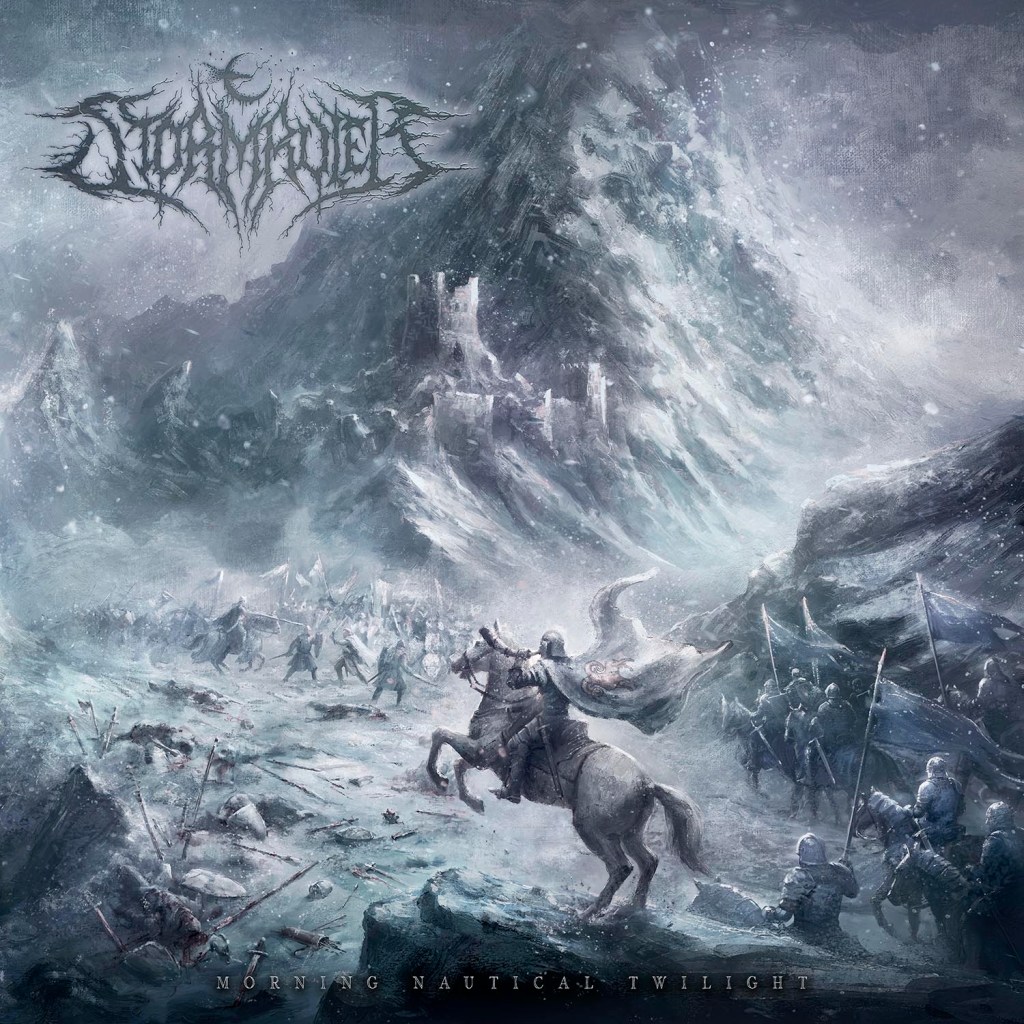
STORMRULER has announced the forthcoming full length offering, Morning Nautical Twilight, will be released on December 4, 2026, via Distortion Music Group (DMG) – Powered by Reigning Phoenix Music. The U.S. hailing black metal duo weave epic narrative storytelling through the track list of Morning Nautical Twilight. Alongside the album announcement, the band presents the first single, “Chapter II: In The Eye Of Umbria.”
Vocalist and guitarist Jason Asberry comments on the new single release: “We chose ‘In The Eye Of Umbria’ as the first single off of our new album Morning Nautical Twilight for a few reasons. It’s the second chapter in the Imperial Chronicles but the first that takes place in present day Aurelia, a realm spanning several thousand years with a vast history and many conflicts. It immediately introduces the listener to a few important characters within the world and sets the stage for the rest of the story.
Secondly, it’s a very standout track amongst the record. We explore a few new corners of our sound that we haven’t in the past but do so in true STORM fashion. It has the raw and driving rhythms of our heavy metal heroes, the mountainous and soaring leads that are heavily laden throughout this record while also keeping true to the many folk sounds that we hold dearly. We’re very proud of this record and can’t wait for you all to explore the pages of Morning Nautical Twilight.”
Morning Nautical Twilight Track List: 00 Prologue: The Weary Traveler 01 Chapter I: The Sword, The Scepter & The Seal 02 Chapter II: In The Eye Of Umbria 03 Chapter III: Council Of The Nations 04 Chapter IV: Subterranean Sorcery 05 Chapter V: Lanuthor’s Lamentations 06 Chapter VI: Open The Gates! 07 Chapter VII Morning Nautical Twilight 08 Chapter VIII: The Siege Of Belgorath 09 Chapter IX: Shadows Of The Starcrest 10 Chapter X: Winds Of War 11 Chapter XI: When The White Horn Sounds 12 Chapter XII: Engulfed In The Flames Of Oaken Pyre 13 Epilogue: The Imperial Chronicles
Emerging from the gloom in a high-paced fury, “Chapter II: In The Eye Of Umbria” traverses through shadowy progressions in an untamable arrangement. Jason Asberry‘s intricate guitar leads entwine through the driving momentum while ferocious shrieks unleash soar above, piercing through Jesse Schobel‘s explosive percussion. Musically, “Chapter II: In The Eye Of Umbria” incorporates a stylistic shift into groove-led rhythms and folk-inspired melodies, situating the track firmly in the immersive fantasy worldbuilding of Morning Nautical Twilight.
Born out of St. Louis, MO, the ferocious black metal duo STORMRULER is comprised of guitarist and vocalist Jason Asberry and drummer Jesse Schobel. Captivated by fantasy realms, the band’s imagery and sonic design draw from this theme entwined with historical elements.
The debut album Under The Burning Eclipse emerged in 2021, released via Napalm Records. This full-length was followed in quick succession by the sophomore offering, Sacred Rites & Black Magick, also via Napalm Records in 2022.
In 2026, STORMRULER signed to Distortion Music Group (DMG) – Powered by Reigning Phoenix Music, releasing the standalone single “Dark Age Of Deception.” Plunging into a dark and immersive shroud of atmospheric layers and commanding intensity, “Dark Age Of Deception” signified the beginning of the band’s next incarnation.
With the unveiling of “Chapter II: In The Eye Of Umbria,” STORMRULER‘s forthcoming full length Morning Nautical Twilight delves further into epic fantastical realms placing powerful storytelling at the core of their music.
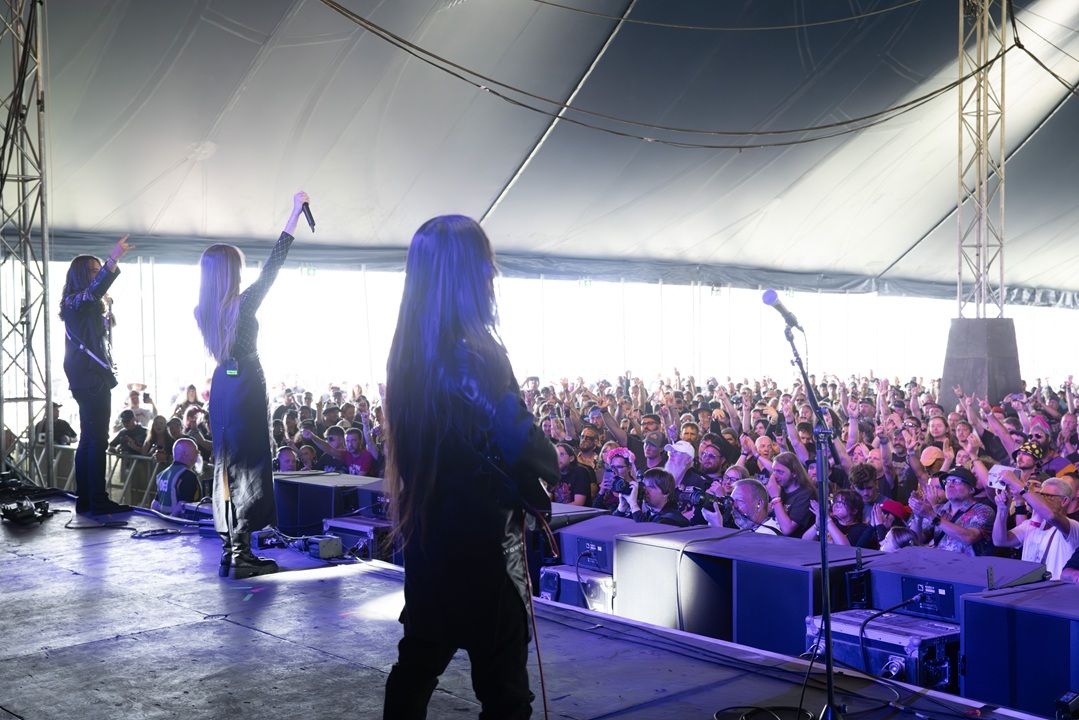
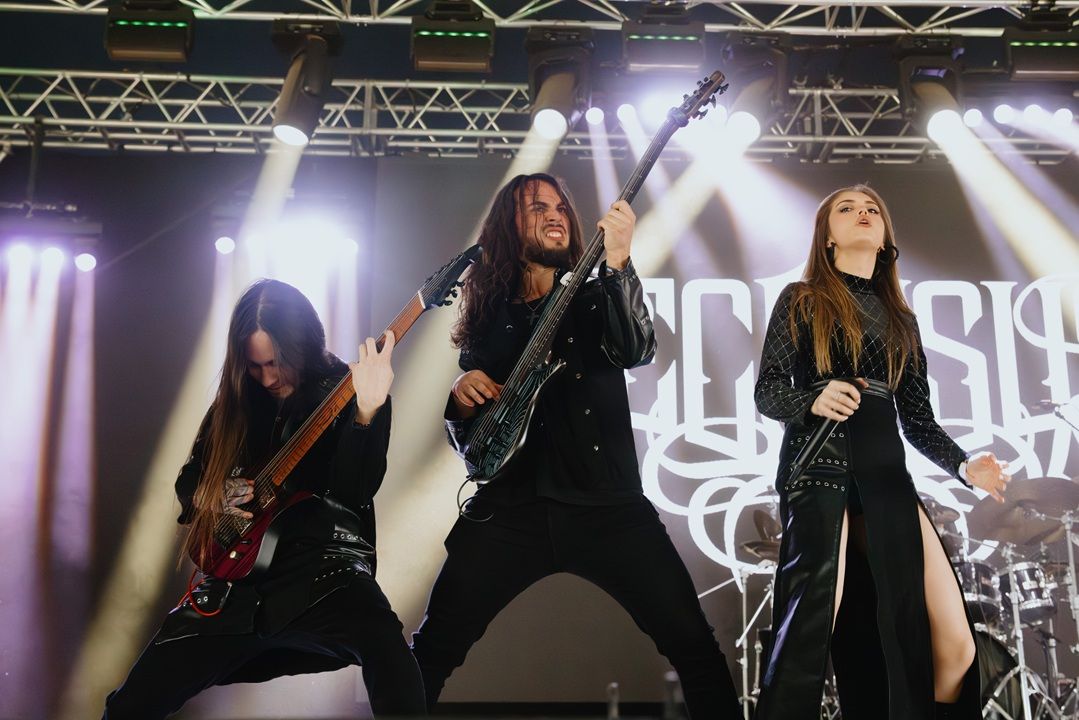
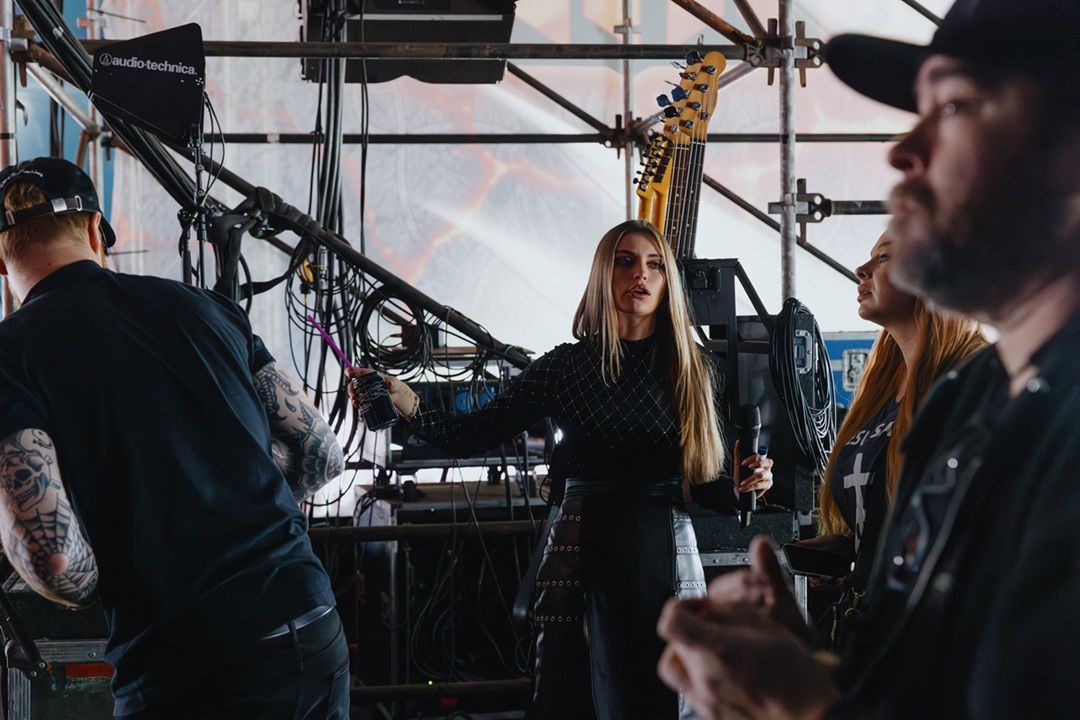
It’s Sunday afternoon at Download festival, and punters are about to receive a royal blessing. Decessus frontwoman Ignacia Fernández strides onto the Dogtooth stage amid djent-tinged, melodeath riffing, before unleashing a voice vile enough to turn milk sour. Then she begins the ceremonial act of headbanging, disappearing behind a waterfall of flawlessly conditioned hair. Last year, Ignacia became an overnight viral sensation when she performed a Decessus track on a rather different stage.
Stepping out in a floor-length ball gown and a sash, with a full face of glam make-up, she growled for the judges of the Miss World Chile semifinal, backed by her bandmate, guitarist Carlos Palma. While the star was aware her guttural performance clashed with the demure trappings of pageantry, she felt it was the only way she could express herself authentically. It paid off, with Ignacia later taking the crown.
Onstage, it’s clear she’s in her element – she spins her mic with the whimsical precision of a baton twirler, and often strikes a menacing, model-esque pose. Considering Ignacia was worried her pageantry involvement would ostracise her from the metal community, it’s been a huge relief to find herself welcomed with open arms.
“I was nervous that the metal fans would hate me,” she admits after her set. “I didn’t want people to think I was being disrespectful to the metal scene.”
She needn’t have worried. Soon after her performance for Miss World Chile, Ignacia was inundated with praise. She even got recognition from some of her favourite artists: System Of A Down and Black Sabbath’s Geezer Butler.
“When my dad saw that Geezer Butler had posted my performance, he sent a screenshot, like, ‘What the fuck?!’” Ignacia remembers with a laugh. “It was all so crazy and shocking… and it was amazing that it helped so many people find our band!”
Sitting backstage at Download, the 28-year-old does stand out. From the sequins she’s placed under both eyes for added sparkle, to her glossy brown hair, it’s a look you wouldn’t necessarily associate with a grimy Donington field. However, Ignacia has proved her chops – and knowing how to do your make-up doesn’t render you incapable of appreciating metal.
“Whenever we get hate, it’s usually towards me and towards my looks, as if the way I look means I’m not a true metalhead,” she sighs. “I’m like every other metal lover – I grew up listening to my dad’s Black Sabbath cassettes, and I used to get lost for hours watching Guns N’ Roses live videos on YouTube.”
After a three-year depressive episode, Ignacia formed Decessus as a way of reconnecting with what she loved.
“I had a break from singing for years because I started getting really bad depression,” she admits. “I stopped doing everything that I loved – like, I used to love drawing and rollerskating, but then I just stopped everything. But I snapped out of it because I knew I really wanted to do music… I knew it would make me happy.”
After learning how to scream from a friend on Facebook (“he just sent a short list, like, ‘Do this, do this, don’t do this…’ and I just worked from that”), Ignacia practised from the comfort of her bedroom.
“I originally thought only men could scream, but I saw a video of Arch Enemy performing when I was 15, and, seeing Angela Gossow, I knew I wanted to scream too,” she says.
Ignacia used to wear a more conventional metalhead uniform, complete with a septum piercing (“I still put the ring in sometimes when I’m performing!”) and dyed hair. However, modelling came along and pressed pause on her dreams of being in a band.
“I used to dye my hair, but one day a modelling agency told me that they’d only work with me if I went back to a natural look,” she explains. “I’d gone to a shoot with my sister, who also models, and I had green hair and half of my head shaved. Eventually I agreed, and I had to shave it all to one length.”
While Ignacia winces at the memory, jokingly putting a hand to her temple like a maiden in distress as she brands it “The worst day of my life!”, her love for modelling is evident. Although she struggled at first (partially down to attending auditions alone at 14 to look “more professional”, which led to people being “mean”), it’s a career she thrives in.
“I’ve been working my ass off since I was a teenager, and I love it,” she grins.
Ignacia didn’t have any specific goals in mind when she decided to pursue pageantry, other than shaking up her life and making it more interesting. But it’s allowed her to explore her love of beauty and modelling on a global stage, as well as giving her a platform for her music and activism.
“I was originally involved with Miss Universe, but Miss World suits me much more,” she explains.
To the layman, the competitions might seem the same, but Miss World has a more humanitarian edge. With a focus on ‘beauty with a purpose’, it aims to seek out someone capable of being a global ambassador who cares for their community.
“It’s not just about being the most beautiful girls – each candidate has to have a social project,” the singer explains.
In Ignacia’s case, she’s been an animal rights activist from the age of five.
“I’ve been rescuing animals all my life,” she smiles. “Where I used to live in Chile, people would come and abandon their animals on our street. You’d go outside, and the streets were full of stray dogs and cats… so I started to bring them home, clean their wounds, and heal them.”
Soon, the Fernández household became an unofficial refuge for abandoned animals – much to her mum’s chagrin.
“My mum doesn’t really like cats, but at one point we had a few cats as well as eight dogs,” Ignacia smiles.
Her activism has grown into a project called The Sound Of Compassion, which helps support rescue and adoption centres while raising awareness for animal rights. She’s also spoken in the National Congress of Chile, standing against the Chilean president’s plans to detrimentally change laws protecting animal and environmental rights.
“I will always raise my voice for those who cannot,” she says. “People who don’t want animals to have rights have no brain… it’s evil and heartless.”
Even in her music, Ignacia advocates for animal rights. Latest single Dark Flames condemns those who commit arson in Chile, starting wildfires that kill people and animals in catastrophic numbers – sadly a common occurrence.
“When I write, I’m exploring everything I want to scream about – which is usually mental health, or animal rights,” she explains.
Decessus are yet to release a debut album, but Ignacia is keen to sort that out very soon.
“My biggest wish is for peace… and to finally get an album out,” she laughs. “I want the world to be a better place, and to help that with my music. If I can grow more as Ignacia along the way, that would also be great.”
Decessus have signed to Frontiers/BlkIIBlk and their debut album is expected soon.
Anytime the ascendant Irish star CMAT performs on TV, that’s appointment viewing. She’s a hugely engaging performer with a gigantic bazooka voice, and she makes the absolute most of every big performance. Fortunately, we’ve been getting a lot of those CMAT performances in the time since she released her album Euro-Country last year. Just a few weeks ago, CMAT was the musical guest on SNL UK, and she took part in a sketch. On Wednesday night, CMAT appeared on Comedy Central to give a completely non-comedic performance.