Dave Grohl and Foo Fighters have released a new live EP, “Foo Fighters Are Playing Where??? Vol. II.”
The post Foo Fighters Release New Live, 6-Track EP From Surprise Club Shows appeared first on Audio Ink Radio.
Dave Grohl and Foo Fighters have released a new live EP, “Foo Fighters Are Playing Where??? Vol. II.”
The post Foo Fighters Release New Live, 6-Track EP From Surprise Club Shows appeared first on Audio Ink Radio.
You can say that you saw it coming, but you’d be a liar. On October 28, 2016, Avenged Sevenfold released their seventh studio album, The Stage. It had been rumoured for some time that the California chart-toppers were working on new music, in no small part due to a seemingly standalone single coming out in mid-October. But no one who woke up that morning truly expected to have 73 minutes of new music waiting for them.
To hear them tell it, Avenged surprise-released their progressive metal opus out of fatigue. Their last album, 2013’s Hail To The King, had a months-long rollout featuring online puzzles, a radio-ruling single and countless interviews. They were also in a legal battle with their former label Warner Bros and feared some kind of sabotage. Those fears were realised when friend and wrestler Chris Jericho ‘leaked’ a fake release date for The Stage and the label hurriedly announced an unauthorised Avenged best-of album to come out one week earlier. Long story short: they were sick of the industry’s shit, and they felt that their fans were, too.
“We could sense the boredom in our fans [after Hail…],” rhythm guitarist Zacky Vengeance told this writer in 2017. “‘Oh, Avenged is trolling us. They’re doing the campaign and doing scavenger hunts, just release the fucking songs already! We just wanna hear the album!’ This time, we gave them nothing and then we gave them the album, like, ‘Here you go. Make up your mind!’”
Of course, Avenged didn’t invent the surprise album release. It’s been a thing since alt-rock leaders Radiohead effectively leaked their own album In Rainbows in 2007. But since The Stage, and especially in 2026, metal has embraced the tactic like no other genre. Over the last few months alone, black metal band Ultha, doomsters Spirit Adrift and returning post-metal idols Neurosis have all put out new records with no notice. Converge released their long-awaited 10th album Love Is Not Enough in February, only to reveal shortly afterwards that it was the start of a two-part series, with Hum Of Hurt swiftly following. Avenged themselves went back to the well with the divisive Statica EP last month.
For Spirit Adrift, whose surprise album Infinite Illumination was also their last, the decision was born from the same music industry fatigue as Avenged. “I think bands and artists have two choices,” mainman Nate Garrett told MusicRadar. “You crawl out on your fucking hands and knees with the shit kicked out of you, or you walk away on your own two feet. That’s the way I look at it right now. I respect bands that go out that way, like, on the high-note.”
On paper, releasing an album without any singles or promotional interviews seems like commercial suicide, and it has been. The Stage was the lowest-charting Avenged album since 2007, and when A Day To Remember surprise-released Big Ole Album Vol. 1 in February 2025, they slid from the number 15 US chart position of predecessor You’re Welcome to 155. Talking to Guitar.com in May 2025, on the day his band surprise-released their final album Clockworked, Stray From The Path’s Tom Williams acknowledged the probable commercial slump yet was unfazed.
“Charting was important in 2016, but charting in 2025, no one cares,” he said. “I get an email every week about first-week sales and they’re just lower and lower and lower and lower. We charted back in the day, when it mattered, and that was cool, but right now, it’s more important for me to present the record in a way that’s fun and exciting and fulfilling.”
Zacky said similar in 2017: “Album sales [for The Stage] weren’t as good, but at what point do people critique success on how many fucking albums you sell in a week rather than how big your balls are? So for us, I think we had some pretty big fucking balls and we did some exciting shit. I think the fans appreciate that, too.”
That makes sense: in the streaming age, barely anyone makes a liveable profit from recorded music, so why not circumvent the time-consuming promo process? And for the majority of metal bands, who reside in the genre’s underground, their output is more album-focussed than single-focussed. No one could realistically accuse drone outfit Khanate, who returned out of the blue with 2023’s To Be Cruel, or panoramic stoners Sleep, whose 2018 album The Sciences stunned everyone, of being radio darlings.
Although there are major commercial drawbacks, there are also commercial benefits, albeit less obvious ones. Williams, who manages Canadian metalcore band Counterparts and oversaw the surprise-release of their 2024 EP Let Them Die, insisted that fans were relieved about the lack of a staggered preorder process, which sometimes doesn’t get the record to their doorstep in time for release day anyway.
“That’s when it really clicked for me,” he said. “Everyone was like, ‘Thank God! No fucking pre-order! The vinyl ships now!’ It’s what people want, and it’s what I want: I’m a consumer, too!”
Surprise album releases also have the potential to feel like events, in the way that traditional release days rarely do. When Neurosis came back with An Undying Love For A Burning World, it was monumental news. In the same instant, fans learned that the pioneers had reunited after a decade away, ex-Isis frontman Aaron Turner had joined, they were returning to the live circuit, and a new album was out, in full. It became a massive talking point for a cult band.
Had these stories been drip-fed, it would have been less of a moment, and the hype actually let Neurosis reverse the surprise-album commercial curse. Take a quick glance at Spotify and An Undying Love… is already one of their most listened-to albums, eclipsing even what was long assumed to be their swansong, 2016’s Fires Within Fires.
But these are all bands who are either firmly in the underground, who are breaking up or whose names are firmly established. For an up-and-coming artist looking to broaden their audience, a surprise release would be one of the worst things to do. As Sleep Token made readied breakthrough third album, 2023’s Take Me Back To Eden, the rollout was everything. Their scheme of sharing singles in rapidfire succession (five from early January to mid-February) offered the kind of frequency that social media algorithms reward, and they became a fast TikTok sensation. Safe to say, had the album just been unloaded in one go with no warning, they wouldn’t be filling arenas and headlining stadiums right now.
A surprise release is a great way to reward an active fanbase but no way to build one. For as long as heavy metal bands want to rebel against the music industry system and emphasise the album over the single, it will have a place in the genre. Whether or not it’s a good commercial move, if you’re truly set on doing a surprise release, you probably don’t care by that point either way.
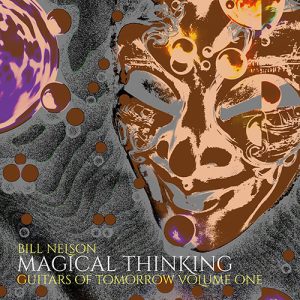
It’s easy to lose track of Bill Nelson‘s creative curve: the British guitarist always seems to be competing with himself and with time – delving into his past to dust off an abandoned project while looking ahead and composing new … Continue reading
The post Bill Nelson Launches “Guitars Of Tomorrow” appeared first on DMME.net.
Sevendust singer Lajon Witherspoon knew his band had made it when Ted Nugent turned up at one of their gigs with a live buffalo in tow. It was New Year’s Eve 1999, and the Atlanta five-piece were opening for Metallica at Detroit’s Pontiac Silverdome. The Nuge and fellow Motor City hero/future MAGA pitchman Kid Rock were also on the bill, as was the snorting 800lb hunk of meat Ted had brought with him.
“It was crazy,” Witherspoon says now, sitting in a dressing room beneath London’s O2 with Sevendust drummer Morgan Rose a few hours before his band take the stage as support to Alter Bridge. “We were in our bus and this truck pulled up. It was Ted Nugent and a big old buffalo. They had to reinforce the stage because he was gonna ride that buffalo on stage.”
That Metallica New Year’s Eve show was the result of a whirlwind couple of years that had taken Sevendust from unknown local band to national contenders. Their coronation would be complete at the end of Metallica’s set, when all four bands – Sevendust included – got on stage to jam on a cover of Kiss’s Detroit Rock City.
“At the end, James Hetfield gives me his guitar,” says Witherspoon. “I do not know how to play guitar, but I was playing my heart out.”
Have Sevendust spoken to any of the bands they shared the stage with that night since? Metallica, yes. Rock’s leading right-wing wingnuts? Not so much.
“Uh-uh,” says the singer, with a ‘do you really have to ask?’ look on his face. “Not me.”

Sevendust are one of America’s most resilient bands. They weren’t as successful as contemporaries such as Limp Bizkit and Creed, although a run of three gold albums on the bounce between 1997’s self-titled debut and 2001’s Animosity is nothing to be sniffed at. But their greatest achievement came afterwards – surviving the worst the music industry could throw at them. “Yeah, we’ve had a few moments where it looked like it was game over,” Rose says drily.
Atlanta wasn’t exactly a hotbed of hard rock and heavy metal in the mid-90s, but there were enough bands for Rose to cherry-pick musicians from to form Sevendust. As a teenager, the drummer had briefly been a member of local underground star and future Drag Race icon RuPaul’s new-wave band Wee Wee Pole. “I’m such a blip in that machine he’s run for the last forty years,” he says.
Sevendust rehearsed and sometimes gigged in The Wreck Room. “A rat-infested shithole,” as Rose puts it.
“There was a strip club next door,” Witherspoon adds. “You go in there you might not come out.”
They bagged high-profile management in the shape of former Twisted Sister guitarist Jay Jay French, who also produced their self-titled debut album. That the union didn’t last much beyond that record says much about the relationship.
Sevendust sold exactly 311 copies the first week. But it sold more the week after, and more the week after that, until it sailed past half a million copies. They were road dogs, and feral on stage too – one band they supported, long-forgotten alt.rockers The Nixons, threatened to kick them off the tour for being too aggressive live. Sevendust found a place in the nu metal scene, but even then they felt like outsiders.
“They were cool kids from LA, we were hicks from Georgia,” says Witherspoon. “They kind of ignored us a little.”
There were fuck-ups along the way, mostly from the people around the band. Such as the time their label, TVT, blocked a collaboration with Eminem, who Sevendust had got to know on the 1999 Warped Tour, just as the rapper exploded. “They didn’t think it was going to be a thing,” says Rose, rolling his eyes.
Still, things seemed good. They opened for Metallica and Limp Bizkit and hung out at TV shows with a pre-megastardom Beyoncé. They were one of the best live acts around, and their records consistently sold. But it all came crashing down in the mid-2000s.
“There was a lot of money coming through,” says Witherspoon, “and we were making nothing.”
The reasons are complicated and a legal minefield. The short version is that a succession of managers and accountants didn’t necessarily have the band’s best interests at heart.
At one point they were so broke that they had to leave in the middle of a European tour.
“When you’re a week in and you hear: ‘You’ve lost seventy-five grand’, it’s bad,” says Rose. “We had to leave cos we couldn’t pay our rent back home.”
Later, the band attempted to sue one of their ex-associates for mismanaging their money, only to end up having to pay them $40,000.
“There were times we came close to going bankrupt,” says Morgan. “One of the people who was stealing from us is now in jail for stealing for somebody else.”
It took nearly a decade, and a new manager, to pull themselves out of the hole. Even then, their trials weren’t over. In 2022, Rose gave a podcast interview in which he said the band were planning to quit at some unspecified point in the not-too-distant future. “Oh, that was a real thing,” he says.
Today he admits that he and guitarist Clint Lowery were deadly serious about it. The pair were tired and frustrated that Sevendust seemed to be going in ever-decreasing circles. Tours had been confined to North America – their current European dates are their first in eight years, and their previous UK shows were nine years before that. They were ready to walk. The others?
“Everybody else despised the idea,” says Witherspoon. “I stopped talking to him [Rose] for a while. I can tell you, if they’d have done it, you’d have seen a band called Threedust, cos we weren’t giving up.”
The solution was to do what men of their age don’t do: talk about it. They re-examined their friendship and everything they’d been through. They emerged with new album, One, a record whose title underlines their rediscovered unity.
“It’s been tough – we’ve been ripped off, we nearly went bankrupt,” says Rose. “We survived what many people wouldn’t have survived. I don’t know how we did it, but out of everything we’ve done, I’m proudest of that.”
One is out now via Napalm Records. Sevendust are currently on tour in the US, and play the UK and Europe in November and December. For dates and tickets, check the Sevendust website.
All I know is that when I’m with you
all the lines they seem to blur
I meant it when I said we were through
But my heart isn’t so sure
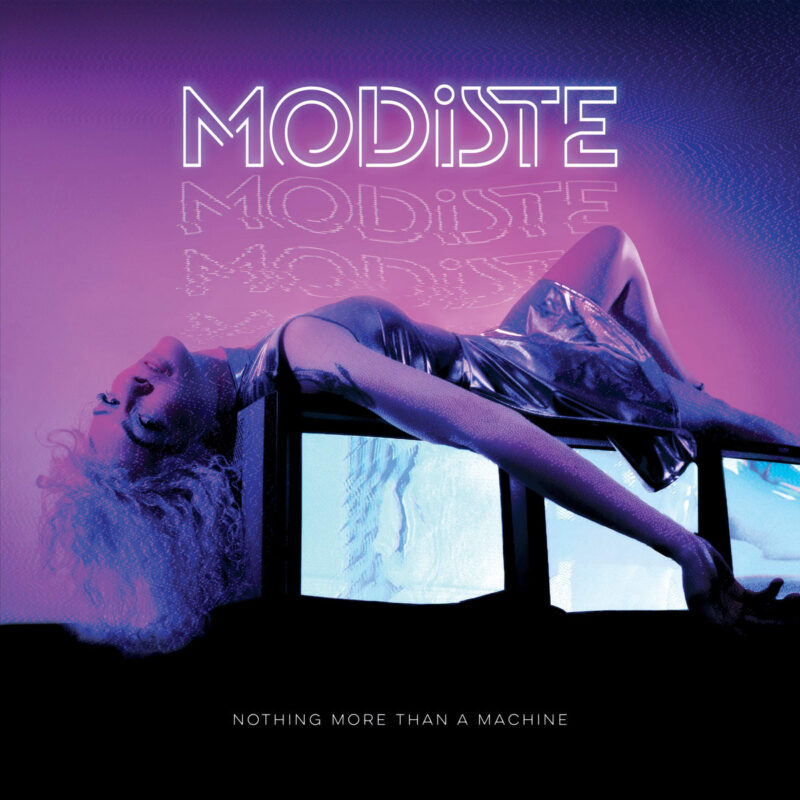
MODISTE could have built Nothing More Than a Machine inside a laptop, but the Louisville trio instead surrounds itself with analogue synthesizers, drum machines, and digital instruments from the 80s and 90s – machines with temperaments, imperfect memories, and knobs that invite somebody to reach out and make a decision.
“Using these old machines is a small personal rebellion against convenience culture and all the small ways technology is sterilizing the creative process. Also, they’re just more fun. They’re unpredictable and wobbly and alive and have a certain warmth and texture that you just can’t replicate,” vocalist Sydney Sleadd says.
Those influences are easy enough to hear. Depeche Mode, Siouxsie and the Banshees, Book of Love, New Order, Metric, The Motels, Tennis, Weyes Blood, and Strange Boutique all provide useful coordinates at different moments, although MODISTE’s strongest songs are the ones where those references begin to blur together. Sleadd’s voice supplies a recognizable center, Stein approaches synthesizers with the curiosity of someone who enjoys their peculiarities, and Stallings introduces enough guitar to keep the electronic arrangements physically grounded. That sense of play gives the album much of its character.
Nightmare opens as though the closing credits of a 1987 prime-time drama have suddenly become an invitation, with broad synthesizer chords, bright melodic flourishes, and the faint suggestion that something romantic and vaguely dangerous is waiting around the next corner. As an instrumental, it establishes the album’s affection for period equipment without turning the record into an exercise in museum preservation. There is too much movement in the arrangement, and too much pleasure in the tones themselves, for that.
Breaking My Own Heart brings Sleadd forward with a song about the exhausting arithmetic of wanting somebody who disappears whenever intimacy becomes possible. The verses maintain a cool exterior while the chorus gives her considerably more room, allowing the vocal to stretch across the arrangement as frustration turns into self-preservation. Beneath her, the electronics maintain an elegant tension between pop immediacy and emotional unease. The song understands how desire can survive well beyond the point at which common sense has packed its bags.
On Blur, Dennis Stein’s synthesizers rise and recede while Kyle Stallings sends guitar through the open spaces, leaving Sleadd room to sing with poise, attraction, and wary self-knowledge. “We wanted Blur to have this ebb and flow that tapped into the feeling of not being able to pull away even when something isn’t good for you,” says Sleadd. The arrangement follows that idea closely. Synth lines swell and withdraw, the guitar adds an occasional flash of abrasion, and Sleadd sounds increasingly aware that recognition offers very little protection against repetition. The chorus catches the contradiction beautifully, with certainty dissolving beneath attraction.
My Love heads into power-ballad territory with complete confidence. Sleadd leans into the emotional scale of the song, while the arrangement allows the chords to widen around her rather than crowding every available space. Its euphoric bridge provides one of the album’s most openly romantic moments, the kind of passage designed for a singer to look toward the back of the room and hold the note a little longer than expected.
The instrumental Nightmare Part 2 then clears the air. Its spacious electronic architecture brings Jean-Michel Jarre to mind, particularly in the way melody and atmosphere are allowed to develop patiently across repeating figures. Where the opening Nightmare feels connected to television themes and eighties synth-pop drama, its sequel reaches toward something more expansive and cinematic, giving the album a useful midpoint before the songs return to their various romantic complications.
Shadows finds MODISTE at its most theatrical. “Shadows delves into themes of longing, forbidden love, repressed desire, and surrender,” says Sleadd. “We wanted it to feel like a slow descent, similar to giving into temptation, with the synths and rhythm building a kind of hypnotic gravity around the words.”
The song carries that descent in its pacing. Sleadd sings as though every warning has already been received, considered, and quietly placed to one side. Desire becomes a question of reputation, restraint, and the private thrill of crossing a line while knowing precisely where it was drawn. Shame gets powdered, perfumed, and sent onto the dance floor with a couple of spritzes of Tabu. Beneath the drama, the band keeps a firm hand on the arrangement, allowing the tension to accumulate without burying the lyric beneath excess.
Age of the Andy brings one of the record’s strongest rhythmic turns, with a backbeat that carries some of Depeche Mode’s physical economy while Sleadd delivers one of her most assured performances. The keyboards have a harder edge here, and Stallings’ guitar adds pressure around the beat rather than competing with it. The result suits MODISTE particularly well: stylish, muscular synth-pop with enough space for the vocal personality to remain at the center.
Besotted returns to the scale of a power ballad, though its emotional engine is a struggle over desire and control. Sleadd understands that these songs become more interesting when love comes with leverage, pride, hesitation, and the possibility of somebody losing the upper hand. The larger arrangement gives those tensions room to breathe, making the track feel less like a declaration than an extended negotiation between two people who know exactly how much power attraction can surrender.
“In creating this record, we really discovered how well we worked together and how much we enjoy working together. We’re each pulling from different influences but there’s an overarching shared vision that is the glue of this project,” Stallings says.
Listen to Nothing More Than a Machine below, and order the album here.
Their ambitions extend to the stage. “We’re really trying to create a full experience at our live show that allows everyone, including us, a reprieve from the day to day grind. While it’s a lot of work to pack out these big TVs, lights, and all of our stage production, it’s worth it to build an immersive world for people to come live in for a night,” Stein says.
Nothing More Than a Machine earns its title through an affectionate contradiction. MODISTE loves machines because they can misbehave, drift, surprise, and require touch. Across the album, those machines become partners in songs about people behaving much the same way: losing control, guarding themselves badly, making familiar mistakes, and occasionally finding something beautiful in the trouble.
Follow MODISTE:
The post Louisville Synthpop Trio Modiste’s “Nothing More Than a Machine” Finds the Human Heart Inside Vintage Synths appeared first on Post-Punk.com.
DEAN BIRKHEIMER | Go Venue Magazine
The sounds of Georgia, (Go Dawgs), found a welcome home in Omaha, Nebraska on August 6, 2026, as Blackberry Smoke brought their signature blend of Southern rock to The Steelhouse. Before the headliners took the stage, guitar virtuoso Trey Hensley warmed up the crowd with a dazzling solo display.
Some guitarists play fast. Others play with feeling. Trey Hensley does both. He delivered a performance that was as technically dazzling as it was deeply soulful. From the moment he stepped on stage with his signature Trey Hensley Gold Label 510e SE acoustic by Taylor Guitars, it was obvious the audience was in the presence of one of the finest acoustic musicians performing today. His set showcased material from his outstanding newest album, Can’t Outrun the Blues. The songs translated beautifully to the live setting, highlighting his exceptional songwriting while giving him plenty of opportunities to demonstrate the remarkable guitar work that has earned him widespread acclaim.
Hensley’s career has been turning heads since he was just 11 years old, when he made his first public appearance on the Grand Ole Opry alongside Marty Stuart and bluegrass legend Earl Scruggs. Since then, Hensley has built an impressive résumé, earned two International Bluegrass Music Association Guitar Player of the Year awards while also added a GRAMMY® Award to his accomplishments when, as a member of The Taj Mahal Sextet, Swingin’ Live at The Church in Tulsa won Best Traditional Blues Album at the 67th Annual GRAMMY Awards. Throughout the performance, Hensley demonstrated why he is considered one of the premier acoustic guitarists of his generation. The crowd may not have been large, but the response they gave was gigantic.
Blackberry Smoke created a loose, good-time atmosphere by providing a gritty Southern rock sound full of blistering guitar work and big harmonies.
From the opening notes, the Atlanta based band had the Steelhouse crowd locked in. Frontman Charlie Starr and company moved effortlessly between hard driving Southern rockers, bluesy grooves and the band’s more reflective moments.
One of the night’s most memorable moments came when the band decided to give the fans something they hadn’t necessarily planned on. “Son of the Bourbon” wasn’t on the original set list, but a group of persistent fans had brought a sign requesting the song. Blackberry Smoke noticed and rather than ignore the plea, they rewarded the dedication by playing it. It was a perfect example of the connection between the band and its audience. “Train Train,” the classic Blackfoot cover was arguably the song of the night, delivering the kind of raw, rowdy energy that makes a live cover memorable.
The evening also featured a special collaboration with opening act Trey Hensley, who returned to the stage to join Blackberry Smoke for “White Freight Liner.” Hensley’s acoustic guitar picking and unmistakable bluegrass influence added another dimension to the performance.
Omaha didn’t just get a Blackberry Smoke concert. It got a party and judging by the smiles leaving the building, nobody was in a hurry for it to end.
[See image gallery at www.govenuemagazine.com] All images © Dean Birkheimer
Follow our socials, only take a second and is free by finding us on:
Facebook | Twitter | Instagram | BlueSky
The post No Fire Alarm Needed. That Was Just Blackberry Smoke at The Steelhouse appeared first on Go Venue Magazine.