Category: news

  • THE PINEAPPLE THIEF Announce New Studio Album “Far And Wide” & Launches Video For Single “New World Order”

    Progressive art-rockers The Pineapple Thief are excited to announce that their brand new studio album Far and Wide will be released via InsideOutMusic on the 9th October 2026. On this latest record, The Pineapple Thief feel more like a rock band than ever. Still progressive. Still masters of spine-tingling atmosphere. Still attuned to the strange, troubled world around us. And now, a decade and seven albums on from the arrival of Gavin Harrison on drums – and newly signed to InsideOut Records – they capture the chemistry, road miles and bigger stages of the last few years.

    Coinciding with this announcement is the launch of the hard-hitting single “New World Order”, complete with a striking video by longtime collaborator George Laycock at Black Tide Productions.

    Far and Wide is the sound of a group with dreamlike complexity at their fingertips, channelling it into hard-hitting, incisive songs.

    “We realised, for instance, that you don’t need more than two guitar parts at any one time,” frontman/founder Bruce Soord says. “You know, ’why have we got four or five guitars? Why have we got six-part harmonies when there’s only three of us singing?’ We deliberately created those constraints, because we thought, ‘we’re a rock band, there’s five of us on stage, this is what we should be about in the studio.’”

    “You do start to imagine what a song would look like on a stage, and sometimes that does influence the arrangement,” Harrison adds. “Like, ‘this would be amazing live when we do this, if this section just went into this other thing’, and you can picture it with the lights and the atmosphere on stage.”

    It’s a fitting mindset for Far And Wide’s powerful, immersive tracklist. You’ll find vignettes of a society in turmoil here. Moral courage in the face of adversity. Personal loss and its ripples. Points that intensify the foundations laid by 2024’s It Leads To This, in which the band contemplated all that the next generation stood to inherit.

    Far and Wide will arrive on several formats, including a Ltd 2CD & Blu-ray artbook which includes the bonus track ‘Daylight’, as well as a second CD of instrumentals and a blu-ray featuring Dolby Atmos, DTS-HD 5.1 Surround Sound & 24/48 Stereo Mixes. The album will also be available as a Special Edition CD Digipak, Gatefold LP (in several colour variants) & digitally as both stereo & Dolby Atmos. All formats feature the striking cover image of an abstract sculpture by the late Michael Schoenholtz, father of Harrison’s longtime partner Hannah.

    The band will follow the release of the album with a headline North American tour to take place in late 2026. The full list of dates is as follows:

    Nov. 17th Washington DC – Howard Theater
    Nov. 19th Philadelphia PA – Theatre of Living Arts
    Nov. 20th New York City NY – Gramercy Theatre
    Nov. 21st Somerville MA – Somerville Theater
    Nov. 22nd Quebec City QC – Capitole
    Nov. 24th Montreal QC – Beanfield Theatre
    Nov. 25th Toronto ON – Danforth Music Hall
    Nov. 27th Chicago IL – House of Blues
    Nov. 28th Cleveland OH – House of Blues
    Nov. 29th St. Louis MO – Delmar Hall
    Dec. 1st Dallas TX – The Bomb Factory
    Dec. 3rd Denver CO – Summit
    Dec. 5th Phoenix AZ – Crescent Ballroom
    Dec. 6th San Diego CA – The Observatory North Park
    Dec. 8th Los Angeles CA – The Bellwether
    Dec. 9th San Francisco CA – August Hall
    Dec. 11th Seattle WA – Neptune Theater
    Dec. 12th Portland OR – Revolution Hall
    Dec. 13th Vancouver BC – Hollywood Theater

    Founded in 1999 by Bruce Soord, the band has long been one of the genre’s most successful and accomplished outfits, releasing 16 studio albums and touring worldwide. The band consists of Soord on vocals and guitars, Jon Sykes on bass, Steve Kitch on keyboards, and Gavin Harrison on drums.

    Far and Wide is available for pre-order here.

    The post THE PINEAPPLE THIEF Announce New Studio Album “Far And Wide” & Launches Video For Single “New World Order” appeared first on Sonic Perspectives.

  • (HED) P.E. launch Creator One Records, release “Violent Girl”

    The first single from their upcoming album ‘Relapse,’ due in October

    Source

  • No Drinks For Jimmy Broken Review

    No Drinks For Jimmy Broken Review

    The rough guitar at the start of “Broken” instantly energizes the listener. Soon, the drums enter with driving riffs that create anticipation. The song then erupts with a powerful outburst, leading to an empty sound stage that highlights the intense snare drum beat. The drumming is fantastic, bold, and commanding. The vocalist delivers the lyrics with passion reminiscent of the Foo Fighters. As the guitars roar back to life, it’s pure rock bliss. The instrumentation evokes an exhilarating thrill.

    No Drinks For Jimmy Broken

    Occasionally, the vocals are accompanied by background harmonies that enhance the overall intensity. The band comes together in a way that unleashes tremendous energy. This track is a powerful motivator. The bridge around the two-minute-thirty-second mark presents a beautifully timed rhythm shift. The guitars establish a steady pulse while the lead guitar solos, drawing attention to the dynamic interplay of instruments.

    As the song progresses, it offers a crescendo that energizes the listener. The transitions, from the solid opening to the explosive sections, are executed. The variety keeps the audience engaged throughout the track.

    Broken – Sound and Atmosphere

    “Broken” stands out as a remarkable rock anthem. The arrangement allows each musician to shine while contributing to a unified whole. The sonic dynamics create an engaging flow, taking listeners on an exhilarating journey.

    Energy levels remain high through the use of varied tempos and hard-hitting ensemble sections. The rhythmic changes not only elevate the track but also showcase creative songwriting. Listeners will find themselves returning to this piece for its infectious energy.

    Broken – Performance and Production

    The final moments of the song serve as a climax. The gradual build-up results in an electrifying conclusion that leaves the audience breathless. It’s a fitting end to a song that captures the essence of rock music.

    The guitar riffs alone are worth experiencing repeatedly. Every element contributes to the song’s strong identity within the rock genre. The track invites participation, urging listeners to sing along. No Drinks For Jimmy has created an anthem that stands firmly on its own.

    The hard-hitting segments fly past, drawing in anyone looking for an energetic musical escape. It’s an album highlight that captures the essence of the band and the excitement of rock music. No Drinks For Jimmy has successfully delivered a song that resonates deeply with listeners, making “Broken” a must-listen track.


    Pure Rock

    🔥 If you love this music: Discover More


    Find No Drinks For Jimmy here:
    Spotify | Instagram

    For fans of:

    Foo Fighters


    The post No Drinks For Jimmy Broken Review appeared first on Edgar Allan Poets – Noir Rock Band.

  • Anaal Nathrakh, Benighted, YOB & more added to Maryland Deathfest 2027

    More bands are expected to be announced in late August or early September

    Source

  • IRON SAVIOR Announces New Album “Deathbringer” & Shares “Back From The Fires Of Hell” Single

    Hamburg’s Iron Savior is gearing up to drop a new studio record, Deathbringer, out November 13 via Frontiers Music Srl.

    Marking the announcement, Iron Savior has dropped the album’s lead single, “Back From The Fires Of Hell,” backed by an official visualizer available below.

    Frontman Piet Sielck opened up about just how personal the new song is for him. Its title alone draws a direct line to “Through The Fires Of Hell,” a cut from the band’s previous record, Firestar.

    “I wrote the first lyrics before I received my cancer diagnosis… Then poetry turned into bitter reality… Although in a different way than I had originally imagined,” Sielck said. “We went through this together… ‘Through The Fires Of Hell’ is therefore more like poetry dedicated to my wife, while ‘Back From The Fires Of Hell’ is more of a reflection on actual events.”

    On the move to Frontiers, Sielck added, “I’m extremely excited to announce that Iron Savior has joined the Frontiers Music family. After all these years in the metal world, it feels truly special to start this new journey with a new partner by our side. Even more special is the fact that this step also means reconnecting with longtime friends and companions from the past — people I have shared many years of musical experiences with and who share the same passion for honest, powerful heavy metal.”

    “With Frontiers behind us, we are looking forward to celebrating 30 years of Iron Savior and the release of our new album, with great energy and excitement, and a lot more to come with Frontiers by our side,” he continued. “A huge thank you to all the fans who have supported Iron Savior throughout the years. Your passion keeps the fire burning. Heavy metal never dies \m/”.

    Iron Savior has built a reputation as one of Europe’s steadiest and most productive power metal outfits, and with Deathbringer on the way, the band led by Sielck has plenty to mark the occasion. The new album follows the third chapter of the Reforged series, which saw the band fully re-record its Noise Records-era catalog, along with a covers record. Now the group returns with a full slate of original material.

    Deathbringer finds Iron Savior sounding energized, punchy and full of the anthemic hooks that have defined the band for decades. The record also lines up with a co-headline run alongside Mystic Prophecy, and it doubles as a celebration of the band’s 30th anniversary.

    As always, Sielck handled production himself at his own Powerhouse Studio, a facility long tied to the band’s sound. With Deathbringer, Iron Savior delivers a natural follow-up to 2023’s Firestar.

    Every track on the new record leans into the anthemic style that’s long been one of Iron Savior‘s biggest strengths. “Climbing Higher” brings a big motivational push, “Light In The Dark” dips into melodic speed metal territory, and the title track, “Deathbringer,” hits fast and hard right out of the gate. The stomping “Creature’s Tale” stands out as another standout cut.

    Deathbringer also marks a return to concept-album territory for the band. Set 200 years after a period of peace, the story finds the galaxy under threat again as the Shadows, an insectoid species and longtime enemy of humanity, resurface. Aboard their massive Deathbringer vessel, an immortal Queen keeps the last of her kind alive inside a digital hive powered by the life force of entire worlds. Iron Savior and its allies must now face down a threat unlike anything they’ve encountered before.

    Between the music and the story, Deathbringer pulls together everything Iron Savior has represented across three decades: big power metal hooks, massive choruses and sci-fi world-building, delivered by a band that shows no signs of slowing down after 30 years.

    Deathbringer was produced, mixed, and mastered by Piet Sielck. All songs written by Piet Sielck. It is available for pre-order here.

    Iron Savior is:

    Piet Sielck / Lead Vocals and Guitars
    Joachim “Piesel” Küstner / Guitars
    Patrick Opitz / Bass
    Patrick Klose / Drums

    The post IRON SAVIOR Announces New Album “Deathbringer” & Shares “Back From The Fires Of Hell” Single appeared first on Sonic Perspectives.

  • Dead Poet Society announce new album ‘Monarch,’ share “Cold”

    The band will also hit the road this fall with North American and European tour dates

    Source

  • “Bands like ELP, Yes and Genesis were seen as over-the-top, showing-off kinds of performers. And to some extent I felt that, too”: Jethro Tull’s Ian Anderson decided to lampoon prog and ended up making “the mother of all concept albums”

    The year 1971 was a momentous one for prog rock. Among the year’s signal albums were ELP’s Tarkus, Pink Floyd’s Meddle, Hawkwind’s In Search Of Space and Genesis’s Nursery Cryme, not to mention a brace from Yes.

    The three-minute pop song had become passé. In its place were labyrinthine epics about things like Greek nymphs, moon dogs and strange Russian hogweed. This was music with a default setting of ‘challenging’.

    Rock music was suddenly taking itself very seriously indeed. Never mind that much of it actually sounded thrillingly original, the battle lines between new and old – between knotty-browed experimentation and straight-up rock’n’pop – were well and truly drawn.

    Enter Jethro Tull, who since 1967 had gradually morphed from a fairly conventional white blues band into avatars of something altogether weirder. Their fourth album Aqualung, released in March ’71, was a miasmic mix of folk, jazz and rock, wherein leader Ian Anderson vocalised all manner of thoughts on religion, consumerism and global poverty.

    It sold by the bucketload, sealed their reputation at home in the UK and made them big stars in America. But critics suddenly started lumping Tull in with the prog pack, which Anderson didn’t exactly take kindly to.

    Jethro Tull posing for a photograph in 1972

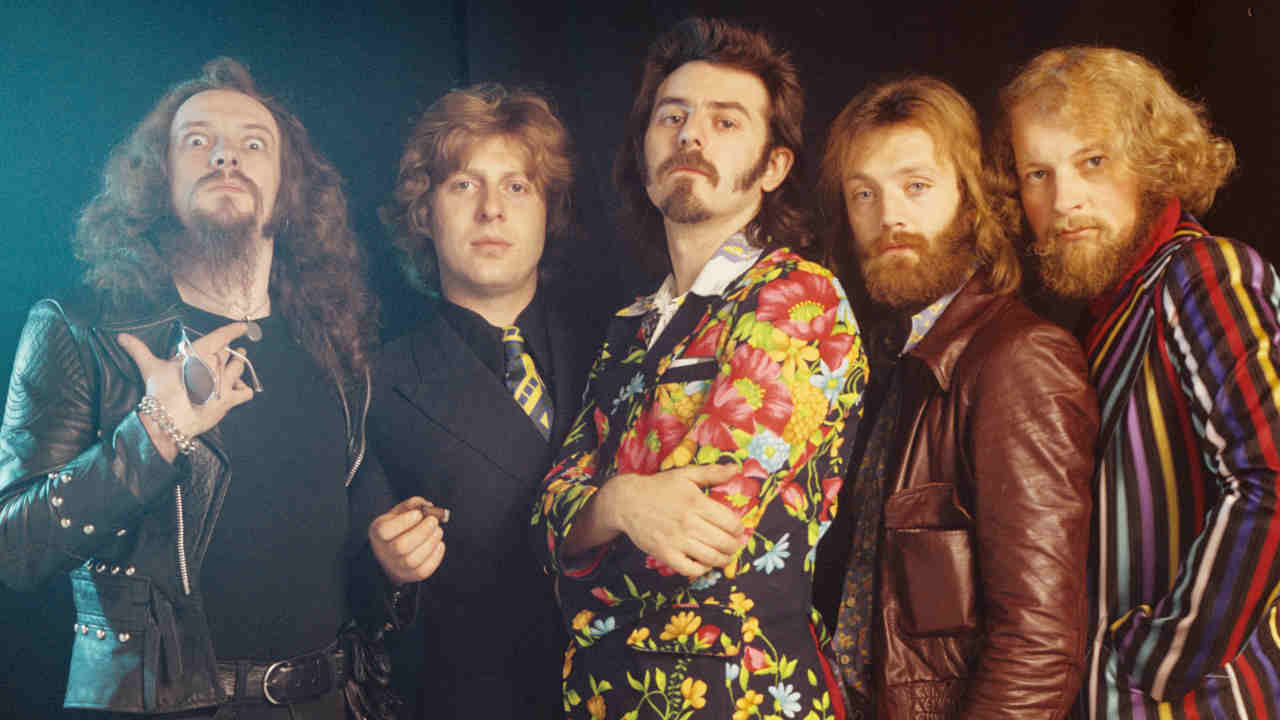
    Jethro Tull in 1972: (from left) Ian Anderson, Barriemore Barlow, Jeffrey Hammond, John Evan, Martin Barre (Image credit: Gijsbert Hanekroot/Redferns)

    “Prog was beginning to have a derisory and slightly critical note attached to it,” he explains today. “Bands like Emerson, Lake & Palmer, Yes and Genesis were seen as being bombastic, over-the-top, pain-in-the-arse, showing-off kinds of performers. And to some extent I felt that, too.”

    Anderson’s response was to pour his scorn for critics and portentous musos alike into Tull’s next album, Thick As A Brick. What began as a song idea soon flowered into an intricate, 45-minute treatise that made dizzying use of harpsichord, strings, trumpet, organ, acoustic guitar and Anderson’s signature flute, among other things.

    The whole shebang was then housed inside a spoof 12-page newspaper, The St. Cleve Chronicle & Linwell Advertiser, which claimed that Anderson had adapted all the lyrics for the record from a poem by an eight-year-old child prodigy called Gerald Bostock. What could be more prog than that?

    “When I wrote Thick As A Brick I tried to approach it in a humorous and satirical way,” Anderson says. “The whole idea happened very quickly. It was done in a fast and furious period of time. I’d just turn up at rehearsal every lunchtime with what I’d written that morning. Then the guys would dutifully grapple with it and we’d try to recap on what we did yesterday and the day before.

    Jethro Tull’s Ian Anderson performing onstage in 1972

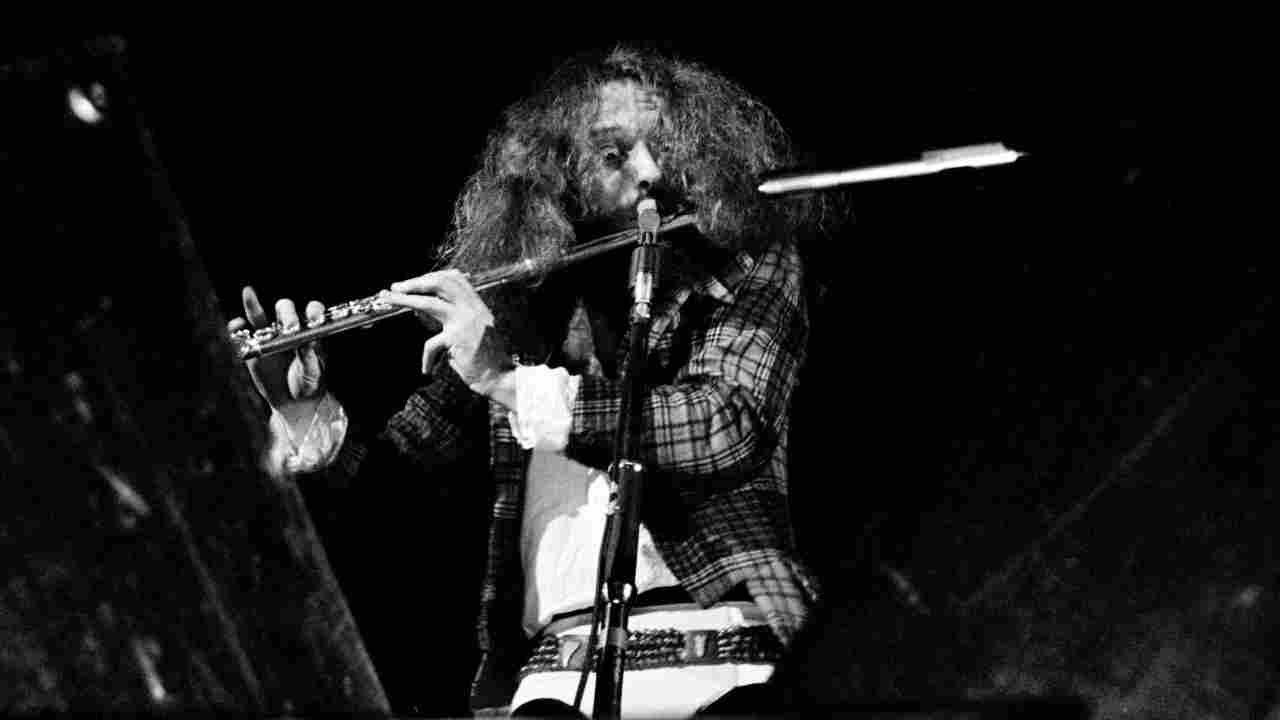
    Ian Anderson in 1972 (Image credit: Jorgen Angel/Redferns)

    “By the end of 10 days we’d rehearsed to a performance level all the elements of Thick As A Brick. And we went in and recorded it, literally in a few days. The album cover actually took us longer than the music itself.”

    So is Thick As A Brick a song, or an album? And was it intended as more than mere prog foolery?

    “It was written very much as I went along, and was a very natural, organically evolving piece of music. There was an almost Monty Pythonesque idea in my head of this pastiche approach to creating this idea – ‘the mother of all concept albums’, as I’ve come to call it.

    “It was presenting such a preposterous notion that an eight-year-old boy had written this saga in some poetry competition. Of course, you can then suspend disbelief and just go with it. But there were a lot of countries where they just didn’t get the joke. They thought it was a real story, that this precocious schoolboy had written this stuff and somehow I turned it into an album.

    “You have to preserve the fiction to some extent, because that’s your starting point – the absurdity of precocious youth and complex ideas; that somehow Thick As A Brick is an album about what this youth might become and the distortion of his ideas as a prepubescent child. Essentially it’s setting out future scenarios of what might happen.”

    So there was a serious side to it all?

    “Some of the elements in the lyrics are quite serious,” offers Anderson, “where I drew upon my own childhood and my own early experiences for ideas for sections within the overall work. But I was also drawing very much on the world of the eight-year-old Gerald Bostock. It was part of the absurdity.”

    Thick As A Brick was edited and released as a single in April 1972, a month after the album’s release. But skimming the cream from a three-quarter-hour masterwork was never going to be easy. Perhaps unsurprisingly, it failed to make the charts on either side of the Atlantic.

    The album, however, made No.5 in the UK, while over in the US it topped the Billboard chart for two weeks. It remains Jethro Tull’s second-biggest seller in America. Critics and fans generally adored it, but Anderson had all eventualities covered in any case.

    One section of The St. Cleve Chronicle has the audacity to contain a mock review of the album, describing it as being marked by “ugly changes of time signature, and banal instrumental passages”. Was he trying to make it all ultimately bomb-proof?

    “It’s okay for me to say those things about my own work,” Anderson reasons, “but I don’t think it’s too cool if somebody else tries to do it, because I’m already well aware of it. There’s every scope to say that this is noodly, extreme, anal, pompous, bombastic, arrogant – all of those words are applicable to prog rock and definitely applicable to Thick As A Brick – but they’re there on purpose. And if you don’t get the joke, fuck off! Don’t start telling me something that I know full well, because I wrote it to be like that. That’s the point!”

    Originally published in Classic Rock issue 159 (May 2011)

  • “The Comfort That Night Gave Us” — San Antonio Post-Punk Outfit Nocturnal Prose Shares “Droplets in the Rain”

    We spend our lives never touching the trauma that we face,

    I never been proud but I take pride in knowing we radiate our darkest days

    The comfort that night gave us, as droplets from the rain

    remind us what we gain 

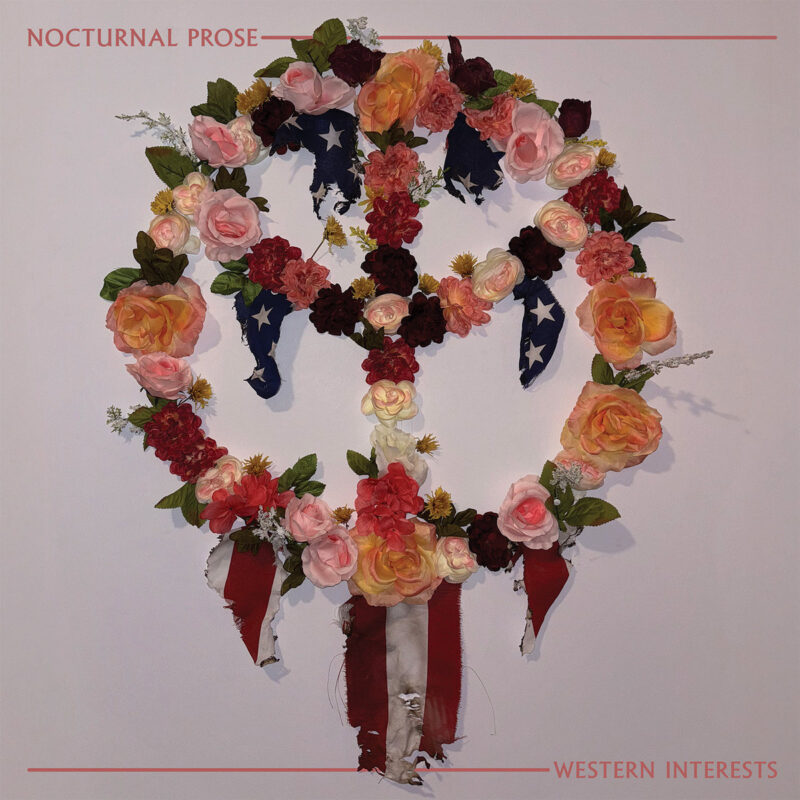
    There is something almost perverse about how good Nocturnal Prose sounds while contemplating a world that seems determined to grind everybody into administrative paste. Droplets in the Rain, the second single from the San Antonio band’s debut album Western Interests, takes guitars built for nervous pacing, a rhythm section with the precision of a factory press, and Yole Centeno’s exhausted baritone, then points the entire apparatus toward memory: friends, trains, rain, trauma, survival, and those nights when misery somehow became bearable because somebody else was there.

    Centeno formed Nocturnal Prose after leaving screamo outfit Amygdala, and you can hear the residue of that background beneath the post-punk architecture. The emotional stakes remain high, although the delivery has cooled into something more drained and watchful. His voice sits low in the mix with the weary authority of someone reading the morning headlines after already knowing they will be terrible. Around him, guitarist Nick turns anxiety into movement, stretching chords until they seem ready to split, while bassist Aaron and drummer Chuy lock together so tightly that separating their contributions becomes almost beside the point.

    You can hear traces of classic 80s post-punk’s vocabulary throughout Droplets in the Rain: the wiry tension, basslines carrying their own emotional burden, and guitars equally capable of abrasion and sudden beauty. There is some of Asylum Party’s wounded romanticism in its atmosphere, while Red Lorry Yellow Lorry and Blitz can be felt in the harder rhythmic edges. Lowlife and For Against hover around the song’s deeper tonal spaces, where the bass does as much emotional work as the voice. Nick’s guitar, meanwhile, reaches toward the expansive playing associated with Chameleons and The Church, continually changing the emotional temperature rather than settling into one repeated figure. Chords stretch outward, smaller phrases scratch nervously around the verses, and eventually the instrument seems to break free of the song’s accumulated anxiety. Droplets in the Rain has enough personality to avoid becoming an archaeological dig through somebody’s record collection.

    The lyrics detail memories of companionship as a survival mechanism, with passing trains and rainfall functioning as the incidental music of people trying to keep each other alive. There is tenderness, but nobody is selling recovery as a motivational poster. Trauma remains avoided, carried, inherited, and occasionally transformed into pride because getting through a terrible period with another person can become its own small victory; the song carries some of Blade Runner’s rain-streaked finality.

    Droplets in the Rain shows that despair can have a bassline, memory can have momentum, and friendship can become a form of resistance. The song keeps moving because standing still would mean getting swallowed. By the time the final guitar line recedes, the comfort promised in the title feels provisional, fragile, and necessary. For a band staring straight at modern misery, that measure of grace feels enormous.

    Nocturnal Prose write from an America saturated with institutional violence, economic exhaustion, ICE raids and detainments, mass distraction, and the daily horror transmitted from Gaza through the same devices used to order dinner. Their response is deeply personal without shrinking into private misery.

    Listen to Droplets In The Rain below and order the album here.

    Follow Nocturnal Prose:

    The post “The Comfort That Night Gave Us” — San Antonio Post-Punk Outfit Nocturnal Prose Shares “Droplets in the Rain” appeared first on Post-Punk.com.