It’s a sad day for the Decibel family, as one of our own has suffered a tragic loss. Many readers will recall our interview with Krieg frontman and Decibel contributor Neill Jameson, in which he detailed his wife Nikki’s long battle with cancer, his daughter’s autism diagnosis, and a tidal wave of disasters with his house and financial situation. The interview, along with Neill’s updates via Substack and social media, present a harrowing picture of a family persevering against terrible odds. Any reader with a conscience couldn’t help but be overwhelmed by the compounding catastrophes, outraged at the sheer injustice of the situation, or amazed by the strength, grace, and determination that both Neill and Nikki displayed through it all.
On Wednesday, July 29, one part of that chapter came to a close, as Nikki Sansoni passed away peacefully. She was 45. Please read Neill’s wonderful tribute to her and how music was such an important part of her life. There are no words that can express the enormity of grief he must feel, along with the vertigo that comes from no longer being someone’s primary caretaker. It’s a cruel trick for life to play by taking a weight off your shoulders while also leaving a giant void in your soul. I hope Neill knows that all of us are with him, and that although he bears a burden all his own, he doesn’t have to carry it on his own.
The one time I saw Neill and Nikki together was at Maryland Deathfest back in 2017. I’d gotten to know Neill a few years earlier and it was great to have a chance to have some beers with the two of them outside of Ram’s Head. I distinctly remember Nikki jumping with excitement over getting to see October Tide and just being full of happy, bubbly and positive energy — which of course made for an amusing contrast to Neill, characteristically morose, sarcastic and cynical as always. But of course, this contrast made for a natural chemistry that was immediately evident, as was their affection for each other. I remember feeling happy for them, as there was a very clear sense that “This is a really good thing.”
Having followed the story closely in the years since, I’m very grateful to have this memory.
Those moved by the story should go to the GoFundMe page to help with final expenses and to give Neill and his daughter, Vale, a chance to move forward with peace.
—
As Bright As The Stars – Celestial Ascension
Gonna be honest here and admit I was mainly drawn to this album because the cover depicts an angel petting a cat. This alone would make it a winner in my book, but I also think the music is worth a listen. At this point, more than 10 years after Sunbather and the endless fights over the validity of blackgaze and post-black metal, we’re all better off judging individual efforts on their own merits. And to that point, As Bright As The Stars is a project fully committed to making emotive, thought-provoking, thunderous music very much in line with post-black metal acts like Alcest, Lantlôs and post-rock outfits like Caspian and God Is An Astronaut. According to H., the man behind the project, Celestial Ascension explores “themes of spirituality and transcendence.” Indeed, those words perfectly describe the ideas that come to mind when listening to a song like “Void of Light,” a track that captures both a sense of power and overcoming and the great question of “What does it all mean?”
—
Ceremonial Worship – Between Sleep and Death
High-quality Greek black metal from the always top-tier label Eternal Death. The band is firmly rooted in classic Hellenic black metal, but specifically calls out lesser-known bands like Kawir and Nocternity as influences on this record. Being a huge fan of Nocternity myself (especially En Oria and Onyx), I can definitely hear Ceremonial Worship invoke the same spirit of mysterious darkness on Between Sleep and Death. That said, the band is far from a simple retread of past black metal glory, carving their own path through a blend of melody, chaos and aggression that makes this album one of the year’s essential black metal listens.
—
Gast – Förbannelser
Dark, energetic black metal violence from Sweden. Highly recommended listening for fans of melodic blackened death metal, but who like the emphasis to be heavier on the death metal side. The atmosphere certainly has a black metal coldness, but the riffs are “OUGH!” all the way.
Is crucificial a word? I guess it is now! I’m willing to grant a lot of grammatical license to any band that channels early Morbid Angel so perfectly but can still keep the tunes sounding fresh. Will be music to the ears of anyone who likes Angelcorpse, Profanatica and Nunslaughter as well.
And now for something a little different, but no less brutal. In a world of interchangeable neo-OSDM also-rans, it’s always refreshing to hear a band that knows how to chop things up the right way — and understands that death metal is more than just a bunch of e-string riffs cobbled together over the same drum patterns over and over again. This is great stuff.
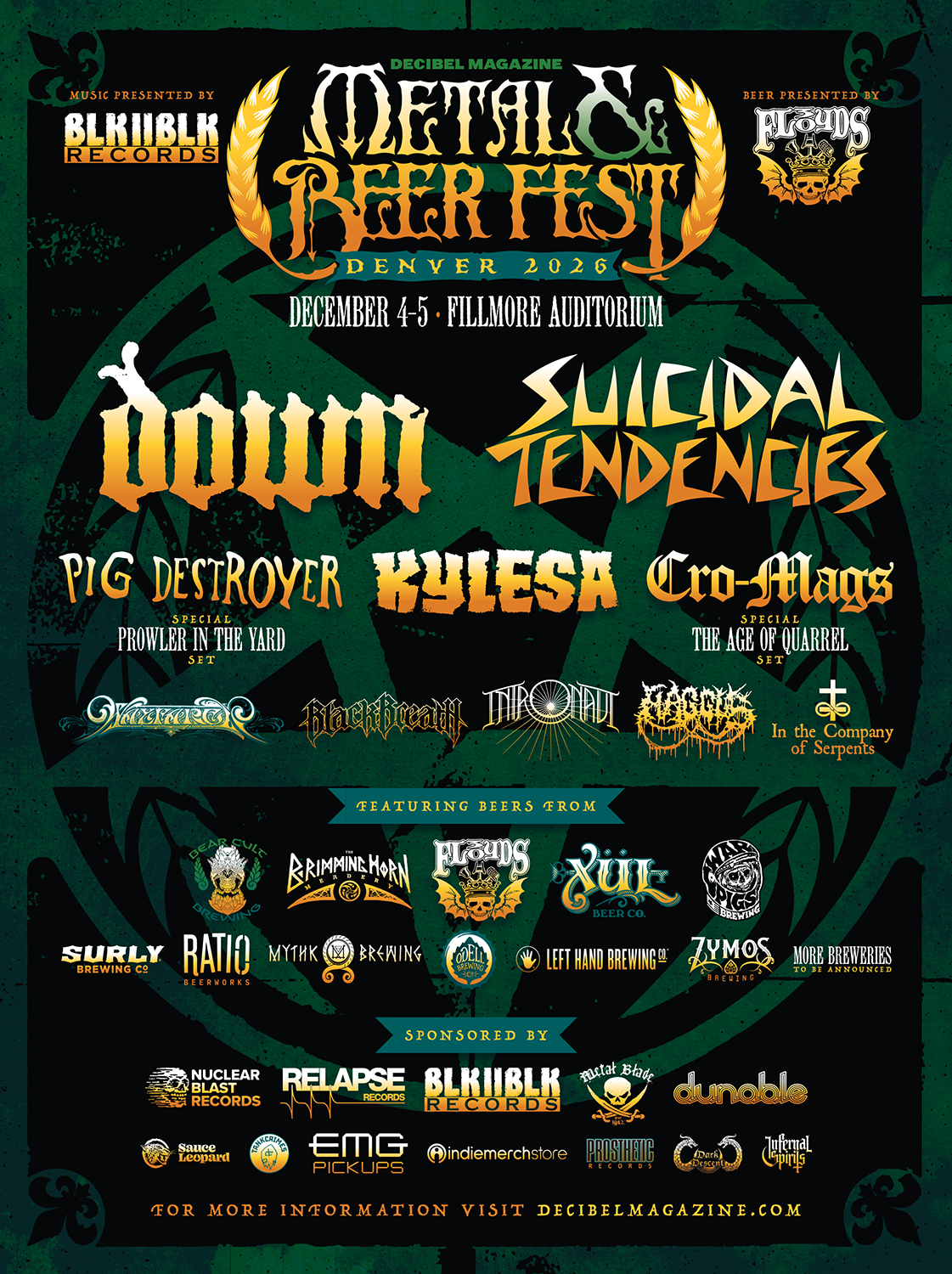
Single-day tickets are now available for Decibel Magazine Metal & Beer Fest: Denver, the world’s loudest, heaviest, most extreme craft beer festival on Friday and Saturday, December 4-5 2026 at the Fillmore Auditorium!
Southern doom supergroup Down make their first Denver appearance in over 12 years to headline Saturday night (December 5), while crossover thrash metal legends Suicidal Tendencies will unleash their first Denver headline performance in over eight years on Friday night (December 4).
The already stacked artist bill, presented by BLKIIBLK Records, is rounded out by: legendary DMV grind force Pig Destroyer (performing a special 25th anniversaryProwler in the Yardset); reunited progressive psych sludge institution Kylesa; New York hardcore legends Cro-Mags (performing a special 40th anniversaryThe Age of Quarrelset); Denver’s own Americana gunslingers Wayfarer; freshly resurrected death/thrash/crust killers Black Breath; progressive sludge crew Intronaut (performing for the first time in over four years); masked mincecore marauders Haggus and Denver doom lords In the Company of Serpents.
But that’s just the (sober) half of it! America’s most metal breweries and meaderies will descend upon the beer capital of America to provide essential suds to the soundtrack of crushing metallic thuds! Presented by American craft beer vanguard 3Floyds Brewing (IN), the murderous maelstrom of malts includes Featured Breweries—and Meadery—WarPigs Brewing (IN), XUL Beer Company (TN), Brimming Horn Meadery (DE), Bear Cult Brewing Co. (DE), Odell Brewing Co (CO), Zymos Brewing (CO), Mythk Brewing (FL), Surly Brewing Co (MN), Left Hand Brewing (CO), plus pours from RatioBeerworks (CO).
Daily lineups can be found below. All ticket options for Metal & Beer Fest: Denver 2026, including single-day tickets, are ON SALE NOW!
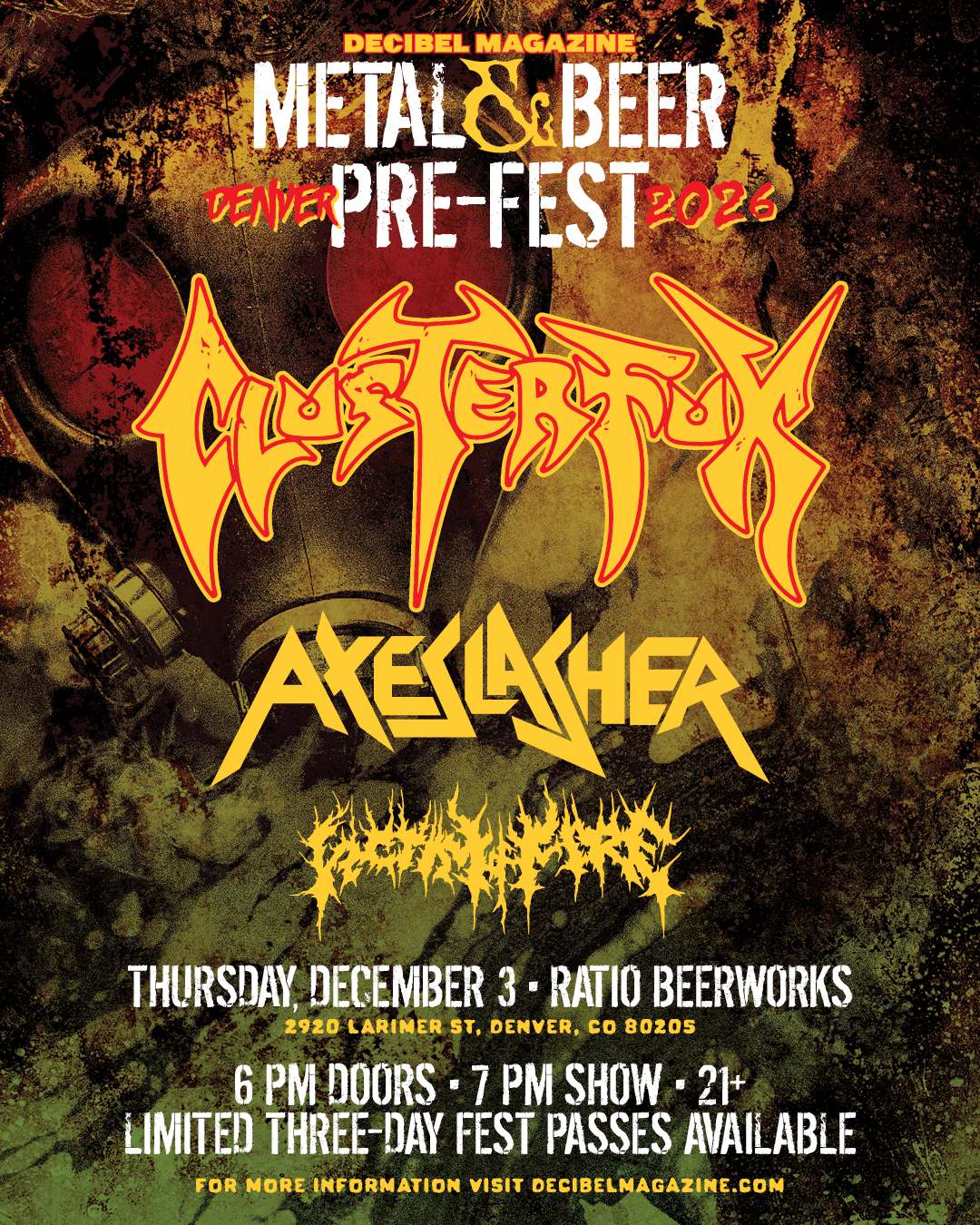
IMPORTANT: We’re already down to an extremely limited number of three-day passes that include tickets to the official Metal & Beer PRE-Fest at Ratio Beerworks (Larimer Street location) on December 3 with Clusterfux, Axeslasher and Victim of Fire. Full daily lineups below.
DECEMBER 3 (Pre-fest at Ratio Beerworks) Clusterfux
Axeslasher
Victim of Fire
DECEMBER 4 (at Fillmore Auditorium) Suicidal Tendencies
Pig Destroyer (special Prowler in the Yard set)
Cro-Mags (special The Age of Quarrel set) Black Breath Haggus
DECEMBER 5 (at Fillmore Auditorium) Down
Kylesa
Wayfarer
Intronaut
In the Company of Serpents
“Just Metal” Ticket (21+)
Admittance to the day’s event, but as the name suggests, you just get to see the show—no beer samples.
“Metal & Beer” Ticket (21+)
Admittance to the day’s event plus unlimited* sampling from our diverse lineup of national breweries presented by 3 Floyds. Decibel Magazine Metal & Beer Fest: Denver 2026 sampling cups provided. Limited tickets available per day.
*Please note: In extremely extreme cases, certain high-ABV pours will be ticketed, with attendees receiving a limited number of tickets available to redeem for each offering.
The Aesthetic of the Unfinished: Fragments, Ruins, and Romantic Incompleteness
A ruined abbey rises from the mist. Ivy crawls across broken stone while empty windows stare into the fading light. Centuries have passed since prayers echoed through its halls, yet the structure remains strangely beautiful. In fact, many visitors find it more moving in its ruined state than they would if it stood perfectly restored.
This fascination reveals something important about human nature.We are often drawn to an unfinished aesthetic. Fragmentary poems, abandoned buildings, incomplete symphonies, and unresolved stories possess a unique emotional power. Rather than frustrating the imagination, they invite it to participate. The missing pieces become part of the experience.
The Romantic era transformed this attraction into an artistic philosophy. Writers, painters, and poets increasingly rejected perfect order in favor of ruins, fragments, and mysteries. They discovered that incompleteness could evoke emotions that finished works sometimes could not. Longing, melancholy, wonder, and curiosity all flourished in the spaces left open.
The aesthetic of the unfinished remains influential today because it reflects a truth that extends far beyond art. Human experience itself is incomplete. Memories fade. Questions remain unanswered. Stories end before every mystery is solved. Perhaps that is why fragments often feel more honest than perfection.
Romantic artists discovered that fragments and ruins often possess a beauty that perfection cannot achieve.
Why Romanticism Fell in Love with Ruins
During the eighteenth and nineteenth centuries, Romantic artists began challenging traditional ideas about beauty. Earlier artistic movements often celebrated balance, harmony, and perfection. Romanticism moved in a different direction. Instead of idealized order, artists became fascinated by emotion, imagination, and the passage of time.
Ruins perfectly embodied these concerns. A crumbling monastery or abandoned castle carried visible traces of history. Visitors could see both what remained and what had been lost. The structure became a conversation between presence and absence.
One of the most striking examples appears in the paintings of Caspar David Friedrich. His landscapes frequently depict ruined churches, weathered monuments, and lonely figures confronting vast natural environments. These scenes are not simply picturesque. They invite reflection on mortality, memory, and humanity’s place within a world far larger than itself.
Friedrich’s The Abbey in the Oakwood remains one of the defining images of Romantic ruin. The shattered Gothic structure stands among leafless trees while figures move through the darkness below. Nothing dramatic happens within the painting. Yet viewers often experience a profound emotional response because the ruin suggests stories that can never be fully recovered.
The missing pieces become part of the artwork’s meaning.
The Sublime and the Beauty of Loss
Romantic thinkers frequently described certain experiences as sublime. Unlike ordinary beauty, the sublime combines admiration with unease. Mountains, storms, darkness, and ruins inspire awe because they remind us of forces beyond human control.
A ruined cathedral demonstrates this idea perfectly. The structure reflects extraordinary human achievement, yet its broken condition reveals that time eventually overcomes every creation. Viewers experience beauty and melancholy simultaneously.
This emotional complexity explains why Romantic artists repeatedly returned to fragments and ruins. The unfinished object encourages contemplation. It reminds us that every story remains vulnerable to time, memory, and change.
Perfection feels complete. A fragment continues speaking.
Edgar Allan Poe and the Power of Incomplete Knowledge
Few writers understood the emotional power of incompleteness better than Edgar Allan Poe. Although he rarely wrote about unfinished artworks directly, many of his greatest stories depend upon missing information, fragmented perspectives, and mysteries that remain only partially resolved.
Modern readers often associate horror with revelation. We expect explanations. We want answers. Poe frequently worked in the opposite direction. Instead of solving every mystery, he allowed uncertainty to linger.
Consider The Fall of the House of Usher. Readers never receive a complete explanation for the strange relationship between the decaying mansion and the psychological collapse of its inhabitants. The story presents clues, images, and unsettling possibilities, but certainty remains elusive.
“While I gazed, this fissure rapidly widened.”
The famous final image resolves the physical destruction of the house, yet many deeper questions remain unanswered. What exactly binds the family to the structure? How much of the narrative is psychological? How much is supernatural? Poe deliberately leaves these questions open.
The result is powerful because uncertainty activates the reader’s imagination. Like a Romantic ruin, the story derives part of its beauty from what is missing.
Why Unfinished Stories Stay With Us
Most people assume satisfaction comes from resolution. Mysteries should be solved. Questions should be answered. Stories should end with clarity. Yet psychology suggests something surprising. Unfinished experiences often remain in memory longer than completed ones.
This phenomenon helps explain why fragments can feel so emotionally powerful. An unfinished work continues demanding attention because the mind instinctively tries to complete what is missing. Rather than closing the experience, incompleteness keeps it alive.
Artists have understood this principle for centuries, even before psychologists attempted to explain it scientifically. Romantic writers, Gothic novelists, and modern filmmakers repeatedly discovered that uncertainty often creates stronger emotional engagement than certainty.
The unanswered question lingers. The incomplete image remains vivid. The fragment continues expanding within the imagination long after a finished work might have been forgotten.
The Zeigarnik Effect
In the twentieth century, psychologist Bluma Zeigarnik observed that people tend to remember unfinished tasks more easily than completed ones. This tendency later became known as the Zeigarnik Effect.
Although the theory emerged from psychology rather than literature, it offers valuable insight into the enduring appeal of fragments and ruins. When something remains unresolved, the mind continues returning to it. We mentally revisit the missing pieces and search for connections that may not exist.
A completed puzzle requires no further effort. A missing piece transforms the puzzle into a question. Human beings are naturally drawn toward questions.
This principle helps explain why abandoned buildings, unfinished novels, and unresolved mysteries often feel strangely compelling. Their incompleteness invites participation. Viewers and readers become collaborators rather than passive observers.
Poe’s Fragmented Narrators
Edgar Allan Poe repeatedly exploited this psychological tendency. His narrators rarely possess complete knowledge. Instead, they present fragmented perspectives shaped by obsession, fear, guilt, or emotional instability.
The reader must assemble meaning from incomplete evidence. Important details remain uncertain. Motivations are sometimes ambiguous. Reality itself often becomes difficult to trust.
This approach distinguishes Poe from many writers who carefully explain every mystery. His stories frequently derive their power from what remains unknown.
Consider The Tell-Tale Heart. The narrator insists upon his sanity while simultaneously describing increasingly irrational behavior. Readers receive only one perspective, yet that perspective is fundamentally unreliable.
“You fancy me mad. Madmen know nothing.”
The statement attempts to establish credibility, but it produces the opposite effect. Each new detail deepens uncertainty. Readers become trapped between what the narrator claims and what the evidence suggests.
The story remains memorable because it never fully resolves that tension. We understand the crime. We understand the guilt. Yet questions regarding perception and reality continue haunting the narrative.
The Horror of Missing Information
Poe recognized that fear often grows strongest when information is incomplete. Once every mystery receives a clear explanation, uncertainty disappears. The imagination loses space to operate.
This principle appears throughout Gothic literature. Hidden rooms remain more unsettling before they are opened. Strange sounds are more disturbing before their source is identified. A half-revealed truth often feels more powerful than a fully explained one.
The unfinished therefore becomes a creative tool. By withholding complete knowledge, authors encourage readers to participate actively in the story. Personal fears, memories, and expectations begin filling the gaps.
The fragment becomes a mirror reflecting the imagination itself.
Frankenstein and the Fear of Incomplete Creation
Mary Shelley’s Frankenstein offers another perspective on incompleteness. Unlike Romantic ruins or Poe’s fragmented mysteries, the novel explores the consequences of creating something that can never truly be finished.
Victor Frankenstein imagines that scientific achievement will grant him mastery over life. Once the creature awakens, however, he discovers that creation does not end when the experiment succeeds. The work continues evolving beyond his control.
The creature itself embodies incompleteness. Constructed from fragments of different bodies, it exists between categories. Human yet excluded from humanity. Alive yet disconnected from ordinary life. Familiar yet profoundly unsettling.
“I had selected his features as beautiful. Beautiful! Great God!”
Shelley’s irony is devastating. Victor believes he can assemble perfection from fragments. Instead, he creates something that forces him to confront the limits of control and understanding.
The novel resonates because it transforms incompleteness into a source of existential anxiety. Some things remain unfinished not because they are broken but because human beings themselves are incomplete. Knowledge has limits. Ambition has consequences. Creation always involves uncertainty.
Fragments as Invitations
Romantic ruins, Poe’s mysteries, and Shelley’s creature all reveal the same underlying truth. The unfinished object possesses emotional power because it invites participation.
A completed work provides answers. A fragment creates possibilities. Readers imagine missing chapters. Visitors reconstruct vanished buildings. Audiences continue debating mysteries that were never fully explained.
This process transforms incompleteness from a flaw into a creative strength. The missing pieces become part of the experience rather than evidence of failure.
The unfinished survives because it leaves room for imagination to continue the story.
Why We Still Love Ruins and Abandoned Places
The Romantic fascination with incompleteness never disappeared. Modern audiences remain captivated by abandoned buildings, forgotten amusement parks, empty hospitals, and decaying mansions. Photographers travel across continents to document places slowly being reclaimed by nature. Entire communities explore urban ruins through books, films, and online archives.
At first glance, this attraction may seem unusual. Why seek out places marked by decline rather than preservation? The answer lies partly in the emotional qualities these locations possess. Ruins reveal time in a visible form. Layers of history remain present within cracked walls, broken windows, and weathered surfaces.
Unlike newly constructed environments, abandoned places feel connected to memory. Visitors sense that stories remain embedded within the landscape. The details may be unknown, yet traces of human experience persist.
This reaction is remarkably similar to the emotions Romantic artists experienced when confronting ruined abbeys and castles. The setting becomes powerful not because of what remains intact but because of what has been lost.
Absence acquires its own presence.
The Mystery of What Came Before
A perfectly restored building presents a complete narrative. An abandoned structure does something different. It encourages speculation. Who lived here? Why was the place abandoned? What events unfolded within these walls?
Human beings are natural storytellers. When information is missing, imagination begins filling the gaps. This tendency explains why fragments often remain more memorable than complete explanations.
The unfinished object becomes collaborative. Rather than delivering a fixed meaning, it invites interpretation. Each visitor contributes something personal to the experience.
That openness helps explain why ruins continue inspiring artists, filmmakers, writers, and musicians today.
Wabi-Sabi and the Beauty of Imperfection
Although Romanticism developed in Europe, the appreciation of incompleteness appears in many cultural traditions. One of the most fascinating examples is the Japanese aesthetic philosophy known as Wabi-Sabi.
Wabi-Sabi values impermanence, imperfection, and transience. Rather than pursuing flawless surfaces, it encourages appreciation for objects shaped by age, weather, and use. Cracks, fading colors, and signs of wear become sources of beauty rather than defects.
The philosophy differs from Gothic Romanticism in important ways. Wabi-Sabi is generally quieter and more contemplative. Gothic aesthetics often emphasize mystery, melancholy, and emotional intensity. Yet both traditions arrive at a similar conclusion.
Perfection is not the only form of beauty.
An unfinished object can communicate truths that flawless surfaces sometimes conceal. Age, change, and vulnerability become part of the artistic experience rather than problems requiring correction.
The Unfinished in Modern Culture
Contemporary storytelling continues demonstrating the power of incompleteness. Some of the most discussed novels, films, and television series are remembered precisely because they leave certain questions unresolved.
Audiences debate interpretations for years after a story ends. The conversation survives because uncertainty remains. Complete explanations often close discussion. Ambiguity keeps it alive.
This principle extends beyond entertainment. Personal memories operate in a similar way. Few people possess perfectly complete recollections of the past. Important experiences remain fragmented. Details disappear. Meanings evolve over time.
The unfinished therefore feels familiar because human life itself rarely reaches perfect resolution. Relationships end unexpectedly. Ambitions remain unrealized. Questions persist long after answers become impossible.
Art that embraces incompleteness often feels authentic because it mirrors that reality.
Why Fragments Feel Human
Perfect objects can be admired. Fragments invite empathy.
A ruined cathedral reveals the passage of centuries. An unfinished manuscript preserves traces of a creative struggle. A partially remembered story reflects the limitations of memory itself.
These objects feel human because they carry evidence of time, uncertainty, and change. Their imperfections remind us that creation is rarely straightforward. Every life contains unfinished chapters.
The fragment survives not despite its incompleteness but because of it.
The Beauty of What Remains Unfinished
From Romantic ruins and Gothic landscapes to Poe’s mysteries and Shelley’s fragmented creation, artists have repeatedly discovered that incompleteness possesses extraordinary emotional power.
A finished work provides closure. A fragment creates possibility. Missing pieces encourage imagination. Unanswered questions inspire reflection. The unfinished object continues evolving within the mind long after the experience ends.
Perhaps that is why ruined abbeys remain more haunting than restored ones. Perhaps that is why Poe’s unresolved mysteries continue captivating readers. Perhaps that is why abandoned places, incomplete stories, and weathered artifacts still inspire fascination.
They remind us that perfection is not always the goal of art.
Sometimes the most meaningful experiences emerge from what remains incomplete.
Like a Gothic ruin standing beneath the moonlight, the fragment continues speaking long after certainty has disappeared.
Wear the Darkness
If Gothic literature, Romantic ruins, Edgar Allan Poe, and the beauty of mystery inspire you, explore the Edgar Allan Poets store. Discover apparel and artwork created for lovers of imagination, melancholy, and the shadows between certainty and wonder.
Join the Noir Newsletter
Receive Gothic literature, dark culture, Romantic art, noir psychology, and Edgar Allan Poe analysis directly in your inbox.
Enter the Atmosphere
Continue your journey through Gothic moods, Romantic melancholy, and dark artistic inspiration with the official Edgar Allan Poets playlist.
Frequently Asked Questions
Why are ruins considered beautiful?
Ruins combine history, memory, and visible signs of time. They remind us of impermanence while allowing the imagination to reconstruct what has been lost.
What is the Zeigarnik Effect?
The Zeigarnik Effect is a psychological phenomenon suggesting that people tend to remember unfinished tasks and unresolved experiences more easily than completed ones.
How did Edgar Allan Poe use incompleteness in his stories?
Poe often relied on fragmented narrators, missing information, and unresolved mysteries to engage the imagination and create psychological tension.
What is Wabi-Sabi?
Wabi-Sabi is a Japanese aesthetic philosophy that values imperfection, impermanence, and the beauty found in aging and incomplete objects.
Why do unfinished works feel emotionally powerful?
Incomplete works invite participation from the audience. The imagination becomes involved in filling gaps, creating possibilities, and exploring unresolved questions.
Belgian melodic death metal band Echoes of a Dying World have released their new single and video, “Mathematical Design.” It is the third and final preview of the band’s forthcoming conceptual EP, “Revelations,” which will arrive independently on August 28, 2026. While the previous songs explored inherited trauma, restrictive systems and psychological collapse, “Mathematical Design” […]
Dutch Thall quartet, Discarded, have just released their newest single "Flourish||Forsaken" on July 30th. The band is made up of Andy Meijer (vocals), Liam Rolink (guitar), Nikki Son (Guitar), and Bas Gijzen (Drums).
On the new single, the band states:
"Flourish || Forsaken displays our growth post-EP, and the direction we as DISCARDED want to take. The track itself is a progressive approach to thall with elements of deathcore, infused with a strong emotionality. We're all struggling with humanity's effects on the natural world, and Flourish || Forsaken gives space to those emotions. We will continue to push the boundaries of intensity, aggression, and depth simultaneously." - Discarded
Now, if you are new to Thall (we actually have a whole article breaking it down), the basic idea is that Thall is an extreme metal subgenre that focuses on building and distorting melodies, progressive instrumentals, off-timing, and polyrhythms, and typically has an off-putting sound. Thall was a term originally coined by Swedish metal act Vildhjarta but has now become a term for a whole subgenre of metal.
Discarded introduces their new song with gentle ambience and reverbed clean guitar before suddenly bursting into down-tuned thall guitar riffage and explosive low growls. Taking inspiration from acts like Mirar and Vildhjarta as well as blackened deathcore, Discarded continues to showcase wildly fast guitar riffs and overall progressive instrumentals that set the tone. Screeching pinch harmonics, bright leads, and deep guitar bends create a dramatic and crushingly heavy sound that excellently captures the atmosphere of thall music.
At about 4 minutes in, "Flourish || Forsaken" fades into a bridge with atmospheric guitar and evolving pads that create a very ambient and vibey soundscape as drums build back into full intensity, and speeding double bass drumming introduces galloping tempos and rapid tremolo guitar. Discarded builds into a brutally intense breakdown as rabid screams and slowed guitar chugging create a blend of deathcore and thall, as the breakdown features extreme heaviness while keeping the distorted melodies characteristic of thall music. Eventually, the song fades out with clean guitar and cinematic orchestral strings.
At just over 7 minutes, Discarded does an excellent job of capturing the essence of thall with a blend of deathcore's intensity and thall's progressiveness and off-putting melodies. The band's talent and passion for thall music like Vildhjart is clear in their music and makes it enjoyable. Overall, their production is excellent, especially for a band that started just last year; I'm very impressed.
You can stream "Flourish||Forsaken" available on all platforms now (there is even an instrumental version too!).
Home to cuckoo clocks, namesake gateaux,1 and Bollenhüte, Germany’s Schwarzwald (Black Forest) has functioned as folklore fodder for centuries. Ever since dropping debut EP Wiege der Finsternis, Finsterforst has mined their homeland for inspiration, and after five albums they’re Still at it. Though only three years removed from 2023’s EP Jenseits, Still is Finsterforst’s first proper album in seven years.2 If this is your Finsterfirst time experiencing the band’s wares, Finsterforst revels in long-form folk compositions that conjure the stateliness and beauty of nature, and on Still these Germaniacs deliver another generous portion of real-deal, certified folk magic. After so much time walking through the woods, does Still forge a better path, or has Finsterforst lost their way?
Fans of Finsterforst’s recent work should be pleased with Still, as the distinctly Deutsch niche they’ve carved out persists with a twist of noble melancholy. To mein ears, Still plays like folk/black metal garnished with Neue Deutsche Härte accents as they merge seismic riffs and sustained synths with atmospheric textures, cinematic orchestrations, and a staggering tonal depth. Early Finsterforst leaned heavily into folksy fun, where jaunty accordion leads and spirited bass punches draw comparisons to Korpiklaani and Turisas. As Finsterforst evolved, song lengths ballooned, and they pushed further into realms of mood and emotional swells. While vestiges of their early sound remain, Finsterforst now hews much closer to the likes of Moonsorrow, although instead of basking in the wintry waters of Scandinavian paganism, this German septet reveres the temperate charms of an enchanted wood.
From its outset, Still conjures the ethereal beauty of nature and merges it with crushing might and overwhelming pathos. Opener “Obduktion” kicks off with an airy lead before dropping the hammer with meticulously crafted riffs and synth accents that remind me of Rammstein and Eisbrecher. Yet Still doesn’t dramatically shift Finsterforst’s songwriting towards Neue Deutsche Härte—this facet has been a part of their sound for years. Rather, Finsterforst adopts a less-is-moar philosophy that makes the parallels stand out more starkly. For instance, “Stille Nacht” begins with a riff that recalls Rammstein’s “Mein Teil,” driving momentum with thick ‘n’ beefy muscle. Both “Knie Nieder” and “Herbstwanderung” expertly blend the heavy with the tender, and “Fels” glistens with acoustic guitar underpinning vocalist Olli Berlin’s mesmerizing vocals. And it’s here that Finsterforst unfetters their most potent weapon. Berlin’s vocals give me goosebumps each playthrough, and his impassioned barks and sonorous cleans proffer varied deliveries throughout Still. Yet more than that, they supply the perfect counterpoint to Finsterforst’s soundscape as the outfit maneuvers between impassioned discharges and reverb-saturated refrains supported by gorgeous choral elements and brassy orchestrations. Still captures Finsterforst at their most subtle and stripped down, where laying their arrangements bare exposes naked splendor.
Despite the extreme runtime of Still, Finsterforst retools their approach to make it more accessible. In his review of Mach Dich Frei, El Cuervoidentified the record’s length as cumbersome taken all at once, even if the individual tracks succeeded. On Still, the songs boast more palatable lengths than LPs past, and here only final original track, “Leere” overstays its welcome at twenty-four minutes.3 The two covers at the end, Immortal’s “Beyond the North Waves” and Pink Floyd’s “Another Brick in the Wall, Pt. II” commendably adapt versions of the songs to Finsterforst’s own style, yet push the runtime an extra fourteen minutes that otherwise would have delivered the band’s most succinct album to date. More positively, the production has improved since Mach Dich Frei and Zerfall, and even though the DR score only suggests a modest improvement, Still sounds better than any of the band’s other recent output.
In a month with few highlights, Finsterforst’s Still shines as a welcome bright spot. Dynamic songwriting, masterful command of tension, and inspired performances litter the album. Finsterforst addresses past offenses by adding depth to the mix and demonstrating more economical songwriting song-by-song, even though Still’s overall length perpetuates Finsterforst’s reputation for bloat. Regardless, I often find myself lost in Still’s woods without caring about how long the walk is, as the sights along the way are unequivocally worth the stroll.
Rating: Very Good DR: 6 | Format Reviewed: 320 kbps mp3 Label: AOP Records Websites: Website | Bandcamp | Facebook Releases Worldwide: July 31st, 2026
Mastiff and Lagrimas Join the Damnation 2026 Line-up
US melodic crust outfit LAGRIMAS and UK sludge heavyweights MASTIFF will make their Damnation debuts at this year’s, soon to be sold out, festival.
The duo join a line up stacked with the likes of Cult of Luna, Satyricon, Igorrr, Carcass, Health, Crowbar, Triptykon and Wolves In The Throne Room, at BEC Arena, Manchester on Saturday and Sunday, November 7 and 8.
Organiser Gavin McInally said: “With Saturday already sold out and fewer than 800 weekend tickets left, this is the big push to get this year’s Damnation sold out as fuck.
“It’s an absolute pleasure to have the stunning Lagrimas over from Los Angeles for what is going to be a flurry of energy and chaos for their set.
“While Mastiff’s long-awaited Damnation appearance is also going to be one that will live long in the memory. There’s few riffs that will shake our PA like the one in Repulse when it comes back, but slower.”
He added: “There’s two bands still to come to complete the line-up but let’s welcome them to an already sold out event by grabbing your instalment ticket before they come off sale at 11pm tonight.”
The best new metal songs this week come from Tony Iommi, Five Finger Death Punch, Between The Buried And Me, Silvertomb, Miss May I and President. Iommi’s “World Alone” is the first single from From The Dark, his first solo album in 21 years, out October 23 on BMG.
Five Finger Death Punch dropped “Nails In The Coffin” alongside their tenth album, Legacy, which arrived digitally today. Between The Buried And Me covered The Smashing Pumpkins’ “JellyBelly” for a Sumerian tribute album that Billy Corgan personally titled. Miss May I’s “Hand Me A Halo” previews No Place For Me on October 2, President’s “dark heaven” previews Blood Of Your Empire on September 4, and Silvertomb’s “No Way To Live” is their first new music in seven years.
STREAM THE METAL BREAKDOWN DAILY NOW:
On today’s Metal Breakdown Daily, Scott Penfold runs the tape on the heaviest week of new music this summer — Iommi back from the dark, Five Finger Death Punch closing the book on twenty years, and a prog metal band getting Billy Corgan’s signature on a Mellon Collie deep cut. Download the free Loaded Radio App on Apple iOS and Google Play and take the show with you.
That was a week.
Six tracks worth your time, and the range on them is absurd — a founding father of the entire genre, a band celebrating twenty years at the top, a prog outfit playing dress-up in 1995 alternative, two records aimed squarely at the fall, and a comeback nobody was sure would happen.
Grab a coffee. Here’s what landed.
Tony Iommi — “World Alone”
Twenty-one years. That’s how long it’s been since Fused.
“World Alone” premiered Wednesday at a streaming event in Birmingham, staged a stone’s throw from the Black Sabbath Bridge, and it’s the first single from Iommi’s third solo album, From The Dark, out October 23 via BMG. Eight tracks. Co-produced with longtime collaborator Mike Exeter.
It is not what most people expected. Everybody assumed slow and funereal. Instead “World Alone” moves — down-tuned riffs stacked on top of each other, wah-drenched solos, an actual tempo, and Jorn Lande howling over the top of it like Ronnie James Dio never left the building. Which is not a coincidence. Iommi first clocked Lande at the Dio tribute at High Voltage in 2010 and never forgot it. Lande sings on all eight tracks and co-wrote every one.
Becky Baldwin plays bass. Karl Brazil is on drums. And Iommi’s own summary of the record was about as unpretentious as it gets: they enjoyed making it, they’re not out to prove anything, and it rocks.
That’s the first new Iommi music since Black Sabbath’s farewell show and Ozzy’s death last year. Given everything that man has been through in eighteen months, “World Alone” landing this confident is the story of the week.
There’s a limited 7-inch of it coming September 4, backed with an instrumental version. Track of the week, no contest.
Five Finger Death Punch — “Nails In The Coffin”
Legacy is out. Today. Twenty years, ten albums.
The digital version of Five Finger Death Punch’s tenth studio record landed this morning through Better Noise, with CD, vinyl and cassette following September 18. It arrives on the back of “Eye Of The Storm,” which gave them their eighteenth consecutive number one on Billboard’s Mainstream Rock chart — their own record, in a chart that’s been running for 45 years.
“Nails In The Coffin” dropped with the album, and it’s the one that tells you what this record is actually about.
Zoltan Bathory laid out his own read on it, noting that Ivan Moody deliberately never explains his lyrics because he doesn’t want to take the interpretation away from fans. But Bathory’s take on this one: <cite index=”47-1″>”burying the things that tried to bury us.”</cite> Every write-off, every prediction they wouldn’t last, every disaster that was supposed to be the end. Twenty years on, they’re the ones holding the hammer.
Say what you want about this band — and plenty of people do — that’s an earned victory lap. You don’t fake eighteen straight number ones.
Between The Buried And Me — “JellyBelly” (The Smashing Pumpkins cover)
This is the most fun thing to come out this week, and it shouldn’t work as well as it does.
BTBAM have covered “JellyBelly,” the Mellon Collie And The Infinite Sadness track that sits right after “Tonight, Tonight” and immediately kicks the door in. It’s from Sending Hearts To All My Dearies – A Tribute To The Smashing Pumpkins, out digitally August 14 via Sumerian, with vinyl following October 16.
Here’s the detail everyone’s glossing over: Billy Corgan signed off on this compilation and personally came up with the title, which is lifted from the lyrics of “Mayonaise.” That’s not a label cash-grab with a rubber-stamp quote. That’s Corgan actually engaged.
And “JellyBelly” is the correct pick for this band. It was always the heaviest, most metal-adjacent cut on Mellon Collie — Corgan liked it enough that it was briefly in the running to be the album’s lead single. Tommy Rogers and company don’t reinvent it. They just lean into what was already there and let the abrasion breathe.
The rest of the tracklist is genuinely wild too: Tame Impala on “Hummer,” Carpenter Brut on “Cherub Rock,” Nita Strauss on “1979,” Palaye Royale on “Bullet With Butterfly Wings,” Alice Glass on “Drown.”
Silvertomb — “No Way To Live”
Seven years. Worth saying twice.
Silvertomb — Kenny Hickey and Johnny Kelly of Type O Negative, plus Joe James of Agnostic Front, Hank Hell of Sheer Terror and Aaron Joos on guitar and keys — are back with their first new music since 2019’s Edge Of Existence. “No Way To Live” is the first single from The Interpretation Of Nightmares, out Friday, November 13 on Steamhammer.
They chose to lead with one of the album’s faster tracks, deliberately set against the slower, heavier material around it. Lyrically it’s rejection and pain, which lands differently once you know what the gap was about: the pandemic killed a planned Monster Magnet tour and froze the band, and Hickey has said publicly that he also had a drinking problem to deal with between 2020 and 2024.
The Ohio quartet are three singles deep into No Place For Me, out October 2 via Solid State — their eighth album, their first for the label, and their first full-length since 2022’s Curse Of Existence.
“Hand Me A Halo” is track three, and it follows “Sanctuary” with the same directing team, Garrett Drake and Josh Hart. Levi Benton has been unusually open about the whole record, and on this one he described it as being about losing your sense of self and the intrusive thoughts that come with it: <cite index=”64-1″>”confusion and loss of identity through the changing seasons of life.”</cite>
Musically it’s the Miss May I formula, sharpened — technical riffing, hardcore grooves, a chorus that refuses to leave. But there’s a rawness in the lyric that the band’s never really let sit this exposed before. Nineteen years in and Benton is writing like someone who’s stopped performing toughness.
Current lineup: Benton on vocals, Jerod Boyd on drums, Ryan Neff on bass, Elisha Mullins on guitar.
President — “dark heaven”
And finally, the masked ones.
President — nobody knows who’s under there, and at this point the anonymity has stopped being a gimmick and started being the whole architecture — released “dark heaven” this week ahead of their debut album Blood Of Your Empire, out September 4 via King Of Terrors/Atlantic.
It’s the fifth single from the record after “Angel Wings,” “DOOM LOOP,” “Mercy” and “Dionysus,” and it’s the most anthemic thing they’ve put out. Huge hooks, dramatic dynamics, a rock-pop-electronica blend that shouldn’t sit comfortably next to the rest of this list and somehow does.
The subject matter is the album’s whole thesis: faith and what gets done in its name. President described it as a reflection on the contradictions of faith — how something meant to unite people gets used to justify division, and <cite index=”53-1″>”the way greed can wear the mask of righteousness.”</cite> Their framing is that it isn’t an attack on belief, it’s a search for something real underneath the noise.
The video is the part that got people talking. They took fans into a church and filmed their reactions hearing the song for the first time. Bold. Also very on-brand for a band whose album art is a Delacroix battle painting.
Blood Of Your Empire runs ten tracks, all written and produced by the band themselves.
And That’s The Week
Six songs, three generations, and not one of them sounds like the others.
All six of these are in rotation on the Loaded Radio stream this weekend. Crank them.
TL;DR
Tony Iommi — “World Alone” — first single from From The Dark (October 23, BMG), his first solo album in 21 years. Jorn Lande on vocals, Becky Baldwin on bass, Karl Brazil on drums.
Five Finger Death Punch — “Nails In The Coffin” — from Legacy, out digitally today via Better Noise; physical September 18. Their tenth album and 20th anniversary.
Between The Buried And Me — “JellyBelly” — Smashing Pumpkins cover from Sending Hearts To All My Dearies, out digitally August 14 via Sumerian, vinyl October 16. Billy Corgan titled the compilation himself.
Silvertomb — “No Way To Live” — first single from The Interpretation Of Nightmares (November 13, Steamhammer). First new music in seven years.
Miss May I — “Hand Me A Halo” — from No Place For Me (October 2, Solid State), their eighth album.
President — “dark heaven” — from debut album Blood Of Your Empire (September 4, King Of Terrors/Atlantic).
FAQ
What are the best new metal songs this week?
Tony Iommi’s “World Alone,” Five Finger Death Punch’s “Nails In The Coffin,” Between The Buried And Me’s cover of “JellyBelly,” Silvertomb’s “No Way To Live,” Miss May I’s “Hand Me A Halo” and President’s “dark heaven.”
Is Tony Iommi releasing a new solo album?
Yes. From The Dark arrives October 23, 2026 via BMG. It’s his third solo album and his first since 2005’s Fused — a 21-year gap. Jorn Lande sings on all eight tracks and co-wrote every song.
When did Five Finger Death Punch’s Legacy come out?
The digital version arrived July 31, 2026 via Better Noise Music. CD, vinyl and cassette editions follow on September 18. It’s the band’s tenth studio album and lands on their 20th anniversary.
What Smashing Pumpkins song did Between The Buried And Me cover?
“JellyBelly,” from 1995’s Mellon Collie And The Infinite Sadness. It appears on Sending Hearts To All My Dearies – A Tribute To The Smashing Pumpkins, out digitally August 14 via Sumerian Records with vinyl on October 16.
Did Billy Corgan approve the Smashing Pumpkins tribute album?
Yes. Corgan endorsed the compilation and personally chose the title, which comes from the lyrics of “Mayonaise” off 1993’s Siamese Dream.
When is the new Miss May I album out?
No Place For Me arrives October 2, 2026 via Solid State Records. It’s their eighth studio album and their first full-length since 2022’s Curse Of Existence.
Who is the band President?
An anonymous, masked British alternative metal act signed to Atlantic. Their debut album Blood Of Your Empire is out September 4, 2026 and follows their 2025 EP King Of Terrors. The members’ identities have not been revealed.
When is the new Silvertomb album out?
The Interpretation Of Nightmares arrives Friday, November 13, 2026 through Steamhammer. It’s the band’s first record since 2019.
Six tracks, three generations, and one legend proving he’s still got it. Which one’s going straight into your rotation? Let us know in the comments.
When Wolf Alice announced The Clearing (B Sides), a companion/expanded edition of last year’s The Clearing, my eyes shot immediately to the cover of the Roches’ immortal “Hammond Song” they recorded with Bria Salmena and Sunflower Bean’s Julia Cumming. That recording is out today.
 “Just Metal” Ticket (21+)



 Home to cuckoo clocks, namesake gateaux,


 STREAM THE METAL BREAKDOWN DAILY NOW: