Review: Beth Hart – You Still Got Me (Digital Deluxe Edition) Provogue Records – (June 17th, 2026) Reviewer – David Brighouse This is the special digital deluxe version of the acclaimed 2024 album ‘You Still Got Me‘ by Grammy-nominated American singer-songwriter Beth Hart featuring six additional tracks previously only available on the limited-edition box set […]
For every generation of guitar players, there are certain songs that become milestones. They are the recordings that make musicians stop what they are doing and ask, “How did they do that?” Some introduced revolutionary techniques. Others proved that feel and phrasing could be more powerful than speed. A few redefined the role of the electric guitar altogether.
Blues rock has always been one of the most important breeding grounds for guitar innovation. The genre sits at the crossroads of traditional blues, hard rock, soul, and improvisation, creating the perfect environment for players to push the instrument into new territory. Without blues rock, modern guitar playing would look and sound very different.
These are 10 blues rock songs that changed guitar forever.
Jimi Hendrix – “Voodoo Child (Slight Return)”
There is guitar playing before “Voodoo Child (Slight Return)” and guitar playing after it. When Jimi Hendrix unleashed this masterpiece in 1968, he fundamentally altered the possibilities of the electric guitar. The wah pedal had existed before Hendrix, but nobody used it with this level of creativity and expression. Every note seemed alive.
More importantly, Hendrix demonstrated that the guitar could become an extension of the player’s imagination. Feedback became musical. Noise became art. Improvisation became storytelling.
The opening riff remains one of the most iconic guitar moments in history, while the solo continues to serve as a masterclass in dynamics, phrasing, and emotional expression. Virtually every blues rock guitarist who followed, from Stevie Ray Vaughan to Eric Gales, owes something to Hendrix’s groundbreaking work on this track.
Cream – “Crossroads”
Originally recorded by Robert Johnson, “Crossroads” existed as an acoustic blues standard before Eric Clapton and Cream transformed it into something entirely different.
The live version from Wheels of Fire became one of the defining moments in guitar history. Clapton’s soloing was unlike anything many listeners had heard before. He blended blues vocabulary with extended improvisation, creating a performance that felt spontaneous while remaining incredibly melodic.
For aspiring guitarists in the late 1960s and early 1970s, “Crossroads” became required listening. It proved that blues could be expanded without losing its soul. The recording also helped establish the concept of the guitar hero, turning Clapton into one of the first musicians whose name alone could sell concert tickets.
Many of the techniques heard throughout modern blues rock can be traced directly back to this performance.
Jeff Beck – “Cause We’ve Ended as Lovers”
Not every guitar revolution comes through speed or technical complexity. Jeff Beck’s instrumental masterpiece showed players how much emotion could be communicated through touch alone. Released on Blow by Blow in 1975, the song became a landmark recording because Beck approached the guitar almost like a human voice.
His control of vibrato, volume swells, harmonics, and dynamics created an entirely new language. Guitarists suddenly realized that technical proficiency wasn’t the only path toward greatness. The influence of this recording extends far beyond blues rock. Players from David Gilmour to Joe Satriani have cited Beck’s ability to make a guitar sing as a major inspiration. To this day, many consider it one of the most expressive guitar performances ever captured.
Stevie Ray Vaughan – “Texas Flood”
By the early 1980s, blues guitar was no longer dominating popular music. Then Stevie Ray Vaughan arrived.
His version of “Texas Flood” served as a wake-up call for an entire generation. Vaughan combined the fire of Hendrix, the authority of Albert King, and the sophistication of jazz influences into something uniquely his own. The song’s extended solo became a textbook example of modern blues guitar. Every bend, every vibrato, and every dynamic shift showcased a level of control that few players had ever achieved.
More importantly, Vaughan inspired thousands of young musicians to pick up the guitar and explore the blues. His influence remains enormous today. Without “Texas Flood,” the blues rock revival of the 1980s and beyond might never have happened.
The Allman Brothers Band – “Statesboro Blues”
Slide guitar existed long before Duane Allman, but he transformed the instrument’s role within blues rock. His performance on “Statesboro Blues” remains one of the most influential slide guitar recordings ever made. Rather than treating slide as a novelty or occasional effect, Allman elevated it into a primary voice capable of extraordinary emotion and power.
The fluidity of his phrasing, combined with his impeccable intonation, inspired generations of players to explore slide guitar. Artists such as Derek Trucks, Sonny Landreth, and Joe Walsh have all benefited from the path Allman helped establish.
Even more than fifty years later, “Statesboro Blues” remains the benchmark against which slide guitar performances are measured.
Chuck Berry – “Johnny B. Goode”
If there is a single guitar riff that helped launch modern rock guitar, it may be the opening of “Johnny B. Goode.” Released in 1958, Chuck Berry’s classic recording established many of the ingredients that would later become foundational to blues rock. His double-stop licks, driving rhythm work, energetic lead playing, and unforgettable opening riff created a blueprint that countless guitarists would build upon for decades to come.
Before guitar heroes became a fixture of popular music, Berry placed the electric guitar front and center. He transformed the instrument from a supporting role into the star attraction, inspiring future legends such as Eric Clapton, Jeff Beck, Jimi Hendrix, Keith Richards, Duane Allman, Stevie Ray Vaughan, and countless others. The language of blues rock guitar simply does not exist without the foundation Berry helped create.
The song’s influence extends far beyond its famous riff. Berry’s combination of blues phrasing and rock-and-roll energy became a template for generations of players looking to balance technical skill with excitement and accessibility. Even today, aspiring guitarists often learn elements of Berry’s style as part of their musical education.
“Johnny B. Goode” remains one of the most important guitar recordings ever made. It didn’t just influence blues rock guitar. It helped create the roadmap that blues rock guitarists would follow for generations.
Albert King – “Born Under a Bad Sign”
Few guitarists have shaped the vocabulary of blues rock more than Albert King. “Born Under a Bad Sign” introduced the world to King’s unique approach, including his massive string bends and unmistakable phrasing. His playing sounded completely different from his contemporaries, creating a style that would influence everyone from Eric Clapton to Stevie Ray Vaughan.
King’s ability to stretch a single note and fill it with emotion became a cornerstone of blues rock guitar. His economical approach proved that feeling could outweigh complexity.
Many of the bends, vibrato techniques, and phrasing concepts heard throughout modern blues rock can be traced directly back to King’s work on this classic recording. The song has been covered by countless blues and blues rock acts.
B.B. King – “The Thrill Is Gone”
It is impossible to discuss the evolution of blues rock guitar without acknowledging the enormous influence of B.B. King’s “The Thrill Is Gone.”
Before players began chasing speed and complexity, King demonstrated the power of phrasing. His ability to make a single note speak volumes fundamentally changed how guitarists approached solos. Rather than filling every measure with notes, King mastered the art of space, tension, and emotional release.
Eric Clapton, Peter Green, Jeff Beck, Gary Moore, Joe Bonamassa, Kenny Wayne Shepherd, Anthony Gomes, and virtually every major blues rock guitarist of the last 50 years have cited King as a primary influence. His trademark vibrato became one of the most copied techniques in guitar history.
“The Thrill Is Gone” proved that a guitar solo didn’t need technical fireworks to leave a lasting impression. The song’s influence can still be heard every time a guitarist bends a note and lets it hang in the air. Few recordings have done more to shape the emotional language of blues rock guitar.
Derek and the Dominos – “Layla”
Few songs have inspired more guitarists than “Layla.” Eric Clapton’s fiery opening riff remains one of the most recognizable guitar moments ever recorded, but the song’s influence extends much further. The interplay between Clapton and Duane Allman demonstrated the power of dual-guitar arrangements within blues rock.
The track showed that blues-based guitar could be emotionally devastating while remaining commercially accessible. It combined technical excellence, memorable songwriting, and genuine emotional depth in a way few recordings ever have.
The opening riff has become a rite of passage for aspiring guitarists, while Duane Allman’s slide work helped expose an entirely new audience to the expressive possibilities of the technique. “Layla” remains one of the most important guitar recordings ever made.
Freddie King – “Going Down”
Before countless guitar heroes adopted the aggressive, riff-driven approach that became synonymous with hard rock, Freddie King was already laying the groundwork. Released in 1971, “Going Down” remains one of the most influential guitar recordings ever made.
King’s combination of ferocious bends, vocal-like phrasing, and authoritative attack created a blueprint that players still follow today. The song’s opening riff is instantly recognizable, but it’s the lead work that truly changed the game. King demonstrated that blues guitar could be both sophisticated and muscular.
The impact of “Going Down” can be heard in the playing of Jeff Beck, Joe Bonamassa, Kenny Wayne Shepherd, and countless others. Even decades later, it remains one of the most commonly performed songs among blues-rock guitarists. Few recordings have done more to bridge traditional blues and modern rock guitar.
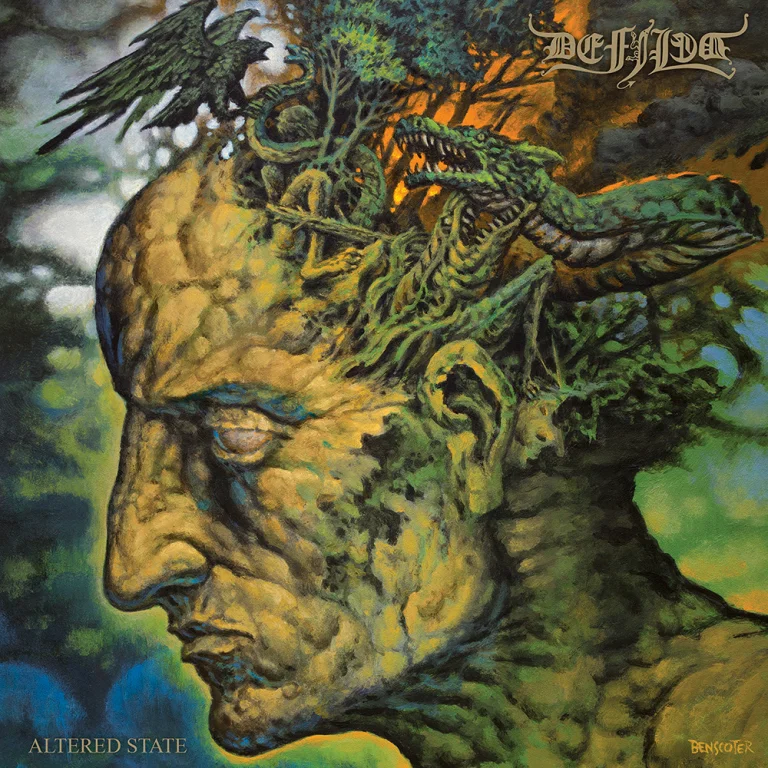
I just finished my third listen to Altered State and I’m still catching little things I missed the first time around.
Defiled have been around forever at this point, which is exactly why this album surprised me. A lot of veteran death metal bands eventually settle into autopilot. They figure out what works, stick with it, and keep releasing decent records. Altered State doesn’t sound like that. It sounds like a band with something to prove.
The first thing that hit me was how restless the whole album feels. There are riffs everywhere. Not just good riffs, but the kind that barely stick around long enough before another one shows up. Half the time I was still processing one section when the band had already moved on to the next.
“Portal” was probably the track that grabbed me immediately. After that, “Altered State”, “Obsession” and “Necro-Force” kept pulling me back. Not because they’re radically different from the rest of the album, but because they capture that frantic energy Defiled seem to thrive on. The songs never feel comfortable. Just when a groove starts settling in, something shifts and the whole thing lurches off in another direction.
Shinichiro Hamada still sounds completely possessed behind the microphone. No surprises there. What impressed me more was how sharp the entire band sounds. The drumming is relentless without turning into background noise, and the guitar work constantly keeps the album moving forward.
One thing I noticed after a few listens is that Altered State doesn’t really have any interest in being clever. There’s no obvious attempt to modernise the band’s sound or chase whatever trend death metal is supposed to be following this year. Defiled just sound like Defiled. Thankfully, that’s more than enough.
The album also gets in, does its damage, and gets out. A little over forty minutes later it’s finished, which honestly feels like the perfect length for something this intense. I never found myself checking the tracklist or waiting for a song to end.
By the time the final track was over, I wasn’t thinking about innovation or originality. I was already reaching for the play button again.
Atlanta hard rock outfit Kickin’ Valentina have announced the upcoming release of their brand-new digital single, “Rock’N’Roll Casualty”, scheduled to hit all major streaming platforms on 19th June 2026 via Mighty Music. The track delivers a swaggering, streetwise anthem that expertly captures the grit, danger, and temptation lurking just beneath the surface of the underground … Continue reading Kickin’ Valentina unleash streetwise new single “Rock’N’Roll Casualty”