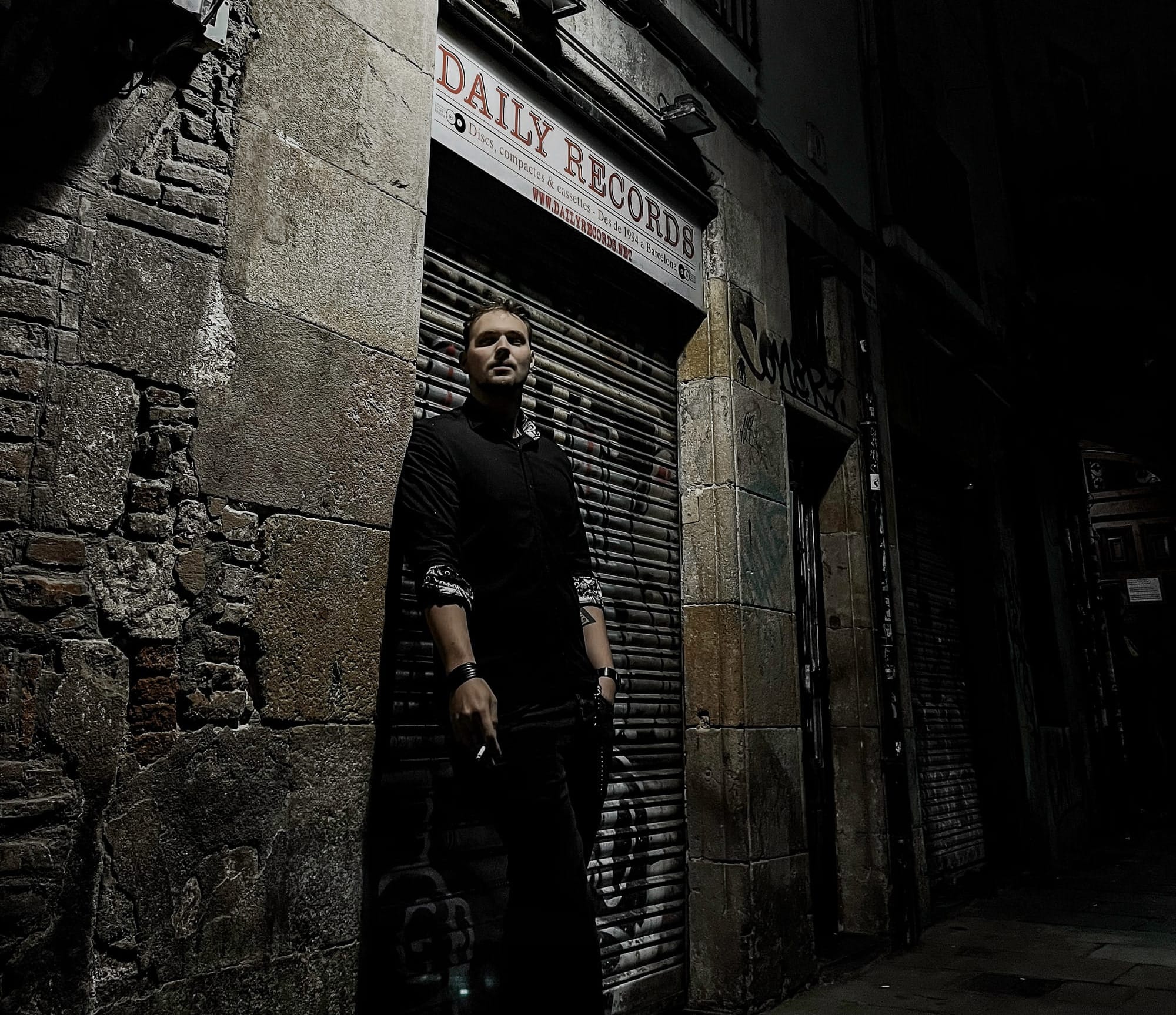
Why Gothic Culture Romanticizes the Night
Rain drifts slowly beneath flickering neon while distant headlights disappear into empty streets. The city finally exhales beneath the weight of midnight rain. Conversations fade behind apartment windows as shadows soften concrete into atmosphere. Somewhere beyond the glow of convenience stores and silent train stations, the night begins reclaiming emotional space modern life tries to erase.
Inside Gothic culture, the night has never represented simple darkness or fear.
It represents emotional honesty.

The night became the emotional heart of Gothic culture through solitude, noir atmosphere, psychological depth, and cinematic darkness.
Within Gothic culture, nighttime transforms silence, shadow, and solitude into emotional atmosphere.
The connection between Gothic culture and the night stretches across Romanticism, Gothic literature, noir cinema, post-punk music, darkwave atmosphere, emotional psychology, Victorian melancholy, dreams, memory, and cinematic urban loneliness. Over time, nighttime evolved into more than physical darkness.
It became emotional territory.
“The night does not hide emotion. It removes distraction so emotion becomes impossible to ignore.”
One reason Gothic culture romanticizes the night is that nighttime creates psychological distance from daytime performance. During the day, modern life revolves around visibility, productivity, noise, stimulation, identity management, and constant movement.
Night behaves differently.
The world slows down. Streets empty. Artificial expectations weaken. Emotional atmosphere becomes more noticeable because visual distraction decreases.
For many people inside Gothic culture, nighttime feels emotionally honest. Silence becomes more present while thoughts grow louder beneath dim city lights, rain-covered windows, cathedral shadows, and distant traffic echoes.
The night creates space for introspection.
Daytime frequently demands performance. People present controlled versions of themselves while navigating work, productivity, social expectations, digital visibility, and emotional restraint.
Night weakens those structures.
Inside darkness, emotional honesty becomes easier because the pressure of visibility decreases. The world stops demanding constant explanation.
This psychological freedom strongly connects with Gothic aesthetics. The culture often values introspection, emotional complexity, vulnerability, mystery, melancholy, and atmosphere over superficial visibility.
The night allows emotion to exist without performance.
Darkness affects human psychology differently than bright environments. Strong lighting constantly pulls attention outward, while darkness naturally redirects awareness inward.
This psychological shift strongly connects with Gothic aesthetics.
Inside darkness, texture, emotion, memory, atmosphere, silence, and subtle movement become more emotionally powerful. Neon reflections against wet pavement suddenly feel cinematic while distant train sounds carry emotional weight.
Darkness removes unnecessary visual stimulation.
Emotion becomes easier to feel.
This explains why Gothic culture rarely portrays darkness as purely negative. Instead, darkness frequently becomes emotionally immersive, psychologically reflective, mysterious, intimate, and artistically liberating.
Nighttime changes the emotional behavior of sound itself. Footsteps echo differently through empty streets while distant sirens feel strangely cinematic against silence. Rain becomes hypnotic beneath apartment windows as passing trains create emotional tension inside sleeping cities.
Silence becomes physical at night.
This sensory transformation strongly shapes Gothic atmosphere. Many Gothic aesthetics rely on environmental sound as emotional texture rather than simple background noise.
A flickering neon sign buzzing above wet pavement can feel emotionally heavier at 2AM than during daylight because the surrounding silence amplifies psychological awareness.
The night changes perception itself.
Romanticism deeply influenced the Gothic relationship with nighttime. Romantic artists, poets, and writers frequently explored moonlit landscapes, emotional solitude, ruins, storms, abandoned architecture, memory, longing, and emotional intensity.
Nighttime amplified emotional atmosphere.
Writers such as Edgar Allan Poe transformed darkness into psychological landscape rather than simple physical setting. The night became emotionally symbolic because shadow allowed fear, beauty, grief, desire, memory, melancholy, and dreams to coexist simultaneously.
This emotional complexity still defines Gothic culture today.
Modern Gothic aesthetics continue blending moonlight, rain, solitude, candlelight, fog, abandoned streets, silence, and emotional ambiguity into immersive atmosphere.
Classic noir cinema strongly shaped Gothic fascination with nighttime atmosphere. Noir films relied heavily on empty train stations, cigarette smoke drifting through diners, flickering signs, fog-covered bridges, lonely parking lots, neon reflections, dim corridors, subway tunnels, and emotionally suspended urban spaces.
These places feel psychologically liminal.
They exist between movement and stillness, isolation and connection, memory and reality. Gothic culture frequently romanticizes these environments because they visually externalize emotional uncertainty and introspection.
The city becomes psychologically different after midnight.
Shadow transforms ordinary urban spaces into emotional environments filled with mystery, vulnerability, melancholy, beauty, cinematic loneliness, and psychological tension.
The silhouette walking beneath neon rain becomes emotional storytelling itself.
Many Gothic, darkwave, and post-punk records feel emotionally stronger during nighttime because the surrounding atmosphere naturally aligns with the music itself.
Nighttime reduces distraction while amplifying emotional immersion.
Delayed guitars echo differently through empty rooms while cold synthesizers feel larger beneath dim lighting and emotional silence. Atmospheric music gains psychological depth when surrounded by rain, solitude, candlelight, darkness, and stillness.
This connection explains why Gothic culture frequently associates nighttime with creativity, emotional clarity, and artistic identity.
Artists often create late at night because silence removes interruption while emotional awareness becomes stronger. The subconscious feels closer beneath darkness.
Projects such as Edgar Allan Poets continue exploring cinematic darkness, emotional atmosphere, noir storytelling, and psychological tension through music shaped heavily by nighttime aesthetics.
Modern society increasingly tries to erase darkness through artificial lighting, nonstop visibility, digital stimulation, glowing screens, and endless activity. Cities rarely sleep completely anymore.
Modern culture fears silence.
Darkness interrupts stimulation while forcing emotional awareness back into focus. This explains why Gothic culture frequently searches for shadow instead of avoiding it.
Inside darkness, emotion becomes impossible to fully escape.
The culture survives because it continues finding emotional beauty within environments modern life constantly attempts to illuminate away.
Nighttime remains central to Gothic culture because darkness continues creating emotional atmosphere impossible to fully reproduce beneath daylight.
Shadow softens reality while silence amplifies emotional presence. Rain transforms streets into reflective landscapes while neon lights create cinematic isolation against empty cities.
The night slows the world enough for atmosphere to breathe again.
Long after cities drown themselves in artificial light, Gothic culture still searches for the last remaining shadows.
Explore Gothic-inspired apparel, Edgar Allan Poe designs, noir aesthetics, and cinematic dark fashion inside the official Edgar Allan Poets Noir Store.

Receive Gothic articles, noir-inspired music, dark fashion, atmospheric cinema, playlists, and psychological darkness directly inside your inbox.
Explore Gothic music, cinematic darkness, noir rock, emotional atmosphere, and immersive soundscapes through the official Edgar Allan Poets playlist.
Gothic culture romanticizes the night because nighttime creates emotional atmosphere, introspection, silence, mystery, psychological depth, and emotional honesty away from modern overstimulation.
Gothic music often feels more immersive at night because darkness, solitude, silence, and reduced distraction amplify emotional atmosphere and cinematic tension.
Noir cinema influenced Gothic culture through rain-soaked streets, neon reflections, shadows, loneliness, emotional tension, liminal urban spaces, and cinematic nighttime atmosphere.
Darkness remains central to Gothic aesthetics because it reduces visual distraction while intensifying emotional reflection, mystery, atmosphere, and psychological immersion.