Category: news

  • Zürich’s FUELED BY FEAR Unleash Hard-Hitting New EP "Ordinary Evil" – Out Now!

    Zürich’s FUELED BY FEAR Unleash Hard-Hitting New EP “Ordinary Evil” – Out Now!


    The wait is over! Zürich’s FUELED BY FEAR have unleashed their long-awaited new EP “Ordinary Evil”! Produced by Oscar Nilsson (The Halo Effect, The Haunted), bringing the characteristic Gothenburg metal sound to perfection at Bohus Studio. His extremely broad and uncompromisingly hard production gives Fueled By Fear their final edge – like the missing puzzle piece of their sound.

    Stream, download and add to your playlists the EP: https://open.spotify.com/playlist/1fI2HcU1Xn3qdXXiMGAu0g

    Mauro Galasso (Drums) on “Ordinary Evil”:
    “The title Ordinary Evil is inspired by Hannah Arendt’s book Eichmann in Jerusalem and her idea of the banality of evil. The realization that evil often doesn’t appear as an obvious monster, but emerges through conformity, thoughtlessness, and the abdication of personal responsibility.
    These thoughts feel disturbingly relevant today. Authoritarian tendencies, power figures, and oversimplification show how quickly history repeats itself when people stop thinking for themselves and find resistance too exhausting.
    This confrontation also shaped our work on the EP. During the creative process, we completely questioned ourselves musically and personally. What defines us? Where do we want to go? It was a process that forced us to let go of the familiar and approach things differently. There were moments when it would have been easier to give up rather than face this confrontation. This is exactly where Ordinary Evil comes in: Don’t give up. Keep going. Face the repetitions,
    defend your own path, and don’t let indifference win. It’s worth staying committed. Creatively, humanly, defiantly. Ordinary Evil is our statement for that”


    Manuel Elber (Guitar) continues:
    “Imagine making a dough, only to discover that you don’t like the texture. You put it back into the fridge. The next day you add a little bit of this, a little bit of that, and after processing, your dough still sucks, but not so much to scrap it. So you put it back in the fridge, thinking about what to change. Then you try to learn all the insights a baker learns in a crash course. You add your dangerous half-assed knowledge you gained and surprisingly it starts to feel better. You keep going, learn, each time adding more to the dough and finally you have a bake-worthy consistency, so far from where you started, that it seems like magic.
    For context: “Ordinary Evil” took about four years to come to life. Scrapped more times than I can count. Cost us blood, sweat and tears, caused literal breakdowns, frequent questioning of the reason why we do this. But it shaped us as musicians, as a family, as a team. The amount of things we learned, technical, recording-wise, in persistence, in constructive criticism, is something no one can take from us. And as for all endeavours this heap of maniacs is tackling: it’s always evolving, always changing, following the heart with an open mind. This one, we’re especially proud of!”


    Daniel Zopfi (Guitar) adds:
    “Ordinary Evil was written out of frustration, anger, and watching the same systems fail us over and over again. It’s about how cruelty gets normalized, how power hides behind routine, and how people learn to live with injustice as long as it’s quiet enough. This EP isn’t subtle and it’s not meant to be comfortable. It’s confrontational by necessity. These songs come from a place of distrust toward empty promises, authority without accountability, and a world that keeps demanding silence and obedience. It’s loud, raw, and uncompromising, fueled by everything we’re done ignoring: the hypocrisy, the violence beneath the surface, and our own complicity in letting it happen. This is us calling it out, refusing to soften the message, and turning that anger into sound exactly as we feel it right now.”

    On the EP artwork Mauro Galasso shared:
    “The cover of Ordinary Evil visually captures the central idea of the EP: Hannah Arendt’s realization that evil often doesn’t appear as an obvious monster, but hides behind an ordinary facade. The ancient bust, whose surface crumbles to reveal a demonic face, is deliberately chosen. Ancient busts are a core element of my visual language as an artist, but here an additional layer emerged: They represent history and human patterns that repeat themselves. The monumental decays and releases what has been repressed.
    We had various approaches that were either conceptually too complex or didn’t properly convey the message. When I returned to my own visual language, it became clear: The rawness, the epic quality, and the bold impact of this visual language reflect exactly the musical identity we developed with this EP.
    The series was planned from the beginning. With each release, the facade crumbles further until the true face is fully visible at the end. A visual evolution that runs parallel to the EP. That my own style represents the band best has confirmed me as a graphic designer and as the drummer of Fueled By Fear: We have taken the right creative path.”


    With their new EP, Fueled By Fear deliver their most mature and uncompromising work to date. The five tracks move between dark groove steamrollers and melodically dense anthems – harder, more powerful, and more forceful than all previous productions. The band has sharpened their sound: hardness meets groove, tempo meets aggression, while melodic passages merge with modern pressure. The result is songs with enormous chorus quality and real singalong potential – dark, but irresistibly catchy.

    BIO:
    FUELED BY FEAR from Zurich have been combining the intensity of metalcore with the melodic depth of melodic death metal since 2011. The band manages to merge melodic passages with grooving rhythms into a sound that can both strike brutally and touch emotionally. Support performances for In Flames, Sepultura, and even Pantera underscore their international relevance. Their debut “Two By Eight” reached #5 on the Swedish rock charts and #22 in Switzerland.
    Fueled By Fear stands for authentic metal without filters!

    For Fans Of:  Heaven Shall Burn, In Flames, Caliban, Darkest Hour, At the Gates, The Haunted, Bleed From Within

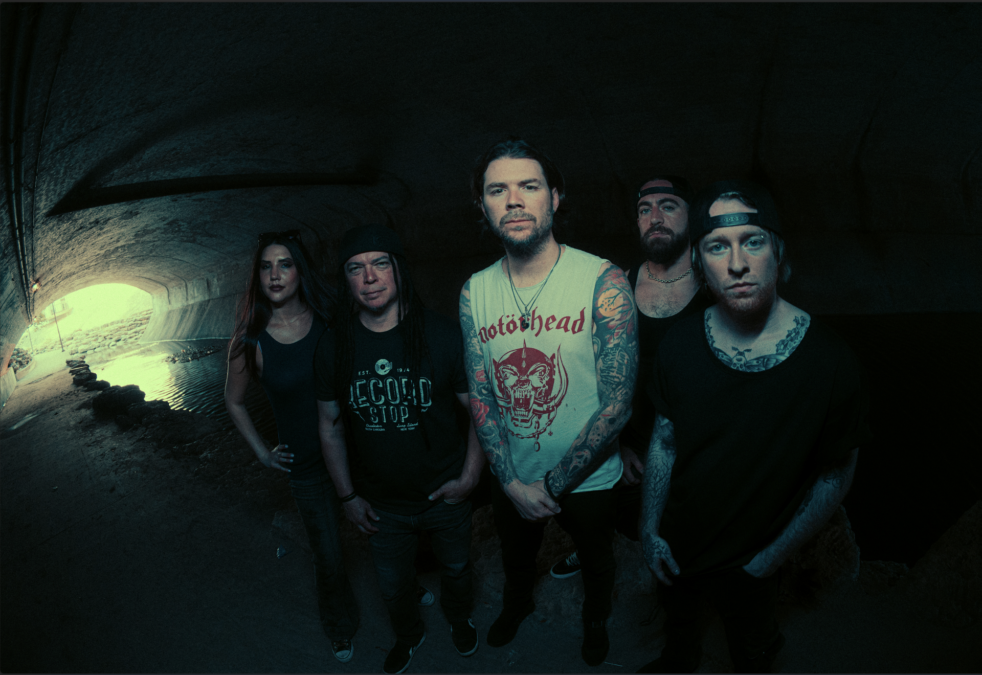
    Photo credit: Marcel Bruderer

    Line-up:
    Vocals: Marco Böhlen
    Guitar: Manuel Elber
    Guitar: Daniel Zopfi
    Bass: Josh De Souza
    Drums: Mauro Galasso

    Social Media Links:
    https://www.instagram.com/fueled_by_fear_official/
    https://www.facebook.com/fueledbyfear/
    https://www.youtube.com/@fueledbyfear2516
    https://www.tiktok.com/@fueled_by_fear_official

    Streaming Links:
    https://open.spotify.com/intl-de/artist/6trMH3h5QEeV4RkGJUTKkH
    https://music.apple.com/ch/artist/fueled-by-fear/1175459666
    https://soundcloud.com/fueledbyfear
    https://music.youtube.com/channel/UChy74syl4Mi2XG03J0qyWkw
  • 10 Best Love Songs to Add to Your Valentine’s Day Playlist

    Valentine’s Day is often seen as the most romantic day of the year, and music has a special way of capturing every emotion tied to love.

    Songs create atmosphere in ways that words alone sometimes cannot. Love can feel soft and tender, loud and joyful, or even bittersweet, and melodies give those feelings a voice.

    Romantic playlists often shape the mood of an entire evening, turning ordinary moments into memories.

    Love stories told through lyrics often feel personal, timeless, and unforgettable, speaking directly to the heart.

    Here are ten tracks that bring together classic romance, modern devotion, playful longing, and heartfelt commitment, creating a playlist that fits every kind of Valentine’s Day moment.

    # Song Title Artist Release Year
    1 Unforgettable Nat King Cole 1951
    2 You Are In Love Taylor Swift 2014
    3 See You Again (feat. Kali Uchis) Tyler, The Creator 2017
    4 The Only Exception Paramore 2010
    5 Golden Hour JVKE 2022
    6 Perfect Ed Sheeran 2017
    7 All of Me John Legend 2013
    8 Can’t Take My Eyes Off You (version) Lauryn Hill 1998
    9 Butterflies Kacey Musgraves 2018
    10 Die With a Smile Lady Gaga & Bruno Mars 2024

    1. “Unforgettable” by Nat King Cole

    • Released in 1951
    • Approximate length: 3 minutes
    • Classic orchestral ballad style

    Nat King Cole delivers one of the most timeless romantic standards ever recorded, capturing the kind of love that feels graceful and everlasting.

    Smooth vocals glide over warm orchestration, creating an atmosphere made for close dancing and quiet romance. Every line carries tenderness, as if Cole is speaking directly to someone cherished across a softly lit room.

    This kind of timeless love also pairs beautifully with a gift like an Only One Music Box, a handcrafted keepsake that plays a melody as personal and enduring as the feelings behind it.

    Emotional restraint gives the song its power, letting sincerity shine without exaggeration.

    Romance feels elegant and enduring through the song’s gentle pacing, proving why it remains one of the most beloved love ballads of all time.

    2. “You Are In Love” by Taylor Swift

    • Released in 2014 as part of 1989
    • Approximate length: 4 minutes and 27 seconds
    • Focus on subtle romance instead of dramatic declarations

    Taylor Swift captures love through quiet, lived-in moments rather than grand gestures, making the song feel intimate and honest.

    Lyrics focus on small details that define real affection, like soft glances, shared warmth, and comfort that grows naturally over time.

    Romance comes alive through simplicity, showing how love can feel strongest in everyday experiences instead of dramatic declarations.

    Emotional storytelling builds gradually, like a slow sunrise, leaving listeners with a sense of calm devotion and heartfelt connection.

    3. “See You Again (feat. Kali Uchis)” by Tyler, The Creator

    • Released in 2017 on Flower Boy
    • Approximate length: 3 minutes
    • Features Kali Uchis adding softness and contrast

    Tyler, The Creator sings about longing for a dream lover who may not even exist in real life, giving the track a sense of mystery and imagination.

    Romantic desire feels suspended between fantasy and reality, as Tyler questions if he will ever meet the person he envisions. ayful lyrics mix with genuine yearning, creating a feeling of hope wrapped inside uncertainty.

    Kali Uchis adds softness and sweetness, balancing longing with warmth.

    Production feels colorful and airy, creating a sound that matches love living inside hopeful daydreams.

    4. “The Only Exception” by Paramore

    • Released in 2010
    • Approximate length: 4 minutes and 27 seconds
    • One of Paramore’s most recognized emotional ballads

    Paramore delivers a nostalgic tearjerker that speaks directly to vulnerability and emotional risk.

    Hayley Williams sings about letting go of fear and allowing herself to believe in love again after heartbreak.

    Honest lyrics reflect the struggle of trusting someone when past pain still lingers in the background.

    Intensity builds through raw emotion, making the track powerful for anyone who has fought against doubt but still hopes for devotion.

    Romantic tension comes through the push and pull between self-protection and desire, turning the song into a heartfelt confession.:

    5. “Golden Hour” by JVKE

    • Released in 2022
    • Approximate length: 3 minutes and 29 seconds
    • Known for its viral popularity on social platforms

    JVKE creates a cinematic love song filled with glowing imagery, celebrating someone who makes life feel brighter and almost unreal.

    Lyrics suggest romance that turns ordinary moments into something glowing and unforgettable.

    Dreamy pop production carries a soft, floating mood, giving the track a modern sense of wonder.

    Emotion feels weightless, like time slowing down in the presence of someone special.

    Love feels radiant in every beat, making it perfect for sweet Valentine’s Day reflection or late-night romance.

    6. “Perfect” by Ed Sheeran

    • Released in 2017 on Divide
    • Approximate length: 4 minutes and 23 seconds
    • Often chosen as a first dance wedding song

    Ed Sheeran offers a simple yet poetic celebration of forever love, built on sincerity and warmth.

    Acoustic softness gives the track a tender feeling, while lyrics describe deep commitment without needing complexity.

    Romance feels steady and timeless, speaking to devotion that lasts through life’s changes and uncertainties.

    Gentle storytelling makes listeners picture shared memories and promises made quietly but meant forever.

    Couples often connect with its honest sweetness, making it one of the most cherished modern love songs.

    7. “All of Me” by John Legend

    • Released in 2013
    • Approximate length: 4 minutes and 29 seconds
    • Piano-driven ballad centered on full commitment

    John Legend writes a deeply personal love letter inspired by his relationship with Chrissy Teigen, creating a song that feels heartfelt and sincere.

    Lyrics express unconditional devotion, loving someone completely with all imperfections included.

    Piano-driven simplicity allows emotion to take center stage, making every line feel genuine and unfiltered.

    Romantic power comes through the idea of total acceptance, showing love as something that embraces flaws rather than ignoring them.

    Tenderness in his voice turns the song into one of the most recognizable modern ballads.

    8. “Can’t Take My Eyes Off You” (Lauryn Hill version)

    • Released in 1998
    • Approximate length: 3 minutes and 40 seconds
    • Featured on The Miseducation of Lauryn Hill

    Lauryn Hill reinvents the Frankie Valli classic with soulful confidence and groove, transforming it into a bold modern declaration of admiration.

    Vocals feel playful, sensual, and full of personality, capturing romance with strong energy.

    Passion comes through clearly, making it ideal for someone unafraid to express affection openly.

    Groove-driven production keeps the song light but powerful, mixing love and confidence in equal measure.

    Emotion feels vibrant and fearless, like love spoken out loud without hesitation. Musical character shines through.

    9. “Butterflies” by Kacey Musgraves

    • Released in 2018
    • Approximate length: 3 minutes and 39 seconds
    • Represents love as healing and transformative

    Kacey Musgraves uses butterflies as a metaphor for emotional rebirth and self-discovery through love.

    Lyrics describe someone who lifts her out of doubt and into freedom, making romance feel healing rather than overwhelming.

    Gentle country-pop tones create warmth and softness, matching the theme of personal growth and renewed confidence.

    Love feels comforting and uplifting, like a fresh start that arrives unexpectedly.

    Calm gratitude fills the song, making it perfect for Valentine’s Day moments meant for reflection and peace.

    10. “Die With a Smile” by Lady Gaga and Bruno Mars

    • Released in 202
    • Approximate length: 4 minutes
    • Styled as a retro-inspired romantic duet

    Lady Gaga and Bruno Mars create a romantic ballad with a vintage 1950s style, filled with devotion and timeless emotion.

    Lyrics focus on loving someone so fully that even the final days of life would feel meaningful if spent together.

    Harmonies carry dramatic tenderness, giving the track an old-school romantic glow.

    Emotion feels grand but sincere, shaped by imagery of lifelong commitment and lasting affection.

    Commitment sits at the center of the song, making it a powerful closing piece for love that feels eternal.

    The Bottom Line

    Love can sound playful, nostalgic, devoted, or quietly comforting, and music captures every shade of it.

    Valentine’s Day becomes even more meaningful with songs that express emotions words alone cannot convey.

    Press play, let the melodies speak, and allow each track to shape the soundtrack of love in all its forms.

  • Bandcamp Vs Spotify For Indie Musicians – Revenue, Fan Data, Long-Term Strategy

    For indie musicians choosing between Bandcamp and Spotify, the direct answer is this: Bandcamp is superior for direct revenue, fan ownership, and long-term independence, while Spotify functions primarily as a discovery and reach platform with low per-listener income and limited artist control. 

    The two platforms serve fundamentally different economic and strategic purposes, and treating them as interchangeable distribution options leads to flawed expectations and weak long-term outcomes.

    Two Platforms, Two Economic Logics


    Bandcamp operates as a direct commerce platform. Fans buy music and merchandise straight from the artist. The transaction is explicit. Money changes hands because a listener made a conscious decision to support the work.

    Spotify operates as a pooled subscription system. Listeners pay Spotify, not artists. Spotify then redistributes that money according to total listening volume across the entire platform. The listener’s intention is consumption, not support.

    This distinction explains almost every practical difference between the two platforms. One is built around conversion and ownership, the other around attention and aggregation.

    Revenue: What the Numbers Actually Look Like

    Split image showing the Bandcamp logo on one side and the Spotify logo on the other, highlighting revenue comparison
    Bandcamp pays high revenue per purchase, while Spotify requires massive stream volume to match it

    Bandcamp Revenue in Practice

    On Bandcamp, pricing is set by the artist. Albums commonly sell for $7 to $12, singles for around $1, and physical products often carry meaningful margins.

    Bandcamp’s cut is usually 10 to 15 percent on digital sales, with payment processing fees added on top. There is no revenue pooling and no algorithmic dilution.

    When a fan pays $10 for an album, the artist typically receives between $8.50 and $9.00. That revenue is immediate and final. There is no dependency on how other artists performed that month, and no minimum activity threshold.

    Spotify Revenue in Practice

    Spotify pays artists based on a pro rata system. All subscription and advertising revenue is collected into a single pool and distributed according to total streams.

    There is no official per-stream rate, but real-world payouts typically fall between $0.002 and $0.005 per stream, depending on geography and subscription type.

    This means an artist needs hundreds of thousands of streams per year to generate income that would equal a few hundred Bandcamp album sales.

    Artist Revenue Per Listener Action

    Platform Listener Behavior Approximate Artist Revenue
    Bandcamp Album purchase ($10) $8.50–$9.00
    Bandcamp Single track purchase ($1) ~$0.85
    Spotify One stream $0.002–$0.005
    Spotify 10,000 streams $20–$50
    Spotify 100,000 streams $200–$500

    The implication is not theoretical. One engaged Bandcamp supporter can generate the same revenue as thousands of Spotify listeners who never consciously chose the artist.

    Fan Data: Ownership vs Visibility

    Two smartphones display the Bandcamp and Spotify apps
    Bandcamp gives artists direct fan contact, while Spotify keeps audience relationships under platform control

    Bandcamp’s Direct Fan Access

    Bandcamp gives artists access to real fan data. This includes email addresses of purchasers, geographic information, and full purchase histories.

    Artists can message fans directly, offer exclusive content, announce tours, or sell new releases without any algorithm standing in between.

    This matters because fan data compounds in value over time. An artist who sells to the same listener across multiple releases builds a predictable revenue base.

    The platform does not interfere with that relationship.

    Spotify’s Analytics Without Ownership

    Spotify provides detailed listening analytics, but no ownership. Artists can see where listeners are located and how many streams they receive, but they cannot contact those listeners directly.

    There is no email access, no remarketing capability, and no way to move listeners off-platform except by hoping they search independently.

    Spotify owns the audience relationship. Artists rent exposure.

    Fan Data Access Comparison

    Data Category Bandcamp Spotify
    Fan email addresses Yes No
    Purchase history Yes No
    Direct fan messaging Yes No
    Listener location Yes Partial
    Long-term contact control Artist-owned Platform-controlled

    Discovery vs Support: A Behavioral Gap

    Spotify excels at discovery, but discovery on Spotify is mostly contextual, not intentional. Listeners encounter music through playlists designed for moods, activities, or genres.

    The music is often in the background. Artist names are frequently ignored, and listener loyalty is shallow.

    Bandcamp attracts listeners who are already in a support mindset. They are browsing artist pages, reading liner notes, and often purchasing multiple items in one session. The conversion rate is dramatically higher, even if raw traffic is lower.

    This difference explains why artists with modest Bandcamp audiences often earn more than artists with far larger Spotify listener counts.

    Long-Term Income Stability


    View this post on Instagram


    A post shared by THE KOMPOZITOR (@thekompozitor)

    Structural Limits of Spotify Income

    Spotify’s income depends on constant growth or sustained high volume. Streams decay quickly.

    Older releases stop generating meaningful revenue unless they are repeatedly pushed by playlists or algorithms. Policy changes can instantly affect payouts, as seen in recent years when Spotify introduced minimum stream thresholds for royalty eligibility.

    As of the mid-2020s, Spotify hosts over 100 million tracks, and public industry data shows that the vast majority of artists earn less than $1,000 per year from streaming. The system rewards scale, not loyalty.

    Bandcamp’s Compounding Revenue Model

    Bandcamp revenue compounds because fan relationships persist. An album released five years ago can still sell today if the artist communicates effectively.

    Physical releases, limited editions, and merch increase lifetime value per fan. Touring often triggers renewed sales across an entire catalog.

    This model favors artists who build slowly but retain supporters.

    Long-Term Revenue Characteristics

    Factor Bandcamp Spotify
    Income volatility Lower Higher
    Algorithm dependence None High
    Back catalog monetization Strong Weak
    Fan lifetime value High Low
    Revenue predictability Moderate Low

    Strategic Role Within an Indie Career

    Musician plays an electric guitar under warm stage light
    Spotify drives visibility, while Bandcamp sustains core artist income and independence

    Spotify works best as a visibility layer. It signals legitimacy, helps new listeners find music, and supports press and playlist ecosystems. It should not be treated as a primary income source unless the artist already operates at a very large scale.

    Bandcamp functions as the economic foundation. It supports recording costs, touring expenses, and long-term independence. It allows artists to test pricing, release formats, and audience demand without intermediaries.

    Artists who succeed long term usually assign each platform a clear role rather than expecting one to do everything.

    Industry Context and Recent Shifts

    Several industry changes have sharpened this divide. Spotify has increasingly prioritized high-engagement content and reduced payouts for low-stream tracks.

    Meanwhile, Bandcamp’s fee-free Fridays during the early 2020s demonstrated that fans are willing to directly support artists when given the opportunity.

    Rising costs for touring, marketing, and production have made direct fan revenue more critical than ever, especially for artists outside mainstream pop or algorithm-friendly genres.

    Strategic Platform Comparison

    Dimension Bandcamp Spotify
    Primary function Monetization Discovery
    Artist control High Low
    Audience ownership Yes No
    Earnings per supporter High Very low
    Dependency risk Low High
    Long-term career value Strong Limited alone

    Final Perspective

    @holyrivermusic Spotify vs Bandcamp From the perspective of an independent artist @bandcamp wins #streamingtips #bandcamp #spotify #musicindustry #independentartist ♬ original sound – HolyRiverMusic

    Bandcamp and Spotify are not interchangeable tools. They solve different problems and reward different behaviors. Spotify offers reach without ownership. Bandcamp offers ownership without scale.

    Independent musicians who understand this distinction early avoid years of misplaced effort and unrealistic expectations. The platform choice itself does not determine success, but misunderstanding what each platform is built to do almost guarantees frustration.

  • Kosuke Hashida – Moment of Silence (2026)

    What makes a great album is not the parts, but the stringing together of those pieces so that they form a structure that resembles some part of our reality or ideation. Kosuke Hashida strips down music to find a voice in that vein.

    While there are obviously influences from death metal and grindcore here, the core remains hardcore punk, updated with the more precise rhythms of our time and a relentless, frenetic energy that lets its mild melodies and elegant phrasal riffs work together.

    As a result, death metal fans can enjoy this release despite the circular basis of most songs, updated to fit the topic and riff like old thrash, but anyone can appreciate this highly personalitied hardcore that moves like fire through abandoned tenements in the LA summer.

  • Playlist: Sirius XM’s “Dark Wave” — hosted by Slicing Up Eyeballs (2/1/26)

    This week’s “Dark Wave,” hosted by Matt Sebastian, featured music by The Fall, Danielle Dax, 45 Grave, Love and Rockets, Nine Inch Nails and more.
  • Legendary Rock Band Makes History at 2026 Grammy Awards After Tragedy

    It wasn’t just another Grammy night. For decades, one band as been the soundtrack to entire emotional lifetimes.

    The post Legendary Rock Band Makes History at 2026 Grammy Awards After Tragedy appeared first on Audio Ink Radio.

  • Delusions of February 2026 – Part 1

    Every Monday morning, Still in Rock kicks off the week with an article featuring a bunch of new releases. At the end of each month, I dedicate a playlist to the best of these articles (link). Don’t miss out and join Still in Rock on Facebook (here), WhatsApp (here), and Instagram (here). Cheers.
    ***
    Sweet Reaper – Still Nothing
    LP, Naked Times Tapes, 16 January 2026
    [garage pop]
    🇺🇸
    In one sentence: Discovered this band through its killer cover art, stayed for the irresistibly melodic garage pop

    ***
    Balaclava – “Dramatic Exit”
    Single, City Slick Records, 21 January 2026
    [garagerock]
    🇺🇸
    In one sentence: it’s fun, it’s trashy, it’s garagy, it’s Balaclava.

    ***
    Game Set Match – Game Set Match
    EP, Goodbye Boozy Digital, 28 January 2026
    [garage rock]
    🇦🇺
    In one sentence: garage rock like we like it: to the point, good.

    ***

    DBR – Unbearable
    LP, Phantom Records, 16 January 2026
    [post-punk]
    🇩🇪
    In one sentence: Germany is fast becoming synonymous with post-punk, and DBR may soon be synonymous with German post-punk

    The post Delusions of February 2026 – Part 1 appeared first on Still in Rock.

  • Simon Townshend’s new single ‘The High’

    Like Roger Daltrey, Simon Townshend is a huge fan and supporter of Arsenal Football Club. For those of you who are not familiar with soccer, Arsenal, known to their fans as The Gunners, are based in Islington, in North London. They compete in the Premier League, the top tier of English football.

    And to celebrate his love of the game and his favourite team, Simon has written and recorded this new song called ‘The High’, a nod to the Gunners former stadium, Highbury. Since 2006 the Gunners now have a new stadium called the Emirates Stadium in Holloway. Enjoy ‘The High’ and watch this great video shot by Simon. Oh, and singing backing vocals is the fabulous Isabella Coulstock – The Who’s special guest on several of our UK shows in 2023.

    Simon Townshend“This song is about the euphoria and the rush of adrenaline you get going to a major live event. For me it’s rock concerts and football. I’ve based the theme on my updated website (www.DualMono.com) around the football club in the UK that I support and love, Arsenal FC and I hope all football supporters of all clubs enjoy it.”

    “Come on you Gunners!!”

    ‘The High’ by Dual Mono featuring Simon Townshend is out on Monday 2 February 2026.

    https://www.dualmono.com/

    https://www.arsenal.com/


    The post Simon Townshend’s new single ‘The High’ appeared first on The Who.

  • Presenting The 68th Grammy Award Winners for Rock and Metal

    As most of you know by now, the “Rock” and “Metal” categories for the Grammy Awards is no longer something that is a part of the lengthy broadcast that will … Continue reading Presenting The 68th Grammy Award Winners for Rock and Metal
  • MARTIN LOPEZ Explains Why SOEN’s New Album “Grooves Differently”, Recalls Studio Moment That Felt “Quiet… Beautiful… And Extremely Sad”

    Soen records usually land with a familiar problem for the band and for the fans. People hear growth, then argue about which era they want more of. Martin López is fully aware of that push and pull, and he talks about Reliance like someone who has already watched those reactions form in real time.

    “Yesterday we had some kind of event because we also have a short documentary coming out,” he tells Rodrigo Altaf during their recent chat about the album’s arrival, “and I got the opportunity to reach out and see what people actually thought about the album. It’s good, man.” Then he puts the split in plain terms: “Because of the progression or the evolution we have made, there are, of course, people who want us to go back, and there are people who only want to listen to the new stuff. It’s always interesting to hear what people feel about the album.”

    When the conversation turns to what Reliance is actually about, he meets a broad interpretation with a grounded answer. “We never go for a theme,” Martin says, “but we always end up talking about the things that we feel matter.” He ties that to the world outside the rehearsal room, too. “The environment of the planet right now, it’s giving us more lyrics than we have songs.”

    That same “feel it first” approach shows up in the lineup talk, especially with bassist Stefan Stenberg back in the fold. Martin describes the return in a way that sounds more like a band chemistry fix than a reunion headline. “Stefan is, even when he left the band, he’s always been very close to us as a friend,” he says, and he frames his playing as part of what people recognize when Soen hit.

    “The sound that he has, the way that he plays is part of the soul and identity somehow.” He credits Slavoj Žižek too, calling him “a fantastic bass player,” then circles back to the intangible part. “With certain musicians, you just have a chemistry that is the magic of music.” For him, you can hear the difference: “I think you can really hear it in this album,” because “the album is just less mechanical. It’s kind of bigger and grooves differently.”

    Even their habit of one-word titles comes from the same instinct to let the listener do some work. Martin says it grew out of lyric writing sessions where the band tried to summarize songs too neatly. “We were writing lyrics,” he explains, “and trying to explain in a title what the lyrics were about.” Then the decision landed. “We just thought, look, man, we’re not giving a chance to the actual lyric.” The fix was simple, and it stuck: “Let’s just give it a title and let people dive in there and find themselves what they feel we’re talking about.” He laughs at how permanent it has become. “From then on, we just went for it. And now we can’t change it.”

    The most pointed stretch of the interview comes when Martin talks about technology and the song “Primal.” Asked by Rodrigo if he feels trapped by the phone, he answers without hesitation. “Of course.”

    He goes straight to the part that hits home. “It’s also the worry that my kids have these phones.” Then he describes how quickly the algorithm can steer young people into something ugly. “I have two boys in that age where they start looking at a football game and then some gym stuff,” he says, “and then suddenly there’s some weird self-proclaimed alpha male telling them how they need to live life to be happy.” He spells out the message he hates seeing slide into their feed. “You shouldn’t be vulnerable, and you’re going to be strong, and you don’t need anyone,” and “when you are strong and have money, all the girls will come running after you.” The part that lands like a punch is how personal it feels. “And it’s like, fuck me. That is in my house. And I can’t stop it.” Then he names the fear without dressing it up. “That’s the technology that I’m scared of, man.”

    When the talk moves to “Indifferent,” you can hear Martin shift from societal anxiety to the quieter weight of performance. He describes the studio as a place where a song’s emotion becomes real when the vocal finally goes down for good. “That’s kind of the fun of being in the studio,” he says, “all these different emotions that you go through when you really start putting down the emotions on the songs.” He explains the gap between having a demo and committing fully. “I write the song, and you can say, oh, this part is heavy, and this one is emotional,” then “you really have to step into character to do your 100 percent.”

    He remembers the room during the vocal take. “I was there, and the producer Alexander was there, and it was quiet, man.” He repeats it because the mood mattered. “It was quiet, and it was beautiful and extremely sad.” Even after living with the track for years, the moment still hit hard. “When Joel goes for it, it really moves you.” He is already thinking ahead to playing it live, too. “I’m waiting to see how that is going to work live,” because “I think it’s going to be hopefully one too many tears.”

    “Mercenary” brings him back to the album’s bigger questions, especially that line in the lyrics about bleeding for belief. Martin says the band played with the discomfort on purpose. “That’s a little bit of what we’re playing with there.” He ties it to upbringing and identity. “How we’ve been raised, with politics or religion,” and how “you can be born into something that you’re supposed to be ready to go all the way for.”

    Then he adds the human escape hatch. “Maybe you don’t feel the same and just want an open door to run away in.” He calls the concept “very, very truthful,” and says it “makes you wonder.” When pressed on where the line is, he answers with a question of his own. “How far would you take it?” Then he flips it toward responsibility. “Because we are not extremists, but are you ready to bleed to stop the extremists?”

    On the writing side, he connects that intensity to structure. “Velicor” builds and peaks in under five minutes, and he admits that kind of compression brings its own pressure. “You have less time to kind of.. to cook,” he says. “It’s a steeper ramp.” When asked if the punchier, more direct songs were planned, he kept the answer consistent with everything else he has said. “We never have any plans. We just go for writing the best possible song, whatever it costs.”

    Near the end, he looks forward and keeps it practical. North America remains difficult for bands like Soen, yet he drops a simple promise. “I gotta say this, it’s not out, but we’re coming back in March, actually.” He lays out the road ahead like a working musician with a packed calendar. “We’re going to the 70 Tons boat,” then “a Scandinavian tour,” then “the tour in the US,” then festivals, and “most definitely” Europe next year, plus South America. He sums up the motivation in one line. “We want to get out there now and play these new, fresh songs, man.”

    Photo by Linda Florin

    If someone asks where to start listening to Soen, he avoids the gatekeeping answer. “It depends on the kind of person that you are,” he says, because “there are different vibes on many of our albums.” His starting point stays current: “Start with the new one.” Then he points to another clear entry. “Also, Lotus is a good start. And then go from there.” He even makes it as simple as mood. “Do you like ballads? Then you can just pick your favorites from every album.”

    And then he ends the whole conversation in a way that makes the band feel reachable, which fits the tone of his best answers throughout. If you show up early, he says, you can actually meet them. “We’ll be there,” and “let’s have a Fanta or something.”

    The post MARTIN LOPEZ Explains Why SOEN’s New Album “Grooves Differently”, Recalls Studio Moment That Felt “Quiet… Beautiful… And Extremely Sad” appeared first on Sonic Perspectives.