Swedish hard rock queens THUNDERMOTHER are back with their Napalm Records studio debut, ‘Mothers of Thunder‘, out on February 5th, 2027. Their seventh album once again proves that the genre’s leading ladies can do everything men could—and maybe even better. Their rock’n’roll vibe comes in with dirty riffs and cheeky lines, the powerful delivery begging […]
Milkfest 2027 will take place at 02 Shepherds Bush Empire April 11th 2027. The first wave of bands have just been announced. Milkfest will be in aid of Children With Cancer UK charity Formerly known as Manfred Mann, The Manfreds had a run of giant hits in the sixties with songs like ‘Do Wah Diddy […]
A remarkable chapter in rock history is finally being completed. Conceived years ago by Alice Cooper and his longtime collaborator Dick Wagner, ‘Chester Rose‘ was envisioned as a theatrical concept album in the spirit of ‘Welcome to My Nightmare‘, a dark, cinematic production intended for both album and television. From the beginning, Cooper and Wagner […]
It’s happening in bars, dance studios, even a roller rink. And you’re as likely to find the crowd clad in cutoff shorts and crop tops as boots and denim.
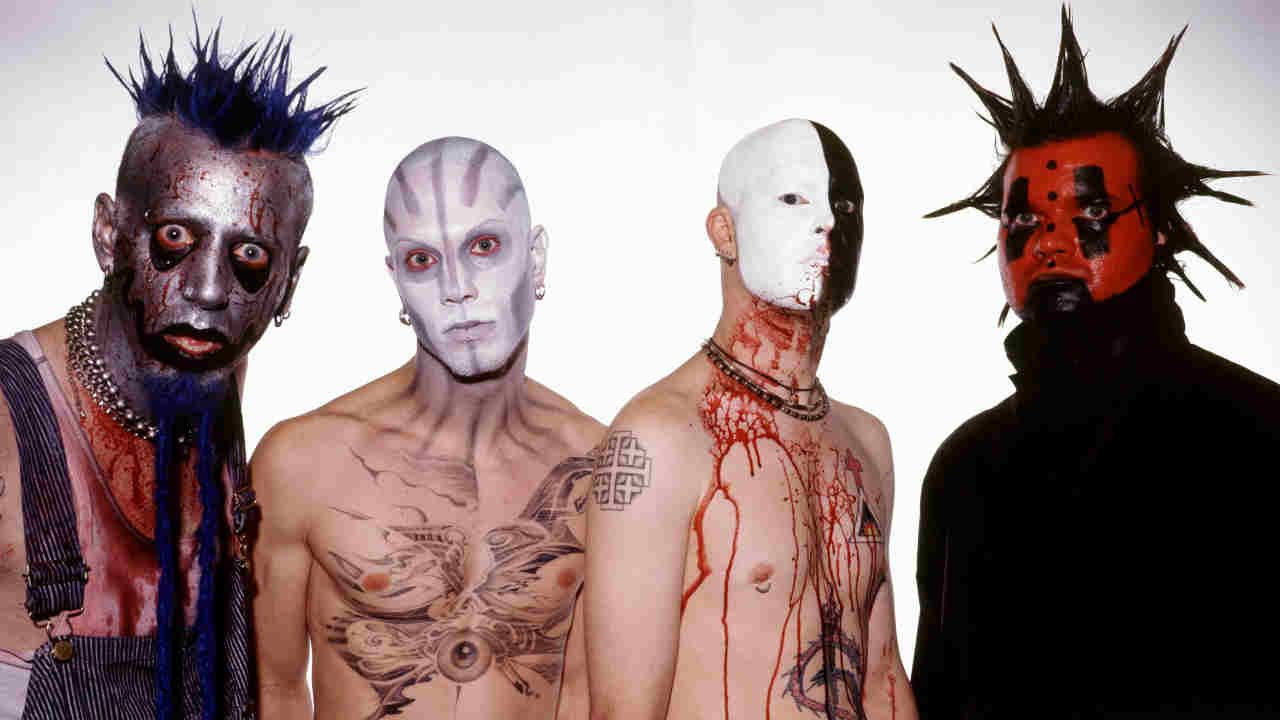
Across two bands and two eras, Chad Gray has endured the rise, fall and reinvention of modern metal – and lived to tell the story. As the feral, blood-splattered frontman for Mudvayne and Hellyeah!, the 54-year-old has spent more than three decades establishing himself as one of the most intense and uncompromising performers in heavy music.
Now back at the helm of a reunited Mudvayne, Chad looks back on a life spent screaming in key, blowing out knees and learning the brutal, beautiful realities of the music business. These are the lessons he’s picked up along the way.
BIG LEGENDS DON’T NEED TO HAVE BIG EGOS
“Vinnie Paul brought so much to the table [in Hellyeah], but he was a bandmember, dude. He wasn’t the big superstar celebrity drummer – who is arguably one of the top fucking five greatest fucking metal drummers out there – acting like, ‘I’m fucking Vinnie Paul. I was in Pantera. I’m bigger than you.’ He didn’t have that attitude at all. He was always just one of the guys, and he made us a band.”
HOPE FOR THE BEST, BUT PLAN FOR THE WORST
“If I were talking to the 2001 version of myself, right around [Mudvayne album] L.D. 50, when that was exploding, the one piece of business advice I would give myself would be to quit and go to college! Ha ha! Get the fuck out of here, quick! Run for the fucking hills! I could never imagine the fucking horseshit we would go through. I mean litigation. We spent $2,000,000 in litigation [with our former management company]. It was insane.”
Chad Gray (left) with Mudvayne in 2000 (Image credit: Mick Hutson/Redferns)
DON’T EVER LET UP
“Back in 2000, we got a lot of interest and did a showcase with Clown from Slipknot, his drum tech, and their manager who worked for Epic Records. We walk out in full make-up, full everything, and there are literally four people sitting in front of us. We start playing, and halfway through the first song, the mic goes out. I just started screaming my head off without it. I look at the guy running sound, like, ‘Fix this shit!’ and we just kept playing. The guy’s hardwiring shit while trying not to get electrocuted, and we finally get the sound back on. We play five or six songs, and Clown walks straight up to me at the end and goes, ‘You got fucking issues!’ Ha ha! From then on, he was our boy.”
SOMETIMES ALL YOU CAN DO IS APOLOGISE AND MOVE ON
“Every band has a disaster set. For Mudvayne, especially when we first started touring, we were playing the entire L.D. 50 album because we didn’t have two or three hours of material to pick from. Now, some of those songs have tons of different parts. I remember we were going off the fucking rails in Norfolk, Virginia, at The NorVa. Then Matt [McDonough, drums] fucked something up, and the song just imploded. At one point I was singing one thing, Greg [Tribbett, guitars] was playing a different riff, and Ryan [Martinie, bass] was playing a different riff. It was an absolute disaster – a real head-scratching moment where everyone is playing something completely different. I just looked at the crowd and apologised. I said, ‘I don’t know what the fuck just happened there, but we got through it. So here’s this next one…!’”
GOOD MENTORSHIP FOCUSES ON THE DETAILS
“Mudvayne toured with Metallica on the Summer Sanitarium tour [in 2003]. One day, I’m walking down the hall, and James Hetfield walks out of his dressing room. I walked up and was like, ‘Hey James, what’s up? I’m Chad. I love your fucking vocal style, you have what I call yelling in key.’ And he’s like, ‘Exactly!’ Then he asks me, ‘Man, I use these little things called Vocalzones, have you ever heard of them?’ I said no, so he goes into his room, comes back out, and hands me a box of them. They’re like little liquorice pastilles that stick to the side of your teeth to keep you salivating. It was just so fucking cool. This is James fucking Hetfield, dude. The Alpha. He spearheaded a movement that changed the game in the early 80s, tracing all the way back to Sabbath, then to Metallica, to the nu metal movement, to the kids kicking today. Music is just this constant exchange of inspiration.”
METAL OFFERS THE FREEDOM TO EXPERIMENT
“People in metal have the freedom to experiment in ways that country or pop artists can’t. Your changes will actually be accepted by the fans. Metal wouldn’t sell shampoo! When you get into country and pop and shit, you have to stay in your lane. You have to sing what they think you should sing. In metal, you can do whatever the fuck you want. Some people do shit that’s so different it creates a whole new genre. That’s real freedom.”
BACKING TRACKS ARE KILLING LIVE MUSIC
“New music is really hard for me to deal with, because of the way it’s being done now with the backing tracks and the clicks. Mudvayne never played to a click. Vinnie Paul never played to a click. And I love that, because when you’re live, there’s an actual push and a pull that happens. Say you’re playing a mellow verse and a heavy chorus is coming – by the third or fourth measure of that verse, the tempo naturally starts to speed up right before the chorus hits. It slowly slides into what’s coming. That builds anticipation and excitement for the crowd because they know what’s coming, and then bam! that shit hits. When you’ve got a click, you can’t create momentum because you’ve got a bunch of backing tracks running along with you. I don’t expect a band that has a four-piece orchestral moment in a bridge to carry a viola player on the road, fine. But tripled and quadrupled guitars? Layers of backing vocals? Ain’t nothing wrong with a single vocal, man! If you sound exactly like the record because of the tracks, I mean, let’s keep it fucking real a little bit, what are we doing?”
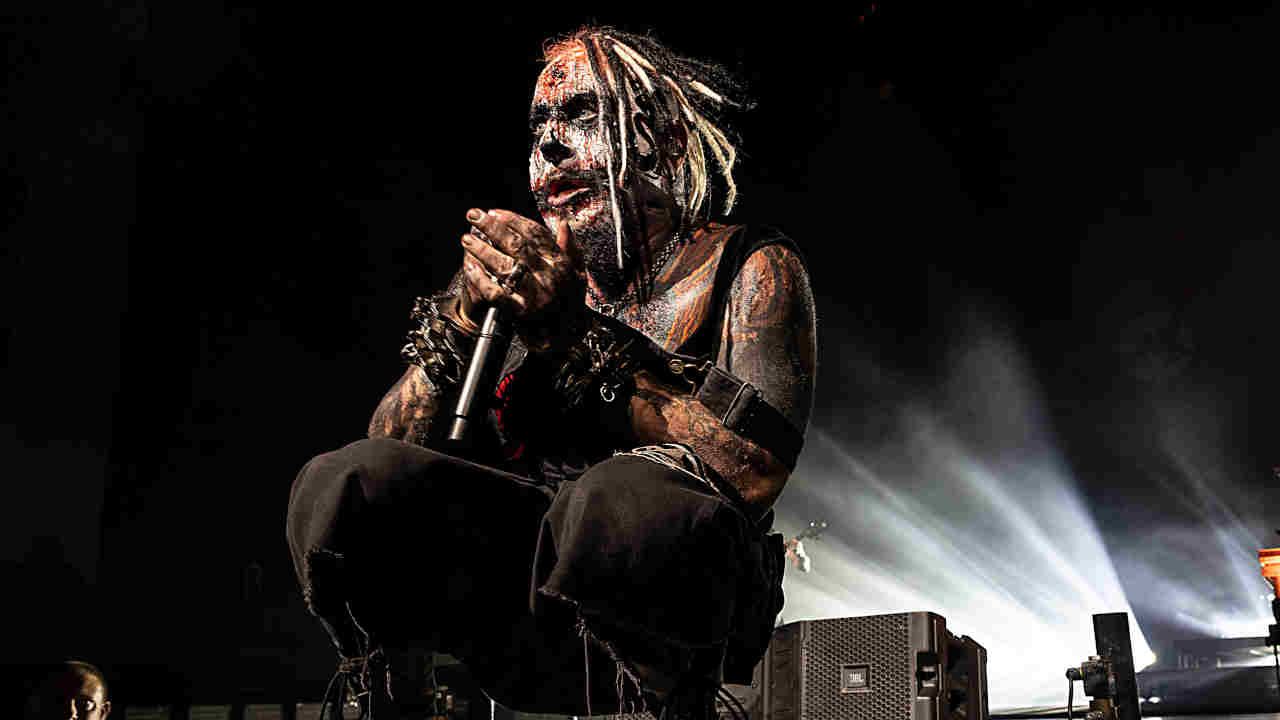
Chad Gray onstage with Mudvayne in 2023 (Image credit: Jeff Hahne/Getty Images)
MUDVAYNE LOVE THE UK
“UK fans always ask why Mudvayne hasn’t hit the UK since reuniting. It’s not personal! It’s just a matter of right time, right place. It costs a tremendous amount of money to go to Europe and the UK – trucking all your gear over there is incredibly expensive. Download Festival came at us with a guarantee, but to make a European tour work, you have to string all the festivals together back-to-back – Download, Wacken, Rock am Ring, Rock im Park… But because those festivals are a couple of weeks apart, you have to get side gigs in between to cover costs. Right now, there’s no venue availability, or the available venues are too small to make the math work. I’ll go over there and play for nothing, but it’s hard to go $100,000 in the hole. So it has nothing to do with our loyalty to Europe and the UK. I love playing Europe. I love playing the UK. I love playing Japan. I love playing Australia. I love playing anywhere you put me on a stage. And UK fans are phenomenal, it just has not been physically possible for us to get over there.”
THE BODY KEEPS THE SCORE
“I am one of the most physical performers in metal, and every night my body tells me I should have quit! I’m killing myself out there. Over 25 or 30 years, I look in the mirror and think, ‘Why the fuck did you choose to wear make-up every day?!’ Ha! I blew my knee out on the last Mudvayne tour. I just threw three braces on it and did what I do. I can’t just stand at a mic stand and sing; that intensity gets my blood boiling. I want that connection to the crowd, and I connect by being physical. That intensity comes directly from the kids in front of me. We give them something, they give it right back, and it builds to this massive crescendo. When we walk offstage, everyone is exhausted. That’s the goal: I want to make you go home and sleep like a fucking baby.”
PLAYING MUSIC IS A PROFOUND ACT OF SERVICE
“When my final gig ends, the facepaint comes off, and the stage lights go down, I hope I’m remembered for being honest. I’ve given my life to people, sharing my stories so they know they aren’t alone. I had this idea a long time ago that I’d be able to exorcise my demons by writing songs about them, but I didn’t realise I’d have to play them every day. When I sing those songs onstage, I go right back to the exact headspace that inspired them. I wear my life on my sleeve. Part of my stage banter every night is telling the crowd: ‘Whatever you got going on in your life – relationships, jobs, money, mortgages – check it at the door. Come in here, open your hand and let go of everything, and embrace what we have because we are a family.’ Because that’s what it all boils down to – we’re all a family and family helps each other.”
Cloven Hoof is one of those band names that has been tied to heavy metal for what feels like forever. The story began in Wolverhampton, England, back in 1979, followed by a self-titled debut album in 1984. The band disappeared from the radar during the metal-unfriendly ’90s, but the passion for the music never really… Continue Reading →
Fernando Perdomo 2026 Taking to the stage in search of heavenly bliss, tireless explorer of the skies seizes the day and finds peace of mind. One may safely assume that planned this chapter of his celestial series even before “Clouds” … Continue reading →
If Larry E. Williams had written just this one song, he’d have probably been okay with it.
Williams wasn’t even a songwriter by trade, but a guitar tech for Neil Diamond across much of the star’s touring career. Their relationship was such that in the mid-70s – undaunted by his employer’s own way with a melody – Williams felt comfortable enough to present Diamond with a song he’d written with him very much in mind.
Let Your Love Flow was a gently upbeat piece with a smile on its face. A simple, three-chord, three-minute-and-change ride with a southern-country lilt and summery vibe, it had a sweet verse, an uplifting chorus and a positive, almost hippie lyric about letting your love flow like a mountain stream, like a bird on a wing. These were dark times – Watergate. Saigon. OPEC shenanigans – so any consolation or hope music could give were welcome.
At the time Diamond was busy turning his slowing career around with his ambitious Beautiful Noise album, produced by The Band’s Robbie Robertson. Williams’ song wasn’t for him, but Diamond did see to it that it was published by Bicycle Music Company, the boutique publishing imprint set up by Diamond’s manager, David Rosen.
The song got its first bite from pop/folk artist Gene Cotton, best known for the subsequent US Top 30 hit, Before My Heart Finds Out. With its staccato brass, rather stilted rhythm section and workaday female backing vocals, Cotton’s recording for ABC Records failed to trouble the chart on release in 1975. But around that time some of Diamond’s band had begun to hang out with two musicians, twenty-something brothers, who’d come out to LA from Florida to make it big.
David and Howard Bellamy had played live music all their lives. Growing up near Tampa, they’d been taught the ropes/strings by their rancher father, who was an enthusiastic amateur country swing musician on the side. The radio at home only ever played country music, but by high school David was playing in a gospel group, and Howard was getting into soul, and they wrote songs.
The band they formed together, Jericho, played clubs across the South, with a set covering quality soul acts such as Percy Sledge and Otis Redding. At Studio 70, a small-town studio in Tampa, they played sessions for other artists, and wrote and recorded jingles for local TV and radio too.
A demo of a David-penned tune, Spiders & Snakes, made it to record producer Phil Gernhard. He had made his name recording Maurice Williams and The Zodiacs’ 1960 doo-wop classic, Stay, and by the 70s was working with singer and TV star Jim Stafford, who’d had a US Top 40 hit with Swamp Witch. Released in January 1974, Stafford’s recording of Bellamy’s Spiders & Snakes hit No.3 on the US Billboard Hot 100 and No.14 on the UK singles chart.
“That sold a couple of million records,” David said later, “and Phil suggested that we should move out to LA. I didn’t want to at first, but when we started making money from the sales of that record, I knew things would be pretty good in LA.”
With the brothers signing to Curb Records, David’s own debut song, Nothin’ Heavy, did nothin’ much, but through the recording he befriended some of Neil Diamond’s group, including drummer Dennis St John. It was through him that the demo of Williams’ Let Your Love Flow got to – depending on who you ask – either the brothers or Gernhard. Either way, David and Howard loved it.
In the autumn of ’75, despite Curb’s reticence about the viability of the song, the Bellamy Brothers convened at LA’s Wally Heider Recording Studio with Gernhard as producer and some of Diamond’s seriously talented band around them: St John, bassist Emory Gordy, guitarists Doug Rhone and Richard Bennett and keyboardist Alan Lindgren. David has said that it only took the group a few takes to cut the song that would launch their career and make Larry E. Williams some serious royalties.
“I would say the guy who wrote this song is the wealthiest roadie now that ever was,” said Howard.
With their plangent two-part harmonies and country twang, The Bellamy Brothers channelled Let Your Love Flow’s pure-heartedness beautifully. Their producer and elite group cottoned on to the crucial, elegant simplicity of the song’s groove and arrangement, and their easy, laidback recording found unexpected favour on US radio, then across the world.
In the States Let Your Love Flow hit No.1 on the Billboard Hot 100 that May (sandwiched between the likes of Johnnie Taylor’s Disco Lady and Welcome Back, the theme of John Travolta-starring sitcom Welcome Back, Kotter, performed by ex-Lovin’ Spoonful frontman John Sebastian). The following month the song peaked at No.7 in the UK charts, sharing an eclectic Top 10 with The Wurzels’ The Combine Harvester, Diana Ross’s Love Hangover and Cliff Richard’s superb Devil Woman. Over 30 years later, in 2008, it would re-chart in Britain at No.21, after its use in a heavily rotated TV ad for Barclaycard.
Back in ’76, the international success spread to Holland, Switzerland, Austria, Norway, Sweden, all the way to New Zealand and Australia. Germany offered a testament to the song’s musical appeal: after the song’s five-week run at the top slot in that country, it was replaced by a German-language version of the tune, by Schlager singer Jürgen Drews, which stayed at No.1 for a further six weeks.
The song’s popularity caught both the Bellamys and their label by surprise. The downhome duo had just had a worldwide pop hit, and this apparent contradiction flummoxed their marketing bods. The debut album – called, inevitably, Let Your Love Flow – was rushed out that year, bouncing just shy of the UK Top 20, and barely making the US Top 70.
It didn’t matter. The Bellamy Brothers career was set. Their first major tour was with fellow crossover duo country/pop duo Kenny Loggins and Jim Messina. They played with The Doobie Brothers (whose own life-affirming Listen To The Music makes a neat segue into Let Your Love Flow). Whereas their debut single was sweetly callow, the Bellamys’ subsequent hit, 1979’s David-penned If I Said You Had A Beautiful Body Would You Hold It Against Me was gleefully cheesy. Still, it was also the first of a strong run of US country No.1s across the 1980s, which helped them seal their reputation. They still tour today, with Let Your Love Flow tucked away, their encore-friendly ace card.
Joan Baez, Tom Jones, Ray Charles and Bowling For Soup are among the many artists who’ve tackled the song over the years, but it’s hard to separate that song from the duo it suited so well. Thanks to them, in 1999 the single made the list of BMI’s most played songs of all time on US TV and radio. In this ‘Top 100 Songs of the Century’ it landed in a respectable 68th place, right behind Take It Easy by – another band who blurred the boundaries and understood the power of a crossover tune – Eagles.
And as for Larry E Williams, he did write other tunes, but his only other major writing credit was for Gentle On Your Senses, Easy On Your Mind, a Country Top 20 hit for Mel McDaniel in 1976. But what an incredible life Let Your Love Flow must have given him. Wherever he is now, odds are it’s somewhere nice, and he’s not tuning another man’s guitar…
Released in 2000, Linkin Park’s debut albumHybrid Theory was a genre-defining juggernaut. A jagged blend of metal, hip hop, electronica and irresistible pop choruses, it pushed nu metal to a new mainstream level. The following year, it became the best-selling album in the United States.
By the time the Cali six-piece started creating its follow-up, Meteora, the hype around them was at an all-time high. Recorded at a time when online piracy had started putting the shitters up the music industry, protecting the record became top priority for the band’s label, Warner.
“We had 16 boxes of giant reel tape that we had to take to New York, to go mix the record, on a plane with two security guards,” says Rob McDermott, who managed the band from 2000 to 2010 and was tasked with devising an over-the-top strategy to keep the music secret.
Security measures continued as Meteora’s release date approached, and journalists invited to an exclusive prerelease listening party were asked to give up their phones on arrival. Luckily for Linkin Park’s team, the plans worked.
Speaking to us over Zoom from his home in LA, Rob motions to the shimmering plaques on the wall behind him, including a Hybrid Theory diamond award representing 10 million sales “Warner made those just internally,” he continues, “because we were able to ship four million records around the world without a leak.”
Hybrid Theory might have put Linkin Park on the map, but Meteora proved they were here to stay. Released at a time when the star power of nu metal was beginning to wane, it ushered in a bigger, more polished, anthemic sound, purpose-built for stadiums and festival fields, and produced ubiquitous blockbusters such as Numb and Somewhere I Belong.
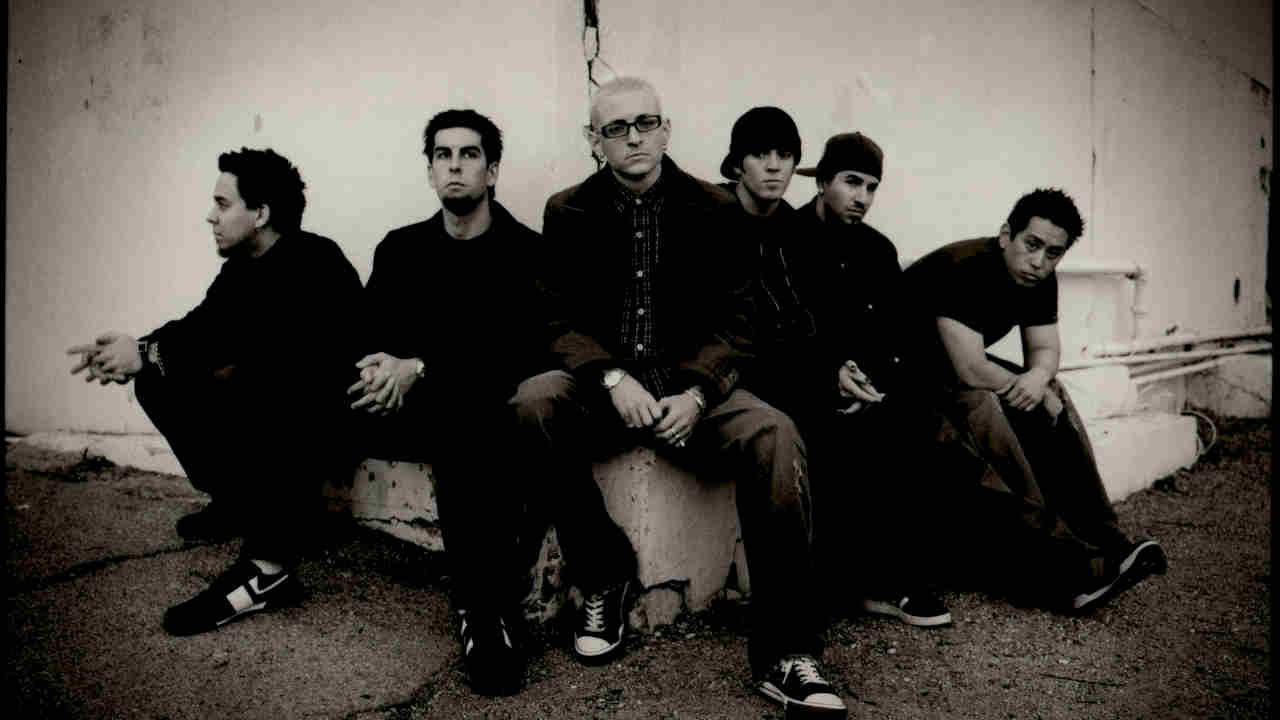
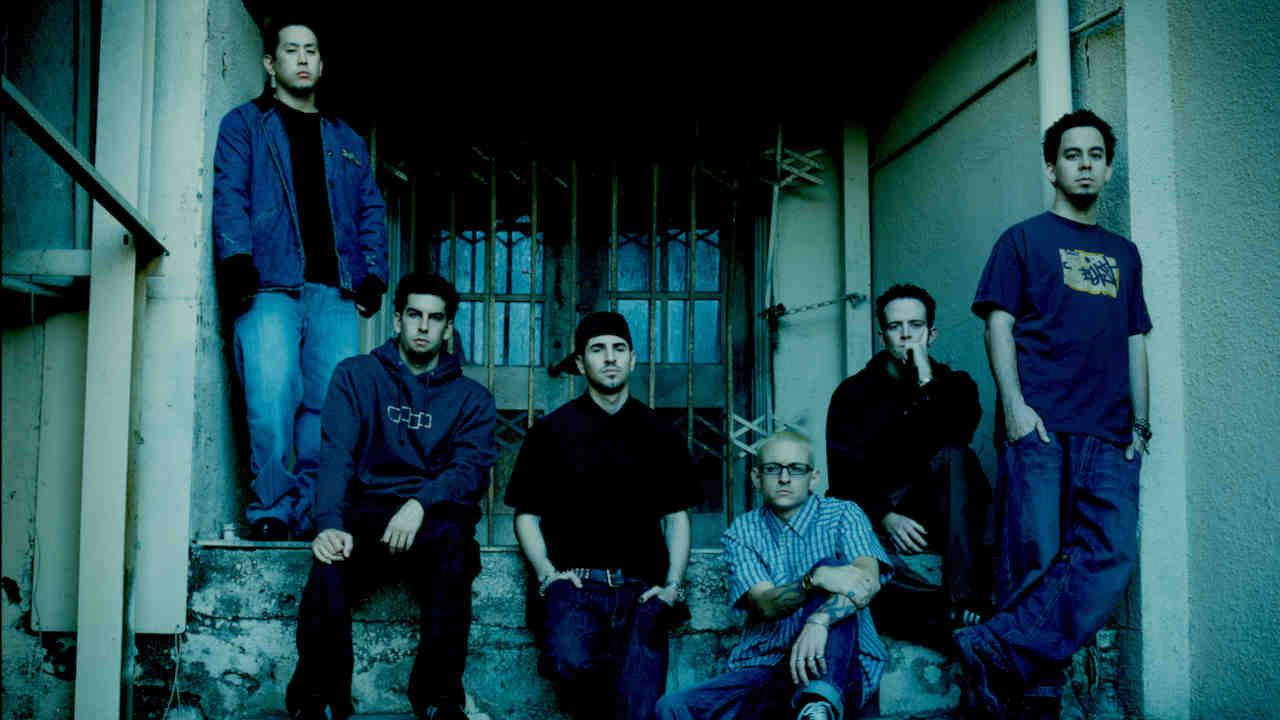
Linkin Park in 2003 (Image credit: James Minchin/Press)
“In places in Asia, we started getting to the point where we couldn’t leave our hotel without a planned itinerary and security,” says bassist Dave ‘Phoenix’ Farrell, revealing the band’s profile rose to uncomfortable levels during the Meteora touring cycle. Recalling instances when the band were bundled into vans to escape mobs of fans, Dave says he used an alias every time he checked into a hotel.
“If I want to go to Starbucks, I don’t want it to be a big ordeal. Now I know how to navigate that a lot better, but with Meteora, we were just starting to come to terms with a lot of that. We were learning on the fly.”
Linkin Park started piecing together the songs for Meteora during Ozzfest in summer 2001. Working in a makeshift studio at the back of their tour bus, spirits were high and creative juices flowed: at one point, the band had more than 80 songs in various states of realisation.
By the time they headed into LA’s NRG Studios in August 2002, where they had recorded Hybrid Theory, with returning producer Don Gilmore, they had whittled that down to 13 close-to-complete demos.
Constant interference from label Warner, who questioned everything from the band’s line-up to their vision, had made the Hybrid Theory sessions feel fraught. Due to the album’s success, they now stepped back, allowing the band to make the follow-up they wanted.
It didn’t have the same fresh-out-the-box vigour as their debut, but Meteora is arguably a stronger set of songs – less angsty, deeper and more emotional. And while that’s no doubt due to the band’s growth as writers, Meteora’s ongoing ability to resonate is unmistakably down to late singer Chester Bennington who, despite being sick for five weeks and having to record his vocals alone while the rest of the album was being mixed, put in the strongest performance of his career.
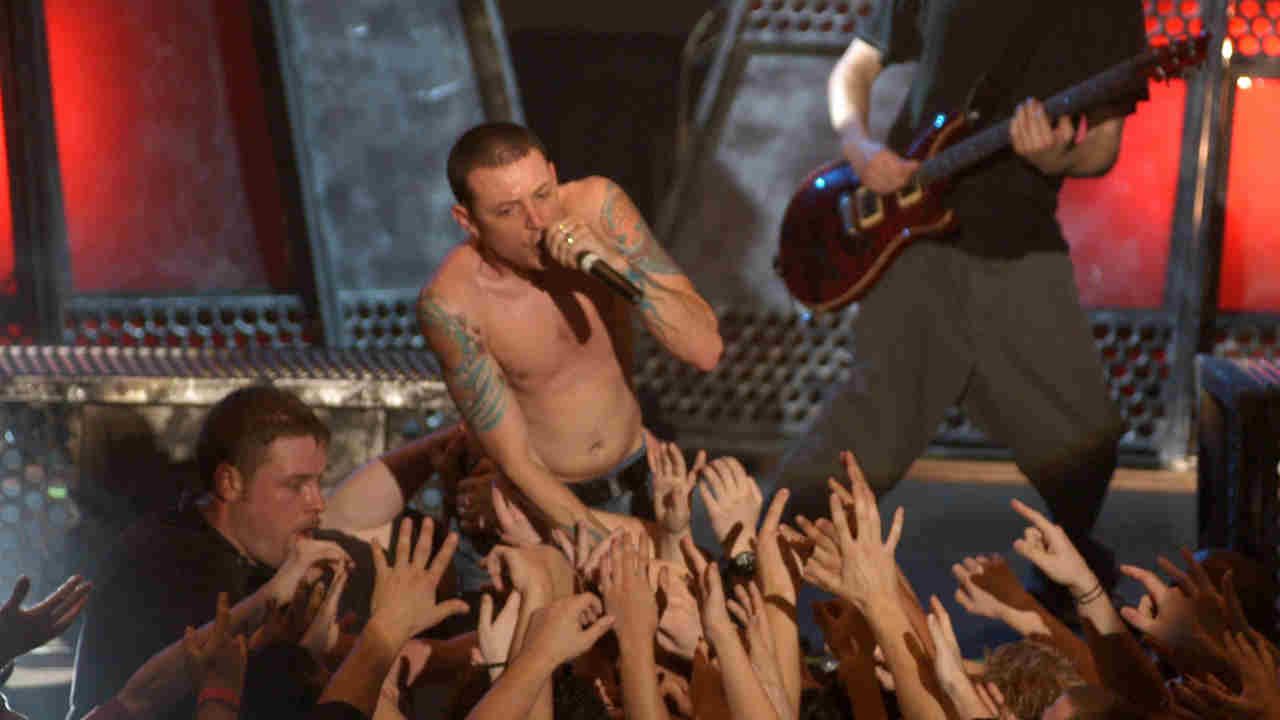
Linkin Park’s Chester Bennington onstage in 2003 (Image credit: Kevin Mazur/WireImage)
Having struggled with addiction and depression from an early age, the turmoil in the singer’s private life is laid bare in the powerful lyrics for tracks such as Somewhere I Belong, Easier To Run and Numb. The latter would go on to become nu metal’s last true mega hit, passing over a billion streams on both Spotify and YouTube.
“I’ve learned over the years that really great vocalists can mimic many different things,” says Dave. “Chester was that to a T. He could be a trumpet. He could sing like Barry White. He could mimic stuff with his voice, and, because of that, he had such an incredible range.”
Meteora, Dave says, was the sound of the band realising what a potent weapon they had in their midst. “We were like kids in a candy store as we discovered more and more places that he could go vocally.”
Meteora was released on March 25, 2003, to critical and commercial acclaim – although the general consensus was that Linkin Park had played it safe and turned in Hybrid Theory 2.0. Speaking in 2008, Chester agreed. “Within the band, we call Hybrid Theory and Meteora ‘Volumes I and II’,” he told Kerrang!. “They’re very similar in a lot of ways. There’s almost a formula to them, you can tell what each song is going to do next.”
However, Meteora didn’t merely rehash past glories. “We wanted to further define and evolve our sound as well,” rapper Mike Shinoda said. “A song like Breaking The Habit, for example, could never have existed on Hybrid Theory; it was a more mature song, lyrically and sonically.”
To promote the album, alongside five massive singles, the band embarked on a tour lasting from February 2003 to September 2004. The gruelling cycle included their first ever foray into stadiums, supporting Metallica on their 2003 Summer Sanitarium tour, alongside Limp Bizkit, Deftones and Mudvayne. It saw them take on the daunting task of playing to almost a million diehard Metallica fans over two and half months.
The intensive schedule proved especially tough for Chester. Drink and drugs had started to take a toll on his relationship with his bandmates during promotion for Hybrid Theory, but by the end of the Meteora tour, he was in an even darker place.
“I wasn’t leaving my house. I’d shack up in my closet in the dark and shake all day,” he told Kerrang!. “I’d wake up and have a pint of Jack Daniel’s to calm down, then I’d pop a bunch of pills and go back in my closet and fucking freak out for the rest of the day. I was a mess. I was falling through windows, having seizures and going to hospital the whole time. It was fucking ridiculous. I was a total wreck.”
“He’d talk about it later, but in the moment, you wouldn’t notice it,” says Rob McDermott of Chester’s mindset at the time. “He left it all out on the stage. To me, that was his therapy. He was there. He was in that moment feeling the pain of everyone and himself.”
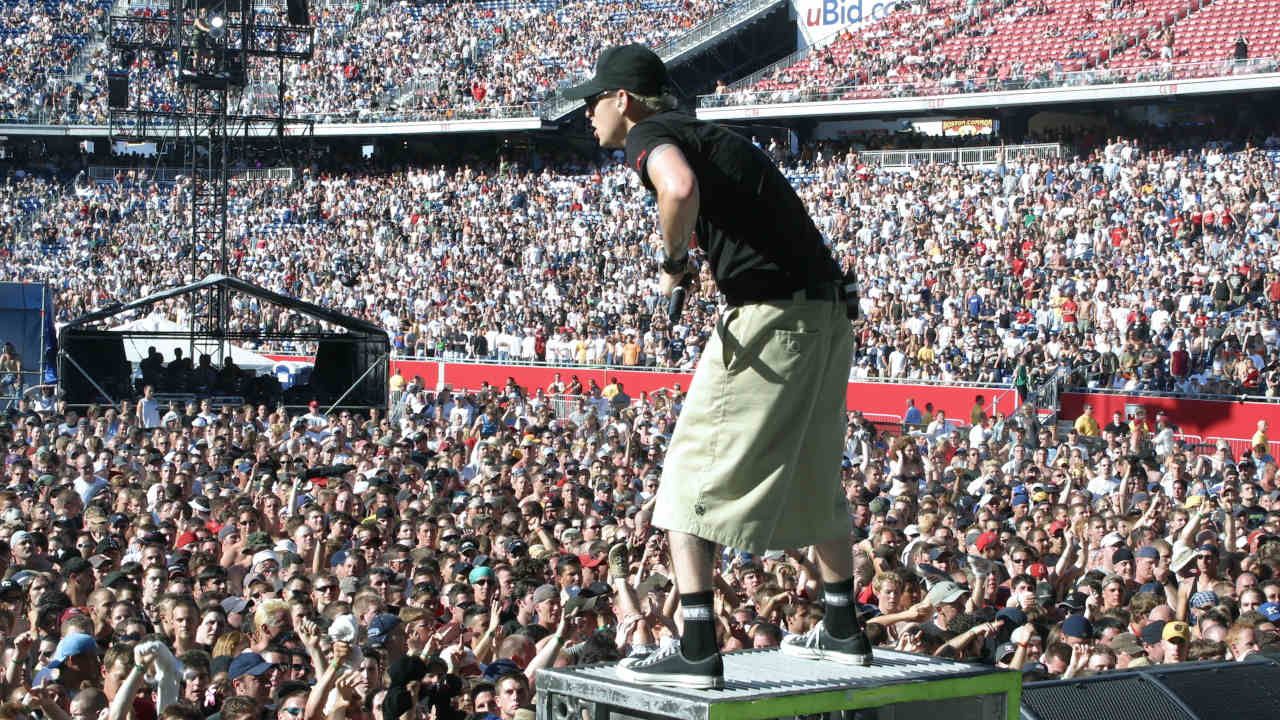
(Image credit: James Minchin/Press)
If Chester was struggling with his mental health on the road, he hid it well, according to P.O.D.’s Sonny Sandoval, who supported Linkin Park on the North American leg of the Meteora tour in 2004.
“He was a sweetheart,” Sonny remembers. “He had something about him that lit up the room.” Sonny describes the tour, which also featured Hoobastank and The Story So Far, as a real “family” affair. Each night, the bands would hang out in each other’s dressing rooms, smoking shisha and drinking, while later Chester would invite everyone onstage together to perform the band’s incendiary closer, One Step Closer. Those bonds of friendship were put to the test one night, however, when the bands and crew celebrated on the roof of a high-rise hotel.
“At one point, we all get excited, not even realising that we’re so close to the edge,” recalls Sonny, revealing his heart still races when he tells the story.
“I picked up Chester and, not even realising and just having fun, he flings back. Literally, if he had fallen out of my arms, he would have fallen off this roof. But I had him so tight, and then he was just dangling there screaming, and I am panicking, freaking out. I told him, ‘Bro, I could have dropped you.’ And then he looked at me and said, ‘You would never have dropped me.’ And then he just gave me a big old hug.”
(Image credit: John Atashian/Getty Images)
The cultural impact of Meteora went far beyond its initial burst of success. In 2003, Session, the album’s eerie instrumental track composed entirely of scratching and sampling, courtesy of turntablist Joe Hahn, was nominated for a Grammy. The following year, the band teamed up with rapper Jay-Z for the now iconic, MTV-sponsored mashup collab, Collision Course.
“Mike had just gotten off the phone call with management saying, ‘OK, Jay-Z wants to do this new thing through MTV with us,” says Dave, remembering the moment they heard the news. “At that point, Jay was an artist that we loved – one of our favourite rappers. We were like, ‘Holy crap, we don’t know what that means, but yup, let’s make this happen.’”
In 2006, the band and Jay-Z won the Grammy for Best Rap/ Sung Collaboration for Numb/Encore, and performed it at the awards ceremony, with a star vocal turn from Paul McCartney.
“The first time I met Paul, he showed up to a rehearsal and I was terrified,” says Dave, who cites working with the Beatle as a career highlight. “I was terrified that he was going to be disgusted with my bass playing – why am I playing bass if Paul McCartney’s here? That didn’t make sense in my head. I don’t think I slept the night before that first rehearsal, but it couldn’t have been anything more the opposite.”
Today, Meteora is rightly viewed as a modern classic, and has sold 27 million copies worldwide. In February 2023, the band surprise-released Lost, a gloriously wistful, clenched-teeth track from the Meteora sessions that had been languishing on one of Mike Shinoda’s hard drives. Originally left off the album because the band felt it was too similar to Numb, it sounds nostalgic yet fresh – a gift to the legions of fans who thought they’d never hear Chester’s voice on a ‘new’ song again.
It’s also a testament to how much gas was in the tank during Linkin Park’s early days. Having reached a level in their career they could never have imagined, the band would take a left turn with their third album, 2007’s Minutes To Midnight, working with producer Rick Rubin to strip down their sound and enter a brand new era.
“Meteora really set the stage for us to make Minutes To Midnight and to begin to branch out,” agrees Dave, considering the album’s legacy. “But I think more than anything, it needed to prove to listeners that what we had done or accomplished on Hybrid Theory wasn’t an accident, and that we did have something to say.”