That label was co-founded by Brand Of Sacrifice & Fit For A King members.
The post New Vision Sign With Papercut Recordings, Premiere “I Am A Muse” Music Video appeared first on Theprp.com.
That label was co-founded by Brand Of Sacrifice & Fit For A King members.
The post New Vision Sign With Papercut Recordings, Premiere “I Am A Muse” Music Video appeared first on Theprp.com.
Their SharpTone Records debut album “while (True)” will be out in late October.
The post Glasswaves Stream New Single “SCARed” appeared first on Theprp.com.
Our last couple daine posts involved a now-resolved conflict with Bassvictim, but in this post, it’s all love.
The post daine Covers Martin Solveig & Dragonette’s “Hello” For Like A Version appeared first on Stereogum.
U2 are one of the world’s most divisive bands. To some, they’re insufferably-earnest, middle-of-the-road stadium rockers led by a smug, holier-than-thou preacher man. To others, they’re four music-obsessed Dublin school friends whose spiritual, open-hearted songs resonate with a huge global audience, and who found a way to stay culturally and artistically relevant thanks to a mischievous, fearless appetite for reinvention.
“The sound of the future is what we’re most interested in,” Bono said last year. “It doesn’t exist yet. It’s ours to make, and that’s what we have the chance to do.”
Here is U2’s catalogue ranked from worst to best.

The corporate tie-in which saw Songs of Innocence ‘gifted’ to everyone owning an Apple product upon its 2014 release may have been the single biggest mis-step of U2’s career: you can still find people grumbling about it today. Doubtless those complaints would linger even if Songs of Innocence was U2’s defining masterpiece, but, trust us, it most definitely isn’t.
Kind souls might allow Bono’s humble love letter to the transformative power of punk rock, The Miracle (Of Joey Ramone), but while the singer hailed the group’s nostalgic 13th studio set as “the most personal album we’ve written”, it’s a slog which singularly failed to strike a chord beyond the group’s most devoted fans. A PR disaster, certainly, but a musical one too.
Having brilliantly launched U2.0 with the knowing, post-modern Achtung Baby and the less-startling-but-still-rather-smart Zooropa, U2 pushed it too far. Without long-term producers Daniel Lanois/Brian Eno to rein in their wackier ideas and trim excess fat, the quartet became a parody of a parody with Pop.
Stories of the album being rushed to completion with indecent haste to emerge ahead of an already booked stadium tour make sense when listening now: Pop is too long, it sounds cheap, and it’s full of aimless, half-baked, dance-rock plodders that lack the smarts or craft of Achtung Baby. Pop? Flop.
If No Line On The Horizon often sounds like hard work, that’s because it was. After an unsatisfactory first run at Abbey Road with Rick Rubin yielded nothing worth keeping, the group took a second tilt at following How To Dismantle An Atomic Bomb with Brian Eno and Daniel Lanois in Morocco.
The stated aim, according to Bono, was to produce “future hymns” – classic songs which could be played forever – and some 50-60 new songs were written across two years, but when the new album was introduced by the grungy but utterly disposable Get Your Boots On, one sensed that this latest reboot was doomed. Talk of a huge stylistic shift proved to be anticlimactic too: too mannered to inspire mass sing-a-longs, and not sufficiently experimental to be seen as a unique curio, NLOTH exists as a frustrating halfway house of nothingness.
Three years on from the Songs Of Innocence debacle, U2 were still convinced that the thematic ideas of that album were worth mining even further. Songs of Experience was initially conceived as an EP, much like Zooropa was originally envisaged as a succinct accompaniment to Achtung Baby, but, once again, it morphed into a full-length album.
No one is ever going to pick Songs Of Experience as their favourite U2 collection, as it suffers from much of the same blandness as its predecessor, but the inclusion of the very excellent Summer of Love elevates it above U2 at their worst.
Winner of the 2006 Grammy for Album of the Year, which is… a bit much, truthfully, How To Dismantle An Atomic Bomb might be the most ‘U2-sounding’ album of U2’s career; all gargantuan, hook-heavy, soft rock, precision-tooled to trigger the synchronised sparking of lighters above head height in the world’s largest venues.
Clichéd? Often. Schmaltzy? A bit. Effective? At its best, very much so. Recognising that City of Blinding Lights is clearly going for emotional manipulation doesn’t mean you’ll be immune to its charms, and lead single Vertigo is punchy, if obvious. If it’s hard to understand exactly what got the Grammy voters frothing, HTDTAB is undeniably low-key seductive.
After the dismal Pop, U2 retreated to safe ground for All That You Can’t Leave Behind; out went flashy stage outfits, onstage lemons and arch irony, back in came earnest stadium rock anthems, jeans and t-shirts. It’s rather a shame that they felt compelled to throw the baby out with the bathwater, but rather this than it getting any sillier.
Re-establishing the brand, ATYCLB is not the classic return to form some have made out, but there are more than enough moments of soaring quality – Beautiful Day, Elevation, Stuck In A Moment You Can’t Get Out Of – to make it a solid reaffirmation of the group’s core values.
It’s fair to say that U2 still hadn’t completely found themselves by the time their second album was released. Still, if October is the weakest release of their first decade, mainly due to an over-reliance on blueprints established by post-punk influences like Joy Division and Siouxsie and the Banshees, it still features some great moments.
With a Shout (Jerusalem) is driven along fantastically by Larry Mullen’s militaristic punk beats and opening track Gloria, with its spidery riff and ceaseless rhythmic march, is a true anthem. They’d get better, and quickly too, but October still stands up to scrutiny today.
Originally planned as a stop-gap EP to sate fans’ appetites for new music between legs of the mammoth ZooTV world tour, the material on Zooropa fluctuates in quality, but a wealth of superior songs stack up to make this the last very, very good U2 album.
The quartet’s experimental, Krautrock flights of fancy are milked for all their worth here, with The Edge fronting the band for the first time on the superb, staccato electro of Numb, and the industrial pulse of Daddy’s Gonna Pay For Your Crashed Car proving absurdly OTT. Johnny Cash‘s cameo on The Wanderer is a nice touch, while album highlight Stay (Faraway So Close) is genuinely beautiful, heartfelt chamber pop. A bit of a lost classic, all told.
Opening your debut album with one of your greatest ever songs is a neat trick, one U2 pull off on Boy, with the shimmering, urgent I Will Follow an irresistible introduction to the young Dubliners.
It’d be a huge push to suggest that Boy foreshadowed U2’s rise to become the biggest band in the world, but there’s undeniable excitement in this set’s youthful enthusiasm and kinetic energy, from the Joy Division-go-New Wave march of An Cat Dubh to the chugging guitars and gang vocals on Out of Control.
U2-haters really hate Rattle and Hum: former Creation Records boss Alan McGee once said he would never have signed Oasis had he known that Noel Gallagher was a fan. Yes, the 1988 film documenting the quartet’s love affair with America and its roots music is a little po-faced, but its companion album is so much better than it is given credit for.
The live tracks are predictably great, but it’s the studio cuts that shine brightest: Billie Holiday tribute Angel of Harlem is a fantastic soul song, Desire is a great bluesy stomp, and All I Want Is You is one of the finest ballads of U2’s career, with Bono’s subtle croon interweaving with soaring strings in spellbinding fashion. We’re with Gallagher Snr. here.
Arguably the first album that truly sounded like the definitive version of U2. War is where everything falls perfectly into place for the Irishmen: the songs are broader, grander and more instantaneous, individual performances more assured, the balance between worthy punk and stadium rock expertly pitched.
Two Hearts Beat As One is gorgeously slinky, and Sunday Bloody Sunday is a stirring call to arms, but it’s New Year’s Day that remains the high watermark – that bass line, those keys, that skyscraper chorus. The sound of a band truly finding their own voice, War represented a benchmark for U2’s future.
The passing of time has only accentuated the brilliance of The Unforgettable Fire, with the re-emergence of shoegaze and post-punk sonics in modern rock making these 10 songs sound more vital than ever.
The first fruit of U2’s creative alliance with production duo Brian Eno and Daniel Lanois, it sounds incredible. Pride (In The Name of Love) is the album’s timeless anthem, Wire is where U2 finally out-Cure The Cure, and, although the definitive version of the song would be heard a year later at Live Aid, the sublime Bad, inspired by the heroin-related death of a close friend, might just be the best song of U2’s career.
The record that turned U2 from a very big band into the biggest band on the face of the Earth. The Joshua Tree is a wonderful achievement, birthed by a group of still-hungry musicians giddy at their discovery of blues and Americana. The opening three tracks – Where the Streets Have No Name, I Still Haven’t Found What I’m Looking For and the beautifully simple With Or Without You – may well represent the most potent introduction to any album in the rock canon, and neither age nor familiarity can wither their impact.
Arguably though, the album gets even better towards its close, with less-lauded but exceptional deep cuts In God’s Country, Exit and One Tree Hill. However you spin it, The Joshua Tree is an all-time classic.
You’re the biggest band on the planet, but experiencing a crisis of confidence: you can’t see where you fit artistically at the dawn of a new decade and critics are sharpening their knives in anticipation of your inevitable fall from grace. What to do?
The obvious answer is probably not to buy some bug eye shades, abandon every element of the style that got you to this position, head to Berlin, make a self-mocking, ironic, post-modern set of dance rock songs and promote it by setting up your own television station.
But, that’s the weird world of Achtung Baby in something of a nutshell. With 18 million copies sold worldwide, it’s hard to argue against U2’s extraordinary reinvention as anything but a clear and obvious triumph, but even without that context, Achtung Baby deserves its spot at the top of this list on musical merit alone.
Nowhere is this band’s fusion of daring ambition and expert songwriting better realised; The Fly is a smarmy, glam rock belter, Acrobat a breathless rock waltz, Until the End of the World a maniacal mixture of tenderness and menace, while closer Love Is Blindness shows U2 at their grittiest, darkest and most moving. And that’s before we get into the sublime One, the irresistible Even Better Than The Real Thing, So Cruel…
The biggest band on the planet proving exactly why they deserve all the plaudits that come their way, Achtung Baby is simply one of the finest albums you’ll ever hear.
One focusing on the original masters, and the other packing a newly re-mixed and remastered take.
The post Judas Priest’s “Sad Wings Of Destiny” To Receive Two 50th Anniversary Editions This Fall appeared first on Theprp.com.
Oh how I want to love you
Oh how I love to want you
Oh how I love to hate you
Oh how I hate to love you
A persuasive EBM bassline can make almost any terrible proposition sound like it’s worth considering. Charm School’s Desolation makes the most of that weakness, setting a romance of taunts, submission, and calculated cruelty to a groove with suspiciously good manners. The invitation is easy to accept; the lyrics give you every reason to reconsider.
The single pairs the Louisville-rooted, Los Angeles-based project with Matia Simovich of INHALT, who wrote the music, while Andrew Sellers, aka Andrew Charm, supplied the vocals and lyrics. It also serves as the lead single from a forthcoming EP that will include the late Steve Albini’s mix of Simulacra, Charm School’s first single.
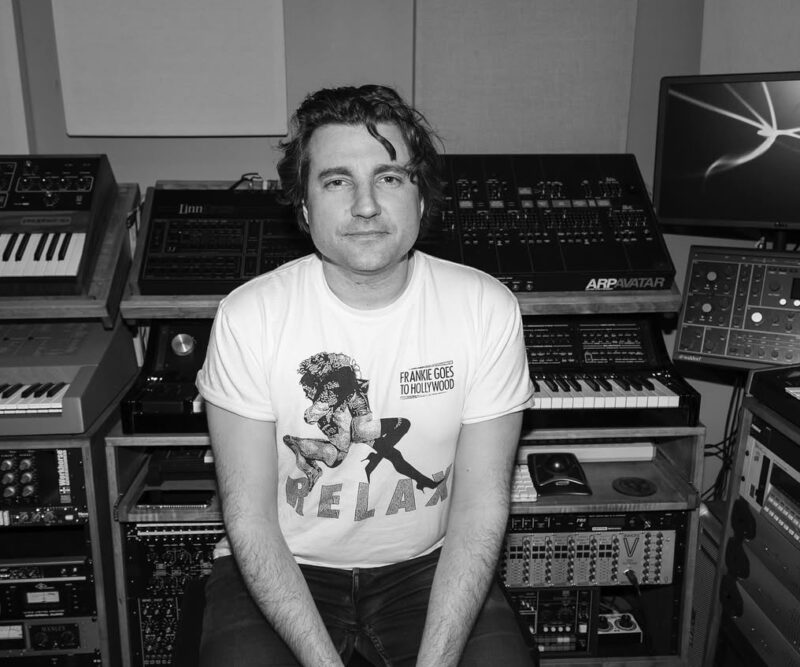
Simovich opens proceedings with a funky synth bassline, setting old-school synth stabs against drums intent on keeping the floor occupied. Metallic synth accents add a peculiar mechanical funk, their hard surfaces catching against the low end’s easy movement. There’s an EBM discipline to the arrangement and an Italo appetite for pleasure, with a trace of darkwave unease making itself comfortable between the two. Every sharp edge has something supple moving around it.
Sellers attacks the vocal with a Stooges-era Iggy Pop drawl, mixed with the timbre and cadence of Lou Reed at his most forceful onstage. The compressed vocal sits prominently in the mix, with reverb sending the words ricocheting as though they were bouncing off sheet steel or passing through the blades of an industrial fan. That peculiar treatment gives each phrase a cold metallic afterimage. As the vocal develops, a bubbling synth figure lifts the groove, lending a playful buoyancy to a song whose romantic prospects are deteriorating by the line.
The opening verse treats manipulation as a sales pitch, with a lover boasting of their dishonesty while angling to become the sole object of another person’s belief. By the second verse, that desire for control has tipped into a plea for surrender, even deception, as though being consumed by someone might offer its own peculiar relief. The roles seem to trade places, with domination and dependence feeding the same appetite. Images of kneeling, worship, and bodily sacrifice push the devotion toward something frighteningly absolute.
The repeated title leaves that exchange with a bleak destination, while the closing permutations of wanting, loving, and hating keep rearranging the terms without resolving them. Each small change shifts the emotional balance. Pleasure survives in the music even as the words describe a relationship consuming itself, and the bassline keeps making its persuasive case for staying another few minutes.
The collaboration also extends a connection dating back to our 2023 coverage of Simulacra, which credited Simovich with drum programming and noted alternate mixes by both Simovich and Albini. The forthcoming EP brings Albini’s version into the release plans alongside this new material, linking Charm School’s first statement to their latest electronic excursion.
Listen to Desolation below and order the single here.
Sellers formed Charm School with longtime collaborators Matt Filip and Drew English, drawing on a Louisville upbringing steeped in Slint, Crain, and Rodan, alongside the catalogs of Touch & Go and Drag City. The disruptive instincts of PiL, Swell Maps, and The Fall sit beside an affection for Fugazi and Nation of Ulysses. Their debut EP, Finite Jest, appeared in July 2023, followed by the broader musical reach and acerbic satire of January 2025’s Debt Forever. This February’s Schadenfreude Ploy continued their examination of manipulation, tech wealth, and artificial intelligence. On Desolation, that interest in power finds an intimate setting, with two people apparently quite prepared to make each other miserable.
Charm School will join Dildox for dates in Louisville and Knoxville before returning to Los Angeles for Oblivion in October.
Live dates:
Follow Charm School:
Follow INHALT: Los Angeles, CA

The post Charm School and INHALT’s Matia Simovich Explore Desire and Deception on “Desolation” appeared first on Post-Punk.com.
Vevo has released Foo Fighters‘ short film as the final installment of its “Extended Play” series, capping off a run built around intimate performances and behind-the-scenes storytelling. The Foo Fighters episode pairs conversation with live cuts of “Child Actor”, “Of All People”, “Caught In The Echo” and “Unconditional”, all pulled from the band’s new record, Your Favorite Toy.
Shot at the band’s 606 Studio in Los Angeles, the film catches the group swapping stories about the music that shaped them, all while putting together a potluck spread. Dave Grohl shows up with fixings for BLTs, keyboardist Rami Jaffee brings his own take on “Los Angeles Kugel,” bassist Nate Mendel handles the salmon, guitarist Chris Shiflett covers green beans, drummer Ilan Rubin shows up with homemade sourdough, and guitarist Pat Smear closes out the meal with ice cream sandwiches.
While they eat, the band digs into how their individual musical backgrounds fed into the Your Favorite Toy sound, a record that mixes the breakneck hardcore tempos some members cut their teeth on with the kind of melodies they grew up loving. “I like the new songs just because they feel comfortable to play,” mused Grohl. Ilan backed him up, adding, “Nothing felt…uncomfortable.”
“Working with Foo Fighters was an incredible experience for our entire team,” said JP Evangelista, EVP of content, programming and marketing at Vevo. “From the moment we started collaborating, it was clear why they’ve stayed at the top of rock for over two decades: the energy, musicianship and passion they bring to every performance is truly unmatched. They were generous collaborators who were deeply invested in getting every detail just right, all while being down-to-earth and fun. Having the opportunity to partner with a band of this caliber who still perform with the hunger of a group just starting out is the kind of moment that reminds us why we do this job.”
Vevo‘s “Extended Play” series is built around connecting artists with fans through curated live sets and personal storytelling shot in locations that matter to them, with each installment shaped by the artist to give an inside look at the creative process behind their latest release.
Vevo has spent more than a decade positioning itself as the world’s top music video network, linking a growing global audience to high-quality video content. Launched by Universal Music Group and Sony Music Entertainment in 2009, Vevo hosts everything from official music videos to live performances and original programming, backing artists across every career stage. The platform now pulls in over 22 billion views a month across TV, desktop and mobile, and can be found on YouTube, Samsung TV Plus, Roku, The Roku Channel, Pluto TV, Amazon Prime Video, VIZIO WatchFree+, Foxtel, Hulu + Live TV, Rakuten TV and Anoki Live TV+.
The post FOO FIGHTERS Close Out VEVO’s “Extended Play” Series With A Studio Dinner Party appeared first on Sonic Perspectives.