Four past releases are back with new pressings for ‘Thricegiving’.
The post Thrice Announce New Vinyl Reissue Campaign appeared first on Theprp.com.
Four past releases are back with new pressings for ‘Thricegiving’.
The post Thrice Announce New Vinyl Reissue Campaign appeared first on Theprp.com.
Twenty-five years on from Blink-182‘s Take Off Your Pants And Jacket, one of pop-punk’s most beloved eras is finally getting the collectible treatment it deserves. Encore! Toy Co., a Rockabilia.com offshoot, has unveiled a new officially licensed, limited-edition line of seven-inch vinyl figures modeled after Mark Hoppus, Tom DeLonge and Travis Barker in their instantly recognizable “First Date” personas, marking the milestone anniversary of the band’s 2001 breakthrough.
Pre-orders went live on Thursday, Sept. 24, with the figures slated to ship out in February 2027, giving longtime Blink-182 fans and collectors a shot at owning a physical piece of the Take Off Your Pants And Jacket era.
The sculpts lean hard into the visual details fans will remember: Hoppus‘s unmistakable look, DeLonge‘s signature style and Barker‘s checkerboard motif all get faithful treatment. Together, the three figures package one of pop-punk’s defining chapters into a collectible aimed squarely at fans who lived through it the first time and the newer wave discovering the record now.
Frankie Blydenburgh, co-owner and managing operator of music culture and fan merchandise for Rockabilia.comand Encore! Toy Co., is the one who pushed the project forward. In their own words:
“Blink-182 has been a huge part of my life since I discovered them in ’97, and they were really the catalyst for me getting into punk rock. To now be nearly 30 years into that journey and working alongside the entire Blink team to bring an officially licensed project like this to life is pretty unbelievable.
“The fact that everyone on their side is just as excited as we are to see these figures roll out makes the whole thing even more rewarding. Take Off Your Pants And Jacket was such a defining record for so many fans, and getting to celebrate its 25th anniversary this way is something I’m incredibly proud to be a part of.”
Since dropping in 2001, Take Off Your Pants And Jacket has stood as a cornerstone of the early-2000s pop-punk boom, loaded with staples like “The Rock Show”, “First Date” and “Stay Together For The Kids”. A quarter-century later, its sound and aesthetic still carry serious weight in the genre’s culture, and merch tied to that era continues to move fans in a way few other periods of Blink-182‘s catalog manage.
These vinyl figures amount to more than a standard round of band merch. They’re a snapshot of the moment Blink-182 helped reshape what pop-punk could look and sound like, freezing the classic lineup at one of the band’s most pivotal points. Longtime fans get another piece of the Blink-182 story, collectors get a new centerpiece, and anyone who grew up on Take Off Your Pants And Jacket gets a shot at owning a chunk of an era that clearly never went anywhere.
Packaging artwork comes courtesy of Jeremiah Purinton, with the toy sculpts handled by Alarconos.

The post BLINK-182’s “Take Off Your Pants and Jacket Era” Comes To Life In New Limited-Edition 7-Inch Vinyl Figures appeared first on Sonic Perspectives.
The band’s final album with Glass will arrive in November.
The post Repentance Pay Tribute To Shaun Glass With “Fade Into Silence” Music Video appeared first on Theprp.com.
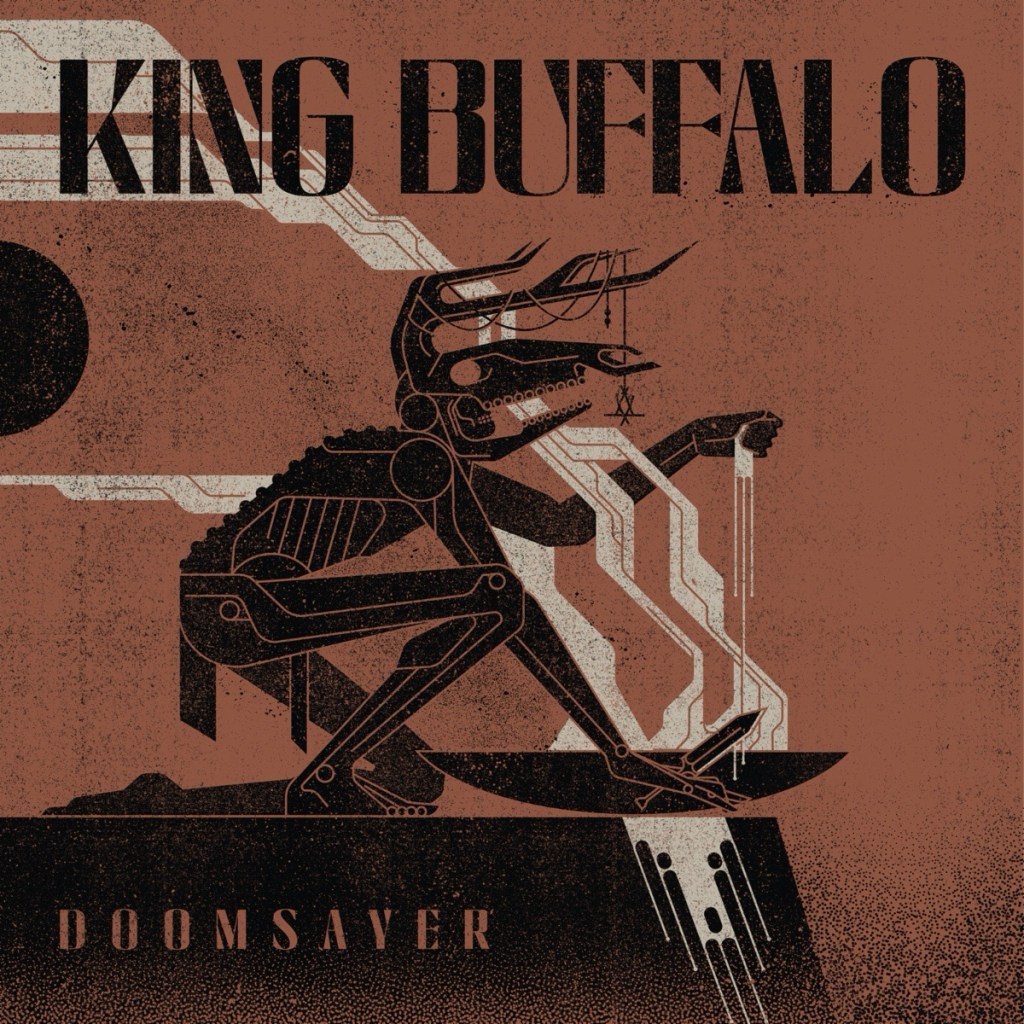
PRE-ORDERS BEGIN THIS FRIDAY: http://kingbuffalo.bigcartel.com
LISTEN TO “THE SLICK AND THE DEAD” NOW: https://youtu.be/qYHU2wBu2TU
King Buffalo releases Doomsayer, the Rochester-based band’s seventh album, on Dec. 4th, via King Buffalo (North America)/Stickman Records (UK/EU).
A preview of the seven-song album arrives with the release of “The Slick and The Dead” (https://youtu.be/qYHU2wBu2TU?si=gWOE235E68wifbsv).
“Doomsayer originated in early 2026 out of many hours of jam sessions in our new studio space, playing around and seeing where it took us,” explains guitarist/vocalist Sean Roa, who also produced and mixed the album. “We didn’t really have an end goal in mind of what we were going for. We were simply exploring ideas and seeing what ended up speaking to us the most. So much has happened, both as a band and in our personal lives since our last record, that ended up becoming the inspiration to many of the lyrics on Doomsayer. I think as a result, this is some of our most upfront, direct and riff-driven work to date. We are incredibly proud of it and can’t wait for it to get out into the world.”
Four years on from Regenerator, King Buffalo returns with a record shaped by years of international touring and a deepening confidence in their own sound. Recorded in the new studio the band built themselves, Doomsayer finds the trio continuing to reach into the unknown, while bringing a greater sense of focus and intention to their sound.
The experience they have gained on the road is evident throughout the album, both in the poise of the material and the confidence of their delivery. Like the pandemic trilogy that preceded it, Doomsayer was made at home, but the band’s new surroundings have given them the freedom to continue exploring and finding new ground, with a maturity they have earned one stage at a time.
Album pre-orders begin Friday, Sept. 25 at 12 noon eastern via Kingbuffalo.com. 50 test pressings of the 43-plus minute collection will be available, as well as a Deluxe Edition, limited to 750 copies on translucent emerald vinyl and including a hand-numbered insert, download code and polybag. The standard edition, limited to 1750 copies, arrives on purple opaque vinyl and includes a download code and polybag.
The band had previously announced a North American tour, kicking off on Oct. 29 in Boulder with support from L.A. Witch (Oct. 29 to Nov. 21, except Los Angeles), Doom Gong (Dec. 3 to 5 and Dec. 18), and Handsome Jack (Dec. 8 to 12). A European trek was announced with Spirit Mother opening on all dates. The EU/UK leg is on-sale this Friday at 10 a.m. local time. Ticket links are available at Kingbuffalo.com/tour.
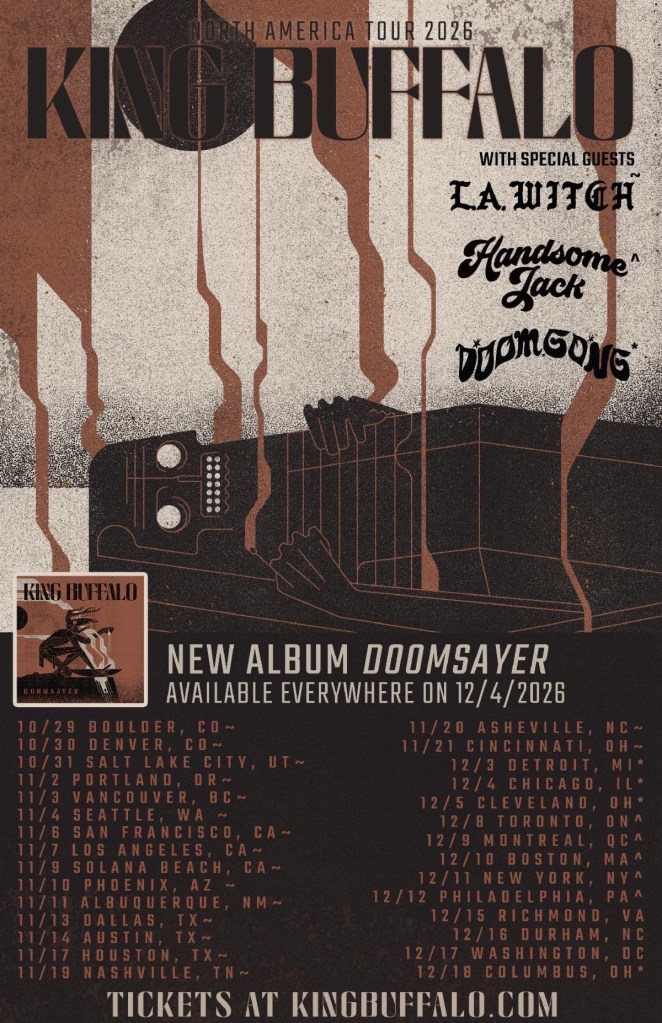
October 29 – Boulder, CO Fox Theatre
October 30 – Denver, CO Bluebird Theatre
October 31 – Salt Lake City, UT Urban Lounge
November 2 – Portland, OR Aladdin Theatre
November 3 – Vancouver, BC The Pearl
November 4 – Seattle, WA Neumo’s
November 6 – San Francisco, CA The Independent
November 7 – Los Angeles, CA Lodge Room
November 9 – Solana Beach, CA Belly Up
November 10 – Phoenix, AZ Crescent Ballroom
November 11 – Albuquerque, NM Sister
November 13 – Dallas, TX AM/FM
November 14 – Austin, TX Mohawk
November 17 – Houston, TX Bad Astronaut
November 19 – Nashville, TN Basement East
November 20 – Asheville, NC The Grey Eagle
November 21 – Cincinnati, OH Woodward Theatre
December 3 – Detroit, MI El Club
December 4 – Chicago, IL Thalia Hall
December 5 – Cleveland, OH The Roxy
December 8 – Toronto, ON The Mod Club
December 9 – Montreal, QC Theatre Fairmount
December 10 – Boston, MA Brighton Music Hall
December 11 – New York, NY Le Poisson Rouge
December 12 – Philadelphia, PA Underground Arts
December 15 – Richmond, VA The Broadberry
December 16 – Durham, NC Motorco
December 17 – Washington, DC Black Cat
December 18 – Columbus, OH Skully’s
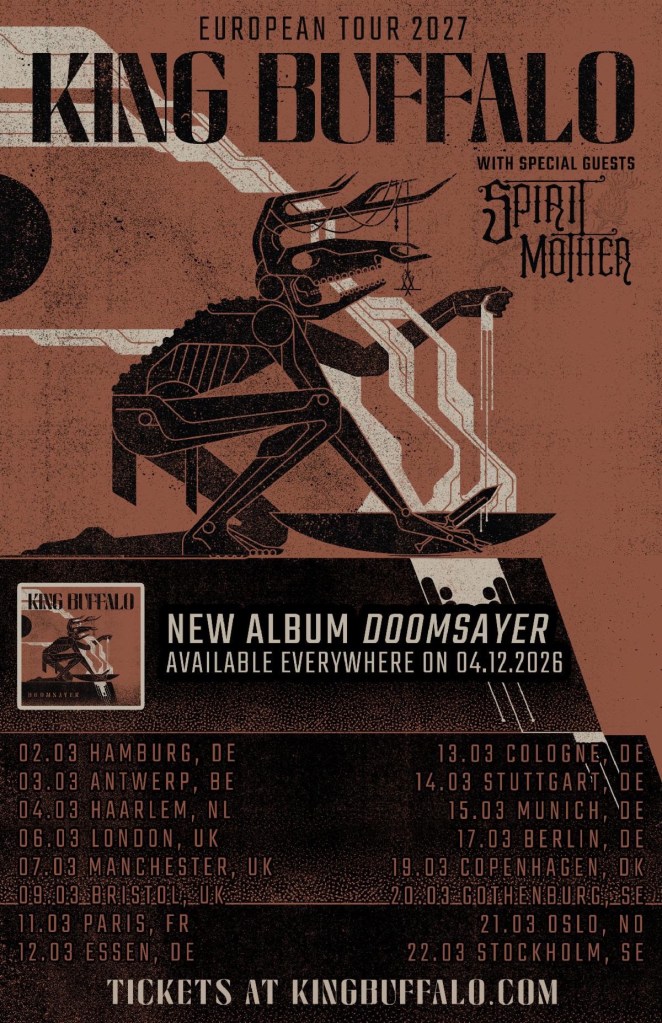
March 2 – Hamburg, DE Grunspan
March 3 – Antwerp, BE Trix
March 4 – Haarlem, NL Patronaat
March 6 – London, UK Scala
March 7 – Manchester, UK Gorilla
March 9 – Bristol, UK Electric Bristol
March 11 – Paris, FR Petit Bain
March 12 – Essen, DE Zeche Carl
March 13 – Cologne, DE Kantine
March 14 – Stuttgart, DE Wizeman
March 15 – Munich, DE Backstage Halle
March 17 – Berlin, DE Festsaal
March 19 – Copenhagen, DK Pumpehuset
March 20 – Gothenburg, SE Monument
March 21 – Oslo, NO John Dee
March 22 – Stockholm, SE Debaser Nova
Doomsayer cover featuring artwork by See Machine
1. Battling The Mystagogues
3. Vagabond
4. Hell or High Water
5. Into the Foundry
6. Ether on the Dark Side
7. Doomsayer
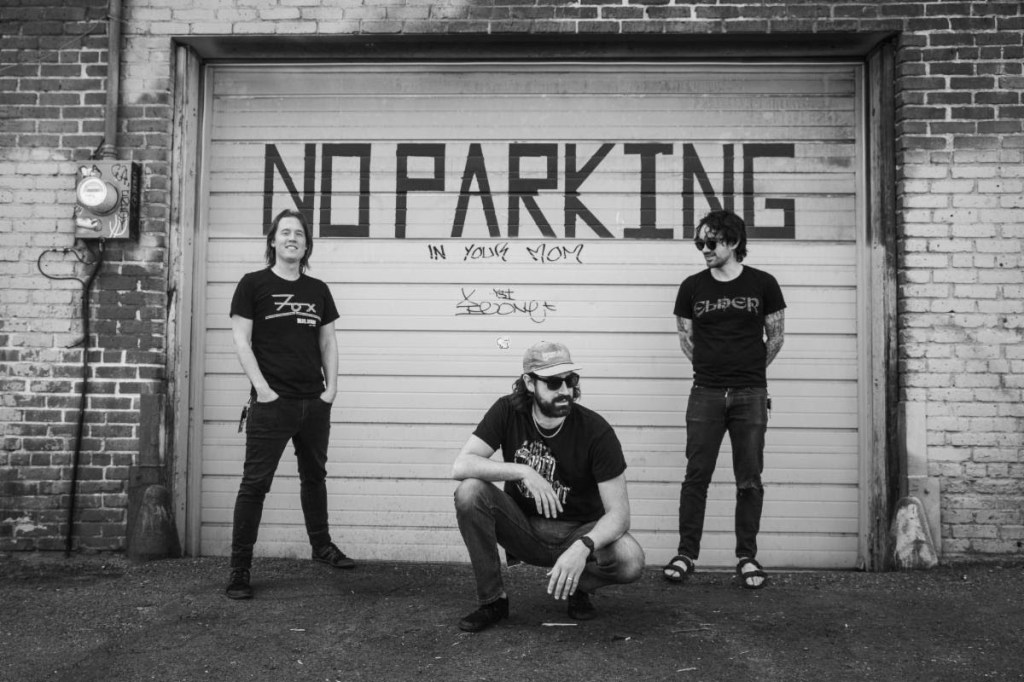
King Buffalo is Sean Roa (guitar/vocals), Dan Reynolds (bass), and Scott Donaldson (drums). The trio has released six albums to date with the most recent, Regenerator, arriving in 2022. Revolver called their music “a tantalizing breed of heavy psych-rock,” The Obelisk declared them one of “the most essential acts of current American heavy psychedelic rock,” and Teeth of the Divine said, “There’s not a dud or skippable track in their entire discography.”


Every week the Stereogum staff chooses the five best new songs of the week. The eligibility period begins and ends Thursdays right before midnight. You can hear this week’s picks below and on Stereogum’s Favorite New Music Spotify playlist, which is updated weekly. (An expanded playlist of our new music picks is available to subscribers on Spotify and Apple Music, updated throughout the week.)
The post The 5 Best Songs Of The Week appeared first on Stereogum.
All Shall Perish has released “Led To Slaughter,” the Northern California extreme metal band’s second new single in 15 years, following “Be As Kings, Be As Gods,” which arrived earlier in September. Like its predecessor, “Led To Slaughter” was produced by Zack Ohren (Machine Head, Fallujah) and released via Arson Theory, the music company co-founded by frontman Hernan “Eddie” Hermida.
The track arrives after All Shall Perish surpassed its $75,000 Kickstarter goal to fund the recording of the band’s first new album since 2011’s This Is Where It Ends. The band is releasing the album independently, currently without a record label or manager. According to the campaign, funds will be allocated as follows:
All Shall Perish recently embarked on The Price Of Existence 20 Year Anniversary tour, celebrating the twentieth anniversary of the band’s 2006 album The Price Of Existence, which was their first to feature Hermida and lead guitarist Chris Storey. The trek launched Sept. 4 in Fresno, California and concludes Oct. 3 in San Jose, California.
The post ALL SHALL PERISH Returns With Second New Single “Led To Slaughter” appeared first on Sonic Perspectives.
Look for it in December.
The post Hollow Front Announce Their Fourth Album “No Love Without Despair” appeared first on Theprp.com.
Oh, holding on to yon and bitter falter
Endless yearning weaves its web
Among the forest, sheltered by her alter
To be free, to be free
Society of the Silver Cross draws on Gothic music’s old appetite for grand architecture, spiritual unease, and whatever might lie beyond ordinary daylight. Joe Reineke and Karyn Gold-Reineke built Temple of the Trees in Seattle, in part to accommodate that vision, filling the place with instruments that make a person wonder whether somebody has opened an archaeological dig beneath the control room.
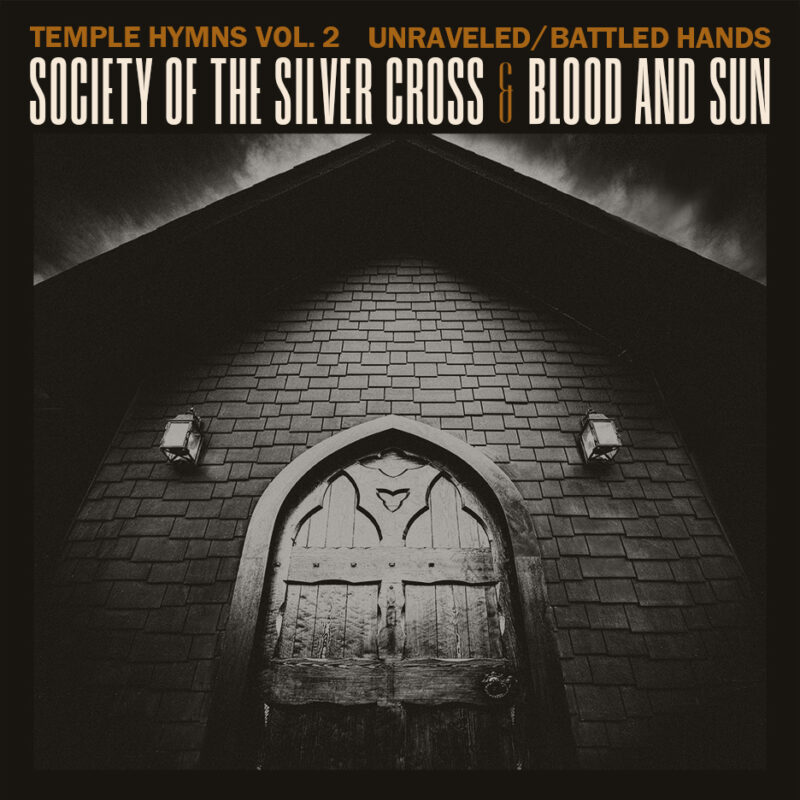
Their ongoing Temple Hymns series turns that studio into a meeting ground. Each installment brings another musician into the room to write and record with the pair, allowing personality, instinct, and whatever strange chemistry develops over several concentrated days to determine the results. Volume One brought in T.J. Cowgill of King Dude. For Temple Hymns Volume Two, Blood and Sun founder Luke Tromiczak flew from New York to Seattle and spent a week working with Reineke and Gold-Reineke.
Tromiczak has led Blood and Sun since 2011, developing one of neofolk’s most recognizable baritones along the way. Put that voice beside twelve-string acoustic guitar, harmonium, B3 organ, Shahi Baaja, obscure synthesizers, and great booming toms and suddenly the room starts feeling considerably older than Seattle.
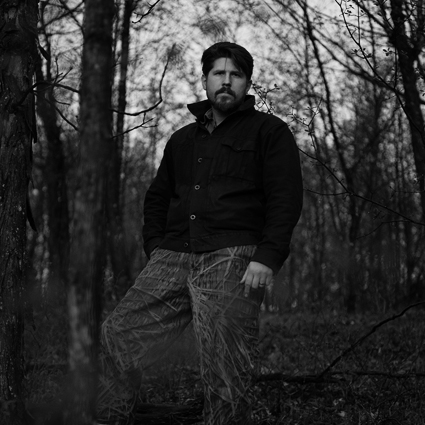
Unraveled moves at the pace of somebody following a mountain trail after sunset with complete confidence that something significant waits at the other end. Its language circles freedom, transformation, lunar power, broken mirrors, concealed paths, and the promise of reunion. The arrangement carries the stateliness of Leonard Cohen into territory closer to Rowland S. Howard, while those deep drums suggest Ennio Morricone scoring some outlaw procession whose participants have traded revolvers for incense.
The repetition in the vocal becomes nearly chant-like, working against the twelve-string guitar and organ until the track takes on a devotional character. Indian musical influence sits naturally beside American folk forms, giving the song an unusual spiritual geography. You can hear bits of Nick Cave, Nero Kane, and the Gun Club somewhere along the road, though everything has been dragged far enough into the Silver Cross universe to lose its passport.
Battled Hands feels earthier, wounded by experience yet stubbornly pointed toward recovery in a call and response ballad. Tromiczak sings about endurance with the authority of somebody who understands that survival rarely comes accompanied by trumpets. Fire, dawn, damaged hands, storms, mercy, and returning light become markers along a long recovery from suffering. The slow progression allows each image enough room to settle before the drums push forward again.
There is something almost physical about the weight of Tromiczak’s voice against the instrumentation. Reineke and Gold-Reineke surround him with enough space for every low note to feel carved into the room, while the harmonium and organ carry the devotional aspect further without turning the song into meaningless ceremony.
Together, these two pieces make Temple Hymns Volume Two into a record of musicians discovering exactly how much ground they share.
Listen to Temple Hymns Volume Two and order the double single here.
Society of the Silver Cross and Blood and Sun will take that meeting across Europe next month, where these songs should sound perfectly comfortable inside clubs, cellars, old halls, and any room willing to surrender its ordinary dimensions for a few minutes.
Tour Dates:
Follow Society of the Silver Cross:
The post Society of the Silver Cross Join Blood and Sun for a Gothic Folk Pilgrimage on “Temple Hymns Volume Two” appeared first on Post-Punk.com.