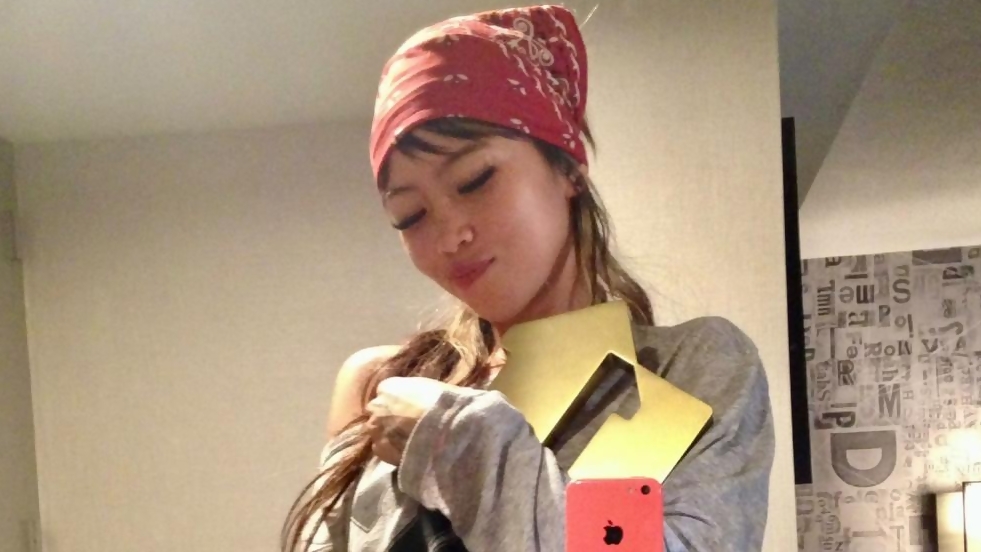
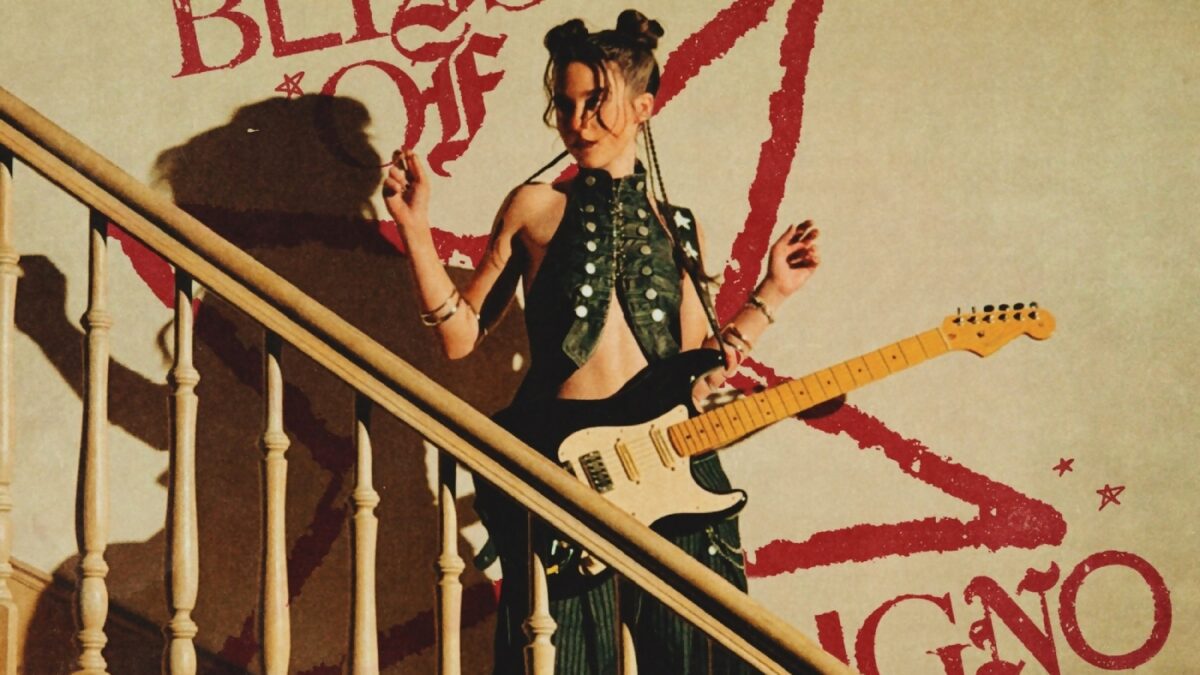
Dead Tired’s new album “Hornets Of The Fall” is also now out.
The post Dead Tired (Alexisonfire) Release “The Pull” Music Video, Chris Cresswell Guests appeared first on Theprp.com.
Dead Tired’s new album “Hornets Of The Fall” is also now out.
The post Dead Tired (Alexisonfire) Release “The Pull” Music Video, Chris Cresswell Guests appeared first on Theprp.com.
Snider’s comments about Ozzy allegedly relying on outside lyric writers didn’t sit well with Kelly.
The post Kelly Osbourne Beefs With Dee Snider Over Ozzy Osbourne Songwriting Comments: “In The Immortal Spirit Of Will Smith Keep My Father’s Name Out Your F*cking Mouth” appeared first on Theprp.com.
The worst-kept secret in heavy metal is finally out: Sid Wilson is no longer a member of Slipknot.
The band made the announcement in typically mysterious fashion, revealing that Slipknot’s turntablist and keyboardist was no longer a member of the Iowa outfit, before deleting the social media posts in question.
“Effective immediately, Slipknot will no longer be associated with Sid Wilson,” read the band’s posts. “We wish him the best in his future endeavours.”
Stories that Wilson had been fired began to circulate two weeks ago, when news site TMZ reported that a source close to the band said Wilson had been dismissed, leading guitarist Jim Root to apparently dampen the rumours in an Instagram post.
“Don’t believe everything you read,” wrote Root. “Stop. Think. Take a breath. Sit with it for a while. Maybe. Just maybe even wait until there’s more information.”
Subsequently, a second TMZ story claimed that Wilson had been fired for mistreating his bandmates, and that his sacking was a long time coming, not “some abrupt decision made in the heat of the moment.”
“The decision came after the group finally had enough of Sid’s behaviour,” the story claimed, “namely, the way he treated his bandmates.”
TMZ went on to report that Slipknot had planned to announce Wilson’s exit, but their scoop meant the band “lost control of the rollout” and “freak[ed] out behind the scenes, with members frustrated they could no longer announce the split on their own terms.”
Later, Kelly Osbourne, Wilson’s former fiancée, made her own accusations regarding the musician’s behaviour, telling him to “wake the fuck up and take some responsibility” for his actions. She also asked him to return her possessions and pay child support for their three-year-old son, Sidney.
Wilson joined Slipknot in 1998, in time for the release of the band’s debut album the following year. He has not yet publicly commented on his departure.

There are many perks to being mostly offline, but being in the festival scene loop is not one of them. I’d first heard of Fire in the Mountains while pounding a few brews with a fellow 70,000 Tons of Metal crew member (can’t remember which, because of brews) while waiting for our flights after this year’s cruise. It was described thusly: a fest featuring bands whose focus is on nature, culture, and celebration of heritage, minus all the fashy and bigoted bullshit that these scenes often attract. The setting: the Blackfeet Nation, abutting Glacier National Park in Northern Montana, roughly an hour south of the Canadian border. No hotels, no cabins, no frills. You go. You camp. You hike. And you rock out in a sea of like-minded folks who understand that to honor your roots is not to degrade the roots of others. I quickly looked at this year’s roster and was immediately sold just by the presence of Agalloch and Borknagar.
I convened with a few locals, and we decided to fucking do it. We imbibed during our connection in Salt Lake City (my drink of choice was Wasatch’s Polygamy Porter, because of course it was), knowing full well that this would likely be the last drips of alcohol we’d sip before our return several days later. The reason: Fire in the Mountains is a dry fest. No beer or booze is sold on site or even permitted on the Red Eagle campground where the fest is situated. The campground itself is on Blackfeet territory, and the Blackfeet people have had a troublesome history with booze while coping with the genocide of First Nations, and attendees are required to honor the booze ban. No biggie for me personally, but for one caveat: I use the stuff to cope with my social anxiety, which often kicks into high gear when surrounded by strangers. I proceeded with near zero trepidation though – the fest and its mission (more on that later) are worth this small sacrifice.
While we were certainly prepared for several days of drinking only water and coffee, we were absolutely not ready for the heat that assaulted us as we exited the airport at Great Falls, MT. “Dafuq is this bullshit?” we all wondered aloud. We’d religiously been checking the forecast for the city of Babb, near the campground, and saw no signs of any unbearable temperatures. We had many reasons to make this pilgrimage, and escaping the punishing heat that Texas summers wield was near the top of that list. Still, we loaded up the rental car, made a few last-minute camping purchases, and threw down at a Great Falls establishment called the Roadhouse Diner.
This diner pleasantly surprised us. We’d found it during a quick Google Maps search while looking for a lunch spot, and were immediately greeted by some pretty sick metal décor. Menus, entree names, and posters modeled after Iron Maiden, Metallica, and Anthrax artwork were the mark of this particular beast, and the meals we enjoyed were refreshingly tasty. I rarely dine on burgers, but I can’t stress how much we enjoyed ours. I even bought a Motorhead-inspired Roadhouse Diner sticker as we left. Great stuff, and I highly recommend it to Fire in the Mountains attendees, but it is unfortunately closed on Mondays, so we weren’t able to dine there again during our trek back to Texas.
Thus the two-hour drive began. The drive between Great Falls and the Blackfeet/ Glacier region is shockingly sparse – the hills mostly bore already harvested grain fields with only an occasional cow or farmhouse breaking the monotony. After making a final pit stop to purchase some ice, we made the final stretch into the Red Eagle campground.
The first thing we noticed was how warm and welcoming the staff and volunteers are, which is perhaps my favorite aspect of the metalhead dichotomy that normies rarely understand. We might look mean and evil n shit, but we’re really just a bunch of goofy dorks who love life and ridiculousness, and in the case of this particular fest, also hold a deep reverence for nature. The staff scanned us in and gave us our wristbands, and we were directed to our camping spot, where we were to leave the rental car for the duration of the stay. My fears of dealing with days of social anxiety were almost immediately relieved – I spotted a pair of familiar faces as we drove up to our camping spot, and I stuck my head out the window to shout their names and had my suspicions confirmed: they were fellow 70K cruisers (we call ourselves “Boat People”) who also happen to be wonderful human beings. I hopped out of the vehicle to hang with them for a bit before hiking up to our spot to set up camp.
A few words of advice for anyone who plans to attend: travel light, and travel simply. My mattress, tent, sleeping bag, and stool were small enough to fit in my checked baggage, and I still had enough room left over for such necessities as clothing, snacks, and shower stuff. Among the purchases made upon landing in Great Falls were two inflatable mattresses for my companions, along with an electric pump they ran with a power bank. While that seemed like a good idea when we first conferred at a brewpub in San Antonio, they unfortunately did not take the altitude at the campground into consideration: both mattresses partially deflated overnight, and neither of my bros were as well rested as I was the next morning. I’d opted to bring a memory foam-based sleeping pad whose valve allows for gradual inflation. While certainly not as thick as the mattresses purchased in Montana, mine did not deflate to the degree that theirs did. It didn’t cost much either, maybe about twenty-five bucks at Academy.
Another thing: the three of us were shocked at how many fellow San Antonians made this trek. Our flight to Salt Lake City had no fewer than seven metalheads aboard, and the flight into Montana may as well have been a mosh pit in waiting. By the end of Day 0, I’d run into yet another San Antonian (who I hilariously see almost exclusively at out-of-town shows and fests), and I’d meet even more over breakfast the following morning, gawking at a Lonesome Rose shirt one of them wore. The Lonesome Rose is basically a honky-tonk bar for punks and hipsters, and I’ve cracked many smiles watching actual country folks walk in, look around, and leave immediately. It also happens to be directly across the street from my old office.
The Red Eagle campground offers three sites for camping, all of which are a short walk from the vendor stands, stages, and Two Medicine Lake, which is open for swimmers who wish to cool off during the surprisingly warm daylight hours. I can’t stress just how beautiful the surroundings are: pines, cool breezes, and the overpowering presence of the Scenic Point and Rising Wolf peaks of the Rockies, a range the Blackfeet folks call the Backbone of the World. A distant haze draped the horizons, a consequence of the ongoing wildfires in nearby Canada. As luck would have it, the haze did not affect the campground air at all, and actually made for some pretty stunning sunsets over the lake, whose beaches were refuge to kids, families, and people who just wanted to pop a squat away from the madding crowds and enjoy some quiet time with a book. We concluded Day 0 by chatting with fellow campers, helping others set up their sites, and prepping for the festivities to come by allowing the chilly nighttime air to ensorcel us under the starless skies.
My homies woke up shivering. I did not. But we all arose well before our alarms went off because sunrise here is at like 5:30 in the goddamn morning.
Campers take note: as warm as it can get during the day, it also gets pretty damn cold at night, at least by Texas standards – we slept squarely in the 40s with no electricity to warm us. My sleeping bag is rated for 45 degrees, so I felt fine even wearing only shorts. The bag only zips closed on three sides though, so I resorted to draping a folded keffiyeh over its open end. This worked great, but in the future I’ll also cover my electronic devices and charging bank with some clothing or something, as we all woke up with dew already formed on the inside of our tents. The dew on the grass took several hours to evaporate, so waterproof footwear is a must. There’s also the complication of motor vehicles – cars on the campsite, golf carts and service trucks on the festival grounds, etc – making the dust and pollen on the campgrounds dance with the delight of devious devils. Said keffiyeh came into very good use for this, and I spotted several other festival goers sporting headscarves, face masks, bandannas, and the like to keep the nasties out of their lungs. All of which raises another point: the pollen level is stupidly high this time of year, so bring your antihistamines and nasal spray if you need that.
Only one food truck was operating on the morning of Day 1, and they did not open until about 7:45 AM. Luckily, we had enough snacks and water to tide us over, and we soon got in line for some coffee and breakfast. We joined a table of others who happened to have lived in our area and who have attended other fests we frequent, and I ended up spending well over two hours just chatting with fellow weirdos, cooling my nerves, and planning the day.
All fest goers are required to attend a bear preparation session, of which several are held throughout Day 1. We were taught the distinctions between black bears and grizzlies, their different temperaments, how to handle an encounter, and how to effectively deploy bear spray.
Day 1 also marked the start of the Community Feed, during which holders of sold-out tickets were served the legendary barbecue that had been smoking for at least a day. A number of sides, including roasted carrots and parsnips, quinoa, and Caesar salads, were served alongside some absolutely glorious-smelling bison rib, duck, and lamb. Meals started being served around 3PM, and the seemingly endless line to be served lasted several hours. I unfortunately was not able to obtain a meal ticket, but my companions raved about the food.
The music began shortly after that. The festival openers were a trio of young bands – we’re talking school-age kids – who are partnered up with a non-profit called the Firekeeper Alliance that nourishes young metal musicians in the Billings area. Death Feather performed with promise beyond their years, and John Doe in particular showed intense degrees of gratitude for the support of the local community, the metal scene at large, and their families, who have all been supportive of their kids’ musical pursuits. John Doe ended their set by inviting a young boy onto the stage; the little dude shouted “I love you mom!” into the mic and proceeded to thrash around like a little goon as the corpsepainted teenagers flanking him melted the smiling crowd’s faces as best they could. To not have felt joy and warmth at witnessing such a sweet gesture is to prove one’s own heartlessness.
These sets were followed by a lengthy pow-wow presented by Blackfoot elders, royalty, and other community leaders. The Blackfeet Nation’s flag was hoisted in the center of the circle in front of the larger of the two stages, and veterans of the United States Armed Forces were invited to hold the flag in place as an elder intoned prayers and songs of victory, hope, women, and unity among peoples. Drums and chants filled the valley as the afternoon sun warmed the crowd, enchanted by dancers in their formal regalia. There was also a brief presentation by the Firekeeper Alliance, whose motivation for said nurturing is suicide prevention, who led the crowd in chants of “Suicide is not an option!” The entire affair lasted a good two hours, during which the reverent crowd maintained deferential silence, removed their head coverings when appropriate, and honored the host community’s culture and outlook.
A few bands local to Billings took to the stage as night fell; I’d gladly have caught them were it not for the arrival of the fourth member of our entourage. He and I did make it down to the so-called “Music Bowl” to catch a rather raucous punk-tinged outfit called Center Line, who were performing for a crowd of at least several hundred; I had to make it a point to avoid the circle pit for fear of trampling over a literal child. So. Many. Kids. To witness a sea of metalheads bringing their young families along for such a remote ride that celebrates unity and diversity gives me no small amount of hope for today’s youth.
Our second night camping turned out to be much more pleasant than the first. The temperatures stayed in the 60s, and despite the higher humidity, we arose to find no dew inside our tents or even on the grass. It was, however, considerably windier that night, and my companions complained of the wind waking them on several occasions. Me? I slept right through the tumult. But it would not be the worst of the wind’s fuckery.
I had originally planned to take at least one morning trip into Glacier National Park to sate my appetite for hiking and landscape photography, but was unable to do so due to our parking restrictions, my inability to find anyone with whom to tag along, and my completely forgetting that the Blackfeet folks offer cheap shuttles for that. That turned out to be something of a non-issue, as the Red Eagle area has much to offer to nature nerds. The Fire in the Mountain and Firekeeper Alliance also have many daytime activities to offer, so a neighbor and I went on a guided foraging hike after taking a nice, cold, and refreshing dip in Two Medicine Lake. Our guide helped us identify many of the native plants and their culinary and medicinal uses, and by a stroke of dumb luck, some fellow ProgPower and 70,000 Tons of Metal attendees happened to be in our group. We passed several lakeside panel discussions titled “The Architecture of an Album,” “Music as Medicine,” and “When Ancestral Songs from Across the World Meet,” featuring Amigo the Devil, Ivar Bjørnson of Enslaved, and several others.
I took another leisurely stroll along the lakeshore to observe how others were unwinding from the grind that adulthood hoists upon us. Several people rented rafts or kayaks to get away from the noise and commune with nature, while many others set up hammocks and lounges in the woods to read, converse, or take a nap. I spent a good chunk of the afternoon resituating my campsite; while I was away, my companions and neighbors were kind enough to set my tent back up after the wind lifted it off the freaking ground. I decided to leave my suitcase in there to weigh the tent down while also freeing up some much-needed space in the hatch of our rental. Some of our neighbors down the hill weren’t as lucky as I was – several larger tents took off like kites with the powerful wind gusts, with some tents landing several rows over or even on top of other vehicles. My dear boat companions down the hill from us tore down their tents entirely and opted to sleep in their cars.
The wind also gave us another complication: dust flying literally everywhere. This problem was most severe in the well-trod footpaths that lead from the campsites to the vendor area and the Concert Bowl, which many started calling the “Dust Bowl.” Delivery vehicles (for water, supplies, trash collection, etc) left thick layers of dust on all surrounding tents, and outdoor eating on Day 2 proved to be something of an ordeal. Even with my keffiyeh wrapped tightly around my face, I was still blowing black boogers well into the night, and each circle pit generated a vortex of the vile stuff that coated everything surrounding it. I’ll be deep-cleaning my gear for days upon my return to Texas, and am grateful that I brought both the keffiyeh and two camera bodies, so that I wouldn’t have to swap lenses in that maelstrom and risk getting those nasties inside a camera.
The Blackfeet Tribal Council gave a brief formal welcoming address immediately before the first traveling band of the fest kicked off at 3 PM. Mexican transplants to Salt Lake City Yaotl Mictlan (pronounced “yow miktlan”) are a quintet whose texture-laden, forward-thinking black metal honors their Aztec heritage and its pre-Columbian glory. Clad in long sleeves bearing Aztec iconography and black bandannas concealing their identities, their three-guitar attack augmented by Aztec whistles and pipes filled the valley with indigenous sounds of a variety quite distinct from what had been offered up to this point. Yaotl Mictlan’s music is sung in Spanish, English, and the Aztec language of Nahuatl (pronounced “nawa”) to further pay tribute to their roots. As refreshing as it is to hear metal inspired by the pre-Hispanic era, it must be noted that Yaotl Mictlan are not the first to do this.
A group called Tenochtitlan did an admirable job paying tribute to the Aztec Empire some twenty years ago, complete with the Nahuatl singing, and the sincerity in their approach to examining Aztec mythology belied the band’s Russian origin. To hear a band hailing the children of Quetzalcoatl, and whose actual cultural roots are themselves Meso-American, feels like something that should have happened long ago, and seeing them receive such a warm welcome was as humbling and inspiring as the length of their merch line when their set concluded with a song dedicated to the Zapatista uprising in Chiapas of 1994. Having visited the cathedral in San Cristóbal where Comandanta Ramona and Subcomandante Marcos negotiated with Mexican government officials to expand indigenous rights, “Himno Zapatista” hit me kinda hard.
70,000 Tons alumni Wayfarer remarked that Fire in the Mountains had come a long way since their first performance at this fest in Wyoming some eleven years ago; while that set was for an audience of perhaps 100, this year they performed for a crowd roughly ten times larger. Their distinctive brand of epic blackened metal dominated their set and left fans as bedazzled as the ones in the Ice Rink Stage a couple of years ago. Wayfarer concluded their set with a freshly released song called “Perdition’s Crossing” written in collaboration with David Eugene Edwards of Sixteen Horsepower, and hinted at a more Americana-inspired recalibration of their well-established sound. They were then joined on stage by a barrage of local indigenous youth from the nearby Buffalo Hide Academy that the fest and the Firekeeper Alliance have been actively mentoring; one young man took advantage of being on the stage with these metal titans by diving into the crowd, much to the delight of the attendees, their parents, and the men of Wayfarer themselves.
Navajo composer Raven Chacon was scheduled to perform with the one and only Iggor Cavalera immediately following Wayfarer, but some flight issues (rumored to be a flaming airliner) forced a postponement to the following day; Baroness took to the Running Eagle stage to great fanfare after roughly an hour of silence. Bluntly, Baroness fucking smoked, with their unique, 70s jam-inspired metal allowing a little bit of country ooze into their onslaught. Baroness were certainly well represented in the t-shirt department; I may have seen more Baroness shirts than any others aside from Neurosis and perhaps Panopticon, though I saw way more Rainbow Rising shirts than I would have expected (I wore mine too).
Up next was one of the bands that convinced me to take this trek: Agalloch, performing their seminal Ashes Against the Grain album in its entirety. I arrived just as the opening feedback salvos were playing back, and was able to make my way towards the front of the crowd with relative ease. It was early on in Agalloch’s performance that I noticed that the wind had done a similar number on the Running Eagle stage as it had in the GA campgrounds: the stage-left banner had become detached from the rig at one corner, and waved violently with the frequent gusts, though a safe distance from the crowd, band, crew, and the more delicate pieces of equipment on that stage.
Agalloch’s performance differed from damn near every other band’s: there was no banter between songs and no verbal audience engagement; there was only solemnity and dedication to replicating a landmark album as faithfully as possible. An undulating, glacially-paced circle pit formed amid the mesmeric music, parting like an ancient Levantine sea in the crowd of what seemed like a thousand weeping fans. Not even the brief PA failure near the end of “Limbs” broke the spell these Oregonians wove over the course of their set. The concluding feedback lasted for what seemed several eternities, with guitarist Don Anderson hopping into the photo pit to hoist his Les Paul into the crowd, allowing fans to hit the damn thing to add to the cacophony. Bandleader John Haughm methodically twisted the knobs on his pedalboard, while bassist Jason Walton slid a water bottle over his instrument’s body. Several minutes into that concluding maelstrom, Haughm solemnly intoned Agalloch’s lone address to the audience: “Thank you very much.”
Agalloch’s somberness was quickly quelled by the goofoffedness of one Danny Kiranos, who’s better known as Amigo the Devil. Backed by a band he did not bring along to Milwaukee Metalfest last year, Danny interspersed his deliberately humorous songs with completely off-the-cuff banter and storytelling, relating the very human duality of seriousness and stupidity. The man is no slouch of a musician – we traded in his guitar for a banjo, sang like an absolute boss, and captivated the crowd with his stream-of-consciousness lunacy and respectful but irreverent humor. I’d love to see this man collaborate with Devin Townsend; I’m certain they at least chatted a bit while in Milwaukee.
I was a bit vexed to see a band I’d never heard of – with a very Not Metal name, at that – headlining such a luminous fest, but after seeing Sixteen Horsepower, I think I kinda get it. An American country-rock band that had a reputable run going back to the mid 90s, Fire in the Mountains was the setting for their first stateside live show in twenty-one years, shortly after a completely sold-out reunion run in Europe. Edwards brought back original guys Jean-Yves Tola on drums and Pascal Humbert on bass, augmenting the original Sixteen Horsepower lineup with his Wovenhand bandmate Chuck French on guitar.
Though seated for the duration of the set, Edwards commanded the crowd with ease and finesse as the band played a set that boasted over half of their debut record, Sackcloth n Ashes, and damn near a third of its follow-up, Low Estate. I found myself not only enjoying what these fellas were up to, but marvelling at the appeal they had for a crowd made up mostly of metalheads. I can’t rule out that several attendees bought single-day passes specifically to see Sixteen Horsepower, but something tells me the heads I saw banging in the crowd were not attached to the shoulders of normies. It turns out that Fire in the Mountains is not strictly a metal festival, and I, along with well over a thousand attendees, am completely okay with that.
The dip Da Boyz and I took in Lower Two Medicine Lake on the morning of Day 2 was so freaking refreshing that I immediately vowed to do it again the following morning, but a front cold enough to change my mind blew in with a force unexpected. I was caked with absolute nast after the previous afternoon’s dust storms and needed desperately to cleanse myself, and a neighbor graciously allowed me use of his shower stall in conjunction with one of Da Boyz’s shower bag/ hose apparatus. I drained my ice chest into the bladder, let it warm in the sun, and came out of that collapsible shower stall feeling (and smelling) like a man reborn. Even my feet smelled nice.
I took to the media tent for much of the afternoon to do some writing, but there was one unofficial event that I would dare not miss – the 70K meetup. Doro Morrighan, promoter and organizer of the Heavy Metal Beach Party at the Clevelander Hotel in South Beach, had brought a 70,000 Tons of Metal banner, and her second in command strongarmed me into taking the group photo after learning that I’m one of the Boat Shooters. Fortunately, I’d come prepared to take some landscape photos, so I dragged my tripod down to the Lone Walker stage and set it up with a hot shoe flash and remote shutter release, and when prompted, began barking orders as if I were photographing a wedding party.
Savage Oath got the music rolling with some frenetic, 80s-style speed metal that brought a great deal of joy to all the power metal nerds in attendance, particularly one fellow Progpower/ 70K nerd who calls every member of that band “dad”; the band members all call her “mom” in kind. There was something of a dearth of upbeat music at this fest, with no more than about three bands who specialize in music that sparks joy, but Savage Oath could have reasonably carried that burden all on their own.
It was also heartwarming to see singer Brendan Radigan sporting a Rainbow Rising shirt. Not only was that record well-represented in attendees’ apparel, but it might also have inspired the most compliments. I sure as shit got more feedback on that shirt than any other I wore. Savage Oath tore through their allotted forty minutes with the degree of swagger and professionalism one would expect from bands of this genre (they rarely suck), and having them perform so early in the day got the crowd’s adrenaline flowing in anticipation of the acts to come.
I wandered off to the vendor’s field in between sets to properly nourish myself for the rest of the day, and soon found myself chatting with the Community Feed servers. They were kind enough to offer me a small sample of some of the day’s sides – fire-roasted spaghetti squash and sweet potatoes. The squash had its expected noodly texture, scooped out from the cooked fruit, salted and further charred, likely with smoke. Both tasted amazing, but I needed actual sustenance (Charred Horn’s barbecue was sold out well in advance), so I found a native food stall and had a sizable Indian taco. The fry bread was roughly the size of my head and even thicker than Swiggy’s fake Swedish accent, and was topped with beef chili and garnished with tomatoes, lettuce, and cheese. It had slipped my mind to ask how the chili is made around here, though, so I left a bunch of pinto beans on my plate. If you’re the type who savors meat and avoids beans, ask for a Navajo taco. It’s all ground beef in there.
Of course, the danger of doing anything away from the stages is that you risk missing some music, and that’s exactly what happened when Raven Chacon took to the Lone Walker stage with Iggor Cavalera, both armed only with drums. I use the word “arm” deliberately, as both men and the guests who joined them on stage literally battered their instruments with the kind of passion that only a salute to heritage and a dissection of a history both glorious and tragic can inspire. The little I caught of this performance indicates that as savage as Iggor’s work with Sepultura and Cavalera Conspiracy is, he is capable of so much more. Seeing him share the stage with the first Indigenous Pulitzer winner was a treat beyond words, and I curse that beaned but still tasty Indian taco for causing me to miss most of this percussive culture jam.
The Ruins of Beverast then took the Running Eagle stage and cloaked the valley with their epic, blackened doom. Active for over two decades, The Ruins of Beverast and their resplendent sonic identity have somehow escaped my attention this whole time – their fundamentally raw but compositionally complex approach to songwriting, topped with bandleader Alexander von Meilenwald’s distinctive baritone peppered in between the requisite screeches, speaks to me in a similar way Agalloch (another band I missed in their heyday; I blame dadhood, and that’s a damn good excuse) does. Time to do some internet surfing.
Colorado’s Tarantella was up next on the Lone Walker stage and really got the crowd moving with their eclectic, punk-infused folk that borrows from Argentine and Chilean music, traditions which band boss Kal Cahoone absorbed while she lived in those countries. Propelled by both her and by violinist Kelly O’Dea, this unique sextet has been at it for a hair over two decades, during which they’ve explored damn near all of their influences and have blended them into a concoction that borrows from all while remaining fundamentally folk rock. They definitely put on one of the more mirthful performances of the weekend, and were responsible for most of the elated smiles seen on attendees.
Yob was another shot of adrenaline for the almost overwhelmed crowd, bringing their frenetic, life-affirming sludge to their ravenous fans. These Oregon doomsters have maintained a fairly high degree of activity on the festival circuit despite not having released new music since 2018, and their history with Fire in the Mountains headliners Neurosis made Yob’s inclusion on this roster almost a certainty, but none of that detracted from the audience’s adoration of this long-running trio. I overheard many attendees whispering in excitement about this year’s lineup; Yob was perhaps the only band who generated almost as much buzz as Neurosis themselves, and their fans returned the band’s enthusiasm right the fuck back.
Gallowbraid, a solo project by Visigoth singer Jake Rogers with a single 2010 EP to their name, made their first US performance on the Lone Walker stage just a few months after making their live debut at Fortress Festival in the UK this past May. Featuring Rogers on guitar backed by a quartet of ridiculously skilled musicians, Gallowbraid’s atmospheric black metal, tinged with just a skosh of fantastic melodic death-n-roll and the occasional fantastic clean singing, differs mightily from Visigoth’s more accessible power metal.
Gallowbraid performed to such great fanfare that it would be foolish of Rogers to not release a fresh batch of material in the near future and continue to perform live; Gallowbraid’s sound is a fresh reprieve for the many metalheads out there who appreciate power metal and the talent it requires, but don’t actually enjoy it much. It seems fitting that this blackened, despondent vortex would conjure the mountain winds to create yet another dust storm and bring in that cursed haze from the wildfires that were ravaging much of southwest Canada. It did make for a stunning sunset and some sick photos though.
Up next on the Running Eagle stage was the long-running Norwegian band Enslaved, a band to which I confess I have an embarrassingly passing familiarity. Blodhemn and Ruun certainly hold a special place in my heart, and I’ve always appreciated that the band never embraced the hate that motivated some of their countrymen, but life (namely dadhood) prevented me from investigating much of their output. I’d also never had the privilege of seeing them live despite them having performed both at last year’s Milwaukee Metalfest and just a few miles from my home at San Antonio’s Aztec Theater with Between the Buried and Me in 2015.
This dearth ends now, because what I witnessed of Enslaved was enough to convince me that I’ve sorely missed out on some absolute splendor. Epic, progressive, and unapologetically Nordic metal with plenty of clean vocals from both frontman bassist/singer Grutle Kjellson and drummer Iver Sandøy, Enslaved bore the distinction of not only being the most engaged performers on the fest up to this point, but they also boasted the first bonafide rock star: lead guitarist Arve “Ice Dale” Isdal, who strutted about the stage like the ultimate trans-dimensional guitar hero in a manner that could have landed him in Kiss. Meanwhile, bandleader Ivar Bjørnson remained focused and stoic, signaling his reverence for his Blackfeet hosts by donning a medicine wheel.
Already crazed with what seemed an endless supply of crowd surfers, the audience erupted with joy when none other than Steve Von Till of Neurosis stepped onto the stage during “Heimdal” to deliver what some might call a prayer that appeased both the spiritualists and the materialists in the crowd. “We are not the center of the universe,” Von Till cantillated, “but we are a part of it. We are the cosmos looking back at itself. We are the children of earth. We are descendants of stars.” My skeptical ass shivered at the Saganism of it all right alongside the many New Agers in my midst, poetically affirming Von Till’s words. “I call upon the ancestors, I call upon the spirits of the earth and skies, I call upon the eternal cosmos: bring us together as kin in connection to all things!” Von Till implored as the pink skies above us faded into monochrome. Chills, man. Fucking chills.
This was not the only transcendental moment of Enslaved’s set: Blackfeet Elder and educator Kevin Kicking Woman, who holds the distinction of being Montana’s first-ever Native Teacher of the Year, joined the band on stage for an absolutely empyrean performance of Enslaved’s recent single “Spirit Helper,” where Mr Kicking Woman sings a morning prayer possibly as old as the mountains that surrounded us in the language of his ancestors as the men of Enslaved piously elevate him with sounds as heavy as his words in what is without doubt the unlikeliest yet most natural culture jam I’ve ever been privileged enough to witness. No bullshit: I wept.
How the fuck do you follow that? With some old-school death metal, apparently. As excellent as Full of Hell were on the Lone Walker stage for their only US set of 2026, my almost middle-aged ass was still reeling from Enslaved’s rapturous and intoxicating set, and the grind-infused brütality these absolutely not related to Entombed (I checked) East Coasters simply wasn’t what I needed to re-center my inner being or whatever. I loved what I heard, but I needed to sit this one out. Time for a quick bite and a nice, cold, not-beer to prep myself for the band that easily had the largest draw of the weekend: Neurosis.
Neurosis is another band that had been on my periphery for about three decades, and I know I saw them at least once in the late 90s (don’t ask which tour – my memory is hazy), but by the time my traditionalist youthful ego had eroded enough to welcome the weird, I was in full Opeth mode and couldn’t be bothered with anything that didn’t sound like Still Life. One thing I did recognize was that Neurosis made a deep impact on their fans, and learning about them as human beings rather than as a band has greatly boosted my regard for them. For one, Mr Von Till is not only a humanist of the highest order, he is also deeply involved with the Firekeeper Alliance and has made a career as an elementary educator.
Neurosis also made the wise decision to expel a prominent founding member when it was revealed that he was less than a loving husband and father; Neurosis kept the reasons for the dismissal from the public and subsequently went dormant for several years before reforming with Old Man Gloom (and former Isis) growler/ guitarist Aaron Turner filling the void that other dude left. Fire in the Mountain was to be their first performance since 2019, just a few months after they issued their excellent new record with zero announcement and zero promotion. This crowd was pumped.
But the music would have to wait. Neurosis emerged downstage sans instruments, Von Till bearing an adorned bison skull, alongside a Blackfoot elder donning a headdress. The elder intoned a traditional honor song whilst beating a drum before introducing Firekeeper Alliance executive director Charlie Spreicher, clad in a ballcap and battle vest, who welcomed the entire crowd home. The Western approach to suicide prevention mostly involves identifying who is most at risk, and Spreicher underscores how important this is, but the Firekeeper Alliance also asks the questions: “What keeps people here? What reminds us that we belong?” He continues: “Protective factors are found in our families, our culture, our language, our ceremonies, our friendships…” he trails off, before adding: “And in heavy fucking music,” to thunderous applause.
People often look at metal and call it dark, “and they could not be more right,” Spreicher continues. Sometimes, he reminds us, “extreme experiences can only be expressed with extreme art. And for nearly forty years, Neurosis has created that art.” The entire band, Von Till in particular, were visibly moved at this high recognition.
“Long before conversations about trauma, grief, and mental health became more common, Neurosis was giving voice to the suffering that so many people have carried in silence. Their music has never pretended that darkness doesn’t exist. Instead, it has taught us that we can walk through it. That suffering can coexist with strength, meaning, and maybe even hope. Their newest record carries a title that perfectly reflects the meaning of why we’re all here tonight: An Undying Love for a Burning World. There may not be a more fitting description of what we try to do: to keep loving one another, to keep showing up for one another, and to keep believing that even in a world that can feel hopeless, people are worth fighting for.”
“It’s okay to struggle,” Spreicher reassured us. “It’s okay to feel broken. You’re not alone. Keep going. Keep fighting. Because with the right people beside us, with communities like this, and with the healing power of music, connection, and hope, it can get better.”
There was not a single dry eye in the crowd of roughly three thousand.
The band embraced each other, Spreicher, and the tribal council that welcomed them before hoisting bison skull and exiting stage left. After several minutes of absolute silence, Von Till appeared backlit at stage right, swirls projected into the fog, as he screams with that unmistakable roar that we are torn wide open!
The separation that burns our hearts is the root of all our disease! We’ve forgotten how to live, so we suffer! We’ve forgotten how to struggle, so we suffer! We’ve forgotten how to die, so we suffer! We’ve forgotten we are wild, so we suffer! We exist in isolation, so we suffer!
The dissonance is deafening!
FUUUUUUUUUCK.
Neurosis emerged fully and blasted into “Mirror Deep,” a lengthy track whose designed discord and disjointedness reflect the mass and magnitude of inner struggle. A short film/ video for these two cuts, which featured many Blackfeet youth seen reveling at the fest, had been screened at one of those panels I’d missed, and the visuals are every bit as moving as the words they portray. Neurosis continued to perform much of the new record, with Turner delivering the goods and the growls as if he’d been performing alongside these guys for years, complementing Von Till’s screams with a poignancy that can only be called pristine – it ain’t for nothing that many fans have jokingly referred to this incarnation of the band as “Neur-Isis.”
Easily the most intense performance of the fest up to this point, Neurosis delivered epic, thoughtful, furious, sludgy, prog-adjacent, psychedelic, and cathartic rage, completely unlittered by banter so these fine gents could focus solely on performance. It’s a wonder how Neurosis were ever able to tour as consistently as they did, given the power of this performance and how it must completely drain a human body to do so night after night. I hadn’t even been on stage, and I was spent. After collecting what remained of my energy, I trudged myself to the media tent to do some writing and editing before collapsing into my tent, where I truly experienced that deep and dreamless sleep Meliah Rage had warned us about.
Full disclosure: I’m neither young nor old. I’m squarely in my late 40s, and though I maintain something of a youthful countenance with the frequent use of hair dye, my knees, back, and feet keep me keenly aware that I’ll be pushing 50 soon. I can certainly boast things to my younger metal compatriots that make them seethe with envious rage (met Dio, partied with Dimebag, saw the classic Slayer, Sabbath, and Priest lineups, etc), but the tradeoff is that I simply can’t do multiple days of this lunacy without proper rest and nourishment. Coffee only does so much these days, and much of what it does is bad if I have any after noon. Aging sucks, but fuck am I grateful to be alive.
For this reason, Da Boyz and I took it easy on Sunday morning. We all slept in, took a lengthy dip in the cold lake, walked to Two Medicine River by the entrance to the campground, and just relaxed for a bit before we started our rounds of preliminary packing while I plotted out how exactly I was to acquire merch from the one band from whom I most needed merch: Borknagar. I still had plenty of time left between my first round of packing frenzy and the 2 PM merch sales start time, so I mozied over to the merch stalls to see if there was anything worth getting.
There was.
Borknagar is a band whose progressive take on black metal and lyrical focus on the splendor of the natural world has spoken to me like no other band from that scene. To commemorate their twenty-fifth year of activity in 2021, they issued a limited run of a shirt that bore the cover of their debut album on the front, with an inscription on the back that both spoke to my heart and made me giggle at the beguiling clumsiness of its fluent Metallenglisch.
“Metallenglisch” is a term coined by Wacken Open Air forum user Berserkur in a post made in March 2003, which just happened to be during my final semester at university as a literature major with a minor in linguistics. As the most active metal dork in my graduating class (I wore an Opeth Deliverance shirt under my gown), Berserkur’s post damn near had me shitting myself with fits of uncontrollable laughter:
“HEAVY METAL NEVER WILL BE DIED!” – METALLENGLISCH RECOGNISED AS MINORITY LANGUAGE
In the wake of the recent ruling by the UK government recognising Cornish as a protected and promoted language, an international pressure group of metal fans has secured a historic linguistic victory by successfully lobbying the European Council for Cultural Heritage to similarly recognise Metallenglisch as a protected minority language. Metallenglisch is widely spoken among metal fans in Europe and South America, with thousands thought to be fluent and many more believed to be able to understand the language. Although its etymological derivation is not precisely known, Metallenglisch is widely held to have developed from English roots in the early 1980s, reaching the peak of its use when thrash bands such as Destruction, Sodom, and Sepultura released popular albums with entirely Metallenglisch lyrics.
A representative of the campaign group, believed to be a former and/or current member of Sarcofago, told Terrorizer, “Righteous we get! We believe that the Council of the Europe Cornish is recognise as the protected language. There, only a couple of thousand speak this language, and Metallenglisch generally becomes worldwide spoken. We must advertise to secure that the Europe authoritie gave the recognition to it, that earns it,” adding, “Heavy Metal never will be died!”
“Obvious, these are great news for both he talks of the Metallenglish and metalhead worldwide,” remarked Sakis of Rotting Christ, a prominent speaker of Metallenglisch, when approached for comment. “Rotting Christ is use Metallenglisch for total of poetries since in beginnings. We are all the time consider illegals the beatiful tongue is not gave in same level with, more so-called ‘mainstream’ language. These rule notice the symbol of important, that the language is in the development for metal cultivate all in the world.”
The European Council’s ruling has significant ramifications across the continent. The towns of Wacken and Eindhoven, for example, will be required by law to ensure that any announcements made by live bands will be made in Metallenglisch. Whether this will make any difference remains to be seen. That post is more than old enough to drink, and I still keel over every time I read it.
But back to that Borky shirt: the inscription reads: “In awe of nature since 1996… just don’t be religious about it!”
I admit it’s not exactly the Metallenglisch equivalent of Marlowe or Shakespeare, but it’s just clunky enough to warm my blackened little heart.
And there it was. A fresh run of the shirt that had eluded me for five years, just waiting for me to claim it. But I needed to act quickly, as Neurosis had been the only band to bring enough swag to meet demand, and I’m sure Von Till residing in nearby Idaho had something to do with that. Agalloch had fucked up deeply by bringing only one hundred commemorative shirts and nothing else; all had sold out in less time than it took me to type this paragraph. I could not let this happen again with that Borky shirt in the balance.
I got in line nearly an hour before opening only for security to push us back towards the lake’s trailhead, nearly half a mile from the stalls themselves. And for the first time since my mid-20s, I fucking ran to Borky’s merch stall to claim what was rightfully mine. That hitherto unobtainable shirt, along with a logo patch, are now mine mine mine!
I still needed more time to charge my internal batteries for the final day of the fest, so Da Boyz and I kicked back for a bit at our campsite while we admired Phobophilic and Galvanist from afar. I eventually wandered off to see the unseen and found myself at a tipi behind the Firekeeper Alliance tent that I’d noticed but hadn’t really paid any mind up to that point. And goddamn, I’m glad I finally went in.
What got my attention was a sign at the tipi’s entry, pounded with a thick layer of dust and ash from the nearby Sacred Flame fire site. The tipi was christened the Honor Lodge, and the sign read: tsiikō”tsăatŭkii’pinnaan.
“We grieve them.”
The Honor Lodge is a communal art installation where the public is invited to create small works of art to honor dead loved ones, and to hang these works from the twine stretched between the interior poles. The thought of such a project appealed greatly to my inner hippie, so I stepped in and was immediately struck by the power of such small but thoughtful gestures compiled into a single structure. The feeling that overtook me was much like what I felt the first time I stepped into Houston’s Rothko Chapel (a minimalist meditative space that has been called “a holy place open to all religions and belonging to none”), or my first visit to the Vietnam Veterans Memorial in Washington, DC. All three experiences moved me deeply in vastly different ways, all relating to mortality. The Lodge’s interior was draped with handmade tributes from hundreds of anonymous mourners who took a few moments to commit memories to paper in remembrance of loved ones who’d shuffled off the coil.
I knew exactly what to do.
I took a quick phone pic of the tattoo my kid and I got in honor of a dear friend who, along with her young daughter and their roommate, were brutally murdered and their home set aflame in September 2011. She bore a tattoo on her left arm that an entire slew of us got ourselves in her memory; I tore a small piece from some yellow construction paper, grabbed a red and a purple marker, and made a silent eulogy in remembrance of an incredible human being.
I defy anyone to observe and contribute to such a memorial without being moved to tears.
I needed some levity after that. And Sumerlands gave me just that. One of the many 80s-inspired retro bands that have been making waves among the metal youth, Sumerlands played some excellent power/ speed metal, whipping up both sonic and social frenzies even without the help of a bassist. Performing for such a dedicated crowd in such an incredible setting must have been a hell of a way to bring in your 46th year, as one of the Sumerlands guys did. I don’t remember what I did on my 46th, but I assure you it was much more boring.
Another not-boring thing that happened was that I became an instant fan of two bands I’d never heard before, and a crew videographer with whom I’d spent a fair amount of time in the media tent performed with both. Denver’s Dreadnought is exactly the type of music I seek: hypnotic, avant-garde, and blackened prog metal. Multiinstrumentalist singer Kelly Schlling possesses pipes that very much remind me of Marcela Bovio, but boasts a terrifying shriek that puts her in league with black metal’s finest.
Guitarist Ryan Sims seemed plagued by some demonic force that compelled him to perform like a goddamn maniac, his disheveled skullet indicating an absolute lack of fucks to give about anything other than playing as if to conjure whatever nightspirits inhabit this otherwise idyllic terrain. I cannot overstate how fully and immediately Dreadnought won me over, but to illustrate the point, I bolted directly to their merch booth (during their set, because I knew there’d be a lengthy line when they were done), but their shirts were all sold out in my size, and I’d come unprepared to schlep any vinyl home. Two CDs it is.
SubRosa immediately followed on the Running Eagle stage. This woman-led sextet of melancholic doom creates their unique sound by supplementing the two guitar/rhythm section/voice setup with not one, but two full-time violinists. Sarah Pendleton and Kim Pack aren’t merely there for the occasional flourish; both played nonstop, in both counterpoint and harmony, to hypnotic, dreamlike effect, sometimes harmonizing their string plucks to give SubRosa’s baleful mood an extra dose of the eerie, while new guy (and Gallowbraid/ Visigoth bassist) Matt Brotherton held the adversity together with longtime drum wizard Andy Patterson. Kelly from Dreadnought also stepped in on flute, as she has done many times in the past, to add even more gloom to bandleader Rebecca Vernon’s bleak sonic landscape.
To wrap their set, Vernon timidly introduced a trudging epic titled “The Usher” with a “Free Palestine!” to great fanfare from the crowd. How a band of this caliber managed to fly under my radar for nearly two decades is something I can only attribute to my fatherly responsibilities, but it’s my hope that this reformation is more than a one-off. If it isn’t, then I can only bask in the great fortune I’ve had to witness one of the very few doom bands to move me on such an effusive level.
I booked it straight back to the Lone Walker stage as SubRosa was wrapping to link up with Da Boyz, who were pumped to see our new friend Steve Brodsky (formerly of Converge, and who is partnered up with one of Da Boyz’s college friends) perform with Old Man Gloom, from whom Neurosis yoinked their new guy. Steve has had the better part of eight years to adapt to his role filling in for his old buddy and bandmate Caleb Scofield, but it was clear he takes the responsibility with the utmost seriousness almost a decade into his tenure with OMG. An affable, friendly, and smiling soul of a human who is completely enamored with his ladyfriend, Steve turned into a sort of ghoul the moment that OMG’s impressionist piano/ Disney dream sequence intro music gave in to their pummeling, post-metal sludge.
Turner was giving Stevo a run for his money though: as manic as he’d been the night before with Neurosis, Turner was fronting his own band here and was unencumbered by Von Till’s daunting shadow. While Dreadnought and SubRosa entranced me with their music, Old Man Gloom did the same with the sheer power of performance; that golden hour landed just as OMG’s set started only added to the magic. So frenetic was Old Man Gloom’s set that a fucking hay bale was inspired to crowd surf. Sadly, that happened after I bounced back over to the big stage, because the next band to take the Running Eagle was the band that inspired me to take this trek in the first place, and I was not about to let some tall fucker block my view.
That’s right. For the first time since I first saw the classic Priest lineup at Ozzfest 2004, I made my way to the rails for a prime view of Borknagar. And I’m so very glad I did. My love affair with them became more than just a passing infatuation with 2000’s Quintessence and had morphed into a full-on commitment with the following year’s Empiricism, but it took over twenty years of fandom to finally see them live in 2022, on the twice-postponed Devastation on the Nation tour. Sadly, they played only a forty-five-minute set, as they were direct support for another excellent but more prominent band, Rotting Christ. I moved mountains to make it to that show; I was so flooded with work that I outsourced both my day job and my written coverage of that concert just to drive to Austin, catch Borky, leave, and edit until five in the goddamn morning, only to be back at the job site three hours later. The mountains I moved this time, over four years removed from that original incident, were not as monumental, but they did involve a lot more travel (and money). So I was determined to experience Borky’s set as fully as life would allow.
Borknagar opened their set with the Heilung/ Wardruna– inspired “Nordic Anthem,” where keyboardist Lars Nedland takes the lead vocal as he has been doing with greater frequency since Andreas “Vintersorg” Hedlund had to bow out seven years ago. This got my blood pumping in spite of the song’s plodding tempo, as its refrain perfectly encapsulates that shirt I’d finally obtained after five years of luckless endeavor: “We bow our heads to nothing, but our past/ our breath is cold/ we know our history will last… We won’t bend our necks to any god”
Before me stood the towering figure of Simen “ICS Vortex” Hestnæs, shoeless with one foot as ever astride a road case, pummeling away at his bass guitar as if he plays with this precision while unconscious. I’d seen him at least thrice during his tenure with Dimmu Borgir, and as incredible as his performances with them were, there’s little room for goof in that setting. Dimmu has an image to maintain, what with their obsession with misanthropy and masochism and all, but Borky focuses on the grandeur that Mother Gaia presents us: a smiling, bubbly, barefoot hrímþurs in a Kiss jersey and a man-bun is really not a huge deal.
Down on stage right stood the equally imposing Øystein Brun, head freshly shaved, with his navel-length beard neatly braided and hanging just above the LTD he’d been loaned (his personal gear got shipped back to Bergen, because Norwegian airlines apparently ain’t much better than ours). A jötunn in his own right, Brun is as solemn, stoic, and gentle on stage as he is in real life, rapt with laser precision on his craft and the live interpretation of his compositions. In contrast, lead guitarist Jostein Thomassen is a lively sumbitch, thrashing about like a Bay Area kid in the 80s and accenting Simen’s screams with some impressive shrieks of his own.
Meanwhile, Bjørn Rønnow pounded the skins with the finesse and ferocity of his frightfully skilled predecessors (do the names Baard Kolstad and Asgeir Mickelson mean anything to you?). Together, these fine gents tore through a dozen selections from their expansive discography, making my heart burst with icy joy with cuts like “The Rhymes of the Mountains” and the infuckingcredible “Up North,” which is, by my estimation, one of the greatest metal songs of all time. One of their set’s highlights was the ending verse to “Summits,” where Simen’s singing was even more chilling than it is on record. Sadly, there’s only so much badassery that can be packed into an hour and fifteen minutes, so The Archaic Course and much of the Vintersorg era were not represented.
The band did, however, end their set with the supernal “Winter Thrice,” a cut that originally featured every singer Borknagar has ever had. Without Vintersorg or Kristoffer “Garm” Rygg on stage with them, their parts were expertly shared between Vortex, Nedland, and Thomassen. The poetry of dusk settling in during the latter half of Borky’s set, emphasizing the hazy silhouettes of the Scenic Point and Rising Wolf peaks behind them, was not lost on me. If this had been the only set I’d caught during this marathon of a fest, it would have been worth both the trip and the dearth of showers.
I spent a few minutes chatting with the band and some fellow Bork dorks, including one whose album features Brun as its producer, before hightailing back to the Lone Walker stage to catch at least a brief moment of the legendary experimental Japanese band Sigh. Another band I’m ashamed to admit to having slept on, I’ve been aware of Sigh and their unorthodox take on extreme metal since the late 90s, and I keenly recall spinning Imaginary Sonicscapes in my early 20s and not knowing what to make of its weirdness. That weirdness translates well to the stage, though, shitty and immobile red lights notwithstanding.
Band boss Mirai Kawashima emerged onto the chōchin-adorned stage in a black silk kimono as guitarist Nozomu Wakai was in attire that borrowed equally from techno-industrial and kabuki apparel, prowling all parts of the stage like a man born for the spotlight. Mika “Dr. Mikannibal” Kawashima, an actual PhD and professor in real life, looked as if she were on her way to a kink party, stopping short of strutting her alto saxophone in a manner too suggestive for Million and Billion (Mikannibal’s kids with that other Kawashima, and performing musicians in their own right) to witness while on stage with their parents. Together with bassist Yukiko Shibutani and drummer Tomotaka Ishikawa, this bizarrely beautiful ensemble mixed punk, jazz, goth, and who knows what else into their black metal foundation to concoct a stew of avant-garde whatthefuckery. The Kawashimas and their kooky krew were without question the oddball band on this year’s roster, and as such, were completely in line with the spirit of the festival. One comment a fan made made me collapse in fits of laughter, though: I overheard someone say “seeing Sigh while on shrooms may have been a mistake.”
Mistake or not, that fella better have had his head back on straight for the festival closers, because it was literally historic: the 2026 edition of Fire in the Mountains boasted the second-ever performance (and US debut) of a band that released one killer album twenty years ago before its members went back to their main bands with no intention of looking back. I, the band formed during Immortal’s brief hiatus in the mid-2000s, was billed as the title of their lone release, Between Two Worlds, and was here to perform only songs from that album. The cool winds accented with chilly gusts blowing the stage fog eastward at the foot of the region’s most prominent peaks were fucking perfect for Abbath, sans his trademark corpse paint, to join Enslaved’s Ice Dale, original Immortal drummer Gerhard “Armagedda” Herfindal, and Andreas Salbu taking the place of original I bassist Tom “King ov Hell” Visnes. I came to slay, and boy howdy they slew. Unafraid to let his inner goof out between songs, the otherwise frightfully badass
Olve Eikemo – who, may I remind you, made an entire career out of writing songs about snowstorms and partaking in ridiculous photo shoots – led his bandmates through a sea of wind-propelled fog, dramatic backlighting, and Venom/ Motörhead inspired black metal. Abbath’s terrifying performance was balanced not only by his endearingly silly behavior, but by Ice Dale’s ridiculous rock star antics. The quartet seared through Between Two Worlds as if it had been recorded yesterday, wisely fucking with the sequence to keep the cacophonous crowd on its toes. “Far Beyond the Quiet?” Check. “Mountains?” Check. Fucking “Bridges of Fire” and “Shadowed Realms?” Absofuckinglutely.
Between Two Worlds performed literally everything I had ever done (and I get no displeasure from phrasing it that way) to the approving uproar of an audience that had traveled no small distance to mark this watershed moment. Both grateful and exhausted, the Four Norsemen were all smiles at their curtain call while a sheepish Abbath, weirdly resembling Nathan Explosion, grunted in his trademark rasp: “It’s beautiful to be here.” Such a succinct way to conclude a four-day excursion that, even with over twelve thousand words, I still struggle to describe. Wow, on so many levels. Just, wow.
Not to hyperbolize, but Fire in the Mountain is unlike any other fest I’ve ever attended. I’ve had an absolute blast at all the others, but Donington, Tattoo the Earth, ProgPower, Ozzfest, Sounds of the Underground, 70K, etc all operate with the profit motive. I have no fundamental objections to this – you deserve to make money from your hustle, and your crew and performers absolutely deserve compensation – but Fire in the Mountains also operates as something of a fundraiser for a nonprofit that does real, actual good for an underserved people. In its mission statement, the Firekeeper Alliance describes itself as a “501(c)(3) suicide prevention and mental wellness nonprofit organization serving community members within the Blackfeet Nation. Firekeeper provides strengths-based counseling support and delivers creative, cultural, and music-based programming designed to promote healthy coping strategies, emotional regulation, and community connection.”
Reading that, I keep thinking of Firekeeper director Charlie Spreicher’s address before Neurosis closed out Night 3, where he recognized the power of creative expression and the catharsis it offers. This is the reason the FA mentors youth in the performing arts: not only does getting those creative juices flowing spark dopamine levels, but they also offer a healthier outlet for whatever dark thoughts might haunt a young person’s mind. The Firekeepers nurture every level of the budding musician’s activity, from composition to forging and maintaining a community. They also aim to revitalize Blackfoot culture by reintroducing the language and customs of their ancestors to the mostly westernized youth, teaching them that their heritage – like all heritages – is not a liability, but a gift. Some factions of chucklefucks out there might deride this attitude for being “woke.” Fine. But the Firekeeper’s attitude is also the correct one.
So how does this attitude manifest in a fucking metal fest? Well, the first thing I noticed was a greater demographic diversity than I’d expected in rural Montana. The crowd was of course mostly white, and given that we were in Indian Country, there were plenty of Indigenous folks there too. But I also chatted with more Black, Persian, Arab, Jewish, East Asian, and queer folks than I normally see at metal shows here in Texas. There was also a higher degree of women at this fest, and I noted early on that I saw zero signs of distress among them.
I also noticed soon into the fest that not only did my social anxiety never sneak up on me, but not once did I, a brown guy, feel the need to have my guard up. This has rarely been an issue here at home, where the population is majority Latino, or in my birth city of Houston, which is roughly as diverse as New York City. But some very unsettling scenarios have found their way to me in my travels, and this has taught me to always be on alert when I’m the odd one out until I’ve determined that I’m in good company.
Not once during my time at Fire in the Mountain did I ever have my guard up. Not. Fucking. Once.
I conferred with some dear friends to see if their experiences as women traveling together but unaccompanied by men were similar to mine. “You hit the nail on the head, dude,” one told me. “We actually talked about the level of safety at Fire in the Mountains. It felt different. I wasn’t worried about anyone grabbing me, or stealing my stuff, or going into our tent or cars to harm us. I did feel a level of peace and safety that was unlike any other festival. Kindness and consideration of others was 100% the vibe I got there.”
Her camping buddy backed this up: “I absolutely felt comfortable. Both this year and even last year, when I went by myself not knowing anyone. No concerns whatsoever. It’s a safe fest and a great group.”
A young black woman who also attended solo went into greater detail confirming these assessments: “I had a bit of anxiety over enjoying some other metal bands and not knowing their politics or finding out that they harbor supremacist ideologies. One of the reasons I like Sumac and Old Man Gloom so much is because Aaron did an album with Moor Mother, whose politics are solid. And then he joined Neurosis!”
No shade, but I felt safer than I did at A Colossal Weekend, mostly because of the intentions of the Firekeeper Alliance regarding Fire in the Mountains.
I really appreciated Steve Von Till speaking truth to power and calling oppressive tactics by their name because words are necessary, along with the wisdom and insight from the Blackfeet speakers on the panels.
That made me feel a lot more comfortable cause he is paving the way for cis-het white, middle-class men to use their ‘seat at the table’ to challenge these inhumane systems, and that means a hell of a lot right now with all that’s happening in the world.
I also really appreciate Kevin Kicking Woman’s contributions because he was unashamed to own that he is a survivor of child abuse, which is powerful. We all come with our own lived experiences, so hearing people talk about those taboo topics can help people feel seen and less alone.
Conclusion: be it because of the acts on stage, the no-bullshit policy regarding bigotry, the fest’s and the Firekeeper’ stated goals, the hateless celebration of heritage, the boozelessness, or a confluence of all that, Fire in the Mountains naturally selects assholes out. Every last attendee passed the vibe check. Every. Last. One. I have never experienced this before.
Fire in the Mountain ain’t for the weak of heart, and just getting there can be an investment of both money and time, so it’s advised that due diligence be done. Here’s a quick list of stuff you can do to ease the journey:
You do have the option to book a room in East Glacier, a little over four miles away. The trouble with that is that rooms are in short supply, and they can get pricey. There’s also the question of getting from the town to the Red Eagle campground, where we regularly clocked in over thirty thousand steps each day. Four and a half miles ain’t exactly a brütal walk, but remember that we’re in the Rockies; the walk back to the Red Eagle is mostly uphill, and the elevation is in the 4,800ft range. For reference, Da Boyz and I all live in the 700ft elevation range, and they took a good two days to adapt to the thinner air. (I had an advantage: my Andean roots and trips to Bolivia and Peru last year prepped me for this). Cycling is an option, but I recall there being no street lights. If you bring your bike, pack your headlight, taillight, and helmet as well. There’s also a parking option with in-and-out privileges, but it’s priced at a premium.
There are several lodging options on the campground: GA camping, premier camping, glamping, and RV camping. The latter two are pretty self-explanatory, so we’ll focus on the former two: GA offers the closest proximity to the festival site, and the fewest amenities. Campers bring all their own gear (more on that in a bit) and set up on an open, hillside field. We’d rented a car for the two hour trip from Great Falls to the Red Eagle, and we’d all gotten GA camping with no in-and-out parking rights, so we pitched our tents right next to the car, where we stored most of our stuff. One of our neighbors, who’d driven all the way from fucking Rhode Island, had good reason to do so: he’s a camping enthusiast, and his truck is outfitted for that. He simply extended the attached tent, awning, and shower stall, and he was good to go. GA camping set us each back about eighty bucks for the duration of our stay.
Premium camping is a bit further away from the festival gates, but each site offers a picnic table and enough room for up to eight, nestled within the woods. The trees surely offered shelter from the wind and sun, but I imagine there’s a risk of branches landing on your vehicle or tent in the event of high winds. I heard no reports of such a thing happening, but the risk is there.
Dispersed camping is not an option unless you’re a Blackfeet tribal member. This is their land, so you kinda have to honor that.
Regarding facilities: it’s all portos and unplumbed handwashing stations. Bringing your own sanitizer, hand soap, butt paper, and wet wipes will almost certainly pay off. For bathing, your only options are soapless dips in the lake, wiping yourself down in the privacy of your tent, or using your own collapsible shower stall in conjunction with a shower bag. Generous amounts of potable water are trucked in regularly, but this is best used for drinking and cooking. As mentioned earlier, I filled a shower bag by draining our ice chest into it and letting that warm up in the sun, and that worked as well as I could have hoped.
If you’re not driving in, your best bet is likely to fly into Great Falls. If renting a car is not an option for you, there are shuttles that will take you from the Great Falls airport to the Red Eagle for a fee. That’s where my knowledge of the airport shuttle ends though; the young man seated next to me on the flight out of Texas mentioned that he’d found info about this on the Fire in the Mountains Discord. I am unable to find reference to this on the festival site.
I’d also spoken to a handful of folks who’d taken a train from as far as Portland, but again, refer to the Amtrak site and the Fire in the Mountains online community to learn more about this.
Flashlights. It doesn’t get dark until around 10 PM, but the haze blocked the moonlight on all but one night. I brought a small flashlight on a lanyard, and that worked well enough to navigate my way back to our campsite. It was also useful when trying to weave my way through the crowd while bands played after dark.
Comfortable footwear.I made the mistake of bringing only a brand new pair of boots. Given that thirty thousand steps can equate to north of thirteen miles walked per day, and that those boots had not been broken in, I had blisters on my feet by Day 2. I also found myself pining for my river shoes while dipping in the lake.
Refillable water bottles. There are several potable water spigots throughout the campground for attendees to refill their bottles, jugs, and such. A well-insulated bottle, like a Yeti or an RTIC, is recommended to keep on you at all times, especially if you’re a psychopath like me and need heavily iced water even in the dead of winter.
Snacks. Food options are limited and often close early. I brought enough meat sticks, protein bars, nuts, and dried fruit to keep myself nourished without the need to visit the food trucks multiple times a day. Bring enough to share with your travel buddies and neighbors, because you will build camaraderie with complete strangers. Remember that this stuff needs to be stored in your car or in a bear box to keep from attracting black bears and grizzlies. And yes, we did see some.
Bear and bug spray. Especially if you plan on hiking.
Sunblock and sunglasses. We’re at a higher elevation here and often don’t have the benefit of shade. A thin layer of SPF 100 every morning was enough to keep me from turning into a crustacean. And yes, Latinos do sunburn. We’re badass and all that, but we ain’t superhuman.
Face covers. Bandannas, COVID-style face masks, neck gaiters, scarves, keffiyehs, and even some hijabs were seen on many faces. Inhaling dust is no fun, so filter that shit out. I found that my black-on-white keffiyeh was also awesome at keeping my head and neck cool.
Cash. The signal out here can be very weak, and this can affect the vendors’ electronic payment setups. Some bands, like Borknagar, accepted only cash. There is no ATM on site, and there’s no promise of any vendor offering cash back.
Yourself. This fest fucking rules on so many levels.
The post FESTIVAL RECAP: Inside Metal’s Most Unlikely Sanctuary At Fire In The Mountains 2026 appeared first on Sonic Perspectives.

Das ElbRiot 2026 hatte es in sich. Am 8. August verwandelte sich das Gelände am Hamburger Großmarkt wieder in einen Treffpunkt für Metal- und Rockfans. Powerwolf, Savatage, Thy Art Is Murder, Danko Jones, Warkings, Signs of the Swarm und Orden Ogan standen auf dem Programm. Dazu kam mit Mambo Kurt auf der neuen Beergarden Stage ein etwas anderes musikalisches Angebot.
Für mich gehörte Orden Ogan zu den Acts, auf die ich mich an diesem Tag besonders gefreut hatte. Und natürlich war die Kamera dabei. Aus dem Fotograben ließ sich die Energie der Band unmittelbar einfangen. Die Sauerländer Power-Metaller zeigten dabei einmal mehr, warum sie längst zu den festen Größen des europäischen Power Metal gehören.

Orden Ogan haben sich über viele Jahre ihren eigenen Sound erarbeitet. Hymnische Melodien, harte Gitarren, große Refrains und eine ausgeprägte Vorliebe für konzeptionelle Welten gehören zum Markenzeichen der Band um Sänger und Gitarrist Sebastian „Seeb“ Levermann.
Alben wie „Easton Hope“, „To the End“, „Ravenhead“, „Gunmen“ und „Final Days“ haben der Band eine stetig wachsende internationale Fangemeinde eingebracht. Mit „Final Days“ schlugen Orden Ogan 2021 ein deutlich futuristischeres Kapitel auf. Das Album erzählte seine Geschichte in einer düsteren Science-Fiction-Welt und brachte Songs wie „Heart of the Android“ und „In the Dawn of the AI“ hervor.

2024 folgte „The Order of Fear“. Damit kehrte die Band wieder stärker zu ihrer bekannten Fantasy-Welt zurück. Der Titeltrack, „My Worst Enemy“ und „The Long Darkness“ zeigen, wie konsequent Orden Ogan ihren Stil weiterentwickelt haben.

Live funktioniert dieses Konzept besonders gut. Die Songs sind für große Bühnen geschrieben. Die Refrains funktionieren auch dann, wenn zehntausende Stimmen fehlen. Beim ElbRiot musste Orden Ogan allerdings nicht vor einem anonymen Festivalpublikum bestehen. Vor der Bühne standen zahlreiche Fans, die das Material kannten und entsprechend mitgingen.

Der Hamburger Sommer zeigte sich am ElbRiot nicht von seiner ganz eindeutigen Seite. Zwischen sonnigen Phasen und Wolken blieb das Wetter angenehm für ein Open Air. Die Temperaturen bewegten sich in einem Bereich, der für Festivalbesucher und Musiker deutlich angenehmer war als die großen Hitzeperioden, die Hamburg in diesem Sommer ebenfalls erlebt hatte.
Für Fotografen sind solche Bedingungen ohnehin interessant. Harter Sonnenschein sorgt schnell für extreme Kontraste auf der Bühne. Wolken liefern dagegen ein deutlich gleichmäßigeres Licht. Genau diese wechselnden Bedingungen sorgten auch bei Orden Ogan für unterschiedliche Lichtstimmungen.
Das Festivalgelände am Großmarkt bleibt dabei eine der besonderen Open-Air-Locations Hamburgs. Zwischen Hauptbahnhof und Oberhafen gelegen, liegt das Gelände mitten in der Stadt. Rund 10.000 Besucher fasst die Fläche.
Das ist einer der großen Pluspunkte des ElbRiot. Du musst nicht stundenlang aufs Land fahren, um ein Metal-Festival zu besuchen. Du bist mitten in Hamburg und erreichst das Gelände mit öffentlichen Verkehrsmitteln.

Auch beim Preis hatte das ElbRiot in diesem Jahr ein Argument auf seiner Seite. Im Summer Deal waren Tickets für 66 Euro erhältlich. Der reguläre Preis lag bei 92,90 Euro.
66 Euro für ein Tagesfestival mit Powerwolf, Savatage, Thy Art Is Murder, Danko Jones, Orden Ogan, Warkings und Signs of the Swarm sind im aktuellen Festivalmarkt eine Ansage.
Hinzu kamen Mambo Kurt und die neue Beergarden Stage. Die Veranstalter hatten außerdem den kostenlosen ÖPNV innerhalb der HVV-Ringe A bis F für die An- und Abreise im Ticket integriert.
Gerade für Hamburger Besucher ist das ein Paket, das sich sehen lassen kann.
2026 hatte das ElbRiot allerdings ein Problem, das bei zukünftigen Ausgaben noch wichtiger werden dürfte.
Zeitgleich fand erstmals das Amplifire Festival in Hamburg statt. Das neue Festival belegte am 7. und 8. August das MS-Artville-Gelände in Wilhelmsburg. Mehr als 30 Bands spielten auf drei Bühnen. Musikalisch bewegte sich Amplifire zwischen Alternative Rock, Punkrock und Post-Hardcore.
Und das Line-up der Premiere konnte sich sehen lassen.
Am Freitag standen unter anderem Biffy Clyro, Frank Turner & The Sleeping Souls und The Get Up Kids auf dem Programm. Am Samstag kam mit Bad Religion sogar eine echte Punkrock-Institution nach Hamburg. Dazu spielten Turbostaat, High Vis, John Coffey, South Arcade, Blood Command und zahlreiche weitere Bands.
Damit gab es erstmals zwei große Rock- und Metal-Veranstaltungen praktisch am selben Wochenende in Hamburg.
Das ist für die Zuschauer zunächst eine gute Nachricht. Mehr Auswahl bedeutet mehr Musik. Für die Veranstalter sieht die Rechnung allerdings anders aus. Das Publikum teilt sich auf, ebenso Medien, Sponsoren, Helfer und Teile des verfügbaren Budgets.
Amplifire positioniert sich zudem nicht als klassisches Metal-Festival. Das Festival spricht eine jüngere und musikalisch breiter aufgestellte Rockszene an. Trotzdem gibt es Überschneidungen. Gerade Besucher, die sich zwischen Punk, Alternative, Hardcore und modernem Metal bewegen, hatten am 8. August die Qual der Wahl.
Und damit stellt sich nach diesem ElbRiot eine Frage, die derzeit niemand beantworten kann: Geht es 2027 weiter?
Offiziell gibt es aktuell noch keine Ankündigung für ein ElbRiot 2027. Das fällt auf.
Das ElbRiot gehört seit 2013 zum Hamburger Festivaljahr und hat sich trotz Unterbrechungen als feste Größe etabliert. 2026 fand bereits die 13. Ausgabe statt, wenn man die einzelnen Festivaljahre zählt.

Dass wenige Tage nach der diesjährigen Ausgabe noch kein Termin und kein Line-up für 2027 veröffentlicht wurde, ist deshalb zumindest ungewöhnlich. Daraus lässt sich aber noch keine Absage ableiten.
Alles andere wäre an dieser Stelle Spekulation.
Es gibt allerdings einen neuen Faktor. Mit Amplifire hat Hamburg seit diesem Jahr ein weiteres Festival, das genau am selben Wochenende stattfindet. Die Premiere mit Bad Religion als Samstags-Headliner dürfte gezeigt haben, dass sich auch für dieses Konzept ein Publikum mobilisieren lässt.
Ob die zeitliche Überschneidung künftig bestehen bleibt, ob eines der Festivals den Termin verschiebt oder ob beide Veranstaltungen parallel weitermachen, bleibt offen.
Für mich wäre eine Fortsetzung des ElbRiot die richtige Entscheidung.
Das Festival hat eine klare Identität. Der Großmarkt funktioniert als Location. Die Mischung aus internationalen Namen und Bands aus der härteren Szene stimmt. Und die Ticketpreise können sich im Vergleich zu vielen anderen großen Open-Air-Veranstaltungen sehen lassen.
Vor allem aber fehlt Hamburg ein Metal-Festival dieser Größenordnung, das so zentral liegt.

Orden Ogan haben 2026 ihren Teil dazu beigetragen. Die Band lieferte auf dem Großmarkt genau das, was man von ihr erwartet: melodischen, druckvollen Power Metal mit großen Refrains und einer sichtbaren Spielfreude.
Für mich war der Auftritt deshalb auch fotografisch einer der Termine, die vom ElbRiot 2026 hängen bleiben.
Jetzt bleibt nur die Hoffnung, dass der Kraken 2027 wieder zuschlägt.
Denn solange Hamburg mehrere Festivals mit unterschiedlichen musikalischen Ausrichtungen verträgt, sollte auch für das ElbRiot ein Platz bleiben. Und nach einem Tag mit Orden Ogan, Danko Jones, Savatage und Powerwolf wäre es schade, wenn das Kapitel ElbRiot 2026 tatsächlich das letzte gewesen sein sollte.
Stand heute ist das aber ausdrücklich keine Nachricht über ein mögliches Aus. Es ist eine offene Frage. Und vielleicht kommt die Antwort ja schon bald.
Danke fürs Lesen. Punkt.
Der Beitrag Orden Ogan beim ElbRiot 2026 erschien zuerst auf Live, laut, legendär!.
Filmed in Berlin last month.
The post Evergreen Terrace’s “Bolt Cutter” Music Video Debuts appeared first on Theprp.com.
Hi folks. In case you didn’t notice, we took June and July off of our usual monthly roundup series. We did review a few things (No Cure, Fuming Mouth, Nothingness) and we’d highly recommend you check those albums out if you haven’t yet. But in the meantime a bunch of great shit has come out, and so we’ve rounded up a bevy of summer buttkickers that you might have missed. No time to waste, let’s get to it.
Lammoth – Onward

Atmospheric blackgaze/chiptune from the US
This album makes me smile in a way that few albums do these days. An ode to the most dependable yet unsung and overlooked member of Tolkien’s fellowship, Bill the pony, Onward’s charm is evident as soon as you clap eyes on the cozy cover art. The music, though? It’s the real allure, like a warm black metal hug. A dreamy, sentimental blend of atmospheric blackgaze, warm synth, and electronic elements that will charm the socks right off of you. Achingly wistful lines soar, hazy walls of reverbed progressions wash, cutesy little bursts of chiptune bubble over. I found it astonishingly moving; sole member Robert Sanford has captured the sweetness, the unspoken connection, the melancholy and yearning that our animals can bring to our lives through theirs. I can’t recommend it highly enough.
– Kep
Vulgarity – Beckoned Beyond

Metalcore from the US
Possibly the nastiest, gnarliest and maybe even just best metalcore album I’ve heard this year, Beckoned Beyond rips from the word go and doesn’t really stop for the duration of its scorching 27-minute runtime. It leans heavy on the death and black metal influences and comes with riffs for days on top of the expected and generous helping of mosh. Feels like it could’ve come out of Belgium circa 1999 or be playing in the background of one of those medieval paintings of the end of the world. It sustains itself really well too, with a menacing little breather at the end of the first half, a couple of massive highlights in “Futile Divinations” and “Malice Calculation” in the second, and a reflective moody acoustic moment saved for the very end.
– Ellis
Snorlax – Toxic Current

Blackened death metal from Australia
I’m a well-established Brendan Auld fanboy and there’s plenty of evidence of that fact. Snorlax has always been my favorite of his projects, filthy solo blackened death that feeds my grimy little soul. That being said, I thought 2023’s The Necrotrophic Abyss was weaker than the 2020 debut II, so you can imagine how glad I was to find that Toxic Current is an absolute rager. This record oscillates between inescapable mires of utter blasting vileness and groove-drenched mountains of riff and bone. It’s well-balanced compositionally, immaculately mixed, and remarkably tight from a songwriting standpoint, clocking in at 31 minutes across 12 breathtakingly packed tracks. Eyes on the horizon for the upcoming Descent record, which is sure to fuck just as hard.
– Kep
Quicksand – Bring on the Psychics

Post-hardcore from the US
Yo does Quicksand just become everyone who likes hardcore’s favourite band eventually? Think I’m on that arc for sure right now and like pretty much everyone else I agree that their post-reunion stuff (which now outnumbers their classic original run) is literally all great. Bring on the Psychics might well be the band’s tightest album to date; it’s a little shorter than 2021’s Distant Populations for starters, but also feels very firmly in touch with the band’s OG hardcore sensibilities, which, of course, have never really been in doubt. I found it interesting that how in listening to this record I could hear perhaps more clearly than ever the way this band’s classic efforts must surely have influenced some of the biggest and best in hardcore today like Higher Power and Turnstile. All bangers from Schreifels and co.— shock!
– Ellis
Cadaver Putrefacto – Eterno sepulcro

Death metal from Argentina
Do you desire the sort of old school death metal that unabashedly worships the bands you love but does it well enough to not pale in comparison? Argentina’s Cadaver Putrefacto are here for you. Here on their third album they deliver a damn impressive collection of pulverizing riffs and roars, with the influence of Cannibal Corpse being the most obvious: “Frenética evisceración” in particular could all but pass as Corpsegrinder and crew’s work. The tracklist is pure gold too; death metal is the only language you have to know to understand that tracks like “Los ojos del decapitado” and “Grotesca abducción” are gonna be fucking old school rippers. Simply put, it’s a beast of an album that will satisfy any OSDM fan, and that’s a statement I’ll guarantee.
– Kep
Apostle – A Splinter in the Infinite Noumenon

Avant-garde black metal from the US
Apostle, out of Atlanta, aren’t in the Metal Archives—a wild thing to be sure, because they’ve been releasing music since 2018 that’s unquestionably metal—but don’t let that make you think they’re not worth hearing. This album is cacophonous and overwhelmingly dense at times, dissonant black windstorms and chaotically swirling noise, but at others it’s unexpectedly melodic and haunting, and it can be crushingly heavy too. It strikes that delightful balance between visceral, cathartic, and cerebral; nothing feels less than carefully crafted, but it’s all claustrophobic and horrific, vortices of pure cleansing fire. Frankly, I’m baffled that I hadn’t come across this band before (this is their fifth! album) and I’m surprised this record hasn’t gotten more buzz. Listen to it!
– Kep
Current Solace – With Love Comes Loss

Metalcore from the US
Yeah ngl this one feels like it was made for me. Overt and unapologetic but not obnoxious Christian metalcore that sounds like it could’ve come out sometime in the mid-00s. Think Misery Signals or peak Underoath or more recently I Promised the World—all angel statues and crucifixes and sepia and dudes in black t-shirts synchronised headbanging in the middle of nowhere, all in 240p of course. As a Christian I resonate strongly with the lyrics and even just some of the track titles, but I imagine almost anyone could find something to connect with in its themes of grief and redemption and a search for meaning, and if I’m wrong just wait till they drop a breakdown or launch into one of those tear-stained clean vocal parts and tell me it doesn’t hit for you.
– Ellis
Into Darkness – Route to the Other Side

Death metal from Italy
Goddamn does some relentless, astonished harsh-toned death metal riffage just hit the spot sometimes. Italy’s Into Darkness, who recorded this album as a three-piece, play cosmic death metal in the literal sense, which means that they play highly aggressive, prog-tinged death metal in the old school style while screaming literal facts about space and planets and shit like that. The lyrics aren’t particularly decipherable in real time, but their delivery is: the guitars are saw-toothed and MEAN, the riffs are appropriately serpentine at times and satisfyingly direct at others, while vocalist (and guitarist and bassist) Doomed Warrior shreds her larynx to bits in a powerful turn. It’s really great stuff all around, and if you like OSDM that isn’t afraid to engage your brain then you’ll want to check it out. This is the band’s debut LP, too, so hopefully there will be plenty more stuff to come.
– Kep
The post NH Albums of the Summer ’26 appeared first on Noob Heavy.
Hi folks. In case you didn’t notice, we took June and July off of our usual monthly roundup series. We did review a few things (No Cure, Fuming Mouth, Nothingness) and we’d highly recommend you check those albums out if you haven’t yet. But in the meantime a bunch of great shit has come out, and so we’ve rounded up a bevy of summer buttkickers that you might have missed. No time to waste, let’s get to it.
Lammoth – Onward

Atmospheric blackgaze/chiptune from the US
This album makes me smile in a way that few albums do these days. An ode to the most dependable yet unsung and overlooked member of Tolkien’s fellowship, Bill the pony, Onward’s charm is evident as soon as you clap eyes on the cozy cover art. The music, though? It’s the real allure, like a warm black metal hug. A dreamy, sentimental blend of atmospheric blackgaze, warm synth, and electronic elements that will charm the socks right off of you. Achingly wistful lines soar, hazy walls of reverbed progressions wash, cutesy little bursts of chiptune bubble over. I found it astonishingly moving; sole member Robert Sanford has captured the sweetness, the unspoken connection, the melancholy and yearning that our animals can bring to our lives through theirs. I can’t recommend it highly enough.
– Kep
Vulgarity – Beckoned Beyond

Metalcore from the US
Possibly the nastiest, gnarliest and maybe even just best metalcore album I’ve heard this year, Beckoned Beyond rips from the word go and doesn’t really stop for the duration of its scorching 27-minute runtime. It leans heavy on the death and black metal influences and comes with riffs for days on top of the expected and generous helping of mosh. Feels like it could’ve come out of Belgium circa 1999 or be playing in the background of one of those medieval paintings of the end of the world. It sustains itself really well too, with a menacing little breather at the end of the first half, a couple of massive highlights in “Futile Divinations” and “Malice Calculation” in the second, and a reflective moody acoustic moment saved for the very end.
– Ellis
Snorlax – Toxic Current

Blackened death metal from Australia
I’m a well-established Brendan Auld fanboy and there’s plenty of evidence of that fact. Snorlax has always been my favorite of his projects, filthy solo blackened death that feeds my grimy little soul. That being said, I thought 2023’s The Necrotrophic Abyss was weaker than the 2020 debut II, so you can imagine how glad I was to find that Toxic Current is an absolute rager. This record oscillates between inescapable mires of utter blasting vileness and groove-drenched mountains of riff and bone. It’s well-balanced compositionally, immaculately mixed, and remarkably tight from a songwriting standpoint, clocking in at 31 minutes across 12 breathtakingly packed tracks. Eyes on the horizon for the upcoming Descent record, which is sure to fuck just as hard.
– Kep
Quicksand – Bring on the Psychics

Post-hardcore from the US
Yo does Quicksand just become everyone who likes hardcore’s favourite band eventually? Think I’m on that arc for sure right now and like pretty much everyone else I agree that their post-reunion stuff (which now outnumbers their classic original run) is literally all great. Bring on the Psychics might well be the band’s tightest album to date; it’s a little shorter than 2021’s Distant Populations for starters, but also feels very firmly in touch with the band’s OG hardcore sensibilities, which, of course, have never really been in doubt. I found it interesting that how in listening to this record I could hear perhaps more clearly than ever the way this band’s classic efforts must surely have influenced some of the biggest and best in hardcore today like Higher Power and Turnstile. All bangers from Schreifels and co.— shock!
– Ellis
Cadaver Putrefacto – Eterno sepulcro

Death metal from Argentina
Do you desire the sort of old school death metal that unabashedly worships the bands you love but does it well enough to not pale in comparison? Argentina’s Cadaver Putrefacto are here for you. Here on their third album they deliver a damn impressive collection of pulverizing riffs and roars, with the influence of Cannibal Corpse being the most obvious: “Frenética evisceración” in particular could all but pass as Corpsegrinder and crew’s work. The tracklist is pure gold too; death metal is the only language you have to know to understand that tracks like “Los ojos del decapitado” and “Grotesca abducción” are gonna be fucking old school rippers. Simply put, it’s a beast of an album that will satisfy any OSDM fan, and that’s a statement I’ll guarantee.
– Kep
Apostle – A Splinter in the Infinite Noumenon

Avant-garde black metal from the US
Apostle, out of Atlanta, aren’t in the Metal Archives—a wild thing to be sure, because they’ve been releasing music since 2018 that’s unquestionably metal—but don’t let that make you think they’re not worth hearing. This album is cacophonous and overwhelmingly dense at times, dissonant black windstorms and chaotically swirling noise, but at others it’s unexpectedly melodic and haunting, and it can be crushingly heavy too. It strikes that delightful balance between visceral, cathartic, and cerebral; nothing feels less than carefully crafted, but it’s all claustrophobic and horrific, vortices of pure cleansing fire. Frankly, I’m baffled that I hadn’t come across this band before (this is their fifth! album) and I’m surprised this record hasn’t gotten more buzz. Listen to it!
– Kep
Current Solace – With Love Comes Loss

Metalcore from the US
Yeah ngl this one feels like it was made for me. Overt and unapologetic but not obnoxious Christian metalcore that sounds like it could’ve come out sometime in the mid-00s. Think Misery Signals or peak Underoath or more recently I Promised the World—all angel statues and crucifixes and sepia and dudes in black t-shirts synchronised headbanging in the middle of nowhere, all in 240p of course. As a Christian I resonate strongly with the lyrics and even just some of the track titles, but I imagine almost anyone could find something to connect with in its themes of grief and redemption and a search for meaning, and if I’m wrong just wait till they drop a breakdown or launch into one of those tear-stained clean vocal parts and tell me it doesn’t hit for you.
– Ellis
Into Darkness – Route to the Other Side

Death metal from Italy
Goddamn does some relentless, astonished harsh-toned death metal riffage just hit the spot sometimes. Italy’s Into Darkness, who recorded this album as a three-piece, play cosmic death metal in the literal sense, which means that they play highly aggressive, prog-tinged death metal in the old school style while screaming literal facts about space and planets and shit like that. The lyrics aren’t particularly decipherable in real time, but their delivery is: the guitars are saw-toothed and MEAN, the riffs are appropriately serpentine at times and satisfyingly direct at others, while vocalist (and guitarist and bassist) Doomed Warrior shreds her larynx to bits in a powerful turn. It’s really great stuff all around, and if you like OSDM that isn’t afraid to engage your brain then you’ll want to check it out. This is the band’s debut LP, too, so hopefully there will be plenty more stuff to come.
– Kep
The post NH Albums of the Summer ’26 appeared first on Noob Heavy.