Kirk and Rob’s latest doodle also honored the Sex Pistols.
The post Metallica Members Covered Black Sabbath Live In London On The First Anniversary Of ‘Back To The Beginning’ appeared first on Theprp.com.
Kirk and Rob’s latest doodle also honored the Sex Pistols.
The post Metallica Members Covered Black Sabbath Live In London On The First Anniversary Of ‘Back To The Beginning’ appeared first on Theprp.com.
Review & photos by Jordan West
Primus founder/bassist Les Claypool brought out a trio of his musical projects for all to enjoy on a lovely night in Long Beach harbor. The recently opened F&M Bank Amphitheater, right next to the majestic ocean liner Queen Mary, was the scene of an evening of performances that ranged from psychedelic avant-garde, to extreme funk and beyond. Claypool and company offered a bit of a career perspective on a variety of his projects in an almost three-hour performance, which had his fans and the curious grooving along together all evening.
Claypool Gold began with the six-piece Frog Brigade, which featured Claypool on bass along with drummer Paulo Baldi, vibist Mike Dillon, Skerik on saxophone, as well as keyboard player Harry Waters (son of Pink Floyd bassist Roger Waters). On guitar and vocals, Sean Ono Lennon (yes, the son of John and Yoko) added an intriguing curiosity to what would be a very interesting, eye-opening set.

The band, with the exception of Claypool and Lennon, were all adorned in bright green chef coats and wore tan military helmets, that added a bit of cohesiveness to the free jazz approach to the music itself. It ranged from the funky “Up On The Roof,” a song, Claypool explained, is about a kid getting stuck on the roof of a house, to the fun “The Rumble Of The Diesel,” which is about a commercial fisherman’s experiences at sea.
A large cartoon frog bearing gold wings was projected on the video screen behind the band, as well as some digital psychedelic animation. Claypool’s Primus mates, guitarist Larry “Lar” LaLonde and new Primus drummer John Hoffman joined the band at various points in the set, which brought Claypool’s storytelling to the forefront, and the Frog Brigade part of the show ended with the ultra-funky “Riddles Are Abound Tonight” a song that was recorded under the bands original name, Sausage.

Without changing sets, The Claypool Lennon Delirium took over and started off the second portion of the show with Lennon taking the vocals for the dreamy, almost mid-60s Beatle pop of “Blood And Rockets” (Movements 1 & 2: “The Saga Of Jack Parsons” and “Too The Moon”), which was written about rocket scientist Jack Parsons and his interest in the occult. Lennon is an accomplished singer and guitarist in his own right, and his high tenor vocals blended well with the instrumental portions. He engaged quite a bit with Claypool onstage, and their familiarity with each other showed in the flow of the songs, as well as the smiles on both their faces, as they performed. “How many times have you been to the Queen Mary?” Claypool asked Lennon at one point. An amused Lennon laughed it off before the two had a brief discussion about DNA, then launched into the bass-heavy rocker “Cliptopia.”
Lennon then introduced the song “WAP (What A Predicament)” from their latest release The Great Parrot-Ox And The Golden Egg Of Empathy. It’s a lovely 60s-70s styled pop song with a lively, thumping beat and Lennon’s sweet vocals. Animator Micah Buzan, who did the artwork on the LP, provided fun animated videos that were shown on the screen behind the band during their set, which ended with an ode to the founders of psychedelic pop Pink Floyd. They finished with a nice cover of the Floyd’s 1967 number “Astronomy Domine” that included all the evening’s musicians. The crowd seemed to be getting in the whole “hippie vibe” of the moment and I noticed quite a few “twirlers” like you would see at a Grateful Dead show, dancing in the aisles and front of the GA pit.

After a brief intermission, a video tribute that featured various musicians including bassist Geddy Lee from Rush, Tool’s Justin Chancellor, and Fishbone’s Norwood Fisher praising Primus and their impact on them. That led into another video intro featuring the popular singer “Puddles Pity Party” singing a version of Danny Elfman’s “Clown Dream” as Primus took the stage. What followed was a 13-song set that encompassed a large portion of Primus’s career, including a few surprises.
Opening with their classic “Those Damn Blue-Collar Tweekers,” a song from 1991 that really got me interested in the trio — Claypool on bass and vocals, LaLonde on guitar and background vocals, and Hoffman on drums — who quickly had their long-time fans bouncing around the venue. “The Ol’Grizz,” a new one about a “Forty-Niner” era prospector fit right into the frantic, slap bass Primus style along with “Over The Falls” that had the hilarious black and white video featuring a submarine builder playing on the video screen as the band rocked.

An always amusing Claypool paused to kid new drummer Hoffman about being nervous about playing “Dirty Drowning Man” in front of long-time former drummer Brian “Brain” Manta who was in attendance. “Hof” said that he would nail it and he did not disappoint, drawing a huge applause as they finished the number. During a breakdown between songs, Claypool chided guitarist “Lar” about the fact that they were playing in front of the Queen Mary that was behind them and to stage left. He referred to it jokingly as the “Queen Larry” drawing smiles all around the venue.
The band even brought out the members of the Frog Brigade for “The Ol’ Diamonback Sturgeon (Fisherman’s Chronicles Pt. 3)” before cranking out a few verses of “Welcome to This World,” then stopping and shifting gears into the crowd favorite “Jerry Was A Race Car Driver.” That song, with its audience participation chant “Dog will HUNT!” part, got the crowd fired up before the band left the stage. They encored with yet another song about fishermen: “John The Fisherman.”

Happily, Primus rocked their adoring fans with their classic “Wynona’s Big Brown Beaver” to really set the place off, before inviting all the evening’s musicians onstage for a set-ending cover of the English Beat’s 1980 ska song “Mirror in the Bathroom” that the band made all their own. Skerik’s saxophone riffs and Dillons vibes, combined with the quirky funk of Primus, was the perfect combination to complete an eye-opening evening of musicianship that crossed many borders.
As for the venue itself, located in front of the Queen Mary with the city of Long Beach and its lovely harbor as a backdrop, is a plus. The sound was adequate, the seating was comfortable, and site lines were terrific. Its offsite parking options yielded mixed results from attendees. This was only the second show at this new open-air venue. I’m sure there will be more options and decisions made as the summer concert season moves forward.

Which would explain why he was in the studio earlier this year with Slash and Wes Borland.
The post Danny Elfman Taps Nine Inch Nails, A Perfect Circle, Etc. Members For His Fall Tour Supporting His Upcoming New Rock Album appeared first on Theprp.com.
Heart’s Ann Wilson and Halestorm’s Lzzy Hale are two of the most iconic musicians of their respective generations. In 2022, as part of Classic Rock’s 300th issue celebrations, we got the pair together for an exclusive interview to talk about siblings, sobriety and covering Stairway To Heaven in front of Led Zeppelin themselves.

Lzzy Hale is smiling from ear to ear, looking like she’s 15 again. It’s understandable; the Halestorm singer-guitarist has just met her idol, Heart vocalist Ann Wilson, for the first time.
We’re in The Smoakstack, one of the many studios that has transformed Nashville neighborhood Berryhill into the next Music Row. Wilson is here recording a new solo album, and from the control room you can hear snippets of a playback with her unmistakable powerhouse voice.
For Classic Rock’s interview, the studio has set up what looks like a little staging set – a 1950s red formica table and chairs, with candles and flowers. As the two women settle into conversation, there are many knowing nods and bursts of shared laughter. By the end of the allotted hour it feels like a new friendship has been forged. And although age-wise they’re separated by a few decades, they’re part of a continuum of remarkable artists who have continued to overturn outdated notions about rock music. More than that, to use Wilson’s phrase, they’ve both answered “a calling”.

You’re both in bands with your siblings. What’s the best and worst thing about that?
Ann: For me the best part was and is always that we have a shorthand. We know what each other is feeling without having to say it. I can look across the stage and if she’s [sister Nancy]freaking out I can go over and give her some vibe. Or vice versa
Being women coming up through a business through the decades in a male-dominated industry – not so much any more – that was a real strong means of support. The dark side would be that you were kids together and you know how to push each other’s buttons [laughs]. And so things can get real icy. That’s hard when you’re trying to do a tour.
Lzzy: My little brother [Arejay Hale] is my drummer. We’ve been doing this since 1997, when we were teenagers. And everything we’ve been through together since then, it was always him and me against the world. We had been having trouble finding other members, and it was just a rotating door of kids in and out. I remember saying: “Bro, are we crazy for even doing this?”
Ann: [Laughing] We said the same. But you’re driven. It’s a calling.
Lzzy: He said: “Yeah, we’re crazy, but… what else are we going to do?”
Ann: It’s an interesting dichotomy. Sometimes it’s the best thing in the world, and sometimes you’re just like, I’m a grown up, I don’t want to be in this family.

Ann, you came into 1998 not with Heart but with The Lovemongers. Then, while Nancy took a break, the Ann Wilson Band. How did that shape the next chapters of your musical life?
Ann: We had come through the eighties and early nineties, which was Heart’s most commercially successful time. It was the MTV era, where you’d spend half a million bucks to make a video that would sell the record. It was an incredibly traumatic, stressful time. So by 1998 I’d gone back to Seattle, I had two kids, ages seven and newborn, and I felt like: “God, I’m just going to do whatever I want. I don’t have to play Magic Man any more” [laughs]. It was a reaction time. I totally shed the skin of Ann Wilson in Heart, and just went: “Fuck this, this is so not me.” Also, I was offended by the way Nancy was being presented. Sure, she agreed to it, but it was offensive to me that she was always trotted out front as this little cheesecake thing. I just felt really alienated. So I stepped out of it.
For you, Lzzy, around 1998 you had discovered Heart through their live album The Road Home. You’ve said it “set the tone” for what you do.
Lzzy: [To Ann] First and foremost, I would not be the singer that I am without you and without what you’ve done. There’s an otherworldly thing inside you. There’s a way that you flip yourself inside out and reveal your soul to someone. You’re queen of that.
Back then, I was just digging for anything that I could grasp on to where I could see myself. My dad introduced me to Deep Purple, Ronnie James Dio and Van Halen. My mom, God bless her, said: “Well, if you’re going to be into all of that stuff, you’ve got to know that women can do this too!” So she got me a bunch of CDs and one of them was The Road Home. I wore it out. In the Pennsylvania scene, everybody wanted to be Jewel; everything was all very soft and there was no passion and anger. [To Ann] So when I heard you sing on that live album, it made that bridge to what I wanted to sound like and who I wanted to be just a little bit shorter. It really helped me figure out my stage presence as well. Really, you put me through rock’n’roll school [laughs].
Ann: Oh, I’m honoured.
Lzzy: I also want to thank you for not giving up when it got tough, because I know the roller-coaster ride of what you went through. I’ve gone through my own version of it, and it doesn’t even touch what you guys had to do – the doors you had to kick down and the glass that you had to break to be here. The fact that I’m listening to you talk about making sure that Heart still has that edge and breaking barriers, and you still have that mentality? That’s life goals for me.
Ann: It goes back to the whole thing of it being a calling, like you said about your brother: “We may be crazy, but what else are we going to do?” People ask me: “Are you going to retire soon?” And I go: “No, because I don’t know what that means.” I’ve been doing this since I was fourteen.
You’re both very powerful singers. Can you talk about how you connect with an audience?
Ann: I don’t think about it when I’m up there. I use in-ear monitors, because they give the feeling of being in a studio. You can hear every little breath and really control the way you’re relating with an audience. The powerful stuff, that’s more physical. You want to throw your voice out to the back of the place, up to where people are breaking bottles in the hall [laughs].
Lzzy: As far as the dynamic with the audience, I think the bigness is intimacy. It’s amazing how you can look at somebody eight to ten rows in and they’ll know you’re looking at them. I found the reach from the front to back in an arena by picking people out and having that individual relationship, because there’ll be a weird ripple effect.

Speaking of that connection, I’ve watched Heart’s performance of Stairway To Heaven at the Kennedy Center in 2012 hundreds of times, and it always makes me cry. What stands out most for you about playing to Led Zeppelin and that star-studded audience?
Ann: The five minutes before we went out on stage, Nancy and I looked at each other and we almost did a psych-out. We went: “Fuck, do you know who’s out there?” At that moment, I had to use a meditation technique where you envision that you have a bowl of water and you’re going to walk across the room and not spill any. Just focus on something simple and positive, which we both did.
Ann, you got sober in 2009. Lzzy, you’ve started going to therapy in the past few years. Can you both talk about how you stay grounded in such a stressful business?
Lzzy: There’s a roller-coaster ride that goes with me. I have extreme highs and extreme lows. As many people do. It’s not just because of what I do for a career. We’re all in this together. I think it’s important to recognise those things, and when you need to ask for help. Understanding that you’re the one in charge of your own destiny. Therapy has helped. Music has helped. During the last two years I’ve had the opportunity to look in the mirror and get to know the person. Not just Lzzy Hale who’s on stage, but the Elizabeth Hale in her pajamas on the couch. I haven’t seen her in a while [laughs].
Ann: [Laughs] Wasn’t that something? It’s like: “Whoa, I guess I’ve got to feed her.”
Lzzy: Rediscovering the importance of why we’re in this. That’s important. Like we were talking about earlier. The calling that you’re meant to be doing this. This magic, this power, this intangible thing cannot be filled with anything else. That happy place that we’re in on stage. So it’s easy to get into vices. It’s easy to get into anything that will take you on a mini-vacation away from those feelings. It’s important to realise that those things can’t replace the happiness you can build inside of yourself.
Ann: For me, I just came to the end of an era in my life of just blowing it all the time. Going on stage feeling hungover because last night the band partied and I joined in. All that kind of stuff. I just came to the end of it. Especially because I had kids. I wasn’t going to be high around the babies.
I think it’s helped in some ways to be not partying all the time. But – and this is going to sound really old-fashioned Hemingway era – in other ways, to alter your senses is a way to let go of the mundane. Especially when you’re writing or something like that. But I don’t want to live by that either.

Another unexpected recent development has been the return of vinyl.
Lzzy: I think the act of putting on an album is profound. Instead of just putting songs on a playlist. Listening to the album as the artist meant it to be is one of the most enjoyable pastimes for me.
Ann: And you don’t have to be a golden-years person to feel and hear the difference – it’s more present, warm, more thrilling.
What in rock music is exciting to you right now?
Lzzy: There’s a lot of danger going on right now. A lot of young artists risking things, who don’t feel the need to grovel at the feet of a label any more. That’s exciting. Artists are taking the reins. I’m talking about middle school to high school age. They don’t care what anybody thinks about them. That’s exciting. Also, I feel like there’s a resurgence of appreciation for guitar-driven rock again.
Any final words?
Ann: Thank you for the good conversation.
Lzzy: Absolutely. And Ann, I can’t thank you enough for everything that you’ve meant to me over the course of my career and my life. You enabled me to be my best self and to follow something I thought was absolutely impossible, and it proved to me that nothing is impossible.
Ann: You’re welcome. Wow. I don’t know what else to say [laughs]. It’s so big and far-reaching. I’m just really glad to hear that.
Originally published in Classic Rock issue 300 (April 2021)
We last checked in on Australian Prime Minister Anthony Albanese last Halloween, shortly after he sparked some bad-faith outrage by wearing a Joy Division T-shirt. Now he’s back in the news thanks to a more genuinely scandalous intersection with the music world.
The post Australian Prime Minister Apologizes For Saying He’d Have Sex With Kylie Minogue appeared first on Stereogum.
Corrosion Of Conformity has released the official music video for “Baad Man”, a track that opens the second disc of the band’s latest double album, Good God / Baad Man. The album arrived in April through Nuclear Blast.
Directed by Jeffrey Sisson and Jason Cantu, the clip was filmed overnight while the band was on the road in Kansas City, Missouri.
Guitarist and vocalist Pepper Keenan said: “Well, well, well… Here comes the man with the fists on fire. I think they ‘bout to turn him loose! Lemme hear ya saaaayyy….!”
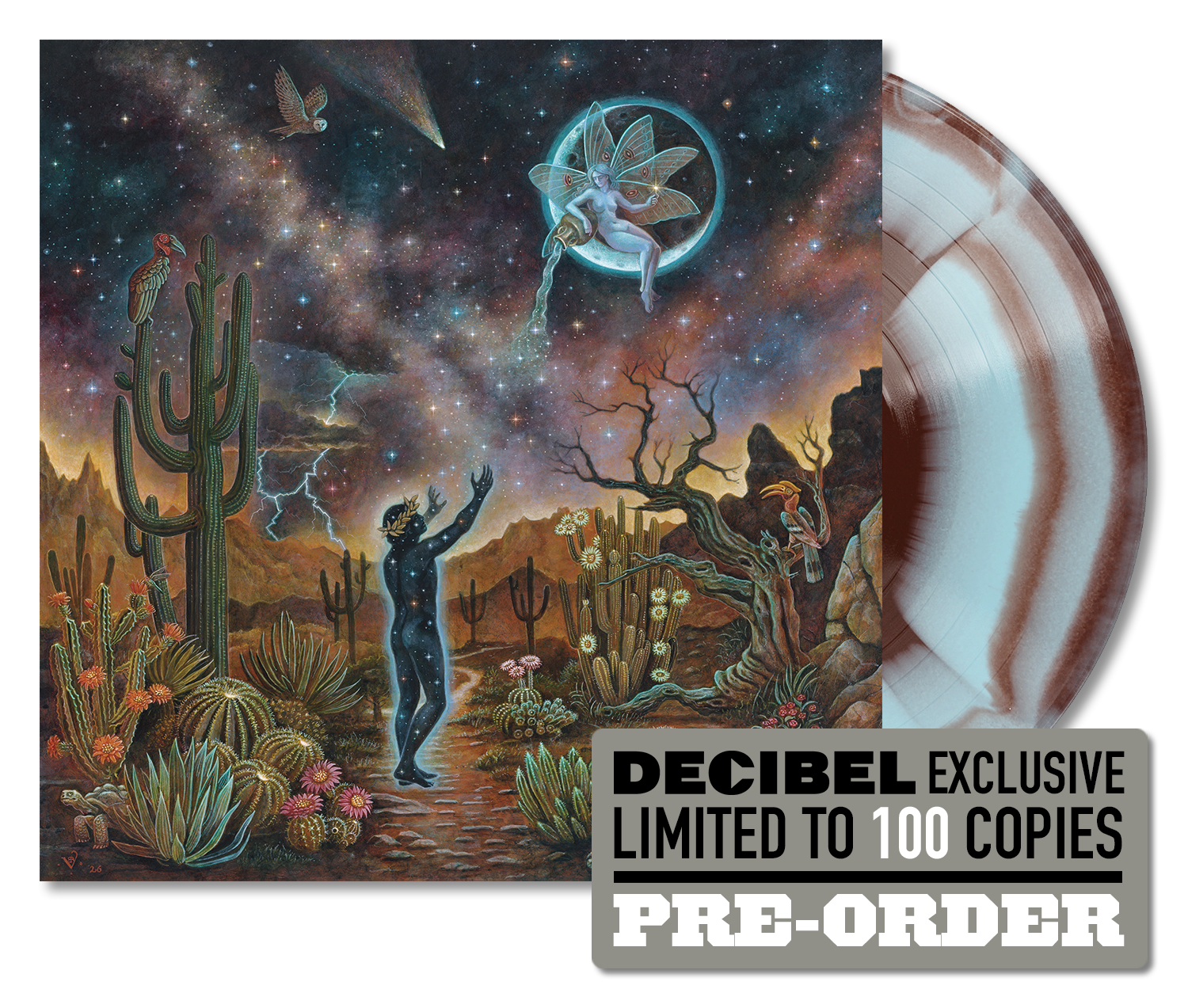
Good God / Baad Man was produced by Grammy Award winner Warren Riker, whose previous credits include Fugees, Down, and Cathedral. The album artwork was created by New Orleans artist Scott Guion.
Recording sessions took place at Blak Shak Studios in Riffissippi, USA, Dockside Studios in Maurice, Louisiana, and at Barry Gibb‘s home studio in Miami, Florida.
Following a recent European run, Corrosion Of Conformity has returned to North America for the second leg of its headlining tour with Whores and Crobot. The trek kicks off tonight, July 6, in Houston, Texas, and continues through July 22, finishing in Lincoln, Nebraska.
The band heads back to Europe in August for more concerts and festival appearances before returning to the U.S. in October for a performance at this year’s Aftershock festival in Sacramento, California.
The current lineup also includes the band’s newest members, bassist Bobby “Rock” Landgraf and drummer Nick Shabatura.
The post CORROSION OF CONFORMITY Shares Music Video For “Baad Man” From Upcoming Album “Good God / Baad Man” appeared first on Sonic Perspectives.

Sammy Hagar never even got to play a note at Freedom 250 — and he’s still catching heat for it. The Red Rocker was set to be a surprise musical guest at the Washington, D.C. celebration marking America’s 250th birthday on July 4, but thunderstorms wiped out the entire musical lineup, Hagar included. That didn’t stop backlash from fans upset he’d agreed to be involved in anything connected to President Donald Trump in the first place — and now Hagar’s firing back, while also revealing the unity-themed speech the storm never let him deliver.
STREAM THE METAL BREAKDOWN DAILY NOW:Scott Penfold breaks down the Sammy Hagar Freedom 250 fallout on today’s Metal Breakdown Daily — digging into why this keeps happening to legacy rock acts at patriotic events, what Hagar’s actual planned speech reveals about his intent versus how it got read online, and whether “it’s not political” is even a winnable argument anymore in 2026. Download the free Loaded Radio App on Apple iOS and Google Play to stream the full breakdown.
Hagar was booked as a surprise performer to handle the musical portion of Freedom 250, the D.C. event marking the 250th anniversary of the Declaration of Independence. He wasn’t alone — Lynyrd Skynyrd and country singer Gretchen Wilson were also on the bill and also got rained out. Thunderstorms scrapped the entire musical lineup, and the event proceeded with a speech from President Trump, fireworks, and a performance from the U.S. Air Force Band instead.

Despite never taking the stage, Hagar still faced significant blowback on social media from fans angry that he’d agreed to be part of an event tied to Trump at all. Hagar pushed back directly, insisting the event was about the country’s birthday rather than any specific administration, and framing his involvement as separate from partisan politics entirely.
LIVE & LOUD: Stream the World’s Hardest Radio Station 24/7 Below:In a separate Instagram post, Hagar revealed he’d been rehearsing a short speech he planned to deliver live, timed to lead into the Van Halen classic “Right Now.” He shared an image of the handwritten remarks, which called for unity, an end to hatred and prejudice, and leaned heavily on the “right now” theme tying directly into the song’s title. The message closed with a direct birthday wish for the country. Whether or not the backlash softens now that the actual planned content is public is very much an open question — but it’s a very different tone than what critics online seemed to assume he was walking into.
This isn’t an isolated situation. Classic rock artists booked at patriotic or government-adjacent events increasingly find themselves caught in the same bind Hagar just experienced — caught between an apolitical framing of “celebrating the country” and an audience that reads any association with a sitting president as an implicit endorsement. Given Hagar’s ongoing history of speaking candidly about where he stands on things, it tracks that he’d address this head-on rather than let it sit.
Freedom 250 fallout aside, Hagar’s calendar isn’t slowing down. He heads to England for a run of shows beginning July 6, before returning to Las Vegas in September for another round of his Best of All Worlds residency — the same run that’s kept him busy with Michael Anthony, Jason Bonham, and Joe Satriani working through the Van Halen catalog live.
View this post on Instagram
No. Thunderstorms canceled the entire musical portion of the event, including Hagar’s planned surprise set, along with Lynyrd Skynyrd and Gretchen Wilson.
Fans criticized Hagar on social media for agreeing to appear at Freedom 250, an event President Trump spoke at, viewing his involvement as an implicit political statement. Hagar has said his participation was not intended as political.
Hagar shared a handwritten speech calling for unity, condemning hatred and prejudice, and closing with a birthday message for the country, which he’d planned to deliver before performing Van Halen’s “Right Now.”
Hagar heads to England for shows beginning July 6, 2026, before returning to his Best of All Worlds residency in Las Vegas that September.
Rained-out set or not, Hagar clearly wanted this message heard one way or another. Let us know your take in the comments, and follow Loaded Radio for continuing coverage.
The post Sammy Hagar Defends Freedom 250 Backlash, Reveals Unheard Speech appeared first on Loaded Radio.