As the hallowed season unfolds upon my fawning eyes, I try to keep up with a list that’s been plaguing me for some time now. The dreaded horror watch list that has been building like a parasitic infection, always clawing at me with new recommendations while leaving fewer moments throughout the day to check off the boxes that keep popping up at an alarming pace. Last night I started with a more modern film numerous people have recommended, Late Night With the Devil. After watching the trailer, I could tell this was going to be something more unique than the traditional horror fare I’ve been used to seeing in newer entries. So I gave it a shot, and while it didn’t grab my attention with a ferocious intensity, it did hold my interest with a subdued sense of sadistic humor.
The movie isn’t really a traditional movie, in the sense that it’s set up more like a documentary, or rather an exposé of footage from a television show where things went horribly wrong. With little breadcrumbs left here and there leading you down trails of occult worship and satanic rituals, the plot leads you to believe something more is at play here than just your standard demonic possession. Without giving anything away, there is definitely a reason to stay till the end if your curiosity gets the best of you. Without that connection to a deeper mystery of why this is all happening, I don’t think I would have watched the entire movie. Since this played out like an actual TV show from the 70s in real time, there were many dull points along the way that left me bored.
When it comes time for you to meet the star of the show, the energy really picks up, and I found myself feeling like I was watching a totally different movie. The mood shifted from comedic talk show parody to straight up classic horror. Unfortunately, I felt it could have used a stronger parallel narrative outside of the television set, something like the backstage black and white scenes that contrasted with the broadcast and gave the story another layer to move through. It never fully picked a lane between presenting itself as recovered footage from the TV show and functioning like a traditional movie that cuts between the broadcast and everything happening around it. Instead, it reminded me of those moments in horror movies when they cut to a talk show featuring something spooky for a minute or two, only this talk show wore out its welcome long before I gave a shit about any of the characters.
If the story wasn’t living up to its demented expectations, the ending surely scratched some of the itch I’d been missing for most of the film. In short, it all unfolds rather quickly and quite bizarrely. Almost like a demonic acid trip where you’re trapped inside someone’s television in the 70s and can’t escape, no matter how much you keep telling yourself this isn’t real. The climax was as confusing as it was outlandish, but not necessarily in a bad way. It kept you thinking after it ended, which is always a good sign when you watch a movie. Especially when the potential for being such a forgettable flick was so prominent throughout the first half.
Overall, I wouldn’t watch this again, but I would surely recommend it as a great horror movie to watch with friends. A group setting where reactions will most certainly be drawn out in the open is much more suited to this movie as opposed to a solo session where you are left with nothing but your thoughts, and a feeling like it just wasn’t enough to satisfy your thirst for a truly twisted masterpiece.
The entire reason to go on SubwayTakes, Kareem Rahma extremely viral internet series, is to fire off some possibly uninformed opinions that will annoy people who are scrolling on their phones. That’s what movie star Andrew Garfield did when he appeared last week on SubwayTakes Uncut, the longer iteration of SubwayTakes. Garfield prepared eight different takes for his appearance, and his first was one that he described as “soft.” That take: “You can’t legitimately call yourself a DJ unless you use physical records.”
What you get is my honest opinion, so don’t expect every third album to receive 90 out of 100 points. There is simply way too much crap out there, even in the genres I love. Come on, almost every average release out there receive top scores in one or more webzines these days. My task is to help the readers by singling out the releases that deserves some extra attention. If you can’t live with mye critical approach, don’t bother sending me promos! If you are allright with it, hit my mailbox with your stuff (physical promos preferred):
leifkr(at)online.no
Mail address: Leif Kringen, Melbystien 3, N-2818 Gjovik, Norway
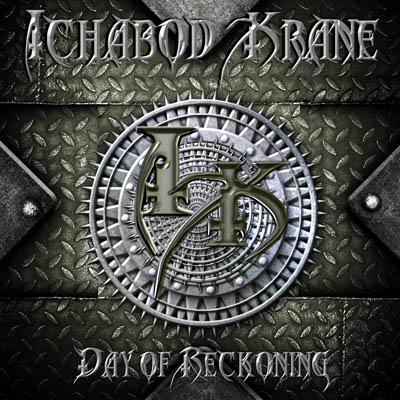
Ichabod Krane “Day Of Reckoning” (Pure Steel)
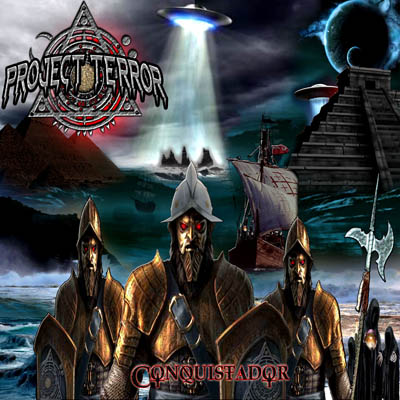
Can I really manage another Pure Steel release? Is “Day Of Reckoning” as dead average as most of the other stuff this label is pushing on us? Is the production better compared to the almost unlistenable Project Terror-album? Yes, yes and yes are the answers. Unfortunately this is another one of those albums, that even though its going to receive top scores in some webzines like all releases nowadays does, will go on to sell a couple of hundred copies before everyone forget about it. While the album sounds a bit better than Project Terror’s “Conquistador”, “Day Of Reckoning” also has some major flaws. The flat production takes a bit of the edge off the music, making it all sound a little too safe. Music like this really need a heavy and powerful production, this album simply doesn’t have one.
Ichabod Krane’s claim to fame is the fact that they feature a couple of members and former members of bands like Advocate (killer band!), Halloween and Sleepy Hollow. Singer Jeff Schlinz is the least known musician in the band although his main band Wülfhook will surely get some attention as soon as they move on from the demo stage. I remember him sounding quite impressive on the Wülfhook-demos, but I don’t feel this recording is able to bring out the very best of his voice.
Clocking in at 40 minutes, “Day Of Reckoning” contains ten tracks of mainly mid tempo oriented traditional US metal. There are attempts at adding melodies, but none that sticks out. The songwriting lacks a bit of focus, and you’ll find yourself struggling to remember individual tracks off this album, even after five or more listens. The label might talk about catchy choruses, but to be honest I can’t find a single one here. Surely a matter of taste, but when its hard to distinguish the choruses from the verses, you have a problem on you hands.
Schlinz’ high pitched vocals recall Rob Halford at times, but his voice could and should have been more prominent in the mix. He also should try to sound more diverse, as he does more or less the same stuff all the way through this album. Ichabod Krane lacks imagination and creativity in the song writing, resulting in all the songs sounding dull and boring without a single highlight. As much as I adore US metal, I can only suggest you forget this one as soon as possible. (45/100)
In Solitude «Sister» (Metal Blade)
It certainly took some time getting this review together. Partly because the album is rather different compared to the last album, and partly because it threads some waters that I am not too familiar with. So don’t expect the usual list of reference bands here, since I am proud to admit I have close to zero knowledge about the countless goth rock-and post rock-bands that are namedropped in most other reviews of this album.
I mentioned that it’s different to the excellent “The World. The Flesh. The Devil” which was the best album released by a metal band two years ago. But wait a minute, wasn’t that album also quite different from the debut? Is really the difference between “The World. The Flesh. The Devil” and “Sister” more remarkable than between the former and “In Solitude”? I am really not sure. I agree that “Sister” is less metal than its predecessor, but come on, we’re hardly talking about a revolution. You can surely hear that we’re dealing with the same band. Even if singer Pelle more or less has quit using the falsetto, he is still remisicient of King Diamond when he operates in his mid-range, and songs like the heavy and slow creeping “Inmost Nigredo”, “Horses In The Ground” which includes a guest appearance by female vocalist Jarboe and “Pallid Hands” which was a song l liked already at first spin, still have enough metal in them. At the same time there is some different stuff here, like “Death Knows Where” which has a strong 70s vibe and the shortest song on offer, the acoustic “He Knows”. The latter doesn’t do much for me, but it’s really not that important as long as I enjoy pretty much everything else on offer.
I still rate the second album a little higher, but In Solitude has managed to move on and do something different while maintaining the dark aura that has always surrounded the band. How many bands manage to carve out an even fresher and more original sound without losing grip on their main strength, the totally killer song writing? For this alone, In Solitude deserves some credit. The instrumental side of things is really tastefully done. Many of the riffs come with some incredible hooks and the solos are never simply show offs, but executed in a way that fit the moods of the songs to perfection.
The opinion will surely differ on this one, and my guess is that some people simply will be put off by the fact that the band has moved away from their metal roots. If you can look past that, and enjoy this album for what it is, a dark blend of rock, hard rock and metal from the seventies, eighties and nineties, you will most likely be fascinated by how much there are to discover here. This is certainly not an album that you will lose interest in this side of Christmas. (85/100)
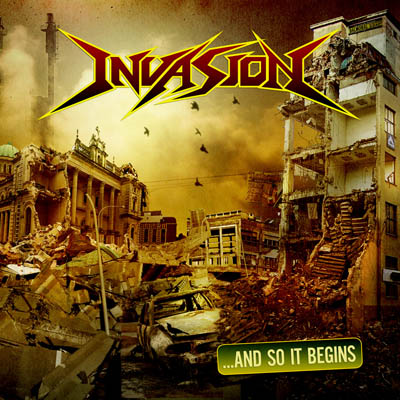
Invasion “…And So It Begins” (Pure Steel)
Having released two demos several years ago, Invasion is a quite surprising addition to the fast-growing Pure Steel-rooster. On their first full length release, the three Swedish guys have included some tracks from their demos as well as some newer tunes. The guys have been, or are still involved in a few other Swedish acts, most notably, guitarist Kalle Sundin recently joined Gehennah as their new bass player.
Musically we’re dealing in fast and intense old school thrash metal. The roots are to be found in the eighties, but listening to “…And So It Begins”, I can’t free myself from thinking about the Swedish scene of the nineties as well, with bands like “Slaughter Of The Soul”-era At The Gates and Carnal Forge. Overall, Invasion is probably leaning more towards the Teutonic scene than Bay Area. Especially the angry, raspy vocals borrow heavily from the Germans, as it is clearly in the Mille/Angelripper-tradition. I have to admit I struggled a bit with the drum sound to begin with, but have more or less adjusted to it. Talking about the drums, there are some small hints of death metal in this album, most of them comes from the drummer who adds some blast beats to a few of the tracks. The production is powerful and everything sound crisp and clear. Old school-maniacs should be warned that this is not your typical untight and sloppy stuff, neither is the production very raw.
The album is a collection of 13 fast thrash metal rippers, most of them quite enjoyable. “Prophecy” is one of the best, a song where the band uses both melody and brutal blast beats to create three short minutes of thrashing intensity.. The playing time is just around the 41 minute mark, so the songs are short and to the point. The raspy vocals along with the tempo and some not to distinct melodies makes this a catchy affair, but at the same time the end result is a little predictable. I wouldn’t go as far as calling this generic, but the music surely lacks a little bit of personality. To conclude, Invasion isn’t a very original band and the material isn’t very diverse, but “…And So It Begins” is still a nice “modern” old school thrash-affair. (65/100)
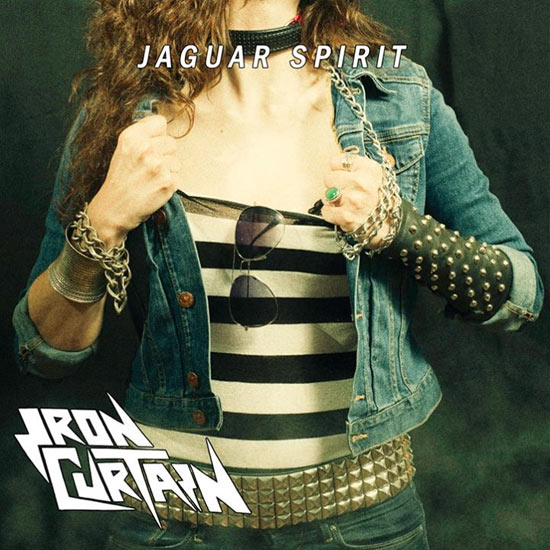
Iron Curtain «Jaguar Spirit» (Heavy Forces)
I bought “Road To Hell”, the first full length from this Spanish quartet along with Demona’s “Metal Through Time”, the latter being so completely horrible that I tried to forget about the purchase as fast as possible. Drifting into the more dusty and seldom visited corners of my record collection went both albums, although the stuff on “Road To Hell” was miles better than what Demona could offer. Well, judging by this new album, I should probably dig it out again. Sure, “Jaguar Spirit” is no classic, but it’s still a highly enjoyable record that I bet will leave most heavy rockers with a big grin on their face. The reason? Well, this music brings forth memories from the era we all know and love, The New Wave Of British Heavy Metal. The guitarists spit out riff after riff, while the drummer and the bassist deliver quite simple, yet highly effective work. Music like this should always be topped with a great singer to bring out the best in the straight forward material, but unfortunately Iron Curtain doesn’t quite have the vocalist to do so. Mike has a rough edge to his voice that is cool enough, but a more flexible singer would have given the songs more life and lifted the material to the next level. Sometimes I am struck by the same feeling I get when I hear Lemmy of Motorhead trying to sing the band’s more melodic tunes. It certainly adds a bit of charm to the overall expression, but to be honest, it doesn’t really sound particularly great.
There is arguably a lot of energy invested in this album, and you can almost picture the band drowned in sweat in a warm studio as they were recording these tunes. As always with a band doing straight forward heavy metal, the diversity isn’t exactly huge. The tempo is often the same as well, resulting in quite a few of the songs sounding rather similar. The guys should definitely work on giving the songs a stronger identity. Even though some of them are quite enjoyable, stronger and more varied choruses can be one way to do it. Also, Iron Curtain sounds quite similar to other bands on the NWOBHM retro trip. To really stick out, the band needs to improve and highlight the elements that are most important in their sound. The album is quite coherent with most of the material at the same level, but I feel the title track deserves special mention, mainly for its intensity level. The band shows good taste by covering Weapon’s explosion of a tune, “Set The Stage Alight”. It’s also a good choice of a cover song, as the original is quite close to the style of music Iron Curtain performs.
“Jaguar Spirit” proves that Iron Curtain can be both energetic and enjoyable. With even stronger and more original sounding material as well as improved vocals next time, the band can probably be considered a real force among the newer European metal acts.(70/100)
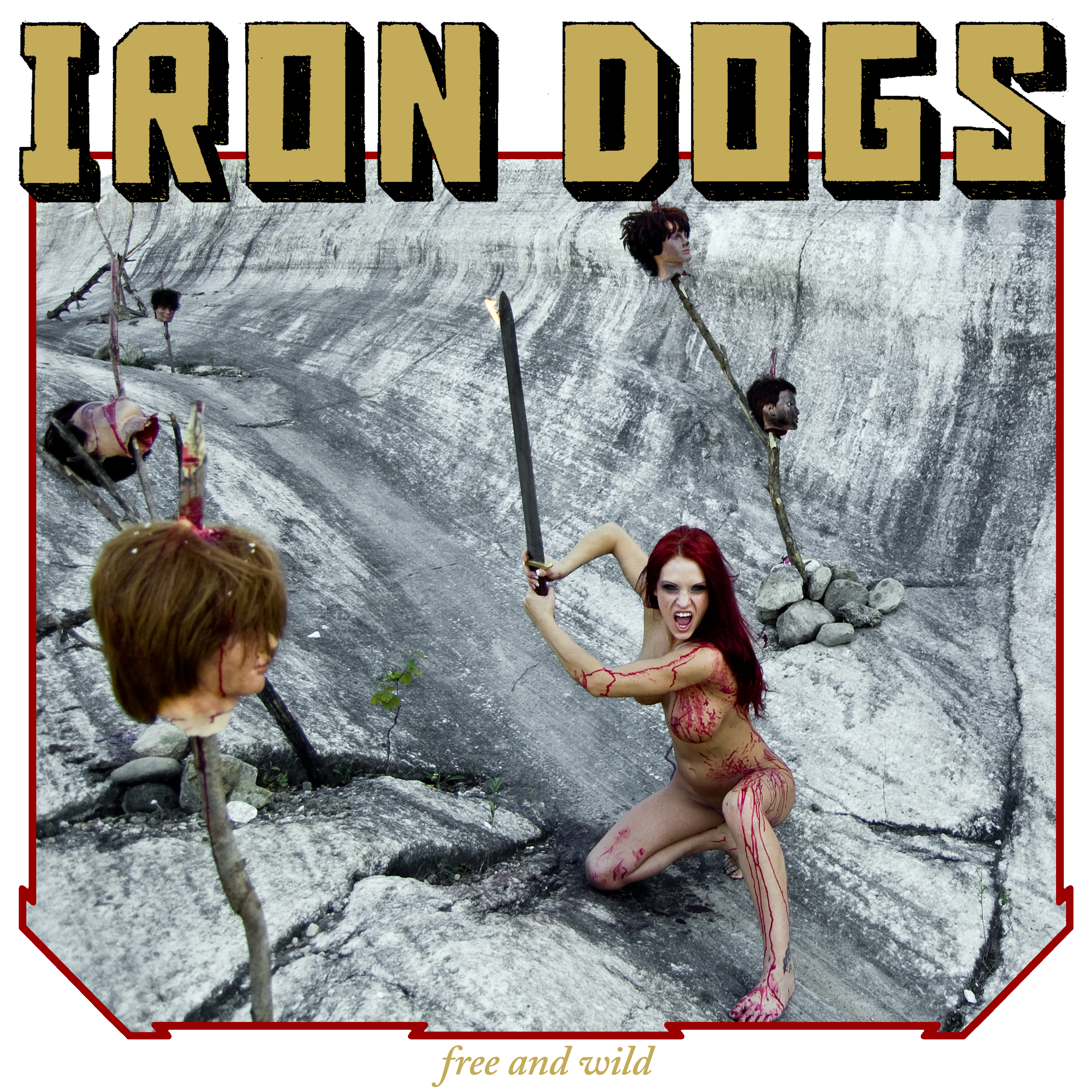
Iron Dogs “Free And Wild” (Dying Victims)
Okay, I’ll admit it straight away. I am not a big fan of Iron Dogs’ debut. The performance was too sloppy and too hectic for its own good, and I was also a little put off by the vocal performance and the songwriting. I hoped for some progression the second time around, and I guess I got some. “Free And Wild” is a better album than the debut. If we start with the production, there is no massive changes. The drums sound a bit stale and the guitars are thin, but it doesn’t really detract from the overall impression. The duo tries to weigh up with plenty of charm and enthusiasm, and they almost manage to create something worth listening to.
Yeah, you read right, this time Iron Dogs is reduced to a duo, with only drummer Dan Lee helping out guitarist, singer and bass player Jo Capitalicide. The music is more or less the same though, as Dan an Jo still grinds out their rowdy heavy metal with hints of punk and speed. I won’t try to name references this time, just think about the heavy metal of the early and mid eighties, the stuff put out by the likes of Neat, Ebony, Metal Blade, Roadrunner. Even though I don’t think they manage to capture exactly the same (and right) feeling, Iron Dogs could probably have been one of of those labels, if they weren’t 25-30 years late.
The opener of the album, “Firebird” is a fast one, quite similar to the first track of the debut, “Razors Of Doom”, but a bit more melodic. The tempo is brought down for “Kingdom Of Steel” which is a mid tempo tune with a dark atmosphere where Jo uses the deeper regions of his register. I like the fact that the song is completely different from the opener, but overall it’s just an okay track. The best tune is probably “Adversity”, a cool song that sounds a bit like simpler, stripped down version of Slough Feg. The title track is a letdown though, being way too predictable and hectic with a really weak chorus. I am not a big fan of Jo’s vocals in this song either, as he sounds quite uninspired and nearly speaks just as much as he is singing. Generally I could have wished for more enthusiasm in the vocal delivery.Jo has that bit of originality though, and I guess some people might find the way his voice cracks in the chorus of “Storm Warning”charming.
Most of the material on the debut struck me as a bit unstructured and messy, and fortunately this album is a bit easier to follow. However, the quality of the song writing isn’t that much better. For instance, I found the last three or four songs to be quite average. Not bad, but compared to the two best songs on offer here (“Firebird” and “Adversity”), nothing more than fillers. Some of the guitar work , for instance in “Cannibal Death Cult” is a little too unspectacular leaving me with a sense that I have heard it before, maybe even on this particular album .The best part about the album music wise, is probably the bass playing, as Jo makes it all interesting with his small, exciting runs. I am a huge, huge fan of everything obscure from the eighties, but that certainly doesn’t mean I have to worship every band that tries to capture something from this era, does it? (65/100)
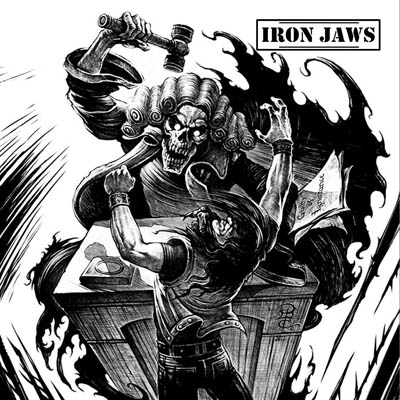
Iron Jaws “Guilty Of Ignorance” (Pure Steel)
Imagine what it feels like getting your leg caught in an Iron Jaw, feeling bones break and skin crack while you are screaming at the top of your head. Listening to the band Iron Jaws is a different experience though, and nowhere near as powerful and sharp as the teeth of the iron jaw. The Italian quartet, based in the city of Asti, located in the northwest of Italy, certainly know what they’re doing and manages to come up with a decent slap of old school, mostly speed metal-oriented material, but there is still some aspects about the band that doesn’t work as well as I would have liked them to. For an album that goes in this direction, there is hardly a better title for an opening number than “No Speed Limit”, and while this is clearly one of the strongest tracks on offer, there is something missing. The sound doesn’t feel quite right, and while the info sheet from the label singles out the drums as an improved area, as they now have a “much more devastating impact” compared to the debut, I am not satisfied. They might sound better compared to “Louder Is Not Enough”, the band’s 2010-album, which I have to admit I haven’t had a chance to listen to, but in my opinion they don’t do the quite decent material justice, as they sound way to clinical and simply unnatural. Also, the guitars could have sounded a lot more powerful.
The singer, Mixy has an angry, snarling approach adding some aggression to the overall picture, but there are some amateurish and heavily accented background vocals here and there that spoil the enjoyment a bit. “H.B.M.B” and “Speed Metal Command” are probably the most annoying examples, but this type of vocal also leaves its mark on the otherwise okay title track. The cover version of Hallow’s Eve’s classic “Metal Merchants” is too clean and lifeless, and doesn’t do anything for me apart from documenting that the band has excellent taste when it comes to metal.
Apart from the objections I have against the sound, the songs are simply not memorable enough and even though the band has probably listened to all the right records and are performing this kind of metal with all the right intentions, they’re not really capable of recreating the same atmosphere as on the classics that inspired them. Neither is the material diverse enough to keep me interested throughout the album. If you are really desperate for some fast and catchy Italian metal, Asgard is a far better alternative than Iron Jaws. (55/100)
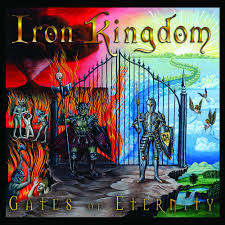
Iron Kingdom “Gates Of Eternity” (Self-financed)
A few years back I used to do around 150 reviews (in Norwegian) yearly for Scream magazine. Nothing but madness of course, but at least it helped me keeping up to date with almost everything that was released that could be labeled as heavy metal. Nowadays, with two small kids hanging onto my arms and legs for most of the day, I don’t have time to check out every band that releases albums on their own, thus Iron Kingdom from British Columbia in Canada, almost went under my radar. I didn’t get a chance to listen to the band’s debut when it was released towards the end of 2011, but luckily the band sent me both this one as well as this year’ offering “Gates Of Eternity”.
Countless US metal-bands have performed music that is inspired by Iron Maiden. Steel Prophet is a name that springs to mind, a band that did this very successfully (we’re talking music, not sales here) during the nineties, and since we’re already in Canada, what about Deaf Dealer and their debut “Keeper Of The Flame” as well as the absolutely killer, unreleased second album “Journey Into Fear”? As you probably already have understood, Iron Kingdom has also listened to their fair share of Maiden. “Gates Of Eternity” contains plenty of galloping rhythms, twin guitars and a bass that is very distinct in the mix. The vocals of Chris Osterman are different though, nasal, thin and high pitched, but never what I would call strained. I like his voice a lot, and it certainly adds identity to the band’s musical expression which, to be honest, isn’t very original.
What about the songs then? Well, most of them are very enjoyable. Let me guide you through a few of the key tracks: The speedy and catchy opener “At The Gates” is a definitive highlight, the riffing here reminds me a little bit of the godly Destiny’s End. The song is quite dynamic too, with a calmer middle part. “Chains Of Solitude” is another solid one, featuring some really cool axe work and a nice chorus. “Demon Of Deception” is mostly an up tempo tune, but illustrates the diversity on offer here, by introducing a much slower, heavier, some might call it doomier, chorus. Great stuff, even though the chorus would have been even more impressive if the singer had a fuller, more powerful voice. The 15 minutes epic, “Egypt – The End Is Near” has some great parts, but is stretched a bit too long, resulting in the album clocking in at nearly an hour. Some songs like “Guardian Angel” (A lot of Fates Warning to be heard here, especially in the Arch-like vocal delivery) and “Crowned In Iron” are solid stuff, nothing more, nothing less.
Overall this is an enjoyable and energetic sniff of mid-eighties heavy metal. The solos are ripping and the double guitar work is well executed. It’s also an album that sounds good to be a self financed affair. However, I feel the drums, played by Chris’ sister Amanda, could have been more defined and powerful. As I mentioned, the music isn’t exactly original, but I guess the third album will show us even more of what this band is about. The packaging also deserves a mention, especially in times when many people are downloading music off the internet. Sporting a really cult front cover, “Gates Of Eternity” is a well done release. The booklet includes lyrics and lots of pictures, something that adds to the experience. Visit the band’s site (www.iron-kingdom.com) and order this one if you are into underground heavy metal with a strong Maiden-vibe. (75/100)
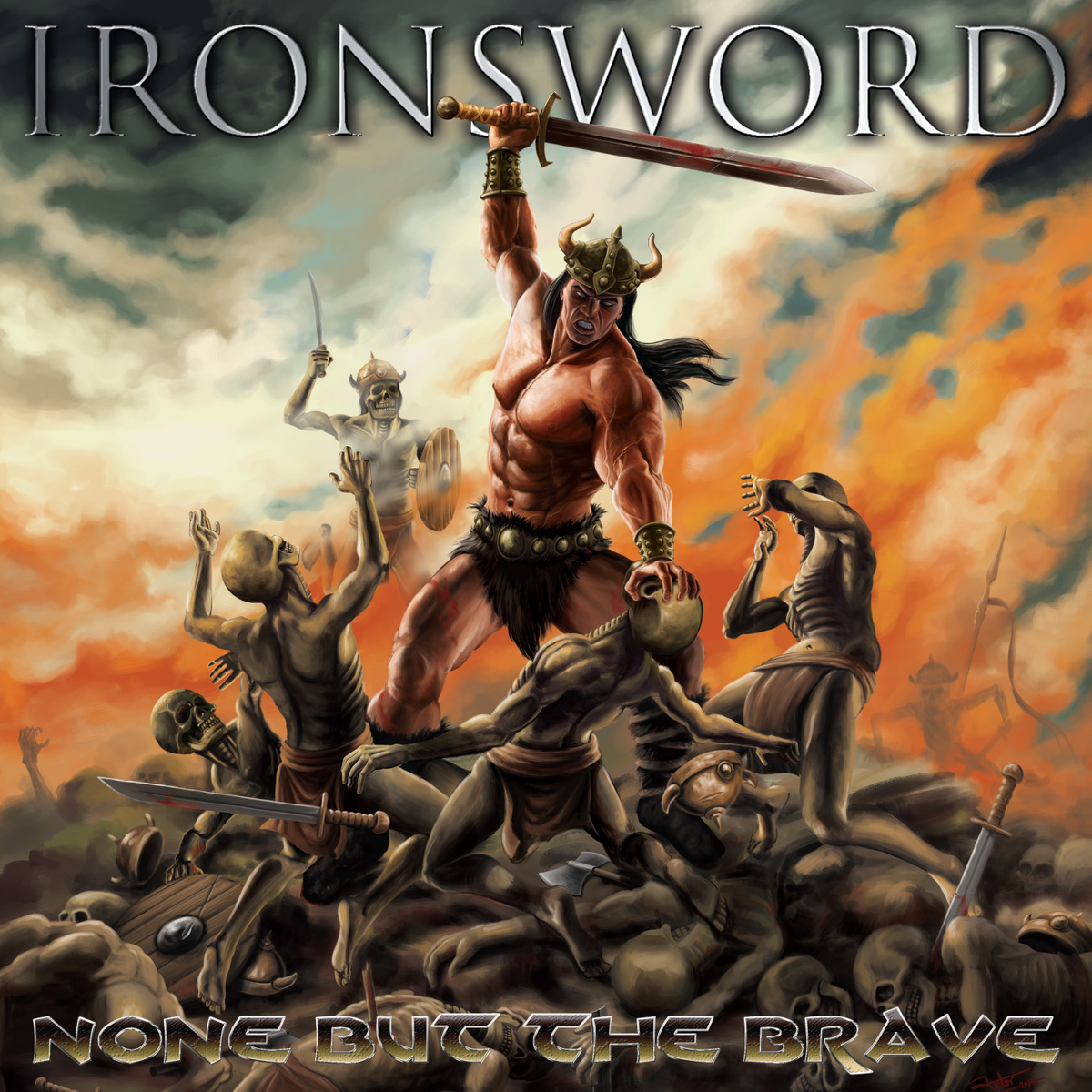
Ironsword “None But The Brave” (Shadow Kingdom)
I guess it’s safe to say that Ironsword is one of the best bands that has entered the scene during the past 15 years or so. I remember receiving the second promo tape for review in Scream Magazine in 1998 or something, and already back then, the band showed some promise. The debut album even more, while both “Return Of The Warrior” as well as “Overlords Of Chaos” were nothing less than outstanding releases, and among the very best that was released in 2004 and 2008 respectively. For quite a while, I feared we would never get the chance to listen to another album from Tann and his compatriots, and when the album was announced some months ago, I got really excited. My hands were trembling badly when I put the CD on, but I soon relaxed. This was the same Ironsword I knew and loved before, performing raw, heavy and catchy epic metal.
It’s all about taste of course, but I love Tann’s’ vocals. I can understand that he is not everyone’s cup of tea, but for me its simply impossible to picture Ironsword without this raw, hoarse and rough roars. In my opinion, the vocals add strength and power to the already strong and powerful music. The songs themselves are real anthems, with most of the time, rather simple, yet very effective and powerful choruses (“Kings Of The Night” anyone?) that simply deserves to be sung along to.
Apart from the opener “Forging The Sword” and “Calm Before The Storm” which both carry more than a slight resemblance to Manilla Road mostly in the vocals during the choruses of course, but also in tempo for instance, I really enjoy the title track, which is slower and darker song than many of the songs on the album. I love the way it creeps and crawls along, with heavy guitars and drums and this dark commanding chorus. Also the reference to Omen’s “Death Rider” is pretty cool!
As always the songwriting is quite consistent. A song like “Army Of Darkness leaves you in total exhaustion after pumping your fist in the air and yelling along with yet another commanding, masculine chorus. I wrote “quite consistent”, because there are a couple of tracks maybe, where it feels like the band is mainly going through the routine. They follow more or less the same pattern and style as the rest, but simply fail to impress as much as the better songs on the album. “Eye For An Eye” is one example, the slow “Betrayer” another one. When the album is finished you are also left with the impression that the band used a lot of the strongest songs on the first half of the disc.
Apart from the first half being a bit more impressive than the second, the only minor problem I have with this album, is that I feel it could have been a little more diverse, as many of the songs are held in the same tempo and have rather similar choruses and structures. That being said, the transparent, yet heavy production where you, for a change can hear all the cool stuff the bass player is doing, is very fitting. All in all, this is a mighty fine comeback from Portugal’s finest. (80/100)
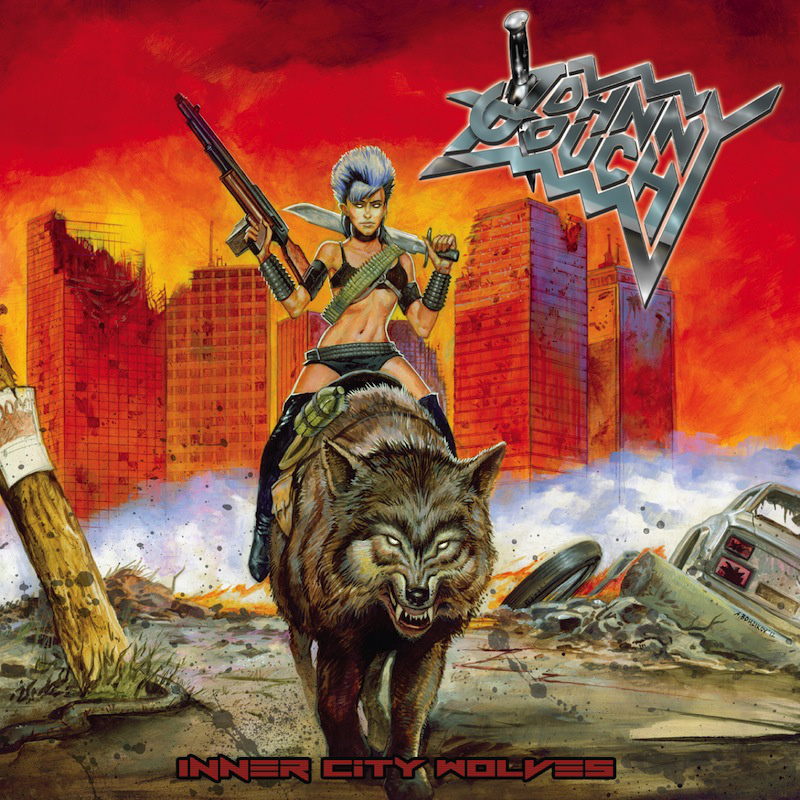
Johnny Touch “Inner City Wolves” (Shadow Kingdom)
Viewed from the outside, it certainly seems like a lot things are happening within the heavy metal circles of Australia at the moment. Bands that so far haven’t reached further than the demo stage, like Tarot and my new faves Outcast, are heavily covered here at Metal Squadron, while I’ve just started listening to the upcoming album by fellow hopefuls Convent Guilt. Out of the mentioned acts, Johnny Touch is definitely closest to Convent Guilt, as “Inner City Wolves” can only be labelled as pure heavy metal. Some might characterize this kind of straight forward, riff based heavy metal as simple, but done the right way, this is a genre that offers a lot of enjoyment.
Having spun “Inner City Wolves” countless times during the last month or so, my feelings towards this album have never been static. I started out being quite impressed by the material on offer here, had a shorter spell were things pretty much turned around and I found the album a lot less enjoyable, and ended up writing this review pretty much somewhere in the middle of these two polarized views. The songs themselves aren’t bad, but the overall impression is that the material lacks aggression and bite. Maybe it’s due to the dry and simplistic production, but most of the time this kind of music works rather well without huge walls of guitars and thundering drums. That being said, “Inner City Wolves” could have benefited from a bit larger sound without losing the authenticity. Especially the rhythm guitars could have sounded more powerful.
The general performance, both when it comes to the voice and the instruments also feels a bit restrained, as the band seems to hold things back a little. It’s maybe not in the nature of this type of heavy metal to have massive choruses, but the songs could also have stood much stronger individually with bigger hooks or fist pumping choruses. The underwhelming “Bitch Of A Son” is just one example. The arrangements also feel quite sparse and similar, adding to the feeling that you are listening to one long song rather than a collection of individual tracks. The best part about this album is the riffs, which, at least partly, shows that the band can come up with something that sounds fresh and inspired, like in the opener “It’s Alright”. I also enjoy some of the more epic songs that show a bit of dynamics, like “End Of Daze or the closer “Black Company” which includes some acoustic, Crimson Glory-like, passages as well as some heavier riffs compared to most of the songs on offer here. The shredding solos in for instance “The Metal Embrace” is also a highlight. “Inner City Wolves” sounds honest enough, and appears to be played from the heart, but neither the material nor the soaring vocals are quite strong enough. (65/100)
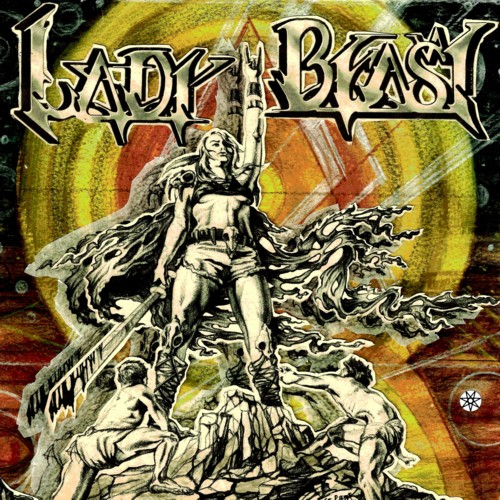
Lady Beast ”Lady Beast” (Infernö)
I really miss a killer, contemporary, female fronted heavy metal band. You know, something in the vein of Acid, Masque, Chastain, Malteze or Black Knight. Canada’s Mortillery is a very cool band and probably the best of the new ones, but their music is just as close to thrash and punk as pure heavy metal. Christian Mistress is a promising act too, but need a couple of more recordings under their belt while Cauchemar sounds decent whenever they enter a studio, but so far has trouble cutting it on stage. However, none of these are up to the same standard as the killer acts from 25 years ago. The situation leaves the podium open for new bands to enter, and while I have listen to too many weak Warlock-copies during the last ten years, I have never given up discovering something as good as the aforementioned bands.
Lady Beast isn’t there yet, and they might struggle to reach the same heights, but at least they prove with their debut that they have something to offer. I have to admit I missed out when the band released “Lady Beast” themselves on vinyl last summer. If you also did, here is another chance to hear what this female fronted, Pittsburgh-based quintet is up to. I have to say I was pleasantly surprised. So the quality of the songs might not be overwhelming, but I enjoy the fact that the band has their own musical expression. Quite an achievement as we’re dealing with traditional heavy metal here.
The album consists of eight self penned, rocking tracks that make fun listening to. The songs are short, catchy and to the point, and I really enjoy the intense riffing in “Lady Beast” and “The Lost Boys”. On a positive note, Lady Beast, also has a certain amount of charming naivety topped with lots of enthusiasm. Combine these two elements, and you have something quite infectious. Until next time, I hope the band do something with the rather poor and flat drum sound. Also a bit more identity both to the overall expression as well as the single tracks, can’t harm.
The CD-version has an extra track in addition to the eight on the vinyl, and as often before, it’s a cover. Unfortunately, I can’t say that Lady Beasts take on “Ram It Down” by Judas Priest is a success. While the melodic vocals of Deborah Levine work very well in the band’s own compositions, her voice clearly lacks the power and presence of the original which a cover version always will be compared to. In fact, I think this release would have been better off without this extra song, even though it’s a short one in the first place, originally clocking in a bit short of 28 minutes. (70/100)
Lucid Dreams “Lucid Dreams” (Rockworks)
A late 2013 release, this album by the Norwegian act, Lucid Dreams, would most likely not have been reviewed if it wasn’t for the fact that a) the band is from my homecountry, a scene that needs all the support it can get and b) the guys sent me a physical copy of the CD. I am not sure if this is the right place to say it, but the CDs I receive physically will always be a priority, as sending one shows that the band is ready to offer both time and money to get their stuff reviewed, something that has already gotten pretty unusual as now it’s far too easy to click and send a large file for a review.
That being said, I am not willing to do too many compromises with what I review, so don’t expect me to write about everything that gets in my way. Lucid Dreams has existed for some years already, but this is their first album. The six musicians are no newcomers, but most of them can’t brag about being in this or that band. The drummer, Kjell Rune Hagen, is probably the best known among the bunch, having earlier bashed skins for both Tristania and Trail Of Tears. The singer, Fredrik Sindsen is also in Trendkiller, who has been part of the scene here in Norway for a long, long time now.
The main reason why I hesitated reviewing this release, is the fact that it’s not a full blown metal album. The guys deal mostly in hard rock but blends it with metal and adds some progressive touches here and there. Sindsen has a powerful, rough, towering and soulful voice, and his performance lifts the album from mediocre to something I can listen to and enjoy quite a bit, at least when I am in the right mood. The album, produced by guitarist Rune Gutuen and mixed and mastered by veteran Tommy Hansen at the legendary Jailhouse, sounds both powerful and crisp, a near perfect sound to this type of music.
The album contains an intro and 11 songs, and I feel this is two or three too many, as a few of the tracks are not up to the desired standard. The whole thing gets off to a flying start with “Cassie’s Escape”, the first real song, probably the most “metal” track on the album, an uptempo, bombastic and quite powerful affair. “For Your Love” is also a strong stadium hard rocker, while the first single is “Daisy Dukes”, an American hardrocker in the vein of Van Halen or Extreme. The song has lots of energy, but isn’t really my cup of tea.
Overall, the band sounds really professional, and could easily have been mistaken for an American hard rock band, but they also have a little of a contemporary European melodic hard rock/metal-touch. All credit to the band for making a very diverse album, the first part of the song “Lucid Dreams” sounds a bit like the calmer moments of Dream Theater, while “Stormy” is a slow, dark and melancholic number. These songs are decent enough, but there are also some I struggle quite a bit with, “Wanton Conquest” is the one that springs to my mind first. In my ears, just a terrible song. Staying with the areas where there are room for improvement, I feel the keyboard is too dominant in a few of the tracks. In the intros it all works fine, but some of the keyboard solos feel misplaced and interrupt the flow of the songs. The band also needs a bit more identity. This style doesn’t have to be original to be good, but the moments of déjà-vu on this album are a bit too heavy. (60/100)
“Lunar Shadow “Triumphator” (Self financed)
I featured an interview with main man Max from Lunar Shadow some months ago, but never got around to review their first offering, a four song EP with a playing time of around 20 minutes. First, let me say that I really love this kind of self production. Lunar Shadow have done everything right here, we’re talking a real, silver pressed CD, a cool cover that complements the musical content, and lyrics printed in the booklet. For underground maniacs these things are essential, so let’s issue a “well done” to the band.
So far, so good. What about the music then? I don’t know why, but I kind of expected something a bit more aggressive or heavy. “Triumphator” contains mainly epic metal with songs dominated by countless double guitar leads. Most of the songs are held in mid tempo, but in the form of “Metalian” the EP contains a through and through faster track. I have to admit that I struggle to find a really outstanding song here, but on the other hand, there is not a single track among the four that I am likely to skip either. Even though the sound is a little muddy, you can still hear the many details in the songs. There is definitely some original songwriting here and at times some unexpected melodies (listen to the chorus in “When The Last Grave Has Opened”) contributing to this being one of those releases that you can play again and again without getting tired of it. The song structures are often that little different from what you expect, and the main strength of the band is the fact that they manage to do things a little bit different, even within the rather narrow borders of heavy and epic metal.
The production, while not being overproduced or clean, sounds very natural with a strong live feeling. Of course the guitars could have sounded a bit fatter, but after all, this is a self financed release. In Alex Vornam, the band has a decent, but not spectacular singer. There is definitely room for improvement in this department, as sometimes it feels like he is holding back a little. His clear voice in itself is a pretty fine match with the music though. One other thing that needs to be mentioned is the bass playing. I simply love it! Try to isolate the instrument when you play the EP, and you will hear a lot of really cool stuff going on. (70/100)
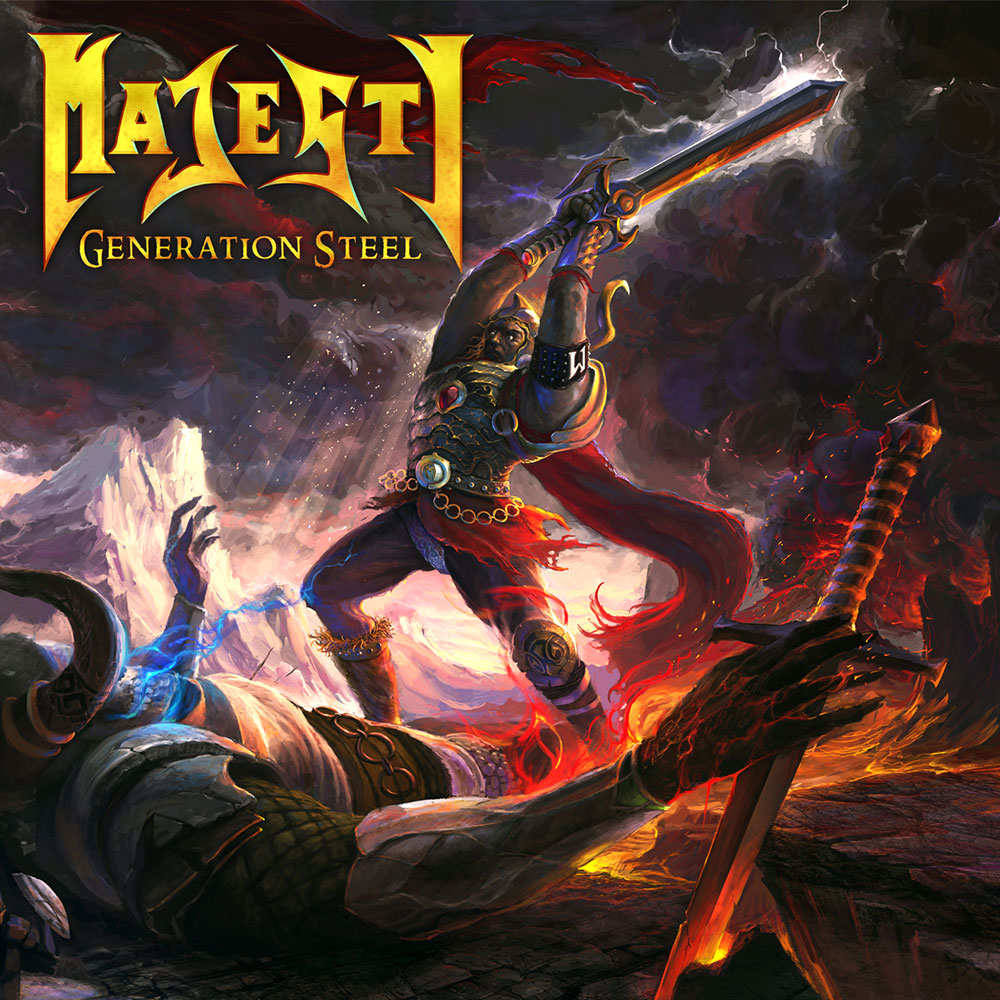
Majesty “Generation Steel” (Noiseart)
Majesty is a band that is quite inconsistent, but when on form, like on a couple of albums in the past, they’re one of the better European acts at penning catchy stuff somewhere between Manowar and the typical German singalong tradition. I guess most readers will find this band a little to clichéd, cheesy and predictable. Members have come and gone since the band debuted with “Keep It True”, back in 2000, and today singer Tarek is the only original member left. The two last offerings from the band, “Thunder Rider” and “Banners High” both released in 2013, differed a lot in quality, as I thought the former was pretty decent, in fact one of the better releases from the band, while the latter simply did nothing for me.
“Generation Steel” opens with “Hawks Will Fly”, which is not as fast as you probably would expect a opener of a Majesty-album to be. The chorus and the vocal melodies along with the oooooh-choir in the background is typical Majesty though. Other songs include “Shout At The World”, starting with a piano intros similar to Roxette and turning out to be one of the most commercial song from the band ever. If you replace the vocals, this sounds a bit like übercatchy hard rock in the vein of Lordi or Brother Firetribe. Who knows, this tune might be a hit in the metal and rock clubs in Germany?
For those who have followed the band closely, there is absolutely nothing new here. If you compare an album like “Sword & Sorcery” which to date, along with the already mentioned debut, is their best one, to “Generation Steel”, you’ll easily hear that we’re talking about the same band. The melodies are more or less variations over the same theme, with plenty of typical Manowar pathos. At the same time, it’s also quite easy to hear that the band sounds a bit more commercial these days. There are traces of hard rock in the sound of the band, “Shout At The World” has already been mentioned, the huge ballad “The Last Reward”, is another example.
My guess is that if you are into bands like Manowar, Virgin Steele or Gamma Ray for that matter, and haven’t heard Majesty before, you might be in for a treat here. If you have heard at least a couple of the albums the band has already done, chances are you’ll find “Generation Steel” a little too safe with tempos ranging from the standard fast, double bass numbers to stomping mid tempo and the already mentioned ballad. The lyrics have many references to past works of the band, including lines and phrases like “Reign In Glory” and “Keep It True” and in some tracks they seem a bit too banal. Like in the past, there is also a tendency to repeat the choruses to a point when you get tired of them. (55/100)
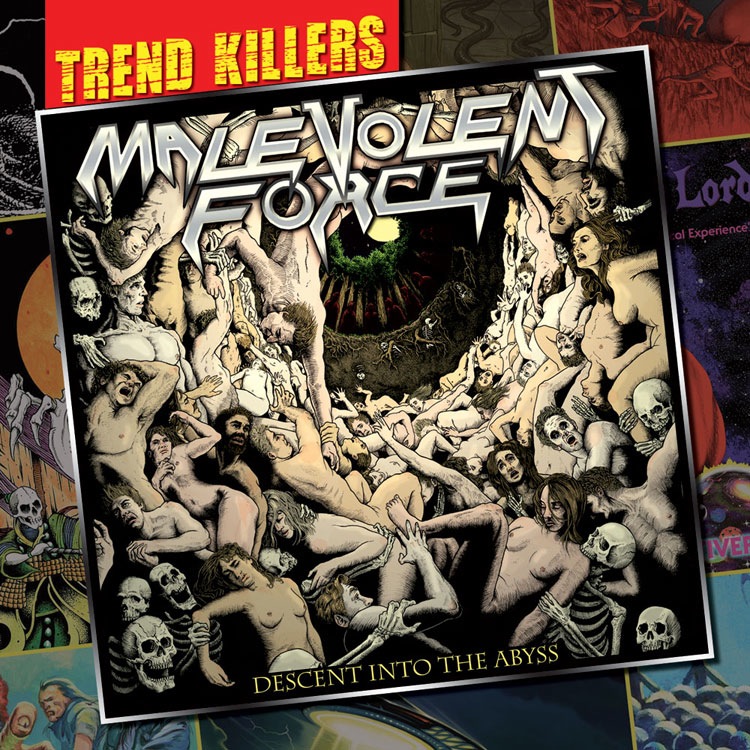
Malevolent Force ”Descent Into The Abyss” (Stormspell)
If I get it right, “Descent Into The Abyss” was released digitally at the beginning of this year, and now Stormspell has made the recording available on physical format as part of their ever growing Trend Killers series. The band is from Houston, Texas, and released a demo titled “Rhapsody Of Evil” back in 2012, containing five of the eight songs included here. The opening track, “Soldier Of Misfortune” starts off with guitars sounding a bit like Artillery for the first minute or so. At close to six minutes, it’s by far the longest song, mainly because of the intro. Most of the tracks clock in around the three minute mark. As the first songs evolves, it turns into a decent up tempo, but not really fast affair, characterized by hoarse, desperate vocals. You can hear the singer almost gasping for breath here and there. Unfortunately, his vocals are a bit flat on the flat side, and he has the kind of voice that gets on your nerves a bit after a while, maybe also because the vocals are pretty upfront in the mix.
The music is pretty intense, but I feel it lack a little when it comes to memorable riffs. The band doesn’t sound like the most melodic and clean thrash-acts out there, but on the other hand not exactly savage or wild either. Somewhere in between maybe, with a bit from both worlds. Also the songs sound a little too similar, as the stand out moments are few and far between. There are some pretty devastating, heavier riffs between the two and three minute mark in “Destruction Of Sodom (At The Hands Of The Creator)” though, which is the best part on the whole album.
Throughout the album, the songs are characterized by dark riffs and the band is able to maintain a pretty high level of aggression and intensity, like in the two minute plus “Bound In Eternal Torment” which is a fast and intense rager. The breaks from the wild thrashing, are few and only temporary, as in the end of “Call Of The Blades”. Lasts for half an hour, feels about right. It’s a pretty short album, but about half an hour sounds right for this type of release. What the band presents is certainly not bad, but it leaves the listener quite lukewarm. The sound is not the main reason for that, although, a more meaty guitar sound would have helped a bit. I doubt the band will get any bigger recognition now, since the musical climate has turned a bit away from thrash metal again. (60/100)
Mausoleum Gate “Mausoleum Gate” (Cruz Del Sur)
Even though I wasn’t exactly blown away, the demo and the 7” managed to catch my attention, perhaps not first and foremost because of the strength of the material, but more because Mausoleum Gate sounded rather fresh and different on these releases. Luckily, the band still offers something completely different from the usual retro heavy metal stuff we get drowned in nowadays, but unfortunately the concept, or the main idea behind the band is still a bit better than the end result.
The riff in “Magic Of The Gypsy Queen” feels strangely familiar and the song sounds quite a lot like something Rainbow could have done during the seventies, although the vocals of V-P. Varpula adds something extra, or should I say different, to the context. The song itself is one of the catchier and better ones of the album. The album contains only six tracks, and “Demon Droid” is the second one, a different song compared to the opener, almost doomy in approach, and more eighties than seventies sounding. Unfortunately this strikes me as a tune where I feel too little is happening. Everything is kept rather simplistic, the riffs and the drums, and the vocals are…well…not bad, but for certain rather unspectacular. Varpula is clearly not out to impress by showing off, and thank God for that, but the Finnish accent along with what seems like a lack of creativity when it comes to creating vocal lines that do something else than simply following the riffs, dampen my enthusiasm a little bit.
The epic “Lost Beyond The Sun”, a song that surprisingly enough starts out sounding like Magnum, with Varpula not too far away from Bob Catley, is better. This is a rather slow and epic tune, really thick on atmosphere. Good stuff! The band has a real knack for spooky intros and outtros and between the songs “Mercenaries Of Steel” and “There Must Be Demons” which are for sure, two of the most metallic numbers on the album, there is a bridge of sounds that makes the two tracks run together. To be honest, these kind of things, feel quite unnecessary and in my opinion don’t add anything substantial to the experience of listening to the album.
Mausoleum Gate” is rounded off by the song of the same name, but even though the main idea is pretty good, at nearly 12 minutes, the song is pretty drawn out and the chorus is repeated over and over again till it bores you. I can’t help but think that the band should have waited a bit longer to release this album. Perhaps then, both the material as well as the overall performance would have felt a bit stronger. (65/100)
Medieval Steel “Dark Castle” (Empire)
I caught most of the set Medieval Steel performed at last year’s edition of Keep It True, but have to say I wasn’t too impressed. Okay, you can’t really fault the atmosphere that was created through their self titled track, but I seem to be among the minority that really isn’t a big fan of this hymn. I enjoyed some of the older material the guys performed though, but struggled with some of the new songs that was performed. Everything sounded a bit sameish, and a tad too modern.
“Dark Castle”, the band’s first real studio album ever, released 30 (!) years after the legendary EP, contains quite a few of the songs peformed at Keep It True, and fortunately they work better here than on that particular night. Having had the chance to get to know the songs better, under more convenient listening circumstances, has certainly helped. Of course there are some boring moments here, like the totally awful album closer “Thou Shall Not Kill” and “American War Machine” (strong verse, terrible modern sounding bridge and chorus), but overall this isn’t as modern riffing oriented as I feared.
Although you wouldn’t find a single killer track here, there are some moments which are way above average, like the powerful opener “Powersurge” with a powerful main riff as well as the melodic and epic “The Man Who Saw Tomorrow” which sounds more or less like classic Medieval Steel. The band even pulls of the big ballad “April” in a respectable manner, something which seems quite uncommon these days, as most classic metal bands seem to crash big time when they try to do the ballad stuff. Most of the songs are what I would call good, but unspectacular, and besides the tracks I have mentioned, I have a hard time coming up with real stand out songs. “Circle Of Fire” perhaps, but that’s about it.
“Dark Castle” certainly doesn’t come with a big production, everything is kept rather basic, but the sound is clear enough, powerful enough and last but not least, natural enough. I don’t think this album would have sounded right with another type of production. In this case, less is definitely more. The musicianship is solid as you would expect from a band consisting mainly of experienced metalheads, nothing new or fresh, but still damn solid. The vocals of Bobby Franklin deserves special mention though. They’re still very pleasant to listen to, and at times he sounds a lot like Biff Byford. (65/100)
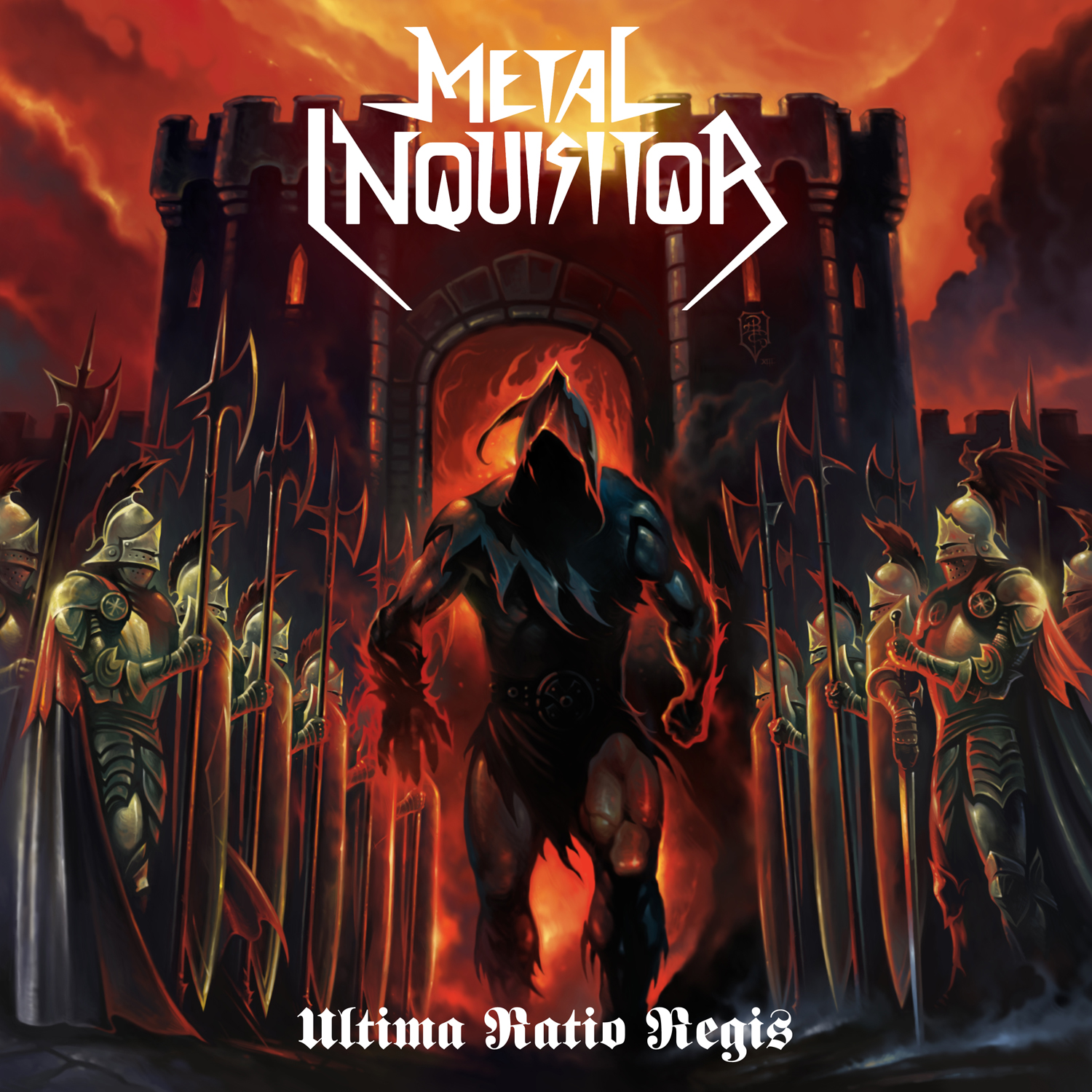
Metal Inquisitor “Ultima Ratio Regis” (Massacre)
This is Metal Inquisitor’s fourth album, and I guess they have earned the right to claim as Running Wild do in “Riding The Storm”: “We stay on course whatever will come”. The band was here before the recent heavy metal resurrection, and they’re still delivering more or less the same style as they started out with on the highly enjoyable debut, “The Apparition”. In fact Metal Inquisitor in 2014, is pretty close to being the definition of classic heavy metal, as they also were in 2002, I’ll have to add.
The last album from the Germans, “Unconditional Absolution” was their weakest yet, still it was a very enjoyable heavy metal-release. The same can be said about “Ultima Ratio Regis”, I’ve definitely heard the band better, but the album is still an early highlight of what looks to be yet another exciting year for those of us into everything old school, heavy and honest. The opening tune, “Confession Saves Blood” is all what Metal Inquisitor is about, and definitely one of the best songs on offer here. Uptempo,plenty of energy, inspired vocals and a catchy chorus are some of the ingredients.
The second tune, “Burn Them All” has a vintage Saxon-riff, while there are traces of Running Wild to be heard both in the riffs as well as in El Rojo’s vocal lines in “Banners High”, which is the anthem of the album. A piece of catchy, classic metal and for sure a future live favorite. Together these three songs represent a very good and highly inspired start to the album, but unfortunately the band isn’t really able to keep the high standard from here on. “Black Dessert Demon” (sic) certainly isn’t bad, again I am reminded of Saxon, because of the riffs but also due to the fact that singer El Rojo sounds a bit like a more aggressive and nasal Biff Byford. Unfortunately, the song is too predictable without any real “vow-factor”. By the way, El Rojo has become a real trademark for the band, and is a singer you’ll recognize among hundreds of others.
To avoid sounding too negative, I have to point out that the latter half of the album has grown considerably on me since I heard the songs the first time. The main reason why these tracks needed a bit more time, is probably that very few of them, apart from maybe the album’s most melodic tune “Servant Of State”, have particularly strong choruses. My fave outside of the first three songs, is probably the fast and powerful “Death On Demand”, but also “The Pale Messenger” with a very cool main riff deserves a mention. The rather slow, and more than seven minutes long closer “Second Peace Of Thorn” is nothing else than boring though, and by far the least interesting song of the album. (75/100)
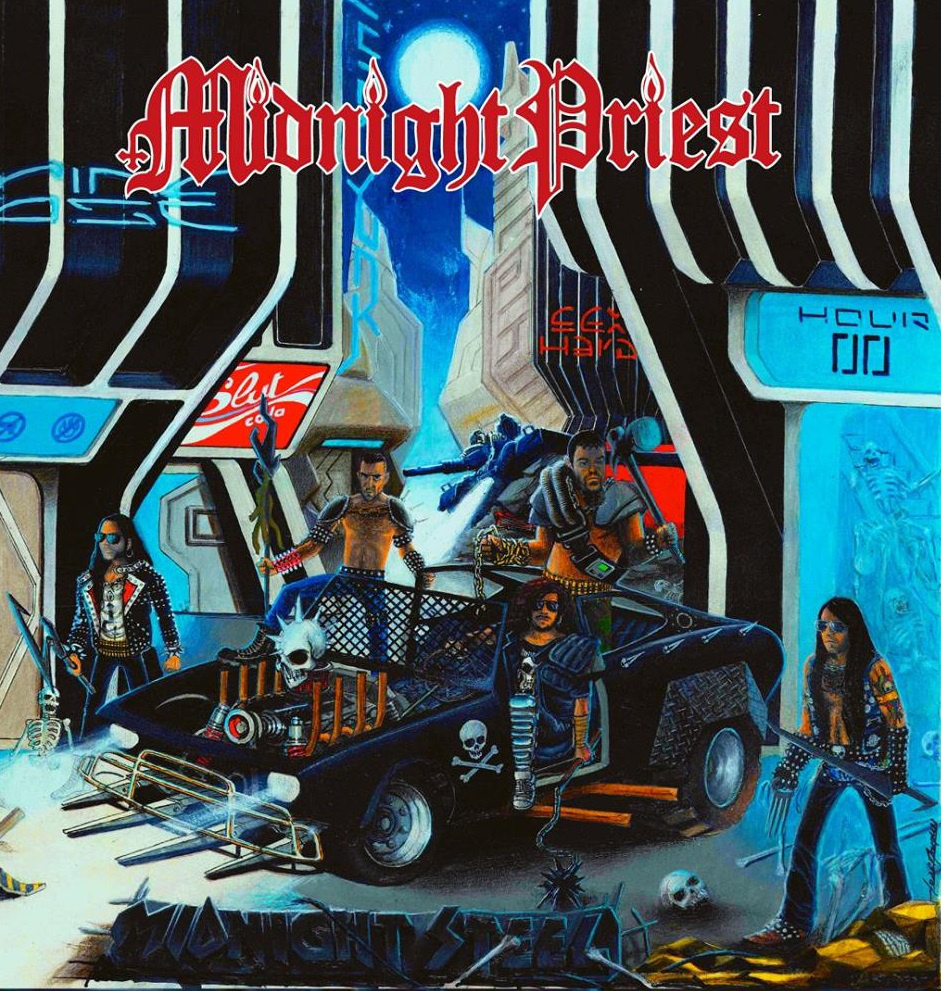
Midnight Priest “Midnight Steel” (Slaney)
Midnight Priest’s self titled full length from 2011 was a convincing heavy metal affair with a pretty unique atmosphere where Portuguese lyrics performed by a high and eccentric singer and an overall dark feeling running through the songs were some of the ingredients. Unfortunately a lot of changes have taken place within the band since then. Most importantly, the charismatic singer The Priest left the band along with one of the guitarists, Nasty Nightmare. The latter has since then formed New hopefuls The Unholy, a band which also includes Midnight Priest’s current bass player Joe Dalton.
Compared to the dark and haunting debut, containing many references to the likes of Mercyful Fate and King Diamond, “Midnight Steel” is a much more straight ahead NWOBHM-influenced affair, clearly missing the egde and the originality of the last album. The sound of the album is pretty solid though, highlighted by heavy, pounding drums. My main concern, along with the factors already mentioned, is the material, which by no means is up to the same standard as on the first full length. The opener, “Made Of Steel” for instance is a surprisingly unspectacular. “Into The Nightmare” follows more or less the same pattern, and leaves you with the impression that the band has turned into a run of the mill, basic heavy metal-act, performing the kind of generic stuff a lot of newer acts do these days. Okay, so some songs are quite good, but I have a hard time finding a really standout track here. “And Then The Darkness” is perhaps the main contender, and this tune is also the one track that recalls memories of the style of the debut album.
Overall the songs are a lot slicker and melodic than in the past. Just, listen to “When Midnight Comes”, not a bad song by any means, but very streamlined and easy to get into. In other words, it has the same focus as a lot of these newer heavy metal-acts have. There are similarities to Swedish bands like Steelwing or Enforcer to be detected here, but also a Judas Priest-influence shining through, both generally as well as specifically in a track like “Hellbreaker”. Out of the ten tracks on the album, three are short, a, rather meaningless instrumentals. The new singer, Lex Thunder is certainly not bad, but I struggle to hear a lot of personality in his performance. He has a pretty clear and powerful voice and can hit the high ones, but the same can be said about a lot of other singers as well. (65/100)
Mindless Sinner ”The New Messiah” (Pure Steel)
The really impressive comebacks, especially coming from bands that have been on hiatus for more than a handful of years, are few and far between. Of course there are expections, who wasn’t impressed with what Satan did on “Life Sentence” for instance? After their return to the live circuit with appearances at Muskelrock in 2014 and Keep It True the following year, the Swedes now return wtith what is only their second full length since the very beginning in the early eighties and their first album for nearly 30 years. I guess its common consensus that the odds are against the band, and I for one, really expected something a lot worse than “The New Messiah”.
Everyone that has heard the band’s previous material, knows that Mindless Sinner used to have a knack for penning really memorable songs, and according to this comeback album, they still have it in them. Singer Christer Göransson is still capable as well, while his range might not be as impressive as in the heydays of course, the guy still possesses good control over his voice and the style is the same soaring one we are used to. Unfortunately the production sound kind of low budget, and a fatter sound, would have lifted the material a step or two.
Musically, “The New Messiah” sounds surprisingly close to the style the band did on “Turn On The Power”, especially when you take into account the time that has passed since that one was released. The album doesn’t really start one a high note though, as “Men Of Steel”, apart from some blistering guitar solo work, is a bit mediocre. Well, it has the extra energy that openers should have, but the melody isn’t up there with the best on the album. “Where Worlds Collide” and the title track are better in that aspect. Don’t expect a particularly heavy or aggressive album, because as these tracks showcase, this is rather laidback, majestic melodic metal, at times a bit similar to later Jack Starr or the most commercial moments of Riot. “Follow Your Path” has lyrics that might be a little awkward, but is still a fine, galloping tune, and “Metalized” might be the best song on offer here, a mid tempo tune with a bit more attack and metallic bite than the rest, and with a majestic chorus led by Göransson’s soaring vocals.
I guess some of my readers will find this album too lightweight, but personally I enjoy it quite a lot. Of course there are some mediocre songs here, but the stuff is seldom or never bland, although the album gets a little too safe and precictable during the middle part with tracks such as “We’re The Ones”, and “Dance Of The Devil” and “Time Of Fear”. Still, this is a surprisingly good effort, and much better than the terrible artwork suggests. (70/100)
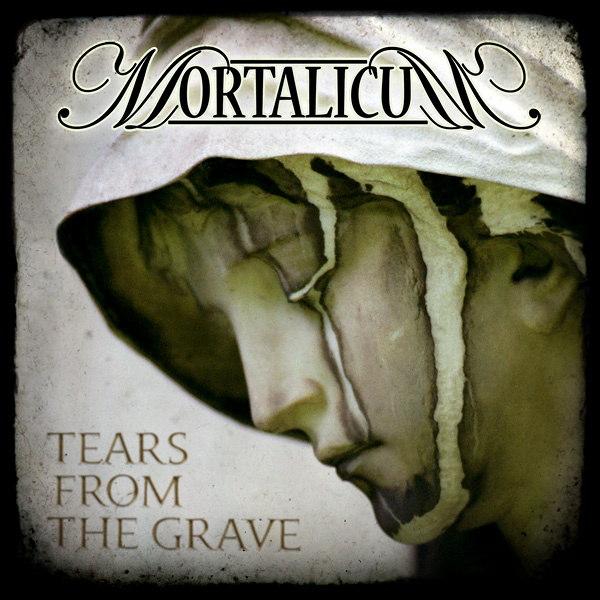
Mortalicum “Tears From The Grave” (Metal On Metal)
Because the last album from Sweden’s Mortalicum was a real grower that I ended up digging a lot, I have used some extra time on the band’s third full length release “Tears From The Grave”. Through the years, we’ve learnt to expect a certain kind of quality from these guys, and they always seem to have more to offer than you might grab at first listen, as there are always plenty of great riffs or a hooky vocal lines, both courtesy of Henrik Högl, hidden in the songs. And guess what? The same thing pretty much occurred this time around as well.
It’s not that the music is very complex, this is pretty much straight forward doom metal with hints of heavy rock. Although I don’t find it as strong as its predecessor, “Tears From The Grave” is still a great album. The heaviness, the slow tempos along with the strong sense for melody and the vocals make me think of another great Swedish band, Spiritual Beggars. Trouble is another name that springs to mind several times during this album. A song like “Spirits Of The Dead” involves a stronger element of heavy metal, so it’s no surprise this one being one of my personal favorites. Easily one of the coolest songs I have heard from Mortalicum, and a direction I would like them to pursue further in the future.
“Tears From The Grave” is a much longer album compared to “The Endtime Prophecy”, with a playing time of almost 64 minutes. The title track, clocking in at more than 11 minutes, is pretty much the heart of the album. The song has a killer riff which is played underneath the solo towards the end of the song, something that the band tend to do on different occasions, for instance in “Remember The Fallen”. The album displays plenty of heaviness, groove and melody, and comes with the thick and varm sound similar to the previous offerings.
Patrick Backlund’s extremely cool bass lines also deserve a mention, just lend an ear to his work in the opener “The Endless Sacrifice”, “The Passage” or the album closer “The Winding Star”. Totally killer! With a playing time that exceeds an hour, there are almost bound to be some parts that don’t grab you in the same manner as the majority of the material. “The Illusion” is one of the few examples that don’t do a lot for me personally, but overall the band definitely has the knack of penning memorable riffs and catcy vocal melodies.
While Mortalicum has established themselves as one of the more consistent doomy, heavy rock bands around, listening to “Tears From The Grave” creates a feeling very similar to the one you get from spending time with any of the band’s two other albums. Of course you can view it as a band that have found its own style and are trying to sharpen it further for each album, but personally, I would’ve wished for a more significant contrast to the previous works of the band. (75/100)
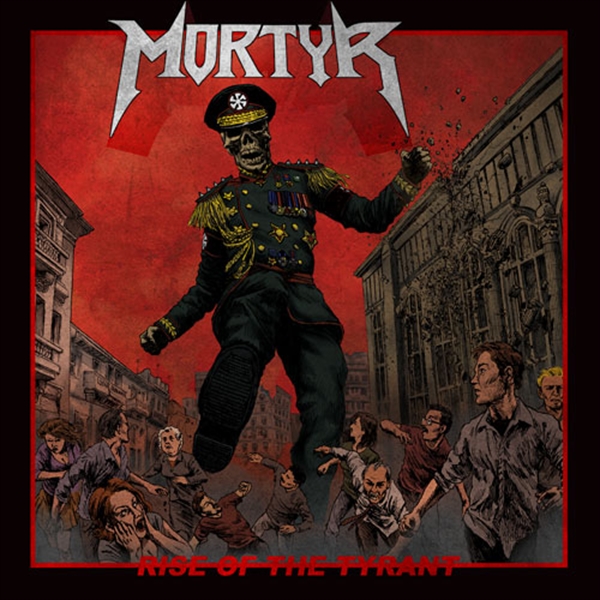
Mortyr «Rise Of The Tyrant» (Stormspell)
I have to say I am quite impressed by the creativity and work rate of young Swede Cederick Forsberg. Rocka Rollas and Blazon Stone have both released new albums very recently, and in fact the former has a new one called “Celtic Kings” coming already early in 2014. If everything goes as planned that is. I mentioned Cedrick’s creativity, but part of the answer to how this guy can spit out album after album, might be the fact that some of material, already is a couple of years old. At least this is the case here, as three of the songs on “Rise Of The Tyrant” featured on a demo as early as in 2008.
While Rocka Rollas and Blazon Stone might sound a bit similar, thanks to the heavy teutonic influence in Rocka Rollas and the total Running Wild-worship of Blazon Stone, I can assure you that Mortyr represents something completely different. Until you hear the bonus track on the CD that is…A cover of “Merciless Game” by none other than Running Wild. Well, it all makes sense in a way, as Cedrick in Blazon Stone blueprints Rock’n Rolfs sound from “Port Royal” until “Masquerade”, while “Merciless Game” is one of the faster and thrashiest songs from 1987s “Under Jolly Roger”. The tune blends quite well with the rest of the material here, and is a cool song to close an album with, with its blistering guitar solo and nice outro.
There are seven other tracks and an intro here as well, making “Rise Of The Tyrant” a 35 minutes long (or should I say short) thrashing affair. I have to say that I was pleasantly surprised by this album. Even though the rather dark and aggressive thrash of Mortyr is completely different to what Cederick does in his other bands, he confirms that he is a good song writer with a nice sense for melodies. Between all the aggression and intensity, be it in an intro or an outro, or during a solo or a middle part, there are lots of melodic moments.The result is a different, brutal thrash album. In fact some of the solo work could be taken from an eighties Shrapnel release. The vocals of Jank pull the album in the opposite direction, as it rather harsh and brutal, in other words a nice contrast to the more melodic moments. His performance in what is probably the best track on the album, “Show Me To Hell” is nothing but awesome. Other highlights include the title track where a fast verse alternates with a slower chorus with the angry voice of Jank supported by some towering clean background vocals.
Overall, this is extremely catchy stuff, just listen to the powerful and direct “Dark Angel”. The best songs on the album come first and last, and the mid part of the album is a little on the mediocre side. Also, don’t expect a diverse album, “Rise Of The Tyrant” certainly isn’t. However, if you see yourself enjoying eighties American thrash mixed with some European sense for melody, you should definitely lend Mortyr an ear. (75/100)
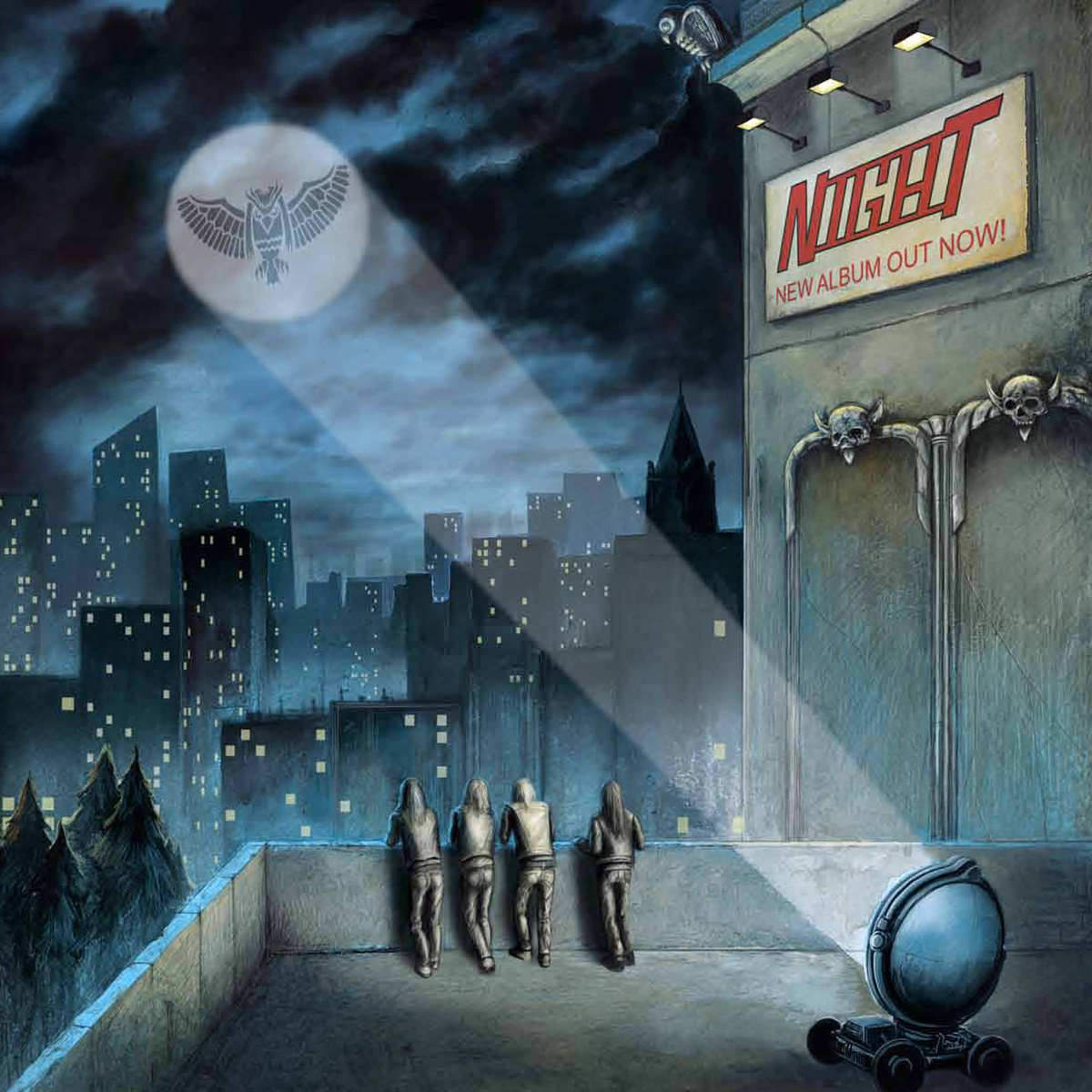
Night “Soldiers Of Time” (Gaphals)
It’s time yet again for some Swedish stuff. The stream of traditional metal coming out of this country is just unreal. I thought Night’s first album was okay, nothing more, nothing less. The late seventies/early eighties style was quite charming, but the songwriting, and especially the vocals were both a bit mediocre. When you keep it traditional in the vein of acts like Saxon, Krokus, Accept, AC/DC and Judas Priest, bands that have had their paths trodden by countless acts before, it’s absolutely essential to have the songs as well as the singer.
I doesn’t take a lot of time to hear that he band has improved though. In fact, after hearing the opener “Waiting For The Time”, for the first…eh…time, I quickly named it the best song the band has done so far. The overall sound offers more of the same authentic late seventies/early eighties stuff that dominated the first album, and even though this album is not recorded live in the studio, like the first one was, the guitar sound, is still raw, naked and emotional. As you have already understood, the music of Night is very basic, with rather simple riffs and a rhythm section that doesn’t take anything away from the songs. The solos are really enjoyable and most of them represents small highlights on the album. “Soldiers Of Time” has a natural sound with lots of air and space for the instruments. If it wasn’t for the vocals, parts of this album would have been very relaxing to listen to. This is exemplified by the strongly seventies inspired album closer “Stars In The Sky” which has a glorious instrumental part placed at the very end.
For me, the vocals are still the weak spot. Singer Burning Fire might sound a bit more diverse her compared to the debut, but his vocals are still paper thin and way too strained when he reaches for the high ones. Talking about diversity, this album has a bit more to offer than the rather one dimensional debut. “Towards The Sky” is a song that sticks out. With acoustic guitars it’s sounding more like a pop song than anything else. Very catchy stuff that works well in breaking up the album and adding some diversity. So even if I might not have cared much for it outside of this context, it’s more than okay to have it here, in the very middle of the album. A few of the more generic songs, “Ride On” for instance and”Kings And Queens”, one of the faster tunes on the album, feel a little too safe and predictable. Even though this album is a little more interesting compared to the debut, I end up on 65 points this time as well. I guess that can only mean I was a little too generous when I reviewed the debut. Shit happens! (65/100)
Night «Night» (Gaphals)
After two vinyl singles, Sweden’s Night is ready with their first full lenght. Even though the two tracks from the second single were a bit more convincing than what the band offered on their first release, I have to admit that my expectations for the band’s first full length were quite moderate. Three of the four single tracks are included, only the rather weak “Hard Working Man” has been dropped. In addition you’ll get a further seven tracks more or less in the same style as those on the singles, making “Night” a 44 minutes long, fairly enjoyable, rockin’ affair. Think early eighties stuff, just as much hard rock as metal in fact, with pretty obvious links to bands like Saxon, Krokus, Accept, AC/DC and Judas Priest.
The band seems to have a blast when writing and peforming this kind of stuff, as there is a lot of positive energy in this material. The album is also a very consistent offering. On a positive side, all the songs are pretty much of the same standard, while the stand out track or two that you are always waiting for when listening to a new album, sadly never shows up. To exaggerate a little bit, listening to this album feels a little like listening to one really long song, even though in the very melodic “Running In The Night” as well as in the heavier and more laidback album closer “Keep The Fire Burning”, the band has a couple of tunes that are at least a little different. Nevertheless, it’s not a lot of diversity here, neither in tempo nor in songwriting, and this is something that makes the album a little dull when you listen to it a couple of times in a row. The band’s strength is that they sound really honest about what they do. There’s nothing fancy to be heard in these ten tracks, just down to earth stuff, with one solid riff following the other. Of course you have heard most of them before, but I guess originality has never been what Night has strived for.
The production fits the music very well. It’s crips and authentic and brings out the best in the band’s quite simple, often midtempo oriented songs. As I have written when I have dealt with the band before, my main issue with Night is the vocals. Burning Fire generally sounds a bit too strained, and when he does those hoarse and rusty shrieks like one minute into “Taking You Down”, I cringe a little. With this and some flaws when it comes to the songwriting, my guess is that Night is more enjoyable on stage than on CD. However, one must not forget that the guys are really young, in their early twenties or younger, and with a little more experience, like they will get on the forthcoming Scandinavian tour with Ghost (they’re both from Linköping), Night will just get better. (65/100)
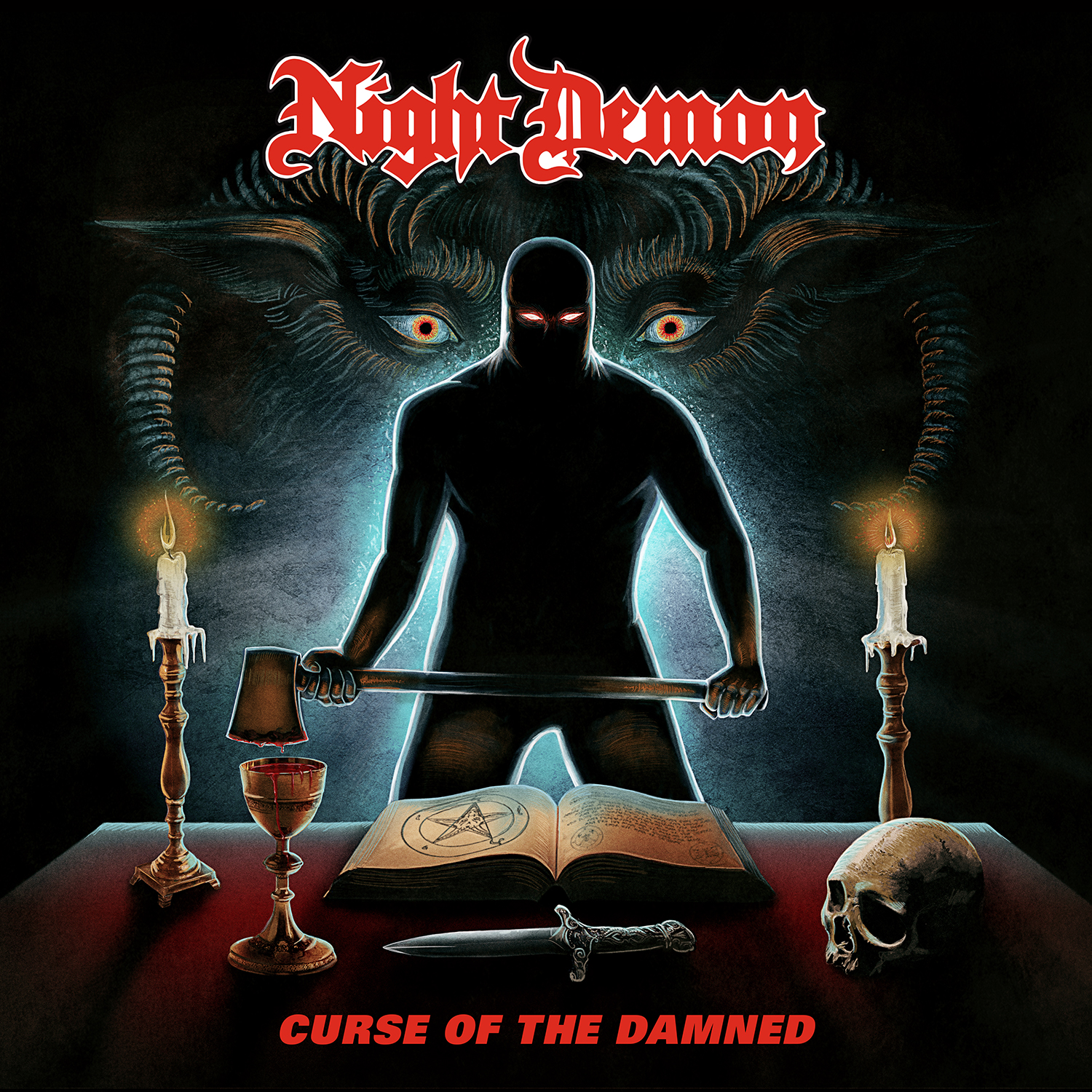
Night Demon “Curse Of The Damned” (Steamhammer)
Night Demon has been very active in the live circuit since the release of their self titled EP back in 2012. The guys have made a name for themselves a real power trio, and while the EP showed a lot of promise, the guys are definitely stepping up with their first full length release, proving that they can be diverse and interesting enough also through the length of an album. In my ears, Night Demon is one of the bands that come close to capturing the real the spirit of the NWOBHM. Most importantly, they manage to do it naturally, without sounding forced. Musically there are no big surprises to be found, but the album is moe diverse than I expected it to be after having heard the EP. The style is pretty much the same though, with references to bands like Jaguar, Savage, Angel Witch and Diamond Head.
Jarvis’ vocals follow the expected patterns, I can even here some Sean Harris here, in the way the singer stretches some words, for instance “Night” during the chorus of “Screams In The Night”, a natural opener of the album. This song sounds so much like NWOBHM, it could have been used to illustrate what the whole movement was about, even 35 years later! The title track is a slower (not really slow though) and heavier track, indicating that there is some diversity to this album. “Satan” is next, apart from having a title also used by Enforcer on their last album, this track is also showcasing the heavier side of Night Demon.
Overall this is a very consistent album. Yeah, so it might have benefited from an outstanding song or two, but on the other hand there really isn’t much not to like here. Okay, so maybe a song like “Heavy Metal Heat” really isn’t that interesting, a bit too standard maybe, but most of the tracks are really enjoyable featuring catchy choruses and riffs as well as strong melodies.Night Demon is a sympathetic, hard working band that manages to sound fresh even though they sound a lot like the NWOBHM-stuff that came out during the early eighties. Whether they play it fast, slow or heavy, it’s always quality and lots of energy involved. Add a transparent and heavy production with thick guitars and powerful drums, and we have a winner. (80/100)
Night Demon ”Night Demon” (Shadow Kingdom)
You could probably argue that all kinds of traditional metal are inspired by The New Wave Of British Heavy Metal, but there is no doubt that we have seen a rise in new bands trying to copy both the songwriting, the sound and the performance of bands from this era. Some of these acts are European, but it seems like the majority is coming from overseas. Another thing many of these bands have in common, is the fact that the members are also involved in other, often very different, musical projects. Night Demon, already confirmed to perform at next year’s Keep It True, fits rights into this pattern. Guitarist Brent Woodward as well as skin basher John Crerar are both involved in The Fucking Wrath. I guess the band name alone is an indication of the chances that a feature on that particular band will end up here on Metal Squadron.
Of the four tracks on offer on the trio’s first release, three of them, are, roughly said, quite similar. “Night Demon” “Ancient Evil”, and “Ritual” are energetic up-tempo, catchy rockers while the “The Chalice” is a slower, heavier and somehow more relaxed track adding some diversity to this pretty intense 14 minutes short affair. It might be the fact that it sticks out from the rest, but ever since I heard the EP for the first time, this track has been my favorite. None of the other three songs are what I would classify as fillers, but the band need to step up their songwriting a little bit to make the forthcoming full length really special.
The playing time is one of the reasons why I have played this one a lot since I grabbed the files of the band’s Bandcamp-site, the other is the fact that I really enjoy the music. Even though the band looks 30 years back in time to the likes of Tygers Of Pan Tang, Sweet Savage, Diamond Head and even a more tempo moderate Jaguar for inspiration, the songwriting is rock solid with hooks in all the right places, catchy sing a long-choruses and melodic solos. The vocals of newcomer Jarvis Leatherby, who also handles the bass, has the charming, little naïve touch that was often present among the singers of the NWOBHM. His voice might strike you as unspectacular, but he possesses great control of it, his tone is warm and rich, and there is a certain kind of soul in his voice that I soon learnt to appreciate. During the chorus of “Ancient Evil” I am even reminded of the mighty Sean Harris of Diamond Head, and hopefully that’s not only because of the last word in the song title.
The sound is quite raw and authentic and suits the music very well. It’s stripped of fancy effects and brings out the best in the band’s compositions. Whether you are long time admirer of the movement called NWOBHM, or have discovered heavy metal more recently with the likes of Cauldron and Enforcer (listen to the songs “Night Demon” or “Ritual”), you should definitely lend Night Demon an ear. By the way, check out the interview I recently did with the band: https://metalsquadron.com/2013/04/06/night-demon-a-three-headed-beast/ (75/100)
Nightmare “The Will To Overpower” (Lethal Loudness)
If my mind serves me right, I enjoyed “About To Explode”, the last album from Colombia’s Nightmare. I have to admit that I haven’t revisited it a lot since it was released five years ago (scary to think about), but I remember it as a way above average, honest, straight up metal affair with a few quite memorable songs. Singer and guitarist Burning Axe Ripper along with the other guitarist Enforcer are both heavily involved in Witchtrap, a band which also impressed me a bit with their 2012 release “Vengeance Is My Name”. I guess you have pretty much concluded by now that I had some expectations for “The Will To Overpower”, but unfortunately, I can’t say they were fulfilled.
There isn’t much wrong with the performance here, these guys are without doubt steady musicans. The vocals, while a little thin maybe and not the most expressive either, works quite well within the context and help add some melody to the overall picture. The production is mighty fine too, transparent and dry (love the bass sound) but not slick, and with plenty of heaviness in the bottom. I am perfectly allright with the style the band performs too, as this is pure heavy metal with the only “interference” being some tracks having a touch of hard rock. What bothers me about this album, is mainly the songwriting. Songs like the energetic “Sabotage” with an excellent end section, the mid tempo stomper “Gates Of Hades” and the dead catchy riffer “Ride The Fire” are more than fine, but good enough to be the outstanding tracks on a release from a band like Nightmare? I am not sure about that! A song like “Hard Rock” is located in the complete opposite end of the scale, being almost as dull as the title indicate, showing of course a slight hard rock-influence as well. However, most of the songs are located somewhere between these two extremes, being mostly average tunes that are quite easily forgotten. Not bad by any means, but too many of the tracks leaves me lukewarm.
Being from Colombia I have no problem accepting the fact that the lyrics are not perfect. After all, I guess there are people out there laughing about the way I express myself in my reviews, but “Sex”, which is a strangely unspectacular opening number, has some completely ridiculous lyrics. “Take out your clothes/open your legs/I know your dying to your clit licked”. I guess the lyrics to this one isn’t meant to be taken too serious, but they certainly made me embarrased. Embarrasing is nowhere near the right word to describe “The Will To Overpower”, but I have to admit I hoped for stronger and more inspired material. (65/100)
Nitehawks “Vendetta” (Skol)
Somehow, Italian bands don’t do NWOBHM-influenced heavy metal as well as they do doom, epic metal or speed metal. I have a hard time trying to forget the last time I reviewed an Italian band part of the so called NWOTHM. The band was Gengis Khan, and their “Gengis Khan Was A Rocker”-album was simply terrible, resulting in an all time low score (20) here at Metal Squadron. Let me be clear that Nitehawks are nowhere as bad as Genghis Khan, but still I can’t say that there is a lot to enjoy on their debut album. Maybe it was my expectations that were too high, as the information that came with the promo spoke about bands like Accept, Enforcer, Running Wild as well as Judas Priest. Those names made me expect a slice of solid, traditional heavy metal, while what I got was some kind of dull mixture between metal and hard rock.
First of all, I am not that found of the vocals of Frank Macri. Yes, they have plenty of character, but don’t sound very good or fitting in my opinion. Macri has a raw, nasal, snarling style that occupies a lot of space in the band’s sound. In Shorter sequences, his vocals have a Mark Shelton-like touch, for instance in one part of the rocking, but downright boring “Rocketman”, but most of the time, he reminds me of a harder to swallow-version of Axxis’ Bernhard Weiss. As I mentioned, the music has a hard rocking edge, with some really soft and commercial choruses (“Blackout In Paradise”, “Suite 95”) in a few of the songs. Some of these choruses are also repeated way too many times in each song. “Never Let You Go” is only one example. There are a couple of more metallic moments here as well. The opener “Into The Wild” is probably the most energetic track on the album, while “Nighthawks” has some cool moments, but is partly destroyed by some terrible keyboards during the verse and a dull singalong chorus.. Even during these more metallic tracks, the band struggle to impress by doing something out of the ordinary. Okay, so some solos are quite enjoyable, but there are very few riffs here that make me pay extra attention to what the band is doing. (50/100)
Noble Beast “Noble Beast” (Tridroid)
Melodic sing-along, German-sounding heavy metal is normally too cheesy for me, but once in a while, the pieces fit together and it all works. This is one of those rare moments. As bands like Heaven’s Gate (when did they last release a decent album, or an album for that matter?) and Blind Guardian have grown really stale lately, this genre needs a kick up the ass and an alternative to the bands trying to copy the slick sound of Helloween’s “Keeper Of The Seven Keys pt.II”.
During the second half of the nineties and the first years of the new millenium there were some bands, mostly German ones, trying to copy the sound of Blind Guardian, or at least doing something that was close to the sound of the masters, but unfortunately most of these didn’t have the songwriting abilities needed. Fast forward to 2104, and Noble Beast out of Minnesota releases their self titled debut album, a huge surprise and a feast for everyone into things fast, bombastic and very memorable. The melodies here are not that far from let’s say Falconer, Ensiferum and even Freedom Call, while the execution is rougher and more powerful, resulting in a product closer to Blind Guardian, Amon Amarth, Iron Saviour and at times even with guitar work reminiscent of Running Wild, for instance in “On Wings Of Steel”.
I guess a lot of people reading Metal Squadron will find this release too cheesy and banal, but for me this album arrived just at the right time as I needed something easy on the ear. If I had written this review a couple of weeks earlier (I definitely could have done it, as I had listened to it many times by then already), the score would probably have been a bit higher. As I suspected, the album isn’t a grower, and when everything is consumed, there is not a lot more to explore. Also there are a too many moments when the melodies or the choruses are too familiar. The already mentioned “On Wings Of Steel” as well as “We Burn” are just two examples. What I really like here, is the fact that the rough edges, the dark guitars, the powerful, but not at all perfect vocals add some charm to the overall picture. And yes, I have no problems admitting I was charmed by this release.
This album is full of great riffs, fast drums, dramatic vocals and enormous choruses. Listening to the album in its entirety, you’ll for certain find some similar sounding moments, but at the same time you’ll be surprised at how interesting the band is able to keep it from start to finish. A song like “Disintegrating Force” even borrows from the more extreme styles of metal as it runs headlong at insane speed, while “The Dragon Reborn” represents some of the calmer moments on the album, being far from as hectic and bombastic as most of the stuff here. Some people might still find the album a bit too tedious, but as long as you’ll find yourself tapping your foot, performing air guitar or singing along for more or less all the 63 minutes, you really can’t complain. At least I don’t. Good one! (75/100)
Nocturnal ”Storming Evil” (High Roller)
I was expecting good things from the third full length by Germany’s thrashing maniacs Nocturnal, but ended up with something even better. While I can be very enthusiastic during the first handful of listens, there is a clear tendency that I get tired of new thrash metal-releases rather quickly. “Storming Evil” however, is not one of those albums. After having played this CD almost to death since I first got a copy a month or so back, the recording has already proved that it stands the test of time.
“Storming Evil” is also one of those rare albums that starts out with a bang and ends with an even larger “booom”. Not that it’s anything wrong with the first part of the album, both the quite diverse (remember that everything is relative) opening track “Storm From The Graves” as well as the catchy “Rising Demons”, which the band has also made a video to. However, in most cases the intensity level falls a bit and the songwriting isn’t really as sharp as to begin with when you enter the second half of an album in this genre. I wouldn’t say it’s the other way around with “Storming Evil”, but to my ears, the second half of the album is just as convincing as the first one, both when it comes to performance as well as songwriting. In fact, the last three songs on the album, are all among the highlights. What about “Ripping Knives” for instance, where the riffs are at least as sharp as the knives Tyrannizer is singing about?
The vocals of Tyrannizer are extremely brutal and savage to come from a woman. Hell, I am sure she scares the shit out of some male singers with the power, energy level and aggression she showcases here. Her delivery is so convincing you’ll feel the rage and venom in her voice affecting you while listening to the album. Simply incredible! When that is said, this album would have been nothing if it wasn’ t for Avenger’s steady rifforama. In fact there are more killer riffs squeezed into one tune here (listen to “Crushing The Bones”, and especially the second half of the song) than you get on your average thrash album, and with the help of Mortus in his Underworld studio, the band has also achieved a more fitting and balanced sound than on the previous albums.
Even though diversity isn’t the strongest point here, there are at least some shifts in tempo and some heavier mid tempo parts, as well as complete songs like “Taken By Fire” which work really well in contrast to the faster stuff. Most of the time, this album is packed with speed, so if you happen to drive a car, you better fasten your seat belt before you put this album in your stereo. If you are at home, get someone to tie you up as securely as possible, cause “Storming Evil” really shakes things up and leaves the listener with little or no time to breathe. (80/100)
Nocturnal “Nocturnal” (Gaphals)
Nocturnal from Linköping in Sweden isn’t what I usually feature in this blog, but as the guys at Gaphals were nice enough to send me both a copy of “Nocturnal” as well as a 12” consisting of two tracks, I’ll make an exception from my strict rules. Nocturnal is what we could call a brand new constellation, performing their first concert a bit more than a year ago. Since then, one 7” inch has been released before the 12” I mentioned.
The music on the band’s debut will probably be put into the retro rock category. The nods to the seventies are quite obvious, and there are hints of blues and also a bit of the psychedelic flair that was found in some of the music of the sixties. As in other overexposed genres, it’s really difficult to present something original, and I strongly doubt that this is something Notcturnal has aimed for. The album contains eight songs, among them two different parts of the song “Cursing The Mindless”. The album is quite diverse. Ranging from the quite memorable and direct “One Of A Kind” to the first part of the slower “Cursing the Mindless”, a song with a decent melody, some cool sounding organ and a very catchy guitars. Some of the songs have an inner drive that makes them interesting, while others tend to be a bit more stagnant, and thus boring.
The sound is crisp and organic and brings out the best in the band’s music, which in turn feels spontaneous, honest and relaxed. Aggressive moments are few and far between, making the album well suited for a forty minutes long rest on the sofa. The vocals accompany the music quite well, melting in with the music rather than taking full control. However in a song like “Satan’s Shuffle”, you’ll probably notice that the singer’s voice sounds a bit strained. But as I didn’t hear much of this elsewhere, it’s really not a problem. I wouldn’t call the many instrumental parts a problem either, but my advice is to tighten up some of these a little bit to keep a stronger focus on the main ideas of the songs. If you are a bigger fan of this genre than me, and enjoy other Swedish bands like Graveyard and Horisont, you could probably add some points to my score. Check it out for yourself! (60/100)
Nomad Son ”The Darkening” (Metal On Metal)
I have quite fond memories of the 2008-debut “First Light” as well as the follow up “The Eternal Return” that arrived two almost exactly two years later. Malta’s Nomad Son sees scene veteran Albert Bell (also a member of Forsaken) teaming up with former Frenzy Mono-members vocalist Jordan Cutajar, drummer Edward Magri as well as brothers Chris and Julian Grech (guitars and keyboards). There seem to be an added slice of aggression to this album compared to the two earlier ones. I guess you could label the band’s sound as power doom, with just as much emphasis (maybe even a bit more) on power and heavy metal as doom. For instance there are bits and pieces of both Martin-era Black Sabbath and Dio to be found here. The extensive use of organ along with the one of a kind voice of Cutajar is what makes this band really unique, resulting in an interesting and very refreshing album. “The Darkening” gets off to a very strong start with “Light Bearer”, a dark, extremely heavy and powerful opener, featuring some uptempo, Trouble-like riffing which also returns in a few of the other tracks on the album.
In the other end of the album, you’ll find the calm and beautiful instrumental “Epilogue”, and inbetween these songs, you’ll get mostly original and high quality material. The keys are often used surprisingly, as in the second number “Age Of Contempt” which is a rather aggressive number, featuring some dark, crushing riffing in stark contrast to the organ. This particular tune is indeed a diverse riff-fest featuring lots of aggression and some awesome organ. For the third thrack “The Devil’s Banquet”, the tempo is brought down considerably, and this is more or less a pure doom metal-tune.
The keys are helping the band create a really huge and sometimes majestic sound, listen to the opening of “Only The Scars” for instance, a song that is among the more melodic tunes of the album. Overall, the tempo is higher here than on the average doom album – “Descent To Hell” is another example, it starts pretty fast, then goes into a slow, heavy riff during the chorus before it kicks into gear again for the verse. Great dynamic stuff! “Caligula” is at the other end of the scale though, a slow and crawling track with a long intro and an almost creepy atmosphere that soon develops a very heavy main riff before ending in a climax with a crushing final 90 seconds.
I don’t have time or the space to go into detail about each and every song on offer her, but the title track will rank as stand out number by many listeners with its memorable chorus. I have seen some people singling out the vocals as the weakest point of the band on their earlier works, and while I admit it’s not often you hear a raspy and rough voice like Cutajar’s to go with this kind of music, it’s exactly this fact that excites me. Cutajar might sound a bit strained here and there, but hey…rather that than having a voice similar to every other singer in the genre while you are putting in an uninspired performance. You kind of expect a commanding vocalist with a powerful voice to go with this kind of music, but Cutajar has more to his voice, sounding for instance hopelessly desperate in “Lightbearer” and completely pissed of during the verse of “Age Of Contempt”.
Overall this is a very powerful, surprisingly fast and aggressive album topped with the necessarily originality to make it a really stand out release. I have to stress that even though the band is often associated with doom metal, this is by no means a doom metal-album. Of course there are slow and heavy passages with powerful vocals here, but the amount of up-tempo parts, are surprisingly high, making this a more classic metal-oriented album. There is a lot of attack in the vocals as well. With this album Nomad Son tightens its grip on the listener from the very first second, and it is a definitive contender for the best album released by Metal on Metal ever, only facing some serious competition from the last Attacker-album. There is not a weak song in sight and the dull moments are few and far between. Add to that a transparent and very powerful sound, and you have one of the highlights of the year and a definitive contender for my personal top ten, come December month. (85/100)
October 31 “Bury The Hatchet” (Hell’s Headbangers)
I am pretty sure I have mentioned it somewhere else on these pages, but I’ll never forget the moment back in 1998 when I received a package with two CD’s released by R.I.P Records out of Chicago. One of the discs was Skullviews incredible “Legends Of Valor”, an album that clicked with me immediately and to this day still is one of my fave records put out during the nineties. The other album was October 31’s debut album “The Fire Awaits You”, a release packed with quirkier, darker and more obscure metal. I needed some time to get used to the rough edges and King Fowley raw vocals (similar to Tony Dolan from Atomkraft and Venom), but today I love most of the material as well as the twisted atmosphere of this record. So where is the band 16 years, but only three studio albums later? Well, even though it’s nine years since the last offering, “No Survivors”, “Bury The Hatchet” sounds quite a bit like that particular album.
There is not a lot of diversity here, pretty much everything is held in the same tempo, but always retaining the aggression that was a vital part of the last album. At first it all can sound a bit sameish, but after a few listens, it becomes clear that a few of the tracks are slightly more melodic than the rest. “Down At Lovers Lane” is one them containing some light keys, played by King Fowley himself. “Arsenic On The Rocks” is another one, and one of the most impressive tracks of the album. The album also contains a really well done and extremely powerful cover of Icon’s “Under The Gun”. I never liked Icon’s debut a lot, and simply wasn’t aware of how cool this song actually is until I heard October 31’s rendition. Great work!
The title song is a slow and creepy track that could have been on the first one, with King acting just as much as a storyteller as a singer. Definitely one of the highlights for me personally on a record where there really aren’t that many standout tunes. “Vodoo Island” is another one I enjoy a lot, the kind of aggressive, dark heavy metal song the band always does quite well. I was not overly impressed by the song “Gone To The Devil” when it was released on a single some time ago, but the song Works better here, in the context of the album.
While the details in the music got completely lost during the concert the band did at Keep It True in 2013, the production on “Bury The Hatchet” is crisp and clear enough to underline them. Most of the time though, the details arent’t what draw your attention, as this is one rampant and violent album, that leaves you with the feeling that you have been rolled over by something really heavy. I think 75 points should be about right for this album. It’s really good, as you learnt to expect from King Fowley and the guys, but amongst all the honest aggression and thick heavy metal atmosphere, you’ll find yourself thinking how this could have come out if the band was just a little bit better at penning songs. (75/100)
Perpetratör “Thermonuclear Epiphany” (Stormspell)
Perpetrator is an outlet for Rick Thor’s (Ravensire, ex-Ironsword) affection for thrash metal. He handles the vocals along with the bass of course, while the steady rifforama on this record is delivered by Paulão and Marouco. Worth mentioning is also the session drummer Ângelo Sexo. His name kind of reminds me of another “drummer”. While Rick’s approach is more aggressive and snarling here, and his vocals are not as upfront and a bit flatter compared to Ravensire, you’ll most likely recognizing his voice
The opener “Megaton Therion” is a fast and very intense song with a typically, half chaotic thrash metal-solo. “Pyres Of The Night” is next, a tune which has the most impressive riff on the album. There is no denying the overall expression borrows quite heavily from the German scene of the eighties, but Perpetrator has tightened up in all departments. They’re not sounding as basic, or dare I say minimalistic as a few of the Teutonic acts were either. The production is more modern, in lack of a better word, but I don’t have a problem with it being too polished. In fact it’s quite refreshing to hear this music with a good, but not too clinical production. Most songs are catchy, straight ahead and fast, making this an album that should click with you rather fast. If you like this kind of stuff, that is. By the way, the well played guitar solos also deserve a special mention.
Other highlights include “Death To All” which starts out as a fast and frenetic affair and gets right in your face, until the tempo slows down and the song gets heavier around the two minute mark. A few tunes sticks out by being a little different too. “Fire Unleashed” is a rather melodic heavy metal-tune from start to finish. It’s also one of my absolute favorites from the album, with Rick also sounding closer to what he does on the Ravensire-album here, especially during the cool verse. “Shadow Of A Man” also deserves a mention, at five and a half minutes it’s by far the longest song on the album. The tune has a slow build up with a rather long intro. It’s still a fast song, but at the same time it contains a few more different parts than a few of the shorter tunes.
While a couple of the songs don’t do a lot for me, “Thermonuclear Epiphany” is still a quite enjoyable 35 minute long journey. Most of the time at high speed, but as you have probably understood already, not completely without the needed diversity. (70/100)
Persian Risk “Who Am I” (Self Released)
I was pleasantly surprised by “Once A King”, Persian Risk’s comeback album released towards the end of 2012. I was even more surprised when I received a mail from Carl Sentance containing information about the new album, “Who Am I?”. If you heard the previous album, this new one more or less follows the same pattern, even to the extent that it, like its predecessor includes rerecordings of two songs from the band’s back catalogue.
Summed up with a few words, this is extremely solid, typical British melodic heavy metal, rooted in the same tradition as fellow veterans Saxon and Praying Mantis. Carl Sentance is in mighty fine form, with a voice that carries similarities to Biff Byford as well as Doogie White. I mentioned the two newly recorded songs, both of them are among the absolute highlights of the album. “Dark Tower”, a song that originally appeared on the album “Rise Up”, is a majestic hymn that reminds me a lot of Saxon, especially in the vocals, while “Calling For You” is a killer track from their very rare and expensive single from 1981. Both tracks melt in well with the newer material too. The title track has a galloping feel and a chorus making it one of the harder and definitely better songs on the album, even though it has quite mellow, laidback and melodic verse. “My Creation” sticks out with a fine, almost AOR-like verse, but with some heavy, fat guitars and pounding drums. The chorus is huge! Not my personal fave, but the quality simply can’t be denied.
Even though my main impression is that this is a strong affair, there are a few tracks that fall a bit short, mainly because they are a bit different, and in my opinion, stray too far away from the melodic heavy metal the band does so well. “Facing Your Demons” is not a favorite, sounding too modern, a bit like Harem Scarem or something similar. The rocking “I Feel Free” is not the type of song I prefer either, even though there is a lot of energy involved and some cool guitar work as well. The album closer “I Thought It Was You” is the song that sticks out the most. I have a hard time describing it, but it’s definitely something completely different, no metal or hard rock, rather mainstream and definitely something that could be played on daytime radio. Even though these songs don’t go that well with my personal taste, there is still some good songwriting involved. I easily recommend this album if you like melodic heavy metal in the best British tradition. (70/100)
Pleonexia “Break All Chains” (Pure Underground)
Michele Da Pila (vocals, guitars and keyboards) formed Pleonexia as late as in 2012, and since then he has added five more members to the lineup, including two guitarists and a keyboardist. The coverart and band logo are quite simplistic, and judging from these elements I was pretty unsure what to expect. Unsure I still am, especially when I ask myself what this band wants to achieve. They mix up hard rock tracks with some minor metal moments, and end up sounding really weird.
The production is way too lifeless and thin and the drum sound is weak and extremely dull. The band’s biggest problem though is the fact that for every good idea the band showcases, there are two which are not so good. The self titled opener has a few good moments, but also some I could live without, like the humming during the verse. And what about those early verses in “Break The Chains”, complete with totally silly lyrics? Or those over the top cheesy keyboards in “Iron Will”, turning the song into a copy of those Italian bands trying to copy Rhapsody in the late nineties. Or the strange, feminine sounding vocals towards the end of “Everything You Said”? So please, don’t come here saying this bands sounds like the masters of melody and atmosphere, Adramelch, or something of similar quality. Over the top, funny ideas always ruins it for me, not only in Pleonexia.
The band certainly doesn’t lack creativity, sometimes it seems like too much is crammed into each song. On a more positive note, many of the tracks showcase the fact that Pleonexia is a band with a fair share of originality, but unfortunately the melodies are generally too sugar sweet. As Da Pila also seems to have a voice well suited for pure hard rock, I think this band would do a lot better if they steered clear of the metal elements in the future, dropped some of those silly sounding keyboards and concentrated on writing as catchy hard rock as possible. I think they can do it quite well, as their music is already choke full of thick hooks. (50/100)
Portrait “Crossroads” (Metal Blade)
Third album from Sweden’s Portrait, and although I enjoyed the previous ones, I felt both of them missed a really good singer. Philip who sang on the self titled debut, were simply not good enough, while I found the vocals of Per too dominant and strained on “Crimen Laesae Majestatis Divinae”. On “Crossroads”, it’s still Per’s voice you can hear, even though his surname has changed from Karlsson to Lengstedt somewhere along the way, or should I say road? While I felt he was too upfront and dominating on the last one, his voice is lower in the mix this time.
“Crossroads” is one of those albums you need to hear in its entirety. You’ll probably get more impressed that way, than by listening to single tracks. I guess people will argue about this, but having listened to “Crimen…” again for the first time since it came out, I will have to say I prefer the overall sound of “Crossroads”.
Let’s focus on the musical content then. The acoustic instrumental “Liberation” is followed by “At The Ghost Gate”, described by guitarist Christian Lindell as something similar to Black Sabbath’s “Headless Cross”. With Lengsted’s vocals being more in the vein of King Diamond or Rob Halford than Tony Martin, I guess you will have to force yourself to hear the similarities, but I get his point – this song is not the fast and direct opener you probably expected from Portrait. In my ears, that’s quite refreshing.
After the rather slow start (not that the song is bad by any means), things pick up pace with “We Were Not Alone” and in particular “In Time”. The latter is probably the most straight forward and catchy tune on the album, and the decision to make it available on the internet as the first taster from the album, makes a lot of sense. Most of the songs are written by Lindell, and are pretty much true to what we have come to expect from the band. There are hints to Iron Maiden, Judas Priest and Mercyful Fate, and the tune “Black Easter” could have been a track that failed to make In Solitude’s outstanding “The World. The Flesh. The Devil”. “Ageless Rites” is a tune penned by the band’s new bass player Cab Castervall, and it’s a song with some really cool instrumental sections.
Compared to the previous album, “Crossroads” doesn’t sound as tense . Everything, including the vocals feel a little more relaxed, making the whole album more easier to listen to, and most of all, easier to enjoy. The main problem, if I can you use that expression, with this album is that it lacks a stand out song or two. The material is coherent, well written and well performed, but I strongly doubt that there are songs here that will stand strong as the classics written by two of the band’s main inspirations Mercyful Fate and Iron Maiden in 20 or 30 years time. “Crossroads” is well worth a purchase, but in my opinion the band is yet to deliver a totally killer album. Maybe next time? (75/100)
Praying Mantis “Legacy” (Frontiers)
Although I enjoy some of the stuff the label puts out, I won’t make it a habit reviewing albums released on Frontiers here. I need to make an exception for Prayin Mantis though, as I am a big fan of a couple of different eras of the band. My favourite albums would probably be the stellar debut as well as 1998s “Forever In Time”. However the band has always been very consistent with their albums, apart from maybe one or two releases. So how does the band sound in 2015? As expected, they don’t make fools of themselves.
“Legacy”, Praying Mantis’ ninth studio album opens with ”Fight For Honour”, a solid opener, and one of the darker and heavier tracks on the record. I wasn’t blown away when I first heard it, and it gave me rather moderate expectations for the rest of the album back then. However, the track has grown on me, and I have no problem seeing why the guys have chosen it to open this album. “The One” is close to pure AOR , both the verse as well as the chorus. If you have heard the latest albums from the band, the song comes as no surprise, but after the opening track it is rather unexpected nevertheless. “The One” is a good AOR tune though, showcasing one of the strongest melodies on the album.
Once again, the band has a new singer. John Jaycee Cuijpers has been in a Dio-tribute band, and has that little bit of character and grit in his voice, to avoid sounding too slick or soulless. A times you can picture this guy singing Dio and Black Sabbath-classics with ease. In a song like “Against The World”, he really proves why he was the right choice for the job with a great overall performance. I mentioned the pure AOR-track “The One Earlier”, “All I See” is another really catchy moment containing the classic harmony vocals the band is known for. The chorus in this one is pure class! “The Runner” is also a strong track, more guitar driven, while there are also some mediocre moments, like “Tokyo”, a proposal to the fans in what is probably the biggest market for the band, or the mid tempo oriented and keyboard drenched “Better Man”.
I am happy that I am still able to enjoy a new album from Praying Mantis, but I have to say I look forward to hearing their old material performed at Keep It True next year. (70/100)
Primeval Realm ”Primordial Light” (Pure Steel)
After doing a couple of demos some years back, Pure Steel (who else?) gave the band based around multi instrumentalist and singer Joe Potash, perhaps known to some due to his work with Horrifier, a chance to release their first full length. Apparently the band split up shortly afterwards, so I make this review a rather short one, as there is no need for too much constructive feedback.
The album only contain five tracks with vocals, while the two other songs are instrumentals. In fact, you could probably say that the album only has four tracks with vocals, as the last song, “Primordial Light…Depature” only contains one or two short spoken parts. Talking about instrumentals, I don’t see really see the point in the seven minute long“Galaxy Lifter”, as it contains mediocre riffs and some spacey organ, but not much else. It’s also way too long. Generally speaking, there are too many long, drawn out instrumental parts on the album, and now I am not only talking about the instrumental tracks. It sounds like the band didn’t have enough material for an album, and certainly not enough decent ideas.“Electric Knowledge” is probably the best song on offer, sounding a bit more like Trouble, but without the Chicago doomsters’ outstanding sense for effective melodies. Keyboards are also used slightly in some tracks, this is one of them.
The sound of “Primordial Light” is dry and feels a bit boring, almost without any spark at all. The soaring vocal lines of mr. Potash are too predictable, and his overall performance is not particularly impressive, listen to the seventies inspired “Heavy Is The Mind”, and you’ll probably get the same impression like I did – the vocal delivery lacks some real conviction.
Overall, I am afraid this record sounds a bit devoid of ideas and at times rather uninspired. There is not a single song I would rate higher than “average”. Take “Black Flames & Shadows” for instance, it’s okay that it’s based around the same riff, but come on, you need some parts to break it up and make it a bit more interesting. Also, I don’t think the band has the right feeling in their music, at least not on this album. To me, Primeval Realm sounds like a heavy metal band playing slow, not like a doom band performing doom. (40/100)
Project Terror “Conquistador” (Pure Steel)
Formerly known as Blood Redskies, Project Terror is the brainchild of singer Ronnie Stixx, who used to be in bands like Vicious Rumors and Shadowkeep. As far as I understand, Project Terror is based in Texas. To start with the main man, there’s no doubt that Stixx has an impressive set of pipes. Unfortunately, he simply overuses them, and really gets on the listener’s nerves after a while. I feel he is a bit like Sean Peck in Cage these days, who has really killed my enthusiasm for that band with his over the top-approach. It has to be added though, that the vocals of Stixx are nowhere as clear and prominent in the mix as those of Peck.
While the vocals are making the album demanding to listen to at times, it’s the production that ruins it for me. Yet again Pure Steel is guilty of putting out something that sounds like shit. There is no real bottom end in the music, everything sounds hollow and thin. The label has some good acts on its roster, but they are slowly but surely being drowned in an endless stream of underproduced, average metal. Everything on “Conquistador” sound really muddy, flowing together, making it quite hard to distinguish the instruments. The high pitch vocals are pretty much drowned in the mix, especially during some of the faster moments on the album. Just listen to the double bass parts in the opener “Breaking The Spell”. Totally unlistenable, if you ask me. I am normally not that concerned about the production quality, and have no problem with raw sounding productions. But when something sounds as flat and hollow as this one, I really struggle.
There isn’t a lot of diversity on “”Conquistador”, but the songs where the band slows things down a bit, are those that are listenable.” Blood Red Skies” is one of them. The title song is also a good one, with some nice, hooky vocal lines, cool guitar riffs and interesting details of which at least some of them survives the muddy and unbalanced production. Stixx’ vocals also comes through as a bit clearer here. The album closer “United” showing also some influence from the European scene while sporting some really dull lyrics, are quite terrible though. Worth mentioning for those of you with an eye for details, is the fact that the band for the track “Take To The Sky” uses the same intro as in Barren Cross’ incredible “Out Of Time” from the “State Of Control”-album
There are some good ideas contained within this Collection of songs, and with a stronger production and a vocalist capable of controlling his voice and not overdoing things, this could have been a cool album. Now it’s just a totally over the top modern power metal affair, that really leaves you drained, even though it only lasts for about 39 minutes. (50/100)
The Warrior Chant Tour made its presence heard in Newcastle, bringing Mongolian rock phenomenon The Hu to the iconic O2 City Hall Newcastle alongside fellow folk-inspired metal act SKÁLD. The UK and European run began in Glasgow on 29 September, and will continue for just over a month, taking in 24 dates across nine countries before concluding in Brussels, Belgium, in November.
For Newcastle, the setting could hardly have been more fitting. The City Hall, opened in 1928 and extensively refurbished in 2022, remains one of the city’s most iconic music venues, having welcomed virtually all of the legendary names in the business over the decades, including The Beatles, The Rolling Stones and Jimi Hendrix.
This is a classic auditorium, with crisp acoustics, impressive modern sound and lighting production, making it one of my favourite venues in the city.
The Hu – O2 City Hall Newcastle – 3 October 2026. Photo: Alan Bell /Vision Impact Photography/MetalTalk
Long before the first note was played, the anticipation was obvious. A huge queue of eager fans snaked its way along the side and front of the historic building, with a packed evening ahead for those ready to embrace what was a killer night.
SKÁLD
Opening the evening for The Hu were French Nordic folk collective SKÁLD. Founded in 2017 by multi-instrumentalist and producer Christophe Voisin-Boisvinet, SKÁLD draw heavily from Norse mythology, Viking-Age culture and Old Norse poetry to collate their sound.
The name SKÁLD, in case you were wondering, comes from the Old Norse word for a poet or storyteller, and that tradition remains central to their music.
SKÁLD – O2 City Hall Newcastle – 3 October 2026. Photo: Alan Bell /Vision Impact Photography/MetalTalk
Much of their material is performed in Old Norse, with mythology, legends, fate, destiny, nature, death and Ragnarök all featuring heavily in their lyrical world. Rather than attempting to simply recreate ancient music, the band reinterpret those traditions through modern production and atmosphere.
Their sound is built around a wide array of traditional instruments, appearing alongside modern arrangements. They may not be a conventional Metal band, but there is a darkness, weight and intensity to their music that makes them a natural fit on a heavy-music bill.
SKÁLD – O2 City Hall Newcastle – 3 October 2026. Photo: Alan Bell /Vision Impact Photography/MetalTalk
This Newcastle show also marked SKÁLD’s third ever appearance in the UK. They arrived fresh from the release of their fourth studio album, Ørlǫg, released on 25 September through Napalm Records. The album explores themes of fate and destiny through Norse mythology and marks the band’s first release through the label.
At precisely 8 pm, the five-piece emerged from the darkness and immediately created an atmosphere that felt ritualistic. Their opening number lasted around six minutes, with the stage remaining shrouded in darkness as the music gradually established its ominous, ceremonial tone.
SKÁLD – O2 City Hall Newcastle – 3 October 2026. Photo: Alan Bell /Vision Impact Photography/MetalTalk
The second song brought a noticeable change of pace, with the lights brightening as the band greeted the crowd. Their logo and name appeared across the backdrop, and by the end of the track they had the audience participating in a traditional chant.
The Viking-inspired atmosphere continued into the third song, with chants of Valhalla booming around the room. By the fourth number, the crowd were clapping along, creating a growing connection between the stage and the floor.
One of the most impressive sights came as one of the percussionists continued headbanging while hammering the enormous drums without missing a beat. The traditional instrumentation also provided a constant visual point of interest, with the unusual range of instruments from horns to jaw harps giving the performance an identity that was completely its own.
SKÁLD – O2 City Hall Newcastle – 3 October 2026. Photo: Alan Bell /Vision Impact Photography/MetalTalk
The thunderous percussion was balanced beautifully by the angelic female vocals, providing an almost ethereal quality against the darker, heavier passages. It was this contrast that made the performance so effective as SKÁLD move from haunting and atmospheric to visceral and imposing in their discography and live show.
As the set progressed, the audience became increasingly involved. The combination of the crowd clapping along with the band’s thunderous percussion caused the room to shake, with the floor physically vibrating with the weight of the performance. The atmosphere never really dropped, building particularly strongly towards the closing stages.
SKÁLD – Newcastle City Hall – 3 October 2026. Photo: Alan Bell /Vision Impact Photography/MetalTalk
SKÁLD asked Newcastle if they wanted more as their set drew to a close, receiving a suitably emphatic response from the crowd. Their final few songs felt like the culmination of everything they had built, before the band brought their set to a close at 8:40 pm.
The five-piece took their bows to a huge reception, leaving the stage having made a strong impression on the audience. There was something genuinely distinctive about watching SKÁLD perform, and despite arriving unfamiliar with much of their material, I found myself wanting to explore their music, lyrics and the mythology behind it further.
SKÁLD – Newcastle City Hall – 3 October 2026. Photo: Alan Bell /Vision Impact Photography/MetalTalk
As an opening act for The Hu, the pairing made perfect sense. Both bands take the musical heritage of their respective cultures and reshape it through modern, heavy and atmospheric performances. SKÁLD’s style may lean more towards folk than metal, but their ritualistic presentation, huge percussion and sheer intensity made them a perfect introduction to what was still to come.
The HU
The HU took to the stage at 9:10 pm, greeted by a huge “HU! HU! HU!” chant from the Newcastle crowd. Formed in Ulaanbaatar in 2016, the band have pioneered their own brand of Hunnu Rock, combining traditional Mongolian instrumentation and throat singing with the weight and energy of rock and Metal.
They were joined here by touring members Ono, Jamba, Davaa and Odko, making for an eight-piece wall of sound.
The Hu – O2 City Hall Newcastle – 3 October 2026. Photo: Alan Bell /Vision Impact Photography/MetalTalk
The name HU translates to human being, while their music is deeply rooted in Mongolian history, culture, nature and spirituality. This is more than simply putting traditional instruments into a rock band. Their mission has always been to take Mongolian culture and traditional music to an international audience.
Their success speaks for itself, with almost 900 million global streams and major appearances worldwide, including Glastonbury and Download festivals in this country.
The Hu – O2 City Hall Newcastle – 3 October 2026. Photo: Alan Bell /Vision Impact Photography/MetalTalk
This year also marks The Hu’s 10th anniversary as a band, an impressive milestone for a group that has taken its music from its roots to some of the biggest stages in the world. Their cultural impact goes considerably beyond music, too.
In 2019, The HU became the first group ever to receive the Chinggis Khaan Order, Mongolia’s highest state honour, awarded in recognition of major contributions to the country and the promotion of Mongolian culture internationally. It is an extraordinary distinction and one that perfectly reflects what The HU have set out to achieve.
Their most recent chapter is HUN, released in July 2026, with this tour set drawing heavily from the album. The show also marked a second return to Newcastle, with their first appearance in the city on the 2023 headline tour playing at NX merely a mile away.
The Hu – O2 City Hall Newcastle – 3 October 2026. Photo: Alan Bell /Vision Impact Photography/MetalTalk
Just before The HU appeared, the Metal classic Black Sabbath’s War Pigs was played on tape, with the crowd loudly singing along to it, and I could not help but spare a thought for the late Ozzy. Not a day goes by that I do not think of him, as I’m sure all readers do either.
The track Lost Soul opened the set with a catchy riff and an eye-catching backdrop video on the screen behind the band. From the first note, the acoustics of the City Hall worked beautifully for the group, allowing all of the musical elements to come together into an enormous sound. “What’s up Newcastle, we are so happy to be here,” came the greeting, immediately met by another eruption of HU chants.
The riffs continued coming as Horsemen kept the momentum moving before The Same slowed things down in what was probably the most ambient period of the set. Upright Destined Mongol then brought the pace back up, with the crowd joining in with the chorus.
The Hu – O2 City Hall Newcastle – 3 October 2026. Photo: Alan Bell /Vision Impact Photography/MetalTalk
The Men and Shadow hit with considerably more force, the band proving that the traditional instrumentation is capable of carrying immense weight in a live setting. The visual backdrops added another dimension without distracting from the musicians themselves, while the combination of all of the musical elements made The HU sound even more powerful live than they do on record.
When Warrior Chant arrived, the room was completely in the palm of the band’s hand. Thousands of voices responded to the band on stage with chants again.
Echoes Of My Father brought another change of pace, with warm orange lighting bathing the stage as the band delivered one of the more atmospheric moments of the evening. The masses were completely captivated, and it demonstrated just how carefully constructed the setlist was, constantly moving between quieter, immersive passages and huge bursts of energy.
The Hu – O2 City Hall Newcastle – 3 October 2026. Photo: Alan Bell /Vision Impact Photography/MetalTalk
Grey Hun and The Real You continued the journey through HUN before another barrage of instrumentation took over with the excellent Black Thunder. Watching the musicians work through the traditional instruments alongside the modern rhythm section was one of the highlights of the entire performance.
Yuve Yuve Yu produced one of the biggest reactions of the night, before the band moved into another enormous fan favourite, Wolf Totem. When The HU told Newcastle that they rock, the response was appreciative, with fists punching into the air as the next song hit with all the force of a battle chant.
This Is Mongol was said penultimate song, a statement piece that brings together so much of what The HU represent. With the full array of instruments working together, it felt like the perfect point in the set to remind everyone exactly who this band are and where their music comes from.
The Hu – O2 City Hall Newcastle – 3 October 2026. Photo: Alan Bell /Vision Impact Photography/MetalTalk
“We love Newcastle, we are The Hu”, they told the crowd before disappearing into darkness. But the night was not over. After a huge encore, they returned to the stage for The Trooper, their officially released 2024 cover of the Iron Maiden classic. Funnily enough, it is the two-year anniversary of its release on 4 October. There is a strong relationship between the two bands, with The HU having toured with Maiden and appeared at their EddFest celebration earlier this year.
A huge inflatable statue appeared on stage as the band launched into the final song, bringing an already spectacular performance to a memorable close. By 10:30, The HU had delivered everything expected from a band of their stature, a powerful, meticulously crafted live show that celebrated Mongolian culture without ever compromising on the sheer weight and energy of the music.
This band are conquering stages around the world live and now, and I can officially say that Hunnu Rock is immense.
The Hu – O2 City Hall Newcastle – 3 October 2026. Photo: Alan Bell /Vision Impact Photography/MetalTalk
What you get is my honest opinion, so don’t expect every third album to receive 90 out of 100 points. There is simply way too much crap out there, even in the genres I love. Come on, almost every average release out there receive top scores in one or more webzines these days. My task is to help the readers by singling out the releases that deserves some extra attention. If you can’t live with mye critical approach, don’t bother sending me promos! If you are allright with it, hit my mailbox with your stuff (physical promos preferred):
leifkr(at)online.no
Mail address: Leif Kringen, Melbystien 3, N-2818 Gjovik, Norway
——————————————————————————————————————– Air Raid “Point Of Impact” (High Roller)
It’s funny how listening to an album gets so much more interesting once you get a real copy (CD or LP) to replace those damned files everyone sends out for promotion. I’ve had the songs for this album for quite a while now, but have only played the album sporadically, while I have been doing other things, like writing reviews, or preparing myself for work the next day. Thanks to the nice guys at Sure Shot, the CD hit my mailbox a couple of days ago, and with a booklet sporting the usual artwork, lyrics and band pictures, I finally felt prepared to listen carefully by paying 100 percent attention.
While the two previous releases from the Swedes also contained some tracks that didn’t leave much of an impression, I can safely say that I enjoyed both . To be honest, “Point of Impact” doesn’t have any real standout tracks on the same level as the killer “When The Sky Turns Red” from the EP “Danger Ahead” or the title track or “Blade In The Night” from the first full length “Night Of The Axe”. That being said, such a solid band hasn’t lost it completely of course, and there are still a couple of good songs here. Nothing that I would call really impressive though.
With the change of singers, from the pretty unique voice of Michael Rinakakis to the more generic Arthur W Andersson, it feels like the band has lost a bit of the trademark. While they used to stick out a bit due to Rinakakis rough vocals, Air Raid anno 2014 is more of a band amongst many others. The vocals are competent enough, but the voice could have belonged to pretty much anyone fronting a newer (Swedish) metal band and, Arthur simply doesn’t have the same personality in his voice as was the case with his predecessor.
What is probably worse though, is the fact that I have problems detecting a strong signature in the band’s songwriting this time. It’s pretty much standard stuff, that I’ve heard many times before. “Victim Of The Night”, “Wildfire” (cool solo, but quite strained vocals during the chorus) and “Vengeance” are all small highlights on the album, but in the grand scheme of things, nothing to talk too loudly about. I almost forgot the instrumental “Flying Fortress” which is clearly one of the cooler tracks on the album. I guess it’s safe to say it’s one of the best instrumental tracks I’ve heard this year, but on the other hand, I am not so sure about including an instrumental on an eight song album that clocks in at a rather meager 35 minutes. Although a couple of tracks towards the end of the album, “The Fire Within” in particular, don’t do a lot for me, I can’t say that there is a bad song on the album. Its all tidy and nice, and while everything flows along without me paying more attention to one track than the other, I clearly prefer the ups and downs of the first two releases. I can see myself digging out and playing both of the past Air Raid-releases in five years time, but I cant really see the same thing happening with this one. (65/100)
Ambush “Firestorm” (High Roller)
While there is no denying there are a bunch of hungry and talented bands coming out of Sweden at the moment, one can argue that some Swedish bands get access to the tasty pie a bit too easily. Not all releases are as impressive as the first works from Enforcer, Wolf, RAM, Black Trip or even Steelwing to name only a few, and as labels never stop signing Swedish acts, the less good bands now start showing up. Ambush, who arrived on the scene with a decent demo last year, is one the bands that can’t quite match the standard set by the aforementioned acts.
To compete amongst the awesome bands from their own country, there are several areas where Ambush needs to improve, but the main thing is probably that the quintet has to work on creating an identity where they rely less on their inspirations and work harder on developing their own, clearly defined ideas of how an Ambush-song should sound. The first song, which is also the title track, has some similarities to Judas Priest, and as you’ll hear if you check out this album, there are plenty of strong references to other classic acts as well. I won’t go in details on specific songs this time (as I tend to to that in every review), but Manowar, Saxon and Dio are just some of the names that spring to mind while listening to this album. While originality isn’t the band’s strongest aspect, the vocals of Oscar Jacobsson might be just that. They’re not that original, but still quite impressive. With a bit more experience, he can turn out to be a real good heavy metal-singer.
The song “Don’t Shoot (Let Em Burn)” is showcasing Ambush at their absolutely best, and sounds a lot like Saxon on their strongest album, “Strong Arm Of The Law”. In this tune, the band sounds inspired in a different way than on the rest of the tracks. Also, the extra energy and pace of this particular song suits the band well, as the emphasis on mid tempo oriented material get a bit predictable as the album drags on. Another area where the band needs to improve is in the writing of the riffs as no one of them really grabs you. During some of the verses, everything sounds rather uninspired, almost like someone suddenly decides to press the button marked “autopilot”.There are also some pretty lame background vocals used in a few songs throughout the album.
A playing time around 38 minutes is about right for “Firestorm”. It’s certainly not 38 minutes wasted, but unfortunately this is yet another one of those albums that leaves you lukewarm. I’ve tried listening properly to it in headphones and I’ve tried having it in the background while doing other things (for instance typing this), but it’s definitely not a huge experience either way. The band is too young to be written off completely, but I won’t hold my breath waiting for album number two. (60/100)
Amulet “The First” (Century Media)
It seems like London-based heavy metal band Amulet has grown quite popular in some circles, and I guess it doesn’t hurt being on Century Media, but come on, you don’t need to have heard a lot of early British metal or some of the best new heavy metal bands of today to understand that “The First” contains completely ordinary stuff. The songwriting on this debut album is average at best, and time after time I find myself listening to the album without remembering one single song after I am done with it. There is nothing here that sticks, everything just goes in one ear and out the other one. A lot of this might be due to the complete lack of really strong choruses. Also, lasting at just over 41 minutes, the playing time should be about perfect, but still I can’t free myself from the feeling that the record is way too long.
There is not a lot of diversity offered here. The material sounds flat and the vocalist shows very little dynamics and diversity. In fact he sounds almost uninterested at times. Apart from the two instrumentals, the boring, soundtrack-like instrumental “The Flight”, as well as “Talisman” which leans more towards the heavier side of things, think Black Sabbath or Angel Witch, this is pretty much the same stuff all the way through. Of course there are some differences in tempo, but this is simply not enough to keep the album interesting. One thing is that the band doesn’t seem capable of penning an interesting chorus or melody line, but there are almost no interesting riffs either. The one in “Glint Of The Knife” is an expection. The song in itself is also one of very few highlight on the album. “Mark Of Evil” another quite fast and energetic one is another I could add, but overall this is just the standard stuff that you have heard thousands of times before if you have spent the best years of your life digging into obscure and not so obscure heavy metal.
The songs themselves are farily short, most of them are clocking in around the three minute mark, but the execution is simply not powerful enough to pin me back in my chair and keep me there. The production is rather old school, quite thin, with typical screaming guitars, but it’s not in this area the band needs to work. For once, I don’t feel like analyzing more, this album bores me and there is something about it that simply doesn’t feel right. I think I have made most of my arguments clear already, but if I get one last chance towards the end, I would encourage the band to work on their Identity, cause it’s not only the title of the album that suggest that this could have been a debut album from just about any new metal band out there. (55/100)
Ancient Empire “Ancient Empire” (Stormspell)
Ancient Empire is a new band featuring singer Joe Liszt, known for his work for two other Stormspell-related artists, Shadowkiller and Rocka Rollas. Aboard is also drummer Steve Pellietier who used to be in Hellhound and Rapid Fire, two other bands that also have had their music released through Stormspell. The sound is compact, and quite typical for modern day heavy metal. I am not a big fan of the drum sound, where the bass drum is too loud during the fast parts. The vocals are commanding and powerful, but thankfully not as intense and screamy as for instance Sean Peck’s vocals in Cage. Liszt is without a doubt a good singer, but for me he is just that, good at what he does, but too similar sounding to lots of others who are also competent.
Ancient Empire’s self titled debut album is packed with decent heavy metal deeply rooted in the eighties and early nineties, but with an updated sound. To be honest the material isn’t that exciting, but at the same time it’s not easy to point your finger at why. It might have to do with the lack of identity in the song writing, as there are a lot of elements you have heard before here. Nothing wrong with that of course, in fact it’s one of the reasons why I love heavy metal in the first place, but when you don’t add anything that is clearly your own to the picture, the quality of the songs need to be above average. Unfortunately, this isn’t the case here.
It seems like most of the songs are held in mid tempo, with the occasional faster number thrown in, giving the album a little bit of diversity. In my ears, the performance is lacking some sharpness and aggression. The band might be out to create metal that is a bit melancholic, but to my ears, some of the songs on here just sound like they were performed by a tired band drained for energy .
The opener “Shadow Of The Cross” is probably the best songs on offer, it’s mid tempo oriented as many of the other tracks, but with some nice guitar work throughout the song, and a memorable input during the chorus. “In The Killing Fields” which mixes a heavy, mid tempo verse with a faster chorus, is also among the highlights, as is the riff steady title track which has one of the better choruses on the album. Generally, the songs lack hooks and strong choruses, and the vocal lines are not very inventive and rather similar sounding too. One other thing that strikes me when I listen to the rest of the material, is that the songs are made up by some solid, but very basic and unspectacular riffing. (55/100)
Ancillotti “The Chain Goes On” (Pure Steel)
So, how many Italian bands have Pure Steel and its sub labels signed lately? Okay, Adramelch was a good signing, and In Aevum Agere put out a killer album some years back, but bands like Alltheniko, Iron Jaws and Pleonexia simply don’t do it for me. Unfortunately you can now add Ancilloti to the list. The band is formed around singer and scene veteran Daniele “Bud” Ancillotti who was in Strana Officina when they started out in the early eighties, and he is also part of the latest incarnation of the band. He is also active in Bud Tribe who released a studio album last year. Alongside “Bud” in Bud Tribe as well as in Ancillotti, is his brother Sandro “Bid” Ancilloti on bass, as well as Daniele’s son Brian on drums and Luciano Toscani on guitars.
Ancillotti for sure doesn’t take any risks at all, this is stuff you’ve probably heard dozens of times before if you have a decent metal or heavy rock collection from the eighties. Think Saxon or Sinner with a bit of Accept thrown in. The reference to the latter is mostly due to the fact that “Bud” at times sounds like a less angry Udo. And yeah, you could probably compare the bonus track “Living For The Night Time” to the most melodic Udo-stuff on the “Faceless World”-album. There are also a few moments when I am reminded of Thin Lizzy too, for instance in the song “Liar”.
I have no problems with bands keeping it classic and traditional, but if the band lacks that little extra when it comes to the songwriting, things have a tendency to get boring really fast. The main problem here is that everything, from songwriting, via production to the execution of the music and the vocals are so damn safe. If you really want to achieve something special, you’ll have to take some risks and you’ll certainly have to think outside the box. Not in terms of bringing in ugly, modern elements, but at least you’ll have to try to integrate some fresh ideas and some vitality in your sound. What Ancillotti presents here is not bad, but come on, you’ll have to come up with something better to stand out among the hard competition today. The band’s biggest problem is that this record, or one very similar, could have been made by a hundred other heavy rock or metal bands. In other words, the band really need a bit more of their own identity. Those who have the possibility, should probably check out the band on a stage nearby, as I guess the material works better in a live setting. (55/100)
Anvil “Hope In Hell” (Steamhammer)
After being on everyone’s Lips in the wake of the success of the highly entertaining ”Anvil: The Story Of Anvil” back in 2008, the Canadians are pretty much back where they belong, as a hard working power trio pumping out album after album with the same old mixture of heavy metal and Motörhead-like rock’n roll. If I was to choose one favorite release from each of the four decades the band has released albums, I would have to pick “Forged In Fire” (1983), the criminally underrated “Worth The Weight” from 1992, none at all from the years between 2000-2010 and of course “Juggernaut Of Justice”, since it’s the only one released since 2010, but also because it’s a rather good one. One common factor for all these three releases is that they’re pretty heavy, and even though they have their occasional “fun and rocking track”, they are all dominated by heavy metal-numbers. The opposite is probably the reason why I don’t rate a single one of the albums the band put out during the first decade of the 2000s – the rock’n roll-factor was simply too high.
So, can the band build on the momentum they gathered with “Juggernaut Of Justice”, a fresh and vital album with highlights in the form of the strong title track as well as the killer “When Hell Breaks Loose” and “This Ride”? I am afraid not. “Hope In Hell” sounds damn close to uninspired at times. Just like other metal institutions Still Going Strong (Raven, Saxon), Anvil have their own trade mark sound. However, as time has passed by, more often than not, it’s when the band breaks out of this mode that they really shine. On “Hope In Hell” it rarely happens. Neither has the new bass player, Sal Italiano (ex-Cities) managed to give the band a much needed boost of energy, I won’t blame him though, as Anvil is pretty much about the simple riffs coming from Lipps’ guitar, his commanding vocal and the powerful execution and big sound of Rob Reiner’s drums.
Starting off with the slow and heavy title track, a song in the tradition of the title tracks from the aforementioned “Forged In Fire” or 2007s “This Is Thirteen”, but nowhere near in terms of quality, the album literary gets a slow start. “Call Of Duty” is another one that falls into this category, but also another one that doesn’t impress too much. The rest of the material is pretty much what we are used to when we talk about Anvil. “The Fight Is Never Won” and “Mankind Machine” is 100 percent metal, with simple, but effective riffs and vocal lines. Especially the first one is more than decent, and probably the highlight of the album. On the other hand, “Bad Ass Rock’n Roll” and to a lesser extent “Pay The Toll” are straight ahead rock’n rollers, and as I mentioned, this side of Anvil has never impressed me. In fact there is not a single one of the 13 songs (including three bonus tracks) on offer here that will make it onto an Anvil-Best Of. And that wouldn’t change even if you made it a double album. That being said, it tells just as much about the quality of the band’s back catalogue as it does about the songs on this new album. “Hope In Hell” might be a quite fitting title for this album. I doubt if “Almost On Autopilot” was among the candidates, but it certainly describes my feelings about this album. (60/100)
Argus “Beyond The Martyrs” (Cruz Del Sur)
Riding hot on the heels of the highly acclaimed, self titled debut and “Boldly Stride The Doomed”, “Beyond The Martyrs” is the third offering from Pennsylvania’s underground favorites Argus. Just like the band has created a bit of identity through the highly original cover art that have graced all three of their releases, the quintet has also manifested itself as one of the most unique metal acts of today’s scene, mixing doom, a bit of seventies heavy rock and lots of traditional metal with ease and class. “By Endurance We Conquer” is chosen as the opening tune, and after a few spins, it’s easy to hear why. It’s not one of those head first, fast as a shark-openers, but I guess you didn’t expect that form Argus either? That being said, once the song gathers some pace, it’s definitely one of the catchier tunes on the album. The main riff when the song finally kicks into gear, is simple, yet effective, the chorus is hummable and the dual guitar work pure perfection as it always is from Eric Johnson and Jason Mucio. “No Peace Beyond The Line” is probably the pick of the bunch, again there is some solid riffing through the verse and soaring, powerful and totally ungay, yet very expressive vocals from Butch Balich. This is one of the out and out metal-tracks of the album, with some classic metal-guitars and a powerful and captivating “There is no….there is no….there is no…peace beyond the line”-part towards the end of the song.
“Trinity” is the darkest song on the album. I have to say, it’s not one of my faves, but I see the point in including it, as it’s clearly different from the rest of the material .“Four Candles Burning” is the shortest number on offer, another one that’s easy to like. It has some hard hitting double kicks, nice melodic leads and yet another commanding vocal performance. Overall, this album is packed with riffs, vocal melodies and twin guitar harmonies that you’ll swear you have heard before, but everything oozes pure class, and when did it hurt to be reminded of some of the greater, timeless moments of heavy metal?
The quality is high all the way through, even the later tracks of the album, like “The Coward’s Path” and “Cast Out Your Raging Spirit” are great. Especially “The Coward’s Path”, which is the longest number on the album, and starts out at a slower pace. The first part of the song is as close to the doom as you come on this album, with some strong references to Black Sabbath. Again, there are plenty of soul and emotions in Balich’s delivery, adding a lot of depth to this tune. The chorus is simply huge and very powerful. The tempo picks up in the last three minutes of the song and makes it a more dynamic and interesting tune than it would have been if it had stayed “doomy” all the way through.
The fact that the later songs keep up with the rest of the material with ease, is something that is quite uncommon on most of today’s releases, where the first two or three tracks more than often are heads and shoulders above the rest of the material. The closing, instrumental title track is probably the song that I care least about, but as the first two albums also contained instrumentals, it all makes sense. The sound of the album suits the music almost to perfection. It’s thick and organic, and I simply love the guitar tone and the clean, naked and very expressive solos. While the last album, “Boldly Stride The Doomed” was a bit too long, the playing time of “Beyond The Martyrs” (about 42 minutes) is about perfect. I am not sure if this album is their best yet, but it’s definitely a damn close race. (80/100)
Asgard “Outworld” (My Graveyard Productions)
Asgard from Ferrarra in Italy completely blew me away with their debut album released two years ago. It was one of the CDs in a big batch I got from the stand of My Graveyard Records at Keep It True that year, and as usual, when I get a lot of music at the same time, it takes some time to digest it all. Slowly but surely other people started spreading positive feedback about the release, which in turn got me to dig deeper into the album which I had only listened to a couple of times. When I first lent it an ear, I couldn’t stop playing it. The album was packed with blistering fast power metal bordering on speed, and topped by a siren-like singer. If I remember correctly, the album ended up among my top five when I drew the line on 2011.
So, here we are two years later, and the follow up album has been released, again to coincide with the Keep It True-festival, a festival that to a certain extent is compatible with the music of Asgard. Or better: It’s compatible with the music, but I guess there are some people attending this old school fest that will not be overly enthusiastic about the production. More about that later, let’s start with…the cover. “Outworld”, sports a Mark Wilkinson-artwork which is slightly anonymous and doesn’t really fit the band and this record. Talking about the record, it’s a frantic heavy metal-affair, think US metal married with fast German metal before the whole scene turned gay, yet again accompanied by the very high, almost glass-shattering vocals of Federico “Mace” Mazza. At times the songs are so fast that you get the feeling of listening to an album much shorter than the 41 minutes and two seconds “Outworld” consists of. Held against the debut, “Outworld” offers more of the same, and towards the end of the album, the band is very close to crossing the line without taking notice of the sign that says “Please don’t repeat yourselves”.
While I felt the debut reached a climax towards the end with songs like “The Age Of Steel”, “Hellbreaker” and “Asgard Invasion”, on “Outworld” it’s the other way around. With the exception of the last song “Marry The Widow”, which incorporates some of those European metal-influences during the fast chorus, a few of the tracks towards the end is not on par with the first three songs (“Spirits”, “The Interceptor” and “Sound Of Shadows”) which are all great, and probably the best tracks on offer here. Another point worth mentioning is that the material on the debut was a bit more diverse. The shouted gang like, background vocals mixed up with Maces high vocals during the choruses are a bit overused. I mentioned that the production might put some old timers off. The band has used the same studio (Domination) and producer (Simone Mularoni) as last time, resulting in a similar sounding album. The drums are still powerful, and the guitars sharp. Everything sounds a bit too tight and polished for my ears, but this is a matter of taste only, the production is clearly not bad. The drums might be occupying a little too much space in some tracks, for instance during a song like the otherwise excellent “Sound Of Shadows”.
Hopefully my minor points of criticism and the fact that I still rate the debut a bit higher, won’t put you off “Outworld”, cause it’s by no doubt a vital heavy metal-album with plenty of energy and great songs. I wouldn’t be surprised if it ended up in my personal top ten list when it’s time to make one of those. Killer band! (80/100)
Aska “Fire Eater” (Pure Steel)
Even though singer George Call has been busy both in Omen and later in Banshee, it’s been a while since we heard from his own band, Aska. “Absolute Power” was released back in 2007, and “Avenger”, which is probably my personal fave from the Dallas-based quintet, came out in 2000. Three albums during the course of 14 years isn’t really impressive, but until now, there has been a certain quality about each release, making the wait worthwhile. The new album, “Fire Eater” starts off with “Everyone Dies”, a number remiscent of Cage, and I have to say I am not that keen on more Judas Priest-worship with strained and high pitched vocals, making everything sounding forced. The midpart of the song is different though, more open and melodic, and it certainly helps the song from being too one-dimensional. However, as soon as the otherwise excellent vocalist George Call uses his more normal voice and range, like in “Dead Again”, things work out a whole lot better. This is a decent song, a lot more melodic and smooth compared to the opener, but the delivery seems a little laidback, and could use a bit more bite.
“Valhalla”, where the title, the lyrics and the shouted “Kill, kill”-part point towards Manowar and following hot on the heels of the two opening tracks, there are already clear signs of a quite diverse album. “Valhalla” is probably th best tune off the whole album with some killer guitar melodies and a really inspired performance by Mr. Call. But the lesson in diversity doesn’t end there. “Son Of A God” sounds a lot like up-tempo Iron Maiden while the fifth tune, “Angela”, is a seven minute long tune that starts out as a ballad but injects more tempo for a quite wimpy chorus. It’s a very diverse tune with changes in pace and power and with strong hints of hard rock, in the vein of some of the rockier Virgin Steele-stuff, with Call’s voice also moving into a heartfelt DeFeis-territory. Not everyone’s cup of tea, I guess, but you can’t deny that the strong identities of the individual songs as well as the diversity are two of the main strengths about this album. They’re also factors that make it possible to listen to the album multiple times in a row without getting sick and tired of it.
After a few solid, but rather unspectacular songs (“Red Cell”, it has to be said, is quite nice), it’s time for a cover version. I am afraid it’s one of the few predictable moments here. Yes, it’s another tune by Judas Priest, and it’s another version of “The Ripper”. A great tune of course, but this version is totally unnecessary if you ask me. The Priest-cover is followed by “Year Of Jubilee”, which is the biggest surprise of the album. As you have understood, there is a lot of diversity here, but this song is really different. Quite symphonic, with some rather cheap keyboard-sound, I guess you can spot a bit of Virgin Steele here as well, mixed with something like Queen or maybe Mozart (the band). The tune has a nice melody but it’s walking a very, very thin line towards landing flat in boiling cheese. The one thing this album is missing, is probably a intro type of song, and in “The Last Message”, the “wish” is fulfilled. The album closes with “Eye Of The Serpent”, a song that also featured on the last album by Swizz band Emerald. It’s another fast and heavy song, with some killer riffs. The chorus could have been a bit more exciting, but this version of the song is a fine way to close an enjoyable album.
To conclude: Some will probably find that the material is going in a few too many directions, while others (like myself) will appreciate the diversity on offer here. Even though the playing time is around 50 minutes, I seldom find myself bored listening to “Fire Eater”. The sound is okay, but could have been a little sharper and more transparent as the whole affair lacks a bit of aggression and power. Not their best album, but a solid and interesting offering. (70/100)
Atlantean Kodex “The White Goddess” (Cruz Del Sur)
I have lost count on how many times I have played this album since I received the promo some weeks ago. “The White Goddess” is a very interesting album. It’s well produced, but not too slick, it’s damn heavy at times, but not very aggressive, it’s complex, but not unaccessible and packed with details without the band loosing its grip on the songwriting. Five long tracks ranging from eight to almost twelve minutes and three short instrumentals, no one more than two and a half minutes, resulting in an album that clocks in at just under the one hour mark, is the content here. If you want nothing but fast headbanging stuff, you’ll be bitterly disappointed (but who expects that from Atlantean Kodex?), but if you can appreciate melodic, slightly complex and sophisticated epic doom with a lot of depth, this is an extremely worked through album with lots to offer. Even though the album starts with the two minute short “Trumpets Of Doggerland”, the follow-up “Sol Invictus” is the real opener, and an obvious choice for an opening tune. The song strikes you like a fist between the eyes, has the tempo no other tune on the album can match and a huge chorus to top it all. In “Sol Invictus” the emphasis is on heavy metal, with a fat line drawn under the word “metal”. In fact, it’s a stand out track on the album, as the rest of the material is slower with a more laidback, epic feel and atmosphere.
I don’t think a review of the band’s debut “The Golden Bough” or this new one has been written that hasn’t mentioned the words Bathory and Manowar. This time around it’s probably right to say that the Viking-era Bathory-influences are just as prominent as the Manowar ones. Of course there is a lot of old Manowar to be heard in “Heresiarch”, but the song is more of a powerful slow tune than the balls out-numbers most people associate with Manowar. The track “Twelve Stars And An Azure Gown” is a close to a ballad as I guess the band ever will come. The song title, the lyrics, the vocals, including the harmonies, the lead guitar, the melodies and of course the delightful chorus, everything contribute to making this an incredible beautiful song with a much wider appeal than only people who usually listens to epic metal. Some might find the song harmless, but in my ears this is a future classic. Really timeless stuff!
As on the debut, Markus Becker’s restrained and soaring vocals is what add the much needed originality to the band’s sound. His contribution in making Atlantean Kodex sounding completely different from every other epic metal band and truly original, can’t be underestimated. Describing a voice as crystal clear probably turned into a cliché already several years ago, but I seriously find it difficult to talk about Beckers voice in a different manner. You can love or hate his voice, but there is no denying he’s doing an excellent job here, sounding more confident than on the debut.
Main man Manuel Trummer, names “Enthroned In Clouds And Fire” as the ultimate Atlantean Kodex-song. It’s a slow, quite diverse and very epic tune, that oozes Viking-era Bathory, but with technically better vocals and a very melodic chorus. You just need to listen to the part from one minute into the song until the vocals kicks in, and you’ll know what I mean with the talk about Bathory. This song should appeal to everyone who enjoyed “Hammerheart” and even “Twilight Of The Gods”. The album comes to an conclusion with “White Goddess Unveiled”, the longest tune on offer here, yet another track of the same standard as the rest. A quite diverse composition including some of the more uptempo parts of the album, but also with some slower, sometimes quite calm passages with strong references to Manowar.
The fact that all songs are linked together, without the usual seconds of silence between them, contributes to the feeling that this is a unusually consistent album. There is hardly a uninspired or weak moment here, “The White Goddess” is as close to perfection you’ll come within the epic doom metal-genre. So what is there to better here? Well, I suspect that Manuel Trummer wouldn’t agree with me, but I feel the album could have used another fast and to the point-track, something similar to “Atlantean Kodex” from the debut. That being said, if you enjoyed “The Golden Bough”, you will simply love this new one. It really is that easy. The songs are extremely well crafted, more or less to perfection, and everything sounds way bigger than last time. The songwriting is more epic, the atmosphere thicker, the solos and the vocals even more emotional and everything appears to be more produced. To put it short: Among the best five albums of the year! (90/100)
Axe Battler “Axe Battler” (Evil Confrontation)
Since I paid for a copy to be able to review this album, I guess I’m allowed to say a few things about the overall presentation. The disc itself looks really amateurish with the band logo and the song titles almost impossible to read. More important is the fact that the booklet is oversized , in fact it doesn’t even fit into the jewel case, at least not the way you are used to put booklets into jewel cases. Not a big deal, you might say, and of course the music is most important, but as we all know, labels really need to think about how they present their products these days.
Now onto the music. I have to admit I wasn’t overly impressed with the band’s debut offering, the EP “Wrath Of My Steel”, as I felt the songwriting was too generic and the vocals in particular, needed some more work. Three of the songs from the EP also feature on this new album, and the vinyl version of the EP, released by Heavy Forces, also carried the track “Endless Battles”. However, all of the familiar tracks come newly recorded for this debut album.
The opener “Marching Phalanxes” is a brand new one, so the reason why it still sounds familiar must be the pretty obvious reference to Iron Maiden. Apart from this track, the Maiden-reference isn’t particularly striking. This is simply put basic, traditional heavy metal, and you can hear traces of pretty much all the well known, and some more obscure, acts here. So, how has the band coped with the challenges that faced them in the wake of the EP? Well, the songwriting is slightly better and more interesting, I would say, but while there are cool parts in all of the songs, the band still has a bit to learn when it comes to stringing a great tune together. I guess the band doesn’t want to wimp out and become too melodic, but some bands manage to keep it heavy and raw while still adding the necessary bit of melody to make things flow. The choruses for instance, are one of the weaker aspects about this release.
The other area that needed improvement was the vocals, and what can I say? If you heard the EP, you kind of know what to expect, and even though he sounds a bit better here than in the past, JP Battler will never be a singer for the big masses. With his dramatic style, the amount of space he occupies in the overall sound, and especially the way his voice seems to be stretched way more than it’s capable of, some people will struggle with the guy’s overall performance. Also it feels like he is not putting his heart and soul into all parts, sounding almost uinterested at times. I am sure he isn’t, but that’s how it comes across listening to the album. Perhaps it’s not the best sign that the instrumental track , “Part I: Trial Of Heracles – Lionhead” (which is one of three parts forming “A Trilogy Of Legends”) is one of the tracks I really look forward to while listening to the album.
There must be some positives about this record, and for sure there are. The guitar work (the band has added another guitarist to its rank since last time), especially the solos and the double leads are great. Listen to the song “Iron Tyrants” for proof. There are also enough decent songs turning up on the album for “Axe Battler” not to be considered a bad album. After all honest, traditional heavy metal very seldom is, but the album could for sure have been so much better with improvement in the songwriting and vocal department. (65/100)
Axxion “Wild Racer” (High Roller)
I have to admit I am not the biggest fan of Skull Fist, the band where current Axxion-drummer (Alison Thunderland) and guitarist (Sir Shred) of Axxion played before. “Wild Racer” is Axxion’s follow up to last year’s self released EP, and it contains only one song from the EP in the form of the track “Stallion”. When I heard “Wild Racer”, the first thought crossing my mind was that a more “ballsy” singer would have been great for the band. The voice of Dirty D. Kerr is way too intense, also too thin and without any real power. His range is decent, but more than once his voice sounds strained when he hits those really high notes. In fact, the more I listen to this album, the more annoying he gets. Not in every song, but in too many of the tracks.
Axxion is pretty much in the vein of fellow Canadians Cauldron and Striker, performing quite naive and melodic NWOBHM-inspired stuff, also with hints of Enforcer here and there. Unfortunately Axxion is nowhere near as catchy and powerful as the best stuff delivered by the Swedes. The material is mainly somewhere between up- and mid tempo and there is a certain amount of energy in the songs, a slab of intensity as well, but instead of letting loose (like Savage), the playing more than once sounds a bit too controlled. The drums are quite upfront in the mix, which is very evident if you focus on the instrument, like I do in the song “On The Edge”. The overall impression is simply too safe and restricted, not a good thing as metal should of course be aggressive and dangerous. Also the chorus in a song like “Hard Rockin” is way off target, and a really weak attempt at creating something accessible.
After having spun the album around ten times, I have learnt to like it to a certain extent, but without really killer material, I am afraid “Wild Racer” is one of those releases that are soon forgotten. One of the main reasons is that the songs are too similar, both when it comes to arrangements and melodies. Also, there is way too much wimpy stuff without any real edge here. The whole thing sounds too slick and polished. One good thing about the album, is the guitar solos. With the aforementioned Sir Shred on board, they’re surprisingly melodic and tempo moderate, something that can be heard, for instance during the song “High Bars”. The band has done a video for the song “Tonight”, one of the few tracks with a chorus that sticks out a bit. A pretty cool cover version of fellow Canadian Thor and his “Ride Of The Chariots”, the last song on the 1985-album “Only The Strong”, rounds off a decent, but unspectacular affair. (60/100)
Battleaxe “Heavy Metal Sanctuary” (Steamhammer)
Steamhammer recently released the semi legendary “Burn This Town”, originally put out back in 1983, and here, on the same label is the first full length from Battleaxe since 1984’s “Power From The Universe”. The title track starts out in a very pompous manner, but fear not, the band is soon doing the only thing they can do – pure heavy metal. The title track is one of the harder and more metallic tunes on the album, like a mixture of Accept and Saxon with singer Dave King sounding like Biff Byford but with the added snarling aggression of say Udo Dirkschneider or also Bon Scott. “Shock And Awe” follow more or less the same pattern as the opener, it’s probably a bit more midtempo, but things are kept rather simple and basic here as well.
“Hail To The King”, especially during the verse, sounds a lot like Saxon’s “Power And The Glory” The song also has a solo with almost every trick in the book of heavy metal as Dream Evil would have put it. I can’t really say that I haven’t heard a song like “Too Hot For Hell” before, and overall the album doesn’t get points added for originality. Accept, Saxon and AC/DC have already done most of the stuff here before. The choruses are probably the weakest part, sounding way too cliché and standard and also a bit too similar too each other. Through 12 songs lasting for a total of 47 minutes, there are no real surprises, not even within the realms of the band’s traditional sound. The closest moments come towards the end of the album, with the slow and surprisingly melodic “”Devil Calls” as well as “Kingdom Come” another rather slow and powerful one with an acoustic intro. It may feel a little odd to use this against Battleaxe, as I feel they have done the only right thing for a NWOBHM-band doing a comeback: Tried to replicate the style they did back in the days. When that is said, you need that little bit extra to make your album special. Unfortunately, you won’t find it here, but nevertheless this is classic, mostly mid tempo based heavy metal with riffs that are 100 percent metal and a fitting, no bullshit production. One more thing: Battleaxe doesn’t sound like a bunch of tired guys from the pub next door, like many NWOBHMB tend to do these days, but they need to improve their songwriting before I start hoping for a follow up. (65/100)
Battlecross “War Of Will” (Metal Blade)
I wasn’t sure whether of not I should write a review of this one. The overall impression is that the album is a bit too modern to be included here, but at the same time, there is plenty of thrash and even heavy metal to be found in the third full length from this Michigan-based quartet. I found the guys’ Metal Blade-debut an average affair, and I have to admit this new one doesn’t do much more for me either.
Listening to “War Of Will”, I can’t help the feeling that this sounds like it should have been released at least ten years ago. I guess it just a matter of personal preferences, but after having listened to bands like In Flames, Dark Tranquillity and At The Gates for pretty much the last half of the nineties, and then continuing with death thrash-acts like The Haunted and Carnal Forge, not to forget all those bands trying to copy In Flames five years after they peaked, I got to a point where I stopped listening to this style completely. I still own all the albums, but I simply don’t play them anymore. It seems like some types of metal are not as timeless as metal in its purest form. For instance, I could listen to bands like Jaguar or Griffin 15 years ago, and I can still put on their records and enjoy them as much now as I did back then. In my head, this is simply not possible with the mixture of melodic death, thrash and heavy metal that Battecross is performing.
“War Of Will” is not as melodic as At The Gates on their last album “Slaughter Of The Soul”, but overall it bears some resemblance to other Swedish death/thrash metal-acts. The closest comparison I can think of right now is probably their label mates in Lazarus A.D. There are no clean vocals, but the singing is still pretty diverse, with plenty of screaming and growling mixed together. Singer Kyle Gunther sounds angry, or should I say furious? He is either spitting words like they were loose teeth, or belting out deep, almost scary growls. Unfortunately his voice is too dominant, there is lots of cool stuff going on here, but it simply gets drowned underneath those pissed off-vocals.
I’ve seen some people label this as heavy metal, only with more extreme vocals. I wouldn’t go that far, the drummer delivers some fast blast beats and the guitars are too dark and heavy to justify such an description. The songs are all pretty aggressive and intense, something that becomes a problem just as much as strength, as the album isn’t quite diverse and interesting enough for the listener to focus on the songs rather than the intense aggression. Also the melodic passages, most frequently found in the choruses, are quite similar, and not original enough to really capture my interest. “Never Coming Back” and “Force Fed Lies” are both more than decent attempts of mixing high octane aggression with melodic catchiness, but the formula has been used so many times before that it gets a bit predictable. (60/100)
Battle Ram “Long Live The Ram” (My Graveyard)
It feels like I’ve heard the band name forever, and this debut album has certainly been a long time coming. I got a CD-R copy of the band’s first demo back in 2003, and have followed their career since, even though I have to admit I almost forgot about the band during the long periods of silence. In this perspective, it really makes sense to describe this album (as guitarist Gianluca does it in an upcoming interview) as a summary of the history of the band from birth until 2012.
If you have also followed the career of the band, you’ll already be familiar with a couple of the songs on “Long Live The Ram”, but fortunately there is enough new material to keep everyone on their toes. It’s also cool to hear how the new vocalist (well, he got on board in 2008) Franco Sgattoni is handling some of the older songs that originally featured Daniele DiLoreto. The songs in question are “Burning Lives” and “Battering Ram” from the aforementioned demo, later released on vinyl by Metal Supremacy. The song “Dark Command” which was on the demo too, is also included on “Long Live The Ram”, but not as a new recoding, like the two aforementioned songs, but rather in a really old demo version from 2001, featuring Gianluca on vocals. The title track from the EP, “Smash The Gates” which was the band’s first release through My Graveyard back in 2009, also features , but this is the same version as the one on the EP.
So what do I want to achieve by giving you all this detailed information? Well, perhaps expressing that I don’t get the same feeling listening to “Long Live The Ram” as I do when I put on an album where all songs are brand new. One consequence is that Battle Ram’s debut doesn’t sound as fresh and exciting as I hoped for. On the other hand, there is no denying the quality of the material on offer here, regardless of whether you have heard the songs before or not. The album kicks off with a previously unreleased song in the form of “The Stone”. This is probably the best tune of the album, featuring an impressive performance from singer Sgattoni. Even though Battle Ram is often labeled as epic metal, the songs are in many ways straighter and shorter than most in this subgenre. In fact I would rather call this heavy- than epic metal. Most songs are characterized by pounding drums, overall solid guitar work with cool riff, solos and harmonies, and a steady vocal performance. “I Am HM” is another highlight, with some great riffing, more aggressive singing during the verse while the chorus is a real hymn. Battle Ram is a band well known for their cover versions, and included on the album is a version of Fifth Angels “In The Fallout”, a melodic gem of the highest order, and the Italians have chosen to do a version pretty true to the original.
The material on “Long Live The Ram” is on a satisfying to high level all the way through, maybe lacking one or two really killer songs to lift the album to the next level. On the other hand, only the 2001 version of “Dark Command falls through, mostly because of the sound, the fact that the performance sounds a bit more sloppy, and Gianlucas quite cool, but different vocals. I also feel it’s important to mention that one of the main strenghts of Battle Ram is that even though the guys don’t exactly deliver groundbreaking stuff, the band certainly has its own identity.(75/100)
Battleroar “Blood Of Legends” (Cruz Del Sur)
This is a wonderful album. It’s also an unique one. And a great one. So hurry up – and head for your trusted online vendor. Since the last album, the already impressive “To Death And Beyond…”, Battleroar has shaped and polished their style to perfection. Quite an achievement, especially when we know what the band has been through, with important members having to be replaced.
I guess you could say that there are a couple new elements brought to the table this time around. The first one is the vocals of Gerrit P. Mutz, best known as the man “everyone” have a love/hate-relationship with due to his vocals in Sacred Steel. I absolutely love Sacred Steel, and I also adore Gerrit’s vocals. If you don’t share my view, fear not, as the work he has put into this album is quite different. If you have heard him sing the doom metal of Dawn Of Winter, you’ll know somehow the style, but at the same time he has taken things a step further and shows a more melodic side on this album. With all respect towards his previous works, this is one of the best, if not the best, vocal performance ever by Gerrit.
However, the main strength of this album is the song writing. It’s so diverse and on such a high level all the way through, that you simply can’t listen to this album without being moved in one way or another. Believe me, you will not find a weak song on “Blood Of Legends”, the album is a pleasure to listen to from start to finish. I have to admit that I feel that the intro and outro are both a bit too, but that’s just a minor detail. The first real song “The Swords Are Drawn”, according to main songwriter Kostas – just another way of saying that Battleroar is back, is a fast and pretty direct opener with a great riff. It is followed by “Poisoned Well” which is the slowest, or should I say doomiest, song on the album. It picks up some pace and aggression towards the end, culminating in a very catchy “Warrior”-part. After having played these two tracks for the first time, my mind was set on more or less a pure heavy metal album, but fans of the epic and dramatic need not fear, as you will get plenty of that later on.
The addition of Gerrit brings more power to the songs, and he conveys a wide spectre of emotions through his vocals – everything from deep sadness to pure rage. While the first two tracks show him threading quite familiar waters, he is thrown into unfamiliar surroundings soon enough. The epic title track surely must have made the guy work on his performance. A brilliant song by the way, I simply love the way the violin (the second new element, although the band had some of it also in the past) supports Gerrits vocals during the wonderful chorus. I guess the use of violin in more or less all songs will split people. Someone will find it unnecessary, or they simply don’t appreciate the instrument in metal, while others will see that it helps bringing forward both the melodies in the songs as well as buildining atmosphere and expressing emotions.
“Immortal Chariot” is a faster one, quite intense with some great guitar work, powerful drumming and a simple, yet effective chorus that should make this one a live favorite for years to come. All songs on this album deserves to be mentioned, and most of them would have been absolute highlights on almost every metal album released during the last years. The pick of the bunch however, is “Valkyries Above Us”. What a fucking monster of song! A nearly nine minute long masterpiece, where everything works to perfection, from the cello during the verse, which helps makes the sound so grandiose, to the chorus where Gerrit’s vocals are supported by a soprano. I would probably have laughed just at the idea, if someone told me about it beforehand, but it sounds perfect! And what about that towering and powerful choir part? Simply mindblowing!
The extensive use of violin and cello help holding things together, and also contributes to creating a musical red thread, similar to the one you can hear in the lyrics, with the words dealing about different types of legends. “Blood Of Legends” is a mighty fine work, the best from Battleroar so far, and one that all real heavy metal releases of 2014 will be measured against. Album of the year? (90/100)
Below “Across The Dark River” (Metal Blade)
Sweden’s Below was formed back in 2011, and sprung onto the scene with their four song demo early in 2013. During the summer the same year, Metal Blade announced that they had signed the band, and now, some months short of a year later, their first full length release is done and dusted. “Across The Dark River” is a quite impressive and very coherent first album. As bass player Andreas mentions in a soon to be published interview on this page, the band strives hard to have a red thread in what they do, something which is easy to hear on this album, where the tempo is held very much in the same region all the way through. Also their form of epic doom metal is very pure, without much outside influence. In many ways this is a brave move, as it involves scrapping the more mid tempo and heavy metal-sounding tune “1000 Broken Bones” which the band got some excellent feedback on when it was published on the internet 15 months ago.
When it comes to doom albums containing one or two faster songs, I often tend to like those most on the whole album, but “Across The Dark River” is proof that a doom metal-album can also work when all of the songs are more or less in the same tempo and mood. Of course there are times when you feel everything sound a bit monotonous and sameish, but the strong, very well worked out choruses to songs like “Trapped Under Ground” and “Bid You Farewell” make these tracks stand out and pretty easy to remember.
The album contains six songs as well as the half minute short “In My Dreams” which is nothing more than an intro to the song “Mare Of The Night”. The songs range from a bit short of five to almost eight minutes”, and to exaggerate a little bit, the album flows along so nicely that it’s almost like listening to one single, forty minutes plus song. Sometimes, as in the melody during the middle part of the first internet taster from the album “Portal”, “beautiful” strikes me as a fitting adjective, while “warm” is another one that springs to mind when trying to describe the overall sound. There are very few, if any hard and sharp edges, and everything sounds really smooth and pleasant. You need the right voice to top off stuff like this, and in Zeb, Below has just that. He sounds very restrained and calm and is soaring over the music tying everything together to one strong and compact unity with his, for the most part, excellent vocal melodies.
I have to say I am not a big fan of the drums which sound a bit too unnatural . I also guess some people preferring their stuff a little rougher around the edges, will find “Across The Dark River” a tad to harmless and safe, but if you want some varm and melodic doom metal perfection in the vein of Memory Garden or “Chapter VI”-era Candlemass with a hint of Dio, Below should do the trick. (75/100)
Black Oath “To Below And Beyond” (Doomentia)
Black Oath is a band that deserves more attention than they’re currently getting. I don’t know why, but the quality this band delivers, and has been delivering for a while, should interest more people than what is seemingly the case today. I enjoyed both the first albums, but listening to them again and comparing them to this new one, there is no doubt in my mind that “To Below And Beyond” is the strongest album from Black Oath so far.
My first impression was that “To Below And Beyond” was considerably less heavy compared to its predecessor “Ov Qliphoth And Darkness”, but after having spent a lot of time digesting this new piece of work, I have come to the conclusion that there are still heavy moments on “To Below And Beyond” as well. The main thing , that almost fooled me, is probably that the contrast between this stuff and the calmer passages is more distinct than ever.
Speaking about individual tracks is really hard, and also a bit unfair, as this album should be enjoyed in its entirety as the sum is definitely greater than its parts. “I Am Athanor” and the nearly nine and a half minutes long “Flesh And Blood” (with spoken/whispered vocals and passages reminding me of Tiamat, as some other parts of the album also do) both have some incredibly beautiful and captivating melodies and vocal lines and are currently my favourite tracks on an album that has no major weaknesses. “Healing Hand” is a bit heavier, yet with great melodies all over the place.
“To Below And Beyond” is a very professional sounding and delicate album that should appeal to those of you who is looking for something a little more intricate and diverse than usual. It’s not a straight up heavy metal or a doom album, but it certainly carries traces of both. A beautiful and mesmerizing album! (80/100)
Black Sheep “Black Sheep” (Self released)
First, my sincere apologies go out to Italy’s Black Sheep, and especially their singer Paolo who sent me this album already during the summer. Normally I don’t need such a long time to get a review done, but let’s be honest – I’ve had a hard time getting through this album enough times to do a decent review of it.
Black Sheep presented them as a heavy metal band in our correspondence back then, but visiting their homepage, I see they use the term “rock and metal band”. Even though the first two tracks carries titles like “Metal Gate” (an instrumental) and “Bridge Of Death”, hard rock is closer to the truth. In my opinion, Black Sheep has little or nothing to do with heavy metal, and the fact that Paolo along with the other main member of the band, Luigi have a background from Deep Purple- and Van Halen-cover bands respectively, underlines the fact that this is not a metal release through and through.
It feels a bit strange to open an album with an instrumental, and at 3 and a half minutes, “Metal Gate” is too long to be considered as an intro. “Bridge Of Death” is the first track carrying vocals, and I have to admit they sound way too smooth (if the band wants to be considered as metal that is), and is delivered in manner that is clearly more suited for AOR or progressive rock than metal. They carry a quite heavy accent, and are flat and a little nasal, somewhere in the region of Geddy Lee (Rush) or Peter Nicholls (IQ). Musically Black Sheep is not that far from these bands either. I have nothing against Rush, IQ or Marillion, in fact, I enjoy all three, but Black Sheep simply doesn’t have the musicianship, the haunting melodies, the excitement or the vocalist to pull it off.
The band has decided to cover “Lucy In The Sky With Diamonds” by The Beatles. A terrible song in my opinion, and I don’t feel it fits that well with the rest of the material either. Overall, there are some decent, melodic moments here along with a few pretty cool guitar solos too, but if you are into heavy metal, as most of the readers of this page seem to be, there is not a lot of interest here. We’re always looking for our music to be powerful, strong, heavy and/or majestic while the eight tracks on offer here, simply aren’t. It’s all very melodic and pleasant, never are there signs of aggression or punch in the musical expression. Also, the drums sound very stale and the drumming itself is very boring. On a positive note, the band has made the album available for free download from this address: http://blacksheeprockband.blogspot.com (30/100)
Black Trip “Shadowline” (Steamhammer)
“Going Under” was a massive surprise when it appeared more or less from nowhere back in 2013. Little did we know then about the material presented to us then, but it didn’t take many listens to understand that main man Peter Stjärnvind had been working long and exceptionally hard on these tunes. The songs for “Shadowline” have been composed during a considerably shorter and more intense period, but with most of the other members helping out with the song writing, I guess you can say this is compensated. “The difficult second album” might be a cliché by now, but with the surprise factor out of the picture, and with people’s high expectations after the mighty fine debut, the band certainly has a challenge on their hands for this album.
Compared to “Going Under” which coupled the best from early Iron Maiden with Thin Lizzy, this new one is slightly more laidback and seventies oriented. A bit rockier and a little less metal than its predecessor, I guess it is right to say, even if there are still hints towards the early NWOBHM and a band like Tygers Of Pan Tang for instance. However the change isn’t radical, and you can clearly hear that this is the same band we listened to a couple of years ago. The overall performance is classy and confident, and the vintage equipment used as well as the recording itself, contribute to an album that reeks of dust, sweat. The star of the show is singer Joseph Toll, a guy Peter discovered when he heard him singing back up-vocals during an Enforcer-concert. Joseph is not only central when it comes to writing the lyrics for Black Trip, his voice adds a lot, and I mean a lot, to the band’s identity. There is a so much hidden within his expression, I love the natural roughness he has to his voice, and the way he turns slightly hoarse and desperate when the lyrics calls for it, for instance in the epic and naked “The Storm”.
The album is off for a very solid start, with the infectious opener “Die With Me”, first proof that this is not only an album containing some nice bass work, but also one where you can really hear the instrument loud and clear in the mix.“Danger”, where Joseph sounds more than a bit like Phil Lynnot at times, as well as the killer, varm, melodic and emotional title track( again featuring some nice bass work) are great songs. So is the first single from the album, “Berlin Model 32” which has a nice boogie feel. As the album progress, a few of the songs are a little more experimental. The prime example is probably “Subvisual Sleep” where a basic AC/DC riff is coupled with a chorus that, complete with female vocals, sounds quite a lot like Year Of The Goat. I guess it sounds like an odd combination, and it is too. Even though the standard of the songwriting is high all the way through the album, there is no denying that most of my favorite songs come early on the album.
Overall, this is a yet another very solid album from the band. I might enjoy the first album a little bit more, but roughly said they’re of the same standard (75/100)
Blackwülf “Mind Traveler” (Self released)
My sincere apologies go out to Blackwülf, who were kind enough to send me the vinyl version of their debut album quite some time ago. I completely forgot about the thing, since I put it in a different place from where I store the CDs I buy and receive for review purposes. Better late than never hopefully, as these four guys from Oakland in California have created a quite impressive product. It also looks like the album is going to be released on CD by Wicker Man Recording soon, so I guess this review isn’t as outdated as I first suspected. The band deals in heavy, slow and sometimes doomy heavy rock accompanied by the clear, towering and well controlled, vocals of Alex Cunningham. In the song “Royal Pine” which was released as a digital single last year, he takes a very relaxed, almost laidback approach for most of the song, while in other songs like the opener “Speed Queen” he sounds very powerful.
The album includes eight songs clocking in at a total of around 35 minutes, which feels about right. The album is not too long, making it a struggle to get through, but it’s not too short either, so you retain the feeling of listening to a full length release, not another one of those EP’s that seem to be very popular at the moment. There is a slight psychedelic touch to some songs which might appeal to many listeners, but probably also will put someone off.
The riffs are heavy and the guitar sound deliciously fat. Hints of Black Sabbath, both musically as well as in the vocals, can be found in the longest track of the album “Thunderwitch”, which also is one of the songs where the band adds some aggression, at least to parts of the tune. The song has got a nice groove and it’s one of the moments where you realize that this is a very solid and honest sounding album. There is also a bit of diversity to be found here, just take a listen to the song “G.N.C” a song that starts out with some nice acoustic guitar for 45 seconds or so then builds, is taken down again, until it starts building again to some kind of climax. “(un)Frozen In Time” is a three and a half minutes compact, up tempo affair, as catchy as this album gets, I would say. A song that reminds me of some of the faster Trouble-material, which is definitely a good thing in my book.
“Mind Traveler” is for sure not a bad album, and if you are a bigger fan of seventies inspired heavy rock with hints of doom and stoner than I am, you can probably add some points to my score. (65/100)
Blade Killer “Blade Killer” (Stormspell)
2013? 2014? I am not really sure, but let’s put it here. This Los Angeles-based quartet (they’re still searching for a drummer) was formed as late as in 2012 and features Fueled By Fire-drummer Carlos Gutierrez as vocalist. He also plays drums on this four song EP. Taking about the drums, they are a little too loud and hard for my taste, but other than that the recording sounds pretty good. Even if the band has a lot in common with several of the other new acts sharing their love for everything NWOBHM-ish, it’s actually possible to hear that these guys (and bass player Kelsey) are American, just listen to the guitars at the start of “Raise Your Fist”, and check out the verse in the same tune while you’re at it too. I also feel that the production is slightly too modern and crispy to accuse the band of being on the usual retro trip.
Guiterrez’ vocals are probably the one aspect I was a bit unsure about before I heard the band, but he is doing all right and he is getting the best out of his rather unspectacular voice. Music like this doesn’t need the greatest of singers, but I guess a bit more charisma would have been nice. When he reaches for the highest notes he also sound a bit strained, but I like him when he is at his most aggressive, like in the aforementioned, lyrically quite cliché-filled “Raise Your Fist”.
“Blade Killer”, a 14 minute short affair, with none of the songs crossing the four minute mark, is nice enough to listen to, with plenty of cool and classic twin guitar work, but unfortunately the songs feel a bit too similar, both when it comes to melodies, arrangements and build up. More diversity is definitely needed for the upcoming full length. From the four songs on offer, it’s really hard to pick a favorite, something which can be viewed both as a positive and a negative thing. For me, it’s definitely a negative point, as I could have needed a real wake up call during this quarter of an hour. The songs stroll along nicely, but not once am I tempted to hit the stop button, go back and listen to a part or a song once again. Sweaty, energetic and competent heavy metal it sure is, but the song writing needs to improve till next time. Not as interesting as Night Demon for instance. (65/100)
Blaze “The Rock Dinosaur” (High Roller Records)
Japan’s Blaze released their self titled debut album on their own back in 2007, and although some insiders here in Europe got hold of it and embraced it already then, it was when High Roller stepped in last year and put it out again, both on CD and vinyl, that things really took off. In fact, I’ve heard several people hailing “Blaze” as one of the best metal albums released during the last ten years. Not bad! Personally, I wasn’t that impressed, but of course I had no problems recognizing the quality in both the performance as well as the songwriting.
I recently read an interview conducted around the time “Blaze” was rereleased by Germany’s number 1 in all things vinyl related, where the band mentioned that their next step would probably be an EP. A bit strange maybe, as it’s more than six years since the debut album was released, but I guess the guys have their reasons, and that plans for a full length are existing.
“The Rock Dionsaur” contains six songs, and as on the full length we’re talking about classy, very melodic hard’n heavy. It’s really not metal through and through, but on the other side, people will probably get the wrong ideas if I was to call the songs pure hard rock as well. If I am not mistaken, late seventies/early eighties Scorpions was a reference often mentioned when the band put out the debut, and to a certain extent, it’s still valid. Add some UFO too, as well as more general influence from the more melodic side of NWOBHM, and you should have an idea of how this recording sounds. As with both the bands namedropped in this review, as well as the best known metal band from Japan, Loudness, the guitar work in Blaze, especially the solos are absolutely stellar. Whether we are talking about the long, main solo in a song like “The Going Gets Rough”, or the solo in the background at the very end of “Shed Light On Dark”, Hisashi Suzuki’s feeling and sense of melody are simply awesome.
I guess most of my readers will see the qualities this band possesses, but to really fall for Blaze, I guess you have to handle the vocals, or more precise the heavy Japanese accent. I must admit I struggle a bit. Or, if I try not to pay attention to the lyrics and just focus on how the voice of Wataru Shiota interacts with the music, it sounds acceptable as his voice is more than decent, but most of the time, when I start to wonder what he is singing about, I kind of get trapped in the strange pronounciation and have a really hard time getting out of it. Some might claim that it’s no worse than your typical Scandinavian band singing in English, but to me it certainly is. An example is the otherwise very nice tribute to NWOBHM called “Underground Heroes”. A shame really, cause there are some really cool songs here. “Shed Light On Dark” which has a really addictive chorus, is probably my pick of the bunch. (70/100)
Blazing Clash ”Outclass The Command” (Self released)
Blazing Clash is a quartet from Milan in Italy. A demo was released back in 2008, containing the intro as well as a further four songs that are also featured on this album. Even though I don’t recognize any of the musicians from other projects, Blazing Clash sounds like a self-confident bunch of musicians. Their first full length is also way stronger than a lot of traditional metal stuff put out by European and American labels.
The band doesn’t have the typical Italian epic sound performed by the likes of Doomsword, Holy Martyr or Domine, neither do they focus on replicating certain bands from the NWOBHM like Ruler do. In fact, Blazing Clash has a pretty strong identity, delivering traditional metal but not sounding like all the other bands doing the same thing at the moment. It seems the songwriting is a joint effort, with all four members contributing, and this might be one of the reason why the album feels both vital and diverse. The band’s take on traditional metal doesn’t feel safe or boring, and the band certainly have their own sound and also the will to do something different without being tempted to experiment with modern sounds.
“Outclass The Command” was apparently recorded during 2010 and 2011, but wasn’t released until the very end of 2013. I guess some of you would also like to know that it’s a so called professionally printed CD-R. The sound however is very good, with sharp guitars and the bass nice and thick upfront showcasing some very interesting work from Alberto Lana. Only the drum sound could have been a bit better, as the drums sound a bit stale and also lack some power. Singer Daniele Brusegan, who since the release has been replaced by Marco Zucconi has a decent voice, but he’s not stealing the show by any means. They say about a good referee in football that he is the guy you don’t take notice of.As far as I know, this doesn’t apply to vocalists, so hopefully the new guy has a bit more identity in his voice and delivery.
The song material is better than average all the way through. Maybe the quality is a little bit too coherent, as the album lacks a couple of real standout songs. In my opinion, two of the most different songs are probably the best, I am talking about the strangely titled “Alice Through The Pages”, a quite ambitious and diverse song that goes through different moods and tempos and “Princess Of Rock” which is a straight ahead, classic headbanger. (70/100)
Blazon Stone “No Sign Of Glory” (Stormspell)
I seriously don’t know or understand how Ced Forsberg does it, but one thing is for sure: The guy must spend all of his time composing and recording music. Sarcastic tongues might claim that the songwriting for Blazon Stone is among his easier tasks, as the material has already been written one time before, by Rock’n Rolf. I won’t use that against him, as Mr. Kasparek lost it years ago, and Ced has been pretty clear from the start that Blazon Stone is a tribute to nineties era Running Wild.
While I feel that the debut might have more memorable riffs, the overall songwriting is a litte better overall this time around. And while they still can be viewed as the weakest link in the chain, the choruses are better, and more fitting to the concept than last time. When you deal in piracy, you simply can’t run away with just the riffs, you have to grab as much as you can, and this time it’s not only the guitars that recalls Running Wild.
As usual, Ced does everything himself, expect for the vocals that is. They are handled by Georgy Peichev (Mosh-Pit Justice, The Outer Limits) and while he has a voice that sounds a bit similar to Rock’n Rolf in some ways, he doesn’t possess the same authority, neither does he sound as flexible and powerful. The vocals don’t exactly bother me when I listen to the album, but the way they’re kind of buried makes them even weaker and more anonymous than what is really necessary.
Almost as usual, the best songs are gathered on the first half of the album, and things definitely turns a bit dire towards the end, with a few of the songs unable to make a mark. My favorite songs this time around are “Fire The Cannons” “A Traitor Among Us”, “and “Bloody Gold”, all gathered from the first half of the album. Honorable mention also goes out to “Stranded And Exiled” (not only because of the brilliant title, which quite cleverly merges Running Wild of old with the later pirate theme) as well as the album closing title track. (65/100)
Blazon Stone ”Return To Port Royal” (Stormspell)
The eight albums Running Wild released from 1984 starting with the dark and obscure “Gates To Purgatory” and ending with a big inferno of double bass drums, hooks, riffs and melodies in the form of “Black Hand Inn” ten years later, are simply untouchable. When “Masquerade” was released in 1995, the band lacked the inspiration, spark and songs from the previous offerings, and all the later releases have been extremely disappointing, or in the best case, just disappointing. As expected, last year’s “comeback” with “Shadowmaker” was another letdown, so there is definitely room for a band picking up the style Rock’n Rolf and his men performed in the first half of the nineties. I say “early nineties” since I feel albums like “Port Royal” and “Death Or Glory” were more diverse and a bit more difficult to categorize.
If you are familiar with the band Rocka Rollas, you probably also know that main man Ced is a big fan of Running Wild, something that can be heard in the music of the band, along with other influences like Judas Priest and Helloween. In Blazon Stone, of course named after the excellent Running Wild-album by the same name released back in 1991, he takes everything one, or dare I say, several steps further. Blazon Stone is nothing but an out an out attempt to sound as close as possible to albums like “Blazon Stone”, “Pile Of Skulls” and “Black Hand Inn”. Of course “Return To Port Royal” opens with one of those short instrumental intros and ends with “Sinking Of Vasa”, a very melodic and diverse, long track in the vein of “Treasure Island”.
When I first heard a promotional trailer containing parts from most of the songs, but no vocals, several months ago, I was very excited, as this preview contained lots of killer riffs and melodies. Since then, quite a few singers have tried out for Blazon Stone (amongst them Michael Rinakakis from Air Raid and Joe Liszt from the aforementioned Rocka Rollas), but in the end Ced settled for fellow Swede Erik. Even though I am not at enthusiastic about this release as I hoped to be, it has little to do with the vocals. Even though he isn’t delivering something breathtaking, Erik seems a fitting choice, as he is quite similar to Rolf both when we talk about his voice as well as his approach to the material. The killer riffs and melodies are still present of course, but when you listen to the whole album, you’ll discover that you’ll often have to search among the more mediocre stuff to find the diamonds (of the black chest). One other thing that becomes quite obvious, is that while Ced has no problem writing a good riff, a decent verse or a bridge that raise the expectations for the chorus, he stumbles when it comes to the choruses. If Rolf’s songs often were masterclasses in catchy choruses, Blazon Stone is high school at best. A few of them doesn’t even have a resemblance with Running Wild, which feel a bit odd when the rest of the song often is like a blueprint.
To conclude, this is sea miles better than the last, really crappy Running Wild-albums, but of course nowhere near the works that have inspired Ced. Still this is a cool album to hear, and as strange as it may sound, it’s really quite refreshing to hear a band paying homage to one of the greatest band ever, not by taking influence from them, but by copying (almost) everything they once were about, and everything that made them so unique and great. (70/100)
Blitzkrieg “Back From Hell” (Metal Nation)
While albums like “Absolute Power” (2002) and “Sins And Greed” (2005) had their moments, the last Blitzkrieg-album, “Theatre Of The Damned”, released six years ago, was a quite bland affair. Even though I absolutely adore the new Satan-album, my expectations for “Back From Hell” were quite moderate. Moderate because I know mr. Brian Ross isn’t surrounded by the same songwriters and exceptional guitarists in Blitzkrieg. Not that it’s something wrong with the performance of long time guitarist Ken Johnson and his newly recruited partner Allan Ross (yeah, he’s Brian’s son), but the outstanding riffs that Ramsey and Tippins create, are absent on “Back From Hell”. The best riff, by far I have to admit, is to be found in the band’s new recording of “Buried Alive”, the track originally released on the A-side of the single that is most famous for the B-side, the track called “Blitzkrieg”, later covered by Metallica of course.
Talking about Metallica, there is a cover of “Seek And Destroy” here. Although the song fits Blitzkrieg’s style quite well, I would rather have had another self-penned tune. In fact, this is just one of quite a few peculiar tracks on this release. Another one is “Call For The Priest”, a tribute to the Metal Gods, both musically, vocally and lyrically, with the words being built up around a more than decent amount of Judas Priest-song titles. I have had a hard time enjoying these kinds of songs when they have been done by other bands, and I struggle a bit with Blitzkrieg’s take too. Another different track is “Complicated Issue”, a song where Brian Ross shares vocal duties with a female singer. This is the type of number you haven’t encountered from the band before, with some nice vocal melodies and a gentle use of keys that underlines a very catchy chorus. In “One Last Time” the band has also included a power ballad with emotional vocals, soaring guitars and a huge chorus. Just like “Complicated Issue”, I find myself enjoying this one too.
So what about the heavier, more typical Blitzkrieg-songs? Well, the opener “Back From Hell” has a very cool verse and a killer end section, and while I am not a big fan of the shouted vocals in the chorus, this is a more than decent opening number, and surely the best of the “new”, more typical Blitzkrieg-tunes. “Sahara” on the other side is a slow and grinding, heavy tune, but with a more modern sounding riff. “Sleepy Hollow” has a similar, staccato-riff, but also has bursts of pace here and there. There are a couple more songs that are more or less true to what Blitzkrieg has done in the last two decades, but no one of them are breathtaking in any way.
The production is more than decent, and like on the Satan-album, Brian Ross puts in a solid performance. If you like the laidback and soaring style he is known for, that is. “Back From Hell” is a step up from the last album, and while not as good as “Unholy Trinity” (an album with which “Back From Hell” shares some similarities both with regards to the artwork as well as the Jack The Ripper-lyrics), it can certainly compete with many of the albums released between this one and “Theater Of The Damned”. (70/100)
Blizzard Hunter “Heavy Metal To The Vein” (Pure Underground)
“Heavy Metal To The Vein” is the title of the first full length release from Peru’s Blizzard Hunter. I reviewed the demo tape of the band, “Conqueror Of Destiny” some time ago, and a quick look at the piece I wrote back then, reaffirms what I think I remembered: The band showed some potential, something which made me quite eager to lend an ear to this new recording, containing new material, along with the three songs from the demo as well as the fast and catchy title track (one of the highlights on the album along with “Heart Of Fire”) which was put out as a digital single earlier this year.
Generalization is a dangerous game, but among the main assets of South American bands, are the honesty, the enthusiasm and the charm. More often than not, these factors cover up mediocre productions and not so tight musicianship. The guys in Blizzard Hunter for sure know inside out of their instruments, but the honesty and pure enjoyment of performing this kind of metal really shines through and contribute in making this album an quite enjoyable affair.
As I mentioned when I wrote the review of the demo, the guitar work is really tasty, with solid riffs and enjoyable and very catchy solos. The teamwork and interaction of the Lucho Sanchez and Toño Rojas is simply impressive. Equally impressive are the vocals of Sebastian Palma, delivered with conviction and power. He is the one that pretty much carries the material, as you can clearly hear in his inspired performance in for instance “I’m On My Way”, where he really hits the high ones he’s so capable of. Of course his pronunciation is a bit peculiar, but that’s not a big thing for us that are used to listening to heavy metal from all around the world, is it? Talking about the material, this debut album goes in the direction of the demo material, as traditional up tempo heavy metal is probably the best description. It’s refreshing to hear a new band not looking too much at the NWOBHM, and rather taking on the approach of the more powerful US metal scene, as one can hear in several of the tracks on the album.
I mentioned last time that the band could need a bit more diversity, and while the band does their fast and energetic numbers convincingly and Palma’s voice suits these songs very well, I feel some slower, pounding tracks would have fit in very well here. And while I feel the songwriting can still be improved, adding more of their own identity to the material should be an ever higher priority for the band. The “new” songs are generally a little better than the demo stuff, maybe with the exception of “I’m On My Way” which is petty much on the same level as the new ones. (70/100)
Blizzen “Time Machine” (High Roller)
When I listen to this EP by the newly formed quartet Blizzen from Weiburg in Hessen, it’s easy to think about another German newcomer act, Stallion. I wasn’t one of the people going crazy about their EP “Mounting The World”, but at least it was more than decent for a first release. Unfortunately the band didn’t manage to develop neither their style nor their songwriting for their first full length, last year’s “Rise And Ride”. Blizzen is not by any means a carbon copy of Stallion, but there are some similarities. Not only did both bands release a demo and then an EP, but music wise the bands also have something in common.
Blizzen is far from the average German metal band, they don’t do melodic speed metal influenced by Helloween or Gamma Ray (it might be some years since that style was in) or thrash in the vein of Kreator or Destruction. Instead they focus more on straight ahead melodic metal with some nods towards NWOBHM and even hardrock in “Gone Wild”. While the hard rock-influence is probably stronger in Stallion, the bands are not miles apart.
In Daniel Steckenmesser, who is also handling the bass, Blizzen has a technically good singer. Personally I am not coming to terms with his clear and pleasant voice, but that’s just a matter of taste, I Guess. In some ways he has a similar impact on the overall sound as Joacim Cans has in Hammerfall, contributing to a really smooth sound that seriously lacks bite. Overall, things strike me as a little too sugar sweet, and while the songwriting is okay, and might be praised by friends and family of the band, the more objective listener will find that the band lacks identity and something that sets them apart from the new generation of melodic heavy metal-bands, whether they are Swedish, Canadian or like Blizzen, German.
Don’t misunderstand me, this 23 minutes long EP is decent,and both the opener “Strike The Hammer” as well as the title track are very solid and catchy numbers. The already mentioned “Gone Wild” has a bit of the same energy and aggression as the two mentioned, but isnt as strong. The other two numbers don’t do anything at all for me, and if I were to play the album at home for the joy of listening, I would have skipped them both. “Pile On The Pressure” has a hectic and rather silly chorus that is repeated over and over in what is a real chorus overdose while “Peace Is For The Weak” is way too tidy, uninspired and boring.
“Time Machine” is not a bad product, being the first real effort from the band, but everything is to generic and the band needs to expand the frames for how they think and compose to create material that will stand the test of time. More interesting drumming and a production that manages to leave a distinct mark on the overall sound are just two tips until next time. “Time Machine” is too easily forgotten, especially for those of us who have heard hundreds of similar releases. (60/100)
Borrowed Time «Borrowed Time» (High Roller)
While the demo definitely showed the potential of this Detroit-based act, and the small mouthfuls we have been treated to later, like the tracks on the “Fog In The Valley”-single as well as the song “Black Olympia” certainly pointed towards a clear improvement and a more mature band with a more focused songwriting, I was a bit unsure about the new material the band presented when they performed at this year’s Keep It True. Having heard the two or three songs the band showcased back then again, I can understand why I got the feeling. At the same time I also understand that I was wrong in doubting these songs. I guess it was the “hectic” nature of the tracks and the fact that the band seldom dwells long on a riff or a memorable part that made me think of the material as a bit messy.
Don’t get me wrong, when I got the album, it still took some time breaking the code, but the reward is that the material remains challenging even after many listens. I understood early on, in fact after spinning just the first three or four numbers, that this was a really good album, but it took me five full rounds to understand that “Borrowed Time” is a lot more. In fact it’s a truly special offering up there among the very best releases of the past year. During the last ten months we have been treated to outstanding releases from the likes of Procession, Atlantean Kodex and In Solitude, to name only a few, and there is no doubt in my mind that “Borrowed Time” is at least on par with these albums.
Seven ordinary (a quite misleading term when I think of it) songs and two short interludes are what the guys offer here. While it might seem a little on the short side at first, every track is so compact and rich that the album actually feels a lot longer than the initial 42 minutes. This feeling is also helped by the fact that three of the songs clock in at six minutes or more. So what does the album sound like? I guess you are ready for an attempt at a description by now…Well, the music certainly has a bit of that classy British sound with lots of catchy guitar harmonies. At the same time I suspect that there are some rather obscure influences hiding here, which results in some epic songs and some really twisted, strange and even bizarre melodies. Some people talked about a Manilla Road-influence when the band put out the demo, but apart from the vocals which like Mark Shelton’s is a bit nasal and can get quite angry, I honestly don’t hear a lot of that. That doesn’t mean that there isn’t a strong US metal vibe here, I can spot some Omen, a bit of Deaf Dealer perhaps and there is some stuff that points towards newer acts like Züül and Christian Mistress too.
The seven songs (I won’t call them ordinary again) are all great. It’s really hard to choose favourite tracks, but at the moment, I am drawn a bit stronger towards the interesting and rather wicked opener “Wallow In The Mire” helped by a very diverse vocal performance by J. Priest, the midpaced and melodic “The Thaumaturgist”, with some vocal lines in the verse that the late Midnight of Crimson Glory would have killed for and the dynamic “Pygmalion”. Apart from the impressive songwriting, the band’s main strength is that they have sound that is quite different to most of the other newer heavy metal acts. Even with a band name that is a homage to one of the great, great acts of that era (Diamond Head, of course), Borrowed Time offers so much more than just pure NWOBHM-worship. I also like the fact that the album sounds organic and warm but at the same time not overproduced, in other words just like it should sound when you’re dealing with the more obscure and strange side of metal. To put it short: “Borrowed Time” is nothing less than a stunning debut album! (90/100)
Breitenhold “The Inn Of Sorrowing Souls” (Stormspell)
Time for the second album from Breitenhold, yet another project driven by the young workaholic Cederick Forsberg. While Blazon Stone leans heavily on Running Wild-inspiration and makes no secret of it, Breitenhold seems to be more inspired by Helloween, Gammay Ray, Blind Guardian and the likes. Wait, aren’t inspiration from the last two also very much present in one of Ced’s other projects, Rocka Rollas? Exactly, and here lies my main concern about Breitenhold. It sounds too close to Rocka Rollas, mainly due to Ced’s vocals and songwriting. While it has a certain amount of charm in the delivery, his voice is not strong enough to lift the material on “The Inn Of Sorrowing Souls”. In fact, it’s pretty thin and sounds a bit strained when he reaches for the high notes. Quite similar in approach to Kai Hansen, the voice is threatening to crack here and there, but at least adding a bit of bite to the overall sound.
There is plenty lot of intensity and energy here, but the material seldom sticks out. Okay, so there are some really neat and damn catchy solo work in “Haunted Dreams” as well as in “A Soulless Tale”. “Mirrors Of Life” is another small highlight, pompous and symphonic, though a bit predictable as quite a few of the tracks on offer here are. “Light The Fire”, has this huge hummable chorus that Kai Hansen would have killed for, but overall I feel the choruses could have been a little sharper, as they are so important in this kind of music.
The material is mostly fast, and to be honest, diversity is far from the album’s strongest aspect here, but at least “Return To The Secret Worlds” is an instrumental that breaks things up a little. If you like uptempo German sounding power metal, similar to the bands mentioned earlier in this review, you should check out this album, but don’t expect songwriting on par with these bands. At least not at their prime. (65/100)
Breitenhold “Secret Worlds” (Stormspell)
Breitenhold is yet another project from the workaholic that is Cederick Forsberg, also known from Mortyr, Blazon Stone and Rocka Rollas. Breitenhold has some similarities with Rocka Rollas, and as it draws influences mainly from the German Heavy metal scene, there are a few moments that recall bits and pieces off the Blazon Stone-debut as well. That being said, Breitenhold leans more towards the Helloween-inspired bands of the German scene than Running Wild.
The opening tune, “Time Is Gone” is a cracker in the vein of early Blind Guardian, Helloween or Heaven’s Gate. A real uplifting tune that will have you singing along from when you hear the vocals right through the verse and the chorus. A killer song that is nearly as good as the mentioned bands in their prime, and yes, that should be viewed as a compliment. Unfortunately, but not unexpectedly, this is the best tune of the album. However, it doesn’t mean the end of “Secret World”, as there is still great stuff to be explored, not just quite up to the standard set by the opening tune.
Most of the time this stuff is really fast, and all the time, Breienhold is really melodic. The vocals point slightly towards Kai Hansen in Gamma Ray, but somehow I feel the voice is more of a weak spot here compared to Rocka Rollas where Ced also sings, as the very melodic sound of Breitenhold deserves a vocalist with a more powerful voice that also sounds a bit smoother. “Thin” is the best adjective to describe how Ced sounds, especially when he tries to reach those really high notes. I know he is not the most experienced vocalist, so there is plenty of time to improve until a second album.
Most of the songs on this album are chock-full of high energy passages led by excellent guitar leads and very memorable vocal melodies. Play just a song or two, “Thunderstorm Arise” which has some parts during the verse that remind me of Germany’s Reaper and their excellent “The Years Within”-album for instance, and you might love it. A full album could prove be a bit too much for you, as it is for me. That being said, there is no denying the quality involved in the songwriting and the overall performance. Ced certainly does this out of his pure love for this genre, something which is easy to hear. The sound is by no means overproduced, and certainly that little bit rawer and grittier than all the poor Helloween-copies that popped up twelve to fifteen years ago. (70/100)
Cage “Ancient Evil” (Swedish Metal Group)
Scream for me, Sean Peck! Or rather not. I loved Cage’s “Darker Than Black”-album when it was released, but I really struggled with a couple of their latest albums. Their works always seem to be overlong, and combined with Pecks constant screaming and the massive, modern, compressed production, it really takes some effort making it through one of Cage’s albums. At first I had a hard time with this new 75 minute affair as well, but fortunately things opened up a little after a while.
The first few times I spun this CD, everything sounded pretty much the same, mainly due to the huge wall of sound with thundering drums, rumbling bass, screaming guitars and those dramatic and piercing vocals that seemed to be pretty much everywhere. 19 cuts all in all was a bit of an overkill even though a handful of them are spoken intros created to move the conceptual horror story forward. After some listens, the quality kind of crept through, and a lot of decent songs revealed themselves.
Now, I find the songwriting on this album more interesting than what the guys came up with, at least on the two last ones. The more midtempo oriented “Tomorrow Never Came” stands out, as does “Behind The Walls Of Newgate” one of the more melodic tracks on the album. Also some of the tracks that feels a bit more relaxed, like “The Antidote” and especially “Across The Sea Of Madness” are other highlights among all those dark and pretty extreme power metal numbers full of testosterone.
Even though I enjoy the album, I have a hard time making it through everything while maintaining a decent level of concentration. Even though I mentioned songs that stick out a little, there isn’t a lot of diversity there. It all sounds a little clinical, and the music is showcasing very few emotions, apart from aggression. It’s all a little too much, a little too hectic and there is little or no chance for the listener to rest or even breathe as the songs thunders out of the speakers. I guess it’s one of those albums that works well if you listen to random single tracks, or perhaps five or six in a row and then pick up on the listening again once you have recovered, in a fortnight or so. (70/100)
Chastain “We Bleed Metal” (Pure Steel)
I thought “Surrender To No One”, the Chastain-album from two years back had its moment. Of course it was nowhere near the classic albums like “Ruler Of The Wasteland”, “7th Of Never” or “Voice Of The Cult”, but I remember thinking there were some decent songs on there, and it felt extremely satisfying to once again expose myself to the vocal powers of Leather Leone.
“We Bleed Metal” is the band’s second album after Leather returned to the band, and she still sounds impressive. Her voice is as rough, gritty and commanding as ever. To put it short, she has an authority that you seldom hear when you listen to female heavy metal singers. You can really hear the anger or desperation as she spits out those words. So far so good, my main concerns about “We Bleed Metal” are the modern, compressed sound and some pretty annoying staccato riffing. While there are some okay songs here, it feels kind of sad to hear one of my fave bands from the eighties chosing this path when they approach metal in 2015.
The sound and the stop-start riffs are not the only problem though. Most of the material sound rather similar, as it is mainly held in mid tempo with focus on groove and an overall dark and gloomy atmosphere. Of course Chastain always had some slower and heavier tracks, but at least there were some uptempo rippers thrown in. Here, most of the songs just plod along leaving little or no impression. There are a few exceptions of course, like the more uptempo oriented, yet still dark, “All Hail The King” (cool pre-chorus), and “Against All The Gods”, but the lack of diversity is very clear already halfway through the album. Towards the end, I at least, have had a bit too much.
Of course the album sounds powerful, and of course Mr. Chastain himself knows how to churn out those riffs (and fortunately not only staccato stuff) and scatter some really shredding solos around, but most of the melodic touch, the intensity and the drive from the early material sadly aren’t there anymore. It feels a bit sad to say it, but in my opinion, there is not a single stand out track on “We Bleed Metal”, and most of the stuff are average, like the really disappointing title track. (60/100)
Children Of Madness “Hellbound” (Self released)
Say hello to this six man strong outfit from Oulo in Finland. The band released an EP called “Howl From Beyond” last year, and “Hellbound” is the follow up. While the first offering contained four tracks and a playing time of almost 20 minutes, this new one has only two tracks, the title song along with “Blood Run Red”. The combined playing time is just over 8 minutes. To be honest, this is probably not a release I would have reviewed if it wasn’t for the fact that the band took the time to a) contact me and b) send a physical copy of the release. For this effort alone, the band deserves my honest opinion about their work.
The band’s lineup includes two guitarists as well as a keyboard player, and while the latter aren’t allowed to do solos and stuff like that, the instrument is rather prominent in the overall sound, complementing the guitars, making the sound fuller, in lack of a better description. To be honest, I am not too fond of the way they are used, and I think I would have enjoyed these two tracks to a larger extent if this instrument had been toned down or dropped all together. In my opinion, it doesn’t add a lot to the overall expression.
My main concern when listening to this EP though, is the vocals. They are not convincing at all, sounding very flat, monotone and almost uninspired and out of tune in places. It could be a lack of experience of course, as judging from the band photos, these guys look pretty young. Both songs also incorporate some of the darker, gang-like background vocals, but stuff like this need a stronger execution and a more powerful production to really work. I also feel that the music lacks energy, sharpness and bite. The production is okay I guess for something self financed, but it doesn’t exactly contribute in bringing forth these elements in the band’s music either.
The two songs on offer here are of a similar quality, both are midtempo oriented, but I guess I prefer the slower and heavier “Blood Runs Red” to the titletrack. If the band are to do a full album, they really need to think about the diversity as these two tracks sound a bit too similar. The hooks are there, but they are simply not strong enough yet. Well that was my opinion on “Hellbound”, now you can check it for yourself, the two tracks on this EP are available through the link below. (50/100)
You won’t see many Relapse-releases reviewed here, but Christian Mistress is a band I have followed since the beginning, and every product, from the tape version of their self titled demo to the second full length release “Possession” is in my…eh…possession. What I have always enjoyed about this band is how different they sound compared to most new metal acts of today. A lot of it has to do with the vocals of Christine Davis. She sounds like no other metal singer I now, and puts a strong, strong signature on the material. Listen to the naked, emotional expression at the start of the slow, almost doomy “Lone Wild” for instance. Great stuff!
While the first album (or was it actually a mini-album?) “Agony & Opium” had a rather meager playing time of around 28 minutes, the fun on “Possession” lasted for 13 minutes longer. “To Your Death” clocks in at about the same, not counting the bonus track “TYD” that features on a few versions of this album. All the tracks, apart from the shorter, closing instrumental “III”, are in the region of 5-6 minutes, most of the time they plod along in some sort of mid tempo, and quality wise, they’re more or less on the same level, making this a very consistent album, without any real highlights.
The first thing I noticed while the album did its first few rounds, was the fact that there aren’t many instant hits on the album, the surprisingly mid paced opener “Neon” as well as the rocking “Open Road” and “No Place”, one of the more driving and heavier tracks, are the closest we come to exceptions.. The recording has a natural flow and spontaneous feel, where the instruments have plenty of air to breathe and live, something that contributes to “To Your Death” being a very nice break from all those too tight and streamlined, metallic sounding productions.
“To Your Death” is not a particularly aggressive affair, and listening to it is closer to a pleasant, harmonic experience than the feeling of banging your head into a brick wall. The songs are not loud and abrasive, and instead come with laidback vocals, distinct melodies and classic seventies- and eighties sounding guitar work. I have to admit the grading would probably have been a little lower if I had just looked at the quality of the songs, but there is a rare uniqueness here that deserves a bit extra. While I enjoyed all the previous releases, they were placed on the shelf pretty quickly, and none of them are albums I put on very often nowadays. Time will tell if “To Your Death” is the album to change that. (70/100)
Claymorean “Unbroken” (Stormspell)
I have to admit that I am a little skeptical towards stuff described as female fronted epic sympho/power metal. Female vocals can work well in heavy metal, but mostly when they are sung with power and conviction and complements straight forward heavy metal. Claymorean, formerly known as Claymore, released their first album already in 2003, then went into a hiatus before they reformed and released their second album “Lament Of Victory” ten years later. There have been some lineup changes through these years, and the main songwriter and guitarist Vladimir Garcevic is the only remaining original member.
The opening track “Heldenhammer” starts with a long intro where not a lot happens, before the sugar sweet vocals from the female singer Dejana set in. This is a very light weight song which made me fear that I would not make it through the full album. Fortunately, the next track, “Gods Of Chaos” is better, with more power and also male vocals mixed with Dejanas voice. A decent chorus doesn’t hurt either. Even though Dejana’s voice is a bit too thin in parts, I tend to enjoy Claymorean most when the music picks up some pace and Dejana experiments with a more aggressive approach. The best self penned song is by far “We Fight Like Lions”. It is a showcase of bombast provided by the male choir and that extra bit of aggression in Dejana’s voice. The mid section is pretty cool, with obvious references to Running Wild.
Stormspell mentions Battle Beast, Ancient Bards and Crystal Viper as vague references, and fortunately these Serbiasns suit me better than at least the first of those two. Yeah, this is symphonic and most of the time fast, with lots of bombast and melodies, but at least most of the time, there is a certain drive and power behind what Claymorean do. It all sounds rather professional, and even if this is no million dollar production, it sounds rather huge. And even though there are parts here that reminds me of everything from Blind Guardian to Sinergy to Dark Moor, things are seldom too cheesy. There are exceptions of course, and this is whereI struggle most with this album. “Ironhide” for instsnce, has a chorus that makes me skip the song when I listen to this album.
By the way, the first five songs on the album are all based on stories and characters from the Warhammer fantasy series. Not that shocking really, as this might be something of interest to the band’s fanbase. I have to say I was more surprised by the band’s cover of the Manilla Road-underdog “Into The Courts Of Chaos”, featuring vocals from guitarist Vladimir Garcevic. The band’s rendition is quite enjoyable, and I guess there is no need to say that the song is by far the strongest on the album. I guess this review turned out more positive than the final verdict, but that’s all got to do with my relationship to this genre to begin with. (50/100)
Cloven Altar “Demon Of The Night” (Stormspell)
I got this one along with Cederick Forsberg’s own albums, Breitenhold, Blazon Stone and Rocka Rollas. If you aren’t already familiar with Cloven Altar, I will hurry up and say this is not another one of the busy Swede’s many musical projects. Dustin Umberger is the man behind Cloven Altar, he has composed the material and is also doing the vocals, while Ced is “just” supplying all the instruments
Cloven Altar is quite stripped down compared to Ced’s own stuff which more often than not sounds huge and pompous. Instead, Cloven Altar is exploring a sound similar to a some newer band’s claiming to be inspired by the NWOBHM. However, Cloven Altar is a little more laidback and melodic, with very prominent hooks. I wonder if this has to do with the fact that Dustin himself has a background from melodic punk? The end result is rather refreshing I would say. Even though there are similarities of course, Cloven Altar manage to distance themselves from Night Demon, Cauldron and most of the other “new” heavy metal acts.
I enjoyed last year’s debut EP, and as it only featured three tracks, the lack of diversity wasnt an isse. On this album, it is. The material sounds a little too similar, and there are too few standout tracks to really fulfill my expectations. “Blood Of The Elves”, the title track and “The Mythic Age” are my three favourite songs this time around, although I have to say they are more on the solid side of things, rather than the spectacular. Don’t get me wrong, the rest of the material isn’t that far behind, but a few of them are simply a little too anonymous.
Production wise this is what I would call “okay”, but there is no denying things sound a little stale. Would for instance the rhythm section sounded better if the material was performed by a band? I am not sure, but maybe…Dustin’s vocal might be a little limited, and for sure not technically perfect, but at least they are delivered with passion and heart.
The album which also contains a rather unexpected version of John Farnham’s “Break The Ice”, originally recorded for the 1986-movie, “Rad”, is mostly held in uptempo, and is a really feelgood album. At the moment, I am a bit unsure if it will stand the test of time, as things are kept rather simple and basic throughout the album, but right now “Demon Of The Night” is the album from the latest batch of Stormspell-releases I am most eager to put on. In other words; an enjoyable first full length! (70/100)
Cloven Hoof “Resist Or Serve” (High Roller)
After the much spoken of performance at Power Of The Night-festival in Cyprus in 2012 which resulted in Russ North leaving Cloven Hoof for I don’t know which time, many people have been more than a bit skeptical towards Lee Payne’s new incarnation of the band. The new line-up built around singer and guitarist Joseph Whelan, who by the way, is also a successful solo artist (with Cloven Hoof as his backup band for live shows) and even featured and did rather well at Britain’s X-factor in 2013, might have a different look compared to the Water, Fire, Air and Earth-lineup, but the band still deserves to be listened to with an open mind.
I have to say that “Resist Or Serve” is better than I first feared, but that doesn’t mean this is an essential album. It’s not! But be careful, you could be lead to believe that you need this record if you only listen to some of the tracks placed first on the album. We all are aware of the fact that it’s not exactly unusual to place the strongest songs on the first half of an album, but seldom is the leap in quality as big as it is here. I am not a big fan of the opening tune “Call Of The Dark Ones”, and especially not the more aggressive parts and the contrast between the mid tempo verse and the sped up chorus. The next batch of songs, “Helldiver” and especially “Deliverance” and “Brimstone and Fire” are good. In fact I would be tempted to call “Deliverance” outstanding, at least in this setting.
Of course Whelan is no Russ North, and while he does a fairly decent job, I am not a fan of his vocals when they get too emotional, in lack of a better expression, or when he tries to sound aggressive. That being said, the mentioned songs are pretty much the type of straight forward heavy metal that you’ve learnt to expect from Cloven Hoof, and without doubt better than the very anonymous stuff presented on their latest ordinary studio album, “Eye Of The Sun”, released eight years ago.
It’s sad that the rest of the album can’t compete with the best tree songs. In fact, none of the following six tracks are even close, and some of them show are more aggressive, often hectic approach, with modern riffing and trendy, sometimes shouted vocals and silly choruses. Tracks like “Mutilator” and “Austrian Assault”are simply unlistenable, at least for me, and I guess also for most of the readers of Metal Squadron. (55/100)
Cobra “To Hell” (Ván Records)
After a few demos, a split release with Colombia’s Skull and a tape only compilation, Peruvian traditional metalers Cobra finally unleashed their first full length back in 2011. Three years later, the band is back, better than before and definitely with an improved distribution here in Europe, through their newly announced cooperation with the prestigious Ván Records. While “Lethal Strike” was a decent album, it drowned a little in the almost constant wave of new releases. It’s an album that I for sure will keep in my collection, but also one that I won’t play very often in years to come.
Enough about the last one, lets move on…”To Hell”! The first song “Beyond The Curse” clocks in at nearly nine minutes, but has a slow and a bit boring build up that in my opinion should have been cut away. The rest of the song is okay, but there are definitely better tracks on the album, and maybe also tunes that would have worked better as an opener. I am struggling a bit to get a real grip on the song, and it feels a bit too complex and simply not catchy enough to work as an opener.
If you know Cobra’s previous album, the style is pretty much the same, traditional heavy metal. The vocals of Harry “El Sucio” are not the most powerful, but neither is the overall sound, so he fits in really well and also has a pretty strong personality in his voice. He sounds like he is forcing it a bit, for instance during the latter stages of the opening tune, but the enthusiasm and energy behind the delivery is something most singers should take notice of.
“Fallen Soldier” is a faster and straighter tune. In contrast to the opener, it also has a catchy chorus, which along with the NWOBHM-sounding riffs, bordering on early, primitive speed metal, should ensure that this one is performed live anytime Cobra enters a concert hall far from where you live. Already at this early stage of the album, the work of the rhythm section should be mentioned. The drummer puts in a real shift while the bass player is given quite a bit of room to shine in the overall sound. I love it when you can really hear the fat tones from the bass all over the place. The tempo is brought down a bit for “Danger Zone” as “El Sucio” takes his place at the helm, using mainly the lower parts of his voice (still mixing it up with some high screams) and delivering one of his more powerful performances of the album. The song has a really cool instrumental end section which is the highlight of the tune.
“Rough Riders” is up next, a rocking song given some additional grit through the singer’s pretty intense vocal delivery during the chorus. The last album had one or two tunes that went in a more hard rock-direction, and with “When I Walk The Streets”, the band has another song that follows more or less the same pattern. With another vocalist, this could have been a song from one of those American late eighties, early nineties bands. Not really a fave of mine this one.
Even if I don’t think any of the songs will turn into future classics, there is a lot enjoy here. The band clearly has a lot of fun performing music it’s absolutely obvious they love. Cobra still has a bit of work to do to consistently write songs of the same caliber as let’s say Voltax, a band who really impressed with their “Hiding Into Flames” last year. “Beware My Wrath” starting with a minute and a half long instrumental section and again involving those almost proto speed type riffs, as well as the last song “Inner Demon” which is one of the more aggressive tracks on the album, are as close as they get on this album. The band also deserves some credit for the melodic, yet energetic and fast title track which has a really cool verse. (75/100)
Convent Guilt “Guns For Hire” (Cruz Del Sur)
Shackles was a cool Australian band that had a rather short lived career, culminating with the full length, “Traitor’s Gate”, released early in 2009. It’s been a long time since I played it, but I remember enjoying it quite a lot. Since I am starting this review by mentioning Shackles, you have probably concluded that there is a relationship between the band and Convent Guilt. In fact it’s a pretty strong one, as three of the four members of Convent Guilt used to be in Shackles. When it comes to the music though, Convent Guilt sounds quite different compared to the death thrashing intensity of Shackles.
The opening track “Angels In Black Leather” says a lot about what Convent Guilt is about, as this is an catchy uptemo, pretty straight ahead, rockin’, heavy metal affair. For sure one of the more instant numbers of the album. The tempo is slowed considerably down for the the next tune, “Don’t Close Your Eyes”, sounding a bit like NWOBHM meets Ac/Dc. With “Perverse Altar”, its back to the easy going, catchy, uptempo sing along stuff. This is also one of the most melodic tunes of the album, almost punkish in its simplicity, and a track that should work great live.
The album has a bit more to offer than your run of the mill heavy metal album, proven by for instance the partly acoustic “They Took Her Away”. Not one of the best tracks on offer here, but it does add some diversity. There are some tasty, twin guitar work to be found thoughout the album, during the likes of “Perverse Altar” and the title track. A song like “Desert Brat” is amongst the more anonymous ones of the album, and frankly doesn’t do a lot for me, but the two last tunes “Convict At Arms” and “Stockade” are both among the highlights of “Guns For Hire”.
Even though there are a handful of tracks I really like a lot here, it can be claimed that the album lacks a real standout song. That being said, listening to this album, and comparing it to the likes of Amulet, the material delivered by Convent Guilt sounds so much more natural. It also flows really well without ever sounding forced or constructed. “Guns For Hire” is yet another proof that music doesn’t have to be complex to be enjoyable. Even though most of the songs crawls along in mid tempo, with an exception for “Stockade”(another one with hints of punk) and the already mentioned “Angels In Black Leather” and “Perverse Altar”, the album never gets boring.
I guess the vocals could represent a bit of a problem for some listeners. I find them quite charming myself, but at the same time I guess you can say Ian’s performance is a bit flat and lacking when it comes to energy. A matter of taste I guess, but in my opinion they fit quite well with the music. (75/100)
Crimson Dawn “In Strange Aeons…” (My Graveyard)
I found it a bit strange that Memory Garden was booked for this year’s edition of Progpower Oslo, as I have never thought of the band as progressive. So why am I mentioning this in a review of Crimson Dawn’s first full length release? Well, just like the Swedes, Italy’s Crimson Dawn also has a fair share of traditional, melodic doom in their sound. In addition, they’re also often labeled as progressive metal. I guess your own definition of the word “progressive” is the key here, and while Crimson Dawn have songs that are almost ten minutes long with lots of different parts strung together, the emphasis is on catchy choruses and overall solid songwriting. Other Italian acts like In Aveum Agere and Black Oath as well as Nomad Son from Malta could be used as reference points. The latter two mainly because Crimson Dawn also implements a lot of keyboards in their sound. In fact, Emanuele Laghi is all over the place with his instrument, and he spices up the songs with lots of original ideas.
The main composer in this six man strong band is guitarist Dario Beretta who is also an original member of Drakkar. On vocals we have another familiar face to those who have followed the Italian scene closely. His name is Antonio Pecere and he has a controlled voice with no sharp edges, however he has an accent that could bother some listeners. The songs are clad in a warm, rich sound that is very easy on the ear. The best one is probably “Dark Waters”, one of the longer tracks clocking in at nearly eight minutes. The song is divided into four different parts which are tied together by a classy, melancholic chorus. Not all the long tracks are that impressive though, as the longest one on offer here, “Siege At The Golden Citadel” strikes me as a tad too long. “Scorge Of The Dead” is one of the straighter, more tempo filled songs, showing that the sound of Crimson Dawn is also very much based on traditional metal. There are also moments where the band adds some folk influence in their songs, as for instance in “Crimson Dawn” which borders on cheesy, happy singalong European metal. Most of the time though, the band walks this thin line quite well. “In Strange Aeons…” is a more than decent debut album from a band that released their first demo as early as in 2006, but has been on ice for a while. Hopefully the band’s momentum won’t be slowed down again in the years to come. I will surely await their next offering. (70/100)
Cromlech “Ave Mortis” (My Graveyard)
When the intro is nearly six minutes long and the album also contains a nine minutes long instrumental, you get a certain idea of what to expect. Cromlech has already released a demo and participated on an underground split release with Shoor and Into Oblivion, the latter a band with three of the current members of Cromlech involved, but both of these have slipped under my radar.
Usually, I am sucker of this kind of epic heavy metal. Think Doomsword couple with some of the more unaccessible moments of the latest albums from Manilla Road. Also present are some hints of the raw style both when it comes to music and vocals of bands like Ironsword, Ravensire and Hyborian Steel. So far, so good. The problem is, Cromlech sure are not capable of penning songs like Doomsword, Ironsword or Ravensire for that matter. Yet, that is. There is a lot of raw (pun intended) potential here, especially when we’re talking about the instrumental side of things, but at the same time, there are elements the band really needs to work on. Come the next album, I expect the vocals to be a lot stronger. On “Ave Mortis” they are shared between Kevin Loughnane and Roman L. The former is the latest member to be added to the band’s rank, and this fact might be one of the reasons why he’s only lending his voice to three of the songs. The other three featuring vocals are sung by Roman who also handles all the harsh vocals during the songs Kevin is singing. In my opinion, Kevin is by far the better singer of the two, sounding way more assured and convincing. Naturally, I find myself enjoying the songs he’s singing (“Honor”, “Lend Me Your Steel” and “Shadow And Flame”) a lot more than the rest.
Clocking in at over 70 minutes, with six of the songs being longer than 8 and a half minutes, “Awe Mortis” is a demanding task for most listener. Some songs are clearly too long, and contains parts that should have been scrapped or redone, but I like the fact that the band mixes up things a little, focusing not only on doomy atmospheres, but adding some really aggressive heavy metal-riffing in some of the tunes, for instance in the beginning of the aforementioned “Honor” and in the 11 and a half minute long “Of Eagle And The Trident”. In my opinion, one more short, fast and direct tune in the vein of “Lend Me Your Steel” would have raised the overall impression. A short summary: Cromlech have the style and the right approach, but they need a better vocal delivery throughout the album and a more focused songwriting without all the drawn out parts. (70/100)
Cross Vault “Spectres Of Revocable Loss” (Eyes Like Snow)
Seemingly from out of nowhere comes Cross Vault, a German doom duo consisting of M, responsible for bass and guitars, and N. taking care of vocals and drums. They seem to share song writing responsibilities between them, as the first three tracks are penned by M. and the last two by N. While the band was formed only a few years back, the guys are no newcomers to the metal scene.
In addition to the five self penned songs, “Spectres Of Revocable Loss” also includes a cover version of Warning’s immense “Footprints”, one of the best songs penned in the last ten years or so. I find the choice of cover version a bit strange. Firstly, most people will compare Cross Vault to Warning only by listening to their own compositions, so why make the connection even stronger? Also, it feels a bit odd covering a song that is still so fresh. A bit like when White Wolf covered “Just Like An Arrow” back in 1986, only a year or so after it was first released by Magnum.
Let me make one thing perfectly clear: This is a very impressive doom metal album. Warning is already mentioned, if you listen closely you might also be able to find similarities to Pallbearer and even shorter moments that remind you of Atlantean Kodex and Procession. The overall production is not very clear, but warm and organic. If you have a decent set of speakers, and the equipment to get the best out of them, turn up the volume, and you’ll experience an extremely heavy, crushing album. Still, it never gets too repetitive or monotone, mostly due to an ear for nice details and some kind of evolvement in the material.
The songs are also a little bit different from each other and most of them have memorable parts, helping them all stand out in different ways. It also helps that they are kept rather compact (though not short), and of course very melodic. Listen to the sheer melodic bliss of the solo part in “Home”. Simply majestic and beautiful! If you want something different, “Rails Departing” starts off in a “faster” and more aggressive manner. I have a tendency to be easily bored by doom metal, but this is an album I can listen to several times a day, due to a bit of diversity, all within the realms of majestic, melancholy and melodic doom metal. Even though there is a tiny bit of diversity, the atmosphere is pretty much the same all the way through. The album grabs hold of you and won’t let you go till it’s finished.
Listening to the cover version of Warning’s “Footprints”, from “Watching From The Distance”, one of the strongest and most individual sounding albums from the last decade, you might agree with me that the band’s biggest task has to do with the vocals . A bit of the magic of this song gets lots with the vocals of N. which in no way can match the expression and feeling of Patrick Walker.
There is a lot of echo on the vocals, in fact it sounds like they were recorded in a huge cathedral or something similar. N. seem to have a quite laidback approach, but you can sense cries of desperation here and there, for instance in “A Query In Chains”. After having listened to the album a lot of times, I have accepted the vocals as they are, but still catch myself wondering how this album would have sounded with some minor adjustments to the vocals. (80/100)
Crosswind “Vicious Dominion” (No Remorse)
I enjoyed Crosswind’s 2009-demo “Opposing Forces” and expected the band to follow up with a full length release in the wake of this recording. That didn’t happen (Of course I am not counting the CD with the mentioned demo coupled with the 2007-effort “Beyond”), but here it finally is. Three or four years late to profit on the very positive reception of “Opposing Forces”, but nevertheless, better late than never, as they say.
The Greek band based around guitarist and main song writer Kyriakos Vasdokas struck me as a very professional outfit already at the demo stage, an impression that still is valid after hearing “Vicious Dominion”. It might not be my preferred style of metal, but there is no denying the talent invested in this recording. And when this style is done as well as it is here, it’s quite refreshing listening to this type of music. If that’s not a compliment in the melodic power or speed metal genre, that was totally ruined and fucked up by a million Helloween- and Rhapsody-clones some years ago, I really don’ t know what is. People who have lent an ear to more bands in this genre than me for the past ten years or so, might view this differently though, as the band quite clearly doesn’t bring much new to the table.
Since the demo, Crosswind has changed their singer. Vasdokas it now focusing only on his guitar, and Vasilis Topalidis is the new man behind the mike. Fortunately, the vocals are still good, as the former Horizon’s End and Sarissa-singer does a good job. Even a few Jag Panzer-sounding vocal lines can still be heard. Vasilis has a good, powerful midrange combined with some quite impressive ear piercing screams. Everything is delivered without the often annoying accent. If you think a combination of Symphony X, the lastest few Jag Panzer albums, Kamelot and Firewind sound too lightweight and gay, you might need to reconsider, as Topalidis’ vocals add some extra muscles to the music.
“Vicious Dominion” is pretty much in the same style as the demo, but things sound better and more professional. Most times the material is fast, often bombastic with thick carpets of keys and voices in the background. So what does this album lack to be a perfect album in this genre? Not that much, I guess, but a bit more imagination when it comes to creating choruses would be nice. They are all a bit similar sounding. Also the tempo of the songs should be varied a bit more, a few slower and heavier tracks would have been nice and made the whole album more dynamic. “Grim Steeds” is that type of song, but unfortunately not a particularly strong one. Fave song: “Aeons”, being one of the punchiest, most aggressive and energetic ones, without sacrificing the good melody. (70/100)
Crucifliction “Heresy Is Met With Fire” (Self Released)
Crucifliction…Quite clever, isn’t it? At least that’s an easy name to remember. This quartet from Vancouver in Canada contacted me for what must seem like an eternity ago and asked if I were interested in doing a review of their debut album. After having listened to a couple of tracks, and sent the band a virtual “yes”, it only took about a week before I could pick up the CD from my mailbox. As I said before, physical copies will always have priority here, and therefore I am a bit sad that “Heresy Is Met With Fire” has been sitting here so long until I finally got around to review it.
Consisting of singer and rhythm guitarist Chris Robertson, lead guitarist Chris Sheehan, bass player Calvin Ma and drummer Alex Nacci, the band’s first attempt is nothing less than about an hour of (mostl) thrash metal divided into 12 separate tracks. “Delusions Of Excess” is a four minute plus tasty instrumental while “Shreds Of Existence” at just 2 minutes and 40 seconds as well as the nine minutes long “The Dystopian Arsenal” are the extremes when it comes to playing time. The band’s approach is neither pure old school or what most of us would call “modern”. I guess the overused phrase “somewhere in between” fits quite well to describe what “Crucifliction” is about.
If I were to name one band as a reference, it would probably be Megadeth, due to both Robertsons snarling, nasal and angry vocals as well as the quite complex nature of a few of the songs. There are also similarities in the damn fine guitar work featuring some cool riffs and many sophisticated and interesting solos. Even a few of the lyrics seem (they’re not printed) to be dwelling around themes that we also are familiar with when ti comes to Mr. Mustaine. Hell, there are some of his typical spoken parts to be found here as well.
Even though the band has quite a few strong songs up their sleeve, there is no denying that leaving one or two of them off the album would have made it a stronger effort overall. Apart from what’s already been mentioned, “Heresy Is Met With Fire” is saved by the usual bit of diversity, there’s even a bit more than expected. Although the emphasis is on mid based thrash metal, sounding mostly like the stuff that were released in the early nineties, there are some songs or at least parts, with a bit of speed injected, like in “Human Target”, which by the way is helped along by some really big sounding drums too, or in the more angry and attacking pair of “Shreds Of Existence” and “Contaminated”.
In other passages, as in the first part of the opening tune “Iraqistan”, things are kept rather slow, while “Malice” has a few shifts in tempo and also contains some of the more melodic guitars on the album. “Til Death” on the other hand, has a really slow atmospheric, almost gothic start, and for long parts sounds almost like one of those powerful ballads. Here and there you will also recognize the popular, more groovy style performed by some later bands taking the traditional thrash into more extreme directions, like for instance Machine Head has done. Fortunately, these parts are not too dominating.
The fact that the album is ten-fifteen minutes or so too long, is already mentioned, but apart from that, the band earns a lot of positive remarks for this album. Their collective musical ability is very high, the songwriting is very interesting, , though a tad too unoriginal. Also, the production/mix/engineering job done by Travis Box helps bring forth both the details as well as the power in the band’s music. Well done, guys! (70/100)
Crusader ”Onward Into Battle” (Stormspell)
Please note: This was released digitally last year, and some CD-copies were also spread, but since it’s not available on CD from Stormspell yet, I’ve decided to put it among the 2014 reviews.
I recognize the cover of this band’s debut EP, released a couple of years back, so I must have seen reviews of it or something like that, but I never got the chance to listen to it. I might hunt it down and do so, because the first full length from the Chicago based quintet is quite decent. It’s by no means a master piece, but it’s still an enjoyable slab of beefy heavy metal. There is a bit of Motörhead-groove in the massive and fast opener “Thunderkill”, but the band is far from a copy of Lemmy and the boys. In fact, even though the basis is clearly heavy metal, it’s a quite diverse album. On one side you got a song like “Wartorn And Bleeding” which is quite rough around the edges, both musically and with regards to Hoagy’s vocals, ending up like something that could have featured on an album by October 31, or “Witch Hunt” where the band probably is as close to good, old thrash metal as they get on this release.
On the other hand, the songs “Asgard’s Fire” and “Iron Forge” , both interestingly enough, rerecordings of tracks that featured on the aforementioned EP, show a different approach, with emphasis on really catchy, singalong choruses.. As none of the newer songs are in the same vein, one could hope that this is something the band has left behind, as the European bands do this style better. Even if I find them little inventive and exciting, I think I prefer the more moderate choruses to tracks like “Hopeless Destiny” and “”Witch Hunt”. A shame really as especially “Asgard’s Fire” is damn heavy tune with a crushing main riff and some nice work by the band’s drummer Colin.
The production is transparent, but at the same time very powerful, so it’s recommended that you crank up the volume when you play this one. I don’t know if it’s the fact that quite a few members of the band have experience from bands in other genres than metal, but it’s something about this record (I can’t really identify what) that makes it a bit different from all the other new American heavy metal acts popping up at the moment. Until next time, the band will hopefully have figured out which direction they want to pursue, making the second album more of a coherent product. (65/100)
Cruxiter “Cruxiter” (Self released)
If you have checked out the interview I recently did with the band, you already have some background information on Cruxiter, but for those who haven’t I’ll do a short recap here: The band has four members in common with Hammerwhore and this is their first full length release. We are talking about pure heavy metal, but as mentioned in the interview, the result is surprisingly melodic and way less aggressive than expected. A bit more energy and bite would have been nice, but I honestly don’t think this is the direction the band wants to go in. With the more restrained style the band is focusing on, Cruxiter is an act I see capable of developing a strong identity after a couple of more releases. At the moment though, they’re sounding a bit like the more melodic bands from NWOBHM, with some Iron Maiden (well, they were definitely melodic as well) thrown in, for instance in the opening tune “Traveller”. Without being really fast, there are some uptempo stuff here, along with the more midtempo oriented songs of course.
There is room for improvement, especially in the vocal department. Although his voice seems to be a bit thin, most of the time Joe Gonzales sounds very pleasant , something that fits the melodic music quite well, but when he screams or goes really high, it’s doesn’t sound quite right. In “Fall Back And Cower”, I feel it disrupts the flow of the song. Also, the vocals are quite upfront in the mix, dominating too much for my taste. The guitars sound a bit thin, and have this early eighties sound, with less distortion than many prefer today. The album could definitely had sounded bigger and more powerful, but for an self financed released, I guess it’s okay.
What the band needs to work on, is creating more memorable material. The guitar work is catchy, but some real hooks and a bit more imagination to the choruses would be nice. For now, I am struggling to find stand out songs here. The band has included a live version of the opening track “Traveller”. A cool enough version, but it still feels a bit uneccessary, so for me personally this album often ends with the eight track, “The Key”, making this a 35 minute listening experience. (70/100)
Crypt Sermon “Out Of The Garden” (Dark Descent)
“Out Of The Garden” from Pennsylvania’s Crypt Sermon along with Sorcerer’s “In The Shadow Of The Inverted Cross” are two early contenders for the most talked about epic doom metal album of 2015. While Candlemass and Solitude Aeturnus are clearly inspirations for both bands, the differences between the two acts are just as clear. Where Sorcerers offering is slick and sits in your ear almost immediately, Crypt Sermons slab at epic doom is somehow rawer and demands a bit more from the listener. If you are familiar with the demo Crypt Sermon released a couple of years ago, you also know the opening number “Temple Doors”. The song is good, but honestly not among the strongest numbers on the album. Along with the closing title track, this is the song that does the least for me, without being “skipable” of course.
Everything about this album is epic, from the cover art painted by singer Brooks Wilson to the lyrics and the musical content, this is simply one huge offering. The sound is majestic, but still quite raw and just a little dirty, and certainly not as streamlined, mellow or power metal-infused as the new Sorcerer-stuff or other Swedish acts like Memory Garden or Below for that matter. The solos are either real rippers or more emotionally laden.
Only seven songs, some might complain. Don’t worry, they’re all roughly in the region of five til eight minutes, so the total playing time is close to 43 minutes, which seems perfect. If you haven’t heard Crypt Sermon before, the biggest surprise will probably be the rock solid, clean yet gritty and towering vocals of Brooks Wilson. The fact that he has never sung this type of metal before, suggest that there is a potential for improvement in his already powerful and potent voice. Another strong point is the songwriting, where the band has managed to create songs that are catchy enough for you to remember when the album has finished, but also interesting enough to make you want to listen to them again, even if you walk around humming a certain riff or a chorus. Talking about the riffs, some of them are not only hummable, but devastatingly heavy as well.
Although the musicians come from other genres, there is a lot of understanding of the epic doom metal genre showcased here. The familiar, yet very effective tempo changes are part of the formula, very well implemented in the Trouble-sounding “Heavy Riders” for instance, which turns fucking massive towards the end. “Byzantium” relies on a wonderful, haunting main riff, and is clearly one of the best tracks on the album along with “Into The Holy Of The Holies”. The latter is a real monster of a track, the up tempo track on the album with a toned down and emotional chorus. Nice dynamics, from the beautiful lines “Into The Holy Of Holies/There Is No Fire To Give Us Light (Sight)” to the powerful chants of “My Kingdom Come”, this song is power doom supreme! (80/100)
Cyanide Scream “Battle On” (Killer Metal)
Cyanide Scream, the American power trio based around guitarist and vocalist Steve Cone continues to deliver down to the earth, hardrockin’ heavy metal in the vein of early Riot or Saxon. Even though their debut wasn’t nowhere near what I would call a classic, it was an enjoyable affair. “On Battle On”, the trio, this time with a new bass player, supplies us with pretty much more of the same. I have nothing against that, and even though many would label the material presented here as unspectacular or simple, it’s really hard not to enjoy this album. It’s honest, good old rockin fun from start to finish, done with all the right intentions.
“Battle On” gets off to a good start with the first two tracks, which are both showcasing Cone and his compatriots at their very best, dealing with classic, hard hittin’ rock with traces of metal. The heavier “I Believed Everything” slows the momentum down and makes me lose some of the interest built on the first songs, but with the really good and almost emotional “In The Cold”, the band is soon back on track. This is one of two or three songs where Cone shows that he really knows how to write a catchy tune. With no less than 13 songs on the album, I had a feeling the quality would drop a little towards the end. Of course it does, but not so much one could fear. The inclusion of two instrumentals helps, as these add some diversity to the product. Also, the band has saved a few of their better songs for the last part of the album. “Forever Holding On” (The opening song is called “Holding On” – don’t know if they are linked together in one way or another) and “Our Destiny” (especially the verse) are small highlights towards the end of “Battle On”.
While listening to the album for the third time in a row, something struck me: Some of the same things can be said, both about the vocals of Cone as well as the production. They’re solid, but there is nothing fancy about either of them. That being said, it’s a pleasure to listen to “Battle On” after having spent some hours in the company of Cyanide Scream’s label mates Ritual Steel.
This is one of those albums where what you get is more than just the individual songs. It’s easy to hear that this stuff comes from the heart and you don’t have to spend more than a song or two in the company of Cyanide Scream to understand that the guys really love what they’re doing. If the general quality of the songwriting can be raised a little bit until the next album, Cyanide Scream could really be on to something. (65/100)
Darkest Era “Severance” (Cruz Del Sur)
When I had the pleasure to interview him a few weeks ago, guitarist Ade Mulgrew asked me what I thought of “Severance” . I wasn’t ready to give him a proper answer then, other than saying that it certainly felt like an interesting album. After having played the record an additional 12-15 times, I am finally ready to say something. So Ade: I simply love this album. I enjoyed the first one as well, but this new one is way more coherent and mature, darker, more powerful and better produced.
“Severance” sounds awesome, I recently gave the debut album “The Last Caress Of Light” a spin too, just to compare, and “Severance” sounds a lot better. The overall sound is darker, thicker and stronger. And the drums sound amazing. “Massive” is a word that returns to me over and over, as I sit trying to digest this monster. While the tracks on the last album were written over a longer period of time,the material on “Severance” was basically made within the space of ten weeks. In my ears, you can really hear that, as the material carries more or less the same atmosphere. Also the quality of the song writing is pretty much the same all the way through. In fact, you won’t find one single filler here. Every track deserves its place on the album, and every track seems to have a function and plays an integral part of what is “Severance”. You could maybe say that the album lacks the one single tune that raises itself above the rest, but as I usually think an album needs one or two songs like that, it doesn’t feel necessary on “Severance”.
If you did a blind test, you would probably see how difficult it is nowadays trying to guess the nationality of a band. For sure, from the past there are expections, like the NWOBHM, early Norwegian black metal, or Swedish death metal, but nowadays, with the globalization, and things growing more closely together, it’s getting more and more difficult keeping hold of one’s identity. Darkest Era manages perfectly, you don’t need to hear many seconds of the opening track “Sorrow’s Boundless Realm” to recognize the band’s origins. By the way, while the times where you found yourself thinking of Primordial on “The Last Caress Of Light” were numerous, this tune is one of only a few moments on “Severance” where you are struck by the same kind of feeling.
While “original” is probably not the right word, you seldom hear music following well known, some might call them traditional, patterns sounding so fresh and exciting as on “Severance”. Also, like Atlantean Kodex showed last year, the best albums needs a special kind of atmosphere, and the melancholy that runs through this album, through the vocal lines and the excellent guitar work, lift the already outstanding material to new heights. While the albums has a bit more bite and feels a tad more aggressive compared to the first one, the Celtic melodies are still present, and the traditional metal element maybe even stronger than before. “Severance” should appeal to those who enjoy the Celtic element in Primordial, classics acts like Iron Maiden or Thin Lizzy or excellent “new” bands keeping old traditions alive, like for instance Argus and Slough Feg.
If metal were mathematics, I would argue that this one is at least 20 percent better than “The Last Caress Of Light”. The songs are a lot more memorable, as I struggled remembering some of the tracks from the debut once it was finished. While the debut album was nearly an hour long, “Severance” is trimmed down to a more fitting 45 minutes, meaning there is more focus, and less drawn out, average parts. It’s not easy to find a favourite song on the album. As I said, I like them all, but there are also some really emotional calmer parts done with a lot of passion which which have become some of my favourite moments on the album. Hearing Krum sing: “If I dare to step beyond/Stray from the path beneath my feet”/To reach into the great unknown”, in “Beyond The Grey Veil” is definitely one of them. “Blood, Sand and Stone” is the album’s grand epic finale containing another one of those moments with Krum adding passion to an already beautiful chorus over some really tasteful drumming. Halfway through 2014, “Severance” is a strong contender for album of the year. (85/100)
Dark Forest “The Awakening” (Cruz Del Sur)
Having made a huge forward stride from the self titled debut to “Dawn Of Infinity” which was unleashed on the market towards the end of 2011, it must have been a big letdown for Dark Forest’s main man Christian Horton to lose both the talented singer Will-Lowry Scott as well as long time guitarist Jim Lees. The latter was replaced by Patrick Jenkins who Horton already played with in the folk project Grene Knyght. A wise decision as chemistry definitely seems to exist between the two of them, which in turn must play an important part in the fact that the band has managed to keep hold of their biggest trademark – the outstanding twin guitar work. I am happy to say that the other new member, singer Josh Winnard, who used to be in another very promising UK act, Wytch Hazel also delivers. He has a quite flexible, crystal clear and not to dominant voice that suits the crisp sound of this record almost to perfection. Lowry-Scott might have sounded a bit rougher, but Winnard sounds more pleasant, as he can sound really soft, like in “Immortal Remains” but also hits those high notes perfectly without ever sounding strained.
I needed some time to get into this album, it’s not that it’s very complex, but apart from the most catchy songs like the killer “Sacred Signs” (am I going crazy, or does the melody in tune remind me a little of Falconer?) which really shows a lot of the aspiring acts how melodic metal with singalong choruses and guitar duels can be done without sounding wimpy or cheesy, or “Rise Like Lions”, the mostly mid tempo based material needed some time to sink in. What I enjoyed already the first time I heard the album, was the guitar work of course, but also the melancholic touch both in the voice of Winnard as well as the choruses themselves. There is a sense of sorrow or longing in his voice as well as in the lines he is singing which helps separating Dark Forest from those bands which also does melodic metal, but has a happier approach.
There are a lot of tasty details as well. I love the bass in “Turning Of The Tide” and in “Secret Commonwealth” and I simply can’t get enough of those harmony guitars that fortunately are about everywhere. Compared to the last album, this new one is maybe not as diverse and also overall cleaner and a lot catchier. The quality that runs through the material on the first half of this record, is quite spectacular, in fact it is so high that you’ll kind of expect the rest of the album to be a bit weaker. And of course it is, not many bands can deliver such outstanding material for forty-five minutes or more. At first I thought the drop in quality was rather significant, but having listened to the album numerous times, I am proud to say I have changed my mind. The first impression might have been due to the fact that some of the later tracks have choruses that might seem a little more memorable by first listen. But come on, even tunes like “Immortal Remains” and “Secret Commonwealth” aren’t written every day!
Both the last two songs “The Last Season”, with a wonderful, instrumental Maiden-like section as well as the closer “Sons Of England” show a bit of the power that can be found in the rhythm section of the band. If you are into melodic metal, this is simply an album you need to buy. At the same time you are supporting one of the best British bands of the last few years and one of the hardest working and most reliable labels out there. “The Awakening” is one of the first real heavy metal highlights of 2014. Please let there be many more! (80/100)
Dark Quarterer “Ithaca” (Metal On Metal)
“Itacha” is the sixth studio album from Dark Quarterer, but still it’s mainly the songs from the self titled 1987-release people are screaming for at their concerts. If you’re from Norway, do yourself a favor and check the band out in Oslo in late October. Parallel to developing a more progressive direction, most of the epic metal of the early days has been forced out of the picture, and I find it a bit harder to relate to Dark Quarterer now compared to nearly 30 years ago. In a way “Ithaca” reminds me a little of another epic offering from an Italian band that I just reviewed, Adramelch’s absolutely stellar “Epos”. However, there is one major difference: While the melodies on the Adramelch record are shining brightly, “Ithaca”, while melodic in its own weird way, is much harder to get into and will certainly not please everyone. The songs are complex, dressed in ambitious arrangements, and there is something about most of the melodies and vocal lines that makes it a bit hard remembering the songs. For some just a plus point I guess, as it bides for an album that will probably stand the test of time.
Whether or not you can handle the vocals of Gianni Nepi is a matter of taste, but if you have heard him before, I am pretty sure you will accept his performance on “Ithaca” as well, although it has to be said that his voice is sounding more strained these days, especially when he goes really high. The fact that he has a lot of character in his voice, makes up for some of his shortcomings, but not all I am afraid. I have to admit I cringe a little at a couple of occasions on this album.
My experience of “Ithaca” is that it’s an album that most people will have to spend a bit of time with to really appreciate. The diversity is one of the strong aspects about this release, as there are (still) some heavy riffs (“The Path Of Life”), organ driven material in the vein of Uriah Heep (“Mind Torture”) and also quiet passages thick on emotion and atmosphere (“Night Song”) where the first half of the song is closer to progressive rock than metal. The music often has a melancholic touch, but the next moment it can be rocking and groovy.
The album contains seven tracks, but with a combined playing time of 56 minutes, it’s easy to figure out that each individual track lasts for eight minutes in average. Eight minutes that is mostly well spent, as there is a lot of interesting stuff happening within the songs. The guitar solos are very well executed, and the organ suprises several places on the album.
As it stands now, I like parts of most of the songs to a larger extension that I like full tracks, with the exception of the opening number “The Path Of Life” which has a rock heavy main riff and a catchy chorus. This one should be a pillar in all future live sets from the band! The longest song on the album, “Rage Of Gods”, is probably the one I am struggling most to come to terms with, as it has some parts, the chorus for instance, that sound a little weird in the context. (70/100)
Deadlyforce “From This Hell” (Stormspell)
This EP from Portuguese act Deadlyforce is part of Stormspell’s new series, called “Trend Killers”, a more than strong reference to the Roadrunner “Price Killers” CD-editions released 25 years ago. However, the Stormspell releases looks a lot better, and especially the booklets are inferior to the laughable ones that came with the Roadrunner stuff. Deadlyforce was formed only a few years ago, and “From This Hell” is the quartet’s (drummer Emidio is listed as a guest only) first offering.
While I have been impressed with some of the “new” Portuguese acts coming through lately, the likes of Ravensire, Midnight Priest (apart from the last album) and The Unholy, only to name a few, Deadlyforce is clearly not on the same level. The band performs a rough and powerful form of heavy metal, quite dark sounding, especially in the title track, and most of the time with quite strong hints towards the US metal scene. A good starting point, as this is a style I really enjoy. The singer has a style similar to Bruce Dickinson, but his voice is rather unspectacular.
Unfortunately these guys are not able to write interesting songs. At least not yet. All five tracks are of similar quality, and while listening to this EP, there is not a single moment where I raise my head and stare towards the speakers. There is nothing here that makes me want to put away everything else that occupies me at the moment and just pay attention to the music. Everything is just okay, average, sounding a little uninspired and definitely lacking when it comes to memorable riffs, surprising vocal lines or catchy choruses, elements that are pretty essential when you perform this kind of music.
It might sound harsh, but the band should also consider singing in their native language as Midnight Priest did with success, or work on improving their lyrics. The likes of “From This Hell” and “Whitechapel” are a little too simple. (50/100)
Death Dealer “Hallowed Ground” (Swedish Metal Group)
Ross The Boss (ex-Manowar), Sean Peck (Cage) and Australian metal institution Stuart Marshall are some of the musicians teaming up together in Death Dealer. Here Peck sounds a bit more diverse and turns off the screaming mode a bit more compared to what he does in Cage. Unfortunately the word “diverse” can’t be used about the music. A couple of tracks works rather well for me, but as a whole this is a rather one dimensional affair. Listening to “Hallowed Ground” feels a bit like listening to one extraordinary long track. Also the song writing is rather unspectacular.
There are some decent tracks of course, and Plan Of Attack” is one which deserves even stronger superlatives. This is a great, traditional metal ripper with some hints to Judas Priest. Unfortunately, there isn’t anything of the same caliber on this album. Instead, “Hallowed Ground” is packed with average, dark and slightly modern heavy metal. There is a steady, ever present wall of guitars, screams and thundering drums here, but of course there are some nuances. For instance, you got the rather slow “Way Of The Gun”, which recalls Manowar a little in the verse, and “Skull And Crossbones”, a pirate theme song, with a bridge similar to Running Wild, but unfortunately the chorus fails to deliver, as is often the case on this album.
There are a couple of songs that are really bad and drags the overall impression of the album down to “average”. The double bass inferno that is “K.i.l.l.” is one of these, a song where the band seems totally devoid of ideas to use in the chorus. Another example is “The Anthem”, which frankly is quite embarrassing, also when it comes to the lyrics.
“Hallowed Ground” is a bit more moderate in sound and tempo compared to Cage. The music is easier to digest, as things are a bit more laidback and the music isn’t filled with lots and lots of vocals and solos in the background all the time. However, it is pretty clear that Death Dealer needs to improve their songwriting to be a really interesting act. (55/100)
Deep Machine “Rise Of The Machine” (High Roller)
My expectations for this album were sky high. For me, it is simply one of the most anticipated releases of the first half of 2014. Why? That’s really simple too, I absolutely adored the three songs on the CD (limited to a couple hundred) the band released during the summer of 2012 which were also released on vinyl by High Roller early in 2013. This is seriously some of the best British metal I have heard for a long time, hell maybe since Slander’s immense “Careless Talk Costs Lives”. Today’s line up of the band that is about to release its first album, but put out its first demo almost 35 years ago, consists of three members that were part of the band in the early eighties (founder and guitarist Bob Hooker being one of them) as well as a couple of new additions. Naturally, the rather new singer Lenny Baxter puts his mark on the album. He is very much in the driving seat, taking control of each song with his powerful and dominating voice. A bit more diversity and dynamics in the vocals would have added to the album, but overall he puts in a convincing performance.
Of the three tunes featured on the 2012-CD, only “Whispers In The Black” gets a place on both the vinyl and CD-version of “Rise Of The Machine”, but as far as I can see, the other two tunes will feature as bonus tracks on the CD. Since “Killer” and “Iron Cross” are not included among the files which this review is based on, I will hold them outside of the review. A shame really, cause those two tracks placed in the right spots of the album, would have raised the overall impression a lot. However, when I got over the major disappointment I felt at first, I discovered a decent traditional heavy metal album, very much in the British tradition. The semi ballad “Black Priestess” reminds me a bit of Judas Priest, while “Hell Forest” sounds somewhat like Saxon, or other NWOBHM-bands that sounds a bit tired these days.
It’s easy, too easy maybe, to use the old and dated-argument against these resurrected NWOBHM-bands. I wouldn’t call “Rise Of The Machine” particularly dated, even if the songwriting is deeply rooted in the eighties, it’s easy to hear that the album wasn’t recorded, nor produced 30 years ago. My main concern is that the material seems to be too much centered around mid tempo, and that some of the heaviness showcased on the 2012-release is missing. I also found a couple of the choruses lacking, the one in “Whispers In The Black” is by far the best on the album. The main riff in this song is also totally killer, but if you have heard the 2012-release, you should know that by now.(65/100)
Distant Past ”Utopian Void”(Pure Steel Publishing)
I am not a big fan of Switzerland’s Emerald, but I will never forget the coverart of their debut album “Rebels Of Our Time”. The music I don’t remember a lot of to be honest, but I think I only awarded the album with 2 out of 6 pts in Scream magazine when it was released back in 1999. So why do I mention this in a review of the second album by Distant Past? Well, the reason is simple. Distant Past is Adriano Troiano’s baby, the guy who performed bass on “Rebels Of Our Time”. For “Utopian Void” he also recruited Jvo Julmy, the guy who sang on the album as well as three further Emerald-albums. Troiano left Emerald before the release of the band’s second album “Calling The Knights” to form Evil Eye, but later dropped out of the band to create what has now become Distant Past. By the way, since 2006, the guy is also back playing bass in Emerald again as well.
“Utopian Void” is Distant Past’s fourth full length release since 2003, and the first one since “Alpha Draconis” came out back in 2010. I haven’t heard any of the guys’ previous albums, so I can only judge “Utopian Void” on its own merits. It’s not a particularly heavy album, as the band’s melodic style of metal is spiced up with some twists and turns that some might call progressive. Some songs are a bit rougher, for instance “Sceptre” which has a Megadeth-like angriness in the chorus. Julmy’s voice also has some similiarites with Mustaine’s during this one and in a couple of other tracks as well.
“Utopian Void” contains twelve songs, the lasts two, “Signs Of The End” and “Touched By The Gods” are marked as bonus tracks, as both have been available online before. The total playing time is close to an hour, and unfortunately I can’t say that the band has the material to keep me interested for such a long time. I am not terribly bored though, most due to the fact that the material is quite diverse. One thing I enjoy, is the fact that between the mellower moments, which there are a few of, there are small bursts of energy and aggression to be found, and it’s a few of these, especially the aforementioned “Sceptre” and “Faces” (probably the best tune on offer here) that are my fave tracks. However, even the best songs are not really memorable or generally impressive enough to be remembered by anyone else than the members themselves and the band’s inner core of fans. The competition is really hard within this type of metal too, as in all others, and the band needs to come up with stronger material to stand out. Too many of the songs strike me as harmless, and I would prefer shorter instrumental parts and solos and a bit more focus on structures and strong hooks.
The production is decent for this kind of music, as it helps bringing forward most of the power that is contained within (the drum sound is quite thin), but also because it is transparent enough to do justice to the details that is on offer here. The keyboards are certainly not overused, but they are apparent in some tunes, acting mostly as an understudy to the guitars, making the sound fuller and warmer. I am also pleasantly surprised by Julmy’s vocals, as I was left rather unimpressed by his voice in Emerald. A decent album, as you have probably understood by now, but nothing you really have to get for your collection. (55/100)
Encyrcle “Encyrcle” (Unspeakable Axe)
A very good friend of mine has been going on about this album for quite some time now, and while I have played it through on a couple of occasions, family and work commitment has prevented me from finishing this review. Until now that is. Although I found some interesting elements already at first listen, it took some time for this album to sink in. It’s not that it is a very complex album in terms of songwriting, for me it mostly had to do with finding space and time so I could pay real attention to what’s going on, but also about getting used to Encyrcle’s expression, where they mix a few quite unusual elements.
After having given the album numerous spins during the last few weeks, I agree that speed metal is pretty much the basis here, but even though this style (when it’s done right) is one of my absolute favorites, I am happy to say that there is more to this 48 minute long affair than just speed. One of the things I believe put me off at first is the black metal-like guitar sound, but now I see that it adds to the whole package here, making Encyrcle stand out among all the new bands playing this kind of metal. The vocals take a lot from pure heavy metal, and are quite powerful and commanding. “Evoke The Night” is just one example where singer N. Hydra spits out the words like they were military orders. Some high notes are also thrown in, mostly at the right places. More than speed metal, I said, take “Bloodbasker” for instance. The slow, marching part starting around 3.40 is very similar to Anvil and their all time classic “Forged In Fire”.
Even though the song structures seem quite basic, things are kept interesting more or less the whole way through with all the different ideas popping up. The band certainly has a knack for long intros, and while I found them a bit boring to begin with, I am starting to understand where the band wants to go with them. There are some nice contrasts as well, with the instrumental, “Serpents Dream” starting out with piano and taking a rather symphonic approach before it ends with some heavy and powerful riffs, supplying some much needed breathing space after “Dizzy Me Deadly” has left you pretty much exhausted. Overall there are a lot of quite catchy, up tempo stuff with memorable choruses and solos here, just listen to “Dizzy Me Deadly” or the album closer “Obliteration Eyes”. Speed metal? I guess the question has already been answered…Not through and through. This is a diverse and interesting album that mixes extreme and heavy metal, but when the album is intense, it’s really intense, just listen to the intro to “Black Dust”. (80/100)
Enforcer “From Beyond” (Nuclear Blast)
After having heard what singer and guitarist Olof Wikstrand had to say about “From Beyond” in the interview here on Metal Squadron, I have to admit I expected something that differed a bit more from what the band has done in the past. In my opinion the difference between “Diamonds” (2010) and “Death By Fire” (2013) is stronger, while this new one seems quite similar to the latter. Four albums into their career, the two first albums are still my faves.
The Swedes are getting more and more experienced and professional with each album, and as far as my ears can tell, the band is close to perfecting their sound. “From Beyond” offers drums that sound quite natural and a bass you can actually hear. The guitar sound is really good, recalling the era best known as NWOBHM. So the sound might be impressive, but what about the most important part, the songs? Well, a few more surprises would definitely have been nice. The album is a bit predictable as it crawls along.
Even if Olof stresses the fact that the band will never do the same album twice, “From Beyond” leaves me with the same impression I got from “Death By Fire”. For instance, the band seems to be lacking a bit in creativity when it comes to creating exciting choruses, as the band often prefer the easy way out by just repeating the title over and over again. Also there are some songs on here, you could almost swear the band has done before, “One With Fire” is probably the strongest example.
Even though the album as a whole is a bit predictable, and you know what to expect, you also know that you can count on Enforcer to deliver quality. The band is yet to release a mediocre album, and “From Beyond” for certain isn’t one either. The opener “Destroyer” is one of the songs that reeks strongest of NWOBHM, as it’s fast catchy and very much to the point. Still this one also feels a little too close to a song or two already penned by the band. The best song on offer is the titletrack, but to be honest, it’s not that exiciting since I have already heard it countless times, with different lyrics though, as part of the Terminal -release. If you aren’t familiar with Terminal, this is guitarist Tobias Lindqvist’s tribute to Eastern European heavy metal that recently had two songs released as a tape, and later on a 7″.
Olof’s vocals fit well with the music as always, but in some parts, for instance during the calmer moments of “Below The Slumber”, his vocals sound a bit forced and unnatural. The instrumental, as always placed at the start of side B, if you, like Olof, think in terms of an album, breaks up things a little, and makes a nice little rest from Olof’s rather thin vocals.As the predictable nature of the album is one of my main concerns, it’s a bit sad to see “Mask Of Red Death” placed at the end of the album. This tune carries a different atmosphere than the rest of the songs, and is definitely heavier, darker and more bombastic. . It’s a good tune, but in my opinion, it would have been more effective placed somewhere else on the album.
“From Beyond” is (heavy) rock solid stuff and no fan of Enforcer will be disappointed, but I have to admit that my excitement for this release was rather short lived, as I felt I was listening to something the band has already done on the previous album. If not better, at least just as good. (70/100)
Evangelist ”Doominicanes” (Doomentia) Poland is more than Turbo, KAT, modern thrash metal influenced by Slayer and fast, technical death metal. Evangelist was formed in 2008, and “Doominicanes” is the follow up to “In Partibus Infidelium” released two years ago. Since then the band has jumped train, from one genre label to another. While the Austrians behind Psychedoomelic put out the debut, the band is now cooperating with Doomentia out of the Czech Republic. I never heard the band’s debut, but after experiencing “Doominicanes”, I might go back and check it out, as this new album is a quite pleasant surprise.
As you have probably understood (the word “doom” is already mentioned a couple of times in this review), we are dealing with a slow and heavy form of metal here. Epic doom metal is probably the most precise description, as references to early While Heaven Wept, Solitude Aeturnus and especially Candlemass can easily be found. When it comes to Candlemass, we’re talking about similarities both in terms of the music as well as the vocals. Evangelist also has those emotional guitar solos that many melodic doom metal bands are using. Even though they’re not as “out of this world” as the solos in Procession, they are still very nicely executed and beautiful.
So, who plays in this band? I have no clue, as the guys (or is this a one man-project?) decided to let the music do the talking. Apart from the fact that they’re Polish, the label is only willing to reveal that they’re an experienced bunch of musicians hailing from Kracow in the south of Poland. What I can say though, is that even though the songs themselves could’ve been a bit stronger, there is not much criticize when it comes to the way the band executes their style. The singer’s voice and his authoritarian presence make him (yeah, I am sure it’s a “he”) the element I often find myself focusing on when I listen to this album. Unfortunately, his accent is a little distracting at first, so it might take a couple of listens to get used to it. His powerful and authoritarian style and deep voice bear some similarities to both Johan Längquist as well as Messiah Marcolin, and I even found myself thinking of a less melodic Eric Clayton from Saviour Machine a couple of times during this album.
The riffs are big, heavy and mournful, you know the ones you can easily see yourself swaying to during a live performance. The album consists of five long songs, ranging from around seven to almost 13 minutes. All are held in what I would call midtempo, and a faster tune would definitely have added some diversity to this album. This would have lifted the “Doominicanes” since the albu gets a bit one-dimensional. If you are a doom metal-fan that really want to check just one song to see if Evangelist fits your taste, then let it be “Deadspeak”, probably the most memorable tune on the album. Other highlights include the almost 13 minute long album closer “Militis Fidelis Deus” featuring all the trademarks of the band along with some unexpected high screams from the singer. (70/100)
Evil Invaders ”Pulses Of Pleasure” (Napalm)
Evil Invaders caught the attention of a lot of People with their self titled EP released in 2013 as well as their energetic performance at Keep It True the same year. In many ways it’s a more demanding task to succeed with a full length release, but after giving “Pulses Of Pleasure” some time in my stereo, I am quite satisfied with what the four Belgians have achieved.
Speed, speed and speed, but always with distinct melodies and clear song structures is what Evil Invaders is about. At least most of the time. I needed to go back and revisit the band’s EP, as I didn’t remember the band as melodic as on this album. And yeah, after comparing the two, the album is in many ways catchier, but at the same time wilder and faster. The vocals are also taken further compared to the EP, and on “Pulses Of Pleasure” Joe sounds a bit like John Cyriis, a bit like Dan Beehler and a bit like Paul Baloff. His delivery is really intense and desperate, to the point that he seems on the verge of hysteria at times.
Musically the band seems to focus on speed metal with some neat twin guitar work, while a few of the songs, like the album closer “Master Of Illusion” is more oriented towards straight up heavy metal. There is a lot of energy within the songs, and they will probably explode when performed live. There isn’t a lot of time to breathe on the album, but at least things are slowed down for a few seconds during the middle of “Eclipse Of The Mind”, but it doesn’t take long before all hell breaks loose again. “Stairway To Insanity” is a five and a half minute long track that sounds like Metalucifer, or as many People rather would say: Iron Maiden-influenced. Only the first two minutes or so are with vocals, the rest is instrumental. A cool song that adds a bit of diversity as it is located at the heart of the album.
When it comes to naming the best tracks on the album, I’ll have to mention “Fast, Loud’n’ Rude” which is a fitting title if there ever was one, and everything you expect both from reading the title and from the fact that it’s the opener on an album from a very energetic up and coming speed metal-act. There are some good choruses and melodies here, making the material suited for a live setting, with the title track being perhaps the most adequate example. I have no problem picturing people yelling along when this one is performed.
“Pulses Of Pleasure” is an enjoyable album all the way through, but a bit more diversity would have been nice, as there are some moments towards the end where you wonder: Didn’t I just hear that in the last song? (75/100)
Falconer “Black Moon Rising” (Metal Blade)
I remember listening to the self titled debut from Sweden’s Falconer for the very first time and being totally blown away. I felt a strong sense of excitement and a need to spin the disc again. A totally unique experience back in 2001, and to this day I regret not providing it with the top score when I reviewed it for Scream Magazine. The album might not be perfect, but it sounded so fresh at the time, that it probably deserves it anyway.
Although I also liked the follow up “Chapters From A Vale Forlorn”, when it was released, there is no doubt that the tempo was brought considerably down. In retrospect, it’s also a much weaker album with a less fitting production. With the arrival of new singer Kristoffer Göbel in an attempt to replace the awesome and totally unique Mathias Blad, the band drifted into mediocrity for the next two albums. With the release of “Northwind”, Blad was back in the fold again, and the result was an outstanding album, their best since the debut. “Among Beggars And Thieves” was a lot weaker, before “Armod” released almost exactly three years ago, showed a band with better songs, a harder and darker edge and more energy again.
What about “Black Moon Rising” then? I am happy to say that this probably is Falconer’s best album since the classic debut. It might have to do with the fact that it’s also their fastest and hardest album. In many ways it is quite similar to “Falconer”. The opener “Locust Swarm” is a monster of a song, with a brilliant melody, an majestic chorus and totally killer riffs. The song also has hints of dark death metal, or what main man Stefan Weinerhall himself refers to as “grind”. “Halls And Chambers” is the second one, again it’s a fast one, with attacking guitar riffs, until things are slowed down for a marvelous chorus, similar in the style to the one in “The Clarion Call” form the second album, but better and with a killer guitar solo as well. Towards the end, Mathias’ golden voice is used to great effect when the song slows down and rely on his capabilities only. Superb stuff! The title song is next. It has a pretty dark riff during the verse which is again up tempo but not as fast as the previous ones. Things are slowed down for the chorus, reminding me a bit of something the band could do on the albums with Göbel, but better executed due to Mathias’ capabilities. The song might not be as awesome as the first two, but it’s still a song most bands would have killed for to be able to present on an album.
Song number four, and it’s time for a break from the faster stuff. “Scoundrel And The Squire” is one of the slower and probably the heaviest song on the album. It didn’t do a lot for me to begin with, but it’s one of the tracks that has really grown on me. After this little break, its full frontal attack again with “Wasteland”, again showing some of Stefan’s extreme metal background, with hints of death metal, maybe even thrash. Drummer Karsten is also allowed to let loose with his double bass drums. The chorus is really tasteful and just that little bit different to make it interesting. To conclude thus far – it’s simply not possible to do this kind of music better than the first half of “Black Moon Rising”. So where does the album go from here?
Well, even though there is no chance the second half could match the first handful of tracks, there are a lot of good stuff left on “Black Moon Rising”. I have to admit I am not too impressed with “In Ruins”. Of course there are a few parts in this one too, but it feels like the song is a bit too anonymous and leaves you with a feeling of going nowhere. As I mentioned, “Black Moon Rising” contains plenty of hints to the past, and especially to the first album, but it all still sounds fresh and energetic. “At The Jesters Ball” is one of those songs that remind me of the debut, and it’s also one of the “folkier” moments on the album. “There’s A Crow On The Barrow” is another very fast one, in the vein of “Mindtraveller” from the first album. Another one of the songs that I didn’t think was anything special at first, but this one has grown a lot on me too. “Dawning Of A Sombre Age” is the usual hard rock-track, and it’s a quite good one, also adding some diversity to the album. The last two tracks, “Age Of Runes” and “The Priory” are about the Vikings, and although both of them are quite good, they can’t match the quality of the first tracks. So yes, the quality of the material on the second half of the album isn’t as awesome as the first five songs, but it’s still a damn fine last half as well.
The match between Stefans unique songwriting skills and Mathias relaxed style and special voice is stunning all the way through. No one will ever sound like Falconer, and there is a reason more and more band mention both the vocals of Mathias and Stefan’s songs as strong inspirations. (85/100)
Fallen Order “The Age Of Kings” (Self released)
“The Age Of Kings” is a five song EP clocking in at around half an hour which in some cases is close to album length during a time where what is classified as an album, varies from around 30 till 80 minutes. The band has already made the EP available on their own, but the ever present Stormspell Records will be assisting the band with wider distribution pretty soon. Hopefully this will help the band getting some exposure, as this is a pretty good little EP.
The band comes from the Wellington-area in New Zealand, a country that provided us with a real highlight back in 2012 in the form of Razorwÿre’s full length. A comparison between the bands is not valid, so the latter was mentioned mainly due to the fact that we’re not exactly overexposed to new and interesting bands from the island in the Pacific Ocean. While “The Age Of Kings” is definitely heavy metal, the EP is not a very aggressive effort. When I heard this for the first time, it got me thinking a little along the lines of bands like Twisted Tower Dire and Visigoth. Melodic and catchy heavy metal with pretty laidback, varm and mid range vocals. They’re definitely not the most powerful, but there is no denying that they fit the music quite well. I’ve seen some people comparing Fallen Order to Iced Earth, but I can’t really say I hear much of that. Maybe a little bit through the calmer parts of the nine minute long title track, and singer Hamish also sounds a little like Matt Barlow, but only during short passages.
Talking about the material on offer here, a bit more diversity when it comes to the tempo of the songs would have been nice. Everything is pretty much mid tempo based, and a faster number thrown in somewhere would have made the whole thing more interesting to listen to from start to finish. “Falling Down” is probably my favourite tune, while not being an aggressive heavy metal number, the song certainly carries a bit more energy both in the vocals as well as the music. It’s also a catchy little tune with a chorus that works well. Right now Fallen Order sounds a little too harmless for my taste, but with a bit more power and an added aggressive edge (the gang vocals in the title track is a nice touch), I really look forward to the next effort from the band. (65/100)
Freedoms Reign “Freedoms Reign” (Cruz Del Sur)
When it comes to Cruz Del Sur, I have come to expect high quality stuff only. Artists like While Heaven Wept, Atlantean Kodex, Slough Feg, Twisted Tower Dire and Pharaoh have delivered some of the best albums of the last few years, making Enricos Leccese’s label a big favorite of mine. Very seldom does the label fail to deliver, and when it does, it often has to do with the fact that bands like Overmaster or Bible Of The Devil doesn’t connect with me musically in the same way as the aforementioned acts do. With bigger labels coming in for the likes of While Heaven Wept and Slough Feg, new bands will automatically be added to Cruz Del Sur’s rooster, and I guess Enrico will continue what he’s really good at: Searching for new and exciting talent.
Guitarist Victor Arduini was there when the mighty Fates Warning was founded back in 1984, so you can’t really call him “new” or unexperienced. That being said, I can’t say that I recognize any of the names of the three other guys he’s joined by in Freedoms Reign, but on the other hand, one look at the band photo is enough to convince me that they’re no newcomers to the music scene either. The band Freedoms Reign is a different story though, being formed only a couple of years ago.
First, let me assure everyone surprised to see Arduini’s name popping up, that the content of Freedoms Reigns self titled debut has little or nothing in common with early Fates Warning. The nine songs presented here are much more direct, less technical of course, and with a dark vibe running through all of them. There are also more contemporary elements to be found here. In fact it’s like the band decided to make a giant leap over the eighties and land with one foot in the seventies and the other one in the nineties. As always there are a few exceptions from the rule, musically, a song like the opener “Ritual” has some eighties sounding ideas thrown in as well. I wouldn’t call Freedoms Reign a retro band, it’s a long way from here to bands like Orchid, Witchcraft or Horisont, to name a few. The production is warm and up to date, with at thick guitar sound and powerful drums, saving the material from sounding dated.
In addition to sharing guitar duties with Tom Vumback, Adruini also handles the vocals on the album. Sounding a bit like Ozzy in some songs, for instance in the opener “Ritual”, he’s not the most exciting singer around. His voice is also kinda unspectacular, and his mid-range approach sounds a bit tired and monotonous after a while. With some killer axework and a bit of tempo, “Ritual” is one of the best songs on offer here, “Shadows Of Doubt” following hot in the heels, also featuring a decent chorus, represents a bit more of the same, and is also one of the tracks that sticks out a bit. I’ve also come to like “Long Way” which has good melody hidden underneath the rather uninspired vocal lines and also has a nice instrumental part towards the end. (50/100)
Gengis Khan “Gengis Khan Was A Rocker” (MDD)
“What The Hell Is Going On”? Apart from being the title of the opener of this release, it was my exact thought half way through this album. I’ve heard some strange and shabby releases during my 15 years working as reviewer, but this really is some fucked up stuff. Okay, the album title and the cover art already made me a little suspicious. I am sorry, but I really struggle with this type of humor. I don’t find it funny at all, and frankly, I don’t think it has a place in heavy metal. The fault might be with me, take a look and decide for yourself!
The label promises something for fans of newer acts like Enforcer, Skull Fist and White Wizzard, as well as grandads like Saxon and Iron Maiden. I’ve heard my fair share of all those bands, but I honestly can’t spot much of any of them in the music performed by these Italian newcomers. The sound isn’t really NWOBHM-based, but rather a mixture of traditional metal with some hints of eighties hard rock. The latter is shown in songs like “1984 In Tokyo” or the strangely titled acoustic ballad “Welcome In The Middle”, which by the way, is pure crap, totally off target and with a sorry attempt at a more sensitive vocal approach. In fact, this song reminds me of something, it might be Poison, the American one of course. Apart from this song, there are some other melodic attempts here. “On And On” (Do all songs with this title have to be terrible? Raven also has a retarded song with the same title on the “Stay Hard-album) is a weak attempt at creating a catchy chorus that ends up almost as nerve-racking and terrible as “Heavy Metal Generation” by Iron Kobra.
The album closes with four demo songs recorded in 2011. Two of them are already on the album, while the other two don’t feature. However, bonus stuff like this almost never adds something to the product. Personally I tend to skip demo songs placed at the end of an album, even if the rest of the album is good. Well, I think you can guess that it’s no different with this release. That being said, the sound of the demo songs is at least as good as the ones recorded for the album. While the below par song writing as well as the uninspired execution are the main points of criticism here, the sound should also have been much better. Everything would have profited from some sharpness, something that would have helped the more aggressive numbers like for instance the opener “What The Hell Is Going On” and “Leaving This Hell” a lot. In fact, it sounds like each and every instrument was mysteriously wrapped in layer upon layer of cotton.
The vocals sounds uninspired with a quite distinctive accent and the choruses are often clumsily executed, like in the second track “Into The Fire”. Sometimes everything sounds so unbelievably forced, I mean have a listen to the breaks in “Revenge In The Shadows” as well as the horrible chorus. The riffs are also weak, after having listened to the album several times, I still can’t remember a single one, maybe apart from a couple in “We’re Standing In The Night”, one of the demo tunes. So, what’s the best thing I can say about this album? To be honest, I don’t know, but the band is supposed to open for Anvil in Netherlands next month, so there is reason to believe they’re a better band on stage. (20/100)
Godslave «In Hell» (Day One)
Germany’s Godslave has been pretty productive since the formation back in 2008. Okay, so this I only the third full length release, but the band has managed no less than four EP’s, three of them splits with other thrash acts as part of the “Thrashed Volume..”-series. I have to admit, I haven’t heard the band before, and if it wasn’t for the nice folks at Gordeon sending me this good looking digipack, I most likely wouldn’t have heard the band this time around either. “In Hell” is for sure not a bad album, but the competition among the thrash bands is really fierce these days, and you need that little extra to draw attention. Godslave is just a little too lightweight and generic to do just that.
Let’s be a little more precise when it comes to describing the musical content here: Godslave’s brand of melodic thrash metal is just as loudly produced as most of the modern thrash releases these days and the band operates in the more melodic end of the scale with most songs being quite easy on the ear. Vocalist Thommy possesses a voice that is rough enough around the edges to fit the controlled thrashings of the band, but at the same time it’s surely not the kind of vocals that will scare people away from enjoying Godslave. As I mentioned, the music is quite catchy and there are a couple of decent riffs and some blistering, yet very melodic solos, but I can’t free myself that the music lacks some depth, you know the kind of qualities that make you want to explore an album again and again. The overall songwriting could have been a lot stronger and the small hints of melodic death metal during some of the choruses are too predictable. Most of the songs are short and to the point, and end up as a bit too similar sounding which doesn’t help but strengthening the general impression of a rather anonymous album.
Of course there are some cool moments to be found, and the title track starting off like Maiden before it kicks into thrash mode is one of them. The combination of really aggressive parts and slower passages in “Pain Reaction” also works quite well. Last but not least, I would like to mention the cool use of organ in the instrumental “Intermission Accomplished”, which is really something different on an album with too few suprises. “In Hell” is a decent enough slab of melodic thrash, but not something that is essential in any way. (55/100)
Hammerhead “The Sin Eater” (High Roller)
Formed more than 35 years ago, “The Sin Eater” is only the second ordinary studio album from Cumbria’s Hammerhead. The band is best known for their song “Time Will Tell”, released as the A-side of a single in 1981. This particular song might not have sounded spectacular when held up against the best singles of the era, but I remember it having some stand out guitar work. The same can be said about this new full length. It’s not by any means spectacular, but it has some nice guitar work indeed. Not that strange maybe, as three of the four members from that single performs on this new album, and the guitarists Hodgson and Elliott are among those on board.
“The Sin Eater” contains seven songs, ranging from six up to nearly 13 minutes, and looking at the back of this CD certainly makes you think it’s an ambitious project. Too ambitious it seems, as the guys are simply not good enough songwriters to keep the listener interested for what is a long album, clocking in at just a little short of an hour. The first track “Angels Fall” is rather unspectacular, as it has too little energy to serve as an efficient opener. “Faithless” is another one that showcases the problem with a few of these reformed NWOBHM-bands, the lack og energy and bite. The track just plods along without achieving anything.
It’s easy to hear that Hammerhead has roots in the seventies. The vocals are solid and down to earth, the songs which are generally just as much hard rock as heavy metal, have long, drawn out solo sections. With the naked and raw sound, it feels like the guitarists are playing in the same room as you are sitting. The balance could have been a bit better though, as the drums seems a bit too loud, drawing a lot of attention from the listener. As mentioned, there are some excellent lead guitar work here, the best example is probably “Behind Your Eyes” which is as close to a ballad as the band gets on this album. For sure one of the more memorable tracks on “The Sin Eater”, but yet again, nothing I will play again of my own free will. The fact that it is one of the songs I remember after listening to this album, highlights the point that most of the songs are missing real hooks. (55/100)
Hammer King “Kingdom Of The Hammer King” (Cruz Del Sur)
Hammer King is basically Ivory Knight, a German band who released their last studio album back in 2010. I am not really sure if the band is still active or if the guys have simply changed the name into Hammer King. Singer Titan Fox V was also responsible for the vocals both in the Manowar-cover band Men of War as well as on the albums “New Metal Leader” and “Hailstorm” from Ross The Boss, so I guess it’s okay to expect a certain Manowar-influence in the musical output.
Cruz Del Sur has called this an unusual release coming from the label. And yes, in some ways it is, as this collection of mostlymidtempo based, metal hymns leans more towards the more modern definition of power metal with plenty of bombast and huge, singalong choruses. I have to admit I am not the biggest fan of the singer’s rather thin and slightly nasal voice, I wasn’t in Ross The Boss either, but for what it is worth, he gives the songs a slight Manowar-feeling. Overall, I expected the conncetions to said band to be a lot stronger. There are quite a few catchy vocal lines here, but some are a bit predictable, as they’re quite reminiscent of each other.
The most important thing on an album is the songwriting, and judging from this output, Hammer King simply doesn’t have the skills to produce a convincing album. Most of the songs crawl along in mid tempo with lots of pathos, and “ooooh”-choirs. Of course there are some decent tunes here, mostly those where the band ups the tempo a bit or adds some bite ( “I Am The Hammer King” and “We Are The Hammer”), but overall there isn’t one single track that I would call “great”. Also there isn’t a lot of creativity or fresh ideas involved either, something which is very rare when we’re talking about releases on Italy’s finest, Cruz Del Sur. “Glory To The Hammer King” also suffers under a lack of energy. The songwriting and the arrangements are very safe, bordering on calculated, and every rough edge and all the heavy hits seem to be smoothed out to make the album an easy listening affair.
I see Hammerfall being mentioned as a reference in quite a few reviews, but to be honest, I am not to sure about that. To me this album has more in common with a band like Majesty, as it mixes some light Manowar-influences with more typical Euro (so called) power metal. I guess the comparison with the Swedes might have something to do with the similarity in band name, cover art and the fact that Hammer King has a lot of song titles mentioning the word “hammer”. Let’s see if the band recovers from this “hammering” and returns stronger on the next album. (50/100)
Hällas “Hällas” (The Sign)
If it wasn’t for Helle Mueller’s Underground Power-mailorder list, I would surely have missed out on this little diamond. You see, I receive some physical copies now and then of stuff that doesn’t fit with the profile of Metal Squadron. Due to what I believe was a sticker on the cover or something silly like that, this self titled EP from Sweden’s Hällas was put in the “not going to review-pile”. But then, the description of the band in Helle’s list intrigued me to the point that I dug out the CD, unwrapped it and put it on my stereo.
It didn’t take long for me to recognize that the quintet from Sweden has something really special going on. They weave seventies and early eighties influences together like it was the easiest thing in the world, and are great song writers as well. The overall sound is warm and controlled, and the songs are kept interesting by the shifts, unusual structures and some almost progressive twists and turns. The opener “Autumn In Space” is one of the more relaxed tracks with almost dreamy vocals, and also carries some wonderful leads, while the follow up “Insomnia” is heavier and has a little more bite as well. The guitars are the main focus on this four song EP, sounding really impressive with lots of cool twin parts. Niklas Malmqvist adds depth and thickness to the sound with his synths and organs.
Sadly, the vocals of Tommy Alexandersson, who also plays bass, are not as strong as the rest of the content on offer here. In a way, they are fittingly fragile and sore, but they also sound a bit monotonous and limited. At times he almost sounds a little uninterested, although I am sure he isn’t. He should also work a bit on his intonation. To sum up, the vocals leave me unconvinced and make reflect on what a stellar voice could have done to these nice compositions.
The closing number, “Hällas” deserves a mention, a great tune with the sore vocals coupled with a fine guitar line and explosions of riffs and organ. Awesome stuff! The part where Alexandersson sings: “Beware of the mighty Hellas” is goosebump moment number one on the EP. Truly magnificent! This release has a bit of everything, heaviness, dynamics, wonderful melodies and some progressive parts, and all four tracks oozes class in their own way. I am really waiting for the band’s first full length and this time I really promise not to put it on the shelf before I have listened to it. (75/100)
High Spirits ”You Are Here” (High Roller)
I had the pleasure to catch High Spirits at last year’s edition of Keep It True. Although the band has never been among my absolute favorites to listen to on record, the live performance really impressed me. You could really see the guys enjoying themselves and a lot more power and energy were injected into the material compared to what you hear on record. It was simply one of the best performances of KIT 2014. I am not sure if this is the case on “You Are Here” (it certainly sounds this way), but in the past Chris Black has done all the instruments himself, making the sound a bit different from the one you can experience if you catch the band in concert.
As on the past two full lengths (counting the self titled demo compilation as one) as well as the mini album “2013”, the material is damn catchy, some might call it irresistible. In fact you could play this stuff on a party for your non-metal friends (if you have any, that is), and end up with the album occupying the stereo the whole damn night. I guess such an incident will probably totally ruin your relationship with “You Are Here”, as I suspect that this album, like the previous ones, doesn’t really have the qualities to survive being listened to over and over. One of the reasons is the fact that most some of the songs sound a bit like each other while the structures and the arrangements are quite predictable.
“Minimalistic” might be a keyword here, as pretty much everything seems to be held to a minimum, apart from the hooks that is. They are just huge, and while classic hard rock and metal is probably Chris’s main influence while writing this stuff, I guess some influence from commercial rock shines through. Overall things are kept quite simple, check the main riff of “I Need Your Love” for instance. This is also one of a few tunes that has a chorus were the title is just repeated over and over again. The tune is mid tempo based, and reminds me a little of Thin Lizzy in parts. It also has a very laidback, almost uninterested approach to the vocals.
Highlights of the album include “When The Light Goes Down” of which a demo version was also included on “2013”. The tune is a quick and easy opener that really sets the mood for an album that should put a big grin on your face. At least for most of the time. “One Thousand Nights” is another memorable song, with a heavier main riff and another uplifting sing along chorus. Towards the end of this 35 minutes long album, there are some songs that don’t do a lot for me, and one of those is “High Spirits”, which was already on one of the CDR-demos Chris sent me back in 2009. I didn’t like it a lot then, and I don’t like it a lot now. (70/100)
Hitten “First Strike With The Devil” (No Remorse)
The announced interview with the band will probably never see the light of day. I spent more than two hours researching and creating interesting questions, but after countless broken promises, I have given up waiting for the answers. Totally unprofessional!
I guess it’s better late than never. Finally, here is the Hitten-review. I planned to buy this release at KIT, but since one of my mates travelling along got it the first day and wasn’t too enthusiastic upon first listen, I kind of forget about it. While he remained lukewarm (he is usually quite reliable), good to very good reviews started popping up on the internet. I gave the album a couple of listens, but as I was deep down in lots of never stuff, the album didn’t get the chance it deserved until this summer. Well I almost forgot, I wasn’t fully convinced by the single “Evil Power” either, so that didn’t help the band’s case. To start there, “Evil Power” is probably the song I like the least on the album. It’s not far away from the rest of the songs stylistically, although not as melodic as the majority of the songs on offer here, but it sounds too familiar to really do a lot for me.
The rest of the songs on this album have many qualities though. Since the release of the single, the band has recruited a new singer in the form of Aitor Navarro. A very solid new recruit, as his voice can sound quite smooth and melodic, as during the chorus of “Looking for Action”, but also rougher, and grittier, something he gets a chance to show in “Running Over Fire” for instance. Most of the songs on the album are quite similar when it comes to quality, making “First Strike With The Devil” a coherent and enjoyable affair throughout. The best song on offer here, is probably “Ladykiller”, one of the faster ones, containing steady vocals, an engaging verse as well as a catchy chorus. Some slower, more melodic guitar work adds some diversity to the tune. In fact, one of the main strengths of the album, is the awesome guitar work, both riffs, harmonies and solos represents highlights on the record. The teamwork of the two Danis is simply a well oiled machine, and there are plenty of references to all great metal band with twin guitars. Worth mentioning is also some cool bass lines scattered around the album, for instance in “Running Over Fire”.
Overall, it seems like the band is very influenced by the two first Iron Maiden albums as well as Saxon’s “Wheels Of Steel”. When it comes newer acts, although the style isn’t that far away, this is not as slick and polished as Enforcer for instance. If you like that kind of stuff, this is simply a must have release. Overall things are kept pretty catchy and energetic, and you can clearly picture the band having a lot of fun performing these songs. Also, the album is short enough to keep the listener interested all the way through. Nice release! (75/100)
Hot Fog “Secret Phantasies Of The Dragon Sun” (Stormspell)
After their first offering, an EP called “Wyvern And Children First”, comes the first full length release from San Fransico’s Hot Fog, “Secret Phantasies Of The Dragon Sun”. The album was apparently recorded towards the end of 2012, but released on CD format by Stormspell now. The album starts acoustically in ”Dawn Of The Falconer”, but is soon over in some sort of stoner meets doom meets heavy landscape. The affair is very well produced, with guitars sounding warm and thick. The drums are powerful and the overall picture more groovy and up to date than old school. Hot Fog reminds me a little of Colossus from Raileigh in North Carolina. When it comes to more well known bands, a more up tempo version of Grand Magus mixed with some stoner should give you a fair impression of how Hot Fog sounds.
I never got a chance to listen to the EP the band did, so I didn’t have a clue of what to expect here. What I heard, were some cool riffs, and a few quite good songs, but it also became pretty evident that the band perform a style I am not that keen on. At first I had a really hard time trying to point towards what I don’t fancy about the album, but during the song “Epoch Of The Tyrant” , it suddenly gets clear to me why I don’t am a huge fan of this record: The material lacks a real heavy metal spirit! I don’t know if this is the case, but it sounds a bit like a bunch of guys mainly into other types of metal trying to play more traditional oriented heavy metal. The result feels a bit forced.
That being said, there are places on this record where the band impresses. The long “Agamemnon’s Gambit” may have a boring instrumental passage, but overall, this track is a real highlight, sounding at times a little bit like Slough Feg. Tim Mitchell is no standard heavy metal-singer. He has a different tone and style than you expect, which adds a bit of uniqueness to the sound, but unfortunately his voice doesn’t seem powerful nor flexible enough to lift the songs.
Most of the songs are mid-tempo based, something that gets a bit predictable after a while and you find your self waiting for one or two faster songs, or at least some tempo explosions within the songs. The last track, “Sword Mountain” is the fastest one on the album, and the one that stands out for me along with the already mentioned “Agamemnon’s Gambit”. While most of the songs have a melancholic vibe, a track like “Tonight” is more uplifting stuff with a bit more tempo injected and some aggression added to the vocal delivery. In fact, this song is not that far away from something High Spirits could have done, just a bit more aggressive and not as pop oriented. To conclude, “Secret Phantasies Of The Dragon Sun” is one of the few albums released on Stormspell that an underground heavy metal fan doesn’t need in his collection. (60/100)
Horror Piknik “Speed Metal Is Alive” (Stormspell)
When I wrote for Scream magazine, I reviewed three or four albums from up and coming thrash acts each month. Most of them sounded more or less exactly the same, and I slowly grew quite disillusioned about the whole genre. Even though the wave of new thrash metal acts is a closed chapter, there are still new bands popping up. While the US seemed to be the main supplier of thrash metal some years ago, Italy, Greece and some countries in Eastern Europe are now producing a lot of thrash metal.
Back in 2010, Stormspell released “Aftershock”, the awesome second album from Belgrade’s Space Eater. Horror Piknik is another band from Serbia, and even though the production of this EP is quite up to date, the roots of the band are clearly to be found in the thrash metal of the eighties.
This release contains six short songs, of which only two are longer than three minutes, making this a 17 minutes short affair. It might be the fact that it’s short that makes it so refreshing, but there are other qualities here that sets this release apart from all the mediocre stuff I was referring to in the beginning of this review. I don’t have a lot of info on the band, and to be honest the booklet is a bit confusing as it has the lyrics in English, while the songs are sung in Serbian. Other than that, the band members are really good at striking credible poses in the pictures and more importantly – the photos also reveal that these three guys are no newcomers, something also supported by information in the booklet that the idea for Horror Piknik was born already in the eighties.
The sound is probably closer to the German scene of the eighties, represented by bands like Kreator and Exumer, rather than the American one, although there are some hints to US thrash as well, and Slayer in particular. The vocals of Zombie Cutthroat are the main ingredient in all this, and they’re commanding and convincing at the same time. The lyrics add an exotic touch, which is one of the things I really like about this album.There are also a lot of decent, though seldom spectacular riffs to be found. The fact that I never tend to remember a single one of the songs once the album is finished, is a bit of a problem. I also wonder if this stuff is diverse enough to keep me interested also when the playing time is doubled for a full length release? In fact, that’s probably my main concern about Horror Piknik, but for now, the band is not bad at all. (70/100)
Third album from these Italian musicians who are still worshipping at the altar of eighties US metal and raw European epic metal. I own both their previous offerings, but can’t remember being nowhere near as impressed by them as “Barbaric Mysticism” left me. The songwriting is better than I remember it being, just listen to the opening track “Power Of The Ancient Rites”, which simply must be the best Hyborian Steel-song so far. Evertything works to perfection in this track. The main riff is classic, the vocals seem confident and the chorus is as efficient as it is simple. I love the bass lines too! A totally killer opening tune, that sets the standard sky high.
“Age Of Heroes” is another really cool track, fast, driving and almost furious, with catchy vocal lines, a sing a long chorus that should cement this song in the band’s live set for years to come. The mid section is calmer, reminding me a bit of Manilla Road and their “Mystification”-era, before the track ends as it started, sounding a lot like something Tann and his warriors in Ironsword could come up With. The production is very good and fitting, raw enough to bring forth the true metal spirit which is contained within these ten songs, but at the same time crisp enough to reveal the details in the music. Everything sounds really powerful, hear for instance a song like “Rise And Fall (The Imperial Chronicles)”. Extremely heavy and massive sounding stuff!
Although the members are US metal maniacs, the choice of cover song for the album is a surprise, as I had a hard time picturing Heathen’s Rage ripper “Knights Of Steel” with Howie Roberts’ raw vocals, but it’s works quite well, as the song is so extremely good to begin with. The first half of the album features songs that are a bit (if not more) stronger than those on the second half. Tunes like “Wild Hunt” and “The Forgotten People” are certainly not bad, and follows in the same style as the others, but they simply aren’t as memorable as the first tracks. Some songs towards the end feel a little too familiar to what you’ve already heard on the album. The instrumental “Herlathing” as well as the title track, a slow one, with words that are more spoken than sung, and also containing a great, very melodic and emotional guitar solo, stick out. In fact, most of the solos on this album are really well played and great..
This album is certainly a contender for my top 10 list for 2014, and recommended to fans of the already mentioned bands along with Omen, Ravensire and old Running Wild. (75/100)
Hypertension “Distant Thunders Call” (Stormspell)
I was there when Sweden’s Hypertension released their first real work “Primeval Tyrants Prevail” on tape during May of last year. This full length, was later also issued on CD-format by Stormspell Records. I am here yet again when the band uses the same formula. The band’s brand new album “Distant Thunders Call” is once again made available on cassette first, while also a CD-version has since been released. Hypertension is a trio, consisting of brothers Henrik (vocals and bass) and August Låsgårdh (guitars) as well as drummer Axel Holmström. Like the first album, this is an enjoyable slab of old school thrash metal with hints of death and some might also say black metal. Both the musical expression as well as the execution has improved, making “Distant Thunders Call” a more mature , diverse and overall impressive album compared to the first one.
Th album kicks of with “Venturous We Are”, a track with a good verse with some interesting riffing, but the chorus in this one feels like a little anticlimax. Not one of the strongest tracks on the album in my opinion and you can’t help thinking of Cronos when you hear the first few seconds. . Razor’s Sheepdog is another singer that springs to mind when listening to this eight track affair. The vocals are quite upfront, but without forcing the music out of the way. They’re rough, raspy and hoarse, but not furious. It’s not completely impossible to follow the lyrics for long parts even without having them in front of you. “Creation Dies” is faster, more aggressive and to the point than the opener. I like it a lot better as some of the riffing is red hot and it also has a killer instrumental part thrown in somewhere in the middle. “The Tension Rises” is a aggressive and attacking tune, but I still perhaps the most melodic song of the album, recalling old Swedish melodic death metal (before things turned über-gay) during the chorus. The song “Ferocious Oppressors Forgotten” which at over 6 minutes is the longest song by far on the album (most of them are at around the three and a half minute mark) is a slow, heavy and more atmospheric piece, contributing strongly to the diversity of the album.
Musically there are some reference to the German scene of the eighties, with hints of the more original Canadian bands from around the same time as well. The album clocks in at just short of 32 minutes, which feels quite right for this type of high intensity music. I think I wrote somewhere that the Nocturnal-album was one of the few thrash albums released in 2014 I really enjoyed. I hadn’t really made up my mind about this one when I wrote that piece, and in retrospect, Hypertension really deserves a mention, as the band is carrying the eighties thrash/speed/heavy spirit with integrity and class. Well worth your money! (75/100)
Queen guitarist Brian May has revealed the moment that he learned that he, John Deacon and Roger Taylor would never play a gig with Freddie Mercury again.
The quartet played their final show together on August 9, 1986, at Knebworth, at the conclusion of their 26-date Magic tour, their first tour since their iconic performance at Live Aid. The following year, Freddie Mercury was diagnosed with AIDS.
At the time, Brian May recalls in a new interview with The Times, he was unaware that this would be the group’s final bow, but looking back, he believes that Freddie Mercury knew about his illness before the end of the tour.
“He came off stage at Knebworth and said: ‘I can’t do this any more,’ ” May recalls. “He did have a tendency to be dramatic, so we thought Freddie was just being Freddie, but I now realise he already knew the prognosis, which was grim.
“I remember reading about young men dying in America, and then we saw Freddie with these strange symptoms, so we put two and two together. It’s incredible that he carried on with such confidence and energy to the very end.”
Mercury died on November 24, 1991, aged 45.
“I was on my way to see him when I got the news,” drummer Roger Taylor tells The Times. “It really broke us up, and I don’t think John Deacon did cope. He went to pieces. He didn’t want to go on in the music industry after that.”
In the same interview, Brian May says that Queen will never tour again.
“I made a decision 18 months ago that I didn’t want to tour again,” he says. “A close family friend died when we were in the States, so I said to my tour manager, I’ll just nip home for a few days and come back. She looked me in the eyes and said, ‘You know you can’t do that.’ I love to play, I love to travel, but the trade-off is sacrificing your freedom. I have a wife [actress Anita Dobson], grandchildren and a lot of astrophysics I want to do, so I’m thinking maybe 50 years is enough.”
Last month, May revealed that he’s still weighing up the idea of an ABBA Voyage-style immersive avatar show for Queen.
In an interview with Absolute Radio, the guitarist was asked if he might consider working on a similar virtual concert residency for Queen.
“Yeah, like the ABBA Voyage thing?” the guitarist responded. “It’s not really a hologram, but it’s an immersive experience, right? Yes, we looked at it very seriously, particularly after I saw the [Las Vegas] Sphere and what the Eagles did with the Sphere, which I thought was amazing. And I spent a lot of time planning out what I thought could be a Queen show.
“I’ve kind of backed off now because you can’t do it without massive use of A.I., with all the consequences of that,” he continued. “Now, in some ways, I don’t wanna be stealing the work of other people. If you’re stealing your own work, I’m not quite sure where I stand on it, ’cause you would be stealing from the Queen oeuvre, you know, which maybe is okay because that’s ours. But at the same time, you’re adding to the stresses that A.I. is putting on the world.
“So, I don’t know,” May admitted. “I’m not so keen as I was. I think it would be great to have a permanent place where people could go and feel like they’re seeing us play live in our peak, maybe all over the world, maybe at all points in time. The doors are open, but I don’t know if we’re gonna walk through.”
(Andy Synn heads into the slaughterhouse once again with Aussie antagonists To The Grave) Sweet zombie jesus… this is a heavy fucking album. And, to be quite honest, I could probably leave this review right there and end with a quick exhortation to “go listen to the damn thing if you don’t believe me” and call […]
You may have heard that Ed Sheeran recently lost all his opening acts. After Macklemore ruffled feathers by using his platform as Sheeran’s opening act to advocate for a free Palestine, Sheeran capitulated to his friend Robert Kraft and other stadium owners by kicking Macklemore off his tour, then shared self-pitying statements online and onstage. All of the rest of Sheeran’s support acts dropped off the tour in solidarity, as did Sheeran’s backing band. At his first show back, Sheeran performed without an opening act, but he’s since found at least one performer willing to share a stage with him.