Category: news
-
EMPYRIUM, MASTER’S HAMMER, DORDEDUH and ARÐ join sold-out Prophecy Fest 2027
Prophecy Fest has added four more names to its already sold-out 2027 edition, with EMPYRIUM, MASTER’S HAMMER, DORDEDUH and ARÐ joining previously announced FALKENBACH in the Balve Cave from 2–4 September. The latest announcement also brings two further special sets. EMPYRIUM will celebrate the 30th anniversary of Songs of Moors & Misty Fields, while MASTER’S […] -
DJ Sabrina The Teenage DJ – “You Didn’t Tell Me You Didn’t Need Me”
The prolific memory-exploring dreamweaver DJ Sabrina The Teenage DJ probably doesn’t use too much vinyl, so Andrew Garfield might have some feelings about her decision to use the term “DJ” twice in her name. But there’s nobody else who conjures so much feeling out of recombining obscure records and familiar aesthetics. She can and should call herself whatever she wants.
The post DJ Sabrina The Teenage DJ – “You Didn’t Tell Me You Didn’t Need Me” appeared first on Stereogum.
-
From funeral doom to pure hostility: ABYSMAL RAGE unveil debut album A House No One Could Live In
ABYSMAL RAGE, the new death-doom project led by multi-instrumentalist Aimeric Lerat, also known as Hangsvart, have signed with WORMHOLEDEATH and will release their debut full-length, A House No One Could Live In, on 6 November 2026. The project represents a more aggressive outlet for the musician behind funeral doom entity ABYSMAL GROWLS OF DESPAIR. Where […] -
SUMMON THE MOON REVISITS ITS BEGINNING WITH “GEMINI ASCENSION (THE SPECIAL EDITION)” – @thebeast
FOR IMMEDIATE RELEASE
SUMMON THE MOON REVISITS ITS BEGINNING WITH “GEMINI ASCENSION (THE SPECIAL EDITION)”
Middle Tennessee Rockers Reimagine Their Debut Album With New Recordings, New Mix, and New Master
Release Date: August 26, 2026
Genre: Rock / Hard Rock / Metal
For Fans Of: Clutch, Alice In Chains, Memphis May Fire
Label: Independent
Produced by: Brandon Bell
NASHVILLE, TN — What began as a studio project during the uncertainty of the 2020 pandemic has evolved into something far more enduring. Middle Tennessee rockers Summon The Moon are returning to where their journey began with the release of Gemini Ascension (The Special Edition) , released August 26, 2026.
Originally released in 2021, Gemini Ascension was the first full-length album from Summon The Moon. What started as a creative outlet quickly generated enough interest in future recordings and live performances to transform the project into an ongoing band. Now, Summon The Moon are revisiting that foundational release and giving it a completely renewed presentation.
Rather than simply reissuing the original album, Gemini Ascension (The Special Edition) features new recordings, a new mix, and a new master , bringing fresh life and renewed energy to the songs that established the band’s identity.
“Gemini Ascension (The Special Edition) returns to where it all began, as Summon The Moon revisits their very first album with new recordings, a new mix, and a new master.”
At the core of Summon The Moon are Brandon Bell (vocals/guitar), Dale Sheppard (lead guitar), Chad Grant (bass guitar), and Danny Bell (drums/vocals) . Together, the group delivers a hard-hitting combination of aggressive guitar work, driving rhythms, memorable melodies, and emotionally charged songwriting.
Since the band’s beginnings, Summon The Moon have released three full-length studio albums , featuring several talented players from the Middle Tennessee area. While the lineup has evolved over the years, the band’s commitment to heavy music and strong songwriting has remained constant.
With influences ranging from classic hard rock and heavy metal to darker alternative and modern metal, Summon The Moon occupy a space where crushing guitars and powerful rhythms meet catchy, emotionally driven hooks .
Fans of Clutch , Alice In Chains , and Memphis May Fire will find plenty to sink their teeth into, but Summon The Moon bring their own distinctly Middle Tennessee flavor to the mix.
Gemini Ascension (The Special Edition) is ultimately a return to the band’s roots, but it is anything but a trip backward. By rebuilding the album through new recordings, a new mix, and a new master, Summon The Moon have taken the record that started their journey and given it the sound and energy it deserves.
STREAM AND LISTEN
DistroKid HyperFollow:
https://distrokid.com/hyperfollow/summonthemoon/gemini-ascension-the-special-edition
Bandcamp:
https://summonthemoon.bandcamp.com/
ABOUT SUMMON THE MOON
Summon The Moon began as a studio project during the 2020 pandemic and gradually evolved into a full-fledged ongoing band and live music project. Based in the Middle Tennessee/Nashville area, the group combines heavy-hitting guitar and drum sections with emotional hooks and memorable songwriting.
Core members include Brandon Bell, Dale Sheppard, Chad Grant, and Danny Bell , with the band’s recordings also featuring musicians from the Middle Tennessee area.
After releasing their debut album Gemini Ascension in 2021, Summon The Moon went on to release three full-length studio albums. Now, the band returns to its beginning with Gemini Ascension (The Special Edition) , featuring new recordings, a new mix, and a new master.
For interviews, promotional opportunities, review copies, or additional press information: zach@metaldevastationradio.com
Check out this video:
Connect:
Summon The Moon Online:
https://summonthemoon.bandcamp.com/
https://www.facebook.com/summonthemoon/
https://www.instagram.com/summon_the_moon/
Gemini Ascension (The Special Edition):
https://distrokid.com/hyperfollow/summonthemoon/gemini-ascension-the-special-edition
Contact:
Brandon Bell
Summon The Moon
Email: BrandonLinzayBell@gmail.com -
Legendary Rockers TESLA Returns To House Of Blues Las Vegas During 2027
Legendary rockers Tesla are returning to House of Blues Las Vegas inside Mandalay Bay Resort and Casino in 2027. Performances of Tesla: Live in Las Vegas will take place on March 5, 6, 10, 12 and 13, 2027, and are scheduled to begin at 8 p.m.
This marks Tesla’s fifth return engagement at House of Blues Las Vegas, where the band has built a devoted following among fans traveling from around the world to experience their celebrated live performances. During this exclusive five-night run, Tesla will touch all sides of their unique discography, from the heavier electric edge of fan favorites including “Modern Day Cowboy,” “Hang Tough” and “Edison’s Medicine,” to acoustic-driven classics such as “Signs” and “Love Song,” two Top 10 Billboard-charting hits. Fans will also hear songs from Tesla’s critically acclaimed album Homage. Known as America’s blue-collar rock band, Tesla will bring the energy, authenticity and musicianship that have made them a mainstay of rock music for decades to this special five-night engagement.
With 25 million records sold worldwide and five consecutive platinum albums, Tesla has established a remarkable legacy that continues to resonate with generations of rock fans. The band is coming off a highly successful 2026 North American summer tour with Mötley Crüe, The Return of the Carnival of Sins, along with the band Extreme, which ran for 33 dates from July through September and concluded September 26th in Ridgefield, Washington.
Tesla also recently released the critically acclaimed album Homage through Frontiers Music Srl, a deeply personal collection created as a thank-you to the artists and songs that helped shape the band’s musical DNA. The album pays tribute to some of the greatest vocalists and performers of the 1960s and ’70s, including Elvis Presley, Freddie Mercury, Sam Cooke, David Ruffin, Etta James and James Brown, while showcasing Tesla’s unmistakable ability to make these timeless songs their own.
Citi is the official card of Tesla at House of Blues Las Vegas. Citi cardmembers will have access to pre-sale tickets beginning Tuesday, Oct. 6 at 10 a.m. PT through Thursday, Oct. 8 at 10 p.m. PT through the Citi Entertainment program. For complete presale details visit this location.
Fan pre-sale tickets will be available beginning Wednesday, Oct. 7 at 10 a.m. PT. Additional pre-sales will run throughout the week ahead of the general on sale starting Friday, Oct. 9 at 10 a.m. PT. Tickets are available by visiting House of Blues, Mandalay Bay, Ticketmaster, or by calling 702-632-7600.
Tesla’s legacy is alive and well as they continue to record and sellout venues all over the world. As comfortable, rugged, and dependable as your favorite pair of boots, they endure. Tesla is a celebration of the greatest spirits of rock and roll.

The post Legendary Rockers TESLA Returns To House Of Blues Las Vegas During 2027 appeared first on Sonic Perspectives.
-
RISE ABOVE DEAD: Italian Post-Metal Veterans Unveil “Drowning Slowly” Single – New Album Voidmass Due Out In November
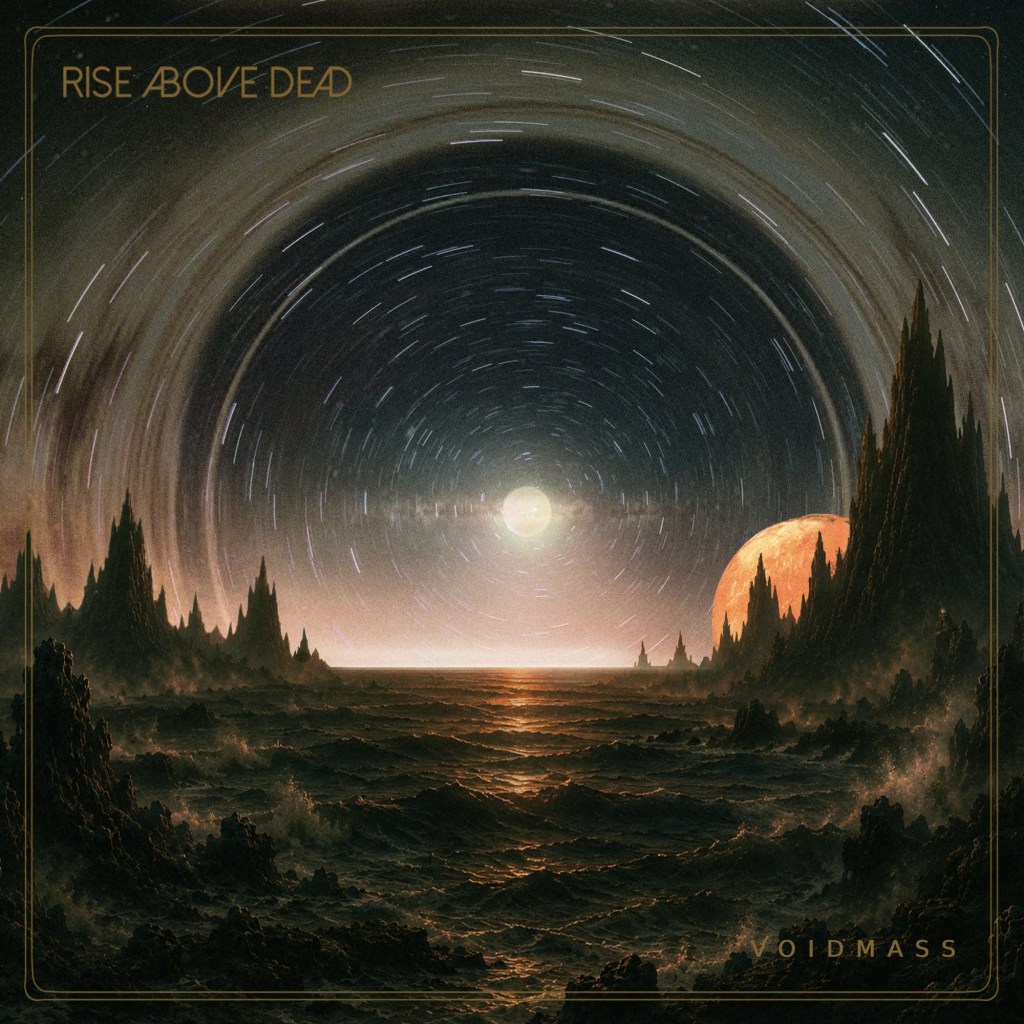
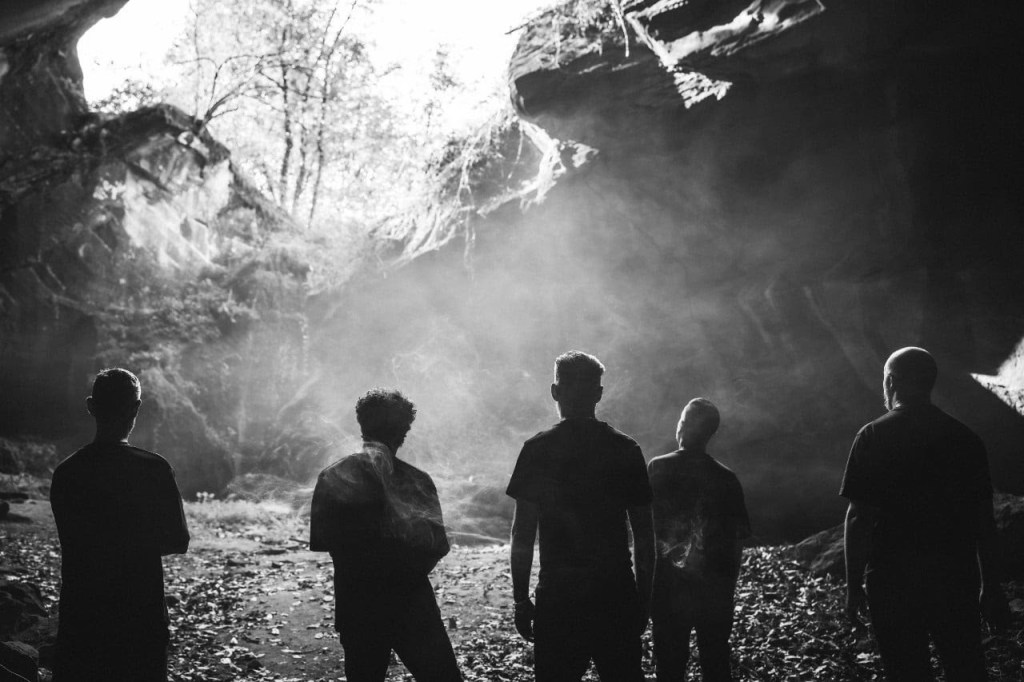
Milan, Italy-based post-metal veterans RISE ABOVE DEAD have unveiled “Drowning Slowly”, the first single and official video taken from their forthcoming new album Voidmass, due out November 27, 2026, via Argonauta Records.
Watch “Drowning Slowly” at THIS LOCATION.
With Voidmass, RISE ABOVE DEAD open a new chapter in their story, bringing together the crushing weight, atmospheric depth and cinematic dimension that have shaped their music over the years with renewed vocal intensity following the return of original singer Andrea Rondanini.
“Drowning Slowly” offers the first glimpse into this new incarnation of the band. Built around oppressive post-metal dynamics, haunting atmospheres and a steadily intensifying sense of tension, the track captures the emotional and sonic weight at the core of Voidmass.
The accompanying video further expands the song’s dark and immersive character, introducing listeners to the visual world surrounding the band’s new album.
Voidmass features six tracks that move through crushing riffs, expansive atmospheres and emotionally charged passages, balancing the band’s heavier instincts with a more vocal-driven approach. From the opening impact of “Annihilation/Rebirth” to the closing “Through Zenith”, the album unfolds as a continuous journey through darkness, transformation and emotional disintegration.
The album marks the band’s first release with Argonauta Records and represents a significant new step for RISE ABOVE DEAD, reconnecting the band’s early intensity with the expansive sonic language developed throughout their later work.
Track-list:
- Annihilation/Rebirth
- Drowning Slowly
- Voices Fade Away
- Fragile Ground
- Event Horizon
- Through Zenith (Feat. Emtu)
Line-up:
Andrea Rondanini – Voice
Matteo Sala – Guitars
Andrea Pesapane – Guitars
Carlo Carbone – Drums
Andrea Galliverti – BassRelease party:
Friday, December 4, 2026
ARCI Blob | Arcore, MB, Italy
with Baratro + Magnitudo
In collaboration with Striade Production
RISE ABOVE DEAD:
https://riseabovedead.bandcamp.com/
https://www.facebook.com/riseabovedead/
https://www.instagram.com/riseabovedead/
Argonauta Records:
https://www.argonautarecords.com/
https://argonautarecords.bandcamp.com/
https://www.facebook.com/ArgonautaRecords
https://www.instagram.com/argonautarecords/

-
Darkness takes shape as SENTRIES unveil debut album Disciples of Void & Fire
International black metal collective SENTRIES will release their debut album, Disciples of Void & Fire, on 4 November through AMOR FATI PRODUCTIONS. The six-track record will be available on CD and vinyl, with new song “Dying Stars and Skies Ablaze” now offering the first glimpse of the band’s sound. Listen to “Dying Stars and Skies […] -
2013-15 (R-Z)
To bands/labels/managements submitting material:
What you get is my honest opinion, so don’t expect every third album to receive 90 out of 100 points. There is simply way too much crap out there, even in the genres I love. Come on, almost every average release out there receive top scores in one or more webzines these days. My task is to help the readers by singling out the releases that deserves some extra attention. If you can’t live with mye critical approach, don’t bother sending me promos! If you are allright with it, hit my mailbox with your stuff (physical promos preferred):
leifkr(at)online.no
Mail address: Leif Kringen, Melbystien 3, N-2818 Gjovik, Norway
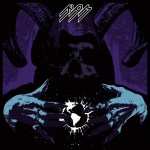
RAM “Svbversvm” (Metal Blade)
Judging from the reactions, I wasn’t the only one that was a little disappointed with the last RAM-album, ”Death”. It was by no means a bad release, these Swedes have never recorded one, but it wasn’t able to live up to the high expectations I had “Lightbringer”, which to be honest was a near monumental piece of work. The kind of work that most bands never come close to delivering, especially not two times in their career. RAM might as well have done just that.
“Svbversvm”, the band’s fourth full length release, just like “Lightbringer”, is an ambitious affair that manages to impress on all fronts. The songs are on a high level all the way through, still with a couple of really outstanding tracks in form of the slow and creeping “The Usurper” as well as the nearly eight minutes long and ambitious “Forbidden Zone” which comes with a monster chorus. While both of these tracks are rather tempo moderate and more heavy and dark than aggressive, “Enslaver” on the other hand, is a real energy bomb, almost just as good as the two tracks already mentioned.
Generally this album is a bit easier to get into compared to “Death”. At the same time, there is a lot to explore here, so don’t think you are finished with it and able to conclude after a handful of spins. As usual, the Judas Priest-influence is rather heavy. Just check out the opener “Return Of The Iron Tyrant”, and tell me those drums, the guitarwork and the tempo don’t reek of Priest! And while you’re at it, try to claim that singer Oscar Carlquist isn’t doing his best to do a Rob Halford-impression during the “Violator, Desecrator…”-part. Priest however, isn’t the only relevant band to mention here, as there are pretty strong hints of a band like Mercyful Fate in a couple of the tracks as well. Partly because of the songwriting, but also due to the dark atmosphere that roams over these songs.
To be a pretty straight forward heavy metal album, “Svbversvm” is a quite diverse one. “Temples Of Void”, featuring a crushing riff and “Terminus” are instrumentals that breaks up things a little, while “Holy Death” is particularly melodic, especially during the verse. To sum up, this album is completely packed with loud, in your face-heavy metal. The sound could maybe have been a little bit more dynamic, instead of the constant wall of thunder, but that’s about my only minor criticism of “Svbversvm”. This is for sure one of the most impressive heavy metal releases of the past year. (85/100)
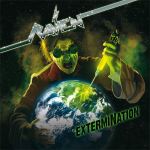
Raven ”ExtermiNation” (Steamhammer)
So is there a reason why Raven is featured in almost all sale bins in used record stores throughout the world? Or has the band a worse reputation than they deserve, mostly due to their lackluster albums released on Atlantic in the mid-eighties? I guess the answer is “yes” and “yes”. Some of the stuff the trio has put out in a long and rich career isn’t a lot to brag about, but at the same time there is no denying the fact that especially their first two albums were extremely important for the first speed and thrash metal-bands. 1988s “Nothing Exceeds Like Excess” was in my opinion the last, really great album Raven released, and as expected, this new one isn’t quite there. To be honest, the feeling I get from this new album, is pretty much the same I got from listening to their last effort, “Walk Through Fire”.
“ExtermiNation” is a decent affair, Raven continues to the only right thing, pursuing the energetic Raven-style that, apart from the few more commercial Atlantic-attempts, can be tracked right back to the debut album, “Rock Until You Drop”. Unfortunately, the quality of the songwriting is nowhere near as good as it was at the very beginning of the eighties. However, after having spun “ExtermiNation” around ten times, I have found some good stuff here, mainly located at the first third of the album. “Destroy All Monsters” which was also the title of the band’s live album recorded in Japan in the mid-nineties, features an inspired performance by singer John Gallagher and is a strong opener. In fact, it’s as good as any Raven-song since “Architect Of Fear”. The hectic line “Screaming/Burning/Death From Above” in the chorus simply is Raven. “Tomorrow” is slower and more melodic. Quite nice, but a bit predictable to be honest. ”Fight” is aslo pretty solid, with a powerful chorus containing a reference to the title track from the first album.
As expected, 15 songs are a few too many. Tracks like “Fire Burns Within” and “Silver Bullet” are just two examples of songs where the idea of melody and hooks seems to be idled away. A problem I’ve had with Raven many times before. What the band gains when it comes to enthusiasm and energy, is too many time wasted on mediocre songwriting around dull riffs and uninventive choruses. A bit sad, as it’s really hard to find a more sympathetic bunch of musicians. (60/100)
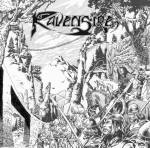
Ravensire “We March Forward” (Eat Metal)
I love this album! Simple as that. It think it’s something about the sheer heaviness combined with the outstanding sense for strong, but never cheesy melodies. In my opinion, Portugals Ravensire has made huge strides since “Iron Will”, an EP that showed some raw potential, but lacked some of the qualities “We March Forward” carries so proudly. First, the production is really top class, transparent, yet extremely authentic, with a snarling, raw guitar sound and massive, pounding drums. The result is a one of kind experience, a crushingly barbaric offering with an ear for details and melodies. The vocal is the one area where the band has improved most. Replacing Zé Gomes, not with a new member, but by letting bass player Rick Thor take over vocal duties was probably one of the best solutions the band has ever made. He is an unique singer, carrying his own rough voice and expression while adding even more power to the already devastating music. A perfect match!
From the intro “Dark Abyss” that leads into “Night Of The Beastslayer”, a rocking and to the point introduction to the atmosphere and general songwriting of the album, till the last tone of “Warriors To The Slaughter”( a track which lyrically continues where “Ravensire” from the EP left off) this is pure quality. Favourite tracks are probably the slow, marching “Gates Of Ilion” as well as the totally awesome “Drawing The Sword”. When Thor sings “I draw the sword” with power and conviction, I am reminded once again why raw, epic heavy metal is probably my favorite genre within metal. This tune should be played to everyone yet to learn what this kind of metal is about. If they don’t get it then, they will never do! I don’t really see a point in going on for ages about individual songs. Let’s just put it this way: “We March Forward” does not a contain a single mediocre song. So why not 100 points then? Well, this is the third highest score I’ve given all year, and there is always room for improvement. On this particular album, the two mentioned tracks as well as two or three others, are just that little bit stronger than the rest. However, the songs referred to as the “rest” also kick the asses of most of the stuff out there, so don’t for one single minute hesitate – go get your copy now!
At a time when no one seem to know if Ironsword ever will release a new album, and Doomsword as usual take their time working on a new full length, Ravensire has provided us with something not only to designed still the hunger, but an album that is equally as strong as the ones usually delivered by the aforementioned band. “We March Forward” is simply another one of those albums 2013 will be remembered for. (85/100)

Red Room Ensemble “Red Room Ensemble” (Self released)
A huge apology goes out to Red Room Ensemble, as they contacted me and even sent a physical copy of this album a long time ago. I listened to it a couple of times, but kind of forgot about it in the steady stream of new releases, and never got around to finish the review. Red Room Ensemble is a newly formed quintet from Mariehamn, the capital of Åland, the island that is part of Finland. The band presents a very professional looking and sounding package, with a strong, modern production as well as fitting cover and a nice little booklet.
Red Room Ensemble’s take on melodic metal isn’t one frequently featured here at Metal Squadron, but that doesn’t mean the stuff is bad, right? The production is crisp and transparent, and even though the music has hints of aggression, the vocals sound very pleasant, almost “kind” and well controlled. I guess many of the Metal Squadron regulars will find this album a little lightweight and safe.
This is an album that works well for hot summer night, which unfortunately we haven’t had many of here in Norway this year. It’s catchy, easy to digest without really having to pay too much attention to the music. On the other hand there isn’t a lot of substance here, and the overall sound might seem a little calculated. To be honest, it’s not really something I would go out and buy, but if you like modern, melodic metal and think you can appreciate a less aggressive sounding Soilwork for instance, this might be something for you. At least there are a few light signs of extreme metal in the guitar work of the opener “I Am The Hunger” and also in “Sheherazade”. Lovers of modern progressive metal could also enjoy this album, as even though it’s not exactly progressive, it certainly mixes different styles and moods quite well. There is also a bit of diversity going on, as the album contains heavier songs like “Everything Went Red” where you can hear the modern influences, but also stuff that is almost pop/rock, like parts of “The Hoarse Whisperer”, a fragile and delicate song made even more mellow the moment singer Torgny Stjärnfelt gets backed by a female voice during the chorus. On the other hand, “Stargrinder” has some aggressive background vocals added.
You can hear that these guys are no newcomers to the scene, in fact, singer Stjärnfelt who is probably the most merited one, sang on an album by Condition Red released 15 years ago. His vocals might not be mindblowing, but he certainly gets the job done. To sum up, this is an nice enough self financed release, well produced with a bunch of enjoyable songs, but overall a little too safe and modern. In other words, not heavy enough for most of my readers. (60/100)
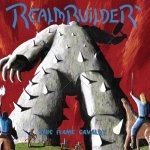
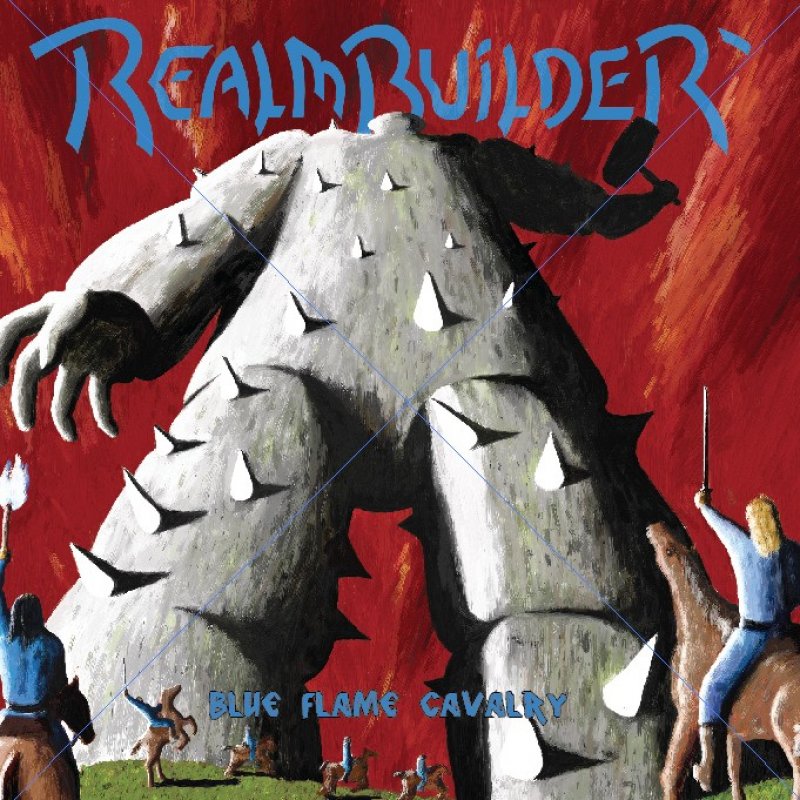
Realmbuilder “Blue Flame Cavalry” (I Hate)
While their two previous albums have sounded really refreshing and represented something very different and interesting, “Blue Flame Cavalry” is definitely the most impressive work of J. H. Halbred (guitars, bass, trumpet, keyboards, ram’s horn and percussion) and Czar (vocals and drums) to date. Having had the promo in my hands only for a couple of weeks, I have probably already listened to this album as many times as I have with their two previous releases “Summon The Stone Throwers” and “Fortification Of The Pale Architect” combined.
At first it felt like I had to be in the right mood to really appreciate the album, but as I have seen myself returning to it again and again, I have understood that even though Realmbuilder has an original sound, and doesn’t remind me of any of the current bands in the epic metal/doom metal-scene, this is an album that can be enjoyed pretty much in the same vein as I do with a “regular” release.
One of the reasons why I often reach for this disc more than once each day, is the fact that it is a rather short one, clocking in at a meager 34 minutes. The other albums by the duo haven’t been much longer, but the big difference this time is that “Blue Flame Cavalry” only consists of four individual tracks. “Advance Of The War Giant” and the title track, are the band’s longest tracks to date, clocking in at nearly 13 and 10 minutes respectively. Both tracks are exceptionally good and diverse with one cool part following the other without the compositions loosing it’s flow. And while it all sounds highly original and different, the hooks and melodies in these tunes are probably the best and most accessible the band has ever delivered. Just allow them to sink in, and you will be rewarded! These two are my favourite tracks on the album, but which one I prefer, changes all the time.
The two additional tracks, are the short and concise opener “The Write Their Names With Fire” as well as “Adrift Upon The Night Ocean”.The latter is clocking in at seven and a half minutes and is an accoustic tune, and of course very different from the rest of the tracks. I am not sure I would be overwhelmed if I listened to this tune isolated, but in the context that is, “Blue Flame Cavalry”, it makes sense.
The sound of the album, is the best the band has ever had. Even though it sound quite dry and minimalistic in a way, as peculiar as it might sound, everything also sounds huge. The drums are as powerful and authentic as you have heard them, and the guitar tone is simply awesome. If you have enjoyed what the guys have done in the past, I am pretty sure you will like this new album too, as it is clearly improved, but not really different from what Realmbuilder has done before. If their previous material haven’t clicked with you, I don’t guarantee it will this time either, even though it is a bit more accessible. Realmbuilder simply isn’t for everyone. I guess it’s as easy as that. (80/100)
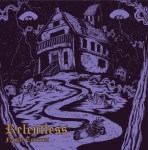
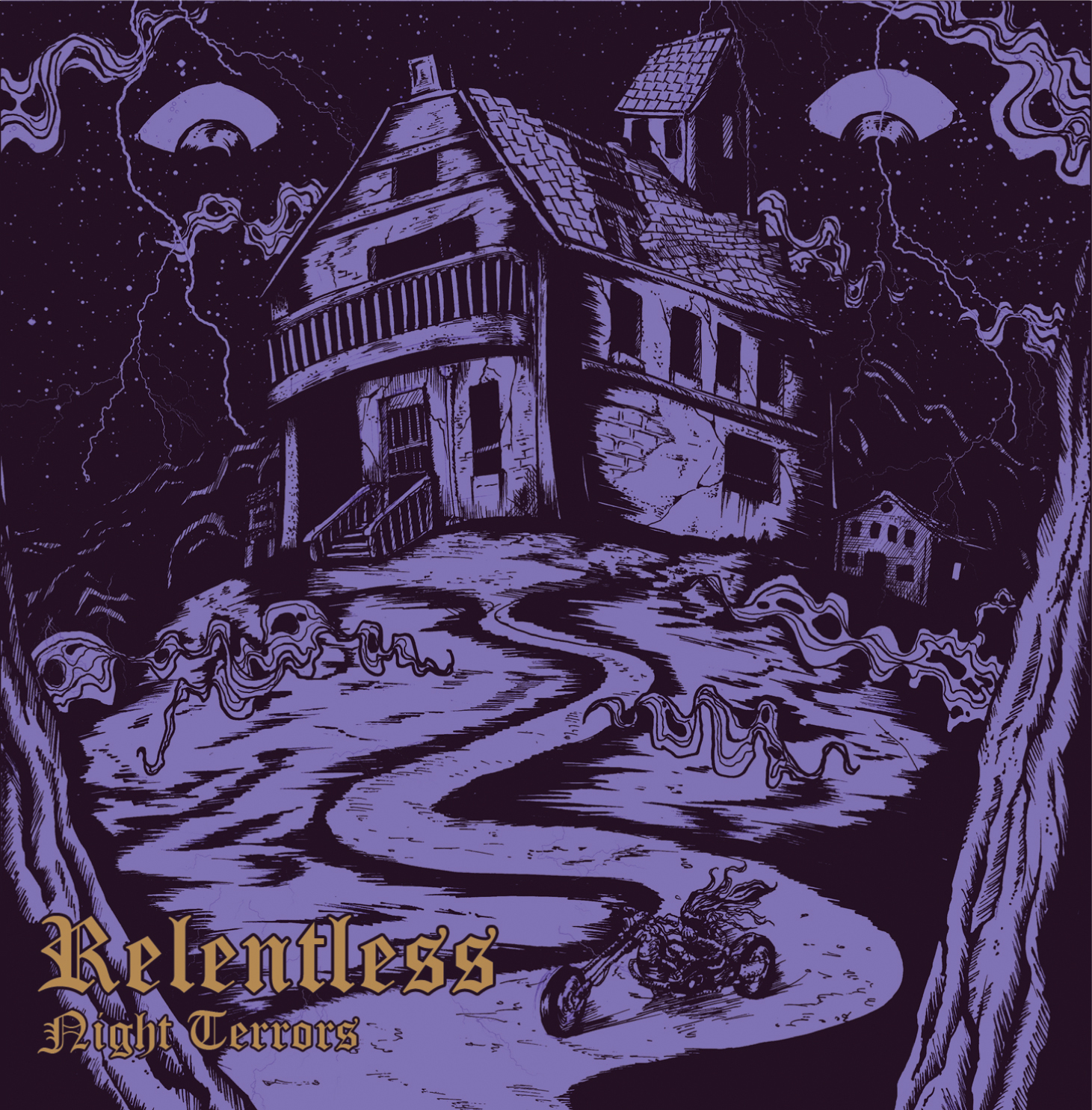
Relentless “Night Terrors” (Do Or Die)
Relentless is a trio from Chicago, featuring Carlee Jackson on vocals. Their debut album, “Souls Of Charon” was released back in 2013, and “Night Terrors” is the follow-up. I never bothered to check out the debut, as it seemed to get just as many luke warm reviews as good ones, something which is quite rare nowadays, where way too many sub-par releases are praised in sub-par webzines. Apparently there was a strong doom metal influence in the material on the first album, so things must have changed since then as this new offering is more or less pure heavy metal.
The band has chosen the track “Dawn Of The Night” to open their second album. The song has a hard rocking riff, coupled with a very loose, underground vibe. I am not convinced this is the best opener among the songs on the album, as there are definitely better and more engaging tracks to be found on “Night Terrors”. “Point Of No Return” is next up, it starts faster, and has a more distinct metal riff. By now you can hear that the band has a certain charm, and if you are into the more obscure metal sounds, both the songwriting, musicianship as well as production should appeal to you. I guess some people will call the performance a bit sloppy and label the sound as “garage”. Jakson’s dark and powerful vocals put a pretty strong mark on the songs like in “Path Of Fire” for instance, and quite a few of the tracks are quite catchy , with “Armed To The Teeth” being just one example. The basic heavy metal peformed is very raw and rough around the edges and it kind of combines classical metal With NWOBHM. “Slave To The Riff” for instance, (now that’s a cool title for a metal song) has an instrumental section that recalls Iron Maiden.
Even though there are a plenty of positives here, “Night Terrors” is not an album you go out and buy if you want great diversity, and sophisticated songwriting. I have to admit I sometimes wonder which of the songs I am listening as the album moves along. In short spells I am thinking of Christian Mistress which I also just reviewed, as Relentless also work within the borders of honest, workman like heavy metal where the drums sound like real drums, but Relentless’ take on metal is more conventional, harder and rougher compared to Christian Mistress. (65/100)

Revile “Revolution Isle” (Self released)
Michalis Rinakakis’ performance on the first two Air Raid-releases, “Danger Ahead” and “Night Of The Axe” was one of the main reasons why I really enjoyed those records, and his departure from the band was surely one explanation for my rather lukewarm relationship to last years’s full length “Point Of Impact”. A few weeks ago, I received an email from the singer telling me had mailed me two new CDs with bands he is currently singing in. Revile is one of them, and here Michalis is doing what he does best, singing traditional heavy metal. Although a few of the members have been in some smaller bands in the past, it’s a bit surprising see him teaming up with mostly unknown musicians, but of course that doesn’t have to be negative at all. Rinakakis himself has contributed most of the lyrics, while the guitarist Thord Klarström and bass player Johan Bäckman share responsibility for the music.
“Revolution Isle” is an EP With a total playing time of around 21 minutes. It features an intro along with four tracks, none as melodic, catchy and often Iron Maiden-galloping as Air Raid was. Revile delivers stainless steel in the tradition of classic British bands, but they never sound like they’re on the same retro trip as many other acts of today are. Eveything sounds darker and just a little bit more modern sounding. A song like “The Deadlock”, has some references to “Ram It Down” or “Painkiller”-era Judas Priest, and it strikes me that Rinakakis is relying a bit more on his upper register here, singing more in the style of Rob Halford than I can remember him doing in Air Raid. where he operated more in his mid register with his rather unique rough and powerful voice.
The four songs are not ground breaking in any way, but I strongly doubt the band wanted them to be either. Keeping things rather simple and traditional is fine by me, but until next time, a bit more identity and also a bit more diversity in the songwriting would be nice. All tracks are pretty much on the same level, without anything really sticking in your ear, even after several listenings. Check the band for yourself and make up your own opinion: www.facebook.com/revileofficial (60/100)
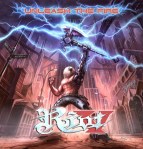
Riot “Unleash The Fire” (Avalon)
Let me say first that this review is based on the Japanese version of the album, but even if Don Van Stavern says (watch out for an extensive interview here soon) there are some differences between this one and the European version, both in terms of small added parts and a different production, I guess you can feel quite safe when you travel to your local record store (if there are any left that is), to get the version released over here in Europe. Just to point out where I am standing with Riot, my three favorite albums are “Thundersteel”, “The Privilege Of Power” and “Fire Down Under”, in that order. The comeback album “Immortal Soul”, I thought was okay, but nothing too spectacular. What about “Unleash The Fire” then? Well, it’s a definitive improvement on the predecessor. The songwriting is stronger throughout the album. While “Immortal Soul” had a couple of really strong tracks, but also quite a few fillers, there are more great songs this time, and the fillers are not that many.
Although he is no Tony Moore as we experienced him in all his glory on “Thundersteel”, new guy Todd Michael Hall is probably the best man the band could find. He shows great composure and there is something natural about the way he uses his voice, making his performance very fluent. And style wise the difference between him and Moore, really isn’t that big. Just close your eyes during the glorious chorus of “Fall From The Sky”, and I am pretty sure you can imagine Tony Moore singing the vocal melodies of this one.
The album thrives on the differences in songwriting from bassist Don Van Stavern and guitarist Mike Flyntz. While the former has more or less always delivered top notch material, including some of the proudest moments in power/speed metal on “Thundersteel”, and continues to deliver the heavy metal side of things yet again, Flyntz is really the surprise of the two, coming up with not only the aforementioned “Fall From The Sky”, but also “Take Me Back”, which should be a future classic for the band. A timeless rock song with lyrics sentimental enough to appeal to just about everyone. While songs like the opener “Ride Hard Live Free” and “Metal Warriors”, a track which the band performed live already prior to the release of the album are both great, it’s the two mentioned tracks from Flyntz that stand out as my favorites on the album. The middle part of the album is what prevents the band from getting an even higher grade, while not bad, a couple of the songs from 5 to 9, are not as strong as the first four and the last few songs. For different reasons, I guess, but personally I am not into the Euro metal influence in the chorus of “Kill To Survive”. Overall though, this is a very strong album, and certainly one that would’ve made Mark really (pun intended) proud. (80/100)
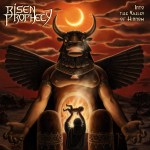
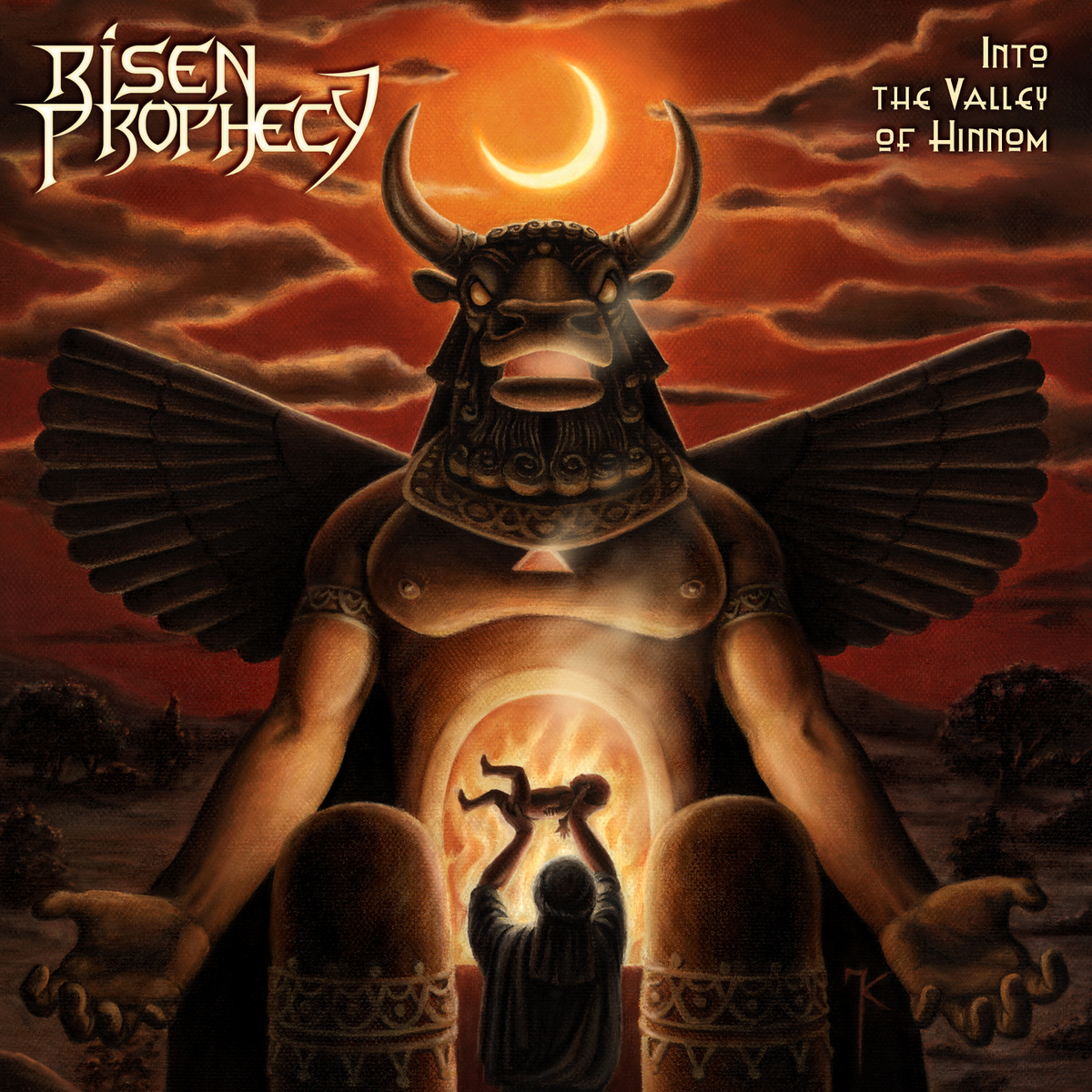
Risen Prophecy “Into The Valley Of Hinnom” (Metal On Metal)
A glance at the track list is enough to determine that this is not what you usually expect from a full length album release. “Into The Valley Of Hinnom” contains six tracks, but as soon as you see the titles, you will probably be able to guess that “The Descension” and “The Ascenscion” are an intro and and outro respectively. The four remaining songs are all rather long, clocking in between six and eleven minutes. The total playing time is about 35 minutes, so I guess it can be argued that this is both an EP and a full length release, but as I have never seen “Into The Valley Of Hinnom” referred to as an EP, I treat it as an album. But the songs are not just long, they are ambitious and diverse as well. A sense of originality and a strong will to break down barriers between subgenres and do something else than just going through the routines, are Risen Prophecy’s main assets at the moment.
The sound is dark and maybe just a little bit too massive and modern sounding to really appeal to old school fans. However, it’s mainly in arranging and getting the songs to flow properly, I feel Risen Prophecy can improve, although it has to be said it’s a quite demanding task getting this to work properly when you try to incorporate as many different parts and also styles, as these guys do. It’s all about preferences of course, but personally, I enjoy Risen Prophecy most when they do their straight forward melodic thrashing style, which they do for long parts of the title track, and not so much when they lean towards some kind of modern, dark power metal. Here and there the band sounds a bit too hectic, and sometimes also a bit forced, resulting in some parts that I really struggle to come to terms with, like the chorus in “To The Wolves”.
The singer, Dan Tyrens sounds very dramatic at times, and takes on the role as a storyteller just as much as a traditional vocalist. He does a fairly good job throughout the album, and it’s definitely not his fault that I don’t rate it higher. Even though this release didn’t click with me as I had hoped for, it’s easy to spot the qualities as well as the potential here. Already at this point, the atmosphere, and the will to create something different, are making me quite sure that there are open minded people out there that will enjoy “Into The Valley Of Hinnom”. My guess is that this release will gain more praise among those who listen to progressive power metal than within the traditional heavy metal circles. (65/100)
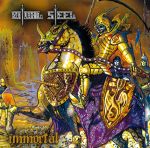
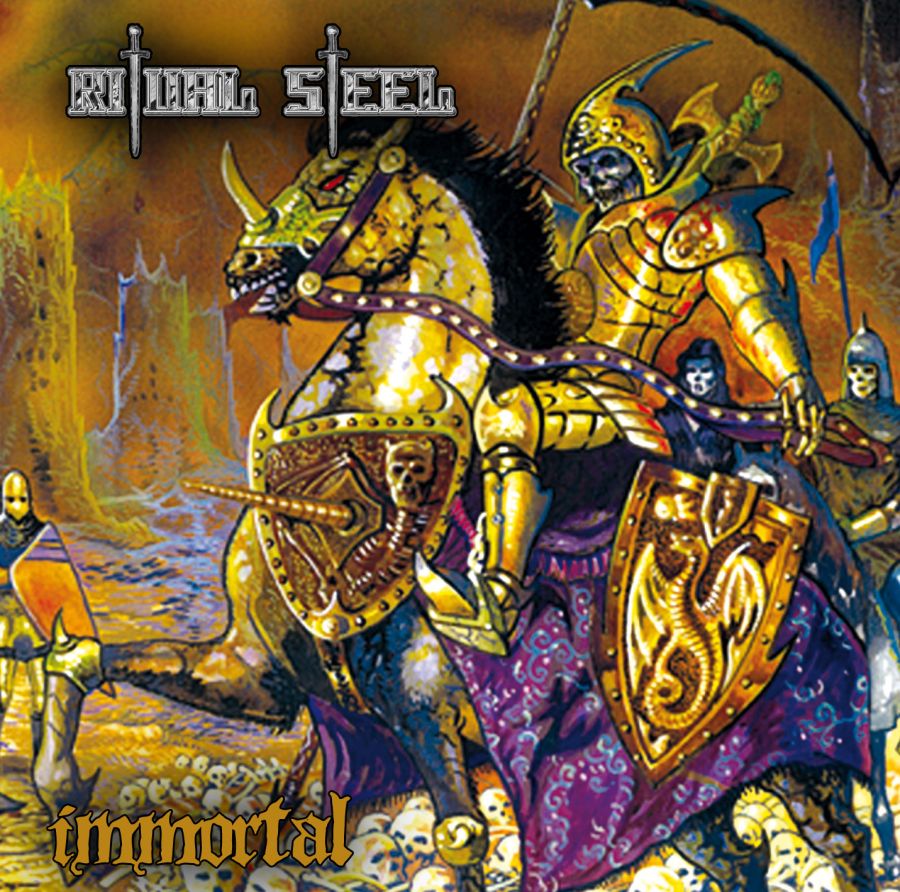
Ritual Steel “Immortal” (Killer Metal)
I found a lot of joy in the early releases from Ritual Steel, and think I own almost every single the band released until 2005 along with the two albums of course. I loved the obscure approach of the band’s early material, but found a lot more enjoyment in Titan Steele (with four of the guys from Ritual Steel) than the incarnation of the band Martin Zellmer continued with after the original lineup broke up after the release of the second album “Blitz Invasion” in 2004. I had a hard time with the material of the new version of Ritual Steel, and to be perfectly honest, I thought both the single “Knights Of Steel” as well as the album “Invincible Warriors” pretty much sucked. Since that album was released, bass player Stefan Ikert has left the building, resulting in guitarist Sven Böge also taking care of bass duties and reducing the band to a trio.
The last member of today’s incarnation of Ritual Steel is the American singer John Cason, best known from Exiled, who released two albums through Hellion Records during the first half of the 2000s. It seems to me that Zellmer wants Ritual Steel to sound like an American band, not only has he secured the services of Cason, the songwriting is also oriented more towards the “newer” Iron Maiden-inspired US metal acts than typical Teutonic stuff. It takes some time for “Immortal” to get going, cause the opener “Aggressor” has a long and boring intro. Finally, after something like three minutes, it turns into a decent, but bit untidy and quite aggressive opener. The second tune, “The Ritual Law” also carries a bit of aggression, but is a lot more direct than the opener, sporting a stronger chorus as well. Two songs into the album, and we have already mentioned two of the stronger tracks of the album. A third one worth mentioning, is the song “Dr. West”. This number is the best song on the album, a neat, fast and catchy number, with some decent riffing, one thing that this album otherwise lacks. “Solar Maiden II” also deserves a honourable mention, not the biggest surprise really, as it’s based on some of the same ideas as its predecessor, “Solar Maiden” featured on Ritual Steel’s debut.
On the other hand, some of the stuff towards the end, like “Metal Sanctuary” and especially “Get Down To The Underworld” is plain terrible. “Judgement Day” could have been a decent song if the guys had put some more effort into the chorus and the vocal lines which are repeated till it gets really boring. Continuing to focus on the songs , as an album, “Immortal” is way too long. When the album reaches the final song, I am already quite tired of listening, and the fact that the last song, is almost 24 minutes long, doesn’t help at all.
The cover art is one of the worst I’ve seen for a while, it definitely looks like they should have used a higher definition to get the picture much clearer. To a certain extent, this point can also be translated to the music, cause the sound of this recording has more than a slight resemblance to a pixeled picture. Everything sounds really muddy and weak. There is very little bass to be found, and the guitar really suffers from an almost paper thin sound that makes your ears bleed (but not in the right way). Finally, the drums make little impression since they have no real power behind them. Of course this is a pure underground minded release, but a sound like this is not worthy of a release put out in 2013.
I really can’t say I am satisfied with John Casons vocals either, he is clearly not a bad vocalist, but at times he seems a bit uninspired, you know like you probably can get when you lay down the vocals in a studio in Phoenix, Arizona a long way from Kiel in Northern Germany where the rest of the band churned out the music. Listening to this album, I feel that the vocals don’t fit very well in with the overall production, or should I better say, the lack of production (50/100)
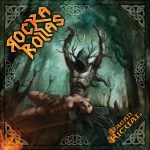
Rocka Rollas “Pagan Ritual” (Stormspell)
I really enjoyed the last Rocka Rollas-album, “The Road To Destruction” which probably is, the best thing Ced Forsberg has done…and he has ceratinly done a lot! I liked the fact that it was a pretty straight forward heavy metal album, and thought some of the songs, like “Curse Of Blood” and “Darkheart” for instance, were outstanding.
When I first got the chance to listen to “Pagan Ritual”, I was quite disappointed, as I didn’t enjoy the epic arrangements, the pretty strong Celtic folk influence and the overblown choruses. It seems like Ced is aiming for the sort of stuff that Blind Guardian did to perfection in the early to mid nineties and melodies similar to what Rhapsody did very well on their first few albums. For me, “The Road To Destruction” sounded fresher and carried a stronger identity than this new album. After having listened to “Pagan Ritual” for the first time, I felt no real need to put it on again.
Now that I have got used to the album, my view is a bit more nuanced. I still think “Pagan Ritual” is bit too predictable and probably too close in style to the Breitenhold-album reviewed somewhere else on these pages. Or perhaps it’s the Kai Hansen-like vocals of Ced, who sings in both bands, that deceives me a bit, as Breitenhold is slicker, and closer to Helloween than Blind Guardian or Gamma Ray. I now have no problem accepting “Pagan Ritual” and even appreciating it for certain qualities like the energy level, the catchiness and the impressive guitar solos . While none of the tracks click with me like the two aforementioned tracks and the title track from “The Road To Destruction” did, there are some songs worth mentioning here as well. “Punic Wars” is a fast and dramatic oopener while“Demigods” is a rather interesting one, sounding a bit darker than what were used to. On the other hand, songs like “Lost In The Enchanted Forest” or “Gaulic Boare” while diverse and ambitious enough to be viewed as impressive compositions, don’t connect properly with my preferences. Maybe they’re a better match with yours? (65/100)
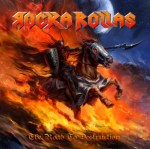
Rocka Rollas “The Road To Destruction” (Stormspell)
Third album from Sweden’s Rocka Rollas and workaholic Cedrick Forsberg which this time is also taking care of the vocals besides playing guitar and doing all of the song writing. I have to say I quite like his vocals, and I have a hard time understanding why he didn’t sing on the earlier releases himself. He might not have a better voice than his predecessor Joe Liszt, but Ced certainly brings more identity to the table. Yet it has to be said that you can hear him struggling and his voice sounding rather strained and thin, a bit similar to Kai Hansen’s here and there. Overall I am not too bothered by this though.Rocka Rollas has brought out some pretty neat releases earlier, offering the odd killer track here and there, but every time I have listened to something new from them, I have been overwhelmed by the feeling of having heard it all before. Until now that is, for with this new album, Ced really steps up with what is a strong lesson in how to write melodic, catchy, and for the most part, fast heavy metal which reeks of Noise Records anno 1988.
Even with Ced himself behind the mike, everything sounds a lot more confident this time. I liked elements about the Blazon Stone-album the guy did, a lot of the riffs were simply killer, but the choruses let me down, as they were not even close to the majestic ones Rock’n Rolf once was able to come up with. The opener (actually, there is a short intro first) “Curse Of Blood” is a killer tune, with a superb singalong chorus that comes out as a combination of old Helloween and Running Wild. You’ll be humming this one for days, maybe weeks once you’ve head it. The song is followed by “The Road To Destruction”, which is also a fast and bombastic tune with another outstanding chorus. After the killer opening duo, which are probably the two best tracks on the whole album, things are slowed down a bit with “Firefall”, which shows some similarities to Gamma Ray, but is clearly better than most of the material Kai Hansen is able to come up with these days.
The riff in “Darkheart” sounds a lot like Running Wild again, this is another great tune, and clearly one of the highlights for me. There isn’t much not to like on this album, but the second half or the album is just a bit weaker compared to the first one. There are a couple of really good tunes to be found here as well, but I have to admit I am not a big fan of “Guardians Of The Oath”, which reminds me a bit of the band’s earlier material, sounding a bit too typical and very similar to something you have heard before. The Magnum-cover “Kingdom Of Madness” doesn’t do it for me either. Magnum has a few of these really unique and magical numbers, and this one looses almost everything the song is about in Rocka Rolla’s speedy rendition.
The album is clocking in at around 44 minutes, which is about perfect for this kind of music. If you’re looking for a fast, bombastic and catchy album with wild guitar solos and huge, singalong choruses, that still isn’t completely drowned in cheese, you should certainly take a trip down “The Road To Destruction”. Along with the Noble Beast-album, this is the best thing I’ve heard in this particular genre in 2014. (75/100)
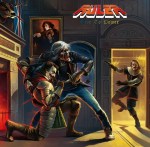
Ruler “Rise To Power” (My Graveyard)
I hear some people are saying “Rise To Power” is a letdown compared to the band’s debut, “Evil Nightmares”, released one and a half year ago, but I beg to differ. Okay, so the songs might be a bit weaker, but this is still some enjoyable heavy metal. While a bit reluctant at first, I had the time and also the motivation (I loved the debut as well) to give “Rise To Power” more rounds than the usual five to ten. Already on the virgin spin, I fell in love with some of the more immediate tracks, like the rocking, uptempo NWOBHM-groove of “Back To The Glory Days”. Hell, with a title like that, and lyrics that goes: “Denim on my legs/Leather on my chest/A mullet in my head/ you expect the song to sound like early metal, and I have to say this is one of the best takes on the typical NWOBHM-sound I have heard recently. “The Temple Of Doom” was another pretty instant one, a quite long, melodic midtempo tune, leaning more towards the sound of US metal perhaps, with singer Daniele often reaching for the higher notes. The song also contains a couple of excellent guitar solos. Speaking of the vocals, they’re probably to lightweight and thin to be everyone’s cup of tea, but I like the charm and enthusiasm they come with. The highlight of the album was, and is I have to add, the title track. A killer uptempo tune with a excellent and very catchy classic metal verse and an awesome, partly shouted chorus. Again, this songs is more in the vein of US metal, than the first songs which are surrounded by a NWOBHM-aura.
As you probably have realized, it was the other half of the songs (there are only eight of them here, including the opening instrumental/intro “The Ships Of Trafalgar” and a longer, uptempo instrumental track called “Moonlight Wanderer”, which features some cool shreeding but without losing the melody) that left me a little cold to begin with. Even though the three aforementioned remain my favourites, I now acknowledge the fact that there are also other cool songs here. While they might seem rather unspectacular in the big picture, both “Another Fight” and “Mirror Of Lies” are more than decent album tracks, and they also offer something when it comes to creating a quite diverse album, with the latter probably the least heavy track on the album. The album closer “…in Conspiracy” is by far the longest tune the band has ever recorded. Clocking in at more than 13 minutes this is, by Ruler’s standard an adventurous and diverse tune. I enjoy some parts of it, but can’t really free myself from thinking that it would have been even better if some parts had been omitted or shortened.
With “Evil Nightmares” and now “Rise To Power”, Ruler is on course to establish themselves as one of the best up and coming traditional metal acts in Europe. Whether you prefer the British sound or the US metal of the eighties, “Rise To Power” has something to offer. “Rise To Power”, is simply put a charming heavy metal album with a killer old school, late seventies/early eighties gitar sound. The crispy and clear, but not overproduced overall sound also also adds to the experience. Recommended! (75/100)
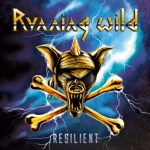
Running Wild “Resilient” (SPV)
Adrian, Running Wild’s mascot doesn’t only grace the cover of the band’s brand new album, he is also a big part of the header that I have chosen for this webpage. The reason is simple – I absolutely love the band. At least the band they once were. Whether we’re talking about the rough edges and the dark atmosphere that surround the first two albums or the stuff they did after starting using the pirate theme for all that it was worth, my heart always starts beating a little bit faster. The band’s forth studio album, “Port Royal” was a brave and different effort from the band after “Under Jolly Roger” kind of tied the darkness of old and the new, more melodic approach of Running Wild together. I can write for hours about this stuff, but my ramblings will come to and end by saying that in “Blazon Stone” and especially “Death Or Glory”, the band put out two of the classiest metal albums ever released. So strong was my love affair with the latter release, that I simply pushed everything else aside for a while. Nothing else was worth a damn shit, Running Wild was the real deal! Those unique and vital vocals, the incredible guitar sound, the diverse and tasteful drumming of Iain Finlay, the extraordinary songwriting (Come on, how many bands are able to compose a song like “Riding The Storm” during their career?) and the totally fitting, crystal clear, but not overproduced sound, simply are unmatched to this day.
So why do I start a review of Rock’n Rolf’s new album like this? Well, describing what is wrong with Running Wild nowadays is just as much about giving a short summary of what was so great about the band in their prime. Okay, so the first fifty seconds or so of «Soldier Of Fortune» raised my expectations. The part until the pre-chorus sets in, is probably the best thing about the whole album. Those attacking guitars as well as a more inspired performance and vital sounding Rock’n Rolf than I can remember from the last few albums, gave me a slight hope that maybe this time, Rolf had once again been able to recreate some of that old pirate magic. With a bit more tempo (this is one of the faster ones on the album) a slightly “livelier” sound and a more energetic performance, this song wouldn’t have sounded out of place on a nineties release like for instance “Pile Of Skulls”. Unfortunately, the two following songs , the titletrack as well as “Adventure Highway” are not of the same standard, leaning more towards the extremely average hard rock and early eighties Judas Priest, that also was a big part of the last album. “Resilient” especially is really disappointing, as you always expect something extra from the title track, and definitely not a dull song without any dynamics or bite.
“The Drift” however, is probably one of the best tunes I have heard from the band during the last 15 years, as it is catchy little tune in the vein of let’s say “Little Big Horn”. Again I miss those razor sharp guitars, and a bit more aggression and a real drummer could do(the drums sound better than on the last album, but I am pretty sure they are programmed this time around), but at least the songwriting has a lot in common with high quality nineties- Running Wild. Very good stuff, and in my opinion the best tune on the album. Some great guitar work along with a nice chorus and good performance by Rolf, is what makes this track a stand out tune on “Resilient”. The album is one helluva roller coaster though, and “Desert Rose” is a big letdown. It’s another midpaced, very melodic tune, that sounds so uninspired it hurts. It’s followed by another decent track, “Fireheart”, which has a bit of tempo and a typical Running Wild-verse, but I have to say that the chorus like in a quite a few of the other tunes, is a letdown. I really miss the times when Rolf was the master of huge and extremely catchy choruses and didn’t just go for the easy way out (as Robert Tepper used to sing) by repeating the title over and over again.
The following three tracks are all run of the mill-stuff, that never would have made it anywhere near any of the Running Wild-albums released until “Black Hand Inn”. Hell, even the tracks that were used for the EP’s like “Wild Anmial”, “Little Big Horn”, “Lead Or Gold” or “The Privateeer” are miles better. “Run Riot” showcases the more hardrocking side of the band, and even though it’s not as braindead as “Me And The Boys” from the last album, it’s an insipid tune that no real old fan of the band should appreciate. “Down To The Wire” is next up, and the title already is a clear indication that this is Rock’n Rolf on autopilot. Again the chorus is very weak, and this simple and rocking midtempo stuff doesn’t deserve to be on an album that has a cover graced by the classic Running Wild-logo. When the boring opening riff of “Crystal Gold” creeps out of the speakers, a slight irritation creeps up on me. I am sure I have heard the chorus before and the riffs and the lead melody are simply weak attempts at creating something at least remiscient of Running Wild of old.
Like every other album put out these days, this release has also gotten it’s fair share of good reviews. In some ways I can understand it, because it’s definitely an improvent on the last album. I am not the one to say that my opinion is worth more than somebody elses, and maybe it’s wrong of me comparing every new album the band releases to the milestones of the late eighties and early nineties, but I think having been there when those classic albums were released, certainly helps putting things into perspective. Even if this is the best Running Wild-album since “Rivalry”, which it might be, it doesn’t mean that it’s a great album. By the way, I didn’t mention the last track of the album. It has a very similar title to another closing long track, “Treasure Island” from “Pile Of The Skulls”, but even though “Bloody Island” is a pretty decent tune with some cool guitars and one of the better choruses of the album, it doesn’t make the hair stand straight on your back like the riffs and those incredible melodies in “Treasure Island”. It could be the lack of tempo and double bass drums, it could be the weaker sound of this album or it could simply be the fact that Rock’n Rolf is not 100 percent into this stuff anymore resulting in the songwriting sounding way more forced than before. Enjoy this album if you can, my admiriation for classic Running Wild is simply too strong to really appreciate it. (60/100)
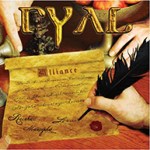
Ryal “Alliance” (My Graveyard)
Are you ready for another concept album? Italy’s Ryal, featuring drummer Giacomo Macis and guitarist Carlo Olla who have both spent some years playing in one of my favourite, newer Italian outfits, Holy Martyr, has created an album with characters like Cpt. Urich, who is the commander of the King’s guard, King Lennart himself and the demon Orghull. A castle called Darwawer Keep is also essential to the story, so is The Chain Of Blood And Iron, a confederation of barbaric tribes. As usual, there is an intro and outro in each end of the album as well as some short, four in fact, interludes inbetween the six real songs. Some of the narration comes with a quite heavy accent, if you tend to have a problem with that.
The music and lyrics are created by Olla and singer Alessandro Bordigoni who left the band earlier this year to be replaced by new boy, Giampiero Boi. While Bordigoni does a decent job, he is by no means a vocalist that can’t be replaced, so it will be interesting to hear what the band, who has also added guitarist Michael Crank to the lineup, can achieve in the future. But for now, let’s focus on “Alliance”. Already during the first song, “God Of Mountains”, Manowar springs to mind. The tune has a lot of pathos, and the vocal lines in the chorus have Eric Adams written all over them. The Manowar-reference occur other places on the album as well, and during the calmer, sometimes medieval sounding passages in “Rest Of My Soul”, I hear some Warlord. There’s even a bit of Magnum in “Comrades” which has a similar atmosphere to the classic “The Spirit”. The song also has a Jethro Tull-sounding part complete with acoustic guitar and flute.
The quality of the material, is nothing more than decent, but for a debut album, and one that I believe was released by the guys themselves before My Graveyard entered the picture, there is clearly some potential. Even the heavier songs like the title track and “Hand Of Glory” have good melodies and plenty of hooks, but I feel some of the tunes drag on for a little too long. One thing the band should look to improve, is the drum sound. The drums sound sterile, and there is not enough power coming from them. The bass drum for instance, sounds like fast and loud clicks rather than powerful punches. (60/100)
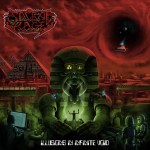
Sacral Rage “Illusions Of Infinite Void” (Cruz Del Sur)
With their superbly titled EP “Deadly Bits Of Iron Fragments”, Sacral Rage created a well deserved buzz in the underground, making an impression with all the right people running the zines or contributing for the bigger magazines. However it was when the material from their “Promo 11111011110” started circulating last year, that we knew we had a winner. As expected, after all it was a release meant for the labels, all songs from the promo have made the cut, and in addition the band has created a handful of new ones. Are they just as good as the ones on the promo? Yes, indeed! “Lost Chapter E.: Sutratma” as well as “Panic In The Urals (Burning Skies)”, are both among the best tracks on the album, but there are songs here that are just as good. Quite a few of them in fact.
Just like on every great album, there is absolutely no fillers to be found here. With the songwriting skills that these guys posess, combining a technical and adventurous touch with a great ear for hooks and catchiness, “Illusions In Infinite Void” is destined to be a classic that future releases will be measured against. 98 percent of them will fall short, as this is not the kind of album you encounter twice a week.To put it simple – this is the best metal album since Atlantean Kodex’ “The White Goddess”, released one and a half year ago. Quite funny, because these two albums are so different when it comes to the musical content. Where Atlantean Kodex sounds European, moves along slowly and profits on a thick atmosphere, Sacral Rage sounds American to the bone, is mostly very fast and technically challenging.
I see lots of band names being mentioned in what seems like a desperate attempt to describe an album that to me seems very hard to categorize. Sacral Rage might sound technical, but they way they craft their songs is far from Watchtower or other similar bands that had a tendency to loose the red thread and the hooks in their will to experiment. More song oriented acts like Helstar, Destiny’s End, Agent Steel, Toxik and even Steel Prophet are all bands that spring to mind at least once when I listen to this album, but still Sacral Rage is a completely different story.
“Illusions In Infinite Void” is one of those albums that you can listen to over and over again, and still discover new elements. It’s challenging, interesting and also inspiring. The sound is pure US metal, performed in a way seldom heard from a band from Europe. Still, the album is extremely song oriented, with some of the catchiest riffs I’ve heard for ages. All hail, Marios, what a master of this trade! The bass player, Spyros, also deserves a mention, I simply love all the interesting bass lines scattered behind sharp riffs or underneath the ripping solos. Vagelis, the drummer works perfectly in pair with the bassist, for once giving real meaning to the expression rhythm section. Singer Dimitrisis the last piece in the puzzle with his eccentric style, crystal clear voice and piercing screams. Have you ever heard a more impressive Greek vocalist? I doubt it.
The production is a little dry, with a totally killer guitar sound. The bass is rumbling loud and clear and the drums are powerful. Another impressive thing about the album, and something that is pretty unusal these days, is how the band has saved a couple of the best tracks for the latter part of the album. Along with “Lost Chapter E.: Sutratma”, both “Inner Sanctum Asylum” and “A Tyrannous Revolt” are among the very hightlights of this excellent album. (90/100)
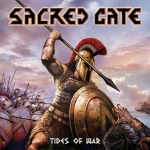
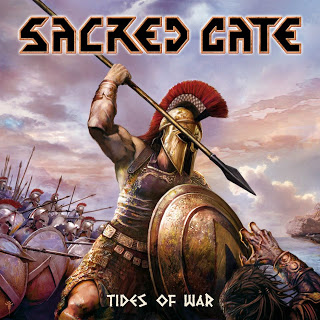
Sacred Gate “Tides Of War” (Metal On Metal)
While the last release from Metal On Metal, Attacker’s mighty “The Giants Of Canaan” turned out to be one of the highlights of the year, Sacred Gates new album, isn’t really in the same league. To be honest, I didn’t expect the Germans’ second album to be able to compete with the lastest output by the US veterans either. The main reason is that I wasn’t overly excited by neither the Made Of Iron-album (featuring singer Jim and guitarist Nicko) nor “When Eternity Ends”, the debut album of Sacred Gate. In terms of quality, this new offering, fits in somewhere between the two albums. It’s definitely better than the rather lacklustre self titled Made Of Iron-album, but not quite the same standard as the Sacred Gate-debut released one year ago.
After an intro where not much happens, the album kicks into gear with “The Immortal One”. An uptempo number, though of moderate nature, with a chorus that is a bit too weak to make the impression the listener hoped for in an opening tune. It’s not a bad song by any means, but nowhere close to outstanding either. A few mid- to uptempo oriented tunes in more or less the same quality follow before “Gates Of Fire” sets a higher pace before the ballad “Never To Return” follows. A enjoyable, but not to exciting instrumental is next, before “Spartan Killing Machine” opens the strongest one third of the album, as it is followed by “Path Of Glory” with more than a hint of Manowar and the epic album closer “The Battle Of Thermopylae”, which borrows from Iron Maiden when it comes to the build up. There is also some Maiden to be found in the bass lines, both here and during the rest of the album. These influences apart, Teutonic metal the way it’s performed by Accept, Grave Digger, Paragon and countless others, is roughly what we’re dealing with, a genre I have to admit I am not the biggest fan of. This might explain why I am not digging this album as much as many other reviewers seem to.
The concept of “Tides Of War” bears more than a slight resemblance to the album “Hellenic Warrior Spirit” by the Italian epic metal band Holy Martyr. I felt the concept suited the music of Holy Martyr a lot better, as the sound of the Italians is able to bring forth images that the expression of Sacred Gate can’t create. That being said, “Tides Of War” is a decent album, featuring quite powerful metal, but unfortunately rather unspectacular songwriting. A few words about the singer to round off this review: Jim Over has an unique and rough voice, but his range seems limited and a singer with a broader repertoire would’ve lifted individual songs like the melodic “Gates Of Fire” as well as the overall experience of listening to this album. (60/100)
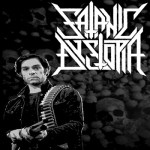
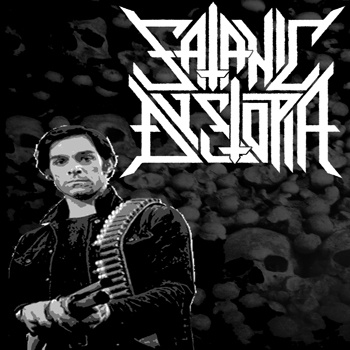
Satanic Dystopia “Doube Denim…” (No Visibe Scars)
I own quit a few of the releases from No Visible Scars, an American label dealing with tapes only, and it was a nice surprise to find some of the label’s latest offerings in my mailbox recently. Satanic Dystopia was named band of the week by Fenriz some time ago, and also performed at this year’s edition of Live Evil in London. I can see why he enjoys what the Manchester-quartet has to offer. The way the guys mix up their blackened thrash metal with a bit of punk will surely appeal to a guy that’s not hiding his love for so called metal punk. Other than that, Satanic Dystopia has some similarities with a few of the bands currently in the Norwegian black thrash-scene, in particular Aura Noir.
The album, so far available digitally and on cassette, but also expected to be released on vinyl, consists of eight short and fast tracks clocking in at nearly 22 minutes. Not a lot to judge a band by, but I have no problem hearing what the band is trying to achieve with their music. The hoarse, hate filled and barking vocals of Al Osta (also in Ravens Creed) fits well with the abrasive and filthy black thrash the band is dealing in. If you want it ugly, this one is for you!
The album was recorded during one day in April last year, and the recording sounds rather spontaneous and authentic. The band appears to be seriously pissed off, and what is better than to match this attitude with a love for horror movies? The album starts with a sample from “The Devil Rides Out” , a classic horror movie from 1968”, and there are a few other references to the movie genre as well. The eight songs might sound a bit alike to begin with, but there after a few listens, you’ll notice that there are infact a bit of diversity to this album, probably more than in most releases in the genre. The inclusion of piano at the start of album closer “Satanic Dystopia” is probably the biggest surprise here, but the rather melodic and quite diverse (check out the cool midtempo second half including yet one of those samples) “Blood, Spit And Concrete” as well as the “hit” of the album “Bastard Squad 666” with a pretty strong punk influence, are other stand out moments.
Even though I wasn’t blown away by the material, something I guess has most to do with the fact that black thrash really isn’t a preferred genre of mine, there is no denying the quality that is here. Just listen to those fuzzy, rumbling heavy guitar riffs! If you are into ugly and aggressive thrash with hints of black and punk, you should really check out this release. (70/100)
http://novisiblescars.bandcamp.com/
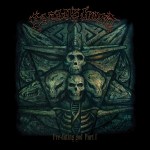
Satan’s Host “Pre-Dating God Pt. I +II” (Moribound)
I guess most of my readers know the story of this band pretty well. Their 1986-release “Metal From Hell” featuring Leviathan Thisiren, or Harry Conklin of Jag Panzer-fame, is one of the definitive cult US metal albums of the eighties, even though (or maybe because) it has a terrible sound. The career was rather short lived back then, but guitarist Patrick Evil and a bunch of new musicians returned about 15 years later, performing extreme metal. Fast forward until 2011 and vocalist extraordinaire Conklin is back in the band. With him in the ranks they delivered a refreshing album mixing black with hints of death metal with Conklin’s commanding vocal presence. However, a couple of songs were enough, as I grew quite tired of the lack of diversity and the brick wall sound of the record.
The two part “Pre-Dating God” are better albums, but I question why this is released as two separate albums as the combined playing is just about 80 minutes, two bonus tracks included. Not only could all the material have been put on one disc, the whole affair would also have been so much better if the band had skipped three or four songs and made an hour long album. That being said, both part I and II are good offerings that stand very well on their own feet and outdo most of the ordinary metal albums released these days. Conklin is in fine form, sounding very much as we know him, showing great control of his towering voice or sounding really aggressive on the brink of being possessed.
There are still a lot of extreme metal to be found here, but now it sounds more like a heavy metal band with shades of black and death than a black metal band trying to incorporate traditional metal into their sound. A positive factor is the drums, which sound more natural than what they did in the past. The overall sound is not as tense either, leaving the listener with a bit more space and time to breathe compared to previous works.
The first two songs on both records are all among the highlights of the albums combined, tracks like “Hell’s Disciples”, “Embers Of Will”, “Fanning The Flames Of Hell” and “Soul Wrent”, and even though there are some really cool material to be found later on the albums as well (like for instance “After The End” on Pt I), the band isn’t quite able to keep the high standard all the way through. To sum up, these are two very nice albums of dark heavy metal featuring impressive majestic and/or aggressive vocals from the always reliable Harry Conklin. Things get a little predictable towards the end of both records, but fans of Jag Panzer, Cage or even more extreme forms of metal should check out both parts of “Pre-Dating God”. (70/100)
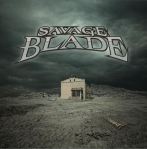
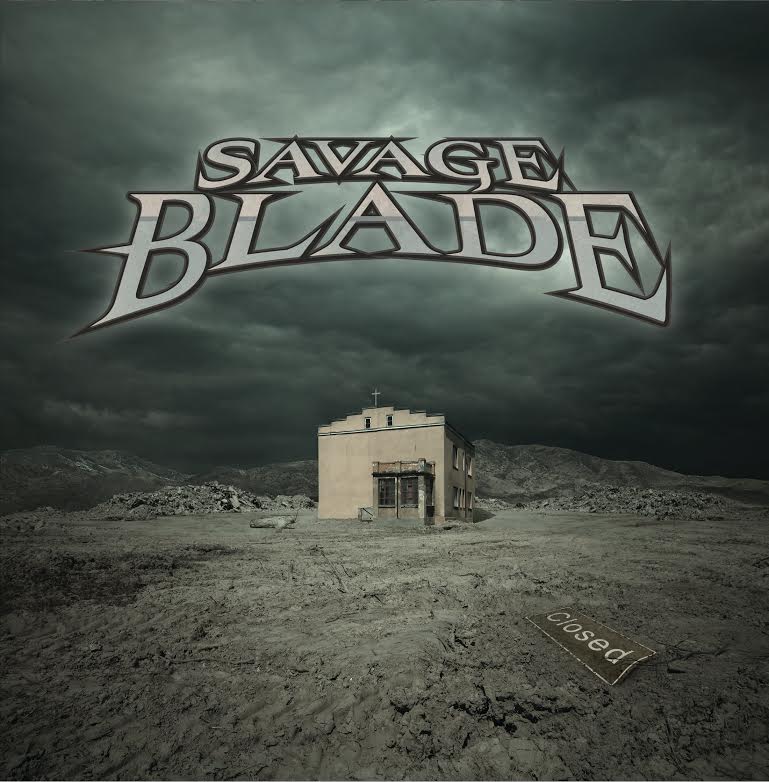
Savage Blade ”Angel Museum” (Self financed)
Vow, is it really more than five years since Savage Blade released the vinyl version of their debut, “We Are The Hammer”? Well, the guys are back, once again releasing the album on their own (Pure Steel were involved in the CD-release of the debut). I am not sure if it’s due to lack of interest from the labels or if it’s the band that want to work this way, and since I haven’t seen the finished product I am not able to comment on the packaging which is often a letdown when bands decide to take care of things themselves. I have to admit I didn’t listen a lot to the debut before it found its place in my vinyl shelf, so of course I didn’t expect a groundbreaking heavy metal album with killer material, but hopes of something above average were clearly in the back of my mind when I first put this album on.
If I remember correctly, the band was a trio on the first album. Since then two new members have been recruited. In Mike Hodsall, the Canadians have added a second guitarist, while the drums are handled by Chris Killeen. “Angel Museum” is not a bad album, it’s cleverly produced, with many good, though seldom outstanding performances, featuring eight tracks of more or less the same consistent quality. That being said, there is not a single song here that stands out big time, and very few that I actually remember after having listened through the album. Even though the debut probably wasn’t an out and out metal album either, I expected “Angel Museum” to be a bit heavier, more aggressive and energetic. In my opinion quite a few of the songs here are closer to hard rock than metal, “Torch The Saloon” and in particular “Never Cry Wolf”, just to name two.
The vocals of Nikko Forsberg are quite diverse, while he sounds a bit like Dave Mustaine in the opener “Forging The Sword”, he is more like an eighties/early nineties American hard rock singer during a track like “The Way Of Metal”. The guy certainly has a good voice and his performance seems very confident during the album. By the way (of metal), the latter track also illustrate the fact that Savage Blade really needs to work on their choruses, they are simply not strong enough, which becomes very clear during the more hard rock oriented songs.
The sound is clear and crisp, but at the same time a bit flat and lifeless. The album is primarily based on mid tempo oriented material, and after a while you’ll most likely find your self waiting for something faster, just to break the stride of the work and shake up things a little. “Forging The Sword” has some of the energy that a lot of the other tracks lack, but as I’ve already mentioned, the song is placed at the very start of the album. “Waiting For The Wind” is one of the few other tracks that deserves to be mentioned , a heavier song featuring some great vocals. The title track also stands out, especially the last half of it. In the other end of the scale you’ll find the ballad-like “The Tablets Of Thoth”, where not a lot is going on, apart from some nice guitar work as well as “Wasteland” which frankly sounds annoyingly modern. (60/100)
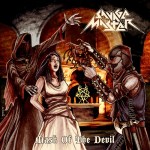
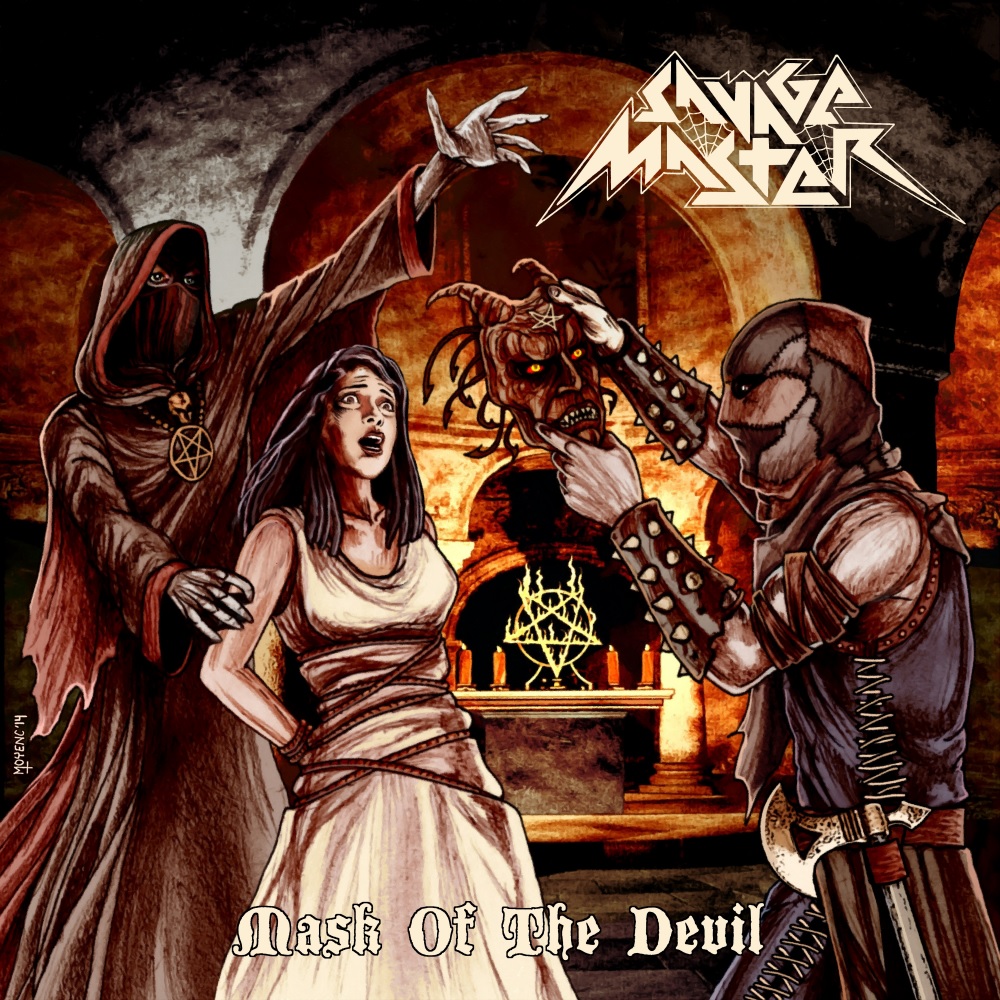
Savage Master “Mask Of The Devil” (Skol)
A lot has already been said about the image of this band, with sexy frontwoman Stacey Savage backed by musicians wearing executioner hoods ala The Mentors. People always like to discuss image, and it can definitely cause split opnions, as is the case of Ghost. Musically, Savage Master has absolutely nothing in common with Ghost of course, but I am pretty sure there will be people passing up on the band because of the image. On the other hand, it will certainly give the band some extra exposure too.
“Mask Of The Devil”, the first full length from the Kentucky-based outfit, is released through Bart Gabriel’s Skol Records, and is a short and concise affair, clocking in at a little less than half an hour. Way too short, you might think, but trust me, the playing time is about perfect for the outfit’s high energetic and to the point heavy metal. One or two additional tracks, and I am sure I would have gotten a little bored towards the end. With the 8 short songs on offer here, I am not even thinking about doing other things.
“Blood On The Rose” is a mid tempo oriented opener, and the rest of the material is mostly held in the same tempo or in the region from mid to uptempo. The performance, apart from the vocals that is, is well controlled, with the vocals being the main provider of both edge and attitude. The material is pretty similar when it comes to both tempo, arrangements and atmosphere. In other words, there is not a lot of diversity in the band’s musical expression, but I am sure they are aware of that. There is no doubt in my mind that what we hear on this album is how the involved musicians want Savage Master to sound.
Most of the tracks feature some very decent, sharp riffing and a rhythm section mostly keeping everything ticking by keeping it straight forward and rather simple. Savage Masters doesn’t exactly deliver what we used to refer to as “thinking man’s metal”, but the simple and basic heavy metal with a certain punk influence, is certainly enjoyable, at least in small portions. A couple of the choruses could have needed a bit more work, for instance he title track (with a King Diamond-like vocal approach) and especially “Marry The Wolf” which contains a quite clichéd singalong chorus. “Altar Of Lust” is one tune that stands out a bit, being a quite slow and mysterious track, almost doomy in approach, pointing a bit towards he occult doom metal scene in the lyrics: “Under the sign of the pentagram, we made love all night…”
The catchiness contained in the songs make them easy to remember. So do the rough, raspy vocals which are very much upfront in the mix, occupying a lot of space. But hey, they are very charismatic so I have no problem accepting the decision. Its pretty unusual to hear a female singer spitting out words and venom with the conviction of Stacey on this album. A fine release indeed, but perhaps a little too much on the safe side. Best song: The aggressive “Kill Without Warning” featuring an intense vocal performance . (70/100)
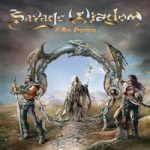
Savage Wizdom “A New Beginning” (Self released)
It seems like an eternity since Savage Wizdom’s first album, “No Time For Mercy” was released, and in fact, it’s already been seven years. I remember ordering a lot of music through CDBaby at the time, and the first offering from this outfit from Santa Fe, New Mexico, was one of the albums I ordered. I remember being quite impressed by the vocals, and also by opening number, but must admit I haven’t listen to the album since back then. Too many new releases, too much work (teacher), too many kids (two) and not enough time (only 24 hours)! I guess it’s time to dig out that old disc again, as the band’s new album is a rather impressive slice of melodic US metal, put out in a time that unfortunately doesn’t bring forth a lot of great stuff in this genre.
It seems like most of the members that did the debut has left by now, leaving veteran singer Steve Montoya to establish a new lineup. The titletrack which follows after a short instrumental titled “Sands Of Time”, is a great tune with some killer, speedy riffing, and for me the highlight of the album. The following “Let It Go” featuring the one and only Blaze Bayley, is not as strong. If you like me, isn’t the biggest fan of the former Iron Maiden-vocalist, you might struggle with some of the singing. Personally I have a hard time accepting his voice, especially when he sings alone. It’s all a bit easier to swallow when his voice is coupled with Montoya’s. The uptempo “The Barbarian” is better, even though I am not a big fan of the chorus, which feels a little lightweight. The intense riffing through the verse is effective though, and the vocals are steady and impressive.
To continue with the songs, “Trail Of Sorrow” might be considered as the heart of the album, a long (nearly 11 minutes), diverse and dark track, with some really heavy riffing. There is a bit of Iron Maiden in the overall sound of Savage Wizdom, not unusual for a lot of American bands, but my main concern is that everything sounds a little too slick and polished. A bit of Euro metal, and particularly Helloween, also shines through, for instance in “Do Or Die”, at least in the beginning of the song. While there are a lot of positives here, the album is clearly way too long, clocking in at 62 minutes. A song like “Far Away” could easily have been omitted, as it’s not very interesting. The song is a slower, more powerful track with a heavy main riff, but a little too slow and lacking in energy. Other than that, I cant say that there are many if some, uninteresting tracks on offer here.
To conclude, this is a good record from Savage Wizdom, but as you listen to it a couple of times, it becomes clear that many of the strongest songs (all the ones I mentioned) are placed on the first half of the album. Overall, it’s well played, pretty classic US metal, with strong melodies, solid songwriting and very good vocals. The sound could have been a bit fatter, but it doesn’t spoil the enjoyment of listening to this fine album. (70/100)
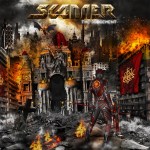
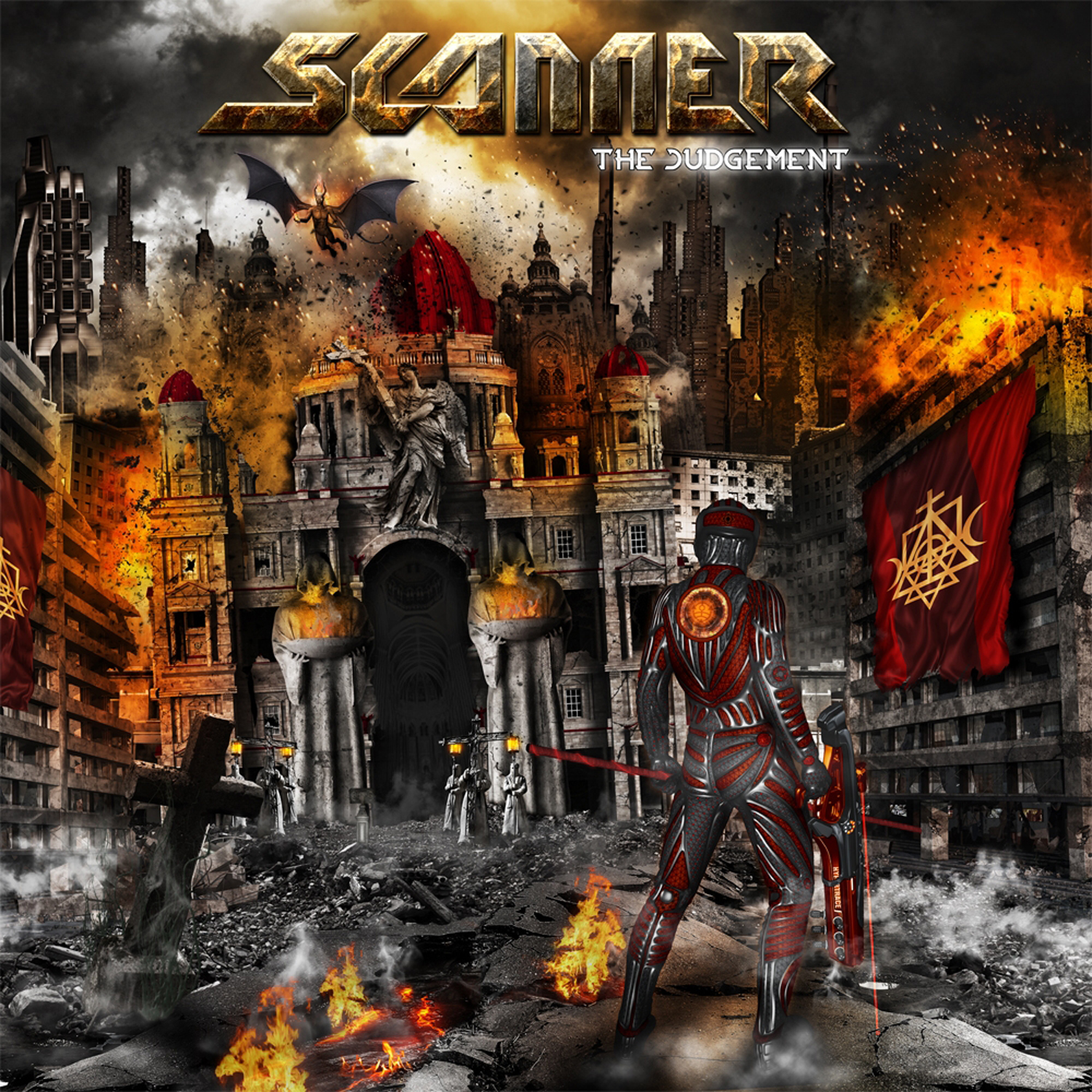
Scanner “The Judgement” (Massacre)
I remember buying the very first Scanner-album “Hypertrace” on tape when it was released in 1988. Believe it or not, but back then I used to buy most of the stuff that got 1 out of 5 stars in Metal Hammer. Somewhere along the way, I had learnt that most of the awesome stuff got this treatment in that particular magazine, and I believe that this album was among the “one star Wonders”. When I put it on, I was completely blown away, and couldn’t stop listening to it. The red hot combination of Accept meets Helloween was simply irresistible. The follow up “Terminal Earth” featured new singer SL Coe, who contributed to making the album less rough around the edges and a little more melodic. The songwriting was just as excellent though.
After a long break, the band returned with “Mental Reservation” and “Ball Of Damned”. Both had some good songs, but were nowhere near the first two albums. When the band released “Scantropolis” in 2002, I lost interest completely as this album was pure garbage that had nothing to do with the Scanner of old. 13 years later, the band is back. The guitarist Axel Julius is the only original member left, but still this album is described as a return to the style of the first two albums. Well, at least it has more in common with those than “Scantropolis.
After the usual, not very interesting intro, “F.T.B” is the song that kicks the album into life. A pretty intense affair, and one of the more aggressive tracks on the album. It has some cool guitar work, both in terms of riffs and solos, and a decent chorus as well. Definitely one of the better songs on the album. “Nevermore” (containing what is maybe the singer’s finest performance) is also quite good, with the chorus showing a darker, rather unexpected side from the band. The start of “Warlord is very Judas Priest-ish, a reference that pops up here and there throughout the album. Nice contrast too, between an aggressive verse and a more laidback and controlled chorus. Overall, this is probably my favourite song on the album.
I guess it’s time to say a few words about the new singer of the band Efthimios Ioannidis. He’s a decent vocalist, but I can’t say he leaves much of an impression with this album. He isn’t able to lift the material, and most of the time he just seems to go through the routines. “Eutopia” has some oriental sounding melodies, and without being bad, it’s the least interesting song so far. The title track is a little better again, but not as strong as the first three. So far so good, but unfortunately things go a bit downhill from here. The over seven minute long “Battle Of Poseidon” has big choirs and some touches of neoclassical guitar work, but is simply too pompous.
We now enter the weakest part of the album, with “Pirates” which is just annoying with a really silly chorus and “Known Better”, the most modern and groovy song of the album. Fortunately the last two songs are a bit better. “The Race” is another aggressive one, and is probably the song that sounds closest to Scanner of old, the “Terminal Earth”-era that is, and also has hints of Helloween and Gamma Ray, while “The Legionary” is another decent song. All in all, this is a nice enough album, containing a few cool tracks, but nothing to be really enthusiastic about. The sound seems a little muddy, but the drums are powerful and the guitars raw and attacking. (65/100)
Serpent ”Possessed By Night” (High Roller)
All newcomers receive a warm welcome here at Metal Squadron, and Serpent is yet another new act focusing on the early eighties British-sound. Germany might not be the most prominent supplier of NWOBHM-influenced bands lately, but Serpent from Leipzig and formed two and a half years ago, has set out to change that. The band is basically a duo consisting of Vent doing the guitars and the bass and Tongue taking care of drums and vocal duties. For concerts, the guys are joined by additional musicians. “Possessed By Night” is a vinyl only release, once again done by High Roller and it features the band’s self released demo made available during the summer of 2012, containing an intro and four songs. To make this release worthwhile also for those who managed to grab one of the strictly limited tapes, three exclusive tracks are added as a bonus.
I heard the demo when it was released, but to be honest, I wasn’t too impressed. Giving this new edition a few more spins, the impression is pretty much the same. However, if you judge the release by what it actually is, a demo, it’s possible to draw some enjoyment from it. The band mentions Satan and Blitzkrieg as a big influence, and the axe work in the verse of the first tune, “Scream For Revenge” indeed sounds quite a lot like Satan, though not as classy. Also, the chorus is rather weak and uninspired.
The sound is okay for a demo, I guess, but the drums are a bit loud and the guitars thinner than one could wish for. The vocals are clean and most of the time soaring over the music, sounding quite relaxed and sometimes almost a bit uninterested. The title track has a quite good melody, but a bit more bite and aggression would have been nice while “Midnight Murder” starts off with a calm acoustic intro, has some decent riffing, again some Satan-like guitars, but unfortunately a really dull chorus. “Satan’s Soldiers Of Heavy Metal” doesn’t only carry a Desaster-like title, the vocals and in parts also the music, show that the members have spent some time doing more extreme music as well.
The three bonus songs are quite similar in style to those on the original demo. “The Stranger” is the most interesting one, as it has an atmosphere that is a bit different to most of the material. That being said, it’s quite symptomatic that it’s the band’s version of the title track from Picture’s 1981-release “Heavy Metal Ears”, complete with terrible vocals, that sticks in your head once the needle leaves the grooves on side two.
Like I have said in a few reviews already – it’s a bit too easy to get your stuff released these days, especially if you perform music with hints to NWOBHM or other styles rooted in the eighties. What was an okay demo when it was originally released by the band, simply doesn’t possess the qualities to stand up among the big boys once it’s pressed onto vinyl and released to the public like any other recording. There are some memorable parts here, but the band simply needs to write stronger songs and also tighten up a little bit before I would call them ready for a real album release. (50/100)
Shadowkiller “Slaves Of Egypt” (Stormspell)
Back when there was no internet, I sometimes bought albums more or less based on how impressed I was with the artwork or how cool the band looked on the back of the vinyl or CD. If “Slaves of Egypt” had been released back then, I would have bought it. The artwork from Stormspells house artist Dimitar Nikolov is simply stunning. I stopped caring about band pictures a long time ago, but at least the one I found on the band’s Facebook-page told me one thing: Even though this is the band’s first album, the musicians are certainly past their youth.
According to Iordan of Stormspell Records, the band is inspired by George R.R. Martin’s “Game of Thrones” and Robert Jordan’s “The Wheel Of Time”. I guess it’s the latter which have supplied the guys with the band name as well. Hailing from the Bay Area, you know what to expect, but Shadowkiller is no thrash metal-band, in fact there aren’t even traces of the genre to be found here. The band consists of guitarist and singer Joe Liszt, guitarist Marc Petak and rhythm section Dan Lynch (bass) and Gary Neff (drums). Liszt is the guy singing on the new EP, “Conquer” by Rocka Rollas, and he also sang for a while in Hellhound, where drummer Gary Neff also played.
Shadowkiller delivers a modern take on US metal, the music is not straight ahead fist pumping and headbanging stuff, but adds a bit of depth and some interesting twists and turns. There are a lot of tempo changes and quite a few different parts strung together during the songs. The title track and eastern-flavoured opener is not one of the most memorable tracks. The next one, “Heart Of Judas”, has a quite aggressive chorus and a more restrained verse, but can’t fully convince me either. Even though I am not really impressed after these first songs, things get better, and the album reaches its peak with songs like the cool, fast riffer “Seconds From Salvation” and the very melodic “On These Seas”, both placed in the middle of the album.
I have two main complaints about this album. The first is that the choruses are a bit weak. In fact, three or four of them are too similar, resulting in the songs losing a bit of their identity. The album is also too long. If the guys had dropped one or two songs towards the end, like the more modern sounding “Saviour”, it would have been a better album. (65/100)
Sign Of The Jackal ” Mark Of The Beast” (High Roller)
Well, well, well…So once again a band is putting those off who have followed them since the start. Imagine you are one of the first persons to show interest in a band by ordering their first demo. When it’s rereleased on vinyl later on, you order it again, just because you like the songs and know that this is one act that you’ll like to follow in years to come.
An EP is next, and of course you order that one too. Then you start waiting for the full length, but when it finally turns up, after a really long wait, you are hugely disappointed by the fact that the album consists mainly of songs that you have heard before. As you probably have guessed, this is what happened to me this time around. I can understand that bands want to reach a wider audience than the couple of hundred that took the time to check out their early releases, but at the same time, I feel these bands should offer something more to those who followed them since the start.
Okay, I just had to get this off my heart. Even though “Mark Of The Beast” doesn’t feel like the brand new and fresh album I expected it to be, there is no denying the quality on offer here. Italy’s Sign Of The Jackal is one of the most promising European heavy metal-acts at the moment, and they proved at the 2011-edition of Keep It True, that they are able to cut it live as well. There are a couple of things that sets the band apart from most other newer acts. Most notably is the fact that we’re dealing with a female fronted, straight heavy metal-act, something pretty unusual as most female fronted bands these days seem to be labeled as occult rock. Sure, I am aware of up and coming acts like Huntress and Cauchemar, but they’re both a different story, the first one way too modern produced while the second one is too amateurish on stage. The second point I want to make, is that Sign Of The Jackal doesn’t sound just like one of those newer acts trying to reproduce the golden age known as NWOBHM. This is more in the vein of Warlock, Black Lace or maybe Malteze.
So let’s have a closer look at what is offered here. To put it very short, this is heavy metal with some touches of hard rock and with a strong affection for horror movies shining through in the lyrics as well as during a couple of intros. It’s one of the latter, “Voodoo”, that kicks the album off before the band delivers two brand new songs, both of them quite impressive. First out (there are a couple different tracklists floating around, so don’t shoot me if this is wrong) is “Heavy Metal Possession”, and it’s easy to hear why this one is chosen as the opener for the album. This track features some quite intense riffing and some fitting angry vocals by Laura Coller. The chorus is a bit ordinary, but overall this is one really cool opener. It’s followed by “Paura Nella Citta Dei Morti Viventi” which means something like “City Of The Living Dead”. This is a strong, up tempo track featuring a very melodic and catchy chorus. “Hellhound” which was also the opener on the EP “The Beyond” released one and a half year ago, is the first of a handful of older tracks, but like the rest of the “old” material featured here, this song is newly recorded for “Mark Of The Beast”.
Even though I enjoy the new renditions of well known numbers like “Night Of The Undead” and the even older “Fight For Rock”, I am first and foremost waiting for the brand new numbers. I have to wait for a while, as the two other brand new numbers, “Queens Of Hell” and “The Beyond” are both located towards the end of the album. The former is quite good, while the latter is not as strong as the ones opening the album. While the focus is on heavy metal, “Queens Of Hell” is among the two or three tracks that show a more hard rock approach. The CD-version (I think the vinyl has a different cover song) is rounded off with a cover version (even though bits and pieces of the lyrics are changed) of Fastway’s “Trick Or Treat”. Not the best song around, but it doesn’t spoil anything as there simply too much identity and quality in the band’s songwriting. I can’t wait for the (full) full-length though. (75/100)
Skelator “King Of Fear” (Swords & Chains)
Although I own all of them, I don’t remember the three previous albums from Skelator in detail, but I am quite sure that “King Of Fear” is their best one yet. If you have heard their other releases, you know what to expect – pure heavy metal and nothing else. The voice of Jason Conde Houston leaves a strong mark on the overall sound, and the guy has a voice that should leave no one untouched, chances are good that you’ll either love or hate him.
The title track kicks of the album, with heavy drums and guitars creating melodies similar to Slough Feg, but of course the comparison is only valid until Conde Houston starts to sing, and it soon also becomes clear that Skelator is much more straight ahead metal and of course more or less completely free from the seventies influence that Mike Scalzi and Co are heavily relying on in their sound. It’s a solid, but not mindblowing opening tune, filled with some pretty neat riffs. “Stronger Than Steel” follows the pattern we have learned to expect from the band. The song is nearly as predictable as the title indicates, and although it could have been done by pretty much every new and upcoming band influenced by eighties metal, it’s still an enjoyable tune. Even though both the opening tracks are cool enough, the quality is taken up a notch with the next couple of tunes. “Temple Of The Witch” adds some welcome heaviness to the overall expression. Actually, the chorus is not too far away from something Sacred Steel could have created, with Conde Houston doing vocal melodies similar Gerrit P. Mutz in some of the more midtempo oriented Sacred Steel songs.
The high level of song writing (both compared to this album as well as the earlier releases) is kept with the longest track of the album, “Sword Of Dawn”. A song that is more melodic than we’re used to, has a galloping verse, a slower mid part and probably the best chorus of the album. It’s also during a song like this that you notice that the band has tightened up things quite a lot since the early days, everything sounds better performed. “Test For Metal” is another song worth singling out, as it takes a different approach than most of the material on offer here. Instead of having plenty of references to US metal, you’ll hear lots of Teutonic metal, and especially Accept in this one, coupled with Skelator’s typical “fight for true metal-lyrics”.
Some tracks are a bit easier forgotten, like “Curse Of The Black Hand” or “Necromancer”, but I can honestly say that there is not a single track that I consider skipping when I listen to this album. Surely a good thing! (70/100)
Skullwinx “The Missions Of Heracles” (Self released)
Guitarist Lennart from this pretty new German band contacted me a while ago and asked if I was interested in reviewing the band’s debut album, as he had a feeling it would be something I could enjoy. The guys even sent me a hard copy of the album, something that will always help you get further forward in the never ending review line.
“The Mission Of Heracles”, except for the last song “Unchain The Hero” is a concept album based on Greek mythology, and more specific Heracles’ missions and efforts to save the souls of his family. It’s a short album, only 34 minutes, but rather that than another one of those overlong and boring 70 minutes affairs. The release has a very professional look with a silver printed CD, a decent album cover and a booklet containing lyrics.
Judging from the band picture and the information on their webpage, the guys look quite young, but they certainly have got their influences right, as I can pretty much relate to every band Lennart (who is writing all the music and lyrics) mentions in his bio. The band labels their music as “epic speed metal”, and I have to admit I expected the material to be faster than it is. I guess you could call it epic though. Skullwinx doesn’t sound particularly German, apart from a bit of Hansi Kusch in the vocal lines of singer Johannes Haller that is. His voice is quite different though.
The recording is very clean and crisp, but clearly lacking bite and edge. “Nice” is an adjective that springs to mind while listening to the album, and I think a bit more bite and aggression, especially in the vocal department, would have helped the band in making a stronger impression. A heavier (more bass and more powerful drums) and bit rougher sound overall, could also be some fruitful steps along the way.
Of course the songwriting isn’t the finished thing either. It’s certainly not bad, as “The Missions Of Heracles” offers quite enjoyable melodic and epic heavy metal that is very pleasant to listen to. There are many good ideas, especially riffs, showcased in the compositions, but the songs strike me as a little too similar sounding, both when it comes to riffs, and especially during the choruses. The songs simply aren’t memorable enough yet, and there is a pretty strong feeling the band needs to develop their musical identity further, something not unusual for a band consisting of so young musicians. However, Skullwinx should continue to pursue this style, as they can perfect it and make it more unique. With time, maybe they can turn into something like Germany’ s answer to newer Warlord? More info: www.skullwinx.de (60/100)
Skyconqueror “Under The Pentagram” (Self released)
Even though they haven’t managed to spread the name around a lot, this is the second full length from Germany’s Skyconqueror. They also have some demos, the earliest going as far back as to 1998. I can’t recall having ever heard the band before, but I have certainly encountered a few similar sounding ones during my time searching for obscure acts from all around the world. There is absolutely nothing groundbreaking about what Skyconqueror does. This is midtempo oriented heavy metal with references to acts like Saxon, Accept, Krokus and AC/DC. Never judge a book by its cover, as the saying goes, but I kind of expected something a bit darker, rougher and more powerful when I put on this CD for the first time.
As I have mentioned several times before, there is nothing wrong with borrowing heavily from other acts, but if you choose to do things as safe and traditional as Skyconqueror does, you really need to have the songs to justify it. Skyconqueror doesn’t. It’s as simple as that. A bit more energy, aggression and power would have helped hiding the lack of quality in the songwriting department, but I am sorry to say this album doesn’t possess much of that either. The band deserves respect for investing blood, sweat and tears, time, money and other resources in this release, but I honestly struggle to find a lot of positives here. “Under The Pentagram” is packed with nothing but predictable, unspectacular and mediocre heavy metal.
Pretty much everything about this album is average, the vocals, the songwriting and the production. I could have lived well with just the latter being run of the mill, but I am sorry to say there isn’t a single song here worth mentioning, just the same bland, mid tempo stuff all the way. 11 songs and 47 and a half minutes of Music. It can be said that the quality is pretty much the same through most of the album, but I am not sure everyone views that a something positive.
The opening track “Monolith” has some decent riffs, but it lacks the energy both in the music and the vocal delivery, that a opening tune needs. A major problem with this album is the fact that there is no real distinction between the verses and the choruses of the songs. Everything kind of flows together, and the material is seldom or never lifted by the chorus. In fact, it feels a bit like listening to one single, long song. Only the instrumental “Through Different Eyes” breaks things up a little, but sadly the adjective “nice” fits the composition better than “interesting. Feel free to check the band, they seem to be an honest bunch of musicians playing the style they love. Unfortunately it’s not enough to make a good album. (40/100)
Slough Feg ”Digital Resistance (Metal Blade)
I’ve had this album for a long time already, and have been able to listen to it close to twenty times before I finally sat down to write this review. Before we continue, just let me add that I am a huge Slough Feg-fan, the band has never released an album I didn’t enjoy, and a few of their works, in particular “Down Among The Deadmen”, “Hardworlder” and “Ape Uprising!” are simply stellar. However, I found their last album “The Animal Spirits” their least interesting for a while, but still better than most of the stuff released by other acts.
“Digital Resistance” shows all the strengths of Slough Feg, the highly original sound (that are starting to get copied by up and coming heavy metal-acts), the outstanding guitar work and the peculiar melodies. More surprising is the fact that this album sounds really fresh, and in many ways that little bit different from the last three albums “Hardworlder”, “Ape Uprising!” and “Animal Spirits”. Even if there is a certain new found freshness to the album, you can still easily hear which band you are listening to, just lend an ear to the title track, which simply can’t be another band than Slough Feg. Then there are ideas the band haven’t tried out before, like the organ in the short, yet brilliant and quite diverse opening tune “Analogue Avengers/Bertrand Russel’s Sex Den” or the country & western-flair of “Habeas Corpsus”. The melodies drive me nuts every time I hear this little tune, and it’s for sure an early contender for song of the year. Slough Feg always oozes class, but for this number they are outdoing themselves in doing something we haven’t head them doing before. Turn up the volume and enjoy the feeling of the bass and the drums hitting you in the stomach while jingly acoustic and electric guitars dances around in your head until the song is finished. This song will for sure come back to haunt you – while you are watching an old spaghetti western or while you are sleeping for that matter. It’s so damn catchy! I also like the fact that it is in stark contrast to the following song, “Magic Hooligan”, which is probably the fastest and most aggressive of all songs on the album.
“Laser Enforcer”, of which a demo version was released on single some time back, is also one of the most memorable tracks from the album with some of the best riffs Scalzi and Tringali play on “Digital Resistance”. While some of the tracks towards the end of the album is not as strong as the ones placed first, the band has saved one of the best tunes for last, the powerful “Warrior’s Dusk”. A totally killer song and an impressive end to an impressive album.
The songwriting sounds inspired through most of the album, and the seventies sound that has been very prominent on their last albums, is at least just as strong here. Also, the whole album sounds rather spontaneous. It flows along beautifully, never sounding forced or constructed and is topped with the kind of clear, powerful and organic sound you learnt to expect from this band. The drum sound is really great, and very powerful, by the way.
Finally, I don’t know what to say about Mike Scalzi’s vocals that haven’t been said before. Even though he admits having some problems coming to terms with what’s expected from a metal singer in terms of singing high, his voice is so warm, emotional and powerful and his lines so original that you can’t picture anyone else singing these ten tunes. An awesome album! (85/100)
Solitary Sabred “Redemption Through Force” (Self released)
I bought “The Hero The Monster The Myth”, the debut album from Cypriot epic/US metal maniacs Solitary Sabred when it was released five years ago, but the album never clicked with me, and I have to admit I haven’t listened to it in its entirety since back then. When I heard the rough mixes of “Redeemer” and “Burn Magic, Black Magic” from the promo released back in 2012, my expectations changed for the positive as these songs showed a lot of promise and were of a totally different class.
“Redemption Through Force” kicks off with a dramatic intro that leads us into the real opening song, the quite bombastic “Disciples Of The Sword”. I have to admit I am still as lukewarm to this track as I was the first time I listened to it. The song has a decent verse, but in my opinion, the rather simple chorus doesn’t lift the track as it should. Fortunately there are many better songs on this album. While the vocals are quite aggressive at times, the first two songs are very much midtempo oriented, with “Stigmata Of Pain” being quite heavy too . It should also be mentioned that both tracks carry similarities with Manowar.
Track number 5 and 6 is clearly the best part of the album (along with the album closer “Damnation”), as we’re talking about the two songs that featured on the aforementioned promo, but newly recorded of course. “Redeemer” is a killer tune, with even stronger musical hints to Manowar, but also a little more melodic than most of the material on offer here. Also, the vocals of Petros Asgardlord Leptos deserve a mention in this particular track, as they are really, really intense and sky high during the chorus. “Burn Magic, Black Magic”, is next, another really impressive tune, very catchy, with quite a few different types of vocals.
The CD lists 11 songs, but three of these are only short intros/interludes. In “Sarah Lancaster (The Witch’s Breed)”, the Manowar influences is all gone, as this tune leans more towards slightly more complex US metal , and has a solo by Howie Bentley of Cauldron Born-fame. Interestingly enough the reference to Manowar seems to disappear more or less, as you get further into the album, with the overall sound turning closer to classic US metal .I enjoy “Redemption Through Force” a lot, but one or two faster songs would have helped making the album a bit more diverse. (75/100)
Sorcerer “In The Shadow Of The Inverted Cross” (Metal Blade)
I am glad I didn’t hurry completing this review. If I had, it would probably have turned out a little less nuanced. The reason? Well, this is an album it’s easy to fall in love with, but also quite easy to get tired of. When everything has been consumed, there is not really a lot more to discover here, as the material doesn’t have the right qualities to grow further, as for instance the songs on Crypt Sermon’s debut have. Don’t misunderstand me, “In The Shadow Of The Inverted Cross” is still a strong album, but it’s not as splendid as the first impression led me to believe. The songwriting is strong and mature, underlining the fact that we’re dealing with experienced musicians with the know-how to pen memorable material in the vein of Tony Martin-era Black Sabbath or Thomas Vikström-era Candlemass. As both Martin and Vikström before him, singer Anders Engberg is putting a strong mark on the material. He has a warm and pleasant voice, underlining the already strong melodic element in the compositions. Some of his lines are very emotional, almost touching, like for instance in “Lake Of The Lost Souls”.
Although the focus is on epic doom metal, there are a couple of tracks with some added tempo. “Exorcise The Demon” is one of them, and although it’s not one of my favorites on the album, it certainly adds some diversity and dynamism with a bombastic choir following up a “calmer” chorus. Some people have mentioned the overused and misused term power metal (reserved for the likes of Jag Panzer, Destructor and Powerlord of course) in connection with this album, and I guess they have been thinking about a song like “The Gates Of Hell”, which shows that it’s not all about doom and gloom on this album, as this is an up-tempo tune with some rather uplifting parts as well.
I feel that the album is a little too long. It’s only 8 songs here, but with “The Gates Of Hell” being the only one clocking in below the five minute mark, and with five of the songs breaking the seven minute mark, the total playing time is a little over 54 minutes. Not an overlong affair by any means, but just a little tad too long. I have a couple of other concerns about the album as well, and in particular one that I didn’t catch the first times I played it: When listening to the album, there are several parts showing up that you feel you have already listened to, I won’t accuse the band of repeating themselves, but they’re quite close here and there. Also the production is a bit sterile and everything sound a little too nice and tidy, particularly he guitars. (70/100)
Soulhealer “Chasing A Dream” (Pure Legend)
A couple of years ago, I reviewed the debut album from these Finnish guys in Scream magazine. An average review, I have to admit. “Chasing A Dream” is the band’s first album for Pure Legend, a sub label from the idealists behind Pure Steel. Since I last listened to Soulhealer, the band has added a brand new rhythm section in the form of bass player Pasi Laakkonen and drummer Jani Nyman.
While most of the songs are often held in an uptempo, with catchy vocal lines and sing a long-choruses, there are also some calmer moments here, like in the song “The Deception”, but also this one picks up a bit of pace during the chorus. I guess calling bits and pieces happy metal, can be justified, even though the album as a whole probably is more precisely labeled as melodic metal. It’s not all about joy and happiness. In fact, there are lots of those typical melancholic melodies to be found, and if you have listened to metal from various countries for some years, you can certainly hear that these guys are Finnish. Listen to the chorus of the title track or “Ties Of Time” for instance, and you probably understand what I am talking about. And by the way, if the music doesn’t tell you anything about the band’s nationality, the singer’s pronunciation will probably do. It’s not that bad, but adds a distraction not needed to the overall impression. The singer, Jori Kärki has a deep and rough voice, which adds a bit of identity to the band’s overall sound, but unfortunately he seldom puts much power behind it. It’s almost like he holds back instead of letting loose .
The overall execution is very well controlled and the songs seem to have had all the rough edges removed. In fact a few of them are lightweight enough to be put into the hard rock-category. To add to this, most of the choruses are wimpy and generally sound way too similar. It’s all easy consumed, singalong stuff, but way too predictable in the long run. (45/100)
Space Vacation “Cosmic Vanguard” (Pure Steel)
I’ve seen the name around, but I have never heard Space Vacation before, even though “Cosmic Vanguard” is the San Fransisco outfit’s third full length. Unfortunately, I can’t really say that I will investigate further, cause “Cosmic Vanguard” is nothing more than another average release from Pure Steel Records. When you hear music that you don’t enjoy, it’s not always easy to pinpoint what is wrong, but there is something here that really turns me off. It might have something to do with the extremely predictable guitar work and the banal, often cheerful melodies in songs like “The Living Dead”, “More And More” or the title song. Something is terribly wrong when you are tired of a song even before the intro is over.
Different people have pointed out some similarities to High Spirits already, and yes, there are some. Space Vacation also has a bit of the same naive touch and at the same time sounds very pop influenced when it comes to structures and melodies. I find the songwriting a lot classier in High Spirits though, as the Space Vacation-material is so predictable and cheesy. I am not a big fan of Scott Shapiro’s voice either, as it kind of underlines the sugar sweet melodies in the mostly uptempo material, just listen to “Rolling Thunder”. Everything sounds so damned calculated and flat. Okay, so the guitars scream of NWOBHM, but everything sounds very safe and controlled, without any grit or real determination.
Sadly, I don’t find a lot of positives here. The best I can say, is that Space Vacation have a bit of identity and that the solos are well executed. The material is damn catchy, but oh so predictable. I can see some people enjoying this, but I wonder if the same People are able to listen to the album more than, say… ten times. I really can’t see these songs, that contain a lot of repetition, having much of a lasting effect. (40/100)
Sparta ”Welcome To Hell” (High Roller)
When a band releases its first full length release 34 years after they debuted with a single, we have to be dealing with a NWOBHM-band right? I guess most of you know Sparta already, or at least the song “Angel Of Death”, which I guess is their most popular tune. A rerecorded, slightly tighter and heavier version of this song is included on “Welcome To Hell” along with a further eight new songs. By the way, “new” means that they haven’t been recorded before, even though “Arrow” is a tune written in the eighties, while “Soldier Of Fortune” is based on a song composed in the mid-eighties.
“Welcome To Hell” shows the band, in its classic lineup by the way, staying very true to its roots. This is basic heavy metal with some hints of classic hard rock and blues, without any big surprises or modern influences. The vocals of Karl Reders are quite average, at times he sounds a little uninspired, like in the verses of “Time”, but at least he is keeping things safe and not trying to do something he’s not capable off. All credit to the band for making an old school record like this in 2014, but even for an eighties maniac like myself, the band sounds a little bit tired and dated. Don’t misunderstand me, I am able to enjoy most of the tunes, but compared to many of the newer bands today, it lacks some energy and edge.
The album starts off with the title track, which was the first song written for the new album, and the first Sparta-track written since 1985. It’s a midtempo based opener, and surely one of the better songs on the album, with a quite memorable chorus and a cool guitar solo. In fact, there aren’t many fast numbers here, and one or two speedier songs and a bit more aggression overall would have helped keeping my attention as the album gets a bit predictable and toothless as it progresses. The aforementioned “Soldier Of Fortune”, apart from the rather cheesy intro and outro, is a decent tune, not too far away from something Demon could have done nowadays.
I’ve heard quite a few comeback albums from NWOBHM-bands, and “Welcome To Hell” is pretty close to the archetype: Solid and honest, but still with quite unspectacular songwriting and a very safe production. This is a lot closer to the standard of the latest outputs from bands like Gaskin, Elixir and Blitzkrieg to name a few, than the mind blowing stuff provided by Satan on their “Life Sentence”-album last year. Hopefully label mates Deep Machine can do better with their forthcoming album. (60/100)
Speedtrap “Straight Shooter” (Svart)
With the 2009-EP “Raw Deal” as well as the full length release “Powerdose” from a couple of years ago, Finland’s Speedtrap is close to establishing a little niche with their Blood Money meets Exciter meets AC/DC and punk-expression. Their releases so far have been enjoyable to a certain extent, but as the products haven’t exactly been diverse, I have enjoyed single tracks more than the full works. The band’s second full length release “Straight Shooter” starts out with “No Glory Found”, which basically is Speedtrap as we have learnt to know them. The song sets off with a Motörhead-like riff, and the tempo is kept fast throughout the song, with punky undertones, and buzzing guitars.
In comparison, “Torches Ablaze”, while still fast and furious, is almost surprisingly melodic, both in terms of the guitars as well as the vocals. This one is clearly among the best tunes on the album, and you already start wondering if the band has managed to create an album that is a little more diverse this time around. The more I listen to “Straight Shooter”, the more I realize it’s when the band does something different I pay extra attention. There is nothing wrong with the more typical fast, Speedtrap-stuff with screaming guitars, high tempo drumming and shrieky vocals, but they’re not the ones I look most forward to when I put on this album.
As I wrote in the review of the single, “Straight Shooter”, I am not particularly impressed with this track, as the AC/DC-influence is very strong, and that’s an act I have never liked. While six of the tracks are around four minutes or shorter, two of them sticks out. “Heavy Armor” and “Eyes For Conquest” are longest songs, close to seven and nearly six minutes. “Eyes Of Conquest” is considerably slower, than most of the songs on here, and Jori Sara-aho does something different With his vocals, using a more singing style “Heavy Armour” is along with the title track, the song that sticks out the most from the rest, this one is also tempo moderate, sounding more like pure heavy metal with that type of riffing, as well as more controlled and mid range oriented vocals.
The shabby coverart adds to the package here, and suits the honest, raw and unpretentious music very well. If you want a heavy metal-album with plenty of raw, uncontrolled energy broken up by a few more sophisticated tracks, this album is well worth your money. (75/100)
Speedtrap “Powerdose” (Svart)
With ”Redemption Of Might”, a track that also featured on the EP “Raw Deal”, the release that firmly put Speedtrap on the map, the Finnish quartet kicks off their first full length release. I am a little surprised that this release didn’t materialize earlier, as the band really kicked up some dust with their EP.
I am not too fond of split-releases, and have to admit I missed out on the joint release with fellow Fins Death With A Dagger, where Speedtrap contributed four new numbers. Thankfully, the band hasn’t changed that much since their EP, the basis is still stainless steel, aka heavy metal, but with hints of energetic punk and refreshing retro-speed metal. The cover art suits the music very well, it is simplistic, held in black and white, but very powerful, almost iconic. Listening to this album sends me back, not to 1983, since I have to admit I wasn’t listening to proper music until a year or two later, but at least back to the early nineties, where I found a copy of Jaguar’s “Power Games” in a bargain bin in a record store in Trondheim, Norway. Of course, music released 30 years later, can never reach the same heights as one of the pioneer albums of the genre, but “Powerdose” has a bit of the same energy, and is a damn solid and enjoyable album.
Even though the style is based on metal from the eighties, the performance and production sound a bit tighter than the average eighties release. Most of the songs are up tempo, straight forward, with sharp and simple, yet effective riffs topped by a very improved performance from singer Jori Sara-aho. He sounds a lot more convincing and inspired here than on “Raw Deal”. I also enjoy the way he deals with the quite hectic vocal lines, in for instance “Ready To Strike” with ease. During some tracks he still sounds a bit strained, but overall I was pleasantly surprised by the vocals here. The stand out track on the album is probably “Take Their Lives” which sports a really powerful and damn catchy chorus. A couple of tracks are a bit rockier, and less metallic than the songs I have mentioned so far, and “Out Of Time, Out Of Line” falls into this category. This is also one of the tunes where Sara-aho is clearly struggling with coming to terms with the vocal lines.
I don’t like the rocking tracks as much as the others, but I appreciate the fact that they add some needed diversity to the album and prevent it from being too one-dimensional. Another point worth mentioning, is that the album kicks off with what might be the three best songs on offer. The rest of the material is enjoyable, but not quite as memorable . Spanning just eight songs, each of them compact and intense, this is a very short album, clocking in at half a minute less than half an hour. Fortunately the song writing and performance are strong enough to hold on for your attention for most of the time. Even though the band looks back in time for inspiration, this album never sounds dated (good music rarely does) and the intensity and energy gathered here is seldom to be heard on new recordings.
I was really enthusiastic at first, but unfortunately, the album didn’t grow on me as I expected it to do. When the album was consumed after eight spins or so, everything worth discovering was already discovered, and there was nothing more to unveil. Still, this is a strong release from a band with plenty of integrity. (75/100)
Spell “The Full Moon Sessions” (Hard And Heavy)
I always get a little skeptical when a band disappears only to return with a new image and band name shortly afterwards. Of course there might be other reasons behind a name change than an ambition to jump on the occult metal trend. In the case of Stryker, which was the monicker these guys used until 2013, the fact that there is already a rather popular Canadian band called Striker might very well have had something to do with it.
Whatever the reason was, Stryker from Vancouver seemingly found it difficult gathering momentum and only managed two recordings before the name change. “The Full Moon Sessions” contains two songs from Stryker’s first EP, released on tape only, back in 2010, as well as the song “Possessed By Heavy Metal” which was released on a split single with Australia’s Johnny Touch in 2012. Clocking in at less than 28 minutes, with a cover song and a short instrumental in addition to five self penned tracks featuring vocals, I guess it makes sense to call this a mini album.
While the cover art suggest occult heavy metal, the material, rather surprisingly is just as much, if not more, rooted in hard rock. Even the opener, “Never Enough” (which is coupled with a version of Fleetwood Mac’s “Sisters Of The Moon”), has a hard rocking groove. If we assume that the first half of “Never Enough/Sisters Of The Moon” and the follow up “Electric Witchery” are the two newest tracks on offer here, the good thing is that the band shows clear signs of improvement since the Stryker-days. “Electric Witchery” is probably the best tune, combining a rather unusual up tempo, hectic verse with a chorus similar to something In Solitude could have written. “Possessed By Heavy Metal” on the other hand, is nothing more than run of the mill stuff with an unlistenable chorus due to some nervy vocals from Cam. He sure can scream, but his voice sounds strained and everything kind of forced here. I am not a big fan of “Shocker” or “To Wild To Live (To Young To Die)” either. In the latter, the chorus is repeated until you get so sick of it you want to turn the damn thing off. Maybe not that far away from something Cauldron could come up with nowadays, with the same lack of power and energy.
Let’s end this review with some words about the production. To put it clear: This recording doesn’t sound particularly good. The drums are severely lacking in power, and the vocals seems to be buried in the mix. With Cam being an average singer at best, maybe not confident enough to put all he got into all parts of it, some might say that’s no big deal, but I believe this recording would have sounded better with more distinct vocals and a clearer (not too clinical) and more powerful sound. (50/100)
Spellcaster “Spellcaster” (Self released)
After the first spin, I was ready to chuck this one away. The disappointment was huge. Fortunately “Spellcaster” got better with a few spins. Still the album is miles away (to quote Kip Winger) from what the band delivered on their excellent debut album “Under The Spell”, three years ago. There was I time when I was ready to name this band one of the most promising US metal newcomers, I am afraid I have to save that for someone else now. Some people might claim that the band is more mature in some ways now, but hell, I simply love straight forward headbanging stuff like “Chainsaw Champion” and “Molten Steel” off the debut, and I am not afraid to admit it.
My main concern with Spellcaster in 2014, is definitely the vocals. Singer Thomas Adams has left the band since “Under The Spell”, and his replacement, Tyler Loney, who now both plays guitar and sings, is not able to fill his rather big shoes. He isn’t convincing at all, with his voice being way too flat and severely lacking in power. That being said, I don’t think Adams would have been able to save this album from being a disappointment compared to the first one. Loney is certainly not the falsetto type of guy you expect in a US metal band. Although the music doesn’t have many similarities, I am somehow reminded of the laidback style of In Solitude’s Pelle when I hear Loney, and I feel a more diverse singer with a better range and with more power in his pipes could have lifted the material out of mediocrity. That being said, the music has changed a bit since the debut, and feels a bit more complex, adventurous and diverse now. A lot of the catchiness contained in the songs on “Under The Spell” are lost now, even though there are also tracks here that get stuck in your head after a few listens. The excellent “Ghost Of My Memory” is the best example, a really memorable tune in which Loney delivers what is probably his best performance on the album.
In the other end of the scale, you’ll find sub par stuff like “Clockwork”, a song that is really lacking when it comes to energy, in fact the whole performance, including the vocals seems half hearted at best. A bit of the same can be said about “Haunted”, another tune that is forgotten as soon as the album is finished. The uptempo opener “As Darkness Falls” is a lot better, sporting a decent melody and the first single “Run Away” is catchy little number as well.
Containing mostly mid to uptempo songs, this is a decent affair of melodic US metal containing strong influences from the European heavy metal scene. The musicianship is well executed, with some shredding guitar solos and generally strong guitar harmonies. Even though my first impression was one of disappointment, I have to admit that I have given “Spellbound” a lot of time, and slowly, but surely it has grown on me. Nowhere near the great debut though. (70/100)
Split Heaven “The Devil’s Bandit” (Pure Steel)
Third full length from this Mexican band, and no real progression in sight, I am afraid. I have to admit, I wasn’t the biggest fan of their first two releases, but had hoped they would step up their songwriting for “The Devil’s Bandit”, their first album for Pure Steel. Let me first say that the kind of music the band performs, classic, midtempo based heavy metal, is a style I usually am very fond of. Unfortunately the band isn’t able to convince me this time around either. I won’t go into details about specific tracks, as I feel there is no need to highlight any of them, apart maybe for “Waiting For The Angel Of Death” which has some really creative guitar as well as better vocal lines than the rest of the material.
The band’s main challenges when it comes to future works, are quite a few. First, the production pretty much strips the music for both edge and aggression. Of course, the album doesn’t sound bad, but everything is a bit too slick for my taste. Gian Carlo Farjat, the new singer is quite dominant in the overall sound, and occupies a lot of space. My main problem isn’t his voice (though it’s rather unspectacular), but the fact that many of his lines sounds a bit forced and clearly lacks some imagination. My third point of criticism is the lack of good choruses and hooks in general. Songs like “Sinner”, “False Martyr” and “Diamond Gaze”, to name only a few, could really use stronger and more exciting choruses.
On the plus side, the guitarist deserves to be mentioned, as there is some stellar double guitar work in many of the tracks. Unfortunately, this is not enough to warrant a purchase of this album. (55/100)
Stallion “Mounting The World” (Self release)
With no CD release yet, but a vinyl version (with download code) done by the band themselves and a tape version released by Irish label Sarlacc, Germany’s Stallion is kicking up some dust at the moment. So much that the guys recently was confirmed to perform at next year’s edition of Metal Assault in Wurzburg, Germany. With a demo containing two songs that also feature on “Mounting The World”, as their only additional release, you can expect this six song EP (including a cover of Rock Godess’ “Heavy Metal Rock’n Roll”) to be performed in its entirety.
With a new generation of musicians coming through, I guess you have to accept that a song titled “Canadian Metal” doesn’t have to be about Sacred Blade, Deaf Dealer or Black Knight, but could just as well refer to newer acts like Skull Fist, Cauldron or Axxion. Fortunately, there is a bit more grit to to what Stallion is doing compared to these Canadian acts, which I honestly find quite lame. The music of Stallion is more or less a mix of the rougher side of hard rock and heavy metal. Think early Mötley Crue or Ratt coupled with…well German metal ranging from Accept to Iron Angel. I really can’t come up with a more precise definition of Stallion’s sound. In Paul, they have a vocalist with a bit of a rough voice and also some balls who guides the material in the right direction. Sounding a bit pissed off have never hurt when you’re singing in a heavy metal band.
The lyrics to a couple of the songs are a bit silly, but the musical execution is convincing enough, at least most of the time. “Give It To Me” is one example that doesn’t work very well, as the song lacks energy and the chorus is simply too much of an cliché. The rest of the songs are pretty much okay, but next time the band could really do with a few more outstanding tracks in the vein of “Shadow Run”. This is a speedy tune, where you can clearly hear some of the old Teutonic influence I was talking about in the riffing. Very cool tune! Let’s hope the band grows into an even more mature act next time, but without losing their youthful enthusiasm and energy. Promising! (70/100)
Stallion “Rise and Ride” (High Roller)
Germany’s Stallion impressed a lot of people with their EP “Mounting The World”. As you can read in my review, I liked it too, although I wasn’t nearly as enthusiastic as thosegathering to see the band at this year’s Keep It True or Hell’s Pleasure. With this in mind, I really hoped the band would be able to step up a bit with the release of their first full length album. Sadly, they weren’t. After having listened to “Rise And Ride” several times, I would have to say that the EP was more impressive, maybe not production wise, but certainly with regards to songwriting. “Canadian Steele” and “The Right One” are rerecorded from the EP, and both of them are among the absolute highlights on this new album. Take “Canadian Steele” for instance, there is an element of energy to it that many of the other songs lack, and also some really cool guitar work scattered across the track.
I have to admit that I have a hard time pinpointing what I don’t enjoy about this release, but I guess it’s the same thing that partly puts me off bands like Cauldron, Axxion and Skull Fist to name just a few. With the presence of some American sounding hard rock in the sound, Stallion sounds a bit fresher than these acts, but with the main components being heard several times before, the songwriting simply needs to be way above average to make the end product stand out. Sadly the material on “Rise and Ride” are no more than decent, but the songwriting is too unoriginal, the performance not energetic enough and the songs lack the monster hooks from the bands that inspired Stallion.
I also have to admit that I struggle a bit with the vocals of Pauly. He sounds at this best when he is snarling in an aggressive manner, but is far less convincing when he is trying to sing with a more normal voice. The titletrack, kicking off in a Running Wild-like manner before it turns into something you expect from the band, is an example of a song that is actually pretty neat, but sadly isn’t helped by the fact that the voice of the singer seems a little thin and weak .It’s also a bit sharp and nasal at times, and this combination simply isn’t the best.
The band talks about speed metal when they are referring to their own music, but I honestly can’t say that I hear a lot of that here. Of course there are some fast moments, like for instance “Stigmatized”, a song where the band sings about jealousy and meeting people in the scene that hates you. For me this is one of the stand out moments of the album, not only because of the lyrics, but because the guys show that they’re capable of thinking a little different when it comes to the chorus and the vocal lines. “Wild Stallion” adds a dose of energy and aggression, and is also one of the highlights here.
Due to the inclusion of real drums, the recording sounds much livelier than the EP, the sound is also a bit bigger, but it’s nowhere near what most people would label as “large”. The newer Canadian acts are already mentioned, there are hints of Udo and Accept as well, maybe for the most part in the vocals during some of the tracks. With this album, I am sure the band will keep most, or maybe all the fans they won with the demo and the EP, but I won’t swear that Stallion will gain the same amount of new followers with this product. (65/100)

Starblind “Darkest Horrors” (Stormspell)
Sweden, Sweden, Sweden. It’s really hard to believe how many traditional metal bands this country has supplied us with, both when you look at it in a historical perspective or when you just take the last few years into account. It’s even more remarkable when you compare it to the scene here in Norway. Yes, we are neighbours and there are a lot of similarities between our societies, but if you start counting in the eighties, you can really sum up the Norwegian bands worth mentioning with the fingers of one of your hands!
As with countless other features on this site, it has certainly taken some time finishing this review. I remember listening to this album when I attended Keep It True in April, but haven’t been able to make up my mind and finish the thing until now.I didn’t feel the pressure either, as Stormspell is yet to release “Darkest Horrors”. I got a very solid first impression from this album, but I have to admit, my enthusiasm grew a bit stale after a while. Still, it’s an enjoyable, modern heavy metal affair.
“Darkest Horrors” is the first offering from the quintet, consisting of musicians that have been involved in acts like Steel Attack and Danger (the only two mentioned that I know from before), as well asThe Backbones, Equify and Sadauk. There are quite a few tracks worth mentioning, so lets start with “Ascendancy” which is a compact, rocking and good time opener, with a belter of a chorus where the guitars are even catchier than the vocals of Mike Stark and the other guys. “Blood In The Night” is one of the more intense and aggressive songs, both musically as well as vocally, while the next tune is something completely different. “Crystal Tears”, is one of my favorite track on the album, sounding a little like a Crimson Glory ballad through the first verses before it hits new heights with a huge chorus. Halfway through the song picks up some speed, and I really like the bass in this one, and the way they bass player interacts with the other half of the rhythm section, the drummer.
The rest of the songs are not of the same high quality as “Ascendancy” and “Crystal Tears”, but there are still some decent moments on the album. However, a few more songs as good as these two would have lifted the general impression a lot. A factor that doesn’t lift the general impression, is the vocals of Stark. Don’t misunderstand me, he is doing pretty fine, but he doesn’t possess a very charismatic voice, and to be honest, he sounds a bit strained here and there, for instance in the title track as well as in “The Reckoning”.
What “Darkest Horrors” possesses, is some really strong musicianship and some quite catchy melodies, making the album well worth investigating if you are into nineties (and later) Maiden and Priest. I’ll end this review with a few words about the production: It all sounds tight and compact, but maybe a little too polished and streamlined to make a real impression. (65/100)
Starborn “The Dreaming City” (Stormspell)
This is a huge surprise to me. To be honest, I wasn’t too keen on the demo material, but how the band has evolved since then! Gone are most of the happy sounding Euro metal influences, and we are left with five tracks that still sounds accessible but at the same time offer so much more in terms of great musicianship, musical diversity (both between the songs as well as within the tracks) and challenging arrangements that it makes for interesting listens over and over again. Also, Bruce Turnbull’s vocals are immensely improved since “Born By The Wind”. Now he sings with sufficient power and control while he still hits those high notes with something close to perfection. The fact that he has a little bit of character in his voice is no drawback either.
I mentioned the musical diversity. There are still traces of the more lightweight and cheerful European metal post 2000, but at the same time there are twists and turns that we often encounter when listening to progressive metal. I’ve also read some reviews that mention US metal bands, and yeah, “The Dreaming City” sounds a bit like some of those nineties, often self financed US metal releases, but with more accessible melodies than the majority of them came with.
The songs contain different tempos and moods, which makes the listening just that little challenging and interesting. The 13 minute long title track is impressive in most, if not all aspects, but my favourite off the EP right now is probably “A Merciless End To Words”. The heavy. almost doomy chorus is really enjoyabe. “Cruelty Unchained” is the most melodic number on the EP, and probably the one you should start with if you want people to get interested in Starborn. But even a catchy number like this has enough diversity and unexpected turns (the slow and heavy riff after the chorus for instance) to keep things interesting. In fact, the way the band mixes things up with the heavy parts thrown in the melodic and up tempo stuff, is very appealing. If the band continue to progress as they have done from “Born By The Wind” to this new one, nothing can stop Starborn. (80/100)
Steelwing “Reset, Reboot, Redeem” (NoiseArt)
A few years have already passed since the rather disappointing “Zone Of Alienation”, and once you get past the intro “Caron Waste Lifeforms” and meet the title track, it’s easy to hear two things: Steelwing anno 2015 sounds a lot more inspired, and the band has also adjusted their style a little, or perhaps adjusted isn’t really strong enough, as the often dark, aggressive and at times almost progressive approach on “Reset, Reboot, Redeem” is a far cry from the rather commercial and streamlined predecessor.
Yes, I used the word “progressive”, but I placed an “almost” in front of it and, I use the expression mainly to point to the fact that there are lots of shifts and sudden changes within the songs, but without the compositions losing the red thread. I mentioned a darker and more aggressive approach, which can be heard clearly in the vocals. They are very diverse, ranging from the style Riley did on the first two albums to an approach that borrows from more extreme metal. Most of the time this works well, although the contrast between the two extremes sound a bit peculiar at times, for instance in “Like Shadows, Like Ghosts”, and Riley’s voice sound much better when he is singing normal compared to when he does the more extreme style. When he applies the latter, he sounds very sharp to the point that it almost gets unpleasant during short spells. I also struggle a little when he use the upper register of his normal voice, for instance in the second part of the otherwise really good “Ozymandias”.
“Hardwired” is probably the track that is closest to what you would expect if you just spent some serious time with the first two albums, and just like on the previous offerings, “Reset, Reboot, Redeem” also closes with a long track in form of “We Are All Left Here To Die”. A good song, as are most of the tracks here. It’s not easy picking favorites, but at the moment I will probably have to go for “Architects Of Destruction”, which seems to blend the “old” and “new” Steelwing perfectly, as well as the big surprise of the album, “Och Varlden Gav Vika” with full lyrics in Swedish, adding a completely unique feel to an already very strong song.
It may sound a bit strange, but my only concern about Steelwing worth mentioning, ist that while this new album showcases solid to great songwriting and musicianship, the lack of a distinct own identity could prove to be a challenge if the band is to continue in this style on future albums. Remember there are already very strong competition from bands like RAM, Trial and Portrait. (75/100)
Stereo Nasty “Nasty By Nature” (Stormspell)
Following hot on the trails of their well received, three track-demo, comes “Nasty By Nature”, the debut album from Ireland’s Stereo Nasty. If you get past the big knife and hot ass, as well as the general eighties aesthetics of the album cover, you’ll explore music that will easily bring you back to the glory of the said decade.
When I heard the opener “Black Widow”, the powerful and unique voice of Mick Mahon caught my attention. In my opinion, his voice is the exceptional thing about this band. Please note that I write “voice”, because I sometimes feel that the vocal lines themselves aren’t always all that creative. So is it all about the vocals then? No, of course not, the songwriting is solid, the production extremely powerful, with heavy, pounding drums and a guitar sound spot on for this type of music, but nevertheless, it’s the raspy and powerful voice that lifts the material.
Stereo Nasty specializes in melodic heavy metal, or should we rather say muscular hard rock? It’s not that easy to categorize this band, as they mix hard rock and heavy metal quite efficiently. The end result turns out darker than expected, and it’s quite refreshing to hear a band like this, as we have to go back to the late eighties or to find a few bands that merged these two styles as efficiently. There are exceptions of course, but most acts these days seem to focus either hard rock or heavy metal, and Stereo Nasty deserves some recognition for stirring things up a bit. Even with the mix of styles, the album feels like a pretty strong entity. Okay so one or two of the original demo songs might be a little weaker, or perhaps simpler, is a better description, but it’s easy to hear it’s the same band.
Most of the songs on “Naughty By Nature” are held in a stomping mid tempo, and a bit more diversity tempo wise would have made the album even more interesting. The often Accept-like riffs churned out seem a little too unspectacular, and too few of them contributes in making the songs really memorable and stand out from each other. I guess Stereo Nasty will survive as they have clearly found their own little niche, but the album as a whole feels a little on the safe side when it comes to both the songwriting as well as the arrangements .
By the way, the opener “Black Widow” is still the best tune on offer here. You can almost swear you have heard the song before, as it features some almost iconic riffing, topped by those killer vocals. To sum up, Stereo Nasty has delivered a cool debut album containing something different compared to 80 percent of the releases in the same field, but a bit more diversity would undoubtly have made “Naughty By Nature” even more enjoyable. (70/100)
Stonegriff “Come Taste The Blood” (Metal On Metal)
You don’t need to be a member of Mensa to be able to guess what kind of metal a band that started their recording career with a demo titled “Epicus Democus” performs. Stonegriff are Swedes too, and “Come Taste The Blood” is a huge step up from the mediocre debut on Metal On Metal, “Prologus Magicus”, which came out a couple of years ago. We’re talking about doom of course, and this is one of those albums that is pretty much held in the same tempo throughout. There are no really fast songs here, as many doom albums today seem to have, but on the other hand we’re definitely not talking about the slowest kind of doom either. The inspiration from traditional heavy metal is pretty obvious, but it’s not as strong as in for instance another Swedish band, Sorcerer.
Even though they were one of the strongest aspects already on the first album, Jacob’s vocals is in a different league now. In fact, he is able to give pretty much everyone else in the genre a run for their money, and lifts the material to another level with his performance here. He uses his voice in an extremely diverse way, and the manner in which he immerse himself in the material along with the pure desperation in his voice is almost jaw dropping at times.
The rather simple but massive riffs, churned out with a guitar sound that reeks of Tony Iommi, are at least as heavy as last time, and definitively more memorable. The most important part, the songs themselves, are more captivating, and with stronger hooks. All the songs are on a high level, something that adds to a strong and well worked out album. Trust me, you’re not going to skip anything here. On the other hand, a real killer track, standing head and shoulder above the others, would of course have made the album even more impressive. A bit more diversity is something the band should look for next time around too. The tempo in the songs is similar, and so are some of the melodies and vocal lines, but not to the extent that the band is repeating themselves.
The fact that Andy La Rocque has given the band a thick and rich, varm sound, isn’t a drawback either. Along with the fitting cover art, it completes what is a strong overall package. In my opinion, “Come Taste The Blood” is the best Metal On Metal-release since the last one from Attacker. A really nice surprise, and without doubt an album you should invest in, whether you’re a doom- or heavy metal-fan. (80/100)
Stonegriff “Prologus Magicus (Metal On Metal)
It’s no secret that Jowita and Simeone over at Metal On Metal enjoy dodom metal, and their new signing, Sweden’s Stonegriff is probably closer to straight doom than the likes of Mortalicum, Arkham Witch or Nomad Son, who have put out albums ranging from solid to very impressive via the same label during the last few years. Stonegriff is a completely new name to me, and I haven’t heard any of the demo stuff they did prior to getting signed.
It has taken me some time to get this review together, but I am happy that I spent some extra time on this release, as the first impression wasn’t really that good. Even though the music may seem quite basic and simple, there is something about this release that makes it better after a bit of listening. In my case, I guess it was most about getting used to the vocals as well as the dry, dusty sound in combination with what seems like a quite traditional, and not that exciting, take on songwriting. Even though I am not fully convinced by this album, it certainly has its moments. The music is heavy and slow of course with dark guitars delivering some destroying riffs. The opening tune, “Black Magic Circle” was one that I was a bit skeptical of at first, but the slow, grinding tune has grown on me, so has “For Madmen Only”, one of the catchier songs which include an inspired vocal performance by Jacob who only joined the band last year. There is a sense of desperation to his vocals in this tune, and when he puts in those screams both here and elsewhere on the album, you can really feel the frustration and anger. The best song however, is by far “Mercenary Bay”, which has the coolest riff of the album. A really great tune which showcases some of the potential in Stonegriff.
Unfortunately the second half of the album is nowhere near as good as the first. One or two of the last four tracks are simply boring, while a tune like “Devil’s Daughter” injects a bit more pace and groove but has a chorus that is simply a bit too silly. To conclude, Prologus Magicus” start out as a very solid album, but after three quarters of an hour, it ends up as one of those releases a bit above average. (65/100)
Stone Magnum “From Time…To Eternity” (Rip Records)
RIP Records – I have some extremely fond memories of this label. Somehow it was with RIP it all started, but I understand that by claiming this, I have a bit of explaining to do. In the late eighties and early nineties I had a thing for Noise Records, spearheaded by bands like Running Wild, Rage, Helloween and Skanner.Then came the mid-nineties, and I fell in love with progressive metal. I guess the two first Dream Theater-albums played a vital part in this process. When we wrote 1997 and 1998, enter: RIP Records. The debut full length from King Fowley’s October 31 was released in 97, I believe, while the first album from Skullview came out the year after. In 1998 I ordered these two releases from Germany (I believe It was from Concrete Records run by Andreas Reissnauer, now working for Metal Blade), and got hooked on Skullview. I mean, the October 31-album was more than decent, but Skullview…oh my God, this was the real thing. Raw, heavy and epic metal using all metal clichés available. It’s safe to say that this purchase paved the way for my interest in pure heavy metal, often with and underground vibe. It also helped shape both myself as well as my record collection. So here we are, RIP Records, Dean Tavernier and I, 15 years later. Dean who? Dean Tavernier is (they still exist) in Skullview, and he is also the guitarist in Stone Magnum, a traditional doom metal band from Michigan who has just put out their second offering, following up on their decent, but not ground breaking debut album.
“From Time…To Eternity” delivers seven slabs of heavy doom metal with Taverniers heavy metal-background shining through in several spaces. No wimpy ballads, no creeping and mega slow, boring long tracks, and no balls out, fast riffers. Only seven tracks, placed somewhere in the middle of the latter two categories. On the debut, Dean handled the vocals too, in addition to playing guitar of course, but Stone Magnum really made a huge stride forward when they added Nick Hernandez as their singer last year. “From Time…To Eternity” probably sounds just as close to Trouble and Ozzy-era Black Sabbath as to Candlemass, but it’s there somewhere, heavy yet very melodic doom metal, with little or no influences from outside genres.
Pounding, heavy drums and rumbling bass back up thick guitars while Hernandez’ well controlled clear voice commands the whole thing. Singers using this style have a tendency to sound too pleasant, but Hernandez has that little grit to his voice when he pushes himself a little, injecting exactly the needed spark and aggression. The songs, ranging from five and a half up to nearly nine minutes, are kept interesting by good vocal lines, some nice tempo changes and choruses that you might need to hear a couple of times before they really gel with you. The song “Uncontained” is the perfect example of this. Listening to some of the songs almost feels like witnessing an explosion, “In Tongues They Whisper” starts out groovy and rocking, but towards the end it erupts with tempo, intense vocals and some frantic soloing.
Overall, this is one of those albums where you get the feeling of actually listening to something more than just a collection of songs. The quality of the material is one thing, being sky high almost all the way from start to finish. The other point I want to make is that the songs really carry the same feeling, resulting in seven tracks that really fit together. In fact, there is a certain, almost mystic aura around these tunes. At the same time, the band never really does the same song twice. Quite an achievement, and one of the main reasons why this, despite not carrying what I would call an original sound, is one of the definitive doom metal-highlights of the year! (85/100)
Stormzone “Three Kings” (Metal Nation)
I had the chance to do an interview with singer Harv for Scream magazine when the band’s last album, “Zero To Rage” was fresh, late in 2011. He seemed to be a very cool guy with lots of exciting stories from a long life in metal. Most importantly, at least here, is the fact that he is a damn good singer, and the strongest asset of Stormzone. “Three Kings” is the band’s fourth album, and while the last two were released on Steamhammer, the reactivated Metal Nation, which also released the new Blitzkrieg-album lately, it the band’s new home. The basis for the sound of Stormzone is what you could call classic British metal, and acts like Praying Mantis, Demon, Tokyo Blade and Saxon at their most commercial, are some of the references that spring to mind when “Three Kings” blasts out of my speakers. But, and there is a huge but, there is a quite heavy happy Euro-metal edge to some of the choruses. If you can cope with that, feel free to continue reading.
“Three Kings” is packed with nearly 66 minutes of melodic metal, and here lies one of my main concerns about the album. It’s simply too long, and with 13 tracks, I tend to loose some of my initial interest towards the end of the album. If the band had shortened it with, lets say two or three tracks, we would have a stronger and more coherent product. The band’s brand of melodic metal is so traditional that you most likely will feel that you have heard most of it before. That being said, no one can question the honesty and the overall solid work that is put into all aspects of this record. Another strong point is the guitar solos which are brimming with feeling and melody throughout the album.
What about the individual tracks then? Well, very few of them are dull, the more metallic, but very predictable songs like “Stone Heart” and especially “B.Y.H” (Can you guess the full title?) are probably closest. The latter doesn’t really feel right along with the rest of the material with it’s rather silly lyrics and a Accept-light chorus. There are some minor modern elements in some of the songs, but mostly, this is classic stuff, inspired it seems, mainly by seventies and eighties acts. Among the highlights of the album is the opener “The Pain Inside”, complete with exerpts of Winston Churchill’s “Blood, Toil, Tears And Sweat”-speech, held in May 1940. This particular track has some of the aforementioned Euro-metal influences during the chorus, not that far away from latter day Helloween for instance. The beautiful ballad “Beware In Time” with a huge chorus and a very emotional vocal performance is another stand out track. A definitive hit if it had been released by an American band back in the late eighties/early nineties. The title song also deserves a mention, and is proof that the band can sound convincingly also when they are at their most metallic sounding. This is an uptempo tune with some cool riffing and yet another singalong chorus. Let me also mention “Wallbreaker”, as it has a different, surprisingly soft chorus which stands in effective contrast to a rather hard verse. Well, that was a lot of talk about choruses, but I guess that is the way it turns out, when the music is so focused on hooks and choruses as is the case with Stormzone.
Don’t expect something spectacular, but if you like your metal melodic and polished with killer vocals and solos, you can definitely find a lot worse than Belfast’s Stormzone. (70/100)

Sunless Sky “Firebreather” (Pure Steel)
As I guess every review of this album will probably mention the totally digusting cover art, I won’t dwell on it for long, but I just want to say that I don’t hope potential fans will be put off of checking out this album because of the total garbage of a cover. With Space Eater and Sunless Sky, Pure Steel has put out two great releases in a short space of time, and I think we need to go back to the release of the In Aevum Agere album released in 2012, to find something similar in quality during the label’s career. Sunless Sky features singer Juan Ricardo, who a lot of you should know from bands like Attaxe (“Pedal To The Metal” anyone?) and Ritual (The quite good “Trials Of Torment”, released 20 years ago) as well as Dark Arena, a band that I believe is still active. Ricardo still has a great voice, and possesses good control over it, delivering a natural and fluent performance.
I’m not familiar with the other musicians in Sunless Sky, but according to my information, they’ve been, or are still active in bands like Erecto-Jector, Blessed Sickness (must be some kind of death metal) as well as Vile Indignation. Even though Ricardo is the only one having a solid position within the metal of the eighties and early nineties, “Firebreather” sounds like something that Massacre (who by the way, released that Ritual-album) could have put out in 1992 or 93. In other words, this is pure US metal without modern influences, and even though the songs are quite diverse when it comes to tempo and mood, there is almost always a certain catchiness to them, making this an enjoyable affair through most of the full hour this album lasts. That being said, the album would have been even stronger if the guys had decided to leave out a few tracks. The song “Fear” is one that springs to mind.
I wouldn’t go as far as naming this album among the highlights of the year, but it’s definitely heads and shoulders above the stuff that Pure Steel usually puts out, and it’s highly recommended if you are into the classic US metal sound. The music is mid- to uptempo for most of the time, and some songs contain quite aggressive passages, for instance the title track. Some songs even possess a darker overall vibe maybe showing some influence of some of the musicians, listen to “Pandemonium” for instance. All the time, the songs are very melodic, underlined by Ricardos flexible, inspired and confident vocals. Most of the songs are on the same level of quality, but a few of them sound a bit too close to each other, as both the construction of the songs and the melodies are similar. “Candy’s Gone Bad” is one that definitely sticks out, a cover of the Golden Earring track, going in a more hard rock direction than the rest of the stuff here. Highlight: The diverse, powerful and catchy opener “Subzero”. (70/100)
Tarchon Fist “Heavy Metal Black Force” (My Graveyard)
I believe I own one or two of Tarchon Fist’s earlier releases (this is their third full lenght), but I honestly can’t say they have left a lasting impression on me. The band from the town of Bologna seem determined enough about what they do to not care about my opinion anyway. The band performs melodic, yet hard hittin’ metal. The production is up to date, and the music, while it has that slight modern touch sometimes, is rooted in the eighties. The guys show a sense for hooky songs and choruses, for instance in “All Your Tears” and “I Stole A Kiss To The Devil”, the latter sounding almost too commercial. There is a lot of different stuff on the album, from the opening tune “Knights Of Faith”, being one of the more inaccessible tracks of the album to “Diavoli Neri” which must be a live favourite, as well as a tribute to Black Devils MC. This by the way, is the only song with Italian lyrics.
Although I am personally not a big fan of these kind of numbers, the band shows that they’re capable of writing some real anthems. “Play It Loud” for instance has a chorus not too far away from Running Wild’s hymn “Chains And Leather”. Unfortunately, things are too often messed up with some not too clever ideas. “Unconvertible” is just one example. The title track is also proof the band can sound really dull and generic. This sound like a third rate German metal band. Talking about German…Although I have to point out that Tarchon Fist doesn’t sound like your usual, melodic German metal band, there are some elements that point in that direction. I caught myself thinking about newer Helloween during some of the verses, and there are some bombastic, Blind Guardian-like choirs in one or two tracks.
The production of the album is really good, with a powerful drum sound and guitars sharp as a brand new set of knives. Guitars sounding sharp is one thing, but I am not sure I like the fact that the vocals of Mirco Ramondo are also able to cut through flesh and bone, at least it feels that way when he reaches for the high notes, and trust me – he does quite often. There is no doubt in my mind that Tarchon Fist is an enjoyable live band with lots of energy, but to convince me on CD, they need to drop some of those weird ideas and consistently deliver material as the best two or three songs on this album. (60/100)
Tentation “Tentation” (Impious Desecration)
Tentation has gotten some well deserved attention in underground circles lately, and I can see why, as this really sounds like something straight out of the eighties. Tentation (French for Temptation as far as I understand), are really doing their best to recreate the magic captured by the outstanding French heavy metal acts of the eighties. The guitar sound is great and the drums sound heavy and like real drums should sound. The band hails from the southern parts of France and was formed in 2012. In 2013 the very first song was recorded and made available for streaming. The song in question is “Bruixes”, and it’s also the opener of this EP, containing six songs in total, five own compositions as well as version of H-Bomb’s “Double Bang” from the 1984 full length release “Attaque”. All sung in French of course.
To be short and simple: Musically there is absolutely no room for non eighties influences in the band’s uptempo heavy metal, and the production also reminds me quite a lot of the eighties stuff. The aforementioned “Bruixes” is a fast, attacking opener, but since the vocals are both laidback and warm sounding, the end result feels controlled and melodic. Parts of “L’Epreuve du sang” are even a little faster, at the same time very powerful, with aggressive riffs and drums, but again, the well controlled vocals make a nice contrast. Simply a really majestic sounding and all around impressive number containing a simple, yet very effective chorus and a killer guitar solo section as well. “Valhalla” is a more mid tempo based and heavier tune, with an approach that seems a bit darker. A good track too, although it feels like the chorus could do with a bit more energy. The two other self penned songs are not bad by any means, but strike me as a little more anonymous in the sense that they don’t get stuck in your head like especially the first two tracks do. “Temps de Prière” is a bit faster again while “Spectre de Lumière” starts slow with acoustic guitars, almost like a ballad, but soon picks up power and speed.
The version of the H-Bomb-song is good though, with the difference in vocals between Patrice “Darquos” Rôhée and Didier Izard making it that little bit different from the original. Whether you miss days gone by and acts like Sortilège, Blaspheme or H-Bomb, or are looking for a new French band to close the bleeding gap left by the mighty Malediction, this could be the right band for you. Tentation might not be there yet, but I am pretty sure they will get there eventually. By the way, Impious Desecration is releasing the EP, while both the CD and tape version are done by Infernö. (75/100)
Toledo Steel “EP” (Self released)
From the very south of England comes Toledo Steel, a quintet formed as late as in 2011. After a demo last year, the band is back with a three song EP. Rich, the singer of the band, approached me via Facebook and asked if I would be interested in review their material. An example more bands should follow, even though the first thing that hits you when you open this page, is a scary bit about my approach to writing reviews.
The three tracks, “Alcatraz”, “Black Widow” and “Flames Arise” all clock in around the four and a half minute mark, so what we got is just about a quarter of an hour of music. I won’t judge the band on the merit of three songs, but will try to give them some advice on where they can improve. Toledo Steel sounds quite similar to some of the other acts of the new generation of heavy metal, particularly bands like Canada’s Skull Fist and Axxion and to a certain degree also Sweden’s Steelwing. “Black Widow” even carries a trace of hard rock. The band clearly needs a bit more identity, even though Rich’s vocals, while not being original in any way, has a bit of character that could be developed even further. He might sound a bit thin and strained in short spots, but his overall performance is more than decent.
When the time is ripe to make a full length release, the band needs to show a few different sides to what they’re doing. The three tracks on offer here are a bit too similar in tempo, melodies and arrangements. To begin with, “Alcatraz” was my favourite, but it has changed all the time, and I guess all three tracks have had the number one spot during the ten spins I have been able to give this EP. A good or bad thing? A bit of both, I guess. Stand out songs are always important, but so is some consistency to the material.
Last but not least, the band shows a sense for pretty good choruses, and the songs also has some decent midsections, as the rather slow and heavy one, in “Alcatraz”, but I feel there is some work to be done to create more interesting verses, particularly when it comes to the riffs. If they can manage to sort out some of the things I have pointed at, Toledo Steel should be a band to keep an eye on. (60/100)
Toxic Waltz “Decades Of Pain” (Self released)
With a band name like this, you simply can’t expect anything else than thrash metal the American way. The biggest surprise is probably the fact that the band is German, although it has to be said there have always been bands from that country performing this type of thrash alongside the more typical Teutonic approach. What else is there to add before we start dissecting this piece? Well, the band is a quintet, hails from Bavaria and I strongly believe “Decades Of Pain” is their first recording.
After a short and calm, one minute plus intro, the title song is next. The start is slow, with very heavy drums and melodic guitars. The song then kicks into gear around the minute mark, and I have to say this is a pretty convincing statement. The tune is compact and packed with energy, all the time with some nice tempo changes and lots of dynamics. The singer, Angelo has a bit of a presence, and is taking full control of this and the other songs with his very powerful voice. He sounds quite rough, here and there he borders on growling, but in the long run I feel he sounds a bit monotonous. In the end, it probably comes down to taste once again, as I guess not everyone pictures this music accompanied by a singer with a clearer voice as well as bit more diverse approach.
“World Of Hate” adds a bit more melody compared to the opening tune, and also has a really nice acoustic section that works well before a melodic and cool solo sets in. Almost got me thinking of Heathen for a moment . A few more of these sophisticated parts would have helped the overall impression, as there is no denying the songs seem to follow more or less the same pattern and are bit hard to distinguish from each other. I guess identity is a keyword here. The band surely needs more identity overall and also most of the songs flow along before you notice the fact that you are not listening to the same song as you did five minutes ago.
The band clearly shows potential and has put together a very professional looking and sounding package. To my surprise, the band has also saved a few of the stronger tracks (among them the really heavy “Obession To Kill” with an inspired vocal performance and a damn catchy chorus) for the second half of the album, making this an interesting affair till the end. Another strong point is that the band hasn’t been tempted to make an album that’s too long. With such a limited amount of diversity, that would surely kill the whole thing. If you like thrash the American way, you know bands like the late eighties versions of Exodus, Heathen and Metallica (check the intro to “Suicide Squad”), you should give this German newcomer a chance. (70/100)
Trial “Vessel” (High Roller)
The Swedes in Trial have really come in leaps and bounds since they released their demo back in 2010. I’ve spent a lot of time with this new album since I received it a couple of months back. It’s a very interesting affair, and there is a lot to discover here if you have some time to invest in the album. The title track is a surprisingly slow and heavy opener, bordering at epic doom metal. It works really well, maybe just because it’s not what you expect. As expected, when you have experienced the unexpected, the next song is what you expected the first one to be – a fast scorcher. “Vessel” flows into “To New Ends” a more typical opening tune, and a song that bears quite a few similarities to Portrait. The vocals are good and strong, but maybe not quite unique enough to be labeled as outstanding. Linus Johansson’s high pitched vocals are not as extreme as the vocals in Portrait can be, but somewhat close. Linus manages to sound natural for most of the time, not as strained as the vocalist in Portrait did on “Crimen Laesae Majestatis Divinae”. Close your eyes and you should have no problem picturing King Diamond singing some of the lines!
There is clearly a bit of a black metal influence in parts of the material, both when it comes to some of the riffing as well as in the foundations laid down by the rhythm section: Just listen to the already mentioned “To New Ends” or to “Ecstasy Waltz” for that matter. The latter is a diverse song full of contrasts, from the very mellow and beautiful to the quite aggressive, with vocals ranging from clean and soaring to really angry. The song is building and building and has nice melodic leads. It’s also one of the tracks that contain a slow and atmospheric section, different from what we usually hear in this type of metal. Overall the vocal lines and melodies are very strong.
The sound of the album is clear and strong, with punch and heaviness. The song “A Ruined World” probably documents Linus’ best performance, as he carries a lot of the song. Great stuff! The twelve minute long album closer “Restless Blood” is another great and diverse track, with another strange experimental part that fits well with the rest. There is also a killer solo in this one. “Vessel” is a powerful and captivating album, and a truly professional piece of work! (80/100)
Tungsten Axe “Swedish Iron” (Iron Shield)
As the album title indicates, we’re dealing with yet another Swedish act. The band was formed by singer and guitarist Dick and his brother Andy on drums back in 2009 and created a little bit of buzz in the underground with their self titled tape released in 2011.Even though I remember reading some positive reviews, I never got around to order a copy, probably because I thought they would be long gone when I first was made aware of the band. However, the info sheet that came with this promo states that the tape, strictly limited to 100 copies, is “now almost sold out”. For what I know, it might have sold out during the time from when this info was written until it reached me. Let’s hope so, 100 copies isn’t a lot.
So, will more than 100 persons check out the first full length release from the quartet? Yeah, I think so. A lot of music lovers steer away from the tape format, and with Pure Steel doing the promo work, Iron Shield should shift some more copies of this release. That being said, this is a release aimed at those who keep the metal underground alive by checking out and often buying everything that moves deep down in these circles. So will these people buy “Swedish Iron”? I am not sure. The band’s strength is first and foremost the fact that they don’t sound like all the other pure heavy metal-acts popping up at the moment. This is nothing like fellow Swedes, Enforcer, In Solitude or Portrait, neither in the vein of all the worldwide acts simply trying to copy the sounds of NWOBHM. In fact both the songwriting and the arrangements feel a little unusual without being groundbreaking by any means. That being said, it’s almost impossible to play straight ahead metal without being influenced by the NWOBHM in one way or another.
According to the same info sheet I have already referred to once, the band was offered studio time by “ a friend who is heavily into analogue recording technique” and they also recorded everything but the vocals, guitars solos and some special effects, live. The result is an album that in some ways feels a little under produced (the drums sound really weak), but at the same time it also strikes me as organic and natural sounding. The playing feels a little sloppy in places, but I’ll rather have that than those pure perfect, massive sounding recordings we are drowned in. The sound is unpolished and while Dick is a decent singer who also deals in some pretty neat vocal lines, like for instance in “Star Of Mount Paekdu”, the best part about this album is probably the guitar solos.
Unfortunately, the guys aren’t the best song writers around. Quite a few of the tracks seem to lack focus (“Divided” is just one example), or they simply don’t have a strong enough main idea, resulting in many inaccessible songs. The melodies are not the easiest to get into, the choruses are a bit clumsy, and many parts of the individual songs simply drag on for way too long or are not very well pieced together. It’s easy to hear that these young dudes mean business and that this kind of obscure and quirky metal runs through their blood, but that alone doesn’t mean they’re able to come up with the material to justify a full length release. Far too often I lose focus while listening to this album, there are way too many parts that are either uninteresting (for instance in “The Steel Is Sacred”) or don’t work in the context. There are a couple of decent songs, the already mentioned “Star Of Mount Paekdu” is one of them, “Devil’s Children” another one, but I still feel that it was a bit too early for this band to advance from the demo stage. (40/100)
Vigilance “Queen Of The Midnight Fire” (Metal Tank)
As soon as the words occult, speed, heavy and metal are used in the same sentence, I automatically turn a little sceptic. This happens quite often these days, and of course it’s also the case when Metal Tank is trying to promote the first album from Slovenia’s Vigilance. Listening to the music, and picking up snippets of the lyrics here and there (I haven’t read them) I would never had labeled the band as “occult maniacs” as Metal Tank do, but what do I know? I never got round to secure a copy of the mini-CD “Steeds Of Time” that was released towards the end of 2011, but at least I finally grabbed one when Dying Victims Productions put it out on vinyl a few weeks ago. Let me start by saying that if you enjoyed the mini, there is no guarantee that “Queen Of The Midnight Fire” will grant you the same excitement. I for one prefer the more direct approach of the EP, which also had more punch and bite, but after a handful of listens, “Queen Of the Midnight Fire” also started growing on me.
The Slovenian quartet’s first full length is a nine song long, and 39 minutes short affair. The band’s expression, deeply rooted in old school, but not dated heavy metal, might not be unique, but the guys surely has a bit of originality and own ideas in their sound. I wouldn’t call it speed metal either, this is heavy metal, obviously the music is up tempo for the most of the time, like in “Speedwave”, which is very much like early Maiden/Savage Grace, but there are a bit more to this than just straight ahead fast, ripping stuff. There are some pretty strange things going on, and parts here and there leaning towards what many would call “progressive”, hear for instance “Under Sulphurous Skies”. A couple of the songs are a lot harder to get into compared to those of the EP. Some lacks a strong chorus, while others have surprisingly many breaks and different parts. That being said there are also some really catchy stuff here, for instance the fast and short “Night Terrors”. This one, along with the aforementioned “Speedwave” and the fourth song on the album, “What Lies Beyond…” are probably my picks for the best songs on the album.
In Jacob Rejec the band has a decent singer, but his overall performance is brought down a little by the fact that he sounds a little uninspired in parts. Still this is an interesting album, filled with fast, but not very agressive (the last song, “Ritual Of Death” is an exception) heavy metal, yet maintaining that little bit of diversity that makes you want to spin it again after it’s finished. Good stuff! (75/100)
Visigoth “The Revenant King” (Metal Blade)
While I was a little disappointed at first, I have slowly but surely accepted that Visigoth’s first full length is a different thing compared to their “Final Spell”-EP. The latter was a very accessible and melodic affair with a clean sound bordering on the toothless. I enjoyed it, just like I appreciate other acts like Twisted Tower Dire, Walpyrgus or the most commercial moments of 1990s Running Wild, but got the impression that a full length needed a bit more than what the band showed back then. While I knew from the interview I did, that the album would be something different, I certainly wasn’t expecting something as dark, and at times heavy, as “The Revenant King”.
Tha album consists of longer, more ambitious compositions like the title track (and the epic, ten minute long album closer “From The Arcane Mists Of Prophecy”), which offers a bit more than just a good melody. While I kind of expected a faster and more aggressive opener, the song is heavy, has some cool riffs and a bit more depth, and maybe qualities to last longer than a couple of the songs from the EP. “Dungeon Master” was the first taster from the album, and got a mixed reception. I can understand why. I like some parts of it, but it’s in many ways the odd one out on the album, as it is pretty much straight forward and simple with a chorus that’s not really inventive. “Mammoth Rider” is another rather slow and heavy one. I haven’t quite made up my mind about this one, I kind of like the way it crawls along and the choirs also works rather well in this one, while the chorus again could have been a bit more convincing. “Blood Sacrifice” is a faster one, again with lots of choirs and doubled voices. By now, I feel that a few of the choruses are a bit too similar, and that this is something the guys should work on.
“Iron Brotherhood” is a demo song from “Vengeance”, which I remember enjoying a lot back then. Here it comes in a version that is a bit slower, but it’s still one of the better tunes on the album. The cover version of “Necropolis” seems a bit unnecessary though. In my opinion, an own song would have been better, although I understand that the band enjoys performing this one live. If you have heard the original version of this track, you know just like me, that no rendition can get even close to the original one. The sound on the album is really powerful, and in many ways more natural than the one on the EP, with heavy, pounding drums and fat guitars. The album is not as easy to digest as the EP, which in my mind bodes for an album that could stand the test of time. It might not strike you as very sophisticated, but it’s definitely rowdy, loud and heavy enough to deserve to be called heavy metal! (70/100)
Visigoth “Final Spell” (Cruz Del Sur/Sarlacc)
I grabbed a copy of the tape version (limited to 100) when it was released last autumn, but since Cruz Del Sur is cooperating with the Irish label Sarlacc to make this EP available on wax to a wider audience, it was an easy decision to write some words about it now. Even though the cover art is brand new, there are no extra songs here, so what you get is pretty much what you have (if you are among the other 99, or perhaps one of those who bought a digital version of the EP).
So what do we have here? Four songs of melodic US metal, all clocking in around the five minute mark, and all very, very catchy. When I heard the material for the first time, I instantly thought of Twisted Tower Dire. Of course the vocals of Jack Rogers are grittier, but the songs are just as melodic and almost as catchy as those penned by Scott Waldrop and his colleagues. The title track shows another possible source of inspiration, as both the guitar work as well as the vocal melody bear more than a slight resemblance to Running Wild and for instance the song “Little Big Horn” . Early eighties Iron Maiden or Judas Priest are other references which pop up here and there while spinning this, mainly due to the riffs and the solos.
“Seven Golden Ships” is the song that sticks out most from the rest. A heavier and slower song, but still with a sing along-chorus, it’s probably the track that reminds you most of the material on the band’s 2010-demo, “Vengeance”. If you are one of the few (it was included on the B-side of the tape version of “Evil Spell) that got a chance to listen to the demo, you’ll notice a couple of differences. The songs are more accessible this time around, and most of the epic in “epic metal” is certainly gone. The vocals are also a bit smoother around the edges and the production is slicker. I certainly hope the band says that “enough is enough”, and don’t take it any further than they have done on “Evil Spell”. If so, Visigoth might end up as a bleak melodic hard rock act without balls, and that’s one thing we certainly don’t want. The song “Creature Of Desire” is at times a little bit to cheesy, and the song I like least of the four on offer here.
I for one enjoy both “Vengeance” as well as “Evil Spell”. While I felt the band had a stronger identity on the demo, “Evil Spell” is certainly more professional in every aspect. It will be very interesting to hear what the band will come up with on their first full length, due to be recorded later this year. (75/100)
Voltax “Hiding Into Flames” (Sade)
At Keep It True a few years ago, I received a package from Blower Records, containing, I believe, the first two Voltax-albums. I enjoyed both of them, but despite the name of the label, I wasn’t exactly blown away with what I heard. The band’s third album, for now only released through Sade Records in the band’s home country, Mexico, is a completely different story. It might be that I need to go back and revisit those earlier albums, but I am quite sure that “Hiding Into Flames” is a much stronger product. It’s been a long time since I enjoyed an album as much as this one, and it only took a handful of spins for it to sneak into my top ten list of releases of 2013 so far. So what’s the secret?
Well, performing pure old school heavy metal, the band is profiting from the fact that they have their own thing going on. While many of today’s never acts seem to obsessed by copying the sounds of NWOBHM, Voltax incorporates those elements as well (listen to the pure, melodic perfection and those killer twin guitars in “Magick”), but are never tempted to copy the expressions of bands that emerged more than 30 years ago. There are bits and pieces resembling US metal here too, but most of all this album is bursting with the energy and enthusiasm that are often characterizing Latin-American bands. Listen to the song “Estruendo Letal” and tell me this isn’t some really intense stuff!
One other point worth mentioning, is that while a lot of the newer bands tied to bigger labels often end up sounding slick and safe, there is still a lot of roughness about “Hiding Into Flames”. The sound is natural and gritty with a lot of power and sting to Jerry’s vocal delivery. In fact, his outstanding and original performance lifts this album from very good to excellent and without him these songs would never capture me they way they have done.
Another strong point about this album is the fact that the songs are completely free of cheese (or wine for that matter). In other words, this is totally ungay, honest heavy metal, performed from the heart, with a lot of passion and knowledge about how music in this genre should sound. In fact, “Hiding Into Flames” contains almost all elements that have made heavy metal the love of my life: A strong underground vibe, a killer painted, cult artwork, a highly original singer and a high level of songwriting with a couple of stand out tracks in the form of the title song, the driving, and in parts quite aggressive “Obsession For The Dark” with some outstanding riffing, and the aforementioned “Magick”. So, is there room for improvement anywhere? Well, I certainly don’t find a lot to complain about, but a few songs might not grasp me in the same way as the cuts I’ve just mentioned do, On the other hand, name one band in this genre that are able to put out an album containing only killer material. “Hiding Into Flames” is an awesome album, and the 85 out of 100 is a new record for an album reviewed at Metal Squadron. Congratulations guys, it’s certainly well deserved. (85/100)
Volture “On The Edge” (High Roller)
I have to admit I didn’t really fall for the EP “Shocking It’s Prey” which was the first real (a split single with Enforcer was released earlier) offering from this Virginia-band. It was a decent affair, nothing more, nothing less, and if I was to review it on this site, I would not go beyond the 60 points mark. If I remember right I awarded it with a lukewarm 3 out of 6 in Scream magazine. It might have a little to do with the fact, that I was a big fan of Immortal Avenger, and especially their first EP “Valor And Justice”, which had three future Volture-musicians performing. Enter 2013, and it’s only the old Immortal Avenger-rhythm section of drummer Barry Cover and bass player Ryan Waste (also Municipal Waste), remaining. A bit of a shame that singer Brent Hubbard isn’t amongst the crew anymore, as I really enjoyed his powerful, high pitched voice. Fortunately, the new main man of Volture, Jack Bauer (no, not the guy from “24”, nor the cyclist), has a decent enough voice and does a professional job on this album. It has to be said though that in Hubbard, the band had a singer with a bit more character.
On a positive note, the band has stepped up their songwriting a notch from the aforementioned EP, where the material was a bit dull and predictable without the necessary killer hooks or riffs. Dealing with traditional metal, it’s important to have strong songs as well as a bit of energy and grit to what you are doing, or else you end up like a second rate bubble gum-band like Cauldron. The opening title track has all the right ingredients, pace, energy and hooks to make you want to pump your fist in the air. The rest of the album follow pretty much in the same footsteps, this is direct, no-bullshit heavy metal with strong links to the NWOBHM. Somewhere between Enforcer, Züül and Twisted Tower Dire (In fact TTD-guitarist Dave Boyd is a member of Volture) perhaps? Volture is not on par with these yet, but if the development from “On The Edge” to the next album is as significant as the one between “Shocking It’s Prey” and “On The Edge”, who knows?
Most of the time Volture’s brand of pure heavy metal is pacey, sometimes the references to Iron Madien are pretty clear, with the bass upfront and plenty of guitar harmonies, something you can hear in the song “Brethren Of The Coast”. The album closer, “Deep Dweller” is another one. These particular tracks differ a bit from most of the material, as they are a bit more diverse and heavier than the majority of songs here.
Even though the quality of the songwriting is pretty high throughout the album, and the overall impression is that this is a solid piece of work, both when it comes to songwriting, production and musicianship, there are no real stunning songs on offer here. Good ones for sure, but nothing spectacular that you want to play over and over again. Also some of the songs end up sounding a little similar. To be honest, the choruses are not the strongest point here, and this might very well be the reason why a couple of the songs are a bit hard to distinguish from each other. I don’t question whether the band is up to what they’re doing or not, so the main thing for this quintet is to up their ability to write ass kicking heavy metal-songs. (70/100)
War Dance “Wrath For The Ages” (Eat Metal)
With bands like Wrathblade, Wishdoom and Sacral Rage to name only a few, Greece has proved that they have acts capable of competing with the very best ones in Europe, and why shouldn’t they? The interest for Metal Squadron-compatible metal is probably larger in Greece than in every other European country, except maybe for Germany. War Dance put out a four song promo a few years back, and caught up with Eat Metal for the release of their first album, an affair packed with melodic, epic heavy metal.
The opening track, “Achilles’ War Dance” is probably the best song of the album, and definitely one of the more aggressive ones.A dramatic and “visual” track where you can picture what’s going on by reading the lyrics and listening to the music. Great stuff! Surprisingly, a cover song is placed second on the album, the song I am talking about is Sarissa’s “Marathon” from their self titled 1994 release. I am not the biggest fan of Sarissa, but I find the original version of the song quite original. War Dance’ version lacks some of the “strangeness” of the orginal, but sounds much more powerful. The third song, “War Of Titans” is a bit hard to get to grips with. It doesn’t really go anywhere and has a long instrumental section which I don’t find interesting enough. The band made a video for the fourth song “Freedom”, something which is pretty easy to understand as this is one of the straighter and more accessible tracks. I will not go through each and every tune on here, but I am using these first few tracks to illustrate the ups and downs and the quite diverse material on offer here.
Overall this record is not particularly aggressive nor heavy. Epic metal, as you probably know, can show up in many different forms, it can be raw and barbaric, but also melodic and mellow. War Dance is roughly along the lines of Warlord with some hints of Manowar (listen to the track “Thunder In The Sky”), but the latter mostly in the vocals. The vocals by the way, are clear, pleasant and well controlled. The overall sound is a little on thin and the dry side for my taste, but its not really a big deal. Musically most of the material is held in mid tempo with a lot of pathos and often some tasty keyboards underneath the guitars. I mentioned some of the first tracks of the album specifically, “Recall” (one of four songs that also featured on the promo) is another one worth mentioning, as it is a slower and pretty heavy track, but with some faster parts mixed in as well.
War Dance has delivered a solid album and is doing a lot of things right. I enjoy the style and all, but while there are lots of cool, shorter parts within the songs, I feel that some of the tracks don’t flow well enough. Creating stronger hooks is also something the band should work on till the next release. It’s quite refreshing to hear a band that is not focusing a lot on the choruses and repeating those over and over, but as a consequence the songs are a little anonymous and sometimes even hard to remember. (70/100)
Warlord “The Holy Empire” (Son Of A Dream)
“The Holy Empire” is the first Warlord-album since “Rise From The Ashes”, released more than ten years ago. While the last album got some criticism from many diehard fans because main man William Tsamis decided to go with Hammerfall’s Joachim Cans as the singer. Cans was in some ways also a natural choice since Hammerfall was partly responsible for putting the Warlord back on the map again through their well received version of “Child Of The Damned”, and also because his vocal approach seemed to fit the band. The singer on “The Holy Empire” was revealed to the public pretty late in the process, but it came as no big surprise and seemed a pretty safe choice when the news broke that an old acquaintance, Rick Anderson, or Damien King III, as he used to call himself during his previous, short stint in the band, was to be main singer on “The Holy Empire”. Those that have heard Andersons work in the Warlord-inspired Italian band, Martiria, will probably understand Tsamis’ decision.
Anderson is no metal singer in the true sense of the word. His voice is pleasant, and he possesses good control of it as he operates in a safe territory, never reaching for those high notes. Some of the melodies and harmonies he comes up with are really great, but his voice lacks power, and when you hear the way he sings on this album, sounding at times more like an old storyteller or narrator, it’s easy to understand why Giles Lavery (Doomed Beast, Dragonsclaw) who also sang with the band at this years Keep It True, is the singer on the most aggressive song on the album “Kill Zone”.
The music is also very relaxed, almost laidback and of course with the huge melodies, typical for Warlord, and Lordian Guard. The music doesn’t stop and start as is the issue with lots of modern metal, it flows along nicely, and listening to the album feels like one smooth and pleasant ride. The strength of this album is definitely the originality. Surprisingly few bands have tried to copy the sound of Warlord through time, and apart from the obvious connection to Lordian Guard, this album sounds like Warlord and nothing else. You’ll probably not find a more unique metal album released all year. Did I say metal? I have to correct myself, for this is not what I would call a metal album, “Rise From The Ashes” is metal, so are most of the old Warlord-material, but “The Holy Empire” is…what is it exactly? Epic, melodic and progressive are some adjectives, but the album really needs to be heard. If you haven’t experienced Warlord or Lordian Guard before, you might as well be tempted to use the word “unique” about this record.
The album kicks off with what’s in my opinion are two of the stronger songs of the album. “70 000 Sorrows” is not one of those fast and frantic openers, but a nice midtempo hymn with great melodies and one of the catchiest choruses of the album. “Glory” is another favorite, a light, almost happy tune, featuring one of those typical, memorable Tsamis guitar melodies and yet another catchy chorus. After these two songs, my interest fades a little, at least until the aforementioned “Kill Zone” and the first internet taster off the album “Night Of The Fury” lifts the album again. On the other hand, especially “Father”, but also the 11 and a half minute, quite complex album closer and title track, are way too cheesy with some parts that don’t really go anywhere. With the inclusion of one or two faster headbanging tracks in the vein of the old hits, “Holy Empire” would have been a more diverse album. That being said, Tsamis sets the mood from the first note and manages to keep it until the whole thing fades out 55 minutes later.
A couple of words about the production to round of this review: Mark Zonders drums are quite powerful and upfront in the mix, and you can really hear that he has spent most of this time playing in a progressive metal band. The drums sound is a bit sterile, but his technique certainly adds some well needed excitement to the album. The guitar sound is quite thin, the rhythm guitars should have been much louder, but the keyboards, the choirs, the female harmony vocals and the almost medieval atmosphere certainly make the album sound huge in a different way than those albums which sport a much larger and fuller production.
“The Holy Empire” is probably the album I have played most during the last couple of weeks. In a way, I love it, but at the same time, it bores me in parts and even during whole songs. I guess I am part of a minority here, as people either seem to adore it (there is some 100/100 reviews floating around) or think it’s a huge disappointment. (70/100)
Witchtower “Witchtower” (Eventhink Metal)
According to recent discussions on Facebook, a lot of people doing webzines and blogs are only into it to get free physical promos. It might be the case, I haven’t got a clue to be honest, but let me tell you a completely different story. I approached both the label and the band in question to get access to a digital copy of this album. The label told me they didn’t do promo for the album, while the band offered to send a promo if I paid for postage.
So far so good, and come on, what is 8 Euros with my huge wage bill? Okay, so the promo turned out to be a CD-R with the band name written on it with a marker, but of course I could live with that. At least I got the chance to hear the music and to decide if I wanted to pursue the idea of an interview. After all, I usually go out and buy the CD if I hear something I really enjoy. But, here comes the real problem: The CD-R had a different mix compared to the product you and I will end up with if we buy the actual CD. Of course I won’t base a review upon something like that, so I ended up buying the CD online to be able to do this review. My own choice of course, but I felt the EP was so promising that the band (despite what the label thinks) deserves the attention it can get.
I have to admit my hopes for Witchtower’s first full length release was pretty high, but unfortunately, they weren’t completely fulfilled. It’s a good album, but I expected a bit more. I kind of sensed something when I noticed they had put two songs from the EP as the first two cuts on the album. What are usually the best songs on an album? Yes, of course, you got it! The two “old” numbers are still good of course, and especially the second track, “Don’t Turn Off The Lights”, which must be one of the best attempts at NWOBHM since the NWOBHM itself. Groovy, melodic and dynamic! The song has a pretty unusal build up, starting with an instrumental sequence of nearly two minutes. Things are slowed down for a heavy midtpart before some really cool guitar harmonies sets in.
“Heavy Metal Sign”, is the best of the new songs, it’s a more aggressive tune than we’re used to from the band, pretty dark and heavy, recalling Satan around “Caught In The Act”. I enjoy the bass during this particular track, with the bassist adding a little extra, not only following along. The oh-oh-oh chorus and the heavy reverb (not only in this track) on the vocals are not really typical for NWOBHM, and are both contributing in drawing the track in a different direction. “Emergency” is more laidback and melodic, but the chorus strikes me as a little uninspired. Not bad though, but a bit toothless to be honest. The following “How Many Miles” is not that interesting either, although I like the song a lot more when it suddenly erupts with aggression and intensity towards the end
“Bewitched” is a three minute long, rather melodic instrumental with yet again prominent bass and a really strange middle part. Something different from the rest of the album, but overall not that exciting. “Shoot The Bomb”, is next and before I got a chance to check the title of the song, I tried to make sense out of “Chew Them Up” which, partly due to the accent, was what I believed to be the title of the track. The song is a cool, rocking, typical NWOBHM-track, although the chorus still sounds a little funny, even now that I know the title. The last song, “Lucifer’s Sister” has a different atmosphere to the rest of the songs, more mysterious maybe, while the song itself is heavier and more metallic with an added bite. A fine way to end a decent album that still fails to live up to the expectations I had after the demo. (70/100)
Wolf “Devil Seed” (Century Media)
Wolf. Got all their albums, always kind of appreciate them at the time of release, but very seldom go back and listen to them. They’re nice to have, and not something I consider selling or giving away, but as much of the other stuff that i own, the albums are mainly occupying space in my collection. Even though I am not sure the band was better back then, I am sure I enjoyed the band to a larger exent at the early stages of their career when the Mercyful Fate- and Iron Maiden influence were a lot more prominent in their sound. The guys might have become better at writing concise and focused songs, just take a listen to “Shark Attack”, a damn catchy opening tune, that should work perfect in a rawer live Version, but at the same time, a bit of the early charm and enthusiasm is somehow lost in the tight and precise performance and predictable songwriting. Don’t misunderstand me, “”Devil Seed” is an enjoyable album, but it lacks the raw energy that makes good albums great.
Listening to a tune like “Surgeon Of Lobotomy” which is heavy, slow and a lot more melodic than the title indicates, I can’t free myself from thinking that it all sounds a bit too safe. Okay, so it’s quite well done, but too controlled and “nice” to make a lasting impression. A song like “Skeleton Woman”” with the modern riffing and the almost ever present midtempo is the perfect, imperfect example of doing things the safe way, although it has to be mentioned that Niklas Stålvind is doing a pretty inspired and diverse performance as he does throughout the album. I guess, the problem with this record is not so much the songwriting, but the fact that the overall picture is a little too modern and slick. Also, instead of Stålvind singing as nice as he can , the album would have benefited from a meaner vocal delivery in many parts. Objectively, the vocals are quite impressive and steady, but again way too streamlined for my taste.
I won’t accuse the band of trying to sound more commercial, but there is no denying that a song like “I Am Pain” will not scare away anyone and could appeal to a wider audience than those who have bothered to check out the band so far. Overall, most of the songs here are quite easy to digest, and to be honest I simply don’t see qualities here that warrant picking up this album again in one year’s time. (70/100)
Zandelle “Perseverance” (Pure Steel)
“Perseverance” comes with a cool black and white cover. Now to the negative aspects about this album. Well, actually I’m joking a little here. The album isn’t that bad, but nevertheless I will have to categorize “Perseverance” as a major disappointment. You see, I have some rather good memories of “Flames Of Rage”, the 2009 release from New York’s Zandelle, featuring George Tsalikis who way back used to sing for another NY-act, Gothic Knights. I did a quick check on “Flames Of Rage” to see if my mind served me right, and I guess I have to say it did. Even though the sound leaves a bit to be desired, “Flames of Rage” was, and is still, a more than decent affair of dark, mystic and melodic US metal.
Listening to “Perservance”, the experience is more or less ruined by the totally terrible keyboard. The press release says “powerful” keyboard, to me it sounds more like some cheap crap. When a virtous solo breaks through towards the end of what must be considered as the real opener (“Resurgence” is an intro) of the album, “Unending Fortitude”, you have received the first warning. Next up is “Lycanthrope”, one of the more memorable tunes on the album, even though I am afraid that doesn’t say a lot. By the way, this is a song that highlights the fact that Zandelle is sounding just as much as an European band like an American one. Unfortunately this track comes with a keyboard solo too. Argh!
I am mentioning a couple of the first songs specifically just to highlight the fact that lack of diversity isn’t the problem here. The third one “Shadow Slaves” is probably the best song here. Starting as a slower one, almost doomy in approach, the song turns faster and more aggressive halfway through and has good, controlled vocals . And yes, this one also has a off the wall, screaming keyboard solo towards the end. “Innocence Lost” is the ballad, with a verse sounding a bit like early Jacobs Dream with hints of Saviour Machine. The chorus is heavier though, making a nice contrast to the verse.
Clocking in at nearly an hour, “Perseverance” is way too long, and too many of the songs are built around ideas that seem to be to thin to begin with, and/or standard staccato riffing. “Midnight Reign” is predictable and suffers from what seems like a lack of creativity in the chorus, while “Avenger Of The Fallen”, a more mid tempo based tune carrying a decent melody, is simply too safe. Unfortunately there is quite a lot of that type of harmless stuff here. And then there are the keyboards of course. It seems like the band has looked at what they did on “Flames Of Rage” and taken it three steps further, moving the keyboard forward in the sound while the guitars are forced way back. In my opinion there is not a single track here that’s better than average plus. Apart from the keyboards, the fact that the album is way too long with quite a few songs where the band is simply going through the routine, the guys should also have a serious look at the the backup vocals. They are adding some aggression in a few songs, but overall they sound a bit silly. And in a song like “End Game” they don’t work for me at all. (45/100)
-
Top 40 Funk Songs That Shaped Music History
Funk started as a groove and became a whole philosophy about how music should feel, think, and move through your body. Continue reading… -
Septicflesh – Guitarist To Miss Start Of Tour Following Injury
Septicflesh guitarist Christos Antoniou will miss part of the band’s upcoming North American tour after suffering fractured and broken ribs in a fall.
Read more…