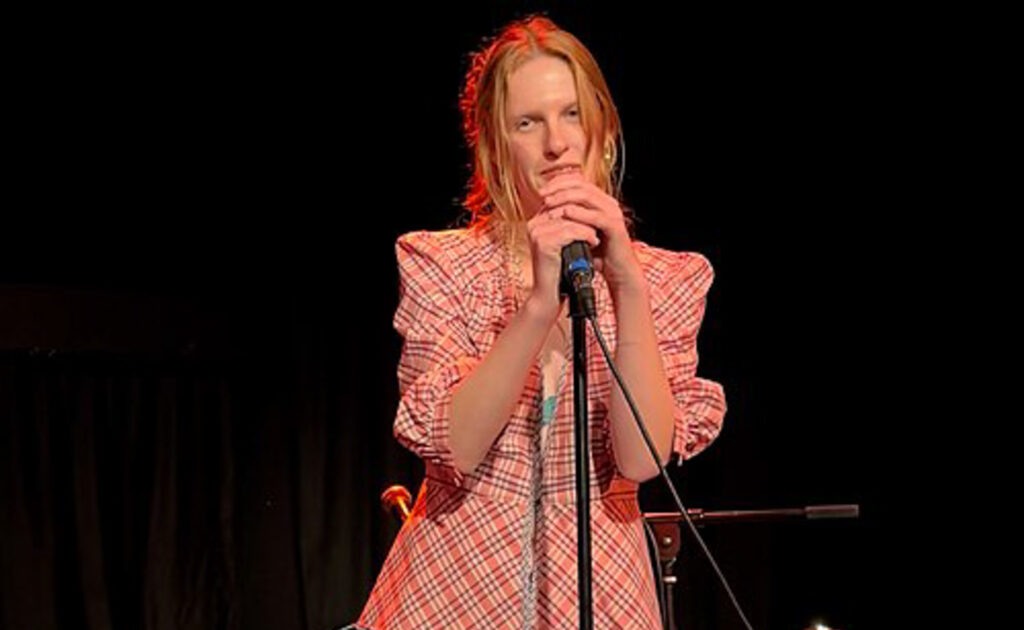
Audrey Hobert is an American singer-songwriter born in New York City and raised in Los Angeles. Before launching her own recording career, she studied screenwriting at New York University and worked in television, including as a staff writer on the Nickelodeon series The Really Loud House. Music eventually became the center of her creative life, helped by a long friendship with singer-songwriter Gracie Abrams. Hobert brought the same sharp eye for dialogue and character that shaped her screenwriting into conversational pop songs built around humor, embarrassment, romance, and self-awareness. Hobert first became widely known as a songwriter through her work
The Baltimore-born, New York-based artist serpentwithfeet continues to explore R&B tradition through the lens of queer sexuality, a rich basis for a fascinating career. After releasing the 2024 album Grip and its 2025 companion piece Grip Sequel, serpentwithfeet is coming back with a new EP called Sentinel. Its title track, co-produced with Brandon Juhan and Rahm, takes serpentwithfeet back to his gospel roots, combining lost and pleading vocals with murky, IDM-adjacent programming. Here’s what the artist says about it:
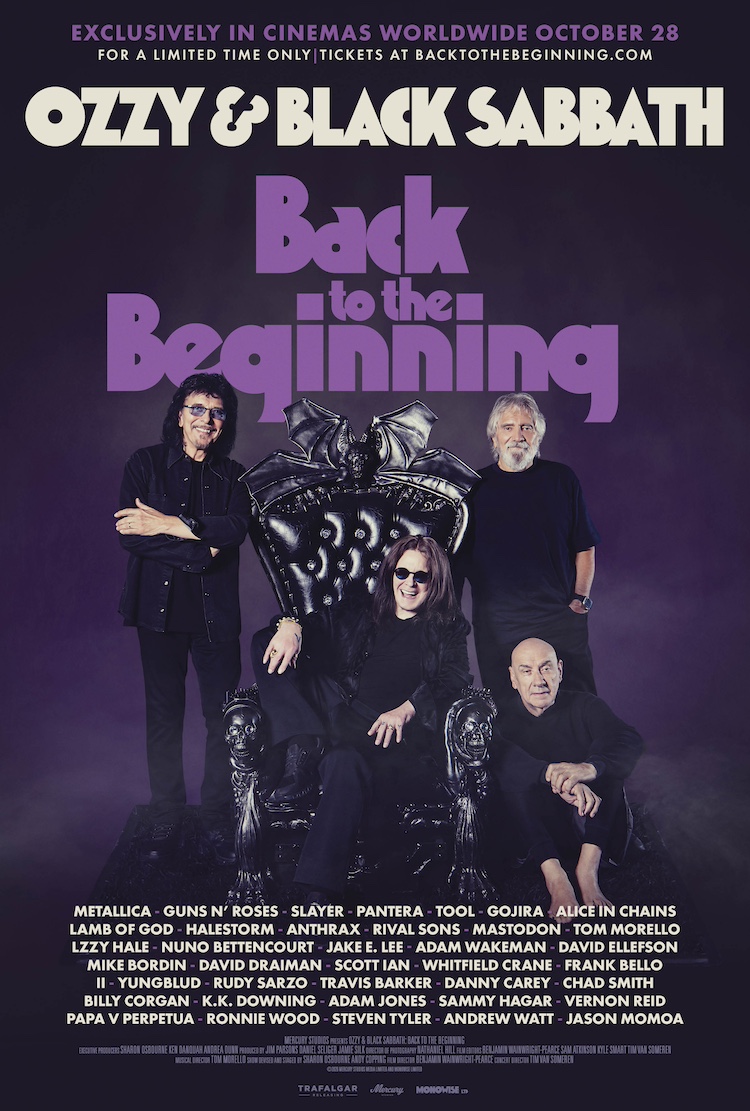
The trailer for the upcoming concert film ‘OZZY & BLACK SABBATH: Back To The Beginning’ has been revealed, and you can already tell it’s going to be an emotional watch.
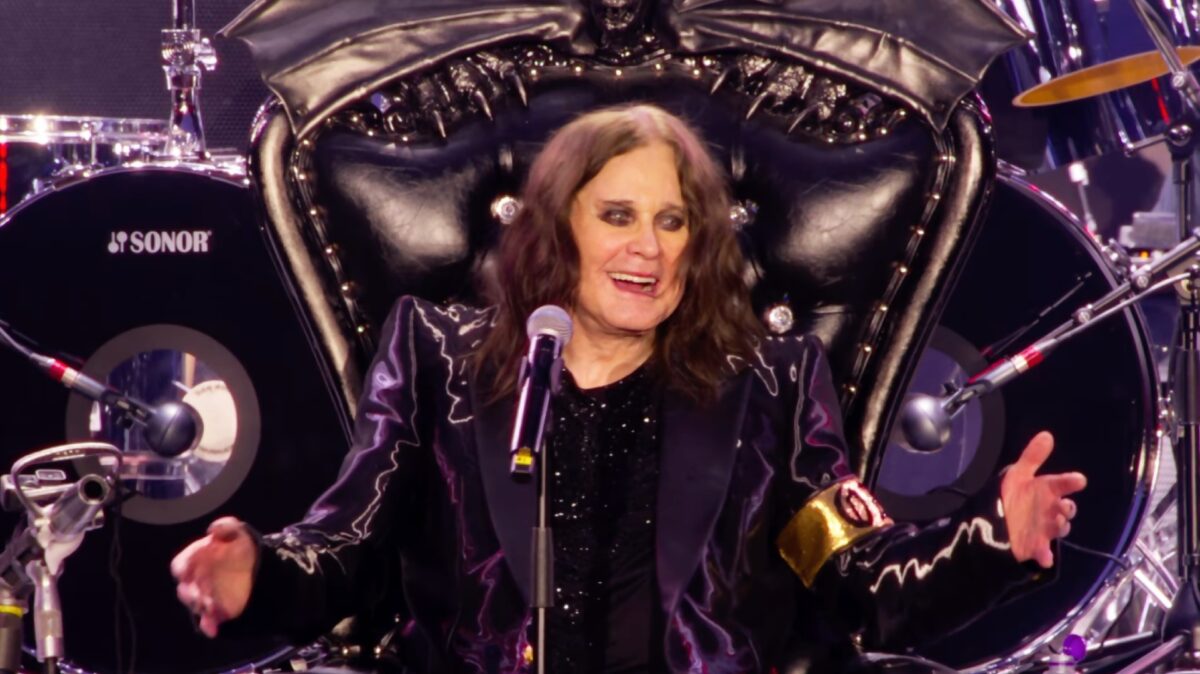
The film, documenting Black Sabbath’s last ever show and Ozzy Osbourne’s last live appearance before his passing 17 days later, is set to be shown in cinemas across the world on October 28.
And based on the trailer, professionally shot footage of not just the band’s performance but of every other band that turned out and gave their all on the day, it is going to demonstrate just what a spectacle it was. A once in a lifetime event that will can, and never should, be replicated. Two hours and thirty-five minutes of metal royalty in action.
The full list of performances featured in the film are as follows:
Ozzy Osbourne
I Don’t Know
Mastodon
Supernaut
Rival Sons
Electric Funeral
Anthrax
Into the Void
Halestorm
Perry Mason
Tool
Hand Of Doom
Ozzy Osbourne
Mr Crowley
Tom Morello’s All Stars ft David Draiman, Jake E. Lee, David Ellefson, Mike Bordin, Adam Wakeman
Shot in the Dark
Tom Morello’s All Stars ft Whitfield Crane, Scott Ian, Nuno Bettencourt, Frank Bello, II (Sleep Token), Adam Wakeman
Believer
Tom Morello’s All Stars ft YUNGBLUD, Nuno Bettencourt, Frank Bello, II (Sleep Token), Adam Wakeman
Changes
Lamb of God
Children of the Grave
Alice In Chains
Fairies Wear Boots
Gojira
Under the Sun
Pantera
Electric Funeral
Slayer
Wicked World
Ozzy Osbourne
Suicide Solution
Tom Morello’s All Stars ft Travis Barker, Danny Carey, Chad Smith, Tom Morello, Nuno Bettencourt, Rudy Sarzo
Symptom Of The Universe
Tom Morello’s All Stars ft Billy Corgan, Tom Morello, K.K. Downing, Adam Jones, Rudy Sarzo, Danny Carey
Snowblind
Tom Morello’s All Stars ft Sammy Hagar, Nuno Bettencourt, Adam Wakeman, Rudy Sarzo, Chad Smith, Vernon Reid
Flying High Again
Tom Morello’s All Stars ft Papa V Perpetua, Vernon Reid, Nuno Bettencourt, Adam Wakeman, Rudy Sarzo, Travis Barker
Bark At The Moon
Tom Morello’s All Stars ft Steven Tyler, Ronnie Wood, Nuno Bettencourt, Tom Morello, Andrew Watt, Rudy Sarzo, Travis Barker
The Train Kept A-Rollin’
Tom Morello’s All Stars ft Steven Tyler, Nuno Bettencourt, Tom Morello, Andrew Watt, Rudy Sarzo, Chad Smith
Walk This Way
Guns ‘N’ Roses
Never Say Die
Metallica
Hole In The Sky
Ozzy Osbourne
Crazy Train
Black Sabbath
War Pigs
Black Sabbath
N.I.B.
Black Sabbath
Iron Man
Black Sabbath
Paranoid
Ozzy Osbourne
Mama I’m Coming Home
Have a watch for yourself below:
You can also book your tickets for your local showings and find out where they are, right now too. Find out more right here.
Sebadoh are celebrating 30 years of their sixth album Harmacy. The indie rockers announced an anniversary edition today, and an alternate version of the track “Beauty Of The Ride” is out now.
Jangly guitars open the album before a thumping bass line joins in, closely followed by strained vocals full of emotion. Welcome to Bat Flattery, the self-titled album by this midlands band.
Opening track ‘Year of the Glutton’ is a great introduction to the band and this genre of music, which in my opinion is emotional hardcore. This is not your niece or nephews’ ‘emo’ though, but something else entirely, real emotional intensity not just the sarcasm and apathy of youth, combined with complex guitar-based music steeped in both punk and hardcore.
As ‘Year of the Glutton’ continues, we are treated to melody and intensity, before a clever slowed down outro that ends with a crescendo of screams and shouts.
Track 2 ‘Piane’ is a more straightforward chugger, with a grunge like attitude and sound that again reaches a noisy and extreme climax
‘Sweet Thomas’ is a stripped down and bare track that exposes a fragile aspect of the band though this becomes a fading memory as the beautifully named ‘Onibaba Mask’ comes roaring out next, an in-your-face assault that bristles with menace.
‘DKE’ showcases the bands mastery of dynamics, with loud emotional sections jostling with quieter more pensive periods then it’s onto instrumental number ‘Year of the Ghost’ that combines a wonderful pulsing bass tone with those more complex guitars, still managing to evoke feeling and sensitivity despite its lack of vocals.
The album continues in this vein without dropping the quality or intensity. Highlights of the rest of the album include the excellent track ‘Got Grace’ which ups the aggression levels and my personal favourite track ‘Otka’ which has a simple stop/start dynamic to its riffing which provides depth and warmth.
Looking at it as a collective this album feels very personal to the band, a lot of emotion and thought has clearly been invested in these songs, this combined with excellent musicianship and passion makes for something that makes you want to listen, to feel something inside.
My only criticism of the album would be that the tracks are very short, in fact the whole 16 track album comes in at just under half an hour. I felt like some of the songs had just started to get going and then they were finishing, but that again is obviously the dynamic the band wanted to go with.
In summary, this is a truly well crafted, emotional album that delivers both sonically and cerebrally. If you like an album that gets your blood pumping but also makes you wistfully stop and think then this is the band for you.
Bullet For My Valentine have announced their eighth album. It’s called ‘Social Apocalypse’, it lands on 19 March 2027 through Spinefarm, and the title track is out now — their first new song in four years. Ten tracks, produced by Carl Bown, and two of them have guest vocalists on: Chrissy Costanza of Against The Current on ‘In The Absence Of You’, and Will Ramos of Lorna Shore on ‘I Don’t Trust Tomorrow’. That second name is the one that changes how you listen to this announcement.
STREAM THE METAL BREAKDOWN DAILY NOW:
Bullet For My Valentine have an album and they’ve put the most extreme vocalist in modern metal on it. On today’s Metal Breakdown Daily I’m breaking down what the Will Ramos feature actually says about where this band is going, plus King Diamond’s Halloween picture disc and the woman from the Black Sabbath cover releasing a rock opera. Download the free Loaded Radio App on Apple iOS and Google Play and stream the show now.
The Album
‘Social Apocalypse’ is album number eight, and the first since their self-titled record in 2021.
Carl Bown is back in the producer’s chair, which is no surprise — he’s been working with this band for years. Matt Tuck explained why that relationship keeps going.
‘Carl doesn’t let you settle,’ Tuck said. ‘He’s always ready to speak up, push and challenge.’
On the title and the mood of the record, Tuck was blunt. ‘Everything in life is changing at such a rapid pace, and it is hard to find great positivity when you look at world events.’
Nobody is making a cheerful album in 2026. At least this one is honest about why.
LIVE & LOUD: Stream the World’s Hardest Radio Station 24/7
The Tracklist
Why The Will Ramos Feature Matters
Here’s the thing about Bullet For My Valentine.
They came up in the 2000s metalcore wave out of Bridgend, they sold a lot of records very quickly with The Poison, and they have spent the entire twenty years since being told by a section of the metal audience that they went too commercial. Every album cycle, same argument. Too clean, too melodic, too many choruses.
Now they’ve put Will Ramos on a track.
If you don’t follow deathcore, Ramos is the vocalist who took Lorna Shore from a band with a difficult history to one of the biggest acts in extreme metal, largely on the strength of a performance most human throats cannot physically produce. He is the current benchmark for how heavy a voice can get. We ranked Lorna Shore’s albums here, and reviewed ‘Everblack’ when it landed.
Putting him on a Bullet For My Valentine song is a statement, and it’s a smart one. It buys back credibility with the exact audience that’s spent two decades calling this band soft, and it costs them nothing with the audience that turns up for the choruses.
Every outlet running this story today is leading on Ramos and burying the other guest. That’s a mistake.
Chrissy Costanza fronts Against The Current, and she comes from the complete opposite end of this band’s audience — pop punk, big clean melodies, enormous hooks. Putting her on track two and Ramos on track three is not an accident. That’s a band deliberately staking out both edges of what they do, back to back, in the first three songs.
Whether that works across a whole album is a different question, and it’s the one I’d actually be nervous about. Bullet’s weaker records have been the ones where they tried to be two bands at once. Their best have been the ones where they picked a lane and floored it.
The 2027 Tour
They’re out across Europe in the new year — 27 dates between 21 January and 27 February 2027, with Pendulum as special guest and Dark Devine opening.
The core is unchanged and has been for a very long time. Matt Tuck on vocals and rhythm guitar and Michael ‘Padge’ Paget on lead guitar have both been there since 1998, back when they were still called Jeff Killed John. Jamie Mathias came in on bass in 2015 and Jason Bowld became the full-time drummer in 2017.
The Poisonturned twenty this year, which is either a lovely milestone or an alarming one depending on how old you were when it came out.
TL;DR
Bullet For My Valentine’s eighth album is called ‘Social Apocalypse’, out 19 March 2027 on Spinefarm.
The title track is out now and it’s their first new song in four years.
Carl Bown produced it. Ten tracks.
Will Ramos of Lorna Shore guests on ‘I Don’t Trust Tomorrow’. Chrissy Costanza of Against The Current guests on ‘In The Absence Of You’.
They tour Europe from 21 January to 27 February 2027 with Pendulum and Dark Devine. Tickets on sale 30 September.
FAQ
What is Bullet For My Valentine’s new album called?
‘Social Apocalypse’. It’s the band’s eighth studio album and it will be released on 19 March 2027 through Spinefarm Records. The title track is available now.
Who guests on the new Bullet For My Valentine album?
Two vocalists. Will Ramos of Lorna Shore appears on ‘I Don’t Trust Tomorrow’, and Chrissy Costanza of Against The Current appears on ‘In The Absence Of You’.
When does Social Apocalypse come out?
19 March 2027. The title track was released ahead of the announcement and is the band’s first new song in four years, following their self-titled album in 2021.
Who produced Social Apocalypse?
Carl Bown, who has worked with Bullet For My Valentine across several records. Matt Tuck said of him: ‘Carl doesn’t let you settle. He’s always ready to speak up, push and challenge.’
Is Bullet For My Valentine touring in 2027?
Yes. They have 27 European dates running from 21 January to 27 February 2027, with Pendulum as special guest and Dark Devine opening. Tickets go on sale on 30 September. No North American dates have been announced yet.
Will Ramos on a Bullet For My Valentine record is either the smartest move they’ve made in a decade or a guest spot that’ll get lost in the mix. Which one do you reckon? Tell me in the comments. Follow Loaded Radio for daily rock and metal news.
Canadian melodic death thrash force Invicta return with “Overthrow Divinity,” the first single from their upcoming EP Sapienomachy.
Active since 2017, Invicta have carved out a reputation for aggressive old school riffing, sharp melodic hooks, and a modern approach to death and thrash metal. With one EP and two full-length albums already behind them, the Kitchener-Waterloo band now enter a new chapter with Sapienomachy, a concept-driven release that expands their sound into power metal, traditional metal balladry, and progressive storytelling.
Inspired by Greek mythology, Sapienomachy takes its name from mythic conflicts such as the Titanomachy and Gigantomachy. The EP reimagines the tale of Prometheus giving fire to humankind, following a story in which humanity turns that gift into a weapon and wages war against the gods, ultimately destroying their universe.
The EP’s artwork was created by legendary German artist Andreas Marschall. Drawing from Greek myth, the cover depicts Prometheus embedded in the mountain, offering his final flame to humankind.
“Overthrow Divinity” launches the EP with fast-paced power metal influence, twin harmony guitar leads, and relentless drumming. Lyrically, the song is told from the perspective of humanity rising against the gods after generations of oppression and restraint. Its story also speaks to modern anxieties: mankind given tools and technologies meant to help, only to turn them toward destruction in a relentless lust for power.
Sapienomachy also marks a unique creative moment for Invicta. Originally written as part of a full-length album, these songs were set aside and shaped into their own standalone release, allowing the band to explore a more narrative, dynamic, and mythological side of their writing.
Invicta features Kyle Edissi on guitar and vocals, Jonah Kay on guitar, Reef Hassanien on drums, and Chip Tanner on bass. The band’s discography includes The Executioner EP, Halls of Extinction, and Triumph and Torment, alongside singles and covers including “Rising Force,” “Forces of Annihilation,” and “Hatebreeder.”
Invicta have toured across Canada and the United States, including runs supporting Heathen and First Fragment, and have shared stages with Lich King, Soulfly, Toxic Holocaust, Napalm Death, and Primitive Man.
“Overthrow Divinity” is the first glimpse into Sapienomachy, a release that pushes Invicta into grander, more mythic territory while retaining the speed, aggression, and melodic bite that has defined the band since its earliest days.
Elyvilon’s newest project Lichenthrope is a (literal) organic splinter of the eminent dungeon synth auteur’s wider philosophy. Gone are the hymn-like synths of prior albums inspired by Finnish mythology, misty isles, or Yuletide. Lichenthrope is the transformed, miasmatic voice of Elyvilon. I can only describe the immersive, ritualistic sound as “bio-mythological.” It is good, but, unlike the Elyvilon albums, Lichenthrope’s first record, Call of the Moss Moon, is more conceptually murky and unapologetic in strangeness. A cryptic mythology suffuses the album, manifesting in something profound and simultaneously squirmy in the sound.
…
…
Lichenthrope establishes this spliced microbe of gloomy dungeon synth with advertised “vintage Yamaha and Korg hardware.” It sounds a touch like John Carpenter if he was a type of ophiocordyceps unilateralis, but it also reminds of that old tale by Clark Ashton Smith, “The Garden of Adompha,” about a mad wizard’s garden of impossible colors at the end of eternity. The fungal perception of time on Call of the Moss Moon is infectious, gnawing away in vegetal samsara.
The first half of the album is the Lesser Vehicle of the mushroom. “Gnosis,” the opener, is knowledge of the musty apocalypse. It’s heavy with the string and synth ambiance anyone familiar with the synthesizer stylings of dungeon synth knows. “Gibbous Dream Conduit” is when the Weird Fiction transformation of doom sets in. This languorous, humming track asks: do mosses feel pain? The entire project is built on looping, organic sequences, but “Gibbous Dream Conduit” introduces the echo parallel of chimes and vibrant synths. “Mildew Scraper” is when the bazaar bells of the midnight market bellow. Lichenthrope here enters fairy woodland in the older sense of the world, faery woodland, with knockers in the hills tapping out a funeral march. Abandoning the idealized chimes of “Gibbous Dream Conduit,” “Mildew Scraper” focuses on electronic drumbeats which puts the danger in the (almost) chiptune soundscape. The beat and the heavy, resounding bell of “Mildew Scraper” establish a synthetic texture that moves like an organic, breathing symphony. It claims the title of “fungal dungeon synth” and is the best of the album. “All Honors of a Vine-Chocked Grave” (great title, old school in sound too) finishes up the pristine (to plant life) sacraments of the hidden woodlands. It’s weaker than “Mildew Scraper,” but “All Honors of a Vine-Choked Grave” is the world above as seen from below, dealing, appropriately, more in the faux-brassy “low-fi” textures. All those “honors” are an echoing dirge through the Gothic shadowlands of a remote, moss choked Upper Peninsula.
The second half of the album falls to the physical, the perishable, but, perhaps, that is preferable as to keep the air of our rarefied dreams pleasant. “Miasmatic Chamber” is the pseudo-resumption of “Mildew Scraper,” but, though darker, it is the weaker track due to its 10-minute length. As the longest track on the album, “Miasmatic Chamber” presents life seen through glowing eyes in the dark, yet prolongs the experience too much. The following song, “A Glimmering,” is much more economical. It’s a rather lonely tune, like wandering through a forest path of live ambience: crickets, frogs, wind in the branches, scuff in the dirt, piano in the night sky. The warm forest ambience acts as an interlude to draw out the cold fugues of extraterrestrial melody which dominate the second half of “A Glimmering.” “Shambling Mycomaton,” then, depicts a Hitchcock-esque monster thumping through the woods. It is built with artificial hums and computerized violin stings. One has no idea what a “mycomaton” actually is, but the synthesized pseudo-staccato raises terror at the thought of it. “Call of the Moss Moon,” the title track, carries on with that tension, but the the modulated, discordant drums provide a funky rhythm that acts as a denouement to the rest of the album, eventually evaporating into the sound of rain and distant thunder in the distance.
The moss of the crypt creeps upwards through the gutters to infect the mind of the public! One need only take a look at the looming, shamanistic silhouette by Grave Stench Stench on the cover as evidence of this mossy apotheosis. Whatever the terror or revelation, the transformation of the figure reflects Call of the Moss Moon’s invasive, biological looping through one’s mind. While it’s a little green in experimentation, the first transformation always is, so Call of the Moss Moon is an easy recommendation to anyone looking for dirges of dark, peculiar ambience.


 STREAM THE METAL BREAKDOWN DAILY NOW:
 LIVE & LOUD: Stream the World’s Hardest Radio Station 24/7

