Ben Poole returns with Post-Midnight Behaviour, his first studio album of new material in eight years. Released after 2018’s Anytime You Need Me, the album finds the British guitarist, singer and songwriter revisiting his blues rock roots while exploring a broader range of influences.
Poole has spent much of his career building a name within the blues rock scene developing an extensive international touring career. With more than a decade of albums and live releases behind him, he has also performed extensively across Europe and beyond, establishing himself as a seasoned live performer as well as a respected guitarist.
Post-Midnight Behaviour establishes its broader approach from the opening moments of “No Second Chances.” Built around rugged riffs, the song settles into softer verses where Poole’s voice takes on an almost alternative rock character, giving the track a different kind of catchiness before the heavier chorus arrives. It is a good opener, further elevated by some tasteful lead guitar.
“Empty” follows with a breezier alternative-rock feel and subtle country touches, while another melodic guitar solo adds plenty of character. On the other hand, “Time Has No Mercy” brings back a more traditional blues rock approach, albeit with a pop-punk edge, while its strong chorus gives the song plenty of melodic appeal. The track also features another excellent solo, this time favoring attack over melody.
“Runaway Souls,” featuring Elles Bailey and Oli Brown, is the album’s standout. Its spirited blues rock arrangement combines a great riff, a countrified touch, and stellar vocals. The chorus is particularly effective, and the guitar solo strikes a fine balance between melodic phrasing and sheer fireworks.
“Searching” takes things down a notch with a soulful, late-night atmosphere, sultry vocals, and an elegant, almost jazzy guitar break. It fits the album’s nocturnal character particularly well. “Start Of The End” closes the record with another rocker that has a ballad-like quality, providing a strong finish.
From a technical standpoint, the production is clear and well balanced, retaining plenty of punch without sounding overly polished. Poole and the band deliver confident performances throughout, and the mix does a good job of preserving the character and dynamics of the playing.
Overall, Post-Midnight Behaviour remains firmly rooted in blues rock while moving comfortably between alternative rock, soul, funk and pop, giving the album a varied and engaging character. There is a relaxed confidence to the record that suits its late-night atmosphere, with Poole’s guitar never needing to dominate the mix to make its presence felt. It is a strong return that rewards repeated listens without ever sounding overdone.
The Review 8/10
Can’t Miss Tracks
– No Second Chances – Empty – Time Has No Mercy – Searching – Runaway Souls
Electric Wizard & Magick Potion, The Prospect Building, Bristol, 16.09.26
“I hope this fucking world fucking burns away and I’d kill you all if I’d had my way!”. I don’t think that I’ve ever related to lyrics more in my adult life than these. The slog of working a job that you hate, surrounded by customers who don’t have respect for themselves or anyone else, all for a faceless company that doesn’t know you exist. There is music out there made for moments like this that portray the feeling of utter dread and constant anxiety, better than a conversation ever could. The prospect of seeing THEM again makes all this stress worth it.
Wednesday 16th September was a day like any other, just thinking about that night. Taking a walk from where I work to the venue, that being The Prospect Building felt nice for once, a relief. The roads are usually full of traffic but on this night, everything seemed to float by with a lack of disturbance and the excitement filled the air minute by minute.
Arriving at The Prospect Building, it felt surprisingly empty to begin with, no queue despite a sold out show, this was completely different for when I saw Sunn O))) there back in June where there was a big queue, I went in without breaking a sweat. I then went in-line for merch, afterwards getting myself a pint and then leisurely strolled into the main room, found my place and waited.
Magick Potion (7) opened the proceedings, entering the stage with their long hair and decorative fashion from another era. Looking at their socials and music platform presence previously, it was all about channeling heavy Psychedelic Rock from the 60s and 70s. It was then a mission in my mind, these guys walked the walk but can they talk the talk.
They then started playing, beginning with some cuts that opened the opportunity for the band to jam out and show off their shredding. With their tone that was welcoming in its warmth and fuzzy nature, it felt less like “Look at what I’m doing” and more like “Come take my hand, we’re going on a journey”. This resonated with the crowd who were grooving and enjoying the band, banging their heads and dancing to it.
I thought to myself, yeah their decent, then they introduced songs with more hooky elements and showcased more dynamics, that’s the point that drew me in. They show a big influence of Cream, Hawkwind, Led Zeppelin and The Jimi Hendrix Experience on their sleeves but they aren’t trying to copy and paste what the legends before them did.
This was fun and it didn’t feel forced, many bands in this ilk and tributes especially try to reinterpret a gig from back in the day where as this was more present and in the now, these guys were up on stage just enjoying themselves. Magick Potion didn’t try and reinvent the wheel or do anything like that, they just came out on stage, had a good time and raised people’s spirits up, it was a good time!
Next we had the main event, the wait wasn’t too long for Electric Wizard (9) … The band gathered on stage through a storm of smoke and cleared, Jus Oborn bellowed “Come my fanatics!” as they launched into space with Return Trip. Played at a different tempo compared to the original recording, it felt more hitting, dare I say satisfying in the way that it was played. My fate was sealed when Jus spat out the first few words of the song, those lyrics being what I mentioned when I started this review. I hadn’t screamed that loudly in a while!
Then the notes from Dopethrone ripped out from the bowels of hell and into my soul. I had never heard Electric Wizard play it live before and this was a moment that I’ll never forget. Again like with the previous song I was hitting my fist in the air, it’s a national anthem for the misfits.
Speaking in both terms of seeing the band play it live and the studio version, it plays with your expectations, the repeated mantra of the word “Rise” just brings everything together as the poetry paints a picture of glamourising the excess in both drugs and the volume in sound. Then suddenly the puzzle pieces come together as god says “Dopethrone” and the riff is just sluggish enough to make devils dance.
Funnily enough it’s a technique like this where I will make a connection between Elton John and Electric Wizard. The fact that the song teases and teases to the chorus with Tiny Dancer, everyone always sings it at the same time and Dopethrone does the same thing! It’s a thing of beauty, pure song-writing genius.
I want to point this out, their bassist, South West native Haz Wheaton was the only one on our right who wasn’t covered in smoke, it made me think, he’s one of us, he’s human and you could see it as the man was hammering away on his instrument, screaming every lyric, his energy was infectious, it was as if his soul was released from the sacrifice from the wizard and given to the people, he’s a fan.
The fourth song they played was another epic in Satanic Rites Of Drugula. That introduction was fierce and harrowing, the fact that Jus played it in the style that I love so much when he hits that forbidden note, echoing what he did at Brutal Assault at Fortress Josefov, in the Czech Republic back in 2017. It’s the most evil thing that the wizard is capable of doing and the song encapsulates its title completely, “So high, so dead”!
An unexpected treat was Electric Wizard performing Son Of Nothing from Come My Fanatics, it was the first time they played that song live in well over 10 years. It displayed the band at their most raw and loose, they could have played it for hours and the crowd would have still gone home happy, it truly puts repetition into submission.
Nearing the close of their set, it could have only ended on one thing, Funeralopolis. Nothing on earth beats hearing the introductory section, it brought everyone to a different planet. Then when the time struck, a heavy trance fell onto The Prospect Building, the jet engine of that legendary riff is a jet engine that blows everything away in its path. Electric Wizard then fled the stage, they came, killed and left!
Comparing the first occasion, seeing the band at ArcTanGent in 2024 and comparing it to The Prospect Building in 2026 is a difficult one. The first time I saw the band, I was stone cold sober for their set and everything felt like a dream, while this gig in Bristol was real and in the moment. At a festival there’s always much going on, you’ve got little time to breathe, whether with a gig, you spend the majority of your time waiting.
I guess that from seeing Electric Wizard before, it sub-consciously felt like just seeing any other band at gigs because regardless if it’s at a bigger venue, the routine is pretty similar. Now that I’ve had a chance to reflect on this, I’ve realised that I preferred this set list at the gig, whereas at the festival, I thought that they played better.
Don’t get me wrong, the solos and riffs still came across with gigantic presence but a bit of the mystique was lost. I am growing older and beginning to learn that these are just people but in an incredible band, still nasty and intense and that will never change. I loved it and I would go to see them and I do recommend the live experience. Just one more cry, just please god, release another album, I can’t polish my fangs forever!
SEVENDUST and Theory of a Deadman – Riverside Municipal Auditorium – September 20, 2026
When the house music cut out and the lights went dark in the 1400 capacity Riverside Municipal Auditorium on Sunday, the electricity in the air was tangible. Having just seen a great set from Theory of a Deadman, people were jammed up against the barricade awaiting the formidable SEVENDUST. Instead, they heard what I believed to be an AI funk track blasting through the PA system with lyrics that stated, “SEVENDUST has arrived…about to decimate your earholes. With big hits formulated from the 90’s to present day. You’ve got SEVENDUST in the dressing room getting ready to do it right. So, if you’re here in Riverside tonight, it’s gonna be the night…SEVENDUST is here!”
SEVENDUST
I had applied to photograph this show a month ago, just before learning I’d landed a job shooting a movie. Getting photo/press approval is never guaranteed, and I assumed that I would be turned down, which after securing the new full-time job, was somewhat of a relief, despite SEVENDUST being a bucket list band for me. The concert was 100 miles away from my house on a Sunday night, and my alarm would go off at 4:15am the following morning to head off to work…and then I got the email on Friday that I’d been approved. I was beyond excited at the prospect, and tried to keep my reservations about sleep pushed to the back of my brain – nobody said rock & roll was easy.
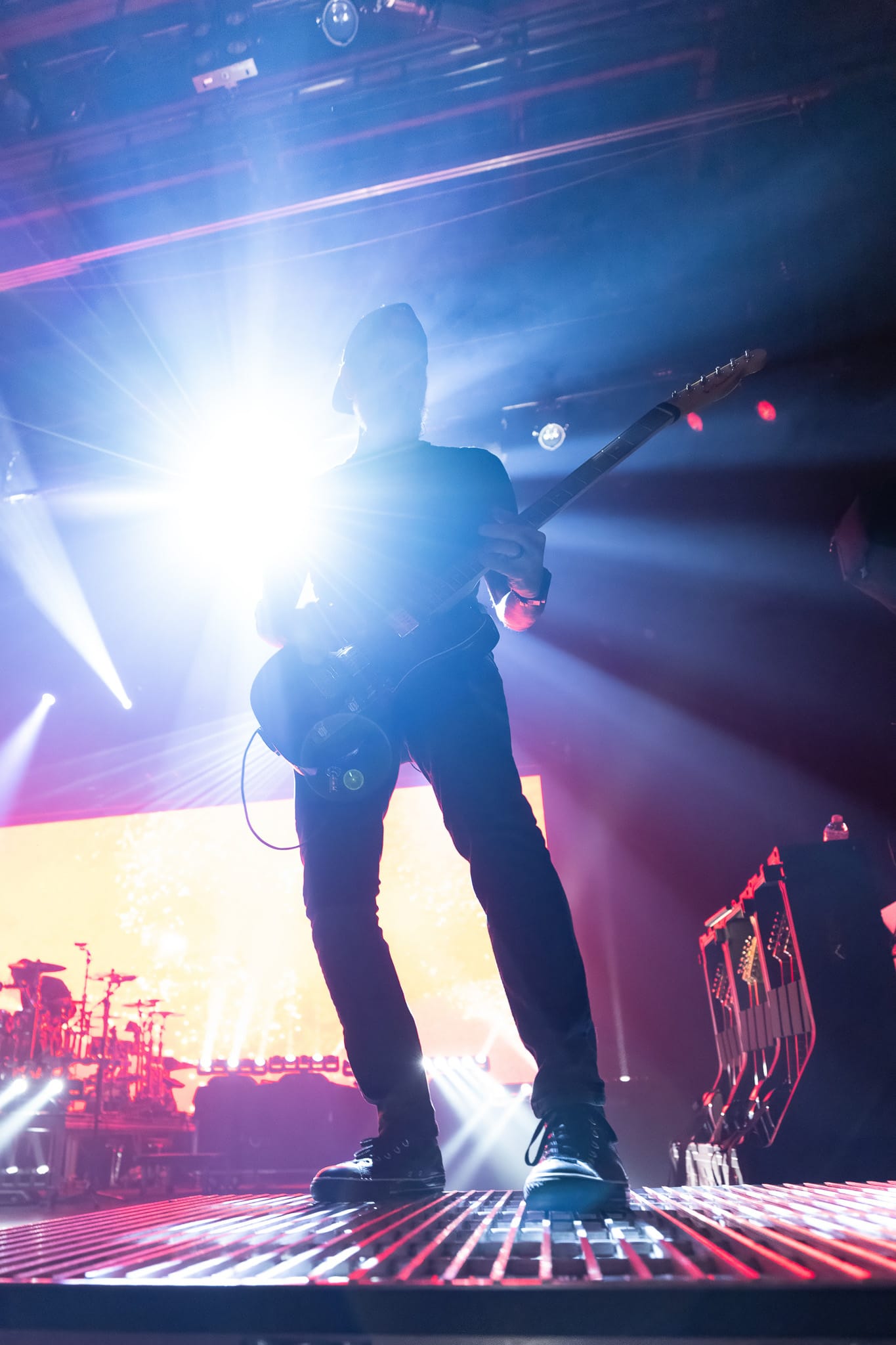
Drummer Morgan Rose recently revealed that the band almost retired two years ago, but instead decided to push harder than they ever had, and the current The Dead/Seven Tour is the culmination of that. It’s hard to know what might be going on within a band, or with members’ personal lives, but this night proved beyond a doubt that SEVENDUST were exactly where they were supposed to be, and doing it at the highest level of their 32-year (and counting) career. These guys are the real deal, and Riverside was treated to a masterclass in showmanship, high-decibel aggressive music, and sheer badassery.
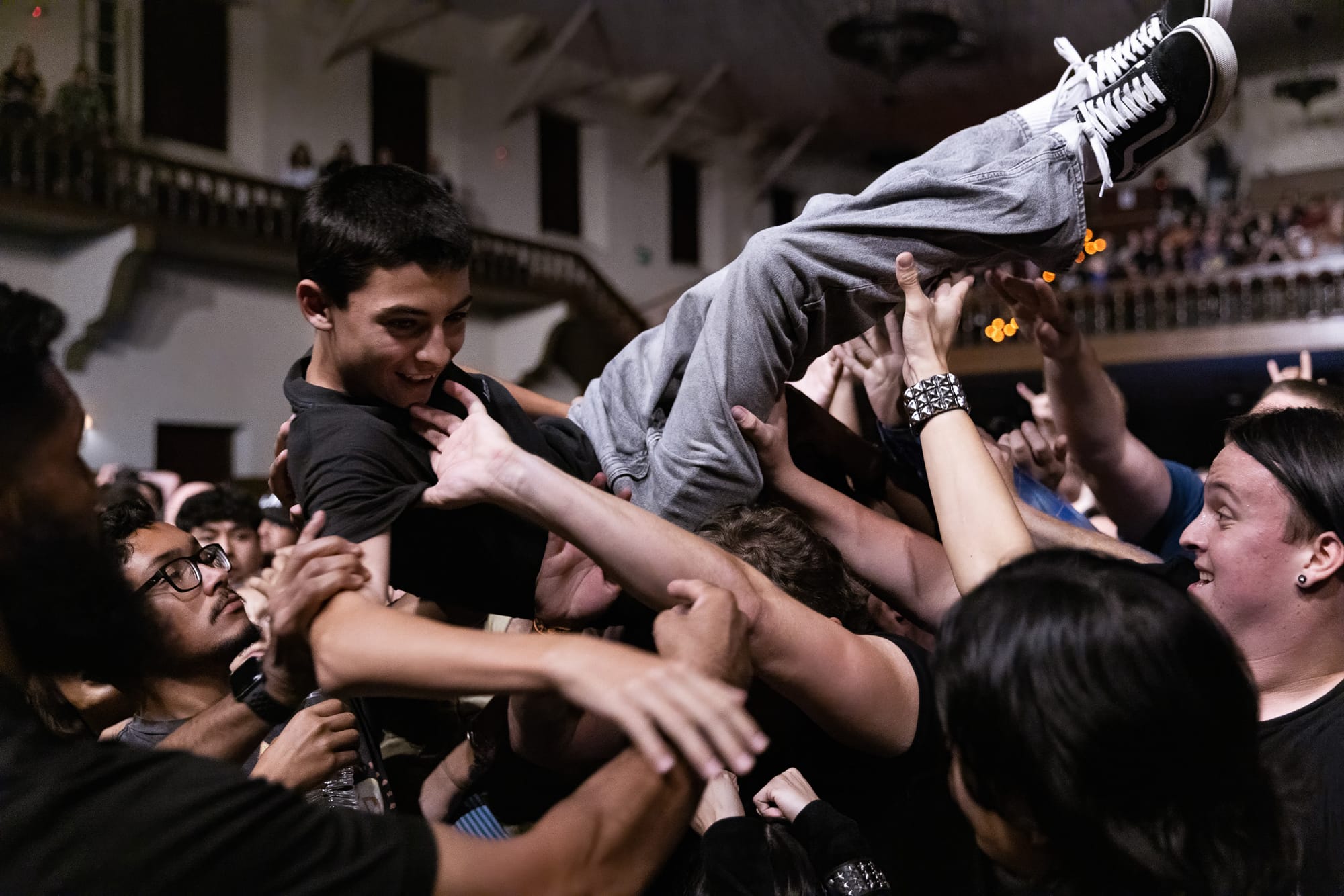
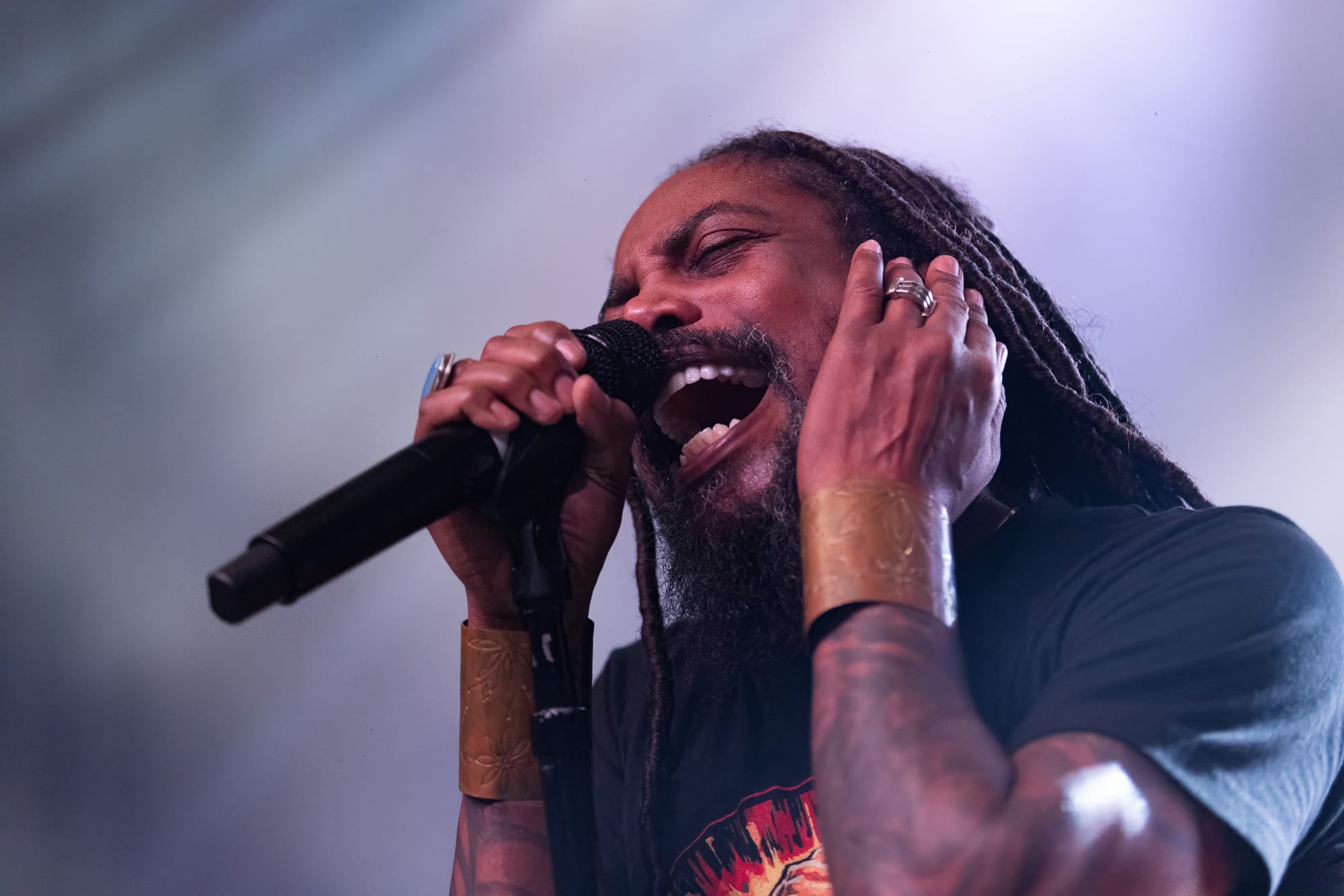
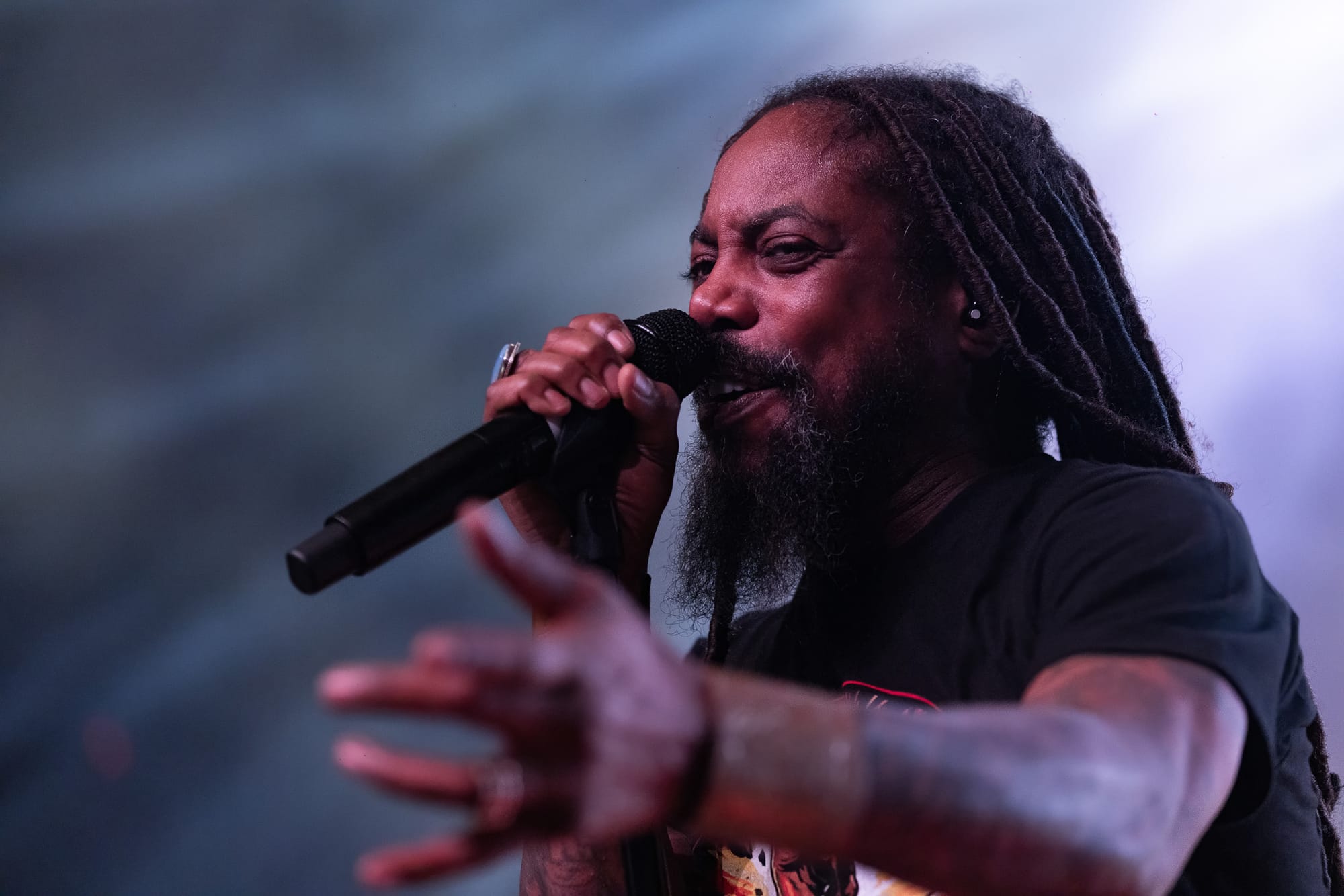
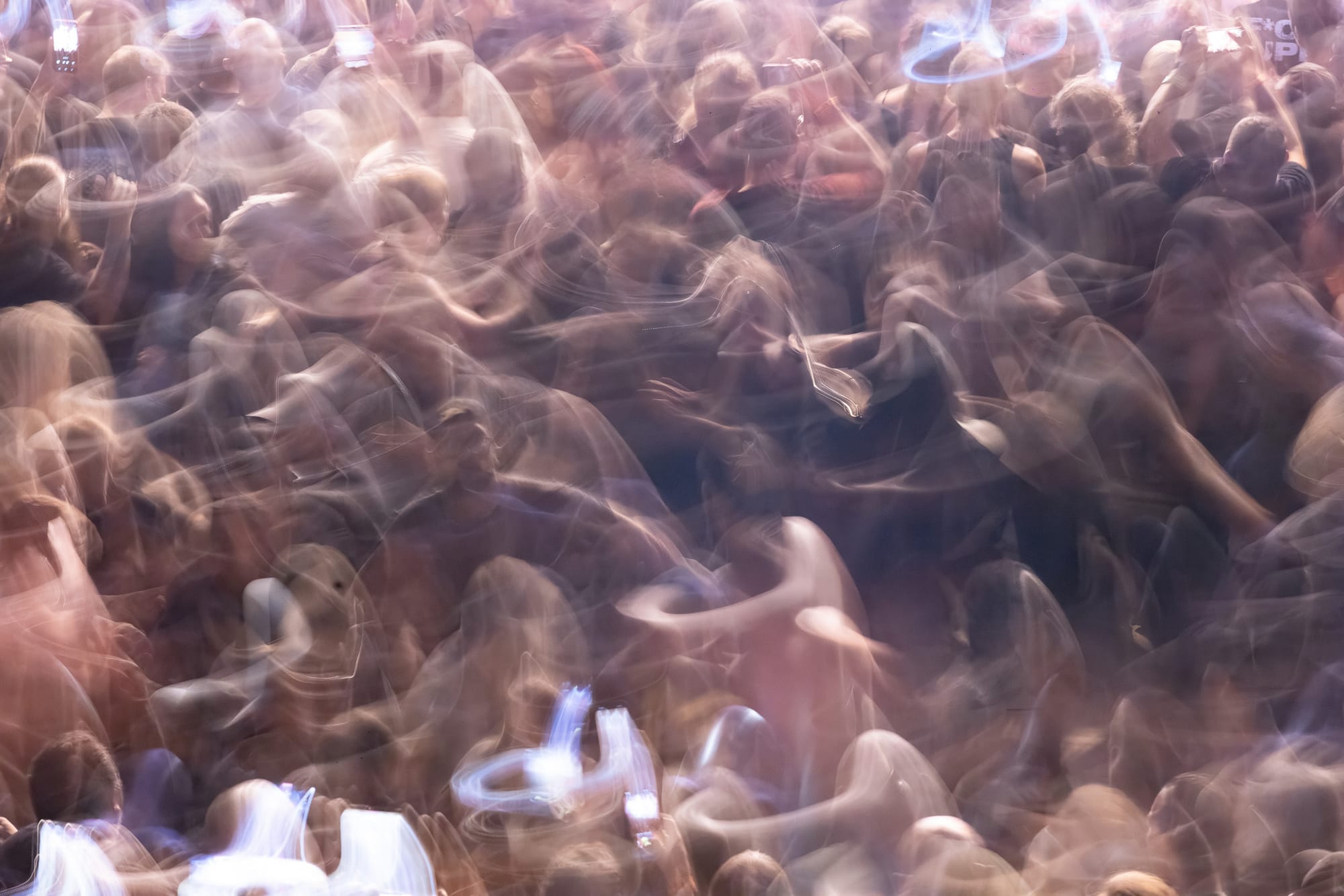
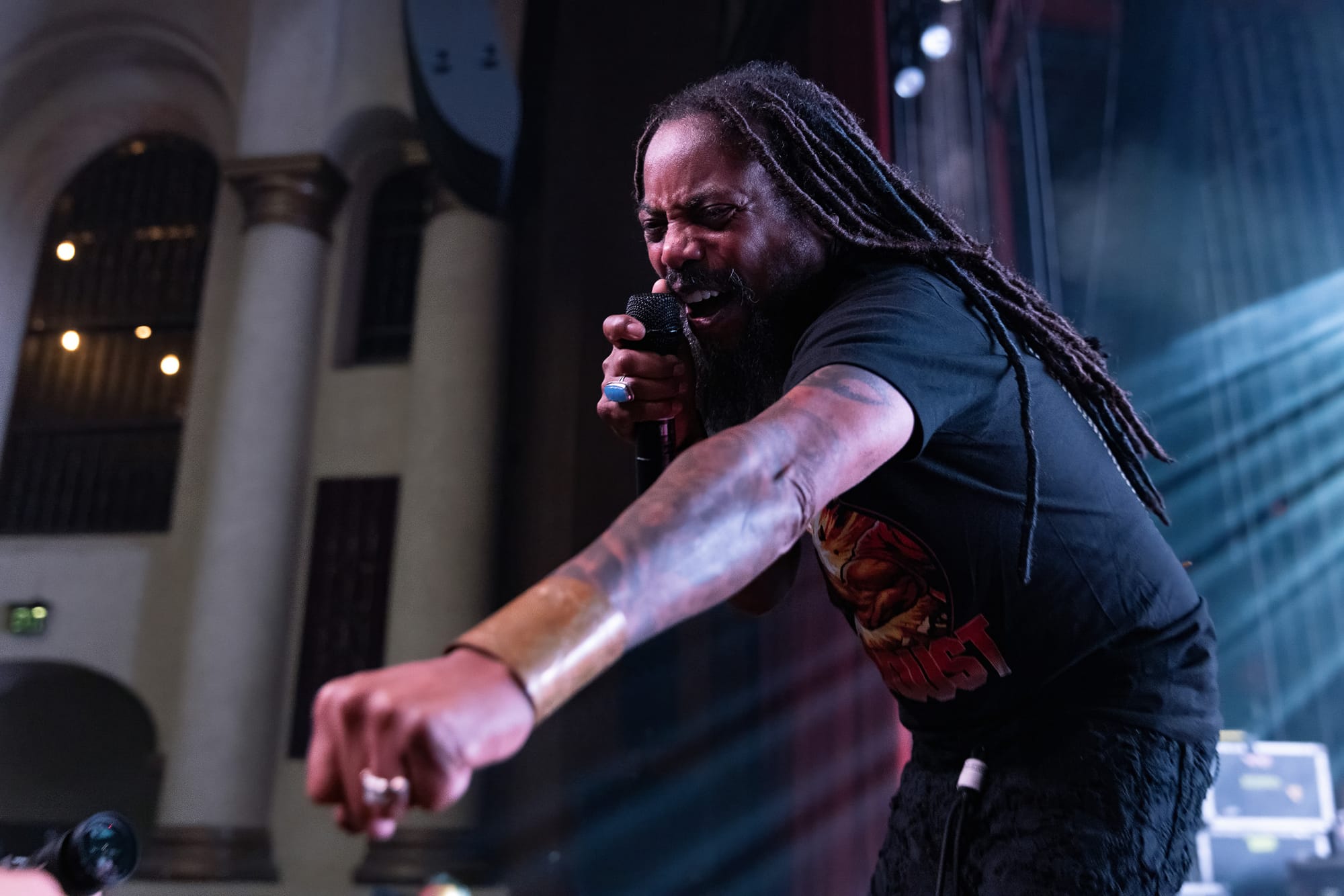
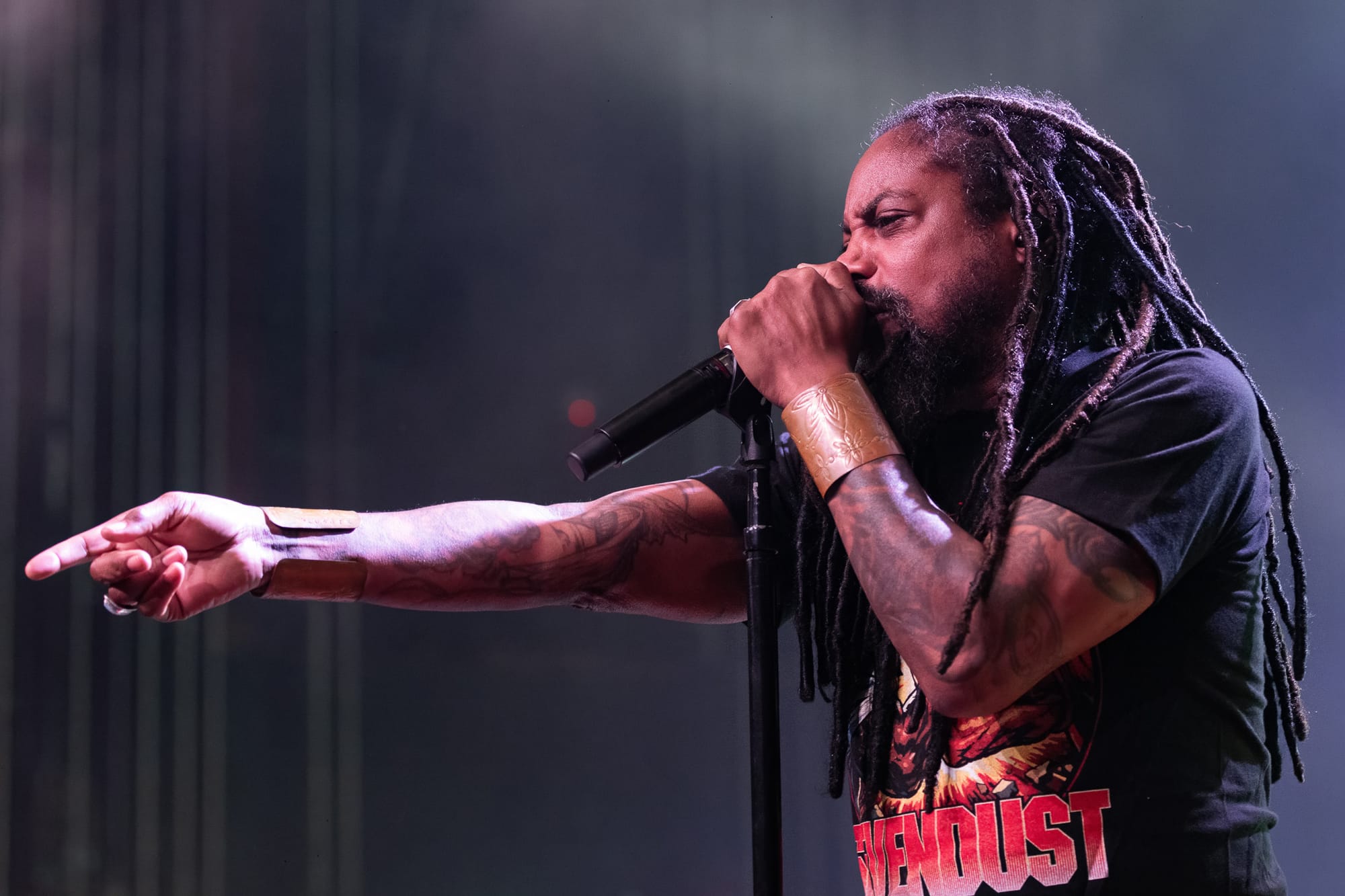
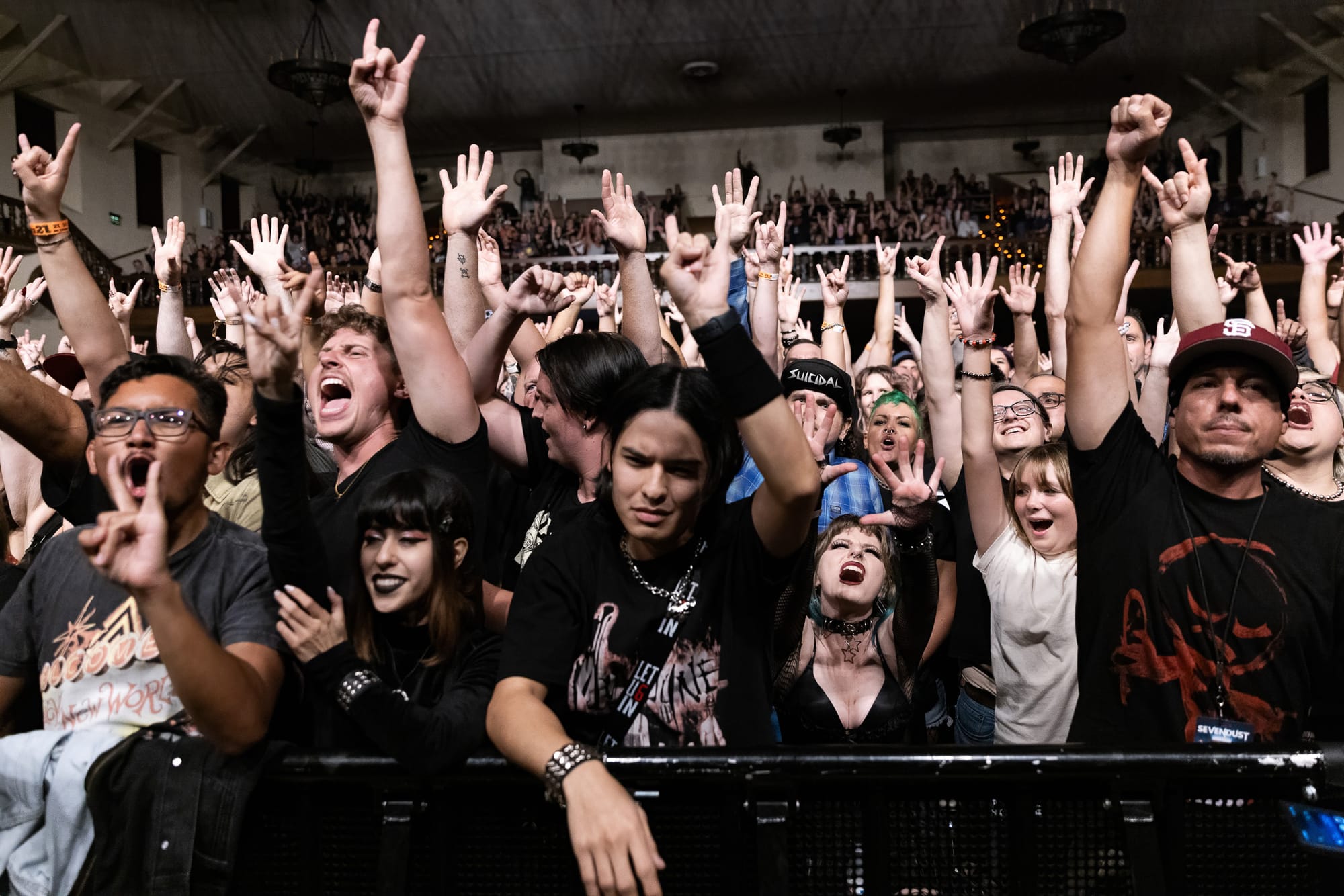
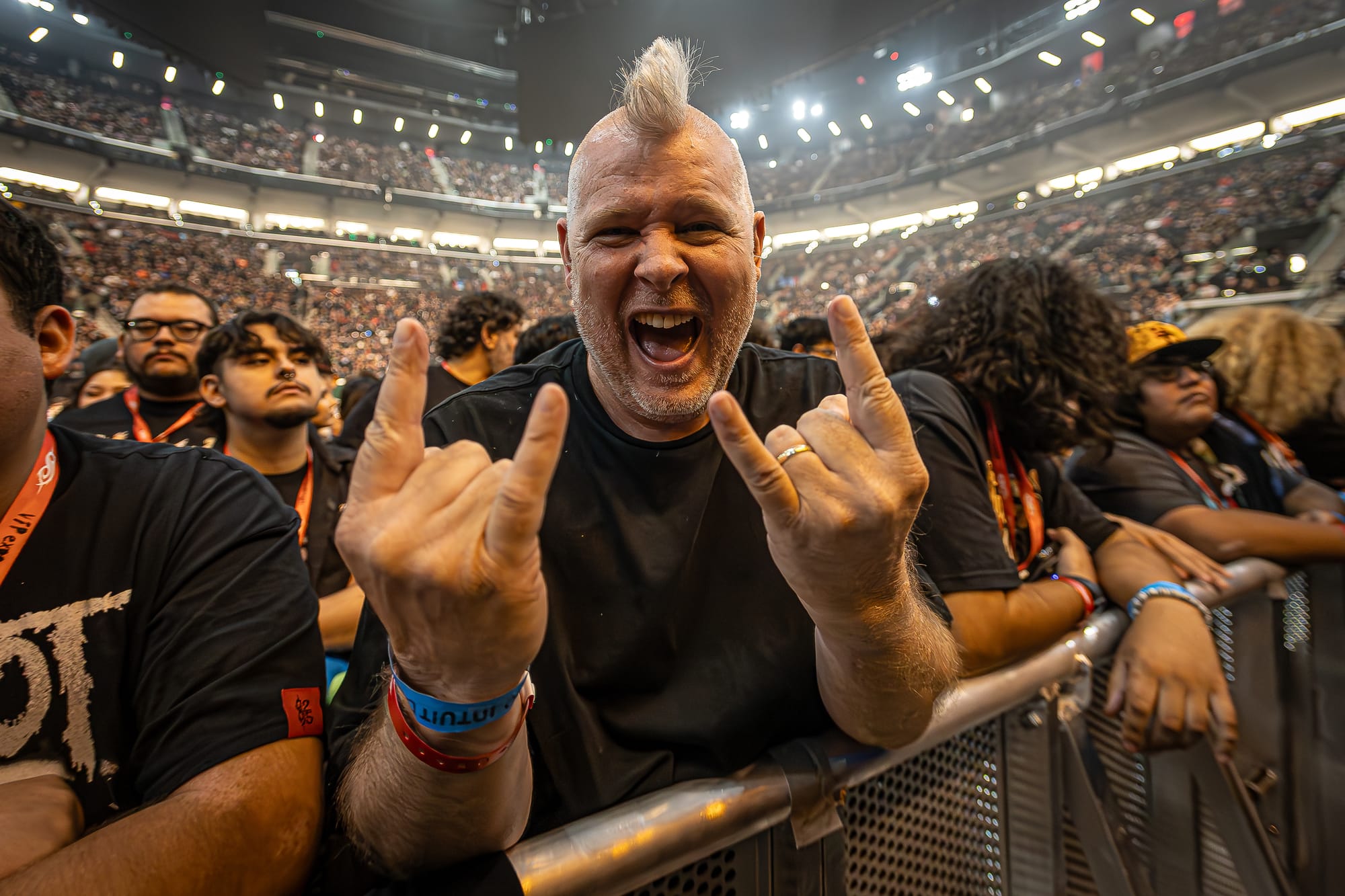
The crowd surfers materialized during the first song and didn’t slow down throughout the set. Vocalist Lajon Witherspoon attempted to fist-bump each and every one, and tried to pull the first surfer up onto the stage, before security shut it down over his animated protests. As with the crowd surfers, the mosh pit was active and spinning all night long, but then it’s hard to image “Face to Face” blasting away and the floor not going wild.
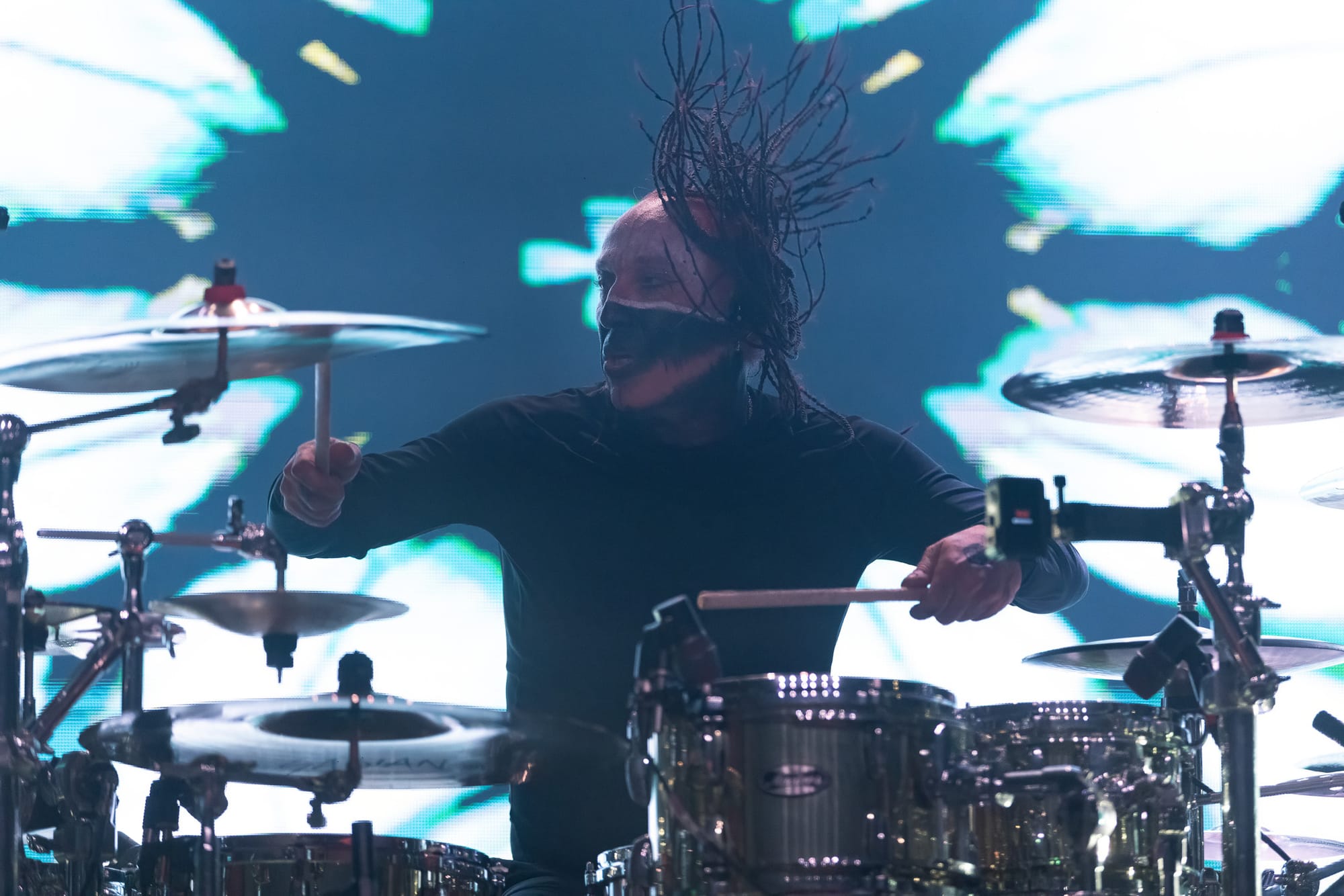
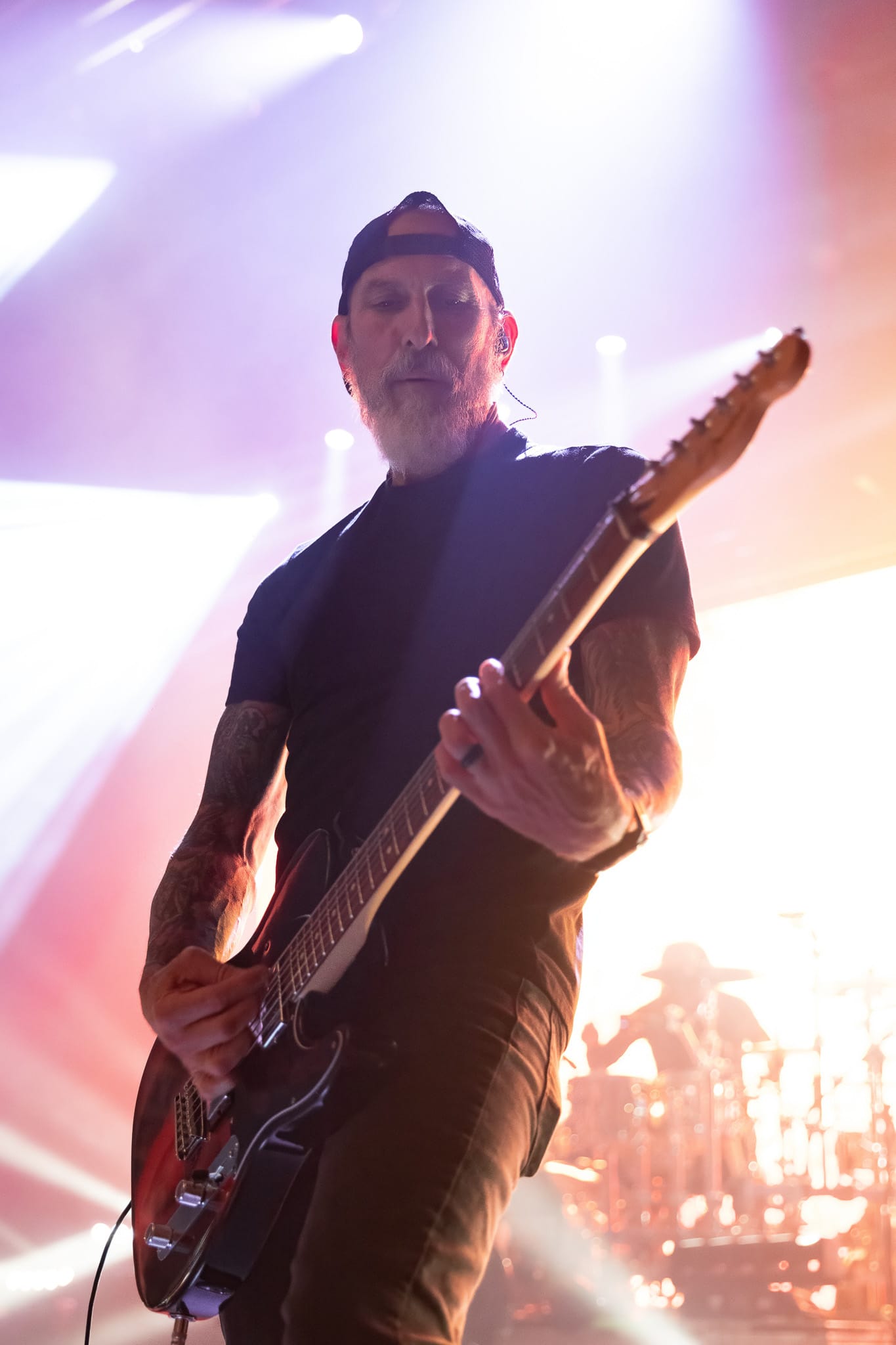
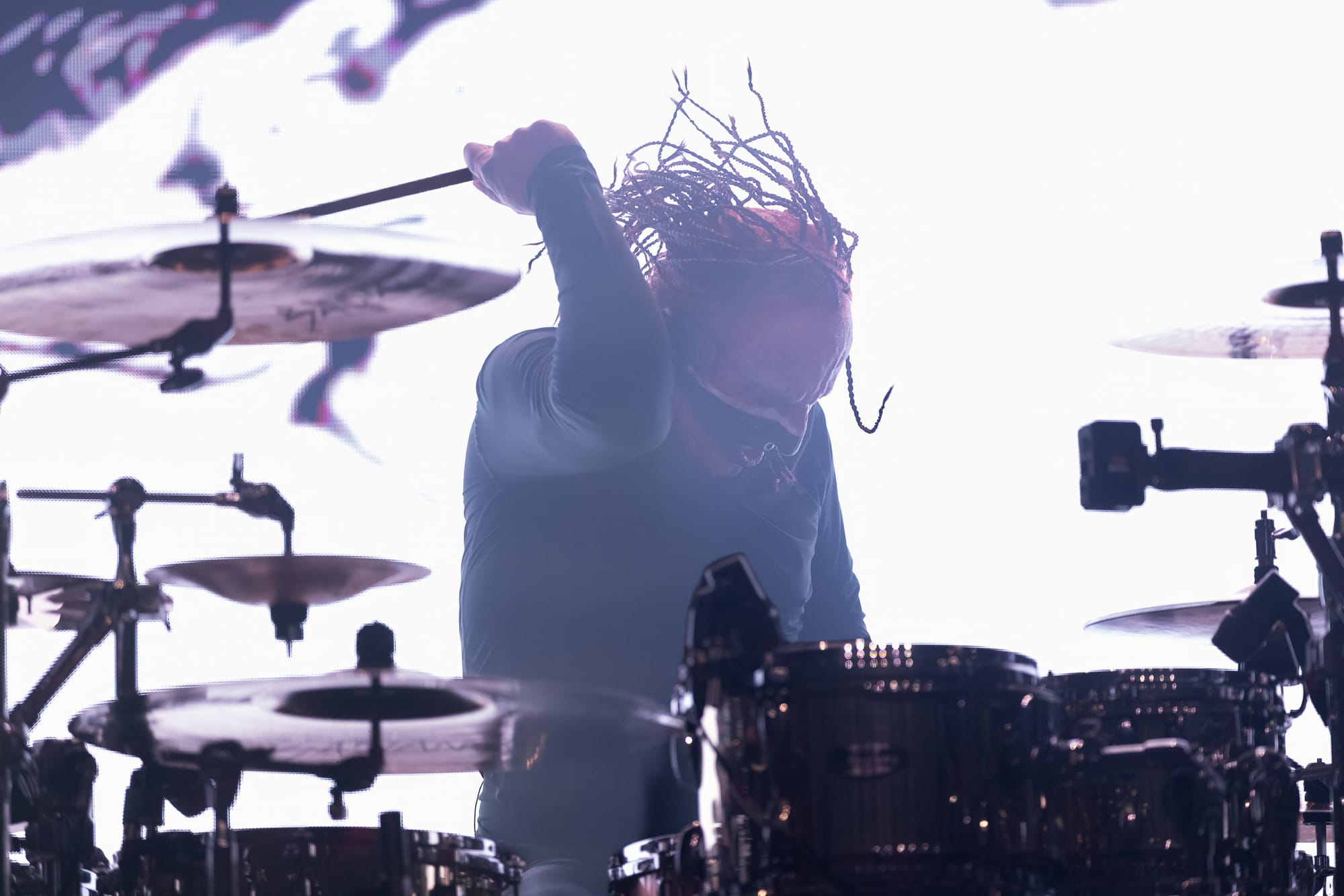
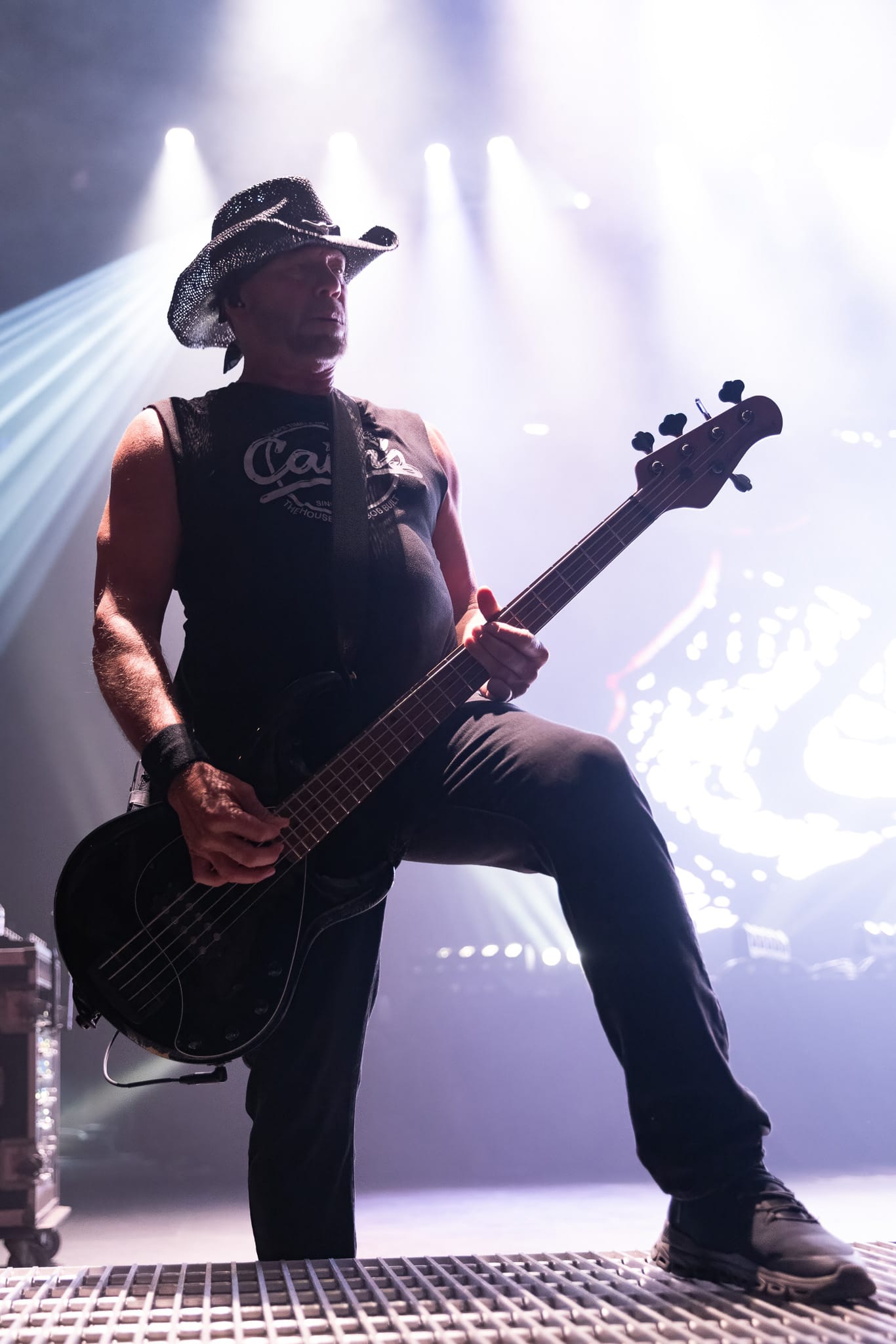
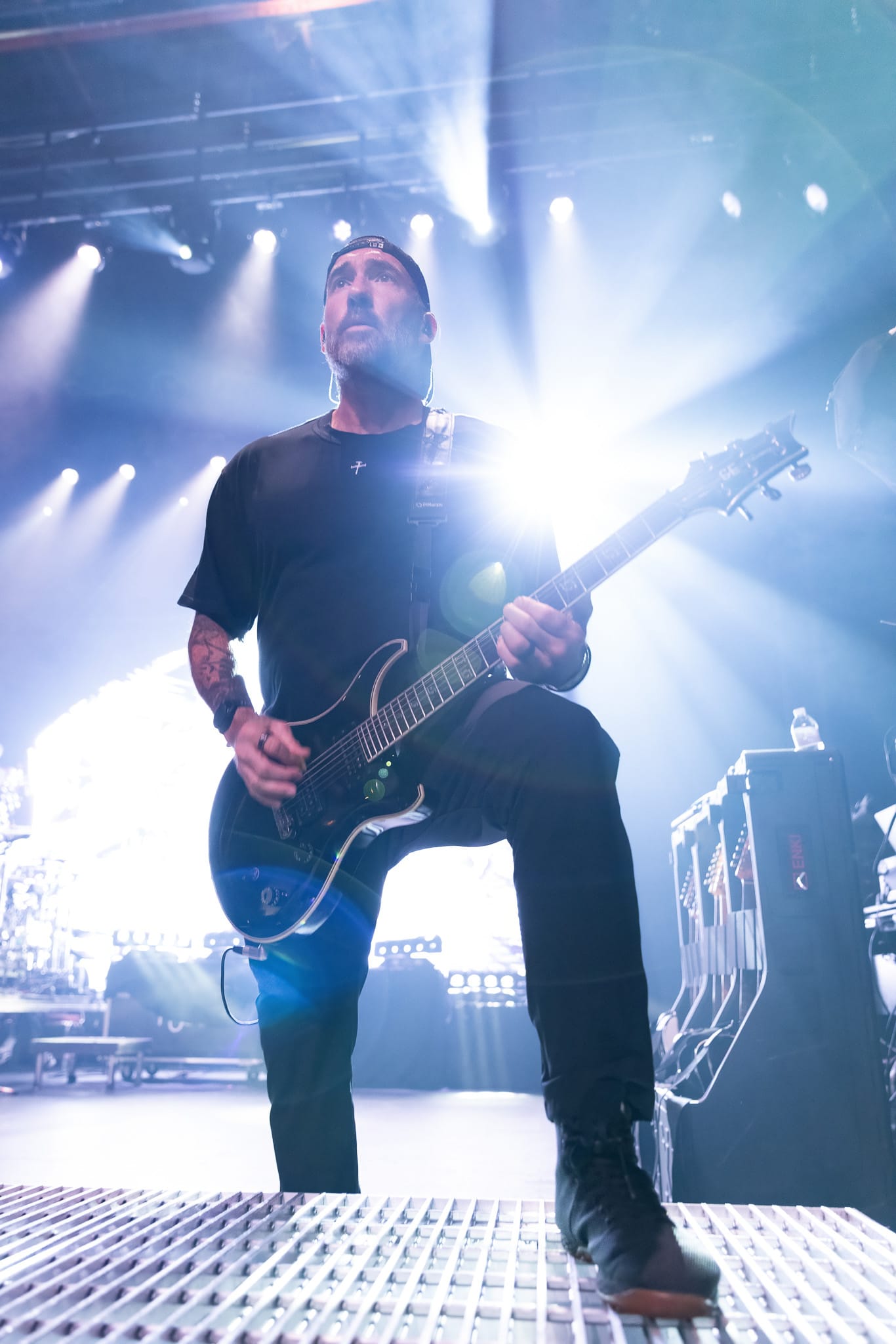
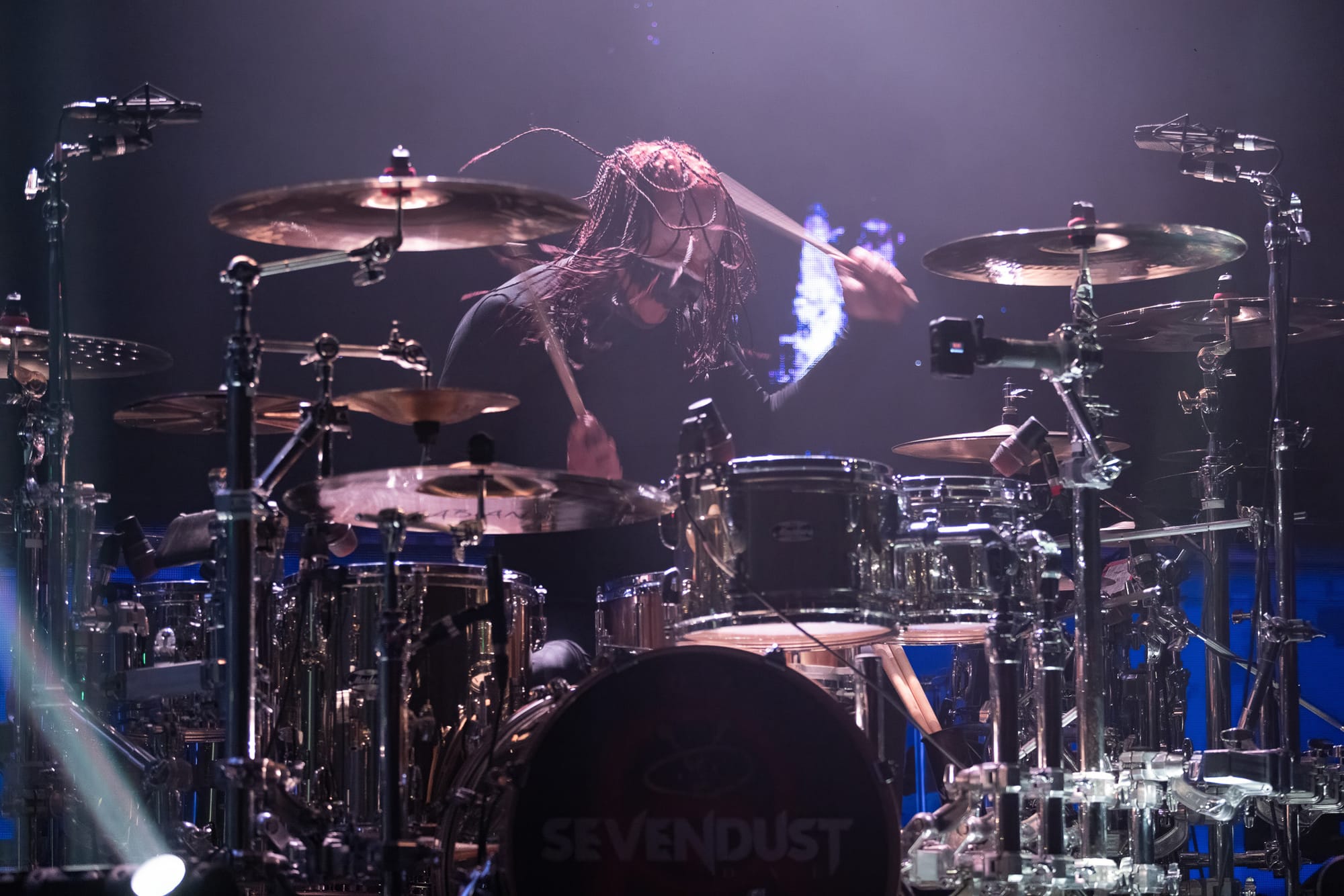
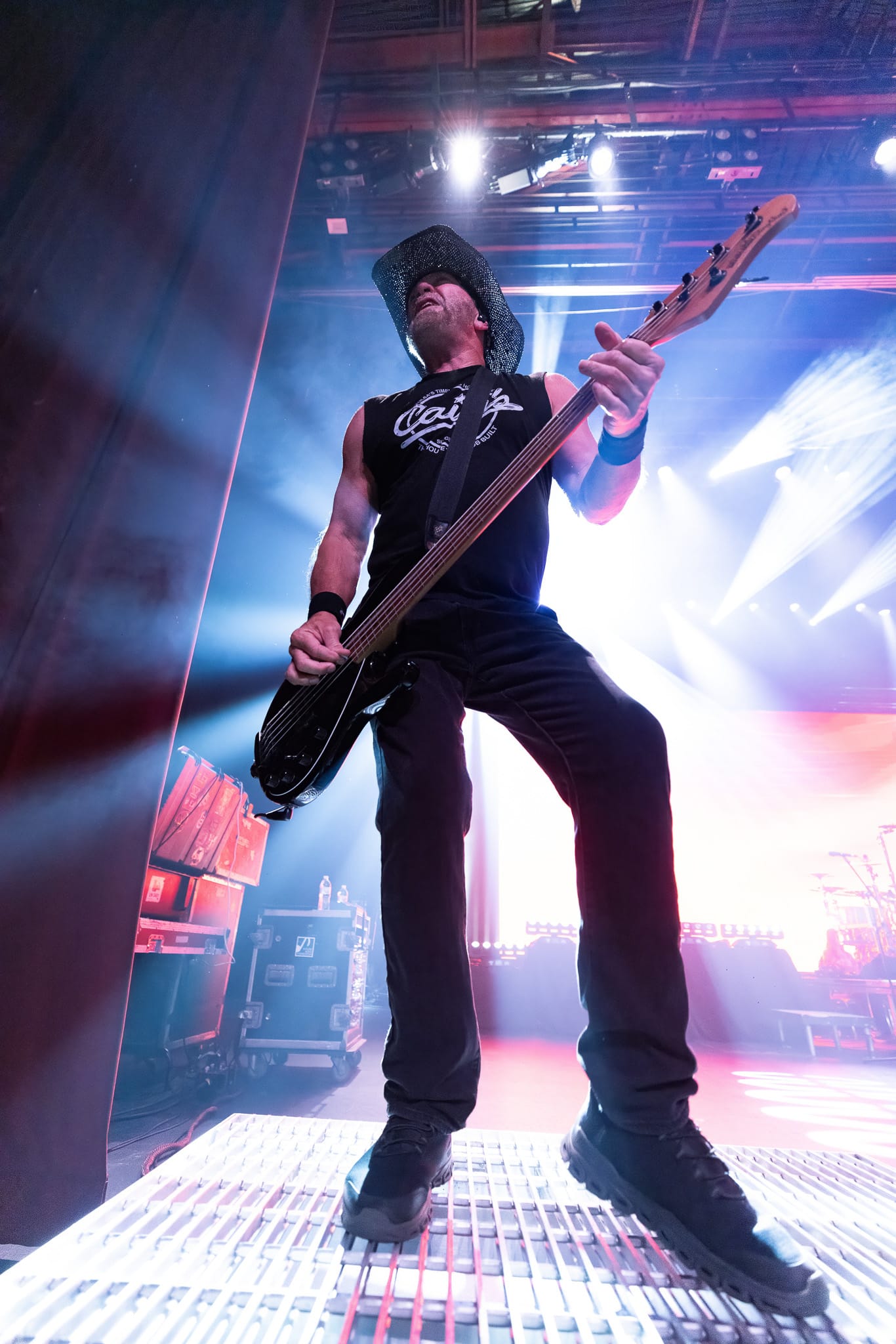
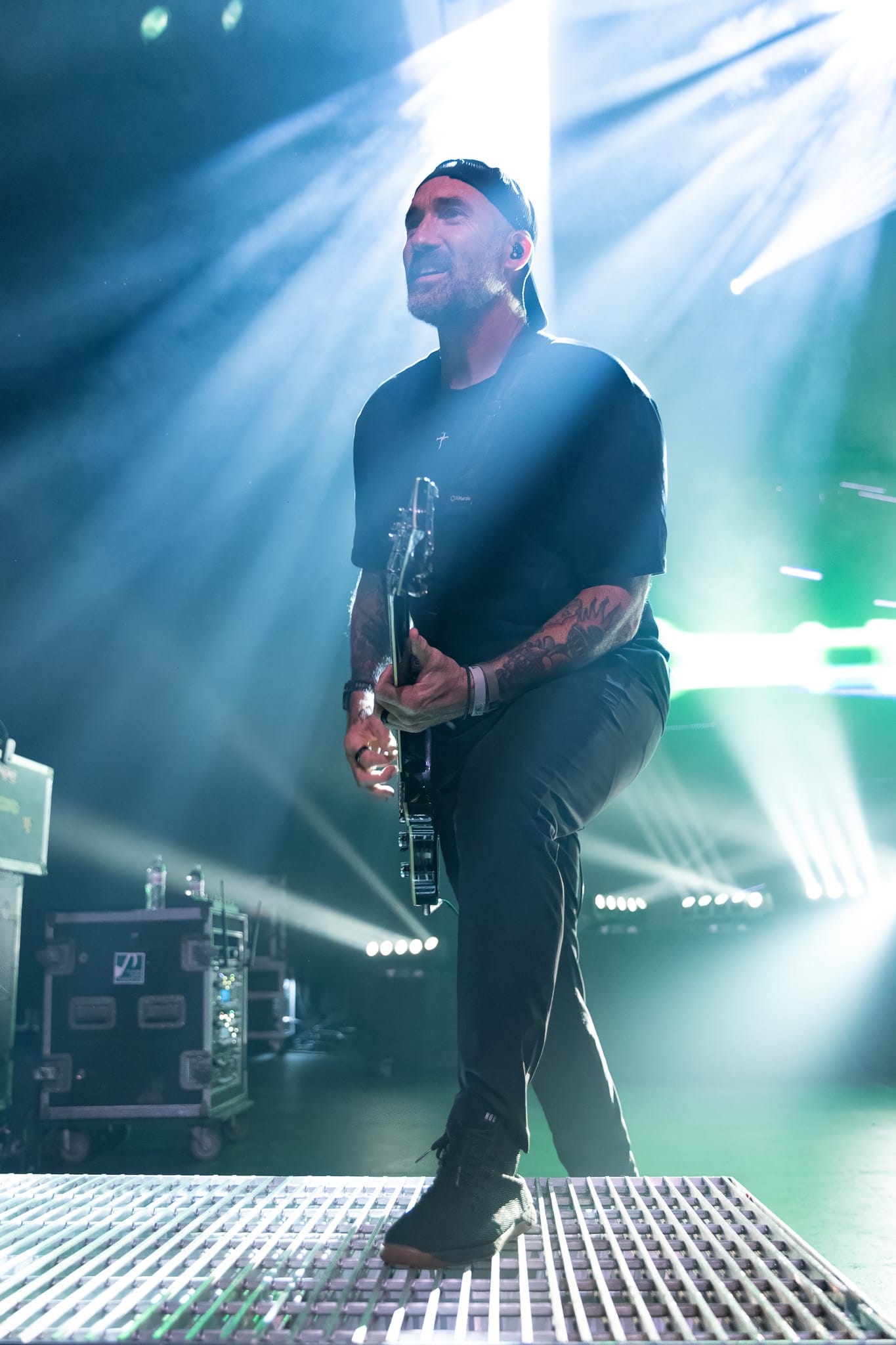
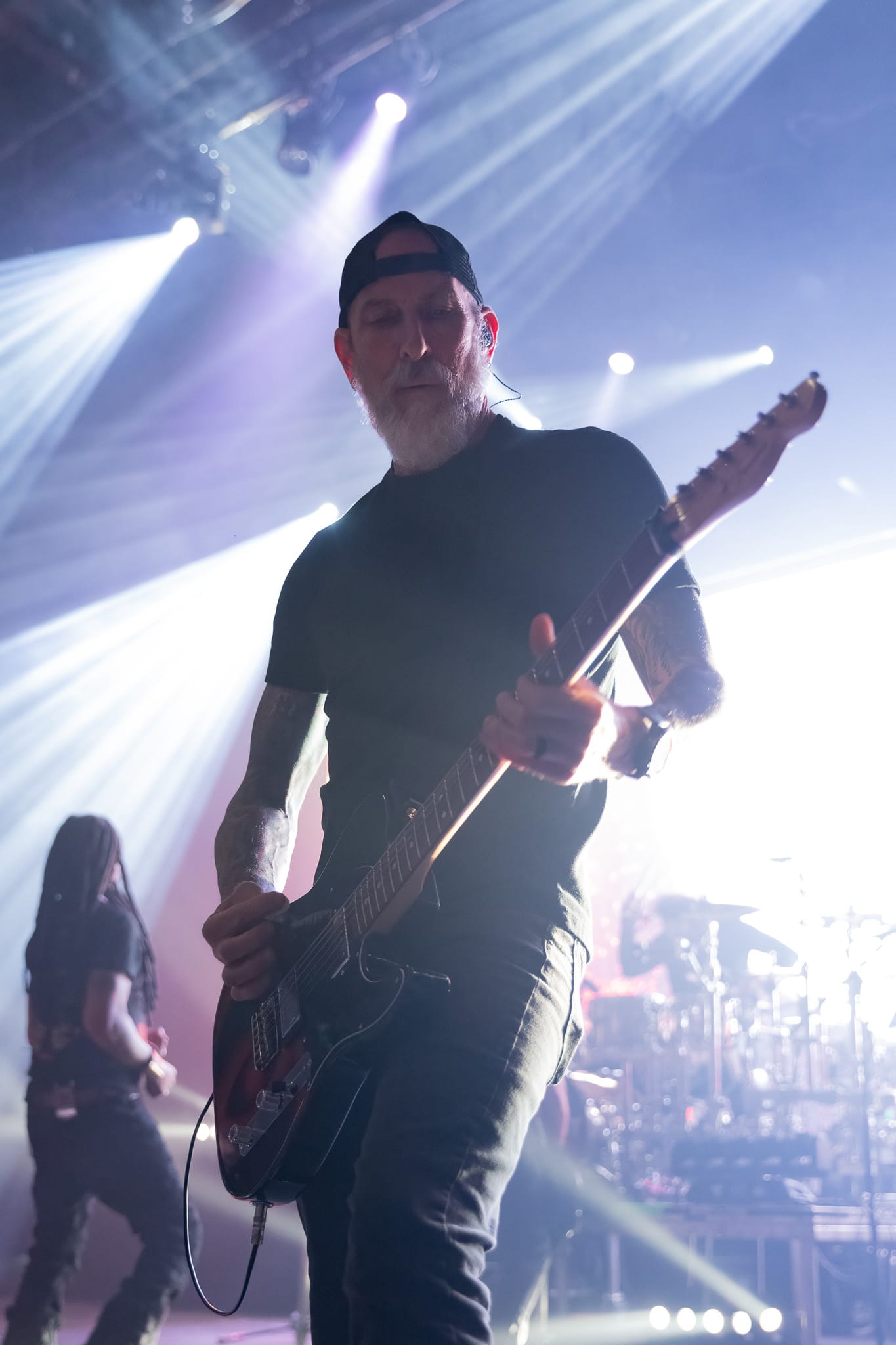
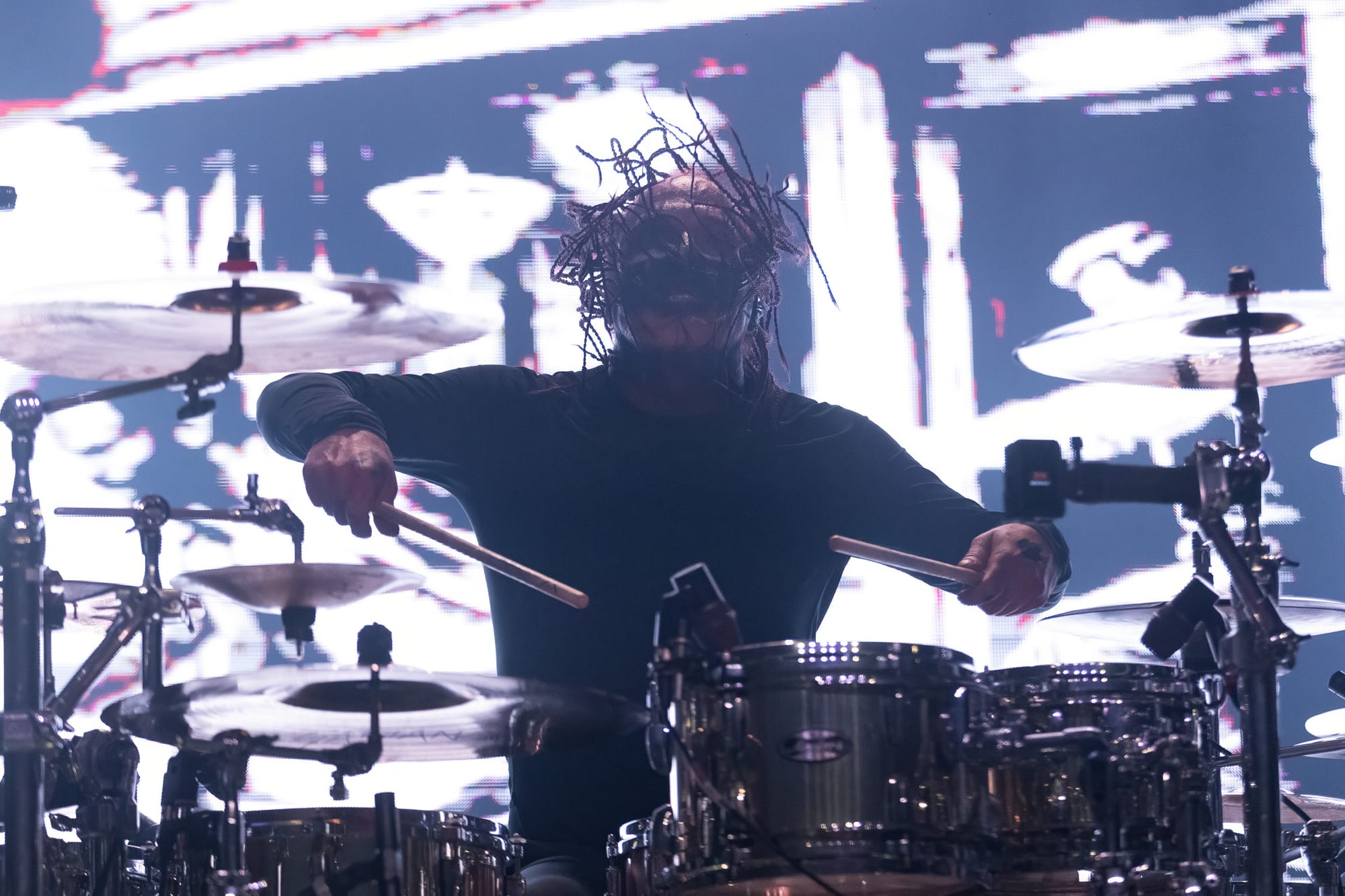
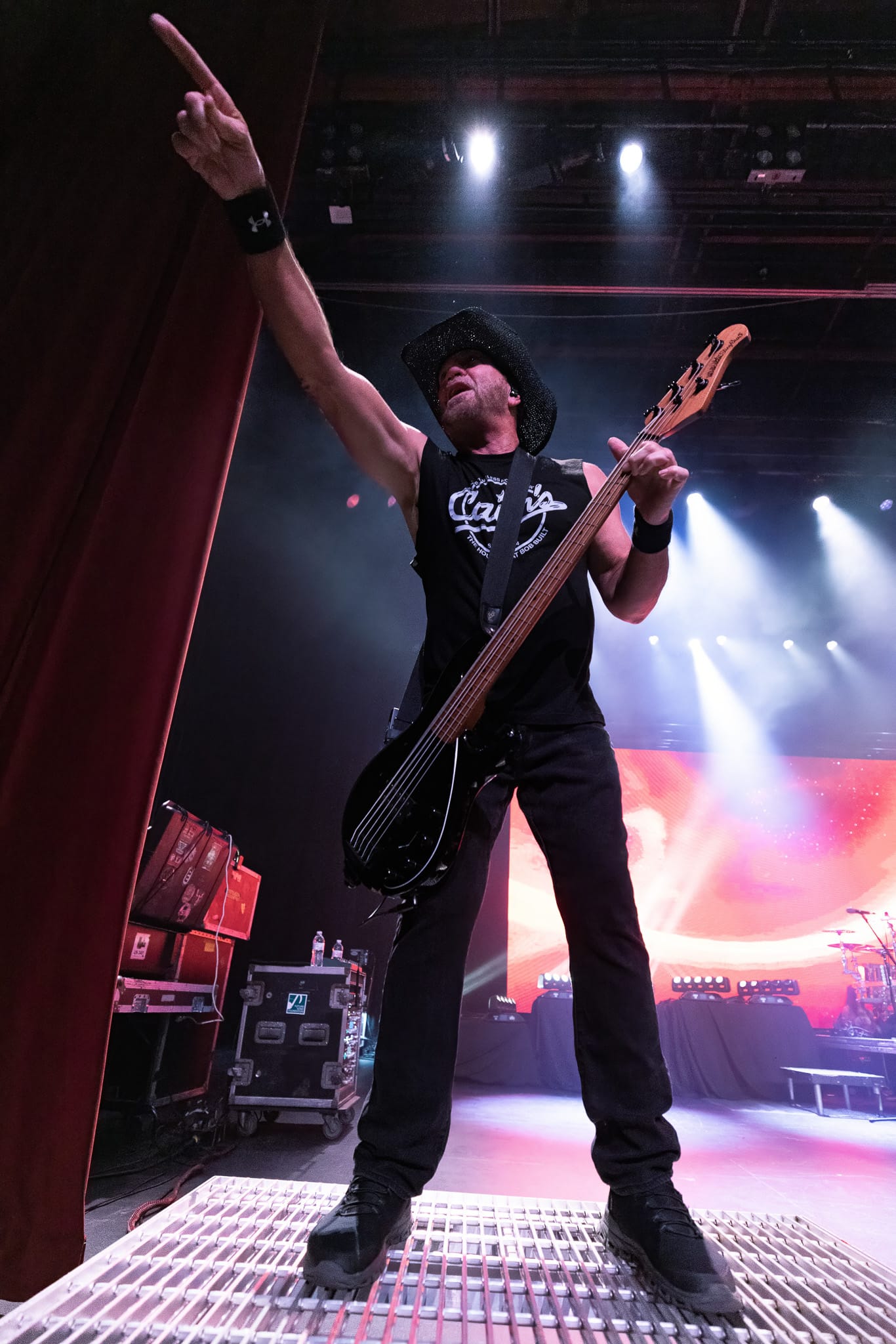
Lajon is as cool a frontman as there is, but I also have a fascination with drummers, and you’d be hard pressed to find one as interesting to watch as Morgan Rose. From his vocals and hand gestures while playing, to his unique technique and choices that seem perfect yet incomprehensible, he is a force of nature, and impossible to take your eyes off. His partner in crime in all things low-end and rhythmic is Vinnie Hornsby on bass, who spent much of the night cruising from stage left to stage right and pointing out to fans in the crowd. John Connolly and Clint Lowery provided the powerful and dizzying dual guitar attack that SEVENDUST is known for.
Some nights are perfect, and this was one of them. SEVENDUST is a great band, and seeing them live put it all into perspective – their setlist had all of the songs you know and love, and hearing them performed live truly made the music come alive.
SEVENDUST are:
Lajon Witherspoon – Vocals
Morgan Rose – Drums
Vinnie Hornsby – Bass
John Connolly – Guitar
Clint Lowery – Guitar
Setlist:
1) One
2) Denial
3) Is This the Real You
4) Crucified
5) Praise
6) Waffle
7) Enemy
8) Angel's Son
9) Black
10) Rumble Fish
11) Face to Face
Theory of a Deadman
Theory of a Deadman hung out in the dark on stage left waiting to go on as Neil Diamond’s “Sweet Caroline” played in its entirety, and the audience went crazy singing the all the words note for note. People were already excited with the buildup to the show, and this put them over the edge – all before the band even took the stage.
Canadian band Theory of a Deadman have been on the scene for over 25 years, and are one of the most fun rock acts on the road. They’ve had huge radio hits like “Bad Girlfriend”, “Lowlife”, and “Rx (Medicate)”, and those songs are favorites live, but their set is so much more. From vocalist Tyler Connolly throwing shirts out into the audience, to him pacing the stage taking Polaroids of fellow band members in action, before tossing the developed photos into the crowd, to crowd sing-alongs to cover songs (GNR’s “Paradise City”, Ozzy’s “Crazy Train”, Blur’s “Song 2”), this set had a little of everything – mostly a good time.
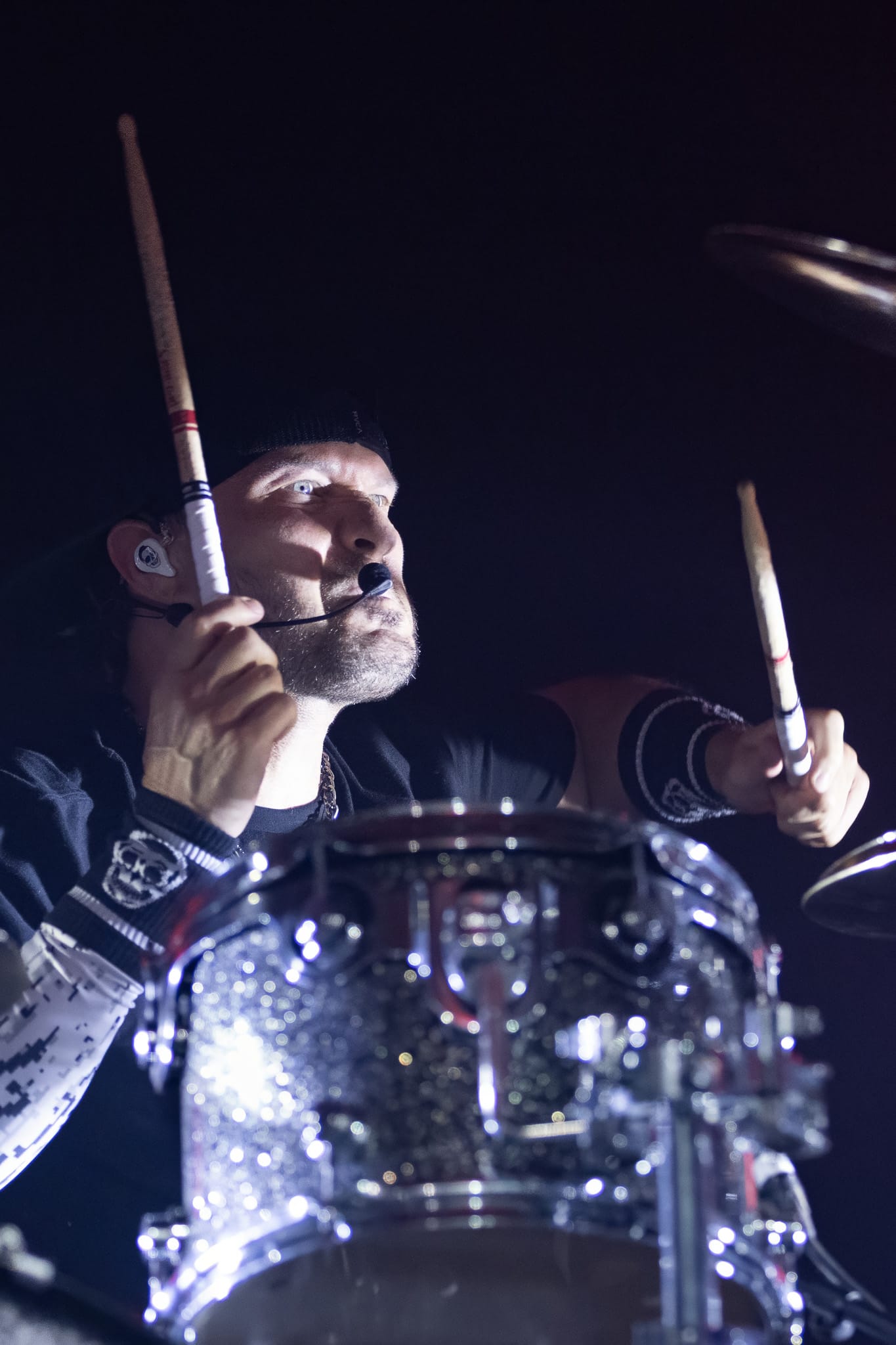
It was during the first of two cover song sing-along medleys that Tyler started banging out the notes to pop artist Vanessa Carlton’s “A Thousand Miles” on a keyboard. He stopped playing long enough to say, “Riverside’s very own Vanessa Carlton…let’s bring her out!”, only to (jokingly) realize that she not only wasn’t from Riverside, but also wasn’t going to make a surprise appearance. Joey Dandeneau masterfully manned the drum kit, and hit them with unbelievable force, while Dave Brenner provided the screaming guitars and Dean Back brought the low-end tones to life.
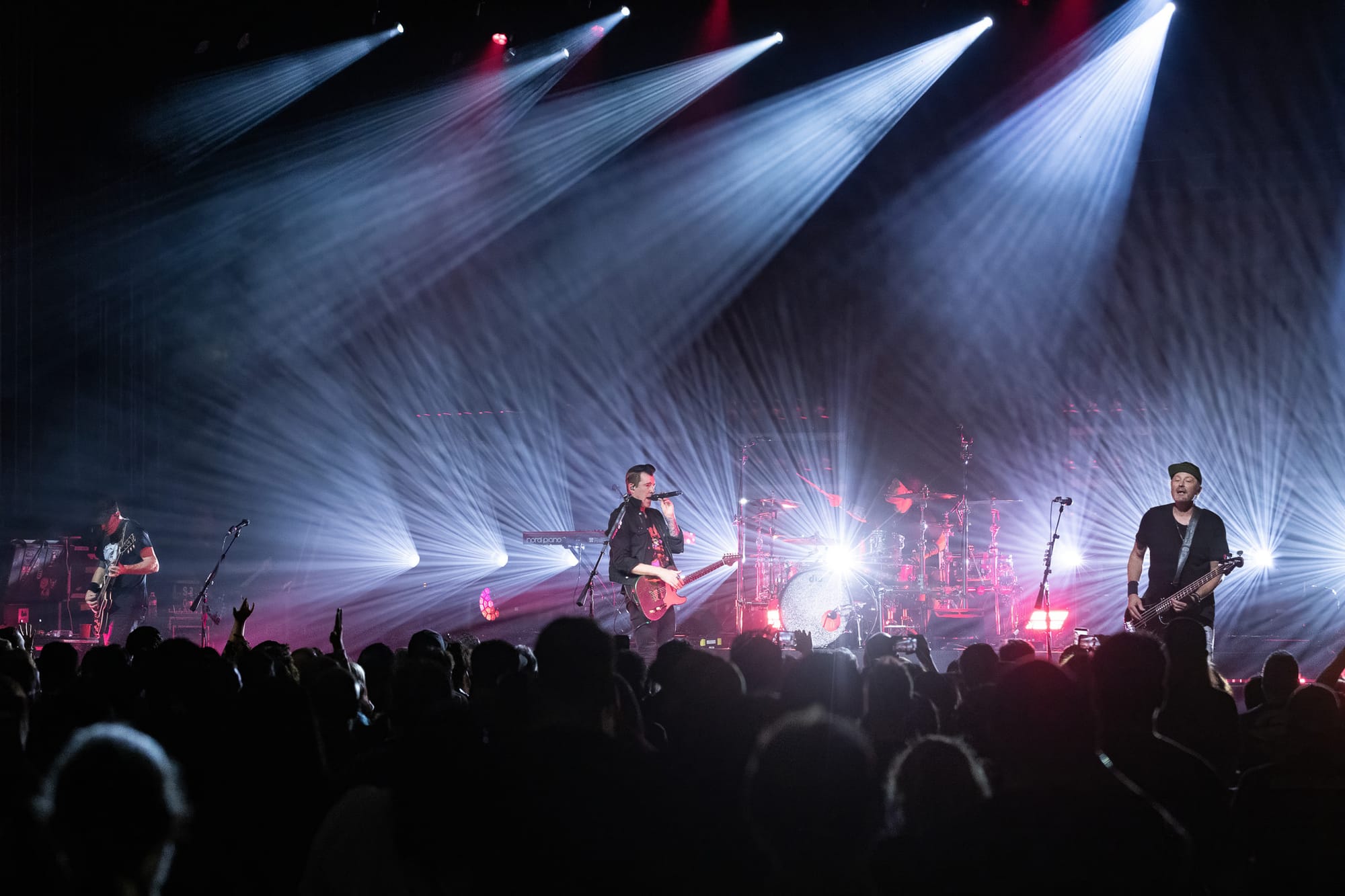
The great songs and hugely entertaining set were accompanied by amazing production value. The wall of light directly behind the drum kit was like a fifth member of the band, interacting with the performers and bathing them in pulsing illumination. Huge kudos to lighting director Kyle Dean for creating such a unique visual spectacle.
Song after song rang out and the audience sang along with every single one. This band’s music can’t be put in a box, with different songs touching various genres stylistically. While this approach might not work for all bands, its inclusivity actually brought more people to the party, and it is appealing even if you don’t know the songs or band – it’s timeless music that you can easily dance or tap your foot to, while others nearby might use the pulsing beat to push their neighbor in the pit to. Theory of a Deadman was great live, and their set made for a genuinely fun night out.
Theory of a Deadman is:
Tyler Connolly – Vocals/Guitar
Dave Brenner – Guitar
Dean Back – Bass
Joey Dandeneau – Drums
Setlist:
1) Barricade
2) Ambulance
3) Blow
4) Winnebago (Lay Low)
5) Bitch Came Back
6) Santa Monica
7) Not Meant to Be
8) Wicked Game
9) Don't Stop Believin' / A Thousand Miles / Jump / (snippets)
10) Lowlife
11) Hate My Life
12) Rx (Medicate)
13) Paradise City / Crazy Train / Song 2 / (snippets)
14) Bad Girlfriend
Brooks RobinsonPhotographer & Writer
Brooks Robinson is an LA-based concert photographer, and 30+ year freelance camera operator for film, television, and music videos. He has photographed some of the largest film/TV projects in history, and hundreds of music videos in MTV's heyday.
Thy Catafalque have recently put out an official music video for “Búcsú A Piros Madártól”, the first single an opening track off their forthcoming studio album XIII: Sárga Erdő. Read more…
The Swedish metal formation, Thrown, have shared details of what will be their second full-length instalment. Entitled Unwanted, it will be set free on November 6th, 2026 through Arising Empire. Read more…
OneRepublic is an American pop-rock band that began in Colorado Springs, Colorado, where Ryan Tedder and Zach Filkins first met as students before reconnecting and forming the group in 2002. The band eventually established itself in Los Angeles, with Tedder becoming its lead singer, principal songwriter, pianist, and one of the most successful pop songwriters of his generation. OneRepublic’s early years included a record deal that fell apart before the band built an online following and found another route into the music business. That persistence set up one of the biggest breakthroughs of the late 2000s. OneRepublic’s debut album, Dreaming
“Hèzykhäwl, Dravil Harpzghül Ab Castox Ularüs”, the second preview tune from Esoctrilihum‘s soon-to-be-released new full-length Annochiül Xar Sorthïlazur, has surfaced online. Read more…
While the are preparing for this November’s ‘The Metal Saint’ tour, US veteran groups Metal Church and Armored Saint have now announced another leg in March and April next year. Confirmed cities and dates are listed via flyer below. Read more…
Recently, Good Riddance released Before The World Caves In. While the album turned out great, the recording process took a toll on vocalist Russ Rankin. Bringing your art to a collective project can be daunting, even when everyone is on the same page. It’s still possible to still be vulnerable with people you’ve been working with for decades. The process for putting Good Riddance’s latest record together greatly affected Rankin, as you will read below.
From time to time Rankin has released solo material. The previous two solo releases, Farewell Catalona and Come Together Fall Apart, have mostly kept with the same themes of Good Riddance albums with a much more personal flair. While those records don’t go as hard, this doesn’t make them any less impactful. It’s just a different route to get the same sentiment Rankin has been preaching in all his years of punk rock. This week Russ Rankin releases an EP of solo material, A Season in Hell on Indecision Records. The record consists of six songs, three originals and three covers that give us an idea of where Rankin is at and what’s influencing him these days.
(edited for clarity)
Dying Scene (Forrest Gaddis): The record’s calledA Season in Hell. Is that anEddie and the Cruisersreference?
Russ Rankin: Good for you for picking up on that, but have you seen the sequel? The first one is a decent film; The sequel is pretty faulty, but worth watching just for that experience.
Dying Scene: What doesA Season in Hellmean in the context of where you were emotionally when you wrote this album?
Russ Rankin: I’ve just been having a really tough time with music. The most recent Good Riddance album is a solid release. So far, the reviews and feedback has been incredibly positive. The actual process of getting the album together, on my end, was not super fun. There was a point where I even wanted to stop playing music at all.
A Season in Hell makes it sound overly dramatic, like something crazy happened. It wasn’t nothing like that. It was a long process. The album came out almost a year after it was recorded. Then there’d been about a year before that when we first began writing for the new album. It was a really long period of work on it. For some reason, I was just thinking about the movie Eddie and the Cruisers.
In the movie, there are rumors that he recorded this lost album, but it never came out. Where did he record it? What happened? I was just thinking about that, and I thought it was a cool-sounding title. It coincided with how I was feeling at the time: really divorced from any kind of joy around creating music, which is something that, for me, is foreign. I’ve been doing it for a long, long time, and I generally enjoy the studio process, as difficult as that can be sometimes. For whatever reason, I just was not feeling it. I didn’t pick up a guitar for almost a year after that album was recorded. So, in a way, it was a little cathartic, I guess.
Dying Scene: Do you feel these songs were a response to recording that album?
Russ Rankin: These were songs that I had written and really thought were strong, but they were sort of in conflict with the overarching theme of the stuff Good Riddance was coming up with for the album. I kind of knew they wouldn’t have a place there. Yet I’d spent a lot of time crafting these songs, I believe in them, and I’d like to do something. I battled internally for a long time with recording them on my own, and part of me was like, “I don’t want to bother; what’s the point?”
Then it was my therapist that convinced me to do it. She thought that it might sort of have some measure of mending my relationship with music, and that ended up being true. The experience in the studio recording these songs myself was joyful and productive. I remembered all the reasons why I liked doing music again, so it was really cool.
Dying Scene: Do you feel there is a difference between your solo voice and the voice you use with Good Riddance?
Russ Rankin: Like, my delivery?
Dying Scene: Not delivery, like the songs you’re writing.
Russ Rankin: I don’t think so. There’s a universe that exists where those could have been Good Riddance songs, and it wouldn’t have ruffled anybody’s feathers. A Good Riddance fan wouldn’t have heard them and said, “Oh my god, what is this?” We put out a record called Operation Phoenix a long time ago, and it was very different from what had come before it. It ruffled plenty of feathers, but it also got us some new fans. It also established us as a more diverse band than a harder band. I think that it’s not a different voice; it’s still me. It’s still lyrically definitely some things that would be at home on a Good Riddance album.
Dying Scene:Did you play all the instruments on the record?
Russ Rankin: Except for drums, it’s Adam Gomez; he plays in the Dickies and D.I., and he’s played for the Adolescents when Mike couldn’t.
Dying Scene: Did any of the songs go through different versions before landing where they did?
Russ Rankin: They did, but it was a long time ago. By the time I was in the studio, there was almost no revision of the three originals. So Paul Miner, who was the engineer that did the recordings, would offer some subtle suggestions here or there, but very little. They were fleshed out. I knew exactly how they were going to go, and there wasn’t a lot of experimentation, if that’s your question. I got into the studio with these loose ideas, and then with Paul, we sort of molded them into songs. Actually, no, they were pretty well intact front to back, and it was a matter of just performance, recording, and getting the right feel.
Dying Scene: Had you worked with Paul before this?
Russ Rankin: Yes, I want to say he engineered, I cannot remember exactly, but I used to produce bands in the early 2000s, and I produced a band whose session Paul engineered, and he definitely recorded my first solo album, Farewell Catalonia, in 2012.
Dying Scene: Was the experience of working with Paul on the first album what made you want to work with him on this new one?
Russ Rankin: I wanted someplace that was relatively close, and I had a really good experience recording my first solo album with Paul. Neither one of us had done a solo acoustic album before, so neither of us knew what we were doing. He was so great at steering the ship and coming up with ideas, although that level of oversight and guidance wasn’t really necessary this time. With his demeanor in the studio and his engineering acumen, I felt really comfortable doing it with him. It was down in Orange, California; I could fly down there, get a hotel, and knock this out. We didn’t think it would take very long. He had worked with Adam before, and I think it was a combination of things. I felt like he was a good candidate to do it. I hit him up, and he was available and happy to do it.
Dying Scene: There are three original songs on here. Did you have more original songs you wanted to put on the record?
Russ Rankin: I wrote a massive amount of songs in the process of putting together the last Good Riddance album. I wrote a pretty good amount of songs that were rejected by one band member or the other during the demoing process that I felt were strong. There were extra arrows in the quiver. I thought, well, for my purposes and the free time that I have, this would probably be a pretty good amount of songs to do. These are three of the strongest songs I have written in a long time. I think there is a world where they are maybe a little too on the harder side for what Good Riddance was going for. Although I want to say that the most recent Good Riddance album does have a pretty dark and hard feel to it, and that was by design. These songs were just a little too much or would stick out as being just too different.
That said, I feel like they were really strong, which is why I held on to them and kept thinking, even if these aren’t going to be Good Riddance songs, I would kind of like to see them recorded and finished, just to have them, even if nobody was going to put it out or anything. If I just had them, I would feel some sense of closure, maybe. Look at them as finished products rather than just these demos I had sitting on my computer. I really felt they were strong. I still do.
Dying Scene:I agree. I enjoyed “Rising Tide.” It reminded me of a Dag Nasty song in some parts.
Russ Rankin: That’s a huge compliment. I’ve been on a big Dag Nasty kick lately. I feel like Dag Nasty might be the perfect band, as far as a band that lived in a melodic world and a hardcore world. I love Dag Nasty.
Dying Scene: I feel like every time I listen to a hardcore album, I can feel their fingerprints all over.
Russ Rankin: Their influence is infectious, and it’s everywhere. It’s not the first band that a lot of people would come up with as, like, “Oh, I can sort of hear some of so-and-so in this,” but I think it ought to be. They’re not like a secret. They’re not some band that no one’s ever heard of. They were a pretty popular band. Even now, their music stands up to today’s music, but they’re not the first band off the tip of people’s tongues.
Dying Scene: The other half of the record consisted of cover songs: an Avengers song (“Cheap Tragedies”), a power pop song (“Starry Eyes”), and “The World Turned Upside Down.” The last one feels like a Billy Bragg song.
Russ Rankin: Leo Roselson wrote the original, but I covered Billy Bragg’s version. He arranged it and popularized it. It’s much more stripped-down. I was covering a guy covering another song.
Dying Scene: It’s good, though. It’s very appropriate for the times that we’re in. How old is the original?
Russ Rankin: From the 70s.
Dying Scene: It’s a song that feels relevant fifty years later.
Russ Rankin: I totally agree with you. I’m a huge Billy Bragg fan, and a lot of his songs that give me all the feels for reasons like you said; it’s prescient, it’s valid now. It’s really a song about classism, about property rights. A lot of the things that ail Western culture today. I think it was relevant. The way that it’s delivered in the Billy Bragg version particularly is just so direct and emotional for me. That song has always sort of given me chills whenever I heard it. I thought that’s definitely one I would love to take a run at.
The Avengers: I heard “Cheap Tragedies” on a comp when I was probably like early high school, when I was first diving into punk rock. When I first was getting into it, I would buy compilations because it’s a cheap way to find out bands you like. I heard that song, and then when I found out they were from the Bay Area, I thought that was cool. Then I learned that they were one of the bands that opened for the Sex Pistols at the very last Sex Pistols show that I acknowledge.
Starry Eyes: I listened to a lot of First Wave on SiriusXM because it’s my jam. It’s my generation, like all those songs from the 80s, and what’s funny is so many bands on First Wave are bands that I couldn’t stand when they were relevant, like when I was in high school. I’m like, “This isn’t punk,” like Depeche Mode, The Cure, The Smiths. I just wrote it off. Now I listen to it, and I’m like, “This is fantastic.” I don’t know whether I’ve grown musically and opened my mind up enough, or whether it’s just nostalgic for me.
People seem to gravitate towards music from a time when they were teenagers, before they were weighed down by responsibility and adulthood. So I think it might be a combination of that, and then I heard this song “Starry Eyes”, and I was like, I had never heard of the band (The Records), and I thought, this song has so many hooks. This is fantastic songwriting, whoever this is. I looked them up, and they really never had any other hits. They weren’t around for a long time. That song kept coming on, as if it was telling me, “Hey, don’t forget about this song.” When I hear a song like that, a lot of times, just for fun, I’ll try to cover it on my computer at home. I’ll learn it in lyrics, I’ll learn it on guitar, then I’ll record a version of it, just for my own entertainment.
That’s a song that I think I actually petitioned the band to cover on this last album. There I was, just humming this song by the records over and over again by myself. It’s got tons of hooks. It’s a great, well-written song, but it just sounds too slow to me. The guitars are too twinkly for me; I want some oomph in it. I thought, “What would it sound like if Generation X played this song?” This sounds like it should be a Generation X song, and that was the road I went down when I decided to cover it. Bring up the tempo, make it a little bit punchier, and try to make a Generation X song.
Dying Scene: Were there other covers you considered?
Russ Rankin: I don’t think so; I can’t remember any right now. Those three were the main ones. I just couldn’t escape them. They were in my head. I listened to that Billy Bragg version of that Leo Russell song many, many times and just thought the story was brilliant. It was timeless. Politically, it spoke to me. Made it somehow even more urgent and angry-sounding. A million other people have covered Billy Bragg, and that’s fine. I thought it was interesting that it’s not his song, but I thought his arrangement of it and his delivery of it kind of made it his song. When I’ve done press, it’s always been important for me to acknowledge that this is a Leo Russell song. He is the guy that wrote it.
Those three songs I just couldn’t escape. There’s other Avengers songs that I love, “The American in Me”; there’s a bunch, but I love “Cheap Tragedies” because it was so melodic for the time. I write a lot of songs and listen to songs from not a critical place. I put my songwriter hat to unpack it. “Here they’ve got a half bridge here, they’ve got a chorus here, then they do this, then they do that.” I’m always breaking songs down that way. It’s a really well-written song, especially for kids in the late 1970s. I thought the Avengers were ahead of their time, seminal band, and fantastic that they’re from the Bay Area.
Dying Scene: DoesThe Season in Hellfeel like a standalone moment, or the start of something new?
Russ Rankin: I think it’s more of the start of the end of something. It’s me putting to bed the what-ifs, and actually having something tangible. Fortunately, Paul and my relationship is good; his rates were reasonable, and it got done quickly. Even if every label had said, like, this is garbage. If it never was going to get released, I wasn’t bothered with that. I just wanted to record it. I just wanted to have it. I wanted to see if I could have a pause to bring my mindset back to looking at music positively. As I said, I hadn’t picked up a guitar in over a year, and I was thinking about never wanting to play music again; that’s never happened. I think it was cathartic, and it was a way to get me back in love with music again.