With updated artwork.
The post King Diamond’s “Halloween” Picture Disc Set For October Reissue appeared first on Theprp.com.
With updated artwork.
The post King Diamond’s “Halloween” Picture Disc Set For October Reissue appeared first on Theprp.com.
Roughly 40 years to the day that Sweden’s hard rock powerhouse Europe took the world by storm with their breakout 3rd studio album The Final Countdown, said quintet is still most often associated with the arena-oriented excess of the mid-1980s. Granted, it’s rare for a northern European upstart to crack the Billboard Top 10 in the United States, but there is definitely something to be said for the fact that this band has been doing far more than living in the past since reuniting in 2003.
Far from being a band content to stand still and continually employ the same stylistic template, the musicians that brought blaring synthesizers and space travel to the days of big hair and bigger melodies have seamlessly adapted to the era of modern rock and progressed onward to new horizons. Now 12 albums deep into their career, Europe presents arguably the most potent blend of old and new via 2026’s Come This Madness, their first LP in nearly a decade.
Relative to the dark and heavy pivot that was 2004’s Start From The Dark and the assorted elements of progressive, alternative, and blues-driven 70s rock that followed, Europe has arguably found itself closer than ever to its mid-80s AOR glory days. Much of this owes to an expanded role played by keyboardist Mic Michaeli, who has brought back some of the spacey synthesizer elements into the equation to complement the Hammond organ and symphonic elements that have been more his staple over the past several albums.
Combined with a still heavy and bluesy riff assault out of John Norum and a punchy, gritty, and loose-flowing display out of bassist John Leven and drummer Ian Haugland, a strong synchronicity emerges that effectively balances a wide array of bygone and recent influences. Joey Tempest’s soaring tenor, though possessed of a slightly deeper tone relative to the days of “Rock The Night” and “Superstitious”, has lost none of its signature thunder and boldly leads the sonic onslaught to its various destinations.
Things begin on a highly cinematic note, featuring a pristine symphonic prelude to set the stage. In short order, a busy bass intro ushers in a hard-edge rocking groove with a brilliant blend of dank bluesy swagger and smooth 80s atmosphere that is “One On One”, effectively nailing a boisterous vibe normally associated with the classic 70s era of Boston and Journey with a modern twist.

Nipping right on its heels is a similarly styled but more up-tempo banger in “The Cult Of Ignorance” that matches fancy synthesizer work almost akin to something Stratovarius might dream up with an AC/DC meets Led Zeppelin-inspired guitar display out of John Norum. Rounding out the trifecta of early album brilliance is the more Deep Purple-tinged title entry “Come This Madness”, which still comes chock full of enough spacey keyboards and blustering chorus hooks to blur the lines between the mid-80s and the mid-2020s. Taken alongside enthralling numbers later on the album like “Takin’ It Back” and the closing hurrah “Nothing Can Follow This” that tread the same middle ground between recapturing The Final Countdown and pressing forward, this is where Come This Madness really shines.
Nevertheless, the moments where Europe opts to place greater emphasis on their eclectic post-2003 accomplishments, the results are no less triumphant. The charming power ballad “This Time Of Year” sees Michaeli painting a melancholic atmosphere with a straight piano and strings blend, giving Joey Tempest the needed room to let his vocal performance shine with a more minimal presentation from the rest of the arrangement.
Heavier modern rocking entries like “In A Different World” and the alternative-oriented groove machine “The Angels Must Have Flown” are where Norum’s six-string chops really shine, the former seeing him brilliantly channeling the stylings of Ritchie Blackmore, while the latter matches a similarly bluesy lead display with the darkest riff work present on the entire album.
The charming minute-and-a-half piano ballad “In The Absence Of Grace” finds Tempest serving up extra bright vocals despite/because of the more exposed context, but insofar as the entire band shining as a cohesive unit, the mini-epic rocker with a lofty atmospheric backdrop and some progressive trappings “Scandinavian Eyes” takes the cake and immediately demands seconds.
For longtime fans of this Swedish rock original, the fact that their post-reunion output has now exceeded their original 80s run must be nothing short of surreal, but it definitely reveals a quintet of musicians that are more dedicated to the craft than they are interested in simply chasing trends or becoming a glorified tribute act that only plays the oldies.
Come This Madness is an album that underscores such a commitment, regularly crossing boundaries that would have been unheard of during the early days of MTV, all the while coming away with a collection of standalone anthems that work on every level. It never feels wholly like a feat of nostalgia, yet one can’t help but hear some mighty echoes of what rock was before the rise of grunge all over it.
If nothing else, key entries on here will blend in more easily with Europe’s pre-1992 material in a live setting, and hopefully it’ll be less than 9 years before the world gets to see where Europe goes next.
Release Date: September 25th, 2026
Record Label: Silver Lining Music
Genre: Hard Rock
Order the album here.
The post EUROPE – Come This Madness (Album Review) appeared first on Sonic Perspectives.
Taken from his impending live outing “Un-Alive from Pol’and’Rock 2025″/
The post Wednesday 13 Releases “I Walked With A Zombie” Live Video appeared first on Theprp.com.

Wendy’s has released a six-track emo EP called ‘Songs to Listen to in a Wendy’s Parking Lot’, and it features actual vocalists from actual bands — Shane Told of Silverstein, Beau Bokan of Blessthefall, Matty Mullins of Memphis May Fire, Derek DiScanio of State Champs, Chloe Kinnon of Winona Fighter and Kat Leon.
It was produced by Matt Squire, who has made records with Panic! At The Disco, All Time Low and Sum 41, and The PRP reports it came out through Rise Records. It landed on streaming on Wednesday and was picked up across the scene press within hours. The songs are called things like ‘My Frosty’s Funeral’. They are also, annoyingly, fine.
 STREAM THE METAL BREAKDOWN DAILY NOW:
Scott Penfold breaks down the latest hard rock and metal news on today’s Metal Breakdown Daily. Download the free Loaded Radio App on Apple iOS and Google Play and stream the show now.
Six tracks. Six different vocalists. One per song.
Here’s the full thing:
‘I Miss the Sunroom’ is the one that got me. Anybody who spent time in an older Wendy’s remembers the glass sunroom section, and using that as an emo song title is a better joke than a fast food brand has any right to land.
It’s streaming everywhere now, with music videos going up on Wendy’s own YouTube channel.
 LIVE & LOUD: Stream the World’s Hardest Radio Station 24/7
I’ve watched brands try to buy their way into this scene for a very long time. It almost always goes the same way: somebody’s marketing department writes a pastiche, hires a session singer who has never been in a van, and puts out something that makes everyone involved look worse.
This isn’t that, and the reason is in the credits.
Matt Squire is not a jingle guy. He produced records that people in this scene actually grew up on, and he treated the brief like a record rather than an ad. His explanation was straightforward enough.
‘Emo has always been about the small moments that feel huge,’ he said. ‘The older fans never stopped feeling it.’
And then the line that explains the whole project: ‘Enjoying a Wendy’s Frosty in a parking lot might sound like a small moment, but everybody’s had a night where that was the only thing that went right.’
That’s not marketing copy. That’s just true, and anybody who was 17 with a driving licence and nowhere to be knows it.
The casting is the other reason this works.
Shane Told has fronted Silverstein since 2000 and the band is still headlining — we covered them out with Beartooth and The Devil Wears Prada. Beau Bokan has been Blessthefall’s singer since 2009. Matty Mullins fronts Memphis May Fire and has also been singing for Anberlin. Derek DiScanio has been in State Champs the whole way through pop punk’s second wind.
Chloe Kinnon of Winona Fighter is the most interesting name on it, because she’s the newest and this puts her voice in front of an audience the size of a fast food chain’s marketing budget. Kat Leon, of Holy Wars according to The PRP, closes the record.
These are people with discographies. Nobody phoned this in.
Here’s the bit nobody else is going to write today.
Six working musicians in a genre where almost nobody makes a living just got paid properly to sing on a record. Not tour money, not streaming money — brand money, which is the only money left in this business that arrives in one piece. And they got a multi-platinum producer and a real label to do it with.
You can be cynical about a burger chain making an emo EP. I understand the instinct and I had it for about ninety seconds. But the version of this scene where a band’s singer takes a corporate cheque and gets a properly produced song out of it is a better version than the one where he drives eleven hours for a guarantee that doesn’t cover fuel.
It also tells you something about where heavy music sits in 2026. Wendy’s didn’t make a country EP or a house EP. They looked at what their customers grew up on and it turned out to be the same scene that’s been quietly getting bigger for years. When a brand this size decides emo is the shortcut to a 30-year-old’s wallet, that’s a measurement, not a joke.
This isn’t the chain’s first run at music and internet culture. Wendy’s built a reputation on its social account going after other brands, and its National Roast Day events have pulled in bands from across metal and alternative before now.
The difference this time is that they didn’t make a joke about the scene. They made something in it. We’ve been covering that scene’s mainstream moment all year, and it’s been a strange one — Danzig throwing Emmure’s singer out of a festival one week, Beartooth’s Caleb Shomo blowing up his own process the next, and now this.
Go and listen to it before you decide. That’s all I’d say. And then go and find the new songs that came out this week from bands doing it without a burger chain as well.
Yes. ‘Songs to Listen to in a Wendy’s Parking Lot’ is a real six-track EP released by Wendy’s on 23 September 2026. It’s available on all major streaming platforms, with accompanying music videos on Wendy’s YouTube channel.
Six vocalists, one per track: Matty Mullins of Memphis May Fire, Chloe Kinnon of Winona Fighter, Shane Told of Silverstein, Beau Bokan of Blessthefall, Derek DiScanio of State Champs, and Kat Leon.
Matt Squire, a multi-platinum producer whose credits include Panic! At The Disco, All Time Low and Sum 41.
‘She Said She Didn’t Want Fries’, ‘Salt in the Wound’, ‘I Miss the Sunroom’, ‘The Best Combo Meal on the Worst Night of My Life’, ‘It’s Not a Phase, It’s a 10PC’ and ‘My Frosty’s Funeral’.
It’s streaming on Spotify and all other major platforms, and the music videos are on Wendy’s YouTube channel.
I genuinely did not expect to spend today telling you a Wendy’s record is worth a listen. Have you played it yet, and is it better or worse than you expected? Tell me in the comments. Follow Loaded Radio for daily rock and metal news.
The post Wendy’s Just Dropped a Legit Emo EP With Blessthefall and Memphis May Fire Members appeared first on Loaded Radio.
Under the moniker Yangze, his nickname since birth, Jakob Littauer is the latest avant-pop upstart to emerge out of Copenhagen. In November, he’ll release his debut album Heartbreak Stew on the esteemed Escho label. It includes the previously released “Stew” and “Heart-Shaped Eyes,” and it opens with today’s new stunner “Okay.”
The post Yangze Announces Debut Album <em>Heartbreak Stew</em>: Hear “Okay” appeared first on Stereogum.
Bobby Gillespie, frontman and founder of Primal Scream, is perched in his publicist’s office in North London, wondering just where it all went right. He’s here to talk about Screamadelica, the genre-bucking phenomenon that spun 1991 on its head.
A glorious starburst of acid house, psychedelia, dub, funk and old-school rock’n’roll, it was the album that scooped the inaugural Mercury Music Prize, helped forge the reputation of Alan McGee’s Creation Records, and a record that united the hitherto largely disparate factions of indie rock and dance music. More importantly for Primal Scream, it also saved the band.
“I honestly never thought it would be a commercial record,” Gillespie says. “I thought it was going to be just a really cool underground album, like Tago Mago by Can. But then it started getting amazing reviews and just kept selling and selling. I believe it’s sold a couple of million now.”
The success of Screamadelica – led off by two UK Top 30 hits in Loaded and Come Together – was as swift as it was unexpected. Emerging from Glasgow’s early-80s indie scene, Primal Scream had been formed by Gillespie and schoolmate Jim Beattie, fired by punk and the licentious rock’n’ruin of the Stooges and MC5. In fact Gillespie was the drummer for The Jesus And Mary Chain by the time of the Primals’ first official gig, in 1984.
There were a couple of unsteady PS singles, followed by the inclusion of Velocity Girl on the NME’s fabled C86 cassette, a compilation that celebrated the new jingle-jangle dawn of British indie bands. Primal Scream’s debut album, Sonic Flower Groove, in 1987, was an awkward conflation of Love, the Velvet Underground and the Byrds, recorded for McGee’s micro-label Elevation. It peaked at 62 on the UK chart.
1989’s self-titled follow-up, by contrast, was a full-on rock album in thrall to the Stones and the Stooges, Ramones and the MC5, Gillespie’s cutesy vocals battling it out with a classic Les-Paul-through-Marshall-stack wall of guitars. Despite classics like Ivy, Ivy, Ivy, She Power and Lone Star Girl, it wrong-footed some fans and the music press pounced on them for being ‘sad old rockers’, with Melody Maker dubbing them “Primal Tap”. McGee later admitted that “Primal Scream, media-wise, were a fucking joke”.
Gillespie remembers it all too well, but says he never lost faith in the band’s own abilities: “We never sold a lot of records, but we toured that album all over Europe. But we really believed we were a great band and had something that nobody else had. We always believed we were fucking great.
“I know it sounds really arrogant, but when it did happen for us with Screamadelica we weren’t surprised. We’d been out there for years and knew how to play live. And we were fucking ready for anything. It wasn’t like we were some band who came out of nowhere, had success then didn’t know what to do with it. Plus we were still angry too. We were total punk rockers.”
Despite the media’s almost unstinting disapproval, that second Primal Scream album did at least snag the imagination of one punter. The band’s press officer, Jeff Barrett, had given a copy to his good friend Andrew Weatherall, a club DJ and publisher of a fanzine called Boy’s Own. Weatherall was much taken with the album’s ballads, particularly I’m Losing More Than I’ll Ever Have. Urged on by Barrett, Weatherall remixed the song, dug out a drum loop from an Italian bootleg version of an Edie Brickell tune and added an intro from the old Peter Fonda biker flick The Wild Angels: ‘Just what is it that you want to do?/We wanna be free/ We wanna be free to do what we wanna do/And we wanna get loaded’. The band themselves were intrigued and, thus, Loaded was born.
The acid-house boom and the Primals’ own highly eclectic listening habits seemed made for one another. “I have this big thing about the fact you should be able to dance to rock’n’roll,” explains Gillespie. “What I liked about the whole acid thing was that you were dancing. Maybe you were dancing because you were on MDMA, but nevertheless there were a lot of electronic funk rhythms going on. Marry that to the fact we were into the Beach Boys, the Stones and free jazz, as well as lots of American blues.
“In Loaded there’s a bit where I go: ‘I’m gonna get down/I’m gonna get deep down’. There was a long outro section on the original song Andy Weatherall mixed it from, and I had this book of Robert Johnson lyrics, so decided to read some of it: ‘I’m gonna get deep down/Keep on tanglin’ with your wires/When I mash down on your little starter’ [1936’s Terraplane Blues]. So a bit of that ended up on Loaded. Nobody really knows that, but I just had all this stuff – Howlin’ Wolf, John Lee Hooker, gospel music… And we’d grown up with pop radio in the seventies, so you had stuff like Deep Purple and Led Zeppelin, but you’d also have the Stylistics, the O’Jays and all that great black American soul that came out of Philadelphia.”
Loaded was released as a single in March 1990, and reached made No.16 in the chart. It was Primal Scream’s first UK Top 40 hit, and one that had the curious effect of crowning this most rock’n’roll of bands as the new darlings of the rave scene. The success of Loaded led to Alan McGee putting the band on a weekly wage of £50.
We always believed we were fucking great. I know it sounds really arrogant, but when it did happen for us with Screamadelica we weren’t surprised.
Bobby Gillespie
“We were on the Enterprise Allowance Scheme just before that,” Gillespie recalls. “We were absolutely skint. He gave us an advance of a few thousand pounds, so we built a studio in Hackney, on Tudor Road. We rented an office and turned it into a writing studio. We wrote a lot of Screamadelica in there. We wrote a lot of the songs on keyboards, though I shouldn’t really be saying that in Classic Rock. I mean, we are a guitar band live, a high-energy rock’n’roll band.”
They were certainly living the life. Screamadelica was a filthy party animal of a record. It was a place where the tribal edicts of rock’n’roll were played out amid the glowstick rallies of rave. The album’s unbowed hedonism was typified by songs like Higher Than The Sun, Gillespie intoning to some imaginary Golden God: ‘I live just for today/Don’t care about tomorrow.’
“That’s exactly how I felt,” Gillespie says today. “I didn’t care if I died. I know that sounds dramatic, but it’s all there in the lyrics. We were out there taking ecstasy and speed. Speed was our main drug of choice, then people got more money and got into cocaine, then they got into heroin and it kind of fucked everything up. But I can’t really include heroin here, because while we were making the record it’d be speed and ecstasy. We’d never record on it though; you can’t play rock’n’roll on ecstasy.
“Acid house was similar to the LSD explosion of the sixties. The music was different, but I think it released a similar amount of energy and creativity in people who maybe hadn’t realised they had that inside them before. The energy in the clubs was intense. It reminded me of early rock’n’roll and punk. And that energy was extremely seductive. So we were up for days, living what it says in the songs. Being up for days meant we were exposed to a lot of great scenes and wild, strange, dangerous people. And fucking weird scenes with weird women. But we were a serious band when it came to recording and gigs. We may have partied at the weekends, but every week we were in the studio writing. At that point in your life you’re really out to prove to the world what you can do.
“We had a fucking great time, and that found its way into the music and the songs. I think it’s a very euphoric record. To me it’s ecstatic rock’n’roll. It’s what rock’n’roll should be: joyous and celebratory.”
Amid the mixes by Weatherall, Hypnotone and The Orb – who took Higher Than The Sun into the freakoid realm of cosmic dub – Screamadelica was notable for a more obvious Primal Scream influence. Jimmy Miller was the producer behind The Rolling Stones’ killer streak of albums from 1968’s Beggars Banquet through to Goats Head Soup in ’73.
When engineer Colin Leggett quit three days into the sessions for Movin’ On Up, Gillespie knew just who to call to finish what was already an ultra-Stonesy track: “The one guy in the world I wanted to mix us was Jimmy Miller. But he was hard to find, because within the music industry he was seen as a burn-out. But I went up to Eden Studios and he mixed Movin’ On Up for us there. And it was incredible. Then he did Damaged with Andrew Innes. We were blown away. He was really into groove and rhythm. On Movin’ On Up there’s this mad percussion thing going on, and it’s Jimmy playing two Coca-Cola bottles.”
So was Screamadelica ultimately a balancing act between guest producers and the Primals’ own artistic vision?
“With Andy Weatherall, I think we were both coming from the same place,” Gillespie offers. “I think we married a rock’n’roll attitude and sensibility and songwriting instinct to Andy’s knowledge of the dancefloor and contemporary rhythms. Also, Andy was a bit of a punk. He wasn’t a musician, but what he had was ideas in abundance. I think the best records are not just made by people with loads of technique, it’s about attitude and imagination. #
“And between Andy and us – and The Orb and Jimmy Miller – we made a fantastic record. I’ve got to give those guys credit, but then they did what producers are supposed to do. Producers are supposed to enhance your songs and suggest things. For example, I know the Stones struggled with the rhythm of Honky Tonk Women, then Jimmy Miller came up with the cowbell intro. Charlie Watts said that it was Jimmy’s riff. And that’s one of the most famous intros in the whole of rock’n’roll.”
True to their own wilful nature, Primal Scream refused to repeat Screamadelica. Give Out But Don’t Give Up, in ’94, was instead a return to the visceral charge of time-worn rock’n’roll. The music press largely bemoaned the fact that this was no Son Of Screamadelica, and duly waded in. True, the album may have been uneven, but there were more than a few choice moments.
“Even if we’d wanted to we couldn’t have made another Screamadelica,” reasons Gillespie. “We were in a different place, and so was Andy Weatherall. I know that he didn’t – and we didn’t – expect that success. And then we went away and toured the world. Some of the band got into heroin. My take on it is that the creativity seized up a little. It was a really strange period, then out of that came the …Don’t Give Up album. We could have made a better record than that, but maybe that record was as good as it could be. There are two songs from that that we play live every night: Rocks and Jailbird. At the time, the music press in Britain slagged it. But when we play Rocks at our gigs these days, younger and younger generations just love it and the place goes fucking nuts. To me it’s like School’s Out by Alice Cooper.”
Primal Scream have made some striking albums since – chiefly Vanishing Point (’97) and Riot City Blues (’06) – but none more memorable than 2000’s XTRMNTR. Coming at the opposite end of the decade, it can almost be seen as the sinister flip-side to Screamadelica. It’s a dense, punishing listen, shot through with abrasive riffs, hard-nosed electronica and a misanthropic world-view. It’s like that second Summer of Love never happened at all.
“Screamadelica is an emotionally warm record,” Gillespie agrees, “whereas XTRMNTR is the other end of the scale – angry, paranoid, vitriolic, scathing. But then that’s part of my character and part of the character of the band. When he heard XTRMNTR, Alan McGee said to me: ‘That’s the record you’ve wanted to make all your life.’ And I went: ‘Yeah, you’re right.’
This article originally featured in Classic Rock magazine issue 155.
Pre-orders are now available.
The post Thrown’s Sophomore Album “Unwanted” Announced For November Release appeared first on Theprp.com.
Their eighth new song of the year.
The post Extinction A.D.’s Spanglish-Sung “Escape From L.I.” Debuts appeared first on Theprp.com.
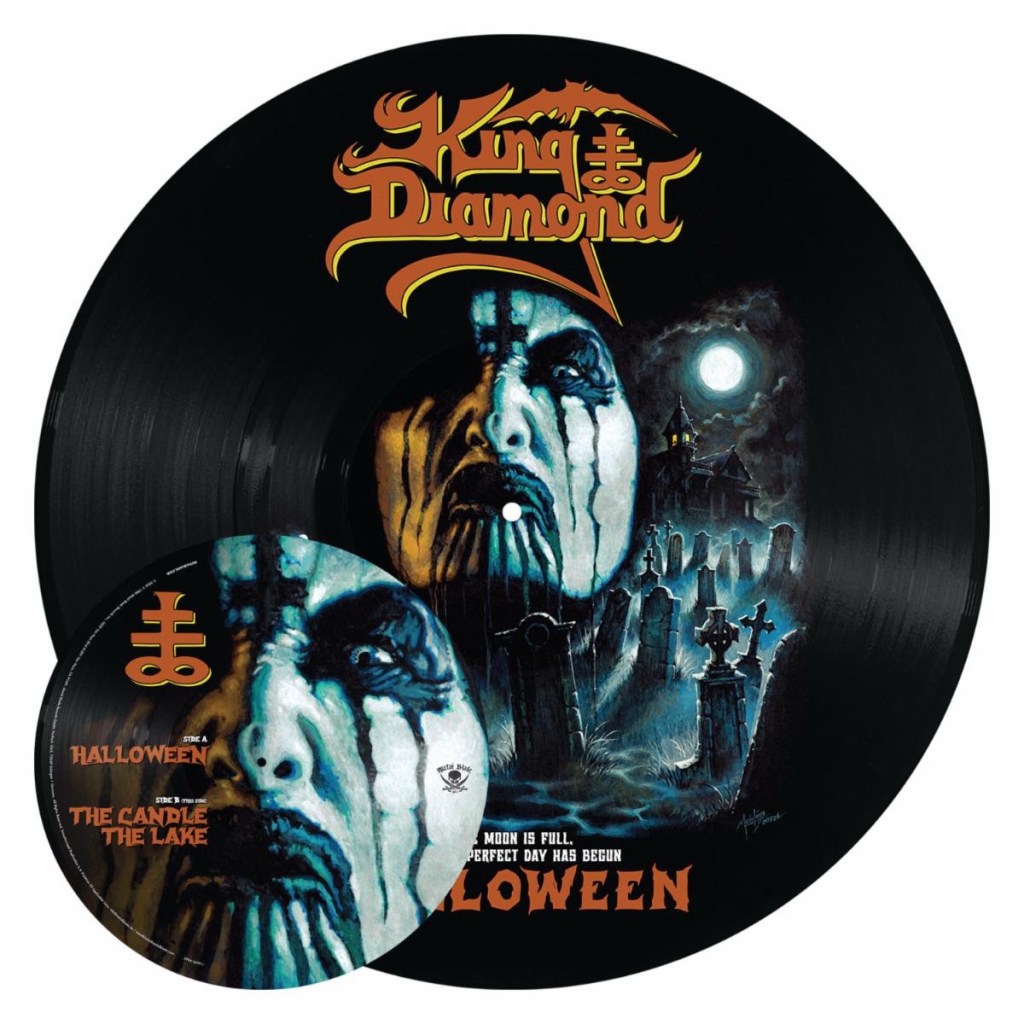
KING DIAMOND’s Halloween, the three-track LP picture disc originally released in 1986, will be re-released worldwide with new art by Mario Lopez on October 23rd via Metal Blade Records, just in time for the season!
The Halloween title track comes off KING DIAMOND‘s debut album, Fatal Portrait (1986), as does “The Candle,” which served as the opening track on Fatal Portrait, and was part of the early storytelling approach that would become central to KING DIAMOND‘s future discography. “The Lake,” while recorded during the same general period as Fatal Portrait and associated with those sessions, wasn’t included in the original nine-track album.
Halloween was produced by KING DIAMOND and Rune Höyer with production assistance by Michael Denner and engineered by Roberto Falcao.
Preorders for the LP are available at: metalblade.com/kingdiamond.
Find additional KING DIAMOND Halloweenmerch at: store.kingdiamondcoven.com/products/halloween-2026-shirt and eustore.kingdiamondcoven.com/products/king-diamond-halloween.
Halloween LP Track Listing:
A1. Halloween
B1. The Candle
B2. The Lake
KING DIAMOND Halloween Lineup:
King Diamond – lead vocals, backing vocals
Andy LaRocque – lead guitar
Michael Denner – lead guitar
Timi Hansen – bass guitar
Mikkey Dee – drums
https://www.instagram.com/kingdiamond
https://www.instagram.com/metalbladerecords
Source: EARSPLIT PR
