The modern American political landscape has become so divided that news outlets and press conferences have discarded all subtlety. It’s a flood of insult-flinging that disregards the humanity of anyone not supporting the administration. So, why should Void Bringer respond with subtlety? On their EP Green Mountain Powerviolence, they begin explicitly. The powerviolence act declares, “I don’t like it. Fuck you. We hate you!” and move on to the next topic. With a forthright attitude typical of the genre, Void Bringer plow through songs with speed, rebellion, and brutality, giving little time to consider what you’ve heard before it’s over. You can listen to the full EP below ahead of its physical release this Friday.
…
…
Void Bringer place a bomb in a news station and it detonates into every topic of conflict. Failures of the health system, the gaps in the class system, police brutality, ICE, and the dangers of modern technology – it’s all approached with the swing of a baseball bat. Statements are barked over blasting drums until breakdowns lift the bat over the enemy’s skull and split it. No longer will we, as it’s repulsively described, “Eat shit from the ass of power.”
In typical thrashcore fashion, each 90-second-or-less track hurdles ideas into potent bursts and crushes them into the mix. Yet, Void Bringer give weight to each second of discombobulation. It’s not just meatheaded powerviolence clichés with deep bass notes and blast beats (although there is plenty of that), as the group separate themselves from the pack with death metal-influenced guitar tones. “Curriculum (Cowboy)”‘s guitar howls like police sirens while the final notes of “Throttle” wail a triumphant anthem for the devil’s introduction.
For eight chaotic minutes, Void Bringer describe themselves as unapologetically furious and violent. For the final two, they allow Ringworm to speak for them with a cover of the Cleveland metalcore group’s “Justice Replaced by Revenge”: a 20-year-old song making the same claims, highlighting the same power structures and their tyranny toward common people, showing that silent majorities change nothing and that we all must fight to disrupt the chain of power.
The announcement of Avrak, the new side project from Nocturno Culto of Darkthrone fame, immediately raised questions. Aside from a single record with Satyricon, his body of work is almost exclusively Darkthrone, with his sole extracurricular being Sarke, the more thrashing black metal band that formed in the wake of Darkthrone’s shift toward crust punk. Fenriz has on occasion released side work, particularly with his heroic traditional heavy metal band Isengard, but the necessity of Nocturno to diverge from Darkthrone was unanticipated given he writes a great deal of the music already.
The best way to explain this necessity comes quite quickly on the debut record: this is heroic heavy metal without the winking. Darkthrone, ever since their crust punk era, have seemingly been incapable of producing heavy metal without that playful gleam in their eye. It is by no means a diminishment of the sincerity of their love for metal, as evidenced by their fastidious pursuit of a primordial, almost alchemical, stone of metal pre-differentiation into its various genre forms, but the album art and titles of albums and songs gives enough material to tell us they are aware of the natural ludicrousness of the genre. Avrak, then, reads as a parallel document roughly equal to Isengard. The music contained here is clearly downwind of the ideological shift Darkthrone experienced in the wake of The Underground Resistance, which began the long, slow process of integrating everything from thrash to doom to US power metal and prog into their sound. Here, those same elements remain, but the result is closer to a band like Molten Chains than the almost parodic approach Darkthrone leans toward with their punkish interjections.
…
…
Other instrumentalists receive credit beyond Nocturno, but you would have to read the liner notes to even know. Nocturno has developed a noticeable style over the decades, one that is best described as Neanderthalic prog, with a roughness and thudding simplicity counterbalanced by an ambition he can’t quite live up to. The result, obviously, is thrilling, and likely explains the perpetual creative engine of striving toward that shrinking horizon and lending us those wonderfully strange artifacts of their discography over the years. Avrak is built from the same building blocks, with structures for songs tending toward the progressive with loads of riffs and pivots and shifting arrangements even during repeats, but with parts that are almost uniformly simple and brutish. The sonic approach of albums like Old Star and Eternal Hails….. can readily be heard here, punched up with the heavy metal theatrics of Resistance and Arctic Thunder. Given that Nocturno is also a multi-instrumentalist, it wouldn’t be a shock to learn later that he wrote all these parts himself.
This leaves relative unknown Anders Hegna as the real X-factor that pulls Avrak together. His voice is burly but not without theatrics, calling to mind an alternate world where Manowar’s vocals were sung in baritone or Blaze Bayley had fronted a group with a bit more doom in their sound. It’s not just the added heft however that makes Avrak shine from Hegna’s performance. It is also the strident sincerity. Heavy metal, like prog and hip-hop, is a genre that requires commitment to its essence to pull off. Rock has remained open since its inception and punk kicked the doors off the hinges, ensuring any vocal approach could work. But metal is one of those genres where you must balance the magic spell of commitment to the aesthetic against the absurdism of the act. Done poorly, you get black metal artists donning cowls they bought from a Halloween store playing the Lord’s worst synth patches or, on the other end, the endless tedium of comedy-driven power metal that sacrifices great songcraft by doing funny bits. Comedic and self-aware elements can and have worked folded into the flesh of heavy metal, but it’s a trickier process than just full sending on any given idea. Hegna conveys a mythic might without sounding so unaware of himself that it becomes parodic by accident; he comes across as a rougher-edged singer in the vein of Enslaved, a group who have mastered conjuring a deep sincerity on stage even when performing material about runic magic that conflicts greatly with their otherwise totally secular worldview.
That Avrak exists is, in retrospect, not a mystery. Sarke, the previously aforementioned side-project of Nocturno’s, folded last year after 17 years together, meaning this project was likely in the loose planning stages before that group formally closed its doors. It exists in part as a counterbalance to Isengard, a similarly curated shrine toward heavy metal, the force Darkthrone have committed their lives to, even if Fenriz’s DJing and the interviews of Nocturno reflect a much wider and more sophisticated ear on both than mere heavy metal historians. As a standalone record, it is a strong work of heroic heavy metal, that roomier and more mythic counterpart to US power metal, and one which belongs as much in the Darkthrone canon as any record with the proper name. As a debut of a new project, it hasn’t yet differentiated into a clearly separate entity save for its inclusion of different players. Time will tell us whether it is the beginning bud of a new branch or just a curious and fruitful growth on the heavy boughs of Darkthrone’s perpetual creativity.
Conway Twitty built one of the most distinctive recording careers in American popular music, moving from late-1950s rock and roll into a long reign as a country-music superstar. Born Harold Lloyd Jenkins in Friars Point, Mississippi, in 1933, he grew up in the Mississippi Delta and Arkansas before recording his first material as a young rock-and-roll singer. His 1958 crossover breakthrough, “It’s Only Make Believe,” reached the top of the pop charts and became one of the defining songs of his early career. Twitty’s move to country music during the 1960s was more than a change in arrangement. His commanding
Welcome back, Blues Rock Review readers! With each Under The Fretboard article, we focus a little more deeply on lesser-known artists who have their roots within the familiar boundaries of blues, rock, Americana, soul, and roots music. Often, the musicians we feature are newer artists just gaining recognition outside of a small but loyal fan base. With this edition, we uncover someone who has been quietly building an impressive career while somehow staying just outside the mainstream blues rock spotlight. Paul Thorn has been making his blend of Mississippi blues and gospel-flavored storytelling for nearly three decades.
Paul Thorn – Mississippi Grit, Gospel Roots and Americana Storytelling
Thorn started making records with his 1997 debut, Hammer & Nail, yet his artistic path reads more like a Walter Mitty story than the typical musician biography. Born the son of a Pentecostal minister, Thorn’s journey began humbly as a furniture factory worker. Then things get interesting. He spent time as a professional skydiver before taking up boxing. He was good enough to become a professional middleweight, at one point finding himself in a nationally televised bout against Roberto Durán. Fortunately (for us), he would trade the gloves for a guitar and become a down-to-earth songwriter who spun tales of ordinary people, family contradictions, faith, heartbreak, and hard-earned wisdom that make you laugh one minute and contemplate life the next.
Music has been a part of his life since he was a three-year-old singing in his father’s church. Thorn was born in Kenosha, Wisconsin, but raised in Tupelo, Mississippi. There, he grew up surrounded by gospel and roots music. His early musical indoctrination wasn’t limited to his father’s church. He also spent time at the African American Okolona Sunrise Church of Prophecy, an experience that helped shape his vocal style and rhythmic sensibility. Gospel became the foundation.
He also absorbed the sounds coming from outside the church, including Elvis Presley, Kiss, Peter Frampton, Elton John, Huey Lewis, and even comedy records. That unlikely combination of influences and life experiences flows through the unpredictable character of Thorn’s music. His admiration for Elvis runs particularly deep, as they both came from Tupelo, and Elvis also frequented the same local churches. You can hear the influence of Elvis’s gospel recordings in many of Thorn’s songs.
He blends that with songwriting filled with blue-collar life experiences. Thorn’s storytelling rarely feels like it comes from unfamiliar places. His characters are recognizable. They’re the people we encounter at work, in bars, churches, family gatherings, and roadside diners. His songs tell tales of relatable people and situations, giving them an observational quality that feels more conversational than structured.
This is where the influence of John Prine becomes apparent. Prine was more than an influence; he became a friend and mentor to Thorn. Prine’s ability to turn everyday observations into funny, heartbreaking, and deeply human songs clearly resonates in Thorn’s work. Thorn even credits Prine with inspiring the title of his latest album, 2025’s Life Is Just a Vapor.
This most recent release finds Thorn doing what he has always done best: combining gospel, blues, Southern rock, country, soul, and Americana with stories that feel too worn and familiar for a newer album. The album includes some notable appearances, with Luther Dickinson on “Geraldine & Ricky” and Joe Bonamassa on “I’m Just Waiting.” The title track is a sobering song of perspective, while “Wait” adds a touch of humor. The album also features the Tupelo gospel group New Testament, along with Muscle Shoals singers Cindy Richardson and Marie Lewey.
The catalog Paul Thorn has amassed over the decades is extensive, starting with his 1997 debut, Hammer & Nail, released on A&M Records. The album features some noteworthy early tracks. The title track provides basic words of wisdom, “I’d rather be the hammer than the nail,” while “800 Pound Jesus” provides a flavor of Thorn’s rural comedic side. Meanwhile, “A Heart With Four Wheel Drive” and “I Bet He Knows” reveal the blues artist.
His sophomore effort, 2001’s Ain’t Love Strange, is noteworthy in that it marks the beginning of Thorn’s Perpetual Obscurity Records era. The title track is another chuckle-and-grin piece, but the two top-streamed songs, “I Have a Good Day” and “Burn Down the Trailer Park,” along with personal favorite “Black Rainbow,” are also worthy of a listen.
The following pair of albums are thematic, with Mission Temple Fireworks Stand (2002) driven by gospel influences and Are You With Me? (2004) taking a more mellow approach with some R&B influences. “Mission Temple Fireworks Stand” is by far the most-streamed song of Thorn’s early work.
Four years would pass before A Long Way From Tupelo came out in 2008. The title track would get some traction and speak to the life of touring away from home. The album features a mix of live and studio tracks, including a live version of “800 Pound Jesus” and a live version of the hilarious tune “It’s a Great Day to Whup Somebody’s Ass,” which has garnered well over 4 million streams on Spotify.
Perhaps the best introduction to Thorn’s catalog is 2010’s Pimps and Preachers. The record digs directly into Paul’s family history and the two worlds that helped shape him: faith and the hard realities of working-class Southern life. The title track speaks for itself and has well over a million streams, but the most-streamed song is “I Don’t Like Half the Folks I Love,” which speaks to the frustrations of dealing with family relationships. A couple of personal favorites from the album include “Tequila Is Good for the Heart” and “Weeds in My Roses.”
In 2012, Thorn released What the Hell Is Goin’ On?, a collection of covers that reflect the influences on his musical journey. Standouts include a gritty, guitar-driven take on Ray Wylie Hubbard’s “Snake Farm,” Free’s “Walk in My Shadow,” Buddy Miller’s “Shelter Me Lord,” and Wild Bill Emerson’s “Bull Mountain Ridge.” All are worth a listen as Thorn-flavored versions of these classics.
Paul returned to originals on Too Blessed to Be Stressed (2014), which explores themes of trying to stay positive in adverse situations, as the title suggests. Top tracks here include “Everything’s Gonna Be Alright,” “Old Stray Dogs & Jesus,” and “Mediocrity Is King.” “I Backslide on Friday” is a relatable track for all those who tend to cut loose on weekends.
Thorn would release a greatest-hits-style compilation coupled with a set of live acoustic tracks on 2016’s The Best of Paul Thorn, followed by another live album in 2017, Hammer & Nail Live, featuring live versions of songs from his debut album 20 years earlier. What might be the best track on this album was not on the 1997 release: “Joanie the Jehovah Witness Stripper,” which is as funny as it sounds.
Thorn would return to his gospel roots in 2018 with Don’t Let the Devil Ride, adding some of gospel’s most prominent voices, with the Blind Boys of Alabama, Bonnie Bishop, and the McCrary Sisters lending their vocal talents to the record. Preservation Hall Jazz Horns also add their talents to fill out the sound of another standout album in the catalog.
The album contains a mix of covers of obscure releases from small Southern gospel labels and blues classics. Highlights include “What Should I Do,” with its swampy slide guitar, Blind Willie Johnson’s “Jesus Gonna Make Up My Dyin’ Bed,” and “Keep Holdin’ On.” However, the most notable cover is a transformative take on The O’Jays’ classic “Love Train,” turning a disco flag-bearer into a deeply soulful statement.
Never Too Late to Call came out in 2021 with 11 original tracks made up of mostly acoustic reflections, featuring the title track honoring Thorn’s relationship with his late sister. Family is also featured in “Sapphire Dream,” on which he sings with his daughter, who was 12 at the time. Thorn’s wife lends backing vocals to “Breaking Up for Good Again,” a tongue-in-cheek look at marital tribulations.
On the lighter side, with a more electric sound, we have “You Mess Around & Get a Buzz,” “Sapalo,” and personal favorite “Here We Go.” The album closes with a fun little rocker, “Holy Hottie Toddy.”
Add to this the aforementioned 2025 release, Life Is Just a Vapor, and there is a lot of Paul Thorn to discover. Pimps and Preachers is a good starting point for an autobiographical feel. Then dig into Don’t Let the Devil Ride for the gospel connection, and Life Is Just a Vapor for the latest chapter. From there, enjoy hopping around the rest of his catalog and discovering the stories, wisdom, and a little laughter.
The humor in Thorn’s writing isn’t slapstick or shock comedy. There’s usually something grounded underneath it. The same goes for the gospel influence. His songs aren’t sermons, even when they wrestle with faith, morality, temptation, and redemption. Instead, Thorn seems more interested in letting his characters figure things out for themselves.
He doesn’t need to pretend that life is cleaner or easier than it is. His characters screw up. Families disagree. Faith gets complicated. Love requires work. Tough times happen. Sometimes you do need to laugh at the absurdity of it all just to get through the day. Paul Thorn can certainly help put that into perspective.
In support of their forthcoming studio record release Agalma, due on January 22nd 2027, Monolithe have recently out the first advance single titled “Unknown Stellar Samples”. Read more…
Call Me Amour are bringing one era to an end and kicking off a new one, as they announce the details of a new self-titled EP.
The record will be released on January 22 2027, and serves as the band’s final EP before they turn their attention towards bigger and bolder things.
Let them explain:
“We’re incredibly proud of this record. It feels like everything we’ve explored as a band has led us here.”
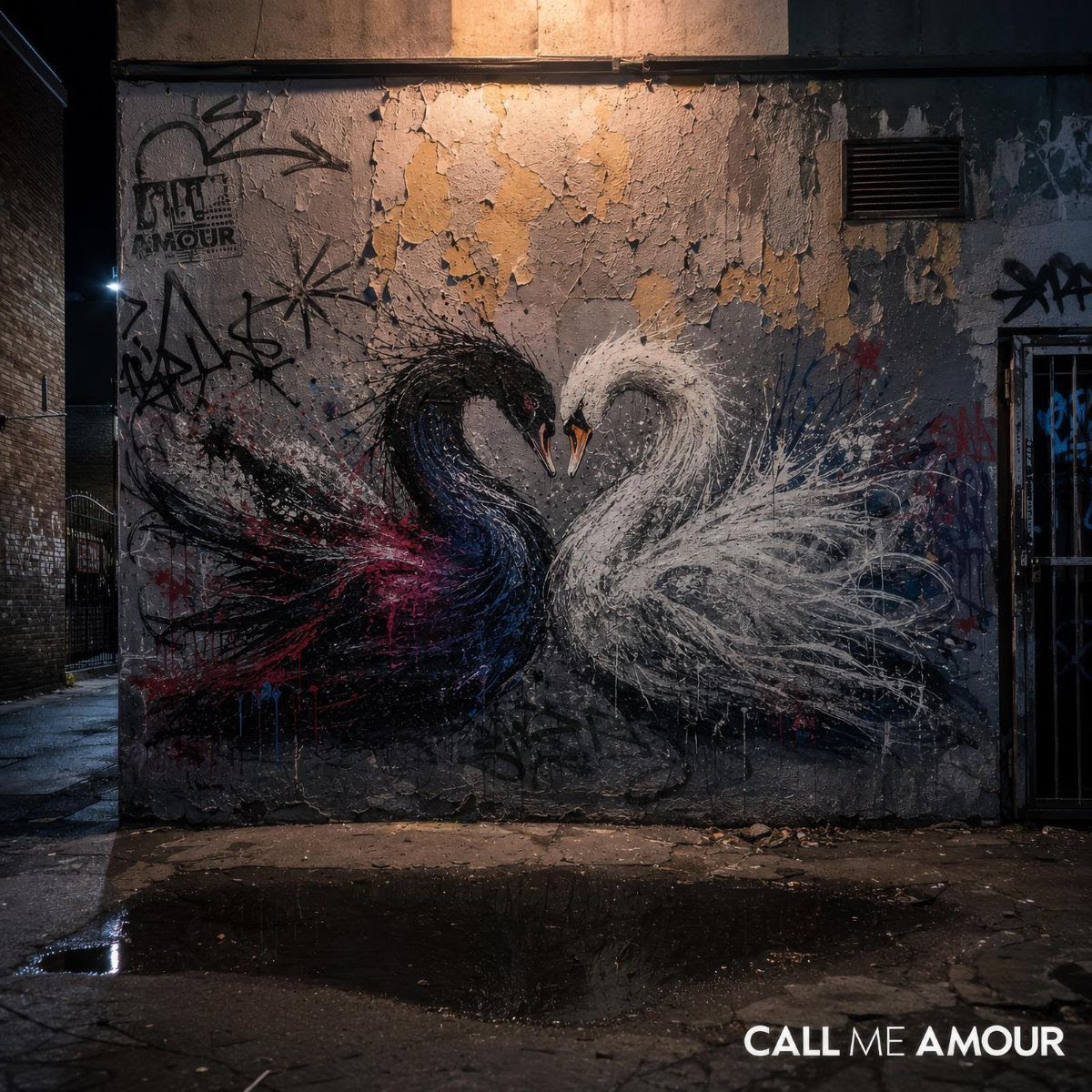
The artwork looks like this:
And the tracklisting like this:
1. Much Better 2. Wrong Direction 3. The Way That You Are 4. Built For War 5. Short, Not Sweet
You can also hear the freshly unveiled ‘The Way That You Are’ right now. A fizzing, vibrant, insatiably catchy piece of pop-rock that will have every dancefloor in the vicinity flooded, it certainly feels like a great point for the band to declare as their signature sound.
Guitarist Geoff Murphy had this to say about it : “‘The Way That You Are’ started life as a heavy rock/blues riff, but we wanted to give it a different energy, bringing in a dirty, bass-heavy sound inspired by our love of big electronic music, particularly Wiley’s ‘Brand New Rolex’ and Kele’s ‘Tenderoni’. We had a lot of fun with the video too, leaning into that 1950s high-school rock ’n’ roll vibe, with a little nod to our mutual love of Grease.”
Whilst vocalist Harry Radford added: “’The Way That You Are’ was one of those songs we kept pulling apart and putting back together until it finally clicked. We love the sound and energy of it, and the video was an absolute blast to shoot. There are definitely some nods to bands and iconic music videos we grew up loving, so I’m sure people will spot a few influences.
“Massive love to Sitcom Soldiers, who’ve brought our crazy ideas to life since day one, and to all the actors, friends and beautiful misfits who made this one happen. We love you all!”
Call Me Amour will be heading out on the road around the release of the EP across the UK and Europe as support for Melrose Avenue alongside Arankai. Here are all of the dates:
JANUARY2027
27 – DUBLIN Academy 28 – BELFAST Limelight 2 30 – GLASGOW The Garage 31 – LEEDS The Key Club
FEBRUARY 2027
01 – MANCHESTER Club Academy 03 – BIRMINGHAM Institute2 04 – LONDON Electric Ballroom 06 – UTRECHT TivoliVredenburg Pandora 07 – ANTWERP Kavka Zappa 09 – PARIS Trabendo 10 – COLOGNE Live Music Hall 11 – HAMBURG Gruenspan 12 – COPENHAGEN Hotel Cecil 13 – OSLO John Dee 14 – STOCKHOLM Kollektivet Livet 16 – HELSINKI Tavastia 17 – TAMPERE Olympia 18 – TALLINN Paavli Kultuurivabrik 19 – RIGA Palladium 21 – WARSAW Proxima 22 – BERLIN Columbia Theater 24 – PRAGUE Rock Café 25 – VIENNA Flex 26 – BUDAPEST Analog Music Hall 27 – BOLOGNA Locomotiv Club
MARCH2027
01 – ZURICH Dynamo 02 – MUNICH Technikum 03 – BARCELONA Razzmatazz 3 05 – MADRID Revilive 07 – LISBON República da Música
Gene Simmons heard Van Halen play, loved what he heard, and helped them record a demo. Nobody wanted to sign them. A few years later, Eddie Van Halen was being hailed as one of the greatest guitarists of his generation.
Oasis had to argue their way onto the stage at a Glasgow club before a record label boss offered them a deal. The Beatles were rejected by Decca Records. Nirvana had already released an album before most people outside the Seattle music scene knew who Kurt Cobain was.
Rock history is full of stories about bands being discovered at exactly the right moment. Some are true. Others have been repeated so many times that the details have become hopelessly mixed up.
And a few are even stranger once you find out what actually happened.
1. The Beatles Were Unknown Until Brian Epstein Saw Them at the Cavern Club
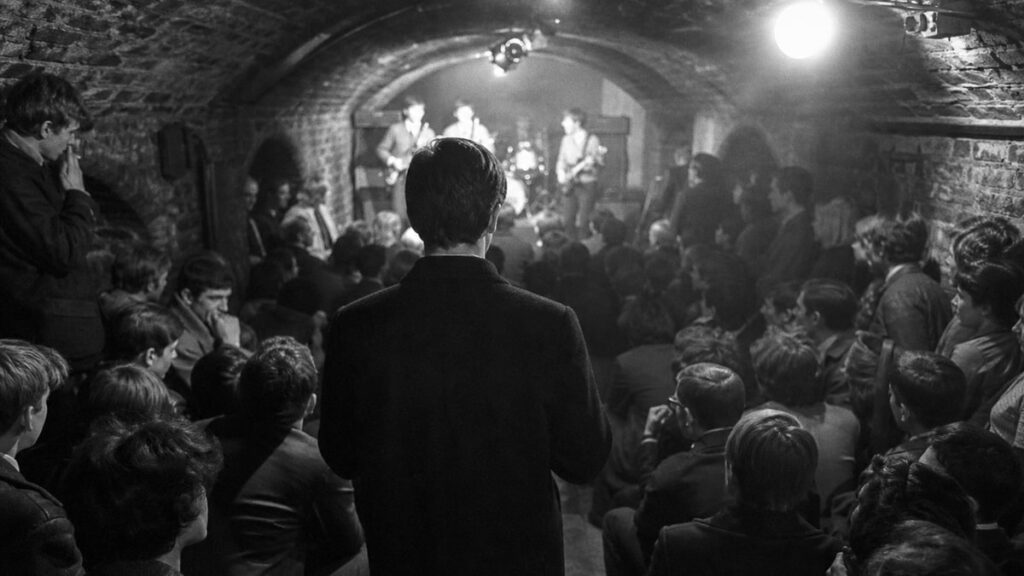
Liverpool’s Cavern Club opened in 1957 as a jazz venue before becoming one of Britain’s best-known centers of Merseybeat music.
Brian Epstein first saw The Beatles perform at Liverpool’s Cavern Club on November 9, 1961. He was impressed, became their manager, and helped them secure the record deal that changed popular music.
So far, the famous story checks out. The part that gets exaggerated is how unknown the band supposedly was.
John Lennon, Paul McCartney, George Harrison and Pete Best had already spent considerable time performing in Hamburg. Back in Liverpool, they were drawing audiences at the Cavern and attracting attention from local music fans.
Epstein was entering a scene where The Beatles had already made a name for themselves. According to the official Beatles timeline, the group eventually performed 292 times at the Cavern between 1961 and 1963.
Epstein recognized their commercial potential and knew they needed professional representation. He helped improve their presentation, organized meetings with record companies, and continued pursuing a deal after the first attempts failed.
One particularly entertaining detail is about Paul McCartney. He missed the band’s first meeting with Epstein because he decided to take a bath.
Imagine skipping a meeting with the man who would help turn your band into the biggest musical act in the world because you had something else planned for the bathroom.
And Then Decca Records Turned Them Down
On January 1, 1962, The Beatles auditioned for Decca Records in London. The company eventually passed on them and signed Brian Poole and the Tremeloes instead.
Decca has been mocked for that decision ever since.
But the musicians who auditioned were not quite the group that would record Please Please Me the following year. Pete Best was still playing drums, and George Martin had not yet begun producing their records.
Decca missed an extraordinary opportunity. It is also worth remembering that record executives in January 1962 had no way of knowing how many extraordinary songs Lennon and McCartney would write over the next several years.
Epstein kept trying. The Beatles eventually signed with EMI’s Parlophone label, and George Martin became their producer.
Had Decca signed them first, rock history might have looked very different. Or perhaps Decca would have made a mess of the whole thing. Nobody can answer that one.
2. Oasis Were Discovered by Complete Accident at a Glasgow Pub
Glasgow’s King Tut’s Wah Wah Hut opened in 1990 and became an influential venue for emerging British indie and rock bands.
Of all the stories about famous bands being discovered, the Oasis story is one of the few that sounds ridiculous but is largely true.
On May 31, 1993, Alan McGee of Creation Records visited King Tut’s Wah Wah Hut in Glasgow. He had not traveled there specifically to see Oasis.
The Manchester band had made the journey north hoping to play, but they were not originally on the bill. After some disagreement with the venue, they eventually got their chance.
McGee heard them, liked what he heard, and pursued a record deal.
It is a terrific story, especially because Oasis were hardly known for politely waiting their turn.
Noel Gallagher Had Already Done His Homework
The idea that McGee discovered five random lads who suddenly became brilliant musicians misses the work Oasis had already put in.
Noel Gallagher joined the band in 1991 and brought his songwriting with him. By the time Oasis played King Tut’s, they had material, a clear musical direction, and ambitions that extended well outside Manchester.
McGee gave them an opportunity that changed their career. He still needed to hear a band worth signing.
There is another reason to question the tidy versions of famous discovery stories. People who worked as agents, managers and promoters sometimes remember events very differently from the musicians. Former music executive Ira Blacker addresses exactly that problem in his music industry story, discussing how firsthand accounts can get lost as rock legends are repeated over the years.
As for Oasis, they released Definitely Maybe in August 1994. The album reached number one in the UK, and the argument over getting onto a Glasgow stage became one of the great stories of British rock.
3. Gene Simmons Discovered Van Halen and Made Them Famous
Gene Simmons really did discover Van Halen in the sense that he saw them before they were famous and recognized their potential.
He was impressed enough to help finance a demo recording. Given how successful Kiss already was, that must have seemed like a tremendous opportunity for a struggling Los Angeles rock band.
Unfortunately, the recordings did not lead to a contract.
Simmons introduced the music to people in the business, but the response was disappointing. Van Halen went back to playing concerts around Los Angeles.
In a 1978 interview with Eddie Van Halen, the guitarist discussed their early attempts to attract record-company interest and the difficulties they encountered before finally signing.
Gene Simmons deserves credit for recognizing the band. He just was not the person who ultimately secured their recording contract.
Producer Ted Templeman and Warner Bros. executive Mo Ostin eventually saw Van Halen perform at the Starwood in Hollywood in 1977.
Unlike the executives who had passed on the earlier demos, they were sufficiently impressed to pursue the group.
The resulting contract led to the band’s self-titled debut album in February 1978.
It contained “Runnin’ with the Devil,” “Ain’t Talkin’ ’bout Love” and “Eruption,” the instrumental that introduced countless listeners to Eddie Van Halen’s extraordinary guitar technique.
Looking back, the earlier rejection seems almost absurd. But Eddie and his bandmates had spent years playing clubs and building an audience, so they had plenty of experience by the time Warner Bros. arrived.
Simmons later spoke about his involvement with obvious pride. And rightly so. He had recognized a remarkable guitarist before most of the world had heard him play.
He just could not convince a record label to do anything about it.
4. Nirvana Came Out of Nowhere When Smells Like Teen Spirit Became a Hit
When “Smells Like Teen Spirit” exploded in 1991, Nirvana seemed to arrive almost overnight.
MTV started playing the video, radio stations followed, and suddenly Kurt Cobain was being presented as the reluctant spokesman for an entire generation.
To anyone who had followed Seattle’s underground rock scene, however, Nirvana were hardly a new discovery.
The band had released its first single, a cover of Shocking Blue’s “Love Buzz,” through Sub Pop in 1988. Their debut album, Bleach, followed in 1989.
The official Nirvana timeline documents those recordings, the early performances, and the band’s progress before signing with a major label.
Bleach was recorded on a limited budget, but it established Nirvana as one of the groups attracting attention in the Pacific Northwest.
Forty thousand records are a long way from the millions Nirvana would eventually sell. Still, for an underground band on an independent label, that was real progress.
Even Some Early Nirvana Songs Have Strange Stories
“Blew,” the opening track from Bleach, is a particularly heavy recording, with a guitar sound that seems to drag itself along the floor.
By the time Nevermind arrived in September 1991, Nirvana had already spent years writing songs, recording, and touring.
What happened next was extraordinary. The album became a huge commercial success, and “Smells Like Teen Spirit” helped bring alternative rock into the mainstream.
For millions of listeners, Nirvana were a discovery in 1991. For Sub Pop and their early fans, the discovery had happened years earlier.
5. Led Zeppelin Were Four Unknown Musicians Who Got Lucky
Led Zeppelin recorded their debut album in approximately 36 hours of studio time in 1968, with Jimmy Page financing the sessions himself.
Led Zeppelin were never really a group of unknown musicians waiting for somebody to recognize their talent.
Jimmy Page was already a successful session guitarist and a member of the Yardbirds. John Paul Jones had worked as a session musician and arranger, and Robert Plant and John Bonham had experience playing in bands.
Page began assembling the group in 1968 as the Yardbirds were coming to an end.
Interestingly, the lineup he eventually created was not his original plan. He had other musicians in mind, including Terry Reid, who declined the opportunity to sing.
Reid suggested that Page contact Robert Plant. Plant subsequently recommended John Bonham, with John Paul Jones joining on bass.
The full account appears in Rocksoffmag’s history of Led Zeppelin, including the early lineup discussions and how Page eventually found the musicians who would become one of rock’s biggest bands.
Peter Grant Already Knew How the Business Worked
Led Zeppelin also had a manager who knew how to negotiate a recording contract.
Peter Grant had spent years working in the music business. Once the band recorded its debut album, he approached Atlantic Records.
Atlantic signed Led Zeppelin in 1968. The group released its first album in January 1969 and soon became a major concert attraction.
Their rise was fast, but Page had already spent years establishing himself as a musician. Grant knew the business, the band had recorded strong material, and the musicians could deliver impressive live performances.
The story sounds more like four experienced musicians assembling an exceptional rock band than a fairy tale about being spotted by a stranger.
There is also the famous Keith Moon story. According to the version repeated over the years, Moon joked that Page’s proposed group would go down like a lead balloon.
The name Led Zeppelin eventually emerged from that remark.
If the story is accurate, Moon accidentally supplied one of the most recognizable names in rock history while expressing serious doubts about the whole idea.
6. Queen Were Signed as Soon as Record Executives Saw Freddie Mercury Perform
Freddie Mercury had an extraordinary ability to command an audience. After watching footage of Queen at Live Aid in 1985, it is easy to imagine record-company executives fighting to sign him from the first moment he stepped onto a stage.
Queen did not have an easy beginning.
Freddie joined Brian May and Roger Taylor in 1970, after their earlier band Smile had effectively come to an end. John Deacon joined in 1971, completing the lineup that would remain together throughout Queen’s recording career.
The group spent considerable time rehearsing, playing concerts and working on recordings before its first album appeared.
Trident Studios became involved in the band’s early development and helped arrange its business connections.
Queen performed a showcase at London’s Marquee Club on April 9, 1973, attended by invited music-industry figures. The Queen concert archive documents the performance and its place in the band’s early career.
Queen released its debut album in July 1973.
Commercial success was not immediate. The album reached number 24 on the UK chart, and the band continued working toward a larger audience.
Their breakthrough came with the next records, particularly Sheer Heart Attack in 1974 and A Night at the Opera in 1975.
By then, Freddie had developed much of the theatrical confidence that later made Queen concerts so memorable. But the band had also put years into writing, recording and learning how to perform together.
Even a singer as remarkable as Freddie Mercury did not simply walk into a club and leave with a guaranteed career.
7. A Record Label Rejection Means the Band Has No Future
Demo tapes were often sent to record labels unsolicited, with many companies refusing to accept recordings they had not requested.
The Beatles were rejected by Decca. Van Halen recorded demos that failed to secure a contract. Queen spent years trying to establish themselves.
Looking at those careers now, the people who passed on them seem spectacularly shortsighted.
But record labels have rejected an enormous number of bands over the years. Most never became famous, and the public rarely hears about them.
Successful bands have an obvious advantage when telling their early stories. They already know how the story ends.
Imagine an executive explaining to Eddie Van Halen in the mid-1970s that the music was not quite right for the label. At the time, it was another disappointing business meeting. A few years later, the same conversation became a wonderful example of somebody getting things terribly wrong.
There is also a tendency to forget how much bands change before their first big success.
The Beatles had a new drummer and the guidance of George Martin by the time they released their early hits. Nirvana worked with a new producer and a major label on Nevermind. Van Halen had years of performing experience before recording their debut.
The bands that became successful were not necessarily ready to make those famous records when they received their first rejection.
8. One Lucky Encounter Is Enough to Make a Band Famous
Alan McGee seeing Oasis at King Tut’s was an important event. Brian Epstein seeing The Beatles at the Cavern was another.
But neither meeting put a hit single straight into the charts.
Oasis still had to record Definitely Maybe, release singles, promote their music and perform around Britain. The Beatles needed a recording contract, a producer and songs that audiences wanted to hear.
Plenty of musicians have impressed important people without becoming successful. Gene Simmons was impressed by Van Halen, but even his reputation could not immediately secure them a contract.
Sometimes the record label executive was the last person to hear about a band everybody in the local scene already knew.
Other times, the people who first recognized a group were unable to help it commercially.
The stories we remember are the occasions when somebody recognized talent and eventually helped turn it into success. Those meetings are exciting, but the recordings, performances and decisions that followed were equally important.
Some of the Best Rock Stories Get Better When You Hear the Full Version
Alan McGee really did encounter Oasis under remarkable circumstances. Gene Simmons really did help Van Halen record a demo before the band became famous. And Decca Records really did reject The Beatles.
Those events are interesting enough without pretending the musicians involved had done nothing beforehand.
In some cases, the details that disappear from the popular version are the most entertaining. Paul McCartney missing an important meeting because he wanted a bath is a wonderful little piece of Beatles history. Oasis having to argue for a place on the bill at King Tut’s is exactly the sort of thing you would expect from Oasis.
As for Van Halen, the thought of Gene Simmons trying unsuccessfully to convince people to sign Eddie Van Halen is remarkable in hindsight.
Perhaps the greatest myth is the idea that rock stars were always obvious rock stars from the beginning.
Somebody still had to take a chance on them. And judging by these stories, quite a few people had the chance and let it pass.
Australians Reliqa have revealed details and first single in connection with their new album announcement. Dubbed High Risk Thoughts, it will be out February 12th, 2027 via Immortal Music Group (AUS) and Nuclear Blast Records (ROW). The 10-piece outing was produced by Brandon Hutcheson, and mixed and mastered by Sam Bassal. Read more…