Category: news

  • Kalligary Only Fans Review

    Kalligary Only Fans Review

    The song opens with an engaging rhythm and a guitar riff reminiscent of the early 2000s. This catchy melody evokes bands like Puddle of Mudd and Weezer but retains a distinct style. Kalligary infuses a somewhat psychedelic atmosphere, enhanced by beautiful backing vocals that make the melody feel dreamlike. This aspect captures a sense of disillusionment, especially in the context of modern human relationships.

    Kalligary Only Fans

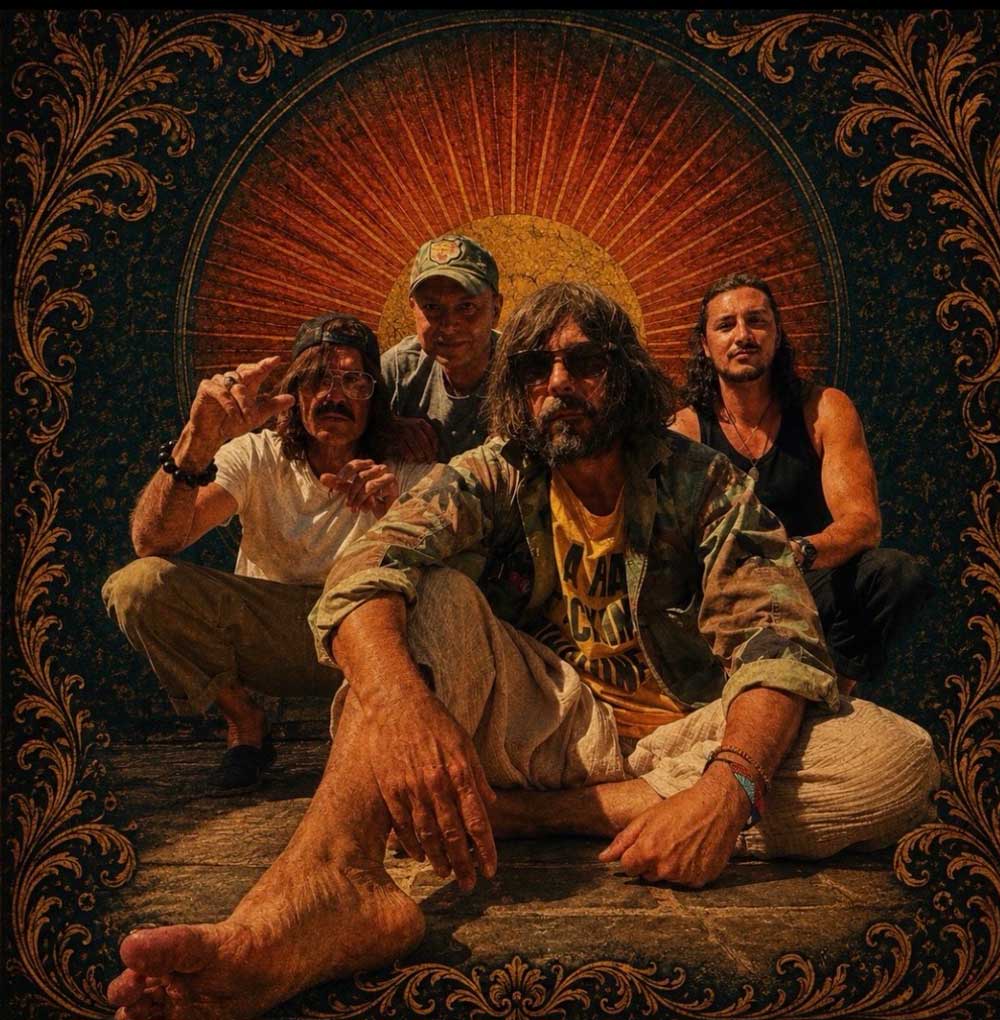
    “Only Fans” explores the irony present in childish attitudes toward relationships. The duo behind this project consists of songwriter and frontman Nikolai Konovalov and producer and multi-instrumentalist LukStar. They display a creative vision and excellent compositional skills throughout the piece.

    The song is structured effectively, flowing from one section to the next. The melody strikes a balance; it is sly and free-spirited, providing an unpredictable listening experience. Meanwhile, the lyrics are sharp and incisive. They explore themes relevant to today’s world while maintaining an entertaining and engaging tone.

    Only Fans – Sound and Atmosphere

    LukStar’s production enhances the song’s overall impact. The arrangement is well thought out, with layers that complement one another without overshadowing the core melody. Each instrument serves a purpose, contributing to the song’s overall feel without becoming overwhelming.

    Listeners may find themselves immersed in Kalligary’s mix of nostalgia and innovative elements. It’s a callback to simpler times portrayed through modern lenses. The melody evokes memories while prompting reflection on current societal trends.

    The rhythmic patterns keep the listener engaged throughout, making them eager to hear more. Their ability to blend different influences into their sound speaks volumes about their artistry.

    Only Fans – Performance and Production

    As the song progresses, it maintains a flow that keeps the audience attentive, with constant surprises in the arrangement. The layers of instrumentation complement the vocals beautifully, creating a rich listening experience.

    This track showcases the creativity of this duo, making it an exciting piece to recommend. Those looking for fresh music that resonates will find “Only Fans” well worth their time. The combination of thought-provoking lyrics and well-crafted music solidifies Kalligary’s place in the contemporary music scene.

    Overall, “Only Fans” serves as a reminder of the ever-evolving nature of relationships in today’s world, while also celebrating the joy of music itself. Kalligary has managed to create an impressive single that will likely resonate with a broad audience, inviting listeners to share in their artistic vision.


    Intense

    🔥 If you love this music: Discover More


    Find Kalligary here:
    Spotify | Instagram

    For fans of:

    Puddle of Mudd • Weezer


    The post Kalligary Only Fans Review appeared first on Edgar Allan Poets – Noir Rock Band.

  • These Are MEGADETH’s DAVE MUSTAINE’s All-Time Favorite Guitarists

    Megadeth‘s mastermind Dave Mustaine has named his all-time favorite guitar players in a new interview, singling out Jimmy Page, David Gilmour, and Ritchie Blackmore as the defining benchmarks from the era that shaped him.

    Speaking with Jon Chang of YSOLIFE, a leading music media platform based in Taiwan (transcribed by Blabbermouth), Mustaine began by addressing the landscape of modern guitar playing: “European guitar players, there are so many really fast-picking guys, but ever since Yngwie [Malmsteen] came out, everybody else is just a really fast-picking guy. Before Yngwie, when a really great guitar player came on the scene, you had [Michael] Schenker [UFO and Scorpions], or you had Angus [Young, AC/DC], or you had James [Hetfield, Metallica] or myself, and we were really distinguished guitar players. You had the guys from [Iron] Maiden, but then there was this explosion, and there are so many guitar players now that are really good, especially because of the software that they can learn how to play with.”

    Dave explained how that differs from how his generation had to develop: “When we started off, we didn’t have all these apps. We had to learn by lifting up the stylus on the record and scooting it back a couple grooves and dropping it and hoping it went in the same f***ing spot so we could pick up our guitar and our pick at the right time and play along with the song again, until they started developing cassette decks where you could slow stuff down or back it up real easy. But that was the way we learned stuff.”

    Mustaine then gave his definitive answer on favorites: “So, I would have to say probably one of my favorite guitar players has a lot to do with the era that they came in. And I would say for guitar layering and sounds, it would be Jimmy Page [Led Zeppelin]. For excellent note selection, it would be David Gilmour [Pink Floyd]. For being metal as f**k back when there were no metal guitar players, Ritchie Blackmore [Deep Purple and Rainbow]. I am not a fan of the keyboard, so I could have had them be a little bit lighter shade of purple and gotten rid of the keyboard player. But, yeah, he was great. And then, of course, like I said, AC/DC and Angus and UFO with Michael Schenker. That’s my ‘last supper’ kind of thing I’d want, have those guys with me.”

    Back in 2018, Mustaine told Heavymetal.dk about his early guitar inspirations: “My inspirations were more along the guidelines of the New Wave Of British Heavy Metal and the British Invasion. There’s a lot of great bands that are out right now [that] fans look to, a lot of young bands that are really great. For me, I always wanted to know, ‘What were their influences?’ Like with Van Halen — everybody thinks that David Lee Roth was such a great frontman, but what was his influence? It was Jim Dandy of Black Oak Arkansas. It’s like David Lee Roth is a clone of him, except for his voice of course — the black leather pants, real low hip-huggers, big, giant belt buckle, no shirt, tan, muscles… the same thing. For me, when I look at my influences, I try to go back in time. Jimmy Page was a huge influence guitar-wise. Angus was a big guitar influence; so was his brother, Malcolm. Believe it or not, I was probably more influenced by Malcolm than I was by Angus. I liked Angus’s solos a lot, but the rhythm of AC/DC was what did it for me, because there was a hook to it. A very simplistic hook. I think that’s what’s suffering with music nowadays — people are trying to be so f***ing cerebral with their music, and a guy that played music with us at one point came up to me and goes, Hey, ‘I’ve got a new riff,’ and I was listening to it, and it was awful. I said, ‘What is it?’ He said, ‘Well, it’s Megadeth in Morse code.’ I was like [puts head in hands]…”

    “How do I go back one more than Eddie Van Halen? What influenced Edward Van Halen? Classical,” Dave continued. “He was a classically trained guitar player growing up as a kid. I looked at some of the really great players — Vivaldi, Paganini, Chopin, Bach, Wagner, although not all of their movements or their pieces are stuff that I like. Vivaldi has ‘The Four Seasons’ — two of them, I like; the other two, they’re a bit long for me, and while I can totally appreciate the songs, I’ve grown up in a kind of pop-radio mentality, so a four-minute song [is] paydirt. Where’s the hook? When you have a song that’s a little bit longer than four minutes for me, I tend to kind of lose the plot.”

    Megadeth’s latest and final studio album, the self-titled Megadeth, was released in January 2026 via Mustaine’s Tradecraft imprint on Frontiers Label Group’s BLKIIBLK label. The follow-up to 2022’s The Sick, The Dying… And The Dead! debuted at No. 1 on the U.S. album chart, earning 73,000 equivalent album units in its first week of release — 69,000 of which were pure album sales. The album also topped the charts in Australia and Austria, and reached the top five in Finland, Sweden, Belgium, the U.K., Germany, the Netherlands, Italy, and New Zealand.

    The post These Are MEGADETH’s DAVE MUSTAINE’s All-Time Favorite Guitarists appeared first on Sonic Perspectives.

  • RSM Life is… Review

    RSM Life is… Review

    The album opens with “The Time is Running Out,” an atmospheric track featuring pads and a mysterious guitar solo. The inclusion of electronic sounds creates a truly unique sonic environment. This instrumental piece effectively paves the way for what is to come. As the song develops, it reveals progressive elements that enhance its complexity.

     RSM Life is...

    Following this is “Are We All in Abuse,” which evokes vibes reminiscent of Nine Inch Nails. This band has a unique vision that sets them apart from the rest. The rhythmic and harmonic variations here are sublime. The music challenges the listener by stepping outside conventional rules while maintaining an almost syncopated rhythm. This song mesmerizes and hypnotizes simultaneously.

    Next up is “Path to a Scapegoat,” which introduces some bluesy vibes while still adhering to the avant-garde style typical of this band. The blending of various genres is seamless and refreshing. “Chasing the Truth” features a highly reverberated guitar that takes the listener on an imaginative journey. The addition of piano gives the track a celestial quality. This song possesses a futuristic power with a strong bass line and drumming that forms a solid musical framework. Some moments of the melody hark back to the soundtracks of John Carpenter.

    Life is… – Sound and Atmosphere

    “Serotonin” is another unique journey that masterfully mixes jazz and progressive elements. This song is meant to be experienced, not just listened to. In “Havig Hope,” the technical skills of the guitarist shine through with truly fantastic solos and unique rhythmic variations.

    The album concludes with “Life,” arguably the most melodic piece on the record. This track carries a hint of Pink Floyd in its melody, but it remains committed to exploring unique harmonies and bold sounds. The diverse nature of the songs—some featuring vocals while others remain purely instrumental—creates a distinctive auditory adventure.

    Rafal Szewczyk is the mastermind behind this musical project, supported by bassist Marcin Blasiak and drummer Paweł Stepien. In a world flooded by AI-generated music, this remarkable album serves as a reminder that human creativity is unparalleled. The musicianship displayed throughout “Life is…” stands as a significant achievement, proving that innovative artistry still thrives.

    Life is… – Performance and Production

    This collection of tracks invites the listener into a thought-provoking and rich aural experience. Each song unfolds its own story, allowing for introspection and exhilaration. The smooth transitions between various musical styles keep the listener engaged and eager for the next twist in the journey.

    “Life is…” is an expression of creativity that defies ordinary expectations. It emphasizes individual artistic expression in an age where such values are increasingly rare. It serves as a vital pulse in contemporary music, showcasing what can emerge from the deep wells of human inspiration.

    The album challenges the listener’s perceptions and pulls them away from the mundane. Every track is like a chapter of a book, filled with emotions and explorations of sound. It’s a remarkable testimony to the versatility and depth that exists within this band.

    With “Life is…,” listeners are treated to a kaleidoscope of musical emotion. The intricacies and variety found in this album make it a significant contribution to the progressive music scene.

    Each play reveals new layers and details, underlining the album’s depth and substance. This makes “Life is…” not only an artful creation but also a profound journey worth embarking on repeatedly.


    Unique

    🔥 If you love this music: Discover More


    Find RSM here:
    Spotify | Instagram

    For fans of:

    Nine Inch Nails.


    The post RSM Life is… Review appeared first on Edgar Allan Poets – Noir Rock Band.

  • Conor Bond Same Time, Same Place Review

    Conor Bond Same Time, Same Place Review

    The song opens with an intense rhythm and a bassline that is supported by keys, creating an atmosphere reminiscent of the 1980s while maintaining a modern, unique flair. The guitars become prominent during the chorus, elevating the sense of alternative rock present throughout the track. Bond’s vocal interpretation stands out due to its unique timbre, which carries a theatrical quality. This distinctive delivery enhances the lyrics, allowing them to resonate in a meaningful way.

    Conor Bond Same Time, Same Place

    The compositional approach displayed in “Same Time, Same Place” showcases significant talent. Bond emerges as an artist with a clear and solid vision, creating music that feels incredibly fresh. The relentless pace of the song draws listeners in, establishing a compelling emotional backdrop. The thematic essence revolves around the idea of liberation and returning to one’s true self when deciding to leave a relationship that confines and undervalues personal worth.

    A notable shift occurs within the bridge at 2:15, where the dynamics momentarily drop, providing a reflective interlude. This section acts as a brief reprieve, allowing listeners to absorb the weight of the song’s message before it transitions back to the final verses. The rhythmic change towards the conclusion takes on a slightly different cadence, enriching the overall listening experience.

    Same Time, Same Place – Sound and Atmosphere

    This song is a marvelous creation by a talented artist. It effectively encapsulates the tumultuous feelings associated with self-discovery and escaping emotionally draining situations. Conor Bond’s ability to blend retro elements with modern sensibilities results in something truly distinctive.

    The instrumentation is well-crafted, with each element playing a crucial role in the overall effect. The bassline drives the track forward, while the keys provide a lush foundation. Meanwhile, the guitars add an invigorating layer that resonates well with the overarching alternative rock vibe of the work. This blend results in a track that feels nostalgic and fresh.

    Same Time, Same Place – Performance and Production

    The production is polished, allowing each instrument and vocal element to shine. This clarity enhances the emotional weight of the lyrics, making the sentiments even more relatable. The overall arrangement of the song supports its narrative arc, making it a cohesive piece that works beautifully both musically and lyrically.

    “Same Time, Same Place” is a fantastic single from Conor Bond, an artist who promises to make significant contributions to the contemporary music scene. His unique vocal style, combined with rich instrumentation and impactful lyrics, makes this song appealing to a wide audience. It is a highly recommended listen for those who appreciate music that resonates on multiple levels.


    Refined

    🔥 If you love this music: Discover More


    Find Conor Bond here:
    Spotify | Instagram

    The post Conor Bond Same Time, Same Place Review appeared first on Edgar Allan Poets – Noir Rock Band.

  • ARCHVILE KING – Aux Heures Désespérées

    The French Archvile King first drew attention at the end of 2019 as the solo project of Baurus. From the beginning, it drew from the raw, gritty sound of old-school thrash and black metal, while building a distinctive, dark atmosphere around itself. The 2020 VILE EP placed greater emphasis on thrash-driven momentum, while 2022’s À […]

    Source

  • Hear Stanley Simmons’ New Single ‘Don’t Leave Me Here Like That’

    It's the fifth single off their upcoming debut album, arriving in August. Continue reading…
  • Beyoncé – “Morning Dew (Donk)”

    Beyoncé is back. For July 4, she returned with a surprise new song called “Morning Dew (Donk).” It kicks off a 60-day countdown to her birthday in September, which will mark 20 years since the release of her second album B’Day. It will receive a reissue with this track included.

    The post Beyoncé – “Morning Dew (Donk)” appeared first on Stereogum.

  • “As for the lyrics, it’s not exactly Bob Dylan. But it felt good from a musician standpoint”: How a half-live album, a monster hit and a travelling zoo helped three Texas icons play to 1.2 million people

    The knock-on effect of ZZ Top’s breakthrough 1973 album, Tres Hombres, was a huge popularity spike. They were no longer just that little ol’ band from Texas. Already invested in a relentless touring cycle, they suddenly found themselves playing to sold-out venues across the States. By September 1974, with the album having gone gold and lead single La Grange a hit, the band were headlining ZZ Top’s First Annual Texas-Size Rompin’ Stompin’ Barndance & Bar B.Q., attracting some 80,000 punters.

    The festival was held at the Memorial Stadium at the University of Texas in Austin. Also on the bill were Joe Cocker, Santana and Bad Company, the latter featuring a guest turn from Jimmy Page. ZZ Top eclipsed them all, fetching up in sequined jumpsuits and indulging in pyrotechnics and goofy stage routines. They returned for two encores. The concert brought in the equivalent of $4 million in today’s money.

    ZZ Top posing for a photograph in 1975

    ZZ Top’s Dusty Hil and Billy Gibbons onstage in 1975 (Image credit: Fin Costello/Redferns)

    The preceding tour also directly informed the trio’s next move. At the Warehouse in New Orleans that April, manager Bill Ham arranged for the show to be recorded. The Record Plant Mobile Truck was duly commissioned to capture ZZ Top in all their live vigour. A month later, jamming backstage at a rodeo arena gig in Florence, Alabama, Billy Gibbons hit on a dirty boogie riff that wouldn’t let up. Dusty Hill improvised a vocal over the top. Three minutes later they had a new song, Tush. Gibbons borrowed the title from Tush Hog, a 1966 instrumental by fellow Texans The Roy Head Trio.

    Selected live recordings from New Orleans would constitute side one of Fandango!, ZZ Top’s next album. Initially released by Dallas rock’n’rollers The Nightcaps in 1960, Thunderbird is a lively enough opener. And while a souped-up version of Jailhouse Rock feels pretty superfluous, it’s the near-10-minute Backdoor Medley that reconnects the band to their blues roots.

    The medley segues between Gibbons/Ham co-write Backdoor Love Affair (from ZZ Top’s First Album) to Willie Dixon’s Mellow Down Easy and John Lee Hooker’s Long Distance Boogie. It’s all “captured as it came down – hot, spontaneous and presented to you honestly, without the assistance of studio gimmicks,” as the sleeve blurb puts it.

    Side two, by contrast, is purely new studio recordings. “We had enough live material to make up one side of the disc, so we decided to go with the unusual move of making the album half live, half studio,” Gibbons later reasoned to Music Radar. “It turned out to be a winning combination for us.”

    The biggest winner is the aforementioned Tush. Despite its less-than-taxing verses (“I said, Lord, take me downtown / I’m just lookin’ for some tush”) it proved an instant classic, giving ZZ Top their first Top 20 hit in the U.S.

    “As for the lyrics, it’s not exactly Bob Dylan,” conceded Gibbons. “[But] Tush felt good from a musician standpoint. You can never tell what’s going to be a hit or not. We were enjoying the recording experience, figuring out how to grab a moment and making it repeatable.”

    ZZ Top posing for a photograph in 1975

    ZZ Top in 1975: (from left) Frank Beard, Billy Gibbons, Dusty Hill (Image credit: Leonard M. DeLessio/Corbis via Getty Images)

    Fandango!’s other great moment is the breakneck Heard
    It On The X. Paying homage to the ‘border blaster’ radio stations of their youth, which pumped out music from the Mexican city of Juárez via stations in El Paso, the song finds both Gibbons and Hill in full voice, testifying to the sheer power of the experience: “Do you remember / Back in 1966? / Country Jesus, hillbilly blues / Where I got my licks / From coast to coast and line to line / In every county there / I’m talkin’ ’bout that outlaw X / He’s cuttin’ through the air.”

    Released in April ’75, Fandango! mirrored the success of Tres Hombres by going Top 10 on Billboard. It was also the first ZZ Top album to trouble the UK charts, albeit at a modest No.60. By the end of the year, according to Newsweek, Fandango! was still shifting 50,000 units per week. The magazine also noted that the band had outdrawn Elvis Presley in Nashville and broken Led Zeppelin’s attendance record for New Orleans. Ever the droll commentator, Gibbons accounted for ZZ Top’s appeal as “honest ignorance”.

    People tend to go big in Texas. On the back of Fandango!’s success, and no doubt fortified by the Memorial Stadium event, ZZ Top cooked up the Worldwide Texas Tour. Kicking off in May 1976 in North Carolina, the tour lasted more than a year and a half, covering more than 100 shows in five separate bursts.

    It wasn’t just the time frame that was ambitious. In an attempt to “bring Texas to the people”, the band appeared on a 35-ton stage that resembled their home state. The backdrop was a giant hand-painted desert panorama with elaborate lighting effects. Amidst a variety of native fauna – cacti, yucca, agave – ZZ Top also shared the space with a bunch of live animals. On any given night you were liable to encounter buzzards, a black buffalo, tarantula spiders, a Texas Longhorn steer and a plexiglass pyramid crawling with diamondback rattlesnakes.

    “They were actually treated better than we were!” Gibbons recalled to NME in 1994. “That tour was handled by a guy who was a specialist in animal handling. It was well done, a lotta fun. In Pittsburgh, the buffalo gets loose and he’s chargin’ around the arena, didn’t know where to go, things like that. But we just kept on playin’.”

    ZZ Top performing live in 1976

    ZZ Top on the World Wide Texas tour in 1976 (Image credit: Tom Hill/WireImage)

    Things got off to an ominous start. Opening night at Groves Stadium in Winston-Salem was preceded by hailstorms, tornado scares and a heavy four-day downpour. Plans to visit Europe, Japan and Australia were cancelled due to animal quarantine restrictions.

    ZZ Top pushed on regardless, building up further dates in arenas and auditoriums across the US, variously supported by Lynyrd Skynyrd, Aerosmith, Ted Nugent, Blue Öyster Cult and REO Speedwagon, to name but a few. By the time they finally signed off in Amarillo on New Year’s Day 1978, ZZ Top had played to more than 1.2 million fans, and America had a new favourite band.

    A longer version of this feature appears in Classic Rock Presents ZZ Top, a brand new magazine dedicated to the Little Ol’ Band From Texas. Order it online and have it delivered straight to your door.

  • Seattle Punk Rockers The Refusers Share New Song “Buck The System”

    Seattle has always been a historic breeding ground for sonic rebellion, a place where raw, unfiltered frustration organically