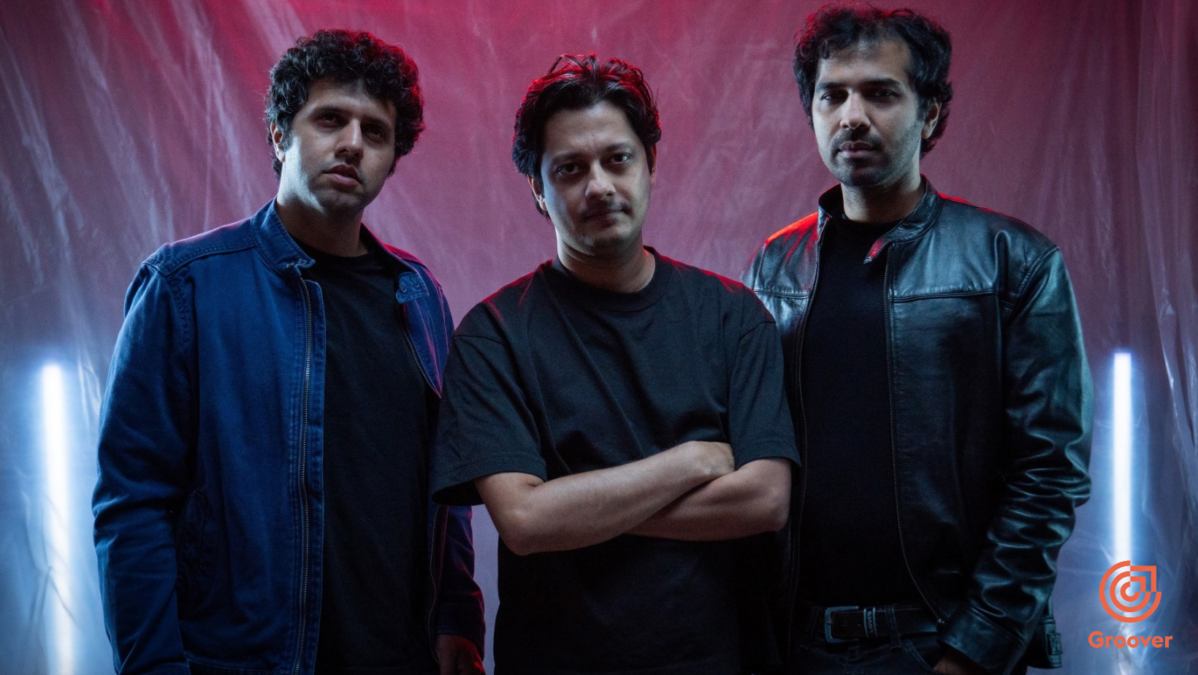
 Spending his first 18 years in Dubai, where he consumed everything from American syndicated television, MTV, Star Wars, and Bollywood, Tejas never knew that his myriad influences and obsessions would lead him to become one of India’s foremost English singer-songwriters and pop artists. Bringing together a variety of genres, including Rock, R&B, and Electronica, and […]
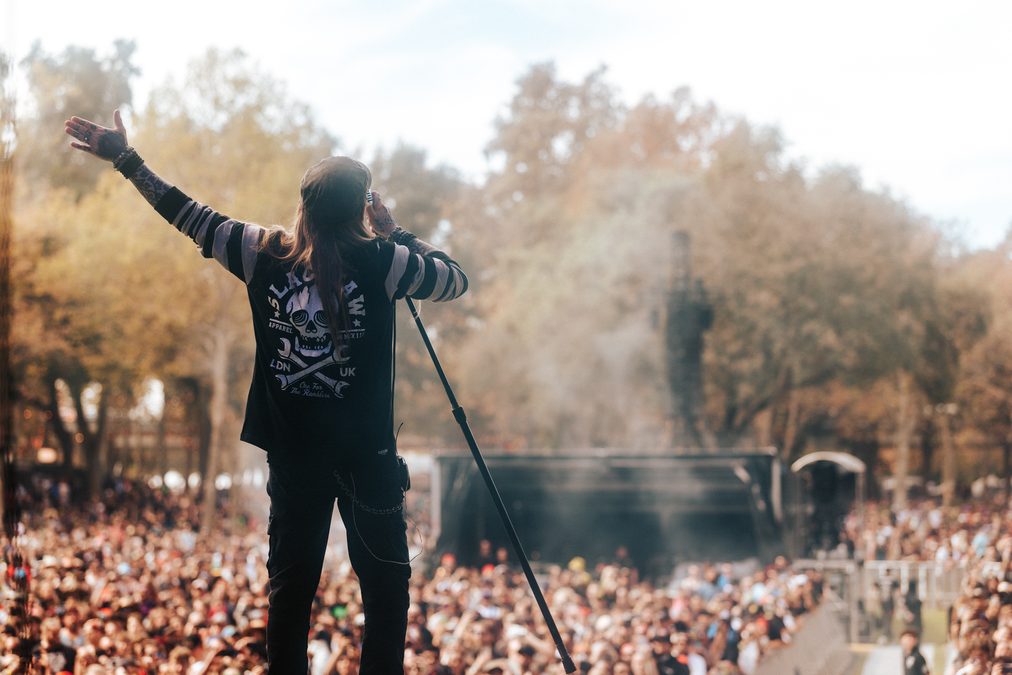 Photos thank to Jake Muller Welcome to HEAVY’s photo gallery from Aftershock Festival 2026, capturing four days of absolute sonic warfare at Discovery Park in Sacramento, California. As West Coast’s ultimate destination for heavy music, this year’s ritual pushed boundaries, blending legendary icons with the fiercest breakthrough acts of the modern era. Day two featured […]
 For the most part, I’ve been on a rather fortuitous kick with my black metal pulls. I’ve long appreciated the genre for its relatively underappreciated ability to fuse emotion into raw violence; an approach that death tends to reject wholesale in favor of severing flesh from bone, unless you go seeking out the deliberate exceptions. Third release from Swedish duo Blodtår, Monark caught my eye with an assertion that it was “conceived in the aftermath of a personal tragedy.” While bands like Dissection and Sacramentum were arguable forerunners paving the way for unapologetically melodic black offerings, finding more straightforward projects built under the auspices of immediate suffering
Katatonia spent the 2000s climbing up the Swedish hard rock ranks. Then, after 2012 album Dead End Kings, they were hailed as Scandinavia’s answer to Tool. That year Prog spoke to singer Jonas Renkse about line-up changes, nuclear disasters and recording underneath a halfway house.
It’s the summer of 2012 and a stressed Jonas Renkse is in a minuscule studio in London, about to play Dead End Kings to journalists for the first time. He hasn’t had time to live with the new album himself – the band only finished it a few hours earlier. “We had to master Dead End Kings on the evening before I left or even on the same day,” the Swedish frontman remembers. “My CD was the only copy so far. If it got broken on the way we’d have nothing to show anyone.” On arrival he was thrown into a stifling routine: “Ten journalists came in. We’d play the album, they’d go out for snacks and ten new people would come in. I just sat there getting more and more drunk, trying to see on their faces if they liked it or not.”
Spoiler alert: they liked it. Not a surprise reaction, in hindsight, considering every Katatonia release before it had been a critical success. Early albums Dance Of December Souls and Brave Murder Day had expanded the growling brutality of the 90s death/doom metal movement into vast prog songs. Then, in 1998, a host of new, sullen influences, as well as Renkse’s screaming technique shredding his throat, dictated a softer goth rock turn on Discouraged Ones.
From there the Katatonia brand became all about endowing dark anthems with increasingly avant-garde rhythms. The 2000s heralded such mainstays as July, My Twin and Ghost Of The Sun, not to mention a lineup – Renkse, guitarists Anders Nyström and Fredrik Norrman, bassist Mattias Norrman and drummer Daniel Liljekvist – that lasted for the whole decade.
Dead End Kings’ predecessor, 2009’s Night Is The New Day, even pushed the band to the then-highest chart position of their career when it reached number 39 in Sweden. Life was going pretty damn well.
“It was a very good time,” Renkse says of the 00s. “At the same time as Night was released, we started working with our management, Northern Music Company. We went from being self-managed to being part of a group that gave us opportunities to play places that we hadn’t played before.”
Despite the Norrmans exiting in December 2009, the early 2010s maintained the band’s momentum. Northern snagged them longer tours with the likes of Opeth and Swallow The Sun, paving the way for Dead End Kings to be Katatonia’s most successful material to date. In Sweden, it rocketed to number 12 on the charts. Plus the reviews – including those from the journalists crammed into that studio with an increasingly inebriated Renkse – were glowing.
In Classic Rock magazine, Malcolm Dome noted that the Swedes’ prog flirtations had evolved into overtones, and compared their ninth album to the works of Porcupine Tree and Opeth: the “stealthy ambient atmosphere is obviously rooted in the visions of Steven Wilson,” he wrote. Other reviewers went so far as to label the band as Sweden’s answer to Tool.
While some may have raise their eyebrows at such comparisons, there’s no denying that Dead End Kings was Katatonia’s proggiest moment up to that point. After opening song The Parting commences with Renkse’s melodic howls, it bursts into an off-kilter rock riff. Alien time signatures go on to define the entire album, from the scattering percussion underneath Hypnone’s clean guitar strums to Dead Letters’ back-and-forth between machine-gun chugs and post-rock arpeggios.
Dead End Kings also shares prog’s penchant for drama through strings and keys, which carry over from Night Is The New Day and 2006’s The Great Cold Distance. Cellos swell at the outset of The Racing Heart, before, on Ambitions, synths bubble in isolation beneath Renkse’s pleas of “Hear my thin voice.” Such touches were so significant to the album that, a year after it came out, Katatonia released Dethroned And Uncrowned: a stripped-down redo of Dead End Kings that had just the vocals, keyboards and classical instruments, as well as a handful of newly recorded acoustic guitar takes.
“When we were mixing, David [Costello], who recorded the album, muted all the guitars and drums,” Renkse explains. “We realised how much music was going on that you wouldn’t really hear over all the metal stuff – it was fascinating. We realised: ‘Wow, this is another album!’ We just kept talking about it. It sounded good enough to be made into a companion release. Dethroned was a fun, interesting experiment.”
The story of Dead End Kings begins on December 22, 2009: the day Mattias and Fredrik Norrman said they were leaving the band, after 10 and 15 years respectively. Renkse remembers the news “was a shock. We had a solid line-up for a long time and, all of a sudden it wasn’t there any more. Of course that’ll affect you – both the band and you personally – but they did it for the right reasons. We had no fighting, no drama: just cold, hard facts.”
Fredrik and Mattias still come to our gigs when we play Stockholm. Sometimes they say they regret quitting the band
He attributes their departure to the management’s drive to get the band more time on tour. The statistics certainly corroborate that – the following year was the band’s busiest ever for live shows. “Fredrik and Mattias had good jobs and they didn’t want to be on the road all the time,” Renkse confirms. “They had boss positions, so they got decent pay, and they had kids and houses. So I totally understand and respect their decision. They still come to our gigs when we play Stockholm. Sometimes they say they regret quitting the band!”
To replace the duo, Katatonia tapped guitarist Per Eriksson and bassist Niklas Sandin, both of whom appear on Dead End Kings. Renkse knew Eriksson through their death metal side-project Bloodbath, in which the player had the charming nickname of “Sodomizer.” He met Sandin through a mutual friend who was bragging about how fast a learner his new bassist was – so Renkse stole him. “Niklas had never even been on tour at that point,” he recalls, “but he was a super easygoing and friendly guy, so he was in.”
After a 2010 packed with concerts, Katatonia began composing Dead End Kings in 2011. Notably, the writing went back to being a two-man process between Renkse and Nyström, as it had been on The Great Cold Distance and every album before it. On Night Is The New Day, in contrast, the guitarist had suffered writer’s block and only contributed ideas to two of its 11 songs.
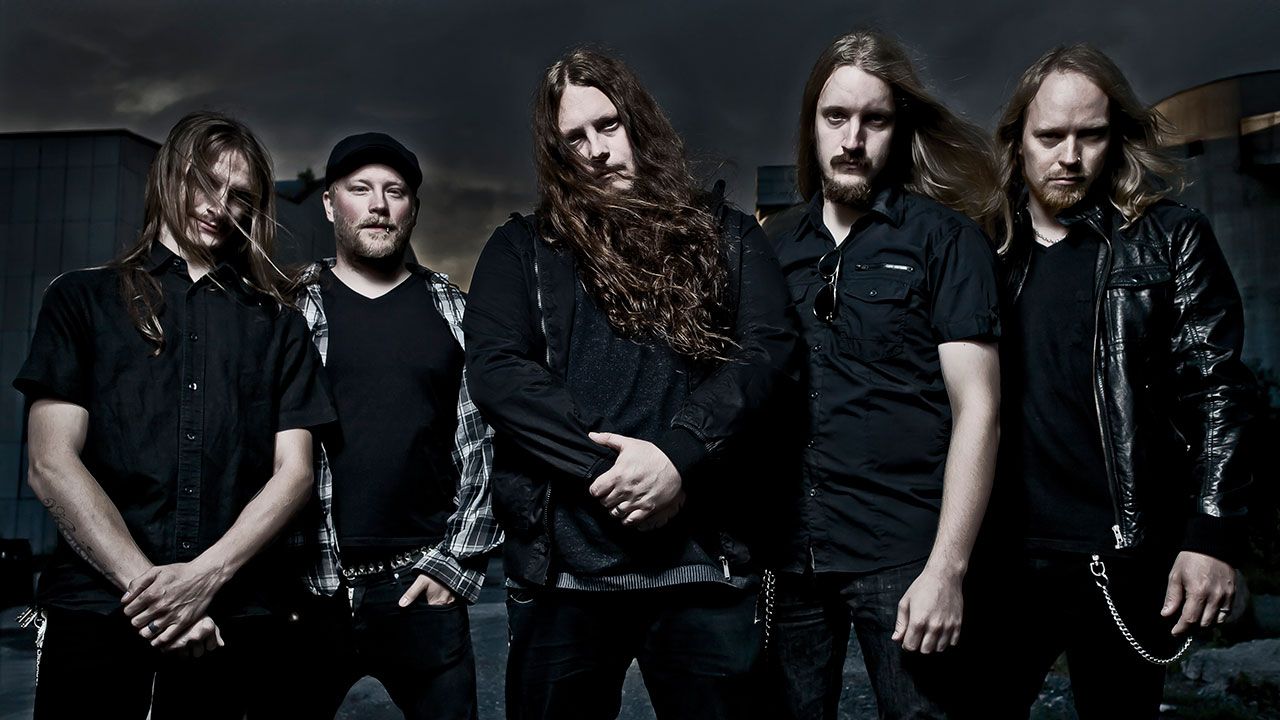
“He’s been up and down with that for a few years now,” Renkse says. “I try to write music all the time and end up throwing away a lot of garbage, but Anders needs to be inspired: he needs a certain mood for writing. When you have a family and other parts of your life that aren’t connected to music, it can take a lot of time and energy from you. He wrote more stuff on Dead End Kings though, and the album after that, The Fall Of Hearts.”
Like earlier records, Dead End Kings’ lyrics tackle depression, mistrust and alienation. As Renkse summarises: “I like abstract stuff.” However, some songs are more specific. The Parting, for example, was his attempt to enter the headspace of a refugee: “I was trying to understand what it would be like to leave your home and your country. I’m a safe Swedish guy; I have no idea what it’s like.”
to scare away potential burglars, a band put a radio on super loud and left it overnight. It always sounded like a party
Meanwhile, bonus track The Act Of Darkening is about the 1986 Chernobyl nuclear disaster, while Buildings and Undo You both explore Renkse and Nyström’s hobby of visiting abandoned villages. “We went to a mine called Stråssa Gruva. There was a little town around it with kindergartens and grocery stores, and it was all just left to rot. I don’t know why I’m so intrigued by these places; but it’s fascinating knowing that something was once so vibrant, and now it’s not.”
He says he felt the same vibe in the Dead End Kings studio as he had from such derelict scenes. Unable to reuse the spot they’d used to track Night Is The New Day, they holed up in the basement of a halfway house, located in a “shitty neighbourhood” in Stockholm. “There was always something unnerving going on,” he reflects. “I remember finding a room that looked like a cave, with a slaughtered police car in it. There were guards working 24 hours a day, walking the corridor with dogs. I had a dog at the time, and sometimes I had to bring it to the studio. David stopped my vocal takes so many times because the dogs were fighting.”
He adds: “Next to the studio was a rehearsal room, and there’d been a break-in in there. So, to scare away potential burglars, a band put a radio on super loud and left it overnight. It always sounded like there was a party in that room.”
It’s a testament to Katatonia’s talents that they were able to make something as refined as Dead End Kings in such a shithole. It defined their later output, especially follow-up The Fall Of Hearts, which leant even heavier into prog rock with its twisting time signatures and grand song structures.
“I’m super proud of Dead End Kings,” Renkse enthuses. “I think it’s a quality album; I think it’s sophisticated. When we play those songs live, it feels like they’re part of the more recent stuff that we’ve done. But 10 years is a long time – we get a weird feeling every when we play them. Where has the time gone?”
 Social Decline is a Copenhagen based underground Hardcore/Metal band formed in the early winter of 2019. The Band consist of Christian (Vocals/Bass), Bo ( Guitar/Vocals), Jesper (guitar) and Esben (drums) and rose out of the ashes of the late “King Carrot” still playing some of their old songs. Musically the influences are a mix of […]
 A modern homage to classic metal & hard rock, Rebel Rose is a female fronted band, uncompromising and full of untamed energy. Rebel Rose is a Swiss rock artist blending modern rock with classic heavy metal influences. Her sound reinterprets traditional heavy metal in a contemporary and powerful way, focusing on melody, dynamics, and musical […]