A year before Slayer started their thrash party, Paul “Shorty” Van Camp and Fat Leo formed their band, Killer. However, their names are the only things these two bands have in common—instead of thrash, Killer play an energetic style of classic heavy metal that has drawn plenty of comparisons to Motörhead. One can also hear NWOBHM influences from Saxon to Iron Maiden as well as some Def Leppard, AC/DC, and Thin Lizzy. What some consider Belgium’s first metal band, Killer struggled to imitate the success of their influences, with lineup changes wreaking havoc and financial struggles leading to lengthy hiatuses. After 1990’s Fatal Attraction, the ’90s were a quiet decade for the crew until a burst of energy following a 20th anniversary reunion that led to the release of two records in 2003 and 2005. The Grand Finale marks their third album since 2005’s Immortal, their ninth overall, and, as the album title and tongue-in-cheek cover art suggest, the last of their career. Despite their age, these guys prove they aren’t too olde to rock.
On The Grand Finale, Killer embrace the Motörhead within them. The record doubles as their swan song and as a tribute to Lemmy Kilmister, including guest performances from Lloyd “Lemmy,” the vocalist of a Motörhead tribute band called Motörheadz.1 Things start off with that Motörhead energy on the catchy “Loaded Gun,” which also has the economic flair of AC/DC. It establishes the sort of simple, yet distinctive, riffs that give each track a memorable spark. It’s not all Motörhead all the time, however. “Welcome in the Real World”2 has the classic heavy metal feel of Judas Priest, and structurally the songs play out in a Def Leppard fashion with stripped-down yet catchy choruses. Yet, Motörhead does dominate the thematic content of The Grand Finale. The centerpiece, “Roll the Dice,” takes clear influence from “Ace of Spades,” using the same “life as a gamble” metaphor. Shorty and Lloyd “Lemmy” sing, “Life’s a casino” and “If you don’t play you never can win.” Yes it’s a bit on the nose for “Ace of Spades,” but still plenty fun.
Shorty is the only remaining member from the ’80s days, but these guys play with plenty of spunk for a trio that’s been together for 15 years. The 70-year-old lead singer proves the adage that age is just a number. Sure, his voice has a bit of a huskiness that weighs it down, but he sings with gusto and spirit. There’s no pity in his final performance—on “The Grand Finale,” he sings “Stop! The show is over” with the cheerful abandon of someone satisfied with their lot. He sees the silver lining in performing this finale: “It’s our very last chance to enjoy the passion, the treasure.” The joy is catching. The ballad “Gone Too Soon” is the true heart of the album, serving as a tribute to Lemmy. It’s a heartfelt piece that genuinely expresses Killer’s grief in a down-to-earth way that isn’t overly sappy. Along with the charismatic vocal performance, the memorable riffs and fun solos prove that The Grand Finale was borne from a spark of true passion.
Though The Grand Finale harks back to the days when Killer wrote tighter records, wrapping up in a concise 38 minutes,3 it does begin to grow stale in the back half. “Hard Day Coming” is one of the more interesting songs thematically, taking the “grand finale” theme in a more sinister and global direction by warning of a coming “hard day” ravaged by raging seas and “violence and hate.” It’s a fine tune, but it leads to a string of structurally similar songs that feel repetitive, following one after the other. Rescuing the record from a sluggish ending is the return of Lloyd “Lemmy” on the highly energetic “What You See is What You Get.” Frenetic riffs and blast beats snap awake sleepy musicians and listeners alike, allowing this one to end on a high note and keep the good vibes flowing.
They may lack the influence of many of their peers and won’t draw the same amount of attention as another “grand finale” released earlier this year, but it’s still bittersweet to witness the end of such a long career. Killer face this ending with such good spirits that it’s more sweet than bitter, however. I won’t speculate on where this one sits in their discog,4 but what matters is that it’s an enjoyable send-off, something fans will appreciate as well as newcomers who enjoy classic heavy metal.
Metalcore formation Motionless In White have announced a string of headline shows in Europe for next summer. Tickets go on sale this Friday, September 18th. Read more…
Oasis have announced 38 dates for their Live ’27 world tour.
Teased over the past few weeks with a series of cryptic social media posts, the much-anticipated tour, the first the London-based Mancunian band have undertaken since their phenomenally successful Live ’25 reunion tour, will include multiple nights at stadiums and outdoor arenas in Manchester, Glasgow, Paris, Barcelona, Munich, Amsterdam, Rome, Boston, Las Vegas, Slane Castle… and four nights at Knebworth, the scene of their record-breaking two-night stand in the summer of 1996.
In a statement, the band say:
“START THE CELEBRATIONS!!!!
After a period of reflection ‘The Most Damaging Pop Cultural Force In Recent British History’ has declared itself fit for purpose and will once again return to lift the spirits of the people.
Come witness the fitness.
It shall be a sight to behold.”
Oasis Live ’27 world tour dates
May 21: Glasgow Celtic Park, UK May 23: Glasgow Celtic Park, UK May 25: Glasgow Celtic Park, UK May 28: Glasgow Celtic Park, UK May 29: Glasgow Celtic Park, UK
Jun 04: Manchester Etihad Stadium, UK Jun 06: Manchester Etihad Stadium, UK Jun 08: Manchester Etihad Stadium, UK Jun 11: Manchester Etihad Stadium, UK Jun 12: Manchester Etihad Stadium, UK Jun 15: Manchester Etihad Stadium, UK Jun 18: Manchester Etihad Stadium, UK Jun 19: Manchester Etihad Stadium, UK Jun 22: Manchester Etihad Stadium, UK Jun 25: Manchester Etihad Stadium, UK Jun 26: Manchester Etihad Stadium, UK
Jul 02: Munich Allianz Arena, GER Jul 03: Munich Allianz Arena, GER Jul 10: Barcelona Estadi Olímpic Lluís Companys, SPA Jul 11: Barcelona Estadi Olímpic Lluís Companys, SPA Jul 16: Amsterdam Johan Cruijff ArenA, HOL Jul 17: Amsterdam Johan Cruijff ArenA, HOL Jul 23: Paris Stade de France, FRA Jul 24: Paris Stade de France, FRA Jul 29: Rome Stadio Olimpico, ITA Jul 30: Rome Stadio Olimpico, ITA
Aug 10: Boston Gillette Stadium, US Aug 13: Boston Gillette Stadium, US Aug 14: Boston Gillette Stadium, US Aug 20: Las Vega Allegiant Stadium, US Aug 21: Las Vegas Allegiant Stadium, US Aug 24: Las Vegas Allegiant Stadium, US
Sep 04: Slane Castle, IRE Sep 05: Slane Castle, IRE Sep 11: Knebworth, UK Sep 12: Knebworth, UK Sep 18: Knebworth, UK Sep 19: Knebworth, UK
Oasis sold 2,228,471 tickers for the 36 shows on their Oasis Live ’25 world tour, which grossed $405,428,435.
Demand for Oasis Live ’27 is expected to be extremely high, and so a registration process has been put in place to reduce queuing times and organised ticket touting in order to give genuine fans the best possible chance to buy tickets.
For the chance to buy tickets, fans must register before Thursday September 17 at 4pm BST / 5pm CEST / 8am PT / 11am ET.
Fans who are successful will be sent a unique, non-transferable code to access an allocated onsale window.
US on-sale windows will vary by city and will take place on Friday 25 September. Fans will be informed directly which of the onsale windows they can access, and at what time.
The registration process is the only public way to buy tickets for Oasis Live ’27. There will be no general onsale or other public presales outside of this process.
This structure has been created to ensure the purchase process is as fair and smooth as possible for Oasis fans. Standard ticket price is fixed from $122.65 – $541.05 including fees and taxes.
In interviews, Vince Staples tends to be extremely funny but also flinty. He doesn’t like being put into proscribed roles, and he says things that, from a certain angle, are at least a little bit incendiary. In one recent video interview, for instance, the TikToker FDffromthefuture asked him to name “the best Vince Staples song,” and he responded, “Whatever one got the most streams… I make too many songs, bro. This my job. They don’t got a favorite burger when they flip them at McDonald’s, OK? I’m a working man.”
Melodic black metal bringers Autumnfall are streaming the second single, “Crystal Skies”, as part of their soon-to-be-released fourth record The Archaic Sins. Read more…
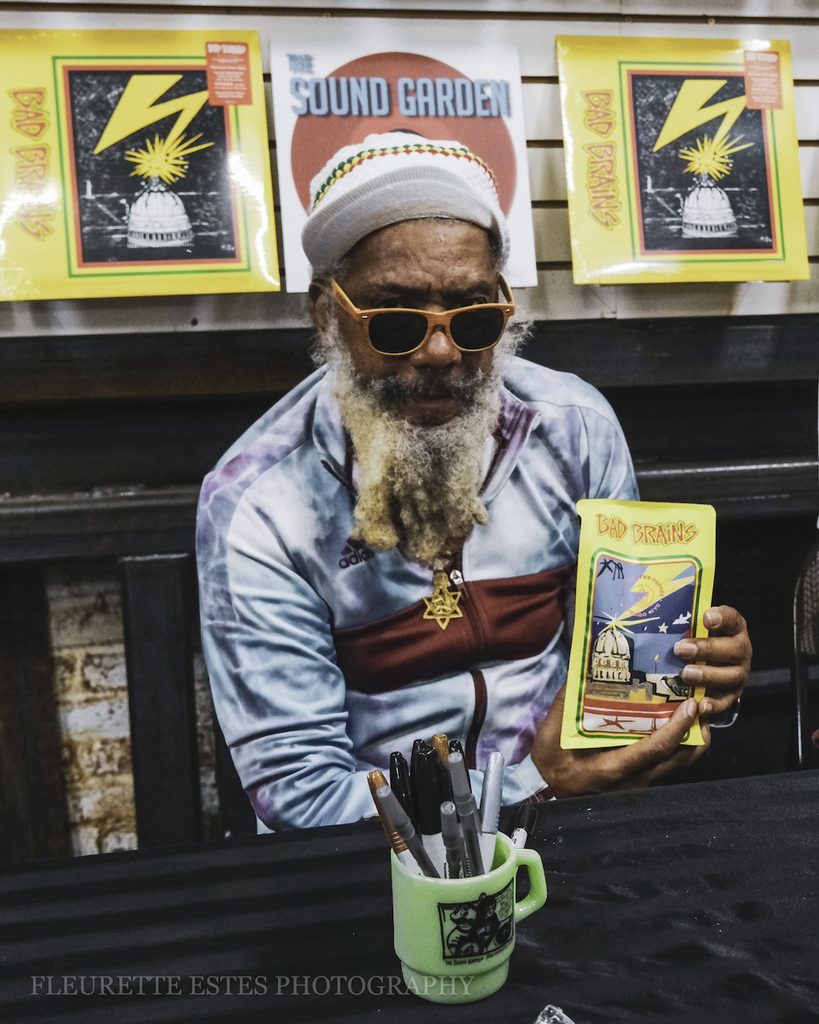
Our day began with a hearty breakfast before my husband, Raymond Burton Estes (…And We All Die), and I set out from Northern Virginia for Baltimore, Maryland to spend the day with punk, hardcore, and reggae legend, H.R. (Paul D. Hudson), best known as the singer of Bad Brains.
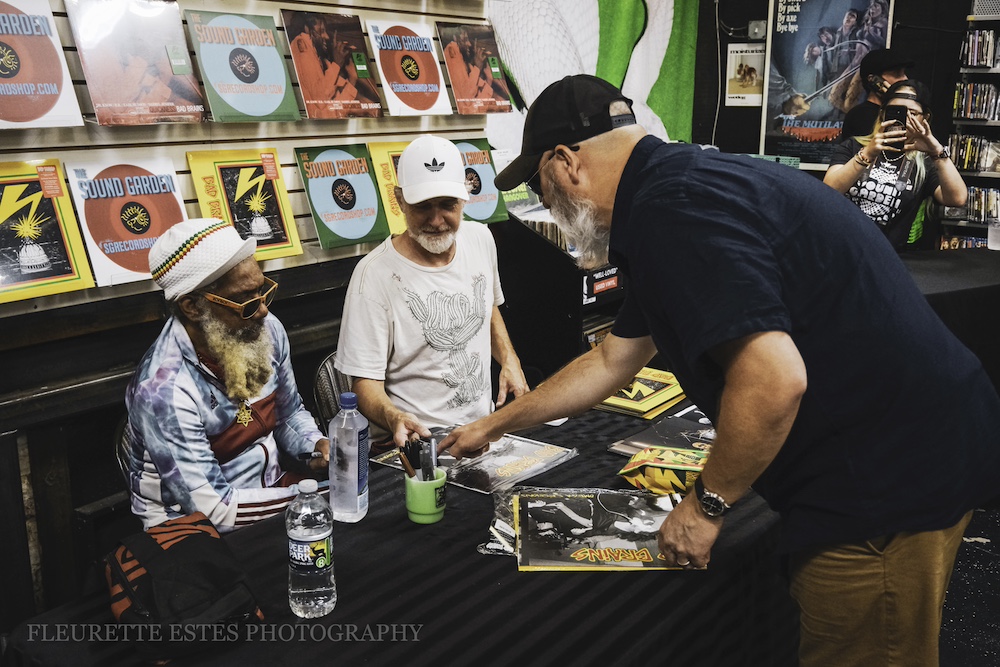
While at The Sound Garden, we watched as fans arrived, purchased items to be signed, and took their place in line to meet H.R. People from all over the greater D.C./Maryland/Virginia (DMV) area came to show their love and support for this hometown hero. There were no fights or arguments about who was in line first or any of that. There was just a pleasant experience of people with a shared interest coming together to celebrate one of their favorite singers.
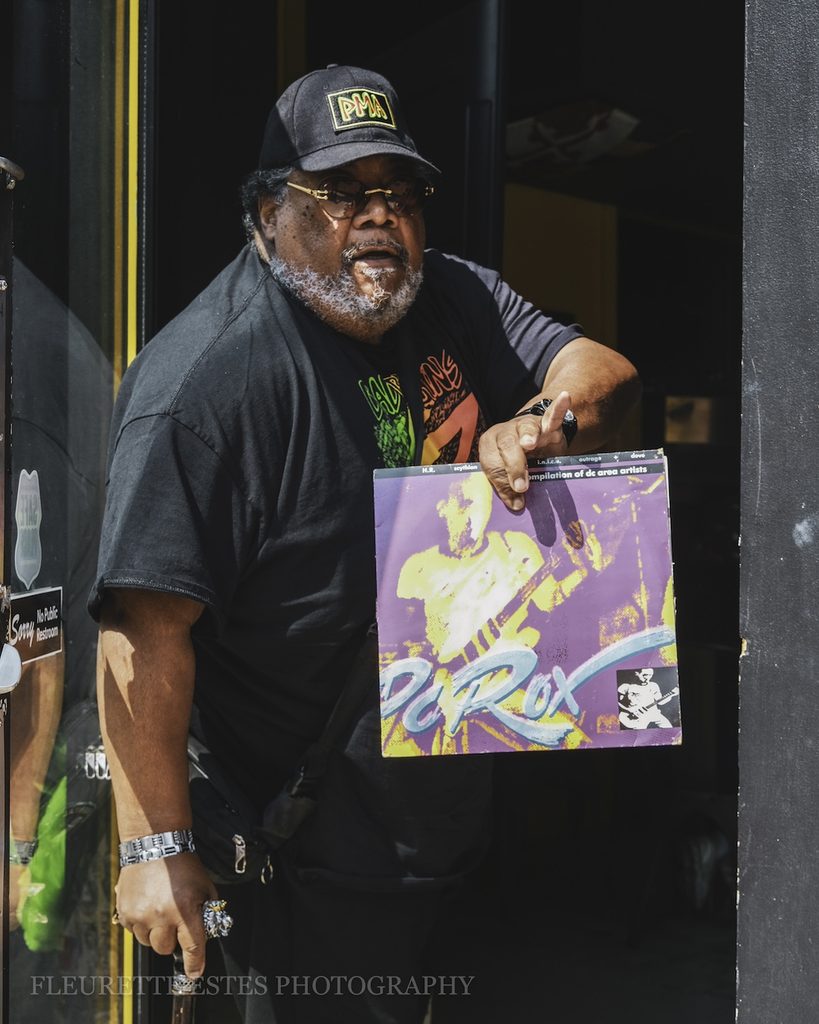
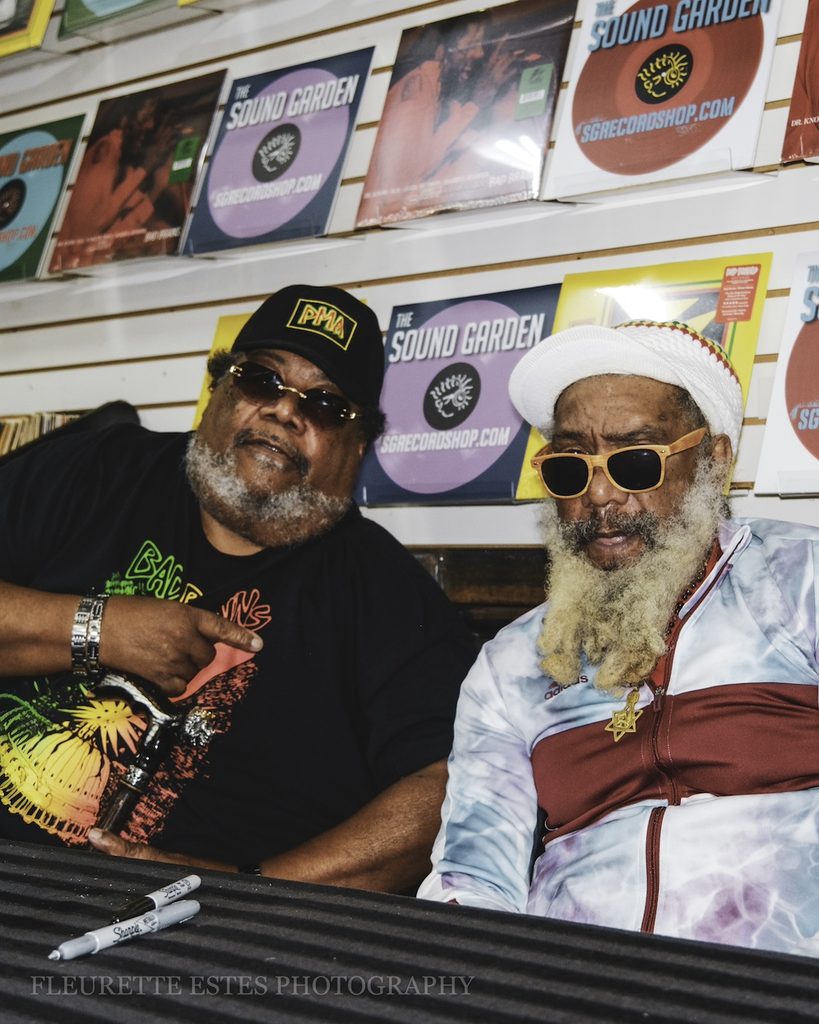
Of note, Ivan “Vice” Read, the drummer from old school D.C. underground rock band, Press Mob, showed up sporting a Bad Brains t-shirt and a P.M.A. (positive mental attitude) ball cap. Press Mob and H.R. were both featured on the 1987 compilation record, DC Rox: A Compilation of DC Area Artists, on Wetspots Records. Read was eager to have his old friend, H.R., sign a copy of the record because he’s been getting all his old friends on that album to sign it, noting that they’re not getting any younger and he wants to see everybody again.
Before today, the two men hadn’t seen each other in at least 20 years. It was a sight to see old friends catching up and only added to the positive vibe of the experience.
…And We All Die also got some records signed for himself and Darin Johnson, singer for their hardcore band Eleventh Hour. Bad Brains is a staple around the house, so it was good to see these worlds collide.
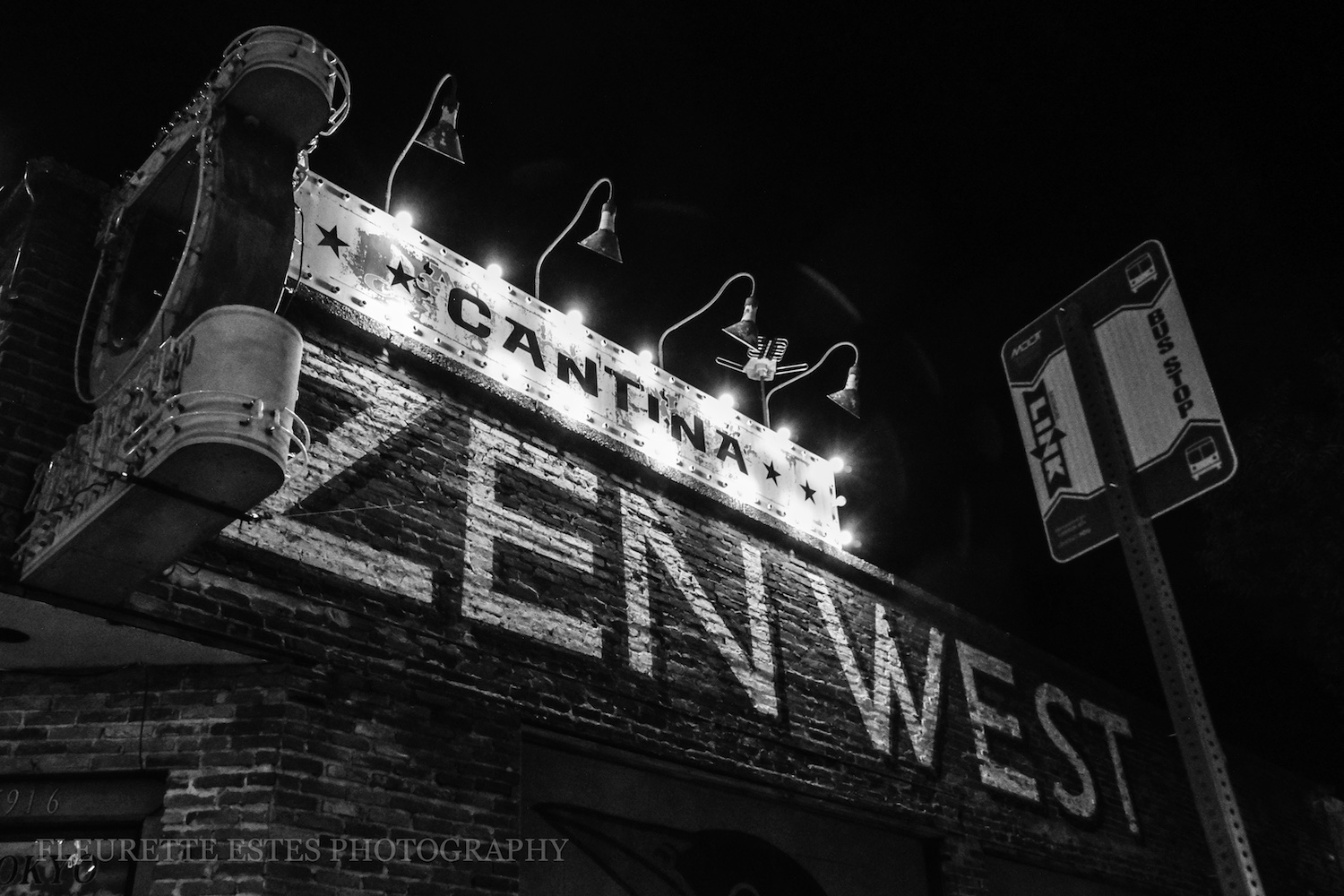
After the meet and greet, we headed over to Zen West to get ready for the show. The Zen West staff and crew were super friendly and helped us get sorted and allowed us to be there for H.R.’s soundcheck.
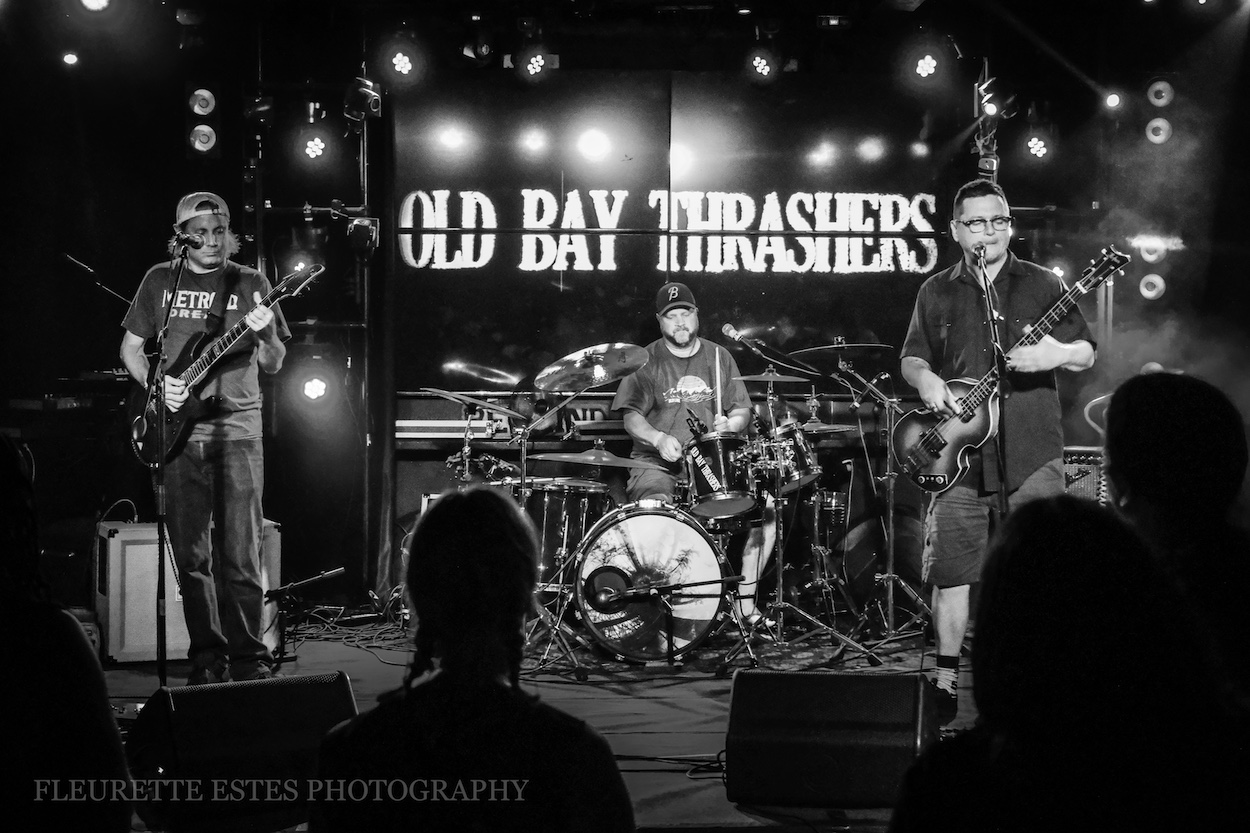
Baltimore’s Old Bay Thrashers opened the show with a set of Propagandi-inspired punk rock, with a twist. The band slowed their songs down for this show, so it was interesting to hear them perform these more upbeat tunes with a more mid-tempo, reggae-ish vibe. They played a song, “Ludlow”, which was inspired by Howard Zinn’s 1980 book A People’s History of the United States that discusses the Ludlow Massacre of 1914 in which approximately 20 people were killed for during an attack on striking coal miners. They also appropriately covered “The State-Lottery” by Propagandhi. Old Bay Thrashers band members are Todd Spalt (vocals, bass), Robert Carroll (vocals, guitar), and Zak Concannon (vocals, drums).
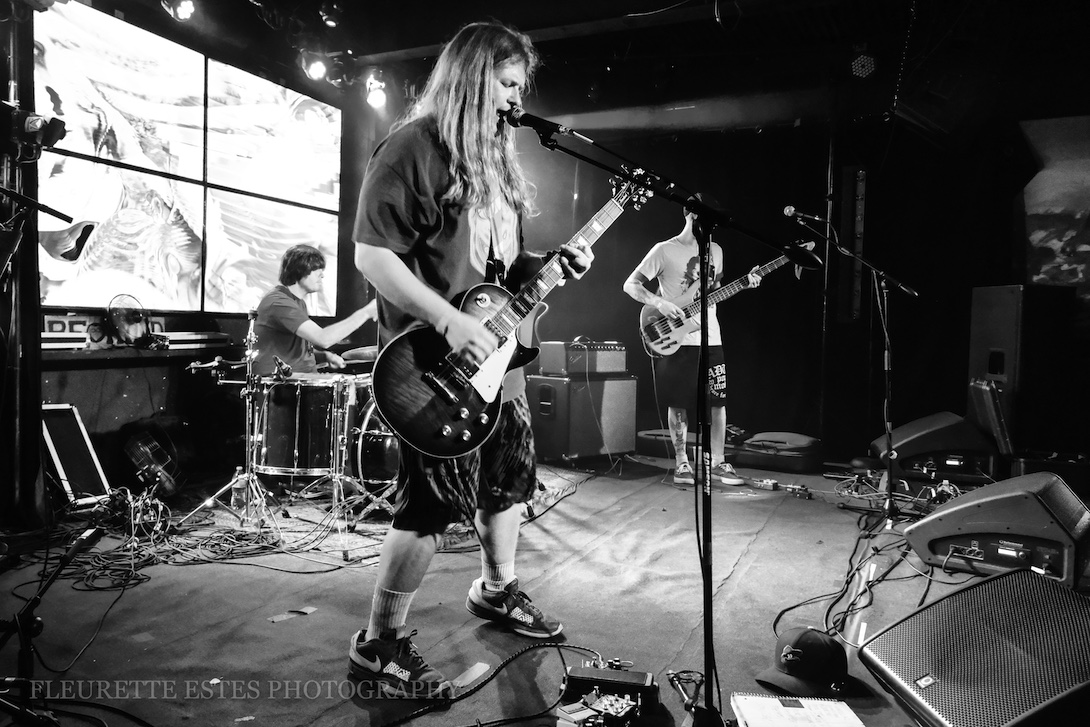
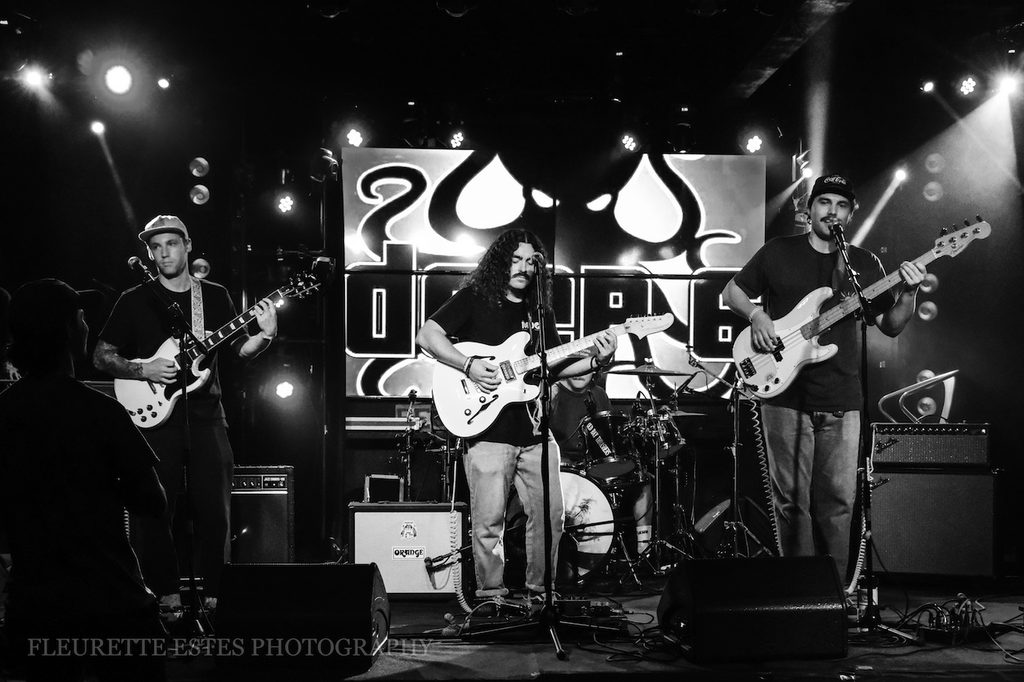
Up next was the local band, The Melon Farmers, who delivered an Offspring-esque set of pop punk reggae, which was appropriate as singer/guitarist, Ian Gilley, wore an Offspring t-shirt. They began their performance with a cover of “Clint Eastwood” by Gorillaz, in response to a request from one of the audience members. The band played a song, “Phelps Dub“, about and dedicated to Olympic gold medalist swimming champion and another hometown hero, Michael Phelps, who famously smoked marijuana. The Melon Farmers band members are Ian Gilley (vocals, guitar), Shane Wilson (bass), and Gilby Rybak (drums).
Also hailing from Baltimore was Deep Six, a local reggae-jam band that sounded like a healthy mix of 311 with some beach party guitar magic. The band was tight and played a mix of originals and covers, including “54-46 (That’s My Number)” by Toots and the Maytals. Deep Six band members are Matt Battaglia (vocals, guitar), Mike Mitrega (drums), Nick Kramer (bass), Gunter Leatherman (guitar), and Josh Carlon (keyboards).
Consisting of three-fifths of the current H.R. lineup, Austin, Texas’ Lion Heights delivered a high-energy set of roots reggae. They came out swinging and stayed strong throughout their entire set. They got the audience dancing and primed for H.R. And, as a fan of guitar, we hardly noticed they didn’t have a guitarist, which says quite a bit about their musical wizardry. There’s no doubt why they are part of H.R.’s band. Lion Heights band members are Jeremy Carlson (keyboards, vocals), Dane Foltin (bass, vocals), and Aldane “Spice” Hutton (drums).
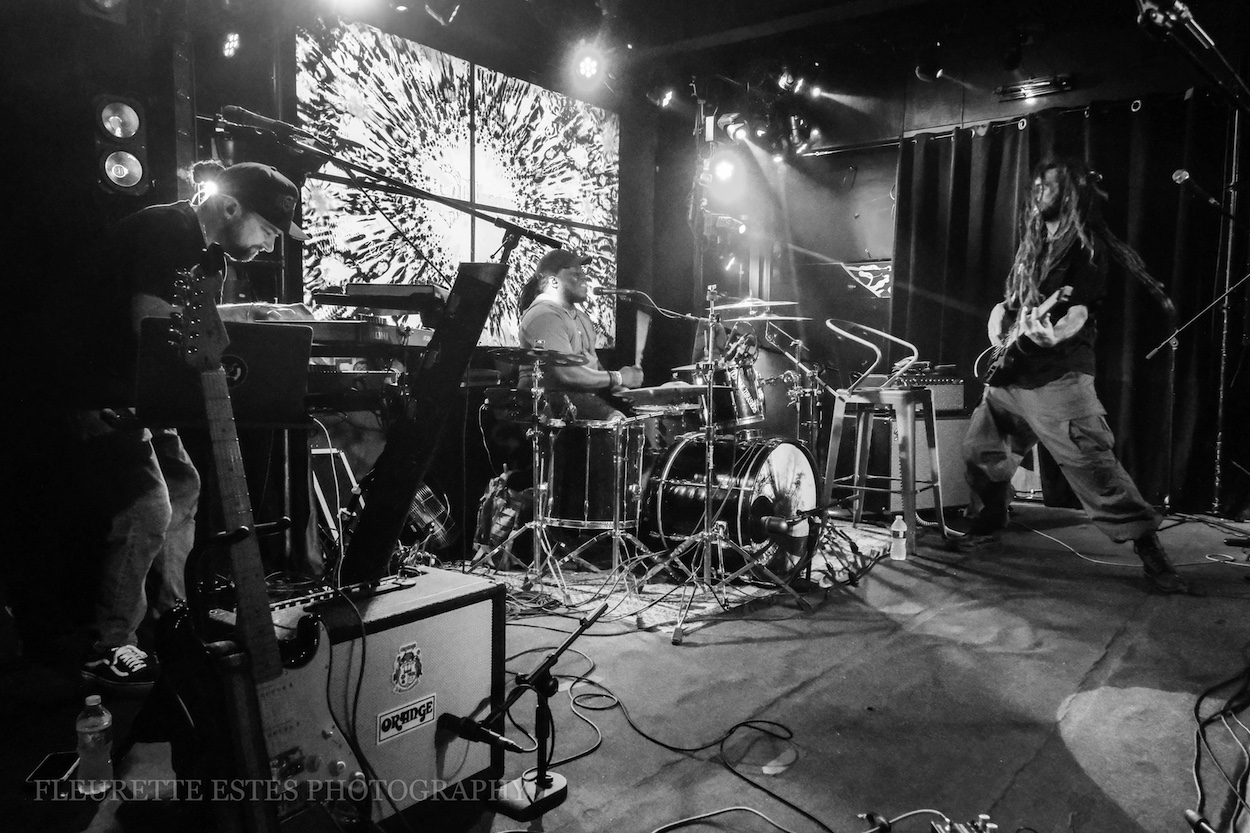
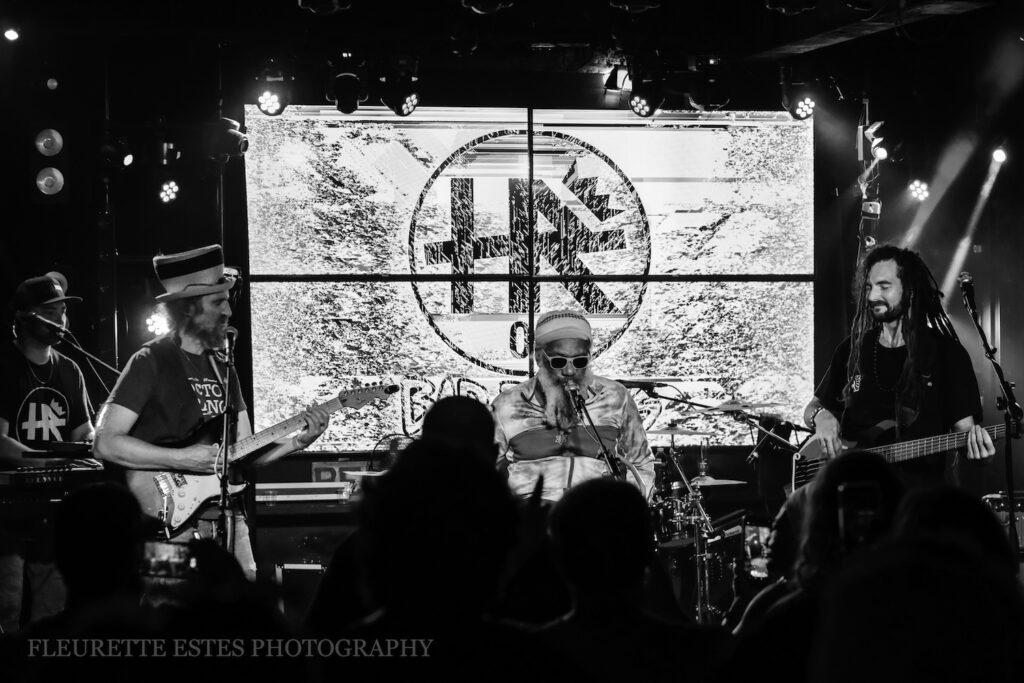
Lastly, H.R.’s band took the stage and began their set with an instrumental. Comprised of the members of Lion Heights along with longtime guitarist, Ezekiel Zagar from F.O.D. and McRad, H.R.’s band played walk-on music while friend and manager, “Tall” Sean McLaren, escorted H.R. to his seat at center stage. The band played a set of H.R. originals and reworked Bad Brains songs that had audience members dancing and singing and celebrating. We were thrilled to hear “Sacred Love“. At one point, H.R. asked the crowd if they liked pop music before the band went into Seeking From Within, penned by Zagar. H.R. band members are HR (vocals), Ezekiel Zagar (guitar), Jeremy Carlson (keyboards, vocals), Dane Foltin (bass, vocals), Aldane “Spice” Hutton (drums).
Noroth and Mortual have both been making noise in the underground death metal scenes in the Pacific Northwest and Costa Rica, respectively, and now the two bands join forces for a new split coming on October 30. To set the mood for the release, both bands offer up new songs today at Decibel.
“Tongue ov Soot and Ash” is Noroth’s contribution today, a classic slab of old-school death metal with an overcast feeling, giving shades of Incantation or Undergang. The timeless sound and the accompanying witchy video make the song feel like something that could have been released any time between the ’90s and today.
On “Eclipse of Dominion,” Mörtual execute a faster take on death metal, slowing down only for a deranged, doomy section around the midway point.
You can listen to both songs below and get two familiar, yet different, takes on the same genre. Noroth / Mortual is out on October 30 via Night Terrors and Goat Throne Records.
Few Gothic images are as compelling as the hidden room. A locked door at the end of a corridor. A concealed chamber behind a wall. A forgotten space that exists inside a house yet remains inaccessible to those who live there. These rooms appear throughout Gothic literature because they transform psychological mysteries into physical spaces.
They give shape to what has been concealed, denied, forgotten, or feared. The fascination is not really architectural. It is psychological. Secret rooms symbolize hidden aspects of the self. They represent memories that refuse to disappear, truths that remain buried, and fears that continue influencing behavior from behind locked doors.
This symbolism helps explain why hidden chambers remain among the most enduring images in Gothic fiction. The room may be concealed within the building, but its true location is often within the mind.
The Psychology of Secret Rooms
Why Hidden Rooms Create Unease
A house is generally expected to be understandable.
We assume we know its layout. We believe its rooms are visible and accessible. A secret chamber disrupts that certainty.
The discovery of a hidden space immediately raises questions.
Who built it?
Why was it concealed?
What remains inside?
The room becomes unsettling because its existence suggests that something important has been deliberately hidden.
In Gothic fiction, concealed spaces rarely contain ordinary objects. More often, they preserve family secrets, crimes, forbidden knowledge, or uncomfortable truths.
The hidden room transforms architecture into a mystery.
The locked door becomes evidence that the past has not been fully erased.
The Gothic Origins of Secret Rooms
Secret rooms became a defining feature of Gothic literature during the eighteenth century.
Horace Walpole’s The Castle of Otranto helped establish many of the architectural conventions that would shape the genre. Hidden passages, concealed chambers, and mysterious corridors created a world where history lingered within the walls themselves.
These spaces allowed Gothic writers to transform the past into an active presence.
Ancient crimes, forgotten inheritances, and buried truths could remain hidden for years before suddenly emerging into the present.
The secret room became a perfect Gothic symbol because it suggested that what is hidden never truly disappears.
It merely waits to be discovered.
Jane Eyre and the Hidden Truth in the Attic
One of Gothic literature’s most famous secret rooms appears in Charlotte Brontë’s Jane Eyre.
At Thornfield Hall, Rochester conceals his wife, Bertha Mason, within a locked attic that remains hidden from visitors and largely inaccessible to the rest of the household.
The room functions as far more than a plot device.
It becomes a physical manifestation of repression.
Rochester attempts to isolate an uncomfortable reality from the rest of his life. The hidden chamber allows him to preserve a public identity while concealing a truth he cannot openly acknowledge.
The attic embodies a central Gothic principle: what is hidden continues to exert influence.
Despite the locked door, Bertha’s presence shapes the entire narrative. Strange sounds, unexplained events, and persistent unease all emerge from a secret that refuses to remain contained.
The concealed room becomes a symbol of everything society, families, and individuals attempt to keep out of sight.
Eventually, the hidden truth demands recognition.
Poe and the Architecture of the Mind
No writer explored the relationship between architecture and psychology more effectively than Edgar Allan Poe.
In The Fall of the House of Usher, the mansion functions less as a building than as a psychological landscape. Its dark interiors, sealed spaces, and oppressive atmosphere mirror the deteriorating mental condition of its inhabitants.
Every corridor seems connected to memory. Every enclosed chamber suggests something buried beneath conscious awareness.
Poe understood that the most disturbing secrets are often internal rather than external.
By transforming architecture into a reflection of the mind, he helped establish one of Gothic literature’s most enduring ideas:
the house becomes frightening when it begins to resemble the self.
Freud and the Return of the Repressed
The symbolism of secret rooms becomes even more powerful when viewed through the ideas of Sigmund Freud.
Freud argued that experiences, memories, and desires do not simply vanish when they are suppressed. Instead, they remain active beneath conscious awareness, influencing thoughts and behavior from the shadows.
This concept closely mirrors the structure of the Gothic secret room.
A hidden chamber exists within a building yet remains deliberately separated from ordinary life. Likewise, a repressed memory remains part of the mind while being excluded from conscious thought.
In both cases, concealment creates tension.
The secret may remain hidden for a time, but its influence persists. Strange disturbances, unexplained emotions, and recurring anxieties often suggest that something buried continues to seek expression.
This is why Gothic stories frequently connect hidden rooms with revelations.
Opening the door often means confronting something that has been denied for years.
Carl Jung and the Shadow Behind the Door
Carl Jung expanded this psychological framework through his concept of the Shadow.
According to Jung, every individual possesses aspects of the personality that remain hidden from conscious awareness. These qualities may be feared, rejected, or simply ignored, yet they continue influencing behavior.
“The shadow personifies everything that the subject refuses to acknowledge about himself.”
— Carl Jung, The Archetypes and the Collective Unconscious
Secret rooms provide a striking visual metaphor for this idea.
The concealed chamber is physically part of the house, just as the Shadow is psychologically part of the self. Yet both remain separated from everyday awareness.
When Gothic protagonists discover hidden rooms, they are often confronting more than an architectural mystery.
They are encountering truths that challenge their understanding of themselves, their families, or the world around them.
The room becomes a symbolic threshold between what is known and what has been concealed.
Why Hidden Rooms Feel Uncanny
Part of the emotional power of secret rooms comes from their uncanny nature.
Freud described the uncanny as the unsettling feeling that emerges when something familiar suddenly becomes strange.
A secret room embodies this contradiction perfectly.
The hidden chamber exists within a house that appears familiar and understood. Yet its discovery reveals that the building contains something unexpected.
The realization alters the meaning of the entire structure.
Rooms that once felt ordinary now seem suspicious. Hallways suggest additional mysteries. Every wall becomes a potential boundary concealing another hidden space.
The discovery changes not only the room itself but the perception of everything surrounding it.
That psychological disruption lies at the heart of many Gothic narratives.
The House as a Map of the Psyche
Writers have long treated houses as symbolic representations of the human mind.
Public rooms correspond to the identities people present to the world. Private rooms suggest personal memories and emotions. Hidden chambers represent experiences that remain buried, denied, or unexplored.
This symbolic structure appears repeatedly throughout Gothic fiction because it transforms abstract psychological ideas into physical environments.
Readers do not simply learn about repression or hidden fears.
They move through corridors, encounter locked doors, and experience the discovery directly alongside the characters.
The architecture becomes a form of storytelling.
Every staircase, passageway, and concealed chamber reveals something about the people who inhabit the space.
The Secret Room as a Psychological Threshold
The most memorable secret rooms rarely contain treasure.
Instead, they contain knowledge.
The hidden chamber marks a boundary between ignorance and understanding. Crossing that threshold changes the characters who pass through it.
In Jane Eyre, the discovery of Bertha Mason transforms Jane’s understanding of Rochester. In Poe’s fiction, hidden spaces reveal uncomfortable truths about memory, mortality, and identity.
The room itself matters less than what it uncovers.
This is why secret rooms continue appearing throughout Gothic literature.
They provide a physical form for psychological revelation.
Every locked door poses the same question:
What truth has been hidden, and what will happen when it is finally revealed?
Why Secret Rooms Continue to Fascinate Us
The enduring appeal of secret rooms cannot be explained by architecture alone.
Most people will never discover a hidden chamber behind a bookcase or uncover a forgotten passage concealed within an ancient mansion. Yet the image continues to appear throughout literature, film, and popular culture.
The reason lies in what secret rooms represent.
They embody the possibility that something important remains hidden beneath the surface of ordinary life.
A concealed room suggests that reality may be more complicated than it first appears. Beneath familiar surroundings may exist another story, another truth, or another version of the self waiting to be discovered.
This possibility remains deeply compelling because it reflects a fundamental aspect of human experience.
People rarely understand themselves completely.
There are memories that fade, emotions that remain unexplored, and motivations that operate beyond conscious awareness.
The secret room transforms these invisible mysteries into something tangible.
The Gothic Obsession with Hidden Truths
Gothic literature has always been preoccupied with what lies beneath appearances.
Family histories conceal crimes. Respectable figures hide dangerous secrets. Grand houses shelter uncomfortable realities behind locked doors.
The secret room becomes the perfect symbol for this tension between appearance and reality.
Unlike a monster or a ghost, a hidden chamber exists within the ordinary world. It is physically present from the beginning of the story, yet its significance remains concealed.
This makes the eventual discovery particularly powerful.
The revelation does not introduce something new.
It uncovers something that was always there.
That pattern mirrors many psychological experiences. Hidden fears, suppressed memories, and denied truths often feel shocking when they emerge, even though they have been influencing behavior all along.
Why the Secret Room Endures
Many Gothic symbols have changed over time, but the secret room remains remarkably resilient.
Its endurance comes from its flexibility.
A hidden chamber can represent a family secret, a repressed memory, an aspect of the Jungian Shadow, or an uncomfortable truth waiting to be acknowledged.
The specific meaning may change, but the underlying structure remains the same.
Something important has been concealed.
The story revolves around its discovery.
This simple narrative pattern continues to resonate because it reflects the way people often experience knowledge itself. Understanding rarely arrives all at once. It emerges gradually as hidden connections become visible.
The secret room turns that process into a physical journey.
The Psychology of Secret Rooms
Secret rooms fascinate us because they give physical form to psychological realities.
Freud’s repressed memories, Jung’s Shadow, concealed family histories, and hidden aspects of identity all find expression through the image of a locked chamber waiting to be opened.
The Gothic tradition recognized something that psychology would later attempt to explain.
The most powerful mysteries are often internal.
A hidden room may exist within a castle, a mansion, or an ancient estate, but its symbolic significance reaches much deeper. It represents the parts of ourselves that remain unexplored, forgotten, or deliberately concealed.
That is why secret rooms continue appearing in Gothic fiction generation after generation.
They remind us that every mind contains locked doors.
Every life contains hidden stories.
And every search for truth begins by opening something that has remained closed.
Wear the Darkness
If The Psychology of Secret Rooms resonates with your fascination for Gothic literature, hidden symbolism, and psychological mystery, explore the Edgar Allan Poets store. Our designs celebrate the darker corners of imagination, memory, and the Gothic tradition.
Join the Noir Newsletter
Receive more essays exploring Gothic literature, noir psychology, symbolism, hidden meanings, and the mysteries that continue shaping human imagination.
Frequently Asked Questions
Why are secret rooms common in Gothic literature?
Secret rooms symbolize hidden truths, family secrets, repression, and psychological conflict, making them ideal Gothic symbols.
What do secret rooms represent psychologically?
They often represent repressed memories, concealed emotions, hidden aspects of identity, and parts of the unconscious mind.
How does Jane Eyre use a secret room?
The attic containing Bertha Mason functions as a hidden space that conceals a family secret and symbolizes repression and denial.
What is the connection between secret rooms and Jung’s Shadow?
Both symbolize hidden aspects of the self that remain concealed from ordinary awareness but continue influencing thoughts and behavior.
Why do secret rooms remain fascinating today?
They reflect the universal human experience of uncovering hidden truths about ourselves, our past, and the world around us.
Switzerland’s Rorcal are all set to unleash their seventh full-length instalment, Mahre, on September 25th via Humus Records. The 5-piece outing was recorded, mixed and mastered by Thomas Betrisey at Downtone Studio. Read more…
 A year before Slayer started their thrash party, Paul “Shorty” Van Camp and Fat Leo formed their band, Killer. However, their names are the only things these two bands have in common—instead of thrash, Killer play an energetic style of classic heavy metal that has drawn plenty of comparisons to Motörhead. One can also hear NWOBHM influences from Saxon to Iron Maiden as well as some Def Leppard, AC/DC, and Thin Lizzy. What some consider Belgium’s first metal band, Killer struggled to imitate the success of their influences, with lineup changes wreaking havoc and financial struggles leading to lengthy hiatuses. After 1990’s Fatal Attraction, the ’90s were a quiet decade for the crew until a burst of energy following a 20th anniversary reunion that led to the release of two records in 2003 and 2005. The Grand Finale marks their third album since 2005’s Immortal, their ninth overall, and, as the album title and tongue-in-cheek cover art suggest, the last of their career. Despite their age, these guys prove they aren’t too olde to rock.