A lament begins where ordinary speech reaches its limit. Across Irish and Scottish Gaelic traditions, keening gave bereavement a communal voice, allowing grief to rise through repeated cries, elongated vowels, and melodies that seemed to carry private anguish beyond the body. The old songs associated with death and departure seldom treated sorrow as an interruption to life. Loss belonged to the order of existence, and music provided the vessel through which the living could address the dead, the absent, and whatever might wait beyond sight.
Medieval mourning followed a similar impulse. The planctus, sung for fallen rulers, saints, biblical figures, and loved ones, placed grief inside solemn melodic forms whose restraint often intensified the pain they carried. Processions, bells, candles, veils, and liturgical voices gave sorrow a physical setting, surrounding the bereaved with symbols when language had become inadequate. Centuries later, synthesizers can occupy the place once held by the drone, organ, and tolling bell, while the human voice still performs its oldest work: calling into the silence left by another person.
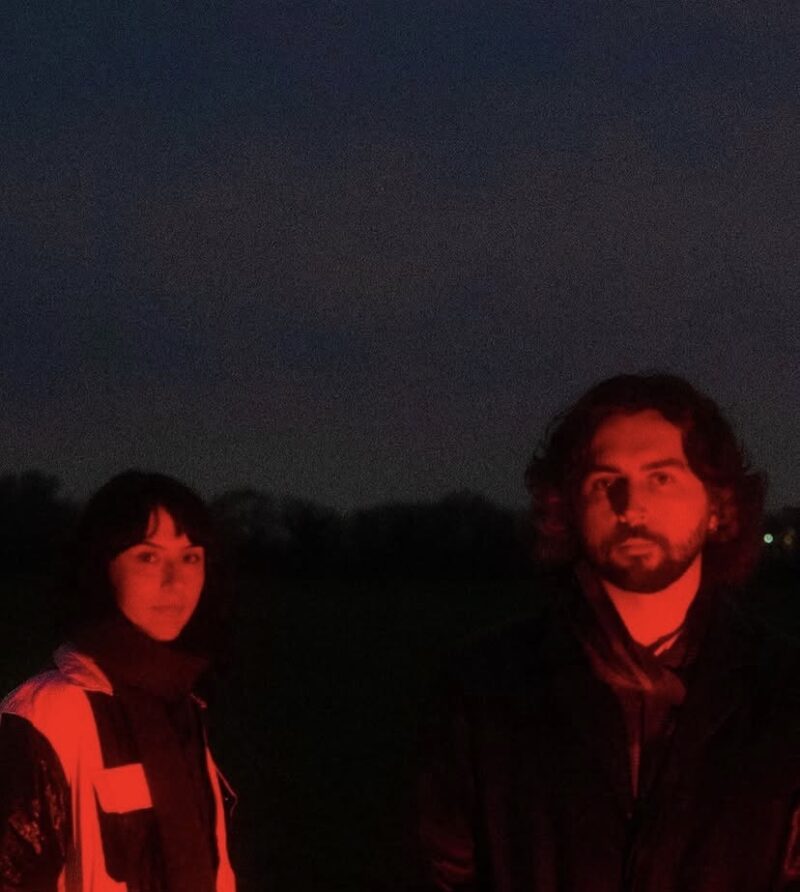
TVAM and Los Angeles synth-pop artist Riki enter that ancient territory with The Sorrow, their new collaboration released through TVAM’s Psychic Data label. Created remotely between Manchester and Los Angeles, the song turns love and loss into an ethereal goth dirge steeped in dark magic, medieval folklore, ecclesiastical grandeur, and the terrible intimacy of heartbreak and bereavement.
Low, sustained synthesizers open the recording with the sensation of fog rolling through a churchyard, slowly revealing a deep, buzzing organ tone beneath them. Delicate notes follow, somewhere between a kalimba and vibraphone, their chiming quality lending the arrangement an antique, almost ceremonial character. A broad sweep of synthesizers then rises with the severe beauty associated with Dead Can Dance, while the revolving drumbeat gives the piece the measured pace of a funeral procession.
Riki sings in a medieval, liturgical register, stretching her voice into phrases whose words remain difficult to distinguish while their meaning feels unmistakable. Her performance moves beyond conventional synth-pop phrasing into something closer to invocation, with each ascending line carrying another measure of anguish. Voice, percussion, organ, and chiming motifs pass over the senses in successive waves, layering sorrow like lace across a mourner’s veil. The Sorrow may be the deepest either artist has ventured into ethereal goth, and their shared instincts make the descent feel entirely natural.
TVAM’s Joe Oxley remembers the moment the collaboration found its form:
“It’s rare to find those moments when two artists can connect on something and it just seems to fall into place. It happened as soon as I dropped Riki’s vocal into the mix and the piece came alive.”
The accompanying visualizer places the song inside the unstable glow of an aging television. Distorted monochrome faces, veiled figures, clasped hands, stone reliefs, and indistinct landscapes appear through scan lines and buckling interference, as though fragments of a damaged medieval archive were being transmitted from an abandoned chapel. Pale blue-grey images occasionally give way to bruised reds, while figures stretch, double, and dissolve beneath rolling bands of static. The imagery functions as a distressed electronic reliquary, holding traces of devotion and death that seem perpetually on the verge of disappearing.
Watch the visualizer for The Sorrow below:
Liverpool dark electronic outfit Those Holy, who joined TVAM during the Ruins tour earlier this year, push the song into an even more severe form on the B-side remix. Oxley recalls:
“They played with us on the Ruins tour earlier in the year a just blew me away. They’ve got their own sound, really dark and intense but with these fragile moments which mess with your head.”
Those Holy
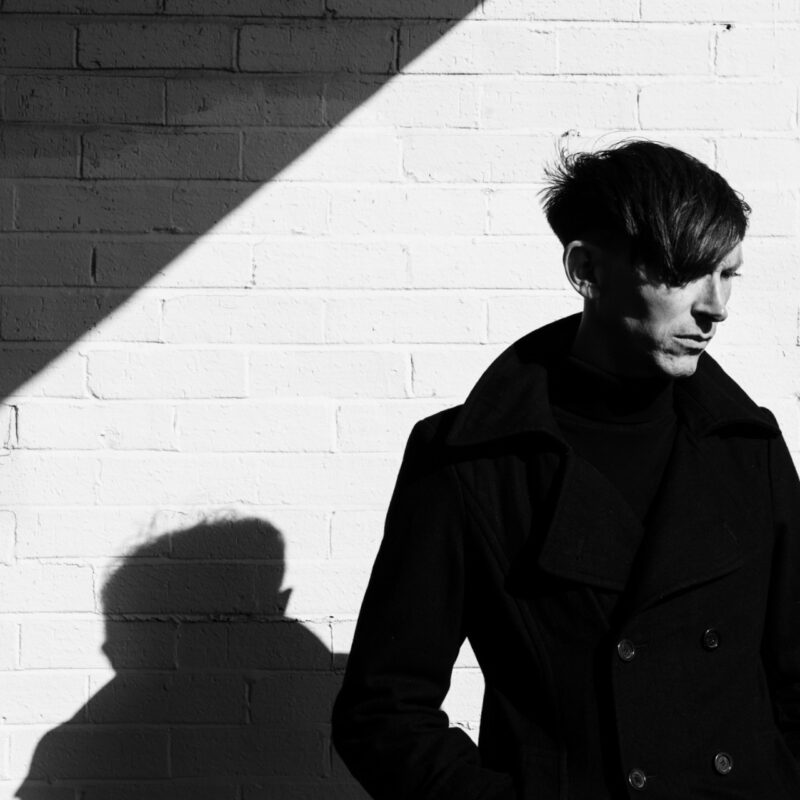
For TVAM, The Sorrow follows Ruins, his third full-length album and the successor to 2022’s High Art Lite. Released through Invada Records in February, Ruins was shaped by grief, reflection, and personal transformation, with songs including Powder Blue, In Memory, and The Haunted examining what remains after loss has altered the dimensions of daily life. That preoccupation leads directly into The Sorrow, where mourning assumes a more mythic and devotional scale.
Joe Oxley of TVAM
Riki’s recent work has found her moving between solo material and carefully chosen collaborations. In March 2025, she released the two-song Pulser single, pairing its title track with Devil Games. Two months later, she joined Mareux for Ébène Fumé, a romantic duet featured on his album Nonstop Romance. Her work with TVAM draws out another dimension of her voice, replacing the poised movement of her Italo and new-wave material with the grave sweep of sacred song.
Riki
TVAM first gained wider attention with his 2018 debut album, Psychic Data, recorded in a small bedroom studio in Wigan. From the slogans of Porsche Majeure to the political unease of Semantics, Joe Oxley developed a body of work concerned with media saturation, cultural memory, and the images through which modern life understands itself. His music has since received daytime support from BBC Radio 6 Music and appeared in television productions including Succession.
Riki established her solo identity with 2020’s self-titled debut before widening her emotional and stylistic reach on 2021’s Gold, both released through Dais Records. Her combination of European new wave, Italo disco, art-pop, and dramatic stage performance has always carried a strong visual sensibility. On The Sorrow, that theatrical command becomes almost ecclesiastical, suited to a song that regards heartbreak through the distance of centuries.
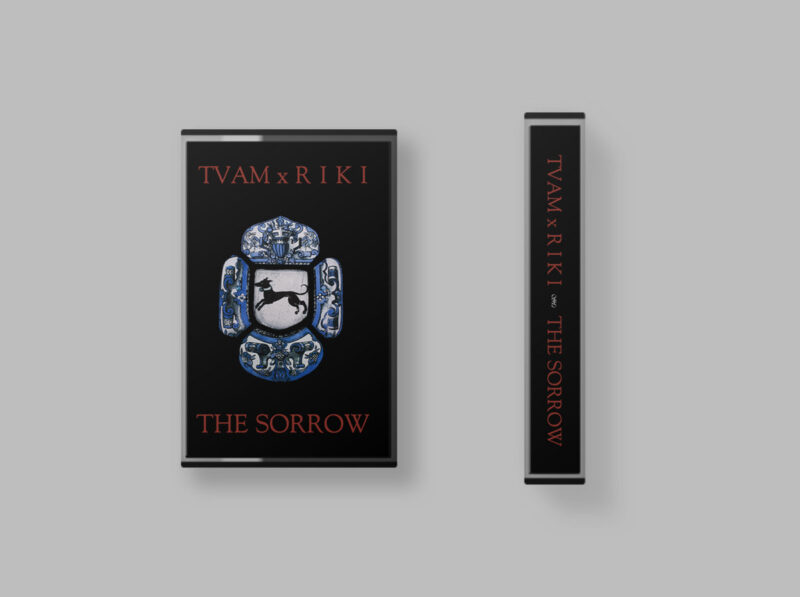
The Sorrow was composed by TVAM and Riki, mixed by Joseph M. A. Oxley, and mastered by Dean Honer of I Monster and The Moonlandingz. The release is available digitally through the DSP smartlink and as a hand-numbered, two-track “Blood is Thicker” cassette limited to 100 copies.
Copies numbered 1 through 25 are available exclusively in a limited bundle containing the cassette and a The Sorrow T-shirt. The remaining hand-numbered copies, 26 through 100, are offered separately. The cassette places the original collaboration on the A-side and the Those Holy remix on the B-side.
Listen to The Sorrow and the Those Holy remix below or via the streaming service of your choice, and order the limited-edition cassette or T-shirt bundle here.
Oakland’s Samuelito Cruz has been intermittently cranking out lo-fi guitar-pop as Toner for over a decade now, and these days he’s doing it for the esteemed Smoking Room label. Toner will soon follow up 2023’s God’s Hammer EP with the new album Dynasty House, the fourth Toner LP and the first in five years. There’s no album art or pre-order link yet, but we do have some music to whet our appetities.
Elon Musk, the richest and arguably shittiest man on the planet, is the subject of Musk, a new epic-length documentary from Alex Gibney, a filmmaker who won an Oscar for 2005’s Enron: The Smartest Guys In The Room and whose other works include Going Clear: Scientology And The Prison Of Belief and The Inventor: Out For Blood In Silicon Valley. Musk is 235 minutes long, and Gibney calls it a “definitive and unvarnished examination” of the man. Musk himself has already called it a “hit piece.” I hope it is! The film will include a new David Byrne song that’s apparently made up of nothing but Elon Musk quotations.
Our list of 20 songs that only those of us who grew up in the seventies will remember fits in perfectly with other types of lists that prove if you didn’t grow up in the seventies, you probably would have no idea what a Pet Rock was, what the Have a Nice Day smiley face meant, or why phrases like “Danger, Will Robinson!” still make us laugh. Although that last one originated in the 1960s, many of us watched Lost in Space in syndication after school throughout the 1970s. Of course, there are countless things in pop culture that people
Van Halen‘s final studio album, A Different Kind Of Truth, is heading back into print. Rhino will reissue the record on October 23 on CD and as a 2LP set pressed on 180-gram vinyl in a double gatefold sleeve, with a limited crystal-clear vinyl edition available exclusively through select indie retailers and Rhino.com. Chris Bellman cut the new lacquers at Bernie Grundman Mastering.
A Different Kind Of Truth teamed Eddie, Alex and Wolfgang Van Halen with singer David Lee Roth for the first time on a studio record since 1984. Released February 7, 2012, the album debuted at No. 2 on the Billboard 200 and was well received by critics and longtime fans alike.
Van Halen formed in Los Angeles in 1974 and reshaped rock with its self-titled 1978 debut, a record defined by explosive live energy, groundbreaking musicianship and sharp songwriting. The band has sold more than 75 million albums worldwide and holds diamond-certified RIAA status for both Van Halen and 1984, leaving behind a catalog of songs still regarded as some of rock’s most influential.
A Different Kind Of Truth is available to pre-order here.
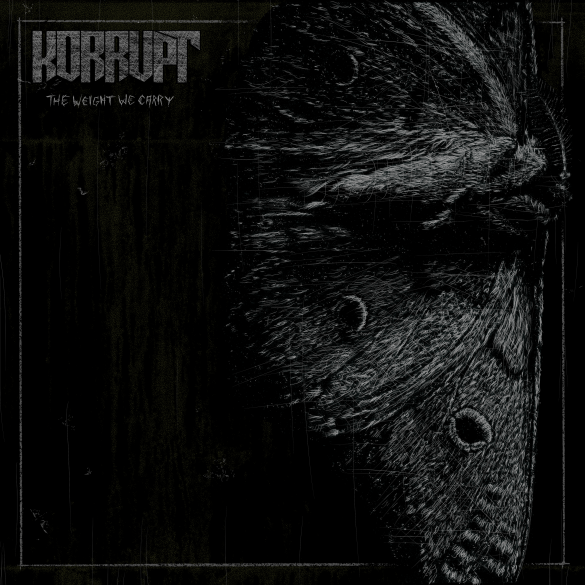
We’ll admit that a small part of us hoped that this new track from Norwegian black metal-informed hardcore outfit Korrupt was a Doors cover. Alas, it is 100 percent not. Less circus-y and psychedelic than the 1970s track by the same name, Korrupt’s “Waiting For the Sun” is a nearly four minute ear scrape of frozen black metal with punchy hardcore pivots and is taken from the five-piece outfit’s upcoming third full-length, The Weight We Carry. Together since 2013, these dudes—Marius Jahnsen (lead vocals/guitar), Fredrik Nome (lead vocals/guitar), Thomas Holler Lindstrøm (guitar/vocals), Aleksander Johnson (bass/vocals), Henrik Kyte Assmann (drums)—have concocted a modern sound rooted in two very different extreme disciplines, yet retains the power of both.
The Weight We Carry is set for release on vinyl and digitally via Holler Records on October 30. Though not yet available for preorder, it will soon be available here.
Korrupt are introducing their new album with a track they describe like this:
“Lost in a godforsaken universe, somewhere between darkness and light. Anxiety becomes a symphony, solitude becomes a prayer, and the sun becomes a promise we know will never be kept. Waiting for the Sun is a song about waiting for salvation, and realizing you are waiting in vain. The first sentence of this song is also the first sentence Marius wrote for this new record, that’s coming out later this fall.”
Few bands shaped the sound of Gothic rock as profoundly as The Sisters of Mercy. Many groups contributed to the genre’s development, yet The Sisters of Mercy created something immediately recognizable. Their music felt vast, echoing, and architectural. Songs did not simply move through melodies and rhythms. They seemed to occupy enormous spaces. Listeners often describe this quality as the band’s “cathedral sound.” The description is remarkably accurate.
Cathedrals transform sound in distinctive ways. Voices linger beneath high ceilings. Notes overlap as echoes continue long after their source has faded. The listener becomes aware not only of the music itself but of the space surrounding it. The Sisters of Mercy recreated that sensation through production, arrangement, and atmosphere.
Songs such as Temple of Love, Marian, and This Corrosion immerse listeners in expansive sonic environments built from reverb, repetition, layered instrumentation, and Andrew Eldritch’s unmistakable baritone. The result was neither traditional rock nor conventional post-punk. It was something closer to sonic architecture.
This approach helped define Gothic rock during the 1980s and influenced generations of artists who followed. More importantly, it gave the genre one of its most enduring emotional qualities: the feeling of standing inside a space that feels both monumental and strangely empty.
Sisters of Mercy and the Cathedral Sound
What Makes a Sound Feel Like a Cathedral?
The idea of a cathedral sound begins with acoustics.
Large cathedrals are built from stone, height, and volume. Sound behaves differently within these spaces. Notes linger for several seconds. Reflections overlap. Individual voices become part of a larger sonic environment.
This creates a powerful psychological effect.
Listeners become aware of scale itself. Music no longer feels confined to a performer standing in front of them. Instead, it seems to emerge from the surrounding space.
The Sisters of Mercy reproduced this sensation in the studio.
Heavy reverb extended the life of instruments and vocals. Echo effects created depth and distance. Guitars frequently functioned less as aggressive rock instruments and more as atmospheric textures. Layers of sound occupied different positions within the mix, creating the impression of width, height, and depth.
The band’s famous drum machine, Doktor Avalanche, played a crucial role.
Its mechanical precision provided an unwavering foundation beneath the music. Because the rhythm remained so stable, guitars, vocals, and effects could expand outward without losing cohesion.
The result felt architectural.
Listeners were not simply hearing songs.
They were entering spaces constructed from sound.
Temple of Love and the Architecture of Scale
Few recordings demonstrate the cathedral sound more clearly than Temple of Love.
From its opening moments, the song establishes a sense of enormity. The drums strike with ritualistic certainty. Layers of guitars move across a broad sonic landscape. Eldritch’s voice emerges with unusual authority, commanding attention while remaining embedded within the atmosphere around it.
The production continuously emphasizes depth.
In many rock songs, instruments compete for space inside a relatively compact mix. Temple of Love operates differently. Sounds appear separated by distance. Echoes create dimension. Individual elements seem to occupy different levels within an imagined structure.
The effect is deliberate.
The song feels enormous because every production decision reinforces scale.
This approach became one of The Sisters of Mercy’s defining strengths. Their music transformed space into an emotional tool capable of generating awe, longing, isolation, and anticipation.
Those qualities would become central to Gothic rock’s identity throughout the following decades.
Beyond Punk: Building a New Gothic Sound
The Sisters of Mercy emerged from the post-punk era, but their ambitions quickly extended beyond punk’s original framework.
Punk emphasized immediacy, confrontation, and raw energy. The Sisters of Mercy pursued atmosphere. Their music retained post-punk’s dark edge while dramatically expanding its emotional and sonic range.
This distinction helps explain their lasting influence.
Bands such as Bauhaus introduced many of Gothic rock’s visual and thematic foundations. The Sisters of Mercy helped define how the genre would sound. They demonstrated that production techniques, spatial effects, and architectural scale could become just as important as lyrics or imagery.
The result was a sound that felt simultaneously intimate and monumental.
Few bands have achieved that balance as effectively.
Why the Cathedral Sound Felt Spiritual
One of the most intriguing aspects of The Sisters of Mercy’s music is that it often feels spiritual despite rarely expressing conventional religious beliefs.
The sensation emerges from atmosphere rather than doctrine.
For centuries, cathedrals were designed to inspire awe. Their enormous interiors encouraged reflection by making individuals feel small in relation to something larger than themselves. Architecture created an emotional experience before a single word was spoken.
The Sisters of Mercy achieved a similar effect through sound.
Their songs place listeners inside vast sonic environments where echoes linger, instruments seem suspended in space, and vocals emerge from a distance rather than standing directly in front of the audience.
The music rarely offers clear emotional resolutions.
Instead, it creates a sense of mystery and scale. Listeners are invited to inhabit the atmosphere rather than simply consume it.
This quality became one of Gothic rock’s defining strengths.
The genre transformed uncertainty into beauty and atmosphere into emotional depth.
Andrew Eldritch and the Voice Within the Space
The cathedral sound would not exist without Andrew Eldritch’s distinctive voice.
His deep baritone functions differently from many traditional rock vocal performances. Rather than competing with the surrounding music, it becomes part of the architecture itself.
Many singers create intimacy by sounding close to the listener.
Eldritch often creates distance.
His delivery carries an unusual combination of authority and detachment. The voice feels present, yet slightly removed, as though it is echoing through the environment rather than standing directly before the audience.
This approach contributes enormously to the band’s atmosphere.
Songs such as Marian, Lucretia My Reflection, and Dominion/Mother Russia demonstrate how effectively Eldritch’s voice interacts with expansive production. The listener becomes aware not only of the performance but of the sonic landscape surrounding it.
Voice and atmosphere become inseparable.
That fusion helped distinguish The Sisters of Mercy from many of their contemporaries.
This Corrosion and Maximum Grandeur
If Temple of Love established the cathedral sound, This Corrosion expanded it to monumental proportions.
Released in 1987 and produced by Jim Steinman, the track remains one of the most ambitious recordings in Gothic rock history. Massive percussion, layered guitars, orchestral textures, and choral arrangements combine to create a sense of scale rarely attempted within the genre.
One of the song’s most striking features is its use of the New York Choral Society.
The choir adds a level of grandeur that pushes the music beyond traditional rock conventions. Voices surge through the arrangement like waves of sound, reinforcing the impression of an immense architectural space.
The effect feels almost cinematic.
Every element appears designed to expand outward. Instruments occupy different layers of the mix. Percussion strikes with ceremonial force. Choral passages transform the song into something closer to a Gothic spectacle than a conventional single.
What makes This Corrosion particularly important is that its scale never feels empty.
The production serves emotion rather than technical display. Listeners remember how the song feels as much as they remember its melodies or lyrics.
Few recordings illustrate the cathedral sound more completely.
The Mood of the 1980s
The success of The Sisters of Mercy cannot be separated from the cultural atmosphere of the decade in which they emerged.
The early 1980s were marked by economic uncertainty, political tension, and widespread feelings of alienation. Many artists responded by exploring darker emotional territory and questioning the optimism that often dominated mainstream culture.
The Sisters of Mercy captured this mood without turning their music into direct political commentary.
Their songs frequently evoke distance, longing, isolation, and emotional uncertainty. These themes resonated with listeners who found little connection to the bright surfaces of commercial pop music.
The cathedral sound amplified those emotions.
Large sonic spaces can inspire awe, but they can also emphasize loneliness. Echoes remind listeners of absence as much as presence. Vastness can feel liberating while simultaneously revealing how small the individual may be within it.
This emotional complexity became central to Gothic rock.
The music transformed alienation into atmosphere and uncertainty into something strangely beautiful.
How The Sisters of Mercy Defined Gothic Rock
The influence of The Sisters of Mercy extends far beyond their own catalog.
Many bands helped establish Gothic rock, but few contributed a sonic identity as distinctive and enduring. The Sisters of Mercy demonstrated that atmosphere could become the foundation of an entire musical language.
Before their rise, Gothic music often remained closely connected to post-punk’s angular guitars, minimalism, and experimental tendencies. The Sisters of Mercy expanded those foundations by introducing a sense of scale rarely heard within alternative music.
Their recordings proved that darkness did not need to feel claustrophobic.
It could feel monumental.
Echoes, layered production, deep vocals, and architectural arrangements created a sonic environment that listeners immediately associated with Gothic rock. The emotional impact came not only from lyrics or imagery but from the physical sensation of inhabiting a vast musical space.
This influence spread far beyond the 1980s.
Darkwave artists, Gothic metal bands, and contemporary Gothic musicians continue drawing upon techniques that The Sisters of Mercy helped popularize. The specific sounds evolve, but the principle remains remarkably consistent.
Atmosphere became as important as melody.
Space became as important as rhythm.
The genre’s sonic identity changed permanently.
The Cathedral and the Void
Perhaps the most fascinating aspect of the cathedral sound is the contradiction at its center.
Cathedrals traditionally symbolize faith, certainty, and transcendence. The Sisters of Mercy borrowed many of the emotional qualities associated with those spaces while leaving their conclusions unresolved.
Listeners encounter grandeur without certainty.
They experience awe without doctrine.
The music creates the feeling of entering a sacred space while refusing to explain what, if anything, occupies that space.
This ambiguity helped distinguish Gothic rock from both mainstream rock and traditional religious music.
The songs acknowledge longing, mystery, and emotional depth without offering easy answers. Echoes linger after meanings become uncertain. Atmosphere remains even when certainty disappears.
The result feels uniquely Gothic.
Beauty emerges not from resolution but from tension.
The Architecture of Gothic Sound
The legacy of The Sisters of Mercy can ultimately be measured in the way they transformed atmosphere into structure.
Their music demonstrated that sound could function like architecture. Reverb became a wall. Echo became a corridor. Vocals occupied vast chambers of space. Songs unfolded like journeys through environments designed to inspire both awe and introspection.
This achievement explains why the phrase “cathedral sound” remains such an effective description.
The term captures more than production techniques. It describes a complete emotional experience.
Listeners step into a world that feels larger than everyday reality. Voices linger. Echoes stretch into darkness. Space itself becomes part of the composition.
Few bands translated architecture into music so successfully.
The Sisters of Mercy did more than create memorable songs. They helped define how Gothic rock could sound, feel, and occupy space.
Decades later, their recordings continue to resonate because the cathedral sound remains as powerful as ever. It reminds listeners that music can be more than entertainment.
It can become a place.
Wear the Darkness
If Sisters of Mercy and the Cathedral Sound speaks to your love of Gothic music, dark aesthetics, and atmospheric soundscapes, explore the Edgar Allan Poets store. Our apparel celebrates the artists, ideas, and shadows that continue to shape Gothic culture.
Join the Noir Newsletter
Receive more essays on Gothic music, post-punk history, darkwave, alternative culture, and the artists who shaped the Gothic imagination.
Enter the Gothic Atmosphere
Continue the atmosphere behind Sisters of Mercy and the Cathedral Sound through the official Edgar Allan Poets playlist, where Gothic rock, darkwave, and cinematic shadows meet in sound.
Frequently Asked Questions
What is the cathedral sound in Gothic rock?
The cathedral sound refers to the use of reverb, echo, layered production, and spatial depth to create music that feels vast, atmospheric, and architectural.
Why are The Sisters of Mercy associated with the cathedral sound?
Songs such as Temple of Love, This Corrosion, Marian, and Dominion/Mother Russia use production techniques that create a sense of scale similar to the acoustics of large cathedrals.
Who is Andrew Eldritch?
Andrew Eldritch is the vocalist, songwriter, and founding member of The Sisters of Mercy, widely regarded as one of the most influential figures in Gothic rock.
What role did Doktor Avalanche play in the band’s sound?
Doktor Avalanche, the band’s drum machine, provided the precise rhythmic foundation that allowed expansive layers of guitars, vocals, and effects to create the cathedral-like atmosphere.
How did The Sisters of Mercy influence Gothic music?
The band helped define Gothic rock’s sonic identity through atmospheric production, deep vocals, drum machine rhythms, and large-scale arrangements that influenced later Gothic and darkwave artists.