Blog

  • Beaten to Death Name 10 Songs That Influenced Their New Album, Vntrve

    I’ve had Vntrve, the seventh album from Norwegian grindcore weirdos Beaten to Death, for a couple months now and I’m no closer to understanding it than when the promo first landed in my inbox. Over the course of 13 songs, Beaten to Death trudge through blast beats, razor-sharp riffs, breakdowns, party samples and a general sense of extreme irreverence.

    Naturally, Decibel had to get the scoop on what makes the band tick, so Beaten to Death’s Anti-Climax and Tommy Hjelm filled us in on 10 songs that influenced Vntrve, out on October 23 via Mas-Kina Recordings.

    Slayer – “Disciple”  

    Tommy: We’d built this major tip of the hat for the opening of Slayer’s Disciple on ‘Slosspit.’ But  when Joddski, one of the granddads of Norwegian hip-hop, put his vocals on top, all of that just  drowned, and it was too good to change. If you listen carefully though, you can hear some fairly  unapologetic references to “Disciple” both in the start and in the end of that song.  

    Mahavishnu Orchestra – “The Dance of Maya”

    Tommy: I came across this song on a documentary on Billy Cobham. That opening riff. Wow. And  then the drums come in. Wow. And then they turn it into this boogie theme. Yuck. Then they  transition back into the opening riff again. Wow. The second riff of “Slosspit” had a ring to it that  reminded me of this song. The riff after that sounded like a run-of-the-mill Testament riff. That’s  why the work title for “Slosspit” was “Mahavishnu Testament.”

    Death – “Spiritual Healing”

    Tommy: If you managed to listen to Vntrve and not spot this reference, then you hate Chuck  Schuldiner and you hate death metal. And then you can go fuck yourself! Obviously we’re not  shy to show off our heroes. I love this reference, it’s so blatant. And yet, we’ve managed to make it even more death than Death. What do I mean? You find out.  

    Pantera – “Walk “

    Tommy: Under normal circumstances, I would never put this up as an inspiration, mostly  because it’s so obvious and there are few things that annoy me more than all these Dimebag  wannabes lamenting his death, while shooting Jack Daniels, putting “Walk” on 11 on the speakers  and screaming RE! SPECT! As it turns out “Scroll On, Homeboy” is brimful of Pantera references,  discussing what would happen if Phil Anselmo grew up during the social media era. There wouldn’t be no “Walk” then, I’ll tell ya.  

    KPop Demon Hunters – “Soda Pop “

    Tommy: Should we put up “Soda Pop” or should we put up “Satan Spawn, The Caco Daemon” by  Deicide? Let’s put up the less obvious one. Guess what was our inspiration for “Satan Spawn, The KPop Daemon?” Fun fact: two of our children wrote the lyrics for this song. We are so meta, it hurts.  

    My Dying Bride – “The Whore, The Cook and the Mother”

    Tommy: Controversial statement: 34.788%… Complete is MDB’s best album! Yeah, I know Turn  Loose The Swans is more trve, but I think they captured something quite angsty and  uncomfortable on 34 that fit MDB perfectly. Sales indicated not, and soon enough they were  back in the middle ages. 

    Immortal – “Grim and Frostbitten Kingdoms”

    Anti-Climax: Finally, my party trick from the mid-90s of imitating Abbath Doom Occultas vocals  on “Grim and Frostbitten Kingdoms” came to use in a song. When we wrote the tune “Sunburnt  Satanist,” the voice of our Nördic, translucent-skinned black metal anti-hero, Jonas needed my  old party antics. 

    “Sunburnt Satanist” chronicles the duality of trve kvlt black metal life; how do  you both adhere to the ways of winter demons and at the same time respond to the holiday call of the flesh-licking, satanic summer sun? You might think we are taking the piss here, but no,  the vocals are a heartfelt tribute to Immortal. In particular it’s a tip of the hat to Battles In The  North, which is a metal masterpiece, in my eyes. Their songwriting on this album is impeccable  and Abbath’s drumming is completely bonkers. It sounds like he is just rolling downhill with his  drum kit, but I wouldn’t want it any other way. This album is so punk! And I LOVE the lyrics to  “Grim and Frostbitten Kingdoms.” After Battles In The North, they got a proper drummer and  started sounding more like a normal band, so I kinda lost interest.  

    Exodus – “Bonded by Blood”

    Anti-Climax: As Tommy already mentioned, we keep blatantly referencing our heroes in our  songs. “Bonded by Blood” shows up in a song about trying to suppress your battle vest  personality in your salary man daily life. This is never a good idea. The battle vest will prevail.  

    Thrash metal was one of my first loves in heavy music, and as I grow older I spend more time  thinking of the long-gone days of youthful headbanging to, among others, Exodus. This has led  me to spice up our last couple of albums with more thrash metal and crossover-leaning vocals. I  have to admit that Paul Baloff never was a favorite vocalist of mine though. Still, the mediocrity  of his vocals doesn’t matter, as the riffs and the chorus of “Bonded by Blood” stand strong no  matter what. 

    MURDER IN THE FRONT ROW! CROWD BEGINS TO BANG! AND THERE’S BLOOD  UPON THE STAGE! BANG YOUR HEAD AGAINST THE STAGE! AND METAL TAKES IT’S PRICE!  BONDED BY BLOOD!  

    Brutal Truth – “Denial Of Existence”

    Anti-Climax: I would not be a grindcore vocalist if it wasn’t for Brutal Truth and Kevin Sharp. He is my spirit animal. His low-pitch/high-pitch screaming combo has stood the test of time. I think we have used it to some extent on every Beaten To Death album. On Vntrve, this is very obvious in the song “Fear Of Being Included.” When it’s time to record vocals, I always summon the powers of Kevin Sharp in the ‘90s.  

    Opus – “Live is Life” 

    Anti-Climax: Opus was an Austrian ‘80s one hit wonder. This earworm of a song has snuck its  way into the subconscious of most people on this planet. At least if you’ve attained unc status 

    like we have. The misinterpretation of the title and chorus as “life is life” is a perfect quote for  the passivity and fatalism that strikes most of us at times when being soaked in the constant  downpour of pure evil and enshittification of reality. So, when we set out to create the song “The  Tolerator,” which is meant to be an embodiment of our collective favorite meme, the “this is fine” dog, we just had to add the misinterpreted Opus chorus to the outro. Life sucks, Opus fucks. 

    The post Beaten to Death Name 10 Songs That Influenced Their New Album, <i>Vntrve</i> appeared first on Decibel Magazine.

  • BETH HART Releases Dates For 2027 UK Tour Including First Performance At The Royal Albert Hall In Almost 10 Years

    Multi-award-winning and Grammy-nominated singer songwriter Beth Hart returns to the UK to perform four prestigious concerts in September 2027. Planet Rock will run an exclusive 48-hour ticket pre-sale at 10am on Wednesday September 30th via Planet Rock Tickets.

    Tickets go on general sale at 10am on Friday October 2nd via Alt Tickets, Beth Hart, and Gigantic. Tickets for Beth’s Glasgow concert at SEC Armadillo will go on sale via Ticketmaster.

    The September 2027 UK tour includes Manchester, Bridgewater Hall (Sept 21), York, Barbican (Sept 23), Glasgow, SEC Armadillo (Sept 25), and London, Royal Albert Hall (Sept 27).

    The UK tour also celebrates the first time Beth will play the Royal Albert Hall in almost 10 years.

    Beth Hart is recognised as one of her generation’s most talented voices. She plays by her own rules. She has collaborated with legends and icons, traversed the globe, topped the Billboard charts six times, gone double platinum and had a string of Top 10 charting albums across Europe, Top 30 Official Billboard US charting albums and surpassed 600 million streaming figures and counting.

    With a career marked by critical acclaim and countless accolades, Beth has solidified her place as one of the most influential and heartfelt voices in music today. Her journey, marked by triumphs and trials, reflects her relentless dedication to her craft and fans. She has collaborated with the crème de la crème of musicians including Jeff Beck, Slash, and Joe Bonamassa.

    Beth’s music, infused with her raw, soulful energy, has captivated audiences worldwide, earning her top spots on the Billboard Blues and performances at iconic venues like Nashville’s Ryman Auditorium, Amsterdam’s Ziggo Dome and London’s Royal Albert Hall.

    There is an undeniable electrifying psychic connection between Beth and her fans, one that’s almost unrivalled. Her natural ability to touch people with her music and words that cut through straight to the heart means that she lives every word she sings, and fans hang on to each word, living it with her.

    Her current album, You Still Got Me, offers listeners an opportunity to hold and comfort her as she continues to navigate her journey with grace and courage.

    The post BETH HART Releases Dates For 2027 UK Tour Including First Performance At The Royal Albert Hall In Almost 10 Years appeared first on Sonic Perspectives.

  • Windows, Reflections, and Gothic Architecture

    Windows, Reflections, and Gothic Architecture

    A figure stands before a stained-glass window as colored light spills across a cathedral floor. Nearby, a mirror reflects a face that seems strangely unfamiliar. Few images appear more frequently in Gothic culture than windows and reflections.

    These objects serve practical purposes, yet within Gothic art they carry far deeper meanings. Windows blur the boundary between interior and exterior worlds, while reflections force confrontations with hidden aspects of identity. Both exist between revelation and concealment, certainty and mystery.

    From medieval cathedrals to Gothic novels and horror cinema, windows and mirrors have become powerful symbols of duality, self-discovery, and psychological uncertainty. Their enduring presence reveals how Gothic art transforms ordinary objects into gateways leading toward the unknown.


    Windows Reflections and Gothic Architecture
    Windows, Reflections, and Gothic Architecture

    Gothic Windows as Portals Between Worlds

    The symbolic importance of windows within Gothic culture begins with Gothic architecture itself.

    When Gothic cathedrals emerged during the twelfth century, their vast stained-glass windows transformed the experience of sacred space. Buildings such as Notre-Dame de Paris and Chartres Cathedral used light in ways that earlier structures had never achieved. Sunlight entered through colored glass and filled interiors with shifting patterns that seemed almost supernatural.

    For medieval worshippers, these windows represented far more than architectural innovation. They suggested a connection between earthly existence and a higher reality beyond ordinary perception.

    The Gothic window therefore became a symbolic threshold. It separated two worlds while simultaneously connecting them. Viewers stood between darkness and illumination, certainty and mystery, the visible and the invisible.

    This symbolic role would eventually extend beyond architecture and enter literature, painting, cinema, and popular culture. The Gothic imagination repeatedly returned to windows because they embody transition itself.


    Reflections and the Divided Self

    If windows represent thresholds between worlds, reflections often represent divisions within the self.

    Mirrors occupy a unique place in Gothic storytelling because they force characters to confront versions of themselves they may prefer to ignore. A reflection appears familiar, yet it can also feel strangely alien.

    This tension explains why mirrors appear so frequently throughout Gothic literature.

    Oscar Wilde’s The Picture of Dorian Gray offers one of the most famous examples. Although the novel uses a portrait rather than a literal mirror, the painting performs a similar function. It reveals the corruption hidden beneath Dorian’s beautiful appearance, exposing a truth that remains invisible to everyone else.

    Bram Stoker employs reflection differently in Dracula. The Count’s inability to appear in a mirror emphasizes his separation from ordinary humanity. The missing reflection becomes evidence that something essential is absent.

    In both cases, reflections reveal truths that surface appearances conceal. They transform ordinary objects into instruments of psychological revelation.


    The Psychology Behind Gothic Reflections

    The enduring power of windows and reflections becomes easier to understand through psychology.

    Carl Jung’s concept of the Shadow describes aspects of personality that remain hidden from conscious awareness. These rejected fears, desires, and impulses continue influencing behavior even when individuals refuse to acknowledge them.

    Mirrors function as natural symbols for this process. They suggest the possibility that another version of the self exists beneath the identity presented to the world.

    Reflections also embody a deeper Gothic anxiety. They raise questions about identity, perception, and self-knowledge. Can we truly see ourselves as we are? Or do we encounter only partial versions of our own nature?

    “To become conscious of it involves recognizing the dark aspects of the personality as present and real.”

    — Carl Jung, Aion

    This psychological tension helps explain why mirrors remain such powerful Gothic symbols. They transform self-observation into self-confrontation, revealing uncomfortable truths that characters often struggle to accept.


    From Gothic Cathedrals to Horror Cinema

    The symbolic language established by Gothic architecture continues influencing visual culture today.

    German Expressionist films such as Nosferatu and The Cabinet of Dr. Caligari used windows, shadows, and distorted reflections to externalize psychological states. Light entering through windows often became a visual marker of danger, revelation, or supernatural intrusion.

    Modern horror cinema continues relying on similar imagery. Reflections frequently reveal hidden presences, while windows create frames through which characters encounter the unknown. These visual devices remain effective because they operate on symbolic as well as narrative levels.

    Whether appearing in medieval cathedrals, Gothic novels, or contemporary films, windows and reflections continue serving the same essential purpose: they reveal what exists beyond ordinary perception.


    Windows and Reflections in Modern Art

    The symbolic power of windows and reflections did not disappear with Gothic architecture or nineteenth-century literature.

    Many modern artists continue using these images to explore isolation, memory, identity, and psychological uncertainty. Their appeal remains strong because both windows and reflections naturally suggest hidden dimensions of experience.

    Edward Hopper provides an interesting example. Although not a Gothic artist, his paintings frequently use windows to create feelings of solitude, distance, and introspection. Characters often appear separated from the outside world by glass, physically visible yet emotionally unreachable.

    This imagery occupies thematic territory that Gothic art has long explored. The window becomes more than an architectural feature. It serves as a boundary between inner and outer realities, reinforcing feelings of longing, alienation, and contemplation.

    Contemporary photographers and visual artists similarly employ reflections to create ambiguity. Fragmented mirrors, distorted images, and reflective surfaces encourage viewers to question what is real and what belongs to memory, imagination, or perception.

    The continued use of these motifs demonstrates their remarkable flexibility. Windows and reflections remain powerful because they communicate complex psychological ideas through simple visual forms.


    Beauty and Horror in Gothic Spaces

    One reason Gothic architecture remains so compelling is its ability to balance beauty and unease simultaneously.

    A Gothic cathedral can inspire wonder through its scale, craftsmanship, and luminous stained glass. Yet the same structure may also evoke mystery through its shadows, towering heights, and hidden recesses.

    This tension between attraction and uncertainty lies at the heart of the Gothic aesthetic.

    Windows contribute significantly to this effect. During daylight they flood interiors with color and radiance. At night, the same windows can appear dark, impenetrable, and mysterious. Their meaning shifts according to circumstance, reinforcing the Gothic fascination with ambiguity.

    Reflections operate in a similar manner. They may confirm reality, but they can also distort it. A mirror can reassure or unsettle. It can reveal truth or create doubt.

    The Gothic imagination repeatedly draws power from this uncertainty. Beauty and horror are not presented as opposites but as interconnected experiences existing within the same symbolic landscape.


    Why Windows and Mirrors Remain Gothic Symbols

    Few Gothic symbols have proven as enduring as windows and mirrors.

    Part of their longevity comes from their universality. Every culture understands the experience of looking through a window or seeing a reflection. Gothic art transforms these familiar experiences into opportunities for psychological exploration.

    A window suggests that another world may exist beyond immediate perception. A reflection raises questions about identity, truth, and self-knowledge. Both symbols encourage viewers to look beyond appearances and confront hidden realities.

    Their power also comes from their ambiguity. Neither windows nor mirrors provide complete answers. Instead, they invite interpretation, uncertainty, and imagination.

    This openness allows them to remain relevant across centuries, adapting to new artistic forms while preserving their original symbolic force.


    The Gothic Art of Looking Beyond Appearances

    Windows and reflections occupy a unique place within Gothic culture because they transform ordinary objects into symbols of psychological and spiritual discovery.

    From the stained-glass cathedrals of medieval Europe to the haunted mirrors of Gothic fiction and the visual language of horror cinema, these images have repeatedly been used to explore the hidden dimensions of human experience.

    They remind us that reality often contains more than what appears on the surface. Beneath beauty may lie corruption. Behind familiarity may hide uncertainty. Beyond the visible world may exist mysteries that resist explanation.

    This tension between revelation and concealment continues defining the Gothic imagination. Windows and reflections endure because they embody one of the genre’s central questions: what truths remain hidden just beyond the limits of ordinary perception?


    Wear the Darkness

    If Windows, Reflections, and Gothic Architecture speaks to your fascination with Gothic symbolism, hidden meanings, and the psychology of the unknown, explore the Edgar Allan Poets store. Our designs celebrate Gothic literature, dark aesthetics, noir culture, and the enduring beauty of mystery.


    Edgar Allan Poe Gothic apparel and noir-inspired fashion from the Edgar Allan Poets store


    Join the Noir Newsletter

    Receive more essays exploring Gothic literature, architecture, symbolism, noir psychology, dark history, and the artistic traditions that continue shaping the Gothic imagination.


    Frequently Asked Questions

    Why are windows important in Gothic architecture?

    Gothic windows symbolized the connection between earthly and spiritual worlds. Their stained glass transformed light into a powerful visual experience that encouraged contemplation, mystery, and spiritual reflection.

    What do mirrors symbolize in Gothic literature?

    Mirrors often symbolize duality, hidden truths, self-knowledge, and psychological conflict. They reveal aspects of identity that characters may struggle to acknowledge.

    How does Carl Jung’s Shadow relate to Gothic reflections?

    Jung’s Shadow represents the hidden aspects of personality that remain outside conscious awareness. Mirrors function as powerful symbols of this process, suggesting that another version of the self exists beneath the identity presented to the world.

    Why do windows and mirrors appear so often in horror films?

    These symbols create visual tension and uncertainty. They allow filmmakers to explore perception, identity, hidden realities, and the fear of encountering something unexpected beyond ordinary experience.

    Why do windows and reflections remain relevant today?

    Because they represent universal human experiences. Looking through a window or seeing a reflection naturally raises questions about perspective, identity, reality, and what may exist beyond immediate perception.
    The post Windows, Reflections, and Gothic Architecture appeared first on Edgar Allan Poets – Noir Rock Band.

  • AN NCS VIDEO PREMIERE: ASGRAUW — “CONFABULATIE”

    (written by Islander) Today we are most happy to renew your acquaintance with the Dutch black metal band Asgrauw, a member of the Zwotte Kring circle whose music we’ve enthusiastically covered since the fall of 2017. Although their recording history precedes our discovery of them back then, we’ve been playing close attention ever since. Following […]

    The post AN NCS VIDEO PREMIERE: ASGRAUW — “CONFABULATIE” appeared first on NO CLEAN SINGING.

  • THY SANATORIUM Face the Monster Within in Upcoming “I Monster” Video

    Horror-inspired black metal collective THY SANATORIUM will premiere their new video, “I Monster,” on Friday, October 2, 2026. The announcement follows the release of their self-titled debut album in April. The song explores the darker impulses people conceal—and the danger of becoming their own worst enemy. Aries explains: “‘I Monster’ is a song about how […]

    Source

  • Cheap Trick’s Rick Nielsen Is Selling His Legendary Guitars

    He'll part with more than 70 instruments, including one of his famous five-neck six-string monsters. "I don't remember it being this f–king heavy!" Continue reading…
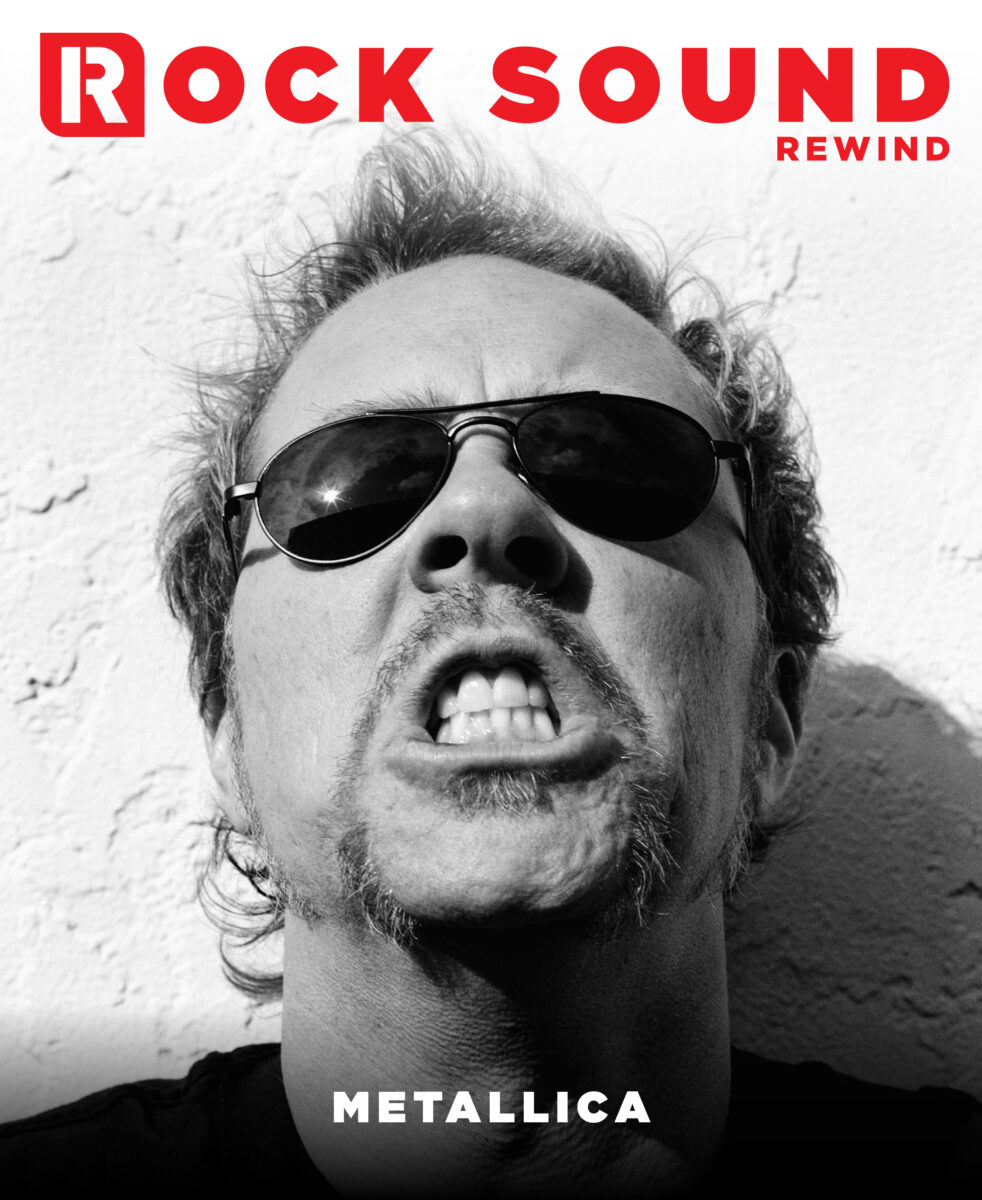
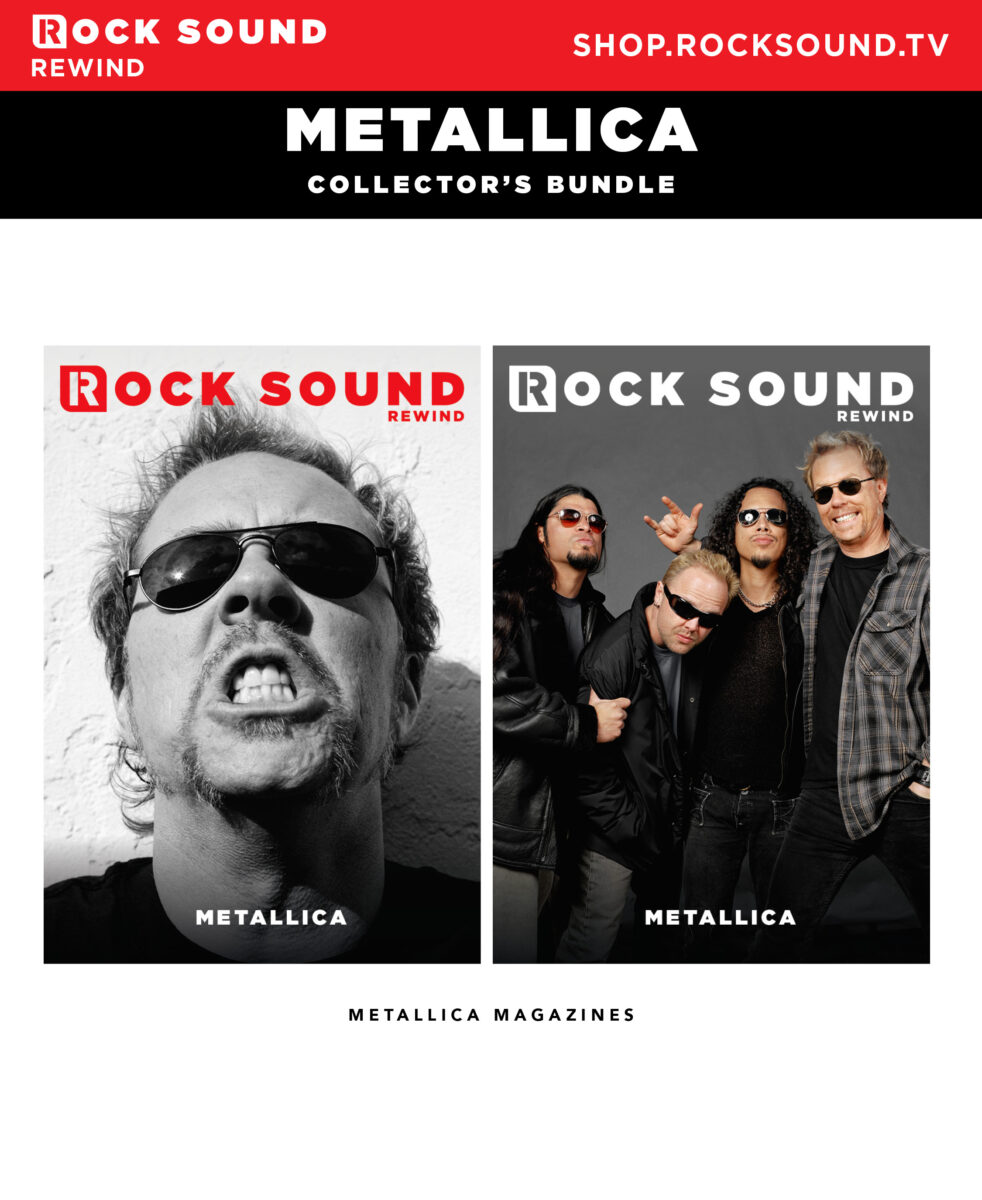
  • Metallica Are On The Cover Of Rock Sound Rewind

    Metallica are on the cover of Rock Sound Rewind, Issue 2.

    In this special edition A5 mini magazine, we look back on Rock Sound’s history with the biggest metal band in the world, with exclusive photos and archive interviews re-published for the very first time. Inside, you’ll find us catching up with James Hetfield and Lars Ulrich on tour in 1999, chatting with Kirk Hammett around the release of the orchestral ’S&M’ and the band’s full 2003 cover story.

    Choose from two cover variants now at SHOP.ROCKSOUND.TV

    The post Metallica Are On The Cover Of Rock Sound Rewind appeared first on Rock Sound.

  • URARV Confront Greed and War on New Track “Operation Genocide”

    Norwegian black metallers URARV have unveiled “Operation Genocide,” the second track from their forthcoming third album, Nychta Psychis. The five-track record arrives on October 16, 2026, through Darkness Shall Rise Productions. The song examines human greed and the wars it fuels. Its subject matter specifically addresses the horrors of Wounded Knee in 1890, while also […]

    Source