Blog

  • Bad Wolves Guitarist Quits Band Over Dolly Parton Cover

    It's been a tumultuous week for Bad Wolves, who are now down a guitarist who quite over disagreements about a Dolly Parton cover. Continue reading…
  • Big Church Festival Ends Early After Fatal Sign Collapse

    On Friday (Aug. 28), the first day of Big Church Festival in West Sussex commenced. However, the festival ended early after a large sign fell, leaving one dead and six injured.

    The post Big Church Festival Ends Early After Fatal Sign Collapse appeared first on Stereogum.

  • “There were certain guidelines, and that was to stay away from long hair and guitar solos”: How Led Zeppelin, The Doors and Hendrix inspired a rule-breaking post-punk band to write one of rock’s greatest anthems

    The Cult’s Billy Duffy divides his band’s career into two massively uneven parts. “It goes Death Cult to She Sells Sanctuary,” the guitarist told Classic Rock in 2022, “and then She Sells Sanctuary and everything else.”

    It’s right that he names The Cult’s 1985 single as the point on which everything pivots. This instantly recognisable swirl of patchouli-soaked psychedelic goth-dance genius transformed these ambitious post-punk contrarians into unlikely chart stars. The Cult weren’t the first alternative rock band – everyone from Siouxsie And The Banshees, U2 and The Cure to Devo and REM might have something to say about that. But She Sells Sanctuary is one first true alternative rock anthems, a song that quickly became bigger than the narrow scene it came out of.

    Duffy and singer Ian Astbury first teamed up in early 1982 after leaving their respective groups, Theatre Of Hate and Southern Death Cult. They figured the latter had enough brand recognition to repurpose part of their name for the new band: Death Cult. By the time their debut album, Dreamtime, was released in August 1984, the name had been truncated even further, and Death Cult had become The Cult.
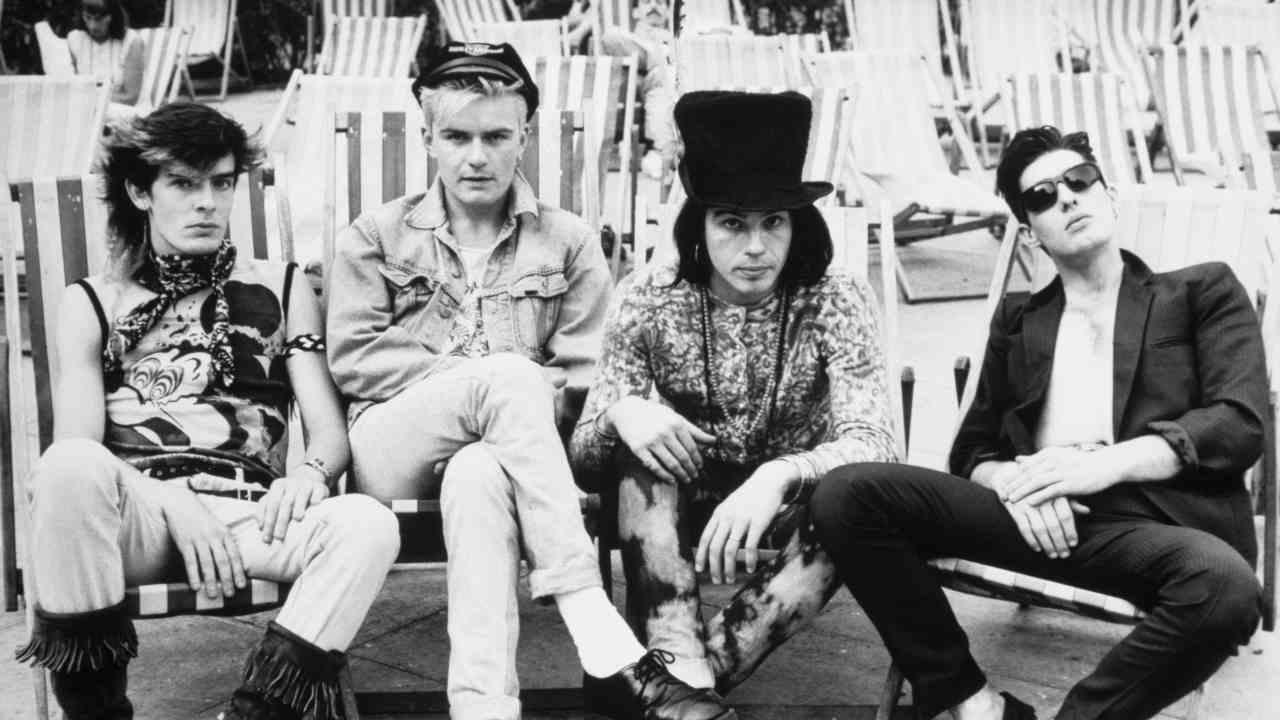
    The Cult posing for a photograph on deckchairs in 1984

    The Cult in 1984: (from left) Jamie Stewart, Billy Duffy, Ian Astbury, Nigel Preston (Image credit: Erica Echenberg/Redferns)

    Dreamtime was a fine start, defined by Duffy’s ringing white Gretsch and Astbury’s fascination with indigenous cultures around the world. But these post-punk gunslingers were in love with the mythology of rock’n’roll too. They namechecked Led Zeppelin, The Doors and Hendrix at a time when most of their peers would rather admit to having a poster of Margaret Thatcher on their wall than owning a copy of Physical Graffiti.

    “There were certain guidelines in the post-punk, new wave movement, and that was to stay clearly away from long hair and guitar solos,” Astbury told Classic Rock in 2010. “Then you hear Jimi Hendrix and Led Zeppelin and The Doors, and suddenly it’s like, ‘What is this? We’re not supposed to listen to this? You’re kidding me!’”

    Dreamtime had barely cooled on the shelves when The Cult – completed by bassist Jamie Stewart and drummer Nigel Preston – began working on the song that would become She Sells Sanctuary.

    “Sanctuary came together very easily,” Astbury said in 2010. “I took the bassline from [The Cult’s 1984 single] Spiritwalker. Billy came up with the melody, and we worked out a vaguely psychedelic guitar sound which seemed to fit it well. We were heavily into 60s psychedelic music.”

    They debuted the new song in October 1984 on the Dreamtime tour. It immediately became a fixture of their set and a shoe-in for their next album. An early demo of the song shows all the parts in place, albeit in more muted form – The Cult hadn’t quite thrown off the shackles of post-punk at that point.

    It was a marker of the band’s ambition that they wanted Steve Lillywhite to produce the follow-up to Dreamtime. Lillywhite was white-hot at the time thanks to his worth with U2 and Simple Minds. A meeting was arranged at the offices of the band’s label, Beggar’s Banquet. There was just one problem – they’d got the wrong Steve.

    “This guy turns up and says, ‘Hey, I’m Steve,’” Astbury told The Telegraph in 2023. “We sat down and we started to work out that it wasn’t Steve Lillywhite, it was Steve Brown. But he was cool. We said ‘What have you produced?’ and he said ‘Wham!’. I’m like ‘Wham!?’ We just went with it.”

    Brown – a schoolfriend of Lillywhite, ironically – would ultimately turn out to be a blessing in disguise. But at the time, the band still needed to make sure they could work with him. “Our record company said, ‘Look, this is a gamble. Why don’t you go in, do one song with him and see how it goes?’” Duffy told Classic Rock. “That turned out to be Sanctuary.”
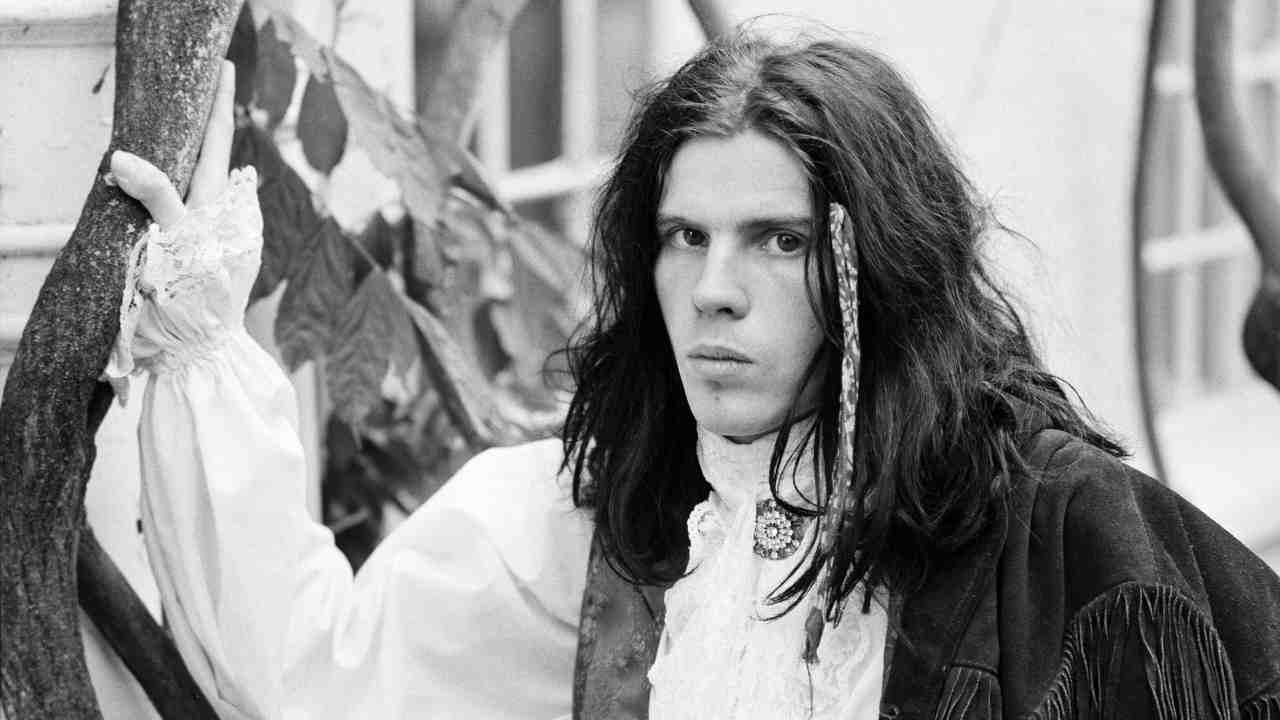
    The Cult’s Ian Astbury posing for a photograph in 1985

    The Cult’s Ian Astbury in 1985 (Image credit: Andy Hosie/Daily Mirror/Mirrorpix/Getty Images)

    The Cult and Brown entered London’s Olympic Studio in March 1985 to road-test this new partnership. It worked better than Astbury and Duffy could have imagined. As Brown put it in 1985: “I like to produce songs that you want to turn up.” It was a maxim that the band fully brought into. Between them, The Cult and Brown punched up the song, and She Sells Sanctuary went from being black and white to full colour.

    “He was very focused on pop and wanted to bring out the commerciality in the band,” Duffy told Classic Rock. “He felt we had talent but hadn’t quite gotten our pop hooks together. He was instrumental in helping us work on that.”

    The finished song drew on the band’s love of classic psychedelia and hard rock (Duffy employed a violin bow he found lying around in the studio on the song’s instrumental opening, reasoning that if it was good enough for Jimmy Page then it was good enough for him), as well as their more recent post-punk past and the goth scene in which they had one military surplus boot firmly planted. But Brown gave it a modern pop gloss and a pulsing heartbeat that made it eminently danceable.

    Lyrically, it was wilfully enigmatic, all turning heads, burning backs and sparkling eyes. “The fire in your eyes/Keeps me alive,” Astbury sang on the chorus, wolverine howl set to max. “I’m sure in her you’ll find/The sanctuary.” What was it all about? “Sex,” said the singer, “plain and simple.”

    The Cult hadn’t even started recording their new album when She Sells Sanctuary was released in the UK in May 1985. It climbed to No.15 in the singles chart and got the band on Top Of The Pops for the first time.

    Not everyone was convinced by the all-new Cult. Astbury’s commitment to their rock-forward transformation had extended to his look. The mohawk he’d sported during his Southern Death Cult days was long gone, replaced by beads, paisley shirts and long, ironed black hair – Jim Morrison by way of a Native American shaman. “When I grew my hair, people were having a meltdown,” he told Classic Rock. “They were tripping out.”

    Shit-talking was the least of his worries. “I remember going out when She Sells Sanctuary got in the charts and some kid came up and punched me right in the face at a concert,” Astbury said. “There was so much hatred in his eyes, and all that was because we came from the streets in Brixton, we came from punk rock and I think this guy saw us as breaking the code by not pretending we couldn’t play our instruments or for having success.”

    There was turbulence within the band too. She Sells Sanctuary would be the last Cult song Nigel Preston played on. The drummer was fired after failing to turn up to the video shoot for the song (Preston died of a heroin overdose in 1992).
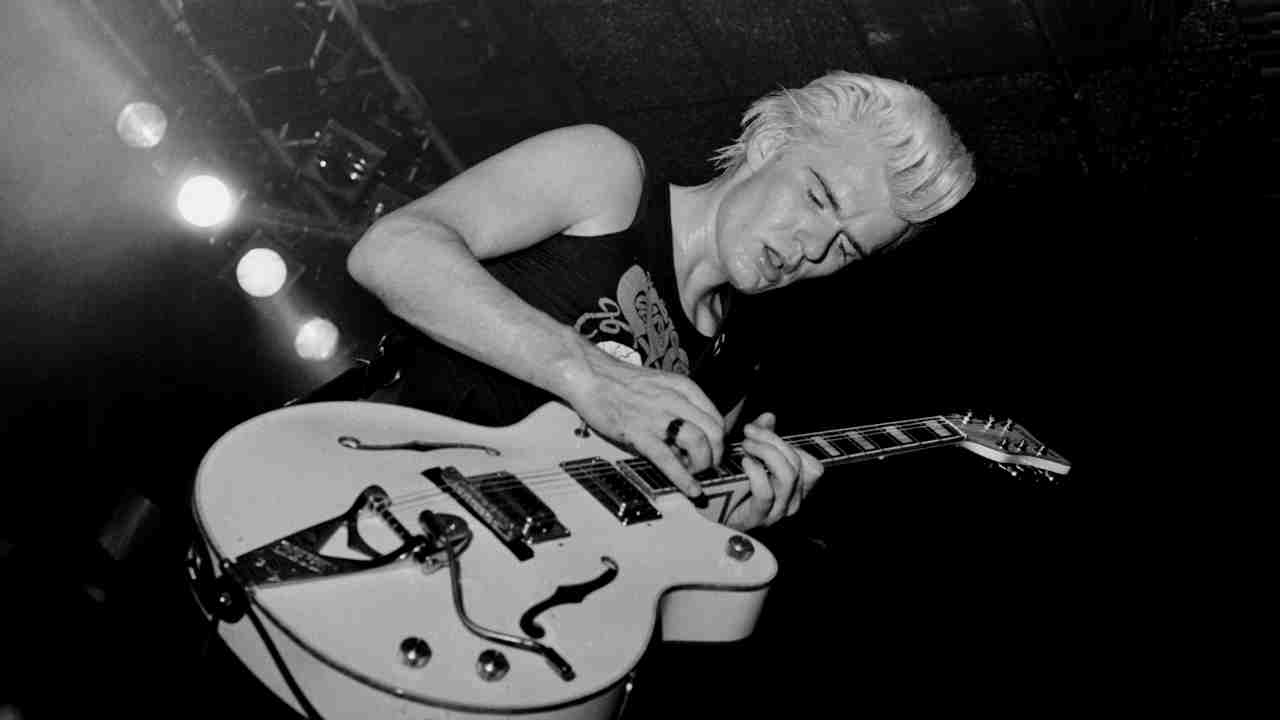
    The Cult’s Billy Duffy onstage in 1985

    (Image credit: Jane Simon/Getty Images)

    But the good stuff outweighed the bad stuff. She Sells Sanctuary ensured Brown passed his unofficial audition as producer, and went on to work with the band on their second album, Love (that title was a fuck you to the notoriously vitriolic British music press – the NME sniffily dismissed She Sells Sanctuary as “gimmicky”).

    The song also cracked open the door to America for The Cult. College radio picked up on it, and the band even got to play it on a December 1985 episode of Saturday Night Live. Tellingly, it was a big radio hit in Seattle, where it didn’t go unnoticed by some of the city’s young musicians. Future Mothe Love Bone singer Andrew Wood was a fan, as was Layne Staley, later of Alice In Chains. “[AIC guitarist] Jerry Cantrell told me that Layne was really into us – the gothic stuff,” Duffy recalled. (Perhaps coincidentally, another local band, Nirvana, shared their name with Love’s opening track).

    It wasn’t just grunge’s future superstars who were listening to The Cult. A line can be traced from She Sells Sanctuary’s psychedelic rock swirl to the shamanic stew of Jane’s Addiction, who were just beginning to coalesce in the freakier corners of the LA club scene. (Ian Astbury’s godfather-of-the-alternative-nation bona fides were solidified by 1990’s The Gathering Of The Tribes, his visionary-but-forgotten festival which cross-pollinated genres a year before Perry Farrell did the same with Lollapalooza).

    She Sells Sanctuary heralded the first of The Cult’s many transformations: the bangle-shaking hippie-goth era soon gave way to AC/DC-channelling rock’n’roll, hair-swishing arena rock and beyond.

    The song itself has had a similarly unlikely journey, travelling from mid-80s goth club dancefloors to big-budget movies (Singles, Layer Cake, The Pope’s Exorcist), TV shows (Billions, Euphoria, even Love Island), games (notably Grand Theft Auto) and TV ads (it’s been used to sell everything from Budweiser to online gambling games). Today, it stands as one rock’s great all-purpose anthems, up there with the classics that inspired them in the first place.

    “It’s funny,” Duffy told Classic Rock, “you write a song like that, where everything comes together far beyond what you could’ve expected and then you spend the rest of your life trying to write another one as good.”

  • The Speedways – "All Bets Are Off"


    If The Speedways keep releasing new singles, I’m going to keep writing about them! “All Bets Are Off” is the third new track the band has released this year in advance of its forthcoming album The Magic Comes & The Magic Goes. It’s a perfect little pop song that really leans into a late ’70s/early ’80s UK new wave style. It pairs an upbeat musical energy and soaring chorus with thoughtful, self-aware lyrics about trying to be a better person. If you slotted this song between “Back of My Hand” and “Is She Really Going Out with Him?” on a “best of 1979!” playlist, a lot of people would be none the wiser. The music video is quite delightful, and I got a real kick out of the Michael Jackson “Thriller” allusion at the beginning. As a band, it’s so hard to have perspective on your own music. But hearing the members of The Speedways talk about this soon-to-be-released LP, it’s obvious that they are pumped out of their minds to put these songs into the universe. They know they have something special cooking. All these advance singles (including last year’s “Visiting Hours”) have been smash hits. If we end up with the best Speedways album yet, I will not be surprised. Look for a new 7″ next month!

  • Geoff Palmer – "Where Did His Hair Go?"


    Geoff Palmer is back doing what he does best: writing some of the most impossibly catchy pop-punk songs you’ll ever hear. “Where Did His Hair Go?” is the second time he has given us a nod to The Dickies in his songwriting, but this is no cover song. It’s a vintage Palmer-style pop-punk earworm about Billy Corgan and the mystery of the sudden disappearance of his hair in 1995. As someone who has also been bald since the mid-’90s, I can tell you that hair loss is usually something that everyone can see coming. When you finally go full bald, no one is surprised. But somehow old Billy hid it from all of us. What I love about this song is that you can enjoy it regardless of whether you are or (as in  my case) are not a Smashing Pumpkins fan. While it’s a really funny song, it’s not particularly nasty. It’s just searching for answers and pondering possibilities. And I’m always up for some ’90s nostalgia! This is classic Geoff Palmer. He and his bandmates Tyler Spatz, Paul Kennedy, and Daniel James sound like they’re having a great time powering through this brilliantly stupid song, and I’m having a great time listening to it. Billy Corgan himself would have a hard time denying that this tune is a stone cold banger!

  • Sunscorched – Blood of the Badlands Review

    I don’t know what’s up with our dear readers around the world, but in this lion’s den, it’s hotter than an unshaven sheep in a bread bakery. It’s hotter than Steel‘s withering gaze every time Dear Hollow gives good reviews to deathcore. It’s hotter than your sexy crush telling you her parents completely approve of you, and that she wants a wholesome marriage and a family. My AC has been broken for over a month now, which means my only companions are sweat, misery, and the promo pit. Consequently, my personal enjoyment of much more wintry (or even fall) black metal has fallen by the wayside, as bands like Coldworld or Panopticon just don’t hit the same way when you spend every night praying for sleep and basting in your own juices. As if a spiritual answer to my cries, new outfit Sunscorched have arrived with a dollop of Old-West-themed, Arizona-originated atmospheric black metal. Needless to say, one glance at that name had me snatching this one up immediately, so saddle up your horses and get ready to circle the wagons as we see just how bad these bloody lands are.

    The Blood of the Badlands sound is that of a slightly more straightforward Wayfarer album as produced by Nechochwen. While the compositional approaches lend themselves to comparisons with the seminal American Gothic, the chord progressions are more straightforward, and the production much more raw. The Heart of Akamon has itself all over the actual sound, with full chords which ring out in treble-heavy presentation but never lose themselves in tinny warbles, still sounding thick and full. The drumming of Rory James is well articulated, with good thunk and clang in his kit as he alternates between his fills and rolls, with a lot of fun to be had in his hi-hat and china beats which often evoke the galloping of wagons cascading down the hills. Vocalist Austin Kruger has an excellent bellowing shriek, mixed between the arpeggios and tremolos and containing enough reverb to evoke the mood of long-forgotten souls wandering the hills. Remarkably light on the expected gimmicky instrumentation—beyond the bookending instrumentals, which feature smatterings of acoustic guitars among what sounds like unplugged electric—Sunscorched wield their songwriting skills to suit the mood and atmosphere of the Badlands.

    In those songs, Sunscorched manage to paint a vivid aural picture without ever doing anything out of the ordinary. “Vultures that Circle my Grave” transitions into a delightful major chord progression which sounds optimistic in the face of oppression and daily struggle without losing an ounce of its moshability. Highlight “Slaughter at Camp Grant” features a punk-infused main refrain which sounds violent while evoking the vastness of an Old West starry sky, transitioning from rapid-fire melodies to a progression which comes with brute force and necessary antagonism. “The Gallows Tree” features a depressive lead which does most of the talking before the vocals ever kick in. While repetition is a major tool in the box of Sunscorched, the majority of these riffs and melodies justify running themselves back as they emphasize the all-encompassing nature of the violence and exploration of that time period. Every single song comes decorated with a key melodic theme, from the inevitability of “Gallows…” to the full-speed-ahead onslaught of “Slaughter…”, firmly evoking a narrative to the listener which would be just as serviceable were Blood of the Badlands served as an instrumental piece.

    There’s only one thing stopping Sunscorched from landing on true greatness in their first outing: Both penultimate track “Thousand Year Drought” and the instrumental title track “Blood of the Badlands” are far too repetitive and self-referential, and it’s genuinely disappointing. In the case of the former, there’s what seems to be a melodic reference1 to the Styx song “Renegade”, with a very familiar tune coded in the main lead, which is dope, but is promptly beaten right into the desert sand. Additionally, the main chugging climax features the exact same root notes as the one found in “Slaughter…”, making it smack of the earlier riff, but somehow more violent and less interesting. Closing track “Blood of the Badlands” is gorgeous, mood-setting, and eerie, but repeats itself an unneeded amount of times without genuinely evolving into anything.

    Normally, an album is held down by an overall lack of quality. My saying “these last two songs don’t pass muster” only speaks to the sheer quality of all that comes before, and is by no means a major detraction in the overall experience. Sunscorched have made me ready to join their posse on my first listen, enduring the sweltering radiation and pavement-amplifying heatwaves with their soundtrack of melancholy by my side. Some course corrections on their repetitive habits will have their pistols loaded and ready to strike gold and oil, and I, for one, have gleefully hitched my wagon up to see where we will explore from here.


    Rating: 3.5/5.0
    DR: 11 | Format Reviewed: 320 kbps mp3
    Label: The Bölverk Collective
    Website: Album Bandcamp
    Releases Worldwide: August 28th, 2026

    The post Sunscorched – Blood of the Badlands Review appeared first on Angry Metal Guy.

  • TWISTED SISTER Plays First Show With SEBASTIAN BACH On Vocals: “I’m The Lead Singer Of TWISTED SISTER” – @thebeast

    TWISTED SISTER returned to the stage Friday night (August 28) at Starland Ballroom in Sayreville, New Jersey, marking the first live performance of the band’s current touring lineup featuring former SKID ROW frontman Sebastian Bach on lead vocals.
    The performance is part of a limited series of 2026 shows that sees Bach stepping behind the microphone following Dee Snider’s departure from TWISTED SISTER earlier this year.
    Joining Bach in the current lineup are founding guitarist Jay Jay French, longtime guitarist Eddie Ojeda, bassist Russell Pzütto and drummer Joey Cassata.
    The show was originally announced under the BENT BROTHER name, a longtime TWISTED SISTER alter ego, before ultimately being promoted as the first live appearance of the Bach-fronted lineup.
    The band delivered a 17-song set spanning several eras of its catalog, with a particularly heavy emphasis on the material from TWISTED SISTER’s early years.
    The setlist was:


    What You Don’t Know (Sure Can Hurt You)
    You Can’t Stop Rock ‘N’ Roll
    We’re Gonna Make It
    Shoot ‘Em Down
    Tear It Loose
    Destroyer
    The Kids Are Back
    Like A Knife In The Back
    Ride To Live, Live To Ride
    Under The Blade
    The Beast
    Burn In Hell
    The Price
    I Remember You (SKID ROW)
    I Wanna Rock
    Youth Gone Wild (SKID ROW)
    We’re Not Gonna Take It

    Bach also performed two SKID ROW classics, “I Remember You” and “Youth Gone Wild,” giving fans a chance to hear the singer revisit some of the material that originally made him a household name in the late 1980s and early 1990s.
    The pairing of Bach and TWISTED SISTER is hardly random. Bach has been an outspoken fan of the band for decades and has repeatedly talked about the influence TWISTED SISTER had on him during his formative years.
    In a recent interview with Meltdown of Detroit’s WRIF, Bach explained that he considers himself an especially devoted TWISTED SISTER fan and singled out Under The Blade and You Can’t Stop Rock ‘N’ Roll as particular favorites.
    Bach also emphasized that he intends to bring the aggressive energy of TWISTED SISTER’s early club days to the stage.
    “When they were a club band, they would come out there like a punk rock band or a total thrash metal band,” Bach said. “That’s the kind of energy that I’m gonna bring.”
    He added: “I’m the lead singer of TWISTED SISTER. How much fun is that to say?”
    For Bach, the opportunity is clearly something considerably more personal than simply filling a vacant microphone position. He has repeatedly described himself as a genuine fan of the band and has said that he received Snider’s blessing before taking on the role.
    Snider’s departure came after TWISTED SISTER’s planned 50th-anniversary world tour was cancelled earlier this year. Snider cited health challenges, including degenerative arthritis, as a major factor in his decision to step away from performing with the band. He has subsequently made it clear that he supports Bach taking over for the scheduled shows.
    That leaves one obvious question hanging over the future of TWISTED SISTER:
    What happens after the Bach shows are over?
    At this point, there is no indication that Bach is permanently replacing Snider or that TWISTED SISTER has officially established a new long-term lineup. The current arrangement has been presented as a series of select 2026 performances, and the band’s official website continues to promote the dates specifically as TWISTED SISTER featuring Sebastian Bach on lead vocals.
    Whether Snider ever returns to the stage with TWISTED SISTER remains an open question.
    For now, however, Bach has the microphone, and Friday night’s performance marked the first time audiences got to hear exactly what that combination sounds like in a full TWISTED SISTER concert.
    And judging by the setlist, the band wasn’t simply trotting out the greatest hits.
    Songs like “Shoot ‘Em Down,” “Tear It Loose,” “Destroyer,” “Under The Blade” and “The Beast” suggest that this version of TWISTED SISTER is leaning heavily into the band’s rawer, heavier material, something Bach has specifically expressed excitement about.
    The band has additional performances scheduled throughout the remainder of 2026.
    For the moment, the experiment is officially underway.
    Whether Sebastian Bach is simply the voice of TWISTED SISTER for this particular chapter, or whether this turns into something more permanent, remains to be seen.
    But there’s no denying that hearing the former SKID ROW frontman step onstage and scream “We’re Not Gonna Take It” with Jay Jay French and Eddie Ojeda is one hell of a sight for metal fans.


  • Miguel Condemns Racist Attacks On His Family

    Last year, Miguel released his fifth album, Caos. On Friday (Aug. 28), the R&B star took to social media to call out the “racism, harassment, stalking, invasions of privacy, and false allegations” his family has been facing following the announcement of his partner  Margaret Zhang’s pregnancy with their second child.

    The post Miguel Condemns Racist Attacks On His Family appeared first on Stereogum.

  • Fear Factory Officially Unveils First Song with New Singer Milo Silvestro as Fans Stunned by Shocking Vocal Resemblance

    Fear-Factory-2026-new

    Fear Factory have released “Roboticist” via Nuclear Blast — their first new music since 2021, and the first Fear Factory song in the band’s 35-year history not sung by Burton C. Bell. It’s also the recorded debut of vocalist Milo Silvestro, who joined in February 2023 and has spent three and a half years singing the back catalogue on stage without ever setting foot in the studio. That wait was deliberate, and Dino Cazares has explained exactly why.

    🎧 STREAM THE METAL BREAKDOWN DAILY NOW:

    Scott Penfold breaks down the latest hard rock and metal news on today’s Metal Breakdown Daily. Download the free Loaded Radio App on Apple iOS and Google Play and get it every weekday morning.

    Why they waited three and a half years

    This is the part that separates this from every other new-singer story, and it’s the reason “Roboticist” arrives with the weight it does.

    Silvestro’s addition was announced in February 2023. He played his first headline show with the band that May at the Whisky A Go Go. Since then, Fear Factory have toured constantly — and played nothing but the back catalogue.

    Cazares has been candid about it. He’d said publicly that he was going to release a single with Silvestro’s vocals, then pulled back, thinking Milo needed to develop a bit more first. His reasoning: they knew he could jump in seamlessly and sing Burton’s parts live, but creatively they still needed to work that out together.

    So they took their time. Three and a half years of a new vocalist just living inside the material before being asked to add to it.

    That is a genuinely unusual amount of patience. The industry standard is to get the new singer into a studio within months to prove the transition worked, and it’s why so many of those transitions sound tentative. Fear Factory did the opposite — let the guy tour the catalogue until it was in his bones, then wrote with him.

    Cazares’ own verdict on the result: they wanted to make sure the release would be seriously good, and it is.

    🤘 LIVE & LOUD: Stream the World’s Hardest Radio Station 24/7

    The song is older than the vocal

    Here’s a detail nobody else covering this today is going to mention.

    “Roboticist” already existed. An early instrumental version was released back in 2023 to promote Toneforge Disruptor, a virtual guitar rig plugin and standalone app.

    So the music predates Silvestro’s recorded debut by three years — it was a demo doing marketing duty for a piece of guitar software before it was ever a Fear Factory single.

    Cazares says the arrangement changed for the better on the way, and specified how: the section that was originally the ending of the song is now the middle.

    For a band whose entire thematic universe is about machines, there’s something quite fitting about their comeback single starting life as a plugin demo.

    What Cazares says about the “replica” criticism

    The obvious charge against Silvestro is that he was hired because he sounds like Burton C. Bell. Cazares doesn’t dodge it. He agrees with it.

    His account: he wasn’t instantly sure, but he was drawn to the way Silvestro sang and the fact he sounded like what Fear Factory fans expect the vocalist to sound like. People say he’s a replica — and yes, definitely, because that’s how the songs were written, that’s how they were sung, and that’s the tone.

    Silvestro was already a serious fan. Fear Factory are in his top five bands. He knew which effects Bell used and understood his technique for creating those tones. When Cazares first saw his video, his reaction was that the kid sounded just like him.

    Then the honest bit: some people complain he sounds too much like Bell. But if he didn’t sound like Bell, the same people would say it doesn’t sound like Fear Factory. You can’t win either way, so Cazares went with what fit the sound they were after. His line — if you close your eyes at a show, it sounds exactly the same. That’s what they were going for.

    He’s also clear that the album is different. Silvestro has his own style showing on the record, and Cazares insists he’s not just a replacement for the last singer — he has his own niche.

    Whether that lands is a question for the album. But as a public position it’s far more honest than the usual “he brings his own energy” boilerplate.

    A band whose thesis came true

    Here’s what makes Fear Factory genuinely interesting in 2026 rather than just another legacy act with a new singer.

    They have been writing about artificial intelligence since 1992. Soul Of A New Machine was the birth of the concept. Demanufacture pushed it. Obsolete, in 1998, predicted humans being replaced by automatons — and Cazares points out they weren’t only talking about labour. They were talking about jobs disappearing, digital formats replacing physical ones, and radio stations getting rid of DJs in favour of digital programming.

    That was twenty-eight years ago. All of it happened.

    The new album continues the story: all that’s left of humanity is fragments, fighting against extinction.

    And Cazares’ position on AI itself is more nuanced than most people in heavy music manage. His argument, roughly: plenty of people complain about AI, but the only way to genuinely avoid it is to get rid of every electronic device and live off the grid, because it’s in every app, every algorithm, everything we do online. There’s no escaping it, so you adapt.

    He’s specific about the band’s own use, too. They used no AI whatsoever for writing or for the music. But it’s built into Logic Pro and Pro Tools — it’s in the software’s algorithms, so it’s a tool in the recording process whether you like it or not. Their remix record Recoded opened with a line that says it all: adapt or die.

    That’s a considerably more useful contribution to the argument than most, and it lands the same week Spotify began labelling AI-generated artists — a debate Fear Factory have effectively been having with themselves since before most of the participants were born.

    fear-factory-2026

    What “Roboticist” actually is

    The track premiered on SiriusXM Liquid Metal and blends mechanical aggression with a melodic hook, with lyrics set in a dystopia where flesh fails and only consciousness survives.

    Cazares’ description of the subject: it’s about the roboticist himself — the person who makes them. He calls him the architect of the artificial, building machines to outlast the flesh.

    It was produced, engineered, mixed and mastered by Damien Rainaud, who has worked with the band since 2012’s The Industrialist. The video was directed by Vincente Cordero and produced by Arion Csihar.

    His pitch for the record: new, brutal, heavy, melodic, with beautiful moments. Everything that makes a Fear Factory album, but going somewhere newer and more modern than Obsolete or Demanufacture — and a bit forward-thinking with it.

    On whether he’s worried how the fanbase takes it, he’s blunt: as long as you believe in what you’re doing and love it completely, it doesn’t matter what anybody says.

    Check Out – The 13 Greatest Frontmen In Heavy Metal History, Ranked

    Who else is on the record

    Worth noting, because the supporting cast is strong.

    Rhys Fulber — the Front Line Assembly man who produced or contributed to some of Fear Factory’s most important work — handled some of the keyboards.

    Ricky Bonazza, the band’s fill-in bassist when Tony Campos is out with Static-X, contributed programming, arrangements and lyrics. Bonazza also plays bass in Butcher Babies, whose own album lands in October — a small piece of connective tissue between two records nobody’s linking.

    The touring lineup is Cazares on guitar, Silvestro on vocals, Pete Webber on drums and Campos on bass when Static-X aren’t out. Webber comes from a thrash background and saw Fear Factory live at fourteen or fifteen; Cazares says stepping in was seamless.

    Where they’re playing

    “Roboticist” arrives the same day the Cybernetic Domination European tour opens — August 29 in Poznań, Poland, running through to October 10 in London, with Crystal Lake, Hate and The Nocturnal Affair supporting.

    Crystal Lake are worth arriving early for: they’ve just named PK of Prompts as their permanent frontman after a turbulent year, and this run is his first proper outing with the band.

    A US leg follows in November with Darkest Hour and Brotality, kicking off straight after a co-headline run with Mushroomhead. If you’re planning the rest of the year, our 2026 touring guide has the wider picture.

    Also Recommended – 13 Metal Albums Turning 40 In 2026, Including The One MTV Turned Into Its News Theme Song

    The Burton C. Bell chapter

    For completeness, briefly.

    Bell announced his departure in September 2020, saying he could not align himself with someone he neither trusted nor respected. He later told Kerrang! that the split had been coming for a while, and that the lawsuits over the rights to the Fear Factory name had drained him — citing the egos and the greed, from bandmembers and attorneys alike, and saying he simply lost his love for it.

    Aggression Continuum, the final album with his vocals, arrived in June 2021 via Nuclear Blast despite having been recorded primarily in 2017.

    That’s five years without new Fear Factory music, and six since the lineup that made one of industrial metal’s foundational catalogues last functioned as a unit.

    Whatever you make of how it ended, the machine is running again.

    fear-factory-roboticist

    TL;DR

    • What’s out: “Roboticist,” released August 29, 2026 via Nuclear Blast — Fear Factory’s first new music since 2021 and the first ever without Burton C. Bell.
    • The debut: it’s the recorded debut of vocalist Milo Silvestro and drummer Pete Webber, both of whom joined the touring lineup in early 2023.
    • The wait: Dino Cazares deliberately delayed a single so Silvestro could develop, saying they knew he could sing Bell’s parts live but needed time to work out the creative side together.
    • The song’s history: an early instrumental version of “Roboticist” was released in 2023 to promote the Toneforge Disruptor guitar plugin. The original ending is now the middle section.
    • On the “replica” criticism: Cazares agrees Silvestro was chosen to sound like Bell, and argues that if he didn’t, fans would say it doesn’t sound like Fear Factory.
    • The album: no date announced. Produced by Damien Rainaud, with Rhys Fulber on keys and Ricky Bonazza contributing programming, arrangements and lyrics. The concept: humanity reduced to fragments, fighting extinction.
    • Live: the Cybernetic Domination European tour opens August 29 in Poznań with Crystal Lake, Hate and The Nocturnal Affair, followed by a US leg in November.

    FAQ

    Who is Fear Factory’s new singer?

    Milo Silvestro, whose addition was announced in February 2023. He played his first headline show with the band in May 2023 and has toured the back catalogue with them for over three years. “Roboticist,” released August 29, 2026, is his first recorded appearance with Fear Factory.

    Is “Roboticist” from a new Fear Factory album?

    Yes. Dino Cazares has confirmed the track will appear on the band’s next studio album, though no title or release date has been announced. The record was produced by Damien Rainaud and features contributions from Rhys Fulber on keyboards and Ricky Bonazza on programming, arrangements and lyrics.

    What is “Roboticist” about?

    Dino Cazares has described it as being about the roboticist himself — the person who builds the machines, whom he calls the architect of the artificial, constructing machines to outlast the flesh. The lyrics depict a dystopia in which the body fails and only consciousness endures.

    Why did Burton C. Bell leave Fear Factory?

    Bell announced his departure in September 2020, stating he could not align himself with someone he did not trust or respect. He later told Kerrang! that lengthy lawsuits over the rights to the Fear Factory name had drained him, citing egos and greed among both bandmembers and attorneys, and that he had lost his love for it.

    Does Fear Factory use AI in their music?

    Dino Cazares has said the band used no AI whatsoever for writing or composing. He notes that AI is built into recording software such as Logic Pro and Pro Tools, so it functions as a tool during the recording process by default, but that it played no part in the songwriting.

    Thirty-four years of warning us about the machines, and a singer who waited three and a half years for permission to speak. What do you make of the new era? Tell us below. And keep it locked on the Loaded Radio stream — follow Loaded Radio for daily rock and metal news.

    The post Fear Factory Officially Unveils First Song with New Singer Milo Silvestro as Fans Stunned by Shocking Vocal Resemblance appeared first on Loaded Radio.

  • Sam Smith Regrets Not Responding To Tom Petty’s Letter Over “Stay With Me” Credit, But Maintains They’d Never Heard “I Won’t Back Down”

    Last year, Sam Smith did a 24-show residency at Brooklyn’s small Warsaw. The singer used the opportunity to cover Tom Petty And The Heartbreakers’ 1987 song “It Will All Work Out” and discuss their copyright dispute with the classic rock icon, revealing that Petty had written them a letter at the time. Smith elaborated on the story in a recent episode of Alchemy With Anthony Mason.

    The post Sam Smith Regrets Not Responding To Tom Petty’s Letter Over “Stay With Me” Credit, But Maintains They’d Never Heard “I Won’t Back Down” appeared first on Stereogum.