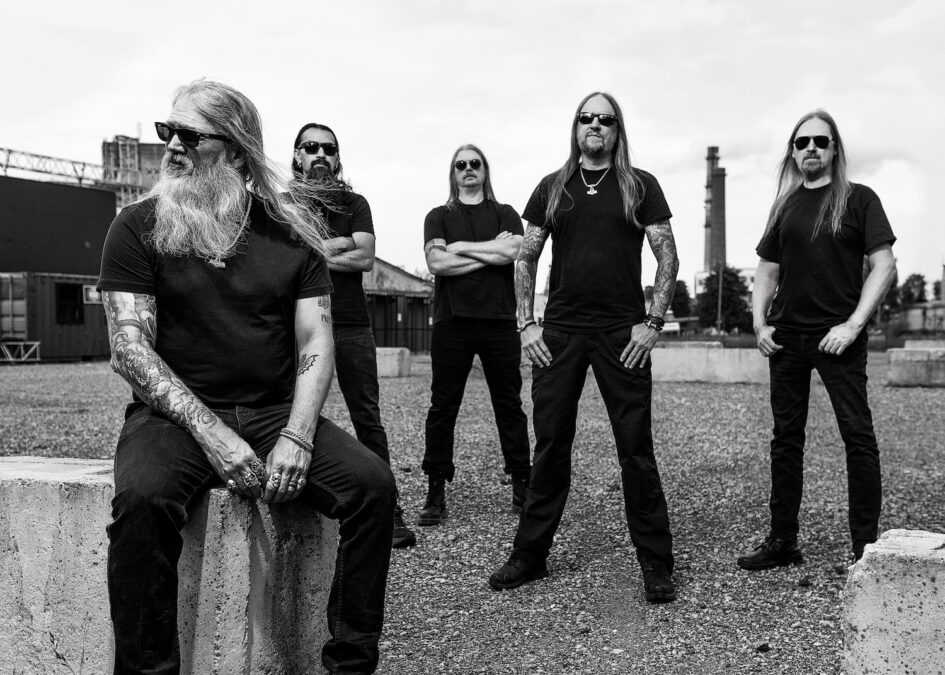
 AMON AMARTH return with Eight Legs of Thunder, a steamrolling new anthem inspired by Sleipnir, the legendary eight-legged steed of Oden. Driven by a galloping main riff and a powerful, sing-along chorus, the track charges headlong through Norse mythology while its accompanying video transports the tale into an unexpected new world: a gritty, modern American […]
Blog
-
AMON AMARTH Drop New Track ‘Eight Legs Of Thunder’
AMON AMARTH return with Eight Legs of Thunder, a steamrolling new anthem inspired by Sleipnir, the legendary eight-legged steed of Oden. Driven by a galloping main riff and a powerful, sing-along chorus, the track charges headlong through Norse mythology while its accompanying video transports the tale into an unexpected new world: a gritty, modern American […] -
BANKS ARCADE Unleash New Single ‘YUCK!’ Ahead Of National Support With FROM ASHES TO NEW
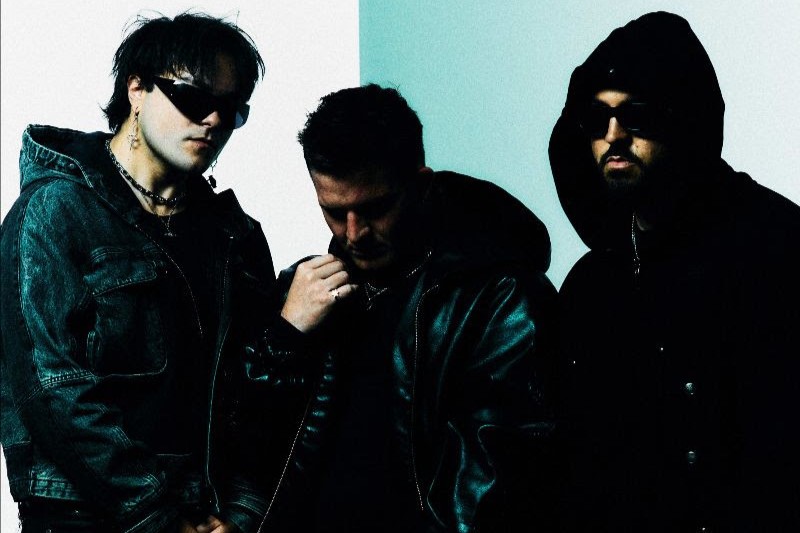 New Zealand’s genre-defying heavy innovators Banks Arcade unleash their explosive new single YUCK!, the final taste of their highly anticipated sophomore album SECOND PLACE SUPERSTAR, arriving worldwide on September 25, 2026. Unhinged, infectious and impossible to ignore, YUCK! captures Banks Arcade at their most volatile. Built around crushing stomp riffs, electronic grit and rapid-fire vocal […]
 -
Our Common Collapse release new single ‘Ritual’
Their second standalone track since signing with 3DOT Recordings -
Flow Tribe Brought their Funky Fresh Rockin Soul to Buffalo Iron Works on August 25th!!
Flow Tribe from New Orleans, put on a phenomenal show, and the crowd loved their FUNKY FRESH SOULFUL rhythm, getting the crowd moving from the very first notes!!Part of The Big Easy’s 20th Anniversary Concert Season in Buffalo, Flow Tribe performed at Buffalo Iron Works on August 25th – Their performance featured K.C. O’ Rorke on lead vocals and trumpet, Kyle Chervanik on bass, Scott Sibley on drums, Jeremy Phipps on Trombone and Eli Wittman on guitar!Band lineup left to right –Eli Wittman on Guitar, K.C. O ‘Rorke on Lead Vocals and Trumpet,Jeremy Phipps on Trombone, Kyle Chervanik on Bass and Scott Sibley in the back on Drums!!We ( Joe Tell and I) were lucky enough to meet the band and stay for their whole New Orleans experience! This band put on a show that made it impossible to sit still…I found myself dancing throughout the whole show. The band themselves are personable and truly nice guys! It was refreshing to meet a band that is willing to come out and meet the audience and their fans! I was happy to meet them all, as I interviewed K.C O’ Rorke before their Buffalo appearance, and he was even friendlier and more down-to-earth than he was in the interview on August 11th that he graciously did with me, talking about this show and their recent release, Unleashed – Live at French Quarter Fest 2026, via FaceTime. (Thank you again, K.C!!)They kept the party going the whole show; at one point, Kyle, their Bass player, popped a string and never even flinched! He did not miss a single beat and kept on playing as if nothing was wrong at all! True professional right there, and we took note! Eventually he was able to remedy the situation, but that string hanging off as it was probably would have stopped an amateur musician in their tracks!This band is so much fun to watch and makes you feel like you are at a private party put on just for you and all of your friends! My favorite songs of the night were ” Ooh La La, Walk Like an Animal, Keep Pushing and FREAK!!”This band puts on a show that basically works on you like an ANTI- DEPRESSANT!! They are truly just what the Dr ordered, and my mood was improved for the past 48 hours due to the happy vibes they gave out during their show. I, for one, wish that I could go see them again this weekend!Until next time, Flow Tribe!We will be waiting for you to come back to Buffalo to give us another dose of your music that serves as medicine for the soul!!Thank you for a wonderful performance and for sharing your talents and passion for music with us all here in Buffalo!Sincerely,Maria and Joe Tell Band lineup left to right –Eli Wittman on Guitar, K.C. O ‘Rorke on Lead Vocals and Trumpet,Jeremy Phipps on Trombone, Kyle Chervanik on Bass and Scott Sibley in the back on Drums!!Great time with Flow Tribe last night at Buffalo Iron Works!!!K.C. O’Rorke ( Lead Vocals & Trumpet)
Kyle (Bass) with Maria from Joe Tells Music Blog & Media
Kyle Chervanik- Bass
Eli Wittman ( Guitar)K.C. ( Lead Vocals & Trumpet) and Eli ( Guitar)Jeremy Phipps ( Trombone)K.C ( Lead Vocals & Trumpet ) Scott Sibley ( Drums) and Eli Wittman ( Guitar)Relaxing after their show!
with Maria of Joe Tells Music Blog & MediaThank you very much to our sponsor !!If you have not been to Buffalo Iron Works for a show lately or ever..?
You need to get there- it is a great venue and the sound is impeccable, seats available if needed, and just overall a great place to catch live shows! Located at 49 Illinois Street in the Historic Cobblestone District of downtown Buffalo, New York, right next door to the KeyBank Center.
Housed in a converted early-1900s industrial factory building, the venue preserves its historic architectural features—such as exposed wooden beams, an old brass elevator, and original flooring—while functioning as a modern entertainment space.
It operates as a concert hall with a full bar and a kitchen serving pub-style food like wings and fried concessions.
See you there soon! Tell them you read about them on Joe Tell’s Music Blog!Photo by Joe TellThank you again Flow Tribe!! we will be following you and loved your show, the energy you gave out was much appreciated by all who were lucky enough to be at Buffalo Iron Works on August 25th, 2026!
-
Hollow Pact’s “Witchking” Music Video Debuts
The group signed with Sumerian Records this summer.
The post Hollow Pact’s “Witchking” Music Video Debuts appeared first on Theprp.com.
-
OCEAN SLEEPER Release New Album PEACE WHEN I’M DEAD Ahead Of National Tour
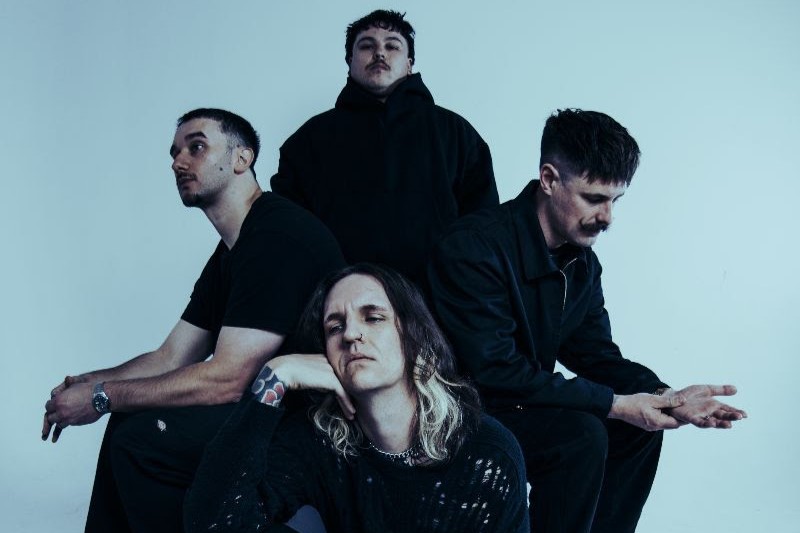 Regional Victorian metalcore powerhouse Ocean Sleeper today officially release their long-awaited sophomore studio album, Peace When I’m Dead, out globally via BMG Australia and Rise Records. Arriving on the heels of a massive wave of global momentum – sparked by explosive singles Break The Cycle, Peace When I’m Dead, My Forever Drug and focus single […]
 -
Video Premiere: Castle – “3 Knocks”
“3 Knocks” is the fourth and final single from Carrie Chains, the new album from heavy-doom trio Castle, out September 4 through Hammerheart Records. And while Castle have never exactly been shy about their influences, this one makes a strong case that there’s still plenty of mileage left in the old-school heavy-metal riff.
Guitarist Mat Davis calls it a “classic throwback Castle song,” built from equal parts Black Sabbath and Mercyful Fate.
That feels about right: big, serpentine guitar lines, a driving rhythm and just enough menace to make the whole thing feel like it could go off the rails at any moment. Liz Blackwell’s blazing vocals give the song that unmistakably Castle combination of grit, melody and gothic weirdness that never ceases to be fucking rad.
As Davis puts it, “3 Knocks” is “like the doomed heartbeat of the new record.” He also has some simple advice for listening to it: “It screams to be cranked, so what are you waiting for?!”
The “3 Knocks” video was filmed in Toronto while Castle were on tour in Canada earlier this year, with longtime friend and director Jaan Silmberg behind the camera. Silmberg’s credits include Super Duper Alice Cooper and Death By Metal, as well as the upcoming Voivod documentary, and he previously worked with Castle on the video for “Carry Chains.”
And Castle aren’t planning on sitting around waiting for Carrie Chains to sink in.
The band have announced a return to Japan, their first there since 2016, including a two-night headline appearance at Tokyo Doom Fest, where they’ll play two unique sets. They’ve also got a substantial US run lined up for September and October 2026, with additional European dates already on the calendar.
Watch Castle’s “3 Knocks” below.
Carrie Chains arrives September 4 via Hammerheart Records and will be available on limited-edition and band-exclusive vinyl, regular digipak and digital formats, as well as a special 2-CD longbox edition featuring Castle’s covers album Double Vision.
Order Carrie Chains directly from Castle
Order Carrie Chains from Hammerheart Records
Castle US tour:
9/3 Detroit, MI – Smalls
9/4 Cleveland, OH – Maple Grove Tavern
9/5 Montague, MA – RPM Fest
9/6 Brooklyn, NY – Woodshop
9/7 York, PA – Collusion Tap Works
9/9 Washington D.C. – Pie Shop
9/10 Pittsburgh, PA – Poetry Lounge
9/11 Indianapolis IN – Black Circle
9/12 Nashville, TN – Cobra Lounge
9/14 Dallas, TX – Dusty’s
9/15 Austin, TX – Valhalla
9/16 Tulsa, OK – Whittier Bar
9/17 Des Moines, IA – Locals Bar
9/18 Chicago, IL – Reggies
9/19 Madison, WI – Blades Of Steel Fest
10/23 Seattle, WA – El Corazon
10/24 Portland, OR – High Water Mark
10/25 San Francisco, CA – Bottom Of The Hill
10/26 Palmdale, CA – Transplants Brewery
10/27 Las Vegas, NV – The Griffin
10/28 Phoenix, AZ – Last Exit
10/29 Los Angeles, CA – Knucklehead
10/30 San Diego, CA – Tower BarCastle Japan Tour:
12/05-06 Tokyo (JP) – Tokyo Doom Fest
12/7 Tokyo (JP) – Moonstep
12/8 Kyoto (JP) – Socrates
12/9 Kobe (JP) – Makeshift
12/10 Osaka (JP) – Hokage
12/11 Yokohama (JP) – El Puente
12/12 Tokyo (JP) – Wall
12/13 Nagoya (JP) – Huck FinnCastle upcoming:
03/07 Fontaine-l’Eveque (BE) MCP Apache
03/13 Písek (CZ) – Heavy Metal Thunder Fest
03/22 Kassel (DE) – Goldgrube
03/25 Hamburg (DE) – Bambi GaloreAdvance tickets and more information at HeavyCastle.com
The post Video Premiere: Castle – “3 Knocks” appeared first on Decibel Magazine.
-
311’s Tim Mahoney & Chad Sexton Launch New Band Sun Will Shine
Might I suggest a tour with Sun Dont Shine?
The post 311’s Tim Mahoney & Chad Sexton Launch New Band Sun Will Shine appeared first on Theprp.com.
-
Korpiklaani announce Canadian tour with Crimson Shadows
The trek starts November 1st in Quebec City -
STEVE HACKETT & STEVE ROTHERY Talk Not Trying To Outdo Each Other During Recordings Of Recent Collaborative Album: “Not Much Great Music Comes From That”
Some collaborations happen overnight. This one took the best part of a decade and change.
Steve Rothery and Steve Hackett first floated the idea of making a record together roughly 11 years ago. Recording itself stretched across eight of those years, squeezed between Marillion tours, Genesis anniversary shows and whatever else two of prog rock’s most recognizable guitarists had cluttering their calendars. The result, The Roaring Waves, finally arrived as seven instrumental tracks built around a single, sprawling subject: the sea.
“It’s not the kind of album that guitarists normally make together,” Hackett said of the record. “I suspect that most guitarists tend to make albums where people try to outplay each other and show their chops to an enormous degree. I’ll be very interested to see what the reaction is from fans. If you’re expecting something typically proggy, I don’t think this is it. It’s more cinematic, almost ambient at times.”
Rothery and Hackett were already friends, in the habit of getting together to talk shop long before any tape rolled. Early sessions happened whenever both men’s schedules lined up, which, given their day jobs, was not often. Everything shifted once Hackett‘s keyboardist, Riccardo Romano, started sitting in. Romano ended up doing double duty, later engineering and mixing the finished record.
“It meant that we started to sound like a band, you know, three people in a room making a noise,” Hackett told Rodrigo Altaf of Sonic Perspectives. “That works very well. If it’s just two people, you’re relying on technology completely. But it meant that we were having a three-way conversation rather than a two-way conversation. And I think that that was key to bringing everything in, really.”

Neither guitarist came in with a stack of finished songs. That was intentional. Hackett contrasted the free-form sessions with his old Genesis days, when he would typically arrive with material already mapped out.
“When I did Selling England by the Pound with Genesis, my home life was very difficult at that time,” he said. “Usually I would have shown up with a few songs written for Genesis. But then at that time, I had just a few riffs. And those were the things that engaged the band. So sometimes for a band and for collaborations, less is more.”
That philosophy extended to keeping their egos out of the way. Two guitarists this decorated could easily have turned the record into a technical pissing contest. Neither wanted that.
“We know those guys can play very, very fast, and that’s part of the stock in trade,” Hackett said, pointing to shredders in general rather than any name in particular. “But then there’s also this other area that was baffling to me when I first heard Fleetwood Mac doing this track called ‘Albatross’ all those years ago. Hardly a shred fest. If you play sometimes very gently, and just add a few notes, it can be very effective. I think the beauty of the guitar is, it’s something my mother says to me, funnily enough: don’t forget about that one note, that one note that you can do that is the killer.”
He name-checked Jeff Beck and Eric Clapton as players who mastered the art of the sustained note, singling out Clapton‘s solo on “I’m Your Witch Doctor” with John Mayall as an early example of restraint doing more than speed ever could.

If Hackett brought the restraint, Rothery brought the setting. He grew up in Whitby, on England’s northeast coast, and the sea has clearly never left him: “In winter you could hear the roaring of the waves during the stormy weather,” he said. “Whitby was a very evocative place to live, a very poetic and powerful place to grow up. So I suppose this record is a way of expressing some of those memories and emotions about what the sea meant to me.”
He expanded on just how central that duality is to the record, describing the sea as something that refuses to stay one thing for long.
“The sea has many moods,” Rothery said. “It can be tranquil and beautiful, with the sun setting over the horizon. It can be an angry, vicious monster who just wants to pull you back, pull you down to the bottom of the sea. Growing up by the sea, seeing the bravery of the lifeboat crews who launched these inflatable dinghies into terrible weather conditions to try and save someone’s life, the sheer scale of that human spirit against the sea, it’s quite humbling.”
Whitby’s isolation shaped him too. He didn’t travel much beyond it until he joined the band Meridian at 19, and even a small cargo ship pulling into the harbor carried an outsized sense of wonder for a kid who rarely left town.

The opener, “The Storm,” grew out of a jam at Hackett‘s Racket Club studio: Hackett supplied the riff, Rothery layered what he calls “weird noises and melodies” over it, and Romano built the chord sequence underneath.
“It just developed in quite a painless way,” Rothery said. “That song embraces the whole ethos of what we’re doing, that cinematic kind of approach. Our styles combined quite seamlessly; we just played off each other. There’s a section at the end where the two guitars are intertwining and dancing off each other, and there’s this great sensitivity and mutual respect there in our playing.”
“The Black Sea” leans hardest into that cinematic instinct. Hackett has said he’d happily see it soundtrack a spy film, and the influence isn’t subtle: “We were talking about having been influenced by film composers, particularly John Barry. It’s almost like a spy movie soundtrack. It’s deliberately slow, murky, sinister. Instead of starting slow and suddenly going very fast, it becomes more poignant as I start to add phrases that sound like they were played backwards rather than forwards.” He credited a Fernandes guitar with a built-in sustainer pickup for the effect, a piece of gear he’d been chasing for two decades. “It was a 20-year wait, but it was worth it.”
Elsewhere, “K-129” tackles the doomed final voyage of a Soviet submarine, its Cold War conspiracy theories baked right into the atmosphere Rothery built around it, while “Sandsend” is named for the stretch of coast near where he grew up, a place he eventually walked with Hackett to show him where it all started.
“Red Dragon” flips the mood entirely, opening with a droning instrument most listeners mistake for bagpipes. Hackett said the sound actually came from a session where Rothery stumbled onto it by accident, and the pair reworked it so it could be played from a keyboard. He connected the East India Trading Company reference behind the track to his choice of sitar guitar, chasing a slightly psychedelic, slightly Indian texture.
The album closes on “Pacific Coast Highway,” a loose, harmonica-led jam that started as two separate pieces Rothery and Hackett stitched together. Hackett plays the harmonica himself, while Rothery switched to bass for the track. Both men’s families sing on the outro.
“That might raise a few eyebrows in the why are they doing this department,” Hackett joked. “It sounds like they smoked some stuff, but we didn’t. We were sober throughout, your honour.”

For Rothery, The Roaring Waves fits neatly alongside a run of instrumental, soundtrack-minded work, including Bioscope, his collaboration with Thorsten Quaeschning, and his 2014 solo album Ghosts of Pripyat: “Once there’s this thing that happens, once you name a track, once you give it an identity, it almost whispers in your ear what it needs to complete itself,” he told Altaf. “I think that’s very true of this kind of music in particular. Once it’s defined, it wants to be born.”
The cover art, painted by Simon Ward, mirrors that idea in a single image: a small boat cutting through violent, squalling waves, its lights barely visible against the black.
Both guitarists have plenty else going on. Rothery recently played Pompeii with Marillion, a show he called mind-blowing and extremely hot, backed by an Italian choir for the second half of the set. A new Marillion album is in the works too, though mixing has slipped from a Christmas target to somewhere around late spring or early summer, with UK, Netherlands and France tour dates landing first.
Hackett remains equally stacked, with an upcoming UK tour, Italian dates, a return to America and another Royal Albert Hall show on the books, plus Lally Larson stepping in on keyboards in place of Roger King. He’s also close to finishing a solo album and has an acoustic record in the works.
As for a follow-up to The Roaring Waves itself, don’t hold your breath. Both guitarists say vague ideas exist, and both would love to eventually play the record live, but with schedules this packed, 2028 is the earliest realistic window for either.
Given it took 11 years just to get here, that might actually count as fast.
The post STEVE HACKETT & STEVE ROTHERY Talk Not Trying To Outdo Each Other During Recordings Of Recent Collaborative Album: “Not Much Great Music Comes From That” appeared first on Sonic Perspectives.


