I think we’ve reached the point of exhaustion with artists talking about AI but not having anything novel or even coherent to say. In a recent interview with iHeartRadio at the Osheaga Festival, Empire Of The Sun’s Luke Steele was asked if he used AI, and he responded, “Of course!” Although his answer was enthusiastic, the conversation that followed quickly lost steam.
Next to the Beatles and Bob Dylan, the Grateful Dead may be one of the most covered bands of the 20th century. That’s because within the crazy world of jam-band psychedelia that encompasses the band, there’s gold in the fabled songbook. Be it the cosmic gems from Jerry Garcia and Robert Hunter, or the jam-athon gateways that grew out of the songs from Bob Weir and John Perry Barlow — or any combination thereof — there’s a wealth of material built for any variety of interpretations or styles. Case in point: Grateful Blues, a six-song EP from veteran guitarist, singer-songwriter and Deadhead J.P. Reali, simmers down a half-dozen classics over a blues-fused fire for a lesson in bona fide musicianship and “a real good time.”
The cool rumblings of “Easy Wind” quickly reels you in. Alongside Reali, the EP’s producer and drummer Jim Larson, keyboardist Rich Budesa and bassist Monty Cullum, come together to mold and shape the songs around loose and lively bluesy arrangements that truly sway and swing. Budesa’s boogie woogie piano is at the heart of “Loose Lucy,” while his electric piano turns on “West L.A Fadeaway” would have made Garcia blush with pride at what can be done on one of his more underappreciated compositions.
“I Need A Miracle,” the lone Weir-Barlow track on the EP, serves as an able-bodied tribute to Weir, who passed away earlier this year. Indeed, Reali transforms it into a sizzling Texas blues shuffle with a pair of galvanizing guitar solos and a swab of “Bertha” on the outro. Cut to “Mr. Charlie,” which famously featured the Dead’s resident bluesman Ron “Pigpen” McKernan, and revel at how Reali’s slide spins it on its proverbial ear, leaving a rather pleasant aftertaste.
A straightforward acoustic with a simple 4/4 from Larson gives “Tennessee Jed” an airy lift for Reali’s smooth and salty vocal to flutter its wings. After the record ends, you’re left with a more-than-satisfying feeling. Nothing too complicated about it; not much to read into it. Just as it should be. Released on Jerry Garcia’s 84th birthday, Grateful Blues is not an ordinary trip through the catalog, but rather a seasoned reimaging through a blues lens that successfully underscores the vast and timeless potency of Grateful Dead music.
Jason Calhoun is a Philadelphia-based ambient artist and composer who’s getting ready to share revelations of divine love, his fifth release for Dear Life Records. So far he’s previewed the album with the meditative slices “tolstoy tatsoi,” “what we deserve,” and “at home,” and today he’s back with “enjoy losing,” a pleasant, cosmic blip inspired by playing chess on his phone.
Shudder has unveiled the ninth entry in the V/H/Sseries, V/H/S/MIXTAPE, with the new anthology set to arrive on October 9, 2026. This time, the long-running found-footage horror franchise centers its stories on music, using sound, rhythm, and performance as the driving force behind each nightmare.
According to the announcement, “V/H/S/MIXTAPE cranks the signature found-footage horror up to eleven with an electrifying new anthology where music and sound become the source of terror. United by a theme that explores the power of music, rhythm, and audio to haunt, possess, and destroy, the film blends cosmic horror, psychological suspense, outrageous splatter, and groundbreaking practical effects into one unforgettable mixtape of nightmares.”
The latest installment brings together a diverse lineup of directors, with new segments from Ernest Dickerson, Rza, David Moreau, and Renee Zhan. Zhan’s contribution also features original puppet work created by Jim Henson‘s Creature Shop.
Music plays an even bigger role between the anthology’s main stories. V/H/S/MIXTAPE includes original music video interludes directed by Flying Lotus, while Ghost mastermind Tobias Forge makes his filmmaking debut by directing a brand-new music video for the project. Fans of over-the-top metal may also appreciate an appearance by shock-metal veterans Gwar, adding another heavy connection to the film’s mix of horror and music.
The production team includes Josh Goldbloom, Steven Schneider, Roy Lee, Michael Schreiber, and Brad Miska, with Ben Ross and Rami Yassin serving as executive producers.
The new film arrives after the strong performance of its predecessor, V/H/S/HALLOWEEN. Shudder says the previous installment delivered the platform’s biggest exclusive movie premiere of 2025 and helped produce its strongest subscriber acquisition weekend of that year.
Shudder continues to expand its catalog with a steady lineup of horror films, series and exclusive productions. Alongside recent entries in the V/H/S franchise, the service’s library includes titles such as LA Llorona, Mad God, Skinamarink, Watcher, When Evil Lurks, In A Violent Nature, Late Night With The Devil and Oddity. On the television side, subscribers can also find series including Dragula, The Creep Tapes, Hell Motel and specials hosted by Joe Bob Briggs.
Mastodon’s new album, Marrow Deep, arrives Aug. 28 via Loma Vista Recordings. The LP marks the band’s first full-length featuring guitarist Nick Johnston and sees significant contributions from keyboardist João Nogueira. It was co-produced by Mastodon at the band’s own West End Sound in Atlanta with Patrik Berger (Lana Del Rey, Charli XCX) and Kurt Ballou (High on Fire, Converge), and mixed by Andrew Scheps (Adele, Black Sabbath, Metallica). The album draws thematically from the Three Fates of Greek mythology — the Moirai who spin, measure, and sever the thread of life — as a lens through which the band channels the loss, transition, and renewed purpose of the past two years.
In a new interview with Brooksy and JD of Australia’s Rebel FM (transcribed by Blabbermouth), drummer/vocalist Brann Dailor expressed anticipation for the album’s release: “Yeah, I’m excited [to finally see ‘Marrow Deep’ released]. We’ve been sitting on it for a little while, so it’ll be nice to get it out there and get it to its first day of school and see if anybody picks on him. Maybe he can sit with the cool kids right off the bat, but we’ll see.”
Asked whether releasing Marrow Deep feels cathartic or anxiety-ridden, given the album will arrive a year after the death of founding guitarist Brent Hinds, Dailor said: “I’d say it’s a bit of both. Just as there’s feelings on the other side with the fans that they haven’t felt before, there’s feelings that we haven’t felt before. We haven’t released an album without [all] four main [members of Mastodon]. And so there’s a little bit of the unknown, which is okay. I don’t know how they’re gonna react to it.
“I just know that the only thing that I have ever had any control over is the way I feel about it personally. And then the people in the room who made the record — myself, Bill [Kelliher, guitar], Troy [Sanders, bass/vocals], and then João and Nick sort of came in at the end to help out as well — but when we got it to the finish line of, like, okay, listening from start to finish, all I can do is make sure that I’m in love with everything that is gonna be on the record, and that’s all I can really do. So I got it to that point — I got it to the point where I needed it to be, and so that has worked for me for 26 years, and so that’s where I’m at.
“But in the same breath, there’s some ground here that hasn’t been tread yet, so I guess we’ll see what happens. I’m excited, though, because I believe in the record, and I think that it’s the right record for us at this point in time.”
Mastodon will celebrate the release with “The Poisonous Weapons Tour,” a nationwide U.S. run with support from Deafheaven and Alcest, kicking off September 16 in Orlando, Florida, and closing out Oct. 24 at Sick New World in Dallas, Texas.
Brent Hinds departed Mastodon in March 2025 and passed away in a motorcycle accident approximately five months later. He was replaced by Nick Johnston. Hinds had been a founding member of Mastodon since 2000, serving as lead guitarist and vocalist alongside Sanders, Dailor and Kelliher.
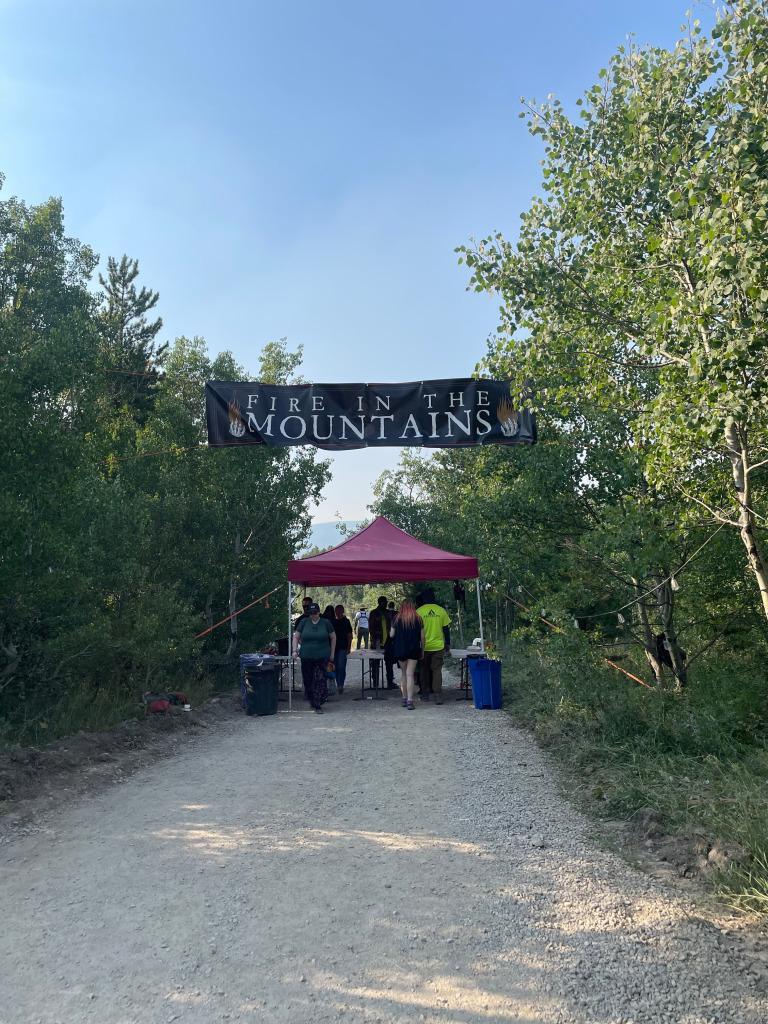
At Fire in the Mountains, the songs and performances came second to music’s intrinsic, often-praised healing, community-building, and coping qualities. One of the many MC’s at the festival, which took place from July 23-36 at the Red Eagle Campground in Montana, summarized it like this, “They say metal is dark. They’re right.” Sadly, I can’t recall if it was Charlie Speicher or Robert Hall, but they dove into how metal confronts, and enmeshes itself in, mental health, so of course, a metal festival would be the ideal lens through which to address suicide prevention within indigenous communities. Fire in the Mountains was as much about cultural exchange and exploration as it was about how metal, through engaging with dark themes, offers survival and a path to flourishing.
Breaking down the entire Fire in the Mountains roster and their performances is not an adequate reflection because the critique is self-answering. Would you want to see Enslaved live? Then you should see them if they play a festival; you don’t need me to confirm or deny your suspicions about whether they’re good live.
…
Credit: Chloe Karalash
…
Credit: Chloe Karalash
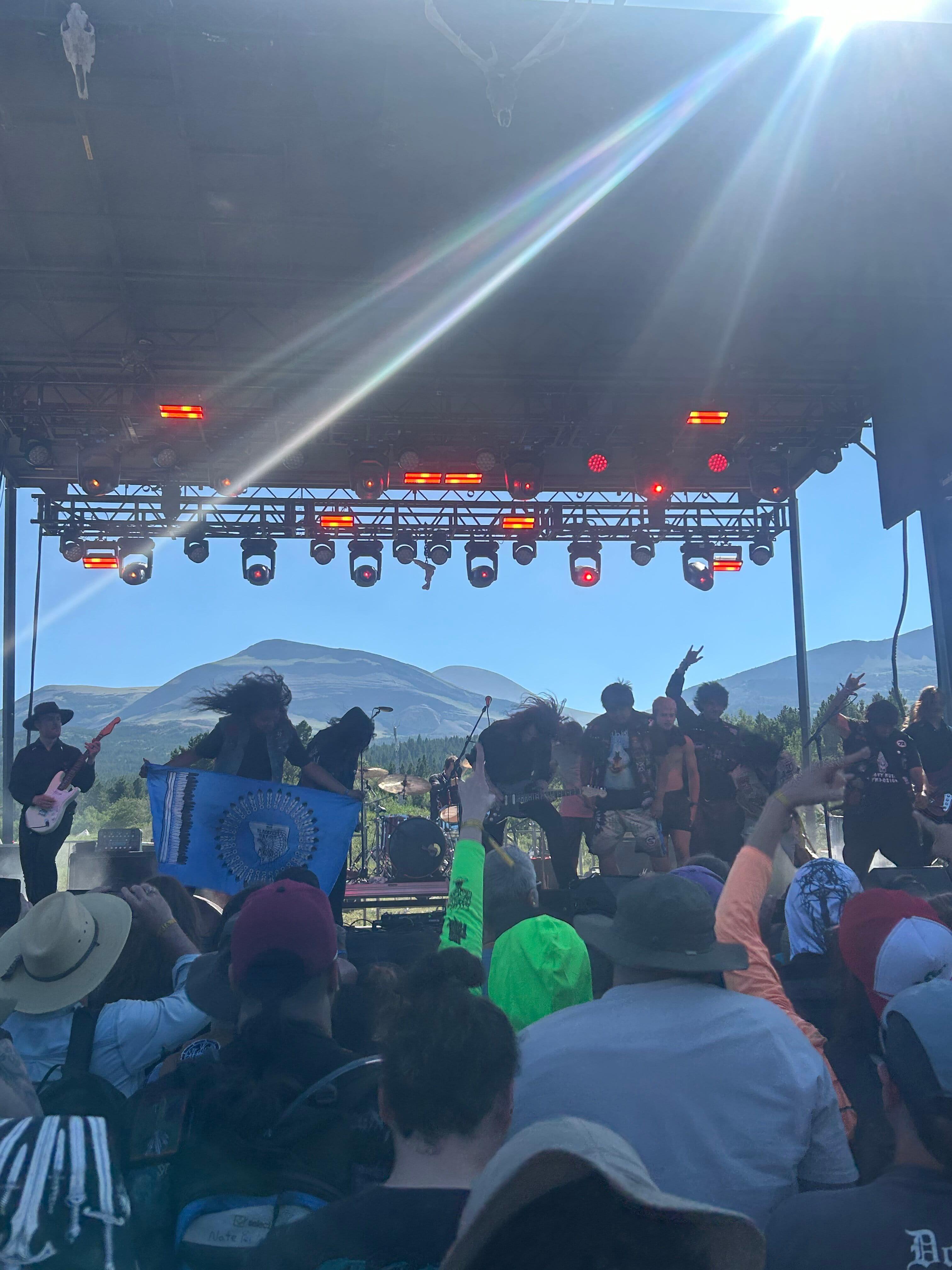
As a whole, the line-up was appropriate for Fire in the Mountain’s message and aesthetics. Wayfarer personified the festival’s American identity reckoning with itself and black metal (to extend that thought further, 16 Horsepower grappled with rock music’s American and Appalachian roots), Neurosis proved that things do get better and that recovery is possible, Enslaved and Borknagar explored their heritage through (black) metal in a way that wasn’t tainted with hatred, and Nocturne and Yaotl Mictlan explored black metal through their own cultures. Oddly, Phobophilic felt the most out of place in that they were the only straight-up death metal band amongst a bill of genre-melding artists. Still, they tore the house down.
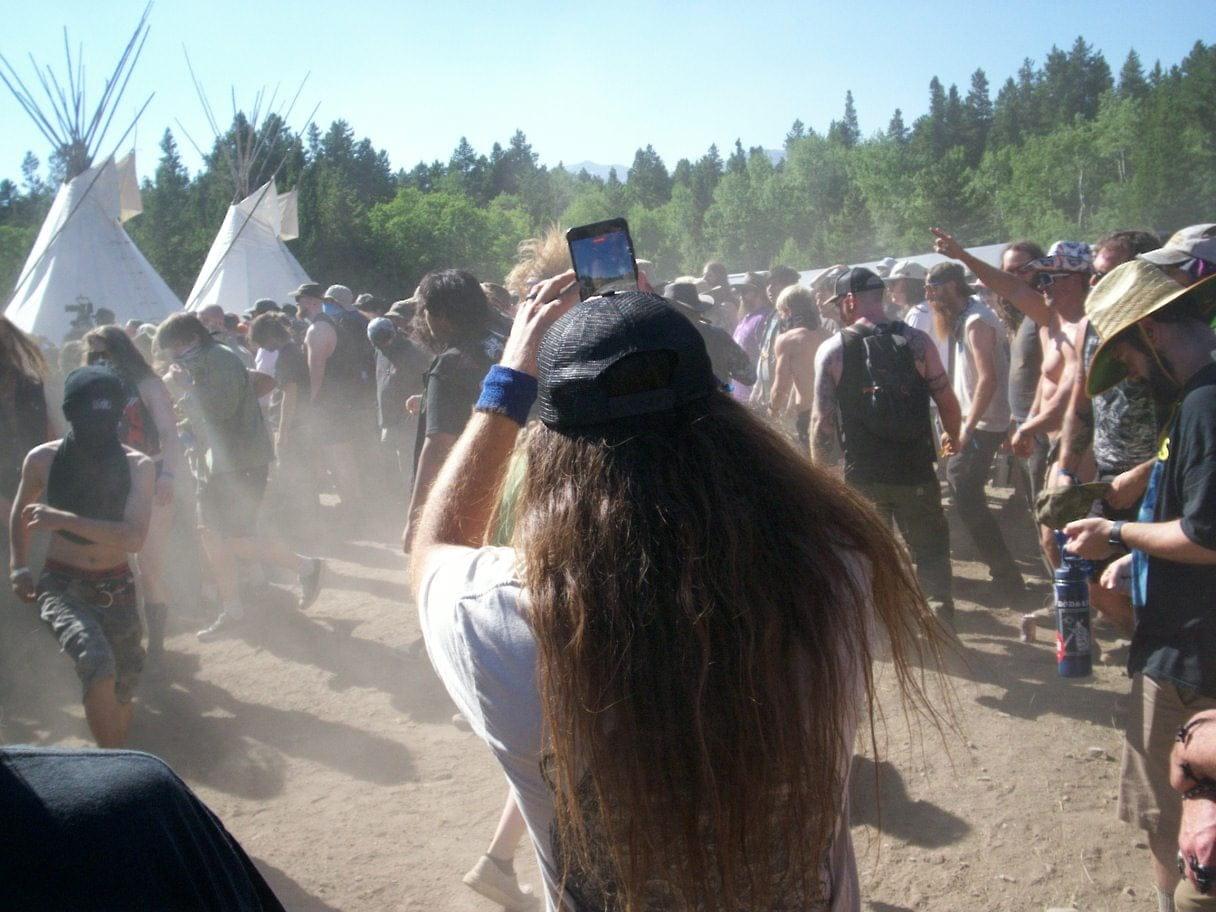
For those on and off the stage, metal connected them to minds, ideas, locations, and stories that would’ve been locked behind silence. Metal music opened doors to worlds we cannot explore ourselves, but can understand through relation. That was the Firekeeper Alliance’s (a non-profit that serves the Blackfeet Nation community) plan to address suicide, after all–by giving young people something to live for and to show them how they can be a part of it. Many of the local youth took them up on that offer by entering moshpits, crowdsurfing, performing with their student bands, watching their elders hold positions of authority and collaboration with festival organizers, and leading their own panels. The young folks, those usually seen as most at risk, were treated with the promise that they would find a reason to prosper, just like many at the festival had.
…
Credit: Chloe Karalash
…
Distilling Fire in the Mountains to its core reveals the mantra “Suicide is not an option.” The Blackfeet Nation members repeated it throughout the weekend, and never let it settle into a slogan alone. Through working with the Firekeeper Alliance, the Blackfeet tribe used Fire in the Mountains as a fundraising event for suicide prevention and intervention programs. Those long-reaching endeavors aim to support those in need long after the festival concluded, while the weekend itself displayed numerous brighter roads that lay ahead. Suicide cannot be an option when there were multiple paths into music and community.
…
…
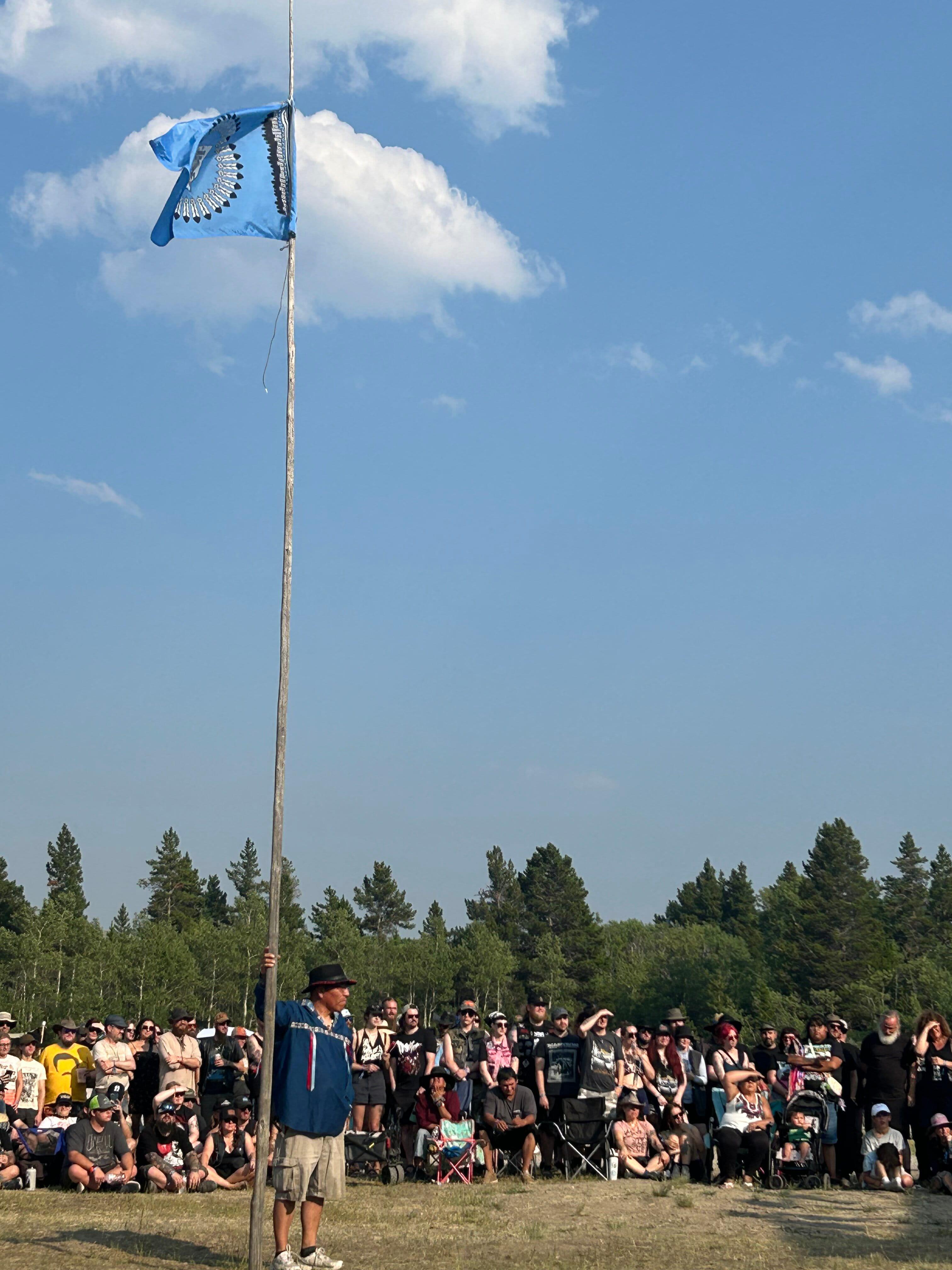
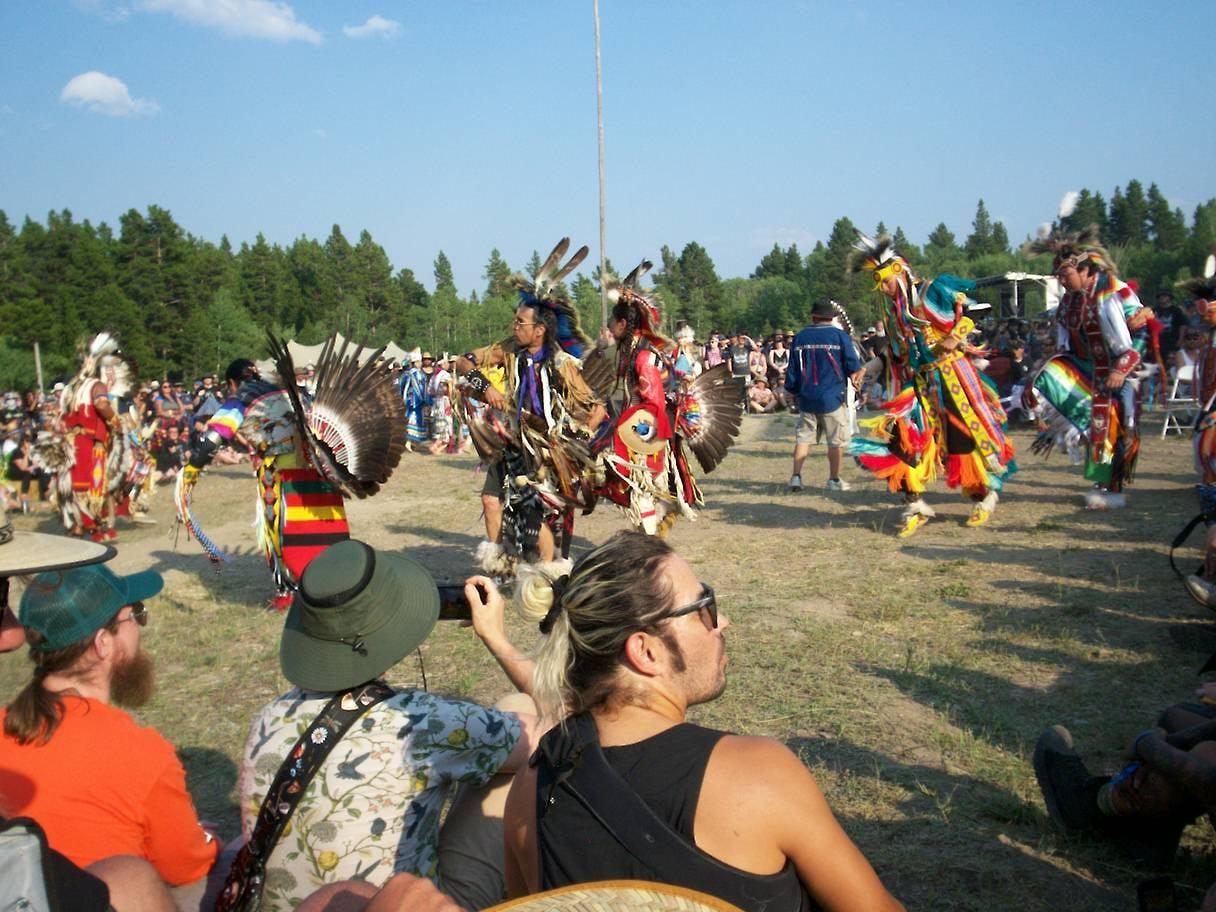
Seeing as how the Blackfeet Nation hosted the festival, they provided multiple avenues through which attendees could learn about them. These included an opening pow wow with a speech by Pikuni Crazy Dog Society leader Larry Grounds. At Fire in the Mountains, culture was respected and shared. The Blackfeet tribe welcomed festival attendees to participate in certain dances and, later, Wayfarer called up members of the Heavy Music Symposium to join them on-stage for “Animal Crown.” The symposium, from the Fire Keepers Alliance website, is “a high school course which celebrates heavy music and its healing properties.” A group of teens, battle vested and dusty from the mosh pit, arrived on-stage and waved the Blackfeet nation flag, celebrating heavy metal and creating new strides through it. Ironically, they did so as if to disprove the lyrics of Wayfarer’s “Enter my House Justified”–”Oh lonesome rider, lay down your guns/ This world has left you behind, time has won.”
…
Credit: Chloe Karalash
…
…
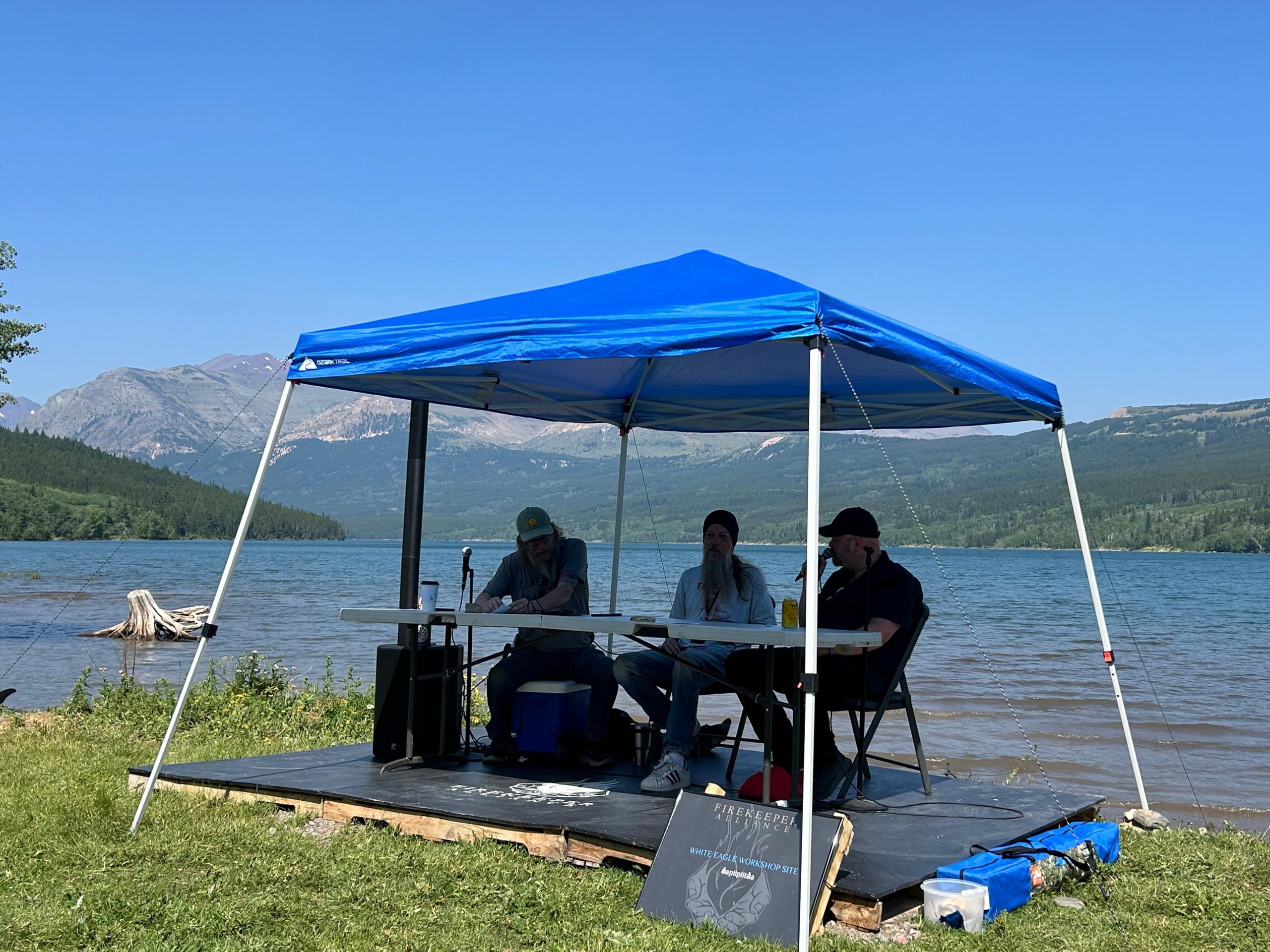
One could also engage with the Blackfeet Nation through numerous workshops, including discussions about tribal sovereignty, animism, and missing and murdered indigenous persons, as well as a lodge raising demonstration. These workshops were hour-long panels with a moderator and keynote speakers based right beside the lake, and they colored Fire in the Mountains as an educational experience as much as a musical one. The best panels combined both. One featured discussions from Bandcamp, Profound Lore, and Vesperian about how labels navigated the digital music distribution landscape, while another highlight was Andy Patterson (of Subrosa) and Enslaved’s Iver Sandøy conversation about recording, mixing, and mastering.
What these workshops provided that the concerts couldn’t, by their nature as loud rock performances, was a space to meditate on how metal interacts with ecosystems outside music. If the concerts were outsized outpourings of energy and emotion, the workshops were left-side-of-the-brain affairs, processing those outbursts and how they strengthen our ties to land, people, and our self. They accomplished this without demanding that we think about it, but offering several avenues to examine metal music. From there, the mind did the rest.
…
…
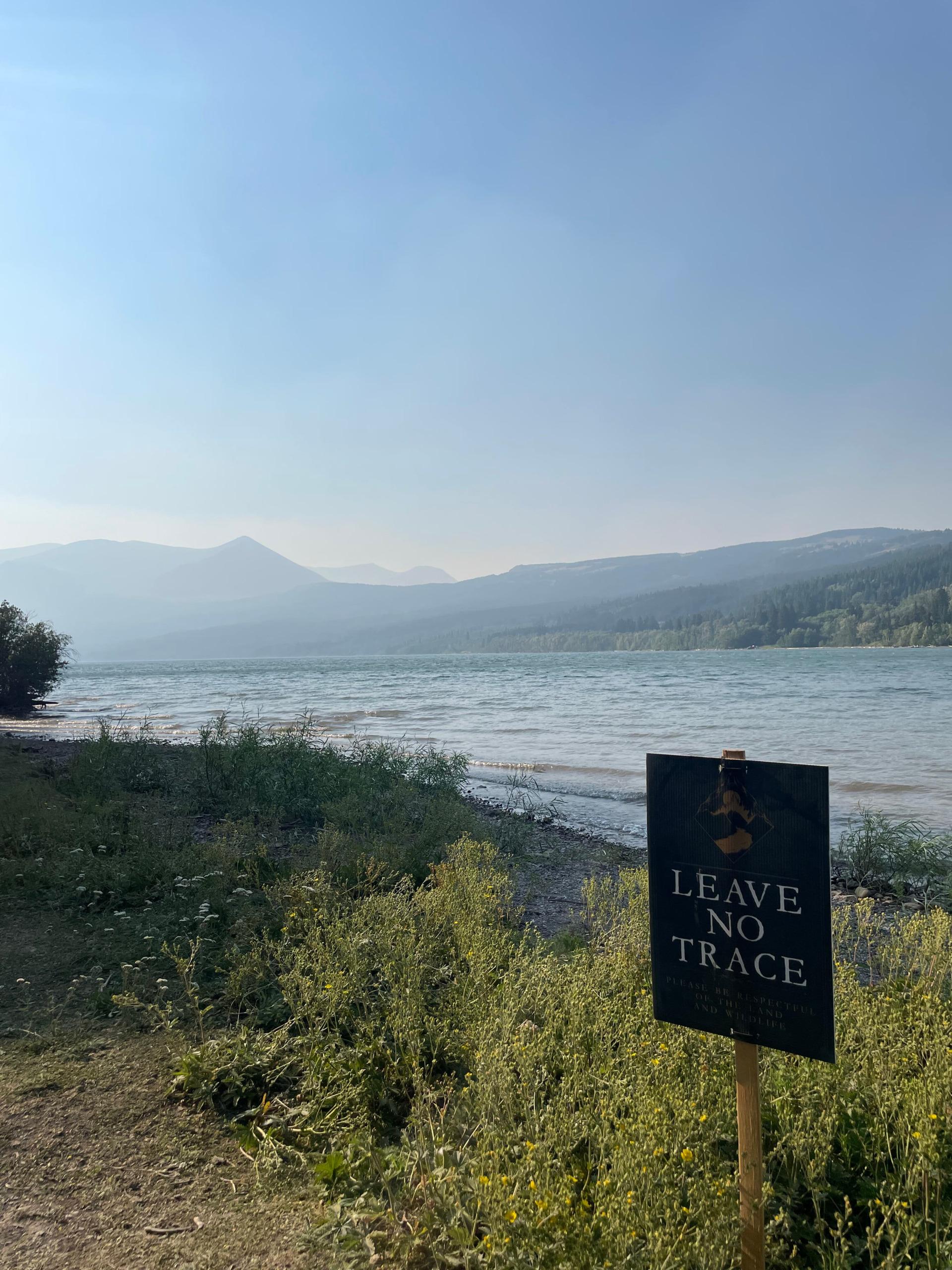
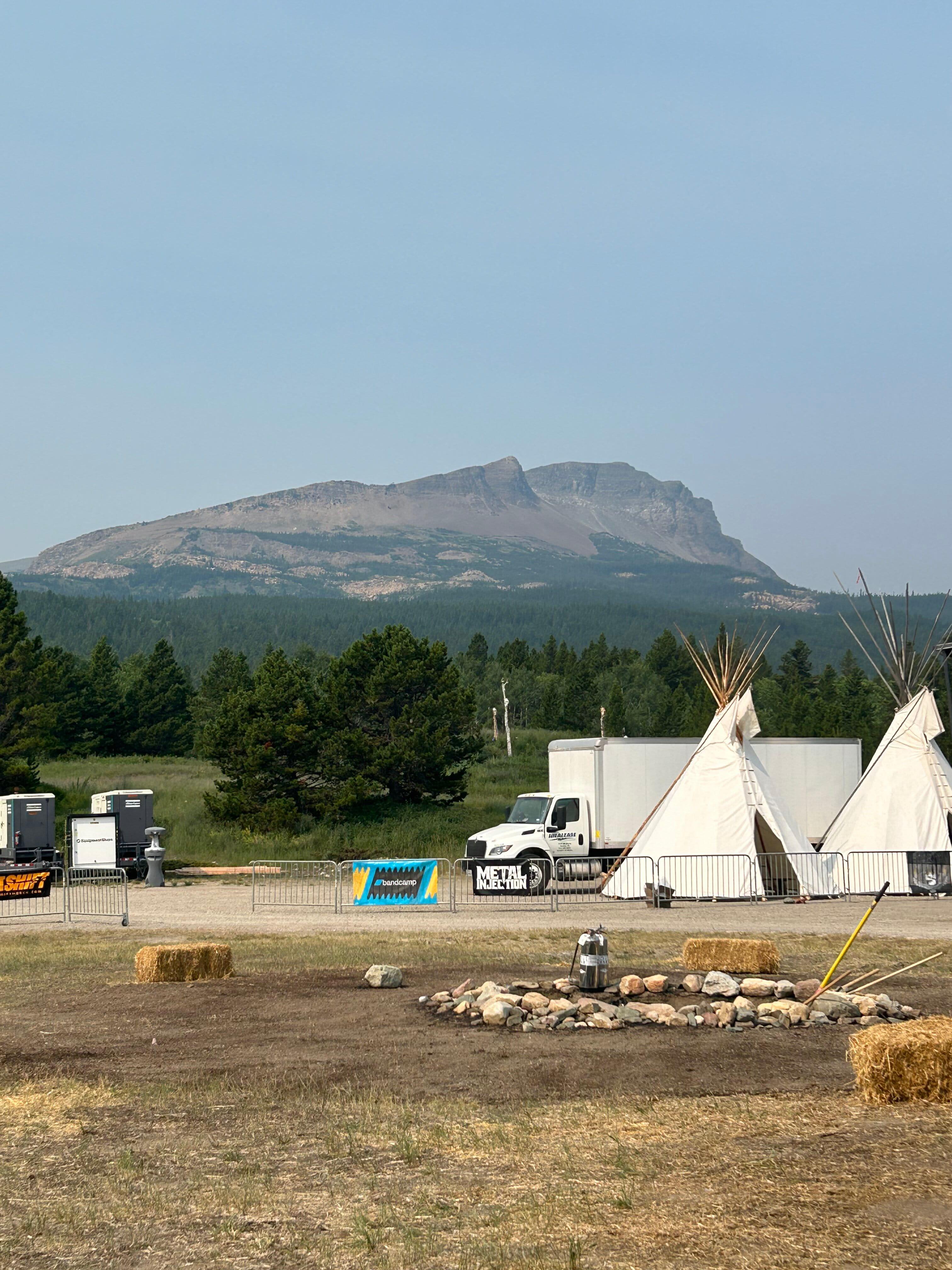
Fire in the Mountains was also the first festival where I felt like a guest. At every festival, attendees are technically guests, but we are catered to as consumers. We are trade operatives, investments by the organizers that will circulate more funds back into the festival. Of course that was true at Fire in the Mountains since I brought and spent money, though there was a subliminal badge pinned on everyone’s chest that we were there transiently for something deeper. We were there to learn as much as were we to revel in the gift that is Glacier National Park. Mountain peaks and summits obscured the horizon and anything outside of the festival.
As guests, we were treated to music, intellectually-engaging workshops, and an idyllic setting for American black metal fans. The woods and water were right by the stages, so it was possible to cool off in-between sets. I say “American black metal fans” because the Fire in the Mountains setting, boreal and dusty, matched that which informed many great USBM records, not the frosty Scandinavian woods or the rugged mountains of the Mediterranean. Ashes Against the Grain, when Agalloch performed it, felt like it rose directly from the festival grounds and proliferated through the Portland group. Likewise, you’d blow out a data center getting ChatGPT to come up with a more mis-en-scene performance than “Spirit Helper,” Enslaved’s collaboration with Kevin Kicking Woman, a representative of the Blackfeet Nation. All the natural splendor thankfully boxed out reliable cell phone signals and forced further introspection and community relations to the benefit of everyone attending. Not having a cell phone for an entire weekend was worth the price of admission alone.
…
Credit: Chloe Karalash
…
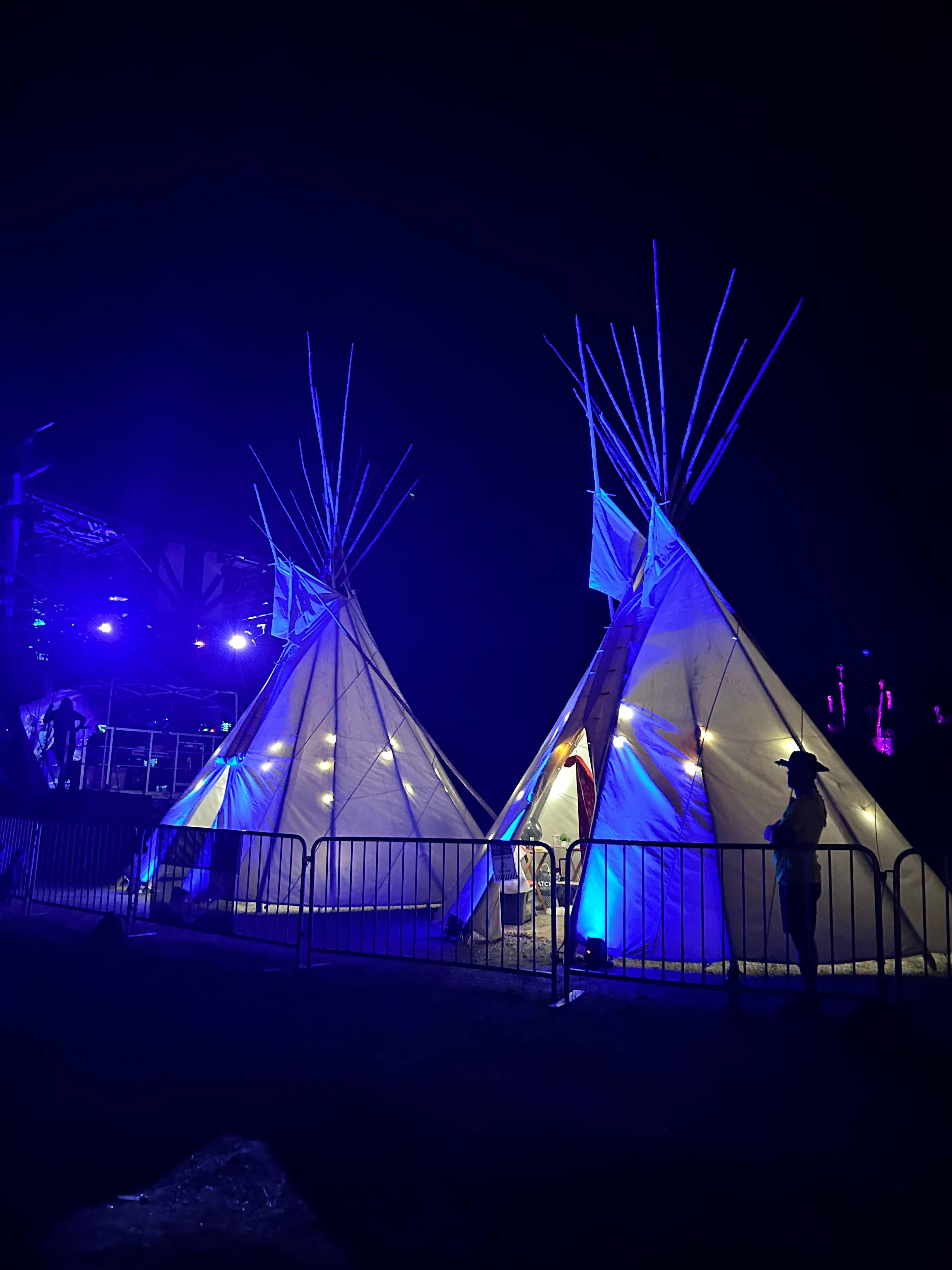
Beyond the large teepees and acrylic orange sunsets, the festival’s beauty was how kind everybody was. Maybe only nice people are willing to cross multiple state lines and drive into a national park to hear extreme metal. Maybe, being a dry festival actually did make everybody kinder. That’s definitely a possibility, as was the large number of families attending with some newborns hearing their first live show before they developed object permanence. Whatever it was, Dylan Walker from Full of Hell put it best during his panel on extreme metal vocals: “Empathy is the going language.” Competition, resentment, jealousy, and spite dissipated upon entering Fire in the Mountains.
…
…
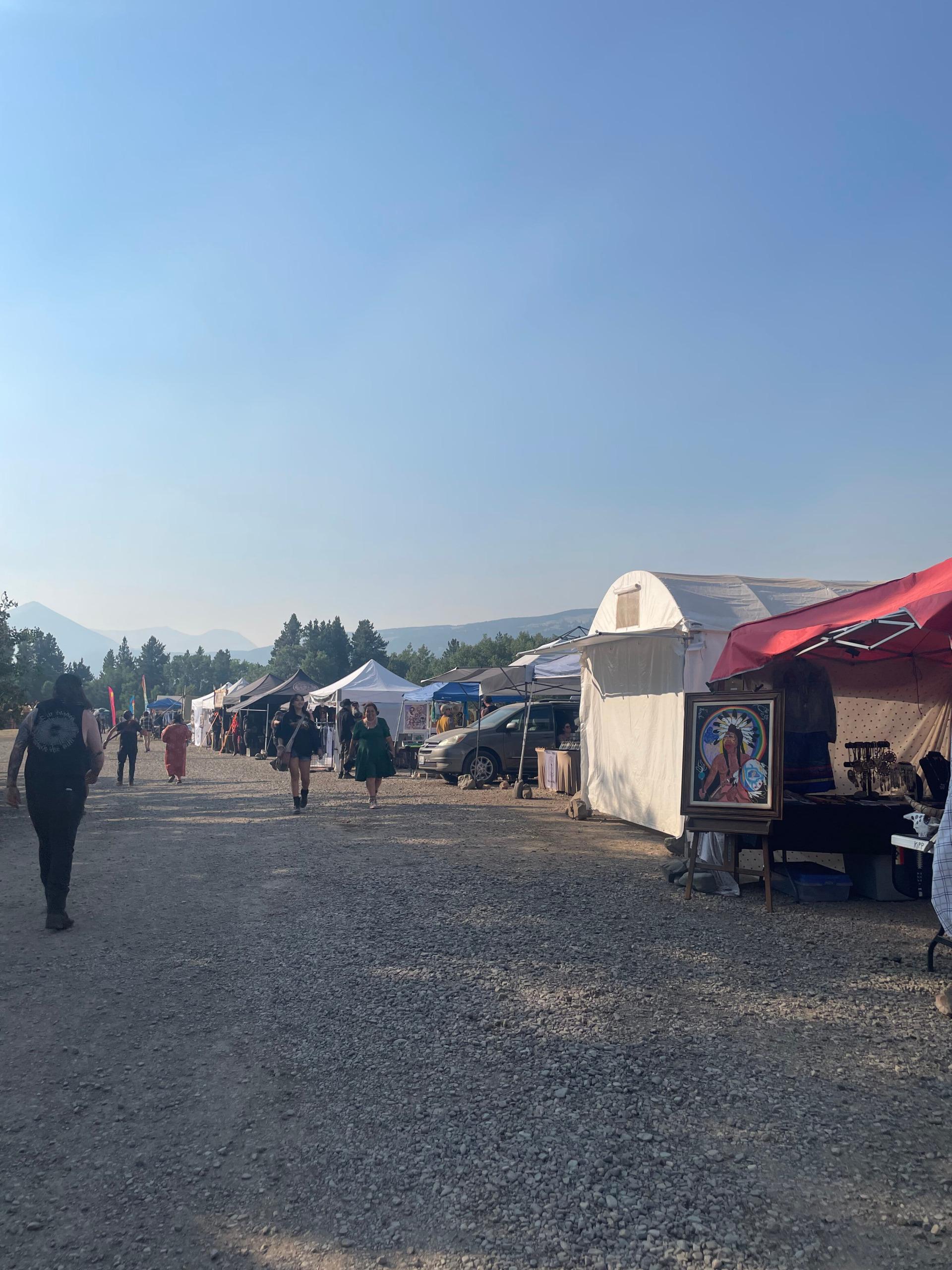
With all this being said, the festival has room to improve. None of the following criticisms are enough to prevent me from attending next year. They’re just the easiest and largest holes to fill. Firstly, no coffee being available after 1:00 pm is a punishment for a crime I didn’t commit. Beneath the scorching sun, without shade or clouds and a late start, I’d happily spend my budget on cold brew. On that note, shade was in short supply in the performance bowl, with only the two bars (both non-alcoholic) providing adequate coverage, and one was VIP-exclusive. Throw in another bar, a place to eat, a vape hotspot, whatever, just more coverage from the oppressive heat. I didn’t hear any accounts of heat stroke and nearly all attendees were wise enough to protect themselves from the sun, except the dumbass who stood for hours on end with his shirt off in 35°C weather and drank a 32-ounce Blue Raspberry sugar-free Red Bull brew at 9:00 pm because “it was colder than water.”
The barbeque is my largest gripe. It was $35USD daily. You were only granted one meal per day. I expected small portion sizes from the other vendors, but the servings doled out by the BBQ were meagre. I felt like an asshole asking for more, and I only ate the vegan availabilities, meaning I got much less than everyone else. There was only one dedicated vegan protein, a plant-based sausage, served on a single day. Most of the days, the vegan options were just a plate of the same sides and veggies everyone got minus the meat. Please, in the future salt the food or have a vegan-friendly sauce. Had the BBQ ticket covered the entire weekend then I’d be fine, but as it stands, it’s the one piece I’m skipping next year.
…
…
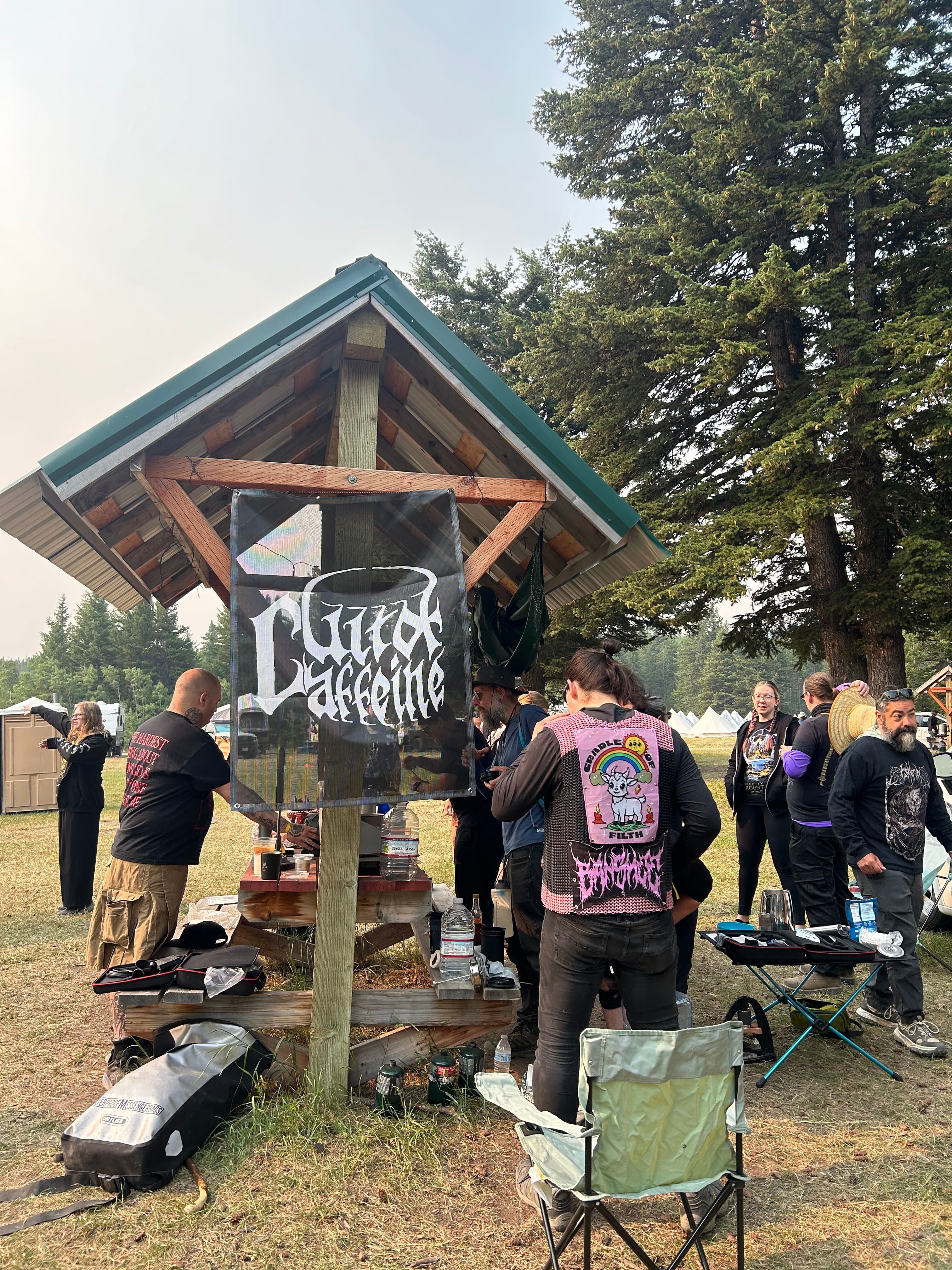
But unsalted food, mild heat stroke, and caffeine deprivation are inherent to music festivals. Those gripes, like a sunburn, will fade and turn pale. What won’t is the mental image of no less than 10 people running to help someone who fell off their mobility aid outside sun-ripened porta potties, or a cult of caffeine that assembled every morning and gave coffee to anyone on the promise that they also sample the free jam, or the local indigenous high school students and their zine which they distributed at the festival, or the mosh pit entirely composed of security guards who were actively on duty. What won’t fade is a message that I may not need now, but sorely needed years ago; why living is a selfless task that gives back to your community, because we make ourselves islands if we do not learn the weather and climate of those around us.
 , whatever, just more coverage from the oppressive heat. I didn’t hear any accounts of heat stroke and nearly all attendees were wise enough to protect themselves from the sun, except